Interviews are opportunities to demonstrate your expertise, and this guide is here to help you shine. Explore the essential Pipeline Codes and Standards interview questions that employers frequently ask, paired with strategies for crafting responses that set you apart from the competition.
Questions Asked in Pipeline Codes and Standards Interview
Q 1. Explain the differences between API 1169 and ASME B31.4.
API 1169 and ASME B31.4 are both crucial standards in pipeline engineering, but they address different aspects. API 1169, “Welding of Pipelines and Related Facilities,” focuses specifically on the welding procedures and practices used in pipeline construction. It details requirements for welder qualification, welding processes, inspection techniques, and quality control to ensure the integrity of pipeline welds. Think of it as the ‘how-to’ guide for creating strong and reliable pipeline joints.
ASME B31.4, “Liquid Petroleum Transportation Piping Systems,” is a broader standard that covers the entire design, construction, testing, operation, and maintenance of liquid petroleum pipelines. It encompasses aspects like material selection, pressure calculations, stress analysis, corrosion control, and safety regulations. It’s more of the ‘overall blueprint’ ensuring the entire pipeline system is safe and operates within defined parameters.
In essence, API 1169 is a subset of the broader scope covered by ASME B31.4. A project will use API 1169 to ensure welds meet the stringent quality standards, while ASME B31.4 guides the overall project adhering to regulations and best practices for the entire system.
Q 2. Describe your experience with pipeline integrity management programs.
My experience with pipeline integrity management (PIM) programs spans over ten years, encompassing various roles from project engineering to program management. I’ve been involved in developing and implementing PIM programs for both onshore and offshore pipelines carrying diverse fluids, including crude oil, natural gas liquids, and refined products.
A key part of my work has involved risk-based assessments, identifying critical pipeline segments based on factors such as age, operating conditions, and environmental sensitivities. For example, a section of pipeline near a populated area would naturally receive more scrutiny than one in a remote location. This risk assessment then dictates the frequency and type of inspection and maintenance activities.
I have hands-on experience with implementing various integrity management techniques, including in-line inspection (ILI) data analysis, defect prioritization using specialized software, and coordinating repair and remediation efforts. I’m also proficient in regulatory compliance, ensuring all activities adhere to relevant standards (e.g., ASME B31.4, PHMSA regulations), and reporting to regulatory bodies.
Finally, I have a strong focus on continuous improvement, employing data analytics to monitor the effectiveness of PIM programs and adapt strategies based on performance and emerging best practices. This approach has consistently led to improved pipeline safety and reduced operational costs.
Q 3. How do you identify and mitigate pipeline corrosion?
Pipeline corrosion is a significant threat, leading to leaks, failures, and environmental damage. Identifying and mitigating it requires a multi-pronged approach.
Identification: This involves a combination of methods:
- Internal and External Inspections: Regular in-line inspections (ILI) using tools like magnetic flux leakage (MFL) and ultrasonic testing (UT) detect internal corrosion. External inspections involve visual checks, using aerial surveys, and ground patrols to identify external corrosion.
- Corrosion Monitoring: Employing techniques such as corrosion coupons and electrochemical sensors provide continuous monitoring of corrosion rates in specific areas.
- Data Analysis: Analyzing ILI data, monitoring data, and historical records helps identify corrosion patterns and high-risk areas. Sophisticated software helps to predict future corrosion development.
Mitigation: Once identified, corrosion needs to be mitigated, through these methods:
- Coating: Applying protective coatings (e.g., epoxy, polyurethane) on the pipeline’s external surface prevents environmental corrosion.
- Cathodic Protection: This electrochemical method uses sacrificial anodes or impressed current systems to reduce the pipeline’s electrical potential, inhibiting corrosion.
- Corrosion Inhibitors: Injecting chemical inhibitors into the pipeline can reduce internal corrosion, especially in high-risk areas.
- Repairs: Localized corrosion damage requires immediate repairs, often involving excavation, cleaning, and applying a protective coating.
- Pipeline Replacement: Severely corroded sections may need complete replacement.
A successful corrosion management program necessitates a proactive, data-driven strategy, integrating various inspection techniques with appropriate mitigation methods to prevent failures.
Q 4. What are the key considerations for pipeline material selection?
Pipeline material selection is critical for ensuring long-term integrity and safety. The choice depends on various factors including:
- Pipeline Fluid: The type of fluid transported dictates material compatibility. For example, transporting highly corrosive fluids requires materials with superior corrosion resistance, such as high-alloy steels or specialized polymers.
- Operating Conditions: Factors like pressure, temperature, and soil conditions influence material selection. High-pressure pipelines demand materials with higher yield strength. Low-temperature operation needs materials with good toughness and fracture resistance.
- Environmental Considerations: Soil characteristics (acidity, salinity) and environmental regulations impact material choices. For instance, in environmentally sensitive areas, using materials with minimal environmental impact is crucial.
- Cost and Availability: While high-performance materials offer superior characteristics, their cost and availability can constrain the choice. A cost-benefit analysis ensures optimal material selection.
- Weldability: Materials must be easily weldable to ensure seamless pipeline construction. API 1169 specifies requirements for weldability.
A common example involves selecting carbon steel for low-pressure pipelines carrying relatively non-corrosive fluids due to its cost-effectiveness. However, for high-pressure pipelines carrying corrosive fluids, more expensive materials like high-alloy steel or even duplex stainless steel are usually preferred.
Q 5. Explain the process of pipeline risk assessment.
Pipeline risk assessment is a systematic process identifying potential hazards and evaluating their likelihood and consequences. It’s crucial for prioritizing maintenance, inspections, and mitigation strategies. A typical process involves these steps:
- Hazard Identification: This stage involves identifying potential hazards such as corrosion, third-party damage, material defects, and environmental factors. Techniques like HAZOP (Hazard and Operability Study) and FTA (Fault Tree Analysis) can be employed.
- Probability Assessment: Determining the likelihood of each hazard occurring based on historical data, inspection results, and expert judgment. This can be qualitative (e.g., low, medium, high) or quantitative (e.g., using probabilities).
- Consequence Analysis: Assessing the potential impact of each hazard. This includes environmental consequences (e.g., soil and water contamination), economic consequences (e.g., repair costs, production losses), and societal consequences (e.g., injuries, fatalities).
- Risk Evaluation: Combining probability and consequence assessments to generate a risk profile for each hazard. Risk matrices provide a visual representation of risk levels.
- Risk Mitigation: Developing and implementing strategies to reduce identified risks to acceptable levels. This might involve implementing new inspection techniques, replacing pipeline sections, or improving operational procedures.
- Monitoring and Review: Continuously monitoring and reviewing the effectiveness of risk mitigation strategies, adapting them as needed.
The outcome of a risk assessment isn’t just a report; it’s a roadmap for optimizing pipeline safety and reducing operational risk. It informs decisions regarding maintenance scheduling, inspection planning, and capital investment prioritization.
Q 6. How do you ensure compliance with pipeline safety regulations?
Ensuring pipeline safety regulatory compliance is paramount. This necessitates a comprehensive understanding of applicable regulations and a robust compliance program. My approach incorporates these steps:
- Regulatory Knowledge: Staying updated on all relevant regulations, including federal, state, and local codes. Key regulations often include PHMSA (Pipeline and Hazardous Materials Safety Administration) regulations in the US, or equivalent regulations in other countries.
- Documentation and Record-Keeping: Maintaining meticulous records of all pipeline-related activities, including design, construction, operation, maintenance, inspections, and repairs. This documentation must meet regulatory requirements and be readily available for audits.
- Internal Audits and Inspections: Conducting regular internal audits and inspections to ensure compliance with regulations and established procedures. This includes verifying the effectiveness of implemented safety measures.
- Training and Education: Providing comprehensive training to all personnel involved in pipeline operations and maintenance on safety procedures and regulatory requirements.
- Emergency Response Planning: Developing and regularly exercising emergency response plans to handle potential incidents, such as leaks or ruptures. This involves coordinating with emergency responders and local authorities.
- Incident Reporting: Promptly reporting any incidents or accidents to the appropriate regulatory bodies as per established protocols.
Compliance is not a one-time task; it’s an ongoing commitment requiring continuous monitoring, review, and adaptation to address evolving regulations and best practices.
Q 7. Describe your experience with pipeline inspection techniques (e.g., ILI, MFL).
My experience with pipeline inspection techniques is extensive, encompassing both in-line inspection (ILI) and magnetic flux leakage (MFL) technologies.
ILI: I’ve worked extensively with various ILI tools, analyzing data from intelligent pig runs to detect internal defects like corrosion, cracks, and dents. This includes understanding the limitations of different technologies (e.g., MFL’s sensitivity to certain types of defects) and choosing the most appropriate tools based on pipeline characteristics and risk profiles.
MFL: MFL is a frequently used ILI technique to detect metal loss due to corrosion. I’ve used and interpreted MFL data to identify the location, size, and extent of corrosion, which is crucial for prioritization and mitigation strategies. I understand how to interpret the data, considering factors such as signal noise and calibration.
Beyond MFL and other ILI techniques, I also have experience with other inspection methods like:
- Ultrasonic Testing (UT): Used for detailed assessment of defects identified during MFL or visual inspections.
- Visual Inspections: Routine visual inspections and aerial surveys aid in detecting external corrosion and third-party damage.
Data analysis is crucial. I’m proficient in using specialized software to analyze ILI data, prioritizing identified defects based on their severity and potential for failure. This ensures resources are focused on the most critical areas, optimizing maintenance efforts.
Q 8. What are the common causes of pipeline leaks and failures?
Pipeline leaks and failures are unfortunately common occurrences, stemming from a variety of factors. Think of a pipeline like a complex circulatory system – if any part fails, the entire system is at risk. The most common causes can be broadly categorized as:
- Material Defects: Manufacturing flaws, such as cracks or inconsistencies in the pipe material itself, can weaken the structure over time and lead to failure. This is like having a weak link in a chain; one weak point can compromise the whole thing.
- Corrosion: This is a major culprit, especially in pipelines carrying corrosive substances or those buried in harsh soil conditions. Imagine rust gradually eating away at the pipe wall; eventually, the wall becomes too thin to withstand the pressure.
- External Factors: These include things like ground movement (earthquakes, landslides), third-party damage (excavation accidents), and extreme weather events. This is like external forces impacting the pipeline, potentially causing cracks or punctures.
- Construction Defects: Improper welding, inadequate coating, or poor installation techniques during the initial construction phase can create vulnerabilities that lead to leaks or failures later on. It’s like building a house with a shaky foundation; problems will inevitably arise.
- Operational Issues: High pressure, temperature fluctuations, or improper operation and maintenance practices can stress the pipeline and contribute to failure. Imagine constantly overfilling a water balloon; eventually, it will burst.
Identifying and mitigating these causes requires a multi-faceted approach including rigorous quality control during manufacturing and construction, regular inspections and maintenance, and a robust emergency response plan.
Q 9. How do you manage pipeline construction projects to ensure compliance with codes and standards?
Managing pipeline construction projects to ensure compliance is a critical responsibility involving meticulous planning and execution. We adhere strictly to codes and standards like ASME B31.4, B31.8, and API 1104, depending on the pipeline type and location. This involves several key steps:
- Detailed Design Review: Thorough review of all engineering drawings and specifications to ensure compliance with relevant codes and standards. We look for potential problem areas early in the process.
- Material Procurement and Quality Control: Strict adherence to material specifications and rigorous testing to ensure the quality of pipe, fittings, and other components. We might perform things like ultrasonic testing or radiographic testing to ensure the integrity of the materials.
- Welding Procedure Qualification (WPQ): Developing and qualifying welding procedures to ensure consistent weld quality and strength. This involves testing weld samples under various conditions to ensure they meet specific strength and durability requirements.
- Construction Oversight and Inspection: On-site supervision and inspection at all stages of construction by qualified personnel to ensure compliance with approved procedures and standards. This involves daily inspections to ensure consistency.
- Documentation and Record-Keeping: Maintaining meticulous records of all activities, including welding logs, inspection reports, and material certifications. This is crucial for traceability and auditing.
- Third-Party Inspection: Engaging independent third-party inspectors to verify compliance and provide an unbiased assessment of the project’s adherence to standards.
A successful project is one built on a foundation of rigorous adherence to standards, and we leave no stone unturned in this pursuit.
Q 10. Explain the role of welding procedures in pipeline construction.
Welding procedures are the backbone of pipeline construction. They define the exact steps, materials, and techniques used to create strong, reliable welds that are essential for the structural integrity of the pipeline. Imagine welding as the glue that holds the pipe sections together; the quality of the glue determines the strength of the connection.
A well-defined Welding Procedure Specification (WPS) outlines every detail, including:
- Welding Process: The specific welding method to be used (e.g., Gas Metal Arc Welding (GMAW), Shielded Metal Arc Welding (SMAW)).
- Welding Parameters: Specific settings for voltage, amperage, and travel speed.
- Base Metal and Filler Metal: The type and grade of the pipe material and the welding rod used.
- Preheating and Post-weld Heat Treatment (PWHT): Temperature requirements to minimize stress and ensure proper weld integrity, if required.
- Weld Inspection and Testing: Methods for verifying the quality of the weld (e.g., visual inspection, radiographic testing, ultrasonic testing).
The Welding Procedure Qualification (WPQ) process ensures that the WPS produces welds that meet the required strength and quality standards. Failure to follow a properly qualified WPS can lead to serious consequences, including pipeline leaks or failures.
Q 11. What is your understanding of pipeline hydrostatic testing?
Hydrostatic testing is a crucial non-destructive testing method used to verify the integrity of a pipeline before it goes into service. Imagine inflating a balloon; if it bursts, there’s a problem. Similarly, hydrostatic testing involves filling the pipeline with water (or another suitable fluid) under pressure and monitoring for leaks or other signs of weakness.
The test pressure is carefully calculated based on the pipeline’s design pressure and safety factors. The pipeline is monitored closely during the test, looking for pressure drops that indicate a leak or failure. A successful hydrostatic test demonstrates that the pipeline can withstand the intended operating pressure without failure. This is a critical safety step before the pipeline is commissioned.
The test procedure is documented meticulously, including the test pressure, duration, and any observed anomalies. This documentation is vital for future maintenance and safety assessments.
Q 12. How do you interpret pipeline inspection data?
Interpreting pipeline inspection data is a critical task requiring expertise and experience. The data can come from various sources, such as in-line inspection (ILI), aerial surveys, and regular ground patrols. Each data point needs careful evaluation and analysis to make informed decisions about maintenance and repairs.
My approach involves:
- Data Validation: Ensuring the accuracy and reliability of the data by comparing results from different inspection methods and validating against historical data.
- Anomaly Identification: Using specialized software and expertise to identify anomalies or defects in the pipeline, such as corrosion, dents, or cracks. This could involve identifying specific points on a digital map.
- Severity Assessment: Determining the severity of the identified anomalies based on their size, location, and potential impact on pipeline integrity. This involves understanding the impact of each identified defect.
- Risk Assessment: Evaluating the risk associated with each anomaly and prioritizing repairs based on the potential for failure or environmental damage. This requires considering the location, age and type of pipe, and other risk factors.
- Repair Strategy Development: Developing a repair strategy that addresses the identified issues while minimizing disruption to operations. This could involve assessing the time sensitivity of required repairs.
Interpreting pipeline inspection data is not just about identifying problems; it’s about understanding their implications and developing effective solutions to ensure the continued safe and efficient operation of the pipeline.
Q 13. Describe your experience with pipeline repair and remediation.
My experience with pipeline repair and remediation encompasses a wide range of techniques and technologies. The choice of repair method depends heavily on the nature and severity of the damage, the pipeline’s location, and the surrounding environment. Think of it like a doctor treating a patient – different ailments require different treatments.
Common repair techniques include:
- Clamp Repairs: For relatively small defects, such as minor corrosion or dents, a clamp can be installed to reinforce the weakened area.
- Weld Repairs: More extensive damage may require welding to repair the affected section of the pipeline. This requires precise and detailed work to adhere to stringent quality controls.
- Pipe Replacement: For severe damage or sections of pipeline that have exceeded their lifespan, full or partial pipe replacement might be necessary. This would often involve excavating a portion of the pipeline.
- In-Situ Coating Repair: Repairs to pipeline coatings can prevent further corrosion and extend the pipeline’s life. This preventative measure can significantly delay the need for a more complex repair.
Throughout the repair process, safety is paramount, and all work is carried out according to stringent safety protocols and industry best practices.
Q 14. How do you manage pipeline emergencies?
Managing pipeline emergencies requires a well-defined and regularly tested emergency response plan. This plan should be meticulously detailed to ensure a prompt, effective, and safe response to any incident. It’s like having a fire drill – the more you practice, the better prepared you are when the real event happens.
Key elements of our emergency response plan include:
- Immediate Actions: Procedures for immediate actions, such as isolating the affected section of the pipeline, alerting emergency services, and evacuating personnel from the vicinity.
- Containment and Mitigation: Strategies for containing the leak and mitigating environmental damage, including deploying booms and absorbent materials. This includes having a pre-arranged strategy and resources in place.
- Damage Assessment: Rapid assessment of the damage and its extent to inform repair efforts. This could involve conducting remote inspections via drones.
- Repair and Restoration: A plan for mobilizing repair crews and equipment to restore the pipeline to a safe and operational condition. Having specialized repair crews and equipment on standby or quickly accessible is crucial.
- Communication and Reporting: Clear communication protocols to keep all stakeholders informed of the situation and progress of the response. This is key to ensuring timely and appropriate responses.
Regular drills and training exercises help ensure that all personnel are familiar with their roles and responsibilities during an emergency. This is essential for a quick and coordinated response, minimizing potential damage and environmental impact.
Q 15. What are the key elements of a pipeline integrity management plan?
A Pipeline Integrity Management Plan (PIMP) is a comprehensive document outlining the strategies and procedures for proactively identifying, assessing, and mitigating risks to pipeline safety and reliability. Think of it as a health plan for your pipeline, ensuring it operates safely and efficiently for its lifespan.
- Risk Assessment: Regularly assessing the pipeline’s condition through internal inspections, external visual inspections, and advanced techniques like inline inspection tools (ILI) to identify potential threats like corrosion, cracks, or dents.
- Data Management: Maintaining a robust database containing all pipeline information, including construction records, inspection data, repair history, and any relevant permits.
- Inspection and Monitoring: This includes defining the frequency and type of inspections required, considering factors like pipeline material, age, operating pressure, and environmental conditions. This is crucial for early detection of problems.
- Repair and Maintenance: Establishing clear procedures for repairing or replacing damaged pipeline sections. This might involve excavation and repair, or using specialized in-line repair methods.
- Emergency Response Plan: Having a well-defined plan in place to address leaks, ruptures, or other emergencies, including procedures for notification, containment, and cleanup.
- Compliance and Regulation: Ensuring full compliance with all applicable federal, state, and local regulations.
For example, a PIMP might dictate that a certain pipeline segment needs an ILI inspection every three years, and that any corrosion exceeding a specified threshold requires immediate repair. Failure to adhere to the PIMP can result in significant safety hazards and regulatory penalties.
Career Expert Tips:
- Ace those interviews! Prepare effectively by reviewing the Top 50 Most Common Interview Questions on ResumeGemini.
- Navigate your job search with confidence! Explore a wide range of Career Tips on ResumeGemini. Learn about common challenges and recommendations to overcome them.
- Craft the perfect resume! Master the Art of Resume Writing with ResumeGemini’s guide. Showcase your unique qualifications and achievements effectively.
- Don’t miss out on holiday savings! Build your dream resume with ResumeGemini’s ATS optimized templates.
Q 16. Explain your understanding of pipeline stress analysis.
Pipeline stress analysis is the process of evaluating the forces and stresses acting on a pipeline during operation and construction. It’s essential to ensure the pipeline’s structural integrity and prevent failures. Think of it as a structural health check to see how much pressure it can safely handle.
This analysis considers several factors including:
- Internal Pressure: The pressure of the transported fluid within the pipeline.
- External Loads: Forces acting from the outside, such as soil pressure, thermal expansion, and seismic activity.
- Pipe Material Properties: The strength and elasticity of the pipeline material.
- Weld Integrity: Strength and soundness of the welds.
Software tools employing Finite Element Analysis (FEA) are commonly used for complex stress analysis, simulating the pipeline’s response to different loading conditions. This helps engineers design pipelines that can safely withstand various stresses throughout their lifetime. For example, analysis might reveal that a pipeline section needs extra support due to high soil pressures in a specific location.
Q 17. Describe your experience with pipeline cathodic protection systems.
Cathodic protection (CP) is a crucial method of corrosion control for pipelines. It involves applying a negative electrical current to the pipeline to prevent electrochemical corrosion. Think of it as giving the pipeline a protective shield against rust.
My experience encompasses various CP system design, installation, and maintenance aspects. I’ve worked on projects involving:
- Designing CP systems: This involves calculations to determine the required current density and the placement of anodes (sacrificial anodes or impressed current anodes).
- Installing CP systems: Overseeing the installation of anodes, cables, and monitoring equipment.
- Monitoring CP systems: Regularly monitoring potential and current readings to ensure the system’s effectiveness. This may involve using specialized equipment to measure the pipeline’s potential relative to earth.
- Troubleshooting CP system issues: Diagnosing and resolving problems like insufficient protection, anode depletion, or coating failures.
In one project, we identified a section of pipeline with insufficient cathodic protection, leading to increased corrosion rates. By adjusting the anode configuration and current output, we successfully mitigated the problem, preventing potential failures and extending the pipeline’s lifespan.
Q 18. How do you handle non-compliance issues during pipeline projects?
Non-compliance issues during pipeline projects are addressed immediately and systematically. The approach involves:
- Identification and Documentation: Clearly documenting the non-compliance issue, including the specific standard violated, location, and potential impact.
- Root Cause Analysis: Investigating to understand the underlying causes of the non-compliance to prevent recurrence.
- Corrective Actions: Implementing immediate corrective actions to rectify the non-compliance issue. This might involve rework, repairs, or procedural changes.
- Preventative Actions: Developing and implementing preventative measures to avoid similar issues in the future, this may include enhanced training, improved procedures, or better quality control.
- Reporting and Documentation: Documenting all corrective and preventative actions and reporting them to relevant stakeholders, including regulatory agencies.
For example, if a weld doesn’t meet the required strength standards, the weld would be repaired or replaced. A detailed report would be filed documenting the issue, the corrective actions taken, and preventative measures implemented (e.g., additional welder training or improved welding procedure specifications).
Q 19. What is your experience with pipeline regulatory agencies (e.g., PHMSA)?
I have extensive experience interacting with pipeline regulatory agencies like PHMSA (Pipeline and Hazardous Materials Safety Administration) and other state-level agencies. This includes:
- Permitting and Approvals: Preparing and submitting applications for necessary permits and approvals for pipeline construction, modification, and operation.
- Compliance Audits: Participating in regulatory audits to demonstrate compliance with applicable regulations.
- Incident Reporting: Reporting pipeline incidents, leaks, or other safety-related events to the relevant agencies.
- Regulatory Guidance: Staying current with evolving regulations and implementing best practices to ensure compliance.
Understanding and adhering to regulatory requirements is paramount in ensuring pipeline safety. I’ve developed strong relationships with regulatory personnel and prioritize open communication to ensure all projects meet safety standards and regulatory expectations.
Q 20. How do you ensure the accuracy of pipeline documentation?
Accuracy in pipeline documentation is critical for safety, maintenance, and regulatory compliance. My approach involves:
- Version Control: Implementing a version control system (like a dedicated document management system) to track changes and ensure everyone uses the latest, accurate documentation.
- Data Validation: Regularly validating data through cross-checking with field observations, inspection reports, and other reliable sources.
- Standardized Formats: Using consistent formats and templates for all documents to improve organization and reduce errors. This makes searching and finding information much simpler.
- Quality Control Checks: Employing formal quality checks, including independent reviews, to ensure accuracy and completeness before finalizing documents.
- Digitalization: Transitioning to a predominantly digital system, including using GIS (Geographic Information Systems) for mapping and data management, to reduce manual errors and improve accuracy.
For instance, we used a GIS system to accurately track the location and details of every pipeline component, making maintenance and repair operations much more efficient and accurate.
Q 21. Describe your experience with pipeline data management systems.
I’ve worked extensively with various pipeline data management systems, from simple spreadsheets to sophisticated enterprise-level solutions. These systems are crucial for managing the vast amounts of data associated with pipeline operations.
My experience includes:
- Data Entry and Validation: Ensuring accurate and consistent data entry into the system, including validation checks to prevent errors.
- Data Analysis and Reporting: Using the system’s analytical capabilities to generate reports on pipeline performance, integrity, and safety metrics.
- System Integration: Integrating pipeline data management systems with other enterprise systems, such as maintenance management systems and asset tracking systems.
- Data Migration: Migrating data from legacy systems to newer, more efficient platforms.
In one project, we implemented a new data management system to replace an outdated one. This resulted in a significant improvement in data accuracy, accessibility, and overall efficiency. The new system also improved reporting and regulatory compliance.
Q 22. What are the common challenges in pipeline construction and operation?
Pipeline construction and operation present numerous challenges, broadly categorized into technical, environmental, regulatory, and logistical hurdles.
- Technical Challenges: These include difficulties in navigating challenging terrains (mountains, swamps, etc.), managing pipeline integrity (corrosion, stress cracking), and ensuring accurate welding and inspection procedures. For example, constructing a pipeline across a riverbed requires specialized techniques and equipment to avoid environmental damage and ensure structural soundness.
- Environmental Challenges: Protecting the environment during construction and operation is paramount. This involves minimizing soil erosion, preventing water contamination, and mitigating impacts on wildlife habitats. A spill, even a small one, can have devastating consequences for local ecosystems and require extensive and costly cleanup efforts.
- Regulatory Challenges: Strict adherence to pipeline codes and standards (like ASME B31.4, API 1169) is mandatory. Obtaining necessary permits, complying with environmental regulations, and navigating differing jurisdictional rules can be complex and time-consuming. Failure to comply can lead to significant fines and project delays.
- Logistical Challenges: Pipeline projects often involve long distances and remote locations. This creates challenges in logistics, including material transport, workforce accommodation, and effective communication.
Successfully managing these challenges requires meticulous planning, rigorous quality control, and proactive risk management throughout the project lifecycle.
Q 23. How do you stay current with changes in pipeline codes and standards?
Staying current in pipeline codes and standards requires a multi-pronged approach. It’s not a one-time effort but an ongoing process.
- Professional Organizations: Active membership in organizations like ASME, API, and NACE International provides access to updated standards, training opportunities, and industry best practices. Attending their conferences and webinars is crucial for staying informed about the latest developments.
- Regulatory Updates: Regularly monitoring updates from relevant regulatory bodies (e.g., PHMSA in the US) is essential. These bodies often publish notices and updates regarding code changes and enforcement actions. Subscribing to their newsletters and actively checking their websites is highly recommended.
- Industry Publications and Journals: Staying informed through trade publications and technical journals allows you to learn about new technologies, research findings, and case studies related to pipeline engineering. These resources often highlight practical applications of updated codes and standards.
- Continuing Education: Regularly participating in continuing education courses and workshops helps in acquiring and maintaining the necessary skills and knowledge. This includes courses covering new technologies, updated code interpretations, and risk management techniques.
Essentially, continuous learning and engagement with the pipeline industry are key to staying current.
Q 24. Explain the importance of pipeline safety in preventing environmental damage.
Pipeline safety is intrinsically linked to environmental protection. Leaks or ruptures can lead to significant environmental damage, including soil and water contamination, harm to wildlife, and disruption of ecosystems.
The consequences can be severe: hazardous materials released into the environment can contaminate drinking water sources, impacting human health and the environment for years. Remediation efforts can be costly and time-consuming. For example, a major pipeline failure can devastate a sensitive wetland ecosystem, affecting biodiversity and potentially requiring extensive ecological restoration.
Therefore, robust safety measures are vital. These include: regular pipeline inspections (using technologies like in-line inspection tools), effective leak detection systems, robust emergency response plans, and rigorous maintenance programs. Adherence to relevant codes and standards minimizes the risk of incidents and protects the environment.
Q 25. Describe your experience with pipeline design software.
I have extensive experience with various pipeline design software packages, including AutoCAD, Bentley OpenPlant, and specialized pipeline simulation software like Synergi Pipeline Simulator. My proficiency encompasses 2D and 3D modeling, hydraulic analysis, stress analysis, and route optimization.
For instance, in a recent project, we used Bentley OpenPlant to model a complex offshore pipeline network, incorporating factors like seabed topography, environmental constraints, and potential hazards. The software allowed us to perform detailed stress analysis to ensure the pipeline’s structural integrity under various loading conditions. We also utilized Synergi to simulate the pipeline’s hydraulic performance under different operating scenarios to optimize flow rates and pressure profiles. My skills allow me to effectively utilize these tools to design safe, efficient, and cost-effective pipeline systems.
Q 26. How do you ensure the quality of pipeline materials?
Ensuring the quality of pipeline materials is paramount to pipeline safety and longevity. This begins with rigorous material selection, adhering to specified standards, and meticulous quality control throughout the supply chain.
- Material Specifications: The selection of materials must strictly comply with relevant codes and standards (like ASTM standards for steel pipes). The specifications consider factors like material strength, corrosion resistance, and weldability.
- Supplier Qualification: We must carefully select and qualify suppliers based on their demonstrated track record and ability to meet stringent quality requirements. This often includes audits of their manufacturing facilities and processes.
- Mill Certifications: All materials must come with mill test certificates demonstrating compliance with specified standards. These certificates verify the material’s chemical composition, mechanical properties, and other relevant characteristics.
- Non-Destructive Testing (NDT): NDT methods such as radiography, ultrasonic testing, and magnetic particle inspection are used to detect any defects or flaws in the materials before installation.
- Traceability: A comprehensive traceability system is implemented to track materials from their origin through the entire construction process. This ensures accountability and allows for quick identification of material batches in case of any issues.
By following these procedures, we can ensure that the pipeline is constructed with high-quality materials, minimizing the risk of failures and enhancing its overall lifespan.
Q 27. Explain your understanding of pipeline right-of-way management.
Pipeline right-of-way (ROW) management is the process of acquiring, managing, and maintaining the land needed for pipeline construction and operation. It involves multiple stages and stakeholders, necessitating a comprehensive and proactive approach.
- ROW Acquisition: This involves securing easements or purchasing land rights from landowners. Negotiations require careful consideration of property values, environmental concerns, and the needs of landowners.
- ROW Maintenance: Ongoing maintenance includes vegetation management to prevent interference with the pipeline, regular inspections to detect encroachments or damage, and addressing any issues caused by third-party activities (such as construction or farming).
- Stakeholder Engagement: Effective communication with landowners, local communities, and other stakeholders is crucial to mitigate potential conflicts and ensure the project’s smooth progression. This involves clear explanation of the project’s benefits, addressing concerns, and fostering positive relationships.
- Environmental Compliance: ROW management must adhere to environmental regulations, minimizing the environmental impact of pipeline construction and operation. This may involve measures such as erosion control, habitat restoration, and minimizing disturbance to sensitive ecosystems.
- Documentation and Records: Detailed records of ROW agreements, maintenance activities, and environmental permits are crucial for compliance and future reference.
Effective ROW management is essential for a successful pipeline project, ensuring long-term operational efficiency and minimizing potential conflicts or delays.
Q 28. Describe your approach to problem-solving in pipeline engineering.
My approach to problem-solving in pipeline engineering is systematic and data-driven. I employ a structured methodology that combines technical expertise, analytical skills, and collaborative teamwork.
- Problem Definition: The first step is clearly defining the problem, gathering relevant data, and identifying the root cause. This might involve analyzing inspection reports, reviewing operational data, and consulting with other engineers and specialists.
- Solution Brainstorming: Once the problem is clearly understood, I brainstorm potential solutions, considering their feasibility, cost-effectiveness, and safety implications. This often involves discussing various options with the team.
- Solution Evaluation: I evaluate the potential solutions using technical analysis and simulations (e.g., finite element analysis, hydraulic modeling). This helps in identifying the optimal solution that best addresses the problem while meeting safety and operational requirements.
- Implementation and Monitoring: The selected solution is implemented, carefully monitored, and evaluated. Data is collected to verify the solution’s effectiveness and identify any unexpected outcomes.
- Documentation and Lessons Learned: The entire problem-solving process is thoroughly documented, including the problem description, solutions considered, the chosen solution, and lessons learned. This facilitates knowledge sharing and helps in avoiding similar issues in the future.
For example, when faced with unexpected corrosion in a pipeline section, I would thoroughly investigate the cause (e.g., soil conditions, coating defects), develop mitigation strategies, and implement them while monitoring the pipeline’s condition to ensure the effectiveness of the chosen solution.
Key Topics to Learn for Pipeline Codes and Standards Interview
- Safety Regulations and Compliance: Understanding OSHA, ASME, and API standards relevant to pipeline construction, operation, and maintenance. This includes familiarizing yourself with relevant regulations regarding safety procedures and emergency response.
- Pipeline Design and Engineering Principles: Grasping concepts such as pipeline routing, material selection (steel grades, coatings), stress analysis, and pressure drop calculations. Practical application includes understanding the implications of different design choices on safety and cost-effectiveness.
- Construction and Installation Practices: Knowing the various techniques used in pipeline construction, including welding, trenching, and pipeline testing. Consider the practical implications of different construction methods on project timelines and safety.
- Inspection, Testing, and Maintenance: Understanding the importance of regular inspections, non-destructive testing (NDT) methods, and preventative maintenance strategies. Explore how these practices contribute to pipeline integrity and longevity.
- Pipeline Integrity Management (PIM): Familiarize yourself with the principles of risk assessment, hazard identification, and mitigation strategies within a PIM framework. Consider the practical application of data analysis and risk modeling in maintaining pipeline safety.
- Corrosion Control and Cathodic Protection: Understanding the mechanisms of corrosion and the methods used to protect pipelines from corrosion. This includes practical applications like designing and implementing cathodic protection systems.
- Emergency Response and Leak Detection: Know the procedures for responding to pipeline emergencies, including leak detection, repair, and environmental remediation. Think critically about the challenges involved and how to effectively manage such situations.
Next Steps
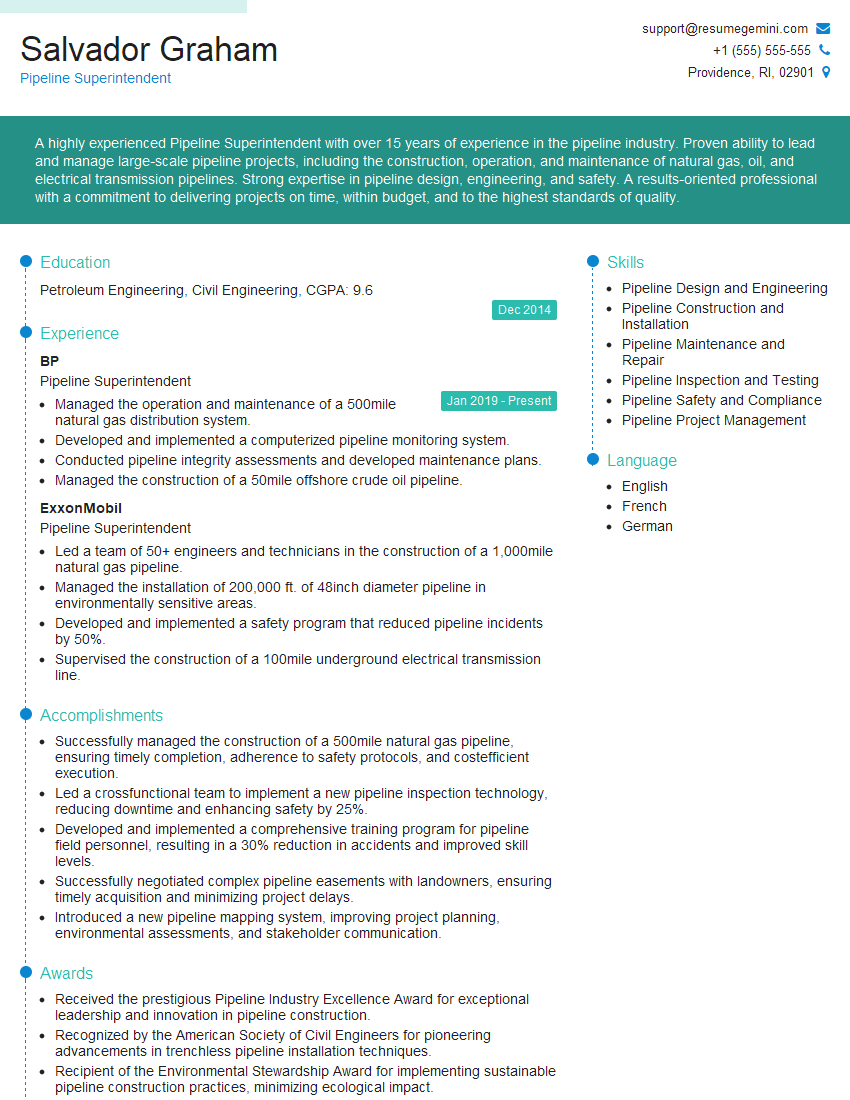
Mastering Pipeline Codes and Standards is crucial for career advancement in this critical industry. A strong understanding of these principles demonstrates your commitment to safety and efficiency, making you a highly valuable asset to any organization. To maximize your job prospects, it’s essential to create an ATS-friendly resume that highlights your skills and experience effectively. We strongly recommend using ResumeGemini, a trusted resource for building professional resumes, to craft a compelling document that showcases your expertise in Pipeline Codes and Standards. Examples of resumes tailored to this field are available to help guide you.
Explore more articles
Users Rating of Our Blogs
Share Your Experience
We value your feedback! Please rate our content and share your thoughts (optional).
What Readers Say About Our Blog
To the interviewgemini.com Webmaster.
Very helpful and content specific questions to help prepare me for my interview!
Thank you
To the interviewgemini.com Webmaster.
This was kind of a unique content I found around the specialized skills. Very helpful questions and good detailed answers.
Very Helpful blog, thank you Interviewgemini team.