Cracking a skill-specific interview, like one for Safety Protocols and Procedures Development and Implementation, requires understanding the nuances of the role. In this blog, we present the questions you’re most likely to encounter, along with insights into how to answer them effectively. Let’s ensure you’re ready to make a strong impression.
Questions Asked in Safety Protocols and Procedures Development and Implementation Interview
Q 1. Describe your experience developing safety protocols for a specific industry.
My experience in developing safety protocols extensively involves the construction industry. I’ve led the development and implementation of comprehensive safety programs for several large-scale projects, focusing on preventing falls from heights, managing heavy machinery operations, and controlling hazardous materials. For example, on a recent high-rise building project, I spearheaded the creation of a detailed fall protection plan that included specific procedures for using harnesses, lifelines, and fall arrest systems. This plan incorporated regular inspections of equipment, detailed training for all workers, and clear communication protocols to ensure consistent adherence. The result was a significant reduction in near-miss incidents and a demonstrably safer work environment.
Another key project involved the development of a comprehensive safety program for the handling of asbestos during demolition work. This involved detailed risk assessments, the specification of appropriate personal protective equipment (PPE), and the establishment of strict decontamination procedures. We even developed customized training modules that included both theoretical knowledge and hands-on practical training using simulated scenarios.
Q 2. Explain the process you use to conduct a Job Safety Analysis (JSA).
A Job Safety Analysis (JSA) is a systematic process to identify hazards and control measures for a specific task. My approach follows these steps:
- Task Breakdown: We meticulously break down the task into individual steps. For example, if the task is ‘changing a lightbulb,’ steps would include accessing the ladder, securing the ladder, turning off the power, removing the old bulb, installing the new bulb, and safely descending.
- Hazard Identification: For each step, we identify potential hazards. For the lightbulb example, hazards could include falls from the ladder, electrical shock, dropping the bulb, and cuts from broken glass.
- Risk Assessment: We assess the likelihood and severity of each hazard. A simple matrix can be used, assigning levels of probability and consequence, allowing for a prioritized approach to mitigation.
- Control Measures: We then determine appropriate control measures. These might include using a non-conductive ladder, using insulated tools, wearing safety glasses, having a spotter, and using appropriate PPE.
- Documentation: The entire process is documented, including the task breakdown, identified hazards, risk assessments, and control measures. This document becomes a vital resource for training and ongoing review.
This structured approach ensures that no aspect of the task is overlooked, leading to a thorough hazard identification and a significantly reduced risk of accidents.
Q 3. How do you identify and assess workplace hazards?
Identifying and assessing workplace hazards requires a multi-faceted approach. I utilize a combination of methods:
- Workplace Inspections: Regular, systematic inspections of the workplace, including equipment, machinery, and work areas, are crucial. This often involves checklists to ensure consistency.
- Incident Reporting and Investigation: Thoroughly investigating near-misses and accidents provides valuable insights into underlying hazards and systemic issues.
- Job Safety Analyses (JSAs): As previously discussed, JSAs provide a detailed breakdown of tasks, highlighting potential hazards.
- Hazard and Operability Studies (HAZOPs): These are more formal studies used for complex processes, designed to systematically identify potential deviations from the norm that could lead to hazards.
- Employee Input: Workers are the most familiar with the work environment and therefore their feedback is invaluable. Open communication and suggestion schemes should be actively encouraged.
The assessment stage involves determining the likelihood and severity of each identified hazard, using a risk matrix to prioritize risk mitigation efforts, focusing resources where they are needed most.
Q 4. What methods do you use to mitigate identified risks?
Risk mitigation involves implementing control measures to reduce or eliminate hazards. My approach follows a hierarchy of controls:
- Elimination: The most effective approach is to remove the hazard altogether. For instance, replacing a dangerous piece of equipment with a safer alternative.
- Substitution: Replacing a hazardous substance with a less hazardous one. For example, replacing a solvent with a water-based alternative.
- Engineering Controls: Implementing physical changes to the workplace to reduce exposure to hazards. This could involve installing guards on machinery, improving ventilation, or providing better lighting.
- Administrative Controls: Implementing changes to work procedures, training, or supervision. This could involve implementing permits to work, rotating employees to reduce exposure, or providing enhanced training.
- Personal Protective Equipment (PPE): Providing workers with appropriate PPE as a last line of defense. This should always be considered a supplementary measure, not the primary method of hazard control.
The selection of the appropriate control measure depends on the specific hazard and the feasibility of different options. Often, a combination of control measures will be necessary to achieve an acceptable level of risk.
Q 5. Describe your experience with implementing and maintaining safety management systems.
My experience with implementing and maintaining safety management systems is extensive. I’ve been involved in the development and implementation of several Occupational Safety and Health Administration (OSHA)-compliant systems, including implementing ISO 45001. This involves:
- Policy Development: Creating a comprehensive safety policy that sets out the organization’s commitment to safety and outlines responsibilities.
- Risk Assessment and Control: Regularly reviewing and updating risk assessments and implementing necessary controls.
- Training and Communication: Delivering safety training to employees and communicating safety information effectively.
- Emergency Preparedness: Developing and regularly testing emergency response plans.
- Monitoring and Review: Regularly monitoring the effectiveness of the safety management system and making improvements as needed. This includes tracking key performance indicators (KPIs) like incident rates, near-miss reports, and training completion rates.
Maintaining these systems requires ongoing commitment and review. Regular audits and employee feedback are essential to ensure the system remains effective and relevant to the evolving workplace.
Q 6. How do you ensure compliance with relevant safety regulations?
Ensuring compliance with relevant safety regulations is paramount. My approach involves:
- Staying Updated: I continuously monitor changes in legislation and best practices, attending relevant training and conferences. This includes subscribing to regulatory updates and engaging with professional organizations.
- Regulatory Audits: Conducting internal audits to identify areas of non-compliance and develop corrective actions.
- Documentation: Maintaining meticulous records of training, inspections, risk assessments, and incident reports to demonstrate compliance.
- Collaboration: Working closely with regulatory bodies and industry experts to seek clarification on regulations and best practices.
- Training: Providing employees with the necessary training on relevant regulations and safety procedures.
Proactive compliance not only protects the organization from penalties but also fosters a culture of safety, protecting the workforce and the organization’s reputation.
Q 7. Explain your experience in conducting safety audits and inspections.
I have extensive experience in conducting safety audits and inspections, using both planned and unplanned approaches. My process includes:
- Planning: Defining the scope of the audit, identifying the areas to be inspected, and establishing a timeline.
- Inspection: Systematically inspecting the workplace, equipment, and procedures against established standards and regulations. This often involves using checklists and taking photographs or videos as evidence.
- Data Collection: Documenting any non-conformances, hazards, or near-misses found during the inspection.
- Reporting: Producing a detailed report summarizing the findings, including recommendations for corrective actions.
- Follow-up: Verifying that the recommended corrective actions have been implemented and are effective.
Through a combination of observations, interviews with employees, and record reviews, safety audits provide a valuable assessment of the effectiveness of the safety management system, highlighting areas for improvement and proactively mitigating risks.
Q 8. How do you handle safety violations or near-miss incidents?
Handling safety violations and near-miss incidents requires a multi-faceted approach focused on corrective action, prevention, and learning. My process begins with immediate action to mitigate any immediate danger. Then, a thorough investigation is conducted to understand the root cause, using techniques like the 5 Whys or fault tree analysis. This involves interviewing witnesses, reviewing documentation, and analyzing the physical environment.
For example, if a near-miss involved a worker almost being struck by a forklift, I’d investigate the forklift’s maintenance records, the worker’s training, the clarity of site signage, and the overall workflow in that area. Based on the findings, corrective actions are implemented, such as improved training, enhanced safety procedures (e.g., implementing stricter speed limits in designated areas), or improved equipment maintenance schedules. Crucially, these incidents are documented, analyzed for trends, and shared across teams to prevent recurrence.
Following the corrective actions, we conduct a follow-up to assess their effectiveness and make further adjustments if needed. This process is documented, and the lessons learned are integrated into future safety training and policy revisions. This closed-loop system ensures continuous improvement and a safer work environment.
Q 9. How do you develop and deliver safety training programs?
Developing and delivering safety training programs involves a systematic approach starting with a needs assessment to identify gaps in knowledge and skills. This is crucial to tailor training to specific roles and risks. I use a blended learning approach combining online modules, interactive workshops, and on-the-job training. This maximizes engagement and retention.
For instance, for a construction site, training might include modules on fall protection, hazard communication, and the proper use of personal protective equipment (PPE). Workshops allow for practical demonstrations and hands-on experience, while on-the-job training provides supervised practice in real-world scenarios. The training is regularly updated to reflect changes in regulations, best practices, and any lessons learned from incidents.
Assessment is a vital component; pre- and post-training evaluations are used to measure the effectiveness of learning. This data helps us refine our training methods and ensure that all employees possess the required knowledge and competence to perform their tasks safely.
Q 10. How do you measure the effectiveness of your safety programs?
Measuring the effectiveness of safety programs requires a combination of quantitative and qualitative data. Quantitative data includes key performance indicators (KPIs) such as the incident rate (frequency and severity), lost-time injury frequency rate (LTIFR), and near-miss reporting rate. Qualitative data involves employee surveys and feedback to assess employee perception of safety culture and training effectiveness.
For example, a decreasing incident rate is a clear indication of improved safety performance. However, this data should be analyzed in conjunction with employee feedback. If the incident rate is low but employee surveys reveal concerns about inadequate safety training or a lack of management support, then improvements are still needed. This integrated approach provides a holistic understanding of the program’s impact. Regular audits and internal inspections further enhance the evaluation process, identifying any weaknesses needing attention.
Q 11. What are your key performance indicators (KPIs) for safety performance?
My key performance indicators (KPIs) for safety performance include:
- Incident Rate: The number of incidents per employee hours worked. This is a fundamental measure of safety performance.
- Lost Time Injury Frequency Rate (LTIFR): The number of lost-time injuries per million hours worked. This provides a more refined measure of severity.
- Near Miss Reporting Rate: The number of near-miss incidents reported. This shows the willingness of employees to report safety concerns and highlights potential problems.
- Employee Safety Training Completion Rate: The percentage of employees who have completed required safety training. This reflects the effectiveness of training programs.
- Safety Observation Scores: Scores from regular safety observations conducted by supervisors and safety personnel. This provides a real-time assessment of safety practices.
These KPIs are tracked regularly, and trends are analyzed to identify areas for improvement. The data informs our safety initiatives, ensuring we focus resources where they have the most significant impact.
Q 12. Describe your experience with incident investigation and root cause analysis.
Incident investigation and root cause analysis are critical for preventing future incidents. My approach involves forming a multi-disciplinary team representing different perspectives, and we follow a structured process. This often includes the use of established methods like the 5 Whys, fault tree analysis, or the TapRooT® methodology.
For example, in investigating a fall from height incident, the 5 Whys might unfold as follows: 1. Why did the worker fall? Because the safety harness failed. 2. Why did the harness fail? Because it was damaged. 3. Why was the harness damaged? Because it wasn’t inspected regularly. 4. Why wasn’t it inspected? Because the inspection procedure wasn’t clearly communicated. 5. Why wasn’t the procedure clearly communicated? Because of inadequate training and documentation.
This process helps us uncover the underlying causes, leading to effective preventive measures. Once the root cause is identified, we develop corrective and preventative actions to mitigate the risk. This includes revising safety procedures, providing additional training, and improving equipment maintenance practices. The findings of the investigation are documented and shared to ensure that lessons learned are incorporated into ongoing safety efforts.
Q 13. How do you communicate safety information to employees at all levels?
Effective communication is vital for a strong safety culture. I use a multi-channel approach to reach employees at all levels. This includes regular safety meetings, toolbox talks, email updates, intranet postings, and visual aids like posters and signage.
For example, safety meetings provide a platform for discussing safety performance, upcoming training, and any recent incidents. Toolbox talks are short, focused discussions on specific hazards relevant to the immediate work tasks. Email and intranet postings provide broader dissemination of information, such as policy updates or new procedures. Visual aids are critical for ensuring that safety messages are easily understood, regardless of language barriers or literacy levels.
Communication is tailored to the audience. Senior management receives comprehensive reports, whereas frontline workers need concise, readily understandable information. Feedback mechanisms are crucial to ensure that the communication is effective and that employee concerns are addressed promptly.
Q 14. Explain your experience with developing safety policies and procedures.
Developing safety policies and procedures is an iterative process that begins with a comprehensive risk assessment. This involves identifying potential hazards and evaluating their risks. This risk assessment then forms the basis for developing policies and procedures that mitigate these risks. These are designed to be clear, concise, and easy to understand for all employees.
For instance, a risk assessment might identify the risk of electrical shock in a workshop. The resulting policy might outline requirements for lock-out/tag-out procedures, personal protective equipment (PPE), and regular electrical safety inspections. Detailed procedures would then explain the step-by-step process for each task. The process involves engaging relevant stakeholders, including employees, supervisors, and safety professionals, to ensure that the policies and procedures are practical and effective.
Regular reviews of safety policies and procedures are vital to ensure that they remain current and relevant, reflecting best practices and incorporating lessons learned from incidents and audits. This iterative process ensures that safety standards remain high, protecting workers and preventing accidents.
Q 15. What is your experience with emergency preparedness and response planning?
Emergency preparedness and response planning is crucial for minimizing the impact of unforeseen events. My experience spans developing comprehensive plans that encompass risk assessment, mitigation strategies, emergency response procedures, and post-incident analysis. For instance, in my previous role at a manufacturing facility, I led the development of a plan that included detailed evacuation procedures, designated assembly points, communication protocols, and emergency contact lists. This plan was rigorously tested through regular drills, which helped us identify and address weaknesses, ultimately improving our response time and effectiveness in simulated emergency scenarios. We also integrated a robust system for tracking and managing hazardous materials, ensuring quick access to crucial information during incidents. Furthermore, I’ve worked on plans incorporating detailed response protocols for specific hazards such as chemical spills, equipment malfunctions, and natural disasters, ensuring that everyone understands their role and responsibilities.
Career Expert Tips:
- Ace those interviews! Prepare effectively by reviewing the Top 50 Most Common Interview Questions on ResumeGemini.
- Navigate your job search with confidence! Explore a wide range of Career Tips on ResumeGemini. Learn about common challenges and recommendations to overcome them.
- Craft the perfect resume! Master the Art of Resume Writing with ResumeGemini’s guide. Showcase your unique qualifications and achievements effectively.
- Don’t miss out on holiday savings! Build your dream resume with ResumeGemini’s ATS optimized templates.
Q 16. How do you integrate safety into the design and operation of processes?
Integrating safety into design and operations is paramount. It’s not an afterthought; it’s a foundational element. I employ a proactive, multi-layered approach. This begins with a thorough hazard identification and risk assessment process during the design phase, using techniques like HAZOP (Hazard and Operability Study) or FMEA (Failure Mode and Effects Analysis). For example, when designing a new production line, we identified potential pinch points and incorporated safety features like light curtains and emergency stop buttons to prevent injuries. During operations, I focus on implementing robust safety management systems (SMS), including regular safety inspections, training programs, and clear communication channels to foster a safety-conscious culture. We also use job hazard analyses (JHAs) to pinpoint specific risks in individual tasks and develop control measures. Think of it like building a house—you wouldn’t start without blueprints; similarly, safety must be built into the process from the beginning.
Q 17. Explain your experience working with safety data sheets (SDS).
Safety Data Sheets (SDSs) are essential documents providing comprehensive information on hazardous materials. My experience includes extensive use of SDSs for chemical handling, storage, and disposal. I’ve trained employees on proper SDS interpretation, emphasizing the importance of understanding hazards, protective measures, and emergency procedures. I’ve also implemented systems for SDS accessibility and management, ensuring that updated SDSs are readily available to all relevant personnel, either physically or through a digital database. For example, I’ve developed a system where SDSs are linked to the specific location of chemicals within the facility, making retrieval quick and efficient during emergencies. Further, I ensure compliance with regulations that mandate SDS availability and training, such as OSHA’s Hazard Communication Standard.
Q 18. How do you use data to inform safety improvements?
Data is the cornerstone of effective safety improvement. I leverage data from various sources, including incident reports, near-miss reports, safety inspections, and employee surveys, to identify trends and patterns. For example, analyzing incident reports might reveal a high incidence of slips and falls in a particular area, prompting a review of flooring conditions and employee training. This data-driven approach allows for targeted interventions, rather than relying on guesswork. I use statistical methods to analyze data, allowing me to prioritize areas needing the most attention and measure the effectiveness of implemented improvements. This ensures that resources are used effectively and demonstrates a return on investment in safety initiatives.
Q 19. Describe your experience with personal protective equipment (PPE) selection and use.
Personal Protective Equipment (PPE) selection and use are critical for minimizing workplace hazards. My experience encompasses selecting appropriate PPE based on a thorough risk assessment. This includes evaluating the specific hazards present and choosing PPE that provides adequate protection, considering factors such as comfort, fit, and ease of use. For instance, if working with corrosive chemicals, selecting appropriate gloves, eye protection, and protective clothing is paramount. I ensure that employees are properly trained on how to use, inspect, and maintain their PPE. Regular audits and inspections help maintain standards. We don’t just provide PPE; we ensure it’s used correctly. I also emphasize the importance of proper disposal and replacement procedures for used or damaged PPE.
Q 20. How do you ensure the proper use and maintenance of safety equipment?
Proper use and maintenance of safety equipment are vital. This involves establishing clear procedures for inspection, testing, and maintenance, including scheduling regular checks and implementing a system for tracking maintenance records. We use a combination of visual inspections, functional tests, and calibration checks, depending on the type of equipment. For example, fire extinguishers are inspected monthly and undergo annual servicing. Training employees on the proper use and limitations of safety equipment is essential. This includes demonstrating how to use equipment correctly and highlighting the importance of reporting any malfunctions or damage promptly. A well-maintained inventory system helps us track equipment, order replacements, and maintain adequate supply levels.
Q 21. What is your familiarity with different safety standards and regulations (e.g., OSHA, ISO 45001)?
I am well-versed in various safety standards and regulations, including OSHA (Occupational Safety and Health Administration) standards in the United States and ISO 45001 (Occupational health and safety management systems). My understanding extends to interpreting these standards and ensuring compliance within operational contexts. For example, I’ve overseen the implementation of OSHA’s lockout/tagout procedures to prevent accidental energization of equipment during maintenance. I also have experience with ISO 45001 implementation, which involves establishing and maintaining a comprehensive occupational health and safety management system, including risk assessment, hazard control, and continual improvement. Understanding these frameworks allows me to proactively identify potential hazards, implement appropriate controls, and ensure compliance, minimizing risks and fostering a safe work environment.
Q 22. Describe your approach to managing safety in a complex or high-risk environment.
Managing safety in complex, high-risk environments requires a layered approach, focusing on proactive hazard identification and mitigation rather than reactive incident response. This involves a robust system of controls, starting with eliminating hazards altogether whenever feasible. If elimination isn’t possible, we move down the hierarchy of controls: substitution, engineering controls, administrative controls, and finally, personal protective equipment (PPE).
My approach begins with a thorough hazard identification, often employing methods like Job Safety Analysis (JSA) or Hazard and Operability Study (HAZOP). This involves breaking down tasks into steps, identifying potential hazards at each step, and evaluating the associated risks. Then, we select appropriate control measures. For example, in a chemical processing plant, we might substitute a hazardous chemical with a less hazardous alternative (substitution). If that’s not feasible, we might install automated safety systems (engineering control) or implement strict work permits (administrative control). PPE, such as respirators or protective clothing, would be the last line of defense.
Regular audits and inspections are crucial to ensure controls remain effective and identify any emerging hazards. The entire process needs to be documented, reviewed, and updated regularly, reflecting any changes in the operational environment or technology. Furthermore, communication and training are vital to empower employees to identify and report hazards.
Q 23. How do you engage employees in safety initiatives and promote a safety culture?
Engaging employees is paramount to building a strong safety culture. It’s not just about compliance; it’s about fostering a shared commitment to safety. This starts with leadership buy-in – demonstrating that safety is a core value, not just an add-on.
I employ several strategies:
- Participatory Safety Programs: Involving employees in the development and implementation of safety programs encourages ownership and commitment. This could include safety committees where employees contribute ideas and suggestions.
- Regular Safety Training: Tailored, engaging training programs, including practical exercises and simulations, can enhance knowledge and skills. I believe in using various methods, including gamification, to make learning fun and effective.
- Recognition and Rewards: Acknowledging and rewarding safe work practices boosts morale and reinforces positive behaviors. This could range from verbal praise to formal safety awards.
- Open Communication Channels: Creating an environment where employees feel comfortable reporting hazards, near misses, and safety concerns without fear of retribution is critical. This often involves anonymous reporting systems and regular safety meetings.
- Leadership Engagement: Leaders visibly participating in safety initiatives, demonstrating safe work practices, and actively engaging with employees on safety issues set the tone for the entire organization.
Ultimately, a successful safety culture is built on trust, open communication, and shared responsibility. It’s a continuous process of improvement, learning from incidents and near misses to prevent future accidents.
Q 24. Describe a time when you had to adapt safety protocols due to unforeseen circumstances.
During a large-scale construction project, we experienced unexpected heavy rainfall that created significant flooding on-site. Our original safety protocols didn’t account for such extreme weather conditions. The immediate concern was the risk of electrocution from exposed electrical equipment and the risk of workers slipping and falling in the mud and water.
Our response was swift and decisive. We immediately implemented a temporary halt to all outdoor operations and evacuated the site. A safety team was deployed to assess the immediate risks and formulate an adapted plan. We created designated safe zones, isolated electrical equipment, and provided workers with waterproof boots and high-visibility clothing. We also revised our site access controls, implementing stricter guidelines for entry during inclement weather. The revised protocols were communicated immediately to all personnel. Following the incident, we reviewed our emergency response plan and incorporated contingency measures for extreme weather, ensuring our protocols were more robust and comprehensive.
Q 25. How do you prioritize safety initiatives given competing demands and resources?
Prioritizing safety initiatives in a resource-constrained environment demands a strategic approach. I use a risk-based prioritization framework. This involves a detailed risk assessment for each potential initiative, considering the likelihood and severity of potential hazards, and the potential impact of implementing the initiative.
We then rank the initiatives based on their risk scores. High-risk, high-impact initiatives are given the highest priority, even if they might require more resources. This framework is presented to management, enabling data-driven discussions on resource allocation. We might use a decision matrix to visually represent the risk levels and compare initiatives side-by-side.
Transparency is key. We clearly communicate our decision-making process to all stakeholders, explaining why certain initiatives are prioritized over others. This helps build trust and buy-in even when some projects may be deferred.
Q 26. Explain your experience with conducting safety risk assessments using different methodologies (e.g., HAZOP, FTA).
I have extensive experience conducting safety risk assessments using various methodologies, including HAZOP (Hazard and Operability Study) and FTA (Fault Tree Analysis).
HAZOP is a systematic and structured method for identifying potential hazards in a process. It involves a team reviewing each step of a process, using guide words (e.g., ‘no,’ ‘more,’ ‘less,’ ‘part of’) to challenge the design and identify deviations that could lead to hazards. For example, in a pipeline system, a HAZOP might identify the hazard of ‘no flow’ and explore its causes and consequences.
FTA, on the other hand, is a deductive method that focuses on a specific unwanted event (top event) and works backward to identify the underlying causes. It uses Boolean logic to represent the relationships between events and shows how a combination of failures can lead to the top event. For instance, an FTA for a fire in a facility might explore the sequence of events leading to the fire, such as equipment malfunction, failure of the fire suppression system, and human error.
The choice of methodology depends on the complexity of the system and the specific goals of the assessment. Often, a combination of methods is employed to achieve a comprehensive understanding of potential risks.
Q 27. How do you incorporate ergonomic principles into safety protocols?
Ergonomic principles aim to minimize physical strain and discomfort in the workplace. Integrating these into safety protocols significantly reduces the risk of musculoskeletal disorders (MSDs) and injuries.
This starts with the design phase of any work process or system. We ensure workstations are designed to accommodate individual differences, using adjustable chairs, desks, and monitor heights. Tools and equipment are chosen to minimize repetitive movements and awkward postures. Training is crucial to teach employees proper lifting techniques, posture, and how to use equipment safely. Job rotation and regular breaks are integrated to prevent repetitive strain injuries. Regular ergonomic assessments of workstations and processes ensure that workplace layouts and procedures are optimized for safety and comfort.
For example, in an assembly line, ergonomic considerations might involve designing the workstations to minimize reaching, twisting, and bending, providing adjustable tools, and introducing regular micro-breaks to reduce fatigue. This proactively minimizes the risk of carpal tunnel syndrome or back injuries.
Q 28. How do you stay updated on the latest developments in safety regulations and best practices?
Staying current with safety regulations and best practices is ongoing. I actively participate in professional organizations like the American Society of Safety Professionals (ASSP), attending conferences and workshops. I subscribe to relevant journals and industry publications, which provide insights into emerging safety challenges and solutions. Additionally, I monitor government agencies like OSHA (Occupational Safety and Health Administration) for updates to regulations and guidance documents.
Online resources, such as industry-specific websites and databases, provide access to the latest research and best practices. Networking with other safety professionals, through online forums and professional groups, also helps share knowledge and learn from others’ experiences. Continuous learning is crucial in this rapidly evolving field.
Key Topics to Learn for Safety Protocols and Procedures Development and Implementation Interview
- Hazard Identification and Risk Assessment: Understanding methodologies like HAZOP, What-If analysis, and FMEA to proactively identify potential hazards and assess their risks.
- Developing Safety Procedures: Creating clear, concise, and actionable procedures that address identified hazards, incorporating best practices and legal requirements. Practical application: Designing a lockout/tagout procedure for machinery maintenance.
- Implementation and Training: Strategies for effective rollout of new safety protocols, including training programs, communication plans, and ongoing monitoring.
- Safety Management Systems (SMS): Familiarity with various SMS frameworks (e.g., ISO 45001) and their application in a real-world setting. Practical application: Auditing existing safety systems for compliance and improvement.
- Incident Investigation and Reporting: Mastering root cause analysis techniques to identify contributing factors to incidents and develop corrective actions. Practical application: Investigating a near-miss incident and implementing preventative measures.
- Regulatory Compliance: Understanding relevant safety regulations and standards (OSHA, ANSI, etc.) and ensuring adherence to legal requirements. Practical application: Ensuring compliance with specific industry regulations regarding personal protective equipment (PPE).
- Performance Measurement and Continuous Improvement: Utilizing key performance indicators (KPIs) to track safety performance and identify areas for improvement. Practical application: Developing and tracking leading and lagging safety indicators.
- Emergency Response Planning: Designing and implementing effective emergency response plans, including evacuation procedures and crisis communication strategies.
- Communication and Teamwork: Highlighting the importance of effective communication and collaboration across teams to promote a strong safety culture.
Next Steps
Mastering Safety Protocols and Procedures Development and Implementation is crucial for career advancement in numerous industries. Demonstrating expertise in this area will significantly enhance your job prospects and open doors to leadership roles. To make your qualifications shine, create an ATS-friendly resume that highlights your skills and experience effectively. ResumeGemini is a trusted resource that can help you build a professional and impactful resume. We provide examples of resumes tailored to Safety Protocols and Procedures Development and Implementation to guide you in showcasing your abilities. Take advantage of these resources to build a resume that truly reflects your expertise and helps secure your dream job.
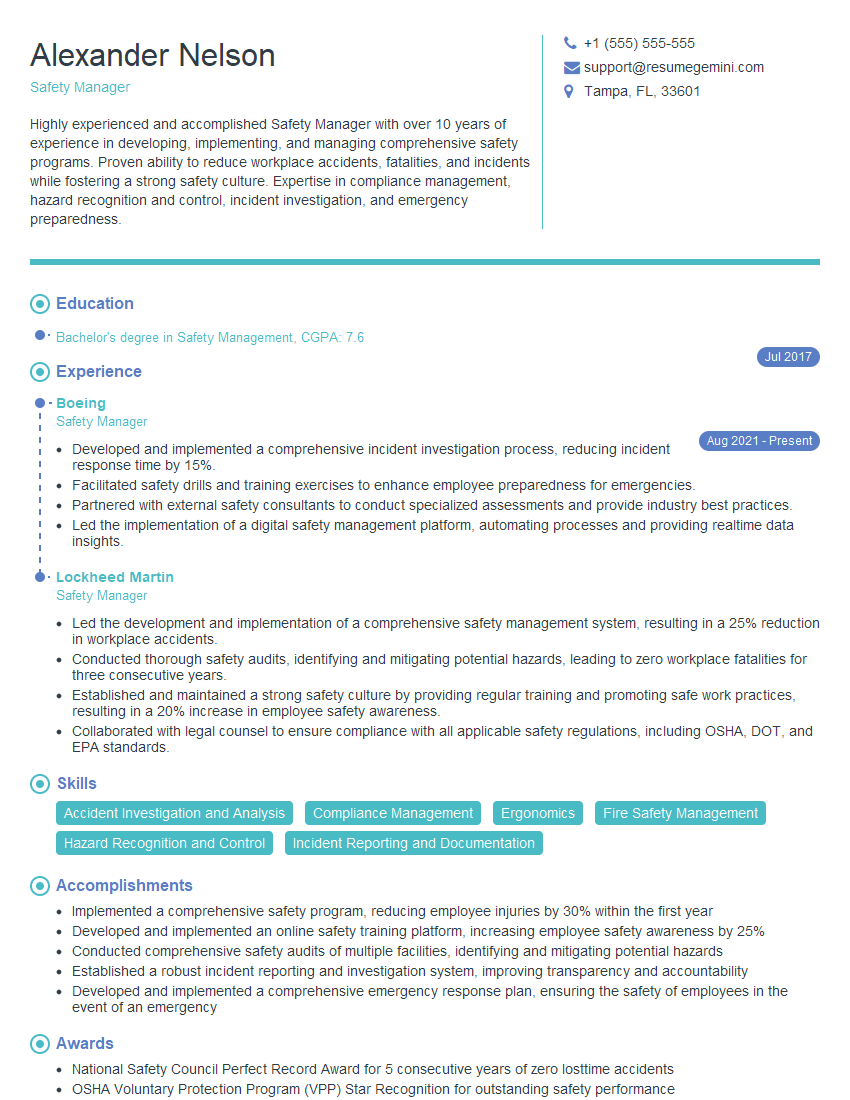
Safety Manager Resume Sample
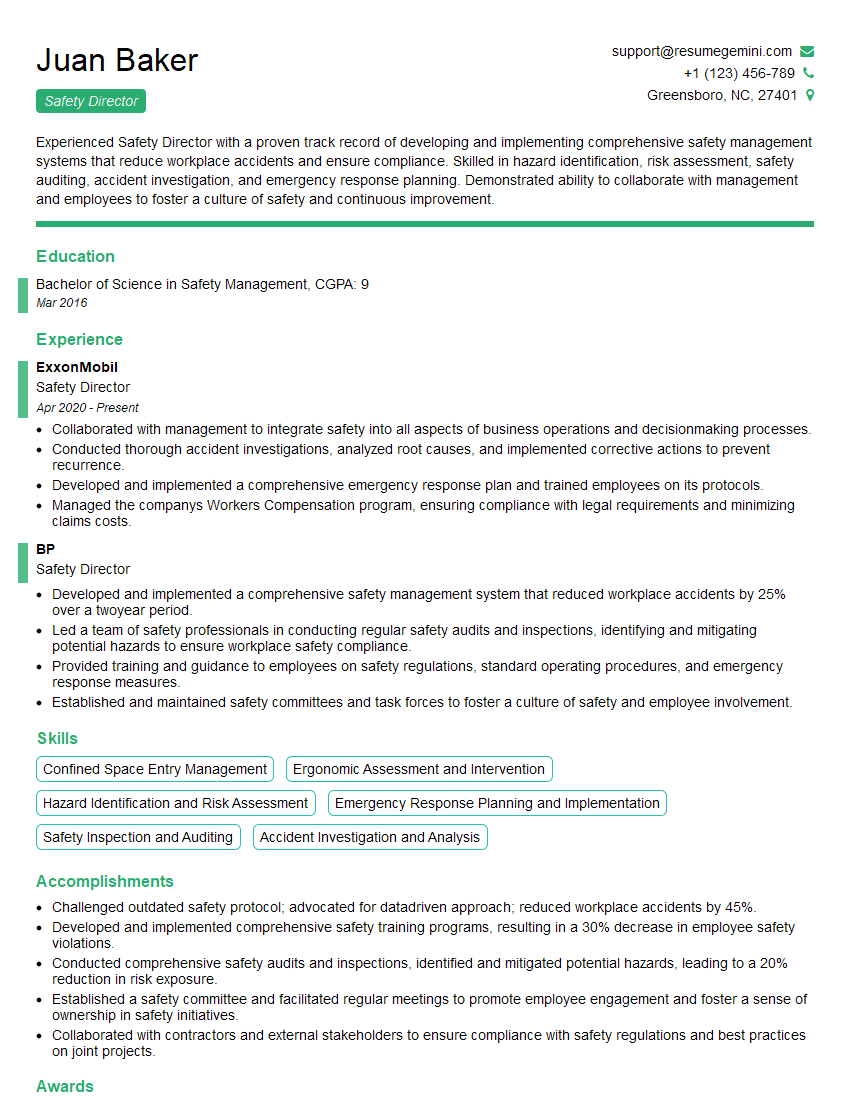
Safety Director Resume Sample
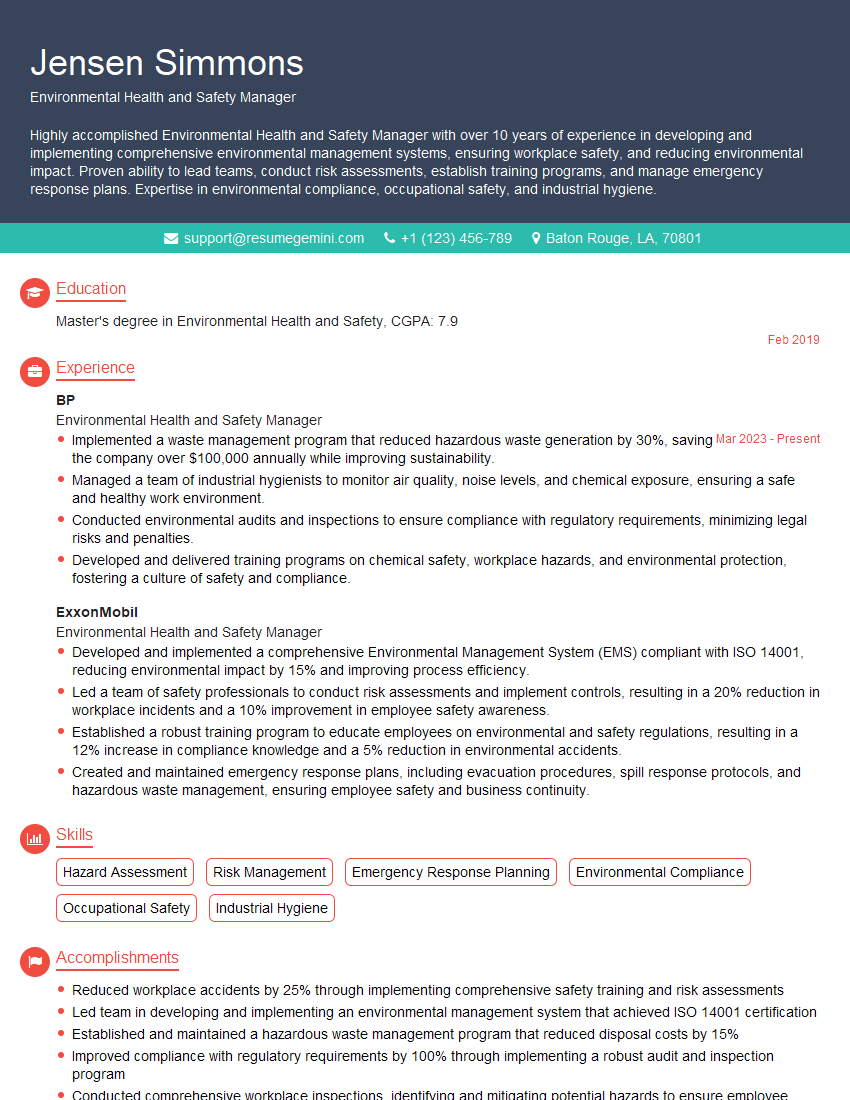
Environmental Health and Safety Manager Resume Sample
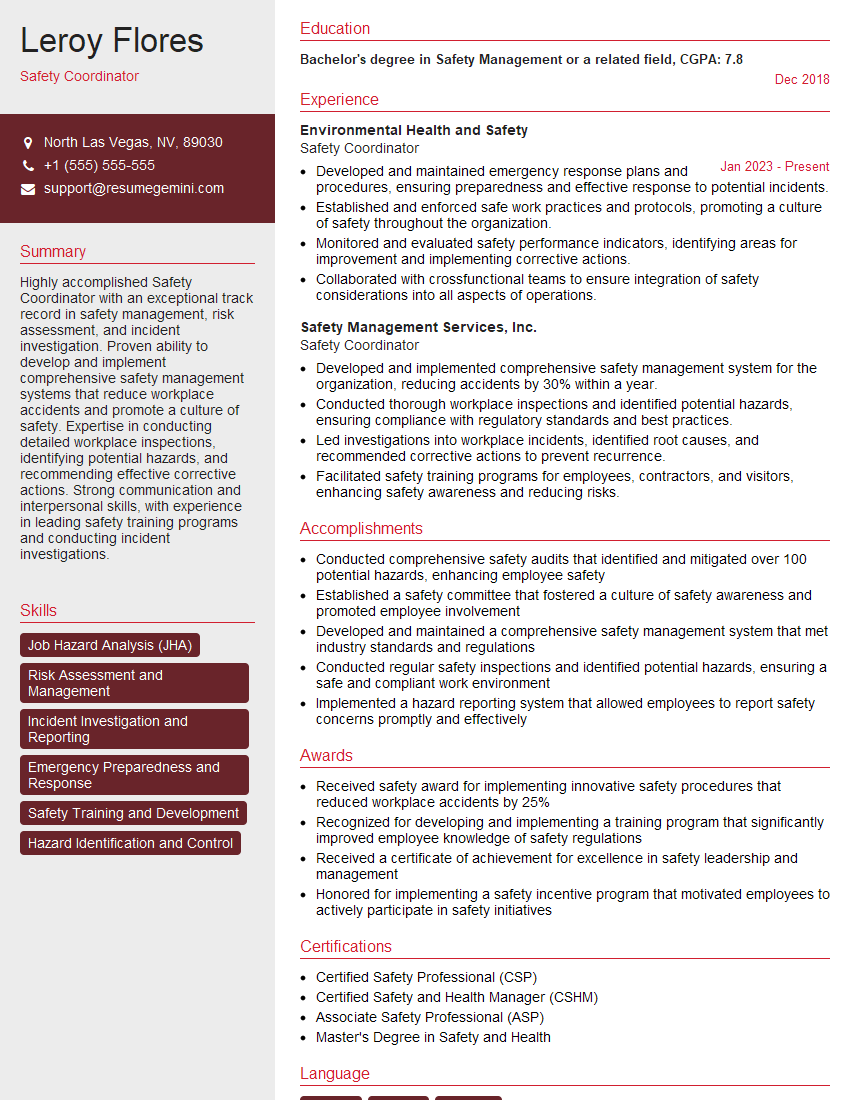
Safety Coordinator Resume Sample
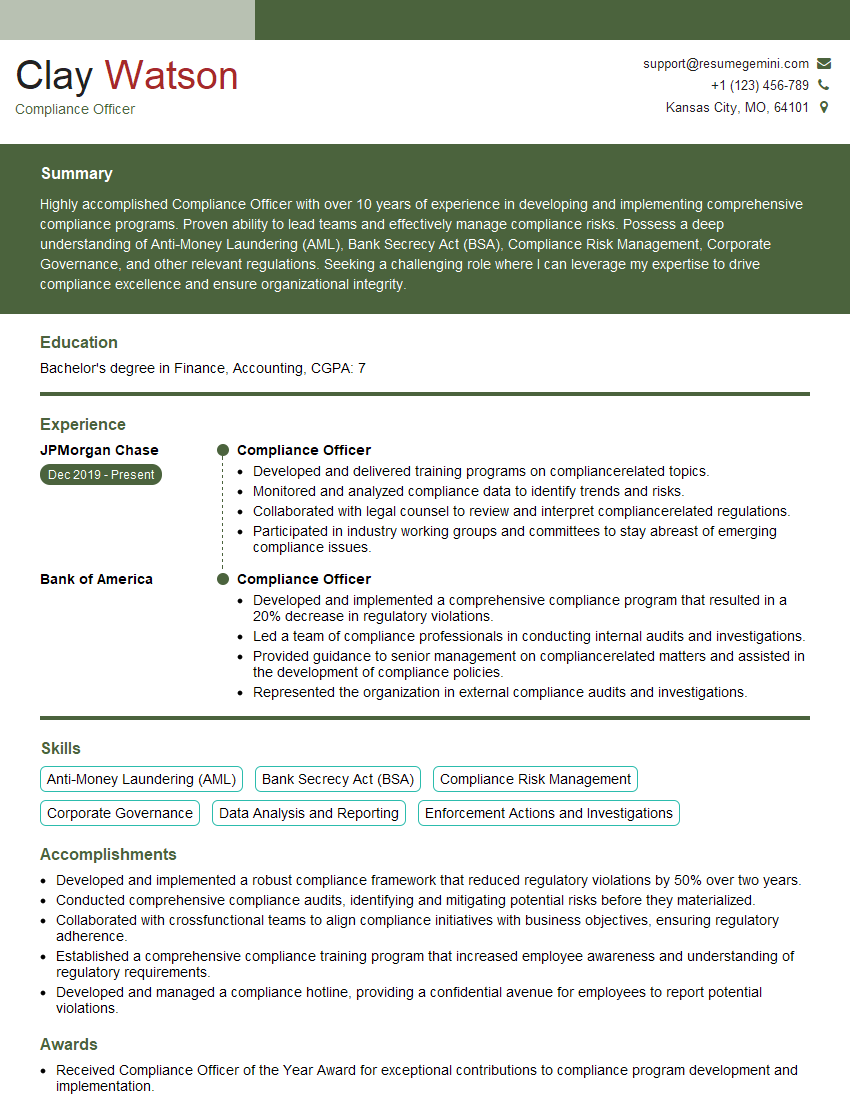
Compliance Officer Resume Sample
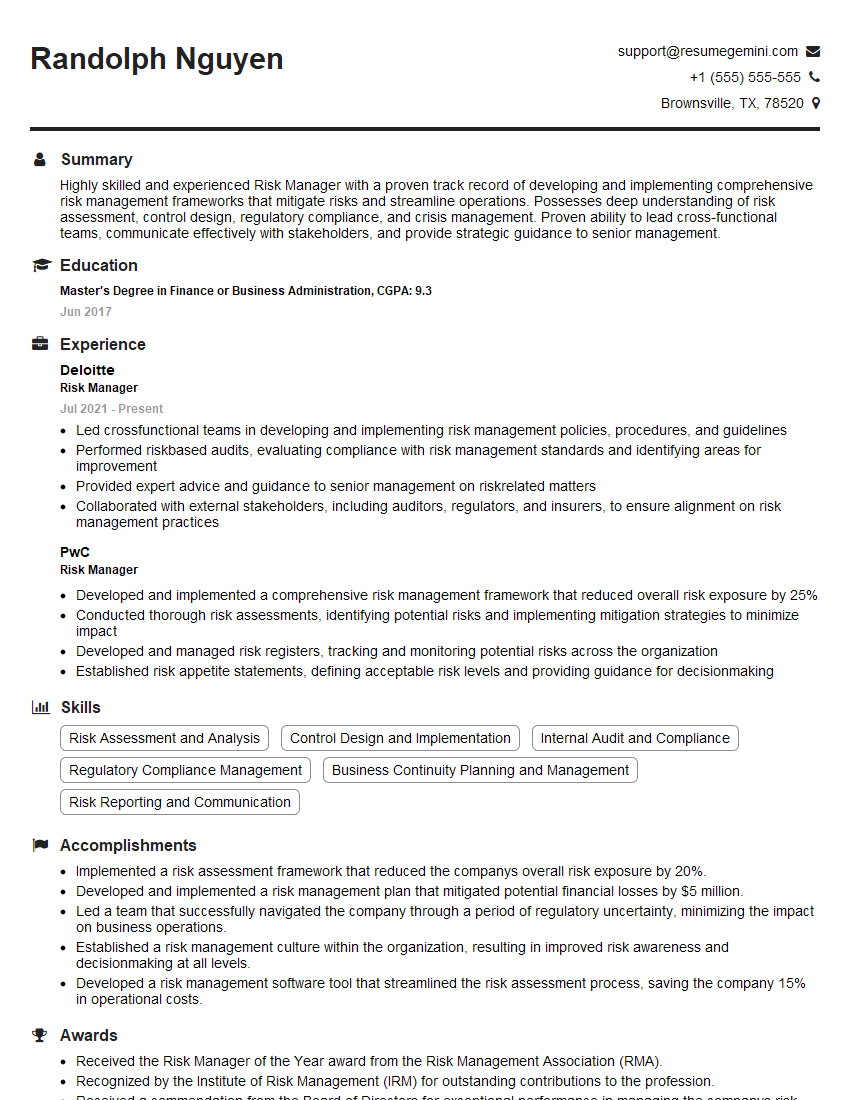
Risk Manager Resume Sample
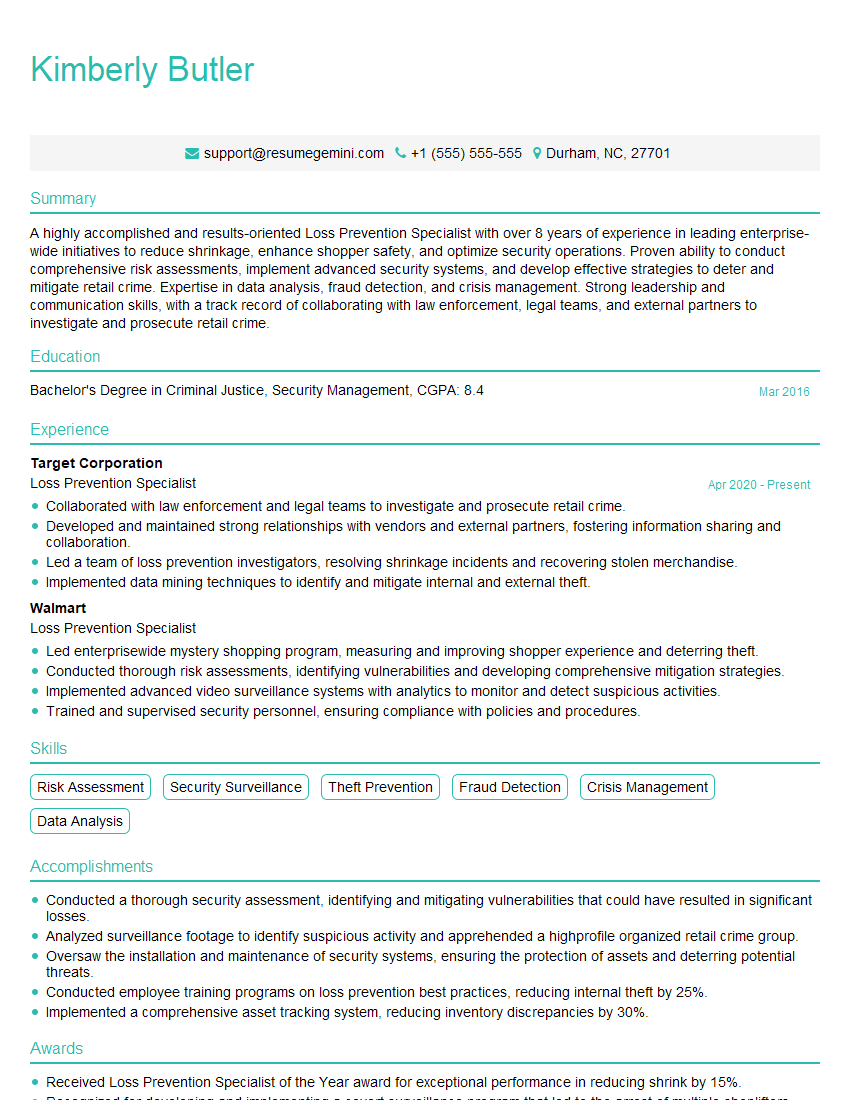
Loss Prevention Specialist Resume Sample
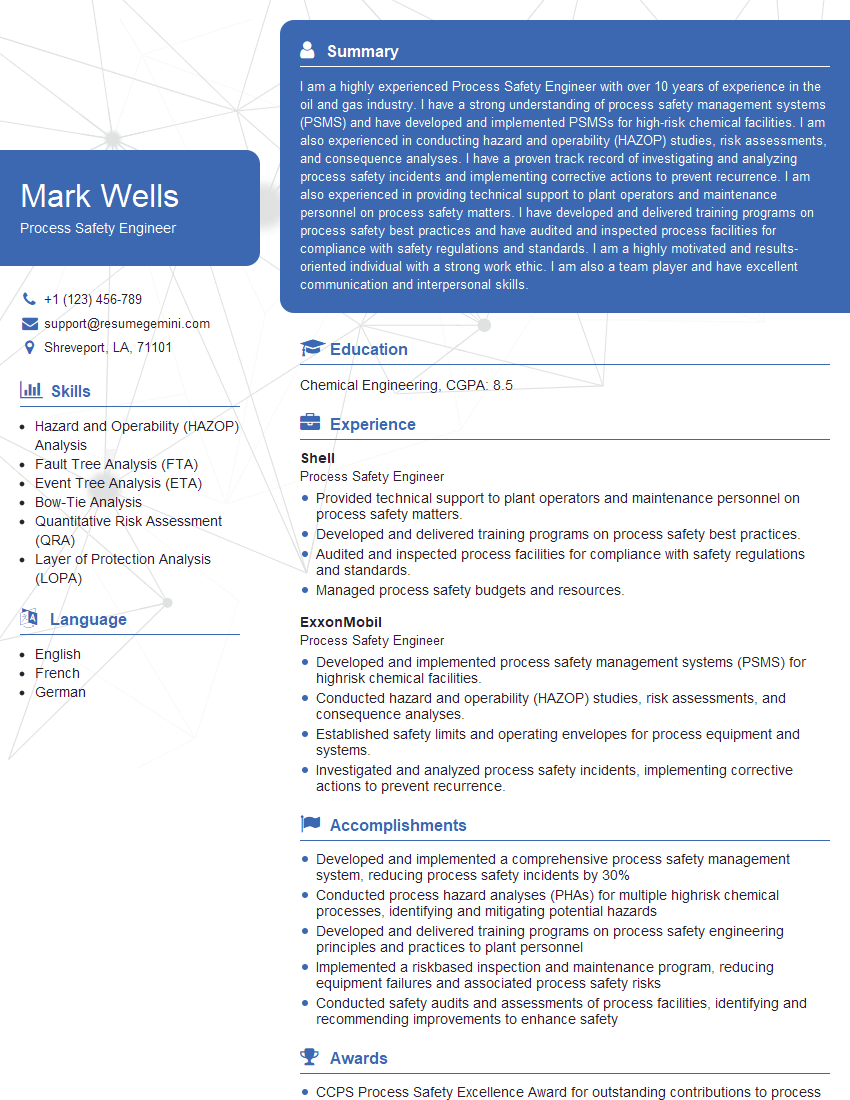
Process Safety Engineer Resume Sample
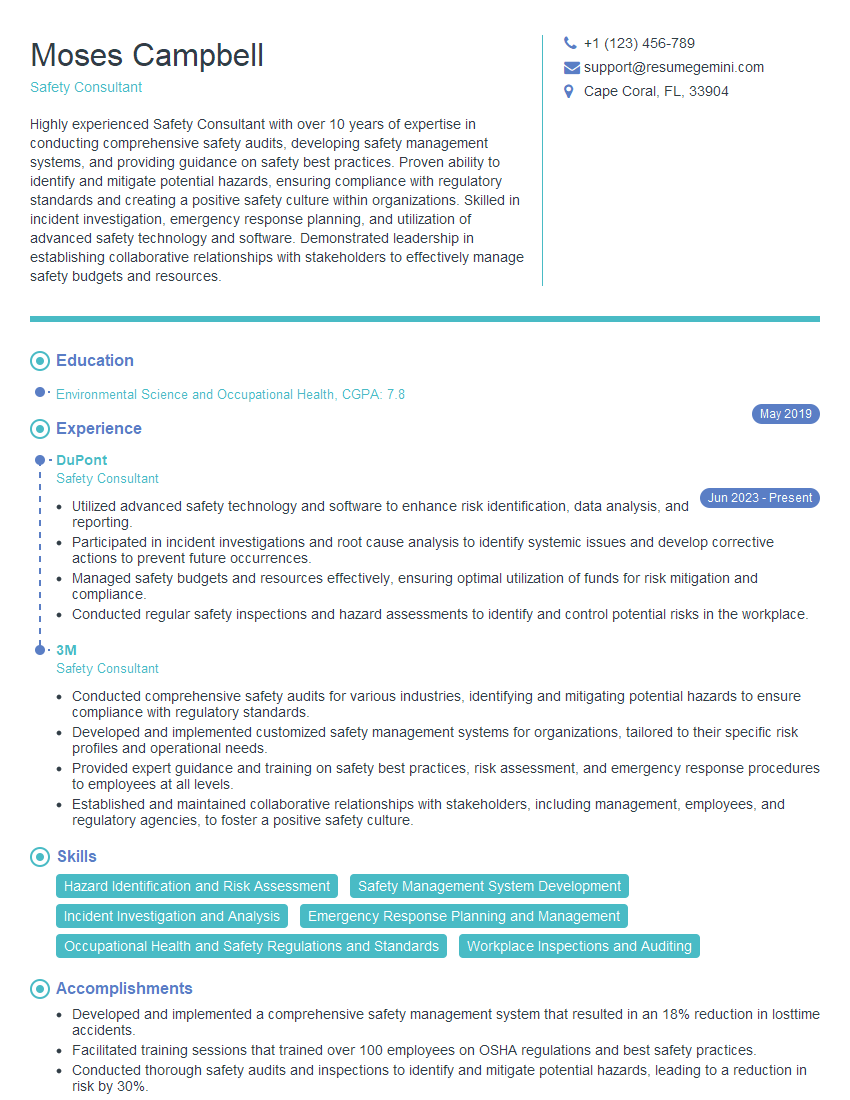
Safety Consultant Resume Sample
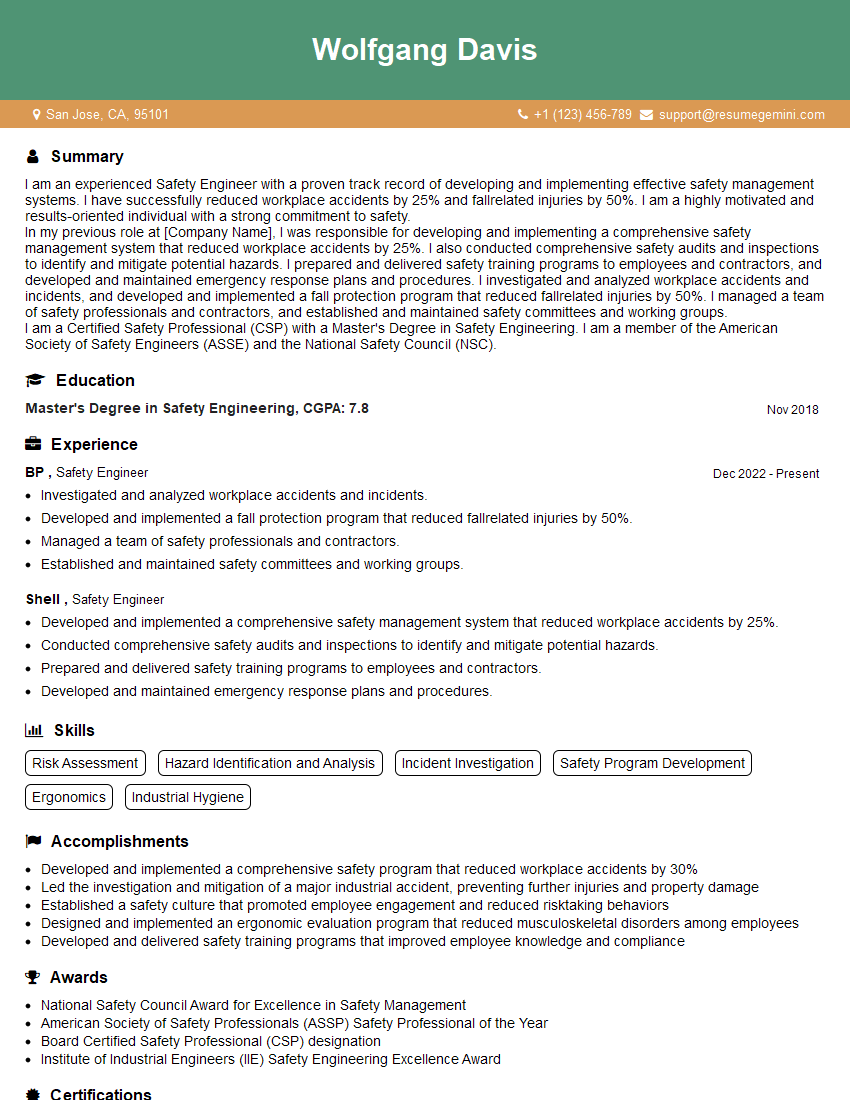
Safety Engineer Resume Sample
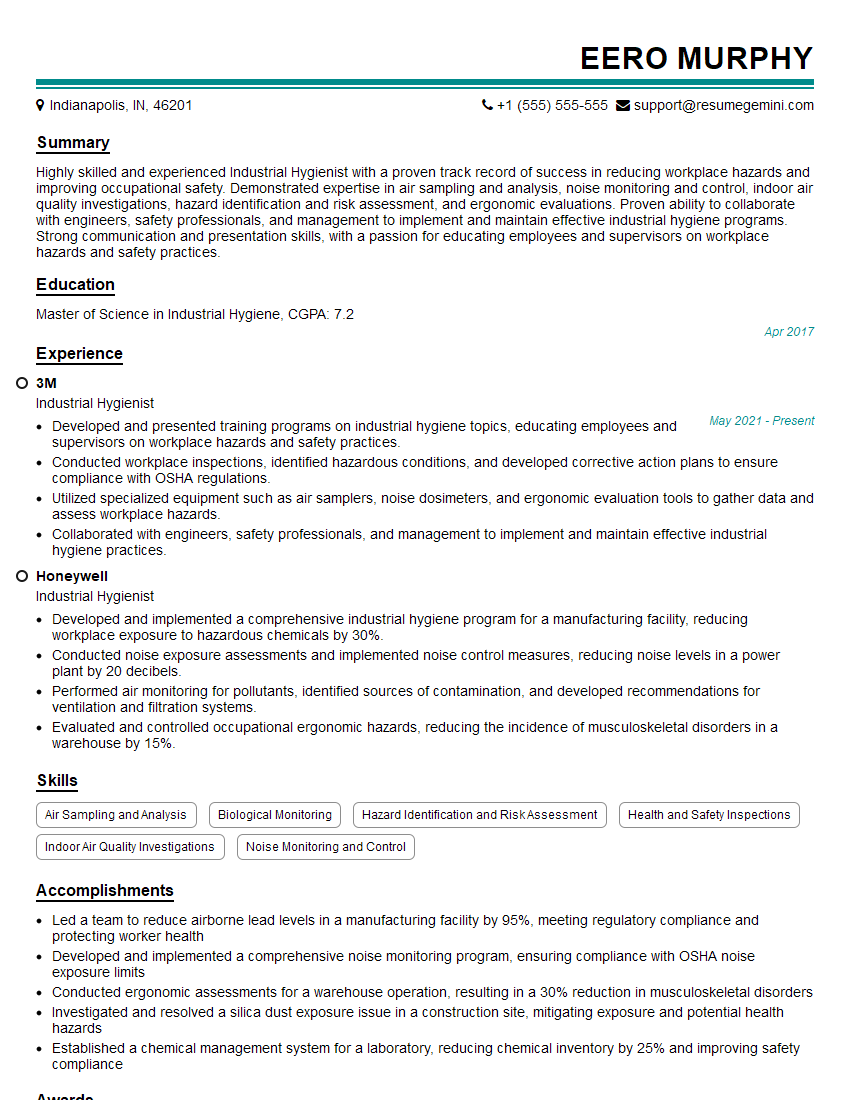
Industrial Hygienist Resume Sample
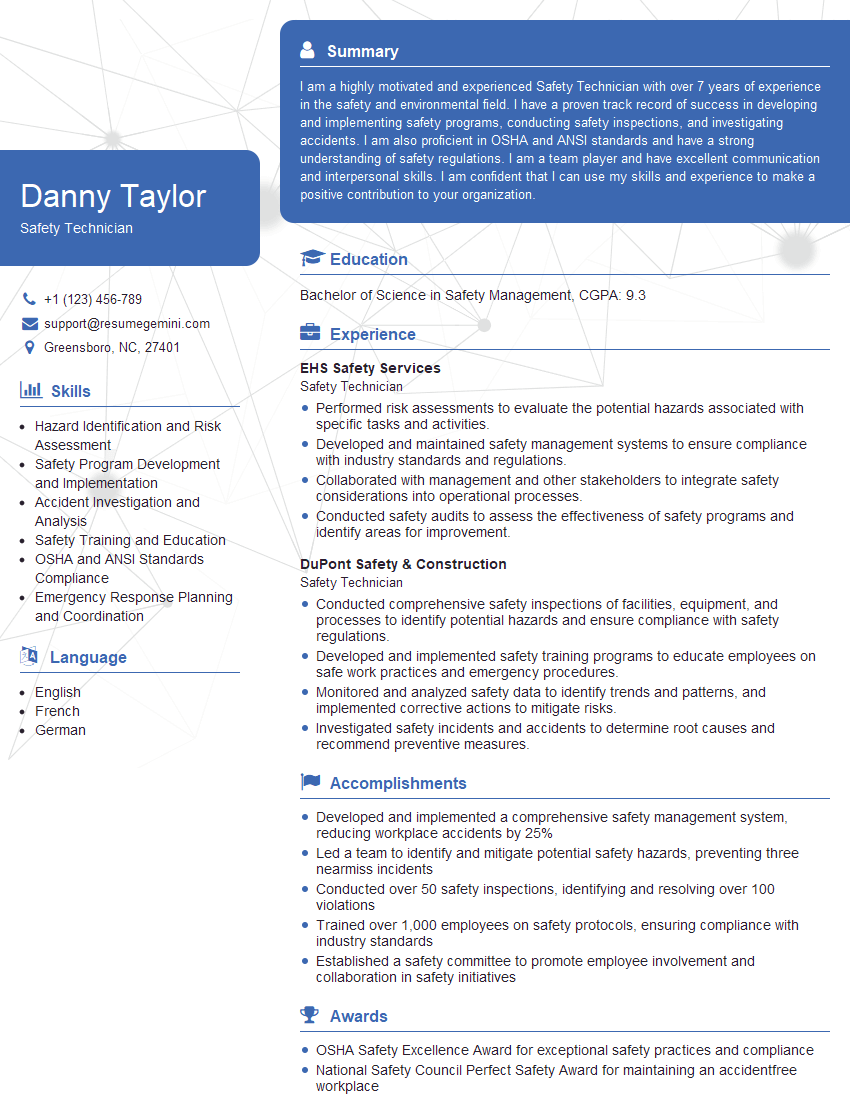
Safety Technician Resume Sample
Explore more articles
Users Rating of Our Blogs
Share Your Experience
We value your feedback! Please rate our content and share your thoughts (optional).
What Readers Say About Our Blog
To the interviewgemini.com Webmaster.
Very helpful and content specific questions to help prepare me for my interview!
Thank you
To the interviewgemini.com Webmaster.
This was kind of a unique content I found around the specialized skills. Very helpful questions and good detailed answers.
Very Helpful blog, thank you Interviewgemini team.