Preparation is the key to success in any interview. In this post, we’ll explore crucial Child Neurology interview questions and equip you with strategies to craft impactful answers. Whether you’re a beginner or a pro, these tips will elevate your preparation.
Questions Asked in Child Neurology Interview
Q 1. Describe the pathophysiology of cerebral palsy.
Cerebral palsy (CP) is a group of permanent movement disorders that appear in early childhood. Its pathophysiology is complex and not fully understood, but it’s fundamentally caused by damage to the developing brain. This damage can occur before birth (prenatal), during birth (perinatal), or shortly after birth (postnatal).
- Prenatal causes: These include infections (like cytomegalovirus or toxoplasmosis), genetic disorders (like Down syndrome), brain malformations, and exposure to toxins or teratogens during pregnancy.
- Perinatal causes: These often involve complications during labor and delivery, such as lack of oxygen (hypoxia) to the brain, premature birth, or low birth weight.
- Postnatal causes: These include severe infections like meningitis or encephalitis, traumatic brain injury, and stroke in infancy.
The damage results in abnormal brain development, affecting the brain’s ability to control movement and posture. The specific type and severity of CP depends on the location and extent of the brain damage. For example, damage to the motor cortex might lead to spastic CP, characterized by muscle stiffness and difficulty with movement, while damage to the cerebellum might result in ataxic CP, featuring balance and coordination problems. It’s important to remember that CP is a lifelong condition, and while management can significantly improve quality of life, there’s no cure.
Q 2. Explain the diagnostic criteria for epilepsy in children.
Diagnosing epilepsy in children requires a thorough evaluation, combining clinical history with diagnostic tests. The key diagnostic criterion is the occurrence of at least two unprovoked seizures, or one seizure with a high risk of recurrence.
- Detailed history: A comprehensive history is crucial, including details about the seizure (e.g., type, duration, associated symptoms), family history of epilepsy, any preceding illnesses or injuries, and developmental milestones.
- Neurological examination: This assesses the child’s neurological status, looking for any signs of underlying brain abnormalities or developmental delays.
- Electroencephalography (EEG): This is a key diagnostic test, recording the brain’s electrical activity. Abnormal EEG patterns can help identify the type of epilepsy and its location in the brain. It’s important to note that a normal EEG doesn’t rule out epilepsy.
- Neuroimaging (MRI or CT scan): These tests can identify structural abnormalities in the brain that may be contributing to the seizures.
- Blood tests: These may be used to rule out metabolic disorders or infections that can cause seizures.
A diagnosis of epilepsy is usually made by a neurologist or pediatric neurologist based on a careful integration of these findings. The goal is to accurately identify the type of epilepsy and develop an appropriate treatment plan.
Q 3. What are the common causes of pediatric headaches?
Pediatric headaches are a common complaint, and their causes vary widely depending on age and other factors. Common causes include:
- Tension-type headaches: These are the most frequent type, characterized by mild to moderate pain, often described as a tight band around the head. Stress, anxiety, and poor posture are common contributing factors.
- Migraine headaches: These are more severe and often accompanied by nausea, vomiting, and sensitivity to light and sound. They can be debilitating and may have a genetic component.
- Sinusitis: Infection or inflammation of the sinuses can cause headaches, usually localized to the forehead or cheeks.
- Less common causes: In some cases, headaches may indicate more serious underlying conditions like brain tumors, infections (meningitis or encephalitis), or increased intracranial pressure. These situations require urgent medical attention.
It’s vital to differentiate between primary headaches (like tension-type and migraine), which are benign, and secondary headaches, which are symptoms of another medical condition. A careful history and neurological examination are critical in making this distinction. Any sudden, severe headache, especially with neurological symptoms, should warrant immediate medical evaluation.
Q 4. Differentiate between different types of pediatric seizures.
Pediatric seizures are classified based on their clinical features and EEG findings. Some common types include:
- Focal seizures (partial seizures): These begin in one area of the brain and may involve only a part of the body. They can be simple (no loss of consciousness) or complex (with altered consciousness). Examples include focal motor seizures (jerking of one limb) and focal impaired awareness seizures (staring spells with altered awareness).
- Generalized seizures: These involve the whole brain from the onset. Common types include:
- Tonic-clonic seizures (grand mal): These involve a sudden loss of consciousness, followed by stiffening of the body (tonic phase) and then rhythmic jerking (clonic phase).
- Absence seizures (petit mal): These are brief periods of staring and unresponsiveness, often without other noticeable symptoms. They’re more common in children.
- Myoclonic seizures: These involve brief, involuntary muscle jerks.
- Atonic seizures (drop attacks): These involve a sudden loss of muscle tone, causing the child to fall.
Proper classification is crucial for guiding treatment. A detailed description of the seizure, including duration, symptoms, and post-ictal state (the period after the seizure), is essential for accurate diagnosis.
Q 5. Discuss the management of febrile seizures.
Febrile seizures are convulsions that occur in children with a high fever (usually above 102°F or 39°C), typically between 6 months and 5 years of age. Management focuses on:
- Immediate care during the seizure: The primary goal is to protect the child from injury. This involves placing the child on their side to prevent choking, removing any nearby hazards, and timing the seizure. Do not restrain the child, and do not attempt to put anything in their mouth.
- Fever reduction: Administering antipyretics like acetaminophen or ibuprofen can help reduce the fever. Sponge baths are generally not recommended.
- Observational care: After the seizure, careful observation is crucial. Monitor the child’s respiratory status, level of consciousness, and neurological function.
- Medical consultation: A medical evaluation is necessary to identify the underlying cause of the fever and rule out serious infections like meningitis or encephalitis.
- Prophylactic medication: Prophylactic anticonvulsants are generally not recommended for simple febrile seizures unless there are specific risk factors, such as prolonged or complex seizures, or family history of epilepsy.
Reassurance to parents is vital, as febrile seizures, while frightening, are usually benign and self-limiting. However, it’s critical to seek medical attention for any concerns.
Q 6. Outline the assessment of a child with developmental delay.
Assessing a child with developmental delay requires a multidisciplinary approach, focusing on identifying areas of delay and determining underlying causes. The assessment should include:
- Developmental history: A thorough history encompassing prenatal, perinatal, and postnatal factors, along with detailed information on developmental milestones (motor skills, language, social skills, and cognitive development).
- Physical examination: A complete physical exam to identify any physical abnormalities that may contribute to the delay.
- Developmental testing: Standardized developmental assessments, like the Bayley Scales of Infant and Toddler Development or the Denver Developmental Screening Test, provide objective measures of developmental progress.
- Neurological examination: This assesses neurological function to identify potential neurological causes for the delay.
- Vision and hearing screening: Untreated vision and hearing problems can significantly impact development.
- Genetic testing (if indicated): Genetic testing may be considered if there is a family history of genetic disorders or other suspicious findings.
- Neuroimaging (if indicated): Neuroimaging studies like MRI or CT scan may be used to investigate structural brain abnormalities.
The assessment process often involves a team of professionals, including pediatricians, developmental pediatricians, neurologists, occupational therapists, speech therapists, and psychologists, working collaboratively to create an individualized intervention plan tailored to the child’s unique needs.
Q 7. Explain the diagnostic approach to a child with suspected hydrocephalus.
Suspected hydrocephalus, an accumulation of cerebrospinal fluid (CSF) within the brain’s ventricles, requires a systematic diagnostic approach. The initial steps include:
- Clinical examination: This focuses on assessing the child’s neurological status, looking for signs such as bulging fontanelles (in infants), increased head circumference, headaches, vomiting, lethargy, and changes in vision.
- Neuroimaging: Ultrasound (for infants with open fontanelles), CT scan, or MRI are the primary imaging modalities used to visualize the ventricles and assess the extent of CSF accumulation. MRI is generally preferred for its superior resolution and lack of ionizing radiation.
- Measurement of head circumference: Serial measurements of head circumference are particularly helpful in monitoring the progression of hydrocephalus in infants.
- Lumbar puncture (LP): This procedure involves inserting a needle into the spinal canal to obtain CSF. Analyzing CSF pressure and composition can help rule out other conditions and provide further information about the cause of the hydrocephalus.
The diagnostic approach is guided by the child’s age, clinical presentation, and the findings from imaging studies. Once hydrocephalus is confirmed, further investigations may be necessary to identify the underlying cause, which could range from congenital brain malformations to tumors or infections.
Q 8. Describe the treatment options for spasticity in cerebral palsy.
Spasticity, a common symptom in cerebral palsy, is characterized by increased muscle tone and resistance to passive movement. Treatment aims to reduce spasticity, improve function, and enhance quality of life. A multidisciplinary approach is crucial, often involving a combination of strategies.
Pharmacological Interventions: Medications like baclofen (oral or intrathecal pump), tizanidine, diazepam, and botulinum toxin injections are frequently used. Baclofen, for instance, works by reducing the release of excitatory neurotransmitters in the spinal cord. Botulinum toxin injections weaken specific muscles, reducing spasticity in localized areas. The choice of medication depends on the severity and location of spasticity.
Physical Therapy: Regular stretching, strengthening exercises, and adaptive techniques are vital for improving range of motion, motor control, and functional abilities. Specific exercises can target affected muscle groups to improve flexibility and prevent contractures.
Occupational Therapy: Occupational therapists help children adapt to their limitations and develop compensatory strategies for daily activities. They may recommend assistive devices like splints or adaptive utensils to improve independence.
Surgical Interventions: Selective dorsal rhizotomy (SDR) is a surgical procedure that selectively cuts some of the sensory nerve fibers entering the spinal cord. This can significantly reduce spasticity, but it’s a major surgery with potential complications and is reserved for carefully selected cases. Other surgical options may involve lengthening of tendons or muscles.
Other Therapies: In some cases, therapies like constraint-induced movement therapy (CIMT), where the unaffected limb is temporarily restrained to promote use of the affected limb, or serial casting to improve joint range of motion, may be beneficial.
For example, a child with significant leg spasticity might benefit from a combination of baclofen, physical therapy focused on stretching and strengthening exercises, and the use of ankle-foot orthoses to improve gait.
Q 9. What are the common causes of pediatric stroke?
Pediatric stroke, though less common than in adults, can have devastating consequences. The causes are varied and often depend on the age of the child.
Premature Infants: In premature infants, periventricular leukomalacia (PVL), a damage to the white matter surrounding the ventricles, is a significant cause. Other factors include intraventricular hemorrhage (IVH) and infections.
Term Infants and Young Children: Congenital heart disease, sickle cell disease, and infections (meningitis, encephalitis) are common causes in this age group. Dehydration and clotting disorders can also play a role.
Older Children and Adolescents: In older children, risk factors align more closely with those in adults. These include inherited clotting disorders, vasculitis, and in rare instances, trauma.
Undetermined Cause: In a significant number of cases, the underlying cause of the stroke remains unknown, classified as cryptogenic stroke.
It’s crucial to perform a thorough investigation to determine the underlying cause and prevent future events, which might include blood tests, echocardiograms, and brain imaging (MRI).
Q 10. Discuss the management of a child with Guillain-Barré syndrome.
Guillain-Barré syndrome (GBS) is a rare autoimmune disorder that causes rapid-onset muscle weakness and paralysis. Management focuses on supportive care and minimizing complications.
Respiratory Support: GBS can affect the muscles involved in breathing, requiring mechanical ventilation in severe cases. Close monitoring of respiratory function is paramount.
Plasmapheresis and Intravenous Immunoglobulin (IVIG): These treatments aim to remove harmful antibodies or provide replacement antibodies, respectively, to accelerate recovery. Evidence suggests that both are effective, although the optimal choice is still debated. These are not curative and the outcome is variable.
Pain Management: Pain and discomfort are common, and appropriate analgesics are necessary. The cause of the pain may be neurogenic or related to immobility.
Physical Therapy: Once the acute phase subsides, physical therapy is critical to regain strength and function. It may involve passive range-of-motion exercises, strengthening exercises, and adaptive strategies.
Occupational Therapy: Occupational therapy assists in adapting daily activities and improving independence.
Cardiac Monitoring: In some cases, GBS can affect the heart’s conduction system. Cardiac monitoring is important to detect arrhythmias.
The management of GBS requires a multidisciplinary team including neurologists, respiratory therapists, nurses, and physiotherapists. Each child’s treatment is tailored to their specific presentation and needs.
Q 11. Explain the role of neuroimaging in evaluating pediatric neurological disorders.
Neuroimaging plays a critical role in evaluating pediatric neurological disorders. It provides visual information about the brain and spinal cord, helping diagnose conditions and guide treatment decisions.
Magnetic Resonance Imaging (MRI): MRI is the gold standard for visualizing brain structure and detecting abnormalities such as tumors, malformations, stroke, and infections. Its high resolution and ability to differentiate various tissues make it invaluable.
Computed Tomography (CT): CT scans are faster than MRI and are often used in emergency situations to assess for acute conditions like hemorrhage or trauma. However, MRI provides better soft tissue detail.
Electroencephalography (EEG): EEG measures electrical activity in the brain and is primarily used to diagnose epilepsy, sleep disorders, and other conditions affecting brain function. It’s not a structural imaging technique.
Ultrasound: In neonates, cranial ultrasound is often used as a less invasive way to assess brain structure, particularly in the detection of intracranial hemorrhage.
For instance, a child presenting with seizures might undergo an EEG to identify seizure activity and an MRI to rule out structural brain abnormalities. A child with suspected meningitis might receive a CT scan to quickly assess for increased intracranial pressure before proceeding with an MRI.
Q 12. Describe the different types of neuromuscular disorders seen in children.
Neuromuscular disorders encompass a wide spectrum of conditions affecting the muscles and nerves that control them. In children, common types include:
Muscular Dystrophies: These genetic disorders lead to progressive muscle weakness and degeneration. Duchenne muscular dystrophy is the most common, primarily affecting boys.
Spinal Muscular Atrophy (SMA): This genetic disorder affects motor neurons in the spinal cord, causing muscle weakness and wasting. There are various types, ranging in severity.
Myasthenia Gravis: An autoimmune disorder that affects the neuromuscular junction, resulting in muscle weakness that worsens with exertion and improves with rest.
Congenital Myopathies: These are a group of disorders affecting muscle structure and function, present from birth.
Charcot-Marie-Tooth Disease (CMT): A group of inherited disorders affecting the peripheral nerves, resulting in progressive weakness, muscle wasting, and sensory loss.
Diagnosis often involves clinical evaluation, genetic testing, electromyography (EMG) to assess muscle and nerve function, and muscle biopsies.
Q 13. How do you approach a child with suspected brain tumor?
Suspected brain tumors in children require a prompt and systematic approach. Early diagnosis and treatment are crucial for the best outcome.
Detailed History and Neurological Examination: Gathering a thorough history of symptoms (headaches, vomiting, seizures, neurological deficits), and performing a comprehensive neurological exam are the initial steps.
Neuroimaging: MRI is the primary imaging modality. It provides detailed images of the brain and helps determine the location, size, and characteristics of the tumor.
Biopsy: A biopsy is usually necessary to confirm the diagnosis and determine the type of tumor. This can be done surgically or sometimes through less invasive techniques.
Multidisciplinary Team Approach: Management involves a team of specialists, including neurosurgeons, oncologists, radiation oncologists, neuropsychologists, and social workers. A treatment plan is carefully tailored to the child’s age, the type and location of the tumor, and overall health.
Treatment Options: Treatment options may include surgery to remove the tumor, radiation therapy to kill tumor cells, chemotherapy to target cancer cells throughout the body, and targeted therapy.
For example, a child presenting with headaches and vomiting might undergo an MRI, which reveals a posterior fossa tumor. The child would then be referred to a neurosurgeon for surgical removal, potentially followed by radiation or chemotherapy depending on the tumor type and histology.
Q 14. Discuss the ethical considerations in managing a child with a life-limiting neurological condition.
Managing children with life-limiting neurological conditions presents complex ethical dilemmas. Decisions need to be made balancing the child’s best interests, parental wishes, and medical possibilities.
Respect for Autonomy: As children mature, their views and preferences should be considered and respected, even if they cannot fully participate in decision-making. This involves age-appropriate communication.
Beneficence and Non-Maleficence: The goal is to provide care that benefits the child while minimizing harm. This may involve weighing the potential benefits and risks of different interventions, including life-sustaining treatment.
Parental Rights and Responsibilities: Parents have the right to make decisions for their children, but these decisions should be consistent with the child’s best interests and guided by ethical principles. A parent’s wishes do not outweigh the welfare of the child.
Palliative Care: Palliative care aims to improve quality of life for children with life-limiting conditions, addressing pain, symptom management, and emotional and spiritual needs. It focuses on comfort and support rather than cure.
Truth-Telling and Communication: Honest and open communication with the child, parents, and the medical team is essential, tailored to the child’s age and understanding.
Ethical Consultation: In complex cases, it may be beneficial to seek guidance from an ethics committee or a medical ethicist.
For example, deciding whether or not to initiate or continue life-sustaining treatment for a child with a devastating neurological condition requires a careful assessment of the potential benefits and burdens, open communication with the family, and thoughtful consideration of ethical principles. The focus should always be on maximizing the child’s comfort and well-being.
Q 15. What are the key components of a comprehensive neurological examination in a child?
A comprehensive neurological examination in a child differs from an adult’s due to developmental considerations. It’s crucial to adapt the assessment based on the child’s age and abilities. We always start by building rapport, ensuring the child feels comfortable and safe. The key components include:
- General Observation: This assesses the child’s overall appearance, alertness, behavior, and interactions. For example, we observe if a child is lethargic, irritable, or displays unusual movements.
- Cranial Nerves: We evaluate the function of the twelve cranial nerves, from pupillary reflexes (III, IV, VI) to facial expression (VII) and hearing (VIII), adjusting our approach based on the child’s cooperation. For infants, we might assess their sucking reflex as part of cranial nerve assessment.
- Motor System: This examines muscle strength, tone, bulk, coordination (e.g., finger-to-nose test), and gait. We might use age-appropriate tests like assessing a toddler’s ability to walk independently.
- Sensory System: We test light touch, pain, temperature, and proprioception (sense of body position). Methods vary significantly with age; for younger children, we might focus on responses to stimuli, whereas older children can participate in more formal sensory tests.
- Reflexes: Deep tendon reflexes (e.g., knee-jerk reflex) and primitive reflexes (e.g., Moro reflex in infants) are assessed. The presence or absence of reflexes at different ages can be highly significant.
- Mental Status: We evaluate cognitive function, language, attention, and behavior. Methods vary greatly depending on age; for infants, we might assess alertness and responsiveness, while we perform more complex cognitive tests for older children.
The entire examination is tailored to the individual child. A six-month-old’s examination will be drastically different from that of a fifteen-year-old.
Career Expert Tips:
- Ace those interviews! Prepare effectively by reviewing the Top 50 Most Common Interview Questions on ResumeGemini.
- Navigate your job search with confidence! Explore a wide range of Career Tips on ResumeGemini. Learn about common challenges and recommendations to overcome them.
- Craft the perfect resume! Master the Art of Resume Writing with ResumeGemini’s guide. Showcase your unique qualifications and achievements effectively.
- Don’t miss out on holiday savings! Build your dream resume with ResumeGemini’s ATS optimized templates.
Q 16. Explain the use of electroencephalography (EEG) in pediatric neurology.
Electroencephalography (EEG) is an invaluable tool in pediatric neurology. It measures the electrical activity in the brain using electrodes placed on the scalp. In children, EEG is particularly important for diagnosing and monitoring:
- Epilepsy: EEG can detect abnormal brainwave patterns (epileptiform discharges) characteristic of seizures, helping to differentiate between different epilepsy syndromes and guide treatment.
- Sleep Disorders: EEG helps diagnose sleep disorders like insomnia and parasomnias by recording brain activity during sleep.
- Encephalopathy: It can identify abnormalities in brain function associated with encephalopathies (diseases affecting the brain). For instance, changes in EEG can help detect brain damage after a head injury.
- Coma: EEG helps assess brain activity in comatose patients, aiding in prognosis and guiding management.
- Brain Death: EEG is used to confirm brain death in certain circumstances.
EEG interpretation requires expertise and consideration of the child’s age and developmental stage, as normal brainwave patterns vary across different age groups. A typical EEG might reveal slow waves in a sleeping child, whereas these could indicate pathology in a waking child.
Q 17. Describe the role of genetic testing in the diagnosis of pediatric neurological disorders.
Genetic testing plays a crucial role in diagnosing many pediatric neurological disorders. A wide range of techniques are available, including chromosomal microarray analysis, karyotyping, and next-generation sequencing (NGS). These tests can identify:
- Chromosomal Abnormalities: Conditions like Down syndrome (trisomy 21) can cause neurological symptoms, and genetic tests can confirm the diagnosis.
- Single-Gene Disorders: Many neurological disorders, such as Rett syndrome and Duchenne muscular dystrophy, are caused by mutations in single genes. Genetic testing can identify these mutations, providing a definitive diagnosis.
- Gene Copy Number Variations: These variations can affect gene expression and cause neurological problems; genetic testing can detect them.
- Mitochondrial Disorders: These affect the energy production within cells and can manifest with neurological symptoms. Genetic testing targeting mitochondrial DNA helps diagnose such conditions.
Genetic testing not only aids in diagnosis but also helps predict the prognosis, guide management, and inform genetic counseling for families. For example, if a child is diagnosed with a specific genetic condition associated with progressive neurological decline, the family can be prepared for potential future challenges.
Q 18. How would you manage a child with status epilepticus?
Status epilepticus is a neurological emergency defined as a seizure lasting longer than five minutes or recurrent seizures without recovery of consciousness between them. Management requires immediate intervention to stop the seizure and prevent further brain damage. The steps involved are:
- Ensure Airway, Breathing, and Circulation (ABCs): This is the priority. Secure the airway, provide oxygen, and monitor vital signs.
- Intravenous (IV) Access: Establish an IV line for administering medications.
- First-line Medication: Lorazepam or Diazepam are typically administered intravenously. These medications quickly stop seizure activity.
- Second-line Medication: If the first-line medication fails, a second medication, such as fosphenytoin or valproate, may be given.
- Intubation and Mechanical Ventilation: If the child is not breathing adequately, intubation and mechanical ventilation are necessary.
- Continuous EEG Monitoring: This helps monitor seizure activity and the effectiveness of treatment.
- Treat Underlying Cause: Once the seizure is controlled, investigations are necessary to determine the underlying cause, which might range from infection to metabolic disturbance.
It’s crucial to act swiftly and decisively because prolonged seizures can lead to significant brain damage. This is a true medical emergency requiring immediate specialist input.
Q 19. Discuss the long-term management of a child with traumatic brain injury.
Long-term management of a child with traumatic brain injury (TBI) is multifaceted and depends on the severity of the injury. It involves a team approach, including neurologists, therapists, educators, and social workers. Key aspects include:
- Neurological Monitoring: Regular neurological examinations are crucial to detect any changes or complications.
- Rehabilitation: This is essential to address physical, cognitive, and emotional deficits. This might involve physical therapy, occupational therapy, speech therapy, and cognitive rehabilitation.
- Medication Management: Medications may be needed to manage pain, seizures, spasticity, and other complications.
- Educational Support: Children with TBI often require specialized educational interventions, such as individualized education programs (IEPs).
- Psychological Support: TBI can cause significant emotional and psychological consequences, requiring counseling for the child and their family.
- Social Support: Families need ongoing support and guidance to cope with the challenges of caring for a child with TBI.
The long-term prognosis varies greatly depending on the severity of the injury. For example, children with mild TBI may recover completely, while those with severe TBI may experience lasting disabilities requiring extensive ongoing care.
Q 20. Explain the principles of rehabilitation in pediatric neurology.
Rehabilitation in pediatric neurology focuses on maximizing a child’s functional abilities and improving their quality of life. It’s a holistic approach addressing physical, cognitive, and emotional needs, tailored to each child’s individual circumstances. Key principles include:
- Individualized Treatment Plans: Plans are created based on the child’s specific strengths and weaknesses, considering developmental stage and family needs.
- Family-Centered Care: Families are active participants in the rehabilitation process, learning techniques to support the child at home.
- Developmental Approach: Interventions consider the child’s developmental trajectory, building upon existing skills and adapting to changing abilities.
- Multidisciplinary Team: A team, including therapists (physical, occupational, speech), psychologists, educators, and doctors, works together.
- Play-Based Therapy: Especially for younger children, therapeutic interventions are often integrated into play activities to maximize engagement and motivation.
- Technology-Assisted Interventions: Assistive technologies, such as adaptive equipment and computer-based programs, can significantly improve functional outcomes.
For example, a child with cerebral palsy might receive physical therapy to improve mobility, occupational therapy to enhance fine motor skills, and speech therapy to address communication difficulties. A tailored approach is essential.
Q 21. Describe the role of family involvement in the management of pediatric neurological conditions.
Family involvement is paramount in the management of pediatric neurological conditions. The family is the child’s primary caregiver and plays a critical role in their ongoing care, providing emotional support and implementing therapeutic interventions. Their involvement encompasses:
- Active Participation in Decision-Making: Families should be involved in all aspects of the child’s care, from diagnosis to treatment planning.
- Implementation of Treatment Plans: This includes administering medications, performing exercises, and employing adaptive strategies at home.
- Emotional Support for the Child and Family: Families require emotional and psychological support to cope with the challenges of managing a child’s neurological condition.
- Advocacy and Support: Families often serve as advocates for their child, ensuring access to appropriate resources and services.
- Education and Training: Providing families with education and training on managing their child’s condition enhances their ability to provide optimal care.
For instance, a family caring for a child with epilepsy will learn how to recognize and manage seizures, administer medications, and ensure a safe environment for their child. This collaborative partnership is essential to ensure the best outcomes.
Q 22. How would you counsel parents of a child with a newly diagnosed neurological disorder?
Receiving a neurological diagnosis for your child is understandably devastating. My approach to counseling parents begins with empathetic listening. I validate their feelings, acknowledging the shock, fear, and uncertainty they’re experiencing. I avoid medical jargon and explain the diagnosis in clear, simple terms, using analogies whenever possible to make complex information accessible. For example, if explaining epilepsy, I might compare brain cells firing erratically to a faulty electrical system in a house.
Next, I focus on providing a thorough explanation of the specific disorder, its potential impact on the child’s development, and available treatment options. This includes discussing prognosis, but importantly, I emphasize the child’s strengths and areas of potential growth. I encourage parents to ask questions and actively participate in decision-making.
Finally, I connect them with relevant support resources, such as support groups, therapists, and educational specialists. Ongoing communication and follow-up are crucial, allowing for adjustments to the treatment plan as the child’s needs evolve. I emphasize that this is a journey we will navigate together, fostering a collaborative and supportive relationship.
Q 23. What are the common side effects of anti-epileptic drugs in children?
Anti-epileptic drugs (AEDs) are vital for managing seizures, but they can have various side effects in children. These vary depending on the specific medication and the child’s individual characteristics. Common side effects include:
- Gastrointestinal issues: Nausea, vomiting, diarrhea, and loss of appetite are frequently reported.
- Drowsiness and fatigue: This can significantly impact a child’s ability to concentrate at school and participate in daily activities.
- Behavioral changes: Some children experience irritability, mood swings, anxiety, or aggression.
- Skin rashes: Allergic reactions are a possibility.
- Weight gain or loss: Metabolic effects can vary among AEDs.
It’s important to note that not all children experience these side effects, and their severity can vary. Careful monitoring and close communication with the prescribing physician are essential to manage these potential side effects and adjust the medication as needed. Often, lifestyle adjustments, like ensuring adequate sleep and nutrition, can help mitigate some of the side effects.
Q 24. Describe your experience with administering botulinum toxin for spasticity.
Botulinum toxin (Botox) injections are a valuable tool in managing spasticity, which is increased muscle tone that can lead to stiffness and contractures. My experience involves a multi-step process. It starts with a thorough neurological assessment to identify the muscles contributing to the spasticity. This is often followed by electromyography (EMG) to confirm the precise location of the affected muscles.
The injection procedure itself is relatively straightforward, but precise injection technique is crucial for optimal results and minimizing side effects. After the injections, the child is closely monitored for any adverse reactions. The effects of Botox are temporary, typically lasting several months, so repeat injections are often necessary. We regularly assess the child’s response to the treatment, adjusting the dose and injection sites as needed. I always involve the family in the decision-making process, explaining the benefits and risks of the procedure clearly. Success is highly dependent on accurate diagnosis and skilled administration; I regularly consult with colleagues to ensure best practices are followed.
Q 25. Discuss your familiarity with various neurodevelopmental assessments.
My familiarity with neurodevelopmental assessments is extensive. These assessments are crucial for diagnosing and monitoring various neurological conditions. I regularly utilize a range of standardized and individualized tools, including:
- Bayley Scales of Infant and Toddler Development: Assesses developmental milestones in infants and toddlers.
- Gesell Developmental Schedules: Another widely used tool for assessing developmental progress in young children.
- Denver Developmental Screening Test II: Screens for developmental delays in children.
- Wechsler Intelligence Scales for Children (WISC): Evaluates cognitive abilities in children.
- Autism Diagnostic Observation Schedule (ADOS): A standardized assessment for diagnosing autism spectrum disorder.
The choice of assessment depends on the child’s age, suspected diagnosis, and specific concerns. It’s vital to interpret the results within the context of the child’s individual history and family background. These assessments are just one piece of the diagnostic puzzle; they are complemented by clinical observations and parent/caregiver interviews.
Q 26. How do you approach a child with suspected autism spectrum disorder?
Suspected autism spectrum disorder (ASD) requires a comprehensive and multi-faceted approach. It begins with a detailed developmental history obtained from parents and caregivers. This includes information about milestones, communication skills, social interactions, and any repetitive behaviors.
I then conduct a thorough clinical examination, observing the child’s play, interactions, and responses to different stimuli. Standardized assessments like the ADOS and Autism Diagnostic Interview-Revised (ADI-R) are crucial for formal diagnosis.
However, I emphasize that diagnosis is not solely based on test scores. The evaluation involves integrating observations, standardized test data, and the clinical picture to arrive at a comprehensive understanding of the child’s functioning. Early intervention is key; hence, once a diagnosis is made or even suspected, I work closely with families to develop an individualized treatment plan encompassing behavioral therapies, speech therapy, occupational therapy, and sometimes medication to manage associated conditions.
Q 27. Explain your understanding of different types of childhood movement disorders.
Childhood movement disorders encompass a wide spectrum of conditions affecting voluntary and involuntary movements. Some common types include:
- Tics: Sudden, repetitive, non-rhythmic movements or vocalizations (e.g., Tourette syndrome).
- Dystonia: Prolonged muscle contractions leading to abnormal postures or twisting movements.
- Chorea: Brief, involuntary, jerky movements.
- Athetosis: Slow, writhing movements.
- Tremors: Rhythmic shaking movements.
Differentiating between these conditions is critical for appropriate management. A detailed history, neurological examination, and sometimes specialized tests like EEG or MRI are necessary for accurate diagnosis. Treatment approaches vary depending on the specific movement disorder and its severity, ranging from medication to physical therapy and sometimes surgical intervention in severe cases. For example, deep brain stimulation may be considered for certain types of dystonia that are resistant to medication.
Q 28. Describe your experience with managing children with sleep disorders related to neurological conditions.
Sleep disorders are frequently associated with various neurological conditions in children. These can include insomnia, sleep apnea, restless legs syndrome, and parasomnias (e.g., sleepwalking, night terrors). My approach to managing these sleep disorders involves a thorough assessment that goes beyond simply asking about sleep patterns.
I delve into details about the child’s daytime functioning, their medical history, and any medication they’re taking. A sleep diary, kept by parents, is invaluable in understanding the child’s sleep-wake cycle. In some cases, referral to a sleep specialist for polysomnography may be needed to rule out underlying medical conditions.
Management strategies involve addressing both the underlying neurological condition and the sleep disturbance itself. This may include medication adjustments, behavioral sleep therapy techniques (e.g., establishing a regular sleep schedule, creating a conducive sleep environment), and, if appropriate, respiratory support for sleep apnea. Close collaboration with the family is key, providing education, support, and ongoing monitoring to ensure the child’s sleep needs are met, improving both their daytime functioning and overall well-being.
Key Topics to Learn for Your Child Neurology Interview
- Developmental Neurology: Understanding typical and atypical development, including milestones and developmental delays. Practical application: Diagnosing and managing conditions like cerebral palsy or autism spectrum disorder.
- Neurocutaneous Syndromes: Knowledge of conditions like Tuberous Sclerosis Complex and Neurofibromatosis. Practical application: Recognizing characteristic features and managing associated complications.
- Epilepsy in Children: Different seizure types, EEG interpretation, and treatment strategies (medications, surgery). Practical application: Developing individualized treatment plans and managing side effects.
- Infectious Diseases of the Nervous System: Meningitis, encephalitis, and other infections impacting the developing brain. Practical application: Prompt diagnosis and appropriate management to minimize neurological damage.
- Neurometabolic Disorders: Understanding inherited metabolic errors affecting the brain. Practical application: Differential diagnosis and genetic counseling.
- Head Trauma in Children: Assessment, management, and long-term consequences of traumatic brain injury in pediatric patients. Practical application: Interpreting neuroimaging and guiding appropriate interventions.
- Neuro-oncology in Children: Diagnosis, treatment, and management of brain tumors in children. Practical application: Understanding treatment protocols and supporting families through the process.
- Muscular Dystrophies and other Neuromuscular Disorders: Clinical presentation, diagnostic approaches, and management strategies for these conditions. Practical application: Assessing muscle strength and function, recommending appropriate therapies.
- Ethical Considerations in Child Neurology: Navigating complex ethical dilemmas related to treatment decisions, informed consent, and end-of-life care. Practical application: Making informed decisions in challenging clinical scenarios.
- Research and Evidence-Based Practice: Staying current with the latest research and applying evidence-based approaches to patient care. Practical application: Critically evaluating research studies and implementing best practices.
Next Steps
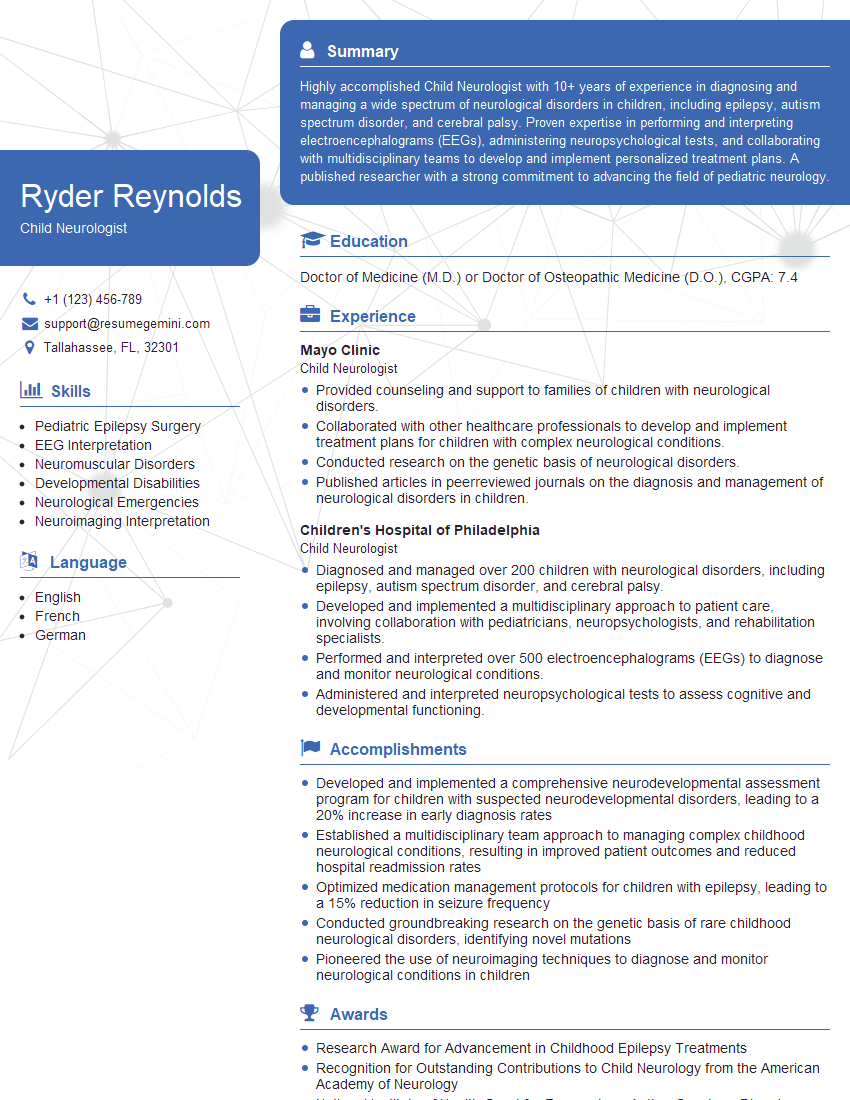
Mastering Child Neurology is crucial for a rewarding and impactful career. It opens doors to specialized practice, research opportunities, and leadership roles within the field. To maximize your job prospects, crafting an Applicant Tracking System (ATS)-friendly resume is essential. ResumeGemini is a trusted resource that can help you build a professional and effective resume. We offer examples of resumes tailored to Child Neurology to help you showcase your skills and experience effectively.
Explore more articles
Users Rating of Our Blogs
Share Your Experience
We value your feedback! Please rate our content and share your thoughts (optional).
What Readers Say About Our Blog
To the interviewgemini.com Webmaster.
Very helpful and content specific questions to help prepare me for my interview!
Thank you
To the interviewgemini.com Webmaster.
This was kind of a unique content I found around the specialized skills. Very helpful questions and good detailed answers.
Very Helpful blog, thank you Interviewgemini team.