Interviews are opportunities to demonstrate your expertise, and this guide is here to help you shine. Explore the essential Wellfield Operations interview questions that employers frequently ask, paired with strategies for crafting responses that set you apart from the competition.
Questions Asked in Wellfield Operations Interview
Q 1. Explain the process of well testing and its importance in wellfield operations.
Well testing is a crucial process in wellfield operations involving a series of measurements and analyses to determine the reservoir’s properties and the well’s productivity. It provides vital data for optimizing production and managing the entire well’s lifecycle. The process typically involves isolating sections of the wellbore, introducing fluids, and monitoring pressure and flow rates. This allows engineers to determine parameters such as permeability, porosity, skin factor, and reservoir pressure.
Importance: Well testing is paramount for several reasons:
- Reservoir Characterization: It helps understand the reservoir’s pressure, permeability, and fluid properties, guiding future development plans.
- Production Forecasting: Accurate predictions of future production rates are made based on test data.
- Well Performance Evaluation: It helps identify potential issues like skin damage or formation damage that may be hindering production.
- Optimal Completion Design: The data directly influences the design of the well completion, maximizing its potential.
- Economic Decision Making: Well test results provide valuable information for evaluating the economic viability of a well or a field.
Example: Imagine a newly drilled well. A well test might reveal unexpectedly low permeability, indicating the need for stimulation treatments like hydraulic fracturing to enhance production. Without the test, significant investment might be wasted on a poorly performing well.
Q 2. Describe different artificial lift methods and their applications.
Artificial lift methods are employed when natural reservoir pressure is insufficient to bring hydrocarbons to the surface at an economical rate. Several methods exist, each with its own strengths and weaknesses:
- Rod Lift: A common method for smaller wells, using a pumping jack to lift the fluid via a sucker rod string. It’s relatively simple and reliable but can be less efficient for deeper wells or high production rates.
- Progressive Cavity Pump (PCP): Uses a rotating helical rotor within a stator to pump fluid. It’s suitable for viscous fluids and high gas-liquid ratios, often used in mature fields.
- Submersible Pumps (ESP): Electrically powered pumps submerged in the wellbore. They are highly efficient and capable of handling large volumes of fluid but are more complex and expensive, susceptible to damage from sand and high gas content.
- Gas Lift: Injects gas into the wellbore to reduce the fluid density and improve flow. It’s adaptable and effective but requires a reliable gas supply.
- Hydraulic Lift: Uses high-pressure fluid injection to lift the produced fluids. Less commonly used than other methods due to higher operational complexity and cost.
Applications: The choice of artificial lift depends on factors like well depth, fluid properties (viscosity, gas-liquid ratio), production rate, and cost considerations. For instance, ESPs are often preferred for high-rate, high-pressure wells while rod pumps are suitable for low-rate, shallow wells.
Q 3. How do you optimize production from a wellfield?
Optimizing production from a wellfield is a multifaceted process requiring a holistic approach that combines engineering, geological, and economic considerations. The goal is to maximize the recovery of hydrocarbons while minimizing costs and environmental impact. This involves:
- Reservoir Management: Understanding reservoir properties and dynamics is crucial. This includes managing pressure depletion, water or gas coning, and maintaining reservoir integrity.
- Well Management: Optimizing individual well performance through interventions such as workovers, stimulation, and artificial lift adjustments.
- Production Allocation: Balancing production rates across wells to avoid exceeding facility constraints or causing undesirable reservoir pressure changes.
- Data Analysis: Regular monitoring of key performance indicators (KPIs) such as production rates, pressure, water cut, and gas-oil ratio, coupled with advanced analytics.
- Predictive Modeling: Employing reservoir simulation and production forecasting models to predict future performance and optimize production strategies.
Example: Implementing a water injection program in a field experiencing pressure depletion can improve reservoir pressure and enhance the recovery of hydrocarbons. Similarly, adjusting artificial lift settings based on real-time data can significantly increase production efficiency.
Q 4. What are the key performance indicators (KPIs) for wellfield operations?
Key Performance Indicators (KPIs) for wellfield operations are crucial for monitoring performance, identifying areas for improvement, and making informed decisions. They vary depending on the specific goals and the stage of the field’s life cycle, but some common ones include:
- Production Rate (Oil, Gas, Water): The volume of hydrocarbons produced per unit of time.
- Water Cut: The percentage of water in the produced fluid.
- Gas-Oil Ratio (GOR): The volume of gas produced per barrel of oil.
- Operating Pressure and Temperature: Monitoring changes in these parameters can highlight potential problems.
- Downtime: The amount of time a well is not producing, indicating maintenance needs or operational issues.
- Production Cost per Barrel: The cost associated with producing a barrel of oil or gas.
- Return on Investment (ROI): A measure of the profitability of the wellfield.
- Environmental KPIs: Emissions, water usage, and waste management metrics.
Example: A high water cut might signal the need for water management strategies, while a sudden drop in operating pressure could indicate a problem requiring immediate attention.
Q 5. Explain your understanding of reservoir simulation and its role in production forecasting.
Reservoir simulation is a powerful technique used to model the behavior of a reservoir under different production scenarios. It employs sophisticated mathematical models to predict fluid flow, pressure changes, and hydrocarbon recovery over time. This is done using advanced software packages that incorporate geological data, fluid properties, and operational parameters.
Role in Production Forecasting: Reservoir simulation plays a critical role in production forecasting by allowing engineers to:
- Predict future production rates: Estimate the expected oil, gas, and water production over the life of the field.
- Evaluate different development plans: Compare the performance of various scenarios, such as the number and location of wells, injection strategies, and production rates.
- Optimize production strategies: Identify the best approach to maximize hydrocarbon recovery while minimizing costs.
- Assess risks and uncertainties: Quantify the impact of uncertainty in reservoir properties on production forecasts.
Example: A reservoir simulator might be used to predict the impact of enhanced oil recovery (EOR) techniques, such as waterflooding or chemical injection, on the overall production from a mature field. This helps in making informed decisions about investment in such techniques.
Q 6. How do you manage well integrity risks?
Managing well integrity risks is crucial for preventing environmental damage, ensuring operational safety, and maintaining the economic viability of wellfield operations. These risks stem from various factors and require a proactive and multi-layered approach:
- Regular Inspections: Conducting periodic inspections of wellheads, casings, and tubing using techniques such as pressure testing, caliper logging, and acoustic logging. This helps to detect potential issues early on.
- Preventive Maintenance: Implementing a comprehensive maintenance schedule for well equipment and components to prevent failures.
- Pressure Management: Monitoring and controlling wellbore pressure to prevent casing failure or formation fracturing.
- Corrosion Control: Employing corrosion inhibitors and other techniques to prevent corrosion of well components.
- Cementing and Completion Integrity: Ensuring proper cementing of casing and appropriate well completion design to prevent fluid leakage.
- Emergency Response Planning: Having a well-defined plan to handle emergencies such as well kicks, blowouts, or leaks.
Example: Regular monitoring of casing pressure and corrosion rates allows for early detection of potential problems and enables timely intervention, preventing catastrophic failures.
Q 7. Describe your experience with well completion and workover operations.
My experience with well completion and workover operations spans [Number] years and encompasses a range of activities, from planning and execution to post-operation evaluation. Well completion involves equipping a well after drilling to allow for efficient and safe hydrocarbon production. Workovers, on the other hand, involve interventions on existing wells to repair, enhance, or modify their production.
Well Completion: I have been involved in various aspects of well completion, including:
- Selection of Completion Techniques: Evaluating different completion methods, such as openhole, cased hole, or gravel packing, based on reservoir characteristics and production goals.
- Completion Design and Engineering: Developing detailed designs for well completions, ensuring compatibility with reservoir conditions and equipment.
- Procurement and Inspection of Equipment: Sourcing and inspecting completion equipment such as tubing, packers, and downhole tools.
- Overseeing Completion Operations: Supervising the execution of completion operations, ensuring safety and compliance with regulations.
Workover Operations: My workover experience includes:
- Troubleshooting Well Problems: Diagnosing and resolving issues such as water or gas coning, sand production, or equipment failures.
- Stimulation Treatments: Supervising and planning stimulation operations such as acidizing or hydraulic fracturing to enhance well productivity.
- Well Repair and Maintenance: Performing interventions to repair damaged or worn-out equipment, ensuring well integrity.
- Plug and Abandonment: Managing the safe and environmentally responsible abandonment of wells at the end of their productive life.
I’ve worked on various well types, including [mention well types, e.g., vertical, horizontal, deviated], in different reservoir environments [mention environments, e.g., onshore, offshore, different reservoir types]. I consistently focus on cost optimization, safety, and environmental protection throughout all stages of these operations.
Q 8. What are the common causes of production decline and how can they be mitigated?
Production decline in a wellfield is a gradual decrease in the rate of hydrocarbon extraction. Several factors contribute to this decline, and understanding these factors is crucial for effective mitigation strategies. Think of it like a water well – over time, the water level drops and you need to find ways to keep it flowing.
- Reservoir Depletion: As hydrocarbons are extracted, the reservoir pressure drops, reducing the driving force for fluid flow towards the wellbore. This is the most fundamental cause.
- Water or Gas Coning: In reservoirs with underlying water or overlying gas, excessive production can cause these fluids to move towards the wellbore, reducing the hydrocarbon production rate. Imagine a cone-shaped intrusion of water into an oil reservoir.
- Wellbore Damage: This includes formation damage during drilling (e.g., invasion of drilling mud), scale formation, or precipitation of minerals which restrict fluid flow. Think of it as clogging the pipes.
- Decline in Reservoir Permeability: The ability of the rock to transmit fluids might naturally decline over time due to compaction or changes in the pore structure.
- Equipment Failure: Issues with pumps, valves, or other surface equipment can restrict production flow.
Mitigation strategies involve optimizing production strategies (e.g., water injection or gas lift to maintain reservoir pressure), implementing well stimulation techniques (e.g., acidizing or fracturing to enhance permeability), performing regular well maintenance to prevent equipment failure, and using advanced reservoir simulation to predict and manage production decline.
Q 9. Explain the principles of fluid flow in porous media.
Fluid flow in porous media, like the reservoir rock in a wellfield, is governed by Darcy’s Law. This law describes the relationship between the flow rate of a fluid and the pressure gradient driving the flow. Think of it as water seeping through a sponge.
Darcy’s Law can be expressed as: q = -kA(dP/dx) / μ
qis the volumetric flow rate.kis the permeability of the porous medium (how easily fluid flows through it).Ais the cross-sectional area.dP/dxis the pressure gradient.μis the dynamic viscosity of the fluid.
Several factors influence fluid flow, including the rock’s permeability and porosity, fluid viscosity, and the pressure gradient. Higher permeability and larger pressure gradients lead to increased flow rates. Increased viscosity slows down the flow. Understanding these principles is crucial for designing optimal well placement and production strategies. For example, in low-permeability reservoirs, stimulating techniques like hydraulic fracturing are employed to create artificial pathways for increased fluid flow.
Q 10. How do you ensure the safety of wellfield operations?
Safety in wellfield operations is paramount. It’s a top priority – lives depend on it! A multi-faceted approach is required, combining engineering controls, administrative controls, and employee training.
- Hazard Identification and Risk Assessment (HIRA): Regularly identify potential hazards such as well blowouts, equipment failures, fires, and chemical spills, and assess the associated risks.
- Engineering Controls: Implementing safety systems such as wellhead safety valves, pressure relief devices, and emergency shutdown systems.
- Administrative Controls: Developing and enforcing strict operating procedures, providing regular safety training, and conducting routine inspections.
- Personal Protective Equipment (PPE): Ensuring all personnel use appropriate PPE, including hard hats, safety glasses, and flame-resistant clothing.
- Emergency Response Plans: Developing and regularly testing emergency response plans for various scenarios, including well control incidents and environmental spills.
- Permit-to-Work Systems: Utilizing permit-to-work systems to control hazardous work activities.
Regular audits and safety meetings reinforce the importance of safety and encourage a proactive safety culture. Safety isn’t just a checklist; it’s an ongoing commitment.
Q 11. Describe your experience with data acquisition and analysis in wellfield operations.
My experience with data acquisition and analysis in wellfield operations involves using various technologies and software to collect, process, and interpret data to optimize production and reservoir management. I’ve worked extensively with SCADA systems, downhole sensors, and production logging tools.
Data acquisition involves collecting data on parameters like pressure, temperature, flow rates, and fluid compositions from various sources, including surface facilities and downhole sensors. I’m proficient in using software like Petrel, Eclipse, and various data historians to process and analyze this data. This involves data cleaning, validation, and building accurate models of reservoir behavior.
For example, in a recent project, we used production data combined with geological information to build a reservoir simulation model. This model helped us to optimize the well placement and production strategies resulting in a 15% increase in oil recovery. Data analysis also helps identify anomalies, predict future performance, and diagnose production problems.
Q 12. How do you troubleshoot production problems in a wellfield?
Troubleshooting production problems in a wellfield requires a systematic approach combining data analysis, engineering expertise, and sound judgment. It’s like detective work, piecing together clues to find the culprit!
The process typically involves:
- Data Review: Examining production data (flow rates, pressures, etc.) to identify anomalies or trends indicative of a problem.
- Well Testing: Performing various well tests (e.g., pressure buildup tests) to obtain more detailed information on reservoir and wellbore conditions.
- Diagnosis: Based on the data and testing results, determine the most likely cause(s) of the problem (e.g., reservoir depletion, wellbore damage, equipment failure).
- Mitigation: Implementing appropriate mitigation strategies to address the problem. This may involve well stimulation, repairs, or adjustments to production strategies.
- Monitoring: Monitoring the effectiveness of the mitigation strategies by observing changes in production data.
For instance, a sudden drop in production might indicate a blockage in the wellbore. Further investigation using well logging tools could confirm this and pinpoint the location of the blockage. The solution could then involve a workover operation to clear the blockage.
Q 13. What are the environmental considerations in wellfield operations?
Environmental considerations are crucial in wellfield operations. We have a responsibility to protect the environment and the communities around us. Minimizing our impact is essential.
- Wastewater Management: Proper treatment and disposal of produced water (water extracted along with hydrocarbons) to prevent water pollution.
- Greenhouse Gas Emissions: Reducing greenhouse gas emissions associated with drilling, production, and transportation of hydrocarbons.
- Air Emissions: Minimizing air emissions such as volatile organic compounds (VOCs) and methane.
- Soil and Groundwater Protection: Preventing soil and groundwater contamination from spills or leaks.
- Biodiversity Conservation: Minimizing the impact on local flora and fauna during operations.
- Compliance: Strict adherence to all environmental regulations and permits.
Effective environmental management requires proactive measures, rigorous monitoring, and emergency response planning. Continuous improvement and adopting sustainable practices are key to minimizing the environmental footprint of wellfield operations.
Q 14. Explain your understanding of pressure transient analysis.
Pressure transient analysis (PTA) is a powerful technique used to characterize reservoir properties and wellbore conditions. It’s like taking the well’s ‘vital signs’ to understand its health. We analyze pressure changes in a well over time to determine reservoir parameters such as permeability, porosity, and skin factor.
This involves changing production rates (e.g., shutting a well in or suddenly opening a shut-in well) and monitoring the pressure response. By analyzing these pressure changes, we can determine various reservoir parameters. Different types of tests, like buildup and drawdown tests, provide different insights into the reservoir system.
We use specialized software to interpret the pressure data and extract meaningful information. This information is critical for reservoir modeling, well testing interpretation and optimizing production strategies. For instance, a high skin factor might indicate damage near the wellbore, necessitating stimulation treatments.
Q 15. How do you manage a team in a wellfield operation?
Managing a wellfield operations team requires a blend of technical expertise and strong leadership. My approach centers around clear communication, fostering collaboration, and ensuring safety is paramount. I begin by clearly defining roles and responsibilities, ensuring each team member understands their contribution to the overall wellfield performance. Regular team meetings, incorporating both formal briefings and informal discussions, provide opportunities for feedback, problem-solving, and knowledge sharing.
Furthermore, I believe in empowering my team. This involves providing them with the necessary training and resources to excel in their roles, and trusting them to make informed decisions within their area of expertise. I regularly provide constructive feedback, focusing on both strengths and areas for improvement. Finally, I maintain a positive and supportive work environment, recognizing individual achievements and fostering a culture of mutual respect and teamwork. For instance, during a particularly challenging well intervention, I delegated tasks based on team members’ expertise, ensuring everyone felt valued and empowered to contribute their best. This resulted in a successful and efficient operation with minimal downtime.
Career Expert Tips:
- Ace those interviews! Prepare effectively by reviewing the Top 50 Most Common Interview Questions on ResumeGemini.
- Navigate your job search with confidence! Explore a wide range of Career Tips on ResumeGemini. Learn about common challenges and recommendations to overcome them.
- Craft the perfect resume! Master the Art of Resume Writing with ResumeGemini’s guide. Showcase your unique qualifications and achievements effectively.
- Don’t miss out on holiday savings! Build your dream resume with ResumeGemini’s ATS optimized templates.
Q 16. Describe your experience with different types of wellheads and their maintenance.
My experience encompasses various wellhead types, including conventional, Christmas tree, and subsurface safety valves (SSSV). Each type presents unique maintenance challenges. Conventional wellheads, while simpler, require regular inspection for corrosion and leaks. Christmas trees, with their complex valve arrangements, demand meticulous maintenance schedules to prevent operational issues and ensure safety. SSSVs necessitate specialized testing and maintenance to guarantee their reliability during emergencies.
Maintenance typically involves visual inspections, pressure testing, and periodic component replacements. For example, I’ve overseen the preventative maintenance of a Christmas tree, which involved replacing worn seals and lubricating valves to ensure smooth operation and prevent leaks. In another instance, I diagnosed and repaired a malfunctioning subsurface safety valve through a thorough pressure testing protocol, a process that involves shutting down the well and employing specialized equipment to test the valve’s ability to safely seal off the wellbore under pressure.
Q 17. How do you handle emergency situations in wellfield operations?
Emergency situations in wellfield operations demand swift, decisive action. My approach follows a structured protocol prioritizing safety and environmental protection. The first step is always to ensure the safety of personnel; we immediately evacuate the area if necessary. Simultaneously, we initiate emergency shutdown procedures, isolating the affected well and preventing further escalation of the problem.
We then assess the situation, determining the nature and extent of the emergency. This involves gathering data from various sources, such as pressure gauges, flow meters, and alarm systems. Once the situation is understood, we implement the appropriate response strategy, which might involve contacting emergency services, initiating well control operations, or implementing containment measures. For example, during a sudden wellhead leak, we rapidly activated the emergency shutdown system, contacted emergency services, and deployed containment booms to prevent environmental contamination. A post-incident analysis was then conducted to identify root causes and implement preventative measures.
Q 18. What are your experiences with different types of pumping units?
I’ve worked with various pumping units, including beam pumps, electric submersible pumps (ESPs), and progressive cavity pumps (PCP). Each has its strengths and weaknesses. Beam pumps are robust and relatively simple, suitable for shallow to medium-depth wells. ESPs offer high efficiency for deeper wells, but require specialized expertise for installation and maintenance. PCPs excel in handling viscous fluids but can be susceptible to wear and tear.
My experience involves optimizing pump performance through adjusting pump strokes, optimizing rod lengths (for beam pumps), and monitoring ESP parameters such as power consumption and fluid production. For example, I once optimized the performance of a beam pump by adjusting the pumping speed and stroke length, which resulted in a significant increase in oil production with reduced energy consumption. The decision to do so involved detailed analysis of production data, and close collaboration with our reservoir engineers.
Q 19. How do you use software to model and simulate wellfield performance?
I utilize reservoir simulation software, such as CMG, Eclipse, and Petrel, to model and simulate wellfield performance. These tools allow for the prediction of reservoir behavior under various operating conditions, which helps in optimizing well placement, production strategies, and water injection schemes.
The process involves building a geological model of the reservoir based on available data (seismic, well logs, core analysis), defining fluid properties, and setting up a numerical simulation. The software then predicts reservoir pressure, fluid flow, and production rates. We can then use the simulation results to evaluate different scenarios, such as the impact of different well completion strategies or water injection rates. For example, I recently used CMG to model the effect of an infill well on overall field production. The simulation predicted a significant increase in production, leading to the investment decision for drilling the new well.
Q 20. Explain your experience with regulatory compliance in wellfield operations.
Regulatory compliance is crucial in wellfield operations. My experience encompasses adherence to various regulations, including those related to safety, environmental protection, and production reporting. This involves staying up-to-date with the latest regulatory changes and ensuring all operational procedures align with those regulations.
We maintain detailed records of all well operations, including production data, maintenance logs, and safety inspections. We also conduct regular environmental monitoring to ensure compliance with emission limits and prevent any environmental damage. For example, I’ve been instrumental in implementing a new well testing procedure to comply with stricter environmental regulations, requiring more stringent monitoring and reporting practices. We underwent extensive training to ensure our team was adequately prepared for the changes and we incorporated the new procedures into our standard operating procedures.
Q 21. Describe your understanding of waterflooding and other enhanced oil recovery techniques.
Waterflooding is a widely used enhanced oil recovery (EOR) technique where water is injected into a reservoir to displace oil towards production wells. It increases reservoir pressure and improves oil mobility. Other EOR techniques include gas injection (using natural gas or CO2), chemical flooding (using polymers or surfactants), and thermal recovery (steam injection).
My understanding encompasses the design and implementation of waterflooding projects, including well placement optimization, injection rate control, and reservoir monitoring. For example, I was involved in designing a waterflood project for a mature oil field. This involved analyzing the reservoir’s geological characteristics, simulating the waterflood using reservoir simulation software, and determining the optimal injection rates and well placement to maximize oil recovery. The project resulted in a significant increase in oil production from this mature field, extending its economic life.
Q 22. What are the economic factors that affect wellfield operations?
Economic factors significantly influence wellfield operations, impacting profitability and decision-making. These factors can be broadly categorized into several key areas:
- Commodity Prices: Fluctuations in oil and gas prices directly affect the revenue generated from production. A price drop can make previously profitable wells uneconomical, leading to shut-in or even abandonment. Conversely, high prices can justify investments in enhanced oil recovery (EOR) techniques.
- Operating Costs: These include expenses for labor, equipment maintenance, chemicals, energy consumption, and transportation. Efficient operations and cost reduction strategies are crucial to maximize profit margins. For example, optimizing chemical usage in water treatment or implementing predictive maintenance programs can significantly reduce operating costs.
- Capital Expenditures (CAPEX): Investments in drilling new wells, upgrading existing infrastructure, or implementing new technologies (e.g., smart wells) are major capital outlays. A thorough economic analysis, including discounted cash flow (DCF) modeling, is essential to justify such investments.
- Taxes and Royalties: Government regulations concerning taxes and royalties payable to the government impact the net revenue from production. These costs vary significantly depending on the geographic location and the specific legal framework.
- Exchange Rates: In international operations, fluctuations in exchange rates between currencies can affect the profitability of projects, particularly when costs are incurred in one currency and revenues are received in another.
Understanding and effectively managing these economic factors is critical for the long-term success and sustainability of a wellfield operation. A robust economic model that incorporates these variables allows for data-driven decision-making, optimizing production and maximizing returns.
Q 23. How do you monitor and control the production of individual wells in a field?
Monitoring and controlling individual well production involves a multi-faceted approach, leveraging both surface and downhole technologies. We typically use:
- Surface Measurement Systems: These systems continuously monitor parameters like flow rate (using flow meters), pressure (using pressure gauges), and water/gas production (using separators and analyzers). This data is transmitted to a central control room, allowing operators to see a real-time overview of the entire wellfield.
- Downhole Tools and Sensors: These include pressure gauges, temperature sensors, and flow meters located within the wellbore. These sensors provide highly accurate data on downhole conditions, allowing us to identify problems like sand production or water coning early on. This data is often transmitted wirelessly to the surface.
- SCADA Systems (Supervisory Control and Data Acquisition): This software integrates data from various sources, providing a comprehensive view of well performance. It allows operators to remotely control well parameters, such as adjusting choke settings to regulate flow rates or activating downhole control valves.
- Production Allocation: By analyzing the production data from individual wells, we can optimize the production from the entire field. For instance, if one well is producing significantly more water than others, we can adjust its production rate or implement remedial measures to improve its performance.
Imagine it like managing a team of athletes. We monitor their individual performance (production data), make adjustments to their training regimen (well controls), and analyze the overall team performance (field production). This allows for constant optimization and maximized output.
Q 24. Explain your understanding of different types of downhole tools and their applications.
Downhole tools are critical for efficient and safe wellfield operations. They perform various functions, extending well life and maximizing production. Here are a few examples:
- Pressure Gauges: Measure pressure at various points in the wellbore, providing vital information about reservoir pressure, flow dynamics, and potential problems.
- Temperature Sensors: Monitor temperature profiles in the wellbore. Temperature variations can indicate issues like gas influx or casing leaks.
- Flow Meters: Measure fluid flow rates within the wellbore, providing accurate production data for each well.
- Perforating Guns: Create openings in the casing and formation to allow hydrocarbon flow into the wellbore during completion.
- Artificial Lift Systems (e.g., ESPs, Gas Lift): Enhance oil and gas production from wells that lack sufficient reservoir energy. ESPs (Electric Submersible Pumps) are submersible pumps used in high-pressure, high-volume wells, and gas lift uses injected gas to enhance production.
- Downhole Valves: Allow for remote control of fluid flow in the wellbore, enabling isolation of zones or selective production strategies.
- Scale Inhibitors and Corrosion Inhibitors: Chemicals pumped downhole to prevent scale formation and corrosion of wellbore components.
The specific tools used depend on the well’s characteristics, production conditions, and the operational objectives. For instance, in a high-temperature, high-pressure well, specialized high-temperature sensors and corrosion-resistant downhole tools are necessary.
Q 25. How do you prevent and control corrosion in wellfield equipment?
Corrosion in wellfield equipment is a significant concern, leading to costly repairs, production downtime, and even environmental hazards. Prevention and control strategies involve a multi-pronged approach:
- Material Selection: Using corrosion-resistant materials, like stainless steels or specialized alloys, for equipment exposed to corrosive environments.
- Corrosion Inhibitors: Employing chemicals that slow down or prevent corrosion reactions. These inhibitors are often injected into the production stream or applied as coatings.
- Cathodic Protection: A technique that uses an external electrical current to protect metal surfaces from corrosion. This is particularly effective for pipelines and storage tanks.
- Regular Inspections and Maintenance: Implementing a rigorous inspection program, including visual inspections, non-destructive testing (NDT), and regular maintenance, to detect and address corrosion early on.
- Water Treatment: Reducing the corrosivity of produced water by removing dissolved oxygen, carbon dioxide, and other corrosive components.
- Environmental Monitoring: Continuous monitoring of the environment surrounding wellfield equipment to detect any signs of corrosion or leaks.
Imagine corrosion as a slow, silent thief. By proactively preventing and controlling it, we safeguard the integrity of our equipment, ensuring safe and reliable operations, reducing costs, and protecting the environment.
Q 26. Describe your experience with well decommissioning and abandonment.
Well decommissioning and abandonment (D&A) is a crucial final stage in a well’s life cycle, focused on permanently plugging and abandoning the well to prevent future environmental and safety issues. My experience includes:
- Planning and Engineering: Detailed planning is critical, involving risk assessments, environmental impact assessments, and the development of a comprehensive D&A plan approved by regulatory bodies. This plan details the procedures and techniques to be used.
- Well Isolation and Plugging: This involves pumping cement plugs into the wellbore to isolate various zones and prevent fluid flow. Multiple cement plugs are often used at different depths.
- Surface Facilities Removal: Removing and disposing of surface equipment, such as pipelines, tanks, and processing facilities, according to regulatory requirements and environmental best practices.
- Site Restoration: Restoring the land to a safe and environmentally acceptable condition, often involving soil remediation and revegetation.
- Regulatory Compliance: Ensuring full compliance with all relevant environmental regulations and obtaining necessary approvals from regulatory agencies throughout the process.
I’ve overseen multiple D&A projects, emphasizing safety, environmental protection, and regulatory compliance. Each project involves meticulous planning, execution, and post-operation monitoring to ensure long-term environmental integrity.
Q 27. How do you maintain accurate records and reporting in wellfield operations?
Maintaining accurate records and reporting is fundamental to efficient and compliant wellfield operations. We employ several methods:
- Digital Data Acquisition Systems: Utilizing SCADA systems and other digital platforms to automatically collect and store production data, well testing results, maintenance logs, and other relevant information. This minimizes manual data entry and reduces human error.
- Database Management Systems: Storing all wellfield data in secure and well-organized databases, ensuring easy access and retrieval of information. These databases often support data analysis and reporting.
- Standard Operating Procedures (SOPs): Implementing clear SOPs for data collection, entry, and reporting, ensuring consistency and accuracy across all operations.
- Regular Audits and Data Validation: Conducting regular audits to verify the accuracy and completeness of the data and to identify any potential discrepancies. Data validation techniques may include cross-checking data from multiple sources.
- Regulatory Reporting: Producing accurate and timely reports for regulatory agencies, complying with all reporting requirements.
Think of record-keeping as the backbone of our operations. Comprehensive and accurate records are essential for optimizing production, complying with regulations, and making informed decisions.
Q 28. Explain your understanding of the relationship between reservoir pressure and production rate.
Reservoir pressure and production rate are intrinsically linked. Reservoir pressure is the driving force behind hydrocarbon production. The relationship can be visualized as follows:
- High Reservoir Pressure: A high reservoir pressure provides significant driving force, resulting in a high initial production rate. The fluids flow readily towards the wellbore due to this pressure gradient.
- Depletion of Reservoir Pressure: As hydrocarbons are produced, the reservoir pressure gradually declines. This decline reduces the driving force, leading to a decrease in production rate over time.
- Artificial Lift: When reservoir pressure drops to the point where it’s insufficient to sustain economic production, artificial lift techniques (as discussed earlier) can be employed to maintain or even enhance production.
Imagine a water balloon. Initially, when the balloon is full (high pressure), water flows out rapidly. As the balloon empties (pressure drops), the flow slows down. Artificial lift in this analogy would be like squeezing the balloon to maintain the flow.
Understanding this relationship is fundamental to predicting production decline, optimizing production strategies, and determining the economic life of a well. Production forecasting models use reservoir pressure as a key input to predict future production rates.
Key Topics to Learn for Wellfield Operations Interview
- Wellhead and Tree Systems: Understanding the components, operation, and maintenance of wellhead equipment, including pressure control and safety devices. Practical application: Troubleshooting scenarios involving wellhead leaks or pressure fluctuations.
- Artificial Lift Systems: Knowledge of various artificial lift methods (ESP, PCP, Gas Lift) and their selection criteria based on reservoir and well characteristics. Practical application: Analyzing production data to determine the optimal artificial lift method for a specific well.
- Production Optimization: Techniques for maximizing hydrocarbon production while minimizing costs and environmental impact. Practical application: Developing and implementing strategies to increase production rates or improve water cut management.
- Reservoir Engineering Fundamentals: Basic understanding of reservoir pressure, fluid flow, and well testing interpretations. Practical application: Interpreting pressure buildup tests to assess reservoir properties.
- Fluid Handling and Processing: Knowledge of separation techniques, pipeline operations, and handling of produced fluids (oil, gas, water). Practical application: Designing and optimizing a flow assurance strategy to minimize production downtime.
- Health, Safety, and Environment (HSE): Understanding and applying HSE regulations and best practices in wellfield operations. Practical application: Conducting risk assessments and developing mitigation plans for potential hazards.
- Data Acquisition and Analysis: Proficiency in using SCADA systems and interpreting production data to identify operational problems and opportunities for improvement. Practical application: Using production data to diagnose and solve issues in real-time.
- Well Intervention and Workover Operations: Familiarity with various well intervention techniques and their applications. Practical application: Planning and executing a well intervention operation to address a specific well problem.
Next Steps
Mastering Wellfield Operations is crucial for a successful and rewarding career in the energy industry, offering opportunities for growth and specialization. A strong resume is your first step towards securing your dream role. Creating an ATS-friendly resume is vital to maximizing your job prospects. We highly recommend using ResumeGemini to build a professional and impactful resume. ResumeGemini provides a user-friendly interface and can significantly enhance your chances of getting noticed. Examples of resumes tailored to Wellfield Operations are available to further guide you.

Production Supervisor Resume Sample
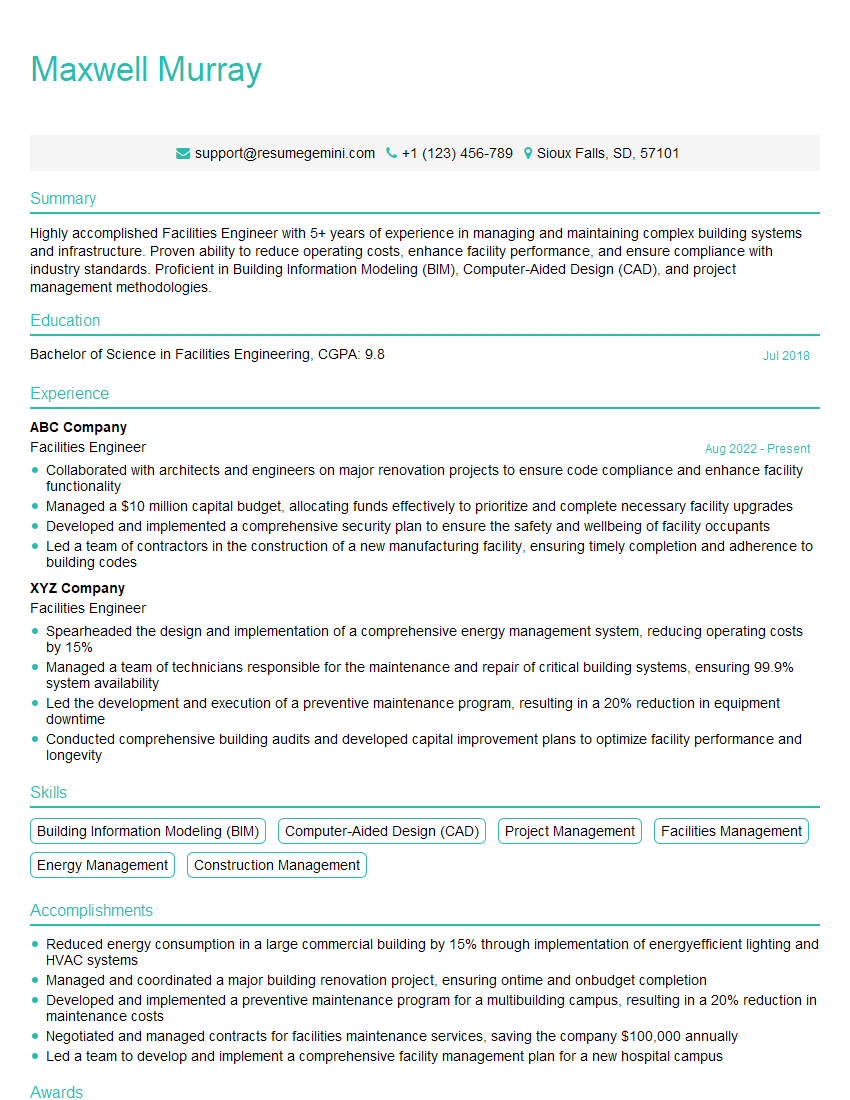
Facilities Engineer Resume Sample

Reservoir Engineer Resume Sample

Field Engineer Resume Sample
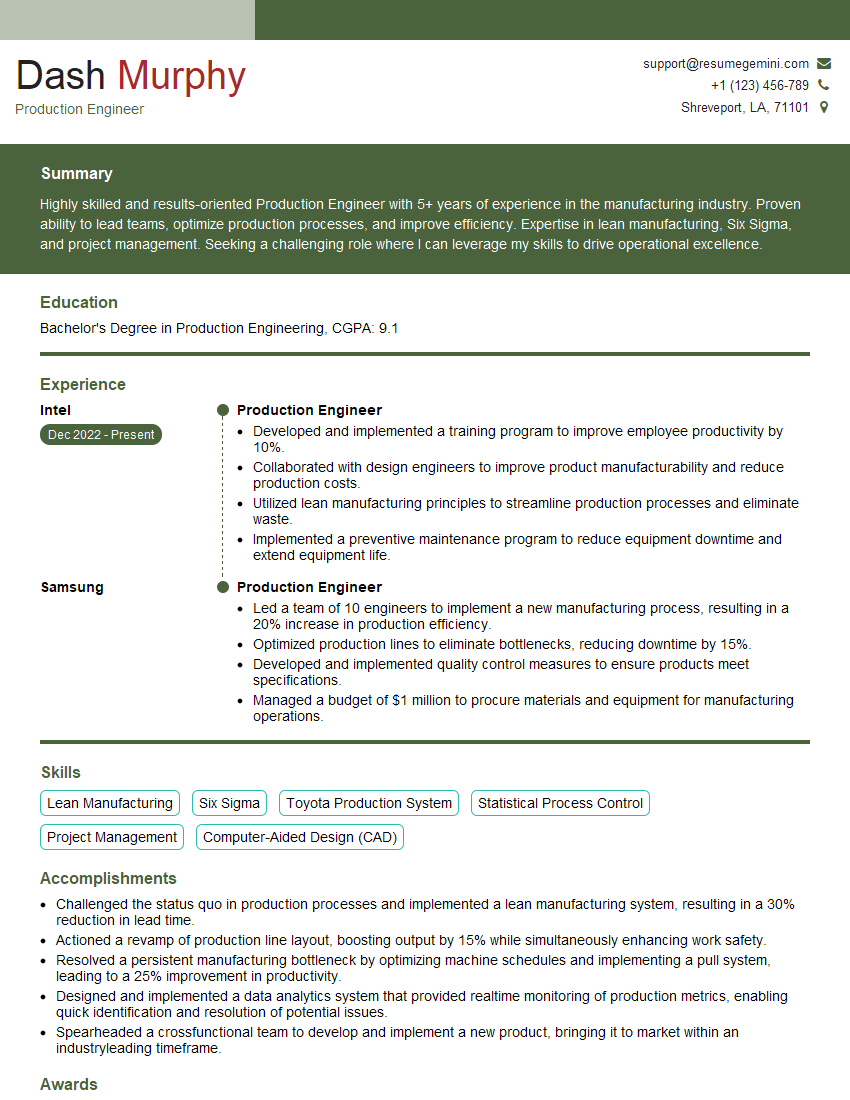
Production Engineer Resume Sample
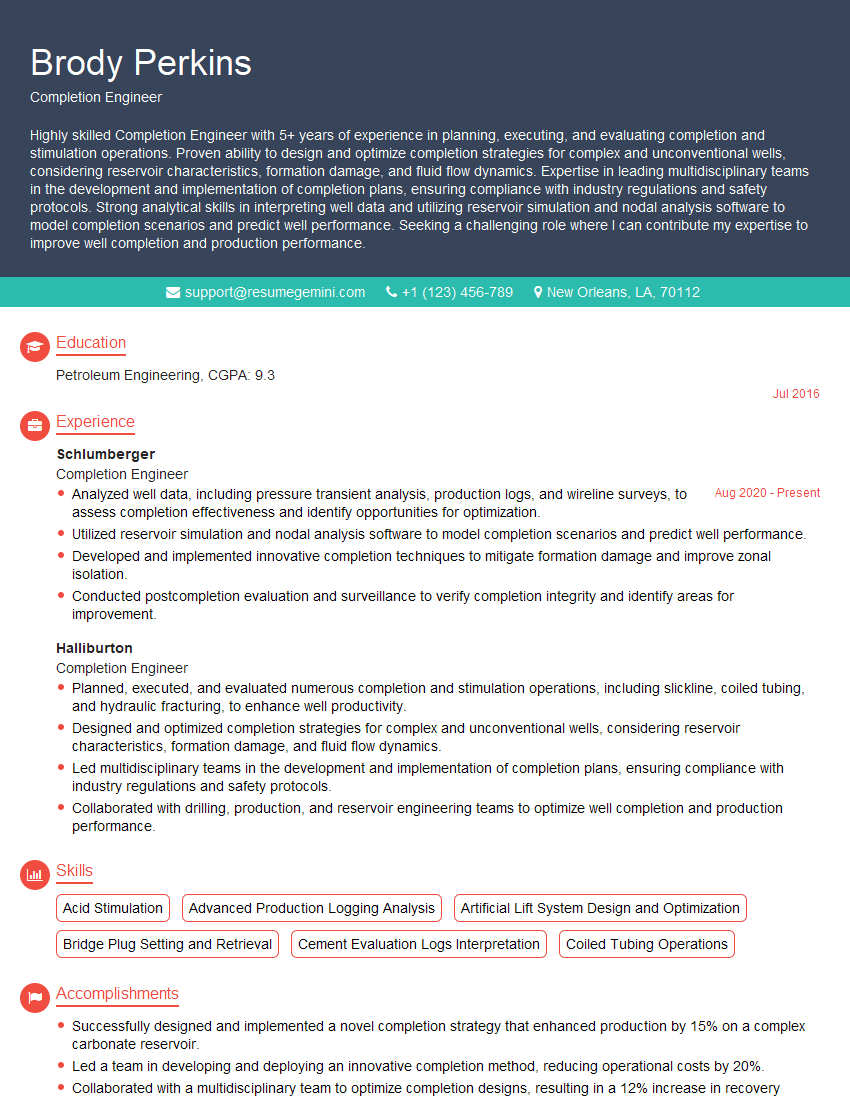
Completion Engineer Resume Sample
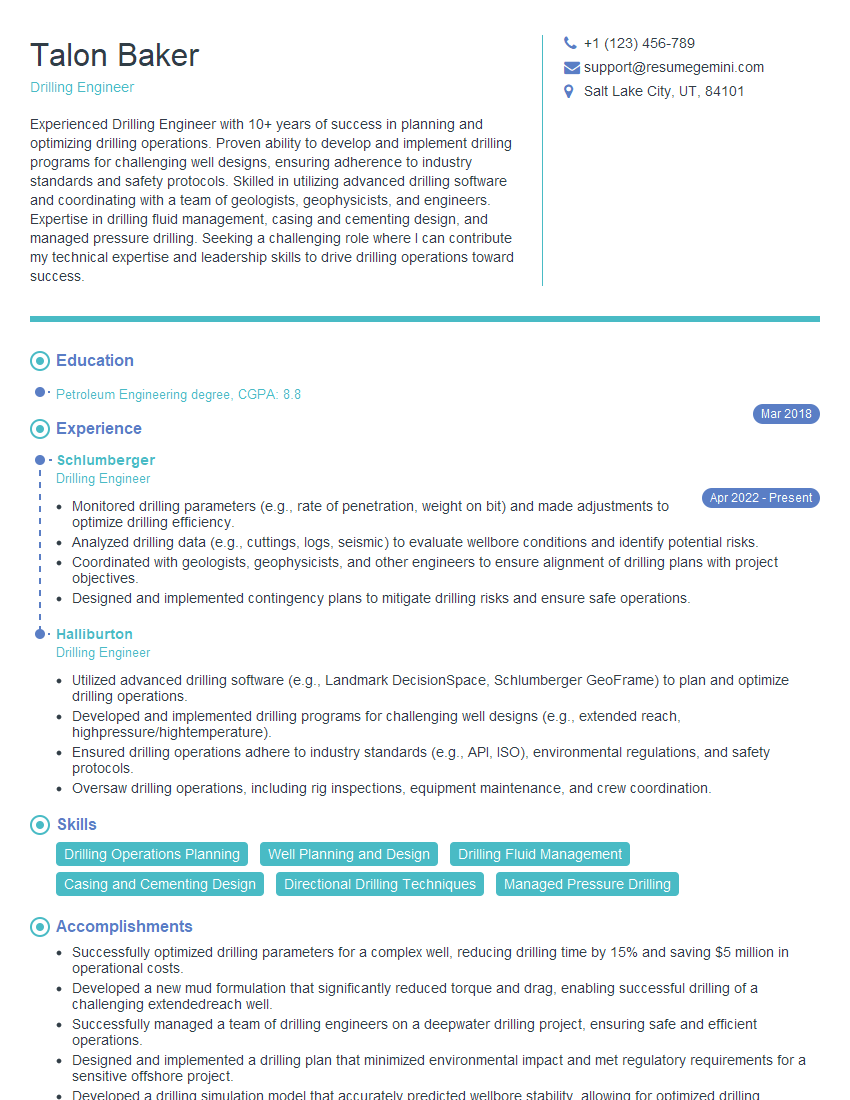
Drilling Engineer Resume Sample
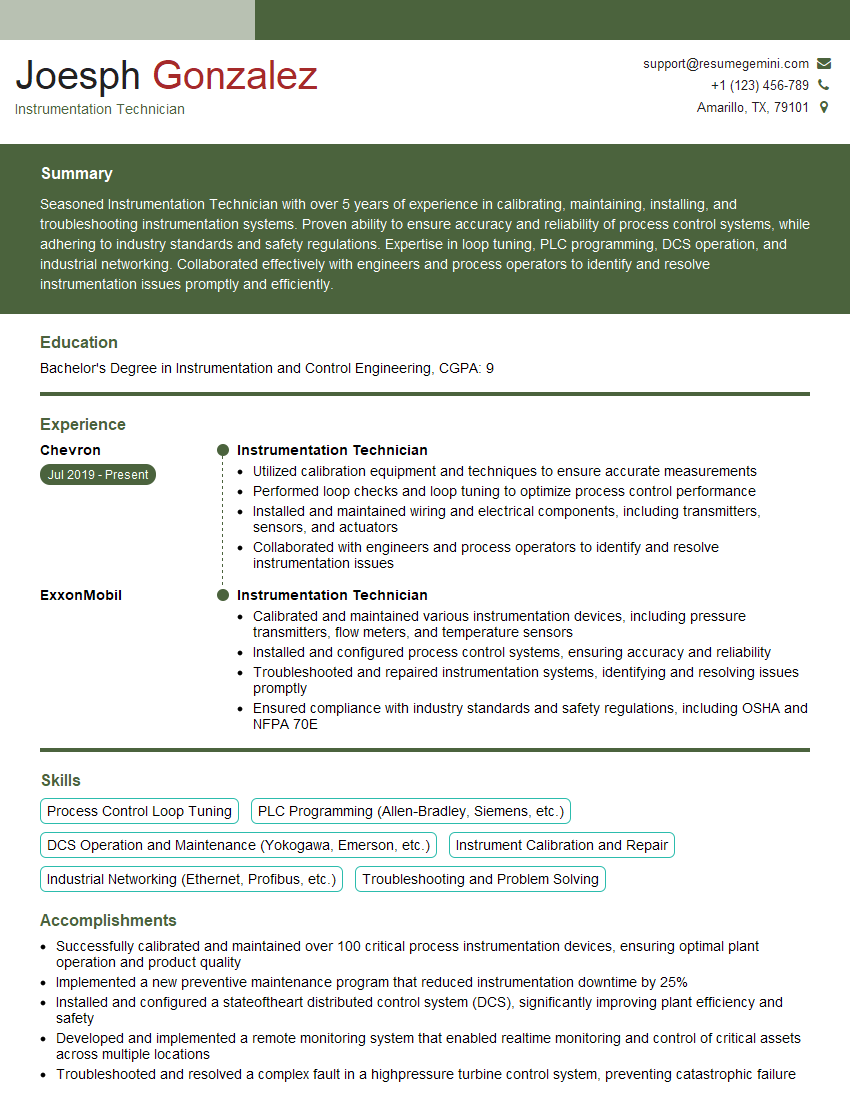
Instrumentation Technician Resume Sample
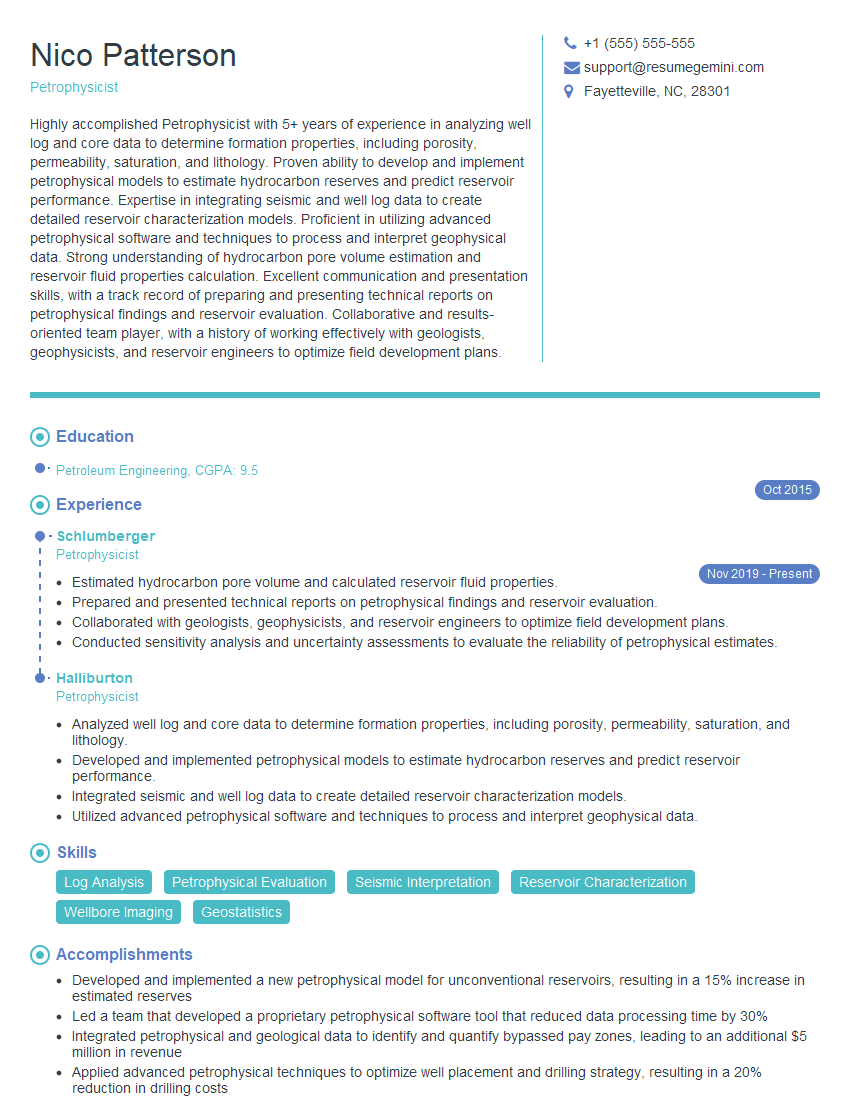
Petrophysicist Resume Sample
Explore more articles
Users Rating of Our Blogs
Share Your Experience
We value your feedback! Please rate our content and share your thoughts (optional).
What Readers Say About Our Blog
To the interviewgemini.com Webmaster.
Very helpful and content specific questions to help prepare me for my interview!
Thank you
To the interviewgemini.com Webmaster.
This was kind of a unique content I found around the specialized skills. Very helpful questions and good detailed answers.
Very Helpful blog, thank you Interviewgemini team.