Unlock your full potential by mastering the most common Medical Management of Chronic Pain interview questions. This blog offers a deep dive into the critical topics, ensuring you’re not only prepared to answer but to excel. With these insights, you’ll approach your interview with clarity and confidence.
Questions Asked in Medical Management of Chronic Pain Interview
Q 1. Describe your experience in diagnosing and classifying different types of chronic pain.
Diagnosing and classifying chronic pain requires a meticulous approach combining a thorough patient history, physical examination, and often, advanced imaging and diagnostic testing. We begin by understanding the patient’s pain experience – its location, character, intensity, duration, and aggravating/relieving factors. This is crucial for differentiating between various pain types. For example, neuropathic pain, characterized by burning, shooting, or tingling sensations, often has different underlying mechanisms and requires different treatment strategies than nociceptive pain, which is caused by damage to tissues and often feels aching or throbbing.
Classification involves identifying the underlying cause, if possible. This might include musculoskeletal conditions (like osteoarthritis or fibromyalgia), nerve damage (diabetic neuropathy or post-herpetic neuralgia), inflammatory conditions (rheumatoid arthritis), or visceral pain (pain originating from internal organs). We also consider the duration of pain (acute vs. chronic), psychological factors contributing to the pain experience (anxiety, depression), and the impact on the patient’s function and quality of life. Using standardized pain assessment tools like the Visual Analog Scale (VAS) and numerical rating scales (NRS) helps quantify pain severity, and questionnaires such as the McGill Pain Questionnaire assess the qualitative aspects of the pain experience. In some cases, diagnostic imaging (X-rays, MRI, CT scans) or nerve conduction studies (NCS) might be necessary to rule out specific conditions or identify the source of the pain.
For example, a patient presenting with low back pain, radiating down the leg (sciatica), might require an MRI to assess for a herniated disc. Conversely, a patient with widespread musculoskeletal pain, fatigue, and sleep disturbances might be diagnosed with fibromyalgia after a thorough clinical evaluation.
Q 2. Explain your approach to multimodal pain management.
My approach to multimodal pain management centers on a holistic philosophy, recognizing that chronic pain is often a complex interplay of biological, psychological, and social factors. A multimodal approach involves combining different treatment modalities to address the multifaceted nature of the problem. It’s not a one-size-fits-all strategy; the specific combination of therapies is tailored to each patient’s individual needs and preferences.
This might include pharmacological interventions (e.g., non-opioid analgesics, antidepressants, anticonvulsants), non-pharmacological approaches (e.g., physical therapy, occupational therapy, cognitive behavioral therapy (CBT)), and interventional pain management techniques (e.g., nerve blocks, spinal cord stimulation). For instance, a patient with chronic back pain might benefit from a combination of physical therapy to improve strength and flexibility, medication to manage pain flares, and CBT to address catastrophizing thoughts about their pain.
Regular monitoring and adjustments to the treatment plan are crucial, as the patient’s condition may change over time. Open communication and shared decision-making between the patient and the healthcare team are fundamental to the success of this approach. For instance, if a patient experiences side effects from medication, we would work together to explore alternative options or adjust the dosage. This collaborative and adaptable approach is essential to achieve the best possible pain management outcomes and improve the patient’s quality of life.
Q 3. What are the key considerations when prescribing opioids for chronic pain?
Prescribing opioids for chronic pain requires utmost caution and adherence to strict guidelines. The decision to prescribe opioids should be made only after careful consideration of the potential risks and benefits, and only when other non-opioid therapies have proven insufficient. The risks of opioid addiction, respiratory depression, and overdose are significant and cannot be overlooked. Therefore, a thorough assessment is mandatory before initiating opioid therapy. This assessment should include evaluating the patient’s pain history, past substance use history, family history of substance abuse, and mental health status.
Key considerations include: starting with the lowest effective dose, using immediate-release formulations initially, prescribing for the shortest duration possible, regular monitoring of the patient’s response to treatment, careful documentation, urine drug testing (UDT) as indicated, and regular discussions with the patient regarding risks and benefits. It is also essential to establish clear guidelines for medication management, including responsible storage and disposal. Pain contracts that outline treatment goals, medication use guidelines and potential consequences of misuse can improve adherence and monitoring. Regular follow-up appointments are vital to assess both the effectiveness of the treatment and the patient’s overall well-being, particularly to monitor for signs of opioid misuse or addiction.
The use of opioid risk assessment tools such as the Screener and Opioid Assessment for Patients with Pain (SOAPP) can help healthcare providers in making informed decisions regarding opioid therapy. Furthermore, close collaboration with pharmacists and other members of the healthcare team is crucial for optimizing patient safety and treatment outcomes.
Q 4. How do you assess the risk of opioid misuse and abuse in patients with chronic pain?
Assessing the risk of opioid misuse and abuse requires a comprehensive approach that goes beyond simply asking about past drug use. I utilize a combination of screening tools, clinical judgment, and patient history to determine a patient’s risk profile. This often involves the use of validated questionnaires such as the SOAPP (Screener and Opioid Assessment for Patients with Pain) or the COWS (Clinical Opioid Withdrawal Scale) to detect potential signs of misuse or withdrawal.
The assessment considers several factors: personal history of substance use disorder (SUD), family history of SUD, mental health disorders (particularly depression and anxiety), a history of risky behaviors, and the patient’s social support system. I also pay close attention to the patient’s overall presentation during the clinical encounter, looking for inconsistencies in their report or signs of manipulation. A thorough review of their prescription medication history is performed to identify potential red flags such as doctor shopping or rapid escalation of opioid dosages.
Additionally, regular urine drug testing (UDT) can be a useful tool in monitoring adherence to the prescribed regimen and detecting the presence of other substances. Patients at high risk may benefit from more frequent UDT and closer monitoring. The key is to proactively identify and manage risk factors to minimize the chance of opioid misuse and abuse while ensuring effective pain management. It’s important to remember that people with chronic pain are not necessarily at high risk of addiction, but a thorough risk assessment is crucial for responsible opioid prescribing.
Q 5. What are your preferred non-opioid treatment options for chronic pain?
My preferred non-opioid treatment options for chronic pain are multifaceted and tailored to the specific type and cause of pain. They are often the cornerstone of chronic pain management, and in many cases can effectively manage pain without the risks associated with opioids.
These options include:
- Non-steroidal anti-inflammatory drugs (NSAIDs): These are effective for inflammatory pain conditions like arthritis. However, potential side effects such as gastrointestinal problems and renal issues must be carefully considered.
- Acetaminophen: A widely used analgesic for mild to moderate pain, although its efficacy in severe chronic pain is limited.
- Antidepressants (e.g., tricyclic antidepressants, SNRIs): These are particularly effective for neuropathic pain, as they modulate nerve transmission.
- Anticonvulsants (e.g., gabapentin, pregabalin): These medications are also useful in treating neuropathic pain.
- Topical analgesics: These can provide localized pain relief with fewer systemic side effects.
- Physical therapy: This is crucial for improving strength, flexibility, and function, thereby reducing pain and improving quality of life.
- Occupational therapy: Helps patients adapt their work and daily activities to manage pain.
- Cognitive Behavioral Therapy (CBT): A highly effective therapy to address the psychological and emotional impact of chronic pain, helping patients manage their pain experience more effectively.
The choice of non-opioid treatment depends heavily on the individual patient and their specific needs. Combining several non-opioid modalities often produces the best results.
Q 6. Describe your experience with interventional pain management techniques.
My experience with interventional pain management techniques encompasses a wide range of procedures, all aimed at providing targeted pain relief. These techniques are typically reserved for patients with chronic pain that hasn’t responded adequately to conservative measures. Interventional procedures can be categorized broadly as nerve blocks or spinal interventions.
Nerve blocks involve injecting anesthetic and/or steroids near a specific nerve to reduce pain signals. Examples include facet joint injections for back pain, peripheral nerve blocks for neuropathic pain in the extremities, and trigger point injections for myofascial pain. I carefully evaluate patients to ensure they are appropriate candidates, weighing the potential benefits against the risks of the procedure.
Spinal interventions involve procedures performed within the spinal canal. These can include epidural steroid injections for nerve root compression, spinal cord stimulation (SCS) for chronic back or leg pain unresponsive to other therapies, and radiofrequency ablation (RFA) to destroy specific nerves causing pain. SCS implants electrodes near the spinal cord to modulate pain signals, and RFA uses heat to destroy pain-transmitting nerves. These procedures require careful planning, imaging guidance, and post-procedure monitoring. The decision to pursue an interventional approach is always made in collaboration with the patient, thoroughly discussing potential benefits, risks, and alternatives.
Patient selection, meticulous technique, and appropriate post-procedure care are paramount to the success of interventional procedures. I regularly review outcomes and adapt my techniques based on the latest evidence and patient feedback. For example, I incorporate fluoroscopy or ultrasound guidance to enhance precision and safety during nerve blocks.
Q 7. How do you address the psychological and emotional aspects of chronic pain?
Addressing the psychological and emotional aspects of chronic pain is essential for effective pain management. Chronic pain often leads to depression, anxiety, anger, frustration, and a decreased quality of life. Ignoring these psychological factors can hinder treatment success and worsen the patient’s overall well-being.
My approach involves integrating psychological care into the multimodal pain management plan. This may involve direct referral to a psychologist or psychiatrist for therapy, particularly cognitive behavioral therapy (CBT) and possibly medication management for depression or anxiety. CBT helps patients identify and modify negative thought patterns and coping mechanisms that contribute to their pain experience. Additionally, I regularly incorporate aspects of psychological care directly into my consultations by addressing emotional issues and providing coping strategies. Discussions may involve stress management techniques, relaxation exercises, mindfulness, and strategies to improve sleep.
Furthermore, it is crucial to actively listen to the patient and validate their emotional responses to chronic pain. Building a strong therapeutic alliance based on trust and empathy is foundational to successful treatment. A collaborative approach, where patients are actively involved in decision-making and feel empowered to manage their condition, is integral to positive outcomes. Regularly assessing the patient’s emotional well-being alongside pain intensity is vital in tailoring the overall care plan effectively.
Q 8. What is your approach to managing chronic pain in patients with comorbid conditions?
Managing chronic pain in patients with comorbid conditions requires a holistic, individualized approach. It’s not simply about treating the pain in isolation; we must consider how the pain interacts with and is affected by other health issues. For instance, a patient with chronic back pain and diabetes will require careful consideration of medication choices to avoid exacerbating either condition. My approach involves:
- Comprehensive Assessment: A thorough evaluation of all medical conditions, including pain location, intensity, duration, and impact on daily life, along with a complete review of medications and other treatments. This often involves collaboration with other specialists, such as endocrinologists or cardiologists, in the case of diabetes or heart disease.
- Prioritization of Treatment Goals: Establishing realistic and achievable goals collaboratively with the patient. These goals might focus on improving functional capacity, reducing pain interference with daily activities, or improving sleep quality, rather than aiming for complete pain eradication which is often unrealistic in chronic conditions.
- Multimodal Pain Management: Employing a combination of therapies, including medication (carefully selected to minimize interactions with other medications), physical therapy, psychological interventions (such as cognitive behavioral therapy or mindfulness-based stress reduction), and lifestyle modifications. For example, a patient with fibromyalgia and depression might benefit from a combination of low-dose antidepressants for both pain and mood, physical therapy to improve range of motion, and CBT to manage stress and improve coping strategies.
- Regular Monitoring and Adjustment: Closely tracking the patient’s response to treatment and adjusting the plan as needed. This is a dynamic process, and what works well initially might require modification over time.
Essentially, it’s about creating a tailored treatment plan that addresses the interplay between the chronic pain and other health issues, always prioritizing patient safety and quality of life.
Q 9. How do you monitor the effectiveness of pain management interventions?
Monitoring the effectiveness of pain management interventions is crucial for ensuring patient safety and optimizing treatment outcomes. I use a multi-faceted approach that includes:
- Pain Scales: Regular assessment using standardized pain scales (e.g., visual analog scale or numerical rating scale) to track changes in pain intensity over time.
- Functional Assessments: Evaluating the patient’s ability to perform activities of daily living (ADLs) using standardized questionnaires or observational measures. This helps assess the impact of pain on daily functioning.
- Patient Reported Outcomes Measures (PROMs): Utilizing validated questionnaires (e.g., SF-36, pain catastrophizing scale) to capture the patient’s perspective on their pain experience and its effect on their overall well-being.
- Medication Reviews: Regular review of medication effectiveness, side effects, and potential interactions. Dose adjustments or medication changes may be necessary based on the monitoring data.
- Biomarkers: In certain cases, we may use biomarkers (e.g., inflammatory markers) to assess the underlying biological processes contributing to the pain, and to monitor response to treatment.
These data points are integrated to form a comprehensive picture of treatment effectiveness. The information allows for prompt adjustments to the treatment plan to optimize pain relief and improve the patient’s overall quality of life. For example, if a patient’s pain scores remain high despite medication adjustments, we might consider adding other therapies, like physical therapy or psychological interventions.
Q 10. How do you communicate effectively with patients and their families about chronic pain management?
Effective communication is paramount in chronic pain management. It’s a collaborative process that requires empathy, active listening, and clear, concise explanations. My approach includes:
- Shared Decision-Making: Actively involving patients and their families in treatment decisions, emphasizing patient autonomy and preferences. This includes discussing treatment options, potential benefits and risks, and collaboratively setting realistic goals.
- Plain Language: Avoiding medical jargon and using simple, easy-to-understand language. I explain complex concepts in relatable terms, using analogies or examples when appropriate.
- Empathy and Validation: Acknowledging and validating the patient’s pain experience and its impact on their lives. Chronic pain is often accompanied by emotional distress, and showing empathy is crucial for building trust and fostering a therapeutic alliance.
- Regular Communication: Maintaining consistent communication with patients and families through regular appointments, phone calls, and email, addressing their questions and concerns promptly.
- Written Materials: Providing patients with written information about their diagnosis, treatment plan, and potential side effects of medications. This helps to reinforce what was discussed during appointments and allows patients to review the information at their convenience.
One example involves explaining the gradual nature of pain management. I might say, “Think of it like climbing a mountain; we won’t reach the summit overnight, but with consistent effort and adjustments along the way, we can make significant progress.” This helps manage expectations and reinforces the collaborative nature of the process.
Q 11. Explain your understanding of the role of physical therapy in chronic pain management.
Physical therapy plays a vital role in chronic pain management. It addresses the underlying physical causes of pain, improves function, and promotes long-term pain relief. Its role goes beyond simply treating symptoms; it helps to restore movement, strength, and flexibility, thereby improving quality of life. Effective physical therapy programs are:
- Individualized: Tailored to the patient’s specific condition, functional limitations, and overall health status. No two treatment plans are exactly alike.
- Comprehensive: Incorporating various techniques, such as manual therapy, therapeutic exercise, and patient education to address pain, improve movement, and enhance coping strategies.
- Goal-Oriented: Focused on helping patients achieve specific functional goals, such as increasing range of motion, improving strength, and returning to desired activities.
- Long-term Focus: Not just about short-term pain reduction, but about empowering patients to manage their pain long-term through education, self-management techniques, and ongoing exercise programs.
For example, a patient with osteoarthritis of the knee might benefit from physical therapy to improve joint mobility, strengthen surrounding muscles, and learn appropriate exercise techniques to protect the joint and reduce pain.
Q 12. Describe your experience with using nerve blocks for pain relief.
Nerve blocks are an interventional pain management technique that involves injecting medication near or around a nerve to temporarily or permanently reduce pain. My experience with nerve blocks includes:
- Diagnostic Nerve Blocks: Used to identify the specific nerve responsible for a patient’s pain. The temporary relief from pain after a diagnostic nerve block helps confirm the source of the problem and guide subsequent treatment decisions.
- Therapeutic Nerve Blocks: Administered to provide longer-lasting pain relief. The duration of pain relief depends on the type of nerve block and the medication used. It can range from a few hours to several months, offering a window of opportunity to initiate rehabilitation programs or to bridge time until other treatments become effective.
- Types of Nerve Blocks: I have experience with various types of nerve blocks, including epidural injections, facet joint injections, and peripheral nerve blocks. The specific type of nerve block used depends on the location and nature of the pain.
- Patient Selection: I carefully assess each patient to determine if they are a suitable candidate for nerve blocks. Consideration is given to the patient’s overall health, other medical conditions, and potential risks of the procedure.
It’s important to emphasize that nerve blocks are not a cure for chronic pain, but they can be an effective part of a comprehensive pain management strategy. For instance, a patient with severe radiculopathy (nerve root pain) might benefit from nerve blocks to reduce pain and allow them to participate in physical therapy more effectively.
Q 13. What are the ethical considerations involved in prescribing controlled substances for chronic pain?
Prescribing controlled substances for chronic pain raises several ethical considerations. The central challenge is balancing the need to alleviate suffering with the risk of addiction, misuse, and diversion. My approach emphasizes:
- Patient Assessment: A thorough assessment of the patient’s pain history, medical history, mental health status, and risk factors for substance abuse is essential before initiating opioid therapy. Red flags include a history of substance abuse or family history of addiction.
- Informed Consent: Obtaining informed consent from the patient, ensuring they understand the risks and benefits of opioid therapy, as well as alternative treatment options. This must be a truly informed choice.
- Risk Mitigation Strategies: Implementing strategies to reduce the risks of addiction, such as using opioid contracts, urine drug testing, and regular monitoring of prescription refills. We also focus on strategies for gradual tapering and cessation when appropriate.
- Pain Management Agreement: Establishing clear goals and expectations for treatment. The agreement outlines responsibilities for both the patient and the provider, helping to foster a collaborative approach to managing the patient’s pain effectively and safely.
- Collaboration with Specialists: Working with other professionals, such as pain specialists, psychiatrists, and addiction specialists, when needed to ensure comprehensive care. This multidisciplinary approach provides a broad perspective to optimize pain management.
The goal is to provide safe and effective pain relief while minimizing the risks associated with opioid therapy. The decision to prescribe controlled substances must be made judiciously and based on a thorough assessment of the individual patient’s needs and circumstances.
Q 14. How do you address medication side effects in patients with chronic pain?
Medication side effects are a common challenge in chronic pain management. Addressing them effectively requires vigilance and proactive strategies. My approach includes:
- Proactive Monitoring: Regularly monitoring patients for the development of side effects, both common and rare. This involves careful questioning about symptoms and potentially utilizing laboratory tests.
- Dose Adjustment: Adjusting the dosage of the medication or switching to an alternative medication with a different side effect profile. This often requires careful titration to minimize potential discomfort.
- Pharmacological Management: Prescribing medication to manage specific side effects. For example, constipation associated with opioid use might be managed with stool softeners or laxatives.
- Non-Pharmacological Management: Employing non-pharmacological strategies to mitigate side effects. For example, regular exercise and increased fluid intake can help reduce constipation. Cognitive Behavioral Therapy (CBT) techniques can address mood changes induced by certain medications.
- Open Communication: Maintaining open and honest communication with patients about potential side effects and strategies to manage them. Patients should feel comfortable reporting any concerns.
For example, if a patient is experiencing significant nausea from an opioid analgesic, we might try a different opioid, reduce the dose, or add an antiemetic medication. The goal is to optimize pain management while minimizing the impact of any side effects on the patient’s daily life.
Q 15. What are the latest advances in chronic pain management?
Chronic pain management is constantly evolving. Recent advances focus on less reliance on opioids and a more holistic, patient-centered approach. Key developments include:
- Improved diagnostic tools: More sophisticated imaging techniques and biomarker research help pinpoint the source of pain more accurately, leading to targeted treatments.
- Non-opioid pain medications: There’s been a significant increase in research and development of non-opioid analgesics, including novel NSAIDs, gabapentinoids, and other neuromodulators, offering alternatives to opioids.
- Neuromodulation therapies: Techniques like spinal cord stimulation, dorsal root ganglion stimulation, and peripheral nerve stimulation are becoming more refined and accessible, offering effective pain relief for select patients.
- Advanced physical therapy techniques: Techniques like manual therapy, exercise prescription, and mindfulness-based practices are increasingly integrated into comprehensive pain management programs, focusing on restoring function and improving quality of life.
- Digital health and telehealth: Remote monitoring, virtual reality therapy, and telehealth consultations are expanding access to care and providing convenient tools for managing chronic pain.
- Personalized medicine: Genetic testing and other biomarkers are helping tailor treatment strategies to individual patients, maximizing efficacy and minimizing side effects.
For example, the increased understanding of the role of central sensitization in chronic pain has led to the development of targeted therapies aimed at reducing this abnormal amplification of pain signals in the central nervous system.
Career Expert Tips:
- Ace those interviews! Prepare effectively by reviewing the Top 50 Most Common Interview Questions on ResumeGemini.
- Navigate your job search with confidence! Explore a wide range of Career Tips on ResumeGemini. Learn about common challenges and recommendations to overcome them.
- Craft the perfect resume! Master the Art of Resume Writing with ResumeGemini’s guide. Showcase your unique qualifications and achievements effectively.
- Don’t miss out on holiday savings! Build your dream resume with ResumeGemini’s ATS optimized templates.
Q 16. Describe your experience in developing and implementing a chronic pain management program.
In my previous role, I led the development and implementation of a comprehensive chronic pain management program at a large multi-specialty clinic. The program was designed around a biopsychosocial model, emphasizing patient education, physical therapy, medication management, and psychological support.
The implementation involved several key steps:
- Needs assessment: We conducted a thorough assessment to identify the needs of our patient population and existing resources.
- Program design: We created a structured program with clearly defined goals, objectives, and treatment pathways.
- Team building: We assembled a multidisciplinary team including physicians, nurses, physical therapists, psychologists, and social workers.
- Staff training: We provided comprehensive training to all team members on the program’s philosophy, protocols, and procedures.
- Marketing and outreach: We launched marketing campaigns to raise awareness of the program and attract eligible patients.
- Data collection and evaluation: We implemented a robust system for monitoring patient outcomes and adjusting the program as needed.
The program resulted in significant improvements in patient pain scores, functional capacity, and overall quality of life. We tracked key metrics such as pain intensity, medication use, and participation in therapy sessions to measure the program’s effectiveness.
Q 17. How do you incorporate patient preferences into the treatment plan?
Patient preferences are paramount in chronic pain management. It’s not just about reducing pain scores; it’s about improving a patient’s overall well-being and allowing them to live their lives as fully as possible.
I incorporate patient preferences through a collaborative approach:
- Shared decision-making: I actively involve patients in the decision-making process by discussing treatment options, risks, and benefits, and collaboratively setting realistic goals.
- Individualized treatment plans: I tailor treatment plans to individual patient needs, preferences, and values. This might involve prioritizing certain treatment modalities over others based on the patient’s lifestyle, beliefs, and personal circumstances.
- Open communication: I encourage open and honest communication, creating a safe space for patients to express their concerns, preferences, and expectations.
- Regular follow-up: I schedule regular follow-up appointments to monitor progress, assess patient satisfaction, and make adjustments to the treatment plan as needed.
For example, a patient may prefer non-pharmacological approaches like physical therapy and mindfulness techniques over medication. Respecting this preference is crucial for building trust and ensuring treatment adherence.
Q 18. Explain your understanding of the biopsychosocial model of pain.
The biopsychosocial model recognizes that pain is not solely a physical phenomenon; it’s a complex interplay of biological, psychological, and social factors.
- Biological factors: These include the physical injury or disease process causing the pain, genetic predisposition, and neurobiological mechanisms involved in pain perception and transmission.
- Psychological factors: These encompass emotions (anxiety, depression), coping mechanisms, beliefs, attitudes, and past experiences related to pain.
- Social factors: These involve the patient’s social support system, work environment, family dynamics, and cultural beliefs about pain.
Understanding this interplay is crucial. For instance, a patient with chronic back pain might experience increased pain due to a herniated disc (biological), coupled with stress and anxiety leading to muscle tension (psychological), and further exacerbated by limitations in their ability to perform their job (social). Effective management requires addressing all three domains.
Q 19. Describe your experience working within a multidisciplinary team.
I have extensive experience working within multidisciplinary teams, collaborating with physical therapists, psychologists, occupational therapists, social workers, and other specialists to provide comprehensive pain management.
Successful teamwork relies on:
- Clear communication: Regular team meetings, shared electronic health records, and consistent communication protocols are essential.
- Defined roles and responsibilities: Each team member needs a clear understanding of their roles and how they contribute to the overall plan.
- Shared decision-making: Collaborative treatment planning and regular review of patient progress involving all team members ensures a holistic approach.
- Respect for diverse perspectives: Valuing the expertise and insights of each discipline ensures a comprehensive and patient-centered treatment approach.
A multidisciplinary team approach can help prevent fragmented care, ensuring patients receive coordinated and comprehensive support to manage their pain and improve their overall well-being.
Q 20. How do you manage patients who are non-responsive to treatment?
Managing patients unresponsive to initial treatment requires a systematic approach. The first step is a thorough reassessment:
- Review diagnosis: Re-evaluate the initial diagnosis to ensure accuracy. Are there other contributing factors not initially considered?
- Assess adherence: Confirm the patient is following their prescribed treatment plan.
- Explore psychosocial factors: Assess for psychological factors like depression or anxiety that could exacerbate pain.
- Investigate other potential causes: Are there any new developments or other conditions contributing to the pain?
- Consider alternative therapies: Explore other treatment options such as interventional procedures, different medications, or complementary therapies like acupuncture or massage.
- Referrals: Consult specialists like pain specialists, neurologists, or rheumatologists, depending on the cause of pain.
It’s crucial to maintain open communication and empathy, acknowledging the patient’s frustration and working collaboratively to find a solution. Sometimes, managing expectations and setting realistic goals are more important than achieving complete pain relief.
Q 21. What is your approach to tapering opioids in patients with chronic pain?
Opioid tapering in chronic pain patients requires a slow, cautious, and individualized approach. It’s crucial to prioritize patient safety and minimize withdrawal symptoms.
My approach involves:
- Comprehensive assessment: A thorough evaluation of the patient’s pain, opioid use, medical history, and psychosocial factors is essential before initiating a taper.
- Shared decision-making: The tapering plan is developed collaboratively with the patient, setting realistic goals and a timeline.
- Gradual reduction: The opioid dose is reduced gradually, typically by small percentages (5-10%) at intervals of several weeks, closely monitoring the patient’s response.
- Symptom management: Strategies to manage potential withdrawal symptoms such as nausea, muscle aches, and anxiety are implemented proactively, possibly including non-opioid analgesics and other supportive medications.
- Non-opioid strategies: Simultaneously, non-opioid therapies such as physical therapy, psychological interventions, and other pain management techniques are implemented or intensified.
- Close monitoring: Regular follow-up appointments are scheduled to monitor the patient’s pain levels, withdrawal symptoms, and overall well-being. Adjustments to the tapering plan are made as needed.
The goal is not necessarily complete opioid cessation, but rather to reduce the dose to the lowest effective level while optimizing pain relief and functionality. Each patient’s situation is unique, requiring a customized approach.
Q 22. Describe your experience with managing chronic pain in specific patient populations (e.g., geriatric, pediatric).
Managing chronic pain requires a nuanced approach tailored to the specific needs of each patient population. Geriatric patients, for instance, often present with multiple comorbidities, increased medication sensitivities, and cognitive impairments that influence pain management strategies. My approach involves a thorough geriatric assessment encompassing physical function, cognitive status, and social support, alongside careful medication selection, prioritizing non-pharmacological interventions like physical therapy and occupational therapy. I always consider the potential for drug interactions and adverse events given the polypharmacy common in this population. With pediatric patients, the focus shifts to developmental considerations and the use of age-appropriate pain scales and communication techniques. A multidisciplinary approach, involving parents, teachers, and specialists, is crucial, with a strong emphasis on minimizing opioid use and exploring alternative treatments like behavioral therapies and interventional procedures.
For example, I recently managed a geriatric patient with osteoarthritis and dementia. Due to her cognitive impairment, I relied heavily on observational pain scales and worked closely with her family to understand her pain behaviors. We opted for a multimodal approach involving topical analgesics, physical therapy focused on range of motion, and regular cognitive stimulation to improve her overall well-being. In contrast, I managed a pediatric patient with juvenile idiopathic arthritis. Here, the emphasis was on education for the patient and family, medication adherence, and minimizing the potential impact on the child’s development and school performance. We used a combination of NSAIDs, and physical therapy, carefully monitoring for side effects.
Q 23. What are your preferred methods for assessing pain severity and functional limitations?
Accurate pain assessment is the cornerstone of effective pain management. I utilize a combination of methods to gain a comprehensive understanding of a patient’s pain experience. This typically begins with a detailed history, exploring the pain’s location, character, onset, duration, and aggravating/relieving factors. I then employ validated pain scales, such as the Visual Analog Scale (VAS) for adults and the Faces Pain Scale-Revised (FPS-R) for children, to quantify pain intensity. Functional limitations are assessed using standardized questionnaires like the Oswestry Disability Index (ODI) for back pain or the SF-36 for general health-related quality of life. These assessments provide a quantitative measure of how pain impacts daily activities and overall function. I also take into account the patient’s self-report of their functional abilities and limitations as a significant part of the assessment.
For instance, if a patient reports debilitating back pain, I might use the VAS to quantify the pain intensity (e.g., 8/10), and the ODI to measure the impact on their ability to perform activities of daily living. This combined information gives a much clearer picture than relying on a single method.
Q 24. How do you ensure patient safety when prescribing and managing pain medications?
Patient safety is paramount when prescribing and managing pain medications, especially opioids. My approach emphasizes several key strategies: First, a thorough risk assessment for opioid use disorder and medication misuse is conducted prior to prescribing any opioid medications. This involves considering factors like personal and family history of substance abuse, and current mental health status. Second, I utilize the principles of stepwise opioid prescribing, starting with the lowest effective dose and titrating upwards only as needed, always carefully monitoring for signs of opioid-induced adverse events such as respiratory depression and sedation. Third, I regularly reassess the need for continued opioid therapy and explore options for opioid reduction or tapering whenever feasible. Regular urine drug screening is employed where indicated, and I maintain open communication with patients about potential risks and the importance of safe medication disposal. Furthermore, I leverage resources like prescription drug monitoring programs (PDMPs) to track opioid prescriptions and prevent potential medication diversion. Finally, strong emphasis is placed on patient education regarding responsible medication use and potential side effects.
For example, when prescribing opioids, I always inform the patient about the risks of addiction, overdose, and respiratory depression. I also provide clear instructions on proper storage and disposal of medications and emphasize the importance of regular follow-up appointments to monitor for side effects and medication effectiveness. I encourage patients to use a pill organizer to manage their medication regimen.
Q 25. Explain your understanding of the role of patient education in chronic pain management.
Patient education is integral to successful chronic pain management. It empowers patients to actively participate in their care and improves treatment adherence. My approach involves providing clear, concise information about their condition, treatment options, and potential risks and benefits. This includes explaining the underlying pathophysiology of their pain in understandable terms, discussing the rationale behind treatment choices, and emphasizing the importance of self-management techniques. I regularly encourage active patient participation in goal setting and decision-making. Educational materials such as pamphlets, videos, and websites are utilized to reinforce key concepts. Furthermore, I spend time addressing patients’ anxieties and misconceptions about their pain and treatment.
For example, I would explain to a patient with fibromyalgia that their pain is likely due to a dysfunction in the central nervous system, not just damage to the peripheral tissues. I would then discuss various treatment options, including medication, physical therapy, and cognitive behavioral therapy, and involve them in choosing the approach that best fits their needs and preferences.
Q 26. How do you deal with challenging or difficult patients?
Managing challenging or difficult patients requires empathy, patience, and a strong therapeutic alliance. I begin by actively listening to the patient’s concerns and validating their feelings. I attempt to understand the reasons behind their behavior, considering potential underlying psychological factors or unmet needs. If communication difficulties arise, I adjust my communication style, using plain language and avoiding medical jargon. I involve other members of the healthcare team, such as psychologists or social workers, as needed. In situations where the patient’s behavior poses a risk to themselves or others, I collaborate with the appropriate authorities to ensure their safety. It’s essential to maintain professional boundaries while demonstrating compassion and respect.
For instance, a patient expressing anger and frustration about their persistent pain needs a space to express those feelings without judgment. I might start by saying, ‘I understand this is frustrating. Let’s talk about what’s making you feel this way,’ and then actively listen to their concerns. I might involve a social worker to address underlying social and emotional needs.
Q 27. Describe your experience with documentation and compliance in pain management.
Accurate and comprehensive documentation is essential for effective pain management and compliance with legal and regulatory requirements. My documentation practices include detailed descriptions of the patient’s pain history, physical examination findings, assessment scores, treatment plans, medication prescriptions, and progress notes. All entries are dated, time-stamped, and legible. I meticulously document patient education provided, treatment plans, and informed consents. I ensure that all documentation accurately reflects the patient’s condition and the care provided. Compliance with relevant regulations, such as those related to opioid prescribing, is paramount. I regularly review my documentation to ensure its completeness and accuracy, and I participate in continuing education programs to stay updated on best practices in medical record-keeping.
For example, when prescribing controlled substances, I always document the diagnosis, rationale for the medication choice, dose, frequency, and potential risks. I also document the patient’s response to the medication at each follow-up visit. This detailed record provides a clear and accurate account of the patient’s care, ensuring continuity and protecting both the patient and the provider.
Q 28. How do you stay current with best practices in pain management?
Staying current with best practices in pain management requires continuous professional development. I actively participate in continuing medical education (CME) activities, attending conferences, workshops, and online courses focused on pain management. I regularly review relevant medical journals and professional guidelines published by organizations like the American Pain Society and the American Academy of Pain Medicine. I also actively participate in professional networks and engage with colleagues to share best practices and learn from their experiences. Maintaining memberships in relevant professional organizations helps me stay abreast of the latest research and advances in the field. This continuous learning process ensures I provide the most effective and up-to-date care for my patients.
For example, I regularly subscribe to pain management journals and attend national pain management conferences to stay updated on new research findings and treatment approaches. This ensures that I can provide my patients with evidence-based care. Staying informed also helps with adapting to evolving guidelines and regulations within the field.
Key Topics to Learn for Medical Management of Chronic Pain Interview
- Pain Assessment and Diagnosis: Understanding different pain scales, diagnostic tools, and the importance of a comprehensive patient history. Consider the biopsychosocial model of pain.
- Pharmacological Management: Knowledge of various analgesic classes (opioids, NSAIDs, antidepressants, etc.), their mechanisms of action, indications, contraindications, and potential side effects. Be prepared to discuss opioid stewardship and responsible prescribing practices.
- Non-Pharmacological Management: Familiarity with interventional techniques (e.g., nerve blocks, spinal cord stimulation), physical therapy modalities, psychological interventions (e.g., cognitive behavioral therapy, mindfulness), and alternative therapies. Discuss the importance of multidisciplinary care.
- Specific Chronic Pain Conditions: In-depth understanding of the medical management of common chronic pain conditions like fibromyalgia, neuropathic pain, back pain, and headache disorders. This includes understanding their pathophysiology and treatment approaches.
- Ethical and Legal Considerations: Knowledge of relevant regulations regarding opioid prescribing, pain management guidelines, and ethical dilemmas in chronic pain management. Be prepared to discuss patient autonomy and shared decision-making.
- Patient Communication and Education: Understanding the importance of effective communication with patients, their families, and other healthcare professionals. Discuss strategies for patient education and shared decision-making regarding treatment plans.
- Practical Application: Develop case study examples demonstrating your ability to assess patients, formulate treatment plans, and manage potential complications. Focus on problem-solving scenarios and decision-making processes.
Next Steps
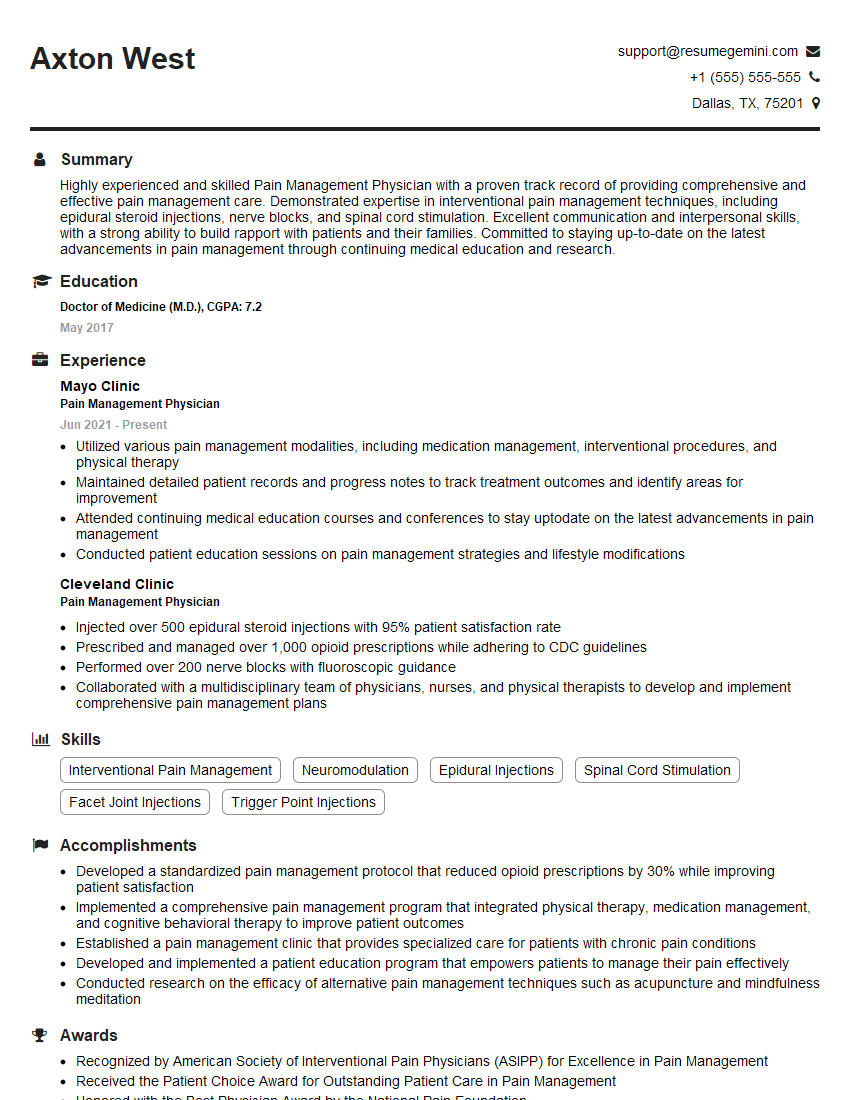
Mastering the medical management of chronic pain opens doors to diverse and rewarding career opportunities within healthcare. Demonstrating expertise in this area significantly enhances your candidacy for advanced positions and research opportunities. To maximize your job prospects, it’s crucial to present your skills and experience effectively through a well-crafted, ATS-friendly resume. ResumeGemini is a trusted resource that can help you build a professional resume tailored to highlight your qualifications in Medical Management of Chronic Pain. Examples of resumes specifically designed for this field are available, ensuring your application stands out.
Explore more articles
Users Rating of Our Blogs
Share Your Experience
We value your feedback! Please rate our content and share your thoughts (optional).
What Readers Say About Our Blog
To the interviewgemini.com Webmaster.
Very helpful and content specific questions to help prepare me for my interview!
Thank you
To the interviewgemini.com Webmaster.
This was kind of a unique content I found around the specialized skills. Very helpful questions and good detailed answers.
Very Helpful blog, thank you Interviewgemini team.