Preparation is the key to success in any interview. In this post, we’ll explore crucial Unclogging drains and toilets interview questions and equip you with strategies to craft impactful answers. Whether you’re a beginner or a pro, these tips will elevate your preparation.
Questions Asked in Unclogging drains and toilets Interview
Q 1. Explain the process of using a drain snake.
A drain snake, also known as a plumbing snake or auger, is a flexible tool used to clear clogs from drains. It’s essentially a long, thin metal cable with a head designed to break up or snag obstructions. Using it is straightforward, but requires a gentle hand to avoid damaging pipes.
- Insert the snake: Carefully feed the snake into the drain opening. For sinks or tubs, this is usually the drain itself. For toilets, it often goes through the overflow hole.
- Advance the snake: Slowly and steadily rotate the handle to feed the snake deeper into the drain. You’ll feel resistance as it encounters the clog.
- Break up the clog: Once you encounter the clog, continue rotating and feeding the snake to break up the obstruction. You might feel a slight give or hear a change in sound.
- Retrieve the snake: Once you feel you’ve broken up the clog, slowly retract the snake, keeping a steady rotation. This helps prevent the clog from reforming.
- Flush the drain: After removing the snake, flush the drain with hot water to ensure the clog is completely cleared. You may need to repeat the process if necessary.
Important Note: Be gentle! Excessive force can damage your pipes. If you encounter significant resistance or are unsure, it’s always best to call a professional plumber.
Q 2. How do you identify the cause of a slow-draining sink?
A slow-draining sink is a common plumbing problem, and pinpointing the cause requires a methodical approach. It’s rarely a single, obvious issue.
- Check for obvious obstructions: Begin by visually inspecting the drain. Hair, soap scum, food scraps, or other debris can easily clog the drain opening or the P-trap (the curved pipe under the sink). Removing these by hand is often the quickest solution.
- Inspect the P-trap: The P-trap is designed to trap debris and prevent sewer gases from entering your home. Carefully loosen the slip nuts connecting the P-trap and remove it to check for buildup. Clean it thoroughly and reassemble.
- Check for clogs further down the drainpipe: If the problem persists, a clog may be further down the line. This is where a drain snake becomes helpful (see previous answer).
- Consider mineral buildup: Over time, hard water minerals can build up inside drainpipes, restricting water flow. A chemical drain cleaner (used cautiously!) or professional hydro-jetting might be necessary.
- Check for drainpipe damage: In some cases, a slow drain could indicate damage or collapse of a section of the drainpipe. This usually requires a plumber’s expertise to repair.
Remember to always turn off the water supply before working on the plumbing under your sink.
Q 3. What are the different types of drain augers and their applications?
Drain augers, or drain snakes, come in various types, each suited for different applications:
- Hand-crank augers: These are the most basic type, featuring a manual crank to rotate the cable. They’re suitable for clearing minor clogs in sinks and tubs but may lack the power for tougher blockages.
- Electric augers: Powered by electricity, electric augers offer more power and speed, making them ideal for tackling stubborn clogs in drains and toilets. Some models have flexible shafts for navigating complex pipe systems.
- Sewer augers (also known as drum augers or sewer machines): These are heavy-duty augers designed for clearing clogs in main sewer lines. They’re typically used by professional plumbers due to their size and power.
- Types of auger heads: Auger heads vary in design. Some have cutting blades to break up clogs, while others have hooks or grips to grab and pull out obstructions. Selecting the appropriate head for the type of clog is crucial.
The choice of auger depends on the severity of the clog and the accessibility of the drain.
Q 4. Describe your experience with chemical drain cleaners. What are the risks and precautions?
Chemical drain cleaners can be effective for dissolving some types of clogs, but they come with significant risks. I’ve seen firsthand the damage they can cause to pipes and the environment. Therefore, I generally advise against their frequent use.
Risks:
- Pipe damage: Strong chemicals can corrode pipes, especially older ones made of PVC or metal. This can lead to leaks and costly repairs.
- Environmental harm: Many chemical drain cleaners contain harsh chemicals that can pollute the environment when they are flushed into the sewage system.
- Safety hazards: These chemicals are corrosive and can cause burns if splashed on skin or eyes. Inhalation of fumes can also be harmful.
Precautions:
- Always follow the manufacturer’s instructions carefully.
- Wear appropriate protective gear, including gloves and eye protection.
- Ensure adequate ventilation when using chemical drain cleaners.
- Never mix different types of chemical drain cleaners.
- Consider using alternative methods such as a drain snake before resorting to chemicals.
If a chemical drain cleaner doesn’t solve the problem, it’s best to call a plumber to investigate the cause of the clog.
Q 5. How do you handle a toilet clog caused by a foreign object?
A foreign object lodged in a toilet requires careful handling. Improper attempts can worsen the situation and potentially damage the toilet.
- Assess the situation: Determine the size and nature of the object. If it’s small and easily accessible, you may be able to retrieve it using tongs or a bent wire hanger.
- Attempt retrieval: Carefully reach into the toilet bowl and attempt to remove the object. Be gentle to avoid scratching the porcelain.
- Use a toilet auger: If you can’t reach the object, a toilet auger (a smaller, more flexible drain snake) may be necessary. Feed it carefully around the clog and attempt to dislodge or grab the object.
- Avoid excessive plunging: Aggressive plunging could damage the toilet or drive the object deeper into the drain.
- Call a plumber: If you’re unable to remove the object, a plumber has specialized tools and expertise to handle the situation safely and efficiently. Sometimes, the object may require the toilet to be disassembled for safe removal.
Remember, safety is paramount. If you’re uncomfortable performing these steps yourself, don’t hesitate to call a professional.
Q 6. Explain the process of clearing a main sewer line clog.
Clearing a main sewer line clog is a complex task that often requires specialized equipment and expertise. This is rarely a DIY job; it necessitates professional intervention due to the potential for significant damage and health hazards.
Professional methods typically include:
- Hydro-jetting: This involves using high-pressure water jets to blast away the clog and clear the sewer line. It’s effective for removing various types of blockages and is generally less disruptive than digging.
- Sewer snakes (larger augers): Plumbers often use powerful sewer snakes to physically break up or dislodge the clog.
- Locating the blockage: Advanced equipment, like sewer cameras, might be used to identify the exact location and nature of the blockage.
- Excavation (in severe cases): If the clog is particularly stubborn or the pipe is severely damaged, excavation might be necessary to access and repair the problem.
Attempting to clear a main sewer line clog without proper training and equipment can lead to severe damage to the plumbing system, leading to costly repairs and potentially health risks from sewage backup.
Q 7. How do you troubleshoot a running toilet?
A running toilet wastes water and money. Diagnosing the cause usually involves checking a few key components:
- Check the flapper: The flapper is a rubber seal at the bottom of the tank that controls water flow into the bowl. If it’s not sealing properly, water will constantly leak into the bowl. A simple visual inspection and replacement of the flapper often resolves the issue. You should be able to lift the flapper and see if the water continues to run. If so, replace it. This usually costs less than $10.
- Examine the fill valve: The fill valve is responsible for refilling the tank after flushing. If it’s malfunctioning, it may overfill the tank, causing water to constantly overflow into the bowl. A plumber can adjust or replace the fill valve to fix this.
- Check for leaks around the tank components: Examine all the connections within the tank for any leaks. Tighten any loose nuts or bolts, and replace damaged parts as needed.
- Chain adjustment: Make sure the chain connecting the flapper to the handle isn’t too short or too long. An improperly adjusted chain can prevent the flapper from sealing correctly.
If you’re uncomfortable inspecting the toilet’s internal components, it’s best to consult a plumber to avoid further damage. A running toilet, though a seemingly small problem, can contribute to a significant waste of water over time.
Q 8. What safety precautions do you take when working with plumbing chemicals?
Safety is paramount when handling plumbing chemicals. These products are often corrosive and can cause serious injury if not handled correctly. My first priority is always to ensure adequate ventilation. I work in well-ventilated areas, or if indoors, I use a respirator to avoid inhaling fumes. I always wear protective gear: gloves (nitrile or neoprene are best), eye protection (safety glasses or goggles), and sometimes a long-sleeved shirt and apron to protect my skin. Before using any chemical, I carefully read and follow the manufacturer’s instructions on the label, paying close attention to dilution ratios and contact time. I never mix different chemicals together, as this can create hazardous reactions. Finally, after using the chemicals, I ensure proper disposal according to local regulations and thoroughly wash my hands and any exposed skin. A single mistake can lead to burns or serious health problems, so following these precautions is non-negotiable.
Q 9. How do you determine the best method for unclogging a drain (e.g., plunger, auger, hydro jetting)?
Choosing the right method for unclogging a drain depends on several factors, including the severity of the clog, the type of drain (kitchen, bathroom, toilet), and the available tools. A simple clog in a bathroom sink might be easily cleared with a cup plunger. A more stubborn clog might require an auger (also known as a plumber’s snake), which can reach further down the pipe to break up or retrieve the obstruction. For serious clogs or recurring problems, a hydro jet is often the most effective solution. This uses high-pressure water to blast away clogs and clean the pipe. I assess the situation by first trying a plunger. If that fails, I progress to an auger. If the auger is ineffective or if I suspect a deeper problem like a sewer line blockage, I recommend hydro jetting for thorough cleaning. Each tool has its strengths, and understanding those strengths is critical for efficient and effective clog removal.
Q 10. Explain the difference between a plunger and a toilet auger.
A plunger and a toilet auger serve different purposes. A plunger creates suction to dislodge clogs near the drain opening. Think of it as a forceful push to dislodge a blockage. There are two main types: cup plungers, best for sinks and showers, and flange plungers, designed with a flexible flap to create a better seal over the toilet drain opening. A toilet auger, on the other hand, is a flexible, coiled tool that’s inserted into the drain to physically break up or retrieve the clog. It reaches further down the drain than a plunger can, making it ideal for stubborn or deeper clogs that a plunger can’t reach. It’s like using a tiny, flexible metal hand to grab and remove the blockage. In short, the plunger is for surface clogs, and the auger is for those hidden deeper within the pipes.
Q 11. What are the signs of a sewer line blockage?
Signs of a sewer line blockage can be significant and disruptive. One of the most noticeable signs is multiple drains in the house backing up simultaneously. Slow-draining drains, even after using a plunger or auger, are also a strong indicator. Gurgling sounds from drains, especially toilets, are often indicative of pressure build-up in the sewer line. Sewer gases escaping into the house, which have a distinct foul odor, are another telltale sign, and this can pose a serious health risk. If you see sewage bubbling up from drains or floor drains, that’s a clear emergency situation. In cases of suspected sewer line blockages, immediate professional help is recommended to prevent further damage and health hazards.
Q 12. How do you handle a situation where a drain is completely blocked?
A completely blocked drain requires a careful approach. First, I’d try to determine the source and nature of the blockage. Is it something easily retrievable, or is it a deeper issue? I avoid using chemical drain cleaners on a completely blocked drain because it could cause further damage to pipes or create hazardous chemical reactions. My next step would be to use a toilet auger to try and break up the clog and retrieve it. If the auger isn’t effective, I’d use a hydro jet, as it is typically the best solution for completely blocked drains, even those involving sewer lines. In some severe cases, a pipe may need to be accessed and repaired or replaced if the clog is too severe, or the pipe is damaged. For example, a tree root intrusion often requires excavation and pipe repair. Always prioritize safety and call a plumber if you are unsure how to proceed.
Q 13. Describe your experience with different types of plungers (cup, flange).
I have extensive experience with both cup and flange plungers. Cup plungers are versatile and effective for sinks, showers, and bathtubs. The rubber cup creates a seal over the drain opening and, with the right technique, effectively dislodges most clogs. However, their open design prevents them from effectively sealing over the wider drain opening of a toilet. That’s where the flange plunger comes in. Its flexible, cup-like design with a fold-over flap creates a superior seal over the toilet drain’s larger opening, improving suction and making it the ideal tool for unclogging toilets. I always choose the appropriate plunger based on the specific plumbing fixture needing attention. Proper technique is crucial regardless of the type; it’s important to ensure a good seal to create the necessary suction for effective clog removal.
Q 14. What are the common causes of toilet clogs?
Toilet clogs stem from a variety of causes. The most common culprit is an excessive amount of toilet paper, especially if it’s not easily biodegradable. Flushing inappropriate items down the toilet, such as feminine hygiene products, diapers, or wipes, is another significant cause. These items don’t break down and often accumulate to create blockages. Hard water mineral deposits can build up over time, narrowing the drainpipe and making it more susceptible to clogging. A foreign object accidentally dropped into the toilet can also cause complete blockage. Understanding these common causes helps in preventive maintenance, such as educating users about appropriate flushing practices and regularly checking for mineral buildup.
Q 15. How do you dispose of hazardous waste from drain cleaning?
Hazardous waste from drain cleaning, such as chemical drain cleaners, must be disposed of responsibly to protect the environment and public health. Never pour these down the drain or into the garbage.
Instead, I always follow local regulations and utilize the appropriate hazardous waste disposal facilities. This often involves contacting your local waste management department to find out their procedures for handling hazardous chemical waste. They will usually provide specific instructions, possibly including designated collection days or drop-off locations for such materials. For instance, in my area, we have a yearly hazardous waste collection event where residents can safely dispose of chemicals like drain cleaner. Failing to properly dispose of these materials can lead to groundwater contamination and harm to wildlife. It’s crucial to treat hazardous waste with the seriousness it deserves.
Career Expert Tips:
- Ace those interviews! Prepare effectively by reviewing the Top 50 Most Common Interview Questions on ResumeGemini.
- Navigate your job search with confidence! Explore a wide range of Career Tips on ResumeGemini. Learn about common challenges and recommendations to overcome them.
- Craft the perfect resume! Master the Art of Resume Writing with ResumeGemini’s guide. Showcase your unique qualifications and achievements effectively.
- Don’t miss out on holiday savings! Build your dream resume with ResumeGemini’s ATS optimized templates.
Q 16. What tools and equipment do you use for drain cleaning?
The tools and equipment I use for drain cleaning vary depending on the severity and type of clog. For minor clogs, a simple plunger might suffice. For more stubborn blockages, I utilize a variety of tools:
- Augers (also known as drain snakes): These flexible tools with a rotating head can break up or retrieve clogs deep within the drain line. Different sizes are available to tackle various pipe diameters.
- Plumbing snakes with cameras: These allow me to visually inspect the drain line to pinpoint the exact location and nature of the clog, helping to guide the clearing process and minimizing unnecessary work.
- Hydro jetting equipment: (This will be discussed further in a later question) This high-pressure water jetting system effectively blasts away clogs and debris, restoring the pipe to its original condition.
- Safety gear: This is paramount, including gloves, eye protection, and sometimes respirators, especially when dealing with unknown substances in the drain.
- Buckets and other cleanup tools: For collecting waste and cleaning up after the job is completed.
Q 17. How do you identify different types of pipes and their materials?
Identifying pipe types and materials is crucial for effective drain cleaning and repair. I use several methods:
- Visual inspection: Whenever possible, I visually inspect exposed sections of pipes to identify their material (e.g., PVC, cast iron, copper, ABS). PVC is usually white or light gray, cast iron is dark gray or black and often shows rust, copper is reddish-brown, and ABS is dark gray or black.
- Pipe markings: Manufacturers often stamp pipe materials and dimensions onto the pipes themselves. This is especially helpful with newer installations.
- Testing: In cases where I can’t visually inspect the pipe, I might use a small auger to feel the pipe material. PVC and ABS are smoother than metal pipes. More complex situations may warrant the use of specialized equipment.
- Homeowner information: If I’m working on a homeowner’s property, I often ask about the age of the house and the type of pipes commonly used during that period. This provides valuable context for my assessment.
Understanding the pipe material is critical because different materials have different strengths and weaknesses, and incorrect tools or methods can damage them. For instance, using a metal auger aggressively on PVC pipe can cause cracks.
Q 18. Describe your experience with hydro jetting equipment.
Hydro jetting is a powerful technique for clearing stubborn drain clogs. It uses high-pressure water jets to blast away grease, debris, and other blockages. My experience with hydro jetting equipment encompasses various models and sizes, allowing me to select the right tool for the job. I’ve used it on residential and commercial properties, tackling everything from minor clogs to severe sewer line blockages.
Before hydro jetting, it’s crucial to assess the pipe’s condition to avoid damage. I inspect the pipes using a camera to identify any potential weak points or areas requiring special attention. The right pressure needs to be used – too little and it won’t clear the clog, too much and it could damage the pipe. Knowing how to properly adjust pressure settings based on pipe material and diameter is key to effective and safe hydro jetting. Post-hydro jetting, I always perform another camera inspection to verify the cleanliness of the pipe and confirm that the blockage has been completely removed. I’ve even used hydro jetting to restore severely deteriorated sewer lines, extending their lifespan and preventing costly replacements.
Q 19. How do you prevent future clogs?
Preventing future clogs involves a multi-pronged approach focusing on education and proactive measures. I always educate my clients on the importance of avoiding pouring grease down the drain, and the benefits of using drain strainers to catch hair and other debris. This is especially important in bathrooms and kitchens.
Regular drain maintenance, such as periodic flushing with hot water or using a chemical drain cleaner sparingly (following product instructions carefully) can also help. For hair clogs in shower drains, I recommend regular cleaning of drain strainers. For kitchen sinks, utilizing baking soda and vinegar (a natural and often effective method) to clear grease build-up is a great preventive measure. Ultimately, a combination of mindful habits and occasional proactive maintenance minimizes the likelihood of future clogs.
Q 20. What is your experience with septic system maintenance?
While my primary focus is drain and toilet unclogging, I have experience with septic system maintenance, mainly in terms of identifying when drain issues might indicate a broader septic system problem. A persistently slow-draining system or recurring clogs could be a sign of a failing septic system or a need for pumping.
I always advise clients to contact a qualified septic system professional for regular pumping and maintenance. My role usually involves identifying the point where the problem originates; if it’s a local blockage within the house plumbing, I can clear it. But if the issue seems more widespread, affecting multiple drains significantly, I will recommend a professional septic system inspection. This ensures the problem is addressed correctly and avoids potentially expensive repairs down the line. It’s crucial to recognize the limits of my expertise and refer customers to specialists when needed.
Q 21. Describe your experience with pressure testing pipes.
Pressure testing pipes involves using compressed air or water to check for leaks. While I don’t routinely perform this myself, I understand the process and its importance. I often work with plumbers who specialize in pressure testing, especially when dealing with potential leaks in underground pipes or when repairs require verifying the integrity of the pipes after repair.
Pressure testing is important after major repairs or when a leak is suspected. The process helps identify even small leaks that might not be immediately obvious. The results from pressure tests inform the next steps, guiding decisions on repair methods and minimizing further damage. It helps ensure that the plumbing system is functioning optimally after any repair or maintenance.
Q 22. What are the signs of a leaking pipe?
Detecting a leaking pipe requires a keen eye and understanding of subtle signs. A persistent damp spot on your wall or floor, especially near pipes, is a major indicator. You might also notice a musty smell, indicating water damage behind walls or under flooring. Changes in water pressure – unusually low pressure or a fluctuating pressure – can suggest a leak somewhere in the system. Furthermore, unexplained increases in your water bill, even without a noticeable increase in water usage, warrant investigation. A hissing or dripping sound emanating from walls or under floors is also a strong clue. Finally, the presence of mold or mildew, particularly in areas not normally prone to moisture, points to a potential pipe leak that needs immediate attention.
For example, I once found a leak behind a kitchen cabinet by noticing a persistent damp patch on the floor and a subtle musty odor. The homeowner hadn’t realized the extent of the problem until I pointed it out. The leak was in a section of pipe hidden behind the cabinet, and repairing it prevented further water damage.
Q 23. How do you handle emergency plumbing calls?
Emergency plumbing calls demand swift and efficient action. My first priority is to assess the situation and mitigate immediate risks. This involves quickly determining the nature of the emergency – a burst pipe, a major overflow, or a blocked sewage line. I always prioritize safety, ensuring the area is secure and protected from further damage before commencing any repair work. For example, a burst pipe needs immediate shut-off to prevent flooding. Next, I begin temporary repairs to control the flow of water and limit damage. This might include using clamps or other temporary fixes. Once the immediate threat is under control, I proceed with a more permanent solution, communicating regularly with the client about the progress and the next steps. Clear communication and transparency are crucial during these stressful situations.
Q 24. What is your experience with different types of drain traps?
I have extensive experience with various drain traps, including P-traps, S-traps, and drum traps. P-traps, the most common type, use a U-shaped bend to retain water, preventing sewer gases from entering the house. S-traps are similar but utilize a more extended, S-shaped bend. Drum traps, often used in floor drains, are larger and can handle higher volumes of water. The choice of trap depends on the specific plumbing fixture and the intended application. For example, a bathroom sink will typically have a P-trap, while a shower or tub might use a different design due to space limitations or potential debris accumulation. Understanding the mechanics of each trap type is essential for effective troubleshooting and cleaning when clogs occur.
Q 25. How do you determine the appropriate size of a drain snake for a particular job?
Selecting the right size drain snake is crucial for efficient clog removal and preventing damage to the pipes. The size of the snake should match the diameter of the drainpipe. For a typical household drain, a 1/2-inch to 3/4-inch diameter snake is usually sufficient. However, for larger main lines or stubborn clogs, a larger diameter snake may be necessary. I always start with a smaller snake and gradually increase the size if the initial attempt is unsuccessful. Using a snake that is too large can damage the pipes, while using one that is too small may be ineffective. The length of the snake is also critical, ensuring it can reach the clog’s location. A flexible cable is preferable for navigating complex pipe layouts. It’s always best to err on the side of caution and select a slightly smaller snake initially to avoid potential pipe damage.
Q 26. Describe your experience with camera inspection of drains.
Camera inspection of drains is a vital tool in my arsenal for diagnosing complex drain problems. This non-invasive method allows for a precise visualization of the inside of the pipes, identifying the location and nature of clogs, root intrusion, or pipe damage. I’ve used this technology extensively to pinpoint the source of recurring clogs, often revealing issues that would be impossible to detect otherwise, such as collapsed sections of pipe or severe blockages from tree roots. The images and recordings are invaluable for explaining the problem to the client and showing the results of the repair. For example, a recent job revealed a significant blockage caused by grease buildup, something that a standard drain snake wouldn’t have completely resolved. The camera inspection allowed me to accurately assess the situation and choose the most effective solution.
Q 27. What is your troubleshooting process for a persistently clogged drain?
Troubleshooting a persistently clogged drain involves a systematic approach. I start with the simplest methods, such as using a plunger or a drain snake. If these fail, I move on to more advanced techniques like a chemical drain cleaner (used cautiously and as per manufacturer instructions), or hydro jetting for particularly stubborn clogs. I then investigate the drain trap, carefully removing and cleaning it to check for blockages. If the problem persists, a camera inspection might be necessary to identify the location and nature of the clog. This process allows me to eliminate potential causes step-by-step, until the root of the issue is identified and resolved. Ignoring any step could lead to unnecessarily prolonged issues and potentially more costly repairs later on.
Q 28. How do you maintain your tools and equipment?
Maintaining my tools and equipment is paramount for efficiency and safety. After each job, I thoroughly clean all tools, removing any debris or clogs from drain snakes and ensuring all equipment is dry to prevent rust or corrosion. I regularly inspect my equipment for wear and tear, replacing any damaged parts promptly. Sharp tools are essential for effective work, so I maintain the sharpness of my drain snakes and other cutting tools. I also store all equipment correctly to protect it from damage. Proper maintenance not only extends the life of my tools but also ensures the quality of my work and the safety of my clients and myself.
Key Topics to Learn for Unclogging Drains and Toilets Interview
- Understanding Drain and Toilet Systems: Learn the basic plumbing principles behind how drains and toilets function, including the flow of water, the role of gravity, and potential points of blockage.
- Common Causes of Clogs: Identify the most frequent culprits behind drain and toilet clogs, such as hair, grease, soap scum, toilet paper, and foreign objects. Understand how these materials create blockages.
- Safe and Effective Clog Removal Techniques: Master various methods for unclogging drains and toilets, including using plungers (different types and techniques), augers (snakes), and chemical drain cleaners (understanding their limitations and safety precautions). Practice describing these methods clearly and confidently.
- Troubleshooting and Diagnostics: Develop skills in identifying the location and nature of a clog. Learn to differentiate between minor blockages and more serious plumbing issues requiring professional intervention.
- Prevention and Maintenance: Discuss preventative measures to minimize the frequency of clogs, such as proper disposal of waste, regular drain cleaning, and using preventative products. Understand the importance of routine maintenance.
- Safety Procedures and Regulations: Emphasize the importance of adhering to safety protocols when working with plumbing, including proper use of equipment and handling of chemicals. Familiarize yourself with relevant safety regulations.
- Customer Service and Communication: Practice explaining complex plumbing issues to customers in a clear and understandable way. Highlight your ability to build rapport and provide excellent customer service.
Next Steps
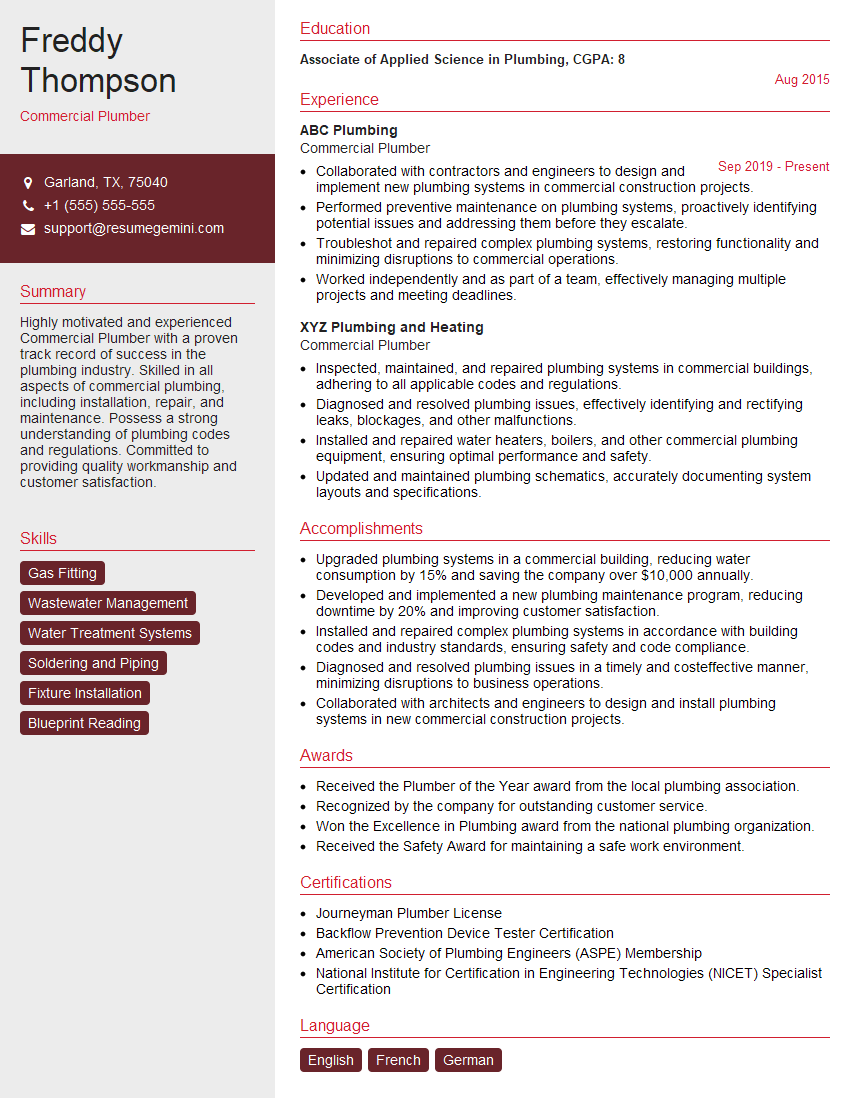
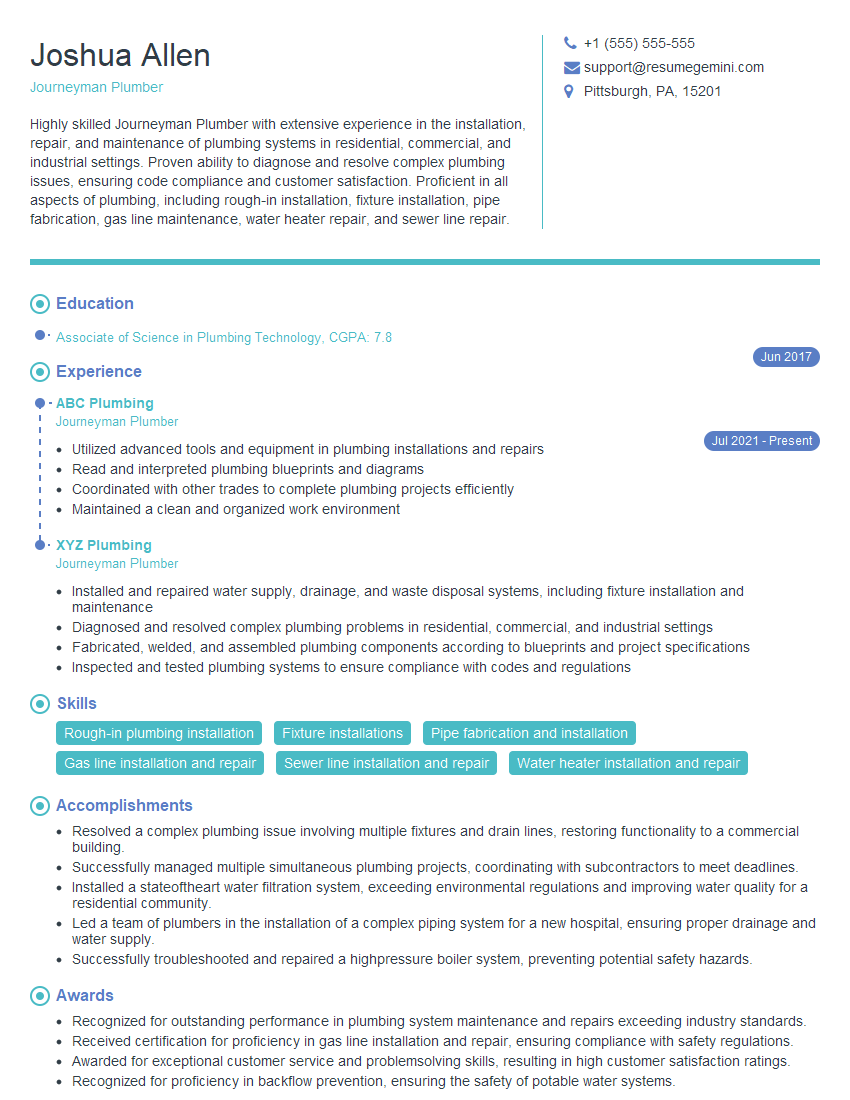
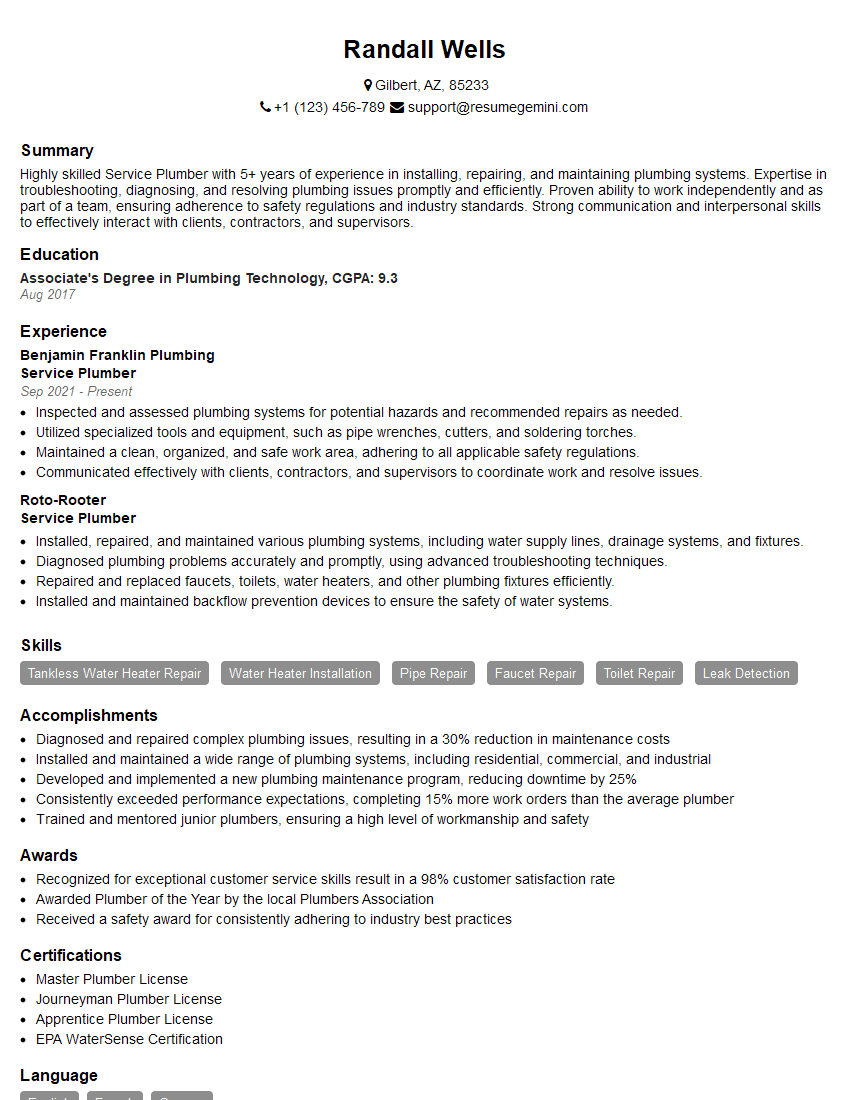
Mastering the art of unclogging drains and toilets is crucial for a successful career in this field. Proficiency in these skills demonstrates practical expertise and problem-solving abilities highly valued by employers. To maximize your job prospects, create an ATS-friendly resume that highlights your relevant skills and experience. ResumeGemini is a trusted resource for building professional resumes tailored to your specific career goals. We provide examples of resumes tailored to the Unclogging drains and toilets field to help you showcase your qualifications effectively.




Explore more articles
Users Rating of Our Blogs
Share Your Experience
We value your feedback! Please rate our content and share your thoughts (optional).
What Readers Say About Our Blog
To the interviewgemini.com Webmaster.
Very helpful and content specific questions to help prepare me for my interview!
Thank you
To the interviewgemini.com Webmaster.
This was kind of a unique content I found around the specialized skills. Very helpful questions and good detailed answers.
Very Helpful blog, thank you Interviewgemini team.