Are you ready to stand out in your next interview? Understanding and preparing for Using Art to Facilitate Self-Reflection and Empowerment interview questions is a game-changer. In this blog, we’ve compiled key questions and expert advice to help you showcase your skills with confidence and precision. Let’s get started on your journey to acing the interview.
Questions Asked in Using Art to Facilitate Self-Reflection and Empowerment Interview
Q 1. Explain your approach to using art for self-reflection.
My approach to using art for self-reflection centers on creating a safe and non-judgmental space where clients can explore their inner world through creative expression. It’s not about producing a masterpiece, but about the process itself. I guide clients to use art materials as a tool for externalizing thoughts, feelings, and experiences that may be difficult to articulate verbally. This could involve exploring a specific emotion through color, creating a symbolic representation of a challenging situation, or using collage to depict various aspects of the self. The focus is on the client’s interpretation of their work, fostering introspection and self-discovery.
For example, a client struggling with anxiety might be encouraged to paint their feelings, using different colors and textures to represent various aspects of their experience. The subsequent discussion about their choices – the colors used, the brushstrokes, the composition – allows for deeper understanding and processing of their emotions.
Q 2. Describe a specific art modality you use and its benefits in therapeutic settings.
One art modality I frequently utilize is mandala creation. Mandalas, which are circular designs, offer a powerful framework for self-reflection and emotional regulation. The process of creating a mandala, whether through drawing, painting, or collage, is inherently meditative and calming. The act of focusing on symmetrical patterns and carefully selecting colors promotes mindfulness and reduces stress.
In therapeutic settings, mandalas provide a structured yet flexible approach. Clients can express themselves freely within the circular format, allowing for exploration of themes like balance, wholeness, and integration. For example, a client dealing with trauma might unconsciously use fragmented imagery in their mandala, offering a visual representation of their fragmented sense of self. Through the process of creating and discussing the mandala, they can begin to recognize and address these fragmented aspects, fostering a sense of healing and integration.
Q 3. How do you adapt art therapy techniques for clients with different needs and backgrounds?
Adapting art therapy techniques is crucial for inclusivity and effectiveness. I consider several factors, including age, physical abilities, cultural background, and cognitive function. For clients with physical limitations, I might use alternative materials, such as clay or adapted painting tools. With clients from diverse cultural backgrounds, I ensure sensitivity to cultural values and symbols, avoiding any interpretations that could be misconstrued or offensive. For clients with cognitive impairments, I adjust the complexity of tasks, breaking down activities into smaller, more manageable steps.
For example, working with a child with autism, I might use sensory materials and repetitive actions to create a calming and predictable experience. With an elderly client with limited mobility, I might use larger brushes and easier-to-handle paints. The most important aspect is to tailor the art-making experience to the individual’s capabilities and comfort level, always prioritizing their safety and well-being.
Q 4. What are some common ethical considerations in art therapy practice?
Ethical considerations in art therapy are paramount. Confidentiality is crucial, and I emphasize this from the outset. I also adhere to strict boundaries regarding the therapeutic relationship, maintaining professional distance while simultaneously fostering a safe and trusting environment. Informed consent is essential; clients need to understand the process, the potential benefits and risks, and their rights to withdraw at any time. Furthermore, I must be aware of potential dual relationships and avoid situations that could compromise my objectivity or create conflict of interest. Maintaining professional competence through continuous learning and supervision is also a vital ethical responsibility.
For example, I might need to refer a client to another professional if their needs exceed my expertise, such as if they require specialized trauma therapy. Maintaining accurate records is vital for accountability and continuity of care.
Q 5. How do you address client resistance or reluctance to participate in art-based activities?
Client resistance or reluctance is common. I address this by creating a non-threatening environment and focusing on building rapport. I explain the process in simple terms, emphasizing the absence of pressure to produce perfect artwork. I actively listen to their concerns, validating their feelings, and exploring their hesitation together. Sometimes, offering a variety of materials can help overcome initial reluctance. Starting with simpler activities, such as collaborative projects or sensory exploration, can help ease the client into the process. Importantly, I prioritize respecting their boundaries and only proceed at a pace that feels comfortable for them.
I might ask open-ended questions such as, “What aspects of art-making are you hesitant about?”, or “What concerns do you have about this process?” The key is to approach resistance with empathy and understanding, creating space for negotiation and collaboration.
Q 6. Describe your experience facilitating group art therapy sessions.
Facilitating group art therapy sessions requires a different set of skills. I emphasize creating a supportive and inclusive environment where members feel safe to share their work and experiences. I structure sessions with clear guidelines and establish group norms to ensure respectful interactions. I might use icebreaker activities to build rapport, then introduce a theme or prompt that encourages exploration of a common issue or emotion. I use group discussions to process and interpret artwork, fostering a sense of community and shared experience. Confidentiality within the group is established at the beginning.
A successful group session might involve a theme like “self-compassion,” where members create self-portraits reflecting their inner selves. The subsequent discussion allows members to share insights, support each other, and learn from each other’s experiences.
Q 7. How do you assess client progress in art therapy?
Assessing client progress is an ongoing process, involving both qualitative and quantitative methods. I observe changes in their artwork, such as shifts in color palette, subject matter, or composition, which might indicate changes in their emotional state or self-perception. I also monitor their verbal and nonverbal behaviors during sessions, noting increases in self-awareness, emotional regulation, and self-esteem. Client self-reports and feedback are also invaluable. For quantitative data, I might use standardized measures relevant to the client’s goals and presenting issues. It’s important to remember that progress isn’t always linear, and setbacks are normal parts of the therapeutic process.
For example, a client struggling with depression might initially use dark and somber colors in their artwork. Over time, if their mood improves, they may begin to incorporate brighter colors and more positive imagery, signifying progress.
Q 8. How do you integrate art therapy with other therapeutic modalities?
Integrating art therapy with other modalities, like Cognitive Behavioral Therapy (CBT) or Dialectical Behavior Therapy (DBT), enhances treatment effectiveness. It’s not about replacing these therapies, but complementing them. For instance, a client struggling with anxiety (CBT focus) might use art to visually represent their anxieties, making them more manageable and fostering self-awareness. The art becomes a tangible representation of their internal experience, bridging the gap between cognitive understanding and emotional processing. In DBT, art can be used to help clients regulate emotions and develop distress tolerance skills. For example, a client working on mindfulness might create a calming mandala to focus their attention during a moment of stress. This integrated approach offers a holistic, multi-faceted treatment plan.
Example: A client dealing with depression (using a CBT framework) might create a series of self-portraits depicting their emotional state over time. Each artwork reflects a session’s progress, visualizing the cognitive restructuring process.
Q 9. How do you maintain client confidentiality in an art therapy setting?
Client confidentiality is paramount. This involves adhering to ethical guidelines and legal regulations (like HIPAA in the US). This means securely storing artwork, using anonymous identifiers in documentation, and ensuring conversations remain private. Physical artwork should be stored in locked cabinets, digital images should be password-protected, and session notes should be confidential and kept securely. Discussions about clients should only take place in appropriate, private settings. Informed consent is crucial – clients should understand how their work will be used and stored.
Example: Instead of labeling artwork with the client’s name, I might use a numerical code. All records would be stored in a locked filing cabinet.
Q 10. What are the key differences between art therapy and other creative therapies?
While art therapy, drama therapy, music therapy, and dance therapy all use creative methods, art therapy uniquely focuses on the process of art-making as a therapeutic tool. Other creative therapies may prioritize performance or expression as the primary therapeutic goal. Art therapy emphasizes the symbolic meaning within the artwork and the client’s process of creation, exploring the connection between their inner world and their artistic expression. It’s less about the final product and more about the journey of creating it. The therapeutic intervention is deeply tied to the act of making art, not solely the outcome.
Example: In art therapy, the way a client chooses colors, the brushstrokes used, or the subject matter selected all hold significant meaning and are explored during the session, unlike other therapies that might prioritize the performance or finished product of the expressive act.
Q 11. Explain your understanding of the therapeutic relationship in art therapy.
The therapeutic relationship in art therapy is built on trust, empathy, and respect. It’s a collaborative partnership where I, as the therapist, guide and support the client’s self-discovery through their art. This involves active listening, non-judgmental observation of their artistic process, and creating a safe space for vulnerability. Open communication is key, ensuring the client feels comfortable expressing themselves both verbally and visually. The relationship emphasizes the client’s autonomy and empowers them to lead the therapeutic process using their artwork as a primary medium for self-expression.
Example: I might begin a session by simply observing the client’s art-making process without interruption, allowing them to feel safe and comfortable before engaging in deeper discussions.
Q 12. How do you use art to help clients develop self-awareness?
Art facilitates self-awareness by providing a non-verbal avenue for self-expression. Clients can explore their emotions, thoughts, and experiences through visual metaphors, symbols, and imagery. By analyzing their artwork, we can identify patterns, recurring themes, and unconscious processes. This could involve discussing color choices, composition, subject matter, and the process of creation itself. The artwork becomes a mirror reflecting the client’s inner world.
Example: A client consistently uses dark, muted colors in their artwork. This might indicate feelings of depression or sadness, which we can then explore further in the therapeutic conversation.
Q 13. How do you use art to help clients cope with trauma or stress?
Art can be a powerful tool for processing trauma and stress. It allows clients to externalize their experiences in a non-threatening way, avoiding the potential retraumatization associated with verbal recounting. Techniques such as creating mandalas for grounding, collage to represent fragmented memories, or sculpting to release pent-up emotions can be used. The focus is on fostering emotional regulation and developing coping mechanisms. The process of creating art can be deeply cathartic and empowering, allowing clients to reclaim agency and control over their experiences.
Example: A client who experienced a traumatic event might use clay sculpting to express their feelings of anger and frustration in a safe and controlled manner.
Q 14. How do you incorporate mindfulness principles into your art therapy practice?
Mindfulness principles are integrated by encouraging clients to focus on the present moment during the art-making process. This includes paying attention to sensations, emotions, and the physical act of creating. Mindful art-making emphasizes non-judgmental observation, allowing clients to simply be present with their experience without evaluating their work or themselves. Specific techniques like focusing on breathwork while painting, or using sensory details in their artwork can enhance mindfulness. This helps clients cultivate self-compassion and emotional regulation.
Example: I might guide a client to focus on the texture of the paintbrush against the canvas while painting, encouraging them to notice physical sensations in the present moment.
Q 15. Describe a successful outcome you achieved using art therapy.
One particularly successful outcome involved a young woman struggling with severe anxiety and social isolation. She initially presented with difficulty expressing her emotions verbally. Through a series of art therapy sessions, we explored various mediums—collage, painting, and clay sculpting—allowing her to externalize her internal experiences. As she worked with these materials, she began to create self-portraits that evolved from dark and distorted images to vibrant and self-affirming representations. This visual transformation mirrored her emotional progress. Her anxiety levels significantly decreased, and she reported feeling more confident in social settings, culminating in her joining a local art class – a major step outside her comfort zone. This successful outcome highlighted the power of art therapy in facilitating self-discovery and promoting emotional healing.
Career Expert Tips:
- Ace those interviews! Prepare effectively by reviewing the Top 50 Most Common Interview Questions on ResumeGemini.
- Navigate your job search with confidence! Explore a wide range of Career Tips on ResumeGemini. Learn about common challenges and recommendations to overcome them.
- Craft the perfect resume! Master the Art of Resume Writing with ResumeGemini’s guide. Showcase your unique qualifications and achievements effectively.
- Don’t miss out on holiday savings! Build your dream resume with ResumeGemini’s ATS optimized templates.
Q 16. How do you manage challenging behaviors in art therapy sessions?
Managing challenging behaviors in art therapy requires a multifaceted approach rooted in safety and understanding. Firstly, I establish a strong therapeutic relationship built on trust and respect. This involves clearly outlining session boundaries and expectations at the outset. If a client exhibits disruptive behavior, I use a calm and non-judgmental tone, actively listening to understand the underlying cause of the behavior. Often, the art itself offers clues. For instance, aggressive mark-making might indicate suppressed anger. I might then redirect the energy through structured activities, such as controlled rhythmic movements with paintbrushes or sculpting with clay, helping the client channel their emotions in a constructive way. If the behavior escalates, I would prioritize safety—this may involve briefly pausing the session, adjusting the environment, or seeking consultation with a supervisor if necessary. The overall goal is to create a space where the client feels safe enough to explore their emotions, even when those emotions manifest as challenging behaviors.
Q 17. How do you maintain your own well-being as an art therapist?
Maintaining my own well-being as an art therapist is paramount. It’s crucial to prevent burnout and maintain ethical practice. I prioritize self-care through regular engagement in activities that rejuvenate me, whether it’s spending time in nature, practicing yoga, or pursuing creative activities of my own. Supervision is another vital aspect; I regularly meet with a supervisor to discuss cases, process challenging situations, and ensure my ethical practice. Further, maintaining professional boundaries is essential. I ensure I don’t become overly invested in clients’ lives outside the therapy session and am careful not to conflate my personal experiences with theirs. This mindful approach helps me provide effective and ethical care while protecting my own mental health and well-being.
Q 18. What are some limitations of art therapy, and how do you address them?
Art therapy, while highly effective, does have limitations. Not all individuals respond equally well to art-based interventions. Some clients may have physical limitations that prevent them from participating fully in certain activities. Also, the subjective nature of art interpretation can pose challenges; there’s always the possibility of misinterpreting a client’s artwork. To address these limitations, I employ a flexible approach, adapting techniques based on individual client needs and preferences. If a client struggles with a particular medium, I offer alternatives. To minimize misinterpretation, I prioritize collaborative dialogue, encouraging clients to explain their artwork in their own words. Open communication and a careful consideration of non-verbal cues alongside the artwork itself help provide a comprehensive understanding of the client’s experiences. Referring to other therapeutic modalities when necessary is always an option.
Q 19. How do you document client progress and treatment plans in art therapy?
Documenting client progress and treatment plans in art therapy necessitates a detailed and systematic approach. I typically maintain a comprehensive case file that includes intake assessments, session notes, samples of client artwork (photographs or scans), and treatment plans. These notes meticulously detail the client’s verbal and nonverbal communication, the art-making process, the client’s emotional responses, and any significant observations or insights. I use a structured format for session notes, including date, time, and a concise summary of the session’s themes, goals, and progress towards those goals. Progress is regularly reviewed and the treatment plan is adjusted as needed. Client confidentiality is of utmost importance, ensuring that all documentation adheres to relevant ethical guidelines and legal regulations.
Q 20. What are some common misconceptions about art therapy?
A common misconception is that art therapy is only for children or individuals with severe mental illness. In reality, art therapy is a versatile modality suitable for a wide range of individuals and presenting issues, from stress management and grief counseling to addressing trauma and relationship difficulties. Another misconception is that clients need to be “artistic” to benefit. Art therapy isn’t about creating masterpieces; it’s about using the creative process as a tool for self-expression and emotional processing. The focus is on the process of creation, not the product itself. Addressing these misconceptions involves educating clients and referring professionals about the breadth and depth of art therapy’s application.
Q 21. How do you ensure safety and appropriate boundaries in art therapy sessions?
Ensuring safety and appropriate boundaries in art therapy is crucial. I begin by establishing clear guidelines at the first session, covering topics like confidentiality, session structure, and expectations regarding behavior. This includes setting limits on potentially harmful behaviors. Physical safety is a top priority. The art room itself should be a safe space, free from hazards, with materials stored appropriately. I always maintain professional boundaries, avoiding dual relationships and maintaining appropriate emotional distance from clients. Regular supervision helps me identify potential boundary issues before they escalate. If I ever feel uncomfortable or sense a situation is unsafe, I prioritize my own safety and the client’s by taking necessary steps, such as seeking consultation or adjusting the therapeutic approach. Ethical guidelines and legal frameworks governing art therapy inform all aspects of session management and boundary setting.
Q 22. Describe your experience working with diverse populations.
Working with diverse populations is central to my art therapy practice. I believe that art transcends cultural and linguistic barriers, offering a universal language for self-expression. My experience spans various demographics, including individuals from different socioeconomic backgrounds, ethnicities, ages, and abilities. I approach each individual with a deep understanding of their unique cultural context, adapting my methods and materials to be inclusive and sensitive. For example, with children, I might use play-based art activities like finger painting or collage, while with elderly individuals, I might focus on gentler mediums like watercolor or drawing. I always strive to create a safe and welcoming space where clients feel comfortable exploring their experiences without judgment.
I actively seek out professional development opportunities to enhance my cultural competency. This includes attending workshops on culturally responsive therapy, researching diverse art forms, and engaging in self-reflection to identify and address my own biases. A recent example involved working with a refugee family; I utilized storytelling through art as a primary method to help them process their trauma and build resilience. Their unique artistic expressions provided valuable insights into their experiences, which then informed my therapeutic approach.
Q 23. How do you incorporate creativity and innovation into your art therapy practice?
Creativity and innovation are at the heart of my art therapy practice. I believe in embracing spontaneity and encouraging clients to explore unconventional materials and techniques. This fosters a sense of ownership and empowers them to express themselves authentically. For instance, instead of traditional canvases, I might utilize found objects, recycled materials, or even the client’s own clothing to create art. The process becomes as important as the product.
I regularly incorporate new art mediums and methods into my practice to keep things fresh and engaging. I might introduce digital art techniques, such as photo editing or animation, to appeal to clients more comfortable with technology. I also design collaborative art projects, encouraging group interaction and shared creative experiences. This dynamic approach helps clients develop new skills, build confidence, and enhance their self-esteem through the creative process.
Q 24. Describe your understanding of the role of transference and countertransference in art therapy.
Transference and countertransference are essential concepts in art therapy, representing the emotional dynamics between the client and therapist. Transference refers to the client unconsciously projecting feelings, thoughts, and behaviors onto the therapist, often stemming from past relationships. Countertransference, conversely, refers to the therapist’s emotional reactions to the client, influenced by their own personal experiences and unconscious biases.
Recognizing and managing transference and countertransference is crucial for effective therapy. In art therapy, these dynamics can manifest through the client’s choice of colors, imagery, or the way they interact with materials. For example, a client who experiences anger towards a parental figure might use aggressive brushstrokes or dark, intense colors in their artwork. My role is to carefully observe these patterns, and through thoughtful dialogue and art-making processes, help the client understand and process these feelings. Regular supervision and self-reflection are paramount to managing my own countertransference and ensuring ethical and effective practice.
Q 25. How do you use art to facilitate emotional expression?
Art is a powerful tool for facilitating emotional expression, especially for individuals who may find it difficult to verbalize their feelings. The act of creating art allows clients to bypass verbal barriers and access a deeper level of self-understanding. I guide clients in exploring various techniques to express emotions, for example, using color to represent feelings (e.g., bright colors for joy, dark colors for sadness), creating symbolic representations of emotions through imagery, or using texture to convey the intensity of an experience.
For example, a client struggling with anxiety might create a collage representing their overwhelming feelings using chaotic arrangements and fragmented imagery. Through guided discussions about their artwork, we can collaboratively explore the source of their anxiety and develop coping strategies. I also use metaphors and storytelling techniques to deepen the emotional exploration. The created art piece then serves as a visual representation of their journey and progress.
Q 26. What are some specific art materials you prefer to use and why?
My choice of art materials depends on the client’s needs, preferences, and therapeutic goals. I find that offering a diverse range of materials is important. I frequently use clay because it’s tactile and allows for nonverbal expression of emotions through shaping and manipulation. Paint, especially watercolor and acrylics, allows for exploration of color and texture, symbolizing different emotional states. Collage is incredibly versatile and adaptable, allowing for the incorporation of diverse materials and creating meaningful representations.
I also incorporate unconventional materials such as natural elements (leaves, twigs, stones), recycled materials, or found objects. These non-traditional materials can be particularly powerful, encouraging creativity and providing a unique avenue for self-expression. The selection process is collaborative; I often present a variety of options and encourage clients to choose materials that resonate with them, reflecting their inner world and current emotional state.
Q 27. How do you address ethical dilemmas related to client artwork?
Ethical dilemmas regarding client artwork are addressed through careful consideration of confidentiality, client autonomy, and professional boundaries. The core principle is respecting the client’s ownership of their art. Unless the client explicitly grants permission, I do not share their artwork with others. This includes family members, colleagues, or even displaying it publicly. Exceptions might exist if a client is a danger to themselves or others and sharing the artwork is necessary for intervention.
I address these ethical concerns proactively, establishing clear expectations with clients from the outset. Informed consent is crucial, ensuring the client understands how their artwork will be handled. I maintain secure storage for artwork, and if I need to document progress for supervision, I ensure client privacy is upheld. In the rare event of a potential ethical conflict, I consult with experienced colleagues or supervisors to arrive at a responsible and ethical solution.
Q 28. How do you evaluate the effectiveness of your art therapy interventions?
Evaluating the effectiveness of my art therapy interventions is an ongoing process. I don’t rely on a single method but rather integrate several approaches. Qualitative data is collected through regular client feedback, including verbal reflections, journaling, and discussions about the art-making process. Observing changes in client behavior and self-reported emotional well-being during sessions provides valuable insights.
I may also use standardized assessment tools, adapted for art therapy, to measure changes in specific areas such as anxiety, depression, or self-esteem. For example, I might use scales designed to measure emotional regulation or self-efficacy. Visual analysis of the client’s artwork over time can reveal shifts in their emotional expression, color palettes, and symbolic imagery, providing further data on therapeutic progress. The integration of these diverse methods offers a holistic understanding of the effectiveness of the art therapy interventions.
Key Topics to Learn for Using Art to Facilitate Self-Reflection and Empowerment Interview
- Theoretical Foundations: Explore the intersection of art therapy, expressive arts, and positive psychology. Understand the theoretical underpinnings of using art as a tool for self-discovery and personal growth.
- Art Modalities and Techniques: Familiarize yourself with various art forms (drawing, painting, sculpting, collage, etc.) and their application in therapeutic settings. Understand the strengths and limitations of each modality.
- Facilitating the Process: Learn about creating a safe and supportive environment for self-expression. Practice active listening, mindful observation, and providing constructive feedback without interpretation or judgment.
- Ethical Considerations: Understand the ethical implications of working with vulnerable populations and maintaining client confidentiality. Be prepared to discuss boundaries and professional conduct.
- Assessment and Interpretation: Develop skills in observing and interpreting artistic expression. Learn to identify patterns, themes, and symbolic meaning within artwork, while respecting the client’s unique experience.
- Practical Applications: Be ready to discuss your experience (if any) in applying these techniques in various contexts, such as individual therapy, group sessions, or community outreach programs. Consider diverse populations and their unique needs.
- Case Study Analysis: Practice analyzing hypothetical case studies involving challenges in using art for self-reflection and empowerment. Be prepared to discuss potential solutions and ethical considerations.
- Program Development and Evaluation: Discuss the process of designing and implementing art-based programs. Understand methods of measuring the effectiveness of these programs.
Next Steps
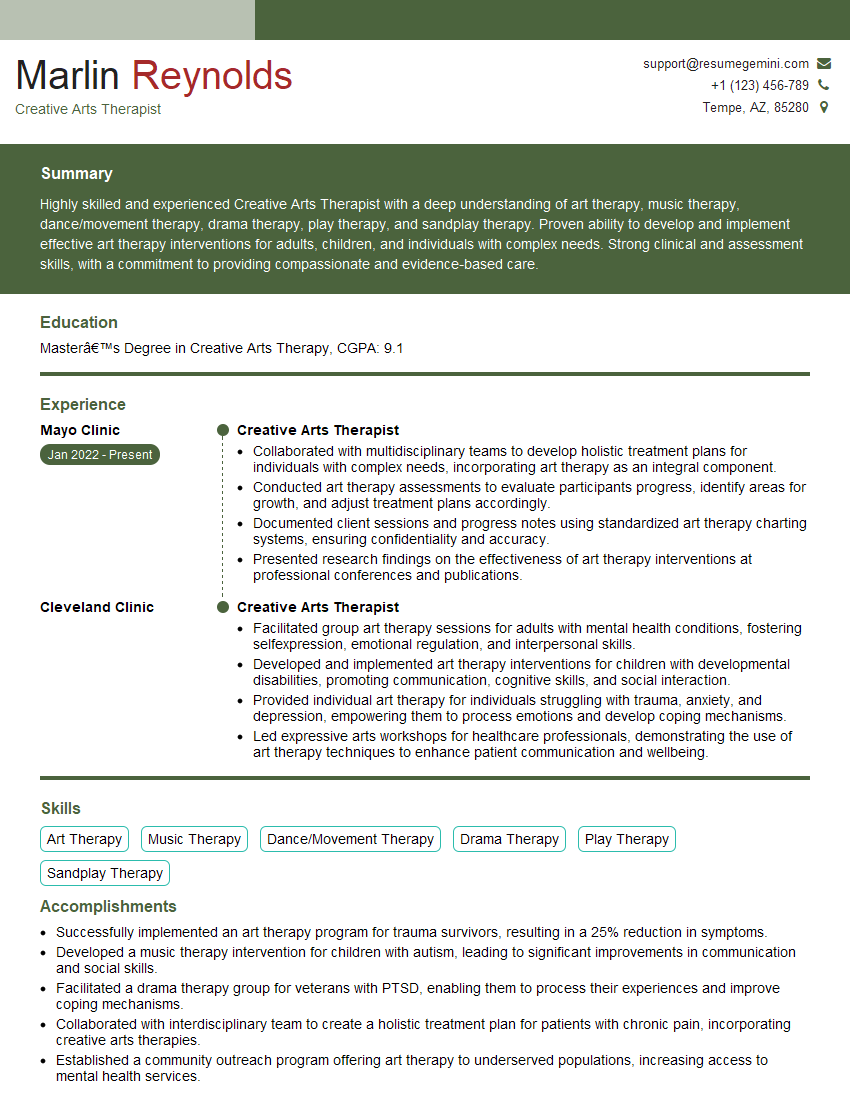
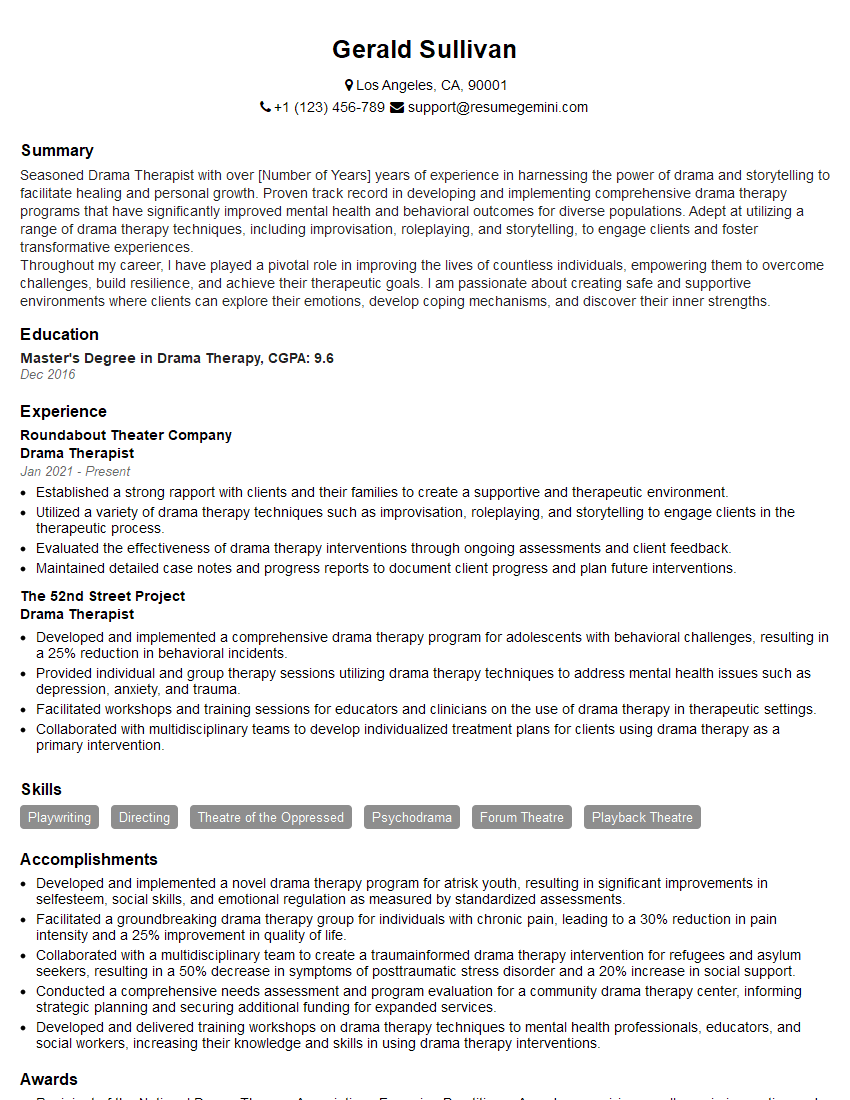
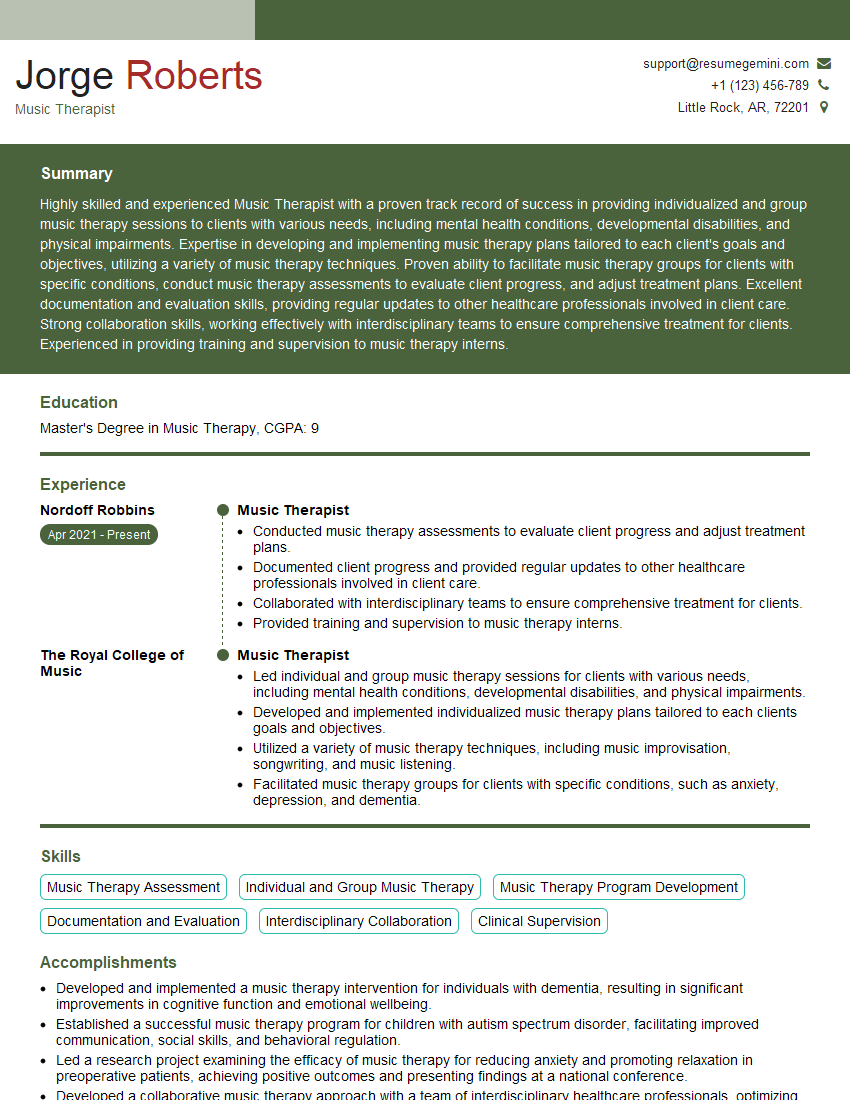
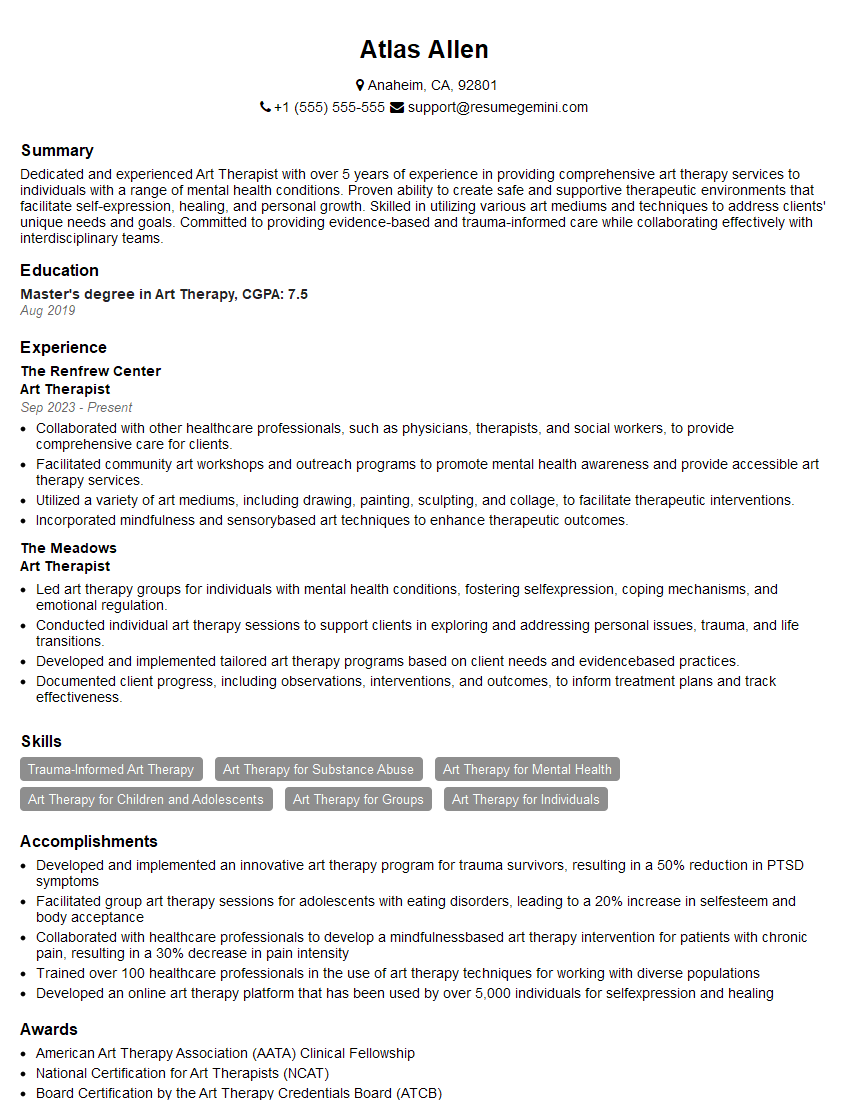
Mastering the art of using art to facilitate self-reflection and empowerment significantly enhances your career prospects in fields like art therapy, counseling, education, and community development. A well-crafted resume is crucial for showcasing your skills and experience effectively. Building an ATS-friendly resume is key to getting noticed by potential employers. ResumeGemini is a trusted resource that can help you create a professional and impactful resume tailored to your specific skills and experience. Examples of resumes tailored to Using Art to Facilitate Self-Reflection and Empowerment are available to guide you through the process.
Explore more articles
Users Rating of Our Blogs
Share Your Experience
We value your feedback! Please rate our content and share your thoughts (optional).
What Readers Say About Our Blog
To the interviewgemini.com Webmaster.
Very helpful and content specific questions to help prepare me for my interview!
Thank you
To the interviewgemini.com Webmaster.
This was kind of a unique content I found around the specialized skills. Very helpful questions and good detailed answers.
Very Helpful blog, thank you Interviewgemini team.