Cracking a skill-specific interview, like one for PID (ProportionalIntegralDerivative) Controllers, requires understanding the nuances of the role. In this blog, we present the questions you’re most likely to encounter, along with insights into how to answer them effectively. Let’s ensure you’re ready to make a strong impression.
Questions Asked in PID (ProportionalIntegralDerivative) Controllers Interview
Q 1. Explain the three terms in a PID controller: Proportional, Integral, and Derivative.
A PID controller is a feedback control system that uses three terms – Proportional, Integral, and Derivative – to minimize the error between a desired setpoint and the actual measured value. Think of it like a self-correcting thermostat: it measures the temperature, compares it to your desired temperature, and adjusts the heating/cooling accordingly.
- Proportional (P): This term responds to the current error. A larger error results in a proportionally larger corrective action. Imagine turning the steering wheel more sharply the further your car drifts from the center of the lane. The output is directly proportional to the error:
Output_P = Kp * Error, whereKpis the proportional gain. - Integral (I): This term addresses accumulated error over time. It corrects for persistent errors that the proportional term alone might not eliminate. Think of it as ‘remembering’ past errors. If your car consistently drifts to the right, the integral term will make a sustained correction to counter this drift. The output is the integral of the error over time:
Output_I = Ki * ∫Error dt, whereKiis the integral gain. - Derivative (D): This term anticipates future error by considering the rate of change of the error. It acts like a shock absorber, reducing oscillations and speeding up the response. If your car starts drifting rapidly to the right, the derivative term will quickly increase the correction to counter the increasing drift. The output is proportional to the rate of change of the error:
Output_D = Kd * d(Error)/dt, whereKdis the derivative gain.
The overall controller output is the sum of these three terms: Output = Output_P + Output_I + Output_D
Q 2. What are the benefits and drawbacks of using a PID controller?
PID controllers offer numerous benefits, making them ubiquitous in control systems, but they also have limitations.
- Benefits:
- Simplicity and effectiveness: Relatively easy to understand and implement, yet remarkably effective in controlling a wide range of systems.
- Wide applicability: Used in countless applications, from temperature control in ovens to precise positioning in robotics.
- Robustness: Can handle disturbances and maintain a desired setpoint even with changing conditions.
- Drawbacks:
- Tuning complexity: Finding the optimal values for
Kp,Ki, andKdcan be challenging and often requires trial and error or advanced tuning methods. - Over- or undershoot: Poorly tuned PID controllers can lead to excessive oscillations (overshoot) or slow response (undershoot).
- Windup: The integral term can accumulate excessive error, leading to instability if the system is saturated (e.g., a motor reaching its maximum speed).
- Tuning complexity: Finding the optimal values for
Q 3. Describe how the proportional gain (Kp) affects the controller’s response.
The proportional gain (Kp) determines the responsiveness of the controller to the current error. A higher Kp results in a faster response, but it can also lead to instability and oscillations. Think of it like adjusting the sensitivity of your car’s steering: a higher Kp is like having very sensitive steering – you react quickly to deviations but risk overcorrection.
Example: If Kp is low, the controller will react slowly to errors, resulting in a sluggish response. If Kp is high, the controller will react quickly, but may overshoot the setpoint and oscillate around it.
Q 4. How does the integral gain (Ki) affect the controller’s response to steady-state errors?
The integral gain (Ki) eliminates steady-state errors, which are persistent deviations between the actual value and the setpoint. The integral term continuously sums up the error, driving the output to counter the error until it is reduced to zero. Imagine your car slowly drifting to the right; the integral term would steadily correct this drift to ensure you stay in the center lane. A larger Ki will reduce steady-state error faster, but can also increase overshoot and oscillations.
Example: If Ki is too low, a persistent error will remain. If Ki is too high, the correction may be too aggressive, leading to oscillations.
Q 5. Explain the role of the derivative gain (Kd) in damping oscillations.
The derivative gain (Kd) dampens oscillations by reacting to the rate of change of the error. It anticipates future error and reduces overshoot. Consider it a predictive element. In our car analogy, Kd is like anticipating the next turn: it helps smooth out the steering, preventing jerky movements. A larger Kd will reduce overshoot and oscillations but can make the response slower.
Example: Without a derivative term, a system might oscillate around the setpoint. By adding a derivative term, the rate of change is considered, which actively prevents large oscillations and speeds up settling.
Q 6. What is the Ziegler-Nichols method for PID tuning?
The Ziegler-Nichols method is a simple yet effective empirical tuning method. It involves two steps:
- Ultimate Gain (Ku) and Ultimate Period (Pu) Determination: Set
KiandKdto zero, and gradually increaseKpuntil the system starts to oscillate continuously. The value ofKpat this point isKu, and the period of these oscillations isPu. - PID Gain Calculation: Once
KuandPuare determined, the PID gains are calculated using these empirical formulas:
Kp = 0.6 * KuKi = 1.2 * Ku / PuKd = 0.075 * Ku * Pu
This method provides a starting point, and fine-tuning may be necessary to achieve optimal performance.
Q 7. Describe the Cohen-Coon method for PID tuning.
The Cohen-Coon method is another empirical tuning method that uses the system’s response to a step change. It requires determining the system’s delay time (τd) and response time (τi) from a step response. The formulas for PID gains are:
Kp = (τi + 0.33τd) / (τd * Kp_s)Ki = 0.9 / (τd * Kp_s)Kd = (0.33τi * τd) / (τd * Kp_s)
Where Kp_s is the steady-state gain of the system. This method usually results in less overshoot than Ziegler-Nichols, but it requires more initial system analysis.
Q 8. What is the effect of a large proportional gain on the system’s stability?
A large proportional gain (Kp) amplifies the controller’s response to the error between the desired setpoint and the actual process variable. While this initially seems beneficial for faster error correction, it can lead to instability. Think of it like this: a very sensitive thermostat that overreacts to even tiny temperature changes. It might oscillate wildly, constantly overshooting and undershooting the desired temperature, never settling down. In technical terms, a high Kp can reduce the system’s damping, causing oscillations and even unbounded growth if the gain is too high, leading to instability. The system’s response becomes more prone to ringing and potentially unstable oscillations. The system may become unstable if the gain is too high, meaning the oscillations might grow in amplitude indefinitely until the system fails or reaches its limits.
For example, imagine controlling the speed of a motor. A large Kp might cause the motor to rapidly accelerate to overshoot its target speed, then decelerate sharply, overshooting again in the opposite direction, leading to a potentially damaging oscillatory behavior. Proper tuning is crucial to find a balance between responsiveness and stability.
Q 9. What is the effect of a large integral gain on the system’s stability?
A large integral gain (Ki) eliminates steady-state error. The integral term accumulates the error over time. A large Ki means the controller aggressively corrects for past errors, which can lead to overcorrection and oscillatory behavior, similar to a high Kp, but often more pronounced and slower to damp out. Think of a self-driving car trying to maintain a precise lane position. A large Ki might make the car oversteer and understeer repeatedly, even if the initial error was small. This overcorrection is due to the integral term’s cumulative nature; small persistent errors are amplified over time. While eliminating steady-state error is good, excessive Ki can cause instability, leading to oscillations that can grow in amplitude until it leads to instability. In essence, it’s a trade-off: while beneficial for accuracy, a large Ki can introduce instability.
Q 10. What is the effect of a large derivative gain on the system’s stability?
A large derivative gain (Kd) anticipates future error based on the rate of change of the error. It acts as a damper, preventing overshoot and oscillations. However, an excessively large Kd can make the system too sluggish and unresponsive to changes, potentially introducing instability by amplifying high-frequency noise. Imagine trying to balance a broom on your hand. A large Kd is like having extremely sensitive reflexes – the slightest deviation will cause a violent correction, resulting in more instability. In practice, a high Kd can lead to jerky movements and increased sensitivity to noise, potentially triggering unwanted corrections. While it improves transient response, an overly large Kd increases noise sensitivity, leading to instability and poor performance. A moderate Kd is usually preferred for stability.
Q 11. How do you deal with integral windup in a PID controller?
Integral windup occurs when the integral term continues to accumulate error even when the controller output is saturated (i.e., at its maximum or minimum value). This happens when there is a large persistent error and the controller is unable to correct it. Imagine a water tank with a leaky valve. The controller tries to fill it, but the leak is so large that the output is constantly at maximum, yet the water level continues to fall, leading to further accumulation in the integral term. When the leak is finally fixed, the controller suddenly releases a large amount of water, overshooting the desired level. This overshoot is precisely the consequence of integral windup. To avoid this, several strategies exist:
- Anti-windup techniques: These methods prevent the integral term from accumulating when the controller output is saturated. Common approaches include tracking the difference between the actual and saturated output, clamping the integral term, or using a conditional integrator.
- Back-calculation: This technique calculates the integral contribution based on the saturated output value rather than the actual error.
- Initialization: Resetting the integral term periodically can also help reduce windup, though it has tradeoffs for control accuracy.
The choice of method depends on the specific application and the characteristics of the system.
Q 12. Explain different PID controller structures (e.g., parallel, series).
PID controllers can be implemented in different structures, each with its own advantages and disadvantages:
- Parallel (or Standard) Structure: This is the most common form. The proportional, integral, and derivative terms are calculated separately and summed to produce the overall controller output:
Output = Kp * error + Ki * integral(error) + Kd * derivative(error) - Series (or Interacting) Structure: In this structure, the integral and derivative terms are cascaded. The output of the proportional term feeds into the integrator, and the output of the integrator feeds into the derivative term. This structure can offer better performance in certain applications but is less intuitive to tune.
- Other Structures: There are many variations, including using a different form of derivative calculation (e.g., using a lead-lag filter) to improve robustness to noise.
The choice of structure depends on the specific application and its performance requirements. The parallel structure is often easier to tune and understand. The series structure might offer better robustness in some cases, but it may be more challenging to tune due to interactions between the terms.
Q 13. What are some common limitations of PID controllers?
While widely applicable, PID controllers have limitations:
- Model Dependency: PID controllers are inherently empirical; their performance relies heavily on the system’s dynamics and may not perform well if these dynamics change significantly.
- Tuning Complexity: Finding the optimal Kp, Ki, and Kd values can be challenging and time-consuming, often requiring iterative experimentation.
- Limitations with Non-linear Systems: PID controllers struggle with systems whose behavior is significantly non-linear, requiring advanced techniques like gain scheduling or fuzzy logic controllers for effective control.
- Sensitivity to Noise: The derivative term is particularly susceptible to noise. High-frequency noise can lead to erratic controller behavior. Filtering mechanisms are often necessary to mitigate this.
- Steady-State Error for Certain Systems: While integral action addresses steady-state error, it might not be effective for all systems, especially those with significant dead-time.
Understanding these limitations is crucial for choosing the appropriate control strategy. In situations with complex dynamics, more advanced control techniques might be necessary.
Q 14. How do you choose the appropriate sampling time for a PID controller?
Choosing the appropriate sampling time for a PID controller is critical for stability and performance. It directly impacts the controller’s ability to accurately track the process variable and respond to changes. A rule of thumb is to sample at a rate at least 10 times faster than the fastest dynamic of the system. Consider the system’s response time and the speed at which the controlled variable changes. If changes happen quickly, a faster sampling rate is necessary. The choice is a trade-off between accuracy and computational burden. A faster sampling rate will provide more precise measurements and allow for faster response, but it also increases computational load. Conversely, a slower sampling rate might miss rapid changes, causing poor control performance. A good approach is to start with a fast sampling rate and gradually decrease it until the controller’s performance is still satisfactory, thus optimizing resource usage. If you select a sampling rate too slow, the controller might miss rapid changes in the process variable, leading to instability or poor tracking performance.
For example, a temperature control system with a slow-responding heater might require a relatively slow sampling rate, while a high-speed motor control system might need a very fast sampling rate. Simulation and experimentation are often used to determine the optimal sampling time for a specific application.
Q 15. Explain the concept of controller saturation.
Controller saturation occurs when the output of a PID controller reaches its physical limits. Imagine trying to steer a large ship – you can only turn the wheel so far. Similarly, a PID controller’s output might be limited by the actuator’s capabilities (e.g., a valve that can only open or close completely, a motor with a maximum speed). When the controller demands an output beyond these limits, it saturates, leading to a failure to achieve the desired setpoint.
For instance, if a heating system’s controller is trying to reach a higher temperature than the heater can produce, the controller will output its maximum value. Even though the error might still be significant, the output remains capped. This can lead to sluggish response and even instability. It’s crucial to understand the actuator’s limits and design the controller to avoid this saturation as much as possible. One method is to carefully tune the PID gains to minimize the occurrence of extreme output demands. Another is to implement anti-windup strategies (explained further in a later answer).
Career Expert Tips:
- Ace those interviews! Prepare effectively by reviewing the Top 50 Most Common Interview Questions on ResumeGemini.
- Navigate your job search with confidence! Explore a wide range of Career Tips on ResumeGemini. Learn about common challenges and recommendations to overcome them.
- Craft the perfect resume! Master the Art of Resume Writing with ResumeGemini’s guide. Showcase your unique qualifications and achievements effectively.
- Don’t miss out on holiday savings! Build your dream resume with ResumeGemini’s ATS optimized templates.
Q 16. How can you improve the performance of a PID controller in the presence of noise?
Noise significantly impacts PID controller performance, leading to erratic adjustments and poor tracking. Think of trying to balance a pencil on your fingertip while someone is constantly tapping the table – the vibrations (noise) make it impossible to maintain balance. To mitigate the effects of noise, we often employ filtering techniques.
- Low-pass filters: These filters smooth out high-frequency noise by attenuating high-frequency components in the error signal. A simple moving average is a form of low-pass filtering. More sophisticated filters like Butterworth or Bessel filters provide better noise rejection with minimal phase lag.
- Derivative filtering: The derivative term in a PID controller is particularly sensitive to noise. A common technique is to use a low-pass filter specifically for the derivative component to prevent it from overreacting to noisy measurements. For example, instead of using a simple derivative, a filtered derivative might be calculated as
(Kp*e - Kp*e_prev)/dt*alpha, wherealphais a constant between 0 and 1. - Setpoint weighting: Adjusting the setpoint weight can help reduce the impact of noise on the output. This approach involves applying less weight to the error term in the PID equation.
Choosing the appropriate filtering technique depends on the type and level of noise present in the system. The selection involves a trade-off; excessive filtering might make the controller sluggish, while insufficient filtering can lead to oscillations and instability.
Q 17. How do you handle nonlinearities in a system when using a PID controller?
Nonlinearities in a system can drastically affect the performance of a linear PID controller. Nonlinearities refer to situations where the system’s output is not directly proportional to its input. Imagine trying to control the speed of a bicycle – the relationship between pedal force (input) and speed (output) isn’t linear due to friction and other factors.
Handling nonlinearities requires advanced strategies:
- Linearization: If the nonlinearity is mild and localized, we might linearize the system around an operating point. This simplifies the system so that a linear PID controller can work reasonably well. However, this is only accurate within a limited range.
- Gain scheduling: This approach uses multiple PID controllers, each tuned for a different operating range. The controller is switched based on the system’s operating conditions. It’s like having different gears on a bicycle for different terrain.
- Nonlinear control techniques: For significant nonlinearities, more sophisticated methods like fuzzy logic control or model predictive control (MPC) are employed. These offer more robust handling of nonlinear systems.
- Feedback linearization: This advanced technique mathematically transforms the nonlinear system into an equivalent linear one, allowing the application of a standard PID controller.
The choice of method depends on the severity and nature of the nonlinearity, along with the complexity and cost constraints of the control system.
Q 18. What is anti-windup and how does it work?
Anti-windup is a crucial mechanism in PID controllers to prevent integrator windup, a phenomenon that occurs during controller saturation. Imagine filling a water tank: if the inflow valve is fully open (saturation) and the tank is already full, the water keeps accumulating (windup) even after the desired level is reached. This excess buildup leads to a large overshoot when the valve finally starts to close.
Anti-windup addresses this by preventing the integral term from accumulating when the controller output is saturated. Common anti-windup strategies include:
- Back-calculation: The integral term’s accumulation is stopped when the output saturates. When the saturation ends, the integral term is adjusted to avoid an overshoot.
- Conditional integration: The integral term is updated only when the output is within its limits.
- Trapped integral: The integrator’s output is clamped at a certain value to prevent excessive accumulation.
Implementing anti-windup significantly improves the responsiveness and stability of the control system, especially when dealing with actuator limitations.
Q 19. Explain the difference between open-loop and closed-loop control systems.
The fundamental difference lies in feedback. An open-loop control system operates without feedback; the controller sends a command to the actuator without monitoring the system’s response. Think of a toaster: you set the time, and the heating element operates for that duration regardless of whether the bread is toasted. It’s simple but lacks robustness.
A closed-loop control system (also called a feedback control system) utilizes feedback to constantly adjust its output based on the measured system response. A thermostat is an excellent example; it measures the room temperature and adjusts the heating or cooling accordingly to maintain the desired temperature. This feedback mechanism makes closed-loop systems more accurate and adaptable to disturbances.
PID controllers are inherently closed-loop controllers, relying on feedback to minimize the error between the setpoint and the actual system output.
Q 20. What are some common applications of PID controllers?
PID controllers are remarkably versatile and find applications in a wide array of industries and systems. Some common applications include:
- Process control: Controlling temperature, pressure, flow rate, and level in chemical plants, refineries, and power plants.
- Robotics: Precise control of robot arm movements and positioning.
- Automotive systems: Cruise control, engine management, and anti-lock braking systems (ABS).
- Aerospace: Flight control systems for airplanes and spacecraft.
- HVAC systems: Maintaining desired room temperature and humidity.
- Disk drives: Precise positioning of read/write heads.
Essentially, anywhere you need precise and automatic control of a system, PID controllers offer a reliable and effective solution.
Q 21. How do you determine if a system is stable using a PID controller?
Determining the stability of a system with a PID controller involves analyzing the controller’s effect on the system’s dynamics. Instability manifests as oscillations (the system output continuously overshoots and undershoots the setpoint), divergence (the output drifts further from the setpoint), or even catastrophic failure.
Several methods assess stability:
- Root locus analysis: A graphical method that shows how the system’s poles (roots of the characteristic equation) change with varying controller gains. If the poles have positive real parts, the system is unstable.
- Bode plots: These plots show the system’s frequency response, helping identify gain and phase margins. Sufficiently large margins indicate stability.
- Nyquist plots: Similar to Bode plots, but show the frequency response in the complex plane. Encirclements of the -1 point indicate instability.
- Simulation: Simulating the system with the PID controller helps visualize its response to various inputs and disturbances. Observing sustained oscillations or divergence indicates instability.
- Empirical testing: In practice, careful tuning and experimentation are key. Observing the system’s behavior during operation and making adjustments accordingly helps ensure stability.
The choice of method depends on the complexity of the system and the available tools. For simpler systems, empirical tuning and simulation might suffice, while complex systems necessitate formal analysis techniques like root locus or Bode plots.
Q 22. Describe how you would troubleshoot a PID controller that is exhibiting excessive overshoot.
Excessive overshoot in a PID controller means the controlled variable is exceeding the setpoint before settling. This often indicates the proportional gain (Kp) is too high. The controller is reacting too aggressively to the error, causing it to overcompensate.
To troubleshoot, I’d follow these steps:
- Reduce the Proportional Gain (Kp): This is the most common solution. A lower Kp will result in a gentler response, reducing the overshoot. I would decrease Kp incrementally, testing the response after each adjustment.
- Increase the Integral Gain (Ki): A higher Ki improves the controller’s ability to eliminate steady-state error. While it might seem counterintuitive, a slightly increased Ki can help dampen oscillations caused by an overly aggressive Kp.
- Fine-tune the Derivative Gain (Kd): While less crucial for overshoot, the derivative term helps predict future error. A small increase in Kd can help smooth the response and prevent overshoot, but excessive Kd can lead to instability, so changes should be cautious.
- Check for Noise: Excessive noise in the input signal can also cause overshoot. Filtering the input signal could improve stability. Consider using a moving average filter.
- Analyze the System Dynamics: A poorly understood system can lead to tuning difficulties. Are there significant lags or delays in the system’s response? This might require a model of the system to better understand its behavior.
Example: Imagine controlling the temperature of an oven. A high Kp might cause the oven to shoot far past the set temperature before the integral and derivative terms can bring it back down, leading to significant overshoot. Reducing Kp would allow for a slower, more controlled rise to the set temperature.
Q 23. Describe how you would troubleshoot a PID controller that is exhibiting sustained oscillations.
Sustained oscillations indicate instability in the PID controller. This usually results from an improper balance between the proportional, integral, and derivative gains. The system is constantly overcorrecting, leading to a continuous cycle of exceeding and undershooting the setpoint.
My troubleshooting approach would be:
- Reduce the Proportional Gain (Kp): A high Kp is a primary culprit for oscillations. Lowering Kp will lessen the aggressive response.
- Reduce the Derivative Gain (Kd): The derivative term anticipates future error. A high Kd can amplify noise and lead to instability, resulting in oscillations. Decreasing Kd can help smooth the controller’s response.
- Increase the Integral Gain (Ki) cautiously: Sometimes, a low Ki can contribute to sustained oscillations by allowing steady-state error to accumulate. Increasing Ki helps to eliminate that error but must be done carefully to avoid exacerbating the instability. Increasing it too much could lead to larger oscillations.
- Check for Delays: Significant time delays in the system (e.g., a large thermal mass in a temperature control system) can cause oscillations. In these cases, specialized PID tuning methods such as Smith predictors are more suitable.
- Check for Nonlinearities: Nonlinearities in the system (e.g., friction in a mechanical system) can make the system harder to control and lead to oscillations. A linearized model might be needed for better tuning.
Example: Imagine controlling the position of a robot arm. If the Kd is too high, the controller might overreact to small changes in velocity, causing the arm to oscillate around the target position. Reducing Kd would provide a smoother, more stable response.
Q 24. Describe how you would troubleshoot a PID controller that is slow to respond to changes in the setpoint.
Slow response to setpoint changes indicates that the controller’s gains are too low, specifically the proportional gain (Kp). A low Kp means the controller is reacting too slowly to the error between the current value and the setpoint.
My troubleshooting steps would be:
- Increase the Proportional Gain (Kp): This will make the controller respond more aggressively to changes in the error. This is the most direct solution to sluggish response.
- Reduce the Integral Gain (Ki) slightly: While a higher Ki is good for eliminating steady-state error, an overly high Ki can slow down the transient response (initial reaction to the setpoint change).
- Adjust the Derivative Gain (Kd) cautiously: Kd primarily influences the rate of change of the error. It can indirectly affect response time; however, it is not the primary factor in slow responses. Excessive Kd can lead to instability.
- Check for System Limitations: Is there a physical limitation in the system preventing a faster response? For instance, a slow-moving actuator or a large thermal mass will inherently limit the speed of response, regardless of PID tuning.
Example: Consider a water heater controlling water temperature. If the Kp is too low, the water temperature will increase slowly towards the setpoint, resulting in a long wait for hot water. Increasing Kp would cause the heater to respond more aggressively, quickly bringing the water temperature up.
Q 25. Explain the concept of a transfer function and how it relates to PID control.
A transfer function is a mathematical representation of a system’s response to an input. It describes the relationship between the output and input in the frequency domain. In PID control, we use transfer functions to model both the controlled process and the controller itself.
The transfer function for a PID controller is typically:
Gc(s) = Kp + Ki/s + Kds
Where:
Gc(s)is the transfer function of the PID controller.sis the complex frequency variable.Kpis the proportional gain.Kiis the integral gain.Kdis the derivative gain.
The transfer function of the controlled process (the system we’re trying to control) is usually determined through experimentation or modeling. Once we have both transfer functions, we can analyze the overall closed-loop system’s stability and performance. This is often done using techniques such as Bode plots and root locus analysis to ensure the controller’s parameters result in a stable and well-behaved system.
Example: A simple thermal system might have a first-order transfer function, indicating a single time constant determining how quickly the temperature changes. The PID controller’s transfer function would then be combined with this to analyze the closed-loop response.
Q 26. How would you implement a PID controller using a microcontroller?
Implementing a PID controller on a microcontroller involves a few key steps. Here’s a general approach, assuming you have sensor readings (process variable) and a means to control the actuator (manipulated variable):
- Sample the Process Variable: Read the sensor value regularly, using a timer interrupt for precise timing. This gives the current state of the system.
- Calculate the Error: Subtract the current process variable from the setpoint to determine the error (
error = setpoint - processVariable). - Implement PID Algorithm:
- Proportional Term:
proportional = Kp * error - Integral Term:
integral += Ki * error * dt(wheredtis the sampling time; the integral term accumulates error over time). - Derivative Term:
derivative = Kd * (error - previousError) / dt(wherepreviousErroris the error from the previous sample). - Total Output:
output = proportional + integral + derivative - Apply Output to Actuator: Use the calculated
outputto drive the actuator. This might involve converting the output to a voltage or pulse-width modulation (PWM) signal, depending on the actuator type. - Anti-windup Mechanism: Implement an anti-windup mechanism to prevent integral windup. This prevents the integral term from growing unbounded when the actuator is saturated (reaching its maximum or minimum value).
- Scaling and Limiting: Ensure that the output value is scaled appropriately for the actuator and that it doesn’t exceed the actuator’s limits.
Code Snippet (pseudocode):
float error, previousError, integral, proportional, derivative, output;
// ... inside loop ...
error = setpoint - processVariable;
proportional = Kp * error;
integral += Ki * error * dt;
derivative = Kd * (error - previousError) / dt;
output = proportional + integral + derivative;
// ... limit and apply output ...
previousError = error;
Q 27. Compare and contrast different PID tuning methods.
Several methods exist for PID tuning, each with advantages and disadvantages:
- Ziegler-Nichols Method: This is a simple, empirical method. It involves finding the ultimate gain (Ku) and ultimate period (Pu) by gradually increasing the proportional gain until sustained oscillations occur. These values are then used in formulas to calculate the PID gains. It is quick but often leads to suboptimal performance.
- Cohen-Coon Method: Similar to Ziegler-Nichols, but uses the ultimate gain and period to compute gains that lead to a faster settling time compared to Ziegler-Nichols.
- Relay Feedback Method: This method uses a relay to induce oscillations and then analyzes the resulting limit cycle to determine the ultimate gain and period. This method provides more accurate results compared to Ziegler-Nichols because it avoids the guesswork and instability often associated with direct gain adjustments.
- Auto-tuning Algorithms: These algorithms automatically adjust the PID gains based on the system’s response. They’re more sophisticated than empirical methods and typically result in better performance. Some common examples are the Åström-Hägglund method and various model-based auto-tuning algorithms.
- Trial and Error (Manual Tuning): This involves systematically adjusting the gains while observing the system’s response. It is time-consuming and can be unpredictable. It is mostly used for relatively simple systems.
Comparison:
- Ziegler-Nichols and Cohen-Coon are quick but may lead to overshoot or oscillations. They are suitable for initial estimations or systems where precise tuning is not crucial.
- Relay Feedback is more accurate than Ziegler-Nichols but requires more instrumentation.
- Auto-tuning is often the best choice when performance is critical, but it requires more computational resources.
- Manual Tuning is often used when other methods are not applicable or for educational purposes.
Q 28. Describe a situation where a PID controller might not be the best choice.
While PID controllers are versatile, they aren’t always the best choice. Here are a few situations where other control strategies might be more appropriate:
- Highly Nonlinear Systems: PID controllers are linear controllers. For systems with significant nonlinearities (e.g., friction, backlash), their performance can be poor. Model Predictive Control (MPC) or other nonlinear control techniques might be better suited.
- Systems with Significant Time Delays: Large time delays can destabilize PID controllers. Smith predictors or other delay compensation techniques are required in this situation.
- Systems with Multiple Inputs and Outputs (MIMO): PID controllers are designed for Single-Input Single-Output (SISO) systems. For MIMO systems, more advanced multivariable control strategies are necessary.
- Systems Requiring Fast Response and High Precision: In applications needing extremely fast response times and high precision, more sophisticated control algorithms such as state-space controllers or adaptive controllers might be preferable.
- Uncertain or Time-Varying Systems: If the system parameters are unknown or change significantly over time, robust control methods or adaptive control approaches are generally more effective than a fixed PID controller.
Example: Controlling a complex chemical process with multiple interacting variables would be challenging for a PID controller, whereas MPC can handle the complexity more effectively.
Key Topics to Learn for PID (Proportional-Integral-Derivative) Controllers Interview
- Understanding the Fundamentals: Grasp the core principles of proportional, integral, and derivative control actions. Explore how each component contributes to overall system response.
- Tuning Methods: Become familiar with various PID tuning techniques (e.g., Ziegler-Nichols, trial-and-error, and advanced methods). Understand the trade-offs between different tuning approaches and their impact on stability and performance.
- System Response Analysis: Learn to analyze system response characteristics, including rise time, settling time, overshoot, and steady-state error. Know how to interpret these metrics in relation to PID controller parameters.
- Practical Applications: Explore real-world applications of PID controllers across various engineering disciplines, such as process control, robotics, and automotive systems. Be prepared to discuss specific examples and challenges.
- Stability and Robustness: Understand the concepts of system stability and how PID controller parameters affect it. Explore techniques to enhance the robustness of a PID control system in the face of disturbances and uncertainties.
- Limitations and Alternatives: Be aware of the limitations of PID controllers and when alternative control strategies might be more appropriate. This demonstrates a comprehensive understanding of the control landscape.
- Advanced PID Techniques: Explore more advanced concepts such as anti-windup strategies, feedforward control, and cascade control to showcase your deeper knowledge.
Next Steps
Mastering PID controllers is crucial for career advancement in numerous engineering fields. A strong understanding of this fundamental control technique opens doors to exciting opportunities and demonstrates a valuable skill set to potential employers. To maximize your job prospects, it’s vital to create a compelling, ATS-friendly resume that highlights your skills and experience effectively. ResumeGemini is a trusted resource for building professional, impactful resumes. Leverage ResumeGemini to craft a resume that showcases your PID controller expertise. Examples of resumes tailored to PID controller roles are available through ResumeGemini to help guide your creation.
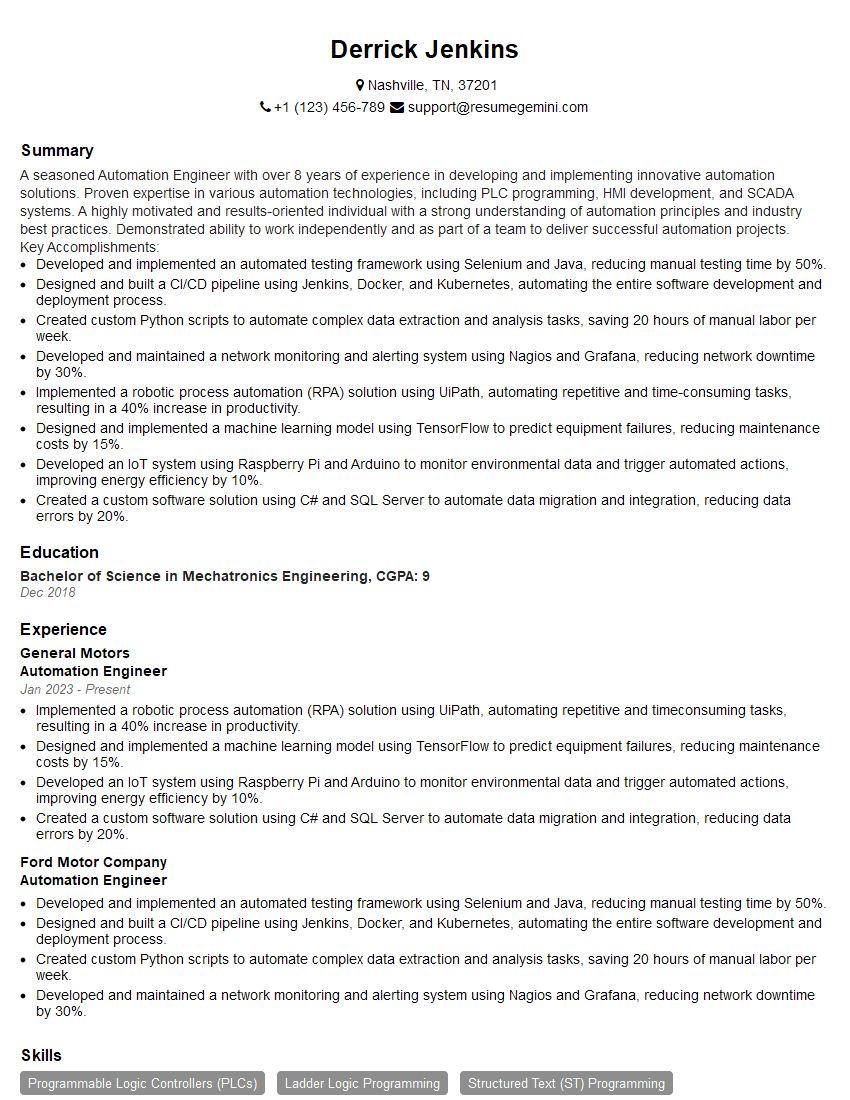
Automation Engineer Resume Sample
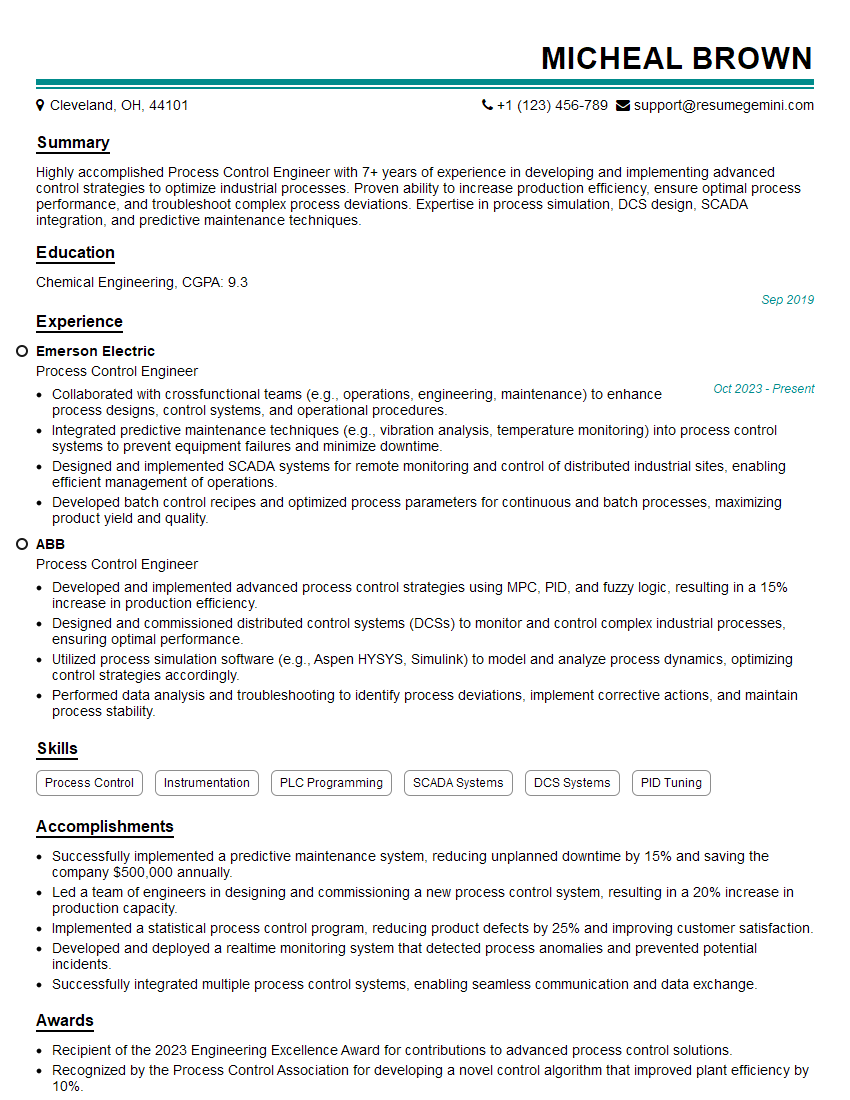
Process Control Engineer Resume Sample
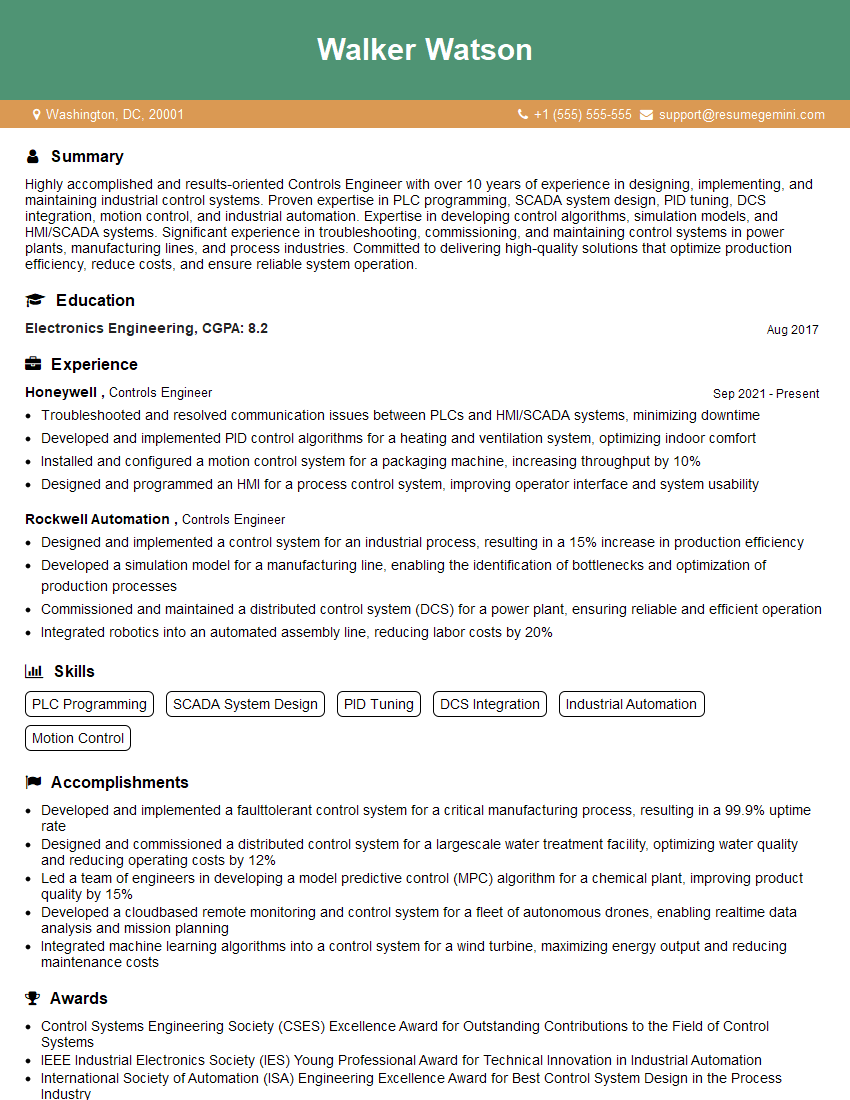
Controls Engineer Resume Sample
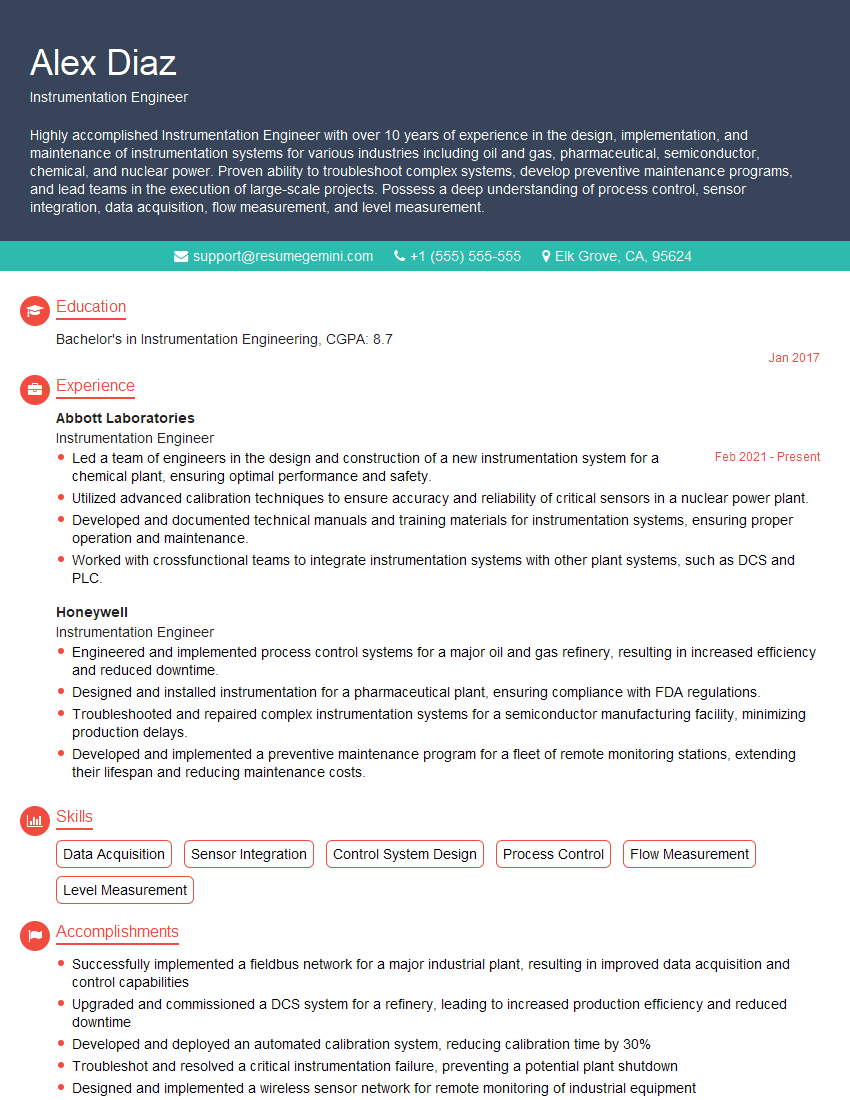
Instrumentation Engineer Resume Sample
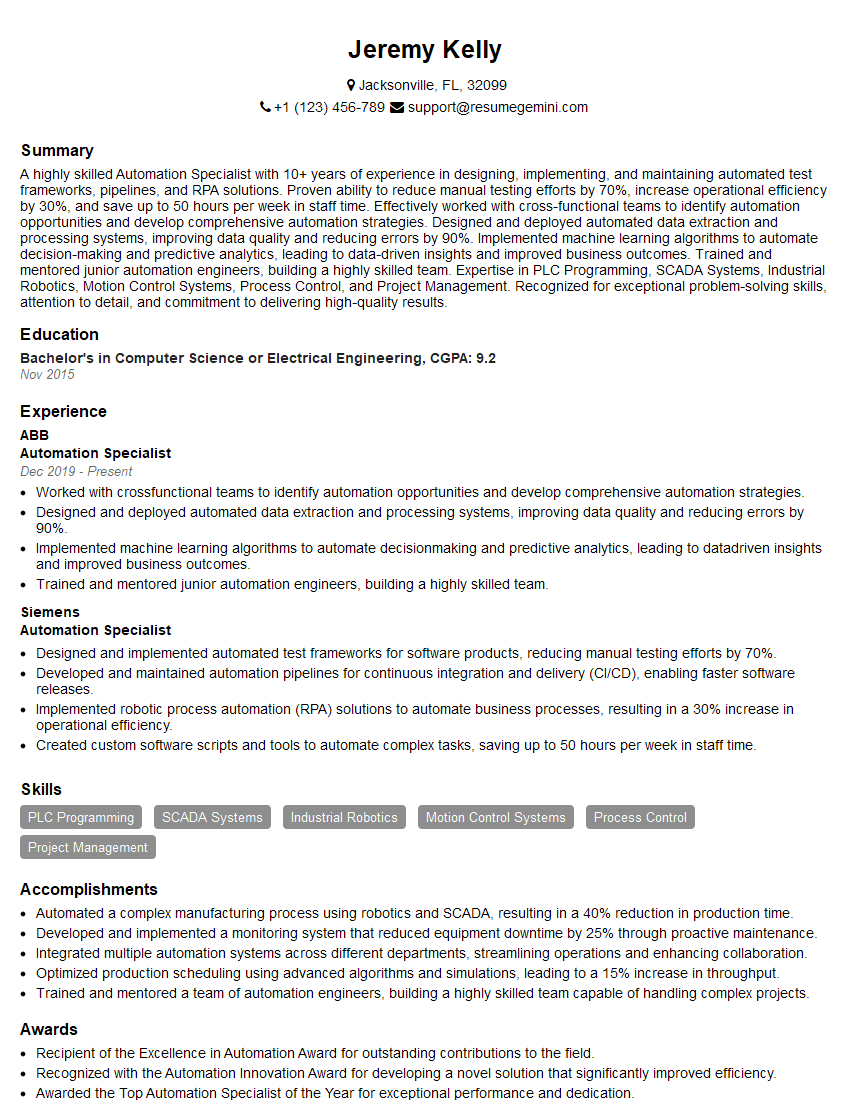
Automation Specialist Resume Sample
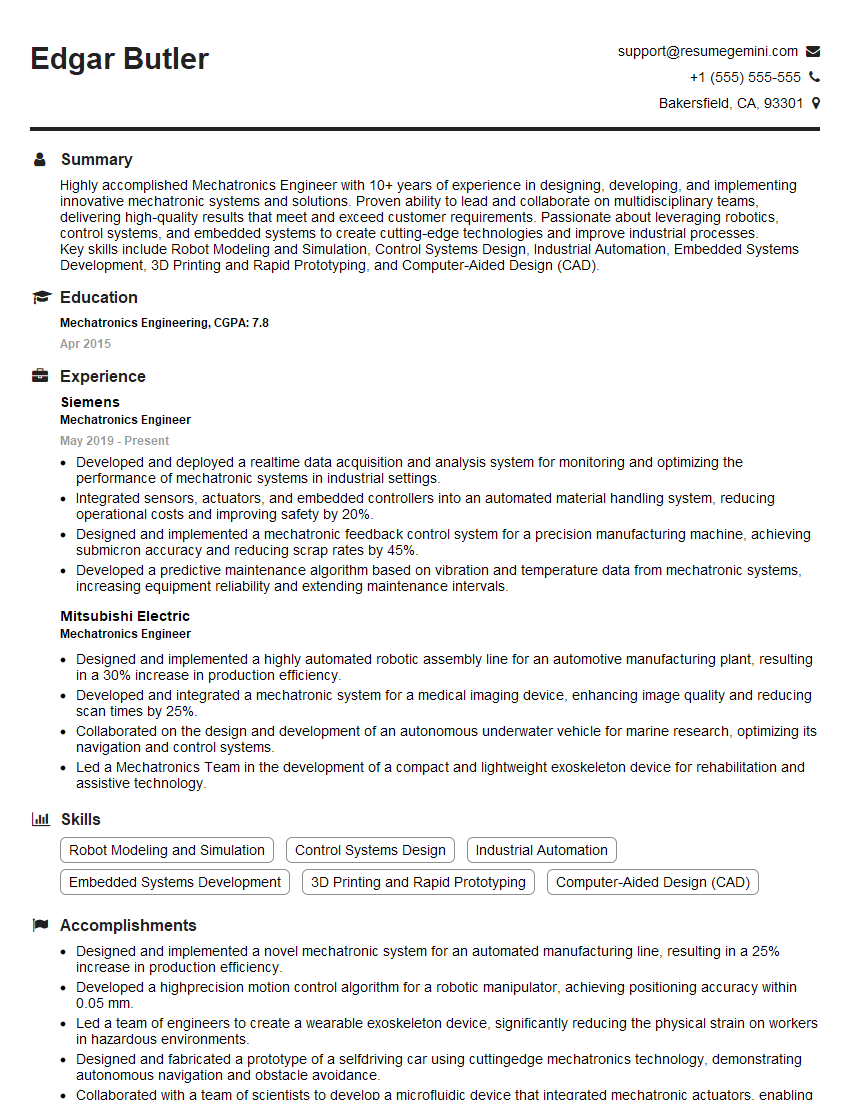
Mechatronics Engineer Resume Sample

Robotics Engineer Resume Sample
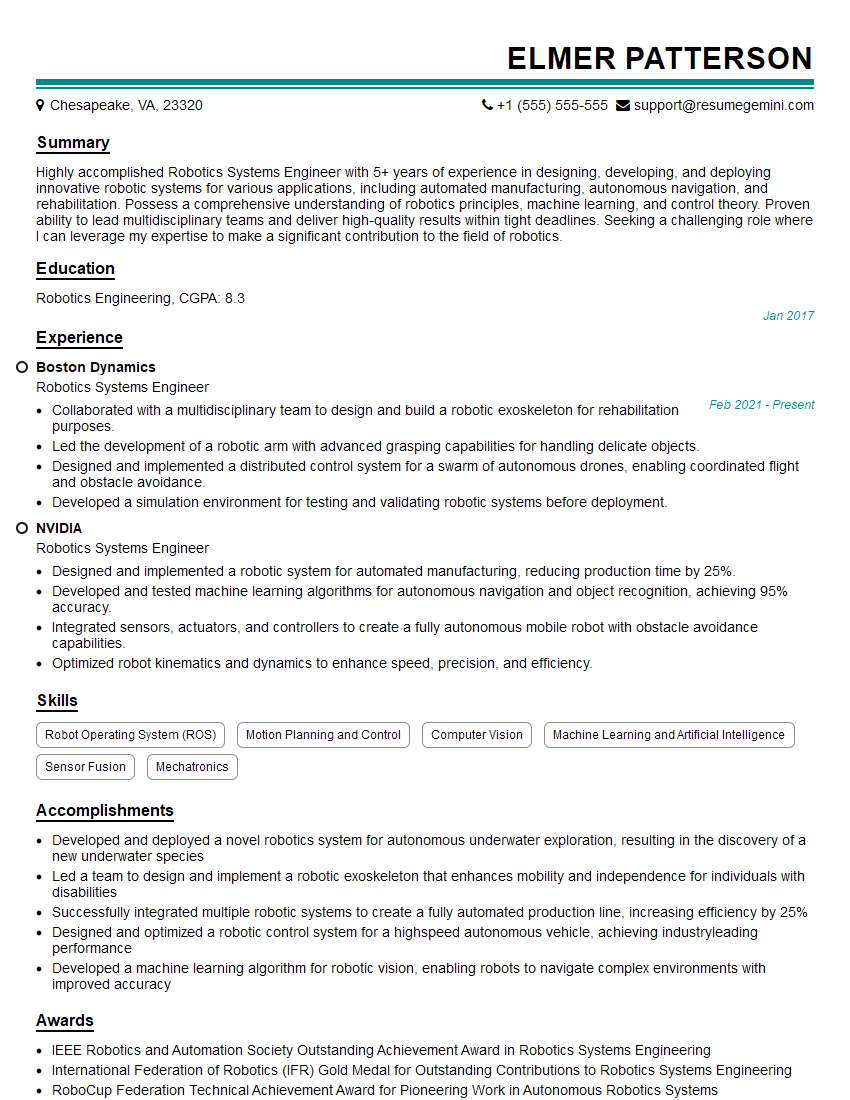
Robotics Systems Engineer Resume Sample
Explore more articles
Users Rating of Our Blogs
Share Your Experience
We value your feedback! Please rate our content and share your thoughts (optional).
What Readers Say About Our Blog
To the interviewgemini.com Webmaster.
Very helpful and content specific questions to help prepare me for my interview!
Thank you
To the interviewgemini.com Webmaster.
This was kind of a unique content I found around the specialized skills. Very helpful questions and good detailed answers.
Very Helpful blog, thank you Interviewgemini team.