Are you ready to stand out in your next interview? Understanding and preparing for USDA Meat Grading Guidelines interview questions is a game-changer. In this blog, we’ve compiled key questions and expert advice to help you showcase your skills with confidence and precision. Let’s get started on your journey to acing the interview.
Questions Asked in USDA Meat Grading Guidelines Interview
Q 1. Describe the different USDA grades for beef.
The USDA grades beef based on quality, primarily focusing on the marbling (intramuscular fat) and maturity of the carcass. The main grades, from highest to lowest quality, are: Prime, Choice, Select, Standard, Commercial, Utility, Cutter, and Canner. Think of it like a tiered system; Prime is the best, reserved for restaurants and high-end markets, while Canner is used primarily for processed meats. Choice and Select are the grades most commonly found in grocery stores.
- Prime: Abundant marbling, exceptional flavor and tenderness.
- Choice: Good marbling, high-quality flavor and tenderness.
- Select: Less marbling than Choice, leaner and less tender.
- Standard, Commercial, Utility, Cutter, and Canner: These grades have progressively less marbling and are less tender, making them suitable for ground beef or processed products.
Q 2. Explain the factors considered when grading pork.
Pork grading, unlike beef, focuses primarily on the carcass’s yield, meaning the amount of lean meat you can get from it. Quality is also considered but to a lesser extent. The USDA uses a system that assesses:
- Lean Color and Texture: Evaluated for desirable pinkish-red color and firm texture. Pale, soft, or exudative (PSE) pork is undesirable.
- Fat Color: Desirable fat color is white or creamy white.
- Muscling: A measure of the amount of lean meat relative to fat and bone.
Yield Grade 1 is the highest yield, indicating the most lean meat. The quality grades are similar to beef grades, with 1 being the best. However, the emphasis on yield makes pork grading different from beef grading.
Q 3. What are the key characteristics of a Prime grade beef carcass?
A Prime grade beef carcass is the gold standard. It exhibits several key characteristics that distinguish it from lower grades. Think of it as the top 2-3% of all beef produced. These defining features include:
- Abundant Marbling: Intramuscular fat is distributed evenly throughout the muscle, creating a visually appealing network of white specks. This marbling is crucial for flavor and juiciness.
- Fine Texture: The muscle fibers are fine and tender.
- Bright Red Color: Indicates freshness and good quality.
- Firm Muscle: Shows minimal softness or looseness.
- Maturity: The carcass is young, usually from younger animals, resulting in increased tenderness.
These characteristics combine to deliver an exceptional eating experience, justifying the higher price.
Q 4. How does marbling affect the USDA grade of beef?
Marbling is the single most important factor determining the USDA quality grade of beef. The more marbling a carcass has, the higher the grade. This is because marbling contributes significantly to flavor, juiciness, and tenderness. Imagine a steak: The marbling acts like tiny pockets of flavor and moisture within the muscle, resulting in a more delicious eating experience. The grader assesses the marbling visually, using standardized charts and descriptions. More marbling equates to a higher grade, such as Prime, while less results in lower grades like Select.
Q 5. What is the difference between yield grade and quality grade in beef?
In beef grading, yield grade and quality grade serve distinct purposes. Think of it as evaluating two separate but crucial aspects of a carcass:
- Quality Grade: Assesses the palatability of the beef – its flavor, juiciness, and tenderness. This is primarily determined by marbling and maturity, leading to grades like Prime, Choice, etc.
- Yield Grade: Predicts the amount of boneless, closely trimmed retail cuts (e.g., steaks, roasts) that will be obtained from the carcass. It’s an indicator of the carcass’s leanness and efficiency in terms of usable meat. The yield grade is expressed numerically, with 1 being the highest yield and 5 the lowest. This takes into account fat thickness, rib-eye area, and kidney, pelvic, and heart fat (KPH).
A carcass can have a high-quality grade (like Prime) but a lower yield grade due to excess fat. Conversely, a carcass could have a lower quality grade but a high yield grade if it’s lean but less marbled.
Q 6. Explain the process of evaluating fat thickness in beef carcasses.
Evaluating fat thickness in beef carcasses is a crucial step in determining yield grade. The grader uses a specialized probe to measure the thickness of the fat over the ribeye muscle at the 12th rib. This measurement, along with other factors, helps predict the amount of trimmable fat. The measurement is taken at a specific point, ensuring consistency and accuracy across all carcasses. It’s a precise procedure that directly influences the yield grade, impacting the value assigned to the carcass. Accurate fat thickness measurement helps producers make informed decisions about managing carcass composition and maximizing profitability.
Q 7. Describe the USDA grading system for lamb.
The USDA grading system for lamb is similar to beef in that it considers both quality and yield, but the specific criteria differ. Quality grades are based on factors like:
- Conformation: The shape and structure of the carcass.
- Maturity: The age of the animal, influencing tenderness.
- Flank Streaking: Fat distribution within the flank muscle.
- Lean Color and Texture: The color and texture of the lean meat.
Lamb quality grades typically include Prime, Choice, Good, and Utility. Yield grades are expressed numerically (1-5), reflecting the amount of lean meat relative to fat and bone. Lamb is often valued for its leaner profile compared to beef.
Q 8. What are the common defects that can affect meat grade?
Meat grading considers several defects that can negatively impact the final grade. These defects fall into categories impacting appearance, texture, and overall quality.
- Appearance Defects: These affect the visual appeal of the meat. Examples include bruises (dark discolorations), bone bruises (internal damage near the bone), and excessive fat, particularly in areas deemed undesirable. A heavily bruised ribeye, for example, would receive a lower grade than one with minimal bruising.
- Texture Defects: These relate to the meat’s feel and consistency. Examples include dark cutters (darker color and firmer texture often due to stress before slaughter), toughness (caused by age or muscle usage), and excessive dryness. A tough chuck roast would command a lower grade than a tender one.
- Other Defects: These encompass a broader range, including cold shortening (muscle stiffening due to rapid chilling), heat ring (a dark ring around the edge of the meat), and freezer burn (damage from ice crystals). Each of these can negatively affect the grade and consumer appeal.
The severity and extent of these defects determine their impact on the final grade. A small bruise might not significantly lower the grade, whereas widespread bruising would have a more substantial effect.
Q 9. How is maturity assessed in beef carcasses?
Assessing maturity in beef carcasses is crucial because it directly influences tenderness and flavor. Graders use several indicators to determine the carcass’s maturity level:
- Bone characteristics: The ossification (hardening) of the bones, especially the rib bones and vertebrae, is a key indicator. Younger animals have less ossified bones, resulting in a higher grade potential, indicative of greater tenderness.
- Lean color: The color of the lean meat provides clues. Younger beef tends to be a bright, cherry red, while older beef might appear darker or slightly purplish. While not the sole determinant, it’s factored into the overall maturity assessment.
- Marbling: While associated with quality, marbling also plays a minor role in maturity assessment, though it’s primarily used in determining the quality grade. However, the extent of marbling can sometimes indirectly relate to maturity, which allows a grader to confirm a visual estimate based on the bone and lean colour.
- Rib cartilage: The cartilage on the end of the rib bones provides further evidence. Younger animals have more pliable, flexible cartilage, indicating a lower maturity level.
These factors are assessed holistically, and graders use their experience to combine the observations and determine the appropriate maturity level. This is represented in the final grade, reflecting the expected tenderness of the meat.
Q 10. Explain the role of USDA meat grading in ensuring food safety.
USDA meat grading directly impacts food safety, though it’s not a direct food safety inspection. While USDA’s Food Safety and Inspection Service (FSIS) inspects for wholesomeness and safety aspects such as sanitation and disease, the grading process plays an indirect role:
- Maintaining quality standards: By establishing and enforcing quality grades, the USDA promotes the production of higher-quality meat. This encourages producers to employ safe handling practices to prevent defects that would lower the grade and result in economic loss.
- Consumer confidence: The USDA grading system builds consumer confidence. Consumers can trust that meat bearing a USDA grade has met specific quality standards, suggesting a commitment to proper handling and processing techniques. This indirectly enhances food safety by motivating producers and processors to adopt safe practices.
- Reduction of waste: By identifying defects early in the process, grading minimizes the possibility of substandard or spoiled meat reaching the consumer market, a vital aspect of food safety and reduces food waste.
It’s important to note that the FSIS is responsible for food safety aspects, while the Agricultural Marketing Service (AMS) handles meat grading. Both are essential in ensuring the meat supply is both safe and of high quality.
Q 11. What are the implications of misgrading meat?
Misgrading meat has several serious implications:
- Economic Loss: If a higher-grade carcass is misgraded lower, producers and sellers lose money, impacting their profitability. Conversely, misgrading a lower-grade carcass higher can defraud consumers.
- Consumer Dissatisfaction: Consumers purchasing meat based on a misrepresented grade may be unhappy with the quality, leading to negative reviews and potential legal action.
- Damage to Reputation: Misgrading can damage the reputation of producers, processors, and retailers, impacting their future sales and market standing.
- Legal Penalties: Depending on the extent and intent of the misgrading, legal consequences such as fines or even legal action can result. It can even raise consumer health concerns.
- Market Instability: Widespread misgrading can erode consumer confidence in the grading system and the meat industry itself, potentially causing market instability.
Accurate grading is paramount for maintaining the integrity of the meat industry and ensuring fair trade practices.
Q 12. Describe the equipment used in meat grading.
Meat graders utilize various tools and equipment to assess meat quality and maturity:
- Grading Probes: These specialized instruments are used to assess the fat depth, measuring the thickness of the fat layer at various points on the carcass.
- Measuring Tapes: These are essential for determining carcass weight, length, and other dimensional measurements.
- Color Charts: These standardized charts help graders to objectively assess the color of the lean meat. These are specifically designed for comparing against to classify the meat accurately.
- Rib-Cutting Saw: A specialized saw is used to cut the rib section of the carcass, allowing for an examination of the marbling and maturity indicators.
- Knives: A variety of knives are used for trimming excess fat or making precise cuts for evaluation of the meat’s internal quality.
- Scales: Accurate scales are necessary for determining the weight of the carcasses and various cuts.
While technology is evolving, these fundamental tools remain critical for the grader’s assessment.
Q 13. How do you handle a discrepancy in grading results?
Discrepancies in grading results are handled through a rigorous process emphasizing objectivity and accuracy:
- Re-evaluation: The carcass in question undergoes a thorough re-evaluation by the original grader, or preferably, by another experienced grader to ensure objectivity.
- Documentation: All aspects of both grading assessments, including the discrepancies and the reasons for differing opinions, are meticulously documented.
- Senior Grader Review: In cases of unresolved disagreements, the matter is referred to a senior grader or a grading supervisor. Their decision usually settles the dispute.
- Appeals Process: If necessary, there’s a formal appeals process within the USDA system, where the grading is reviewed by a higher authority.
- Training and Calibration: Ongoing training and regular calibration sessions for graders help maintain consistency in grading procedures and reduce the occurrence of discrepancies.
The goal is to ensure fair and accurate grading, even in cases of disagreement.
Q 14. Explain the importance of maintaining accurate records during meat grading.
Maintaining accurate records during meat grading is crucial for several reasons:
- Traceability: Accurate records allow for complete traceability of the meat, from the farm to the consumer. This is essential in case of any quality issues or food safety concerns that might require product recalls.
- Accountability: Detailed records ensure accountability of both the grading process and the individuals involved. This helps maintain the integrity of the grading system.
- Quality Control: Well-maintained records facilitate quality control measures, identifying potential issues and improving grading consistency over time. They allow for detailed analysis of grading trends.
- Data Analysis: The data collected provides valuable information for research and market analysis, helping understand consumer preferences and improving the overall efficiency of the meat industry.
- Legal Compliance: Accurate records ensure compliance with industry regulations and standards, minimizing the risk of legal problems.
Record-keeping is not just an administrative task but a cornerstone of a reliable and efficient meat grading system.
Q 15. What are the ethical considerations related to meat grading?
Ethical considerations in meat grading are paramount, focusing on fairness, transparency, and consumer protection. It’s crucial to ensure that the grading process is objective and free from bias, preventing any manipulation that could mislead consumers about the quality of the meat they’re purchasing. This includes ensuring graders are properly trained and adhere to strict protocols. For instance, a conflict of interest could arise if a grader is influenced by a specific packer or supplier to grade a lower quality product higher. Ethical practices necessitate consistent application of standards, regardless of economic pressures or relationships with producers. Transparency in the grading process, including making the standards easily accessible to the public, is also crucial. Lastly, ethical considerations extend to the humane treatment of animals throughout the entire production process, as the quality of meat can be impacted by the animal’s welfare, and ethical meat production should always be a priority.
Career Expert Tips:
- Ace those interviews! Prepare effectively by reviewing the Top 50 Most Common Interview Questions on ResumeGemini.
- Navigate your job search with confidence! Explore a wide range of Career Tips on ResumeGemini. Learn about common challenges and recommendations to overcome them.
- Craft the perfect resume! Master the Art of Resume Writing with ResumeGemini’s guide. Showcase your unique qualifications and achievements effectively.
- Don’t miss out on holiday savings! Build your dream resume with ResumeGemini’s ATS optimized templates.
Q 16. Describe your experience with USDA guidelines and regulations.
My experience with USDA guidelines and regulations spans over 15 years. I’ve been involved in various aspects of meat grading, from hands-on carcass evaluation to overseeing training programs for new graders. I’m intimately familiar with the intricacies of the grading standards for beef, pork, and lamb, including the detailed specifications for yield grade and quality grade. My work has included not only the direct application of these standards but also in understanding and interpreting the regulatory framework surrounding them. I have worked extensively with the Agricultural Marketing Service (AMS) guidelines and regularly participate in professional development to ensure I remain current on any changes or updates. I’ve also had the opportunity to participate in audits and assist in resolving discrepancies in grading interpretations. This breadth of experience has given me a deep understanding of the practical application of USDA regulations within a commercial setting.
Q 17. How do you stay updated on changes to USDA meat grading standards?
Staying current with USDA meat grading standards is critical. I maintain my expertise through several key methods. Firstly, I regularly access the USDA’s AMS website, which is the primary source for updated standards, interpretive guidelines, and announcements of any revisions. Secondly, I’m an active member of professional organizations like the American Meat Science Association (AMSA), which provides ongoing training, conferences, and publications covering the latest developments in the field. These conferences often include sessions specifically focused on updates to USDA standards. Thirdly, I participate in continuing education courses and workshops offered by the USDA itself or accredited institutions. These training sessions are often tailored to keep graders updated on the latest grading procedures and any subtle nuances in interpretation that might arise. Finally, I maintain a network of colleagues in the meat industry, allowing for the exchange of information and discussion about recent changes or challenges in the field.
Q 18. Explain your understanding of quality control procedures in a meat processing plant.
Quality control in a meat processing plant is a multifaceted process, starting even before the animals arrive. It involves rigorous checks at every stage, from the initial inspection of live animals to the final packaging of the finished product. This includes verifying the proper handling and stunning of animals to minimize stress and ensure meat quality. During processing, crucial checks are made for things like proper sanitation of equipment, temperature control to prevent bacterial growth, and consistent application of USDA grading standards. Statistical process control (SPC) charts are commonly used to monitor key quality parameters, such as pH levels and weight consistency. Regular calibrations of equipment, such as scales and thermometers, are essential for accuracy. Furthermore, thorough record-keeping and traceability are important, allowing for the identification of any potential problems and ensuring compliance with USDA regulations. A robust quality control program is a critical aspect of ensuring both the safety and the quality of the meat product.
Q 19. Describe a time you had to make a difficult decision related to meat grading.
I once encountered a situation where a carcass showed characteristics borderline between two quality grades. The marbling was just slightly below the threshold for a higher grade, but other factors, such as maturity and color, were excellent. The decision was difficult because it directly impacted the producer’s financial return and the consumer’s perception of the product. I meticulously reviewed the official USDA standards, referring to the detailed descriptions and images provided. I also consulted with a senior grader with extensive experience to discuss the nuances of the case. After careful consideration of all factors, we concluded that the carcass more closely aligned with the lower grade, even though it was a very close call. This experience underscored the importance of both rigorous adherence to standards and the value of peer review in ensuring objective and consistent grading decisions. The transparency of our process and the detailed reasoning behind our decision were communicated clearly to all parties involved.
Q 20. How would you handle a situation where a carcass doesn’t fit neatly into a specific grade?
When a carcass doesn’t fit neatly into a specific grade, I follow a clearly defined process. The first step is a thorough re-evaluation, carefully examining all characteristics against the detailed USDA guidelines. If uncertainty remains after a meticulous re-examination, I consult the official USDA grading standards documents and utilize any available interpretation guidelines. Consulting with a more senior grader or seeking guidance from a USDA representative is often necessary. In cases of significant ambiguity, a second grader might be called in for a second opinion. If consensus isn’t reached, the matter may be escalated to the AMS for final determination. It is crucial to meticulously document all aspects of the evaluation, including photographs and detailed notes, to support the final grade assignment and provide transparency to the process. The entire process prioritizes objectivity and consistency, ensuring fair and accurate grading in accordance with USDA regulations.
Q 21. What is your understanding of the different cuts of beef and their respective grading?
Understanding the different cuts of beef and their respective grading is fundamental to meat grading. While the quality grade (Prime, Choice, Select, Standard) applies to the entire carcass, the yield grade (1-5) is a measure of the percentage of retail cuts from the carcass. Different cuts naturally have varying levels of marbling and tenderness, influencing their quality grade and market value. For example, a Prime ribeye, known for its exceptional marbling, will generally command a higher price than a Select chuck roast, which tends to be leaner and less tender. The grading process considers each cut’s specific characteristics within the context of the overall carcass grade. For instance, a high-quality grade carcass will typically yield higher-graded cuts across the board, although variations exist due to the inherent differences in muscle structure and fat distribution within each cut. Understanding this interplay is crucial for accurate grading and fair pricing in the marketplace. My understanding extends to the differences in grading standards across various beef cuts, with considerations made for factors like fat thickness and muscle shape for different retail products.
Q 22. How does the aging process influence meat grade?
The aging process, also known as dry-aging, significantly influences meat grade, primarily impacting its quality grade. It doesn’t directly affect the yield grade, which focuses on the amount of usable meat. Dry-aging involves storing carcasses or primal cuts in a controlled environment, typically at a temperature between 33°F and 38°F (0.5°C and 3°C), with controlled humidity. This process allows for enzymatic changes that tenderize the meat, concentrate the flavor, and develop a more intense aroma. The longer the aging process, the more pronounced these effects become. However, excessive aging can lead to significant weight loss and spoilage. Graders evaluate the tenderness, juiciness, and flavor of the aged meat, which directly influence the quality grade assignment (Prime, Choice, Select, etc.). For example, a Choice grade ribeye might become a Prime-quality ribeye after several weeks of proper dry-aging due to enhanced tenderness and flavor development.
Q 23. Explain the difference between yield grade 1 and yield grade 5.
Yield grade is a measure of the amount of boneless, closely trimmed retail cuts from the major wholesale cuts of beef. It ranges from 1 to 5, with 1 representing the highest yield (more usable meat) and 5 the lowest. The difference between Yield Grade 1 and Yield Grade 5 is substantial. A Yield Grade 1 carcass has a much higher percentage of lean, valuable cuts compared to a Yield Grade 5 carcass. Yield Grade 1 carcasses typically possess a high proportion of muscle and a low amount of fat and bone. This means a greater portion of the carcass can be sold as valuable retail cuts. Conversely, a Yield Grade 5 carcass has a lower percentage of lean meat and a higher percentage of fat and bone. A significant portion will be trimmed away during processing, resulting in less sellable retail cuts. In practical terms, a Yield Grade 1 carcass would be more profitable for the processor because more salable meat is obtained from it.
Imagine comparing two similarly sized beef carcasses: One with lots of muscle and little fat (Yield Grade 1), the other with a lot of fat and bone (Yield Grade 5). The Yield Grade 1 carcass will provide significantly more steaks, roasts, and other retail cuts, making it much more desirable and valuable.
Q 24. Describe your experience with different types of meat grading tools and equipment.
My experience encompasses a wide range of meat grading tools and equipment, starting with the fundamental tools like calibrated measuring tapes and probes for assessing fat thickness, ribeye area, and carcass weight. I’ve extensively used digital scales, precise calipers, and specialized probes that measure fat depth and muscle area with high accuracy. Furthermore, I’m proficient in operating various types of grading equipment. For example, I have experience with automated carcass imaging systems that quickly analyze various carcass characteristics and provide objective measurements. This significantly enhances the speed and efficiency of the grading process while minimizing human error. In addition to the electronic tools, I am adept at using the traditional tools required for evaluating the quality grades. It’s crucial to have a strong understanding of how each tool’s capabilities relate to the overall grading process.
Q 25. What are the implications of non-compliance with USDA regulations?
Non-compliance with USDA meat grading regulations has severe implications. First, it undermines consumer trust. Mislabeling or misrepresenting the grade of meat can result in legal action, including hefty fines and potential criminal charges. The consequences can also extend to business disruption, reputational damage, and the loss of licenses or certifications, severely impacting a company’s operations and profitability. Moreover, non-compliance can pose significant health risks to consumers if improperly handled or graded meat enters the food supply chain. The USDA takes such violations very seriously, actively enforcing regulations through inspections and audits to ensure the integrity of the meat grading system.
Q 26. How do you ensure the accuracy and consistency of your meat grading?
Ensuring accuracy and consistency in meat grading requires a multi-faceted approach. It starts with rigorous training and adherence to established protocols. Regular calibration of equipment and the use of standardized procedures are essential. We also use inter-grader comparisons, where multiple graders assess the same carcass independently. By comparing the results, we can identify and address any inconsistencies in grading practices and improve the accuracy of our assessments. Additionally, ongoing professional development and participation in proficiency testing programs help maintain the highest level of accuracy and competence among graders. Detailed record-keeping and quality control measures are also critical components of maintaining a high level of grading accuracy and consistency. This involves meticulous documentation of all grading procedures and findings.
Q 27. Describe your experience working within a team environment in meat grading.
Teamwork is absolutely critical in meat grading. We work collaboratively in a fast-paced environment to process a large volume of carcasses efficiently and accurately. Effective communication is key to coordinating tasks, resolving discrepancies, and ensuring that the quality standards are consistently met. I’ve consistently participated in team discussions to resolve grading disagreements, sharing my expertise to reach a consensus on the appropriate grade assignment. My experience shows me that the collaborative nature of meat grading results in a better and more efficient outcome. Open communication and mutual respect among team members lead to fewer grading errors and a more robust and effective grading process.
Q 28. Explain your understanding of the impact of meat grading on consumer perception and pricing.
Meat grading significantly influences both consumer perception and pricing. Consumers generally associate higher grades (e.g., Prime) with superior quality – meaning more tender, flavorful, and juicy meat. This perception drives demand and allows producers to command higher prices for higher-graded meat. Conversely, lower grades often reflect lower quality, leading to lower prices. Understanding consumer preferences and the relationship between grade and price is vital for producers, retailers, and consumers alike. Effective marketing strategies often highlight the quality grade of meat to appeal to consumers seeking specific levels of quality and are willing to pay a premium. The grading system provides a consistent and reliable way for consumers to assess the quality and value of the meat they are purchasing.
Key Topics to Learn for USDA Meat Grading Guidelines Interview
- Yield Grades: Understanding the factors influencing yield grade determination (e.g., fat thickness, ribeye area, carcass weight, and KPH) and their practical application in assessing carcass value.
- Quality Grades: Mastering the criteria for evaluating quality grades (e.g., maturity, marbling, color, and firmness) and their impact on consumer appeal and price.
- Meat Cuts and Identification: Familiarizing yourself with standard cuts of beef, pork, and lamb, including their location on the carcass and distinguishing characteristics.
- Grading Procedures and Standards: Thorough understanding of the official USDA grading procedures, including proper handling, measurement techniques, and adherence to established standards.
- Fat and Lean Assessment: Developing proficiency in visually and instrumentally assessing fat and lean percentages to accurately determine yield and quality grades.
- Troubleshooting and Problem Solving: Ability to identify and resolve discrepancies in grading, analyze atypical carcasses, and justify grading decisions based on established guidelines.
- Regulatory Compliance: Understanding relevant regulations and compliance procedures related to USDA meat grading and food safety.
- Technological Advancements: Familiarity with modern technologies used in meat grading, such as imaging systems and data analysis tools, and their impact on efficiency and accuracy.
Next Steps
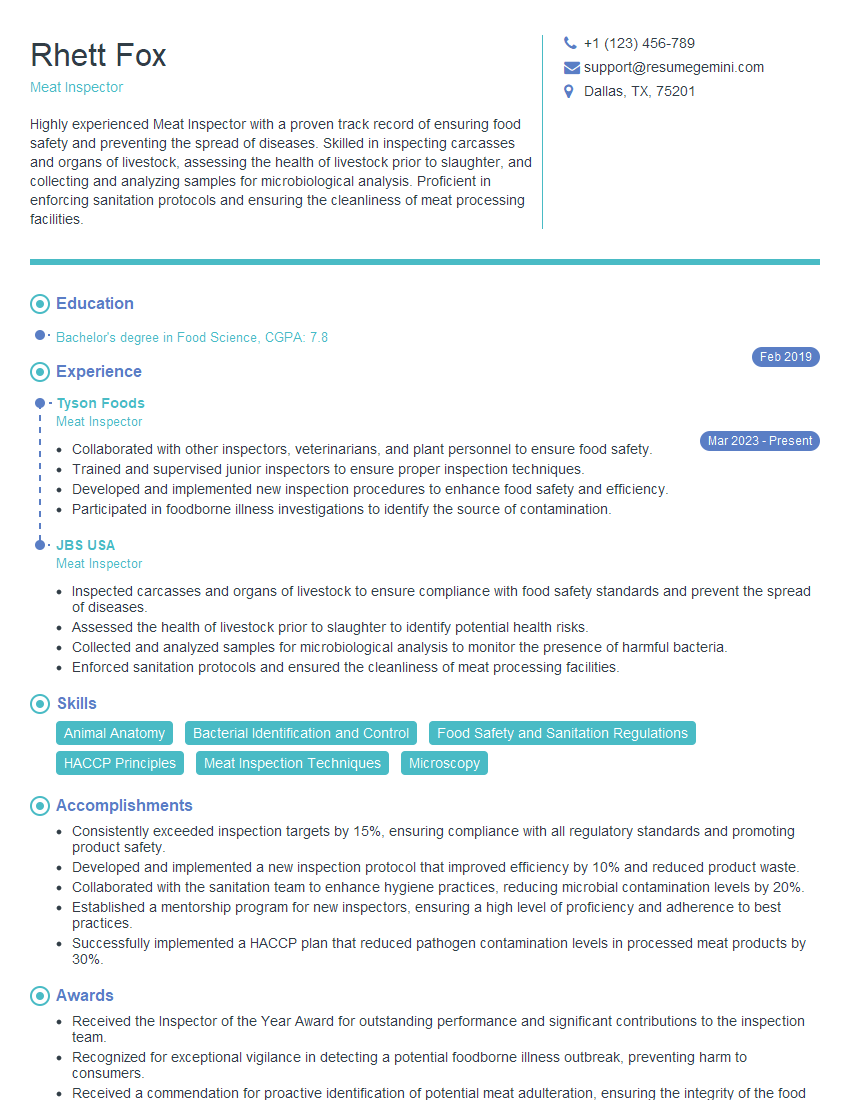
Mastering USDA Meat Grading Guidelines is crucial for career advancement in the meat industry, opening doors to specialized roles with higher earning potential and increased responsibility. A strong resume is your key to unlocking these opportunities. To maximize your job prospects, focus on creating an ATS-friendly resume that highlights your skills and experience effectively. ResumeGemini is a trusted resource that can help you build a professional resume tailored to the meat industry. Examples of resumes tailored to USDA Meat Grading Guidelines are available to guide you. Invest the time in crafting a compelling resume – it’s your first impression with potential employers.

Explore more articles
Users Rating of Our Blogs
Share Your Experience
We value your feedback! Please rate our content and share your thoughts (optional).
What Readers Say About Our Blog
To the interviewgemini.com Webmaster.
Very helpful and content specific questions to help prepare me for my interview!
Thank you
To the interviewgemini.com Webmaster.
This was kind of a unique content I found around the specialized skills. Very helpful questions and good detailed answers.
Very Helpful blog, thank you Interviewgemini team.