The thought of an interview can be nerve-wracking, but the right preparation can make all the difference. Explore this comprehensive guide to Rooftop and Ground-Mount System Installation interview questions and gain the confidence you need to showcase your abilities and secure the role.
Questions Asked in Rooftop and Ground-Mount System Installation Interview
Q 1. Describe the different types of ground mount systems.
Ground mount systems offer flexibility in location and panel orientation, unlike rooftop systems. They’re categorized based on their structure and mounting method.
- Fixed-tilt ground mounts: These are the simplest, using pre-assembled racks fixed at a specific angle to optimize solar gain for the location’s latitude. Think of them as large, sturdy stands holding the panels.
- Single-axis trackers: These systems rotate the panels along a single axis (usually east-west) to follow the sun throughout the day, maximizing energy production. Imagine them as sun-following sunflowers, but with solar panels.
- Dual-axis trackers: These offer even greater efficiency by tracking the sun on both axes, adjusting throughout the day to maintain optimal sunlight exposure. They’re like highly sophisticated sun-chasing mechanisms.
- Ballasted ground mounts: These are often used for temporary installations or where ground penetration is not allowed. They use ballast (like concrete blocks) to weigh down the system, securing it to the ground.
The choice depends on factors such as available land, budget, energy production goals, and local regulations.
Q 2. Explain the process of securing a rooftop solar mounting system.
Securing a rooftop solar mounting system is a critical step, requiring meticulous attention to detail and adherence to building codes. The process generally involves:
- Roof assessment: A thorough inspection is crucial to determine the roof’s structural integrity, composition (e.g., asphalt shingles, tile, metal), and load-bearing capacity. We need to ensure the roof can safely handle the weight of the system.
- Mounting system design: This involves selecting appropriate mounting hardware (rails, clamps, brackets) and creating a plan for the system’s layout based on the roof’s dimensions and shading.
- Attachment to the roof: This is done using specialized fasteners appropriate for the roof type. For example, asphalt shingles may require penetration-style mounts, while metal roofs often utilize clamps or bolts. Each attachment point must be secured firmly and accurately to distribute the weight evenly.
- Panel mounting: Once the mounting system is securely fastened, the solar panels are attached to the rails using clamps, ensuring they are level and aligned.
- System grounding and bonding: This is essential for safety, protecting the system from electrical surges and ensuring compliance with electrical codes.
- Inspection and testing: After installation, a thorough inspection ensures all components are properly secured and the system is functioning correctly. We test for grounding continuity and electrical faults.
Failure to properly secure the system can result in damage to the roof, system failure, or even personal injury. This is why expertise and precision are paramount.
Q 3. What are the key safety regulations for solar panel installation?
Safety is paramount in solar panel installation. Key regulations include adherence to OSHA (Occupational Safety and Health Administration) standards and the National Electrical Code (NEC). This involves:
- Fall protection: Roof work necessitates appropriate fall protection equipment, including harnesses, safety lines, and anchor points. This is non-negotiable.
- Electrical safety: Working with electricity requires specialized training and precautions. This includes using insulated tools, de-energizing circuits before working on them, and using lockout/tagout procedures to prevent accidental energization.
- Personal Protective Equipment (PPE): Wearing appropriate PPE, such as safety helmets, gloves, and eye protection, is mandatory at all times.
- Proper training and certification: Installers should have the necessary training and certifications to work safely and comply with all relevant regulations. Experience isn’t a substitute for proper training.
- Permitting and inspections: Obtaining the necessary permits and undergoing inspections are critical steps to ensuring compliance with local building codes and regulations.
Ignoring safety regulations can lead to serious injuries, equipment damage, and legal repercussions. Safety should always be the top priority.
Q 4. How do you ensure proper grounding and bonding in a solar system?
Proper grounding and bonding are crucial for safety and system performance. Grounding diverts fault currents to the earth, while bonding ensures electrical continuity between metal components to prevent voltage differences. The process typically involves:
- Grounding rod installation: A grounding rod is driven into the earth, providing a low-impedance path to ground.
- Ground wire connection: A heavy-gauge wire connects the grounding rod to the system’s grounding busbar, usually located in the electrical panel.
- Equipment grounding: All metal components of the system, including the racking system, solar panels’ frames, and other metal enclosures, are bonded together and connected to the ground.
- Bonding jumpers: These are used to bond together various metal components to ensure electrical continuity and prevent voltage differentials.
- Grounding wire inspection and testing: After installation, the grounding system’s continuity is verified using a multimeter or ground resistance tester. This verifies the system’s path to earth.
Insufficient grounding can create a hazardous situation, potentially resulting in electrical shocks or fire. This is a vital safety measure, never to be overlooked.
Q 5. What are the common challenges in installing solar systems on different roof types?
Different roof types present unique challenges for solar system installation.
- Asphalt shingle roofs: Penetration is required, and care must be taken to avoid damaging the underlying roofing material. Proper sealing of penetrations is essential to prevent leaks.
- Tile roofs: These can be fragile and require specialized mounting hardware to avoid damage. The weight of the system needs careful consideration.
- Metal roofs: These can be more straightforward but require specialized clamps or bolts to ensure a secure attachment without damaging the roof’s surface.
- Flat roofs: These often require ballast systems or penetrations, and proper waterproofing is essential. Weight distribution is paramount.
- Unusual roof angles or shapes: Complex roof geometries necessitate custom mounting solutions, adding to the complexity and cost.
A thorough site assessment and careful planning are critical for successful installation on any roof type.
Q 6. Explain your experience with different types of solar panel mounting hardware.
I’ve worked extensively with various solar panel mounting hardware, including:
- Rail and clamp systems: These are common for both rooftop and ground mount systems, offering versatility and ease of installation. They consist of rails that run along the panels, with clamps securing the panels to the rails.
- Roof hooks and brackets: Specific to rooftop installations, these are designed to attach to various roof types, such as asphalt shingles, tiles, or metal roofs.
- Ground mount posts and structures: These provide a sturdy foundation for ground-mounted systems, and can vary significantly in design and construction.
- Adjustable tilt mounts: These allow for optimization of panel angle for maximum energy production based on the latitude and seasonal changes.
- Ballasted mounts: These are usually used on flat roofs or where penetration is undesirable.
Material selection is also important; I’ve used aluminum, stainless steel, and galvanized steel, each with its own advantages and disadvantages in terms of corrosion resistance and cost. Choosing the right hardware ensures system longevity and stability.
Q 7. Describe the process of installing a microinverter system.
Installing a microinverter system involves placing a microinverter on the back of each individual solar panel. This differs from string inverters, which handle multiple panels.
- Panel wiring: Each panel’s positive and negative wires are connected to the corresponding terminals on the microinverter attached to its back.
- Microinverter mounting: The microinverter is secured to the back of the panel, usually with adhesive or clamps.
- AC wiring: The AC output wires from each microinverter are connected to the main AC wiring running to the inverter combiner box. This box is typically located near the electrical panel.
- Monitoring and communication: Many microinverters have built-in monitoring capabilities which send data on performance (voltage, current, power) to a central monitoring system. This allows for quick fault detection and improved system management.
- Connection to the electrical panel: Finally, the main AC wiring from the combiner box is connected to the main electrical panel.
Microinverter systems offer several advantages, including improved system monitoring, more efficient shade mitigation, and better energy harvesting in partially shaded conditions, making them a popular choice.
Q 8. How do you troubleshoot issues with solar panel array performance?
Troubleshooting solar panel array performance issues involves a systematic approach. It starts with identifying the problem – is it a reduction in overall system output, individual panel underperformance, or something else entirely? I typically begin by checking the system’s monitoring data, if available. This often provides valuable clues. Then, I move to a visual inspection, checking for obvious issues like shading, damaged panels, loose connections, or bird droppings. Next, I’ll use a multimeter to measure voltages and currents at various points in the system – from the panels themselves, to the combiner boxes, and finally to the inverter. Comparing these readings to the expected values (based on the system’s design specifications) helps pinpoint the problem’s location.
For instance, if I find a consistently low voltage at a specific string of panels, that indicates a problem within that string. It could be a faulty panel, a bad connection, or even shading affecting a portion of the array. If the inverter isn’t receiving the expected input voltage, the problem could be a faulty inverter itself or a problem with the wiring between the array and the inverter. I’ll continue systematically checking and troubleshooting until the root cause is identified and corrected. Often, simple repairs like tightening loose connections resolve the issue, but more complex problems might necessitate panel replacement or inverter repairs.
Q 9. What are the best practices for wire management in a solar installation?
Proper wire management is crucial for safety, efficiency, and longevity of a solar installation. It prevents short circuits, reduces the risk of damage from weather, and makes future maintenance significantly easier. Best practices include using appropriately sized conductors for the amperage and voltage, using proper grounding techniques, and ensuring all connections are secure and properly labeled. I always use conduit for protecting wires, especially underground and in areas prone to physical damage. Conduit also protects the wires from rodent damage.
Organization is key. I use cable ties and wire trays to keep wires neatly bundled and separated. Color-coded wire makes troubleshooting simpler. All connections are clearly marked and labeled according to the system schematic. For larger systems, I might use a dedicated wire management system that includes pathways and trays that improve airflow and prevent overheating. Think of it like good housekeeping for your electrical system – it’s not glamorous but absolutely vital.
For example, I’d never run AC and DC wiring in the same conduit, as this poses a safety hazard. Similarly, I meticulously label every wire at each connection point to avoid confusion during future maintenance or troubleshooting.
Q 10. Describe your experience with commissioning solar systems.
Commissioning a solar system is the final stage of the installation process, where we verify that the system is operating as designed and meets all safety and performance standards. My experience encompasses a wide range of system sizes and configurations. I begin by performing a thorough visual inspection, checking for any visible damage or defects. Then, I use specialized testing equipment, including multimeters, clamp meters, and insulation resistance testers, to check wiring integrity and verify the functionality of the components – from the panels to the inverters. I perform operational checks to ensure that each component is delivering its expected power output. I also verify that the system’s safety features are functioning correctly, such as ground fault detection and overcurrent protection.
Data loggers and monitoring software play a vital role in the commissioning process; they allow me to collect performance data over time to ensure the system is meeting expectations and to identify any potential issues early on. A crucial part of the process is generating a comprehensive commissioning report that documents all testing procedures and results and includes photos and diagrams to create a complete record. This becomes an important document for the system’s future maintenance and troubleshooting. Finally, I’ll train the client or site personnel on the system’s operation and maintenance.
For example, during the commissioning of a large ground-mount system, we discovered a minor wiring error which, if left unchecked, could have led to a significant performance loss. Our comprehensive testing process identified and corrected this error before the system went fully operational, preventing any potential issues.
Q 11. How do you interpret solar system schematics and blueprints?
Solar system schematics and blueprints are essential for planning and executing an installation. They provide detailed information about the system’s layout, components, wiring diagrams, and connection points. I am proficient in interpreting various types of drawings, including single-line diagrams, panel layouts, and wiring diagrams. Understanding these documents allows me to plan the installation efficiently, ensuring that all components are appropriately sized and placed.
I typically start by reviewing the overall system layout to understand the placement of panels, inverters, and other equipment. Then, I carefully examine the wiring diagrams to trace the path of the electrical conductors and confirm that the system’s design aligns with safety regulations. I often cross-reference the schematic with the physical site conditions to identify any potential conflicts or challenges that may arise during the installation. This might include unexpected obstacles like tree branches or uneven terrain.
For instance, a schematic may show the planned location of a ground mount array but might not highlight the specific soil conditions or underground utilities. A careful review of site-specific surveys and information becomes critical to anticipate and account for these elements during the installation process. My experience allows me to identify potential issues proactively, preventing costly delays or rework later.
Q 12. What is your experience with different racking systems?
My experience with racking systems spans various types, including fixed-tilt, adjustable-tilt, and tracking systems for both rooftop and ground-mount installations. For rooftop systems, I’ve worked with various types of mounting hardware, from rail systems and flashing kits to clamps and brackets, each designed for different roof types and orientations. Selecting the appropriate racking system is crucial and depends on factors such as the roof structure, panel type, and the system’s orientation. Understanding the specific load requirements for a given location and the structural integrity of the roof is critical.
For ground-mount systems, I’ve installed several kinds of racking, including ground-screw, driven-pile, and ballast systems. The selection depends on the soil conditions, the size and weight of the array, and local regulations. I’m well-versed in the proper installation techniques for each system and understand the critical safety considerations related to ground penetration, stability, and weather resistance.
For example, I recently worked on a project where the soil conditions were unsuitable for ground screws. We opted for a ballast system instead, which involved a more extensive concrete foundation. The choice ensured that the array remains stable and secure, even during high winds or heavy snow.
Q 13. Explain the importance of proper ballast installation for ground mounts.
Proper ballast installation in ground-mount systems is paramount for stability and safety. Ballast systems, which utilize concrete blocks or other heavy materials, provide the necessary weight to anchor the racking system to the ground, resisting forces from wind and snow. Inadequate ballasting can lead to system instability, potentially causing damage to the array and posing a safety hazard.
Proper installation involves precise calculations to determine the required weight based on the system’s size, location, and anticipated wind loads. The ballasts must be evenly distributed and securely fastened to the racking system to ensure stability. The surface beneath the ballasts must be level and compacted to provide a stable base. Furthermore, considerations must be made regarding drainage around the ballast to prevent water accumulation, which could lead to erosion and structural compromise. Local building codes often stipulate specific requirements for ballast design and installation.
A critical aspect is the proper maintenance of ballast systems. Regular inspections are essential to detect any shifting or damage. Over time, environmental factors can affect the stability of the ballast, and proactive maintenance helps prevent accidents or system failure. For example, I’ve seen cases where inadequate ballasting resulted in the array tilting during a strong windstorm. This highlights the critical importance of adhering to precise engineering and installation specifications.
Q 14. How do you handle unexpected site conditions during installation?
Handling unexpected site conditions during installation requires adaptability, problem-solving skills, and a thorough understanding of safety procedures. These conditions can range from unforeseen obstacles like underground utilities to unfavorable weather or unexpected soil types. My approach starts with careful pre-installation planning that involves a thorough site survey to identify potential issues. However, even the most thorough planning can’t account for every eventuality.
When unexpected issues arise, my first priority is safety. I always halt operations if conditions become unsafe, such as during a severe thunderstorm. I then assess the situation, identifying the nature of the problem and its potential impact on the installation. Often, I’ll consult with the engineering team or project manager to determine the best course of action. I’m well-versed in adapting the installation plan to address unforeseen issues; this might involve re-routing wiring, modifying the racking system’s configuration, or adjusting the array’s orientation. Open communication with the client is key throughout this process.
For example, while installing a rooftop array, I discovered unexpected electrical conduits embedded in the roof structure. This required careful adjustment to the racking layout to avoid conflicts, ensuring that both the solar array and the existing utilities remained safe and operational. Flexibility and adaptability are crucial to overcoming these challenges effectively and safely.
Q 15. Describe your experience with permitting and inspections.
Permitting and inspections are crucial for ensuring code compliance and safety in solar installations. My experience spans handling all aspects, from initial application submissions to final inspections. This includes navigating local, state, and sometimes even utility company regulations. For example, I’ve successfully managed projects requiring variance approvals due to unique site challenges like historical building constraints or complex HOA rules. I’m familiar with various permit types, such as building permits, electrical permits, and fire permits, and understand the detailed documentation required for each. I proactively address potential issues to avoid delays, working closely with inspectors throughout the process to ensure a smooth and efficient approval path. A successful project for me is one where the permitting phase is completed seamlessly, allowing for timely and safe installation.
Career Expert Tips:
- Ace those interviews! Prepare effectively by reviewing the Top 50 Most Common Interview Questions on ResumeGemini.
- Navigate your job search with confidence! Explore a wide range of Career Tips on ResumeGemini. Learn about common challenges and recommendations to overcome them.
- Craft the perfect resume! Master the Art of Resume Writing with ResumeGemini’s guide. Showcase your unique qualifications and achievements effectively.
- Don’t miss out on holiday savings! Build your dream resume with ResumeGemini’s ATS optimized templates.
Q 16. What are the different types of solar inverters and their applications?
Solar inverters are essential components that convert the DC (direct current) electricity generated by solar panels into AC (alternating current) electricity usable in homes and businesses. There are several types:
- String Inverters: These are the most common and cost-effective. They connect multiple panels in series (a string) and convert the combined DC power to AC. Example: A typical residential system might use one or two string inverters to manage multiple strings of panels. Their drawback is that if one panel in a string fails, the entire string’s output can be affected.
- Microinverters: These are smaller inverters attached individually to each solar panel. They convert DC to AC at the panel level. If one panel malfunctions, it doesn’t affect the others. Example: Microinverters offer superior performance monitoring and improved energy harvest in shaded conditions. However, they are generally more expensive than string inverters.
- Power Optimizers: These devices sit between the panel and the string inverter, improving the energy output of each panel by optimizing its performance, similar to microinverters but at a lower cost. Example: In a partially shaded system, optimizers allow panels in sun to produce optimal output.
- Central Inverters: These are large inverters suitable for larger commercial and utility-scale projects. They take input from many strings of panels. Example: Solar farms often employ central inverters for their efficient energy conversion on a large scale.
The choice depends on the system size, budget, shading conditions, and desired level of monitoring and energy optimization.
Q 17. How do you ensure the structural integrity of a rooftop mount?
Ensuring structural integrity in rooftop mounts is paramount. We start with a thorough roof assessment, considering factors like roof type (tile, shingle, flat), age, material strength, and wind load capacities. We adhere strictly to the manufacturer’s installation guidelines for the specific mounting system, which are often detailed and precise. This involves:
- Load Calculations: Performing detailed calculations to determine the necessary attachment points and the strength of the mounting hardware needed to withstand wind and snow loads.
- Penetration Points: Carefully selecting penetration points for the mounting system to avoid critical structural elements or plumbing lines. Any necessary penetrations are sealed to prevent leaks.
- Ballast Systems (for flat roofs): Utilizing appropriate ballast for sufficient weight distribution on flat roofs to prevent movement.
- Flashing: Implementing proper flashing techniques to prevent water ingress around the mounting system and maintain the roof’s waterproof integrity.
- Inspection & Documentation: Thoroughly inspecting the completed mounting system to verify proper installation and secure all attachments. All work is documented with photos and detailed reports.
I’ve worked on various roofs, from delicate slate roofs to sturdy metal ones, and I always prioritize safety and longevity of the structure in my design and installation.
Q 18. Explain your experience with string inverters vs. microinverters.
My experience encompasses both string and microinverter systems. String inverters are generally less expensive upfront and have simpler installation. However, they are more vulnerable to shading losses, as a single shaded panel in a string can impact the entire string’s performance. Microinverters, on the other hand, provide superior performance in partial shading conditions since each panel has its own inverter. They also offer granular monitoring capabilities, allowing for precise identification of performance issues at the individual panel level.
For example, in a project with significant shading from trees, a microinverter system delivered a substantially higher energy yield compared to a string inverter system. In that case, the added cost of the microinverters was easily justified by the increased energy production over the system’s lifespan. My choice depends heavily on the site’s specific characteristics and the client’s budget and priorities. I always make sure to thoroughly discuss the pros and cons of each with the client before selecting the system that best meets their needs.
Q 19. What are the key considerations for installing solar systems in different climates?
Climate plays a significant role in solar system design and installation. Key considerations include:
- Temperature: Higher temperatures reduce solar panel efficiency. We select panels with high temperature coefficients for hot climates and consider thermal management strategies, such as better ventilation or panel spacing.
- Snow Load: In snowy regions, we design mounting systems capable of supporting heavy snow loads. This includes using stronger mounting hardware and possibly adjusting panel tilt angles.
- Wind Load: High wind areas require robust mounting systems and potentially more attachment points to prevent damage or system failure. Proper grounding and lightning protection are also critical.
- Humidity & Salt Spray (Coastal Areas): In coastal areas, we use corrosion-resistant materials and ensure proper grounding to protect against salt spray and humidity-related degradation.
- Hail: In areas prone to hail, impact-resistant panels are essential to mitigate damage.
Understanding the local climate conditions is crucial in designing a resilient and efficient solar system that can withstand the local environmental stresses and provide reliable energy generation over its lifespan. I always consult local weather data and building codes to ensure compliance and optimize system performance.
Q 20. How do you prevent damage to the roof during installation?
Protecting the roof during installation is crucial. We implement several measures:
- Roof Walkways: Using roof walkways or protective mats to distribute weight and prevent damage to the roofing material.
- Proper Lifting Techniques: Employing appropriate lifting techniques and equipment to prevent accidental damage during panel handling and installation.
- Careful Drilling & Fastening: Using specialized bits and fasteners to minimize roof damage during penetrations. Proper sealant application immediately after any penetration is paramount.
- Fall Protection: Implementing strict fall protection protocols for all installers. This includes using harnesses and safety lines to prevent accidents.
- Post-Installation Inspection: After installation, a final thorough inspection of the roof is conducted to check for any damage or leaks, ensuring the roof’s integrity remains intact.
I’ve seen firsthand the disastrous consequences of careless roof work. My team is rigorously trained in safe practices and we prioritize preventing any roof damage from the start. We take pride in leaving the roof in the same condition or better than we found it.
Q 21. Describe your experience with various types of solar panel modules.
My experience includes working with various solar panel modules, encompassing different technologies and performance characteristics:
- Monocrystalline Silicon: These panels are known for their high efficiency and aesthetic appeal due to their uniform black appearance. They are generally more expensive than polycrystalline panels.
- Polycrystalline Silicon: These panels are more affordable but have slightly lower efficiency compared to monocrystalline panels. They have a characteristic blueish appearance.
- Thin-Film Solar Panels (Amorphous Silicon, CIGS, CdTe): These panels are flexible and lighter, suitable for specific applications, such as integration into building materials. They generally have lower efficiency than crystalline silicon panels but might be more cost-effective in certain circumstances.
- Bifacial Solar Panels: These panels can absorb light from both sides, increasing energy generation, particularly beneficial in environments with high albedo (reflectivity) such as snow cover.
The selection of panel type depends on factors like budget, aesthetic preferences, available space, and the specific site conditions. I thoroughly assess the project’s requirements to recommend the optimal panel type to maximize energy production and minimize cost.
Q 22. How do you calculate the optimal array orientation and tilt angle?
Determining the optimal array orientation and tilt angle for a solar installation is crucial for maximizing energy production. It involves considering the geographic location, the angle of the sun throughout the year (solar azimuth and altitude), and the shading conditions on the site.
We primarily use specialized software and online tools that take latitude, longitude, and shading data as inputs. These tools simulate solar irradiance throughout the year, allowing us to optimize the angle. For example, a system facing due south (in the Northern Hemisphere) typically works best, but this can be slightly adjusted based on shading from trees or buildings. The tilt angle is often set close to the latitude, but shading can significantly impact this.
For instance, I recently worked on a project in Denver, Colorado. The software analysis showed that a slight westward deviation from due south and a tilt angle slightly less than the latitude provided better overall performance due to morning shading from a neighboring building. This highlights that simply following a ‘rule of thumb’ often isn’t enough, a detailed analysis is key.
In simpler terms, think of it like aiming a satellite dish – you need to point it at the right source (the sun) and at the right angle to receive the maximum signal (solar energy).
Q 23. What safety measures do you employ when working at heights?
Safety is paramount when working at heights, especially in solar installations. We adhere strictly to OSHA guidelines and use a comprehensive safety plan for each project. This includes:
- Fall protection systems: This is non-negotiable. We use harnesses, anchor points, and safety lines appropriate for the roof type and height. Every crew member is trained in proper harness use and fall arrest techniques.
- Proper scaffolding and access equipment: We utilize scaffolding that meets or exceeds all safety standards and ensures stable access points for all installation activities.
- Personal Protective Equipment (PPE): Safety helmets, gloves, eye protection, and appropriate footwear are mandatory. We have regular PPE inspections to ensure that they are in good condition and used correctly.
- Site-specific risk assessments: Before starting any work, we perform a thorough assessment of potential hazards, including roof conditions, weather, and proximity to power lines. This informs our safety plan and helps anticipate and mitigate risks.
- Emergency procedures: Each team has a detailed plan for emergency situations, including communication protocols and rescue procedures in case of a fall or other accident.
I remember one instance where a potential hazard was identified just before the crew started working – a weakened section of the roof. We immediately halted work, secured the area, and brought in structural engineers to assess and repair the roof before proceeding, prioritizing worker safety above schedule pressures.
Q 24. How do you ensure proper ventilation for solar installations?
Proper ventilation is crucial in solar installations to prevent overheating of components, especially inverters. Overheating can drastically reduce lifespan and efficiency, and even create fire hazards.
We ensure adequate ventilation by:
- Selecting appropriately rated inverters and mounting them in well-ventilated areas: Inverters have thermal ratings; choosing an inverter with a sufficient thermal rating for the environmental conditions and ensuring enough airflow around it is vital.
- Ensuring sufficient clearance around components: We follow manufacturer specifications for minimum clearances between panels, inverters, and other equipment. This allows for free air circulation.
- Utilizing ventilation channels and baffles: In some cases, we may install ventilation channels or baffles to direct airflow and optimize cooling.
- Considering ambient temperatures: When installing in high-temperature environments, we choose components with high-temperature ratings and take extra measures to improve ventilation.
A recent project involved installing solar panels on a south-facing roof with minimal shade. To ensure efficient cooling of the inverter, we installed it in a slightly shaded area with added ventilation provided through strategically placed vents. This proactive approach prevented potential overheating issues and ensured optimal performance and longevity of the system.
Q 25. Explain your experience with troubleshooting electrical faults in solar systems.
Troubleshooting electrical faults in solar systems requires systematic diagnostics and a solid understanding of DC and AC circuits. My approach involves:
- Safety first: Always disconnect the system from the grid before performing any troubleshooting. We use lockout/tagout procedures to ensure safety.
- Visual inspection: Start by visually inspecting all components for obvious damage, loose connections, or signs of overheating.
- Using multimeters and other diagnostic tools: We use multimeters to measure voltage, current, and resistance across various points in the system. Specialized tools like clamp meters and infrared thermometers assist in pinpointing problems.
- Systematic troubleshooting: We follow a logical process of elimination, starting with the most likely causes and working our way through potential issues. This often involves checking the array, the wiring, the inverter, and finally the grid connection.
- Understanding system data: Modern inverters provide valuable data on system performance, allowing us to identify anomalies that might indicate a fault.
I recall an instance where a system was experiencing intermittent power outages. By using a combination of visual inspection, multimeter readings, and reviewing inverter data logs, I identified a faulty connection in a junction box, ultimately resolving the problem.
Q 26. Describe your experience with using specialized tools for solar installation.
Solar installation relies heavily on specialized tools. My experience encompasses using a wide range of equipment including:
- Panel handling tools: Suction cups, panel lifts, and specialized carriers to safely handle and install solar panels.
- Wiring tools: Crimping tools, wire strippers, and connectors specifically designed for solar wiring. We strictly follow manufacturer instructions for proper crimping to avoid loose connections.
- Roofing tools: Depending on the roof type, this may include specialized fasteners, sealant, and tools for securing the mounting system.
- Measuring and alignment tools: Levels, laser levels, and string lines to ensure accurate panel placement and alignment.
- Electrical testing equipment: Multimeters, clamp meters, insulation resistance testers, and loop impedance testers are essential for verifying proper connections and safety.
One tool I find particularly useful is a laser level. Precise panel alignment is critical for optimal energy production and a laser level greatly speeds up and improves the accuracy of this step. It ensures that panels are precisely placed at the desired angles and that shading between panels is minimized.
Q 27. How do you determine the appropriate size of a solar inverter?
Determining the appropriate inverter size is crucial for system efficiency and safety. The inverter should be sized to handle the maximum power output of the solar array (the array’s maximum power point, or MPP). This is typically expressed in kilowatts (kW).
We determine the appropriate size by considering:
- Array power output: The total power output of all the solar panels in the array, which depends on panel specifications and the number of panels.
- Future expansion: It’s wise to select an inverter with some headroom to allow for future expansion of the system.
- Inverter efficiency curves: Different inverters have different efficiency curves, and choosing an inverter whose efficiency matches the expected array output at peak times is important for optimizing energy gain.
- DC to AC ratio: The inverter should handle the DC input current (from the panels) efficiently and convert it to AC output to the grid or batteries.
Oversizing the inverter isn’t cost-effective; it will often operate at lower efficiency. Undersizing can limit the performance of the entire array. We always perform careful calculations and consult inverter datasheets to find the optimal match between the array and the inverter.
Q 28. What are the considerations for ground fault protection in solar installations?
Ground fault protection is critical in solar installations to ensure safety and prevent electrical shock or fire. Ground faults occur when electricity takes an unintended path to ground, which can happen if there’s insulation damage or a short circuit.
We implement ground fault protection by:
- Grounding the entire system: All metal components of the system, including the array, mounting structures, and inverters, are properly grounded to prevent voltage buildup.
- Using ground fault circuit interrupters (GFCIs): These devices detect ground faults and quickly disconnect the circuit to prevent electrical shocks. They are commonly used on the AC side of the system, protecting against shocks during maintenance or malfunctions.
- Arc fault circuit interrupters (AFCIs): In some jurisdictions, these are required, they detect electrical arcs and are important for fire prevention.
- Regular inspection and maintenance: Periodic inspection and testing of the grounding system is essential to maintain safety.
- Proper bonding: Ensuring proper bonding between metallic components is key for efficient fault current paths to ground.
I always emphasize the importance of proper grounding and the use of GFCIs and AFCIs as a fundamental aspect of ensuring the safety of both workers and homeowners. It’s not just a matter of compliance; it is a critical element of responsible system design and installation.
Key Topics to Learn for Rooftop and Ground-Mount System Installation Interview
- Site Assessment and Design: Understanding site surveys, solar irradiance calculations, system sizing, and the impact of shading and orientation on system performance.
- Rooftop System Installation: Practical knowledge of roof types, attachment methods, ballasting techniques, and considerations for different roofing materials. This includes understanding safety procedures and relevant building codes.
- Ground-Mount System Installation: Familiarity with ground mount structures, foundation designs (concrete, driven piles, etc.), grounding and earthing techniques, and the importance of level and stable installations.
- Electrical Wiring and Connections: Understanding DC and AC wiring, combiner boxes, inverters, ground fault protection, and proper electrical safety practices. This also includes knowledge of NEC codes (or equivalent).
- Component Selection and Integration: Knowledge of solar panels, inverters, monitoring systems, and racking systems. The ability to explain compatibility and performance trade-offs between components.
- Troubleshooting and Problem-Solving: Experience identifying and resolving common issues during installation, such as faulty wiring, grounding problems, and performance discrepancies. This includes showcasing a methodical approach to diagnosis.
- Safety Regulations and Best Practices: A deep understanding of OSHA standards (or equivalent regional regulations) related to fall protection, electrical safety, and working at heights. Demonstrating a commitment to safety is crucial.
- Permitting and Inspections: Knowledge of the permitting process, understanding code compliance requirements, and preparation for inspections.
Next Steps
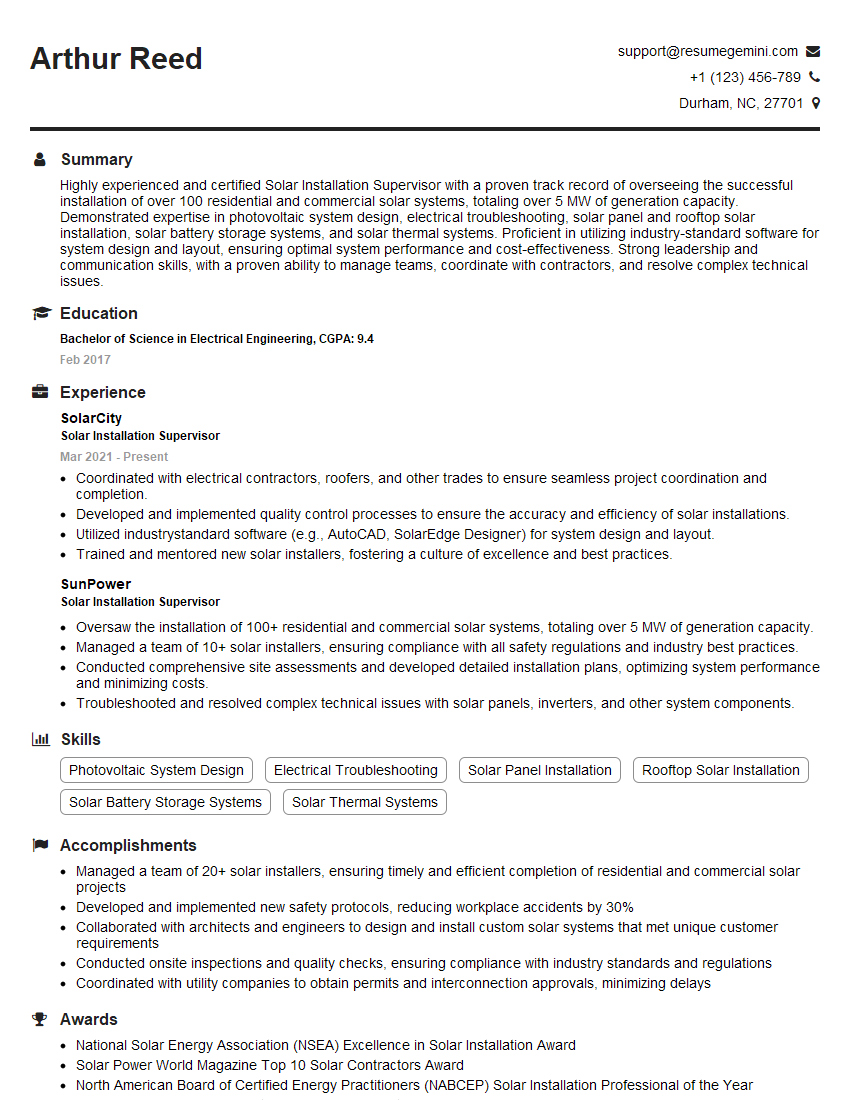
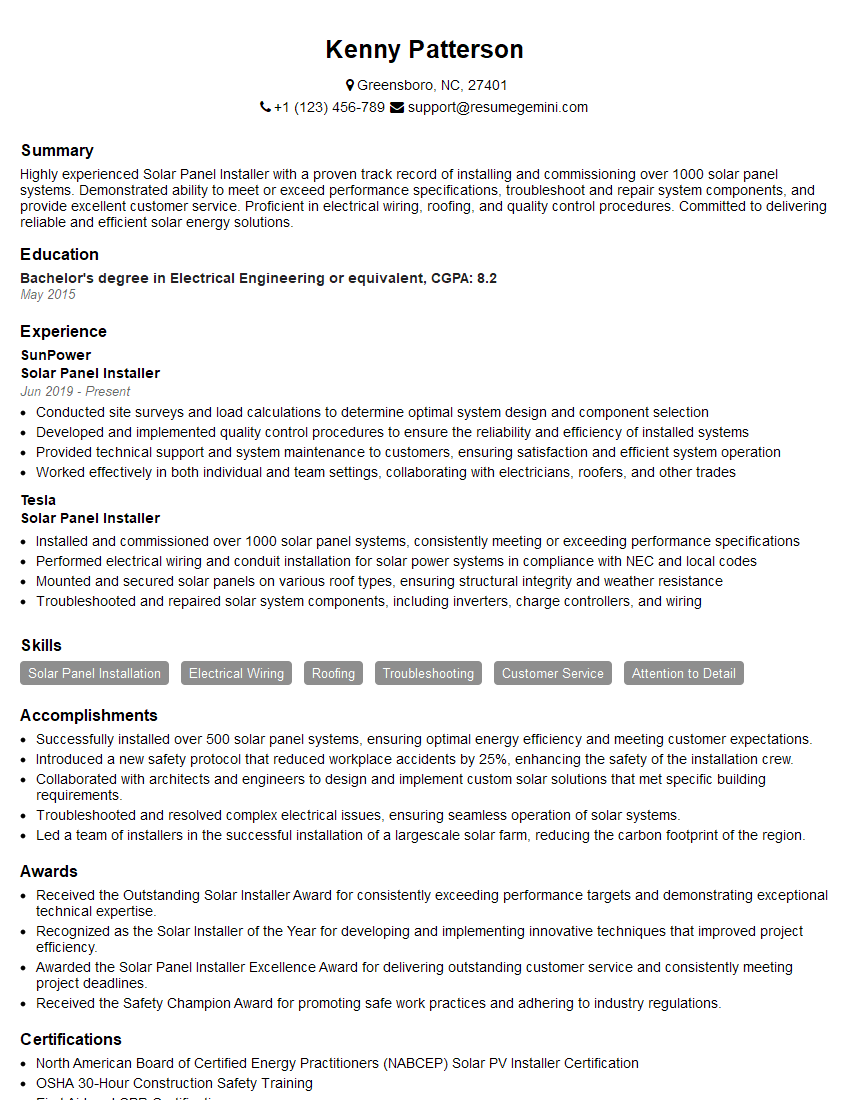
Mastering Rooftop and Ground-Mount System Installation opens doors to exciting career opportunities in a rapidly growing industry. Demonstrating a comprehensive understanding of these topics is key to securing your dream job. To significantly increase your chances, create an ATS-friendly resume that highlights your skills and experience effectively. ResumeGemini is a trusted resource that can help you build a professional and impactful resume tailored to the specific requirements of this field. Examples of resumes tailored to Rooftop and Ground-Mount System Installation are available to guide you.

Explore more articles
Users Rating of Our Blogs
Share Your Experience
We value your feedback! Please rate our content and share your thoughts (optional).
What Readers Say About Our Blog
To the interviewgemini.com Webmaster.
Very helpful and content specific questions to help prepare me for my interview!
Thank you
To the interviewgemini.com Webmaster.
This was kind of a unique content I found around the specialized skills. Very helpful questions and good detailed answers.
Very Helpful blog, thank you Interviewgemini team.