Are you ready to stand out in your next interview? Understanding and preparing for Directional Drilling Basics interview questions is a game-changer. In this blog, we’ve compiled key questions and expert advice to help you showcase your skills with confidence and precision. Let’s get started on your journey to acing the interview.
Questions Asked in Directional Drilling Basics Interview
Q 1. Explain the difference between directional drilling and conventional drilling.
Conventional drilling is like digging a straight hole vertically downwards. It’s simple and straightforward, suitable for targets directly beneath the rig. Directional drilling, on the other hand, is like steering a car; we intentionally deviate from the vertical to reach targets offset from the wellhead. This allows us to access multiple reservoirs from a single surface location, saving significant time and cost, especially in offshore operations or densely populated areas.
Imagine you need to reach two oil pockets, one directly below and one to the side. Conventional drilling would require two separate rigs, creating environmental impact and increasing expenses. Directional drilling would allow you to reach both pockets from just one wellhead, reducing environmental footprint and expenditure.
Q 2. Describe the various types of directional drilling tools and their applications.
Directional drilling relies on a suite of specialized tools. Key tools include:
- Mud Motors: These are downhole motors that generate torque to steer the drill bit. They work by using the drilling mud to spin an internal rotor, which then rotates the drill bit. Different types offer varying torque and steerability.
- Bent Sub: A simple yet effective tool, a bent sub is a section of drill pipe that has a built-in bend. This bend causes the drill bit to deviate from vertical.
- Positive Displacement Motors (PDM): Similar to mud motors, but they offer more precise control and higher torque, particularly beneficial in challenging formations.
- Rotary Steerable Systems (RSS): These sophisticated systems use sensors and electronic controls to steer the drill bit, allowing for highly accurate directional drilling. They offer real-time control and data feedback.
- Measurement While Drilling (MWD) tools: These tools measure inclination and azimuth (direction) during drilling and transmit the data to the surface for real-time monitoring and adjustments.
The application depends on the well plan complexity and the desired accuracy. Simple wells might use bent subs, while complex trajectories necessitate RSS and sophisticated planning.
Q 3. What are the key parameters used in planning a directional well?
Planning a directional well requires meticulous attention to numerous parameters. Key parameters include:
- Target Coordinates: The precise location of the reservoir to be reached (latitude, longitude, and true vertical depth).
- Kick-off Point (KOP): The depth at which directional drilling begins.
- Build Rate: The rate at which the wellbore deviates from the vertical (measured in degrees per 100 feet or 30 meters).
- Turn Rate: The rate at which the wellbore changes direction (measured in degrees per 100 feet or 30 meters).
- Total Measured Depth (MD): The total length of the wellbore.
- True Vertical Depth (TVD): The vertical distance from the surface to the target.
- Horizontal Displacement: The horizontal distance between the wellhead and the target.
- Formation Properties: Understanding the geological formations encountered influences tool selection and drilling parameters.
Careful consideration of these parameters ensures the well reaches its target safely and efficiently.
Q 4. How do you calculate the required build rate and turn rate for a directional well?
Calculating build and turn rates isn’t a simple formula; it’s an iterative process involving specialized software. However, the fundamental principle involves geometry and trigonometry. We use well planning software which takes into account the target coordinates, KOP, and desired trajectory. The software then calculates the required build and turn rates to ensure the well reaches the target.
Simplified example: Let’s say the target is 1000ft away horizontally, at a TVD of 5000ft, and we start building at 1000ft depth (KOP). The software, considering factors like available tools and formation properties, will calculate the optimal build rate (e.g., 2 degrees per 100ft) and any necessary turn rates to achieve the desired path.
It’s crucial to note that this is a simplified illustration. In reality, complex well paths might involve multiple build and hold sections, requiring sophisticated calculations to account for dog legs and other factors.
Q 5. Explain the concept of a survey point and its importance in directional drilling.
A survey point is a measurement of the wellbore’s location at a specific depth. These measurements include inclination (angle from vertical), azimuth (direction), and measured depth. Multiple survey points are taken throughout the drilling process, creating a profile of the well path.
Their importance is paramount for several reasons:
- Trajectory Monitoring: Survey points allow for real-time monitoring of the well trajectory against the planned path, enabling corrections if deviations occur.
- Wellbore Positioning: Accurate survey points are crucial to ensure the well reaches the target reservoir.
- Safety: By constantly monitoring the well path, we can avoid hazards such as intersecting other wells or encountering unstable formations.
- Mud Program Optimization: Survey data informs decisions related to the mud properties and weight, enhancing drilling efficiency and stability.
Think of it like GPS for subterranean navigation. Frequent survey points provide constant feedback, enabling us to adjust the course and reach our destination with precision.
Q 6. What are the different types of well trajectories?
Well trajectories can be categorized in several ways, depending on the target and geological conditions. Some common types include:
- Vertical Wells: Straight wells drilled vertically downwards.
- Deviation Wells: Wells that deviate from the vertical, but follow a relatively simple path.
- S-Shaped Wells: Wells with a curved trajectory resembling the letter ‘S’, often used to access multiple reservoirs from a single platform.
- J-Shaped Wells: Wells with a single build section followed by a horizontal section, commonly used for accessing extended-reach reservoirs.
- Multi-Lateral Wells: Wells with multiple branches extending from a main wellbore, increasing the contact area with the reservoir.
The choice of trajectory depends on factors like reservoir location, well spacing restrictions, and the geological challenges.
Q 7. How does Measurement While Drilling (MWD) work?
Measurement While Drilling (MWD) is a sophisticated system that gathers real-time data on the wellbore’s location and other parameters while the drilling process is ongoing. It comprises downhole sensors that measure inclination, azimuth, and other parameters (such as weight on bit), and a telemetry system to transmit this data to the surface.
The system typically uses mud pulse telemetry or electromagnetic transmission. Mud pulse telemetry transmits data by modulating the pressure of the drilling mud, while electromagnetic transmission uses electromagnetic waves to transmit data. Once at the surface, this data is processed and displayed, allowing the drilling team to make real-time decisions on steering the wellbore and monitoring drilling parameters. This greatly enhances directional drilling accuracy and efficiency.
Imagine flying a plane without instruments—risky, right? MWD is the instrument panel for directional drilling, offering vital information for accurate navigation and safe operation.
Q 8. What are the limitations of MWD?
Measurement While Drilling (MWD) systems, while invaluable for real-time directional drilling data, have several limitations. One key limitation is the data transmission rate; it’s often slower than desired, leading to potential lags in decision-making. This is particularly problematic in complex formations where rapid adjustments are crucial. Another limitation is the limited range of measurements typically offered. While MWD provides inclination, azimuth, and other basic parameters, it often lacks the detailed formation evaluation data provided by LWD. Finally, power and environmental constraints can impact MWD functionality, especially in harsh drilling environments or when dealing with long reach drilling. Think of it like this: MWD is like getting a quick snapshot of your well’s progress – it gives you the big picture, but you might miss some finer details.
Q 9. How does Logging While Drilling (LWD) differ from MWD?
While both Measurement While Drilling (MWD) and Logging While Drilling (LWD) collect data during the drilling process, they differ significantly in their capabilities. MWD primarily focuses on directional drilling parameters such as inclination, azimuth, and tool face. It transmits this data to the surface in real-time, enabling adjustments to the drilling trajectory. In contrast, LWD goes beyond directional data by capturing a wider range of formation evaluation data, including resistivity, porosity, density, and gamma ray logs. This detailed information provides a much more comprehensive understanding of the subsurface formations being drilled. Imagine MWD as a compass guiding your well path, while LWD is like an advanced geological survey adding detail and context to that path. A key difference is that LWD often stores data downhole and transmits it later, while MWD offers real-time data transmission.
Q 10. What are the advantages and disadvantages of using LWD?
LWD offers several significant advantages. The most prominent is its ability to provide real-time or near real-time formation evaluation data, which is invaluable for optimizing well placement and reservoir management. This leads to better reservoir characterization, improved drilling efficiency, and a reduced risk of encountering unexpected geological formations. Further, LWD allows for immediate decision making based on the formation properties, enabling adjustments to the drilling plan and minimizing costly interventions later. However, LWD also has some disadvantages. It’s generally more expensive than MWD due to the complex sensors and data handling systems involved. The data acquisition and processing can be more complex, requiring specialized expertise. Additionally, LWD tools can sometimes be more susceptible to downhole issues, potentially leading to tool failures and additional costs.
Q 11. Describe the process of correcting wellbore trajectory deviations.
Correcting wellbore trajectory deviations involves a combination of real-time data analysis and planned adjustments. Firstly, accurate measurement is critical. MWD or LWD data provides the current wellbore inclination and azimuth. This data helps determine the degree and direction of the deviation. Secondly, the drilling parameters are adjusted to counteract the deviation. This could involve changing the weight on bit, the rotary speed, or the directional drilling tools used, such as the angle or tool face of a rotary steerable system. Thirdly, continuous monitoring and adjustment are crucial. The wellbore trajectory should be frequently checked to ensure the correction is effective. This iterative process involves repeating steps one and two until the desired wellbore trajectory is achieved. In essence, it’s a constant feedback loop of measuring, adjusting, and monitoring until the desired path is attained. Think of it like steering a car: you constantly monitor your position relative to your destination and adjust the steering wheel accordingly.
Q 12. Explain the role of a rotary steerable system (RSS) in directional drilling.
A Rotary Steerable System (RSS) is a key component in modern directional drilling. Unlike conventional drilling methods relying on bent sub assemblies, an RSS allows for continuous control of the wellbore trajectory. It achieves this through sophisticated downhole motors that are capable of changing the direction of drilling independently of the rotation of the drill string. This enables precise steering of the wellbore along a planned trajectory, improving accuracy and reducing the need for costly corrections. The RSS communicates inclination and azimuth data to the surface, facilitating real-time adjustments and allowing for the efficient drilling of complex well paths. Think of it as a sophisticated GPS for drilling, enabling accurate navigation through complex subsurface formations. The increased control provided by RSS tools allows drilling of complex wells including horizontal wells, highly deviated wells, and multilateral wells impossible with conventional technology.
Q 13. What are the challenges associated with drilling in complex formations?
Drilling in complex formations presents a unique set of challenges. Unpredictable geological formations such as faults, fractures, and unexpected changes in lithology can lead to wellbore instability, stuck pipe, and lost circulation. The presence of high-pressure zones can also pose significant risks, potentially causing well control issues and jeopardizing safety. Furthermore, challenging drilling conditions, such as high temperature and high pressure (HTHP) environments, can necessitate specialized drilling fluids and equipment. These conditions can increase drilling costs and operational risks. In essence, complex formations require highly advanced planning, sophisticated equipment, and exceptional operational expertise to mitigate the inherent risks.
Q 14. How do you manage wellbore instability issues during directional drilling?
Managing wellbore instability during directional drilling necessitates a multi-faceted approach. Firstly, accurate formation evaluation is critical. LWD can help characterize the formation properties and identify potential instability zones. Secondly, appropriate drilling fluid selection is crucial. The drilling fluid’s properties, such as density, viscosity, and filtration, must be carefully designed to minimize the risk of formation damage and wellbore collapse. This may involve the use of specialized muds or additives. Thirdly, real-time monitoring and adjustment of drilling parameters are critical. Close monitoring of the wellbore pressures, rate of penetration, and other parameters helps to identify and mitigate potential instability issues early. Finally, proactive wellbore support may be employed in severely unstable zones. This can involve the use of casing or other supportive measures to strengthen the wellbore and prevent collapse. Managing wellbore instability requires proactive planning and the application of advanced technologies to prevent costly and time-consuming issues.
Q 15. What safety precautions are essential during directional drilling operations?
Safety is paramount in directional drilling. A multi-layered approach is essential, encompassing pre-job planning, real-time monitoring, and emergency response procedures. This includes:
- Rig Site Safety: Strict adherence to wellsite safety regulations, including proper PPE (Personal Protective Equipment), regular safety meetings, and emergency shutdown procedures.
- Hazard Identification and Risk Assessment (HIRA): A thorough HIRA identifies potential hazards – from equipment malfunction to environmental risks – and establishes mitigation strategies before drilling commences. This involves considering factors like H2S presence, potential for well control issues, and the overall site conditions.
- Well Control Procedures: Rigorous well control practices, including regular pressure checks, proper mud weight management, and immediate response to any signs of a kick (an influx of formation fluids into the wellbore), are critical. This often involves having a dedicated well control team and regularly practicing emergency drills.
- Equipment Maintenance and Inspection: Regular inspection and maintenance of all drilling equipment, especially the directional drilling tools and the mud system, ensure optimal performance and minimize the risk of equipment failure.
- Emergency Response Plan: A detailed emergency response plan should be in place, including procedures for evacuations, communication protocols, and access to emergency medical services. Regular drills reinforce these procedures.
- Environmental Protection: Implementing measures to minimize environmental impact, such as proper waste management and containment procedures for drilling fluids, is essential. This often includes rigorous monitoring of surrounding areas and adherence to environmental regulations.
For example, during a directional drilling project near a populated area, a detailed emergency evacuation plan would be crucial, encompassing notification procedures and designated safe zones.
Career Expert Tips:
- Ace those interviews! Prepare effectively by reviewing the Top 50 Most Common Interview Questions on ResumeGemini.
- Navigate your job search with confidence! Explore a wide range of Career Tips on ResumeGemini. Learn about common challenges and recommendations to overcome them.
- Craft the perfect resume! Master the Art of Resume Writing with ResumeGemini’s guide. Showcase your unique qualifications and achievements effectively.
- Don’t miss out on holiday savings! Build your dream resume with ResumeGemini’s ATS optimized templates.
Q 16. Explain the concept of a ‘kick’ and how it’s managed in directional drilling.
A ‘kick’ in directional drilling refers to an uncontrolled influx of formation fluids (oil, gas, or water) into the wellbore. This occurs when the hydrostatic pressure of the drilling mud column is less than the formation pressure. Think of it like a water balloon – if the pressure inside is greater than the pressure holding it in, it bursts! In a well, this can lead to a dangerous situation, potentially causing a blowout.
Managing a kick involves a series of well-defined procedures:
- Immediate Shut-in: The first step is to immediately shut in the well, halting the influx of formation fluids.
- Weight-up: Increasing the mud weight (density) by adding weighting agents like barite increases the hydrostatic pressure, counteracting the formation pressure and stopping the influx.
- Circulation: Once the kick is stopped, the well is circulated to remove the influxed fluids from the wellbore.
- Pressure Monitoring: Close monitoring of well pressure is maintained throughout the entire process.
- Documentation: Every step is meticulously documented for future analysis and improvement of safety procedures.
For instance, if a kick occurs during a directional drilling operation, the drilling crew follows a pre-determined emergency response plan, immediately shutting down the drilling operation, increasing the mud weight, and carefully circulating the well to remove the kick, all while maintaining strict communication between the drilling crew and the supervisors.
Q 17. How do you interpret directional survey data?
Directional survey data provides information on the wellbore’s trajectory. This data is typically collected using various tools like Magnetic, Gyro, and MWD (Measurement While Drilling) tools, which measure the inclination (angle from vertical) and azimuth (direction of the wellbore). Interpreting this data involves:
- Data Validation: Checking for inconsistencies and errors in the recorded data is the first crucial step.
- Data Processing: Using specialized software, the raw data is processed to generate a wellbore trajectory profile. This often involves employing algorithms to account for tool errors and magnetic field variations.
- Trajectory Analysis: Analyzing the processed data helps determine the wellbore’s path, identifying any deviations from the planned trajectory and analyzing the rate of change in inclination and azimuth.
- Comparison to Planned Trajectory: The actual wellbore trajectory is compared to the planned trajectory to assess the accuracy of the drilling operation.
- Reporting: The results are documented in reports that include graphical representations of the wellbore trajectory, key parameters (inclination, azimuth, measured depth, true vertical depth), and analysis of any deviations.
For example, if the survey data shows a significant deviation from the planned trajectory, the drilling engineer might adjust the BHA (Bottom Hole Assembly) or modify the drilling parameters to steer the wellbore back to the target.
Q 18. What are the different types of drilling fluids used in directional drilling and their purpose?
The choice of drilling fluid (mud) is crucial in directional drilling. Different fluids serve different purposes, influencing wellbore stability, cuttings transport, and pressure control. Common types include:
- Water-Based Muds: Cost-effective and environmentally friendly, suitable for formations with low temperatures and pressures. However, they may not be suitable for all formations.
- Oil-Based Muds: Provide better lubricity and wellbore stability in challenging formations, particularly those with high temperatures or pressures. They are more expensive and have higher environmental impact.
- Synthetic-Based Muds: Combine the benefits of water-based and oil-based muds, offering good lubricity and stability while minimizing environmental impact. They are more expensive than water-based muds but offer superior performance in demanding conditions.
The selection criteria depend on formation properties (pressure, temperature, lithology), drilling challenges, and environmental considerations. For instance, in a high-pressure, high-temperature (HPHT) environment, an oil-based or synthetic-based mud would be preferred for its superior wellbore stability and ability to withstand the harsh conditions.
Q 19. Explain the importance of wellbore stability analysis in directional drilling planning.
Wellbore stability analysis is a critical aspect of directional drilling planning. It aims to predict and mitigate potential wellbore instability issues like hole collapse, sticking, and formation fracturing. This analysis involves:
- Geomechanical Modeling: Using geological data, stress analysis determines the stresses acting on the wellbore, aiding in the prediction of potential instability zones.
- Formation Evaluation: Detailed analysis of formation properties like rock strength, porosity, permeability, and pore pressure helps in assessing the formation’s susceptibility to instability.
- Mud Weight Optimization: Determining the optimal mud weight to prevent both formation fracture and hole collapse is crucial. Too low a mud weight can cause formation fracturing, while too high a mud weight can cause wellbore collapse.
- Drilling Fluid Selection: Choosing the appropriate drilling fluid to provide adequate wellbore support is critical. This includes considering fluid properties like viscosity, density, and filtration characteristics.
For example, if the analysis reveals a section of the wellbore is susceptible to collapse, the mud weight may be increased to provide sufficient support or a stronger drilling fluid might be used to enhance wellbore stability.
Q 20. How do you determine the optimal mud weight for a specific directional drilling operation?
Determining the optimal mud weight is crucial for wellbore stability and pressure control in directional drilling. It’s a balancing act between preventing formation fracture and hole collapse. The process involves:
- Formation Pressure Estimation: Accurate estimation of the formation pore pressure is essential. Techniques like pressure transient analysis, repeat formation testing, and mud log interpretation help achieve this.
- Fracture Gradient Determination: Determining the minimum horizontal stress helps in calculating the fracture gradient, the pressure at which the formation will fracture.
- Collapse Pressure Calculation: Estimating the collapse pressure, the pressure at which the wellbore will collapse, depends on the formation’s strength and the wellbore diameter.
- Mud Weight Window: The optimal mud weight lies within a ‘mud weight window,’ the range between the fracture gradient and the collapse pressure. This window is often narrow, requiring careful calculation and monitoring.
- Safety Margin: A safety margin is added to the calculated mud weight to account for uncertainties in formation properties and pressure estimation. This ensures preventing both the formation from fracturing and the wellbore from collapsing.
For instance, if the calculated fracture gradient is 10 ppg (pounds per gallon) and the collapse pressure is 12 ppg, a mud weight of approximately 11 ppg, with a safety margin, might be chosen.
Q 21. Describe the different types of bottomhole assemblies (BHAs) used in directional drilling.
Bottomhole assemblies (BHAs) in directional drilling consist of various components designed to steer, control, and stabilize the wellbore. Different BHAs are employed depending on the drilling requirements:
- Rotary Steerable Systems (RSS): These systems use motors to steer the drill bit, allowing for precise directional control. They offer efficient steering and reduce the need for frequent trips to the surface to change BHAs.
- Push-the-Bit Systems: These systems use a bent sub or other steering tools to steer the drill bit using a push-and-pull mechanism. While less precise than RSS systems, they are often more robust and less expensive.
- Conventional BHAs: These include various combinations of drill collars, stabilizers, and other components to provide weight on bit and manage torque. They are usually used in conjunction with other steering tools.
- Multi-Bend BHAs: These use multiple bends in the drillstring to steer the well. They are often used in less challenging wells or where steering precision is less critical.
The choice of BHA depends on several factors, including the target trajectory, formation conditions, and the desired rate of penetration (ROP). For example, in highly deviated wells, an RSS might be preferred for its precise steering capabilities, while in simpler wells, a conventional BHA might be sufficient.
Q 22. What are the factors that influence the selection of a specific BHA?
Selecting the right Bottom Hole Assembly (BHA) is crucial for successful directional drilling. The choice depends on several interacting factors, primarily the well’s planned trajectory, the formation’s properties, and the operational objectives. Think of it like choosing the right tools for a specific carpentry job – you wouldn’t use a hammer to screw in a screw!
- Target Trajectory: A highly deviated well requires a BHA designed for build rate and maintaining directional control. This might involve specialized tools like bent subs or rotary steerable systems (RSS).
- Formation Characteristics: Hard formations demand robust BHAs with durable drill bits and heavier weight on bit (WOB). Conversely, softer formations may need lighter BHAs to prevent hole instability or washouts. Consider the potential for hole collapse or unexpected pressure changes.
- Drilling Objectives: The primary goal dictates the BHA design. For example, maximizing Rate of Penetration (ROP) might prioritize a BHA with a specific bit type and optimized hydraulics. Minimizing tortuosity might involve a BHA with improved directional control mechanisms.
- Equipment Capabilities: The rig’s capacity (torque, horsepower, mud pumps) influences the BHA design limitations. A powerful rig allows for more aggressive BHAs; conversely, a less powerful rig needs a more conservative approach.
- Cost Considerations: Different BHA components vary in price. Balancing performance with cost is essential, and many cost-effective components offer adequate performance with fewer expensive elements.
For instance, a well planned for a long horizontal section in a hard, abrasive formation would necessitate a BHA with a PDC (polycrystalline diamond compact) bit, heavy-duty stabilizers, and possibly an RSS for precise directional control. In contrast, a shorter, less deviated well in a soft formation might only require a simple BHA with a roller-cone bit and a few stabilizers.
Q 23. How do you manage potential risks associated with wellbore tortuosity?
Wellbore tortuosity – excessive deviation from the planned trajectory – poses significant risks, including increased drilling time, stuck pipe incidents, and increased well completion costs. Management strategies involve proactive planning and real-time monitoring.
- Careful Trajectory Planning: Employing advanced directional drilling software to optimize the well path, minimizing sharp doglegs, and considering formation characteristics are crucial. This involves designing a trajectory that avoids known geological complexities.
- Real-time Monitoring and Adjustments: Continuous monitoring of the wellbore path using Measurement While Drilling (MWD) or Logging While Drilling (LWD) tools allows for immediate adjustments to the BHA and drilling parameters to correct deviations. This is essential for managing build rates and minimizing dog-legs.
- Optimized Drilling Parameters: Proper selection of WOB, rotary speed, and mud weight is essential to maintain wellbore stability and prevent excessive tortuosity. This often requires regular adjustments based on real-time data.
- Use of Advanced Technologies: Implementing RSS tools offers superior directional control, enabling more precise well placement and minimizing tortuosity. They allow for continuous steering adjustments based on real-time data.
- Contingency Planning: Developing strategies to address potential tortuosity issues, such as having specialized fishing tools readily available, is critical. Having a clear plan for rectifying problems quickly can minimize downtime.
For example, if MWD data indicates unexpected deviation, the drilling team can adjust the inclination and azimuth angles using the RSS or by modifying the BHA configuration to bring the well back onto the planned trajectory.
Q 24. Describe the process of planning and executing a directional well trajectory.
Directional well trajectory planning and execution is a multi-step process requiring careful planning and precise execution. It’s akin to meticulously charting a course across a vast ocean.
- Well Planning Phase: This involves defining the surface location, target location, and the path connecting them. This includes utilizing specialized software to model the planned trajectory, taking into account geological information, and determining the required build rate and hold angles.
- BHA Selection: As discussed previously, the appropriate BHA is selected based on the trajectory, formation characteristics, and drilling objectives. Careful consideration is made regarding the tools necessary to achieve the planned trajectory.
- Drilling Operation: The well is drilled according to the planned trajectory. Real-time data from MWD/LWD tools allows for course correction, if needed, ensuring the wellbore remains on target. Regular surveys are conducted to measure the well’s current position and deviation from the planned path.
- Real-time Monitoring and Adjustments: During drilling, the wellbore position is constantly monitored and adjustments made as necessary using the directional drilling tools. This iterative process is essential for success.
- Post-Drilling Analysis: After drilling is complete, the actual trajectory is compared to the planned trajectory. This provides valuable data for future well planning and allows for improvements in drilling techniques and software accuracy.
A common example is drilling a horizontal well to access a reservoir. The planning phase would involve determining the best surface location to reach the target reservoir zone, designing a trajectory that avoids faults or other geological hazards, and optimizing the build rate to reach the target reservoir with minimal tortuosity. The execution phase would involve drilling the well according to the plan, constantly monitoring the wellbore position using MWD tools and making adjustments as needed to stay on target.
Q 25. What is the significance of real-time data monitoring in directional drilling?
Real-time data monitoring in directional drilling is paramount for safety, efficiency, and cost effectiveness. It’s like having a GPS for the subterranean world, providing critical information to ensure everything goes according to plan.
- Trajectory Control: MWD/LWD tools provide real-time measurements of the wellbore inclination, azimuth, and other critical parameters. This enables the drilling team to make necessary adjustments to maintain the well trajectory within the planned parameters.
- Early Problem Detection: Monitoring downhole parameters such as pressure, temperature, and vibrations can help identify potential problems early, such as stuck pipe, formation instability, or equipment malfunction, allowing for timely intervention and mitigation.
- Optimized Drilling Parameters: Real-time data allows for the optimization of drilling parameters such as WOB, rotary speed, and mud flow rate, ensuring maximum ROP while minimizing risk.
- Improved Decision Making: The continuous flow of data allows for more informed decision-making throughout the drilling operation. This helps in adjusting strategies dynamically in response to unexpected situations or changing conditions.
- Enhanced Safety: Early detection of potential hazards greatly enhances the safety of the operation. Real-time monitoring enables proactive intervention and prevents serious incidents.
For example, if MWD data indicates a sudden increase in torque, it could indicate an impending stuck pipe situation. This early warning allows the drilling team to take corrective action, such as reducing WOB or changing the drilling parameters, potentially preventing a costly and time-consuming fishing operation.
Q 26. Explain the role of advanced drilling technologies in improving directional drilling efficiency.
Advanced drilling technologies have revolutionized directional drilling, significantly improving efficiency and reducing costs. These advancements are akin to the evolution of navigation technology, from basic maps to sophisticated GPS systems.
- Rotary Steerable Systems (RSS): RSS tools provide precise directional control, allowing for complex wellbore trajectories to be drilled with greater accuracy and efficiency than conventional methods. This minimizes tortuosity and reduces non-productive time.
- Measurement While Drilling (MWD) and Logging While Drilling (LWD): These technologies provide real-time data on various downhole parameters, allowing for better decision-making and optimization of drilling parameters.
- Advanced Drilling Automation: Automated drilling systems are becoming increasingly prevalent, enhancing efficiency by optimizing drilling parameters in real-time and reducing human error.
- Geosteering: This technology uses real-time formation evaluation data to guide the drill bit precisely within target zones, optimizing reservoir contact and reducing well completion costs.
- High-Definition Imaging Tools: These tools provide detailed images of the wellbore, allowing for better assessment of formation properties and identification of potential problems.
For example, geosteering enables the drill bit to stay within the most productive layers of a reservoir, maximizing hydrocarbon recovery. This precision, unavailable with traditional techniques, greatly improves the efficiency and profitability of the drilling operation.
Q 27. How do you ensure compliance with regulatory requirements during directional drilling operations?
Compliance with regulatory requirements is crucial in directional drilling. This involves adherence to strict safety and environmental regulations, much like adhering to air traffic control rules for flight safety.
- Well Control Procedures: Strict adherence to well control procedures, including proper mud weight management and wellhead pressure monitoring, is essential to prevent blowouts and other well control incidents. Regular safety training and drills are mandatory.
- Environmental Regulations: Compliance with environmental regulations, including waste management, discharge permits, and spill prevention plans, is critical to minimizing environmental impact. Strict procedures for handling drilling muds and cuttings are adhered to.
- Permitting and Approvals: Securing necessary permits and approvals from regulatory bodies is a crucial first step. This ensures all drilling activities are within legal boundaries.
- Documentation and Reporting: Maintaining accurate records of drilling operations, including daily reports, survey data, and incident reports, is important. This ensures transparency and accountability.
- Safety Audits and Inspections: Regular safety audits and inspections by regulatory bodies and internal teams are essential to identify and address potential safety hazards and ensure compliance with safety regulations.
For example, before initiating drilling, we must obtain all necessary permits and submit detailed well plans to regulatory bodies. Throughout the operation, we must rigorously monitor mud weight to prevent well control incidents, and all waste materials are managed in accordance with environmental regulations. Failure to comply with regulations can result in hefty fines, operational shutdowns, and legal ramifications.
Q 28. Describe a situation where you had to troubleshoot a problem during a directional drilling operation; what was the problem, and how did you solve it?
During a horizontal well drilling operation, we experienced an unexpected increase in torque and reduced ROP. Initial analysis using MWD data showed no obvious problems with the wellbore trajectory. The problem was initially suspected to be a stuck pipe situation.
Our troubleshooting steps were as follows:
- Detailed Data Analysis: We thoroughly reviewed all available data from the MWD and LWD tools, focusing on torque, drag, vibration, and pressure readings. We looked for subtle changes that might indicate the cause.
- Hydraulics Check: We checked the mud system to ensure proper mud weight, flow rate, and viscosity were maintained. Potential problems such as mud filter cake build-up were investigated.
- BHA Analysis: We evaluated the condition of the BHA, considering potential wear and tear on the drill bit, stabilizers, or other components. We focused on potential blockages or damage.
- Slow Rotation and Weight-on-Bit Adjustments: We attempted to free the drill string by carefully reducing WOB and rotary speed. This is a common first step in resolving stuck pipe scenarios.
- Circulation and Wash Down: We initiated circulation to clean out the hole and remove potential cuttings or other debris that might be causing the problem. We also used the wash down procedure to clean the BHA.
Ultimately, we discovered a severe gauge hole formation in a particularly hard section, which restricted the drillstring movement. Addressing the situation involved carefully maneuvering the BHA through the restrictive zone with a combination of weight-on-bit adjustments, rotary speed modifications and changes to the mud system.
The successful resolution involved careful analysis of all real-time data, systematic troubleshooting steps, and coordination between drilling engineers and the rig crew. The experience underscored the importance of thorough data analysis and a methodical problem-solving approach in directional drilling.
Key Topics to Learn for Directional Drilling Basics Interview
- Well Planning and Trajectory Design: Understanding the principles of well planning, including target selection, directional survey design, and the impact of various drilling parameters on wellbore trajectory.
- Drilling Equipment and Tools: Familiarity with the function and operation of directional drilling equipment such as mud motors, steerable systems (rotary steerable systems (RSS) and push-the-bit systems), and measurement-while-drilling (MWD) tools. Practical application: Troubleshooting common equipment malfunctions and understanding their impact on well trajectory.
- Directional Drilling Techniques: Mastering different directional drilling techniques, including build, hold, and drop sections; understanding the principles of build rate and turn rate control, and their effect on wellbore stability.
- Wellbore Stability and Formation Evaluation: Understanding the geological factors influencing wellbore stability and how to mitigate issues such as wellbore instability, formation fracturing, and lost circulation. Practical application: Interpreting formation evaluation data to inform directional drilling decisions.
- Survey Calculations and Data Analysis: Proficiency in interpreting directional survey data using various methods, including minimum curvature, and understanding the implications of survey errors on well placement. Practical application: Using survey data to predict future wellbore trajectory and make adjustments as needed.
- Health, Safety, and Environmental (HSE) Considerations: Understanding and applying HSE regulations and best practices specific to directional drilling operations. This includes risk assessment, hazard identification, and emergency response procedures.
- Advanced Directional Drilling Techniques (Optional): Exploring advanced concepts such as horizontal drilling, multilateral wells, and extended-reach drilling for a comprehensive understanding.
Next Steps
Mastering Directional Drilling Basics is crucial for career advancement in the oil and gas industry, opening doors to specialized roles and higher earning potential. A well-crafted resume is your key to unlocking these opportunities. An ATS-friendly resume, optimized for applicant tracking systems, significantly increases your chances of getting noticed by recruiters. We recommend using ResumeGemini, a trusted resource for building professional and effective resumes. ResumeGemini provides examples of resumes tailored to the Directional Drilling Basics field to guide you in creating a compelling application that highlights your skills and experience.

Reservoir Engineer Resume Sample

Production Engineer Resume Sample

Completion Engineer Resume Sample
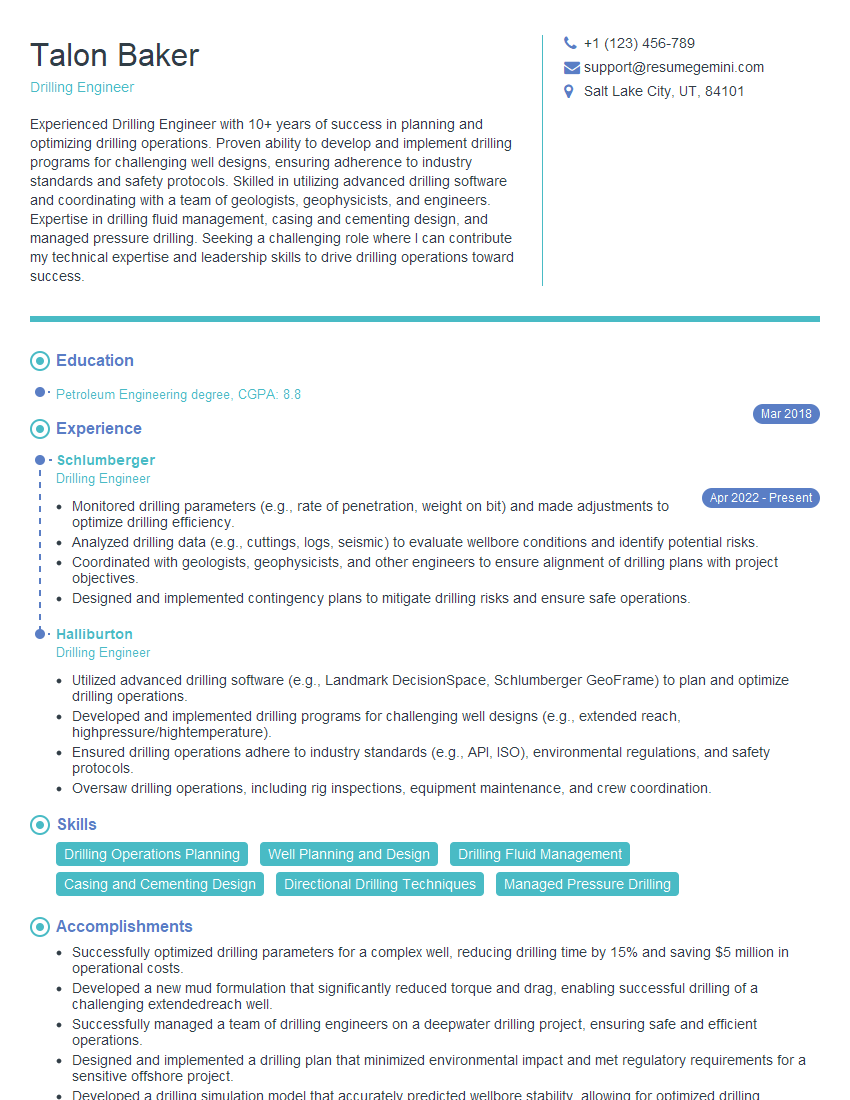
Drilling Engineer Resume Sample

Mud Engineer Resume Sample

Petroleum Engineer Resume Sample
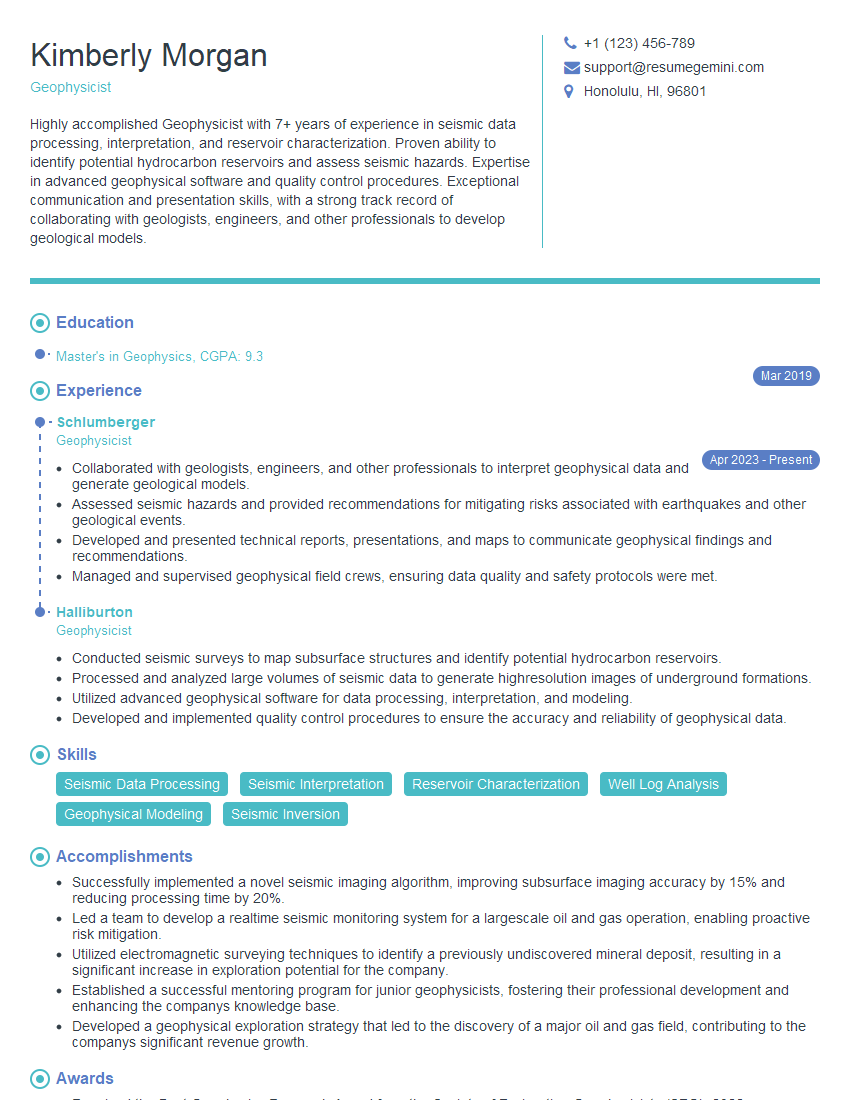
Geophysicist Resume Sample

Drilling Foreman Resume Sample
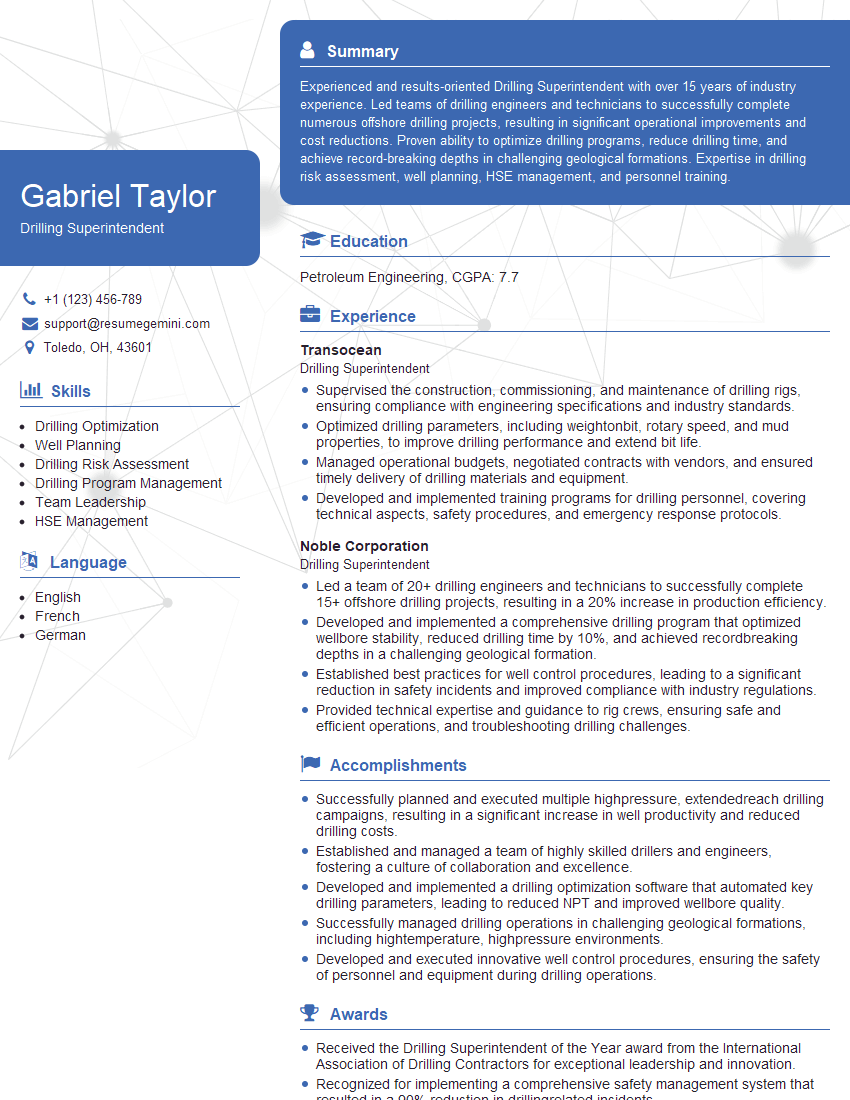
Drilling Superintendent Resume Sample

Directional Driller Resume Sample

Drilling Supervisor Resume Sample
Explore more articles
Users Rating of Our Blogs
Share Your Experience
We value your feedback! Please rate our content and share your thoughts (optional).
What Readers Say About Our Blog
To the interviewgemini.com Webmaster.
Very helpful and content specific questions to help prepare me for my interview!
Thank you
To the interviewgemini.com Webmaster.
This was kind of a unique content I found around the specialized skills. Very helpful questions and good detailed answers.
Very Helpful blog, thank you Interviewgemini team.