Preparation is the key to success in any interview. In this post, we’ll explore crucial Process Integration and Optimization interview questions and equip you with strategies to craft impactful answers. Whether you’re a beginner or a pro, these tips will elevate your preparation.
Questions Asked in Process Integration and Optimization Interview
Q 1. Explain your understanding of process integration.
Process integration is the systematic unification of disparate systems and applications to create a seamless and efficient workflow. Think of it like connecting the different parts of a complex machine – each part performs a specific function, but only when they work together harmoniously do they produce the desired outcome. Instead of separate, siloed systems, integration allows data and processes to flow freely, improving collaboration, reducing redundancy, and enhancing overall productivity. For example, integrating a CRM (Customer Relationship Management) system with an ERP (Enterprise Resource Planning) system allows sales data to automatically update inventory levels, preventing stockouts and improving customer satisfaction.
Q 2. Describe different process integration architectures (e.g., message queues, ESB).
Several architectural patterns facilitate process integration. Message Queues, like RabbitMQ or Kafka, act as intermediaries, allowing systems to communicate asynchronously. One system sends a message to the queue, and another system retrieves and processes it later. This is ideal for handling large volumes of data or ensuring resilience in case of system failures. Think of it as a post office – messages are sent and received at different times, but the system reliably delivers the message.
An Enterprise Service Bus (ESB) provides a central communication hub for diverse systems. It acts as a translator, allowing applications using different protocols and technologies to interact. It often includes features for routing, transformation, and monitoring messages. This is like a central train station, routing different trains (systems) to their destinations efficiently. A third important architecture is API-led integration, where systems expose functionalities via APIs. This is lightweight, scalable, and often preferred for modern, microservices-based architectures.
Q 3. What are the key challenges in process integration?
Process integration presents many challenges. Data inconsistencies across systems are common – different formats, naming conventions, and data structures create integration hurdles. Security concerns are paramount; integration often necessitates sharing sensitive data, requiring robust security measures to prevent unauthorized access or breaches. Maintaining compatibility between evolving systems and ensuring reliable data flow in the face of unforeseen issues require continuous monitoring and management. Finally, the complexity of integration projects can be significant, often requiring specialized skills and careful planning to succeed. In one project, we faced significant challenges integrating legacy systems with modern cloud-based applications due to data format differences and limitations of the older technology.
Q 4. How do you identify areas for process optimization?
Identifying areas for process optimization begins with a thorough understanding of the current state. This usually involves process mapping to visualize the flow of activities, identifying bottlenecks and inefficiencies. Data analysis can then pinpoint areas with high error rates, long processing times, or excessive resource consumption. We often use techniques like Value Stream Mapping (VSM) to understand the complete value chain and identify non-value-added steps. Interviews with stakeholders and process owners provide valuable insights into pain points and opportunities for improvement. For example, in a manufacturing setting, analyzing machine downtime data can reveal bottlenecks in the production line, leading to targeted improvements.
Q 5. Explain your experience with process mapping techniques.
I have extensive experience with various process mapping techniques, including BPMN (Business Process Model and Notation), flowcharting, and value stream mapping (VSM). BPMN allows for detailed modeling of processes including events, gateways, and activities, which aids in identifying redundancies and inefficiencies. Flowcharts provide a simpler visual representation, great for communicating with non-technical stakeholders. VSM focuses on the flow of materials and information, ideal for identifying bottlenecks in manufacturing or service delivery. The choice of technique depends on the complexity of the process and the audience.
Q 6. Describe your approach to analyzing process bottlenecks.
Analyzing process bottlenecks requires a multi-faceted approach. First, we’ll leverage the process maps created earlier to visually identify points where work is accumulating or experiencing delays. Then, we’ll collect data to quantify the impact of these bottlenecks. This might involve analyzing transaction logs, monitoring system performance, or conducting time studies. Once the bottleneck is clearly identified and quantified, we explore root causes through root cause analysis techniques, such as the 5 Whys or fishbone diagrams. Finally, we develop and implement solutions, testing and measuring their effectiveness before deploying them widely. A recent project involved analyzing a significant delay in order processing, which we traced to an outdated inventory management system, ultimately leading to its replacement and a significant improvement in order processing times.
Q 7. What metrics do you use to measure process improvement?
Measuring process improvement requires a well-defined set of metrics. Cycle time (time to complete a process), throughput (number of units processed), defect rate (number of errors or defects), cost per unit, and customer satisfaction are all crucial indicators. Key Performance Indicators (KPIs) should be aligned with business objectives. We also track employee satisfaction related to the process as happy employees are more likely to contribute to efficient and optimized processes. It’s critical to establish baselines before implementing changes to accurately measure improvements and to continuously monitor these metrics post-implementation to ensure sustained improvement.
Q 8. How do you handle conflicts between different departments during process integration?
Resolving inter-departmental conflicts during process integration is crucial for success. It’s rarely a smooth, linear process; differing priorities, entrenched workflows, and communication breakdowns are common. My approach involves a multi-faceted strategy focusing on communication, collaboration, and a shared vision.
- Facilitated Workshops: I bring together representatives from each department in facilitated workshops. These aren’t simply meetings; they’re structured sessions designed to identify pain points, understand individual perspectives, and collaboratively define objectives. We use tools like process mapping to visualize current workflows and identify areas of overlap or conflict.
- Data-Driven Decision Making: Instead of relying on subjective opinions, we analyze data to demonstrate the impact of integration on each department. Quantifying benefits like increased efficiency, reduced costs, or improved customer satisfaction helps to overcome resistance and build consensus.
- Change Management Strategy: Recognizing that integration involves significant change, I develop and implement a comprehensive change management plan. This involves clearly communicating the rationale behind the integration, providing training and support, and actively addressing concerns throughout the process.
- Negotiation and Compromise: Sometimes, finding common ground requires negotiation and compromise. This might involve adjusting workflows, prioritizing specific needs, or agreeing on phased implementation to minimize disruption.
For example, during a recent integration project involving Sales, Marketing, and Customer Service, initial resistance stemmed from concerns about data access and reporting. By demonstrating how integrated data would improve lead tracking and customer satisfaction metrics (using clear data visualizations), we successfully secured buy-in from all parties.
Q 9. What experience do you have with different integration tools/platforms?
My experience spans a range of integration tools and platforms, catering to various needs and complexities. I’m proficient in several categories:
- Enterprise Service Buses (ESBs): I have extensive experience with MuleSoft Anypoint Platform and IBM Integration Bus, using them to orchestrate complex integrations involving multiple applications and systems. These are powerful tools for managing message routing, transformations, and error handling.
- API Management Platforms: I’m skilled in using platforms like Apigee and Kong to manage and secure APIs, enabling seamless communication between systems. This includes designing API specifications (e.g., using OpenAPI/Swagger), implementing security measures, and monitoring API performance.
- Integration Platform as a Service (iPaaS): I’ve worked with cloud-based iPaaS solutions like Informatica Intelligent Cloud Services and Boomi, which offer a faster and more agile approach to integration, especially for cloud-based applications.
- ETL Tools: My experience includes using Informatica PowerCenter and Talend Open Studio for data extraction, transformation, and loading processes. These tools are essential for consolidating data from disparate sources into a consistent format.
My choice of tool depends heavily on the specific project requirements, considering factors such as scalability, security, budget, and the technical expertise available within the organization.
Q 10. Describe a time you successfully integrated disparate systems.
In a previous role, I successfully integrated a legacy CRM system with a newly implemented ERP system. These systems were fundamentally different, using incompatible data structures and communication protocols. The challenge was significant; the legacy system was critical but lacked modern APIs, while the new ERP system demanded structured data feeds.
My approach involved a phased integration strategy:
- Data Mapping and Transformation: We meticulously mapped data fields between the two systems, identifying discrepancies and developing transformation rules to ensure data consistency. This involved using ETL tools to cleanse, transform, and load data into a staging area.
- API Development (where possible): We developed custom APIs for the ERP system to facilitate communication. For parts of the legacy system that couldn’t be accessed via APIs, we used a combination of file-based transfers and custom scripts.
- Testing and Validation: Rigorous testing was crucial. We implemented automated tests to validate data integrity and ensure that the integration functioned correctly under various scenarios. We also conducted user acceptance testing to get feedback from end-users.
- Monitoring and Maintenance: Post-implementation, we established a monitoring system to track performance, identify potential issues, and ensure data accuracy. This involved setting up alerts and dashboards to monitor key metrics.
The successful integration resulted in significant improvements in operational efficiency, reduced data entry errors, and enhanced reporting capabilities across departments.
Q 11. How do you ensure data consistency during process integration?
Maintaining data consistency during process integration is paramount. Inconsistencies can lead to inaccurate reporting, flawed decision-making, and operational inefficiencies. My strategy focuses on several key areas:
- Data Governance Framework: Establishing a robust data governance framework is critical. This includes defining data standards, establishing data quality rules, and assigning data ownership responsibilities.
- Data Cleansing and Standardization: Before integration, data needs to be cleansed and standardized. This involves identifying and correcting inconsistencies, handling missing values, and ensuring data adheres to defined standards.
- Data Transformation: Using ETL tools, we transform data from its source format to a consistent target format. This involves data mapping, data type conversions, and data validation.
- Data Validation: Regular data validation checks are crucial. This involves implementing data quality rules and running automated tests to verify data accuracy and consistency.
- Master Data Management (MDM): In complex integrations involving multiple systems and data sources, an MDM solution can be beneficial. An MDM system provides a single, authoritative source of truth for critical data elements.
For instance, if integrating customer data from multiple sources, an MDM approach would ensure that all records for a given customer are consistent, regardless of the source system.
Q 12. What is your experience with API integration?
API integration forms the backbone of many modern integration projects. My experience encompasses designing, developing, consuming, and securing APIs. I’m familiar with various API protocols (REST, SOAP) and standards (OpenAPI/Swagger).
- REST API Design and Development: I can design and develop RESTful APIs using frameworks like Spring Boot (Java) or Node.js. I focus on creating well-documented, secure, and scalable APIs adhering to best practices.
- SOAP API Integration: I have experience integrating with SOAP-based APIs, often using tools and technologies like Apache Axis2 or CXF.
- API Security: Security is paramount. My experience includes implementing various security measures such as OAuth 2.0, JWT (JSON Web Tokens), and API gateways to protect API endpoints and sensitive data.
- API Monitoring and Management: I use API management platforms to monitor API performance, track usage, and manage API keys and access control.
A recent project involved integrating a payment gateway API into an e-commerce platform. I designed secure endpoints, implemented OAuth 2.0 for authorization, and incorporated robust error handling to ensure reliable and secure payment processing.
Q 13. Explain your understanding of ETL processes.
ETL (Extract, Transform, Load) processes are fundamental to data integration. They involve extracting data from various sources, transforming it to a consistent format, and loading it into a target system (often a data warehouse or data lake).
The three stages are:
- Extract: This involves retrieving data from source systems. Sources can be databases, flat files, APIs, or cloud storage. The extraction process needs to be efficient and handle large datasets.
- Transform: This is where data is cleaned, standardized, and transformed. This involves tasks like data cleansing (handling missing values, correcting errors), data type conversions, data validation, and data aggregation.
- Load: This involves loading the transformed data into the target system. This requires efficient loading mechanisms and might involve considerations like data partitioning and indexing to optimize query performance.
ETL tools automate these processes, providing features for scheduling, error handling, and monitoring. I have used several ETL tools, and my approach always prioritizes data quality, efficiency, and error handling.
For example, in a project involving consolidating customer data from multiple sales channels, ETL processes were used to extract data, standardize addresses and phone numbers, resolve data inconsistencies, and load the consolidated data into a centralized customer data warehouse.
Q 14. How do you ensure data security during process integration?
Data security is paramount during process integration. Breaches can have severe consequences, including financial losses, reputational damage, and legal repercussions. My approach to ensuring data security incorporates several layers of protection:
- Data Encryption: Sensitive data should be encrypted both in transit and at rest. This involves using strong encryption algorithms and secure key management practices.
- Access Control: Implementing robust access control mechanisms is crucial. This includes using role-based access control (RBAC) to restrict access to sensitive data based on user roles and responsibilities.
- Secure Communication Protocols: Using secure protocols such as HTTPS and TLS/SSL is essential to protect data during transmission.
- API Security: When using APIs, implementing security measures such as OAuth 2.0, API keys, and rate limiting helps protect against unauthorized access.
- Data Loss Prevention (DLP): Implementing DLP measures helps prevent sensitive data from leaving the organization’s control. This can involve monitoring data flows and blocking unauthorized transfers.
- Regular Security Audits and Penetration Testing: Regular security assessments help identify vulnerabilities and ensure that security measures are effective.
In a recent project, we implemented end-to-end encryption for all data transmitted between systems. We also employed multi-factor authentication and regular security audits to maintain a strong security posture throughout the integration process.
Q 15. How do you prioritize process improvement initiatives?
Prioritizing process improvement initiatives requires a strategic approach that balances impact, feasibility, and urgency. I typically employ a framework that combines quantitative and qualitative analysis. First, I identify potential improvement areas through data analysis (process mining, key performance indicators), stakeholder interviews, and process mapping. Then, I assess each initiative using a matrix that considers factors such as:
- Impact: How significantly will the improvement affect key business goals (e.g., cost reduction, cycle time improvement, customer satisfaction)?
- Feasibility: How easily can the improvement be implemented considering resources, technology, and organizational resistance?
- Urgency: How quickly does the improvement need to be implemented to avoid negative consequences or capitalize on opportunities?
I use a scoring system to rank each initiative based on these factors. For instance, a high-impact, highly feasible, and urgent initiative would receive a top priority. This prioritization ensures that resources are focused on projects with the greatest potential return on investment. A simple example would be prioritizing a process change that reduces significant customer complaints (high impact and urgency) over a minor procedural improvement (low impact).
Career Expert Tips:
- Ace those interviews! Prepare effectively by reviewing the Top 50 Most Common Interview Questions on ResumeGemini.
- Navigate your job search with confidence! Explore a wide range of Career Tips on ResumeGemini. Learn about common challenges and recommendations to overcome them.
- Craft the perfect resume! Master the Art of Resume Writing with ResumeGemini’s guide. Showcase your unique qualifications and achievements effectively.
- Don’t miss out on holiday savings! Build your dream resume with ResumeGemini’s ATS optimized templates.
Q 16. What is your experience with Agile methodologies in process improvement?
My experience with Agile methodologies in process improvement is extensive. I’ve successfully integrated Agile principles, like Scrum and Kanban, into numerous projects. Agile’s iterative approach, emphasizing continuous feedback and adaptation, is perfectly suited for process optimization. Instead of lengthy, upfront planning, we focus on delivering incremental improvements in short cycles (sprints). This allows for faster feedback, reduces risk, and promotes stakeholder buy-in. For example, in a recent project to optimize an order fulfillment process, we used Scrum. We broke down the process into smaller, manageable tasks (user stories), developed and tested solutions iteratively, and regularly adjusted our plans based on feedback from the team and stakeholders. This Agile approach helped us deliver significant improvements more quickly and efficiently than a traditional waterfall approach.
Q 17. Explain your understanding of BPM (Business Process Management).
Business Process Management (BPM) is a holistic discipline that focuses on designing, managing, and optimizing an organization’s core business processes. It’s about improving efficiency, effectiveness, and agility by aligning processes with strategic goals. BPM encompasses various aspects, including:
- Process Modeling: Creating visual representations of processes (e.g., using BPMN notation) to understand how work flows.
- Process Analysis: Identifying bottlenecks, inefficiencies, and areas for improvement in existing processes.
- Process Automation: Leveraging technology (e.g., RPA, workflow automation) to automate manual, repetitive tasks.
- Process Monitoring and Measurement: Tracking key performance indicators (KPIs) to monitor process performance and identify areas for improvement.
- Process Improvement: Implementing changes to optimize processes based on data and analysis.
Think of BPM as a continuous cycle of improvement, driven by data and focused on achieving business objectives. In practice, this might involve mapping a customer onboarding process, identifying delays in approvals, automating parts of the process, and then measuring the improvements in onboarding times and customer satisfaction.
Q 18. How do you communicate complex technical information to non-technical stakeholders?
Communicating complex technical information to non-technical stakeholders requires clear, concise, and engaging communication. I avoid technical jargon and instead use analogies, visuals, and storytelling. For example, when explaining a complex database optimization strategy, instead of focusing on technical details like indexing and query optimization, I might use an analogy to a well-organized library. A well-organized library allows for quick retrieval of books (data), just as optimized database indexes allow for quick retrieval of information. I also leverage visual aids such as charts, graphs, and process maps to illustrate key concepts. Finally, I tailor my communication style to the audience’s level of understanding and their interests, ensuring the information is relevant and easily digestible.
Q 19. Describe your experience with process mining tools and techniques.
I have significant experience with process mining tools and techniques. Process mining uses event logs from IT systems to analyze actual process execution. This contrasts with traditional process modeling which often relies on assumptions and documented procedures. Tools like Celonis or Disco provide valuable insights into process bottlenecks, deviations from standard procedures, and compliance issues. For example, I’ve used process mining to analyze an invoice processing procedure. By analyzing the event logs, we uncovered a significant delay caused by a specific approval step. This led to process improvements which streamlined the approval process and reduced the processing time by 30%. The tools allow for visualization, identification of bottlenecks, and creation of reports that demonstrably illustrate inefficiencies and the impact of proposed changes. This data-driven approach is crucial for convincing stakeholders of the need for improvements.
Q 20. How do you handle unexpected issues or delays during process integration?
Handling unexpected issues or delays during process integration requires a proactive and adaptable approach. My strategy involves:
- Immediate Assessment: Quickly identify the root cause of the issue and its potential impact.
- Risk Mitigation: Develop and implement mitigation strategies to minimize the impact of the delay or issue.
- Communication: Proactively communicate the issue, its impact, and mitigation plans to stakeholders.
- Problem-Solving: Employ problem-solving techniques (e.g., root cause analysis, 5 Whys) to address the root cause of the issue and prevent recurrence.
- Adaptation: Adjust the project plan and timelines as needed to accommodate the unexpected event.
For example, if a key system integration fails, I would immediately engage the IT team, assess the impact on downstream processes, communicate the delay to stakeholders, and implement a workaround (e.g., manual data entry) while the issue is being resolved. Documentation of the incident and lessons learned is critical to prevent similar problems in the future.
Q 21. What is your approach to change management in process optimization projects?
My approach to change management in process optimization projects is crucial for successful implementation. I use a phased approach that incorporates stakeholder engagement throughout. This includes:
- Communication and Education: Clearly communicate the goals, benefits, and impact of the changes to all stakeholders. This ensures transparency and builds support.
- Stakeholder Engagement: Involve stakeholders in the design and implementation process to foster ownership and buy-in.
- Training and Support: Provide comprehensive training and ongoing support to help users adapt to the new processes.
- Monitoring and Evaluation: Monitor the implementation and evaluate its impact on key performance indicators. Make adjustments as needed to ensure the changes are effective.
- Continuous Improvement: Establish a feedback loop to continuously improve processes and address any unforeseen challenges.
A key element is addressing resistance to change. I actively identify and engage with resistant stakeholders, addressing their concerns and incorporating their feedback where possible. Creating a culture of continuous improvement where change is viewed as an opportunity rather than a threat is paramount.
Q 22. Explain your experience with process automation tools (e.g., RPA).
My experience with Robotic Process Automation (RPA) tools spans several years and various implementations. RPA is essentially software that mimics human actions to automate repetitive, rule-based tasks. I’ve worked extensively with tools like UiPath, Automation Anywhere, and Blue Prism. My experience encompasses the full lifecycle: from requirements gathering and process mapping to development, testing, deployment, and ongoing maintenance. For instance, in a previous role, we used UiPath to automate the invoice processing system, reducing processing time by 60% and minimizing human error. This involved designing bots to extract data from various invoice formats (PDF, email attachments), validate the data against our internal systems, and automatically route the invoices for approval. Another project involved using Automation Anywhere to automate data entry from various sources into a CRM system, resulting in significant improvements in data accuracy and employee productivity.
- Process Mapping and Analysis: I proficiently use tools like BPMN (Business Process Model and Notation) to visually map processes, identify bottlenecks, and determine automation opportunities.
- Bot Development: I have strong coding skills (e.g., VB.NET, C#) and can efficiently develop and maintain RPA bots, ensuring robust error handling and security.
- Integration with other systems: My experience includes integrating RPA bots with various enterprise systems using APIs and other integration mechanisms.
Q 23. How do you measure the ROI of process improvement initiatives?
Measuring the ROI of process improvement initiatives requires a structured approach. It’s not just about the cost savings but also about quantifying the impact on efficiency, productivity, and customer satisfaction. I typically use a combination of methods:
- Cost-Benefit Analysis: This involves calculating the total cost of the initiative (implementation, training, maintenance) and comparing it to the projected benefits (cost savings, increased revenue, improved productivity). For example, if a process improvement reduced processing time by 50% and freed up 2 FTEs, we would calculate the cost savings based on the salaries of those FTEs.
- Key Performance Indicators (KPIs): Identifying and tracking relevant KPIs is crucial. These might include cycle time reduction, error rate, throughput, customer satisfaction scores, and employee productivity. Changes in these metrics post-implementation provide tangible evidence of the initiative’s success.
- Return on Investment (ROI) Calculation: This is a standard calculation to measure the return on investment. A simple formula is:
(Total Benefits - Total Costs) / Total Costs. It’s essential to establish a clear baseline before implementing any changes to accurately measure the impact.
Presenting the ROI with a clear explanation of the methodology builds trust and demonstrates the value of the process improvement.
Q 24. Describe your experience with different integration patterns (e.g., publish-subscribe).
I have experience with a wide range of integration patterns, including publish-subscribe, request-reply, point-to-point, and message queues. Understanding the strengths and weaknesses of each pattern is key to choosing the right one for a specific integration scenario.
- Publish-Subscribe: This pattern is ideal for asynchronous communication where multiple systems need to receive updates on a particular event. Think of it like a newsfeed – a publisher sends out a message, and various subscribers receive it. I’ve used this pattern in scenarios involving real-time data updates between different applications, such as order updates in an e-commerce system.
- Request-Reply: This is a synchronous pattern where a system sends a request to another system and waits for a response. This is suitable for scenarios requiring immediate feedback, such as credit card verification during an online purchase.
- Point-to-Point: This is a direct connection between two systems, often used for simple integrations where the communication is one-to-one. It’s less flexible than other patterns but can be simpler to implement.
- Message Queues: These provide a buffer between systems, allowing asynchronous communication and decoupling of systems. This is especially useful for handling large volumes of data or situations where systems might be temporarily unavailable.
My experience includes using various middleware tools (e.g., IBM MQ, RabbitMQ, Kafka) to implement these patterns.
Q 25. How do you handle data transformation during integration?
Data transformation is a crucial aspect of integration, as systems often use different data formats and structures. I’ve employed several strategies to handle this:
- ETL (Extract, Transform, Load): This is a common approach where data is extracted from a source system, transformed into the desired format, and then loaded into the target system. I’ve used ETL tools like Informatica and Talend for complex transformations.
- XSLT (Extensible Stylesheet Language Transformations): This XML-based language is powerful for transforming XML data. I’ve used it extensively to map data between different XML schemas.
- Mapping Tools: Many integration platforms provide visual mapping tools that allow for easy transformation of data without extensive coding. This is particularly useful for simpler transformations.
- Scripting Languages (e.g., Python): For complex or custom transformations, scripting languages offer flexibility and control. I’ve used Python with libraries like Pandas for robust data manipulation.
The choice of method depends on the complexity of the transformation, the data formats involved, and the available tools. I always prioritize efficient and maintainable solutions.
Q 26. What is your experience with cloud-based integration platforms?
I have extensive experience with cloud-based integration platforms such as MuleSoft Anypoint Platform, Azure Integration Services, and AWS Integration Services. These platforms offer several advantages over on-premise solutions, including scalability, elasticity, and reduced infrastructure costs.
- Scalability: Cloud platforms can easily scale to handle fluctuating workloads, ensuring consistent performance even during peak demand.
- Ease of Deployment: Deploying and managing integrations is simpler in the cloud, reducing time and effort.
- Cost-Effectiveness: Pay-as-you-go pricing models reduce upfront infrastructure investment.
- Pre-built Connectors: Cloud platforms often offer pre-built connectors for various SaaS applications, simplifying integration.
In a recent project, we migrated an on-premise integration system to MuleSoft Anypoint Platform, resulting in significant improvements in scalability, reliability, and ease of maintenance. The platform’s built-in monitoring and logging tools also enhanced our ability to proactively identify and resolve issues.
Q 27. Describe a situation where you had to troubleshoot a complex integration issue.
In one project, we encountered a complex integration issue between our CRM system and a third-party payment gateway. Transactions were intermittently failing without any clear error messages. My troubleshooting process involved:
- Gathering Logs and Data: We began by collecting logs from both the CRM and the payment gateway to identify potential patterns or error messages.
- Network Monitoring: We analyzed network traffic to check for connectivity issues or latency problems.
- Testing Different Scenarios: We created test cases to replicate the issue under various conditions to determine the root cause.
- Debugging and Code Analysis: We reviewed the integration code (using MuleSoft Anypoint Platform in this case) to identify potential bugs or misconfigurations.
- Collaboration and Communication: We worked closely with the payment gateway’s support team to isolate the problem. It turned out to be a timing issue related to how the payment gateway handled asynchronous responses.
Ultimately, we resolved the issue by implementing a retry mechanism with exponential backoff and improved error handling. This ensured that intermittent network issues or delays wouldn’t cause transaction failures. The key takeaway was the systematic and collaborative approach to troubleshooting.
Q 28. How do you stay up-to-date with the latest trends in process integration and optimization?
Staying current in the rapidly evolving field of process integration and optimization requires a multi-pronged approach:
- Industry Conferences and Webinars: Attending industry events like Gartner Symposium/ITxpo and online webinars allows me to learn about the latest trends and best practices from leading experts.
- Professional Certifications: Pursuing certifications like MuleSoft Certified Developer or AWS Certified Solutions Architect – Professional keeps my skills sharp and validates my expertise.
- Online Courses and Tutorials: Platforms like Coursera, edX, and Udemy offer excellent courses on various integration technologies and methodologies.
- Industry Publications and Blogs: Regularly reading industry publications and blogs (e.g., InfoQ, TechTarget) helps me stay abreast of emerging technologies and trends.
- Active Participation in Online Communities: Engaging in online forums and communities allows me to share knowledge and learn from others’ experiences.
Continuous learning is essential in this dynamic field, ensuring I can apply the latest innovations to deliver optimal solutions for my clients.
Key Topics to Learn for Process Integration and Optimization Interview
- Process Mapping & Analysis: Understanding various process mapping techniques (e.g., BPMN, flowcharting) and their application in identifying bottlenecks and areas for improvement. Practical application: analyzing a supply chain process to identify inefficiencies.
- Lean Principles & Six Sigma Methodologies: Applying Lean principles (e.g., value stream mapping, 5S) and Six Sigma methodologies (DMAIC, DMADV) to streamline processes and reduce waste. Practical application: implementing a Kaizen event to improve a manufacturing process.
- Business Process Re-engineering (BPR): Understanding the principles of BPR and its application in radically redesigning processes for improved efficiency and effectiveness. Practical application: redesigning a customer service process to improve customer satisfaction.
- Data Analysis & Metrics: Utilizing data analysis techniques to measure process performance, identify key performance indicators (KPIs), and track improvement efforts. Practical application: developing a dashboard to monitor key process metrics.
- Technology & Automation: Exploring the role of technology (e.g., RPA, workflow automation) in optimizing processes and increasing efficiency. Practical application: evaluating the feasibility of implementing robotic process automation in a specific business process.
- Change Management & Implementation: Understanding the importance of effective change management strategies for successful process integration and optimization initiatives. Practical application: developing a communication plan to ensure stakeholder buy-in for a process improvement project.
- Optimization Techniques: Familiarity with various optimization techniques (e.g., linear programming, simulation) and their application in finding optimal solutions for complex process problems. Practical application: using simulation to model the impact of a process change.
Next Steps
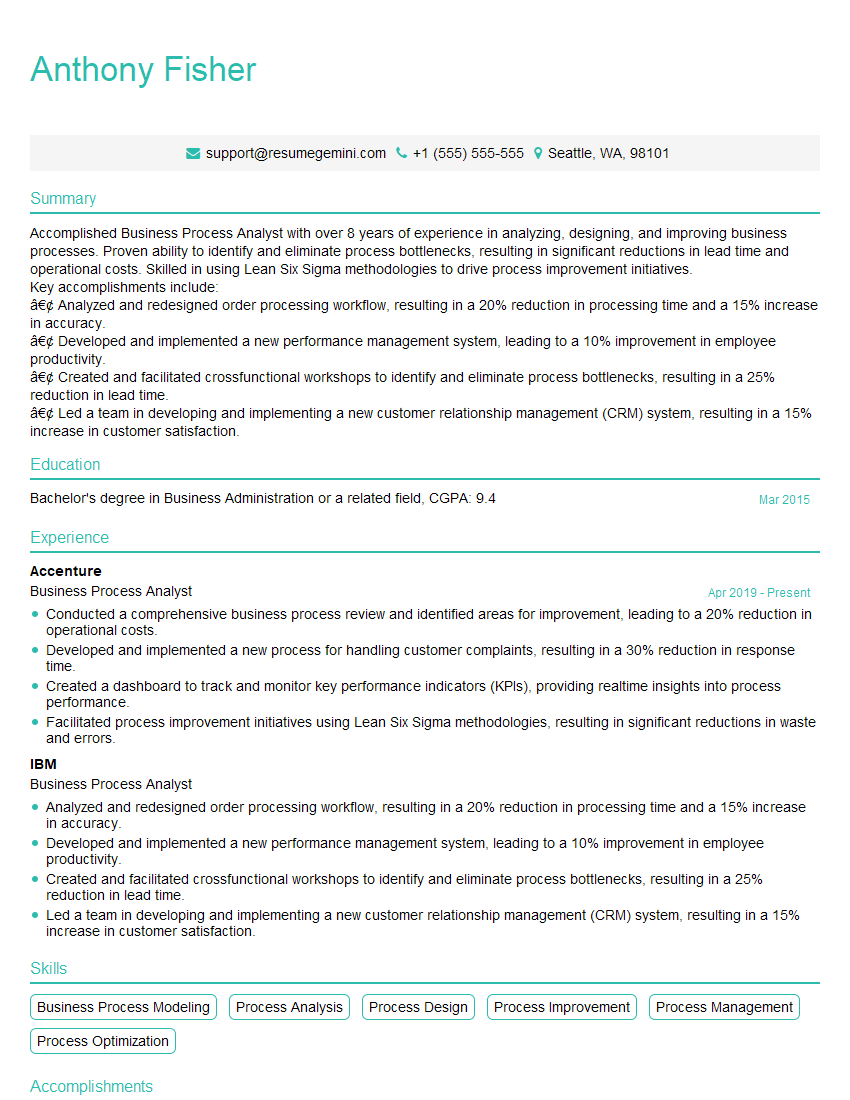
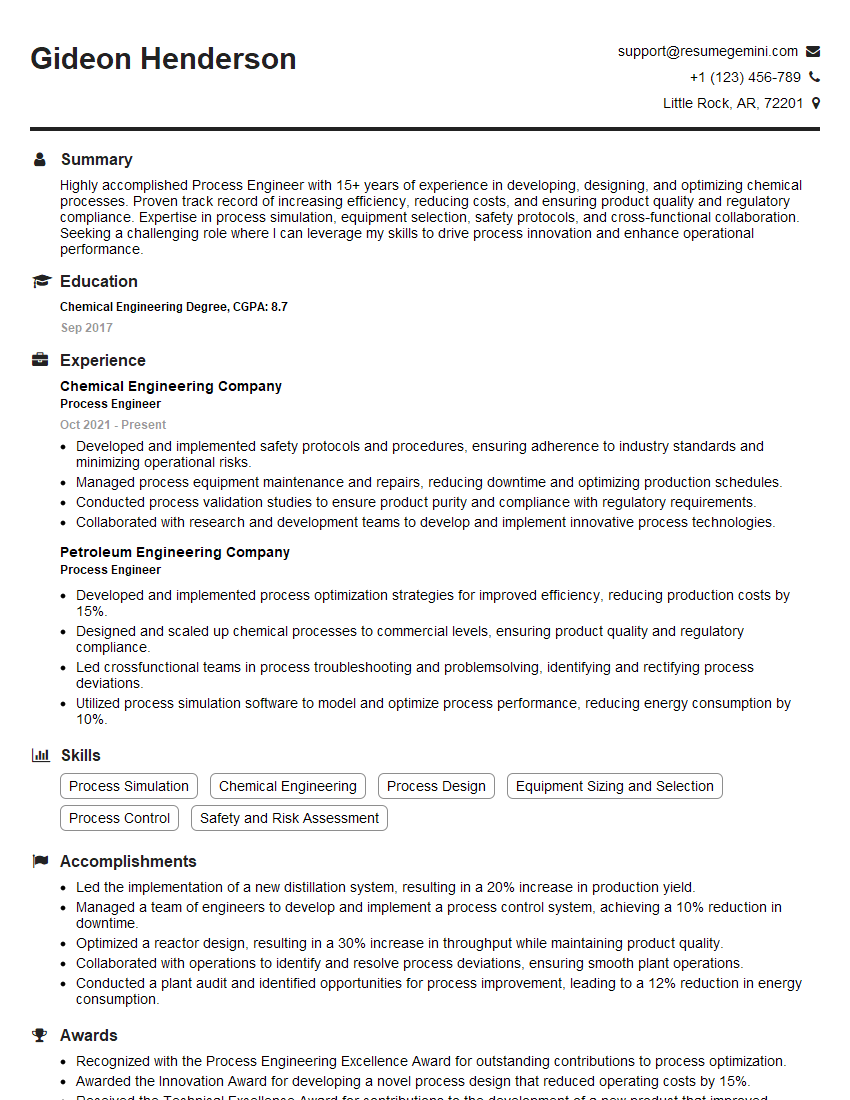
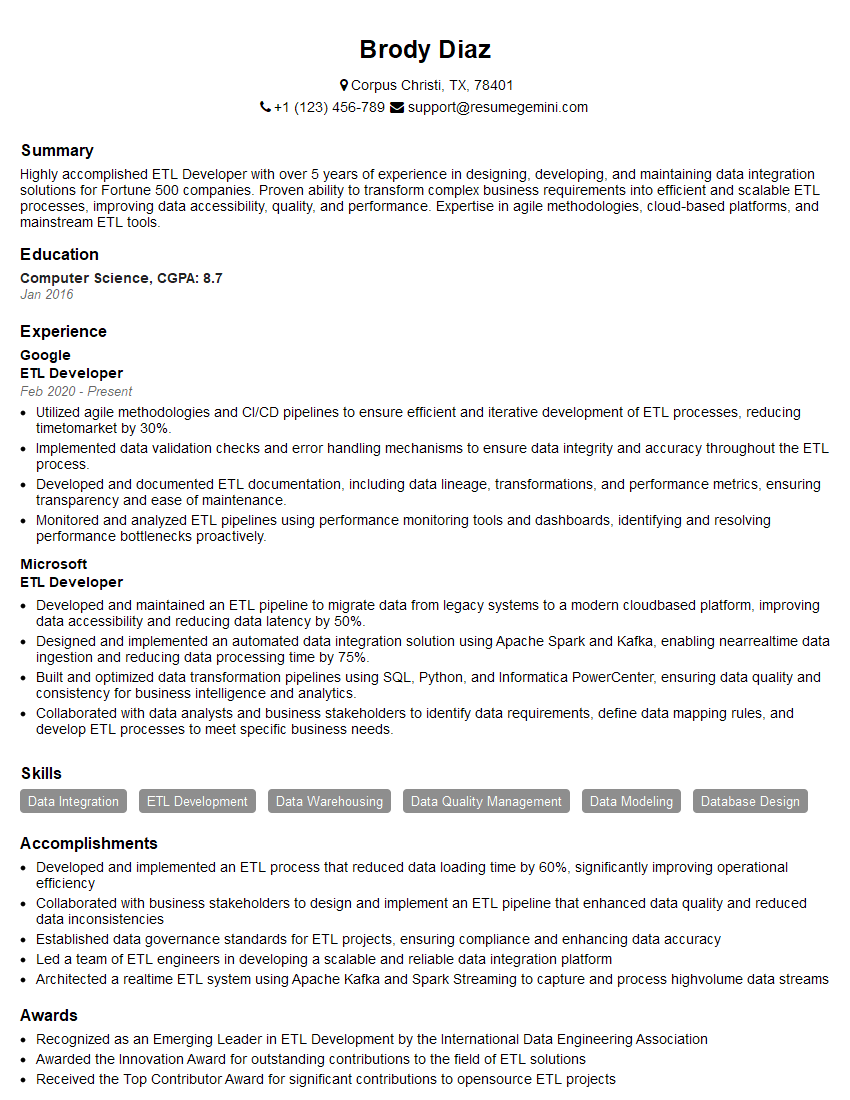
Mastering Process Integration and Optimization is crucial for career advancement in today’s dynamic business environment. These skills are highly sought after across various industries, leading to increased earning potential and exciting career opportunities. To stand out, create an ATS-friendly resume that effectively highlights your skills and experience. ResumeGemini is a trusted resource that can help you build a professional and impactful resume. We provide examples of resumes tailored to Process Integration and Optimization to guide you. Take the next step towards your dream career – craft a compelling resume that showcases your expertise!
Explore more articles
Users Rating of Our Blogs
Share Your Experience
We value your feedback! Please rate our content and share your thoughts (optional).
What Readers Say About Our Blog
To the interviewgemini.com Webmaster.
Very helpful and content specific questions to help prepare me for my interview!
Thank you
To the interviewgemini.com Webmaster.
This was kind of a unique content I found around the specialized skills. Very helpful questions and good detailed answers.
Very Helpful blog, thank you Interviewgemini team.