Preparation is the key to success in any interview. In this post, we’ll explore crucial Exhibition Interpretation interview questions and equip you with strategies to craft impactful answers. Whether you’re a beginner or a pro, these tips will elevate your preparation.
Questions Asked in Exhibition Interpretation Interview
Q 1. Describe your experience developing interpretive panels for museum exhibits.
Developing interpretive panels for museum exhibits is a multifaceted process that requires a deep understanding of the target audience, the exhibit’s narrative, and effective communication techniques. It’s not just about presenting facts; it’s about crafting an engaging story that resonates with visitors.
My approach typically begins with extensive research into the subject matter. This involves collaborating with subject matter experts (SMEs) to ensure accuracy and depth of information. Then, I work to distill this information into concise, accessible language, avoiding jargon and focusing on clear, impactful messaging. I consider the visual design carefully, ensuring that text, images, and graphics work together harmoniously to enhance understanding and engagement. For example, in a recent project on the history of local textiles, we used large, high-quality images of the textiles themselves, alongside short captions that highlighted their unique features and cultural significance, instead of lengthy paragraphs of dense text.
Panel design often involves multiple iterations and feedback loops, with testing to ensure readability and clarity. We use different font sizes and styles to ensure accessibility. I utilize a variety of design software to create visually appealing and informative panels, ensuring each panel contributes to the overall narrative flow of the exhibit.
Q 2. Explain your approach to creating accessible and inclusive exhibit experiences.
Creating accessible and inclusive exhibit experiences is paramount to ensuring that everyone can engage with and benefit from museum collections. This involves considering the diverse needs and capabilities of our visitors. My approach focuses on universal design principles, aiming to create exhibits that are usable by people of all abilities without the need for adaptation or specialized design.
- Sensory considerations: We reduce overwhelming stimuli, incorporate tactile elements for the visually impaired, and provide audio descriptions for visual content.
- Cognitive accessibility: Information is presented in a clear, concise, and multi-modal manner, avoiding complex language and using visual aids effectively. We break down information into smaller chunks and use a variety of storytelling techniques. Consider a children’s exhibit – the panels might use simpler language, bright colors, and interactive elements compared to an exhibit on advanced physics.
- Physical accessibility: We ensure that exhibits are physically accessible to people with mobility impairments, including wheelchair users, by adhering to ADA standards for ramps, clear pathways, and appropriate signage.
- Cultural sensitivity: We strive to avoid stereotypical or biased language and imagery and consult with relevant communities to ensure that exhibits are respectful and accurately represent diverse perspectives. We also provide translations into multiple languages where appropriate.
Ultimately, accessible and inclusive design is not an add-on; it’s integral to the design process from the outset. It ensures that museums become truly welcoming spaces for everyone.
Q 3. How do you evaluate the effectiveness of an exhibit’s interpretive strategies?
Evaluating the effectiveness of an exhibit’s interpretive strategies requires a multi-pronged approach, incorporating both quantitative and qualitative data. The goal is to understand whether the exhibit achieved its educational and engagement goals.
- Visitor surveys and feedback forms: These provide valuable insights into visitor experiences and understanding. Open-ended questions allow for richer, more detailed responses.
- Observation studies: By observing visitor behavior in the exhibit space, we can gain insights into how visitors interact with the interpretive materials and the overall flow of the exhibit. We observe things like dwell time at each panel, visitor interactions with interactive elements, and overall engagement levels.
- Post-visit questionnaires: These measure visitor learning and retention of key information. They can include multiple-choice questions to assess factual recall and open-ended questions to assess understanding and opinions.
- Analytics: For exhibits incorporating digital elements, web analytics can track visitor behavior on interactive displays and websites associated with the exhibit.
Data analysis allows us to identify successful strategies and areas for improvement. For example, if visitor surveys reveal that a particular panel is confusing, we can revise the text or design to improve clarity.
Q 4. What methods do you use to engage diverse audiences in museum exhibits?
Engaging diverse audiences requires a thoughtful and multifaceted approach that considers the varied interests, backgrounds, and learning styles of our visitors. My strategy involves employing several effective methods:
- Storytelling: Using narratives and relatable stories to connect with visitors on an emotional level, making abstract concepts more tangible. We use diverse voices and perspectives within our narratives.
- Interactive elements: Incorporating hands-on activities, games, and digital technologies to cater to different learning styles and encourage active participation. Interactive elements can range from simple touch screens to elaborate simulations.
- Multi-sensory experiences: Engaging multiple senses through the use of sound, visuals, tactile elements, and even scent to enhance the learning experience and create a more immersive environment.
- Community partnerships: Collaborating with local community groups and organizations to co-create exhibits, ensure representation of diverse voices, and build trust within the community.
- Multiple languages and formats: Providing exhibit information in multiple languages and formats (e.g., audio guides, transcripts, Braille) to make the exhibit accessible to all.
By utilizing these methods, we aim to create a welcoming and engaging environment where everyone feels included and can connect with the exhibit’s themes and content.
Q 5. Describe your experience working with diverse teams to design and implement exhibits.
Working with diverse teams is crucial for creating successful and inclusive exhibits. My experience involves collaborating with individuals from various backgrounds—designers, historians, educators, community members, and accessibility specialists—each bringing unique skills and perspectives. Effective collaboration is fostered by:
- Open communication: Regular meetings, clear communication channels, and a respectful environment are essential for fostering collaboration and ensuring everyone feels heard.
- Shared goals and vision: Establishing a clear vision for the exhibit from the outset and ensuring that all team members understand and are committed to this vision.
- Respectful disagreement: Creating a safe space for constructive criticism and diverse perspectives. Debate and differing viewpoints can lead to more innovative and engaging exhibits.
- Clear roles and responsibilities: Defining clear roles and responsibilities for each team member to avoid confusion and ensure efficiency.
- Regular feedback loops: Incorporating feedback at each stage of the design process to ensure that the final product meets the needs of all stakeholders.
By actively promoting inclusivity and valuing diverse contributions, we create a synergistic environment that enhances the creativity and quality of the exhibits we produce.
Q 6. How do you balance the needs of scholars and the general public when developing exhibit content?
Balancing the needs of scholars and the general public when developing exhibit content is a delicate but crucial aspect of exhibit development. It’s about finding a way to present scholarly information in a way that is both accurate and engaging for a broad audience. This involves:
- Accessibility of language: While maintaining accuracy, we translate complex scholarly language into terms that are readily understandable by the general public. This doesn’t mean simplification to the point of inaccuracy, but rather clarity and accessibility.
- Narrative focus: Framing the scholarly information within a compelling narrative that engages the audience emotionally and intellectually. This allows visitors to connect with the content on a personal level.
- Visual aids and multi-modal presentation: Using images, videos, interactive displays, and other visual aids to make the information more engaging and accessible. We use different media formats to suit different learning styles.
- Contextualization: Providing context and background information to help visitors understand the significance of the scholarly findings and their relevance to their lives.
- Supplemental materials: Offering more detailed information for visitors who want to delve deeper into the subject matter, such as detailed catalogs or online resources.
The key is not to dumb down the information, but to present it in a way that is both accurate and accessible to a wide range of visitors. It’s about meeting them where they are.
Q 7. Explain your understanding of universal design principles in exhibit design.
Universal design principles are fundamental to creating inclusive and accessible exhibit experiences. These principles guide the design process, ensuring that exhibits are usable by people of all abilities without the need for adaptation or specialized design. Key principles include:
- Equitable use: The design is useful and marketable to people with diverse abilities.
- Flexibility in use: The design accommodates a wide range of individual preferences and abilities.
- Simple and intuitive use: Use is easy to understand, regardless of the user’s experience, knowledge, language skills, or concentration level.
- Perceptible information: The design communicates necessary information effectively to the user, regardless of environmental conditions or the user’s sensory abilities.
- Tolerance for error: The design minimizes hazards and the adverse consequences of accidental actions.
- Low physical effort: The design can be used efficiently and comfortably with a minimum of fatigue.
- Size and space for approach and use: Appropriate size and space is provided for approach, reach, manipulation, and use regardless of user’s body size, posture, or mobility.
Applying these principles in exhibit design leads to exhibits that are not only inclusive but also more engaging and enjoyable for all visitors. For example, well-placed lighting, easy-to-read fonts and captions, interactive components, and clearly defined pathways exemplify universal design principles in action.
Q 8. How do you incorporate storytelling techniques into exhibit interpretation?
Storytelling is the backbone of effective exhibition interpretation. It transforms dry facts into engaging narratives that resonate with visitors on an emotional level, fostering deeper understanding and memory retention. Instead of simply presenting information, we craft compelling stories that connect objects, events, and ideas.
For example, in an exhibit on the American Civil War, instead of simply displaying uniforms and weapons with captions, we might weave a narrative around the life of a particular soldier, using his letters, photographs, and personal belongings to illustrate his experiences and perspectives. This personalized approach makes the history more relatable and memorable. We use narrative arcs, character development, and conflict resolution—familiar storytelling techniques—to build suspense, evoke empathy, and leave a lasting impact.
Another example would be an exhibit on ancient civilizations. Instead of presenting a timeline of rulers and events, we could structure it around a single family lineage, showing how their lives intertwined with major societal shifts. This helps viewers connect with the past on a human level rather than a purely academic one.
Q 9. Describe your experience using technology to enhance the visitor experience in museums.
Technology is a powerful tool for enhancing the visitor experience. In my previous role at the City Museum, we integrated augmented reality (AR) into an exhibit on local history. Visitors could point their smartphones at specific artifacts and trigger interactive 3D models or videos that provided additional context and details not possible through traditional labels. This brought static objects to life.
We also utilized interactive touchscreens to create engaging quizzes and games that tested visitor knowledge and encouraged further exploration. These activities catered to diverse learning styles, making the experience more accessible and enjoyable. Furthermore, we implemented a digital audio guide system with multilingual options, increasing accessibility for visitors with disabilities and international guests. The key to successful technology integration is to ensure it complements, rather than overwhelms, the physical exhibit; it should enhance the narrative, not detract from it.
Q 10. How do you address ethical considerations when interpreting historical or cultural artifacts?
Ethical considerations are paramount in exhibition interpretation, especially when dealing with sensitive historical or cultural artifacts. Our approach is guided by principles of inclusivity, respect, and accuracy. We strive to present multiple perspectives, acknowledging diverse viewpoints and avoiding biased interpretations. For example, when interpreting artifacts related to indigenous cultures, we actively collaborate with community representatives to ensure accurate representation and avoid perpetuating harmful stereotypes.
Transparency is crucial. We clearly identify the sources of information, acknowledging any uncertainties or gaps in knowledge. Furthermore, we carefully consider the potential impact of our interpretations, being mindful of the sensitivities surrounding certain historical events or cultural practices. We aim to foster critical thinking and encourage visitors to engage with the material in a thoughtful and reflective way, rather than presenting a singular, definitive narrative. We must be conscious of the power of our narratives and use them responsibly.
Q 11. What strategies do you use to manage visitor flow and crowds in museum exhibits?
Managing visitor flow and crowds requires a multifaceted approach. We utilize a combination of strategies, beginning with thoughtful exhibit design. A well-planned layout with clear pathways and designated resting areas helps to naturally guide visitors through the space and minimize congestion. We also strategically place seating and interactive elements throughout the exhibition to provide opportunities for visitors to rest and engage in smaller groups.
Signage plays a crucial role. Clear, concise directional signage helps to direct visitors through the exhibition efficiently. During peak times, we deploy staff to assist visitors, answer questions, and manage traffic flow. In addition, we use technology—such as crowd-monitoring systems and digital ticketing—to analyze visitor patterns and make adjustments to optimize the flow. Pre-booking tickets and timed entries can also help regulate visitor numbers effectively. Regular evaluation and feedback help us continually refine our strategies for optimal visitor experience.
Q 12. How do you evaluate the impact of an exhibit on visitor learning and engagement?
Evaluating the impact of an exhibit requires a mixed-methods approach, combining quantitative and qualitative data. Quantitative data, such as visitor attendance figures, dwell times at specific exhibits, and completion rates of interactive activities, provides a general overview of engagement. This data can be collected through counters, digital tracking systems, and exit surveys.
Qualitative data, however, provides deeper insights into visitor learning and understanding. We gather this information through visitor feedback forms, focus groups, and post-visit interviews. Observations of visitor behavior within the exhibit are also valuable, revealing how visitors interact with the objects and information. By analyzing both quantitative and qualitative data, we can build a comprehensive understanding of the exhibit’s effectiveness and identify areas for improvement in future iterations. These insights help us refine our interpretive strategies and better meet visitor needs.
Q 13. Explain your experience in developing and implementing educational programs related to museum exhibits.
My experience includes developing and implementing a wide range of educational programs that complement museum exhibits. I’ve designed and delivered teacher workshops, family programs, and adult learning sessions focused on specific themes and objects within an exhibition. For example, I developed a teacher workshop that integrated primary sources from our Civil War exhibit into lesson plans for middle school history classes. This workshop provided teachers with the tools to use the museum as an educational resource, extending the learning experience beyond the visit.
I’ve also created hands-on activities for families, engaging children through interactive games and crafts that reinforce concepts explored in the exhibition. These programs strive to make learning fun and engaging for a diverse audience, encouraging participation and deeper understanding. Program evaluation includes collecting feedback from participants and measuring changes in knowledge and attitudes through pre- and post-program assessments.
Q 14. Describe your understanding of different interpretive approaches (e.g., thematic, object-based).
Museum interpretation employs various approaches, each with its strengths. Thematic interpretation organizes exhibits around overarching themes or concepts. For example, an exhibit on the history of transportation could be structured around themes like innovation, migration, or environmental impact. This approach helps visitors see connections between seemingly disparate objects and events.
Object-based interpretation, in contrast, centers on individual artifacts. Each object becomes a story in itself, revealing its creation, use, and historical context. For instance, a single ancient vase might tell a story about its creator, its intended purpose, the society it belonged to, and its journey through time. This can evoke a powerful sense of the past. A combination of both approaches—thematic and object-based—often yields the most engaging and effective exhibits, offering a rich and layered interpretation that caters to different learning styles and preferences.
Q 15. How do you tailor interpretive materials to different age groups and learning styles?
Tailoring interpretive materials to diverse audiences is crucial for effective communication. It’s about recognizing that different age groups and learning styles require different approaches to information delivery. For younger children (e.g., preschool to elementary school), we use interactive elements, bright colors, simple language, and tactile experiences. Think large, engaging visuals, hands-on activities, and storytelling. For example, an exhibit about dinosaurs might incorporate a dig site where children can unearth plastic fossils. For teenagers and young adults, we might focus on more complex narratives, multimedia components, and opportunities for critical thinking and discussion. A dinosaur exhibit for this age group could include interactive timelines, videos showcasing paleontological research, and even opportunities to design their own dinosaur species based on scientific principles. Adults often appreciate detailed information, sophisticated visuals, and opportunities for deeper engagement through research-based narratives, comparative data, and even thought-provoking questions. This could involve in-depth articles, detailed maps, and opportunities to explore related topics independently. Furthermore, we should account for various learning styles (visual, auditory, kinesthetic) by using a variety of media – text, images, audio, videos, and interactive displays.
Career Expert Tips:
- Ace those interviews! Prepare effectively by reviewing the Top 50 Most Common Interview Questions on ResumeGemini.
- Navigate your job search with confidence! Explore a wide range of Career Tips on ResumeGemini. Learn about common challenges and recommendations to overcome them.
- Craft the perfect resume! Master the Art of Resume Writing with ResumeGemini’s guide. Showcase your unique qualifications and achievements effectively.
- Don’t miss out on holiday savings! Build your dream resume with ResumeGemini’s ATS optimized templates.
Q 16. Describe your experience conducting visitor research and using data to inform exhibit development.
Visitor research is foundational to successful exhibit development. I’ve extensively used a variety of methods, including visitor surveys (both on-site and online), interviews, focus groups, and observation studies (both direct and video-recorded). For example, in a recent science museum project, we used observation to track visitor pathways through an exhibit, identifying areas where visitors lingered or seemed confused. Surveys revealed their understanding and engagement levels, while interviews provided in-depth feedback on their experience. The data collected helps refine the exhibit design, script, and overall educational impact. We analyze the data using statistical software (e.g., SPSS) to identify trends and patterns. For instance, if a particular section receives consistently low engagement scores and observation reveals visitors quickly moving past it, we know we need to revise that section, perhaps by incorporating more interactive elements or clarifying the information presented. This iterative process of data collection, analysis, and revision is vital for creating impactful and engaging exhibits.
Q 17. How do you incorporate feedback from visitors to improve exhibit interpretation?
Visitor feedback is invaluable for continuous improvement. We use a multi-faceted approach to gather this feedback. Comment cards are placed throughout the exhibition space, providing a simple method for visitors to share immediate reactions. Online surveys allow for broader reach and more detailed responses. We also conduct exit interviews, allowing us to engage in more in-depth conversations with visitors. This data informs revisions to the exhibit’s content, layout, and interactive elements. For example, if multiple visitors mention difficulty understanding a particular concept, we might revise the text or incorporate a supplementary visual aid. If visitors express dissatisfaction with the flow of the exhibition, we might restructure the layout to improve the visitor experience. Critically, we don’t just collect feedback; we systematically analyze and act upon it. This involves categorizing the feedback, identifying recurring themes, and prioritizing changes based on their potential impact. This ongoing feedback loop ensures our exhibitions remain relevant, engaging, and effective over time.
Q 18. Explain your experience working with budgets and timelines in exhibit development.
Managing budgets and timelines is crucial in exhibit development. I have experience working with diverse budgets, from small-scale installations to large-scale museum exhibitions. The process starts with detailed budgeting, breaking down costs into categories like design, fabrication, installation, and content creation. We develop a project timeline outlining key milestones and deadlines, using project management software (e.g., Asana or Trello) to track progress and manage tasks. Regular meetings with the project team are held to review progress, address challenges, and adjust the timeline as needed. For example, during one project, we faced unexpected delays in the fabrication of key exhibit components. By proactively communicating with the fabrication team and adjusting the overall timeline accordingly, we were able to minimize the impact on the project’s launch date. Experience has taught me to build buffer time into timelines to accommodate unforeseen challenges, and to consistently monitor expenses to avoid budget overruns.
Q 19. Describe a time you had to overcome a challenge in developing or implementing an exhibit.
In one project, we encountered a significant challenge during the installation phase. A key interactive element, a large touchscreen display, malfunctioned just days before the exhibition opening. This was a critical component of the exhibit, and a simple repair wouldn’t suffice within the remaining timeframe. To overcome this, we immediately convened a crisis meeting involving the design, technology, and project management teams. We explored several solutions, including using a temporary replacement display and developing an alternative interactive experience. We ultimately opted for a slightly modified version of the interactive element that could be implemented quickly using existing resources. While this solution was not perfect, it prevented a major disruption to the exhibition’s opening and ensured visitors still received a meaningful, albeit slightly altered, experience. This experience highlighted the importance of contingency planning and the ability to adapt quickly in challenging situations.
Q 20. How do you ensure the accuracy and authenticity of the information presented in exhibits?
Ensuring accuracy and authenticity is paramount in exhibition interpretation. We start by rigorously researching the subject matter, consulting with subject matter experts, reviewing scholarly literature, and verifying information from primary sources. We cross-reference information from multiple reliable sources to ensure accuracy. We also strive for diverse representation, actively seeking perspectives from different groups and ensuring the information presented doesn’t perpetuate bias or stereotypes. For historical exhibits, we might collaborate with historical societies or archives to access primary documents and ensure the narrative is accurate and nuanced. For exhibits featuring indigenous cultures, working with tribal representatives is crucial to ensure proper representation and avoid cultural misappropriation. Transparency is also crucial; we clearly indicate the sources of our information and, when necessary, highlight areas of ongoing debate or uncertainty. This dedication to accuracy and authenticity builds trust with visitors and enhances the exhibition’s credibility.
Q 21. What software or tools are you familiar with for exhibit design and development?
I am proficient in various software and tools for exhibit design and development. This includes Adobe Creative Suite (Photoshop, Illustrator, InDesign) for graphic design and image editing. I use SketchUp and other 3D modeling software for visualizing exhibit layouts and creating detailed renderings. I am familiar with project management software such as Asana and Trello, which facilitate collaboration and task management. For interactive exhibit development, I have experience with programming languages such as HTML, CSS, and JavaScript, and with various interactive display platforms. Furthermore, I’m comfortable using various presentation and communication tools like PowerPoint and Prezi to design effective presentations and share my work.
Q 22. Describe your experience in project management related to exhibit development.
My experience in exhibit development project management spans over ten years, encompassing all phases from initial concept and design to installation and evaluation. I’ve successfully managed projects ranging from small, single-gallery installations to large-scale, multi-year exhibitions. My approach emphasizes a collaborative, iterative process. This begins with clearly defining project goals and scope, creating detailed timelines and budgets, and assembling a skilled team. For instance, in the development of a travelling exhibition on the history of flight, I utilized project management software to track tasks, deadlines, and resource allocation across multiple teams (design, fabrication, content creation, logistics). Regular stakeholder meetings ensured transparency and timely problem-solving. I also employed agile methodologies, allowing for flexibility and adaptation in response to unforeseen challenges or changes in priorities.
Furthermore, I’m adept at risk management, anticipating potential issues (like supply chain delays or budget overruns) and developing contingency plans. Post-installation, I oversee evaluations to assess visitor engagement and identify areas for improvement in future projects.
Q 23. How do you handle conflicting opinions among stakeholders involved in exhibit creation?
Handling conflicting opinions among stakeholders is a crucial aspect of exhibition development. My strategy involves fostering open communication and creating a safe space for diverse perspectives. I begin by actively listening to each stakeholder’s concerns and understanding their underlying motivations. I facilitate structured discussions, encouraging collaborative brainstorming to find common ground. For example, when designing an interactive exhibit about climate change, we had conflicting views on the appropriate level of scientific detail versus accessibility for a general audience. I facilitated a workshop where each stakeholder presented their perspective, followed by a group discussion leading to a compromise that successfully balanced scientific accuracy and visitor comprehension.
If consensus remains elusive, I employ a structured decision-making process, perhaps using a weighted voting system to prioritize key considerations. The overarching goal is to find solutions that respect everyone’s contributions while achieving the exhibition’s overall objectives. Transparency and clear communication throughout this process are paramount.
Q 24. What are your strategies for promoting exhibits and engaging the public?
Promoting exhibits and engaging the public requires a multi-faceted approach. This includes leveraging both traditional and digital marketing channels. I develop targeted marketing campaigns based on audience segmentation and analysis. For a recent historical exhibit, we utilized social media campaigns, influencer collaborations, and targeted advertising to reach our desired demographic. We also partnered with local schools and community organizations to offer discounted group rates and educational programs.
In addition to marketing, we utilize pre-opening events, such as press previews and VIP openings, to generate buzz. Within the exhibit itself, engaging interactive elements, multimedia presentations, and clear and concise interpretive text are all crucial for visitor engagement. Post-opening, we monitor visitor feedback and reviews to inform future promotional strategies. Regular content updates on social media, event listings on community websites, and collaborations with local tourism bureaus are all integral parts of maintaining public engagement.
Q 25. Explain your experience in writing clear, concise, and engaging interpretive text.
Writing clear, concise, and engaging interpretive text is a core skill in exhibition interpretation. I strive to write in a style that is both informative and accessible to a diverse audience, avoiding jargon and complex sentence structures. My process involves extensive research to ensure factual accuracy and contextual relevance. I then craft narratives that are both engaging and informative, using storytelling techniques to connect with visitors on an emotional level. For example, instead of simply stating “this artifact dates back to the 18th century,” I might write: “Imagine the hands that once held this delicate teacup, a glimpse into the daily life of a wealthy family in 1780s London.”
I test my writing through user testing, gathering feedback and revising accordingly. I also incorporate visual elements, such as images and multimedia, to enhance the visitor experience and complement the interpretive text. Regular editing and proofreading are crucial to maintaining high standards of quality and clarity.
Q 26. How familiar are you with ADA compliance guidelines for museum exhibits?
I am very familiar with ADA (Americans with Disabilities Act) compliance guidelines for museum exhibits. This includes ensuring accessibility for visitors with visual, auditory, mobility, and cognitive impairments. This involves designing exhibits with appropriate signage, clear pathways, accessible restrooms, and alternative formats for information (such as large-print materials, audio descriptions, and tactile displays). During the design phase, I collaborate with accessibility specialists to ensure compliance with all relevant regulations. For instance, we carefully select font sizes and styles, ensuring sufficient contrast between text and background. We also incorporate audio descriptions for visually impaired visitors and tactile elements for those with visual impairments or cognitive differences.
Regular audits are conducted to ensure ongoing compliance and to address any issues that may arise. Accessibility is not just a legal requirement, but a fundamental aspect of creating an inclusive and welcoming museum experience for all visitors.
Q 27. Describe your understanding of sustainability in museum exhibit design and operation.
Sustainability is increasingly important in museum exhibit design and operation. My understanding of sustainable practices encompasses both environmental and social responsibility. Environmentally conscious design includes selecting sustainable materials for exhibit construction, minimizing waste during fabrication, and implementing energy-efficient lighting and climate control systems. For example, I advocate for the use of recycled materials, locally sourced timber, and low-VOC paints. We also consider the lifecycle of exhibit components and plan for their reuse, recycling, or responsible disposal at the end of the exhibition’s lifespan.
Social sustainability focuses on creating inclusive and equitable exhibits that address the needs of diverse communities and promote social justice. This includes working with local artists and artisans, sourcing materials ethically, and developing exhibits that engage and educate visitors on relevant social issues. Sustainability is not just a cost consideration but a core principle that guides all aspects of our exhibit development processes.
Q 28. How do you maintain professional development in the field of exhibition interpretation?
Maintaining professional development in exhibition interpretation is crucial to staying current with best practices and emerging technologies. I actively participate in professional organizations, such as the Association of Science and Technology Centers (ASTC) and the National Association for Museum Exhibition (NAME), attending conferences and workshops. These events provide opportunities to network with colleagues, learn about innovative exhibition techniques, and stay updated on current trends in the field. I also regularly read professional journals and publications, and I actively seek out mentorship opportunities from experienced professionals.
Additionally, I pursue continuing education courses focused on specific areas, such as digital storytelling, inclusive design, or user experience (UX) research. Staying abreast of these developments allows me to bring fresh perspectives and cutting-edge techniques to my projects, constantly improving the quality and effectiveness of the exhibitions I create.
Key Topics to Learn for Exhibition Interpretation Interview
- Audience Analysis & Engagement: Understanding diverse visitor demographics and tailoring interpretive strategies to their needs and interests. This includes considering age, background, and prior knowledge.
- Interpretive Planning & Design: Developing compelling narratives, selecting appropriate media (text, visuals, interactive elements), and structuring exhibits for optimal visitor flow and understanding. Practical application: designing a thematic pathway through an exhibition.
- Object-Based Learning & Storytelling: Using artifacts and objects as springboards for narratives that connect with visitors on an emotional and intellectual level. Consider how to convey complex information accessibly and engagingly.
- Accessibility & Inclusive Design: Creating exhibits that are accessible to all visitors, regardless of physical, cognitive, or sensory differences. This includes considering diverse learning styles and providing alternative formats for information.
- Evaluation & Assessment: Methods for measuring the effectiveness of interpretive strategies and making data-driven improvements. This involves understanding visitor feedback and utilizing evaluation techniques.
- Ethics & Best Practices: Understanding ethical considerations in representing history, culture, and scientific information; adhering to professional standards in exhibition design and interpretation.
- Communication & Collaboration: Working effectively with curators, designers, educators, and other stakeholders to create cohesive and engaging exhibitions. This includes presenting your ideas clearly and persuasively.
Next Steps
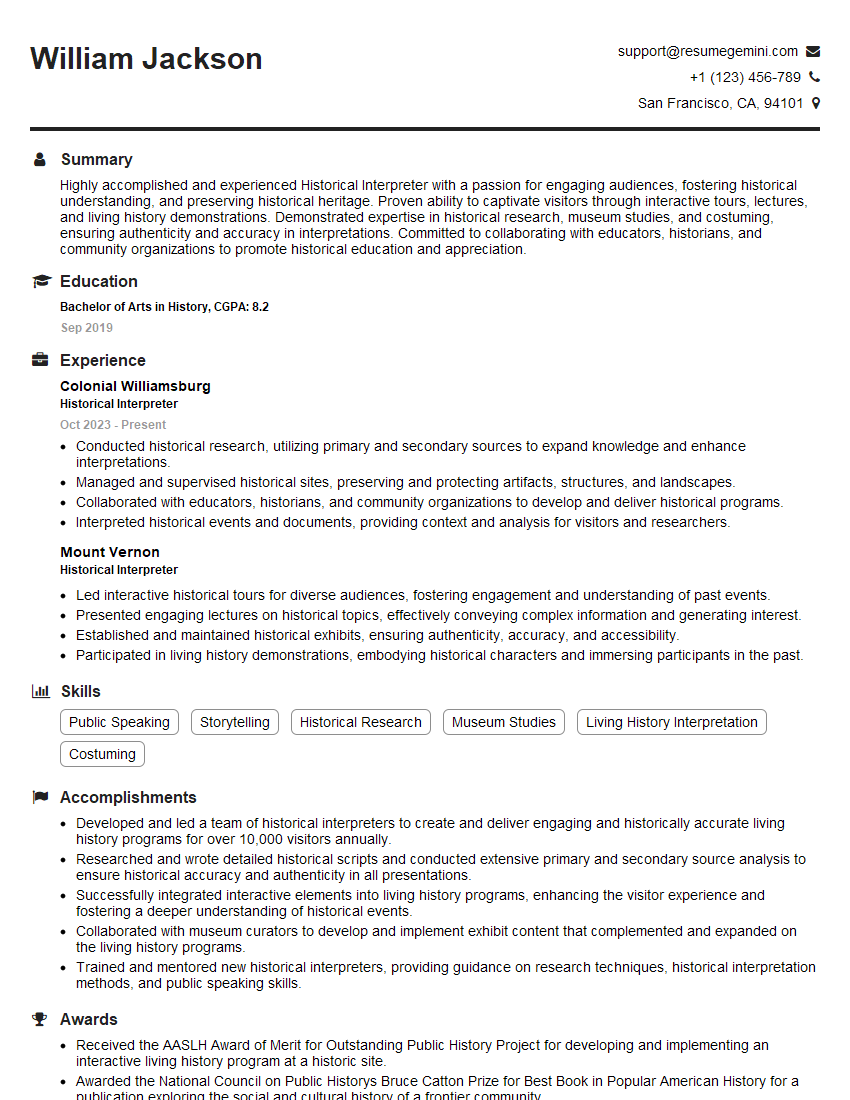
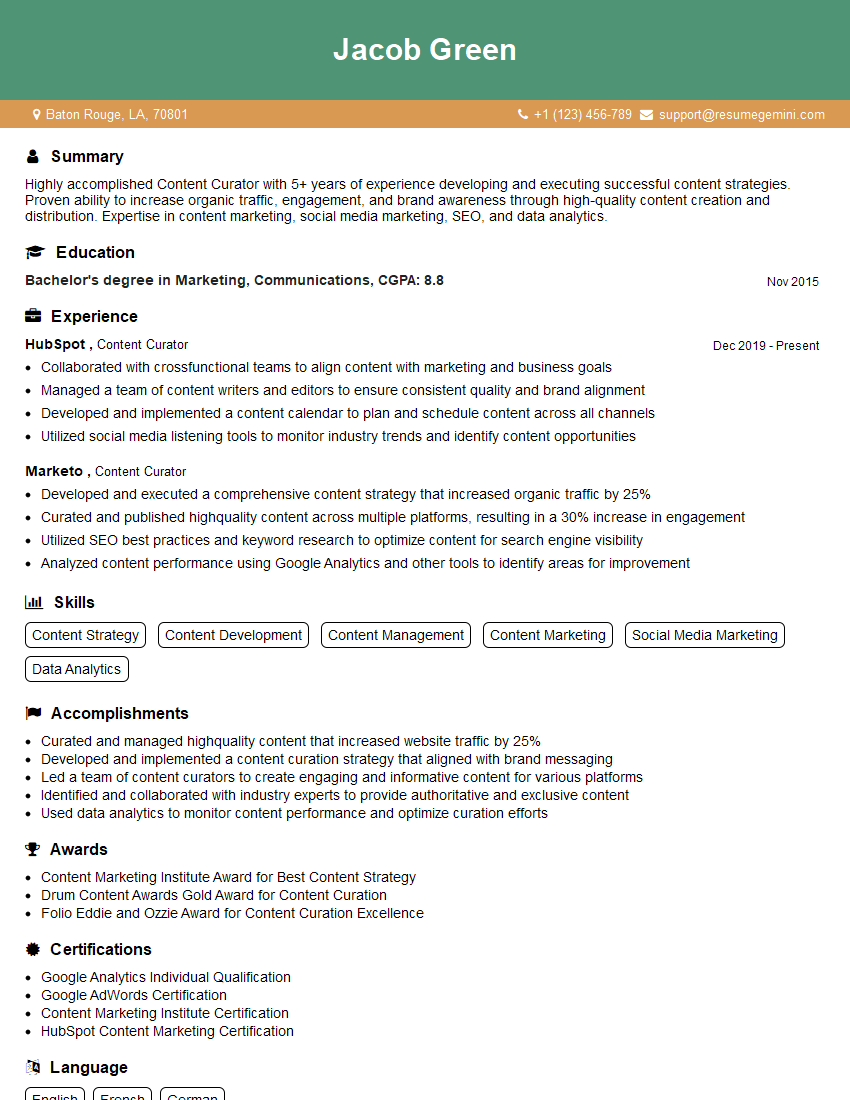
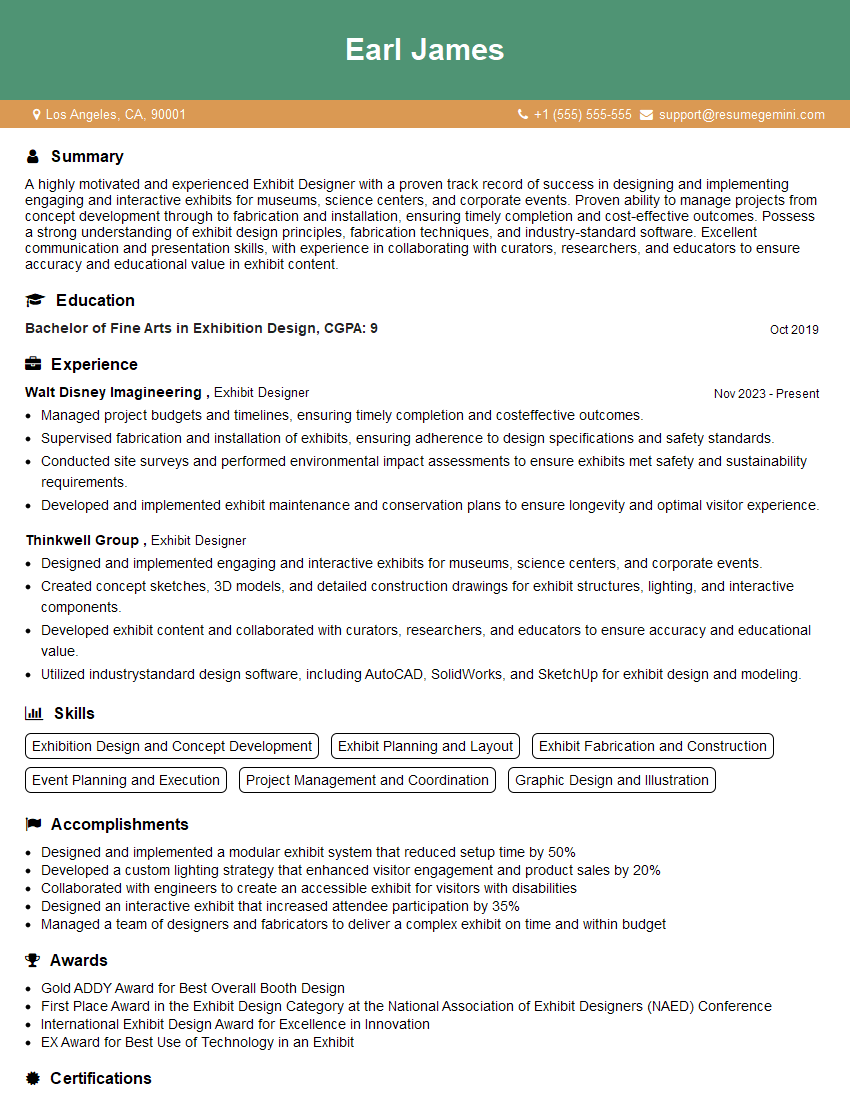
Mastering Exhibition Interpretation opens doors to exciting career opportunities in museums, galleries, historical sites, and cultural institutions. To maximize your job prospects, invest time in crafting an ATS-friendly resume that highlights your skills and experience effectively. ResumeGemini is a trusted resource that can help you build a professional and impactful resume. We provide examples of resumes tailored to Exhibition Interpretation to guide you through the process. Take the next step toward your dream career – build a compelling resume today!
Explore more articles
Users Rating of Our Blogs
Share Your Experience
We value your feedback! Please rate our content and share your thoughts (optional).
What Readers Say About Our Blog
To the interviewgemini.com Webmaster.
Very helpful and content specific questions to help prepare me for my interview!
Thank you
To the interviewgemini.com Webmaster.
This was kind of a unique content I found around the specialized skills. Very helpful questions and good detailed answers.
Very Helpful blog, thank you Interviewgemini team.