The thought of an interview can be nerve-wracking, but the right preparation can make all the difference. Explore this comprehensive guide to Solar System Troubleshooting interview questions and gain the confidence you need to showcase your abilities and secure the role.
Questions Asked in Solar System Troubleshooting Interview
Q 1. Explain the process of diagnosing a faulty solar panel.
Diagnosing a faulty solar panel involves a systematic approach combining visual inspection with electrical testing. First, I’d visually inspect the panel for any obvious damage like cracks, hotspots (discolored areas), or debris shading the surface. These are easily spotted and often point to the problem’s source.
Next, I’d use a multimeter to measure the panel’s voltage and current under direct sunlight. A significantly lower voltage or current than expected (compared to the panel’s specifications) indicates a problem. For example, if a panel is rated at 30V and I’m only measuring 15V, it’s clearly underperforming. Low current suggests a problem within the panel itself, potentially a damaged cell or faulty wiring.
Finally, I might use infrared thermography (heat imaging) to detect hot spots indicative of cell failure or bypass diode issues. This method allows for a non-invasive assessment of panel health.
Q 2. How do you identify and troubleshoot issues with solar inverters?
Solar inverter troubleshooting requires a slightly different approach due to their electronic nature. I start by checking the inverter’s display for any error codes. Most inverters provide these codes, indicating the specific problem. For example, an overheating code might suggest poor ventilation or a faulty internal cooling system.
Next, I’d verify the AC output using a multimeter. No AC output indicates a major problem within the inverter itself. I’d also check all the connections to ensure they are clean, tight, and correctly sized. Loose or corroded connections are a common cause of inverter malfunctions.
Furthermore, checking the DC input voltage from the solar panels is critical. If the DC voltage is too low, the inverter won’t operate. If it’s too high, it could damage the inverter. Finally, I’d consider environmental factors such as excessive heat or humidity, which can significantly affect inverter performance.
Q 3. Describe your experience with troubleshooting grid-tie solar systems.
I have extensive experience troubleshooting grid-tie systems, which are the most common type of residential solar installation. My approach involves a hierarchical process, starting with the simplest checks and progressing to more complex ones. I always prioritize safety, ensuring the system is properly disconnected before working on it.
Troubleshooting usually begins with checking the main breaker and any other circuit breakers associated with the solar system. A tripped breaker is an easy fix, but it could indicate an underlying fault elsewhere. Then, I’d check the inverter’s output, monitoring both voltage and current. I’d also analyze the system’s production data, often available through monitoring software or apps, to detect any unusual patterns or drops in energy generation. This helps pinpoint the time and circumstance of the problem.
More complex problems might require specialized tools and knowledge of the system’s wiring diagrams. I’ve worked on several instances involving faulty connections within the combiner boxes or problems with the system’s grounding, requiring careful tracing and analysis of wiring.
Q 4. What are the common causes of low solar panel output?
Low solar panel output has several common causes. The most frequent is shading. Even a small amount of shade cast on a single cell can drastically reduce the entire panel’s output. This is due to the way solar panels are wired in series.
Another common cause is dirt and debris accumulating on the panel surface. Dirt, leaves, bird droppings, and snow significantly reduce sunlight reaching the cells. Regular cleaning is essential.
Faulty wiring, both within the panel and the system’s cabling, is another possibility. Loose connections, corroded wires, or damaged cables result in voltage drops and reduced output.
Panel degradation due to age and environmental factors is also a significant contributor. Over time, panels lose efficiency, a normal process that can be exacerbated by exposure to harsh weather conditions.
Finally, temperature impacts efficiency. High temperatures reduce the output of the panels.
Q 5. How do you test the voltage and current of a solar panel?
Testing the voltage and current of a solar panel is straightforward using a multimeter. First, ensure the multimeter is set to the appropriate DC voltage range (typically 20-40V for most panels). Then, connect the multimeter’s probes to the positive (+) and negative (-) terminals of the panel under direct sunlight. The reading displayed is the panel’s open-circuit voltage (Voc).
To measure current (short-circuit current, Isc), you need a load, usually a dummy load resistor designed for this purpose. Connect the resistor across the panel terminals. Then, set the multimeter to measure DC current (Amps), and connect it in series with the resistor and the panel. The reading displayed is the short-circuit current. Important safety note: Always disconnect the panel from the system before performing these tests, and use appropriate safety precautions when handling electrical equipment.
It’s crucial to compare your measurements to the panel’s nameplate specifications to see if they are within acceptable tolerances. Differences indicate potential issues.
Q 6. Explain how you would troubleshoot a solar system with intermittent power.
Intermittent power in a solar system can be frustrating to troubleshoot. My approach begins by observing the frequency and duration of the outages. This helps determine the nature of the problem. Is it a frequent flicker or rare, extended outages?
I’d then check the system’s monitoring data (if available) to identify patterns. Does the outage correlate with specific weather conditions, time of day, or load changes? Next, I would examine the connections at every point in the system, from the panels to the inverter and the grid connection. Loose or corroded connections can lead to intermittent issues.
Further checks would involve inspecting the inverter for error codes and checking all components, including wiring, for signs of damage or degradation. In some cases, a faulty component such as a damaged solar panel or a malfunctioning inverter can cause intermittent power supply. Sometimes the problem lies in the grid connection or even the utility grid itself. Working with utility personnel may be necessary in such situations.
Q 7. Describe your experience working with different types of solar panels.
My experience encompasses various solar panel types, including monocrystalline, polycrystalline, and thin-film technologies. Monocrystalline panels, known for their high efficiency and black color, typically provide better performance in low-light conditions. Polycrystalline panels are more affordable but slightly less efficient. Thin-film panels, while lighter and more flexible, generally exhibit lower efficiency.
Each technology has its own unique characteristics and potential failure modes. For example, micro-cracks are more common in monocrystalline panels, while delamination (separation of layers) can occur in thin-film panels. Understanding these differences is critical for effective troubleshooting. My experience also includes working with different panel sizes and configurations, from small residential panels to large-scale utility-grade systems. This versatility allows me to adapt my diagnostic and repair procedures to suit the specific needs of diverse solar installations.
Q 8. How do you troubleshoot issues with solar charge controllers?
Troubleshooting a solar charge controller involves a systematic approach. First, you need to understand the controller’s role: it regulates the flow of electricity from the solar panels to the batteries, preventing overcharging and ensuring efficient energy storage. If your system isn’t charging correctly, there are several places to look.
- Check the controller’s display: Many controllers provide error codes or voltage/current readings. Consult your controller’s manual to interpret these.
- Inspect all connections: Loose or corroded connections between the panels, controller, and batteries are a common culprit. Tighten connections and clean any corrosion with a wire brush.
- Verify voltage at the panel array: Use a multimeter to measure the voltage directly at the solar panels. If the voltage is significantly lower than expected, there’s likely a problem with the panels or their wiring.
- Test the voltage at the battery terminals: Measure the battery voltage to ensure it’s within the proper range. Low voltage might indicate a battery problem, while excessively high voltage points to a controller malfunction.
- Check the fuses and circuit breakers: A blown fuse or tripped breaker is a quick fix that often resolves charging issues.
For example, I once encountered a case where a seemingly dead controller was actually caused by a single corroded connection on the positive battery terminal. Cleaning the connection solved the problem immediately. Always remember to consult the manufacturer’s documentation for specific troubleshooting guides.
Q 9. What are the safety precautions you take when troubleshooting solar systems?
Safety is paramount when working with solar systems. Electricity and high voltages are involved, posing a serious risk of electrocution. My safety protocols include:
- Always switch off the system: Disconnect the solar panels from the charge controller and disconnect the batteries before commencing any troubleshooting.
- Wear appropriate personal protective equipment (PPE): This includes safety glasses, insulated gloves, and closed-toe shoes to protect against electrical shocks and potential falls.
- Use insulated tools: Employ tools with insulated handles to prevent electrical shocks.
- Never work alone: Always have a second person present for safety and assistance.
- Understand the system’s layout: Before touching any component, fully understand the system’s wiring and voltage levels.
- Avoid working in wet conditions: Moisture significantly increases the risk of electrical shock.
A clear understanding of the system’s design and the potential hazards is crucial. I always treat every solar component as live until I have visually and electrically verified it is safe.
Q 10. Explain your understanding of Ohm’s Law and its application in solar system troubleshooting.
Ohm’s Law is fundamental to solar system troubleshooting. It states that the voltage (V) across a conductor is directly proportional to the current (I) flowing through it, and this proportionality is determined by the resistance (R) of the conductor. The formula is: V = I * R. This law is critical because it helps us diagnose problems based on voltage and current measurements.
Applications in troubleshooting:
- Determining resistance in wiring: By measuring voltage drop across a section of wire and the current flowing through it, we can calculate the resistance and determine if it’s excessive, indicating a possible short or damaged wire.
- Identifying faulty components: An unusually high voltage across a component suggests a potential open circuit, while an unusually low voltage indicates a short circuit.
- Calculating power: Using the power formula (
P = V * I) derived from Ohm’s law, we can assess if a component or the entire system is operating at its designed power capacity.
For example, if I find a low voltage at the battery despite high solar panel voltage, Ohm’s Law can help isolate whether the issue is high resistance in the wiring between the controller and batteries, a faulty controller, or a problem with the batteries themselves.
Q 11. How do you use a multimeter to diagnose problems in a solar system?
A multimeter is an indispensable tool for solar system diagnostics. It’s used to measure voltage, current, and resistance, providing key insights into system performance. Here’s how I utilize it:
- Voltage measurement: I use the multimeter to check voltage at various points in the system, such as at the solar panels, the charge controller, and the battery terminals. This helps identify voltage drops or anomalies.
- Current measurement: Measuring current helps determine if the solar panels are generating the expected amount of electricity and if the batteries are charging or discharging properly. This requires inserting the multimeter in series with the circuit, which necessitates temporarily disconnecting the circuit.
- Resistance measurement: Measuring resistance helps identify whether there are shorts or open circuits in the wiring or components.
Before measuring, I ensure the system is turned off and disconnected. Safety is paramount! I use the appropriate settings on the multimeter to avoid damaging the device or causing harm to myself. For instance, checking the resistance of a component would only be done after it’s safely removed from the circuit.
Q 12. What are the common causes of overheating in solar panels?
Overheating in solar panels is a serious concern, potentially leading to reduced efficiency and damage. Several factors can contribute:
- Shading: Partial shading of a solar panel can cause localized overheating in the unshaded cells as they try to compensate for the shaded ones.
- High ambient temperature: Extremely hot environments can lead to higher panel operating temperatures, reducing efficiency and lifespan.
- Poor ventilation: Inadequate airflow around the panels prevents heat dissipation.
- Soiling: Dust, dirt, bird droppings, and other debris accumulate on the panel surface, reducing its ability to reflect sunlight and increasing the absorption of heat.
- Faulty wiring or connections: High resistance in the wiring can cause excessive heat buildup.
I address this through regular panel cleaning, ensuring proper ventilation, and checking for shading issues. Infrared thermal imaging can be used to identify hotspots, indicating faulty cells or wiring problems.
Q 13. How do you troubleshoot problems with solar battery systems?
Troubleshooting solar battery systems involves assessing both the batteries and the charging system. The process starts with a visual inspection:
- Check for physical damage: Look for any signs of damage such as cracks, swelling, or corrosion.
- Measure the battery voltage: A low voltage indicates a low state of charge or potential battery issues.
- Measure the specific gravity (for lead-acid batteries): This provides a more accurate assessment of the state of charge and health of the battery.
- Check the battery temperature: Excessive heat can indicate a problem.
- Assess the charging system: Verify the charging voltage and current are within the manufacturer’s specifications. A malfunctioning charge controller can lead to overcharging or undercharging, causing damage to the batteries.
Load testing can be performed to evaluate the battery’s capacity and identify faulty cells. If you suspect battery issues, it is crucial to disconnect the battery from the system to avoid safety hazards before further analysis.
Q 14. Describe your experience troubleshooting off-grid solar systems.
My experience with off-grid solar systems highlights the importance of a thorough understanding of the entire system’s interplay. Off-grid systems are more complex than grid-tied systems due to their reliance on batteries for energy storage and their inherent isolation. Troubleshooting often involves a combination of electrical diagnostics and load analysis.
I’ve handled scenarios involving faulty inverters leading to power outages, inefficient charging due to mismatched components, and issues with battery management systems. The lack of grid backup emphasizes the need for meticulous diagnostics and the use of monitoring tools to pinpoint the source of the problem. One memorable case involved a seemingly simple low voltage issue, which ultimately stemmed from a corroded connection deep within a junction box that was not immediately apparent during a surface level check. Careful investigation was vital to its resolution.
In off-grid systems, data logging and monitoring are extremely valuable. They help me not only to identify immediate problems but also to understand long-term trends and prevent future issues.
Q 15. Explain how you would troubleshoot a solar system with grounding issues.
Grounding issues in solar systems are critical safety hazards and can lead to system malfunction or even fires. Troubleshooting begins with understanding that a properly grounded system provides a safe path for fault currents to earth, preventing voltage buildup and shocks. My approach involves a systematic check:
- Visual Inspection: I start with a thorough visual inspection of all grounding wires and connections, looking for corrosion, loose connections, or damaged conductors. This includes checking the grounding rod, the connection to the inverter, and the grounding wire at the array.
- Ground Resistance Measurement: Using a ground resistance tester (also known as a megohmmeter), I measure the resistance between the grounding rod and earth. A low resistance reading (typically below 5 ohms) indicates a good ground. Higher readings signify a grounding problem, possibly due to a corroded connection, dry soil, or a short grounding rod.
- Continuity Testing: I use a multimeter to check continuity along the grounding path from the array to the grounding rod, ensuring there are no breaks in the circuit. This helps pinpoint the exact location of any grounding fault.
- Voltage Measurement: A multimeter is used to measure voltage between various points of the system and ground. The presence of any significant voltage relative to ground points to a grounding issue.
- Remediation: Based on the findings, I implement the appropriate solution. This might involve cleaning corroded connections, replacing damaged wiring, extending or replacing the grounding rod, or improving soil conductivity around the grounding rod.
For example, I once encountered a system with high ground resistance. The initial inspection revealed a corroded connection at the grounding rod. After cleaning and tightening the connection, the ground resistance dropped to an acceptable level, resolving the issue.
Career Expert Tips:
- Ace those interviews! Prepare effectively by reviewing the Top 50 Most Common Interview Questions on ResumeGemini.
- Navigate your job search with confidence! Explore a wide range of Career Tips on ResumeGemini. Learn about common challenges and recommendations to overcome them.
- Craft the perfect resume! Master the Art of Resume Writing with ResumeGemini’s guide. Showcase your unique qualifications and achievements effectively.
- Don’t miss out on holiday savings! Build your dream resume with ResumeGemini’s ATS optimized templates.
Q 16. What are the common causes of arcing in solar systems?
Arcing in a solar system is a serious problem that can damage components and pose a fire hazard. It’s typically caused by high voltage, loose connections, or insulation failure. Common causes include:
- Loose or corroded connections: High resistance at a loose or corroded connection can create heat, leading to arcing. Think of it like a spark plug – a small gap with high voltage leads to a spark.
- Damaged insulation: Worn or damaged insulation on wires allows current to jump to nearby conductive surfaces, causing arcing. Exposure to UV light, rodents, or physical damage can compromise insulation.
- Overvoltage: Voltage exceeding the design limits of components can lead to arcing. This can be due to issues with the inverter, lightning strikes, or other surges.
- Tracking issues (in solar trackers): Mechanical problems with the tracker can cause wiring to rub against metal parts, resulting in insulation wear and arcing.
- Faulty components: A faulty inverter, solar panel, or other component can generate internal arcing. This may involve failed diodes or capacitors within the components themselves.
Identifying the exact cause requires careful visual inspection, combined with voltage and current measurements using specialized equipment like a clamp meter and infrared camera to detect heat signatures indicative of arcing.
Q 17. How do you troubleshoot problems with solar system wiring?
Troubleshooting solar system wiring requires a methodical approach, combining visual inspection with electrical testing. My process typically involves:
- Visual Inspection: I start by carefully examining all wires and connections for any signs of damage, such as cuts, fraying, or burns. I also check for proper wire routing and secure connections at all terminals.
- Continuity Testing: Using a multimeter, I check the continuity of each wire to ensure there are no breaks in the circuit. This is crucial for identifying broken or disconnected wires.
- Voltage and Current Measurements: I use a multimeter and clamp meter to measure voltages and currents at various points in the system to identify sections with unexpected voltage drops or excessive currents, pinpointing faulty sections of wiring or component malfunctions.
- Infrared Thermography: An infrared camera is invaluable for detecting heat signatures, which can indicate excessive resistance and potential arcing in the wiring.
- Tracing Wiring Diagrams: I carefully refer to the system’s wiring diagrams to trace the path of each wire and verify its proper connection. This helps confirm the intended route and identify any deviations.
A real-world example involved a system with intermittent power output. Using a multimeter, I traced a voltage drop along a specific wire run. Visual inspection then revealed a poorly crimped connection, which was causing intermittent contact and the power problem. A proper crimp resolved the issue.
Q 18. What software or tools do you use for solar system diagnostics?
The tools and software I utilize for solar system diagnostics depend on the specific problem. However, some essential tools consistently feature in my troubleshooting kit:
- Multimeter: For measuring voltage, current, and resistance. A high-quality multimeter is indispensable for basic electrical diagnostics.
- Clamp Meter: For measuring current without breaking the circuit, particularly useful for high-current measurements in the solar array or inverter.
- Ground Resistance Tester (Megohmmeter): For measuring the resistance of the grounding system. Essential for assessing grounding quality and safety.
- Infrared Thermal Camera: For detecting hotspots caused by faulty connections or overheating components. This is a non-invasive way to locate potential issues.
- Solar Data Acquisition Software: Many inverters provide data logs and monitoring tools that give insight into system performance. Analyzing data from the inverter can help pinpoint problems.
- System specific diagnostic software: Most manufacturers provide diagnostic tools for their inverters and other components. These offer valuable insight specific to the make and model being tested.
Data from these tools helps build a picture of where the problem lies. For example, a lower than expected current reading using a clamp meter combined with an infrared camera image revealing a hot wire would immediately point towards a fault in the wiring or a connection.
Q 19. Explain your process for documenting troubleshooting steps and findings.
Meticulous documentation is crucial. I maintain a detailed record of my troubleshooting process, including:
- Initial System Assessment: A description of the problem, including symptoms, time of occurrence, and any relevant weather conditions.
- Measurements and Observations: All voltage, current, resistance, and temperature readings, with specific locations noted. Photos or videos are also taken as visual aids.
- Troubleshooting Steps Taken: A step-by-step account of the troubleshooting procedures followed, including any tests performed and their results. Specific component tests and their results are included.
- Problem Identification: A clear statement of the identified problem or fault.
- Corrective Actions Taken: A detailed description of the repairs or replacements made, including part numbers and other relevant information.
- Verification of Repair: Confirmation that the problem has been resolved and the system is functioning correctly.
This documentation serves as a valuable reference for future troubleshooting and helps ensure repeatability and clarity. I usually use a combination of digital documentation (e.g., software reports, photos, and video) and written reports, often following a standardized template within my company.
Q 20. How do you ensure the safety of yourself and others while troubleshooting solar systems?
Safety is paramount. I always adhere to strict safety protocols when troubleshooting solar systems. This involves:
- Lockout/Tagout Procedures: Before beginning any work, I always de-energize the system using appropriate lockout/tagout procedures to prevent accidental energization. This is crucial to avoid electrical shock.
- Personal Protective Equipment (PPE): I always wear appropriate PPE, including safety glasses, gloves, and insulated footwear, to protect myself from electrical hazards and potential physical injury.
- Arc Flash Protection: For higher voltage systems, I utilize appropriate arc flash personal protective equipment, to minimize the risk from potential arc flashes.
- Awareness of Potential Hazards: I am constantly aware of potential hazards, such as high voltages, moving parts (in trackers), and extreme weather conditions. I will cease any work in unsafe conditions.
- Teamwork and Communication: When working with others, I maintain clear communication and ensure that everyone is aware of the potential hazards and safety procedures.
Always remember, safety is not just a set of rules, it’s a mindset and should be prioritized above all else.
Q 21. Describe your experience troubleshooting issues with different types of solar inverters (e.g., string, micro, central).
My experience spans troubleshooting various inverter types. Each type presents unique challenges:
- String Inverters: These are generally easier to troubleshoot, as a problem usually affects the entire string of panels. Diagnosing often involves checking the DC voltage at the input and the AC voltage at the output, along with checking for ground faults and overcurrent conditions. If a single panel within the string is faulty, it may impact the whole string.
- Microinverters: Troubleshooting is more granular with microinverters, as each panel has its own inverter. Problems are usually isolated to a single panel, which simplifies diagnosis. Monitoring individual microinverter output is key.
- Central Inverters: These are more complex and require specialized diagnostic tools. A problem could affect the entire array, and troubleshooting may involve checking the input current and voltage from different sections of the array as well as any communication issues.
For example, a system using microinverters experienced inconsistent output. By individually monitoring each microinverter’s performance data, I quickly identified a faulty unit, which was promptly replaced, restoring full system capacity.
Q 22. How do you interpret data from solar system monitoring systems?
Interpreting data from solar system monitoring systems involves a multi-step process. First, I familiarize myself with the specific system’s data logging capabilities and reporting features. This often includes understanding the units of measurement used (e.g., kilowatts, volts, amps) and the frequency of data collection. Then, I analyze the data, looking for trends and anomalies. For example, a consistent drop in voltage across multiple panels could indicate shading, while a sudden spike in current might suggest a short circuit. I use data visualization tools to identify patterns more easily – graphs showing power production over time, panel-by-panel performance comparisons, and other visual representations are invaluable. Finally, I correlate the data with environmental factors like weather conditions (cloud cover, temperature) and system operational parameters to pinpoint the root cause of any issues. Think of it like a detective using clues to solve a case: each data point provides a piece of the puzzle.
A common scenario is identifying a decrease in energy production. By analyzing the data from the inverter, I can determine if this decrease is caused by reduced sunlight or a problem within the system itself. For instance, lower voltage from a specific string of panels suggests potential shading or a faulty panel.
Q 23. What are the most common causes of solar panel shading and how do you mitigate them?
Shading is a major problem in solar energy systems. It occurs when something obstructs sunlight from reaching the solar panels, significantly reducing their output. The most common causes include:
- Trees and vegetation: Overhanging branches or nearby trees can cast shadows, particularly during certain times of the day or year.
- Buildings and structures: Neighboring buildings or even parts of your own house can create shade.
- Snow accumulation: In winter, snow can cover panels and reduce their efficiency.
- Soiling: Dirt, dust, bird droppings, and other debris can accumulate on panel surfaces, reducing their ability to absorb sunlight.
Mitigation strategies vary depending on the cause. For tree branches, pruning might be necessary. For building obstructions, re-orienting the array or using panel trackers could be solutions. Regular panel cleaning helps combat soiling. In some cases, using microinverters instead of string inverters can minimize the impact of partial shading, as each panel is processed independently. By carefully assessing the shading pattern and its cause, we can choose the most effective and cost-efficient solution.
Q 24. Explain your understanding of NEC (National Electrical Code) requirements for solar installations.
The National Electrical Code (NEC) provides safety standards for electrical installations, including solar power systems. My understanding covers several key areas: grounding, overcurrent protection, wiring methods, and system grounding. The NEC mandates specific grounding techniques to protect against electrical shocks and ensure system safety. Overcurrent protection, using circuit breakers and fuses, is essential to prevent damage from surges or short circuits. The code also dictates safe wiring methods, specifying appropriate wire sizes, insulation types, and installation techniques to prevent fire hazards. Understanding and complying with the NEC is crucial for ensuring the safety and longevity of solar systems and avoiding potential legal issues.
For example, the NEC mandates the use of specific sized conductors based on the amperage of the solar array. Failing to comply with this could lead to overheating, and ultimately, a fire. Similarly, the grounding requirements are rigorously specified to prevent electrical shock hazards to anyone coming into contact with the system.
Q 25. How do you communicate technical information clearly to non-technical individuals?
Communicating technical information clearly to non-technical individuals requires a shift in perspective. I avoid using jargon and technical terms whenever possible, opting for plain language and simple analogies. For instance, instead of saying “the inverter’s MPPT algorithm is malfunctioning,” I might explain, “The system isn’t efficiently converting sunlight into electricity; it’s like your car engine not running smoothly.”
I use visuals like diagrams, charts, and pictures to illustrate concepts and make them easier to grasp. Breaking down complex topics into smaller, manageable chunks helps the audience absorb information gradually. I also actively encourage questions and answer them in a patient and non-judgmental way, ensuring everyone understands the information. Finally, tailoring the communication to the individual’s level of understanding ensures effective knowledge transfer. A homeowner would require a different level of technical detail compared to an experienced investor.
Q 26. Describe a challenging solar system troubleshooting experience and how you resolved it.
One challenging experience involved a system exhibiting intermittent power outages. Initial data analysis didn’t reveal any obvious problems. After thoroughly checking all connections, I discovered that a ground fault was occurring only during periods of high humidity. This was a tricky issue because the problem wasn’t consistent, making it difficult to isolate. I systematically checked all the components of the solar system, from the solar panels themselves to the inverters and wiring. Ultimately, the issue traced back to a poorly sealed junction box near the inverter. The humidity caused a short circuit within the box intermittently. The solution involved replacing the junction box with a weatherproof alternative and sealing all connections meticulously. The problem was resolved, highlighting the importance of meticulous attention to detail during installation and troubleshooting. A seemingly minor detail like a slightly mis-sealed junction box can have major consequences.
Q 27. How do you stay up-to-date with the latest technologies and best practices in solar system troubleshooting?
Staying current in the rapidly evolving solar industry is critical. I regularly attend industry conferences and webinars to learn about the latest technologies and best practices. I actively engage with professional organizations such as the IEEE and other solar associations, subscribing to their publications and participating in online forums and discussions. I also constantly review technical journals and online resources, focusing on advancements in areas like inverter technology, panel efficiency, and monitoring systems. Continuing education is vital for maintaining proficiency and providing clients with the best possible service.
Q 28. What are your salary expectations for this role?
My salary expectations for this role are commensurate with my experience and skills. Considering my expertise in solar system troubleshooting, my proven track record of successfully resolving complex issues, and my commitment to continuous professional development, I am seeking a competitive salary within the range of [Insert Salary Range Here]. I am confident that my contributions will significantly benefit your organization.
Key Topics to Learn for Solar System Troubleshooting Interview
- Understanding Solar System Components: Deep dive into the functionality and interdependencies of various solar system components like inverters, PV arrays, batteries, charge controllers, and monitoring systems. Consider the different types and technologies within each component.
- Electrical Safety and Troubleshooting: Master safe working practices related to high-voltage DC and AC systems. Learn to identify and address potential electrical hazards. Practice fault finding techniques using multimeters and other diagnostic tools.
- DC and AC System Diagnostics: Develop expertise in diagnosing faults within both the DC (photovoltaic) and AC (grid-tied) sides of solar systems. This includes understanding voltage, current, and power measurements, and their implications.
- Data Analysis and Interpretation: Become proficient in analyzing data from monitoring systems to pinpoint performance issues and identify potential system failures. Understand the significance of key performance indicators (KPIs) like energy production, efficiency, and system losses.
- Troubleshooting Common System Faults: Familiarize yourself with common solar system problems like shading issues, inverter malfunctions, ground faults, and communication errors. Develop a systematic approach to identifying and resolving these issues.
- Remote Monitoring and Diagnostics: Learn about remote monitoring technologies and how to troubleshoot systems remotely, including understanding data logging and remote access capabilities.
- Regulatory Compliance and Safety Standards: Understand relevant safety standards and regulations pertaining to solar system installation and maintenance in your region. Know how these standards impact troubleshooting procedures.
Next Steps
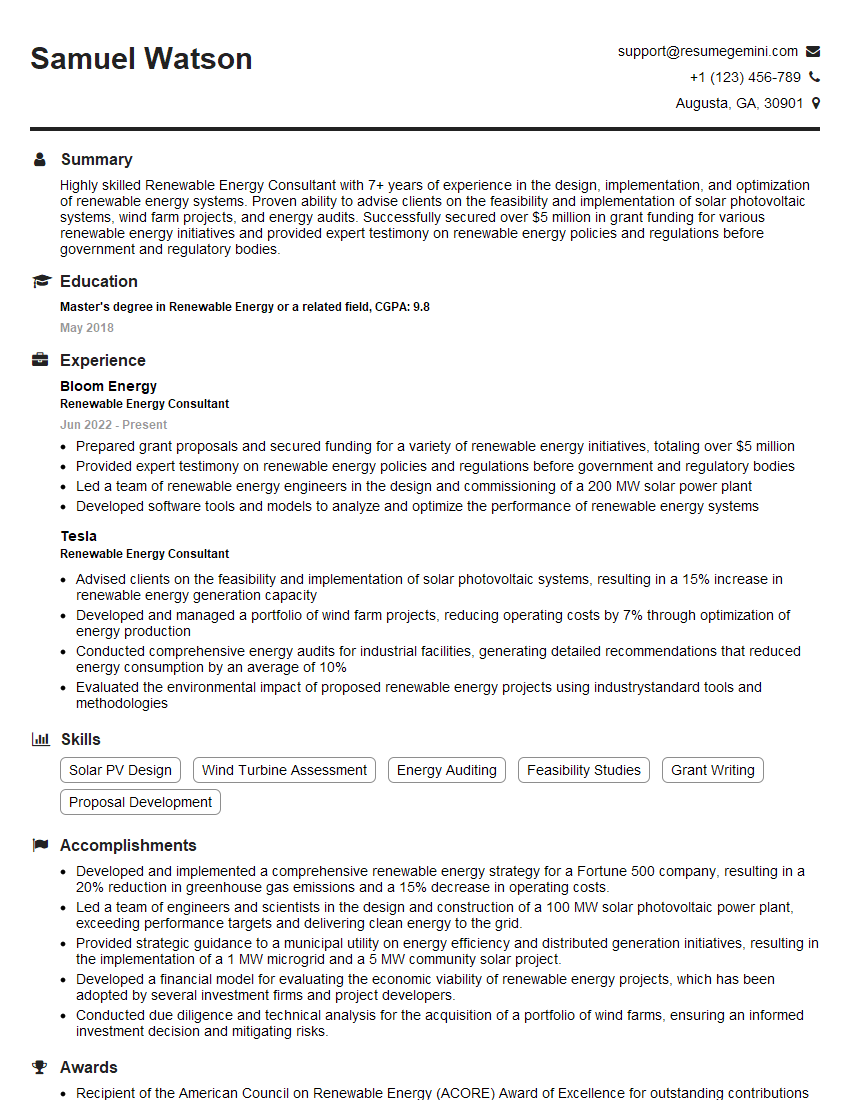
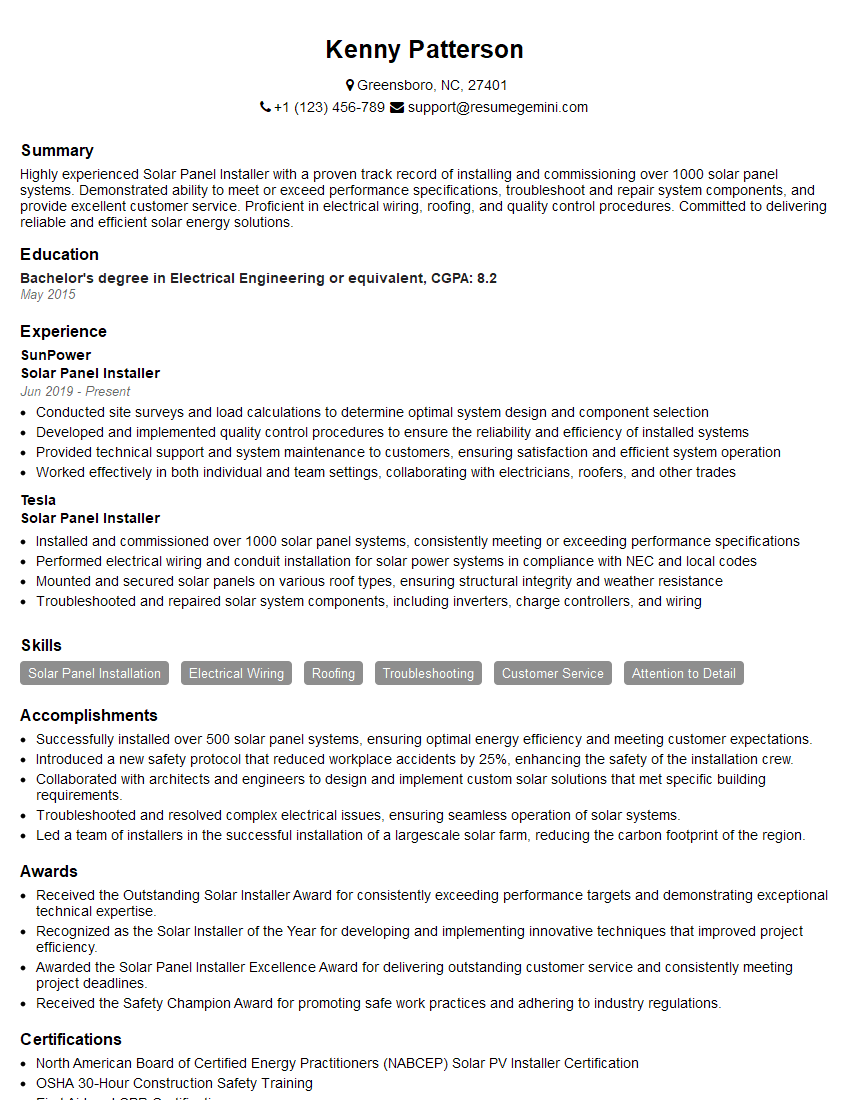
Mastering solar system troubleshooting is crucial for career advancement in the rapidly growing renewable energy sector. It demonstrates a high level of technical expertise and problem-solving skills highly valued by employers. To stand out from other candidates, create a strong, ATS-friendly resume that highlights your skills and experience effectively. ResumeGemini is a trusted resource that can help you build a professional resume tailored to the solar industry. Examples of resumes specifically crafted for Solar System Troubleshooting roles are available to help guide you.
Explore more articles
Users Rating of Our Blogs
Share Your Experience
We value your feedback! Please rate our content and share your thoughts (optional).
What Readers Say About Our Blog
To the interviewgemini.com Webmaster.
Very helpful and content specific questions to help prepare me for my interview!
Thank you
To the interviewgemini.com Webmaster.
This was kind of a unique content I found around the specialized skills. Very helpful questions and good detailed answers.
Very Helpful blog, thank you Interviewgemini team.