Unlock your full potential by mastering the most common Food Processing and Packaging interview questions. This blog offers a deep dive into the critical topics, ensuring you’re not only prepared to answer but to excel. With these insights, you’ll approach your interview with clarity and confidence.
Questions Asked in Food Processing and Packaging Interview
Q 1. Explain the difference between High-Pressure Processing (HPP) and Thermal Processing.
Both High-Pressure Processing (HPP) and Thermal Processing are methods used to extend the shelf life of food products by inactivating microorganisms and enzymes. However, they achieve this through vastly different mechanisms.
Thermal Processing, such as canning or pasteurization, uses heat to eliminate pathogens and spoilage organisms. Heat denatures proteins, rendering microorganisms incapable of reproduction and growth. This is a well-established and widely used method, particularly effective for products with high water activity.
High-Pressure Processing (HPP), on the other hand, uses extremely high hydrostatic pressure (typically 400-800 MPa) to inactivate microorganisms. The pressure disrupts the cellular structure of these organisms, leading to their inactivation. HPP is a non-thermal process, meaning it doesn’t significantly alter the sensory characteristics of the food, like its flavor, color, or texture, making it ideal for products requiring preservation without compromising quality, such as juices, guacamole, and ready-to-eat meals.
In summary, while both aim to extend shelf life, thermal processing relies on heat, potentially altering product characteristics, whereas HPP utilizes high pressure to achieve microbial inactivation while preserving product quality. The choice between the two depends heavily on the specific food product and desired outcome.
Q 2. Describe your experience with different types of food packaging materials (e.g., plastic, metal, paper).
My experience encompasses a wide range of food packaging materials, each with its unique properties and applications. I’ve worked extensively with:
- Plastics: This is a broad category including PET (polyethylene terephthalate) for bottles, HDPE (high-density polyethylene) for jugs and containers, and flexible films like PP (polypropylene) and PE (polyethylene) for pouches and wraps. I’ve been involved in selecting appropriate plastics based on factors like barrier properties (oxygen, moisture, etc.), thermal resistance, and recyclability. For example, selecting a PET bottle with an oxygen barrier for extended shelf life of carbonated beverages.
- Metals: I have experience with aluminum cans and steel containers, primarily for their excellent barrier properties and strength, making them suitable for products requiring protection from oxygen and moisture. I’ve also worked on assessing the impact of metal-food interactions and the potential need for protective coatings.
- Paper and Paperboard: These materials are increasingly popular, especially in sustainable packaging. I have experience with coated and uncoated paperboard cartons, including the selection of appropriate coatings to enhance barrier properties and printability. The selection of the right paperboard depends on the product’s sensitivity to moisture, strength requirements and sustainability requirements.
My work involves not only material selection but also understanding the interactions between packaging and food, ensuring the package maintains integrity and protects the product throughout its shelf life.
Q 3. What are the key principles of Hazard Analysis and Critical Control Points (HACCP)?
Hazard Analysis and Critical Control Points (HACCP) is a proactive, science-based approach to food safety. Its core principles revolve around identifying and controlling biological, chemical, and physical hazards that can compromise food safety.
- Principle 1: Conduct a Hazard Analysis: Identifying potential hazards at each stage of food production, processing, and distribution.
- Principle 2: Determine Critical Control Points (CCPs): Pinpointing steps where control can be applied and is essential to prevent or eliminate a hazard or reduce it to an acceptable level.
- Principle 3: Establish Critical Limits: Setting measurable criteria that must be met at each CCP to ensure safety.
- Principle 4: Establish Monitoring Procedures: Implementing a system to regularly monitor CCPs to ensure critical limits are met.
- Principle 5: Establish Corrective Actions: Defining actions to take if monitoring indicates a deviation from critical limits.
- Principle 6: Establish Verification Procedures: Developing methods to confirm that the HACCP system is working effectively.
- Principle 7: Establish Record-Keeping and Documentation Procedures: Maintaining thorough records of all HACCP-related activities.
For instance, in a canning facility, a CCP might be the retort process (heat treatment) where the critical limit is a specific temperature and time combination to ensure pathogen inactivation. HACCP ensures a systematic approach to food safety throughout the entire process chain.
Q 4. How do you ensure compliance with food safety regulations (e.g., FDA, USDA)?
Ensuring compliance with food safety regulations like those from the FDA (Food and Drug Administration) and USDA (United States Department of Agriculture) is paramount. This involves a multi-faceted approach:
- Staying Updated on Regulations: Continuously monitoring changes and updates to relevant regulations and guidelines. This often involves subscribing to regulatory updates and attending industry conferences.
- Implementing HACCP and GMP: Implementing and maintaining a robust HACCP plan and adhering to Good Manufacturing Practices (GMP). This forms the cornerstone of our compliance strategy. Regular internal audits help identify gaps in our food safety system.
- Record Keeping: Maintaining detailed and accurate records of all processes, including raw material sourcing, production steps, and finished product testing results, is critical for traceability and demonstrating compliance.
- Third-Party Audits: Undergoing regular audits by accredited third-party organizations to verify compliance with regulatory requirements, often a prerequisite for certifications, like SQF or BRC.
- Employee Training: Regularly training employees on food safety procedures and relevant regulations. Ensuring they understand their roles in maintaining food safety is crucial.
- Product Testing: Conducting regular testing of raw materials and finished products to verify they meet safety standards and specifications.
A proactive approach to compliance not only minimizes risks but also builds trust with consumers and stakeholders.
Q 5. Explain your understanding of Good Manufacturing Practices (GMP).
Good Manufacturing Practices (GMP) are a set of guidelines that ensure the consistent production of high-quality products while minimizing risks to consumer safety. They encompass a broad range of practices covering facilities, equipment, personnel, and processes.
- Sanitation: Maintaining a clean and sanitary production environment, including regular cleaning and sanitation of equipment and facilities. This prevents cross-contamination and microbial growth. For example, regular cleaning of processing lines, equipment and facilities according to a defined schedule.
- Personnel Hygiene: Ensuring that employees follow proper hygiene practices, such as handwashing, wearing appropriate protective clothing, and avoiding cross-contamination. Regular training on appropriate hygiene practices is essential.
- Equipment Maintenance: Regularly maintaining and calibrating equipment to ensure it’s functioning correctly and producing consistent results. Proper equipment maintenance minimizes risk of malfunction and ensures product quality.
- Material Handling: Implementing procedures for safe and efficient handling of raw materials and finished products, preventing damage and contamination. This includes FIFO (First In, First Out) inventory management system to reduce risk of product spoilage.
- Pest Control: Implementing effective pest control measures to prevent infestation and contamination. This involves regular pest inspections, use of traps and other measures to prevent pest infestation.
GMPs are not just a checklist; they represent a culture of quality and safety within a food processing facility.
Q 6. Describe your experience with different types of packaging machinery.
My experience includes working with a variety of packaging machinery, each designed for specific applications:
- Form-Fill-Seal (FFS) machines: These highly automated machines form pouches, fill them with product, and seal them, ideal for flexible packaging. I’ve worked with various types, from those handling dry products to those capable of handling liquids.
- Vertical Form-Fill-Seal (VFFS) machines: Similar to FFS, but with a vertical orientation, often used for bags and pouches of varying sizes.
- Horizontal Form-Fill-Seal (HFFS) machines: Used for packaging in a horizontal configuration, useful for packaging products such as flow wraps.
- Canning lines: This involves filling cans, sealing them, and then processing them in a retort for sterilization.
- Bottle fillers and cappers: Used for filling and sealing bottles.
- Cartoning machines: These machines automatically place products into cartons and seal them.
My expertise extends to troubleshooting, maintenance, and optimization of these machines to ensure efficient and reliable operation.
Q 7. How do you troubleshoot common packaging line issues?
Troubleshooting packaging line issues requires a systematic approach. I typically follow these steps:
- Identify the Problem: Clearly define the issue. Is it a jam, a leak, inaccurate filling, or something else? Documenting the problem with photographs or videos is often helpful.
- Gather Data: Collect information about the problem. When did it start? What were the operating parameters at the time? Are there any error messages?
- Check Simple Things First: Often, the problem is something simple like a sensor malfunction, a clogged feed, or a depleted supply. Check these first before moving on to more complex issues.
- Systematic Elimination: If the problem persists, start systematically eliminating potential causes. This may involve checking each component of the packaging line— from the feed system to the sealing mechanism.
- Consult Documentation: Refer to machine manuals, process flow diagrams, and previous maintenance logs to assist with troubleshooting.
- Seek Expert Help: If the problem persists, contact equipment vendors or maintenance personnel for expert assistance. They will have specialized knowledge of the machinery and the potential causes of failure.
- Preventative Maintenance: Regular preventative maintenance is crucial to minimize downtime and unexpected issues.
Experience plays a vital role in quickly diagnosing problems. For example, recognizing a specific pattern of machine noise can often pinpoint a mechanical issue before it becomes a major problem.
Q 8. What are the different types of thermal processing methods used in the food industry?
Thermal processing is crucial for food safety and preservation by eliminating harmful microorganisms. Several methods exist, each with its advantages and disadvantages.
- Pasteurization: This involves heating food to a specific temperature for a set time, usually below boiling point, to inactivate pathogenic bacteria. Examples include pasteurizing milk (around 72°C for 15 seconds) and fruit juices. It extends shelf life but doesn’t sterilize the product.
- Sterilization: This process eliminates all microorganisms, including spores, by applying high heat for an extended period. Canning utilizes sterilization, ensuring a shelf-stable product for months or even years. Retort processing, where food is heated in pressurized vessels, is a common sterilization technique.
- Blanching: A brief heat treatment used primarily for vegetables before freezing or canning. It inactivates enzymes that cause deterioration, preserving color, texture, and nutritional value.
- Ultra-high temperature (UHT) processing: This involves extremely high temperatures (e.g., 135-150°C) for a very short time. UHT processing is common for milk and cream, extending their shelf life considerably.
The choice of method depends on the specific food product, its desired shelf life, and the target microorganisms.
Q 9. Explain your experience with quality control testing methods for food products.
My experience encompasses a wide range of quality control testing, focusing on both raw materials and finished products. I’m proficient in microbiological analysis, including total plate counts, coliform testing, and detection of specific pathogens like Salmonella and Listeria. I also have extensive experience in physicochemical analysis, such as measuring pH, moisture content, fat content, and protein levels. Sensory evaluation, involving trained panelists assessing texture, flavor, and aroma, is also a crucial part of my work. For example, in a recent project involving fruit preserves, we used gas chromatography to assess the presence of unwanted byproducts, ensuring compliance with safety and quality standards. We further implemented a robust sensory evaluation to gauge the product’s overall acceptance and ensure consistency across batches. Statistical process control is vital in interpreting this data to identify and correct trends before they affect product quality.
Q 10. How do you manage inventory and prevent spoilage in a food processing facility?
Efficient inventory management and spoilage prevention are critical in food processing. We utilize a first-in, first-out (FIFO) system to ensure older products are used before newer ones, minimizing the risk of spoilage. Regular stock rotation is key. We also employ robust temperature monitoring systems throughout the facility, with alarms set to trigger notifications if temperatures deviate from predetermined safe ranges. Proper storage conditions, including humidity control, are essential for different food types. Real-time inventory tracking software helps us optimize stock levels, predict demand, and prevent overstocking. Additionally, rigorous cleaning and sanitization protocols are in place to prevent cross-contamination and bacterial growth. For perishable goods, we establish short shelf life targets and closely monitor approaching expiry dates, ensuring timely use or disposal. Regular audits of storage areas help identify potential problem spots and ensure the effectiveness of our prevention strategies.
Q 11. Describe your experience with different types of food preservation techniques.
My experience covers a broad spectrum of food preservation techniques, all aimed at extending shelf life and maintaining food quality. These include:
- Thermal processing: As previously discussed, this includes pasteurization, sterilization, and blanching.
- Low-temperature storage: Refrigeration and freezing slow down microbial growth and enzymatic activity, effectively extending shelf life. Freezing, in particular, allows for longer storage periods than refrigeration.
- High-pressure processing (HPP): This innovative technique uses extremely high pressure to inactivate microorganisms without significant heat, preserving the quality of the food. It is increasingly used for ready-to-eat products.
- Modified atmosphere packaging (MAP): This involves altering the gas composition within the package to inhibit microbial growth and extend shelf life. This technique is widely employed in packaging fresh produce and meat.
- Drying: Removing moisture inhibits microbial growth, as seen in dried fruits, vegetables, and meats.
- Pickling and fermentation: These methods use salt, acids, or microorganisms to create an environment hostile to spoilage organisms, preserving the food. Fermented foods like sauerkraut and kimchi are excellent examples.
The selection of preservation techniques depends on factors like the type of food, its desired shelf life, and the preservation of nutritional value and sensory attributes.
Q 12. Explain the importance of proper sanitation and hygiene in food processing.
Sanitation and hygiene are paramount in food processing to ensure food safety and prevent contamination. A robust sanitation program encompasses several key aspects:
- Good Manufacturing Practices (GMPs): These are a set of guidelines designed to prevent contamination and ensure the production of safe and quality food.
- Hazard Analysis and Critical Control Points (HACCP): HACCP is a systematic, preventative approach to food safety that identifies potential hazards and establishes controls to minimize their occurrence.
- Personnel hygiene: Employees must maintain high standards of personal hygiene, including handwashing, wearing protective clothing, and avoiding contamination practices.
- Equipment sanitation: Regular cleaning and sanitization of all food contact surfaces and equipment are crucial to eliminate bacteria and prevent cross-contamination. This often involves chemical sanitizers, high-pressure water jets, and steam cleaning.
- Facility sanitation: The entire facility must be kept clean and sanitary, including floors, walls, ceilings, and storage areas. Pest control is also a critical part of facility sanitation.
Failure to maintain proper sanitation can lead to foodborne illnesses, product recalls, and significant financial losses. A strong sanitation program is essential for protecting public health and ensuring the success of a food processing facility.
Q 13. What is your experience with statistical process control (SPC) in food processing?
Statistical Process Control (SPC) is an indispensable tool for monitoring and improving processes in food manufacturing. We use control charts, such as X-bar and R charts, to track key quality characteristics like weight, pH, and microbial counts over time. By plotting data points on these charts, we can detect shifts in the process mean or increases in variability. For instance, we might monitor the weight of packaged products using an X-bar and R chart. If data points fall outside pre-defined control limits, it indicates a problem that requires investigation and correction. This might involve recalibrating equipment, adjusting process parameters, or identifying and addressing the root cause of the variation. SPC allows for proactive identification and prevention of quality issues, saving resources and protecting product quality.
Q 14. How do you manage and interpret data from quality control testing?
Managing and interpreting data from quality control testing involves a systematic approach. Firstly, data is collected and recorded accurately. Then, using statistical tools like SPC (as discussed above), we analyze the data to identify trends, patterns, and outliers. Software packages are used for data analysis, facilitating the creation of reports and visualizations. These visualizations (histograms, control charts) clearly illustrate quality parameters and reveal potential problems. For example, a consistently low pH in a batch of tomato sauce might indicate a problem with the raw material or the processing equipment. Outliers require special attention, often leading to a thorough investigation of the underlying cause. After investigating the cause of identified issues, corrective actions are implemented, and their effectiveness is monitored by tracking quality parameters over time. Regular review of quality control data provides valuable insights into process performance and ensures continuous improvement.
Q 15. Describe your experience with Lean Manufacturing or Six Sigma methodologies in a food processing environment.
Lean Manufacturing and Six Sigma are crucial methodologies for optimizing efficiency and minimizing waste in food processing. Lean focuses on eliminating non-value-added activities, while Six Sigma aims to reduce defects and variability. In my previous role at a large-scale bakery, we implemented a Lean project to streamline the bread-slicing process. We used Value Stream Mapping to identify bottlenecks, like slow-moving conveyor belts and inefficient packaging stations. By analyzing the flow, we pinpointed areas for improvement, such as replacing the older conveyors and redesigning the packaging layout to reduce movement. This resulted in a 15% increase in throughput and a significant reduction in labor costs. With Six Sigma, we focused on reducing the variation in bread weight. Using DMAIC (Define, Measure, Analyze, Improve, Control), we identified the root causes of weight inconsistencies – inconsistent dough mixing and oven temperature fluctuations. By implementing process controls and operator training, we dramatically reduced variations in weight, minimizing waste and improving product quality.
Career Expert Tips:
- Ace those interviews! Prepare effectively by reviewing the Top 50 Most Common Interview Questions on ResumeGemini.
- Navigate your job search with confidence! Explore a wide range of Career Tips on ResumeGemini. Learn about common challenges and recommendations to overcome them.
- Craft the perfect resume! Master the Art of Resume Writing with ResumeGemini’s guide. Showcase your unique qualifications and achievements effectively.
- Don’t miss out on holiday savings! Build your dream resume with ResumeGemini’s ATS optimized templates.
Q 16. How do you handle customer complaints related to food quality or packaging issues?
Handling customer complaints is paramount. My approach is a systematic one prioritizing swift response and thorough investigation. First, I acknowledge the complaint promptly, showing empathy and understanding. Then, I gather detailed information – product details (batch number, expiration date), the nature of the complaint (e.g., off-flavor, damaged packaging), and any supporting evidence (photos). This data informs our investigation. We meticulously trace the product’s journey – from raw material sourcing to processing, packaging, and distribution – to identify the potential root cause. If the complaint is valid (e.g., confirmed contamination or packaging defect), we take corrective action immediately – recalling affected batches if necessary and implementing preventive measures to prevent recurrence. We also offer appropriate compensation, such as a refund or replacement product. Maintaining transparent communication throughout the process is crucial to build trust and loyalty. For example, if a customer reported mold on a bread, we would initiate a complete investigation tracing the bread back through our manufacturing process and addressing the mold issue directly, also taking samples of the same batch to test. We would then inform the customer about the findings and resolution steps, while taking precautions to prevent future issues.
Q 17. Explain your understanding of food labeling regulations.
Food labeling regulations are complex and vary by region. They are designed to protect consumers by ensuring accurate and complete product information. Key elements include the product name, net weight, list of ingredients (descending order by weight), allergen information, nutrition facts (serving size, calories, macronutrients), and manufacturer’s contact details. Specific requirements exist for labeling claims such as ‘organic,’ ‘low-fat,’ or ‘gluten-free.’ Non-compliance can lead to severe penalties. My understanding of these regulations includes staying abreast of the latest updates – for example, changes related to allergen labeling or GMO disclosure. We utilize specialized software and internal audits to ensure our labeling is fully compliant with all applicable regulations in our target markets. We also collaborate with regulatory specialists to ensure our practices are up to date and compliant.
Q 18. Describe your experience with different types of packaging seals and their effectiveness.
Many different types of packaging seals are used in food processing, each offering varying degrees of protection against contamination, spoilage, and tampering. Common examples include induction seals (used for creating an airtight barrier on jars and bottles), heat seals (creating a bond between flexible films), and modified atmosphere packaging (MAP) seals, where the atmosphere within a package is modified to extend shelf life. The effectiveness depends on the seal’s integrity, the material used, and the product’s properties. For instance, induction seals offer high integrity and tamper evidence, making them suitable for products with long shelf lives. Heat seals, while cost-effective, require careful control of temperature and pressure to ensure a strong seal. MAP seals are particularly effective for fresh produce, extending their shelf life by controlling oxygen and carbon dioxide levels. My experience includes selecting the most appropriate seal for a given product, considering factors like shelf life requirements, cost, and the packaging material used. In selecting the right seal we consider the expected conditions of transportation and storage.
Q 19. How do you ensure the integrity of food packaging throughout the supply chain?
Maintaining the integrity of food packaging throughout the supply chain is critical for ensuring product safety and quality. This involves implementing robust quality control measures at every stage. This includes rigorous inspection of incoming packaging materials, monitoring sealing processes during packaging, and careful handling during transportation and storage. Using appropriate packaging materials that can withstand the stresses of shipping and handling is crucial. We use temperature-controlled transportation for temperature-sensitive products and monitor the environment during storage, ensuring correct humidity and temperature to preserve product freshness and prevent spoilage. Regular audits and supplier assessments further reinforce the integrity of the packaging and supply chain. We use barcode scanning and other tracking technologies to monitor the product location and condition at each stage. Using real time tracking and data analysis we aim to maintain product integrity. Real time data alerts us to temperature excursions that compromise the shelf-life of the product.
Q 20. What are the challenges of maintaining food safety during transportation and storage?
Maintaining food safety during transportation and storage presents significant challenges. Temperature control is paramount, particularly for perishable goods. Fluctuations in temperature can lead to bacterial growth and spoilage. Proper sanitation practices must also be followed to prevent cross-contamination. Maintaining a consistent cold chain, using insulated containers, and employing temperature monitoring devices are crucial. Another challenge is preventing physical damage to packaging. Rough handling during transit can compromise packaging integrity, potentially leading to contamination or spoilage. Proper packaging design, careful handling procedures, and appropriate transportation methods are crucial to mitigate this risk. The effectiveness of these procedures is regularly audited and we continuously work to improve best practices based on audits and analyses. For example, if we notice a higher percentage of damaged goods from a specific transportation company we could switch to a company with a better track record.
Q 21. Describe your experience with automated systems in food processing and packaging.
Automated systems have revolutionized food processing and packaging, boosting efficiency, consistency, and safety. My experience includes working with automated filling and sealing machines, robotic palletizers, and high-speed conveyor systems. These systems improve product consistency by reducing human error in tasks like filling and sealing. Automated systems also enhance traceability through data logging and barcoding. In one project, we implemented an automated packaging line that increased our production rate by 30% while simultaneously reducing waste. The system uses vision systems to detect and remove defective products, minimizing errors. However, implementing and maintaining these systems requires specialized expertise. Ongoing maintenance, operator training, and system upgrades are vital to ensure their reliable and safe operation. For instance, regular calibration is needed for automated weighing machines to maintain product consistency, as well as regular maintenance and cleaning to prevent issues with the equipment.
Q 22. How do you ensure traceability of food products throughout the production process?
Ensuring traceability in food production is crucial for maintaining safety and consumer confidence. It’s like having a detailed family tree for each product, allowing you to track its journey from farm to table. This is achieved through a robust system of record-keeping and identification at each stage.
- Lot Numbering and Coding: Each batch of raw materials and finished products receives a unique lot number, allowing for precise identification and tracking. This is often encoded directly onto the product or its packaging.
- Barcode and RFID Technology: Barcodes and Radio-Frequency Identification (RFID) tags provide automated data capture throughout the supply chain. Scanners at various points (receiving, processing, packaging, distribution) record the movement and processing of each lot.
- Software Integration: Enterprise Resource Planning (ERP) systems integrate data from various stages, creating a central database that tracks every aspect of the product’s lifecycle. This allows for quick and easy retrieval of information in case of a recall or quality issue.
- Supplier Management: Traceability extends to suppliers. Maintaining detailed records of suppliers and their practices ensures accountability throughout the entire supply chain.
For example, if a contamination issue is detected in a specific batch of finished product, the traceability system allows quick identification of the affected lot, its source materials, and all related products, enabling swift and targeted recall actions, minimizing risk and consumer impact.
Q 23. Explain your knowledge of different types of food spoilage and how to prevent them.
Food spoilage is the deterioration of food quality, making it undesirable or unsafe for consumption. It’s caused by various factors, broadly categorized as:
- Microbial Spoilage: Bacteria, yeasts, and molds are the primary culprits, producing off-flavors, odors, and potentially harmful toxins. Think of moldy bread or sour milk.
- Enzymatic Spoilage: Enzymes naturally present in food can cause changes in texture, color, and flavor. Browning of cut fruits and vegetables is a classic example.
- Chemical Spoilage: Oxidation, lipid rancidity, and non-enzymatic browning can alter food quality. Rancid butter or stale chips are examples of this.
- Physical Spoilage: Physical damage, such as bruising or crushing, can initiate spoilage by creating entry points for microorganisms and speeding up deterioration.
Prevention strategies focus on minimizing these factors:
- Low Temperatures: Refrigeration and freezing slow down microbial growth and enzymatic activity.
- High Temperatures: Pasteurization, sterilization, and canning use heat to eliminate or reduce microbial populations.
- Modified Atmosphere Packaging (MAP): Adjusting the gas composition inside packaging (reducing oxygen, adding nitrogen or carbon dioxide) inhibits microbial growth and extends shelf life.
- Water Activity Control: Reducing water availability through drying, dehydration, or adding preservatives inhibits microbial growth.
- Proper Sanitation: Maintaining cleanliness throughout the production process is crucial to prevent contamination.
Imagine a food processor using a combination of refrigeration, MAP, and high-pressure processing to extend the shelf life of fresh produce. This exemplifies a multi-faceted approach to combat food spoilage.
Q 24. How do you manage waste and improve sustainability in food processing and packaging?
Waste management and sustainability are critical in food processing. It’s about minimizing environmental impact while maximizing resource efficiency. Think of it as running a lean, green machine.
- Waste Reduction Strategies: This involves optimizing processes to minimize waste generation. This includes improving yield during processing, better raw material utilization, and optimizing packaging sizes.
- Waste Recycling and Composting: Byproducts and packaging materials should be recycled or composted wherever possible. Organic waste can be converted into biogas or compost, reducing landfill burden.
- Water Conservation: Implementing water-efficient technologies and practices can significantly reduce water consumption during cleaning, processing, and cooling.
- Energy Efficiency: Employing energy-efficient equipment, optimizing production processes, and using renewable energy sources can drastically reduce carbon emissions.
- Sustainable Packaging: Opting for recyclable, biodegradable, or compostable packaging materials reduces the environmental impact of packaging waste.
For example, a plant might implement a closed-loop water system, reusing water after treatment, reducing fresh water intake. This reflects a commitment to resource efficiency and environmental sustainability.
Q 25. Describe your experience with designing and implementing new food processing or packaging systems.
I have extensive experience in designing and implementing food processing and packaging systems. This involves a blend of technical expertise, project management, and a deep understanding of food safety and quality regulations.
For example, in one project, we redesigned a fruit juice processing line to incorporate high-pressure processing (HPP) technology. This involved:
- Needs Assessment: Determining the client’s requirements and objectives, considering factors such as production capacity, product characteristics, and budget constraints.
- System Design: Selecting appropriate equipment (HPP machine, pumps, heat exchangers, etc.), designing the process flow, and ensuring compliance with food safety standards (e.g., HACCP).
- Process Optimization: Fine-tuning the processing parameters to achieve the desired product quality and shelf life while minimizing energy consumption and waste.
- Implementation and Validation: Overseeing the installation, commissioning, and validation of the new system, ensuring its efficient operation and compliance with regulatory requirements. This includes thorough testing and documentation.
Similarly, I’ve worked on projects involving the design and implementation of automated packaging lines incorporating innovative packaging technologies such as MAP and modified atmosphere modified humidity (MAM) packaging, focused on enhancing shelf-life and product quality.
Q 26. How do you maintain accurate production records and documentation?
Accurate record-keeping is paramount in food processing, ensuring traceability and compliance with regulations. Think of it as a meticulous diary of the entire production process. We employ a combination of manual and automated systems.
- Production Logs: Detailed manual logs are maintained for each production run, recording parameters such as time, temperature, ingredient quantities, and equipment settings. These are signed and dated by personnel.
- Automated Data Acquisition: Sensors and controllers collect data on various parameters, such as temperature, pressure, and flow rates. This data is automatically logged and stored in a database.
- Batch Tracking Systems: These systems track each batch of product from raw materials to finished goods, recording all processing steps and storage locations.
- Software Integration: ERP systems integrate data from various sources, providing a comprehensive overview of production performance, yield, and quality parameters.
- Regular Audits: Internal and external audits are conducted to ensure the accuracy and completeness of production records.
For example, a computerized system might automatically record the temperature profile during a pasteurization process, ensuring compliance with regulatory guidelines and providing verifiable evidence of proper processing.
Q 27. How do you conduct root cause analysis for food safety or quality issues?
Root cause analysis is crucial for identifying the underlying causes of food safety or quality issues. It’s not enough to just treat the symptoms; we must find the root of the problem to prevent recurrence. We typically use structured approaches like the ‘5 Whys’ or a Fishbone diagram.
- Data Collection: Gather all relevant data related to the issue, including production records, lab results, and employee interviews.
- Problem Definition: Clearly define the problem and its impact.
- Root Cause Identification: Employ techniques like the ‘5 Whys’ (repeatedly asking ‘why’ to uncover the underlying cause) or a Fishbone diagram (identifying potential causes categorized by category like materials, methods, machinery, and manpower) to identify the root cause.
- Corrective Actions: Develop and implement corrective actions to address the root cause and prevent recurrence. This might involve retraining employees, modifying processes, or replacing equipment.
- Verification: Monitor the effectiveness of corrective actions and verify that the problem has been resolved.
For instance, if a batch of product shows signs of microbial contamination, a root cause analysis might reveal inadequate sanitation practices in a specific area of the plant, leading to implementation of enhanced cleaning procedures and employee training. This prevents similar problems from affecting future productions.
Q 28. Explain your experience with different types of packaging design software.
My experience encompasses several packaging design software packages. These programs aid in creating efficient and visually appealing packaging. The software allows us to visualize designs, assess functionality, and ensure compliance with various standards.
- AutoCAD: Used for creating detailed technical drawings of packaging components and machinery.
- SolidWorks: A 3D modeling software enabling the design and simulation of packaging structures to assess structural integrity, optimize design for manufacturability, and visualize the finished product.
- Adobe Illustrator and Photoshop: Essential for graphic design, creating packaging artwork, logos, and label designs.
- Specialized Packaging Design Software: There are various specialized software packages that allow for designing different package types (e.g., flexible packaging, corrugated boxes) and simulate the performance of the packaging under various conditions.
For example, SolidWorks enables a detailed 3D model to be created. This model can then be used to simulate the package’s strength and integrity under different stress conditions, ensuring that the design can withstand the rigors of the supply chain. This reduces prototyping costs and speeds up the design process significantly.
Key Topics to Learn for Your Food Processing and Packaging Interview
- Food Safety and Hygiene: Understanding HACCP principles, GMPs (Good Manufacturing Practices), and allergen control is crucial. Practical application involves explaining how you’d handle a potential contamination incident or implement a new safety protocol.
- Processing Technologies: Familiarize yourself with various processing methods like thermal processing (pasteurization, sterilization), aseptic processing, and non-thermal technologies (high pressure processing, irradiation). Be ready to discuss the advantages and disadvantages of each method in relation to specific food products.
- Packaging Materials and Selection: Learn about different packaging materials (plastic, metal, glass, paperboard), their properties, and suitability for various food products. Practical application involves explaining how you would choose the optimal packaging for a new product based on its shelf-life requirements, cost, and environmental impact.
- Packaging Machinery and Automation: Understand the operation and maintenance of common packaging machines (fillers, sealers, labelers). Discuss your experience with automated systems and troubleshooting techniques. This could also include knowledge of PLC programming or other automation controls.
- Quality Control and Assurance: Learn about quality control measures throughout the processing and packaging stages, including inspection methods and statistical process control (SPC). Be prepared to explain how you would identify and address quality issues.
- Supply Chain Management: Understand the flow of materials from raw ingredients to finished product, including inventory management, logistics, and distribution. This often includes understanding of traceability systems.
- Legislation and Regulations: Be aware of relevant food safety regulations and labeling requirements specific to your region. This will demonstrate your understanding of compliance necessities.
Next Steps
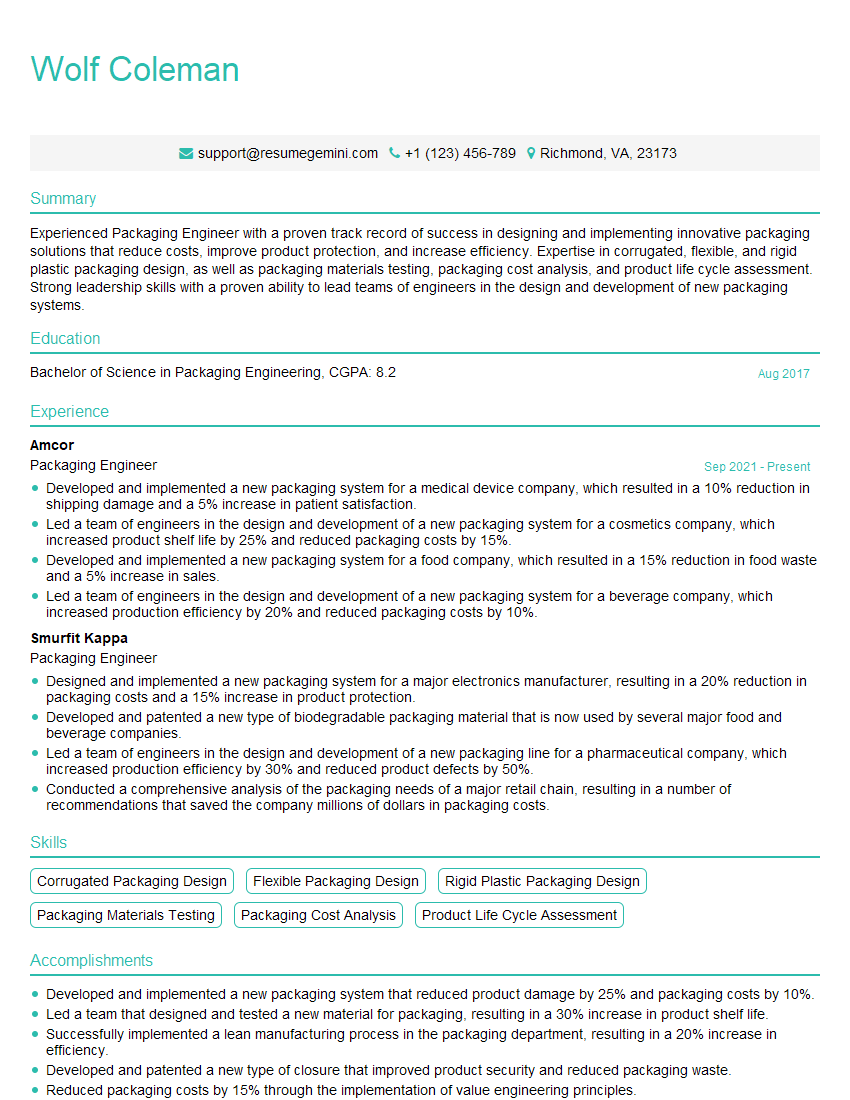
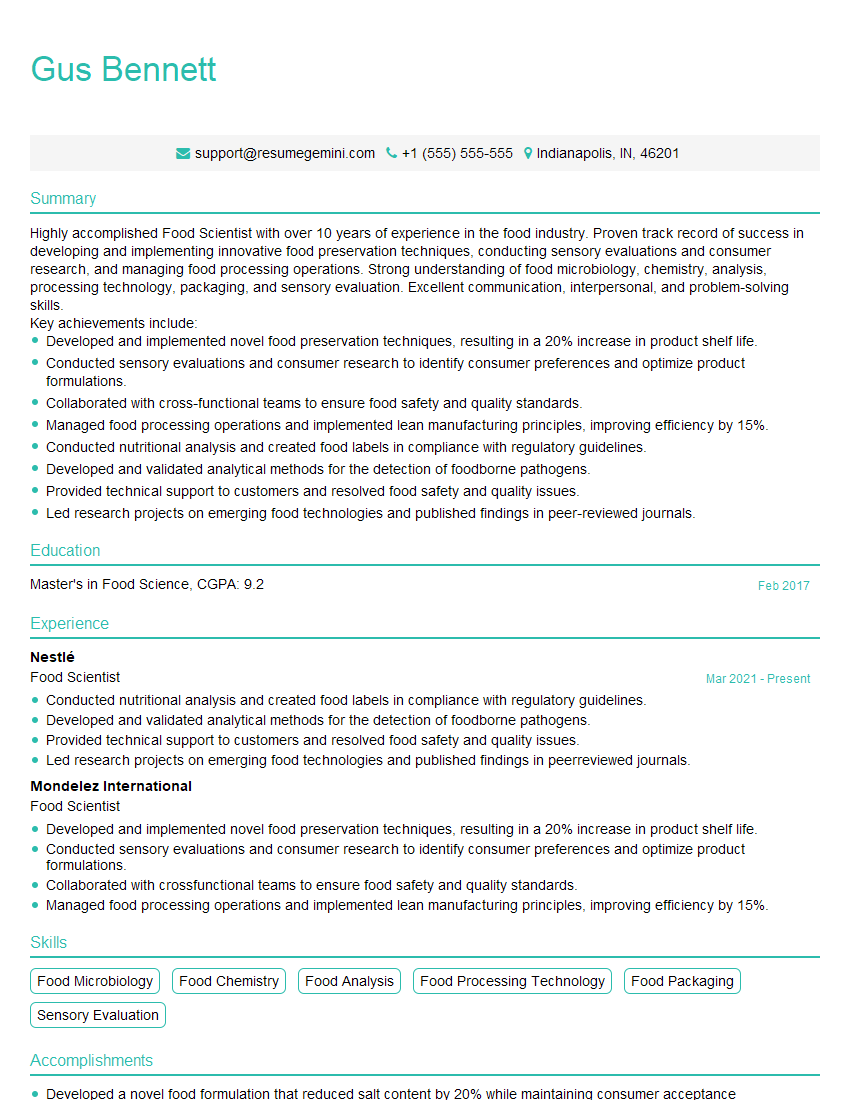
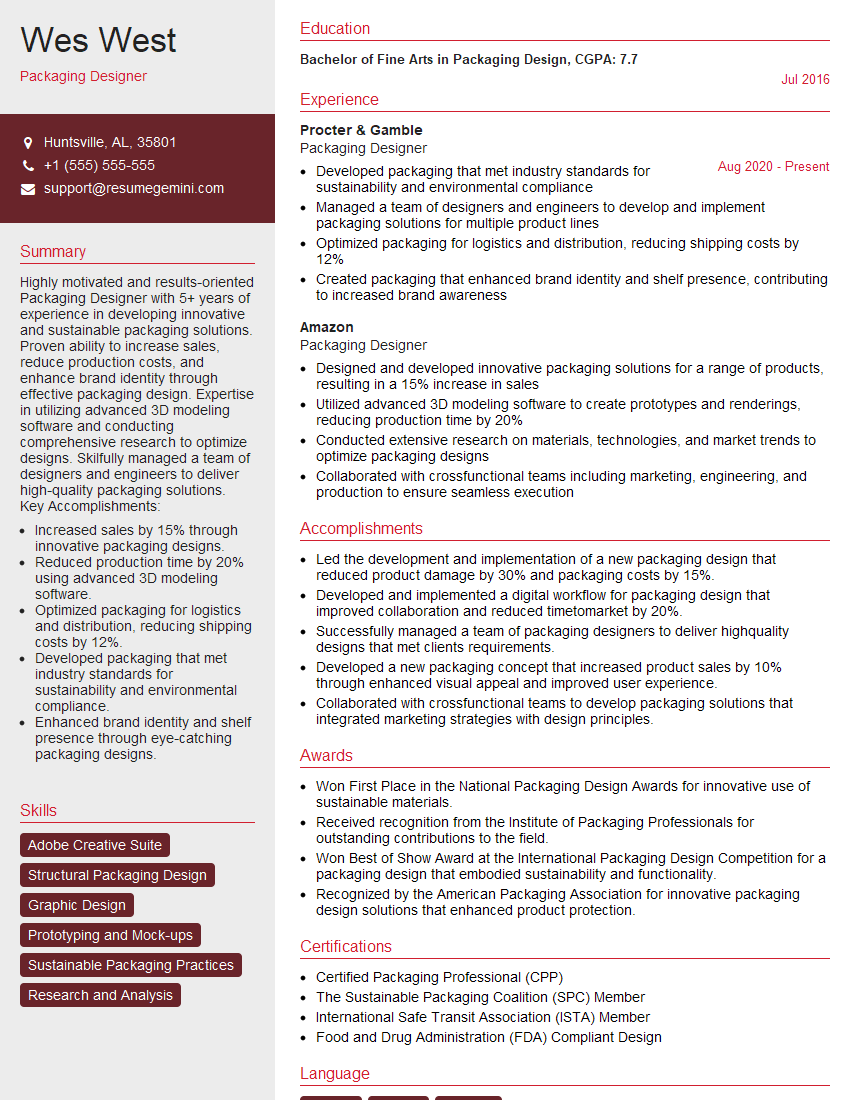
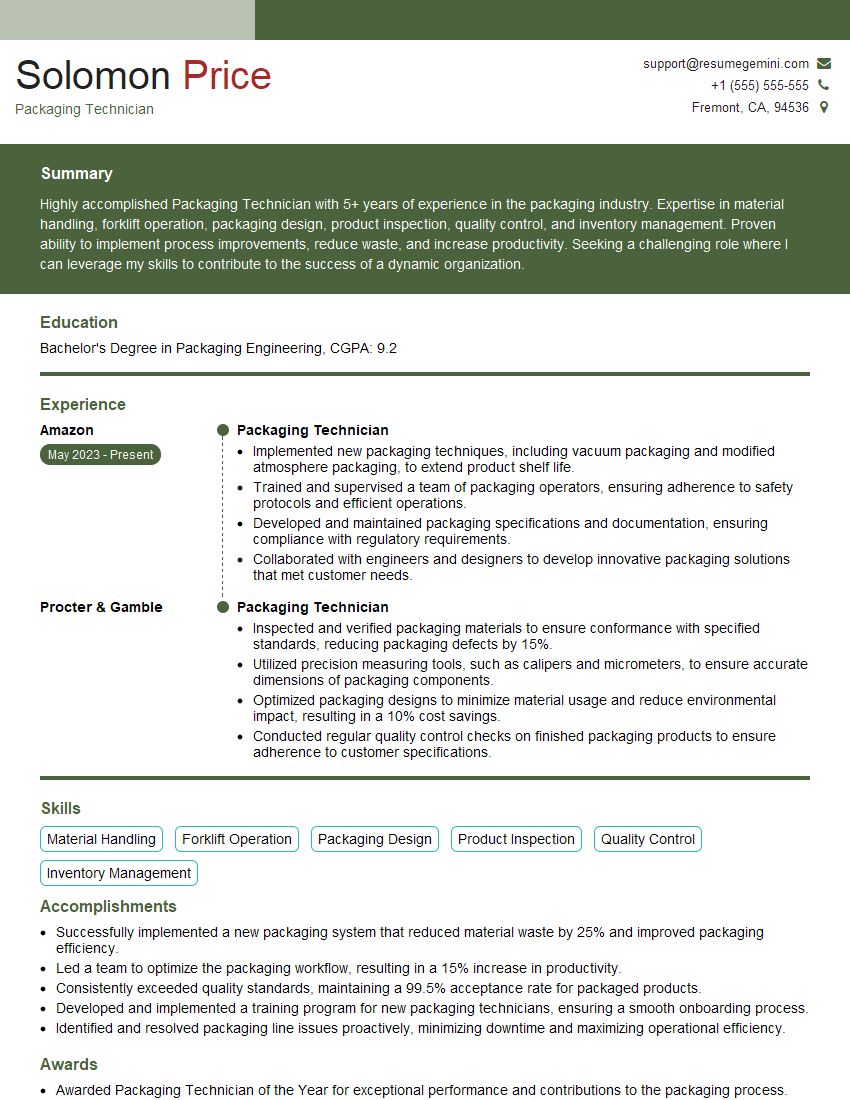
Mastering Food Processing and Packaging principles is essential for career advancement in this dynamic industry. A strong understanding of these topics will significantly improve your interview performance and open doors to exciting opportunities. To further enhance your job prospects, create an ATS-friendly resume that highlights your skills and experience effectively. ResumeGemini is a trusted resource that can help you build a professional and impactful resume. We provide examples of resumes tailored to the Food Processing and Packaging industry to help guide you. Invest time in crafting a compelling resume – it’s your first impression on potential employers.

Explore more articles
Users Rating of Our Blogs
Share Your Experience
We value your feedback! Please rate our content and share your thoughts (optional).
What Readers Say About Our Blog
To the interviewgemini.com Webmaster.
Very helpful and content specific questions to help prepare me for my interview!
Thank you
To the interviewgemini.com Webmaster.
This was kind of a unique content I found around the specialized skills. Very helpful questions and good detailed answers.
Very Helpful blog, thank you Interviewgemini team.