Are you ready to stand out in your next interview? Understanding and preparing for Diving Support Operations interview questions is a game-changer. In this blog, we’ve compiled key questions and expert advice to help you showcase your skills with confidence and precision. Let’s get started on your journey to acing the interview.
Questions Asked in Diving Support Operations Interview
Q 1. Describe the different types of diving operations.
Diving operations are categorized based on several factors, primarily the environment, equipment used, and the type of work being performed. Here are some key distinctions:
- Surface Supplied Diving (SSD): Divers receive air and communication via a surface-connected umbilical. This allows for longer dives and heavier work, commonly used for underwater construction, inspection, and repair.
- Scuba Diving (Self-Contained Underwater Breathing Apparatus): Divers carry their own air supply, offering greater mobility but with limited dive time and depth. This is frequently used for recreational, scientific, and some commercial applications.
- Saturation Diving: Divers live in a pressurized environment for extended periods, minimizing decompression time. This approach is essential for deep-sea projects like offshore oil and gas work, where long underwater durations are necessary.
- Commercial Diving: This encompasses various tasks including underwater welding, cutting, inspection, and salvage. It often utilizes SSD or saturation diving techniques.
- Recreational Diving: This focuses on leisure and exploration, generally using scuba diving equipment and adheres to strict safety protocols.
The choice of operation depends heavily on the specific requirements of the project, depth, duration, and the complexity of the work to be carried out.
Q 2. Explain the roles and responsibilities of a Dive Supervisor.
The Dive Supervisor holds a critical role, ensuring the safety and efficiency of all diving operations. Their responsibilities are multifaceted and include:
- Planning and Supervision: Developing comprehensive dive plans, conducting pre-dive briefings, and overseeing all aspects of the dive execution.
- Risk Assessment and Mitigation: Identifying and evaluating potential hazards, implementing control measures, and ensuring compliance with safety regulations.
- Equipment Management: Inspecting and maintaining diving equipment, ensuring its proper functionality and serviceability.
- Team Management: Leading and coordinating the dive team, assigning roles and responsibilities, and ensuring effective communication.
- Emergency Response: Being prepared for and effectively responding to diving emergencies, implementing established procedures.
- Record Keeping: Maintaining detailed records of all dive operations, including dive profiles, equipment checks, and any incidents.
- Compliance: Ensuring adherence to all relevant safety standards, regulations, and company procedures.
In essence, the Dive Supervisor acts as the primary decision-maker and safety officer throughout the diving operation, prioritizing the well-being of the divers above all else.
Q 3. What are the key components of a dive plan?
A comprehensive dive plan is crucial for safety and efficiency. Key components include:
- Dive Site Information: Location, depth, currents, visibility, potential hazards (e.g., wrecks, underwater obstacles).
- Dive Objectives: Clearly defined tasks to be accomplished during the dive.
- Dive Profile: Planned descent, bottom time, ascent rate, and decompression stops.
- Equipment List: Detailed list of all diving equipment to be used, including checks and maintenance records.
- Communication Plan: Methods of communication between divers, surface support, and other personnel.
- Emergency Procedures: Clearly outlined procedures for handling various emergencies, including diver distress, equipment failure, and environmental changes.
- Decompression Procedures: Specific decompression stops and schedules, considering the dive profile and the diver’s exposure to pressure.
- Personnel Roles and Responsibilities: Clear assignments for all personnel involved in the dive operation.
A well-documented and rigorously followed dive plan dramatically reduces the risks associated with diving operations.
Q 4. How do you manage risk in diving operations?
Risk management in diving is paramount. It’s a systematic process involving:
- Hazard Identification: Identifying all potential hazards, both environmental (e.g., currents, visibility, temperature) and operational (e.g., equipment failure, human error).
- Risk Assessment: Evaluating the likelihood and severity of each identified hazard. This might involve using risk matrices or other quantitative tools.
- Risk Control: Implementing measures to eliminate, reduce, or control the identified risks. This could involve using specialized equipment, implementing strict procedures, or providing additional training.
- Emergency Response Planning: Developing and rehearsing emergency procedures to deal with potential incidents.
- Monitoring and Review: Continuously monitoring the dive operation and reviewing the effectiveness of risk control measures. Post-dive briefings are crucial for identifying areas for improvement.
A proactive and layered approach to risk management is crucial for ensuring the safety of divers and the success of the operation. For example, a strong emphasis on pre-dive checks significantly reduces equipment-related risks. Regular training enhances divers’ capabilities, lowering human error risks.
Q 5. Outline the emergency procedures for a diver in distress.
Emergency procedures for a diver in distress are time-critical and must be swift and decisive. They typically involve:
- Immediate Response: The dive supervisor and standby diver must respond immediately, assessing the situation.
- Surface Support: Surface support must be alerted and ready to assist with rescue equipment.
- Diver Rescue: The standby diver will usually initiate the rescue, using appropriate techniques based on the situation (e.g., assisting ascent, providing emergency oxygen).
- Emergency Ascent: If necessary, a controlled emergency ascent will be performed, paying close attention to decompression requirements to minimize the risk of decompression sickness.
- First Aid and Medical Attention: Once the diver is brought to the surface, immediate first aid and medical attention must be provided, potentially including recompression treatment in a hyperbaric chamber.
- Post-Incident Review: A thorough review of the incident is crucial to identify contributing factors and prevent future occurrences.
Regular training and drills are essential to ensure the team’s preparedness for emergency situations. The effectiveness of a rescue depends on clear communication, well-rehearsed procedures, and decisive action.
Q 6. What are the limitations of different diving equipment?
Diving equipment, while crucial, has limitations that must be considered:
- Scuba Tanks: Limited air supply necessitates careful planning of dive duration and depth. The air supply is also affected by factors like breathing rate and exertion.
- Regulators: Can fail due to freezing, damage, or malfunction, requiring redundant systems for safety.
- Dive Computers: While invaluable for decompression planning, they can malfunction or provide inaccurate readings. They require regular maintenance and calibration.
- Dry Suits: Though providing warmth, they can limit dexterity and mobility. They also require proper maintenance to avoid leaks.
- Underwater Communication Systems: Limited range and potential interference can hinder communication, particularly in challenging environments.
Understanding these limitations is crucial for developing safe diving plans and choosing appropriate equipment. Redundancy in systems and rigorous equipment maintenance are critical for mitigating these limitations.
Q 7. Explain the principles of decompression and its importance.
Decompression is the process of gradually reducing pressure on a diver after a dive to allow dissolved gases (mainly nitrogen) in the body tissues to be released safely. Failure to do so can lead to decompression sickness (also known as ‘the bends’), a serious and potentially fatal condition.
Principles of Decompression: As divers descend, the surrounding pressure increases, causing more gases to dissolve into their tissues. Ascending too quickly allows these gases to form bubbles, obstructing blood flow and causing pain, paralysis, or even death. Decompression involves ascending slowly and performing planned decompression stops at specific depths to allow these gases to be released gradually.
Importance of Decompression: Proper decompression procedures are vital for diver safety. It significantly reduces the risk of decompression sickness, a serious concern for divers, especially those making deep or extended dives. Decompression tables, dive computers, and meticulous adherence to dive plans are essential for ensuring safe decompression.
Understanding the principles of decompression is fundamental to safe diving practices. Failure to adhere to these procedures could lead to serious consequences.
Q 8. How do you ensure the safety of divers during underwater operations?
Ensuring diver safety is paramount in diving support operations. It’s a multifaceted approach encompassing rigorous planning, meticulous execution, and constant vigilance. We start with comprehensive risk assessments, identifying potential hazards like currents, underwater obstructions, and equipment malfunctions. These assessments inform the development of detailed dive plans, specifying procedures, emergency protocols, and contingency measures. Before each dive, a thorough pre-dive check of all equipment is mandatory – we’re talking about life support systems here, so no detail is too small. During the dive, constant communication with the divers via underwater communication systems is crucial. A dedicated standby diver is often present, ready to assist in any emergency. Surface support personnel monitor vital parameters like depth, duration, and air supply. Post-dive, divers undergo mandatory decompression procedures and are monitored for signs of decompression sickness. Regular training, refresher courses, and adherence to strict safety regulations are ingrained in our daily operations. For example, on one project involving pipeline inspection, we discovered a strong, unexpected current during pre-dive surveys. This led us to adjust our dive plan to account for the current, employing additional safety divers and modifying the dive profile to minimize risk. Safety isn’t just a checklist; it’s a mindset.
Q 9. What are the different types of diving bells and their applications?
Diving bells are pressurized chambers used to transport divers to and from the seabed, often providing a safe haven during extended underwater operations. Different types cater to various needs.
- Standard Diving Bell: A simple, open-bottomed chamber lowered to the seabed. Divers enter and exit through an access tube. Primarily used for shorter dives and relatively shallow depths.
- Closed Bell: A fully enclosed chamber with independent life support systems. This allows for much longer dives and greater depths. It offers superior protection from the environment and can accommodate multiple divers.
- Personnel Transfer Capsule (PTC): Similar to a closed bell, but primarily designed for transferring divers between the surface and saturation chambers. Often equipped with specialized features for efficient transfer and safety.
The application depends on the job. A standard bell might suffice for inspecting a shallow-water wreck, whereas a closed bell or PTC is essential for saturation diving projects where divers spend extended periods underwater. The choice considers the depth, duration, and complexity of the operation, along with environmental conditions.
Q 10. Describe your experience with saturation diving.
My experience with saturation diving spans several projects, including the installation of subsea pipelines and the repair of offshore oil platforms. Saturation diving is a complex operation where divers live in a pressurized environment for extended periods, eliminating the need for repeated decompression stops. This increases efficiency for deep-sea operations. We carefully monitor the divers’ physiological condition throughout the saturation phase. Strict procedures are followed to minimize the risks of decompression sickness. One memorable project involved repairing a damaged pipeline at a depth of over 300 meters. The divers spent over 30 days in the saturation chamber, and meticulous planning and execution were vital for the success and safety of the operation. The project highlighted the importance of pre-dive planning, teamwork, and continuous monitoring. We had regular medical check-ups, and the communication protocols were rigorous. During the project, a minor equipment malfunction occurred; however, our comprehensive emergency plan was successfully implemented, avoiding any serious incident.
Q 11. Explain the role of ROVs in diving support operations.
Remotely Operated Vehicles (ROVs) are invaluable tools in diving support operations. They extend the reach and capabilities of divers, enhancing safety and efficiency. ROVs can perform tasks such as underwater inspections, surveys, and minor repairs, reducing the need for divers to enter hazardous environments. They are particularly useful in deep-sea operations where it’s too dangerous for divers to operate. ROVs equipped with cameras and manipulators can provide real-time video feeds, enabling remote observation and control. Data collected by ROVs assists in planning dive operations. This reduces risks and allows for more informed decisions. For instance, during a recent project to inspect an underwater structure, the ROV initially detected damage that was not apparent from surface surveys. This allowed us to prepare the divers with specific equipment and procedures, improving efficiency and safety.
Q 12. How do you conduct pre-dive checks on diving equipment?
Pre-dive equipment checks are meticulously performed, following established checklists and procedures. This is not merely a formality; it’s a critical step that directly impacts diver safety. We check each component of the diving equipment, starting with the life support systems (scuba, rebreather, or surface-supplied air). This includes oxygen levels, pressure gauges, regulators, and emergency breathing apparatus. We also verify the integrity of the dive suit, including its seals, communication systems, and underwater lighting. The dive helmet is inspected for any cracks or damage. Other equipment, such as underwater tools, cameras, and lighting systems, are tested for functionality. The checklist used varies depending on the type of dive and the specific equipment, but the aim is consistent: to ensure everything is functioning correctly and safely. Before each dive, the diver also performs a personal equipment check, verifying the correct functioning of their equipment. This process allows early detection of potential faults, preventing incidents during the dive. A detailed record of all checks is maintained.
Q 13. What are the common hazards associated with underwater welding?
Underwater welding is inherently hazardous, presenting unique challenges. The primary hazards include:
- Electrocution: Electrical currents can easily travel through water, creating a severe risk of electrocution to the diver and support crew. Proper insulation and grounding procedures are crucial.
- Fire and Explosion: Welding produces sparks and flames, posing a fire risk. The presence of flammable materials or gases in the underwater environment can lead to explosions.
- Toxicity: Welding fumes can be toxic, even underwater, and proper ventilation systems are essential to minimize exposure.
- Reduced Visibility: Welding creates smoke and bubbles, reducing visibility and increasing the risk of accidents.
- Decompression Sickness: The added exertion of underwater welding increases the risk of decompression sickness, necessitating careful planning of decompression stops.
Mitigation involves using specialized welding equipment designed for underwater use, employing strict safety protocols, including providing adequate ventilation and using non-flammable materials. Experienced welders and dive supervisors are essential to managing these risks effectively.
Q 14. How do you manage communication with divers underwater?
Maintaining effective communication with divers underwater is critical for safety and operational success. Several methods are used depending on depth and the nature of the operation.
- Underwater Telephone Systems: These systems use acoustic signals to transmit voice communication between the divers and the surface support team. This is common for shallower dives.
- Underwater Communication Systems (UCS): These advanced systems provide reliable communication over longer ranges and greater depths, often used in saturation diving and complex operations.
- Hand Signals: Divers use a standardized set of hand signals to communicate with each other and with the support team. This is useful for situations where voice communication may be unreliable.
- Light Signals: Pre-agreed light signals can also communicate important information. This acts as a backup to voice communication.
Regular communication checks are vital, ensuring the system is functioning correctly and the divers understand instructions. Clear communication procedures are established before any dive, ensuring everyone understands the signal meanings and communication protocol.
Q 15. What are the legal and regulatory requirements for diving operations?
Diving operations are heavily regulated to ensure diver safety and environmental protection. Legal and regulatory requirements vary by location but generally encompass several key areas. These include adherence to national and international standards (like those set by IMCA or equivalent bodies), obtaining necessary permits and licenses for both the diving operation and individual divers, complying with environmental regulations regarding marine life and habitat disruption, and maintaining comprehensive documentation of all dive-related activities and incident reporting.
- National Legislation: Each country has specific laws governing diving, often including aspects of workplace safety, environmental protection, and maritime law. For instance, the US would have OSHA regulations, while the UK might have HSE regulations that apply.
- International Standards: Organizations like the International Maritime Contractors Association (IMCA) publish best practices and guidelines that, while not legally binding in all cases, are widely adopted by responsible operators as a mark of professional proficiency and risk mitigation. These often concern operational procedures, equipment maintenance, and emergency response protocols.
- Permitting and Licensing: Divers need appropriate certifications, and operations may require permits from local authorities depending on the location, depth of operation, and nature of the task. For example, a commercial diving operation near a sensitive reef would likely need multiple permits.
- Emergency Response Plans: Detailed emergency response plans, including procedures for diver decompression sickness (DCS), equipment failure, and environmental incidents, are vital and often subject to regulatory review.
Non-compliance can result in significant penalties, including fines, suspension of operations, and legal action.
Career Expert Tips:
- Ace those interviews! Prepare effectively by reviewing the Top 50 Most Common Interview Questions on ResumeGemini.
- Navigate your job search with confidence! Explore a wide range of Career Tips on ResumeGemini. Learn about common challenges and recommendations to overcome them.
- Craft the perfect resume! Master the Art of Resume Writing with ResumeGemini’s guide. Showcase your unique qualifications and achievements effectively.
- Don’t miss out on holiday savings! Build your dream resume with ResumeGemini’s ATS optimized templates.
Q 16. Describe your experience with diving incident investigations.
I have extensive experience in diving incident investigations, spanning over 15 years. My approach is systematic and follows established methodologies, focusing on factual analysis to determine root causes and prevent recurrence. I’ve investigated a wide range of incidents, from minor equipment malfunctions to serious diving accidents resulting in decompression sickness or fatalities.
My investigations typically involve:
- Gathering Evidence: Collecting data from divers’ logs, equipment maintenance records, weather reports, witness statements, and the physical examination of equipment.
- Analyzing Data: Employing established techniques to assess contributing factors, including human error, equipment failure, environmental conditions, and procedural deviations.
- Root Cause Analysis: Using tools like fault tree analysis or the five whys to identify the underlying causes that led to the incident, not just the immediate symptoms.
- Reporting and Recommendations: Preparing detailed reports outlining findings, root causes, and recommendations for corrective actions to prevent similar incidents.
One particularly challenging case involved a diver suffering from severe DCS after a routine underwater inspection. Through meticulous investigation, we identified a combination of factors: a faulty dive computer, inadequate pre-dive planning, and a failure to properly follow decompression procedures. This led to significant improvements in our dive planning protocols and equipment maintenance procedures.
Q 17. Explain the process of conducting underwater inspections.
Underwater inspections are crucial for maintaining infrastructure integrity and ensuring safety. The process is highly structured and depends on the specific objectives, environment, and the complexity of the structure. A typical inspection process involves these steps:
- Pre-Dive Planning: This crucial step includes defining inspection objectives, selecting appropriate diving techniques (e.g., surface-supplied, scuba), choosing necessary equipment (underwater cameras, ROVs, sonar), and developing a detailed dive plan including contingency plans. Risk assessments are key here.
- Dive Execution: The inspection itself is carried out methodically. Divers use underwater cameras, lights, and other tools to document the condition of the structure. They follow a pre-determined route and note any defects, corrosion, or damage.
- Data Acquisition and Documentation: Divers collect visual and photographic data using underwater cameras, and some may utilize sonar to check for structural damage unseen to the naked eye. All observations are meticulously documented, either through detailed dive logs or digital means.
- Post-Dive Analysis: Following the dive, all recorded data are analyzed to identify any anomalies or required repairs. This analysis may involve experts from various disciplines, such as structural engineers or corrosion specialists.
- Report Generation: A comprehensive report is compiled, documenting the inspection findings, including photographs, videos and a detailed summary of the asset’s condition. This report is crucial for making informed decisions about maintenance and repair.
For example, inspecting a submerged pipeline requires different techniques than inspecting a bridge pier. The former may use remotely operated vehicles (ROVs) or specialized underwater cameras, while the latter might involve divers with more direct visual inspections.
Q 18. How do you maintain diving equipment?
Equipment maintenance is paramount in diving. Neglect can lead to catastrophic failures with potentially fatal consequences. Our maintenance program follows a rigorous schedule encompassing:
- Daily Checks: Before every dive, equipment is thoroughly inspected for wear and tear, leaks, and any other anomalies. This includes checking air cylinders, regulators, buoyancy compensators, and other vital gear.
- Regular Servicing: Equipment undergoes more in-depth servicing at regular intervals, typically determined by manufacturer guidelines and usage. This may include pressure testing cylinders, servicing regulators, and inspecting life support systems.
- Calibration and Testing: Instruments like dive computers and depth gauges require regular calibration to ensure accuracy. Life support systems are rigorously tested to verify functionality.
- Record Keeping: All maintenance activities are meticulously documented, including dates, personnel involved, and any issues discovered. This creates an auditable record.
- Repair and Replacement: Damaged or worn-out equipment is promptly repaired or replaced to maintain operational safety.
We use a combination of manufacturer recommendations, internal checklists and best industry practices, always prioritizing safety. Imagine a faulty regulator – a simple oversight in maintenance could have fatal consequences. That’s why this is such a critical aspect.
Q 19. What is your experience with hyperbaric chamber operation?
My experience with hyperbaric chamber operation encompasses both routine operation and emergency response. I’m proficient in operating various chamber types, ensuring safe and effective treatment of divers suffering from decompression sickness (DCS) or other diving-related illnesses.
My responsibilities include:
- Chamber Operation and Maintenance: This includes preparing the chamber for use, monitoring vital signs during treatment, managing gas supply, and maintaining detailed operational logs.
- Treatment Protocols: I’m familiar with various recompression protocols and can adjust them based on the diver’s condition and the specific nature of their illness. Protocols are strictly adhered to for optimal results.
- Emergency Response: I’ve participated in multiple emergency responses, involving rapid chamber setup and the efficient treatment of divers requiring immediate recompression therapy.
- Safety Procedures: I’m adept at adhering to strict safety protocols, including ensuring proper chamber communication, emergency evacuation plans, and maintaining a sterile environment.
Safe and effective hyperbaric chamber operation requires both technical skills and a deep understanding of the physiological effects of pressure changes on the human body. I’ve seen first-hand how critical timely and effective recompression can be in saving lives and minimizing long-term disability in DCS cases.
Q 20. Describe your knowledge of diving medical considerations.
Diving medical considerations are critical for diver safety. A strong understanding of physiology, especially regarding the effects of pressure on the body, is essential. Key aspects include:
- Decompression Sickness (DCS): Understanding the mechanisms of DCS, including nitrogen narcosis and oxygen toxicity, and the methods of prevention and treatment through recompression therapy. I am very familiar with the different types of DCS and its symptoms.
- Ear and Sinus Problems: Awareness of the risk of barotrauma to the ears and sinuses, and the procedures for safe equalization.
- Other Medical Conditions: Knowing how pre-existing medical conditions like asthma, heart problems, or epilepsy can be aggravated by diving. Proper medical clearance before diving is crucial here.
- Fitness to Dive: Understanding fitness standards and the need for regular medical checks for commercial divers. Medical examinations and certifications are very important.
- Emergency Response: Knowing how to manage diving-related emergencies, including oxygen administration, CPR, and appropriate first aid, and how to communicate and coordinate with emergency medical services.
Ignoring these considerations can have dire consequences, ranging from mild discomfort to permanent disability or even death. A good diving operation prioritizes diver health and conducts regular medical assessments.
Q 21. Explain your experience with dive gas management.
Dive gas management is a critical aspect of diving safety and efficiency. It involves the planning, procurement, handling, and analysis of breathing gases used in diving operations. This goes beyond simply having enough air; it’s about ensuring the right gas mix for the specific dive profile.
My experience includes:
- Gas Planning: Determining the appropriate gas mixtures (e.g., air, nitrox, trimix) based on depth, duration, and the diver’s experience. This involves calculations to minimize the risk of DCS and oxygen toxicity.
- Gas Procurement and Handling: Sourcing and managing the supply of gases, ensuring their purity and proper handling to prevent contamination. I understand the importance of storing and handling gases under the correct safety protocols.
- Gas Analysis: Regularly analyzing gas mixtures to verify their composition and ensure they meet the required standards. This ensures the divers are breathing safe gas mixes.
- Cylinder Management: Managing the filling, testing, and tracking of diving cylinders, ensuring they’re correctly labeled, inspected, and maintained.
- Emergency Gas Supplies: Planning and providing for emergency gas supplies, including bailout bottles and stage cylinders, in case of unforeseen circumstances.
For instance, a deep technical dive might necessitate the use of trimix to minimize the risk of high-pressure neurological syndrome. Careful planning and management are essential, as the wrong gas mix at depth could have fatal consequences.
Q 22. How do you handle unexpected situations during a dive?
Handling unexpected situations during a dive requires a calm, methodical approach and adherence to established emergency procedures. Think of it like a well-rehearsed play – each member of the dive team has a specific role in case something goes wrong.
For instance, if a diver experiences equipment malfunction at depth, the first priority is maintaining safe ascent. This involves activating the diver’s emergency ascent system (e.g., an alternate air source or emergency buoyancy device), signaling the support team above, and initiating a controlled ascent following established protocols. The support team’s response is crucial, involving a quick assessment of the situation, deployment of rescue divers if necessary, and maintaining communication with the affected diver throughout the ascent and recovery.
Regular drills and training scenarios are key. We frequently practice emergency response procedures, from equipment failure to diver disorientation, to ensure everyone reacts efficiently and effectively under pressure. This proactive approach minimizes risks and maximizes safety during dives.
Q 23. What are your skills in underwater surveying and mapping?
My underwater surveying and mapping skills encompass a range of techniques, from traditional methods to advanced digital technologies. I’m proficient in using various survey equipment, including sonar systems (single and multi-beam), underwater video and photographic equipment, and total stations for underwater positioning. This allows for accurate data acquisition, regardless of water clarity or depth.
I have extensive experience in processing and interpreting the acquired data to produce accurate bathymetric maps, underwater site plans, and three-dimensional models. For example, during a recent pipeline inspection, we utilized a multibeam sonar system to create a detailed map of the seabed, highlighting any potential obstructions or damage. This map was crucial for planning repair work and ensuring the pipeline’s integrity. Post-processing of the data involved cleaning, georeferencing and visualizing the results using specialized software such as QINSy or Hypack. I’m also comfortable with different data formats and integration with Geographic Information Systems (GIS).
Q 24. What is your experience with different types of underwater cutting and welding techniques?
My experience with underwater cutting and welding spans various techniques, including arc welding, oxy-fuel cutting, and plasma arc cutting. The choice of technique depends heavily on the material to be cut or welded, the water depth, and the required precision. For instance, arc welding is often used for repairs on steel structures, while oxy-fuel cutting is better suited for thicker materials or when precise cutting isn’t critical. Plasma arc cutting offers greater precision for more intricate work.
Safety is paramount in underwater cutting and welding. We adhere strictly to industry best practices and regulations regarding hazardous materials handling, fire prevention, and diver safety. This includes rigorous pre-dive inspections of all equipment, thorough risk assessments, and meticulous control of the underwater environment. I’ve worked on projects ranging from the repair of offshore oil platforms to the precise cutting and welding of components for underwater installations, emphasizing safety and efficiency in each operation.
Q 25. Describe your knowledge of different types of underwater habitats.
My understanding of underwater habitats encompasses various designs and their operational limitations. These range from simple diving bells, offering limited space and duration, to more sophisticated underwater habitats like saturation diving systems, which allow divers to live and work at depth for extended periods, minimizing the risks associated with repeated decompression. I’m familiar with the design considerations for each, including life support systems, emergency procedures, and environmental control.
For example, saturation diving habitats require sophisticated life support systems, including environmental control for temperature and atmosphere, as well as waste management systems. The use of a recompression chamber is critical for handling decompression sickness. My experience includes working with both types of habitats and I understand the logistical and engineering challenges involved in their safe operation and maintenance. The choice of habitat depends on the specific nature of the project, its duration, and the depth involved.
Q 26. Explain the role of a diving safety officer in a diving operation.
The Diving Safety Officer (DSO) is the cornerstone of safe diving operations. Their role is multifaceted and crucial to ensuring diver wellbeing and operational success. The DSO is responsible for overseeing all aspects of diving safety, from pre-dive planning and risk assessment to monitoring the dive itself and post-dive procedures.
Before a dive, the DSO meticulously reviews the dive plan, assesses potential hazards, and ensures all equipment is in perfect working order. During the dive, they maintain constant communication with the divers, monitor their progress, and respond promptly to any emergencies. After the dive, the DSO ensures proper decompression procedures are followed and records all relevant information for analysis and future improvements. They are also responsible for maintaining diving logs, conducting safety briefings, and enforcing regulations.
In short, the DSO is the guardian of safety, ensuring that every dive is conducted responsibly and efficiently, minimizing the risks inherent in underwater operations.
Q 27. How do you ensure compliance with environmental regulations during diving operations?
Compliance with environmental regulations is paramount in diving operations. We are committed to minimizing our impact on marine ecosystems. This includes obtaining the necessary permits before commencing any underwater activities, conducting thorough environmental impact assessments, and adhering strictly to waste management protocols.
For example, when working near sensitive coral reefs, we employ careful techniques to avoid physical damage to the ecosystem. This might involve using specialized equipment, adjusting our dive plans to minimize disturbance, and implementing strict protocols to prevent the introduction of pollutants or debris. Post-dive, we ensure a thorough cleaning of our equipment to prevent the accidental spread of invasive species. Regular audits and detailed reporting to regulatory agencies ensure continuous compliance.
Q 28. Describe your experience working with different types of diving support vessels.
My experience includes working with a variety of diving support vessels, from small, specialized workboats to large, multi-purpose vessels. Each vessel type has its strengths and limitations, dictating the suitability for specific diving projects.
Smaller workboats are ideal for shallow-water operations and projects requiring maneuverability in confined spaces. Larger vessels, equipped with dynamic positioning systems (DPS) and specialized cranes, are crucial for deep-water projects and operations requiring heavy equipment deployment. My experience includes working on vessels fitted with decompression chambers, moonpools, and advanced diving support systems. The choice of vessel always depends on the operational needs, including depth, environmental conditions, and the type of diving operation.
Key Topics to Learn for Diving Support Operations Interview
- Diving Equipment & Systems: Understanding the function, maintenance, and troubleshooting of various diving equipment (e.g., compressors, diving suits, surface supplied systems), including safety protocols and emergency procedures.
- Dive Planning & Execution: Mastering the principles of dive planning, including decompression calculations, gas management, and environmental considerations. Practical application involves analyzing dive profiles and identifying potential hazards.
- Health & Safety Regulations: Demonstrating a thorough knowledge of relevant diving safety regulations, risk assessment procedures, and emergency response protocols. This includes understanding the role of the Diving Supervisor and other team members.
- Communication & Teamwork: Highlighting experience in clear and concise communication within a diving team, emphasizing effective collaboration and problem-solving skills under pressure.
- Vessel Operations & Navigation: Familiarity with the operation of diving support vessels, including navigation, anchoring, and dynamic positioning systems. Consider practical applications like managing vessel position during a dive operation.
- Emergency Response & Procedures: Deep understanding of emergency procedures, including diver recovery, first aid and medical treatment for diving-related injuries, and incident reporting procedures. Be ready to discuss your approach to managing different types of emergencies.
- Environmental Awareness & Regulations: Understanding the environmental impact of diving operations and relevant environmental regulations, including mitigation strategies and best practices for sustainable diving.
Next Steps
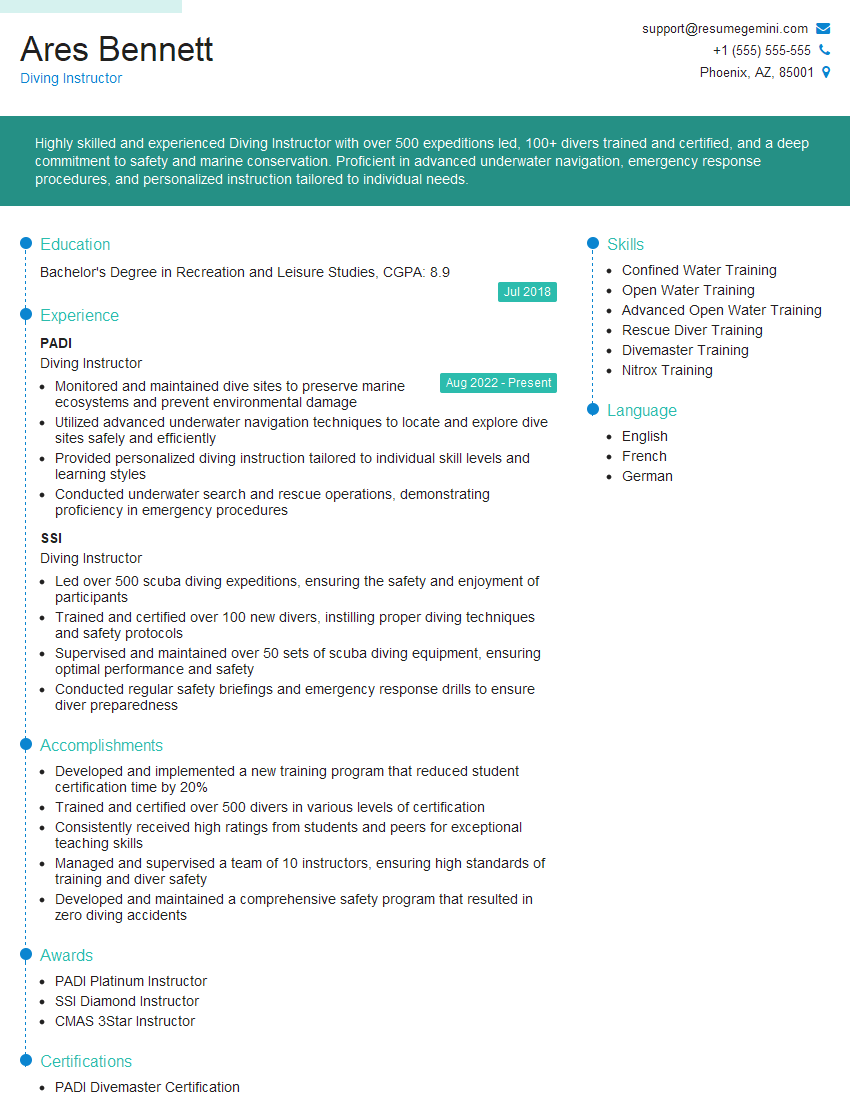
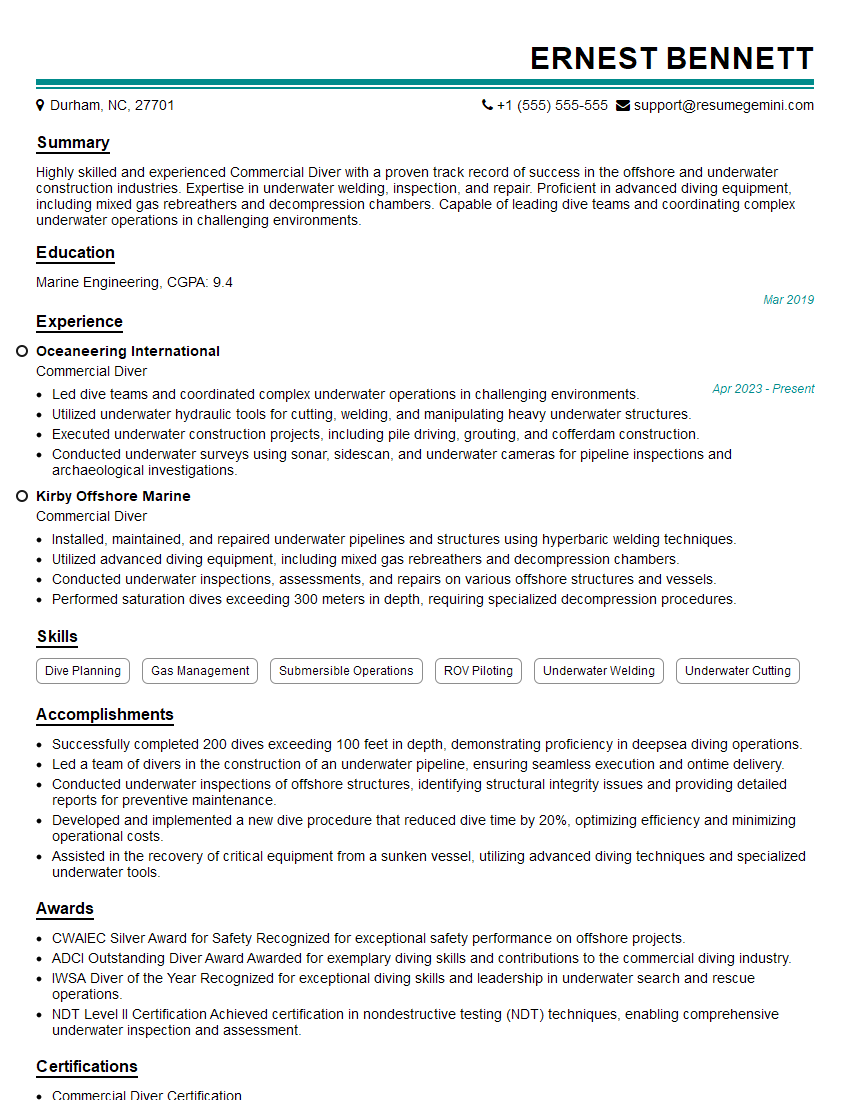
Mastering Diving Support Operations opens doors to exciting and rewarding career opportunities within the offshore energy sector and beyond. A strong understanding of these crucial topics positions you for success in securing your ideal role. To significantly increase your job prospects, create an ATS-friendly resume that highlights your skills and experience effectively. We highly recommend using ResumeGemini to craft a professional and impactful resume that catches the eye of recruiters. ResumeGemini provides examples of resumes tailored to Diving Support Operations to help guide your creation process, ensuring you present your qualifications in the best possible light.
Explore more articles
Users Rating of Our Blogs
Share Your Experience
We value your feedback! Please rate our content and share your thoughts (optional).
What Readers Say About Our Blog
To the interviewgemini.com Webmaster.
Very helpful and content specific questions to help prepare me for my interview!
Thank you
To the interviewgemini.com Webmaster.
This was kind of a unique content I found around the specialized skills. Very helpful questions and good detailed answers.
Very Helpful blog, thank you Interviewgemini team.