Preparation is the key to success in any interview. In this post, we’ll explore crucial Commercial and Residential Solar Installation interview questions and equip you with strategies to craft impactful answers. Whether you’re a beginner or a pro, these tips will elevate your preparation.
Questions Asked in Commercial and Residential Solar Installation Interview
Q 1. Explain the difference between monocrystalline and polycrystalline solar panels.
Monocrystalline and polycrystalline solar panels are both made of silicon, but their manufacturing processes differ, leading to distinct characteristics. Think of it like this: monocrystalline is like a perfectly cut diamond, while polycrystalline is like a cluster of smaller diamonds.
Monocrystalline panels are made from a single, large silicon crystal. This results in a more efficient panel (typically 18-22% efficiency) because the silicon is highly pure and uniform, allowing for better electron flow. They are typically darker in color (black) and more expensive due to the energy-intensive production process. They also tend to have a higher power output per square foot.
Polycrystalline panels are made from multiple silicon crystals melted together. This method is less energy-intensive and therefore cheaper, though the efficiency is slightly lower (typically 15-17%). They have a characteristic blueish appearance due to the multiple crystals. While less efficient, they are a cost-effective option for larger installations where maximizing energy output per dollar is prioritized.
In a nutshell, monocrystalline panels offer higher efficiency and better aesthetics, making them ideal for space-constrained installations where maximum power output is crucial. Polycrystalline panels provide a more economical solution for projects focusing on budget-friendliness.
Q 2. Describe the process of designing a residential solar system.
Designing a residential solar system involves a meticulous process. It starts with an in-depth site assessment to determine the available roof space, shading, orientation, and energy consumption patterns of the household. We need to understand your usage habits to accurately determine energy needs.
- Energy Audit: This crucial first step analyzes your household’s historical energy bills to estimate your average daily, monthly, and annual energy consumption. This information forms the basis for calculating the system’s required size.
- Roof Assessment: We’ll check for shading from trees, buildings, or other obstructions throughout the day. This impacts the amount of sunlight the panels can receive. Roof condition and structural integrity also need to be evaluated to ensure safe installation.
- System Design: Using specialized software, we design a system that optimizes panel placement, taking into account roof orientation, shading, and available space. This involves selecting the appropriate number and type of solar panels, inverters, and mounting systems.
- Permitting and Inspections: We obtain all necessary permits from your local authorities and ensure compliance with all relevant building codes and safety regulations. We also schedule inspections during and after the installation process.
- Installation and Commissioning: The system is installed by certified professionals, and then thoroughly tested to ensure it performs according to specifications. The final step involves connecting the system to the utility grid.
For example, a family with high energy consumption might require a larger system with more panels compared to a family with lower consumption. A south-facing roof (in the Northern Hemisphere) typically provides the best solar exposure.
Q 3. What are the key considerations for commercial solar system sizing?
Commercial solar system sizing is a complex undertaking that requires a holistic view of the client’s energy needs and financial goals. Unlike residential systems, commercial projects often have more variable energy demands and multiple points of consumption.
- Energy Consumption Profile: A comprehensive energy audit is paramount, encompassing peak demand, average daily consumption, and seasonal variations. Analyzing historical utility bills and understanding the client’s business operations helps in accurate demand forecasting.
- Financial Considerations: Return on investment (ROI) calculations play a critical role. We analyze the payback period, considering upfront costs, ongoing maintenance, and government incentives. Factors such as available capital, financing options, and tax benefits heavily influence system sizing.
- Roof Space and Shading Analysis: Similar to residential projects, a thorough assessment of available rooftop space, its orientation, and potential shading from neighboring buildings is essential. The aim is to maximize energy production within the available area.
- Grid Connection and Net Metering: The ability to connect to the utility grid and participate in net metering programs significantly impacts system size determination. Net metering allows surplus energy to be fed back to the grid, potentially reducing electricity bills.
- Future Scalability: Commercial systems should be designed with future expansion in mind. The initial system should have the potential to be augmented as the client’s energy needs grow.
For instance, a large manufacturing facility will have vastly different energy needs than a small office building, requiring a significantly larger and more complex solar system. We also need to consider the potential for future expansion – a system designed today should be capable of being easily expanded to accommodate growth in the future.
Q 4. How do you determine the optimal roof orientation and tilt angle for solar panel installation?
Optimizing roof orientation and tilt angle for solar panel installation is crucial for maximizing energy production. The optimal configuration depends on geographic location and the time of year.
Orientation: In the Northern Hemisphere, a south-facing roof generally receives the most sunlight throughout the year. In the Southern Hemisphere, a north-facing roof is ideal. Slight deviations from true south (or north) are acceptable, but significant deviations will lead to reduced energy production. East and west facing roofs can still be used effectively, but they will produce less energy overall.
Tilt Angle: The ideal tilt angle usually matches the latitude of the location. This aligns the panels with the sun’s path throughout the year. However, adjustments might be necessary to optimize for specific seasons or to mitigate shading effects. For example, a steeper angle might be preferred in winter to capture more low-angle sunlight, while a shallower angle might be better in summer to avoid overheating.
We use sophisticated software and tools to accurately determine the best orientation and tilt angle, taking into account local weather patterns, shading, and the specific characteristics of the roof. In practice, we sometimes need to balance optimal solar energy gain with practical limitations like roof structure and aesthetics.
Q 5. Explain the function of a solar inverter.
A solar inverter is a crucial component of a solar power system. It acts as a bridge between the solar panels, which produce direct current (DC) electricity, and the electrical grid, which uses alternating current (AC) electricity. Think of it as a translator between two different languages.
Function: The inverter converts the DC electricity generated by the solar panels into AC electricity that can be used to power your home or business and fed into the grid. It also performs other important functions, such as monitoring the system’s performance, ensuring safe operation, and maximizing energy output. More advanced inverters have features such as Maximum Power Point Tracking (MPPT), which continuously adjusts the voltage and current to extract the maximum possible power from the panels.
Types: There are various types of inverters, including string inverters, microinverters, and power optimizers. Each has its own advantages and disadvantages depending on the size and complexity of the system. String inverters are cost-effective but less efficient, while microinverters and power optimizers offer superior performance and fault tolerance, but at a higher cost.
Without an inverter, the electricity generated by the solar panels would be unusable for household appliances or feeding back into the grid. They are essential for safely and effectively harnessing the power generated by the solar panels.
Q 6. What are the common safety precautions for working with solar panels and electrical systems?
Safety is paramount when working with solar panels and electrical systems. Improper handling can lead to serious injury or even death. Our work is always governed by strict safety protocols.
- Lockout/Tagout Procedures: Before any work begins, we ensure the system is completely de-energized using lockout/tagout procedures to prevent accidental energization.
- Personal Protective Equipment (PPE): Appropriate PPE, including insulated gloves, safety glasses, and hard hats, is worn at all times. We also use fall protection equipment when working on roofs.
- Arc Flash Protection: When working on live electrical circuits, we use arc flash protective equipment to mitigate the risk of electrical arc flash injuries.
- Ground Fault Protection: We employ ground fault circuit interrupters (GFCIs) to protect against electrical shocks. All tools are regularly inspected for proper grounding.
- Training and Certification: All personnel involved in the installation and maintenance of solar power systems are highly trained and certified to work with both solar panels and electrical systems.
For example, working on a live electrical system without proper arc flash protection could result in severe burns. Failure to properly ground the system could lead to electrical shocks.
Q 7. Describe your experience with different types of solar mounting systems.
My experience encompasses a wide range of solar mounting systems, each suited to different roof types and project requirements. The choice of mounting system significantly impacts the efficiency and longevity of the solar installation.
- Roof-Mount Systems: These are the most common type, suitable for sloped roofs. We use various sub-types, including rail-less systems that minimize hardware and maximize roof aesthetics, and traditional rail systems offering flexibility and adjustability. Careful consideration is given to roof material (tile, shingle, metal) and structural integrity.
- Ground-Mount Systems: These are ideal for open areas, maximizing flexibility in system orientation and tilt angle. We use various ground mount designs, from simple ground posts to more complex arrays, optimized for specific soil conditions and wind loads.
- Ballasted Systems: These systems use concrete blocks or other weights to secure panels to flat roofs without penetration, avoiding any damage to the roof membrane. They are versatile and suitable for various roofing materials.
- Integrated Systems: These involve integrating solar panels directly into the roof structure, offering a seamless and aesthetically pleasing solution, but often require specialized construction techniques and may be more expensive initially.
Selecting the appropriate mounting system requires careful consideration of multiple factors, including roof type, structural capacity, environmental conditions, and budget constraints. We always prioritize system stability, durability, and optimal panel performance when choosing a mounting system. The wrong choice can lead to panel damage, performance issues, and safety hazards.
Q 8. How do you troubleshoot a malfunctioning solar system?
Troubleshooting a malfunctioning solar system requires a systematic approach. It’s like diagnosing a car problem – you need to isolate the issue before you can fix it. I start with the most obvious: visually inspecting the system for any damage to panels, wiring, or connectors. Loose connections are a common culprit. Then, I check the inverter – the brain of the system – for error codes. Most inverters have digital displays or communication ports that provide diagnostic information. These codes often point directly to the problem area. For example, a code indicating low voltage might suggest a problem with the panels or wiring. Next, I’ll use a multimeter to measure voltage and current at various points in the system to pinpoint the exact location of the fault. If the issue is with a specific panel, I’ll perform a detailed inspection, checking for shading, cracks, or hotspots that reduce efficiency. If the problem persists, I’ll consult the system’s documentation and potentially reach out to the manufacturer for technical support.
For instance, I once encountered a system producing significantly less power than expected. After visual inspection and checking the inverter for error codes revealed nothing, I used a multimeter to measure the voltage at each panel. One panel showed significantly lower voltage than the others, indicating a faulty cell or connection within that panel. Replacing the problematic panel resolved the issue.
Q 9. Explain the process of obtaining necessary permits for solar installations.
Obtaining permits for solar installations varies depending on the location but generally involves several steps. First, I conduct a thorough site assessment to ensure compliance with building codes and zoning regulations. Then, I prepare a comprehensive application including detailed plans of the solar array, electrical schematics, and calculations demonstrating compliance with local building codes and fire safety regulations. I’ll also include the structural assessment of the roof if needed. These plans usually need to be stamped by a licensed professional engineer. The application is submitted to the local permitting authority, which could be the city, county, or a regional authority. After application review, the authority might request clarifications or additional information. Upon approval, I obtain the necessary permits, which authorize the start of construction. Throughout the process, I ensure strict adherence to all regulations and maintain open communication with the permitting authority to address any questions or concerns they might have. Failure to obtain proper permits could lead to significant delays, fines, and even the forced removal of the installed system.
Q 10. What are the different types of solar batteries and their applications?
Solar batteries store energy generated by solar panels for use during periods of low or no sunlight or high demand. Several types exist, each with its own advantages and disadvantages. Lead-acid batteries are a mature technology, affordable but less efficient and have a shorter lifespan than other options. They are often found in smaller off-grid systems. Lithium-ion batteries are the most popular choice now, offering higher energy density, longer lifespan, and faster charge/discharge rates. They’re more expensive upfront, but the long-term cost of ownership can be lower. There are several lithium chemistries like LFP (lithium iron phosphate), NMC (nickel manganese cobalt), and NCA (nickel cobalt aluminum), each with different characteristics concerning safety, energy density, and cost. Flow batteries are used for larger-scale energy storage solutions, offering longer lifespans and high power output. They are typically less cost effective for residential installations.
Applications vary greatly. For residential use, lithium-ion batteries are becoming increasingly common, enabling homeowners to use solar power at night or during cloudy periods, reducing their reliance on the grid and potentially lowering energy bills. Commercial applications often involve larger-scale battery systems for backup power, load leveling, and grid services. The choice of battery depends on the specific needs of the application, considering factors like capacity, lifespan, cost, and safety.
Q 11. How do you handle customer inquiries and address their concerns?
Handling customer inquiries is paramount. I believe in clear, proactive communication. I respond promptly to all inquiries, using clear and understandable language, avoiding technical jargon unless necessary. I listen carefully to understand their concerns and questions fully, then provide comprehensive and honest answers. This might involve explaining technical details in simple terms, addressing cost concerns, or reassuring them about the safety and reliability of the system. I always follow up after any interaction to ensure that their questions have been answered and that they are satisfied. For example, if a customer expresses concern about the aesthetics of the panels, I’ll show them examples of different mounting options and discuss ways to minimize visual impact. Building trust and rapport with customers is key to a successful installation and a long-term positive relationship.
Q 12. Describe your experience with net metering and its impact on solar system design.
Net metering is a system where excess energy generated by a solar system is fed back into the grid, and the homeowner receives credits on their electricity bill. It significantly impacts solar system design because it allows for smaller systems that generate sufficient energy to meet daytime needs, with excess energy being offset against nighttime use. I carefully calculate the optimal system size based on the customer’s energy consumption, local net metering policies, and the potential for excess energy generation. If net metering rates are favorable, a smaller system might be cost-effective. Conversely, in locations with less favorable or limited net metering policies, I may recommend a larger system to maximize self-consumption, even if it results in less energy being fed back to the grid. Understanding net metering regulations is crucial for optimizing system design and ensuring that the system meets the customer’s needs and maximizes financial benefits.
Q 13. What is your experience with solar energy monitoring systems?
Solar energy monitoring systems provide valuable insights into the performance of a solar installation. These systems typically involve a combination of hardware and software that tracks energy generation, consumption, and other key metrics. My experience includes working with various monitoring platforms, from simple web-based dashboards to sophisticated systems that provide detailed data analysis and predictive maintenance capabilities. I’m proficient in interpreting data from these systems to identify potential problems, such as underperforming panels, shading issues, or inverter malfunctions. This data enables proactive maintenance, improving system efficiency and extending the lifespan of the components. For instance, identifying a consistent drop in energy production from a specific panel allows for timely repairs or replacements, preventing larger issues down the line. Providing clients with access to these monitoring systems empowers them to understand their solar system’s performance and make informed decisions about energy consumption.
Q 14. Explain your understanding of NEC codes related to solar installations.
The National Electrical Code (NEC) provides critical safety guidelines for electrical installations, including solar power systems. My understanding of the relevant NEC articles, particularly those related to grounding, overcurrent protection, and interconnection requirements, is extensive. I ensure all my installations strictly adhere to these codes. This involves using properly rated components, implementing appropriate grounding techniques, and installing overcurrent protection devices such as circuit breakers and fuses to prevent electrical hazards. Detailed system designs are prepared, with careful attention to code requirements, to ensure a safe and reliable system. Compliance with NEC codes is not only a matter of safety but also necessary for obtaining permits and insurance. For example, article 690 specifically addresses solar photovoltaic systems, detailing requirements for installation, grounding, and interconnection to the grid. Neglecting these codes can lead to serious safety risks, system failures, and legal consequences.
Q 15. How do you ensure the safety of yourself and your team during installation?
Safety is paramount in solar installations. We adhere to a strict safety protocol at every stage, starting with thorough site assessments to identify potential hazards like overhead power lines or underground utilities. Our team undergoes rigorous safety training, covering topics like fall protection, electrical safety (working with high voltages requires utmost care), and proper handling of tools and equipment. We always use appropriate Personal Protective Equipment (PPE), including hard hats, safety glasses, gloves, and fall arrest systems. Before commencing any work, we establish a clear communication system and designated safety officers to monitor the work area and ensure everyone adheres to safety procedures. For example, when working on a roof, we utilize anchored safety lines and employ spotters to prevent falls. Regular safety meetings and toolbox talks reinforce best practices and address potential risks proactively. Finally, we meticulously document all safety measures taken, creating a detailed safety record for each project.
Career Expert Tips:
- Ace those interviews! Prepare effectively by reviewing the Top 50 Most Common Interview Questions on ResumeGemini.
- Navigate your job search with confidence! Explore a wide range of Career Tips on ResumeGemini. Learn about common challenges and recommendations to overcome them.
- Craft the perfect resume! Master the Art of Resume Writing with ResumeGemini’s guide. Showcase your unique qualifications and achievements effectively.
- Don’t miss out on holiday savings! Build your dream resume with ResumeGemini’s ATS optimized templates.
Q 16. Describe your experience with different types of solar trackers.
My experience encompasses various solar trackers, each offering unique advantages depending on the site conditions and project requirements. I’ve worked extensively with single-axis trackers, which rotate along one axis (typically east-west) to optimize sun exposure throughout the day. These are cost-effective and relatively simple to maintain. I’ve also installed dual-axis trackers, offering even greater energy production by following the sun’s movement across both axes. These are more complex and expensive but yield significantly higher energy output, especially in areas with high solar irradiance. Furthermore, I have experience with fixed-tilt systems, a simpler, less expensive option suitable for locations with less intense sunlight or where land constraints restrict tracker implementation. The choice of tracker depends on a detailed site analysis, considering factors like available land, shading, and the desired return on investment. For example, a large-scale solar farm in a high-sunlight area would justify the investment in dual-axis trackers, while a residential rooftop installation might benefit more from a single-axis or fixed-tilt system.
Q 17. What are the different types of inverters and their applications?
Inverters are crucial components in a solar system, converting the DC (direct current) electricity generated by solar panels into AC (alternating current) electricity usable in homes and businesses. Several inverter types exist, each with specific applications:
- String Inverters: These are the most common type, connecting multiple solar panels in series (a string). They are cost-effective but less efficient if one panel in the string is shaded or malfunctioning.
- Microinverters: Each panel has its own microinverter, maximizing energy production even if one panel is shaded. This boosts efficiency and allows for easier troubleshooting, but they are more expensive.
- Power Optimizers: These devices sit between panels and the string inverter, improving energy production by optimizing each panel’s output individually. They offer a balance between cost and efficiency.
- Hybrid Inverters: These inverters combine functionalities, often including battery storage capabilities. They are suitable for off-grid or backup power applications.
The choice of inverter depends on factors like budget, system size, shading conditions, and desired performance. For example, a large commercial system with potential shading issues might benefit from microinverters or power optimizers, while a small residential system might suffice with a string inverter.
Q 18. How do you calculate the ROI of a solar energy system?
Calculating the ROI (Return on Investment) of a solar energy system involves comparing the initial investment cost against the long-term savings. It’s a crucial factor in determining the financial viability of a project. Here’s a simplified approach:
- Determine the initial cost: This includes the cost of panels, inverters, installation, permits, and any other associated fees.
- Estimate annual energy savings: Calculate the amount of electricity the system will generate and the corresponding reduction in your electricity bill.
- Consider incentives and tax credits: Factor in any available government rebates, tax credits, or other financial incentives that reduce the initial investment.
- Calculate the payback period: This is the time it takes for the cumulative energy savings to equal the initial investment.
- Determine the overall ROI: This can be expressed as a percentage, comparing the total savings over the system’s lifespan (typically 25 years) to the initial investment.
For example, a system costing $20,000 with annual savings of $2,000 and a $5,000 tax credit would have a payback period of 7.5 years ((20,000 – 5,000) / 2,000). A more comprehensive ROI calculation would consider factors such as inflation, potential energy price increases, and the system’s degradation over time.
Q 19. What software or tools do you use for solar system design and analysis?
We utilize several software and tools for solar system design and analysis, ensuring optimal system performance and cost-effectiveness. These include:
- PVsyst: A comprehensive software package for simulating and designing photovoltaic systems, allowing us to analyze performance under various conditions (shading, temperature, etc.).
- Helioscope: This tool helps us model and optimize system layouts, considering shading, azimuth, and other site-specific factors. We use this to visualize how the system interacts with the environment.
- Autodesk AutoCAD: Used for detailed system drawings and layouts, ensuring accurate placement of panels, wiring, and other components.
- Specialized design software for different manufacturers: We use manufacturer-specific software for optimal integration with their products. This may include design tools for inverters, racking systems, and panels.
These tools allow us to create detailed designs, perform accurate simulations, and ensure compliance with industry standards and building codes. They are essential for efficient and successful project completion. For example, using PVsyst allows us to estimate energy production accurately, leading to more accurate sizing of the system and a better ROI for the client.
Q 20. Explain your understanding of microinverters and string inverters.
Microinverters and string inverters represent two distinct approaches to solar power conversion. Understanding their differences is crucial for choosing the right system:
- String Inverters: These are connected to a series (string) of solar panels. They are simpler, less expensive, and generally easier to install. However, if one panel in the string is shaded or malfunctions, it affects the entire string’s output. They are suitable for projects with minimal shading and simpler system designs.
- Microinverters: Each solar panel has its own microinverter, converting DC to AC individually. This means the performance of one panel doesn’t affect others. They offer higher efficiency, especially in situations with significant shading or varying panel performance. They are more expensive and complex to install than string inverters but deliver higher energy yields in specific scenarios.
The choice between these depends on various factors. For example, a residential rooftop with trees casting shadows might benefit from microinverters to minimize performance losses from shading, whereas a large commercial installation with uniform sunlight exposure might opt for the cost-effectiveness of string inverters.
Q 21. How do you deal with shading issues in solar panel arrays?
Shading is a major concern in solar energy systems because even a small amount of shade on a single panel can significantly reduce the entire array’s output. We address shading issues through several strategies:
- Careful Site Assessment: We conduct thorough site surveys to identify potential shading sources, such as trees, buildings, or other structures. We use specialized software and tools to analyze shading patterns throughout the day and year.
- Optimized Panel Placement: We strategically position panels to minimize shading effects, maximizing sun exposure. This often involves creative system layouts.
- Employing Bypass Diodes: Solar panels include bypass diodes to prevent a single shaded cell from affecting the whole panel’s output. This significantly reduces shading losses.
- Using Microinverters or Power Optimizers: As mentioned earlier, these technologies mitigate shading impact by independently optimizing the power production of individual panels or strings.
- Pruning or Removal of Obstructions: In some cases, trimming overhanging branches or removing minor obstructions can significantly improve energy production.
For instance, we might employ a combination of microinverters and strategic panel positioning to mitigate the effects of shading from a nearby tree. This ensures the client’s system operates as efficiently as possible despite existing shading challenges.
Q 22. What are the common challenges faced during solar panel installation on different roof types?
Roof type significantly impacts solar panel installation. Different materials, slopes, and structural elements present unique challenges. For example, asphalt shingle roofs are relatively straightforward, but require careful consideration to avoid damage. Tile roofs, common in warmer climates, can be more complex due to fragility and the need for specialized mounting hardware. Metal roofs, while durable, present potential for electrical grounding issues. Flat roofs, while seemingly simple, often require additional structural support for the mounting system and careful consideration of potential water runoff issues. Finally, each roof type presents its own unique safety considerations that must be addressed.
- Asphalt Shingles: Careful penetration of the shingles is crucial to prevent leaks. We use flashing and sealant to ensure a watertight seal around each mounting point.
- Tile Roofs: We use specialized clamps and brackets to securely mount panels without damaging the tiles. The added weight of the system also needs careful consideration of the roof structure’s load-bearing capacity.
- Metal Roofs: Grounding is paramount to prevent electrical surges and corrosion. We use specialized grounding methods to ensure proper electrical conductivity. We also consider potential expansion and contraction issues of the metal during temperature changes.
- Flat Roofs: We must consider the roof’s structural integrity to support the additional weight and potential wind loads. We often employ ballast systems or penetrative mounting, taking into account potential ponding issues.
Q 23. Explain the process of grounding a solar system.
Grounding a solar system is crucial for safety. It provides a low-resistance path for fault currents to flow to the earth, preventing electrical shocks and damage to equipment. The process typically involves connecting the metal components of the system—the array, racking, inverters, and other metallic parts—to a grounding rod driven deep into the earth. This rod is connected to the system through a grounding wire, often copper, that should be properly sized per local and national codes. A properly installed grounding system is essential for protecting personnel and equipment from electrical hazards.
The steps typically involve:
- Identifying Grounding Points: Locating all metallic components within the system.
- Installing Grounding Rod: Driving a copper-clad steel rod into the earth, ensuring it meets the required depth.
- Connecting Grounding Wire: Using appropriately sized copper wire, connecting all grounding points to the grounding rod. Connections should be secure and corrosion-resistant. We typically utilize clamps or exothermic welds for optimal conductivity.
- Testing: Using a ground resistance tester to verify the resistance is within the acceptable range specified by code.
Imagine a lightning strike: a proper grounding system acts as a safe path for the immense electrical charge to dissipate harmlessly into the ground. Failure to do so could have devastating consequences.
Q 24. What are the different types of wiring used in solar installations?
Solar installations utilize various wiring types, each with specific properties suited to different parts of the system. The choice depends on factors like voltage, current carrying capacity, and environmental exposure.
- PV Wire (Solar Cable): This specialized wire is UV-resistant, weatherproof, and designed to handle the direct current (DC) produced by solar panels. It comes in various gauges, with thicker gauges used for higher currents.
- THHN Wire: Thermoplastic High Heat-resistant Nylon wire, commonly used for AC wiring within the system and connecting to the inverter. It’s highly durable and able to withstand higher temperatures.
- Grounding Wire: Typically copper, this wire provides the path to earth for fault currents, ensuring safety. It’s important that the wire is sized correctly according to the applicable building codes.
- Conductors in conduit: In certain applications, especially commercial-scale, wires might be installed within conduit for added protection. Conduit protects the wires from physical damage and environmental elements.
Each type of wire is chosen for a specific purpose to optimize the safety and efficiency of the solar system. Improper wiring can lead to performance issues and safety hazards.
Q 25. How do you ensure the longevity and performance of a solar energy system?
Ensuring longevity and performance requires a multi-faceted approach encompassing proper design, installation, and maintenance. This includes using high-quality components, employing best practices during installation, and establishing a regular maintenance schedule. A well-designed system accounts for factors like shading, orientation, and potential future expansions. Proper installation means secure mounting, correctly sized wiring, and effective grounding. Regular maintenance, including cleaning panels, inspecting connectors, and testing components, is essential for preventing problems and extending the lifespan of the system.
Imagine a car: regular servicing keeps it running smoothly. Similarly, regular inspection and cleaning of solar panels can prevent dirt buildup and maintain peak efficiency. We advise yearly inspections and cleaning, more frequently if there are noticeable performance drops or if the area has a lot of dust or debris.
Q 26. Describe your experience with different types of solar panel cleaning methods.
Panel cleaning methods vary depending on the level of soiling and the type of panels. Simple methods such as using a soft brush and water are often sufficient for routine cleaning. For more stubborn dirt or grime, we may use a soft cloth and a solution of water and mild dish soap. For heavier soiling, specialized cleaning tools and equipment are employed. High-pressure water jets can effectively remove dirt but should be used carefully to avoid damaging the panel’s surface.
Safety is paramount. We always ensure to de-energize the system before commencing any cleaning activity. We also avoid using abrasive materials and harsh chemicals, which could damage the panels and reduce their lifespan. For larger commercial installations, professional cleaning services utilizing specialized equipment may be employed.
I’ve found that regular, gentle cleaning significantly improves system efficiency. In one instance, a neglected system experienced a 20% drop in energy production due to dirt accumulation, highlighting the importance of routine cleaning.
Q 27. What are the key components of a solar power system?
A typical solar power system comprises several key components working in unison to generate and distribute electricity. These include:
- Solar Panels (Photovoltaic Modules): These convert sunlight into direct current (DC) electricity.
- Mounting System: This securely attaches the panels to the roof or ground, optimally positioning them for sunlight capture.
- Inverters: These convert the DC electricity from the panels into alternating current (AC) electricity, compatible with household appliances.
- Wiring and Conduits: These carry the electricity from the panels to the inverter and then to the main electrical panel.
- Electrical Panel/Disconnect: This controls the flow of electricity to the home, providing a safe means of disconnecting the system if necessary.
- Grounding System: This safeguards the system and occupants from electrical shocks.
- Monitoring System (optional): This allows for tracking the system’s energy production and identifying potential issues.
Think of it like a water system: the panels are like the water source, the inverter is the pump converting the water pressure, and the wiring is the pipes distributing the water throughout your home.
Q 28. What are your thoughts on the future of the solar energy industry?
The future of solar is incredibly bright. Continued technological advancements are leading to more efficient panels, improved energy storage solutions (like batteries), and smarter grid integration. Costs are steadily decreasing, making solar increasingly affordable and accessible. We’re seeing a surge in innovative applications, including solar-powered electric vehicles and off-grid solutions. Government policies and incentives are also playing a significant role in driving solar adoption.
I anticipate a future where solar energy is a major player in the global energy mix, significantly reducing our reliance on fossil fuels and mitigating climate change. Innovation in areas like perovskite solar cells and floating solar farms offers tremendous potential for further expanding solar’s reach. Integrating solar with other renewable energy sources will be key to creating a robust and sustainable energy future.
Key Topics to Learn for Commercial and Residential Solar Installation Interview
- System Design & Engineering: Understanding the process of designing solar PV systems for both residential and commercial properties, including load calculations, energy production estimations, and system sizing. Consider different roof types, shading analysis, and microinverter vs. string inverter configurations.
- Permitting & Codes: Familiarity with local, state, and national building codes and permitting requirements for solar installations. This includes navigating the application process and understanding safety regulations.
- Installation Techniques: Practical knowledge of safe and efficient installation practices, including racking systems, module installation, wiring, grounding, and interconnection to the grid. Be prepared to discuss different mounting methods and their suitability for various roof types.
- Electrical Knowledge: A strong understanding of DC and AC electricity, including circuit analysis, voltage drop calculations, and safety precautions. This includes experience with electrical testing equipment and troubleshooting electrical issues.
- Safety Procedures & OSHA Compliance: Deep knowledge of relevant OSHA regulations and safety procedures for working at heights, handling electrical equipment, and working with potentially hazardous materials.
- Customer Interaction & Communication: The ability to effectively communicate technical information to both technical and non-technical audiences, including clients, contractors, and inspectors. This includes presenting proposals and addressing client concerns.
- Troubleshooting & Maintenance: Understanding common issues and troubleshooting techniques for solar PV systems. Knowledge of preventative maintenance and system monitoring is also crucial.
- Financial Aspects: Basic understanding of solar financing options, incentives, and return on investment (ROI) calculations. This is particularly important for commercial installations.
- Software & Tools: Familiarity with common solar design software and other relevant tools used in the industry.
Next Steps
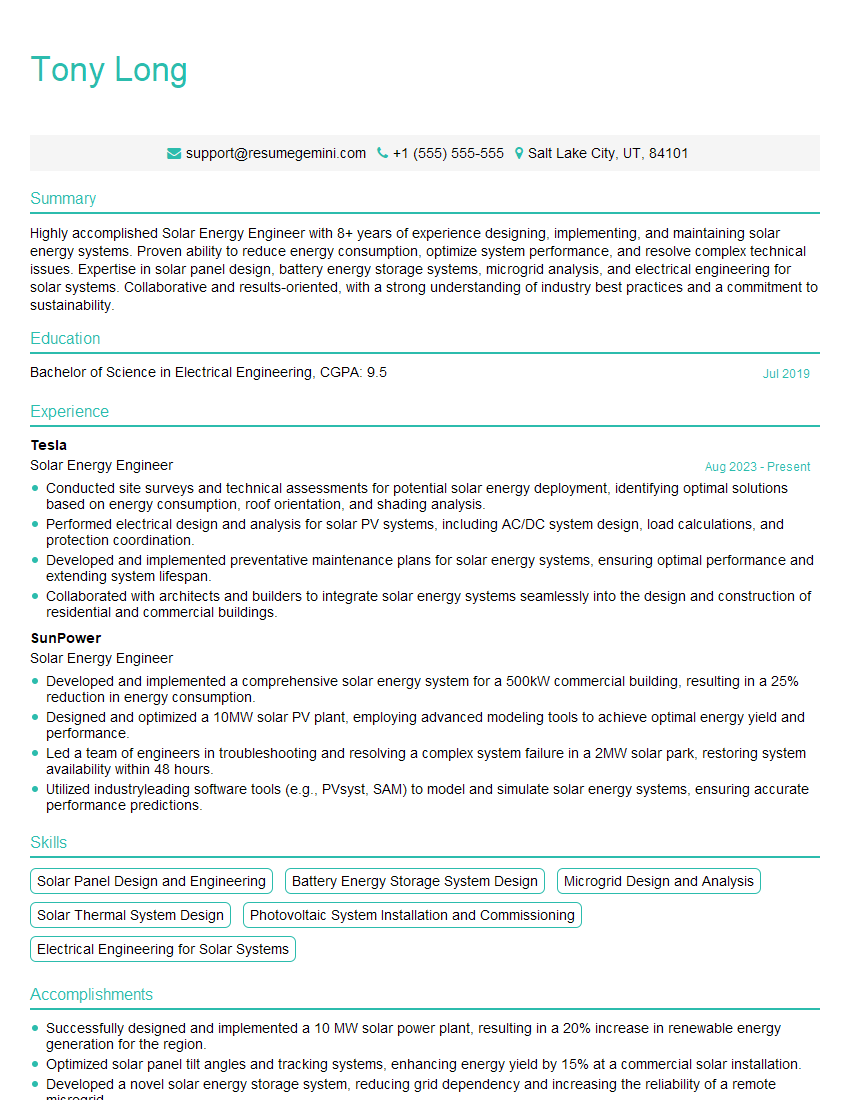
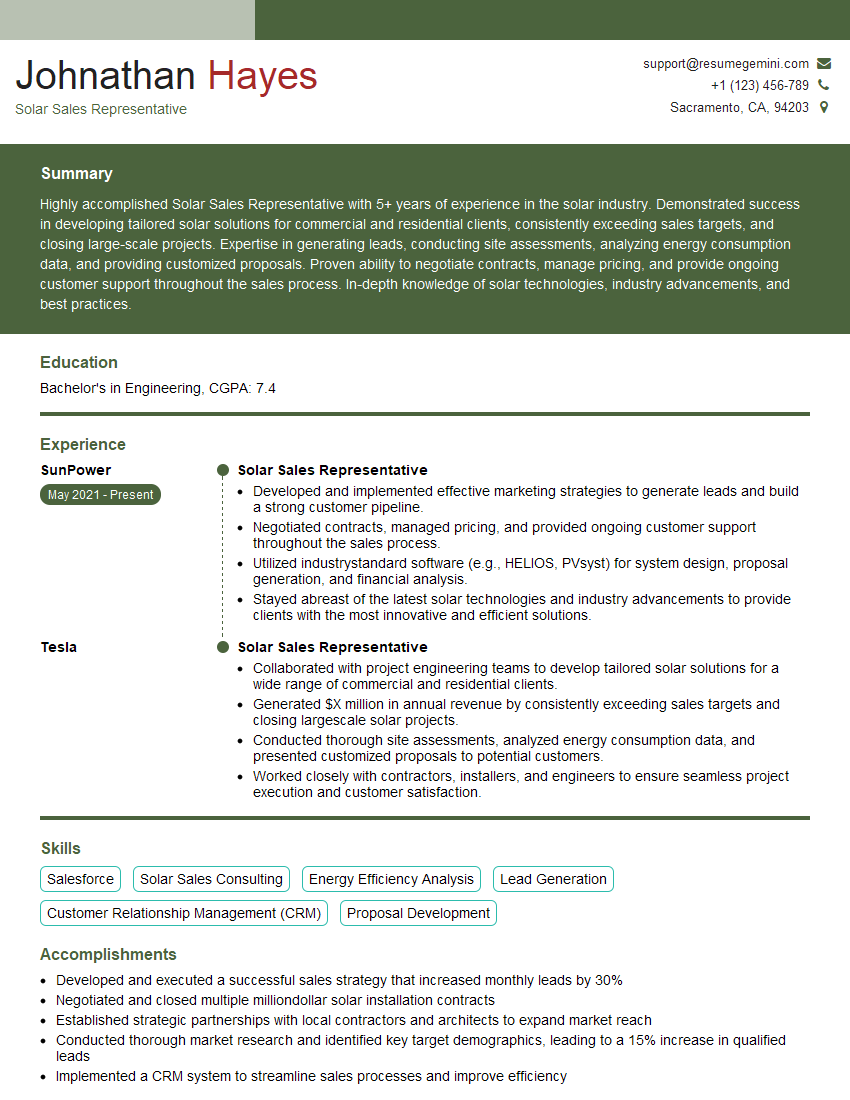
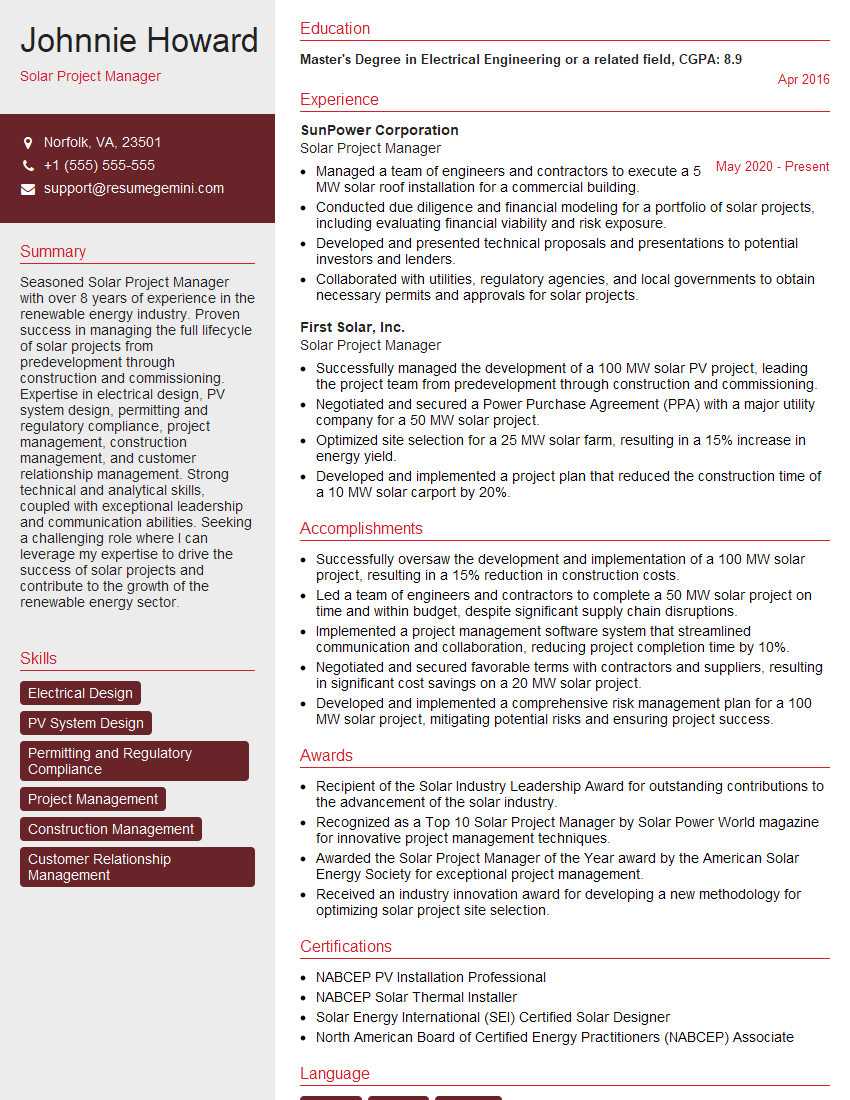
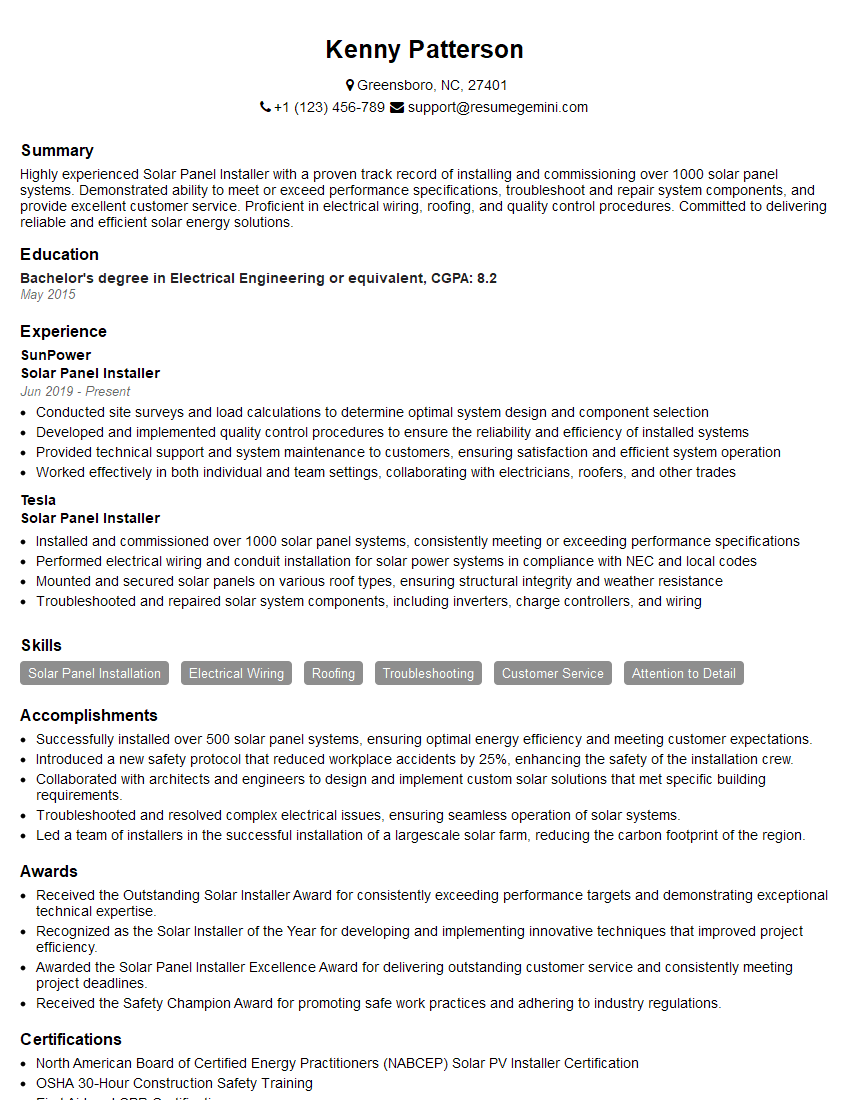
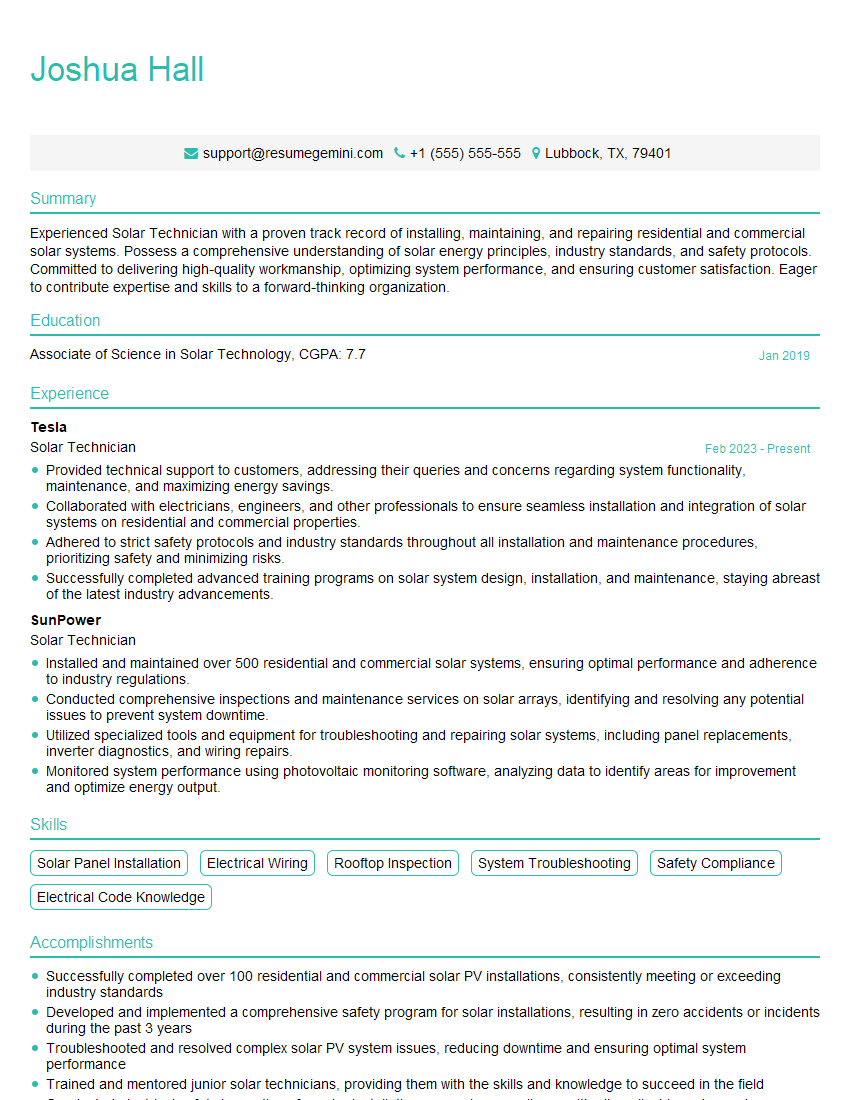
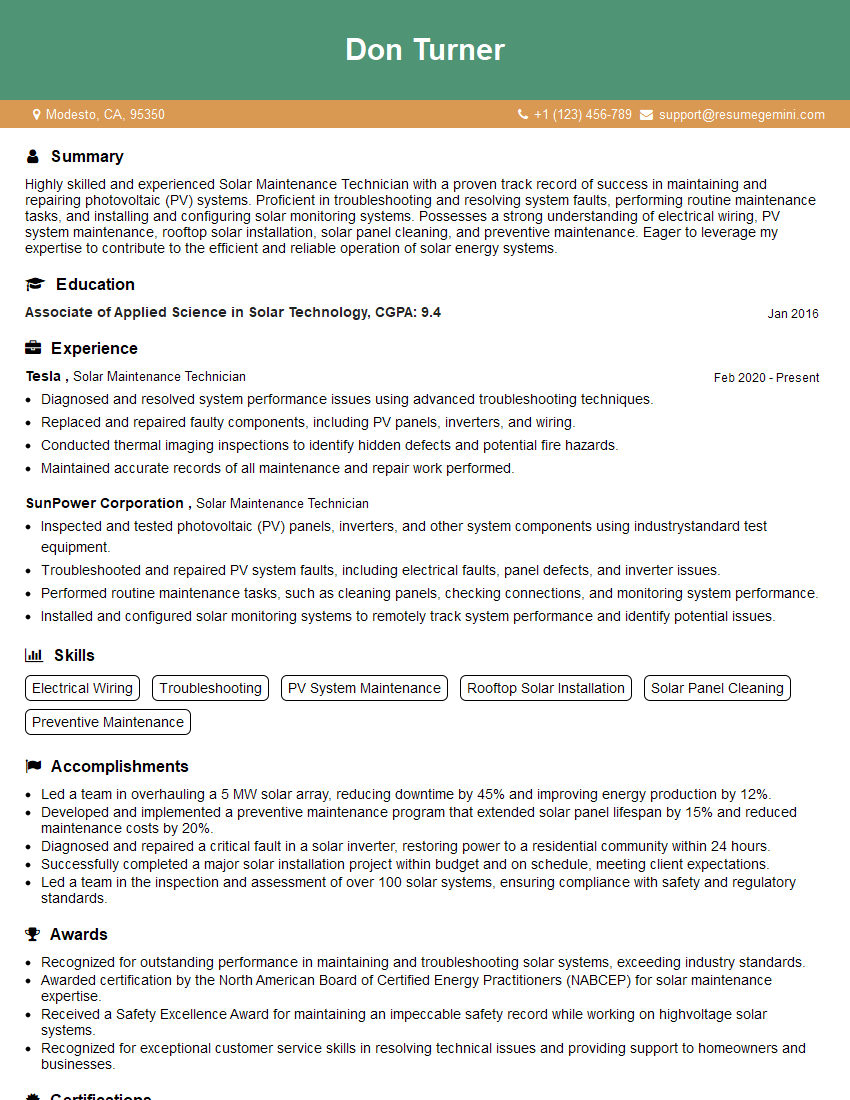
Mastering Commercial and Residential Solar Installation opens doors to a rewarding and rapidly growing career field. The demand for skilled professionals is high, offering excellent job security and potential for advancement. To maximize your chances of landing your dream job, it’s essential to create a resume that stands out. An ATS-friendly resume is key to getting past applicant tracking systems and into the hands of hiring managers. ResumeGemini is a trusted resource to help you build a professional and effective resume tailored to your specific skills and experience. Examples of resumes tailored to Commercial and Residential Solar Installation are available to help guide you.

Explore more articles
Users Rating of Our Blogs
Share Your Experience
We value your feedback! Please rate our content and share your thoughts (optional).
What Readers Say About Our Blog
To the interviewgemini.com Webmaster.
Very helpful and content specific questions to help prepare me for my interview!
Thank you
To the interviewgemini.com Webmaster.
This was kind of a unique content I found around the specialized skills. Very helpful questions and good detailed answers.
Very Helpful blog, thank you Interviewgemini team.