Unlock your full potential by mastering the most common Budget and Grant Writing interview questions. This blog offers a deep dive into the critical topics, ensuring you’re not only prepared to answer but to excel. With these insights, you’ll approach your interview with clarity and confidence.
Questions Asked in Budget and Grant Writing Interview
Q 1. Explain your experience in developing and managing budgets for grant-funded projects.
Developing and managing budgets for grant-funded projects requires meticulous planning and ongoing monitoring. It’s like creating a detailed roadmap for your project’s finances, ensuring you stay on track and accountable to the funder. My approach involves several key steps:
- Needs Assessment: First, I thoroughly analyze the project’s scope to identify all necessary expenses, from personnel costs and equipment to travel and materials. For example, in a community garden project, this would include seeds, tools, soil, and volunteer training expenses.
- Budget Development: Based on the needs assessment, I create a detailed budget, breaking down expenses into specific categories. This budget typically includes a narrative justification for each line item, explaining why the expense is necessary and how it contributes to the project’s goals.
- Budget Justification: I craft a compelling narrative explaining how the budget aligns with the project’s objectives. This often involves demonstrating cost-effectiveness and value for money. For example, justifying the cost of specialized software by showing its efficiency in data analysis.
- Monitoring and Reporting: Throughout the project’s lifecycle, I regularly monitor actual expenditures against the budgeted amounts. Any significant variances require investigation and explanation in my progress reports to the funder.
- Financial Management Software: I leverage financial management software to track expenses, generate reports, and ensure compliance with grant regulations. This streamlines the process and reduces the risk of errors.
For instance, in a recent project involving youth education, I successfully managed a $50,000 budget, ensuring that all funds were used effectively and accounted for, resulting in the successful completion of the program and exceeding all projected outcomes.
Q 2. Describe your process for researching and identifying potential funding sources.
Identifying potential funding sources is like panning for gold – it requires a systematic approach and persistence. My process involves:
- Needs Identification: I start by clearly defining the project’s needs and aligning them with potential funding priorities. What kind of funding is available for projects like mine?
- Online Databases: I utilize online databases such as GrantWatch, Foundation Directory Online, and government grant websites to search for grants relevant to the project’s area. I use keywords related to my project’s theme and target audience to refine my search.
- Networking: I actively network with colleagues, attend conferences, and join relevant professional organizations to learn about funding opportunities and build relationships with potential funders. Networking events can be invaluable for discovering hidden gems.
- Direct Contact: Once I’ve identified potential funders, I directly contact them to inquire about their funding priorities and application deadlines, ensuring a personalized approach.
- Prior Research on Funders: Before applying, I research each funder’s mission, past grants, and application guidelines. This allows me to tailor the proposal to their specific interests and requirements.
For example, by thoroughly researching a foundation’s past grant awards, I was able to identify a perfect match for a project focused on environmental sustainability, leading to a successful funding application.
Q 3. How do you prioritize grant opportunities based on organizational needs and funding likelihood?
Prioritizing grant opportunities is a strategic decision involving careful consideration of both organizational needs and the likelihood of funding success. I use a matrix approach:
- Organizational Alignment: I evaluate each opportunity based on how well it aligns with the organization’s strategic goals and priorities. Does it address a critical need? Will it create significant impact?
- Funding Likelihood: I assess the likelihood of success by reviewing the funder’s past grant awards, reviewing the requirements and restrictions, and evaluating the competitiveness of the grant.
- Resource Availability: I consider the organization’s capacity to manage the project. Do we have the necessary staff and resources to complete the project successfully?
- Grant Size & Timeline: The size of the grant and project timeline are also important factors. A smaller, shorter grant might be easier to obtain but provide less impact, while a large, long grant may be more challenging to secure but provide greater benefits.
I use a simple matrix, rating each opportunity on these factors, allowing for a visual prioritization. For example, a grant that perfectly aligns with the organization’s mission, has a high likelihood of success, and is manageable within our resources would receive a higher priority.
Q 4. What strategies do you employ to ensure compliance with grant regulations and reporting requirements?
Ensuring compliance with grant regulations and reporting requirements is crucial for maintaining the funder’s trust and ensuring continued funding. My strategies include:
- Thorough Review of Guidelines: I meticulously review all grant guidelines and regulations from the outset. I create a checklist to make sure every requirement is met.
- Detailed Record Keeping: I maintain meticulous records of all financial transactions, project activities, and communication with the funder. This helps in efficient reporting and audit preparation.
- Regular Reporting: I prepare and submit all reports promptly and accurately, adhering to the specified format and deadlines. I use templates provided by the funder to avoid errors.
- Internal Audits: I conduct regular internal audits to identify any potential compliance issues early on. This is proactive risk management.
- Seek Clarification: If I have any doubts or uncertainties about the regulations, I promptly seek clarification from the funder to avoid non-compliance issues.
For example, in one project, by proactively identifying and addressing a minor discrepancy in our financial reporting, we averted a potential audit issue and maintained a strong relationship with the funder.
Q 5. How do you tailor grant proposals to meet the specific requirements of different funding organizations?
Tailoring grant proposals to meet the specific requirements of different funding organizations is essential for maximizing the chances of success. It’s like crafting a personalized message for each potential investor.
- Understanding Funders’ Priorities: I thoroughly research each funder’s mission, past grants, and application guidelines. I look for keywords and themes that resonate with their focus areas.
- Adapting Language and Tone: I adjust the language and tone of the proposal to align with the funder’s style and preferences. Some funders prefer formal language, others a more conversational style.
- Highlighting Relevant Experience: I showcase relevant experience and expertise that directly addresses the funder’s priorities. I use strong, quantifiable results to show impact.
- Addressing Specific Requirements: I carefully review the application requirements and ensure that the proposal adheres to all specified formats, deadlines, and submission methods.
- Customizing the Narrative: I customize the narrative to resonate with the funder’s values and interests, demonstrating how the project aligns with their mission and priorities.
In one case, by tailoring the proposal to emphasize the community development aspects of a project, I secured funding from a foundation focused on improving underserved communities.
Q 6. Describe your experience in writing compelling narratives for grant proposals.
Writing compelling narratives for grant proposals is about storytelling—conveying the project’s importance, impact, and feasibility in a way that resonates with the funder. I use several techniques:
- Clearly Defining the Problem: I begin by clearly and concisely stating the problem the project addresses, using compelling data and statistics to illustrate its significance. This creates a need for the proposed solution.
- Developing a Compelling Solution: I present the proposed solution as a clear, innovative, and effective approach to addressing the problem. I showcase the project’s unique value proposition.
- Demonstrating Impact: I use data and evidence to demonstrate the project’s potential impact, including quantifiable metrics such as the number of people served or the expected outcomes. I paint a picture of success.
- Using Strong Storytelling: I use storytelling techniques to engage the reader, creating a narrative that is both informative and emotionally resonant. I use real-life examples and anecdotes to illustrate the problem and the solution.
- Strong Conclusion: I end with a strong call to action, reiterating the project’s significance and requesting funding. This leaves a lasting impression.
For example, in a proposal for a literacy program, I incorporated the story of a single student whose life was transformed by the program, making the impact of the project more relatable and meaningful to the funder.
Q 7. How do you manage multiple grant projects simultaneously while meeting deadlines?
Managing multiple grant projects simultaneously requires strong organizational skills and a proactive approach. My strategies include:
- Project Management Software: I use project management software (like Asana or Trello) to track tasks, deadlines, and progress across all projects. This provides a centralized view of all ongoing projects.
- Detailed Work Breakdown Structure (WBS): I create a detailed work breakdown structure for each project, breaking down tasks into smaller, manageable components. This makes it easier to assign responsibilities and track progress.
- Prioritization and Delegation: I prioritize tasks based on urgency and importance, and delegate tasks to team members where appropriate. This is key to efficient management.
- Regular Meetings: I hold regular meetings with team members to discuss progress, address challenges, and ensure everyone is on track. Communication is paramount.
- Time Management Techniques: I use time management techniques, such as time blocking and the Pomodoro Technique, to ensure I dedicate sufficient time to each project. This ensures balanced focus.
For example, through meticulous planning and utilization of project management tools, I’ve successfully managed three simultaneous grants, each with unique reporting requirements and deadlines, all while ensuring timely completion and exceeding the set goals.
Q 8. How do you track grant income and expenditures to ensure accurate budget reporting?
Tracking grant income and expenditures requires a meticulous and transparent system. Think of it like managing a personal budget, but with much higher accountability. We need to ensure every penny is accounted for, aligning perfectly with the grant agreement.
Dedicated Accounting Software: I utilize specialized software designed for grants management, which allows for detailed tracking of both income (grant awards) and expenses (personnel, materials, travel, etc.). This software often integrates with our general accounting system, ensuring data consistency.
Chart of Accounts: A clearly defined chart of accounts is crucial. This system categorizes every expense, making it easy to see how funds are spent against budget line items specified in the grant proposal. For example, ‘Personnel Costs’ might be further broken down into ‘Salaries’, ‘Benefits’, and ‘Consultant Fees’.
Regular Reconciliation: I perform regular reconciliations, comparing bank statements and grant-specific accounts to the accounting software. This identifies any discrepancies early on, preventing larger issues down the line. Think of it as a regular health check for your budget.
Detailed Documentation: Every expense must be supported by appropriate documentation, including invoices, receipts, and payment records. This is critical for audits and ensures transparency.
Reporting: The software generates regular reports that show income, expenditures, and budget variances. These reports are essential for communicating progress to funders and for internal monitoring.
Q 9. Describe a situation where you had to revise a budget due to unforeseen circumstances.
In one project focused on community outreach programs, we experienced an unforeseen surge in participant numbers. This was fantastic news, indicating a greater need for our services than initially anticipated, but it created a budget challenge. The original budget assumed a lower participation rate.
To address this, we immediately developed a revised budget. We detailed the increased costs associated with the higher participation (e.g., additional materials, increased staff time, expanded venue needs). We then proactively reached out to the granting organization, explaining the situation, presenting our revised budget with justification for the increased costs, and highlighting the positive impact of exceeding expectations. Fortunately, they understood and approved the supplemental funding request.
This experience highlighted the importance of having a flexible budgeting process and maintaining strong communication with the funder.
Q 10. What software or tools do you use for budget management and grant proposal writing?
For budget management, I rely heavily on GrantTrack and Fluxx. These software solutions provide robust tools for tracking income and expenses, creating customized reports, and managing multiple grants simultaneously. For proposal writing, I utilize Microsoft Word for the main document and Adobe Acrobat Pro for formatting and PDF creation. I also use Google Docs for collaboration with team members.
Beyond software, I utilize various online tools like budget templates and grant research databases to streamline the process and enhance efficiency.
Q 11. How do you build and maintain relationships with grant funders?
Building and maintaining relationships with grant funders is akin to cultivating any valuable professional relationship: it requires consistent effort, genuine engagement, and clear communication. It’s not just about asking for money; it’s about building trust and demonstrating shared goals.
Networking: Attending grant-writing workshops, conferences, and funder information sessions is vital for meeting potential funders and learning about their priorities.
Informative Communication: Regularly updating funders on project progress (both successes and challenges) shows transparency and commitment.
Personalized Proposals: Tailor proposals to each funder’s specific guidelines and interests. Generic proposals rarely succeed.
Follow-Up: After submitting a proposal, follow up with a thank-you note and express continued interest in collaboration. This demonstrates professionalism and enthusiasm.
Relationship Building: Even if a grant isn’t awarded, maintain the relationship. You might find other opportunities for collaboration in the future.
Q 12. How do you measure the success of a grant-funded project?
Measuring the success of a grant-funded project requires a well-defined set of metrics established before the project commences. These metrics should directly relate to the project’s stated goals and objectives as outlined in the grant proposal. Think of it as setting milestones before embarking on a journey.
Quantitative Data: This involves collecting numerical data, such as the number of participants served, the amount of materials distributed, or the percentage increase in a specific outcome. For example, in an educational grant, the number of students showing improvement in test scores could be a key metric.
Qualitative Data: This often involves collecting feedback through surveys, interviews, or focus groups to understand the project’s impact on participants. For instance, gathering testimonials from beneficiaries can provide valuable qualitative insights.
Reporting: Regular progress reports and a final report, summarizing the achieved results against the established metrics, are crucial for demonstrating success to the funder.
Q 13. What is your experience with different types of grants (e.g., government, foundation, corporate)?
My experience spans a range of grant types, each with its unique requirements and application processes.
Government Grants: These often involve rigorous application processes, extensive reporting requirements, and a strong focus on public benefit. The process is typically very formal and competitive.
Foundation Grants: Foundations vary widely in their focus and funding priorities. Some focus on specific geographic areas or issue areas. The application process may be less formal than government grants but still requires a well-written proposal showcasing alignment with the foundation’s mission.
Corporate Grants: Corporate grants often focus on initiatives that align with a company’s social responsibility goals. These grants can provide a significant funding source but may have specific requirements related to brand visibility or partnership opportunities.
Understanding the nuances of each type is essential for successful grant seeking.
Q 14. How do you address potential challenges or risks in grant proposals?
Addressing potential challenges and risks proactively is crucial for a strong grant proposal. It demonstrates foresight and planning, boosting the funder’s confidence in your ability to execute the project successfully.
Risk Assessment: Identify potential challenges (e.g., limited resources, unexpected delays, personnel changes). This involves a systematic review of all aspects of the project.
Mitigation Strategies: For each identified risk, develop a detailed mitigation strategy. This could include contingency plans, alternative approaches, or buffer time built into the timeline.
Transparent Communication: Clearly articulate the potential challenges and your proposed mitigation strategies in the grant proposal. This honesty builds trust and shows you’ve thought critically about potential setbacks.
Flexibility: Demonstrate a willingness to adapt and adjust the project plan if necessary. This flexibility is key to handling unforeseen circumstances.
Q 15. What is your understanding of grant reporting requirements and timelines?
Grant reporting requirements and timelines are crucial for maintaining transparency and accountability with funding agencies. They vary depending on the funder, the grant type, and the project’s scope, but generally involve submitting regular progress reports, financial statements, and final reports. These reports detail how grant funds were used, the project’s progress toward achieving its objectives, and the overall impact.
Timelines are strictly enforced, with penalties for late submissions. For example, a quarterly report might be due within 30 days of the end of each quarter, while a final report might be due within 90 days of project completion. Failure to meet deadlines can result in loss of funding or future grant opportunities. I’ve successfully managed reporting for numerous grants, adhering to diverse timelines and requirements, leveraging project management software to track deadlines and ensure timely and accurate submissions. I always proactively communicate potential delays to the funder to avoid negative consequences.
- Interim Reports: These provide updates on progress, challenges, and anticipated outcomes during the grant period.
- Financial Reports: These detail how funds were expended, including invoices, receipts, and bank statements, ensuring compliance with budget guidelines.
- Final Reports: These provide a comprehensive summary of the project, its achievements, outcomes, and impact, often including data analysis and a detailed financial reconciliation.
Career Expert Tips:
- Ace those interviews! Prepare effectively by reviewing the Top 50 Most Common Interview Questions on ResumeGemini.
- Navigate your job search with confidence! Explore a wide range of Career Tips on ResumeGemini. Learn about common challenges and recommendations to overcome them.
- Craft the perfect resume! Master the Art of Resume Writing with ResumeGemini’s guide. Showcase your unique qualifications and achievements effectively.
- Don’t miss out on holiday savings! Build your dream resume with ResumeGemini’s ATS optimized templates.
Q 16. Explain your experience with indirect cost allocation and budget justification.
Indirect cost allocation refers to allocating a portion of administrative and operational costs (e.g., utilities, building maintenance, administrative staff salaries) to sponsored projects. Budget justification involves providing a detailed explanation of all budget items, demonstrating the necessity and reasonableness of each expense.
My experience includes developing detailed budget justifications that clearly link expenses to project activities and demonstrate cost-effectiveness. For instance, I justified the allocation of indirect costs using a modified cost accounting system, ensuring that the percentage of indirect costs allocated to each grant aligns with the funder’s guidelines and our institution’s established policies. A key aspect is creating a clear narrative that explains not just the ‘what’ (the expense) but also the ‘why’ (the rationale for the expense in relation to project objectives) and ‘how’ (how the expense contributes to achieving project goals).
I also have experience negotiating indirect cost rates with various funding agencies. Understanding the nuances of indirect cost allocation and the complexities of different funding agency requirements is critical. I can proficiently handle this aspect of grant management, ensuring compliance and maximizing the potential for funding.
Q 17. Describe your proficiency in using financial forecasting and budgeting tools.
Proficiency in financial forecasting and budgeting tools is essential for effective grant management. I’m adept at using various software such as Excel, specialized grant management systems, and budgeting software. These tools allow for accurate budgeting, forecasting, and monitoring of project expenses.
For example, I utilize Excel to create detailed budgets, incorporating formulas to automatically calculate totals and track expenses. I regularly use forecasting tools to project future expenses based on historical data, allowing for proactive adjustments to the budget and preventing potential shortfalls. My experience extends to using specialized grant management software that integrates budgeting, reporting, and tracking features, streamlining the entire grant lifecycle. This allows me to effectively manage multiple grants simultaneously and produce accurate reports effortlessly.
Q 18. How do you handle budget shortfalls or unexpected expenses?
Budget shortfalls or unexpected expenses are inevitable in grant management. My approach involves a proactive, multi-step process.
- Identify the Problem: Thoroughly investigate the cause of the shortfall or unexpected expense, documenting all relevant information.
- Assess the Impact: Evaluate the severity of the situation, determining the potential impact on the project’s timelines and deliverables.
- Develop Solutions: Explore potential solutions, ranging from re-allocating funds within the existing budget to seeking additional funding sources or negotiating extensions with funders. This might involve cutting non-essential expenses, identifying cost-saving opportunities, or seeking additional funding from other sources.
- Communicate Proactively: Immediately communicate the issue and proposed solutions to relevant stakeholders, including funders, project team members, and institutional administrators. Open communication is key to mitigating the impact of unexpected situations.
- Implement & Monitor: Implement the chosen solution, monitoring its effectiveness and adjusting as needed. Regular tracking of expenses and proactive communication prevent small issues from escalating into significant problems.
In a real-world scenario, I once encountered an unexpected increase in equipment costs for a research project. I promptly documented the issue, developed a revised budget, and presented it to the funder along with a compelling justification for the additional funds. Transparent communication and a well-supported request led to successful approval for the increased budget, allowing the project to proceed as planned.
Q 19. What is your approach to developing a comprehensive grant proposal budget?
Developing a comprehensive grant proposal budget requires a systematic approach. It’s not just a list of expenses, but a strategic document that demonstrates the project’s fiscal responsibility and aligns with the proposed activities and outcomes.
- Understand the Funder’s Guidelines: Carefully review the funder’s guidelines and budget instructions, paying close attention to allowable expenses and cost-sharing requirements.
- Detailed Budget Breakdown: Create a detailed budget breakdown, categorizing expenses into personnel costs, equipment, supplies, travel, indirect costs, etc., ensuring each item is clearly justified.
- Realistic Cost Estimates: Develop realistic cost estimates based on market research, historical data, and consultations with relevant vendors and experts. Always provide supporting documentation.
- Narrative Justification: Provide a narrative justification for each budget item, linking it to specific project activities and demonstrating its necessity for achieving project goals.
- Budget Summary: Prepare a concise budget summary table that clearly presents the total budget and the allocation of funds to different categories.
- Compliance & Accuracy: Ensure the budget complies with the funder’s guidelines, using consistent formatting and accurate figures.
For instance, when preparing a budget for a community health program, I carefully itemized expenses such as staff salaries, program materials, community outreach activities, and evaluation costs. The justification emphasized the cost-effectiveness of each component, aligning with program goals and showing how the budget ensures the project’s success and impact.
Q 20. How do you ensure the accuracy and completeness of financial information in grant applications?
Ensuring the accuracy and completeness of financial information in grant applications is paramount. This requires meticulous attention to detail, a thorough understanding of accounting principles, and strict adherence to ethical practices.
- Data Validation: Verify all financial data using multiple sources, cross-checking figures and ensuring consistency.
- Documentation: Maintain detailed documentation for all expenses, including invoices, receipts, and bank statements. This is essential for audits and compliance.
- Internal Review: Undergo internal review by a colleague or supervisor to identify and correct any errors or omissions before submission.
- Compliance: Ensure compliance with all relevant regulations and guidelines, such as cost allocation principles and indirect cost rates.
- Accuracy Checks: Employ various checks to ensure accuracy, such as double-entry bookkeeping and reconciliation of accounts.
For example, before submitting a grant application, I always meticulously review every expense and supporting document, ensuring that all entries are properly coded and documented, and that all financial information aligns with the narrative description of project activities. I also utilize checklists and internal review procedures to minimize errors and omissions, thereby increasing the likelihood of a successful grant application.
Q 21. Explain your understanding of different grant application processes (e.g., online portals, paper submissions).
My understanding of grant application processes encompasses both online portals and paper submissions. While online portals are increasingly prevalent, offering streamlined submission and tracking, paper submissions still exist, especially for smaller or less technologically advanced organizations.
Online Portals: These systems typically require applicants to create accounts, upload documents, and complete online forms. I’m proficient in navigating various online grant management systems, understanding their specific requirements for document formatting and submission. I’m familiar with common features such as progress tracking, communication tools, and reporting modules. For instance, I have successfully used systems like Grants.gov and various institutional grant management systems, ensuring timely and accurate submission of grant applications.
Paper Submissions: Paper submissions require careful attention to formatting and mailing deadlines. I understand the importance of accurate addressing, proper documentation, and adhering to specific instructions for paper submission. I’m adept at managing the logistical challenges associated with paper submissions, ensuring all necessary documents are included and that deadlines are met.
Regardless of the submission method, I always prioritize meticulous preparation and careful review of all submitted documents to minimize errors and maximize the chances of a successful application.
Q 22. How do you stay updated on current trends in grant funding and regulations?
Staying current in the dynamic world of grant funding requires a multi-pronged approach. It’s not just about knowing the rules; it’s about understanding the trends and anticipating future shifts.
- Professional Networks: I actively participate in professional organizations like the Grant Professionals Association (GPA) and attend their conferences and webinars. These events offer invaluable insights into emerging funding priorities and regulatory changes directly from funders and experts.
- Subscription Services: I subscribe to reputable grant-related publications and newsletters that provide timely updates on funding opportunities and regulatory shifts. This allows me to stay informed on a regular basis.
- Government Websites: I regularly monitor the websites of federal, state, and local granting agencies. These sites are the primary source of information for grant announcements, application guidelines, and any changes to regulations.
- Funders’ Websites: I directly engage with the websites of specific foundations and organizations whose grants are relevant to my work. Their individual guidelines and funding priorities change, so direct engagement is essential.
- Networking: I maintain a strong network of colleagues and peers in the grant writing field. Sharing information and discussing current trends informally contributes significantly to my knowledge base.
This combination of active engagement and information gathering ensures I’m always prepared to navigate the ever-evolving landscape of grant funding.
Q 23. Describe a time you had to overcome a significant challenge in securing a grant.
Securing a grant for a rural community health clinic presented a significant challenge due to their limited existing data and capacity. The funder required robust evaluation metrics, but the clinic lacked the systems to collect and track the necessary data.
My strategy involved a multi-step approach:
- Collaboration: I worked closely with the clinic staff to identify their existing data sources and capacity limitations.
- Data Collection Plan: We developed a detailed data collection plan that was feasible within their resources. This included utilizing simple, easily implemented tracking systems and training staff on data entry.
- Evaluation Methodology: I designed an evaluation plan that focused on accessible metrics and clearly tied program outcomes to the funder’s priorities. We focused on readily quantifiable metrics, such as patient visits and improved health indicators.
- Capacity Building: The proposal included a budget allocation for training clinic staff on data collection and analysis, addressing the capacity gap.
By directly addressing the funder’s concerns through a well-structured, realistic plan, we successfully secured the grant. This experience highlighted the importance of understanding not only the funder’s requirements but also the capabilities of the applicant organization and tailoring the proposal to bridge the gap.
Q 24. How do you collaborate with program staff to ensure alignment between program activities and grant objectives?
Ensuring alignment between program activities and grant objectives requires ongoing, collaborative communication. This is best achieved through a process of shared understanding and continuous feedback.
- Joint Goal Setting: I start by facilitating workshops and meetings with program staff to clearly define project goals and objectives, ensuring everyone understands the grant’s requirements. We create a shared vision document.
- Regular Check-ins: We establish regular progress meetings to monitor activities, track progress toward objectives, and identify potential challenges early on. This allows for course correction as needed.
- Data Sharing and Analysis: We utilize shared platforms for tracking data and analyzing progress towards milestones. This shared view ensures transparency and accountability.
- Open Communication: I create an environment of open communication where program staff feel comfortable raising concerns or suggesting adjustments. This fosters a collaborative approach to problem-solving.
- Documentation: All agreements, plans, and changes are meticulously documented. This documentation serves as a useful record, especially when it comes time for reporting.
This iterative and collaborative approach ensures that the program stays focused on achieving its goals, aligns with the funder’s expectations, and maximizes the impact of the grant funding.
Q 25. What is your experience in presenting budget information to stakeholders?
Presenting budget information to stakeholders requires clarity, transparency, and the ability to tailor the message to the audience’s understanding. My approach involves:
- Audience Analysis: Before presenting, I analyze the audience’s familiarity with budgets and financial matters. This informs how I structure the presentation and explain complex financial concepts.
- Visual Aids: I utilize visual aids such as charts, graphs, and tables to present complex financial data in an easily digestible format. A picture is worth a thousand words, especially when it comes to budget numbers.
- Narrative Explanation: I don’t simply present numbers; I contextualize them within the overall project goals and objectives. I tell the story of how the funds will be used to achieve the desired outcomes.
- Q&A Session: I always allow time for questions and address concerns proactively. This demonstrates transparency and fosters trust.
- Follow-up Documentation: I provide stakeholders with a written summary of the budget and any relevant supporting documents. This ensures they can refer back to the information at their convenience.
Through a combination of clear communication, visual aids, and interactive engagement, I ensure stakeholders fully understand the budget and its importance to project success.
Q 26. How do you evaluate the return on investment (ROI) of a grant-funded project?
Evaluating the ROI of a grant-funded project goes beyond simply looking at financial returns. It requires a holistic approach that assesses both quantitative and qualitative impacts.
- Pre-defined Metrics: We establish key performance indicators (KPIs) during the proposal development stage. These should align with the grant objectives and be measurable.
- Quantitative Data: We collect and analyze quantitative data, such as the number of people served, cost savings achieved, or changes in specific outcomes (e.g., reduction in hospital readmissions).
- Qualitative Data: We gather qualitative data through surveys, interviews, and focus groups to assess the project’s impact on participants’ lives and satisfaction.
- Cost-Benefit Analysis: We conduct a cost-benefit analysis to compare the total cost of the project with the value of the benefits it produced. This can include both direct and indirect benefits.
- Sustainability Plan: We assess the long-term sustainability of the project’s impact. Can the positive effects be maintained even after the grant funding ends?
By combining these methods, we create a comprehensive picture of the project’s ROI, showcasing its overall value and impact to both the funder and the community served. This helps justify future grant applications and demonstrates the effectiveness of investments in similar projects.
Q 27. How do you ensure data integrity and accuracy in financial reporting?
Data integrity and accuracy in financial reporting are paramount. My approach focuses on prevention and verification at every stage:
- Robust Accounting Systems: We utilize a reliable and secure accounting system that tracks all financial transactions accurately and consistently. This often involves using specialized grant management software.
- Internal Controls: We implement strong internal controls, including segregation of duties, to prevent errors and fraud. For instance, different individuals handle different aspects of the financial process.
- Regular Reconciliation: We regularly reconcile bank statements and other financial records to ensure accuracy. This means comparing what the bank says happened to what our records say happened.
- Audits: We conduct regular internal audits to assess the effectiveness of our internal controls and identify any potential weaknesses. For larger grants, external audits are typically required by the funder.
- Documentation: All financial transactions are meticulously documented with supporting evidence. This helps track financial activity and helps resolve any questions that may arise during reporting or audits.
By combining preventative measures with robust verification processes, we ensure the highest level of accuracy and transparency in our financial reporting. This maintains trust with funders and avoids costly errors or misunderstandings.
Q 28. How do you manage the grant lifecycle, from proposal development to final reporting?
Managing the grant lifecycle requires a structured and organized approach. I utilize a project management framework that breaks the process into distinct phases:
- Pre-Award Phase: This involves identifying funding opportunities, conducting preliminary research on funders, developing a compelling proposal, and submitting the application.
- Award Phase: Once the grant is awarded, we negotiate the grant agreement, set up the necessary accounts, and establish a project timeline and budget.
- Implementation Phase: This is where the actual program activities take place. We monitor progress, track expenses, and ensure the project is on track to meet its goals.
- Monitoring and Evaluation Phase: Throughout the implementation phase, we continuously monitor progress and collect data to evaluate the project’s effectiveness. This helps identify any challenges and allows for course correction.
- Closeout Phase: This involves submitting the final financial report, providing a narrative summary of accomplishments, and ensuring all project activities are completed.
By clearly defining each phase and utilizing project management tools like Gantt charts and spreadsheets, we ensure a smooth and efficient grant lifecycle. This also facilitates effective communication and collaboration among all stakeholders involved.
Key Topics to Learn for Budget and Grant Writing Interview
- Budget Development & Management: Understanding the principles of budgeting, including forecasting, resource allocation, and variance analysis. Practical application: Creating a realistic budget for a hypothetical project, justifying expense categories.
- Grant Research & Proposal Writing: Identifying suitable funding opportunities, understanding grant guidelines, and crafting compelling proposals that align with funder priorities. Practical application: Analyzing a Request for Proposals (RFP) and outlining a tailored response strategy.
- Narrative Writing & Storytelling: Communicating the impact of your organization and the value of your proposed project through clear, concise, and persuasive writing. Practical application: Developing a compelling narrative that highlights the problem, solution, and expected outcomes of a grant proposal.
- Compliance & Reporting: Adhering to grant regulations, maintaining accurate records, and submitting timely and comprehensive reports to funders. Practical application: Designing a system for tracking grant expenditures and preparing progress reports.
- Financial Forecasting & Projections: Developing realistic financial models to predict future revenue and expenses, and demonstrating the long-term sustainability of projects. Practical application: Projecting the financial impact of a grant over a multi-year period.
- Grant Evaluation & Metrics: Developing measurable objectives and key performance indicators (KPIs) to assess the success of grant-funded projects. Practical application: Defining clear metrics and tracking mechanisms to evaluate the impact of a funded initiative.
Next Steps
Mastering budget and grant writing is crucial for career advancement in numerous sectors, opening doors to impactful roles with significant responsibility. A strong understanding of these skills allows you to secure funding for vital projects and demonstrate your ability to manage resources effectively. To maximize your job prospects, focus on creating an ATS-friendly resume that showcases your expertise. ResumeGemini is a trusted resource that can help you build a professional and impactful resume. Examples of resumes tailored to Budget and Grant Writing are available to guide your process, ensuring your qualifications shine.
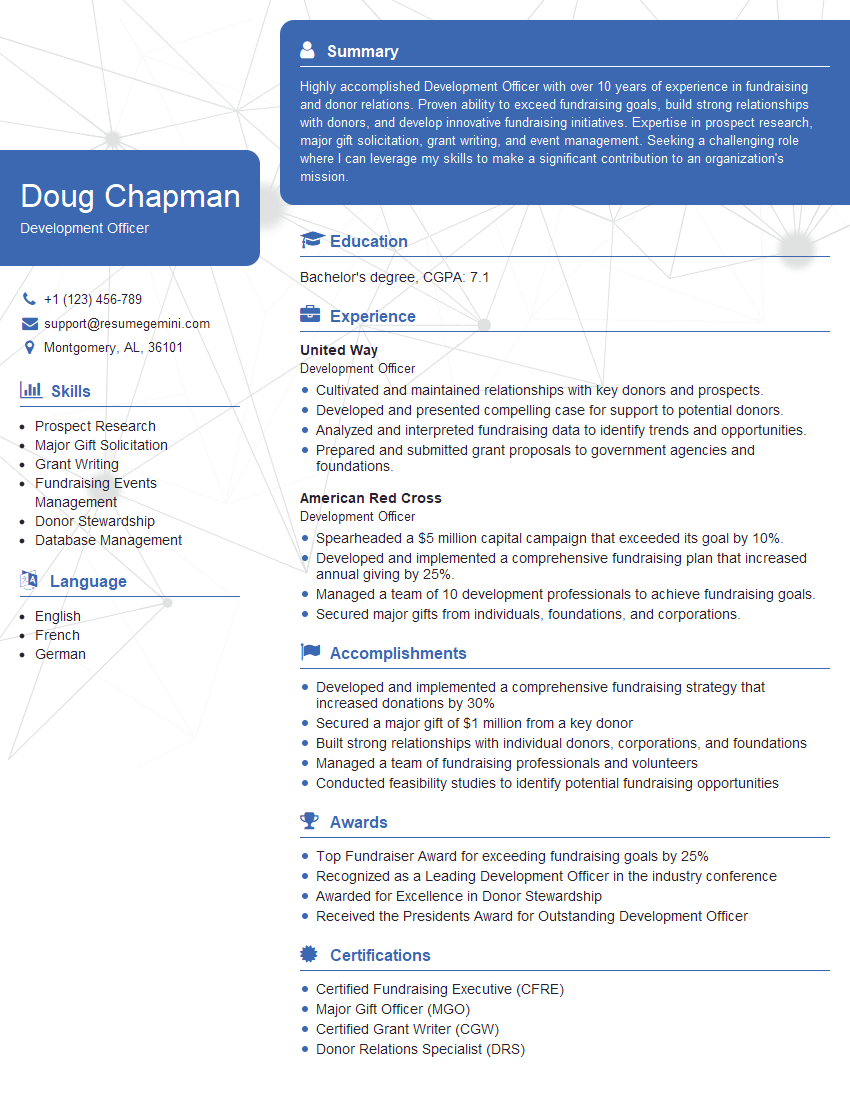
Development Officer Resume Sample
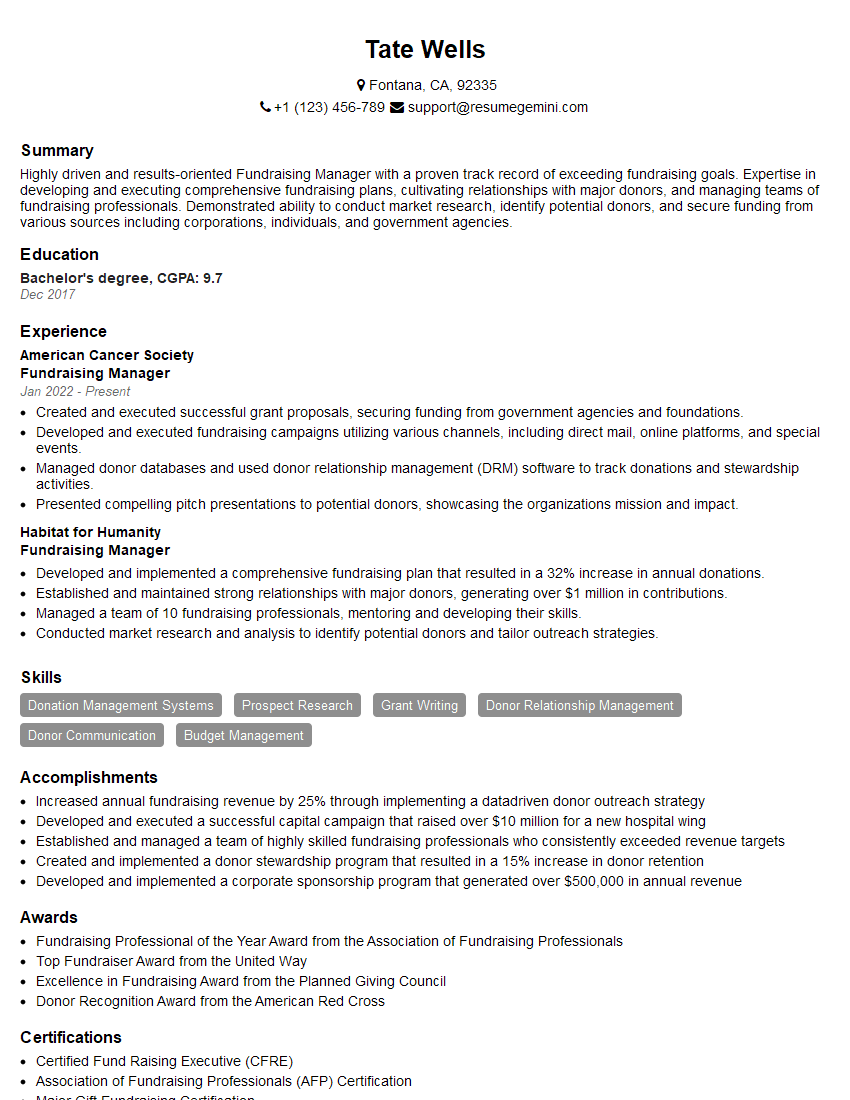
Fundraising Manager Resume Sample
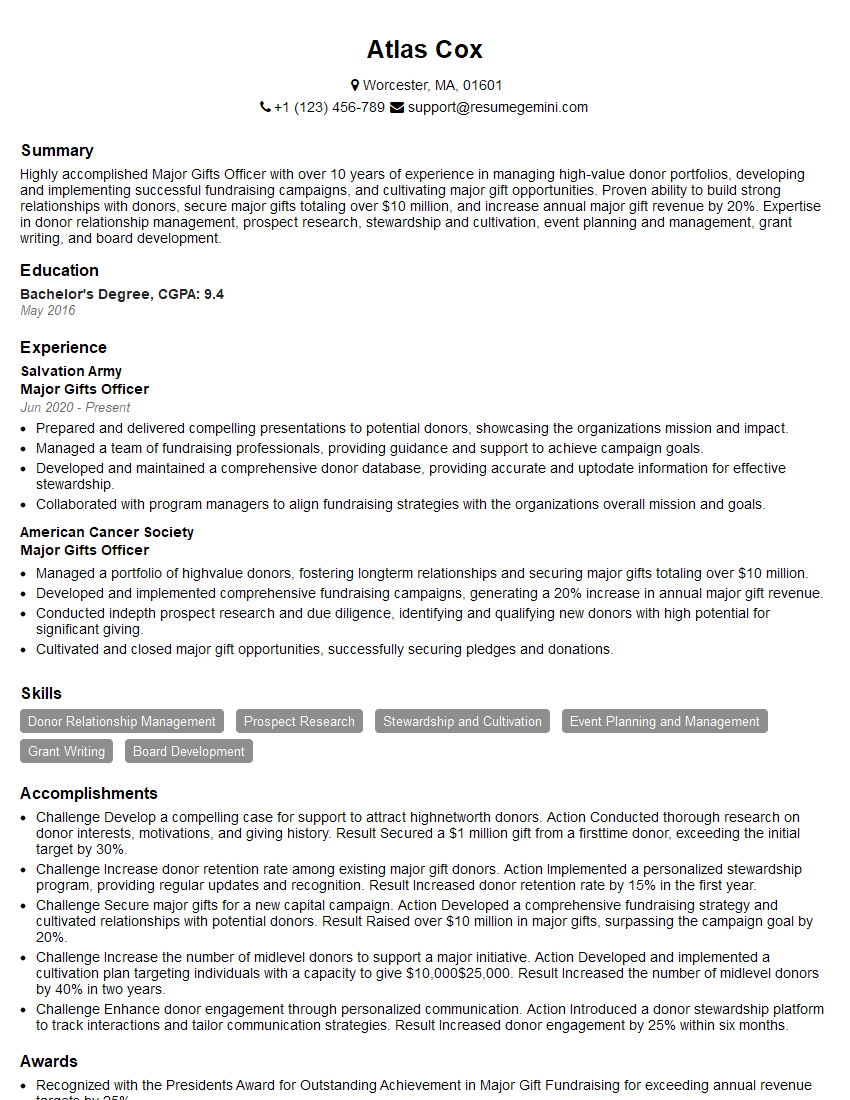
Major Gifts Officer Resume Sample
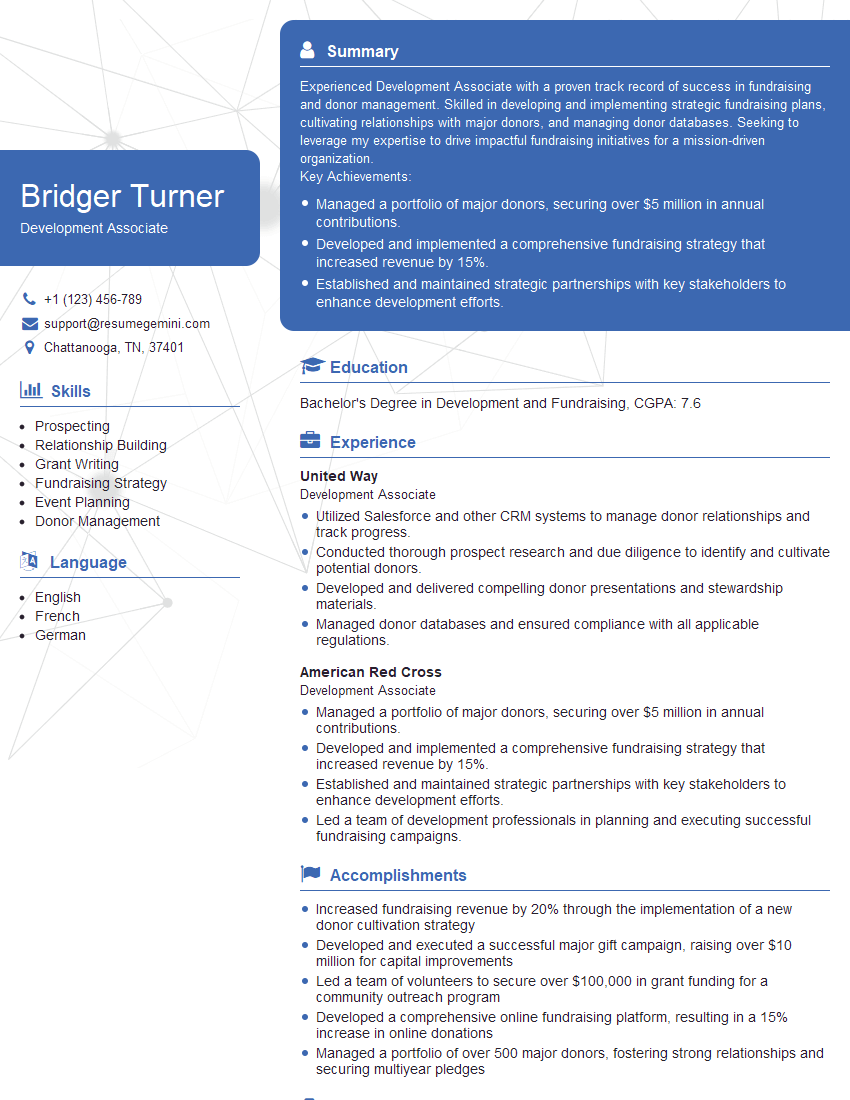
Development Associate Resume Sample
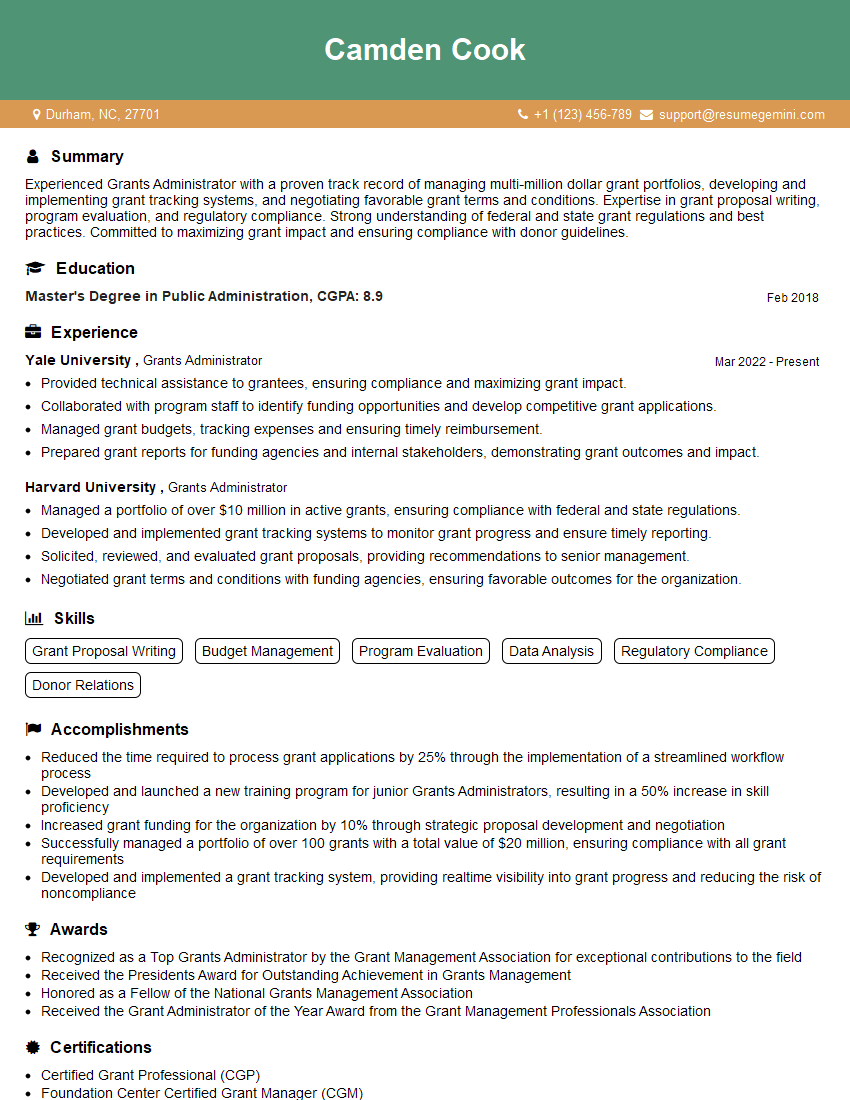
Grants Administrator Resume Sample
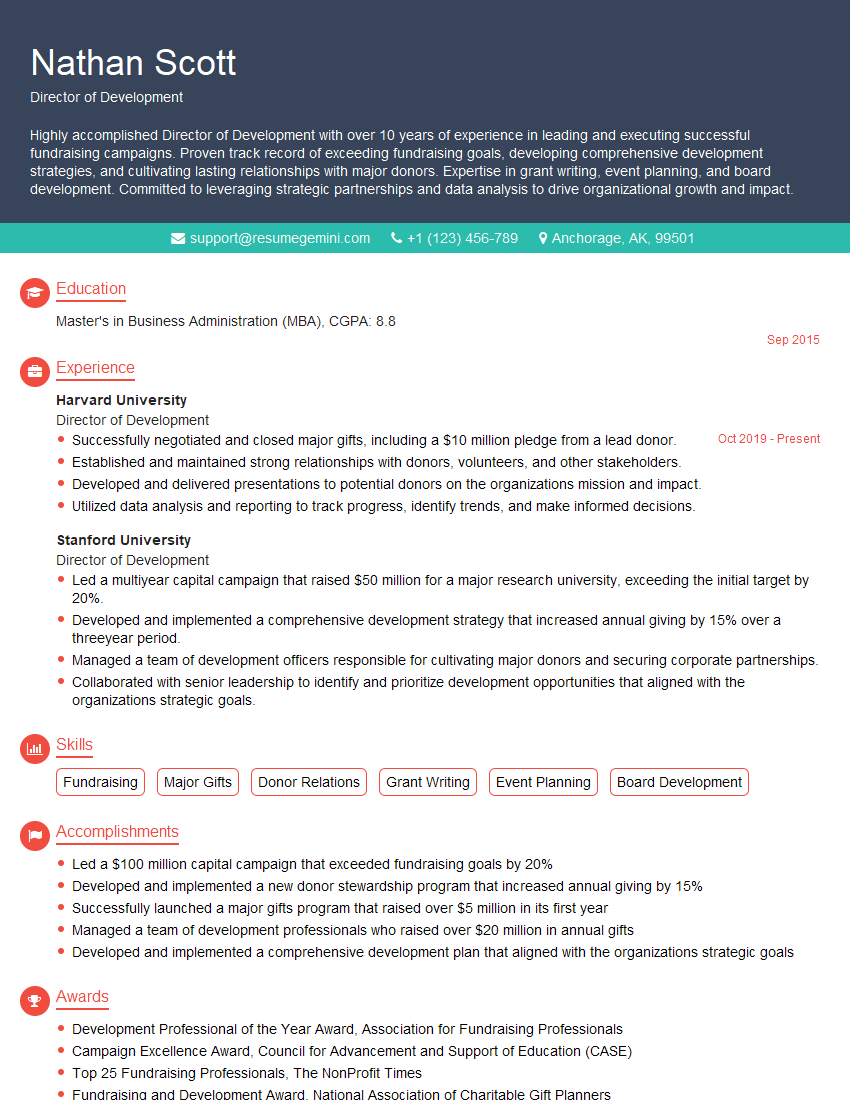
Director of Development Resume Sample
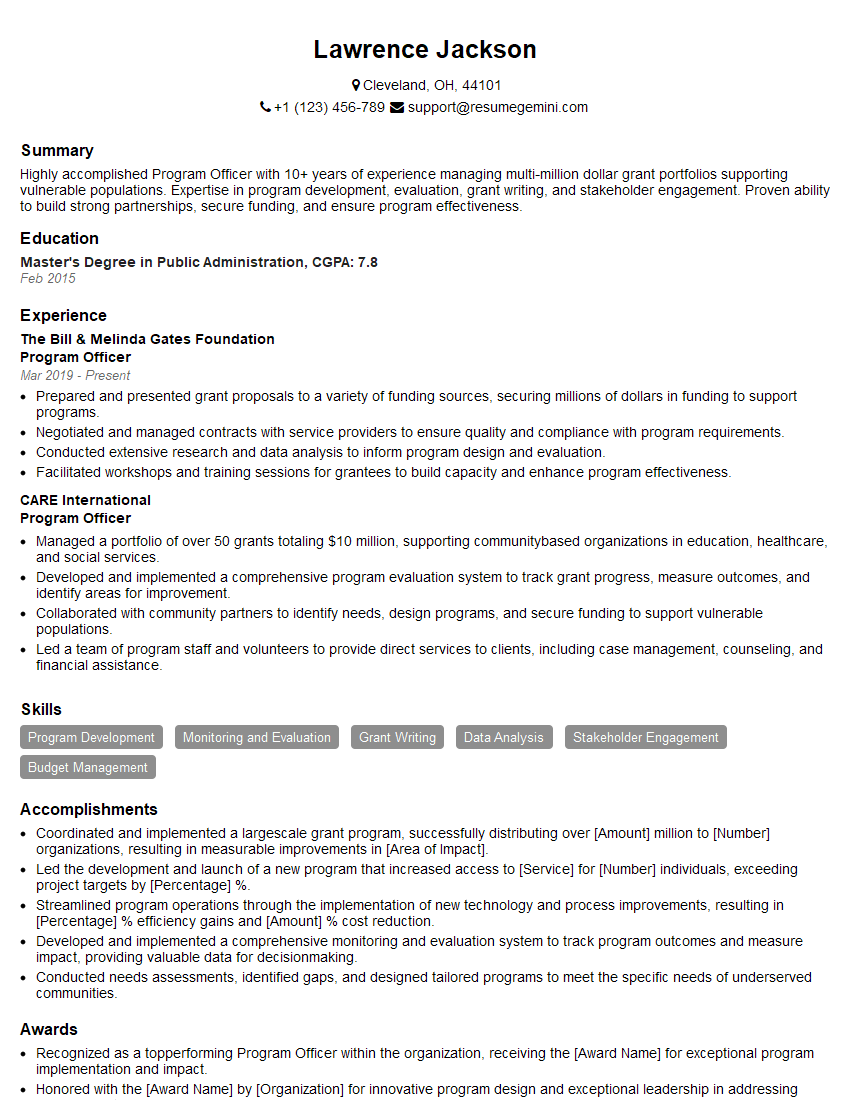
Program Officer Resume Sample
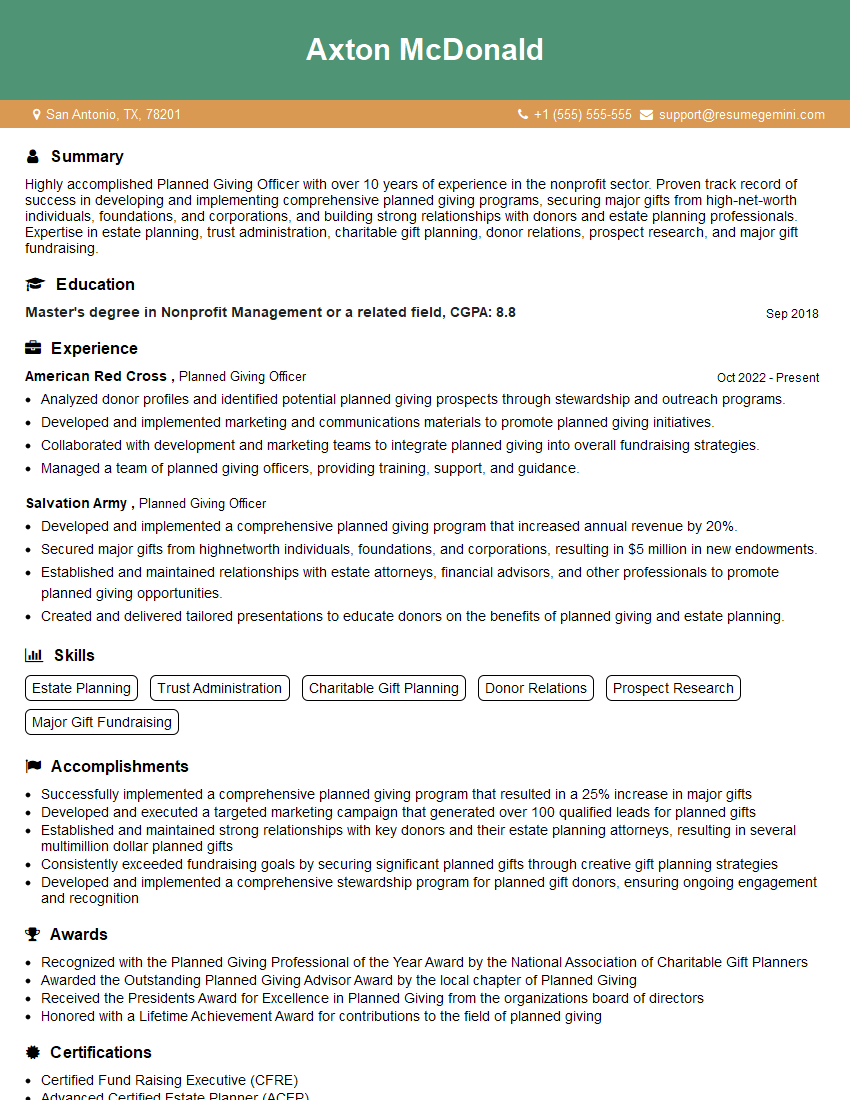
Planned Giving Officer Resume Sample
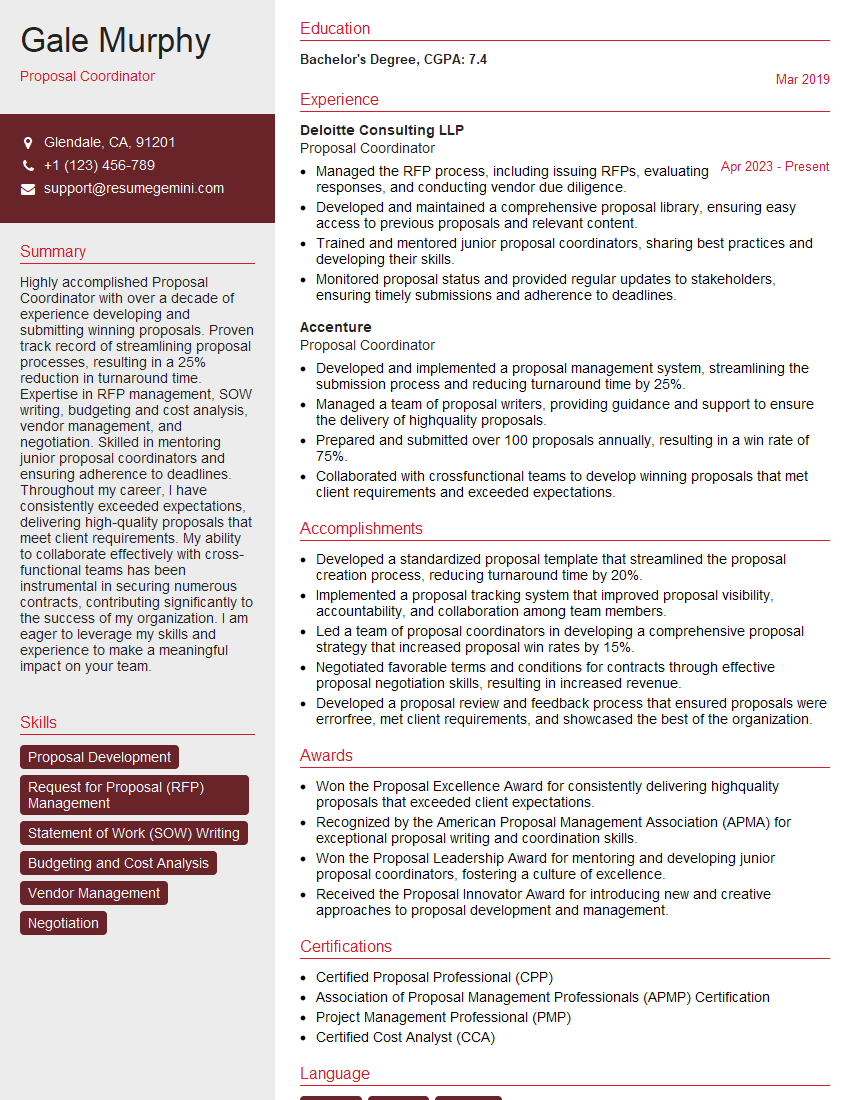
Proposal Coordinator Resume Sample
Explore more articles
Users Rating of Our Blogs
Share Your Experience
We value your feedback! Please rate our content and share your thoughts (optional).
What Readers Say About Our Blog
To the interviewgemini.com Webmaster.
Very helpful and content specific questions to help prepare me for my interview!
Thank you
To the interviewgemini.com Webmaster.
This was kind of a unique content I found around the specialized skills. Very helpful questions and good detailed answers.
Very Helpful blog, thank you Interviewgemini team.