Unlock your full potential by mastering the most common Metering and Flow Measurement interview questions. This blog offers a deep dive into the critical topics, ensuring you’re not only prepared to answer but to excel. With these insights, you’ll approach your interview with clarity and confidence.
Questions Asked in Metering and Flow Measurement Interview
Q 1. Explain the different types of flow meters and their applications.
Flow meters are instruments used to measure the rate of fluid flow. Choosing the right meter depends heavily on the fluid’s properties (viscosity, temperature, conductivity), the flow rate, pipe size, and the desired accuracy. There are many types, each with its strengths and weaknesses. Here are some key examples:
- Differential Pressure Flow Meters: These meters, including orifice plates, Venturi tubes, and flow nozzles, work by creating a pressure drop across a restriction in the pipe. The pressure difference is proportional to the square of the flow rate. They’re robust, reliable, and suitable for a wide range of fluids and flow rates. However, they introduce permanent pressure loss.
- Positive Displacement Flow Meters: These meters, such as rotary vane, nutating disc, and oval gear meters, measure flow by trapping a known volume of fluid and counting the number of times the volume is displaced. They offer high accuracy but are often more expensive and may be less suitable for high-pressure applications. They’re commonly used for liquids with high viscosity.
- Velocity Flow Meters: These meters, such as ultrasonic, Doppler, and vortex flow meters, measure the velocity of the fluid. Ultrasonic meters use sound waves to measure velocity, while vortex meters detect vortices shed from an obstruction in the flow path. They are suitable for a wide range of fluids and flow rates but their accuracy can be affected by factors like fluid turbulence and pipe roughness.
- Mass Flow Meters: These meters directly measure the mass flow rate of the fluid, offering superior accuracy in applications where density variations are significant. Coriolis mass flow meters are a common type and are particularly effective in measuring the flow of multiphase fluids.
- Electromagnetic Flow Meters: These meters measure the voltage generated by a conductive fluid moving through a magnetic field. They are ideal for slurries and other conductive fluids. They have no pressure drop.
Applications: The choice of flow meter depends heavily on the application. For example, orifice plates are commonly used in industrial processes for their simplicity and low cost, while Coriolis meters are preferred for accurate measurement of gas flows in natural gas pipelines.
Q 2. Describe the principle of operation of an orifice plate flow meter.
An orifice plate flow meter uses a thin, circular plate with a precisely sized hole (the orifice) installed in a pipe. As fluid flows through the orifice, it experiences a constriction, causing an increase in velocity and a corresponding decrease in pressure. This pressure drop, measured upstream and downstream of the orifice plate, is directly related to the flow rate.
The principle is based on Bernoulli’s equation, which states that the total energy of a fluid remains constant along a streamline. The pressure drop is proportional to the square of the flow rate. Specialized equations, often incorporating correction factors to account for non-ideal conditions, are used to calculate the flow rate from the measured pressure difference.
Think of it like squeezing a garden hose – the narrower the opening, the faster the water flows, and the lower the pressure before the opening.
Q 3. How do you calibrate a flow meter?
Flow meter calibration involves comparing the meter’s readings to a known, accurate flow standard. This establishes a relationship between the meter’s output signal (e.g., pressure difference, frequency) and the actual flow rate. The process typically involves:
- Selecting a Standard: A highly accurate flow measurement device is used as the reference (e.g., a gravimetric or volumetric standard), which can measure flow rate with high precision.
- Establishing a Flow Range: The calibration covers a range of flow rates relevant to the meter’s intended application.
- Measuring and Recording Data: A series of flow rate measurements are taken from both the flow meter and the standard, noting temperature and pressure for each reading.
- Developing a Calibration Curve: The data points are used to create a calibration curve, which may be linear or non-linear, correlating meter output to actual flow.
- Applying Corrections: The calibration curve helps to apply corrections to the meter readings to achieve better accuracy.
Calibration is crucial for maintaining the accuracy of flow measurements. In many industries, regular calibration according to a schedule is mandatory by law or company policy.
Q 4. What are the common sources of error in flow measurement?
Errors in flow measurement can stem from various sources. These include:
- Installation Effects: Incorrect pipe sizing, upstream and downstream piping disturbances, and improper meter orientation can all lead to inaccuracies.
- Fluid Properties: Viscosity variations, the presence of entrained gases, and multiphase flow can significantly affect measurement accuracy.
- Meter Limitations: The meter’s inherent limitations, such as its accuracy rating and operating range, contribute to errors.
- Environmental Factors: Temperature and pressure variations impact readings unless properly compensated for. Ambient temperature changes could affect the meter’s internal components.
- Calibration Errors: Inaccurate calibration or infrequent recalibration lead to significant errors over time.
- Sensor Drift: Over time, the sensors in a flow meter can exhibit drift, requiring recalibration to maintain accuracy.
- Signal Processing Errors: Issues in the signal processing circuitry of the meter can introduce errors in the final flow reading.
Understanding these sources of error is critical for selecting the appropriate meter and implementing best practices for installation and operation.
Q 5. Explain the concept of Reynolds number and its significance in flow measurement.
The Reynolds number (Re) is a dimensionless quantity that characterizes the flow regime – laminar or turbulent. It’s calculated as:
Re = (ρVD)/μ
where:
- ρ is the fluid density
- V is the fluid velocity
- D is the pipe diameter
- μ is the dynamic viscosity of the fluid
A low Reynolds number (typically Re < 2300) indicates laminar flow, where the fluid moves in smooth, parallel layers. A high Reynolds number (typically Re > 4000) indicates turbulent flow, characterized by chaotic mixing and swirling. The transition region between laminar and turbulent flow lies between these values.
Significance in flow measurement: The Reynolds number is crucial because it influences the accuracy and applicability of different flow meters. For example, differential pressure flow meters are more accurate in turbulent flow, while some types of flow meters are specifically designed for laminar flow conditions. Knowing the Reynolds number helps in selecting the most suitable meter for a given application.
Q 6. What are the different types of flow regimes and how do they affect meter selection?
Flow regimes are broadly classified as laminar and turbulent. As mentioned earlier, the Reynolds number helps determine the flow regime.
- Laminar Flow: Fluid flows in smooth, parallel layers with minimal mixing. This typically occurs at low velocities and high viscosities.
- Turbulent Flow: Fluid flow is characterized by chaotic mixing and eddies. This occurs at high velocities and low viscosities.
- Transition Flow: This is the intermediate region between laminar and turbulent flow, and it exhibits characteristics of both.
Effect on meter selection: The flow regime greatly affects meter selection. Some meters, like positive displacement meters, are better suited for laminar flows, while differential pressure meters perform well in turbulent flows. Meters designed for turbulent flow might provide inaccurate readings in laminar flow and vice versa. Understanding the flow regime is essential for selecting a flow meter that provides accurate and reliable measurements.
Q 7. How do you compensate for temperature and pressure effects on flow measurement?
Temperature and pressure significantly affect fluid density and viscosity, thus impacting flow measurements. Compensation strategies are essential for accurate readings.
- Temperature Compensation: Temperature changes alter fluid density and viscosity. Flow meters often incorporate temperature sensors to measure the fluid temperature. This data is used in conjunction with appropriate equations to correct for the temperature-related density and viscosity changes, thereby refining the flow rate calculation. The correction factors are often specific to the fluid in question.
- Pressure Compensation: Similar to temperature, pressure affects fluid density, particularly for gases. Pressure sensors measure the fluid pressure, and this information is used to adjust for compressibility effects to arrive at a more accurate flow rate. Again, the correction factors are fluid-specific.
Many modern flow meters have built-in temperature and pressure compensation features, using internal sensors and software algorithms to automatically correct the readings. For older or simpler meters, manual calculations based on appropriate correlations are necessary.
Example: Consider a natural gas pipeline. Temperature and pressure along the pipeline fluctuate significantly due to seasonal changes and altitude variations. Accurate flow measurement in this scenario requires precise compensation for these effects to obtain reliable readings of gas flow rate.
Q 8. Describe the process of selecting an appropriate flow meter for a given application.
Selecting the right flow meter is crucial for accurate measurement and efficient operation. It’s like choosing the right tool for a job – a hammer won’t work for screwing in a screw! The selection process involves considering several key factors:
- Fluid Properties: Viscosity, density, temperature, and whether the fluid is clean or contains solids significantly influence meter choice. For example, a viscous fluid might require a positive displacement meter, while a clean liquid might be suitable for a turbine meter.
- Flow Rate and Range: The expected flow rate and the desired accuracy determine the meter’s capacity and range. A meter with a too-narrow range might be inaccurate, while one with too wide a range might lack the necessary precision.
- Pipe Size and Installation Constraints: The available space for installation impacts the meter’s physical size and type. Some meters require straight pipe runs before and after for accurate readings, while others are more tolerant.
- Accuracy Requirements: The level of precision needed dictates the type of meter. High-accuracy applications might necessitate a Coriolis or ultrasonic meter, while less precise applications could utilize a simpler, less expensive option like a variable area meter.
- Pressure and Temperature: Operating pressures and temperatures will limit the choices. Some meters are designed for high-pressure, high-temperature applications, while others are not.
- Cost and Maintenance: The initial cost, maintenance frequency, and overall lifecycle cost should all be considered. Some meters require more frequent calibration or maintenance than others.
For instance, measuring the flow rate of highly viscous chocolate in a food processing plant would require a positive displacement meter, capable of handling the thick fluid, unlike a simple orifice plate, which is better suited for clean liquids. A thorough analysis of these factors is essential to ensure selecting the optimal flow meter for a given application.
Q 9. What is the importance of meter proving and how is it performed?
Meter proving, or calibration, is essential to ensure the accuracy of flow measurements. It’s like regularly checking the accuracy of a weighing scale to ensure it gives correct readings. Inaccurate measurements can lead to significant financial losses, safety hazards, or regulatory non-compliance.
Meter proving involves comparing the meter’s readings to a known standard, usually a calibrated prover. Several methods exist:
- Master Meter Method: This involves using a highly accurate master meter to measure the flow, comparing it to the meter being tested.
- Proving Tank Method: This is a common method involving a precisely calibrated tank where a known volume of fluid is timed. The meter reading is compared to the known volume to check accuracy.
- Weight Method: The fluid is weighed during a timed flow measurement. This weight is then used to calculate the flow rate, which is then compared to the meter reading.
The frequency of proving depends on the application, fluid properties, and regulatory requirements. Some meters need frequent proving, while others may only need it annually. A comprehensive proving procedure is crucial to ensure the reliability of flow measurements. Proper documentation of the proving process is equally important.
Q 10. Explain the concept of uncertainty analysis in flow measurement.
Uncertainty analysis in flow measurement is the process of quantifying the possible errors or deviations in the measured flow rate. It’s like estimating the margin of error in a scientific experiment. Understanding the uncertainty is crucial for making informed decisions based on the measurements.
Several sources contribute to uncertainty:
- Meter Uncertainty: Each flow meter has a specified accuracy or uncertainty. This is often expressed as a percentage of the reading or a fixed value.
- Installation Effects: Incorrect installation, such as insufficient straight pipe runs before and after the meter, can introduce significant errors.
- Fluid Properties Uncertainty: Inaccuracies in measuring fluid properties such as density and viscosity contribute to the overall uncertainty.
- Environmental Conditions: Temperature, pressure fluctuations, and vibration can all affect the accuracy.
- Calibration and Proving Uncertainty: Uncertainty in calibration procedures adds to the overall uncertainty.
Uncertainty analysis involves combining these individual uncertainties to determine the overall uncertainty of the flow measurement, typically using statistical methods. This analysis helps to determine the confidence level in the measurement results and helps to identify areas where improvements in accuracy can be made. For example, a reported flow rate of 100 L/min with an uncertainty of ±2% means the actual flow rate lies between 98 and 102 L/min.
Q 11. What are the common maintenance requirements for flow meters?
Flow meter maintenance is essential to ensure their accuracy, reliability, and longevity. Think of it as regular maintenance for your car – it keeps it running smoothly and prevents major issues. Common maintenance requirements include:
- Regular Inspection: Visual inspection for leaks, damage, or obstructions is crucial.
- Calibration/Proving: Periodic calibration or proving ensures accuracy.
- Cleaning: Cleaning the meter to remove accumulated debris, especially important for meters in dirty or viscous fluids.
- Lubrication: For some meter types, regular lubrication is necessary to maintain smooth operation.
- Component Replacement: Replacing worn or damaged parts, such as seals or bearings, is necessary to prevent failures.
The frequency of maintenance varies greatly depending on the type of meter, the application, and the fluid being measured. A well-defined maintenance schedule is crucial to minimize downtime and ensure accurate measurements. Neglecting maintenance can lead to inaccurate readings, premature failure, and even safety hazards.
Q 12. How do you troubleshoot a malfunctioning flow meter?
Troubleshooting a malfunctioning flow meter requires a systematic approach. It’s like diagnosing a problem with your computer – you need to follow a logical process of elimination. The troubleshooting steps include:
- Check for Obstructions: Inspect the meter and piping for any blockages that could restrict flow.
- Verify Power Supply: Ensure the meter’s power supply is functioning correctly.
- Check Calibration: Verify that the meter has been properly calibrated.
- Inspect Wiring and Connections: Check for loose or damaged wiring and connections.
- Review Meter Readings and History: Look for trends or patterns in the readings to identify potential issues.
- Check Environmental Conditions: Excessive temperature, pressure, or vibration can affect accuracy.
- Compare with a Secondary Meter: If possible, compare the meter readings to a secondary meter to confirm accuracy.
If the problem persists, consult the meter’s documentation or contact the manufacturer for support. Detailed records of the troubleshooting process are crucial for future reference and maintenance.
Q 13. What safety precautions should be taken when working with flow meters?
Safety is paramount when working with flow meters, especially those handling hazardous fluids or operating under high pressure. Always treat them with respect, as you would any piece of industrial equipment.
- Lockout/Tagout Procedures: Always follow proper lockout/tagout procedures before working on or near flow meters, particularly those handling hazardous materials. This ensures that the meter is safely de-energized before maintenance or repairs.
- Personal Protective Equipment (PPE): Wear appropriate PPE, such as safety glasses, gloves, and protective clothing, depending on the fluid and pressure.
- High-Pressure Systems: Exercise extreme caution when working with high-pressure systems, ensuring proper pressure relief procedures are in place. Never attempt to work on a pressurized system without proper training and authorization.
- Hazardous Materials: Follow all safety regulations and procedures when working with hazardous materials. Understand the risks associated with the fluids being measured and take necessary precautions.
- Confined Spaces: If working in confined spaces, follow appropriate confined-space entry procedures.
Proper training and adherence to safety regulations are crucial for preventing accidents and injuries.
Q 14. Explain the concept of differential pressure flow measurement.
Differential pressure flow measurement is a common technique that utilizes the pressure drop across a restriction in a pipe to determine the flow rate. Imagine squeezing a garden hose – the narrower the opening, the faster the water flows, and the greater the pressure drop across the constriction. This principle is utilized in many flow meters.
Common devices using this principle include:
- Orifice Plates: A thin plate with a precisely sized hole creates a pressure drop.
- Flow Nozzles: A smoothly contoured nozzle creates a pressure drop.
- Venturi Tubes: A gradually converging and diverging section creates a pressure drop.
The pressure difference (ΔP) across the restriction is measured using pressure taps, and the flow rate (Q) is calculated using an appropriate equation, often based on Bernoulli’s equation. The equation usually incorporates the pressure drop, pipe diameter, and fluid properties (density). Q = C * A * sqrt(2ΔP/ρ) where C is a flow coefficient, A is the area of the restriction, ΔP is the pressure difference, and ρ is the fluid density. The flow coefficient C accounts for losses and other factors and depends on the specific device used.
This method is relatively simple, reliable, and cost-effective for many applications, but its accuracy can be affected by factors like installation effects and fluid viscosity. Proper calibration and installation are critical for accurate measurements.
Q 15. Describe the operation of a Coriolis flow meter.
A Coriolis flow meter measures mass flow rate by utilizing the Coriolis effect. Imagine swinging a bucket of water – you feel a force pulling it outwards. Similarly, when fluid flows through a vibrating tube within the meter, the Coriolis effect causes the tube to twist slightly. The degree of twist is directly proportional to the mass flow rate of the fluid. The meter precisely measures this twisting motion using sensors, converting it into a mass flow rate reading.
More specifically, the meter consists of two flow tubes that are driven into a resonant vibration. As fluid flows through these tubes, the Coriolis force causes a phase shift between the vibrations of the two tubes. This phase shift, precisely measured by the meter’s sensors, is directly proportional to the mass flow rate. The frequency of vibration remains constant, allowing for accurate measurements independent of fluid density changes. This makes them exceptionally accurate and ideal for applications where precise mass flow measurement is crucial, such as in the pharmaceutical industry.
Career Expert Tips:
- Ace those interviews! Prepare effectively by reviewing the Top 50 Most Common Interview Questions on ResumeGemini.
- Navigate your job search with confidence! Explore a wide range of Career Tips on ResumeGemini. Learn about common challenges and recommendations to overcome them.
- Craft the perfect resume! Master the Art of Resume Writing with ResumeGemini’s guide. Showcase your unique qualifications and achievements effectively.
- Don’t miss out on holiday savings! Build your dream resume with ResumeGemini’s ATS optimized templates.
Q 16. What are the advantages and disadvantages of ultrasonic flow meters?
Ultrasonic flow meters offer several advantages: They’re non-invasive, meaning they don’t require breaking the pipe to install; they have no moving parts, leading to low maintenance and a long lifespan; and they can handle a wide range of fluids and temperatures. They’re also relatively inexpensive compared to some other flow meter technologies.
However, ultrasonic flow meters also have limitations. Their accuracy can be affected by fluid properties such as viscosity, temperature variations, and the presence of gas bubbles or solids. The accuracy is also influenced by the installation’s straight pipe sections upstream and downstream of the meter. Proper installation is crucial for reliable measurements. In addition, they generally measure volumetric flow rate, requiring density corrections for mass flow calculations.
Q 17. How do positive displacement flow meters work?
Positive displacement flow meters operate by trapping a known volume of fluid and then precisely counting the number of times this volume passes through the meter. Imagine using a measuring cup to measure water flow – each full cup represents a known volume. These meters are extremely accurate, especially at low flow rates. They achieve this high accuracy by employing mechanical components like gears, pistons, or rotating vanes to trap and displace the fluid.
Different types exist, including rotary vane, gear, oval gear, and diaphragm meters. Each design has its own method for trapping and counting the fluid volume. For instance, a rotary vane meter uses a rotor with vanes that rotate within a cavity, trapping fluid segments as they move. The number of rotations is directly proportional to the total volume passed.
These meters are suitable for applications requiring high accuracy and precision, but they can be susceptible to wear and tear from the moving parts, potentially impacting their lifespan and requiring periodic maintenance.
Q 18. Explain the difference between mass flow rate and volumetric flow rate.
The key difference lies in what they measure: Volumetric flow rate measures the volume of fluid passing a point per unit time (e.g., liters per minute or gallons per hour). Think of it as how much space the fluid occupies. Mass flow rate, on the other hand, measures the mass of fluid passing a point per unit time (e.g., kilograms per second or pounds per minute). It tells us how much matter is flowing.
For example, if you have two fluids, one being water and the other a light oil, both having the same volumetric flow rate, the mass flow rate would differ since the oil has a lower density than water. Mass flow rate is often more important in process control, particularly when dealing with fluids with varying densities. To calculate mass flow rate from volumetric flow rate, you need to know the fluid density: Mass flow rate = Volumetric flow rate x Density.
Q 19. How do you handle data acquisition and analysis in flow measurement?
Data acquisition and analysis in flow measurement often involves using data acquisition systems (DAS) connected to flow meters. These systems typically employ sensors to capture flow data, which is then transmitted via various communication protocols (discussed in the next question). The data is then stored and analyzed using specialized software.
The analysis process may include:
- Calibration checks: Ensuring the accuracy of the flow meter by comparing its readings against a known standard.
- Data validation: Identifying and removing erroneous or outlier data points.
- Trend analysis: Identifying patterns or changes in flow over time to anticipate potential problems.
- Reporting: Generating reports summarizing flow data for various purposes, like billing, process optimization, or regulatory compliance.
Data analysis software often allows for creating visualizations, statistical analysis, and export of the data to other systems. In large-scale industrial settings, the data might be integrated into a larger SCADA (Supervisory Control and Data Acquisition) system for comprehensive process monitoring and control.
Q 20. What are the different types of flow meter communication protocols?
Flow meters use various communication protocols to transmit data to acquisition systems. Common protocols include:
- 4-20 mA analog signals: A widely used standard in industrial automation, offering a simple and robust method for transmitting flow data.
- RS-232 and RS-485 serial communication: These digital protocols enable bidirectional communication and support longer distances than analog signals.
- Fieldbus protocols (Profibus, Modbus, Foundation Fieldbus): These advanced digital protocols offer features like self-diagnosis, data redundancy, and improved network management. They are prevalent in complex industrial environments.
- Ethernet/IP and PROFINET: These protocols leverage Ethernet networks for high-speed data transfer and are increasingly used in modern industrial facilities.
- Wireless protocols (e.g., WirelessHART, Bluetooth): Offer flexibility for remote installations where wired connections are impractical or costly.
The choice of protocol depends on factors such as the distance to the data acquisition system, environmental conditions, required data transfer rate, and the overall system architecture.
Q 21. What is the significance of meter factors and correction factors?
Meter factors represent the ratio between the meter’s output signal and the actual flow rate. They account for the meter’s inherent characteristics and calibration. For example, a meter factor might be 10 liters/pulse, meaning that each pulse from the meter represents 10 liters of fluid flow. This factor is essential for converting raw meter readings into engineering units.
Correction factors adjust for deviations from ideal operating conditions. These factors can compensate for variations in temperature, pressure, fluid density, or viscosity affecting the meter’s accuracy. For instance, a correction factor might account for the change in fluid density at higher temperatures, ensuring accurate mass flow readings. These factors are often determined experimentally and applied to the raw flow measurements to improve the accuracy of the final readings. Applying both meter and correction factors results in a highly accurate flow measurement, essential for various applications demanding high precision.
Q 22. Explain the concept of custody transfer in flow measurement.
Custody transfer in flow measurement refers to the precise and verifiable measurement of fluids during the exchange of ownership or responsibility between parties. Think of it like a highly accurate gas station pump, but for much larger quantities and potentially more valuable commodities like oil or natural gas. It’s crucial for legal, financial, and operational reasons to ensure both parties agree on the exact amount transferred. This requires highly accurate and reliable measurement equipment, meticulous calibration, and a robust data management system to prevent disputes. The process typically involves a defined point of transfer, agreed-upon measurement standards, and often independent verification or witnessing.
For example, in the oil and gas industry, custody transfer metering is essential at pipeline interfaces, refineries, and storage facilities. The measurement must be accurate enough to support financial settlements based on the volume of product transferred. Inaccuracy can lead to significant financial losses for one or both parties.
Q 23. Describe your experience with various flow meter technologies.
My experience spans a wide range of flow meter technologies, including:
- Positive Displacement Meters (PDMs): I’ve extensively worked with oval gear, rotary vane, and helical gear meters, primarily for accurate measurement of viscous fluids and liquids in custody transfer applications. I understand their strengths (high accuracy, low pressure drop for certain flow ranges) and limitations (sensitivity to pulsations, limited suitability for high-temperature applications).
- Differential Pressure Meters: My expertise includes orifice plates, flow nozzles, and Venturi tubes. I’m proficient in selecting the appropriate meter based on fluid properties, pressure drop constraints, and required accuracy. I understand the importance of proper sizing and installation for optimal performance. I’ve used these extensively in gas and liquid applications.
- Ultrasonic Meters: I’ve worked with clamp-on and transit-time ultrasonic meters, particularly for applications where minimal process intrusion is preferred or where the fluid is corrosive or highly abrasive. I’m familiar with their strengths in handling various fluids, even slurries, and their limitations related to high-velocity flows and complex geometries.
- Electromagnetic Flow Meters (EMFs): I have significant experience with EMFs, especially for conductive liquids like water and wastewater. I understand their advantages in handling abrasive fluids without internal parts and their limitations concerning non-conductive fluids.
- Coriolis Meters: I’ve utilized Coriolis meters for precise mass flow measurements, particularly in applications requiring high accuracy and simultaneous density measurement. I’m aware of their cost and suitability for a wide range of fluids.
My experience extends beyond just operating these meters; I’m also skilled in their selection, installation, maintenance, and troubleshooting.
Q 24. What software packages are you proficient in for flow data analysis?
I’m proficient in several software packages for flow data analysis, including:
- Emerson AMS Suite: For configuring and monitoring various Emerson flow meters and other instrumentation.
- Siemens SIMATIC PCS 7: For process control and data acquisition in industrial automation systems that integrate flow measurement data.
- Yokogawa CENTUM VP: Similar to Siemens, for comprehensive process control and data management.
- MATLAB and Python: I use these for advanced data analysis, statistical modeling, and developing custom algorithms for data processing, visualization, and reporting.
- Spreadsheet software (Excel, Google Sheets): For basic data manipulation, charting, and initial data review.
My ability to effectively use these tools allows me to perform thorough data analysis, identify trends, and troubleshoot measurement issues efficiently.
Q 25. How do you ensure the accuracy and reliability of flow measurement data?
Ensuring the accuracy and reliability of flow measurement data is paramount. My approach involves a multi-faceted strategy:
- Proper Meter Selection: Choosing the right meter for the specific application, considering fluid properties, flow rates, pressure, temperature, and accuracy requirements.
- Regular Calibration and Verification: Implementing a schedule for regular calibration and verification of flow meters against traceable standards, following industry best practices and regulatory requirements.
- Installation and Commissioning: Ensuring proper installation to minimize errors caused by misalignment, leaks, or incorrect piping configurations. Thorough commissioning involves testing and verification of the entire measurement system.
- Data Validation and Quality Control: Implementing data validation techniques to identify and correct outliers, inconsistencies, and potential errors in recorded data. Regularly reviewing data for anomalies.
- Preventive Maintenance: Establishing a proactive maintenance program including routine inspections, cleaning, and repairs to prevent equipment failures and ensure ongoing accuracy.
- Uncertainty Analysis: Performing uncertainty analysis to quantify the uncertainty associated with the measurement, considering all sources of error from meter accuracy to environmental conditions.
This comprehensive approach helps to maintain the integrity and reliability of the flow measurement data, crucial for accurate process control, billing, and regulatory compliance.
Q 26. Describe your experience with regulatory compliance related to flow measurement.
My experience includes working with various regulatory standards related to flow measurement, including:
- API (American Petroleum Institute) standards: For metering practices in the oil and gas industry.
- AGA (American Gas Association) standards: For natural gas measurement.
- OIML (International Organization of Legal Metrology) recommendations: For legal metrology requirements.
- Relevant regional and national regulations: Such as EPA regulations for environmental monitoring.
I’m familiar with the requirements for certification, calibration procedures, and documentation needed to ensure compliance. I’ve been directly involved in audits and have helped companies achieve and maintain regulatory compliance in flow measurement operations.
Q 27. Explain a challenging flow measurement problem you encountered and how you solved it.
I once encountered a challenging flow measurement problem involving a highly viscous, non-Newtonian fluid in a pipeline. Standard differential pressure meters were providing inconsistent and unreliable readings due to the fluid’s shear-thinning behavior and the formation of significant pressure drops across the meter. This impacted the accuracy of the custody transfer measurements, leading to potential financial discrepancies.
To solve this, I first conducted a thorough fluid characterization study to determine its rheological properties. This involved laboratory testing to understand its viscosity and flow behavior. Based on this, I recommended replacing the differential pressure meter with a positive displacement meter specifically designed for viscous fluids. We also implemented a process optimization strategy to reduce the fluid’s viscosity by adjusting its temperature slightly, which improved flow characteristics and reduced wear on the new meter. Finally, we implemented a robust data validation and quality control program to ensure reliable and consistent measurements.
The combination of fluid characterization, appropriate meter selection, and process optimization resulted in significantly improved measurement accuracy and consistency, resolving the custody transfer issues and preventing potential financial losses.
Q 28. Describe your experience working with different types of fluids
My experience encompasses a wide range of fluids, including:
- Liquids: Water (clean and wastewater), crude oil, refined petroleum products (gasoline, diesel, etc.), chemicals, and various industrial fluids.
- Gases: Natural gas, compressed air, and other industrial gases.
- Slurries: I’ve worked with various slurries including those containing solids suspended in liquids, demanding specialized metering technologies.
My expertise extends to understanding the unique characteristics of each fluid and selecting or adapting appropriate flow metering techniques to ensure accurate and reliable measurements. For example, handling slurries requires different considerations than measuring clean water, accounting for factors like abrasion, viscosity, and potential solids buildup.
Key Topics to Learn for Metering and Flow Measurement Interview
- Fundamental Principles: Understanding fluid mechanics, pressure, velocity, and flow rate calculations. Explore different types of flow (laminar, turbulent) and their impact on measurement accuracy.
- Metering Technologies: Become familiar with various flow meter types (e.g., orifice plates, Venturi meters, turbine meters, ultrasonic meters, Coriolis meters). Know their operating principles, advantages, disadvantages, and suitable applications.
- Calibration and Uncertainty: Master the concepts of calibration procedures, accuracy, precision, and uncertainty analysis in flow measurements. Understand how to interpret calibration certificates and error propagation.
- Data Acquisition and Processing: Learn about data acquisition systems, signal conditioning, and data logging techniques used in flow measurement. Familiarize yourself with data analysis methods and reporting.
- Practical Applications: Explore real-world applications across various industries (e.g., oil & gas, water treatment, chemical processing). Consider case studies showcasing the importance of accurate flow measurement in different contexts.
- Troubleshooting and Problem-Solving: Develop your ability to identify and diagnose common issues in flow measurement systems. Practice troubleshooting techniques and problem-solving approaches.
- Safety and Regulations: Understand relevant safety procedures and industry regulations pertaining to flow measurement and handling of fluids.
Next Steps
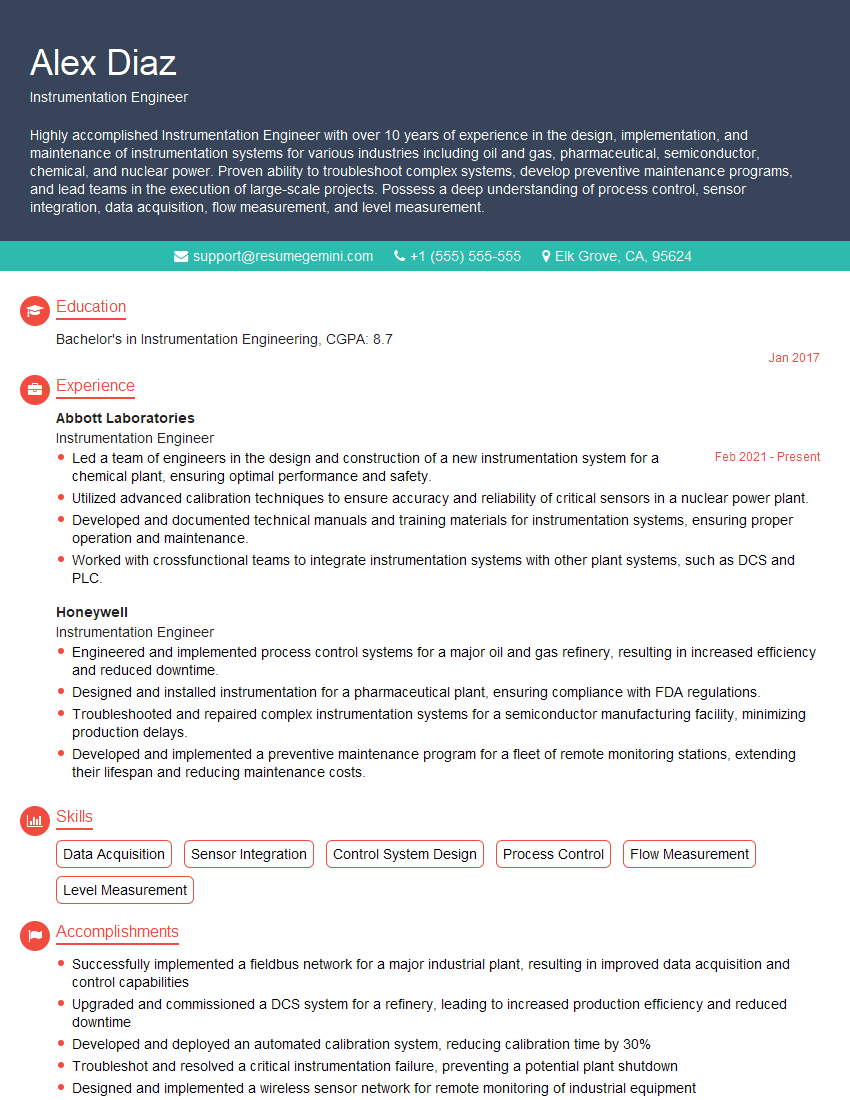
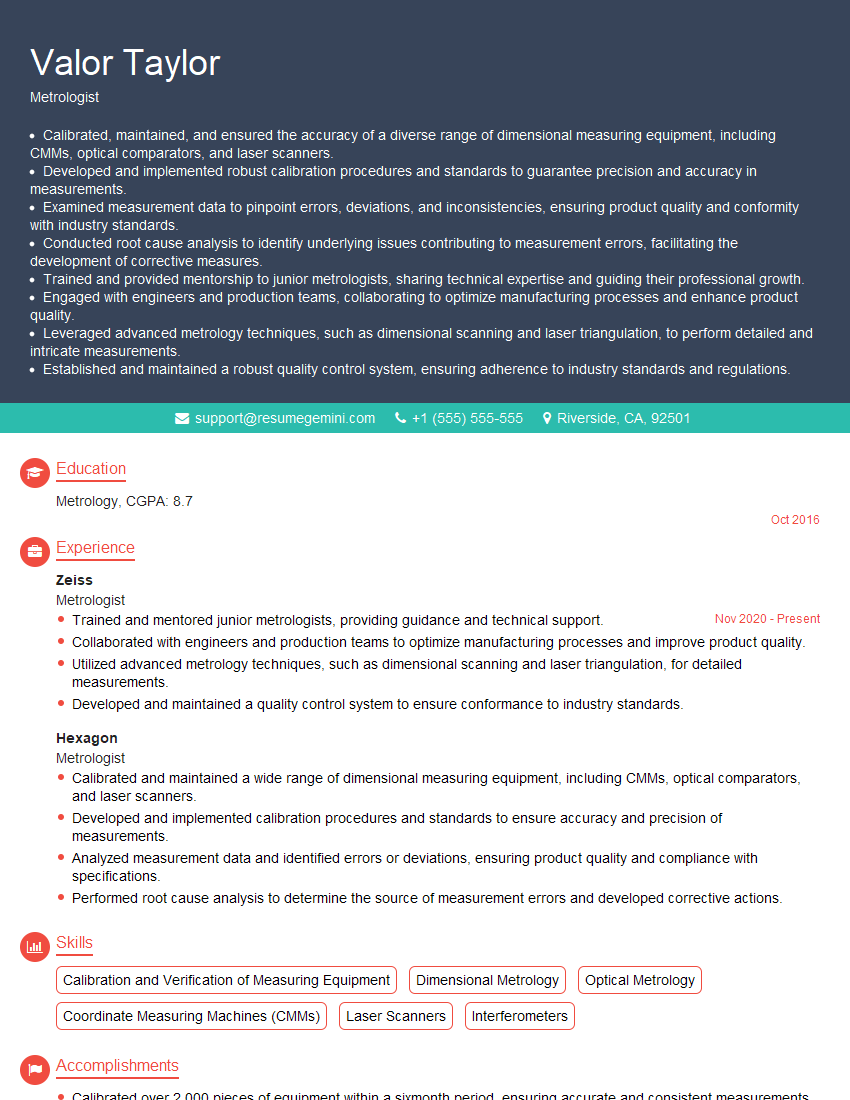
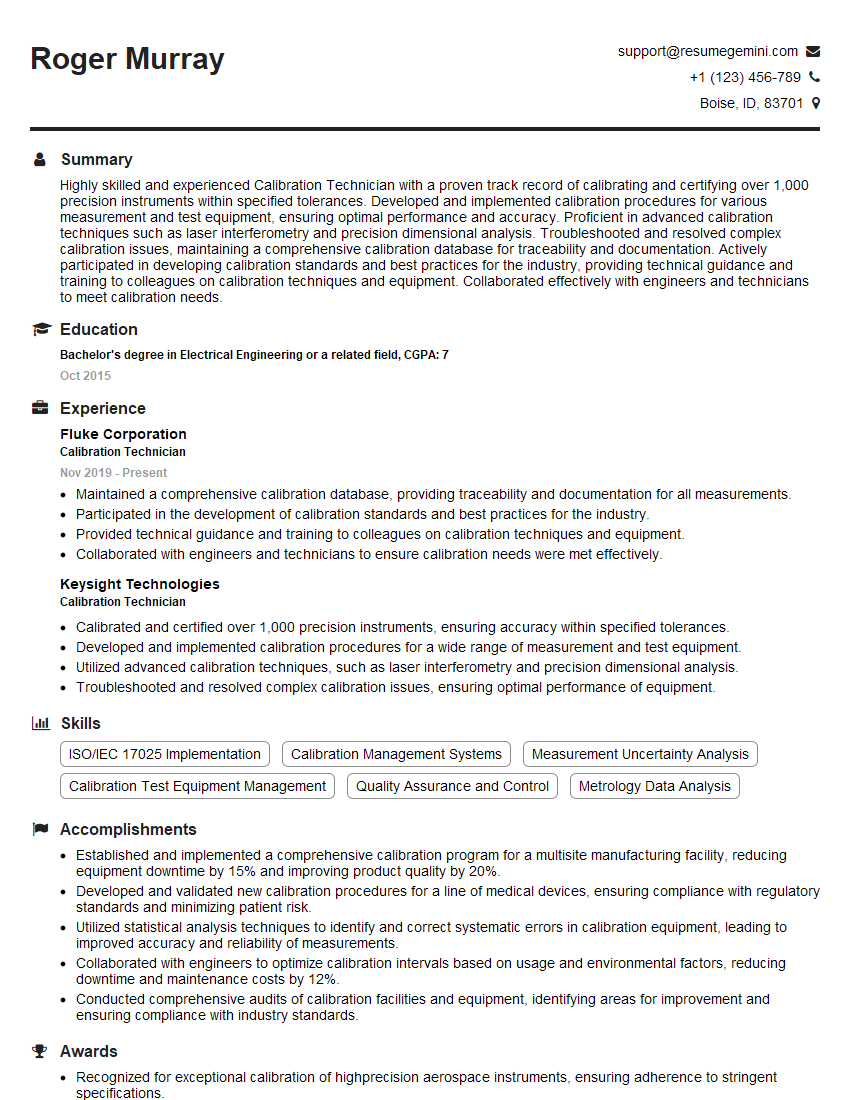
Mastering Metering and Flow Measurement opens doors to exciting career opportunities in diverse and technologically advanced industries. A strong understanding of these principles is highly valued and will significantly enhance your career prospects. To maximize your chances of landing your dream job, it’s crucial to present your skills and experience effectively through a well-crafted resume. Building an ATS-friendly resume is essential in today’s job market, ensuring your application gets noticed by recruiters and hiring managers.
We highly recommend using ResumeGemini to build a professional and impactful resume. ResumeGemini provides the tools and resources you need to create a resume that showcases your skills effectively. They even offer examples of resumes tailored to the Metering and Flow Measurement field to help you get started. Take the next step towards your career success – craft a winning resume today!
Explore more articles
Users Rating of Our Blogs
Share Your Experience
We value your feedback! Please rate our content and share your thoughts (optional).
What Readers Say About Our Blog
To the interviewgemini.com Webmaster.
Very helpful and content specific questions to help prepare me for my interview!
Thank you
To the interviewgemini.com Webmaster.
This was kind of a unique content I found around the specialized skills. Very helpful questions and good detailed answers.
Very Helpful blog, thank you Interviewgemini team.