Preparation is the key to success in any interview. In this post, we’ll explore crucial Hunting Laws and Regulations interview questions and equip you with strategies to craft impactful answers. Whether you’re a beginner or a pro, these tips will elevate your preparation.
Questions Asked in Hunting Laws and Regulations Interview
Q 1. Explain the difference between a hunting license and a hunting permit.
In most jurisdictions, a hunting license is the basic authorization needed to hunt. Think of it as your general permission slip to participate in hunting activities. A hunting permit, on the other hand, is often a more specific authorization required for certain activities or species. It’s like adding a special endorsement to your license.
For example, a hunting license might allow you to hunt small game, but a separate permit might be required to hunt big game like deer or elk. Similarly, you might need a special permit for hunting migratory waterfowl, even if you already possess a general hunting license. These permits often have associated regulations, such as specific hunting seasons or bag limits that differ from those governing general hunting licenses.
In essence, the license is the foundation, while permits are added authorizations for specific hunting situations.
Q 2. What are the legal requirements for transporting harvested game?
Transporting harvested game is strictly regulated to ensure proper handling, prevent the spread of disease, and comply with wildlife management practices. Regulations vary greatly by state/province and species.
Generally, you’ll need to properly tag your harvested animal with the required tags provided upon obtaining your hunting license or permit. The tags often have specific information like the date, location, and hunter’s information. In addition, many jurisdictions require that the game be transported in a manner that prevents spoilage and maintains its integrity. This might mean keeping it cool, appropriately packaged, and visibly tagged.
Furthermore, transportation methods are often specified. For instance, you might be required to transport certain species whole, while others can be transported in parts. Specific rules might also exist around the use of certain vehicles; you might not be allowed to transport certain game in the bed of an open truck. It’s vital to check with your local wildlife agency for detailed and up-to-date regulations specific to your location and the species you’ve harvested.
Failing to adhere to transportation laws can result in fines, the confiscation of your harvest, or even more severe penalties.
Q 3. Describe the legal ramifications of hunting out of season.
Hunting out of season is a serious violation with potentially severe consequences. It undermines wildlife conservation efforts by disrupting breeding cycles and population management strategies. It’s like taking books from a library before their due date; you’re not respecting the lending system designed to preserve the overall collection.
Penalties can include hefty fines, suspension or revocation of hunting privileges (meaning you lose your ability to hunt for a period of time or permanently), and even potential jail time depending on the severity of the offense and the jurisdiction. The penalties are typically higher for hunting endangered or threatened species.
Furthermore, the illegal harvest itself contributes to wildlife depletion and can have broader consequences for the ecosystem. Therefore, abiding by seasonal hunting regulations is paramount to sustainable wildlife management.
Q 4. How do you determine legal hunting methods for a specific species?
Legal hunting methods are specific to each species and are determined by state/province regulations. These regulations are typically found in hunting handbooks or on the websites of wildlife management agencies. The goal is to ensure ethical and fair hunting practices and to maintain the health of the wildlife populations.
You’ll need to consult the relevant agency’s guidelines, which often detail allowed hunting weapons (firearms, bows, crossbows etc.), ammunition types, and hunting techniques (e.g., baiting, calling, stalking). These guidelines often vary depending on the season and the specific area you’re hunting in. Some species might be restricted to hunting with certain weapons only, while others might prohibit the use of specific techniques altogether. It is crucial to be extremely familiar with these rules, as the penalties for using illegal methods are usually very severe.
For instance, hunting deer with a high-powered rifle in a certain area might be allowed, while hunting them with a shotgun using birdshot might be prohibited. Similarly, baiting might be illegal in some areas for certain species.
Q 5. What are the regulations regarding the use of hunting dogs?
Regulations regarding the use of hunting dogs vary widely across jurisdictions but generally aim to ensure fair chase, prevent damage to other wildlife, and maintain safety. Before using dogs for hunting, it’s essential to familiarize yourself with these regulations.
Many areas require dogs to be licensed and have necessary vaccinations. There might also be restrictions on the number of dogs you can use, specific breeds permitted, and their training requirements. The use of dogs to pursue game on private property without permission is usually a serious offense. Additionally, using dogs that might endanger non-target species (e.g., endangered birds) is also strictly prohibited. You need to ensure your dogs are well-trained and under control at all times to prevent both damage and injury.
Regulations could also cover the use of tracking collars, electronic devices, and any special training methods for your dogs. Again, always check with your local wildlife agency for complete and updated regulations.
Q 6. Explain the concept of bag limits and how they are enforced.
Bag limits are regulations specifying the maximum number of a particular species a hunter may legally harvest during a specific hunting season. These limits are set to prevent overharvesting and help maintain healthy wildlife populations – much like a library imposing limits on how many books one can borrow to ensure everyone has access.
Enforcement is crucial to the success of bag limits. Wildlife officials employ various methods, including checking hunters’ licenses and harvested game at checkpoints, inspecting hunting camps, and reviewing harvest records. Hunters are usually required to report their harvest to the relevant authorities.
Violating bag limits can lead to severe penalties including substantial fines, license revocation, and even criminal charges. Accurate record-keeping and self-regulation are key to ethical hunting practices. Remember that exceeding bag limits can significantly impact the sustainability of wildlife populations.
Q 7. Describe the process for obtaining a hunting license in your state.
The process for obtaining a hunting license varies by state but generally involves these steps:
- Determine Eligibility: You need to meet specific age and residency requirements.
- Complete an Application: This typically involves filling out a form, either online or in person at a designated office. You’ll likely need to provide personal information, including your name, address, date of birth, and possibly proof of residency.
- Complete a Hunter Education Course (If Required): Many states mandate hunter education courses to ensure hunters understand safe hunting practices, wildlife conservation, and regulations. This course often includes a written or practical exam.
- Pay Applicable Fees: You’ll need to pay the required license fee, which can vary depending on the type of license (e.g., resident vs. non-resident) and the species you intend to hunt.
- Receive Your License: Once you’ve completed the necessary steps, you will receive your hunting license – which might be mailed, emailed, or available for immediate download depending on the state’s systems. Always retain your license while you are hunting.
It is strongly recommended to visit your state’s wildlife agency website for precise instructions and any specific requirements specific to your location. It’s always best to understand the regulations thoroughly and obtain the necessary documentation well in advance of your hunting trip.
Q 8. What are the ethical considerations involved in hunting?
Ethical hunting hinges on respecting wildlife, the environment, and the law. It’s about more than just filling a tag; it’s about responsible resource management. Key ethical considerations include:
- Fair Chase: Ensuring the hunt provides a reasonable challenge and doesn’t involve unfair advantages like spotlighting or baiting (unless legally permitted).
- Respect for Wildlife: Treating animals humanely, both during the hunt and afterward. This includes making a clean, quick kill to minimize suffering and properly handling the harvested animal.
- Conservation Ethic: Understanding that hunting is a privilege, not a right, and actively contributing to wildlife conservation efforts. This might involve supporting organizations that protect habitats or contributing to research.
- Landowner Permissions: Always obtaining permission before hunting on private land. Trespassing is a serious offense.
- Safety First: Prioritizing safety for yourself and others. This involves being aware of your surroundings, using appropriate firearms safety practices, and hunting with experienced partners.
For example, a hunter who uses a high-powered rifle to shoot a deer from a vehicle at close range is acting unethically, even if it’s technically legal in some jurisdictions. A truly ethical hunter prioritizes a fair challenge and respects the animal.
Q 9. How do you handle a situation where you witness illegal hunting activity?
Witnessing illegal hunting is a serious matter that requires immediate and careful action. Your first priority is your own safety; don’t approach the individuals directly if you feel threatened.
- Record the details: Note the time, location, description of the individuals (physical characteristics, vehicle details, etc.), the type of violation (e.g., poaching, exceeding bag limits, hunting out of season), and any other relevant information. If it’s safe to do so, take photographs or videos as evidence.
- Contact authorities: Report the incident to your local game warden or conservation officer immediately. Provide them with the information you collected. The more details you can provide, the better.
- Remain anonymous if necessary: Many jurisdictions allow you to remain anonymous when reporting violations. This can be crucial if you fear retaliation.
- Do not interfere: Resist the temptation to confront the poachers yourself. This could put you in danger and compromise the investigation.
For example, I once witnessed someone shooting a deer outside of legal hunting hours. I discreetly noted the vehicle license plate, time, and location before reporting it to the local conservation officer. The officer was able to identify and apprehend the offender using the information I provided.
Q 10. Explain the different types of hunting violations and their penalties.
Hunting violations vary widely by jurisdiction, but common examples include:
- Hunting without a license: This is a fundamental violation, often resulting in significant fines and potential license revocation.
- Exceeding bag limits: Hunting more animals than permitted by law for a specific species and season.
- Hunting out of season: Harvesting animals outside of the designated hunting season.
- Using illegal methods: Employing prohibited hunting techniques, such as spotlighting, baiting (unless permitted), or using illegal weapons.
- Trespassing: Hunting on private land without permission.
- Hunting protected species: Harassing, hunting, or killing endangered or threatened species. This can carry severe penalties, including jail time.
- Falsifying hunting records: Incorrectly reporting harvested game, such as altering tags or providing false information.
Penalties can range from hefty fines to jail time, license revocation, and seizure of equipment. The severity of the penalty depends on factors like the nature of the violation, the hunter’s prior record, and local laws. For example, poaching an endangered species could lead to substantial jail time and significant fines, whereas exceeding the bag limit might result in a smaller fine.
Q 11. What is the role of a conservation officer in enforcing hunting regulations?
Conservation officers are crucial in enforcing hunting regulations. Their responsibilities include:
- Patroling hunting areas: Monitoring hunting activity to ensure compliance with regulations.
- Investigating violations: Responding to reports of illegal hunting and conducting investigations to gather evidence.
- Educating hunters: Providing information on hunting regulations and ethical hunting practices.
- Issuing citations and making arrests: Enforcing hunting laws by issuing citations for violations and making arrests when necessary.
- Managing wildlife populations: Participating in wildlife management efforts to ensure healthy populations.
They are the frontline of ensuring that hunting remains sustainable and ethical. Conservation officers work tirelessly to protect both wildlife and the integrity of the hunting system.
Q 12. Describe your understanding of the Endangered Species Act and its relevance to hunting.
The Endangered Species Act (ESA) protects imperiled plants and animals in the United States. It’s critically important in the context of hunting because it prohibits the hunting, harassing, or harming of listed endangered or threatened species.
The ESA is enforced through the US Fish and Wildlife Service and the National Marine Fisheries Service. They determine which species are protected and what measures are necessary to prevent their extinction. Hunting any species listed under the ESA is a serious federal crime with severe penalties. The Act makes it illegal not only to kill an endangered species, but also to engage in activities that harm its habitat or negatively affect its survival.
For example, if a species is listed as endangered, then any hunting of that species would be strictly prohibited, regardless of hunting licenses or seasons.
Q 13. How do you stay updated on changes in hunting laws and regulations?
Staying current on hunting regulations is vital. I employ several strategies:
- State Wildlife Agency Websites: Each state has a wildlife agency (e.g., Department of Fish and Wildlife) that publishes updated hunting regulations online. I regularly check their websites for changes.
- Hunter Education Courses: Periodic refresher courses not only enhance hunting skills but also provide updates on legal changes.
- Subscription to Hunting Magazines and Newsletters: Publications frequently publish articles on updates to laws and regulations.
- Networking with fellow hunters and conservation officers: Professional networks can be invaluable sources of information.
- Local Sports Shops and Hunting Suppliers: Many stores post current hunting regulations and can answer questions about recent changes.
Staying informed isn’t just a matter of legal compliance; it is crucial for responsible and ethical hunting.
Q 14. What are the reporting requirements for harvested game?
Reporting requirements for harvested game vary by species, location, and hunting regulations. However, general requirements typically include:
- Tagging: Attaching the appropriate tags to the harvested animal immediately after the kill. These tags usually contain information such as the hunter’s license number, date of harvest, and species.
- Reporting Harvest: In many jurisdictions, hunters are required to report their harvest to the relevant wildlife agency within a specific timeframe (often online or by phone).
- Checking Stations: Some states have mandatory or voluntary check stations where hunters bring their harvested game for inspection and recording.
- Record Keeping: Maintaining personal records of the harvested game for future reference (in case of audit or investigation).
Failure to properly tag and report harvested game is a violation of hunting regulations, subject to penalties. The exact reporting requirements should be checked in advance of the hunting trip through the state-specific resources mentioned earlier.
Q 15. What are the legal restrictions on the use of firearms while hunting?
Legal restrictions on firearm use during hunting are extensive and vary by jurisdiction, but common themes include licensing requirements, permitted hunting methods, and safety regulations. You must possess a valid hunting license and any required permits for the specific species you intend to hunt. Many areas restrict the use of certain types of firearms, such as fully automatic weapons, and often specify the minimum caliber or gauge for particular game. Furthermore, discharging a firearm in unsafe directions, hunting while intoxicated or under the influence of drugs, and hunting within prohibited areas are generally illegal.
For example, many states prohibit the use of high-powered rifles for hunting certain small game like rabbits. Another common restriction involves the use of silencers; their legality varies considerably from state to state. It’s crucial to consult your state’s hunting regulations handbook before heading out.
A failure to comply with firearm regulations can result in hefty fines, license suspension, or even criminal charges. Always familiarize yourself with local regulations, and never hesitate to ask a conservation officer or hunting expert if you have any doubts.
Career Expert Tips:
- Ace those interviews! Prepare effectively by reviewing the Top 50 Most Common Interview Questions on ResumeGemini.
- Navigate your job search with confidence! Explore a wide range of Career Tips on ResumeGemini. Learn about common challenges and recommendations to overcome them.
- Craft the perfect resume! Master the Art of Resume Writing with ResumeGemini’s guide. Showcase your unique qualifications and achievements effectively.
- Don’t miss out on holiday savings! Build your dream resume with ResumeGemini’s ATS optimized templates.
Q 16. What are the safety procedures to be followed during a hunting trip?
Hunting safety is paramount. Negligence can lead to serious injury or death, both for the hunter and for others. Key safety procedures include:
- Positive Identification: Absolutely certain identification of your target is mandatory before you shoot. Never shoot at sounds or movement. This includes ensuring you’re not shooting near any other hunters.
- Firearm Handling: Treat every firearm as if it were loaded. Keep the muzzle pointed in a safe direction at all times, even when unloaded. Never climb a fence or tree while carrying a loaded firearm.
- Safe Storage and Transportation: Firearms should be unloaded and stored properly when not actively hunting. During transportation, firearms must be unloaded and secured in a case.
- Hunter Orange: Wearing blaze orange clothing significantly reduces accidental shootings. Most jurisdictions have regulations mandating blaze orange during specific hunting seasons.
- Awareness of Surroundings: Be acutely aware of the terrain, wind conditions, and the presence of other hunters. Communicate clearly with your hunting partners.
- First Aid and Emergency Plan: Carry a first-aid kit and know what to do in the event of an accident or injury. Communicate your hunting plans to someone beforehand and ensure they know your location.
Imagine this scenario: A hunter mistakes a fellow hunter wearing drab colors for game. Strict adherence to hunter orange and positive identification would prevent this tragedy. Safe hunting practices are not just a matter of rules, they’re a matter of life and death.
Q 17. How do you ensure fair chase principles are adhered to while hunting?
Fair chase is a hunting ethic that emphasizes pursuing game animals under challenging, natural conditions. It prohibits practices that unfairly give the hunter an advantage, such as baiting, use of artificial lights at night, or hunting from a vehicle in a manner that removes the animal’s ability to escape.
Ensuring fair chase involves understanding and respecting the animal’s natural behavior and habitat. It means using legal hunting methods that allow the animal a reasonable chance to escape. For example, using a high-powered rifle to shoot a deer at extreme range, when a bow or a lower-powered rifle would be more appropriate, is not fair chase. Similarly, baiting, a practice of luring animals to a specific location using food or other attractants, is almost universally prohibited as it eliminates the animal’s ability to avoid the hunter.
Fair chase is not merely about ethics; it’s crucial for wildlife conservation. Unfair hunting practices can decimate populations and disrupt natural ecosystems. Fair chase ensures sustainable hunting and contributes to the health of wildlife.
Q 18. Explain the importance of land owner permissions while hunting.
Landowner permission is absolutely essential for hunting on private property. Hunting without permission is trespassing, a serious offense that can lead to significant legal consequences, including fines, arrest, and even civil lawsuits. Respect for private property is fundamental to ethical hunting.
Before hunting on any land, always obtain explicit written permission from the landowner. A verbal agreement might not hold up in court. The permission should clearly state the dates and locations permitted for hunting, as well as any specific regulations the landowner has established, such as restrictions on the type of game or hunting methods allowed.
Consider this example: A hunter enters private property without permission and accidentally damages the landowner’s fence while pursuing game. The hunter faces both trespassing and property damage charges. Always obtain and keep written permission to avoid such scenarios.
Q 19. How do you handle conflicts between hunters and landowners?
Conflicts between hunters and landowners can arise from various issues, including trespassing, damage to property, or disagreements over hunting practices. Resolution should prioritize open communication, mutual respect, and adherence to legal processes.
A proactive approach is crucial. Hunters should demonstrate respect for the landowner’s property and adhere to agreed-upon rules. Landowners should clearly communicate their expectations regarding hunting activities on their land. If a conflict arises, a calm and respectful dialogue is the best starting point. If dialogue fails to resolve the issue, mediation or legal intervention might be necessary. Local wildlife agencies or law enforcement can help mediate the conflict.
For instance, a hunter damaging crops while pursuing game could lead to a conflict. Open communication between the hunter and landowner, possibly leading to financial compensation, could resolve the issue. However, if the hunter refuses to accept responsibility, the landowner has legal recourse.
Q 20. What are the regulations concerning the use of hunting technology (e.g., trail cameras)?
Regulations concerning hunting technology, like trail cameras, vary significantly by location. While trail cameras are widely used for scouting and monitoring wildlife, their use can be restricted in some areas to prevent unfair hunting advantages or to protect wildlife privacy. For example, the use of trail cameras to locate and then illegally kill animals or use thermal imaging devices during legal hunting hours might be illegal.
Some jurisdictions may restrict the placement of cameras on public land or limit the duration of their deployment. Others might have regulations regarding the type of information that can be collected or shared. It is crucial to check specific state and local hunting regulations for precise guidelines before employing any technology in the field.
Always check local regulations before setting up trail cameras to ensure compliance. Unlawful use of hunting technology can result in penalties.
Q 21. Explain the role of habitat management in regulating hunting practices.
Habitat management plays a crucial role in regulating hunting practices. Effective habitat management ensures the sustainable growth and health of wildlife populations, influencing how and when hunting can occur. Healthy habitats directly support robust wildlife populations, providing sufficient game animals for hunting seasons.
Habitat management practices include activities like forest thinning, wetland restoration, and creating artificial food plots. These measures improve wildlife habitat, increase the number of animals available for hunting, and maintain the balance of the ecosystem. Conversely, poor habitat management can lead to reduced game populations, necessitating the restriction or cancellation of hunting seasons. The creation of wildlife corridors helps animals migrate safely, and responsible logging can improve forest health and create better hunting opportunities.
For example, a healthy deer population requires sufficient food sources and suitable cover. Habitat management can boost deer numbers, allowing for longer or more generous hunting seasons. Conversely, habitat degradation could lead to reduced hunting opportunities or even a hunting ban to allow the population to recover.
Q 22. What are the considerations for hunting on public vs. private land?
Hunting on public versus private land involves significantly different considerations. Public land hunting is governed by state and federal regulations, often requiring licenses, tags, and adherence to specific seasons and bag limits. Access may be limited depending on the area, and you’ll need to be aware of any special rules for that particular public land (e.g., lottery systems for permits, designated hunting zones). Think of it like this: public lands are shared resources with established rules to ensure fairness and conservation.
Private land hunting, conversely, is governed primarily by the landowner’s permission. While you might still need a hunting license, the landowner dictates the rules – seasons, bag limits, methods of hunting, and access. This could involve obtaining written permission, paying a fee, or participating in a managed hunt. It’s like being invited to hunt on someone’s private property; their rules prevail.
For instance, hunting deer on a National Forest (public land) requires a license, tag, and adherence to specific hunting seasons and bag limits set by the state wildlife agency. Hunting deer on a friend’s ranch (private land) might only require their permission and perhaps a smaller fee, with different rules set by the landowner.
Q 23. Describe the different types of hunting licenses available.
Hunting license types vary by state but generally include:
- Resident License: For individuals who meet the state’s residency requirements. This is usually the most affordable option.
- Non-Resident License: For individuals who don’t meet residency requirements. These licenses tend to be more expensive.
- Small Game License: Permits hunting of smaller animals, like rabbits, squirrels, and birds.
- Big Game License: Permits hunting of larger animals, such as deer, elk, or bear. Often requires additional tags or permits for specific animals.
- Combination License: Covers both small and big game hunting.
- Specific tags or permits: Many states require additional tags or permits for certain species (like a bear tag) or in certain hunting zones (a limited-entry draw for elk).
It’s crucial to check your state’s wildlife agency website for precise license requirements and to purchase your licenses well in advance of the hunting season. Failing to obtain the proper licenses can result in significant fines.
Q 24. How do you interpret hunting regulations maps and zone designations?
Hunting regulations maps and zone designations are crucial for legal and safe hunting. These maps visually depict hunting areas, seasons, bag limits, and any special regulations for different zones.
To interpret them effectively:
- Identify your hunting location: Pinpoint the exact location on the map to determine which zone you’ll be hunting in.
- Check the hunting season dates: Each zone will have specific open and closed seasons for different game species. Note the specific dates for your target animal.
- Understand bag limits: The maps will indicate the maximum number of animals you can legally harvest (e.g., 2 deer per hunter).
- Identify special regulations: Pay close attention to any special regulations, such as restrictions on hunting methods (e.g., no use of bait) or specific requirements (e.g., mandatory hunter education). These are often indicated by symbols or color-coding on the map.
For example, a map might show a zone with a designated deer hunting season from October 15th to December 15th, a bag limit of one buck, and a restriction on using dogs for hunting. Ignoring these regulations can lead to fines and license revocation.
Q 25. Explain the concept of wildlife management and its impact on hunting regulations.
Wildlife management is the science of maintaining healthy and balanced wildlife populations. It’s a crucial aspect of hunting regulations. Wildlife agencies collect data on animal populations, habitat conditions, and hunter harvest to ensure sustainable populations. This data informs decisions about hunting seasons, bag limits, and other regulations.
For example, if a deer population is significantly overpopulated and causing damage to forests or crops, the wildlife agency might increase the hunting season length or bag limits to reduce the population. Conversely, if a population is declining, they might shorten the season or reduce the bag limits to allow the population to recover. Think of it like managing a bank account: you need to carefully monitor the balance and make adjustments to ensure you don’t overdraw or let the account dwindle.
Hunting regulations are a direct consequence of effective wildlife management; they aren’t simply arbitrary rules. They are science-based tools to maintain biodiversity and provide hunting opportunities for future generations.
Q 26. How do you handle a situation involving a hunting accident?
Handling a hunting accident requires immediate and decisive action. The first priority is to ensure the safety of everyone involved. This includes stopping any further danger, and tending to any injured persons.
Immediate Actions:
- Call emergency services immediately (911).
- Provide first aid: Administer first aid to the injured person(s) to the best of your ability.
- Secure the scene: Ensure the scene is secure to prevent further accidents.
- Do not move the injured unless necessary: Moving an injured person could worsen injuries.
- Cooperate with authorities: Fully cooperate with law enforcement and wildlife officials during their investigation.
Important Considerations:
- Report the accident: Report the accident to the appropriate authorities even if it seems minor.
- Preserve the scene: Do not disturb the scene unless directed by authorities.
- Know your responsibilities: Your responsibilities can vary by state and the specifics of the accident.
Remember, prompt reporting and cooperation are key. A hunting accident can have serious legal ramifications if not handled properly.
Q 27. Describe your experience with wildlife conflict resolution.
Wildlife conflict resolution often involves mediating disputes between landowners and wildlife, or between hunters and other recreationists. My experience includes resolving conflicts involving deer damage to crops, bear incursions into residential areas, and disagreements between hunters about hunting boundaries.
My approach centers on:
- Understanding all perspectives: Carefully listening to all involved parties and understanding their concerns and needs. This often involves gathering evidence of crop damage, reviewing property boundaries, and understanding hunting strategies.
- Identifying the root cause: Determining the underlying cause of the conflict is critical. For example, a deer overpopulation might be the root cause of crop damage, prompting a discussion of hunting practices or habitat management.
- Developing solutions: Collaboration is key. Working with all parties to develop a mutually agreeable solution that addresses the concerns of everyone involved (e.g., creating a wildlife-resistant fence, adjusting hunting practices, or implementing a habitat management plan).
- Facilitating communication: My role is often to facilitate communication and understanding between parties with conflicting interests, helping to find common ground.
A successful outcome isn’t just about stopping the conflict, but building positive relationships and ensuring the problem doesn’t reoccur. It’s about finding a solution that respects wildlife conservation while addressing human needs.
Q 28. What are your strategies for educating the public about hunting regulations?
Educating the public about hunting regulations is vital for ensuring safe and responsible hunting practices and for fostering public support for wildlife conservation.
My strategies include:
- Hunter education courses: Developing and teaching comprehensive hunter education courses that cover safety, ethics, regulations, and wildlife management. Hands-on training in safe firearm handling is also crucial.
- Public outreach programs: Participating in and organizing events like outdoor fairs and workshops to engage with the public directly and answer questions about hunting regulations. These could include demonstrations of safe hunting practices.
- Information materials: Developing clear, concise, and easy-to-understand materials, like brochures and videos, explaining hunting regulations. These should be available online and in print.
- Collaboration with other organizations: Working with conservation groups, landowners, and other stakeholders to disseminate information and promote responsible hunting.
- Social media campaigns: Leveraging social media to share information about hunting regulations and safety tips. This approach allows for reaching a broader audience and for quick clarifications.
Effective communication is key; the goal is to create a hunting culture that respects both wildlife and the law.
Key Topics to Learn for Hunting Laws and Regulations Interview
- Federal and State Wildlife Conservation Laws: Understanding the legal framework governing hunting, including the roles of federal and state agencies.
- Hunting License Requirements and Regulations: Knowing the specifics of obtaining and maintaining hunting licenses, including age restrictions, background checks, and required certifications.
- Species-Specific Regulations: Mastering the nuances of regulations for various game species, including bag limits, hunting seasons, and methods allowed.
- Weapon and Ammunition Regulations: Understanding legal restrictions on firearms, ammunition types, and their usage during hunting activities.
- Landowner Permissions and Access: Comprehending the legal aspects of hunting on private and public lands, including obtaining necessary permissions and respecting property rights.
- Hunter Safety and Ethics: Demonstrating a thorough understanding of safe hunting practices, ethical considerations, and responsible wildlife management.
- Conservation Efforts and their Legal Ramifications: Understanding the legal frameworks surrounding wildlife conservation initiatives and their impact on hunting regulations.
- Enforcement and Penalties: Knowing the consequences of violating hunting laws and regulations, including fines, license revocation, and potential criminal charges.
- Case Studies and Practical Application: Analyzing hypothetical scenarios involving hunting regulations violations and proposing appropriate solutions based on legal precedents.
Next Steps
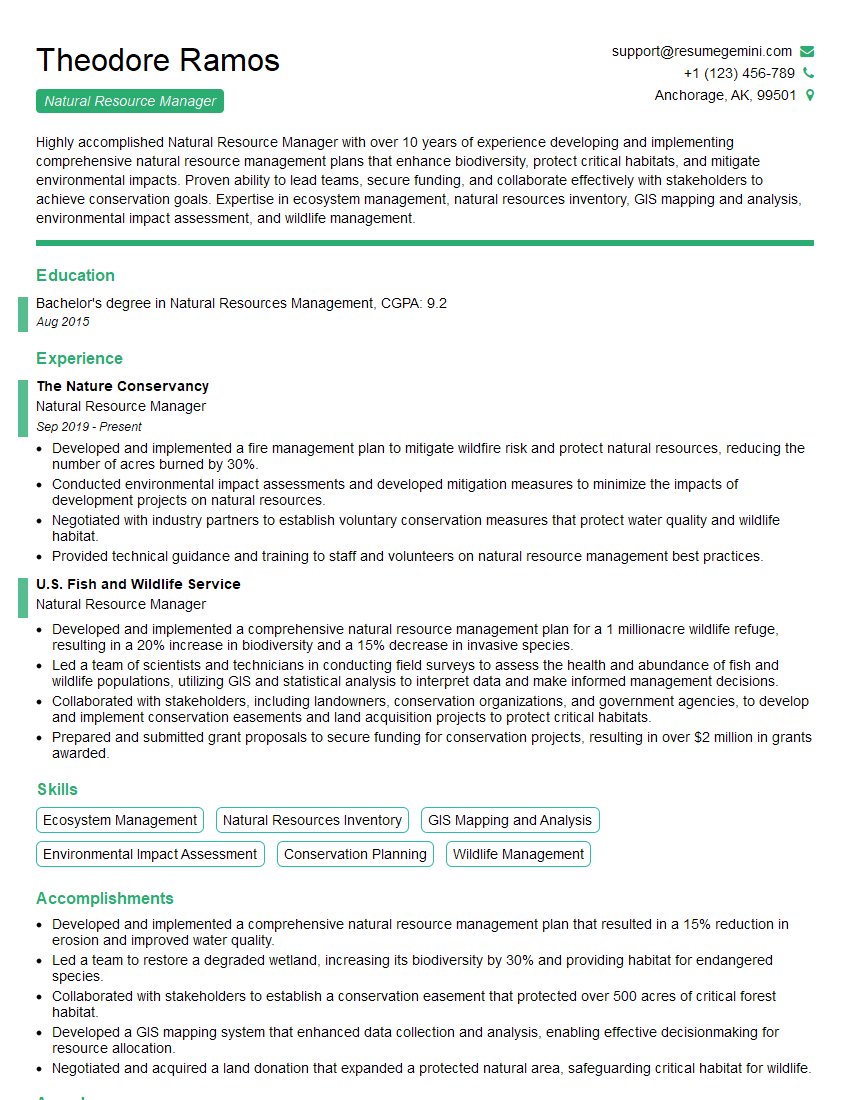
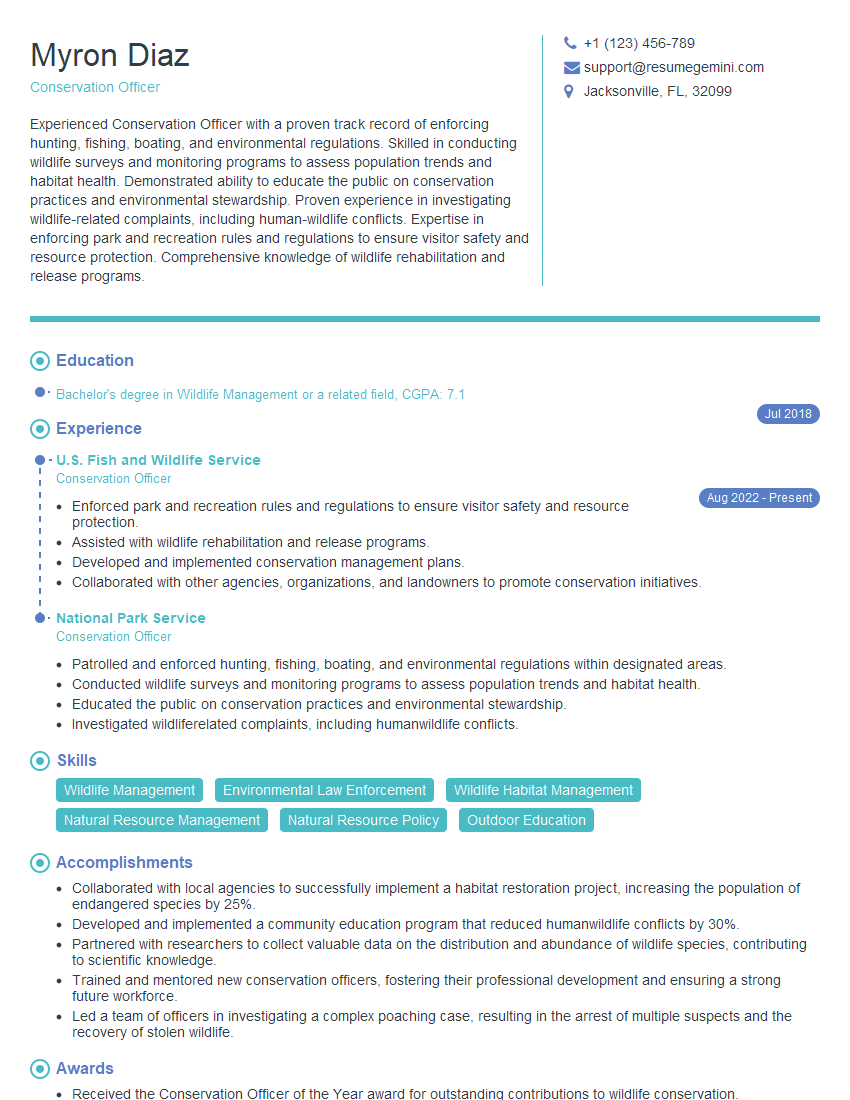
Mastering Hunting Laws and Regulations is crucial for career advancement in wildlife management, conservation enforcement, and related fields. A strong understanding of these complex regulations demonstrates professionalism, commitment to ethical hunting practices, and a deep knowledge of the industry. To maximize your job prospects, creating an ATS-friendly resume is essential. ResumeGemini can help you build a compelling and effective resume that highlights your expertise in Hunting Laws and Regulations. ResumeGemini offers examples of resumes tailored to this specific field, providing you with a valuable template to follow. Invest time in crafting a professional resume to showcase your skills and increase your chances of landing your dream job.

Explore more articles
Users Rating of Our Blogs
Share Your Experience
We value your feedback! Please rate our content and share your thoughts (optional).
What Readers Say About Our Blog
To the interviewgemini.com Webmaster.
Very helpful and content specific questions to help prepare me for my interview!
Thank you
To the interviewgemini.com Webmaster.
This was kind of a unique content I found around the specialized skills. Very helpful questions and good detailed answers.
Very Helpful blog, thank you Interviewgemini team.