Every successful interview starts with knowing what to expect. In this blog, we’ll take you through the top Augmentative and Alternative Communication (AAC) Evaluation and Training interview questions, breaking them down with expert tips to help you deliver impactful answers. Step into your next interview fully prepared and ready to succeed.
Questions Asked in Augmentative and Alternative Communication (AAC) Evaluation and Training Interview
Q 1. Describe your experience with different AAC assessment methods.
AAC assessment is a multifaceted process aiming to identify an individual’s communication needs and strengths, ultimately guiding the selection of the most appropriate AAC system. My experience encompasses a wide range of methods, including:
Comprehensive Communication Needs Assessment: This involves a thorough evaluation of the individual’s current communication abilities, including verbal and nonverbal skills, cognitive abilities, and physical limitations. I use standardized assessments like the Communication Matrix and informal observations to gather data across various settings (home, school, therapy).
Participatory Assessment: This client-centered approach prioritizes the individual’s preferences and goals. I actively involve the individual and their family in the assessment process, ensuring their voices are heard and their needs are met. This might involve preference testing various AAC systems or features.
Dynamic Assessment: This approach focuses on the individual’s learning potential and responsiveness to intervention. It’s less about measuring current skills and more about observing how quickly and easily they learn new skills within an AAC system.
Functional Assessment: This centers on identifying the individual’s communication needs within their daily routines and environments. It helps us determine what aspects of communication are most crucial and which contexts need the most support. For example, we might observe how they communicate during mealtimes, play, or social interactions.
Each assessment informs the next, creating a holistic understanding of the individual’s needs and building a foundation for successful AAC intervention.
Q 2. How do you determine the appropriate AAC system for a client?
Determining the appropriate AAC system is a crucial step, requiring a careful consideration of several factors. It’s not a one-size-fits-all approach. I begin by analyzing the assessment data, paying close attention to:
Individual’s communication needs and abilities: This includes their current communication methods, cognitive skills, physical capabilities (motor skills, vision, hearing), and linguistic abilities.
Environmental factors: The settings where the individual communicates (home, school, work) significantly impact system choice. A system suitable for home use might not be practical in a school environment.
Technological proficiency: Both the individual and their caregivers need to be considered. Some systems are easier to use and require less training. Technological limitations may dictate the choice.
For example, an individual with limited fine motor skills might benefit from a system with large buttons or switch access, while someone with higher cognitive skills might be better suited to a system with more advanced features like text-to-speech or sentence prediction. I often utilize a trial period where several systems are tested before a final decision is made.
Q 3. Explain the process of selecting and fitting an AAC device.
Selecting and fitting an AAC device is a collaborative process involving the client, family, and a multidisciplinary team. The process includes:
Trial Period: The client and family trial different devices and systems to identify preferences and assess functionality. This is crucial for user acceptance and successful implementation.
Customization: Once a system is selected, it’s often customized to meet the individual’s specific needs. This might involve creating personalized vocabulary lists, adjusting settings, or adding alternative access methods.
Training: Comprehensive training is provided to both the client and caregivers on how to use the device effectively. This includes basic operation, vocabulary expansion, communication strategies, and troubleshooting.
Ongoing Support: Regular follow-up sessions are scheduled to address any challenges, provide ongoing training, and make adjustments as needed. The system should be seen as evolving and adapting with the user’s needs.
Environmental Adaptations: Sometimes, adjustments are needed in the environment to facilitate device use, like creating accessible communication spaces or modifying furniture arrangements.
This process ensures the device is not just chosen but optimally integrated into the individual’s life, maximizing its effectiveness.
Q 4. What are the key considerations when training a client on AAC use?
Training a client on AAC use requires patience, consistency, and a focus on functional communication. Key considerations include:
Individualized Goals: Training should be tailored to the individual’s specific needs and communication goals, focusing on skills relevant to their daily life. The goals should be measurable, achievable, relevant, and time-bound (SMART goals).
Systematic Instruction: Using evidence-based strategies like modeling, prompting, and positive reinforcement is crucial for effective learning. We often start with core vocabulary and gradually introduce fringe vocabulary relevant to the individual’s interests.
Motivation and Engagement: Maintaining the client’s interest and motivation is key to success. Integrating activities and topics that are personally meaningful can enhance engagement and learning. Games, storytelling, and social interactions can be useful tools.
Communication Partner Training: Training extends beyond the client; caregivers, teachers, and other communication partners need to learn how to effectively interact with the client using the AAC system. This ensures consistent and supportive communication across all settings.
Regular Assessment: Continual monitoring of progress and making necessary adjustments to the training plan is important. This ensures the training remains relevant and effective.
Think of AAC training as a marathon, not a sprint. Consistent effort and support lead to long-term success.
Q 5. How do you address challenges in AAC implementation, such as caregiver resistance or limited funding?
Challenges in AAC implementation are common and often require creative solutions. Addressing caregiver resistance involves understanding their concerns through open communication and providing education and support. We use strategies such as:
Caregiver Education: Providing comprehensive training on the benefits of AAC, how to effectively use the system, and addressing common misconceptions is crucial. This builds confidence and reduces resistance.
Collaboration and Support: Building a strong collaborative relationship with caregivers is essential. Regular meetings and open communication can address concerns and build confidence.
Demonstration of Success: Showcasing the positive impact of AAC through documented progress and tangible results can help overcome resistance. Sharing success stories from other families can also be helpful.
Limited funding can be addressed by:
Exploring Funding Options: Identifying and applying for various funding sources, including insurance, grants, and charitable organizations.
Prioritizing Needs: Focusing on acquiring the most essential components of the AAC system first and gradually adding features as funding allows.
Utilizing Low-Tech Options: Employing low-cost or homemade AAC options as a temporary measure or supplement to high-tech systems can be a practical strategy.
Problem-solving involves creativity and collaboration to ensure access to AAC for all who need it.
Q 6. Discuss the importance of family involvement in AAC intervention.
Family involvement is paramount for successful AAC intervention. Families are the primary communication partners for most individuals using AAC. Their active participation is crucial for:
Communication Consistency: Consistent use of the AAC system across various settings is vital for skill development. Family involvement ensures consistent language modeling and reinforcement.
Motivation and Support: Families provide emotional support and encouragement, which is essential for the individual’s motivation and engagement in therapy and AAC use.
Generalization of Skills: By practicing AAC skills at home and in other familiar environments, individuals can generalize their skills to new settings and situations.
System Maintenance and Troubleshooting: Families often play a significant role in maintaining the AAC system and troubleshooting any issues that may arise.
Long-Term Sustainability: Family involvement ensures the ongoing use and success of AAC long after formal therapy concludes.
I regularly involve families in all aspects of the assessment and intervention process, fostering a collaborative and empowering partnership.
Q 7. Describe your experience with various AAC modalities (e.g., aided, unaided, high-tech, low-tech).
My experience spans various AAC modalities, each serving different needs and communication styles:
Aided AAC: This involves the use of external tools like speech-generating devices (high-tech) or picture communication systems (low-tech). I have extensive experience with various high-tech devices from different manufacturers, as well as designing and implementing personalized picture exchange systems (PECS).
Unaided AAC: This relies on the individual’s own body to communicate, such as gestures, facial expressions, or sign language. I have experience in teaching sign language and adapting other gestures to enhance communication.
High-Tech AAC: This involves sophisticated electronic devices with advanced features like text-to-speech, vocabulary prediction, and voice banking. I’m proficient in programming and customizing many high-tech devices, adapting them to suit individual needs and preferences. This includes experience with various iOS and Android-based apps.
Low-Tech AAC: This encompasses simpler tools like picture cards, communication boards, and alphabet boards. I frequently use these in conjunction with high-tech systems, particularly during early stages of intervention or as supplementary tools.
The choice of modality depends heavily on the individual’s abilities, needs, and preferences, as well as environmental factors. A blended approach, integrating several modalities, is often the most effective strategy.
Q 8. How do you assess the effectiveness of an AAC intervention?
Assessing the effectiveness of an AAC intervention is a multifaceted process that goes beyond simply observing if a person is using the system. We need to look at functional communication outcomes. It involves a combination of quantitative and qualitative data collection methods, focusing on improvements in the individual’s communication abilities and overall quality of life.
- Functional Communication Measures: We track improvements in the individual’s ability to express needs and wants, engage in social interactions, participate in daily routines, and achieve their personal goals. For example, we might chart the number of successful communication attempts per day, the range of communicative functions achieved (e.g., requesting, commenting, protesting), or the individual’s participation in different social settings.
- Qualitative Data: This includes observations of the individual’s communication behaviors in natural settings, caregiver and teacher reports, and the individual’s self-report (if appropriate). This helps us understand the impact of the intervention beyond just numbers. For example, observing how confidently a child initiates communication or how a caregiver describes reduced frustration at home tells us about the holistic impact.
- Standardized Assessments: Some standardized assessments specifically measure aspects of AAC use. These provide a baseline and track progress against established norms, offering a valuable benchmark for comparison. However, these should be used alongside functional measures.
- Regular Monitoring and Adjustments: Effective assessment is ongoing. We regularly review data, adjust strategies based on the individual’s needs and progress, and involve the individual and their family in the evaluation process to ensure the intervention remains relevant and effective.
Imagine a child who initially struggled to communicate their needs. After an AAC intervention, we might see an increase in successful communication attempts, a broader range of communicative functions, and reduced frustration. This comprehensive approach gives a complete picture of intervention success.
Q 9. What are the ethical considerations involved in AAC assessment and intervention?
Ethical considerations in AAC assessment and intervention are paramount. Our responsibility is to empower individuals, respecting their autonomy and dignity. Key ethical considerations include:
- Informed Consent: We must obtain informed consent from the individual (if capable) and their family or guardians, ensuring they fully understand the assessment and intervention process, including potential benefits and risks. This includes explaining different options and allowing them to choose.
- Person-Centered Approach: Every individual is unique. We need to respect their preferences, cultural backgrounds, and communication styles. The intervention should be tailored to their specific needs and goals, not a ‘one-size-fits-all’ approach.
- Confidentiality and Privacy: All information obtained during the assessment and intervention process must be kept confidential and handled in accordance with privacy regulations (e.g., HIPAA). This builds trust and ensures the individual feels safe and respected.
- Cultural Sensitivity: We need to be mindful of cultural differences that may impact communication styles and family dynamics. Our approach must be culturally appropriate and respectful.
- Access and Equity: We must ensure equitable access to AAC services, regardless of the individual’s background, socioeconomic status, or disability type. We must address any systemic barriers that hinder access.
- Advocacy: We act as advocates for our clients, ensuring they receive the appropriate resources and support to maximize their communication potential.
For example, if a family is hesitant to use a particular AAC system, we need to explain its benefits and address their concerns respectfully, ensuring they understand their options. We wouldn’t force a system upon them.
Q 10. Explain your understanding of different communication strategies used with AAC.
Various communication strategies enhance AAC use. These are not mutually exclusive; often, a blend is most effective.
- Modeling: The clinician or communication partner demonstrates the use of the AAC system, providing a visual and auditory example for the individual to learn from. This is particularly useful for beginners.
- Aided Language Stimulation (ALS): The communication partner uses both the AAC system and spoken language simultaneously, linking the two to build associations and enhance understanding.
- Environmental Arrangements: Structuring the environment to reduce distractions and support communication (e.g., visual supports, schedules, organized materials) promotes successful interactions.
- Communication Temptations: Strategically placing desirable items out of reach to encourage the individual to communicate their needs using the AAC system.
- Milieu Teaching: Incorporating communication opportunities into daily routines and activities, focusing on natural contexts and functional communication.
- Augmentative and Alternative Language Stimulation (AALS): Focuses on using AAC to enhance language development and provide alternative communication methods in situations where verbal communication is not possible or sufficient.
For instance, when teaching a child to use a picture exchange system (PECS), we might model how to exchange a picture for a desired item. Simultaneously using spoken language alongside PECS, through ALS, is highly effective. Then, by strategically placing toys out of reach, we create a situation that encourages the child to use their new communication skill.
Q 11. How do you adapt AAC strategies to accommodate different cognitive abilities and learning styles?
Adapting AAC strategies involves a deep understanding of the individual’s cognitive abilities and learning styles. A rigid approach will likely fail. Flexibility is key.
- Cognitive Abilities: For individuals with limited cognitive abilities, we might start with simple systems featuring single-meaning symbols and gradually introduce more complex vocabulary and grammatical structures. For individuals with higher cognitive abilities, more complex systems with extensive vocabulary, grammatical structures, and writing capabilities are appropriate.
- Learning Styles: Visual learners benefit from visual supports, such as pictures, symbols, and videos. Auditory learners respond well to verbal instructions and auditory feedback. Kinesthetic learners learn through hands-on experiences and physical interaction. AAC interventions should incorporate various modalities to cater to diverse learning preferences.
- Adaptive Techniques: This might involve adjusting the size and type of symbols, utilizing alternative input methods (e.g., switch access, eye gaze), using visual supports to enhance comprehension, and providing clear, concise instructions.
- Trial and Error: We need to be prepared to try different strategies, carefully monitoring the individual’s response to each. What works for one person may not work for another.
For example, a child with autism and limited vocabulary might benefit from a system with highly visual symbols and a clear, structured layout, while a teenager with cerebral palsy and good cognitive abilities might use a sophisticated speech-generating device.
Q 12. Describe your experience with individuals with various disabilities who use AAC.
My experience spans a wide range of disabilities. I’ve worked with individuals with:
- Autism Spectrum Disorder (ASD): Supported many children and adults with ASD in learning and using various AAC systems, focusing on improving social communication skills and reducing challenging behaviors.
- Cerebral Palsy (CP): Worked with individuals with CP to select appropriate access methods (e.g., switch access, head pointers, eye gaze) and customized their AAC systems to meet their physical needs.
- Traumatic Brain Injury (TBI): Assessed and provided support to individuals with TBI, helping them regain lost communication skills and adapt to changes in their cognitive abilities. This often involves focusing on strategies to compensate for lost functions.
- Intellectual Disabilities: Supported individuals with intellectual disabilities in learning basic communication skills, focusing on functional communication in daily routines.
- Aphasia: Assisted adults with aphasia in regaining lost communication abilities through the use of AAC and targeted therapies.
Each case presents unique challenges and rewards. One particularly rewarding experience involved a young man with severe cerebral palsy who, through persistent effort and a customized AAC system, was able to express his love for music and participate in a community choir. These successes highlight the transformative power of AAC.
Q 13. How do you collaborate with other professionals in an AAC intervention team?
Collaboration is essential in AAC intervention. I work closely with a multidisciplinary team, including:
- Speech-Language Pathologists (SLPs): The primary professionals in AAC assessment and intervention, they lead the process, selecting and training on the AAC systems.
- Occupational Therapists (OTs): Assist with adapting the AAC system to meet the individual’s physical needs, including positioning, access methods, and adaptive equipment.
- Special Education Teachers: Integrate AAC into the classroom, providing consistent opportunities for communication and supporting the use of the system across different settings.
- Parents and Caregivers: Essential partners, they provide ongoing support and consistent use of the AAC system at home and in the community. Their input is crucial for successful implementation.
- Other Professionals: Depending on the individual’s needs, collaboration might include psychologists, physicians, and assistive technology specialists.
We regularly communicate through team meetings, case conferences, and informal consultations. Effective communication and shared goals ensure a cohesive and comprehensive intervention plan. For example, we might collaborate to modify a classroom environment to better support the use of an AAC system, or we might co-develop visual supports tailored to a student’s curriculum.
Q 14. Explain your understanding of different assessment tools for AAC.
A variety of assessment tools are used for AAC, each serving a different purpose:
- Communication Needs Assessment: This comprehensive evaluation assesses the individual’s communication strengths and weaknesses, identifying their needs and goals. It often involves observations, interviews, and standardized assessments.
- Standardized Tests: Tools like the Communication Matrix and the Peabody Picture Vocabulary Test (PPVT) can provide quantitative data on language skills. These benchmarks are helpful but should not be used in isolation.
- Informal Assessments: Observations in natural settings, play-based assessments, and functional communication assessments provide qualitative data on the individual’s communication behaviors in real-world contexts.
- Technology Assessments: These determine the individual’s physical capabilities and cognitive abilities to use different types of AAC systems (e.g., speech-generating devices, picture exchange systems).
- Trial Periods: Allowing the individual to try out different AAC systems provides valuable information on system preferences and usability.
The choice of assessment tool depends on the individual’s age, abilities, and communication needs. A comprehensive assessment employs multiple tools to provide a holistic understanding. For instance, we might use the Communication Matrix to assess a child’s overall communication abilities, observe their communication in play to understand their interaction styles, and then trial several AAC systems to determine the best fit.
Q 15. What are some common challenges faced by AAC users and their families?
AAC users and their families face a multitude of challenges, often interconnected and impacting various aspects of their lives. These can be broadly categorized into communication, social, emotional, and practical difficulties.
- Communication Challenges: Difficulty expressing needs and wants, limited vocabulary, slow communication rate, frustration from communication breakdowns, and challenges with understanding complex language or abstract concepts. For example, a child using a picture exchange system might struggle to express nuanced emotions like disappointment.
- Social Challenges: Social isolation due to communication barriers, difficulty participating in social interactions, peer rejection, and misunderstanding from others who lack AAC awareness. Imagine a teenager using a speech-generating device experiencing exclusion from social activities because peers find it difficult to engage with them.
- Emotional Challenges: Frustration, anger, low self-esteem, feelings of inadequacy, and difficulty regulating emotions due to communication limitations. A young adult relying on AAC might struggle to express their feelings of sadness effectively, leading to emotional dysregulation.
- Practical Challenges: Access to appropriate devices and technology, cost of AAC systems and ongoing maintenance, limited access to trained professionals for assessment and support, lack of societal understanding and acceptance of AAC, and the need for ongoing training and adaptation.
Career Expert Tips:
- Ace those interviews! Prepare effectively by reviewing the Top 50 Most Common Interview Questions on ResumeGemini.
- Navigate your job search with confidence! Explore a wide range of Career Tips on ResumeGemini. Learn about common challenges and recommendations to overcome them.
- Craft the perfect resume! Master the Art of Resume Writing with ResumeGemini’s guide. Showcase your unique qualifications and achievements effectively.
- Don’t miss out on holiday savings! Build your dream resume with ResumeGemini’s ATS optimized templates.
Q 16. How do you address these challenges in your practice?
Addressing these challenges requires a holistic and individualized approach. My practice focuses on collaborative goal setting with the AAC user, family, and other relevant stakeholders (educators, therapists).
- Comprehensive Assessment: A thorough evaluation considers the individual’s communication needs, strengths, and limitations, including cognitive abilities, motor skills, and communication preferences. This informs the selection of the most appropriate AAC system.
- Individualized Intervention: The intervention plan is tailored to the individual’s needs and goals, focusing on skill development, strategy training, and environmental modifications. For instance, for a student who struggles with turn-taking during conversations, I might introduce structured visual supports like a timer or token board.
- Family-Centered Approach: Active participation of family members in all stages of assessment and intervention is crucial. We work together to develop strategies for communication at home and in other settings. This ensures consistency and support across environments.
- Environmental Modifications: Adjusting the communication environment to promote successful communication includes simplifying language, using visual supports, and providing opportunities for communication practice in various contexts.
- Advocacy and Education: Educating others about AAC and advocating for the AAC user’s needs within their community (school, workplace) ensures better understanding and support. I often facilitate training for educators and caregivers to build their competency.
Q 17. Describe your experience with data collection and analysis related to AAC outcomes.
Data collection and analysis are essential for monitoring progress and evaluating the effectiveness of AAC interventions. I employ a variety of methods depending on the individual’s communication skills and goals.
- Qualitative Data: This includes observations of communication interactions, anecdotal records from family members and educators, and reports from the AAC user themselves (if possible). For example, I might observe the frequency and effectiveness of communication attempts in different settings.
- Quantitative Data: This involves the use of standardized assessments and outcome measures to track progress in specific areas. Examples include counting the number of words used, measuring communication efficiency, and assessing the accuracy of message transmission. Specific tools like the Communication Matrix are used.
- Data Analysis: The collected data are analyzed to monitor progress towards goals, identify areas needing further intervention, and make adjustments to the intervention plan as needed. This might involve calculating communication rates over time or comparing performance on standardized assessments across sessions.
- Technology: Technology plays an increasing role in data collection, such as using apps to track communication data or leveraging speech-generating devices that automatically record usage patterns.
Ethical considerations, like ensuring data privacy and confidentiality, are always paramount.
Q 18. What strategies do you use to promote successful AAC use in various settings (home, school, work)?
Promoting successful AAC use requires a systematic approach that considers the different communication demands of various settings.
- Home: Establish consistent routines and communication opportunities within the family. Use visual schedules, social stories, and other visual supports to facilitate daily communication. Involve the family in the selection and use of AAC systems to ensure buy-in and consistency.
- School: Collaborate closely with educators to integrate AAC into the curriculum and adapt classroom activities to facilitate communication. Provide training to teachers and peers on effective communication strategies. Use AAC to support academic tasks, social interactions, and participation in classroom activities.
- Work: Assist individuals in identifying and adapting communication strategies to meet the demands of the workplace. This might include modifications to the work environment, training for colleagues, and the use of assistive technology to support work-related communication. Advocating for reasonable accommodations is also a key aspect.
A key strategy across all settings is to consistently reinforce successful communication attempts through positive reinforcement and praise. Celebrate achievements and adjust strategies as needed.
Q 19. Explain your knowledge of different AAC apps and software.
My knowledge of AAC apps and software is extensive, encompassing a wide range of options designed for various communication needs and technological capabilities.
- Low-Tech Options: These include picture exchange systems (PECS), communication boards, and adapted books. While simpler, their effectiveness depends on the user’s motor skills and cognitive abilities.
- Mid-Tech Options: These involve electronic devices with pre-programmed messages or limited vocabulary, often using touch screens or buttons. These offer flexibility while often still being quite user-friendly.
- High-Tech Options: These are sophisticated speech-generating devices (SGDs) with extensive vocabularies, customizable features, and advanced functionalities such as text-to-speech. Examples include Proloquo2Go, TouchChat, and LAMP.
I am skilled in evaluating the strengths and limitations of different apps and software based on individual user needs, and I guide the selection process collaboratively. The decision often depends on factors such as the user’s cognitive abilities, motor skills, and communication goals, as well as the availability of technological support and financial resources.
Q 20. How do you teach AAC strategies to caregivers and educators?
Teaching AAC strategies to caregivers and educators requires a comprehensive and multi-faceted approach.
- Training Sessions: I conduct workshops and individual training sessions that cover topics such as selecting appropriate AAC systems, developing communication strategies, and implementing intervention programs. Hands-on practice and role-playing are essential.
- Modeling and Demonstration: I demonstrate effective communication strategies using various AAC methods and provide opportunities for caregivers and educators to practice with real-life scenarios.
- Ongoing Support and Feedback: I provide ongoing support and feedback through regular consultations, follow-up visits, and access to resources and materials. This sustained support builds confidence and ensures effective implementation of strategies.
- Collaboration and Teamwork: I foster a collaborative environment where caregivers and educators feel comfortable asking questions, sharing challenges, and receiving guidance. A team approach ensures consistent support.
The training is tailored to the specific needs and prior knowledge of the participants, using a mix of didactic instruction, practical demonstrations, and collaborative problem-solving.
Q 21. How do you ensure that AAC interventions are culturally sensitive and appropriate?
Culturally sensitive and appropriate AAC interventions are crucial for ensuring effective communication and promoting positive outcomes. My approach emphasizes:
- Cultural Considerations: I carefully consider the individual’s cultural background, language, and communication styles. This may involve incorporating cultural symbols, pictures, or vocabulary into the AAC system.
- Language and Communication Styles: I incorporate the individual’s preferred language and communication styles into the intervention plan. For example, if a family primarily uses a specific dialect, I make sure to include that in their AAC system.
- Family and Community Involvement: I actively involve family members and community members in the assessment and intervention process to ensure that the intervention plan is congruent with their values and beliefs.
- Access to Diverse Resources: I utilize a range of culturally relevant resources and materials to support the intervention. This might include books, videos, or websites that reflect the diversity of backgrounds.
By taking these steps, I ensure that AAC interventions are not only effective but also respectful and supportive of the individual’s cultural identity.
Q 22. What is your experience with different funding options for AAC devices and services?
Securing funding for AAC devices and services can be complex, but it’s crucial for ensuring accessibility. My experience encompasses navigating various funding streams, including private insurance, Medicaid/Medicare, school districts (through Individualized Education Programs or IEPs), and charitable organizations.
- Private Insurance: I’m proficient in working with insurance companies to pre-authorize AAC devices and therapy, understanding their coverage criteria and appealing denials. For example, I’ve successfully advocated for coverage of a high-tech AAC device for a child with complex communication needs when the initial claim was denied due to a lack of specific diagnostic codes.
- Medicaid/Medicare: I understand the nuances of state and federal Medicaid regulations, including applying for waivers and demonstrating medical necessity for AAC services. I’ve assisted families in navigating the application process, including documentation requirements and appeals procedures.
- School Districts: I’m experienced in collaborating with school IEP teams to secure funding for AAC devices and services as part of a student’s educational plan. This includes justifying the need for specific technology, developing goals and objectives, and participating in IEP meetings.
- Charitable Organizations: I’m familiar with various organizations providing grants or financial assistance for AAC. I’ve helped families research and apply for these resources, often coordinating with therapists and other professionals to build a strong case for funding.
My approach is always client-centered, ensuring that the funding strategy aligns with the individual’s needs and preferences. I prioritize transparency with families throughout the funding process, explaining the options clearly and answering any questions.
Q 23. Describe your familiarity with assistive technology legislation and regulations.
My understanding of assistive technology (AT) legislation and regulations is thorough. I am familiar with the Individuals with Disabilities Education Act (IDEA), the Americans with Disabilities Act (ADA), and Section 504 of the Rehabilitation Act, as well as state-specific regulations.
IDEA mandates that children with disabilities have access to appropriate AT, including AAC, within their educational setting. I’m well-versed in the IEP process, ensuring that AAC assessments, devices, and training are part of the student’s plan.
The ADA ensures equal access to communication for individuals with disabilities in all aspects of life, including employment and public accommodations. I help families understand their rights and advocate for appropriate accommodations.
Section 504 covers similar rights for individuals with disabilities in federally funded programs and services. I apply my knowledge to ensure that AAC users have the support they need to access these opportunities.
Staying updated on these laws and regulations requires ongoing professional development, and I regularly participate in workshops and conferences to ensure my compliance and best practices.
Q 24. How do you ensure the ongoing maintenance and repair of AAC devices?
Ongoing maintenance and repair are critical for ensuring the continued functionality of AAC devices. My approach is proactive and involves several key strategies:
- Comprehensive Training: I provide thorough training to the user, their family, and other relevant individuals on the proper use, care, and troubleshooting of the AAC device. This includes guidance on battery life, software updates, and basic repairs.
- Regular Check-ins: I schedule regular follow-up sessions to assess the device’s functionality, address any issues, and provide ongoing support. This proactive approach prevents minor problems from escalating into major ones.
- Warranty and Repair Services: I’m well-versed in working with device manufacturers to utilize warranties and initiate repairs as needed. I assist families in navigating the repair process, including documentation, shipping, and communication with the manufacturer.
- Backup Strategies: We develop contingency plans, such as using low-tech communication methods as backups in case of device malfunction. This ensures communication isn’t completely interrupted.
- Data Backup: For high-tech AAC systems, I help ensure that important data is backed up regularly to prevent data loss.
My goal is to minimize downtime and ensure the AAC user maintains consistent access to communication.
Q 25. Explain your experience with AAC intervention for different age groups.
My experience spans a wide range of age groups, from toddlers to adults, each requiring a tailored AAC intervention approach.
- Early Intervention (Toddlers and Preschoolers): With young children, the focus is often on developing foundational communication skills, exploring different modalities (e.g., sign language, picture exchange), and integrating AAC into play-based activities. A key element is collaborating with parents and caregivers to ensure consistent use across settings. I often use play-based assessments to determine the child’s communicative needs and strengths.
- School-Aged Children: For school-aged children, the emphasis is on integrating AAC into the academic curriculum, fostering literacy development, and collaborating with educators to create inclusive classroom environments. I work closely with IEP teams to ensure the child’s communication needs are met in the classroom.
- Adolescents and Adults: With adolescents and adults, the focus shifts to increasing independence, fostering social participation, and addressing vocational or life skills needs. This may involve advanced AAC technologies, participation in social skills groups, and collaboration with vocational rehabilitation specialists. I’ve worked with adults seeking to improve communication in the workplace, social settings, and personal relationships.
Adaptability is crucial – I tailor assessments, intervention strategies, and communication styles to suit the developmental needs and preferences of each individual. For example, I might use highly visual supports with a young child, whereas an adult might benefit from a sophisticated text-to-speech system. The ultimate goal is to enhance communication skills and foster participation in all aspects of life.
Q 26. How do you adapt your communication style to work effectively with individuals who use AAC?
Adapting my communication style to work effectively with individuals who use AAC is paramount. It’s not just about what I say, but how I say it and the environment I create. I prioritize building rapport, respecting their communication preferences, and ensuring inclusive communication practices.
- Patient and Respectful Listening: I allow ample time for individuals to communicate, providing opportunities for them to initiate conversations. I pay close attention to both their verbal and nonverbal cues, demonstrating genuine interest and respect for their communication.
- Clear and Concise Language: I use simple language, avoiding jargon and complex sentence structures. Visual supports, such as pictures, objects, or gestures, can be incorporated to supplement verbal communication.
- Appropriate Pace and Tone: I adjust the pace and tone of my speech to suit the individual’s communication rate and comprehension level, and I avoid interrupting or rushing them.
- Turn-Taking and Active Engagement: I actively engage in conversations, maintaining appropriate eye contact and body language. I strive to create a comfortable and relaxed environment where communication flows naturally.
- Respecting Communication Choices: I respect the individual’s choice of AAC method and assist them in utilizing their chosen system effectively. This includes acknowledging and valuing their diverse communication preferences, whether they use high-tech devices or low-tech strategies such as picture exchange systems.
Ultimately, effective communication involves mutual understanding and respect. By creating an environment of inclusivity, patience, and understanding, I facilitate meaningful interactions and promote the individual’s overall communication success.
Q 27. Describe your experience with providing ongoing support and follow-up care for AAC users.
Ongoing support and follow-up care are critical for the long-term success of AAC users. My approach emphasizes collaboration, regular check-ins, and proactive problem-solving.
- Scheduled Follow-up Sessions: I schedule regular sessions to monitor device functionality, address any challenges, and provide ongoing training. The frequency of these sessions varies depending on the individual’s needs and the complexity of their AAC system.
- Collaboration with Families and Caregivers: I work closely with families and caregivers to ensure consistent use of the AAC system across settings and provide them with the necessary skills and support. This often includes training sessions on device maintenance, troubleshooting, and communication strategies.
- Addressing Communication Challenges: I proactively address any emerging communication challenges, adjusting intervention strategies as needed. This might involve modifying the AAC system, introducing new communication strategies, or collaborating with other professionals, such as speech-language pathologists or occupational therapists.
- Advocacy and Support: I advocate for the individual’s needs, supporting them in accessing resources and services that will enhance their communication abilities. This might include connecting them with relevant organizations or assisting with navigating the funding process.
- Transition Planning: When appropriate, I help individuals and their families plan for future transitions, such as transitioning from school to adult life or changing AAC systems.
My goal is to provide ongoing, personalized support that empowers individuals to communicate effectively and participate fully in all aspects of their lives.
Q 28. What are the latest advancements in AAC technology and how do you stay current?
The field of AAC is constantly evolving, with exciting advancements in technology and intervention strategies. I stay current through a multi-pronged approach:
- Professional Development: I actively participate in conferences, workshops, and online courses related to AAC. This includes attending national and international conferences to stay abreast of the latest research and technologies.
- Peer Learning and Collaboration: I maintain strong professional relationships with other AAC specialists, exchanging ideas, best practices, and knowledge about emerging trends. This includes collaborating on projects and participating in professional networks.
- Journal Articles and Research: I regularly read peer-reviewed journal articles and research studies to stay informed about the latest advancements in AAC research and clinical practice. I also participate in research projects where possible.
- Industry Updates: I follow industry news and announcements from AAC device manufacturers to stay informed about new product releases and software updates.
- Technology Exploration: I actively explore and evaluate new AAC technologies, keeping up-to-date on innovations in areas such as artificial intelligence, eye-gaze systems, and other emerging communication approaches.
By staying informed about the latest developments, I can ensure that I’m providing the most effective and up-to-date AAC interventions and technologies to my clients. My commitment to continuous learning ensures that I’m providing the best possible care and support.
Key Topics to Learn for Augmentative and Alternative Communication (AAC) Evaluation and Training Interview
- Assessment Methods: Understanding various assessment tools and techniques used to evaluate communication needs, including standardized tests, informal observations, and dynamic assessments. Consider the strengths and limitations of each approach.
- AAC System Selection: Learn the process of identifying appropriate AAC systems (low-tech, mid-tech, high-tech) based on individual needs, abilities, and contexts. Practice explaining your decision-making process for different client profiles.
- Intervention Strategies: Master various intervention strategies for teaching AAC, including modeling, prompting, and feedback techniques. Be prepared to discuss different teaching methodologies and their effectiveness.
- Communication Partner Training: Understand the importance of training communication partners (family, caregivers, educators) in effective communication strategies and AAC system use. Consider the challenges involved and solutions for successful training.
- Ethical Considerations: Discuss ethical considerations in AAC assessment and intervention, including client autonomy, informed consent, and cultural sensitivity. Be ready to address potential ethical dilemmas.
- Data Collection and Analysis: Familiarize yourself with methods for collecting and analyzing data to track progress and make informed decisions about AAC interventions. Practice presenting data effectively.
- Technology and AAC: Explore current technologies used in AAC, including apps, software, and hardware. Understand the benefits and limitations of various technological options.
- Collaboration and Teamwork: Discuss the importance of collaboration with other professionals (speech-language pathologists, occupational therapists, educators) in providing comprehensive AAC services.
Next Steps
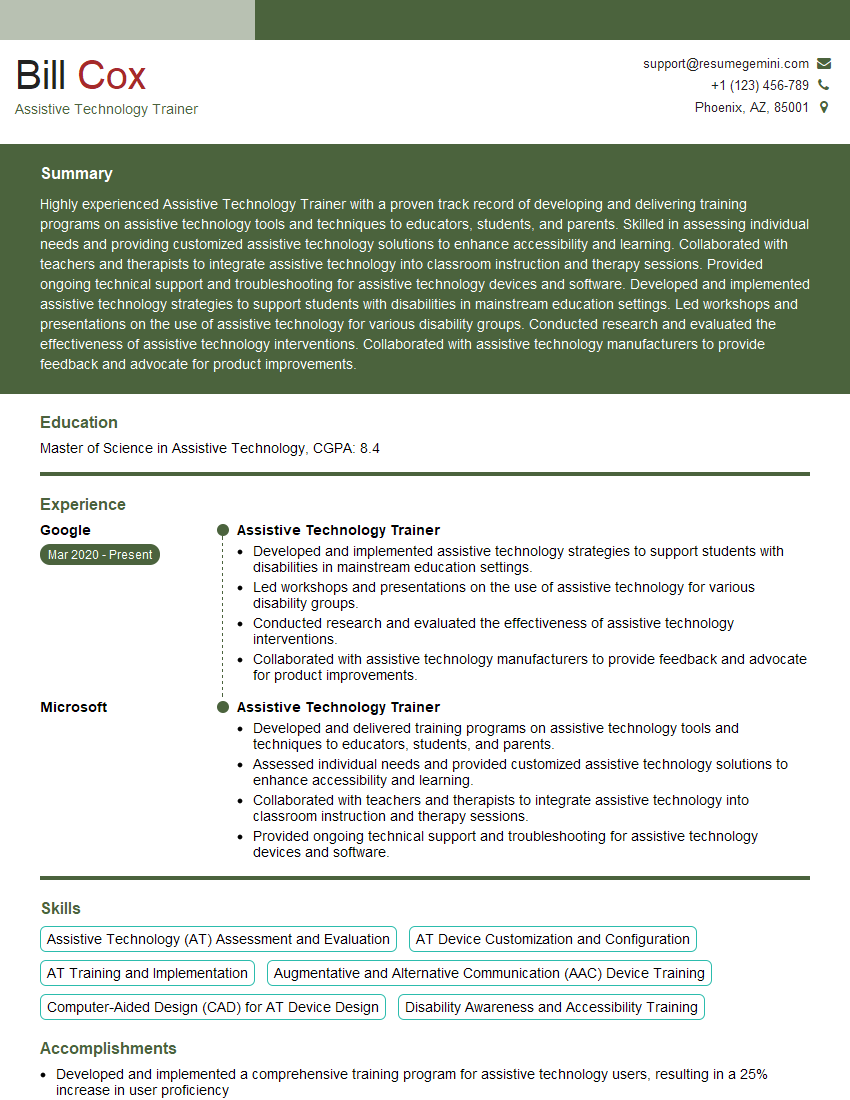
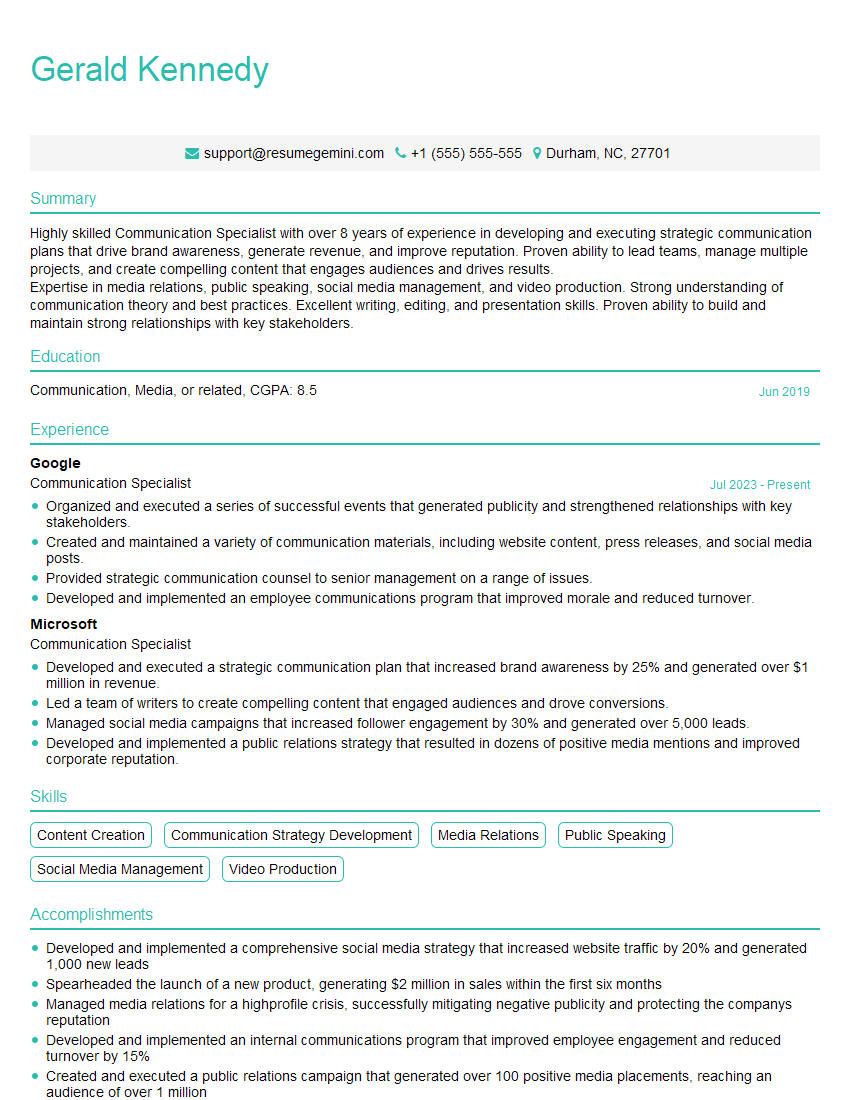
Mastering Augmentative and Alternative Communication (AAC) Evaluation and Training is crucial for a rewarding and impactful career. It allows you to make a real difference in the lives of individuals with communication challenges. To maximize your job prospects, focus on creating a compelling and ATS-friendly resume that highlights your skills and experience. ResumeGemini is a trusted resource that can help you build a professional and effective resume tailored to your unique qualifications. Examples of resumes tailored specifically to Augmentative and Alternative Communication (AAC) Evaluation and Training are available to help you get started.
Explore more articles
Users Rating of Our Blogs
Share Your Experience
We value your feedback! Please rate our content and share your thoughts (optional).
What Readers Say About Our Blog
To the interviewgemini.com Webmaster.
Very helpful and content specific questions to help prepare me for my interview!
Thank you
To the interviewgemini.com Webmaster.
This was kind of a unique content I found around the specialized skills. Very helpful questions and good detailed answers.
Very Helpful blog, thank you Interviewgemini team.