Interviews are more than just a Q&A session—they’re a chance to prove your worth. This blog dives into essential Backerboard Installation interview questions and expert tips to help you align your answers with what hiring managers are looking for. Start preparing to shine!
Questions Asked in Backerboard Installation Interview
Q 1. What types of backerboard are you familiar with?
I’m familiar with several types of backerboard, each with its own strengths and weaknesses. The most common are cement backerboard (CBU), which is what most people think of when they hear ‘backerboard,’ and water-resistant gypsum board (often called ‘greenboard’). There are also newer options like polymeric backerboards, which offer certain advantages like lighter weight and flexibility. My expertise lies primarily with cement backerboard due to its superior durability and water resistance in demanding applications like shower surrounds and wet areas.
- Cement Backerboard (CBU): Durable, water-resistant, and ideal for tile installations in wet areas.
- Water-Resistant Gypsum Board (Greenboard): Less durable than CBU, suitable for areas with less moisture exposure, often used in less demanding applications.
- Polymeric Backerboard: Lightweight, flexible, often more expensive but suitable for curved surfaces and areas where weight is a concern.
Q 2. Explain the process of installing cement backerboard.
Installing cement backerboard is a multi-step process requiring precision and attention to detail. Think of it like building a strong foundation for your tile – a wobbly foundation leads to problems later! Here’s the process:
- Prepare the Wall: Ensure the wall is clean, dry, and free of any loose materials. This usually involves removing old materials, patching holes, and ensuring a stable surface.
- Measure and Cut: Accurately measure the wall sections and cut the backerboard to size using a wet saw (for cleaner cuts) or a utility knife (for rough cuts, requiring more sanding). Always wear safety glasses!
- Install the First Sheet: Begin at a corner, securing the board to the wall studs or furring strips using corrosion-resistant screws spaced approximately 6 inches apart. Ensure proper spacing and avoid over-tightening the screws to prevent cracking.
- Stagger Joints: Subsequent sheets should be staggered, similar to bricklaying, to avoid weak points. Overlapping joints by at least 24 inches is crucial.
- Seal Joints: Use a thin-set mortar or a specialized backerboard tape to seal the joints between the sheets, creating a waterproof barrier. Ensure the tape is embedded properly in the mortar.
- Apply Waterproof Membrane (optional): In particularly wet areas, consider applying a waterproof membrane over the entire backerboard surface before tiling for added protection.
Q 3. How do you prepare a wall surface for backerboard installation?
Proper wall preparation is crucial for a successful backerboard installation. A poorly prepared surface can lead to cracking, instability, and ultimately, tile failure. Think of it as building a house – you wouldn’t build on a shaky foundation!
- Clean the Surface: Remove any loose debris, dust, paint that isn’t adhering well, or old wallpaper. A wire brush or scraper might be needed.
- Repair Imperfections: Fill any holes, cracks, or gaps using a suitable patching compound. Let it cure completely before proceeding.
- Check for Stability: Ensure the wall is structurally sound and able to support the weight of the backerboard and the finished tile. This might involve adding furring strips if the wall isn’t adequately stable.
- Prime (Optional): For certain materials, priming the wall can enhance adhesion and improve the overall bond.
Q 4. What tools and materials are necessary for backerboard installation?
The right tools and materials are essential for a professional-looking and durable backerboard installation. Having everything ready prevents delays and ensures efficiency.
- Cement Backerboard: Choose appropriate thickness based on wall conditions and intended tile size.
- Measuring Tape and Pencil: Accurate measurements are key for a perfect fit.
- Utility Knife or Wet Saw: For cutting the backerboard.
- Corrosion-Resistant Screws: Specifically designed for backerboard; stainless steel is recommended.
- Drill with appropriate drill bit: To pre-drill holes to prevent cracking of the backerboard.
- Thin-set Mortar or Backerboard Tape: To seal the joints.
- Safety Glasses and Dust Mask: To protect yourself from flying debris and dust.
- Level: To ensure straight and aligned installation.
- Measuring Square/Speed Square: For accurate cutting and alignment.
Q 5. Describe the proper methods for cutting backerboard.
Cutting backerboard requires care to prevent chipping and ensure clean edges. A wet saw is ideal for straight cuts. For curved or intricate cuts, a utility knife is often used.
- Wet Saw: Provides the cleanest, most accurate cuts, minimizing the need for sanding. Ensure you use plenty of water to keep the saw blade cool and prevent dust.
- Utility Knife: Score the backerboard deeply multiple times along your cutting line before snapping it. Use a scoring tool to get a clean cut. This method is best for rough cuts and curves.
- Safety Precautions: Always wear safety glasses and a dust mask when cutting backerboard, regardless of the method you use.
Q 6. How do you ensure proper spacing and alignment during installation?
Maintaining proper spacing and alignment is crucial for a professional finish. Inconsistent spacing can lead to uneven tiling and an unprofessional look. Using a level and measuring tools is essential.
- Start with a Level Surface: Ensure the initial sheet is perfectly level and plumb using a level.
- Maintain Consistent Spacing: Use spacers between sheets to ensure consistent gaps and prevent unevenness.
- Check Alignment Frequently: Regularly check the alignment of each sheet using a level and measuring square to catch any deviations early.
- Use Furring Strips (if needed): If the wall isn’t perfectly flat, use furring strips to create a level surface for the backerboard.
Q 7. Explain the importance of using appropriate fasteners for backerboard.
Using the correct fasteners is critical for a secure and lasting backerboard installation. Incorrect fasteners can lead to the backerboard coming loose, potentially damaging the tiles and causing water damage. Think of it like choosing the right nails for a picture frame – the wrong ones will make it fall.
- Corrosion-Resistant Screws: Standard wood screws are not suitable. Stainless steel or other corrosion-resistant screws are essential to prevent rust and maintain structural integrity, especially in wet areas.
- Appropriate Screw Length: The screws should be long enough to penetrate the studs or furring strips by at least ¾ of an inch. Too short, and the backerboard won’t be secured properly. Too long, and you risk puncturing the backerboard.
- Consistent Spacing: Maintain consistent spacing between screws (generally 6 inches) for even support and prevent stress concentration points.
Q 8. How do you handle corners and edges during backerboard installation?
Handling corners and edges during backerboard installation is crucial for a seamless and durable finish. Think of it like building with LEGOs – you need precise pieces to fit together perfectly. For inside corners, we use a specialized corner bead that provides a strong, straight edge. This bead is installed before the backerboard and acts as a guide, preventing cracking and ensuring a clean, 90-degree angle. For outside corners, we typically use an outside corner bead, again pre-installed, which creates a sharp, protected edge. For edges, we can use edge trim for protection or simply ensure a clean cut with a wet saw, ensuring the edges are smooth and free of any splintering which could lead to future cracking or damage.
Cutting the backerboard precisely is key, especially for tight fits. We use a scoring tool and snap the board to avoid chipping. For intricate cuts, a wet saw ensures clean, straight cuts.
Q 9. What are the common issues encountered during backerboard installation, and how do you address them?
Common issues in backerboard installation often stem from improper preparation or technique. One frequent problem is uneven substrate – an uneven wall will lead to an uneven backerboard surface. We address this with shims to level the substrate before installation. Another issue is moisture intrusion, particularly in wet areas. Using the wrong type of backerboard or failing to properly seal seams and joints can lead to water damage. This is addressed by using water-resistant cement board and proper sealing techniques. Finally, poor cutting and fitting can cause cracking or gaps. Precise measurement and the use of proper tools like wet saws and scoring tools are essential to avoid these issues. Always remember the old saying ‘measure twice, cut once’.
Lastly, if you ever find a section of the backerboard bulging or showing signs of water damage, it’s important to remove and replace the affected section to prevent more extensive problems.
Q 10. How do you ensure a watertight seal when installing backerboard in wet areas?
Ensuring a watertight seal in wet areas is paramount to preventing mold and water damage. We achieve this using a combination of techniques. First, we utilize cement backerboard, specifically designed for wet environments, and ensure the substrate itself is clean, dry, and level. We then apply a waterproof membrane to the entire surface of the substrate before installing the backerboard. This provides an additional layer of protection. The seams between backerboard sheets are crucial – we use a flexible, waterproof thin-set mortar to fill these gaps completely and create a continuous water barrier. Finally, the joints are covered with waterproof tape, and a second layer of thin-set mortar is applied to ensure a smooth, waterproof surface. Think of it as creating a layered defense against water intrusion. Just like a dam, multiple layers provide maximum protection.
Q 11. What safety precautions do you take during backerboard installation?
Safety is paramount during backerboard installation. We always wear safety glasses to protect our eyes from flying debris when cutting the backerboard. Dust masks are essential to prevent inhalation of silica dust generated during cutting and sanding. Proper work gloves protect our hands from cuts and abrasions. When working at heights, we use appropriate scaffolding and fall protection equipment. Hearing protection is also crucial due to the noise from power tools. And finally, always follow the manufacturer’s instructions and safety guidelines for all tools and materials used.
It’s not just about personal safety; it’s about maintaining a safe work environment for colleagues too.
Q 12. What is the difference between cement backerboard and other types of backerboard?
Cement backerboard, also known as cement board, is the gold standard for wet areas. It’s composed of Portland cement, sand, and other additives, creating a strong, water-resistant material. Unlike other backerboards, such as drywall or moisture-resistant drywall (green board), cement board is non-combustible and much more durable, able to withstand moisture and temperature fluctuations. Green board offers some moisture resistance, but it’s not suitable for areas with continuous exposure to water. Cement backerboard is ideal for showers, tubs, and other wet environments where the risk of water damage is high.
Choosing the right backerboard depends entirely on the application. For non-wet areas, other less expensive options might be suitable. But for areas exposed to moisture, cement backerboard is the best choice.
Q 13. How do you measure and cut backerboard to fit specific areas?
Accurate measurement and cutting are fundamental to a successful backerboard installation. We begin by carefully measuring the area requiring backerboard, taking into account door and window openings, as well as any other features. We then transfer these measurements to the backerboard sheets. For straight cuts, a utility knife or a wet saw is used, depending on the thickness of the board and the desired precision. For curved cuts, a jigsaw or a specialized scoring tool might be necessary. Remember, accuracy is key to minimizing waste and ensuring a proper fit. Always double-check your measurements before making any cuts. A little extra time spent measuring will save you time and material in the long run. I always say, ‘measure twice, cut once, and double-check your work.’
Q 14. Explain the importance of using proper joint compound and taping techniques.
Proper joint compound and taping techniques are essential for creating a smooth, durable, and waterproof surface. We use a high-quality, thin-set mortar to fill the seams between the backerboard sheets, creating a strong and watertight bond. This thin-set is then covered with alkali-resistant fiberglass mesh tape which reinforces the seams, preventing cracking. The tape is embedded into the thin-set, ensuring it’s completely covered and creating a seamless surface. Then, after drying, additional thin-set is used to cover the mesh tape completely to create a smooth surface and complete the water seal. This process not only provides a smooth, paintable surface but also strengthens the joints. Imagine it as reinforcing the seams of a quilt to prevent them from unraveling. Without these techniques, water can easily penetrate the seams causing mold and damage, and the finish will lack the durability needed to withstand the normal wear and tear of a bathroom or shower.
Q 15. How do you work with different types of wall structures?
Working with different wall structures requires adaptability and a thorough understanding of building materials. The approach changes depending on whether you’re dealing with wood framing, metal studs, or even concrete block. For example, with wood framing, the installation is relatively straightforward, involving securing the backerboard directly to the studs using appropriate fasteners. Metal studs require slightly more care, as the metal can be prone to scratching and requires fasteners designed for metal. Concrete block necessitates using specialized masonry anchors to ensure a secure bond. In each case, I always ensure the framing is plumb and level to prevent issues down the line and achieve a professional, flat surface.
- Wood Framing: Directly attach backerboard using corrosion-resistant screws.
- Metal Stud Framing: Use self-drilling screws specifically designed for metal framing and use a backer for added support.
- Concrete Block: Employ masonry anchors to secure the backerboard to the concrete, ensuring proper penetration for a secure hold.
Career Expert Tips:
- Ace those interviews! Prepare effectively by reviewing the Top 50 Most Common Interview Questions on ResumeGemini.
- Navigate your job search with confidence! Explore a wide range of Career Tips on ResumeGemini. Learn about common challenges and recommendations to overcome them.
- Craft the perfect resume! Master the Art of Resume Writing with ResumeGemini’s guide. Showcase your unique qualifications and achievements effectively.
- Don’t miss out on holiday savings! Build your dream resume with ResumeGemini’s ATS optimized templates.
Q 16. Describe your experience with different types of fasteners.
My experience encompasses a wide range of fasteners, each suited to specific backerboard materials and wall structures. The choice of fastener is crucial for a successful installation. I regularly use corrosion-resistant screws for wood framing, self-drilling screws for metal studs, and masonry anchors for concrete block. For example, when working with cement board in a wet area, I’d opt for stainless steel screws to prevent corrosion and maintain structural integrity for years to come. The length of the screw is also critical, ensuring it penetrates the framing sufficiently but avoiding over-penetration which can damage the framing or result in a weak connection. Using a countersinking bit helps ensure the screws are flush, providing a smooth surface for tiling. I also consider using construction adhesive for added strength and support, particularly in situations where the framing might be less than ideal.
Q 17. Have you worked with moisture-resistant backerboard? If so, describe your experience.
Moisture-resistant backerboard, such as cement board, is essential in wet areas like showers and kitchens. My experience with it shows that it provides crucial protection against water damage. I’ve found that proper installation, including careful sealing of all joints and edges with a waterproof membrane, is key to its effectiveness. I’ve seen firsthand how neglecting this step can lead to water penetration, mold growth, and ultimately, costly repairs. For example, in a recent shower installation, I used a cement board that was specifically rated for wet environments. I meticulously sealed all seams and edges with a waterproof sealant, and I ensured that the board was properly secured and supported. The result was a watertight and durable installation.
Q 18. How do you handle uneven surfaces when installing backerboard?
Uneven surfaces present a challenge, but manageable with the right approach. I typically start by assessing the extent of the unevenness. Minor imperfections can often be addressed by using thinset mortar under the backerboard to create a level surface. For more significant discrepancies, furring strips (thin wood strips) are often used to create a consistent plane before installing the backerboard. This ensures the backerboard is flush to the wall and prevents problems with tile alignment. Imagine trying to lay tiles on a bumpy surface – it’s impossible! The furring strips act like a bridge, leveling the surface so the tiles go down easily and evenly.
Q 19. What are the best practices for preventing cracking in backerboard installations?
Preventing cracking is paramount for a long-lasting installation. Key practices include using the correct fasteners and spacing, ensuring proper support, using expansion joints where necessary to accommodate building movement, and employing a suitable backerboard thickness for the application. Expansion joints are particularly important in larger areas to allow for the expansion and contraction of the backerboard due to temperature and humidity changes. I’ve noticed that inadequate support is often the culprit in cracking incidents. For instance, using too few screws or placing them too far apart reduces the backerboard’s ability to withstand stress and movement. These minor details are critical in ensuring the durability of the project.
Q 20. Describe your experience with installing backerboard in various locations like showers or kitchens.
Installing backerboard in showers and kitchens requires specialized knowledge. In showers, moisture-resistant cement board is essential to prevent water damage and mold growth. Seams must be carefully sealed with waterproof membrane and grout. Kitchens, while less demanding in terms of waterproofing, often present challenges due to potential grease and splatters. I ensure the backerboard is securely fastened and any damaged sections are addressed before tiling. I always consider the specific requirements of each location and choose the appropriate backerboard material and installation techniques accordingly. For example, in a high-moisture shower, using a waterproof membrane and properly sealed joints is paramount. This differs significantly from a kitchen backsplash, where focus might shift to durability and ease of cleaning.
Q 21. How do you ensure the backerboard is properly secured to the framing?
Proper securing is critical. The backerboard should be attached to every framing member with the correct fasteners. I usually use a minimum of one fastener every 6 inches on center, adjusting the spacing and fastener type based on the backerboard material and framing structure. Overlapping joints provide additional strength, and I use appropriate sealing methods to ensure a watertight installation in wet areas. Regularly inspecting the work throughout the process helps catch any potential problems early. This includes checking for levelness and ensuring the fasteners are properly embedded, avoiding any issues with tile installation further down the line. I always remember that seemingly small details can have a huge impact on the overall integrity of the installation.
Q 22. What are the limitations of using backerboard in certain situations?
Backerboard, while incredibly versatile, isn’t a one-size-fits-all solution. Its limitations often stem from the environment and the specific application. For instance, in extremely humid environments, certain types of backerboard can be susceptible to moisture damage, leading to swelling, warping, or even mold growth. This is especially true for cement board which, while durable, is more porous than other options like water-resistant gypsum board. Similarly, in areas with significant temperature fluctuations, expansion and contraction can cause cracking or separation at the seams. Finally, the sheer weight of some backerboards can pose a problem in situations where the underlying structure isn’t strong enough to support the added load. This is a critical consideration when working with older buildings or structures with compromised integrity.
For example, I once worked on a project in a coastal region where the high humidity made using standard cement board problematic. We had to opt for a specialized, waterproof cement board with added moisture-resistant additives, and we also implemented a robust vapor barrier system to mitigate the risk of water damage. This added to the project’s cost and complexity, highlighting the importance of understanding the limitations of materials.
Q 23. Describe your experience working with different substrates under the backerboard.
My experience spans a wide range of substrates, each requiring a slightly different approach. Working with drywall is relatively straightforward; a good adhesive and proper screwing techniques are crucial for a secure bond. However, with concrete, proper surface preparation is paramount. This often involves cleaning and etching to ensure the adhesive achieves optimal adhesion. In cases of plywood or other wood-based substrates, I always check for moisture content to prevent issues with the backerboard’s longevity. I’ve also worked with metal studs and framing, using specialized fasteners designed for metal and paying close attention to avoiding thermal bridging.
One particularly memorable job involved installing backerboard over an old brick wall. The surface was uneven, and the brick itself was quite porous. We had to first apply a skim coat of bonding agent to create a smoother surface and improve the adhesive’s grip. This added a step to the process but ensured the final installation was secure and long-lasting. The key is adaptability; each substrate presents unique challenges, and success hinges on understanding and addressing these challenges before beginning installation.
Q 24. How do you manage waste materials during and after installation?
Waste management is a critical aspect of responsible backerboard installation. We employ a multi-pronged approach, starting with careful planning and precise cutting to minimize waste generation. On-site, we separate different waste materials – cardboard from packaging, scrap backerboard, and other debris. Scrap backerboard is often salvaged for smaller projects or even used for temporary bracing. We then ensure proper disposal in accordance with local regulations. Many demolition companies handle construction waste removal, and sometimes we’re able to recycle materials like cardboard or metal scraps.
For instance, on a recent large-scale project, we implemented a color-coded waste management system. This made it easier for our team to sort materials and ensured efficient recycling and proper disposal. This approach not only reduces environmental impact but also minimizes project costs by optimizing material usage and reducing waste removal fees.
Q 25. Describe your experience working with blueprints or plans.
Blueprint interpretation is fundamental to my work. I meticulously review plans to understand the scope of the project, the location and type of backerboard required, and any special considerations – such as waterproofing needs, unusual substrate types, or specific fastening requirements. I pay particular attention to dimensions, noting any deviations from standard sizes, which necessitates careful planning of cuts and minimizes waste. The plans also indicate where and how to run electrical and plumbing, ensuring the backerboard installation doesn’t compromise these vital systems.
In one instance, the blueprint showed a change of substrate mid-wall. This detail, easily missed if not closely reviewed, necessitated a change in the adhesive and fastening methods to accommodate the different materials seamlessly. This avoided potential cracking or detachment in the final result, proving the importance of thorough plan review.
Q 26. How do you assess the condition of existing wall surfaces before installation?
Assessing existing wall surfaces before backerboard installation is crucial. I begin with a visual inspection, checking for cracks, loose materials, signs of water damage, or mold. I then use a moisture meter to detect hidden moisture issues that might otherwise go unnoticed. Any loose or damaged areas are addressed first – this might involve patching, repairs, or even removing sections of the existing wall if the damage is too extensive. The surface must be clean, dry, and structurally sound before installation, and ensuring that this is the case is a cornerstone of the preparation process.
On one project, a seemingly minor crack revealed extensive water damage behind the wall. Addressing this before installing the backerboard prevented future problems, saving time and cost in the long run. This highlights the importance of a thorough pre-installation assessment.
Q 27. How do you determine the appropriate type of backerboard for a given application?
Selecting the appropriate backerboard depends on several factors, including the intended application (shower, backsplash, general wall covering), the environmental conditions (humidity, temperature), and the substrate type. For wet areas like showers, a cement backerboard is usually necessary, while for less demanding applications like backsplashes, a moisture-resistant gypsum board might suffice. Consideration also needs to be given to thickness; thicker boards offer greater strength and impact resistance, suitable for areas exposed to higher stress.
For example, a standard bathroom application would typically utilize 1/2” cement board for its moisture resistance and durability. However, a less demanding application like a kitchen backsplash could utilize a thinner, moisture-resistant gypsum board, reducing material cost and weight.
Q 28. What is your experience with different brands of backerboard?
I’ve worked with various brands of backerboard, including James Hardie, CertainTeed, and USG. Each brand offers different product lines with varying properties and price points. I find that the quality is generally consistent across reputable brands, although subtle differences might exist in terms of ease of cutting, surface texture, or handling characteristics. My selection is often guided by project specifications, budget considerations, and the specific needs of the application. Understanding the technical specifications provided by each manufacturer allows for informed decisions to ensure the best outcome for the project.
In one project, a specific design required a particularly thin and lightweight backerboard, a niche product that only one brand offered. This illustrates how understanding the product range of various brands can lead to the optimal solution for specialized needs.
Key Topics to Learn for Backerboard Installation Interview
- Understanding Backerboard Types: Familiarize yourself with different backerboard materials (e.g., cement board, gypsum board), their properties, and appropriate applications. Consider the pros and cons of each type for various projects.
- Surface Preparation Techniques: Master the skills necessary for proper surface preparation before installation, including cleaning, leveling, and priming. Understand the importance of a solid foundation for successful installation.
- Cutting and Measuring Accuracy: Practice precise cutting techniques to ensure accurate and efficient installation. This includes understanding different cutting tools and methods for achieving clean, straight cuts.
- Fastening and Securing Methods: Learn various methods for securely fastening backerboard, including the appropriate use of screws, nails, and adhesives. Understand the importance of proper spacing and penetration depth.
- Joint Treatment and Finishing: Become proficient in applying joint compound and tape to create smooth, water-resistant seams. Understand different techniques for achieving a professional finish.
- Code Compliance and Safety Regulations: Familiarize yourself with relevant building codes and safety regulations related to backerboard installation. This includes understanding proper personal protective equipment (PPE) usage.
- Troubleshooting Common Installation Issues: Develop problem-solving skills to address common challenges such as uneven surfaces, cracked boards, and improper fastening. Be prepared to discuss how you approach and resolve these situations.
- Tools and Equipment: Demonstrate familiarity with the tools and equipment commonly used in backerboard installation, including saws, measuring tools, and mixing equipment.
Next Steps
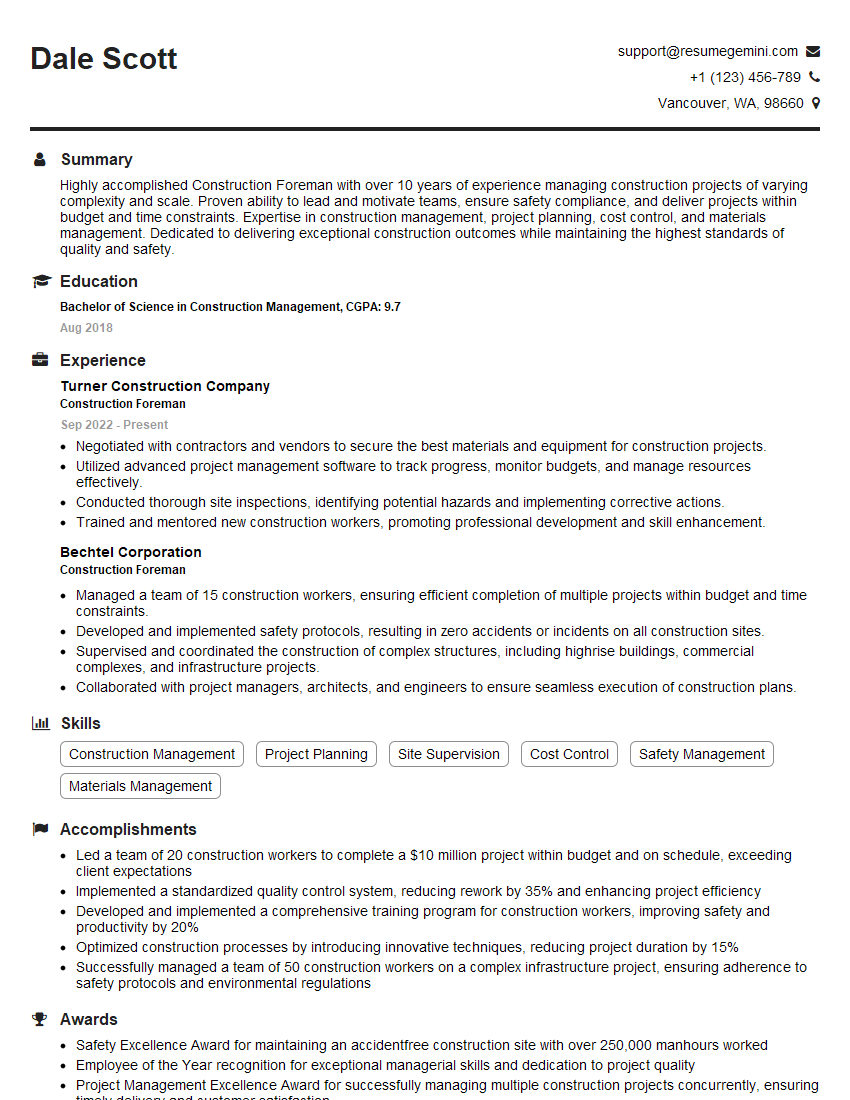
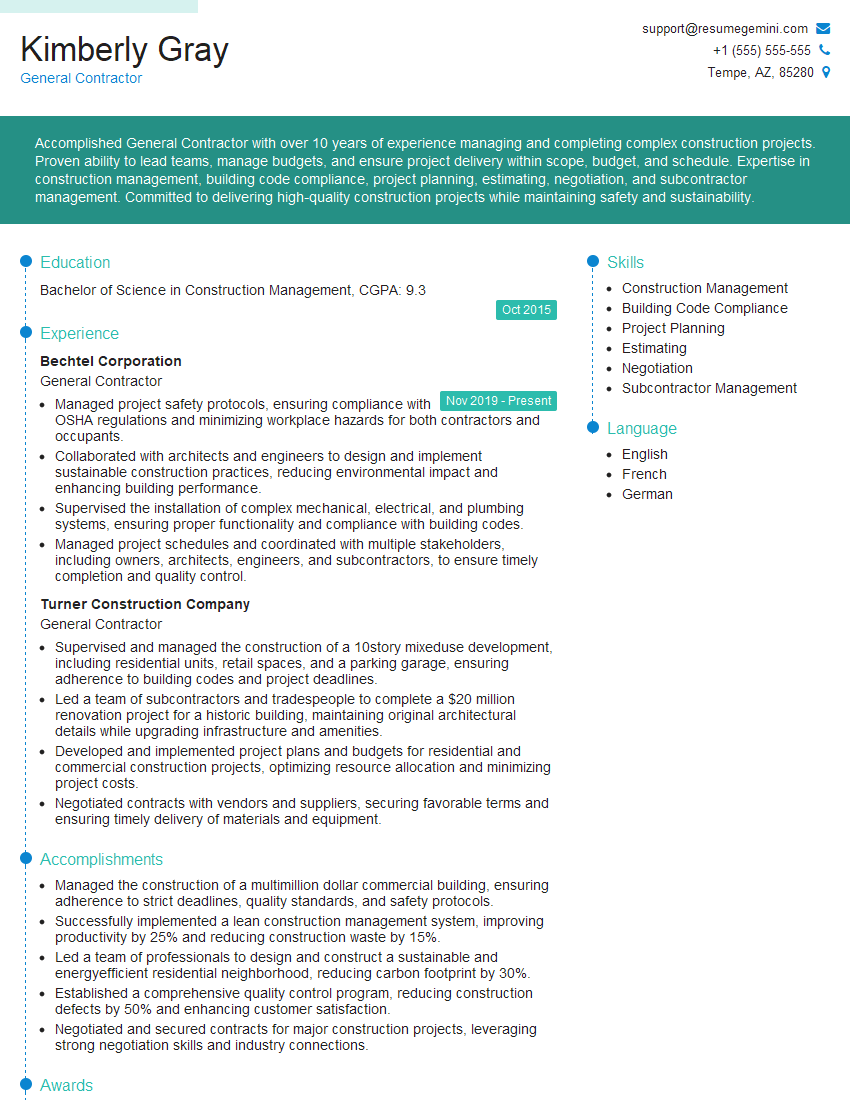
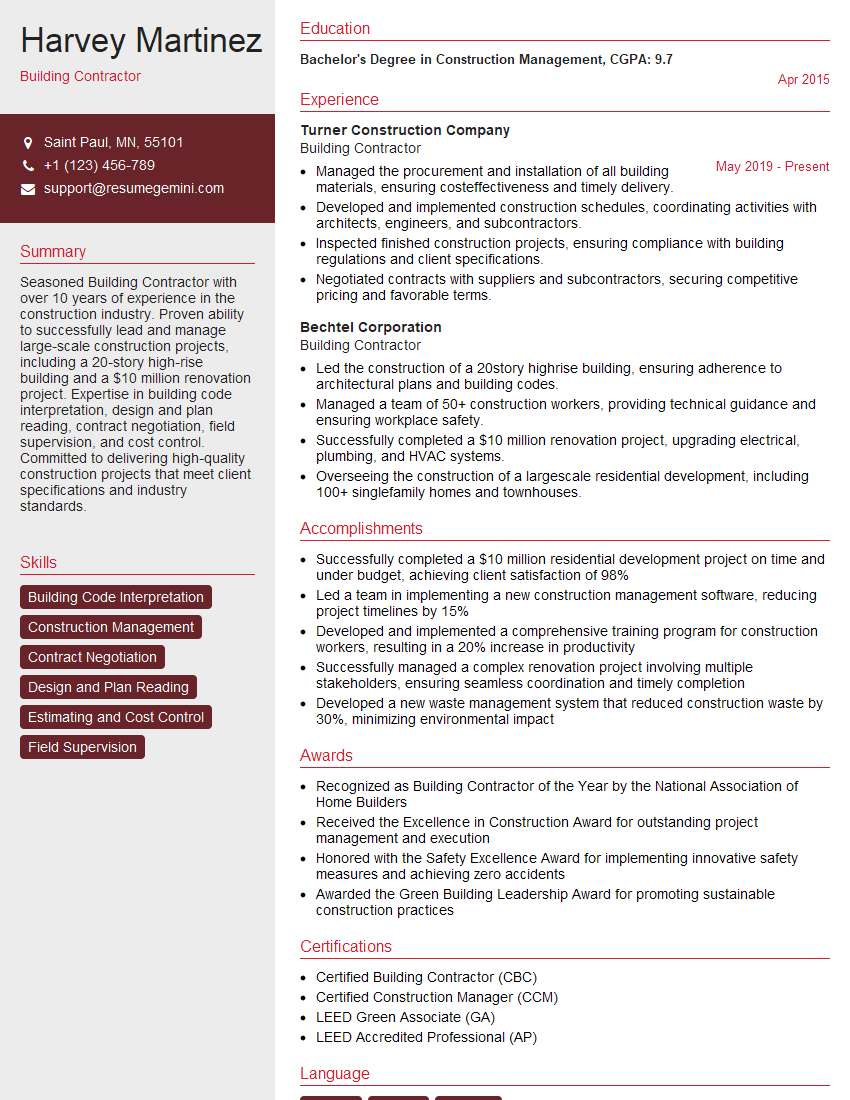
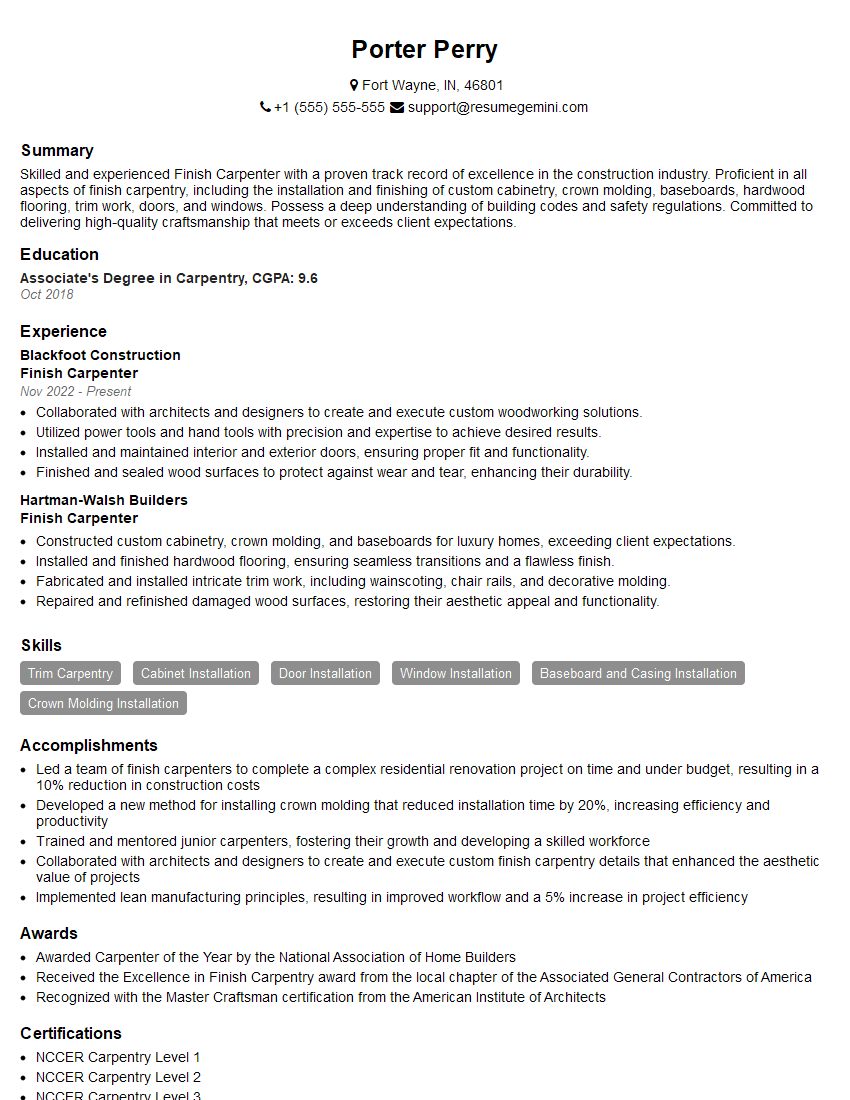
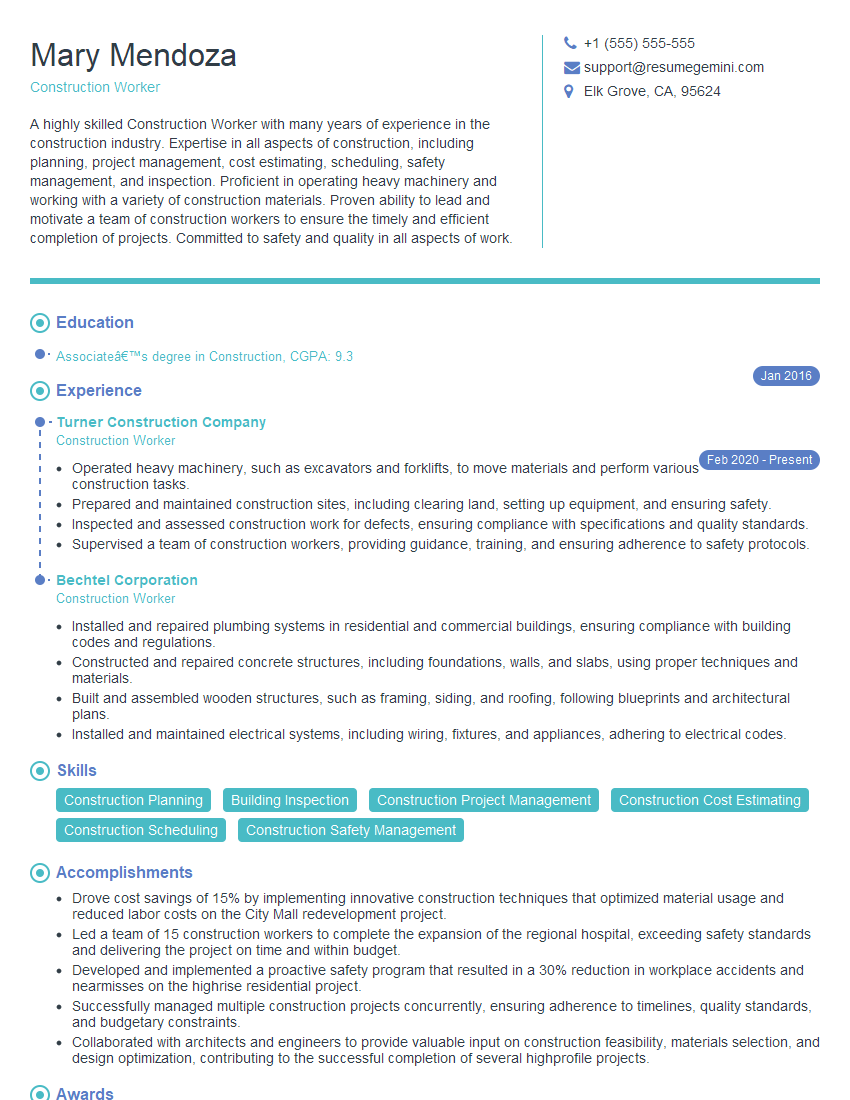
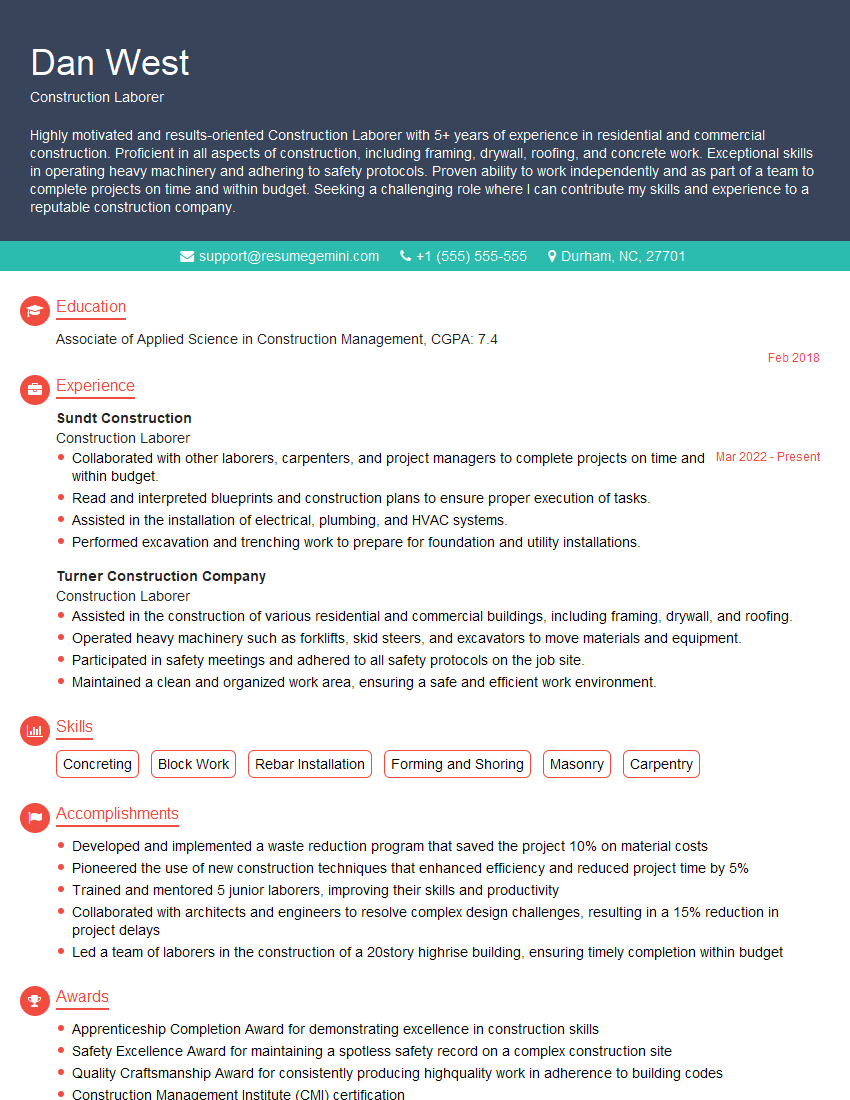
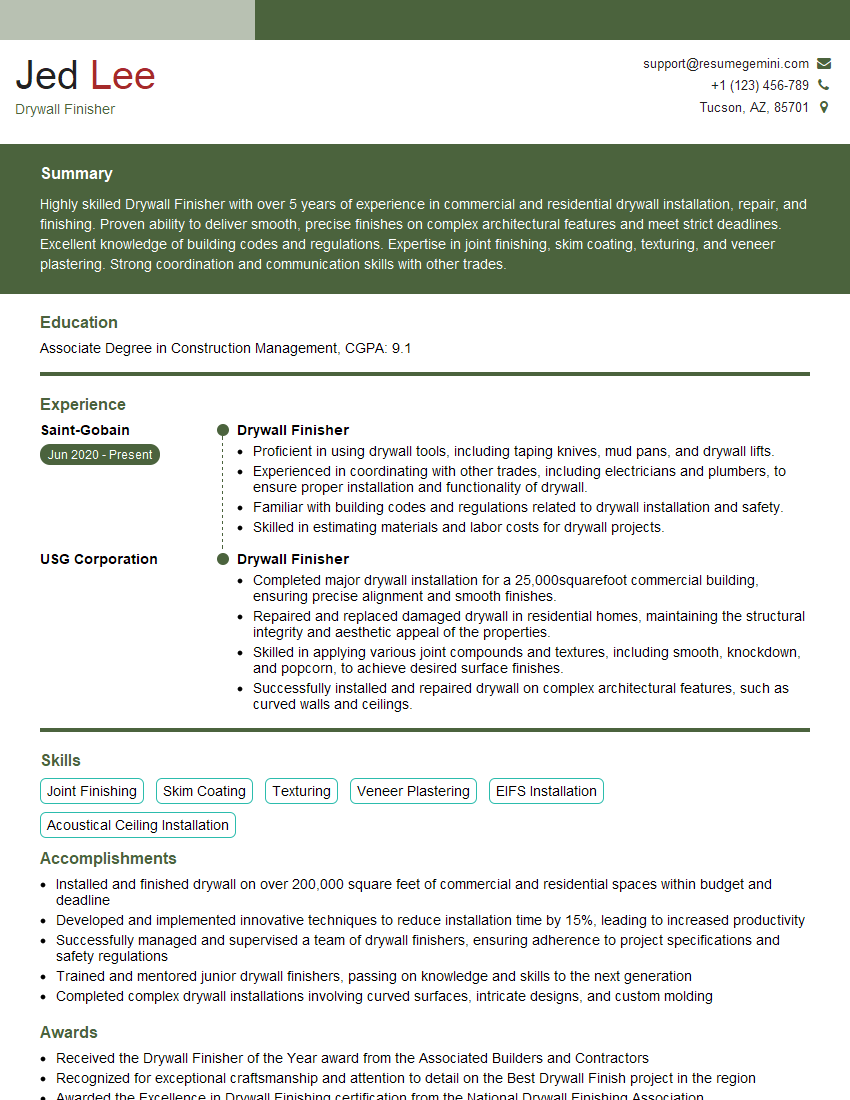
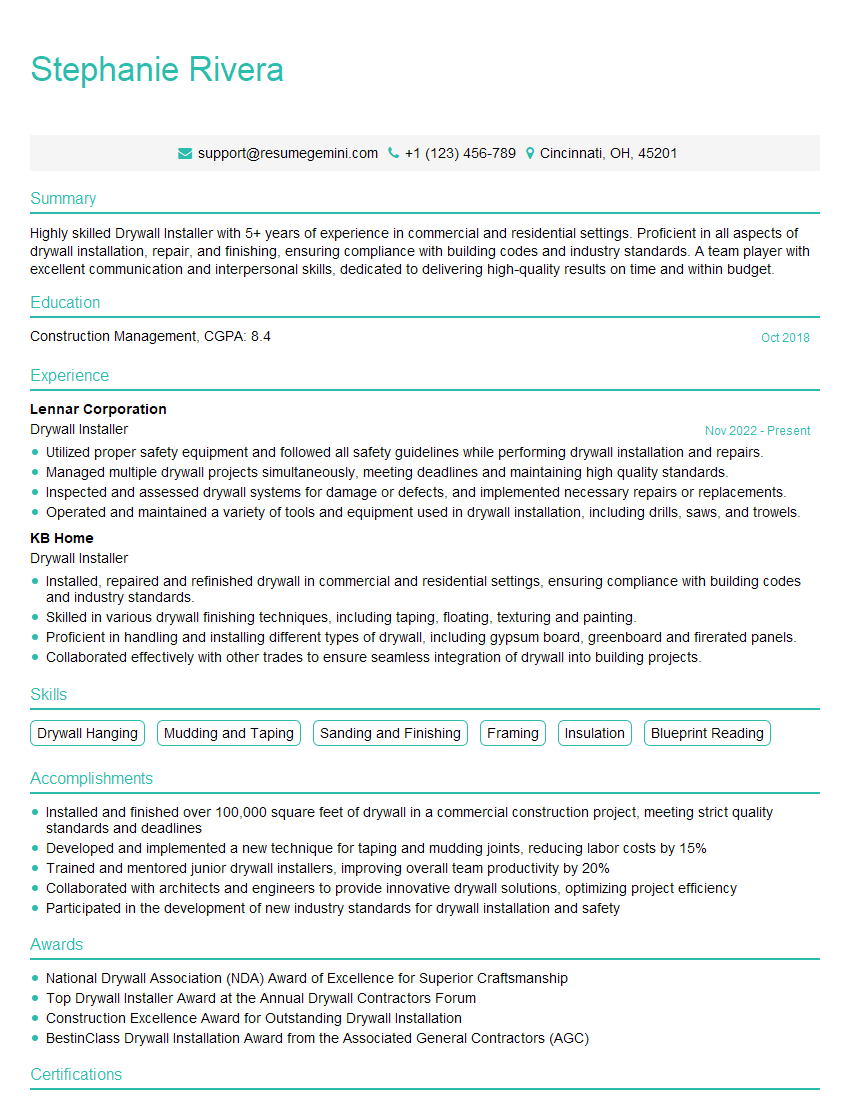
Mastering backerboard installation opens doors to a rewarding career with opportunities for growth and specialization. A strong foundation in this skill is highly valued by employers in the construction and renovation industries. To maximize your job prospects, create an ATS-friendly resume that highlights your skills and experience effectively. ResumeGemini is a trusted resource that can help you build a professional and impactful resume. We provide examples of resumes tailored to Backerboard Installation to give you a head start. Take the next step towards your dream career today!
Explore more articles
Users Rating of Our Blogs
Share Your Experience
We value your feedback! Please rate our content and share your thoughts (optional).
What Readers Say About Our Blog
To the interviewgemini.com Webmaster.
Very helpful and content specific questions to help prepare me for my interview!
Thank you
To the interviewgemini.com Webmaster.
This was kind of a unique content I found around the specialized skills. Very helpful questions and good detailed answers.
Very Helpful blog, thank you Interviewgemini team.