Interviews are opportunities to demonstrate your expertise, and this guide is here to help you shine. Explore the essential Reading and interpreting blueprints, drawings, and specifications interview questions that employers frequently ask, paired with strategies for crafting responses that set you apart from the competition.
Questions Asked in Reading and interpreting blueprints, drawings, and specifications Interview
Q 1. Explain the difference between orthographic and isometric drawings.
Orthographic and isometric drawings are both ways to represent a three-dimensional object on a two-dimensional plane, but they differ significantly in their perspective and how they show spatial relationships.
Orthographic drawings use multiple views (typically top, front, and side) to show the object from different angles. Each view is a projection of the object onto a plane perpendicular to the line of sight. Think of it like taking several separate photographs of an object from different positions. This provides a very precise representation of the object’s dimensions and features. It’s ideal for detailed design and construction.
Isometric drawings, on the other hand, offer a single view that attempts to show all three dimensions simultaneously. It’s like looking at an object slightly from above and at an angle, allowing you to see its width, depth, and height in a single image. While not as dimensionally precise as orthographic drawings, isometric drawings are excellent for visualization and quick understanding of a design’s overall form.
In short: Orthographic drawings are precise and detailed, focusing on accuracy; isometric drawings offer a quick visual representation emphasizing spatial relationships.
Q 2. How do you identify different types of lines on a blueprint (e.g., object, hidden, center)?
Blueprint lines have specific meanings, conveying crucial information about the design. Different line types help distinguish between various aspects of the object or structure being depicted. Here are some common types:
- Object Lines (Solid Lines): These thick, solid lines define the visible edges and outlines of objects and components. They’re the most prominent lines on the drawing.
- Hidden Lines (Dashed Lines): Thin, dashed lines represent edges or features that are not visible from the chosen viewing angle. They’re essential for showing hidden internal details.
- Center Lines (Thin Dashed-Dotted Lines): These lines indicate axes of symmetry or the center of circular or cylindrical features. They’re crucial for establishing symmetrical layouts and accurately positioning elements.
- Dimension Lines (Thin Solid Lines with Arrows): Used to indicate measurements. They are terminated by arrowheads and often contain numerical values specifying dimensions.
- Section Lines (Hatching): Used to represent cut sections of an object, showing internal details. The pattern and density of the hatching can also represent material type.
- Break Lines (Zigzag Lines): Used to shorten representations of long, uniform features, saving space on the drawing.
Understanding these line types is fundamental to correctly interpreting a blueprint.
Q 3. What are common blueprint scales, and how do you interpret them?
Blueprint scales are crucial for translating the drawing’s dimensions to real-world sizes. Common scales are expressed as ratios, such as 1:100 or 1/4″ = 1′.
- 1:100 (or 1/100): This means that 1 unit on the drawing represents 100 units in reality. A 1-meter wall would be 1 centimeter on the drawing.
- 1:50 (or 1/50): This is a larger scale; 1 unit on the drawing represents 50 units in reality.
- 1/4″ = 1′: This means that 1/4 of an inch on the drawing represents 1 foot in reality. This is a common scale used in architectural drawings.
- 1/8″ = 1′: This scale represents 1 foot for every 1/8 inch. It’s a smaller scale than 1/4″ = 1′.
To interpret a scale, simply use the ratio to calculate actual dimensions. For instance, if a drawing is at a 1:50 scale and a wall is measured at 10cm on the drawing, the actual wall length is 10cm * 50 = 500cm or 5 meters.
Q 4. How do you determine dimensions from a drawing?
Determining dimensions from a drawing involves careful observation and understanding of the drawing’s scale and the notations provided. Dimension lines, as explained earlier, are key. They clearly indicate the distance between two points.
Step-by-step process:
- Identify the scale: The scale is usually indicated on the drawing’s title block. If not, it might be implied by context.
- Locate the relevant dimension lines: Look for lines with arrowheads at their ends and a numerical value.
- Read the dimensions: The numerical value represents the measured distance between the two arrowheads. For example, if the dimension line says ’10’, it means 10 units based on the scale.
- Convert to real-world dimensions: Using the scale, convert the dimensions from the drawing to their actual real-world equivalents. For instance, if the scale is 1:100 and the dimension is 10cm on the blueprint, the real dimension is 10cm * 100 = 1000cm or 10 meters.
Remember to always check the units (inches, centimeters, millimeters, feet, meters) specified on the drawing.
Q 5. What are the standard symbols for various materials (e.g., concrete, steel)?
Blueprint symbols for materials vary, but consistent standards are generally followed within a specific industry or project. However, some common conventions exist.
Examples:
- Concrete: Often represented by cross-hatching, sometimes with a specific pattern or labeling indicating the type of concrete (e.g., reinforced concrete might have additional symbols for rebar).
- Steel: Typically represented by a solid black fill or a series of closely spaced parallel lines.
- Wood: Often shown with a wood grain pattern or a distinct pattern that indicates its type (e.g. vertical lines for lumber).
- Masonry (Brick, Block): Represented using various patterns and shading, or by a labeled pattern depicting bricks or blocks. The types of masonry are shown by using different symbols.
Always check the drawing’s legend or key for a definitive explanation of the symbols used in a specific blueprint. The legend will clarify any potentially ambiguous symbols.
Q 6. Describe your experience interpreting section views and detail drawings.
Section views and detail drawings provide crucial information about interior structures and specific components that aren’t easily shown in standard orthographic views.
Section Views: These depict the internal structure of an object by showing a ‘cut’ through it. They’re essential for understanding how different elements fit together and what materials are used internally. For example, a section view through a wall could show the arrangement of insulation, studs, and wall cladding. I’ve used section views extensively in analyzing building designs and identifying potential issues or areas for improvement.
Detail Drawings: These drawings provide enlarged, detailed views of specific components or areas. They’re invaluable when high precision is required in construction. For instance, a detail drawing might illustrate the method of connecting two beams or the precise dimensions of a particular joint. In my experience, detail drawings help to reduce on-site ambiguity and errors.
My experience interpreting these drawings has been extensive, involving residential, commercial, and industrial projects. I routinely rely on them to ensure design accuracy, to prepare material lists, and to coordinate the different aspects of a construction project.
Q 7. How do you identify different types of construction materials from a blueprint?
Identifying construction materials from a blueprint relies on a combination of visual cues and textual information.
Methods:
- Symbols and Patterns: As discussed earlier, standard symbols and hatching patterns represent different materials. For example, concrete is often depicted with cross-hatching, while steel might be represented by a solid black fill or closely spaced parallel lines. A legend on the drawing will provide a key to the specific symbols used in that document.
- Material Schedules or Specifications: These documents provide detailed information on the materials used in a project. They might specify the type of concrete, the grade of steel, or the kind of wood used. Referring to the material schedule is often essential to eliminate any ambiguity.
- Notes and Labels: Designers often add notes or labels directly onto the drawing to specify materials used in particular elements. This is especially helpful for less standard materials or where clarity is needed.
- Contextual Clues: Sometimes, you can infer the material type from the context of the drawing. For example, if you see a drawing of a brick wall, you can safely assume the material is brick.
A thorough understanding of common material symbols and a meticulous review of accompanying documentation are crucial for accurate identification.
Q 8. How do you interpret elevation drawings to understand building height and features?
Elevation drawings are like a photograph of a building’s exterior from a specific viewpoint. They show the building’s height and features by depicting the vertical facade. To interpret them effectively, you need to look at the vertical scale, which indicates the height represented by each increment on the drawing. The lines and symbols on the elevation drawing represent different building components like windows, doors, roofs, and balconies. For example, a series of parallel lines might represent a wall, while a specific symbol might indicate a particular type of window.
Imagine you’re looking at a house. An elevation drawing will show you the height of the house from ground level to the peak of the roof, the placement and size of windows and doors on each side, and even the details of architectural features such as cornices or decorative moldings. By carefully analyzing the measurements and symbols, you can fully understand the building’s vertical dimensions and external appearance.
Analyzing multiple elevations (front, side, rear) provides a complete picture of the building’s height and features from all angles. For instance, a change in line thickness might denote a change in material. Therefore, careful attention to both drawing details and the accompanying legend is essential for accurate interpretation.
Q 9. Explain the process of interpreting plumbing schematics.
Plumbing schematics are like a roadmap for the water and waste systems in a building. They use standardized symbols and lines to represent pipes, fixtures (toilets, sinks, etc.), valves, and other plumbing components. Interpreting them involves understanding these symbols and tracing the flow of water and waste through the system. For example, a circle might represent a sink, while different line weights might indicate pipe sizes.
The process begins with identifying the key symbols and understanding the abbreviations used within the specific schematic. Then, you would systematically follow each pipe from its source (e.g., water meter) to its final destination (e.g., fixture or drain). Pay attention to the pipe sizes, slopes, and the placement of valves, especially those indicating shut-off points for repair or maintenance. You must also consider the drainage plan to ensure proper waste disposal. For example, tracing the path of a drain pipe from a bathroom sink to the building’s main sewer line helps one understand how wastewater is removed from the building.
I often use color-coding to highlight various aspects of the plumbing system – for instance, cold water lines in blue and hot water lines in red. This makes it easier to track different sections and identify potential problems, such as insufficient drainage slopes or conflicting pipe runs.
Q 10. How do you interpret electrical schematics to understand circuits and equipment locations?
Electrical schematics illustrate the flow of electricity within a building. They show the location of electrical equipment (e.g., circuit breakers, outlets, switches, lighting fixtures) and the wiring that connects them. They use standardized symbols to represent these components and lines to indicate the wiring paths. These are similar to plumbing diagrams, but instead of water flow, you’re looking at power flow.
Interpreting an electrical schematic involves tracing the circuits from the power source (e.g., electrical panel) to the various outlets and fixtures. Each circuit is typically identified by a number or letter. The schematic usually depicts the size and type of wire used for each circuit, which is crucial for calculating electrical loads and ensuring safety. You’ll also find information about the type of protection provided by the circuit breakers and other protective devices.
For example, a symbol might indicate a single-pole switch, while thicker lines represent heavier gauge wire carrying more current. Understanding the relationship between the electrical panel, branch circuits, and individual outlets is vital for efficient analysis and troubleshooting. One may need to cross-reference with other drawings, such as floor plans to verify the location of each fixture.
Q 11. Describe your experience working with specifications alongside blueprints.
Specifications are the written instructions for a project, complementing the visual information provided in the blueprints. They provide crucial details that drawings may omit, such as materials, finishes, and installation methods. I routinely work with both to ensure a complete understanding of the project’s requirements. For instance, while a blueprint might show the location of a wall, the specifications would clarify the type of wall material, its insulation, and the finish.
In a recent project involving the renovation of a commercial building, the blueprints showed the layout of new offices, but the specifications detailed the exact types of flooring, paint, and lighting fixtures required. Without the specifications, the contractors wouldn’t have known which materials to order or how to properly install them. This coordination between drawings and specs is critical for successful project execution.
My process often involves first reviewing the specifications to gain a high-level understanding of the project’s scope and material requirements, then I cross-reference this information with the blueprints to confirm locations and quantities.
Q 12. How do you identify potential conflicts or discrepancies between drawings and specifications?
Identifying conflicts or discrepancies between drawings and specifications requires a systematic approach. My approach begins with a careful review of each document independently, followed by a comparative analysis. I always look for inconsistencies in dimensions, material specifications, and equipment locations.
For instance, a blueprint might show a door opening in a particular location, but the specifications might describe a different door size or type for that location. Such inconsistencies are important to catch early as they can impact costs and scheduling. Similar discrepancies can occur regarding plumbing fixtures, electrical outlets, and HVAC equipment. In my experience, using a spreadsheet or a checklist to document and track potential conflicts improves efficiency.
If conflicts are found, I would use my knowledge of construction practices and building codes to determine the best solution. This may involve consulting with the design team or the client to clarify ambiguities or resolve contradictions. It’s not enough to identify a problem; proposing a resolution is just as crucial. Effective communication is key to preventing larger issues down the line.
Q 13. What software are you proficient in for viewing and interpreting blueprints (e.g., AutoCAD, Revit)?
I am proficient in several software packages for viewing and interpreting blueprints, including AutoCAD, Revit, and Bluebeam Revu. AutoCAD is widely used for 2D drafting and design, Revit is a Building Information Modeling (BIM) software providing a 3D model, and Bluebeam Revu is excellent for markup and collaboration.
AutoCAD allows me to precisely measure distances, angles, and areas on drawings and to effectively modify drawings when needed. Revit, with its 3D capabilities, gives a comprehensive view of the project and aids in identifying potential conflicts in different building systems. Bluebeam Revu enhances collaboration by enabling colleagues to mark up and comment on drawings directly. I find each software brings specific advantages depending on the task at hand.
My experience extends to utilizing these tools for both small residential projects and large-scale commercial developments. The software proficiency allows me to work efficiently and effectively with a range of project complexities.
Q 14. How do you utilize layer information within a CAD drawing to understand building components?
CAD drawings utilize layers to organize the information shown. Each layer typically represents a specific building component or system. For example, one layer might show the structural framing, another the electrical wiring, and another the plumbing systems. Understanding the layer information is crucial for interpreting building components because it allows you to isolate and focus on specific aspects of the design without visual clutter.
Imagine you are reviewing a complex drawing of a multi-story building. By turning off the layers for everything but the HVAC systems, you can clearly see the ductwork layout and locations of the equipment without being distracted by the wall structures or electrical wiring. This layer management allows for focused analysis of individual building systems and simplifies complex drawings. This ability to manipulate layer visibility and to utilize layer specific properties like color and line-weight makes interpreting even very complicated drawings much more manageable.
Many CAD software packages allow for layer naming conventions that further help organize the information. For example, consistent naming like ‘Structure-Framing’, ‘MEP-Plumbing’, ‘MEP-Electrical’ significantly improves the understanding and analysis process. In my experience, carefully managing and understanding layers significantly increases productivity and reduces errors in interpretation.
Q 15. Explain your approach to verifying drawing accuracy and completeness.
Verifying drawing accuracy and completeness is a crucial step in any construction or engineering project. My approach is systematic and involves several key steps. First, I perform a visual check for obvious errors like missing dimensions, conflicting information, or inconsistencies in line weights. Think of it like proofreading a document – you catch the obvious mistakes first. Then, I delve into a more detailed review. This includes:
- Dimension checks: I verify that all dimensions are consistent and add up correctly. For example, if a room is shown as 10ft x 12ft, I’ll check if the overall area calculation matches.
- Notation verification: I meticulously check all notes, symbols, and specifications to ensure they are clear, consistent and align with the drawings themselves. Missing or unclear notes can lead to costly mistakes later.
- Reference checking: I ensure all referenced documents (like material specifications or details) are included and correctly referenced. Missing references can halt the project.
- Cross-referencing: I compare different views (plan, section, elevation) to confirm consistency. For instance, a door shown in plan view should also be reflected in the elevation view.
- Scale verification: I check the scale of the drawings to ensure consistency and accuracy in measurements.
Finally, I create a checklist to document my findings and any necessary corrections. This detailed approach minimizes the risk of errors and ensures that the drawings are ready for construction or fabrication.
Career Expert Tips:
- Ace those interviews! Prepare effectively by reviewing the Top 50 Most Common Interview Questions on ResumeGemini.
- Navigate your job search with confidence! Explore a wide range of Career Tips on ResumeGemini. Learn about common challenges and recommendations to overcome them.
- Craft the perfect resume! Master the Art of Resume Writing with ResumeGemini’s guide. Showcase your unique qualifications and achievements effectively.
- Don’t miss out on holiday savings! Build your dream resume with ResumeGemini’s ATS optimized templates.
Q 16. Describe your experience using annotation tools within CAD software.
I’m proficient in using annotation tools in various CAD software, including AutoCAD, Revit, and MicroStation. My experience extends to adding dimensions, notes, callouts, and symbols. For instance, I routinely use leader lines to clearly point out specific details or modifications. I also use cloud annotations to highlight areas needing attention, and text boxes for detailed explanations.
Think of annotation as a form of visual communication. It’s essential to make annotations clear, concise, and unambiguous to avoid confusion among team members. I pay close attention to layering and color coding to maintain an organized drawing. My ability to precisely and efficiently annotate drawings ensures that they communicate information effectively and prevent misinterpretations.
Example: In AutoCAD, I would use the 'MTEXT' command to create a multi-line text box for detailed specifications of a particular element, ensuring that it's formatted for easy reading and placed clearly on the drawing.Q 17. How do you interpret plan, section, and elevation views within a set of drawings?
Interpreting plan, section, and elevation views is fundamental to understanding building design. Imagine a building as a layer cake. The plan view shows the top layer (the floor plan), revealing the arrangement of rooms and other elements. The section view is like slicing through the cake vertically, showcasing the internal structure and heights of walls, floors, and ceilings. Finally, the elevation view shows the outside face of the cake, displaying the exterior wall design and building height.
- Plan view: Provides a top-down view, showing the layout of rooms, walls, doors, windows, and other features. It’s like a map of the building.
- Section view: Shows a vertical cut through the building, revealing the internal structure and dimensions. It’s crucial for understanding floor-to-ceiling heights and the placement of structural elements.
- Elevation view: Shows a single exterior face of the building from a head-on perspective. It illustrates the building’s external appearance, including windows, doors, roofing, and other external finishes.
Together, these views provide a complete understanding of the building’s design. They need to be carefully cross-referenced to ensure consistency and accuracy. Missing or inconsistent information in any of these views can lead to serious design flaws.
Q 18. What strategies do you use to decipher complex or ambiguous drawing details?
Deciphering complex or ambiguous drawing details requires a methodical approach. I start by examining all related drawings, sections, and details. Then, I use the following strategies:
- Scale and measurement checks: I carefully review the drawing scales and perform detailed measurements to eliminate any ambiguity. Sometimes, a small detail overlooked in the initial review is crucial to understanding the entire system.
- Reference documents: I cross-reference the drawing with accompanying specifications, details, and other relevant documents to clarify any unclear aspects. These additional documents often include more information than the main drawing.
- Industry standards and codes: I refer to relevant building codes and industry standards to interpret symbols, abbreviations, and notations that might not be clearly defined in the drawings. These standards provide a consistent understanding of industry best practices.
- Consultation: If ambiguity persists after thorough review, I consult with the design team or other experts to resolve any uncertainties. Clear communication helps solve complex issues efficiently.
Remember, understanding the ‘why’ behind the design is often key to deciphering ambiguous details. By thinking critically and systematically, I can effectively interpret even the most complex drawings.
Q 19. Explain how you would identify the location of specific building elements based on the blueprints.
Locating building elements on blueprints relies on understanding the drawing’s organization and conventions. First, I identify the relevant drawing(s) – a plan view typically shows the location of most elements within a floor. Then, I use the following steps:
- Grid references: Many blueprints use a grid system for precise location referencing. I use the coordinates to pinpoint the precise position of a component.
- Symbols and annotations: I carefully study the symbols and annotations used on the drawings. Each symbol typically represents a specific building element. An electrical plan, for example, uses symbols for outlets, switches, and light fixtures.
- Cross-referencing: For complex elements, I may need to cross-reference multiple drawings such as architectural and MEP drawings. For instance, the location of a duct may be indicated in the architectural plan and detailed in the mechanical drawings.
- Details and sections: If the plan view doesn’t offer sufficient detail, I refer to detailed sections or elevations for a clearer view. This provides additional information about the construction methods and precise placement of elements.
By using this combined approach, I can efficiently locate specific elements on even the most complex blueprints.
Q 20. Describe your process for understanding the relationship between different drawings in a large set.
Understanding the relationship between drawings in a large set is critical. My process involves:
- Drawing index or table of contents: I always start by reviewing the project’s index or table of contents to gain a holistic understanding of the drawings included and their interdependencies.
- Sheet numbering and cross-referencing: I pay attention to sheet numbers and cross-references between sheets. These references provide the link between drawings. For example, an architectural plan might reference a detailed section drawing with specific details on a particular wall.
- Revision history: I always look at the revision history to understand any modifications or updates to the drawings. This ensures that I am working with the most current and accurate information.
- Discipline-specific drawings: I separate drawings by discipline (architectural, structural, mechanical, electrical, plumbing, etc.) and study the drawings in a sequential manner to easily identify correlations and potential inconsistencies between the different trades. This understanding helps ensure a cohesive and integrated design.
Understanding these relationships is key to avoiding design clashes and conflicts, promoting better coordination, and making more accurate estimations during the construction phase.
Q 21. How would you use a blueprint to locate a specific pipe or ductwork run within a building?
Locating a specific pipe or ductwork run on a blueprint requires careful examination of the mechanical, plumbing or HVAC drawings. My approach is:
- Identify the relevant drawings: I first identify the relevant MEP (Mechanical, Electrical, Plumbing) drawings, specifically focusing on those that show piping and ductwork layouts.
- Line numbering and symbols: I look for line numbers, symbols, and annotations that correspond to the specific pipe or ductwork I’m seeking. These provide crucial information for tracing the run.
- Follow the line: I trace the pipe or ductwork run from its origin to its termination point, carefully noting any changes in direction, size, or material. This could entail cross-referencing different sheets or sections.
- Check for details and sections: For clarification, I refer to detailed sections or enlargements, if necessary, to verify the exact location, dimensions, or specifications of the pipe or ductwork run.
- Cross-reference with other drawings: To fully understand the context of the pipe or ductwork route, I cross-reference the mechanical drawings with architectural or structural plans to understand its relationship with other building elements. For instance, tracing a duct route through a wall or ceiling.
This detailed approach helps to minimize the risk of errors and misinterpretations while providing a thorough understanding of the location and routing of specific building services.
Q 22. Explain your experience with different types of drawing formats (e.g., PDF, DWG, DXF).
Throughout my career, I’ve extensively worked with various drawing formats, each with its own strengths and weaknesses. PDFs are ubiquitous for their ease of sharing and viewing, acting as a universal format for final project documentation. However, they are generally not suitable for editing the drawings themselves. DWG (Drawing) files are the native format for AutoCAD, the industry-standard software for 2D and 3D design. They allow for full editing and modification, essential for collaboration and design changes. DXF (Drawing Exchange Format) is a more universal CAD file format, enabling interoperability between different CAD software packages. While less feature-rich than DWG when editing within AutoCAD, DXF’s ability to travel between different software is crucial in multi-disciplinary projects. For example, I once worked on a project where structural engineers used AutoCAD and MEP engineers used Revit. The use of DXF allowed seamless transfer of data between the two teams.
My experience encompasses using these formats within various project management software platforms, such as BIM 360 and PlanGrid, which provide version control and streamline collaborative efforts. This ensures that everyone is working with the latest revisions, preventing costly mistakes caused by outdated drawings.
Q 23. How do you ensure you’re using the most up-to-date versions of blueprints during a project?
Maintaining the latest blueprint versions is paramount to project success and safety. My approach is multi-faceted. Firstly, I always rely on a centralized, version-controlled system – typically cloud-based – designated specifically for project documentation. This system allows for easy tracking of revisions, with clear indication of who made changes and when. Secondly, I engage in regular communication with the project manager and the design team to confirm the latest revision numbers. For instance, before any work begins, I confirm file version numbers with the design team and document the version number used at the beginning of each project phase. Finally, on-site, I maintain a physical copy of the most up-to-date drawings and check these against digital versions to ensure consistency and make note of any discrepancies. This meticulous approach prevents reliance on outdated information and minimizes the risk of errors.
Q 24. What are some potential safety hazards you’d identify from reviewing a construction blueprint?
A thorough review of construction blueprints is crucial for identifying potential safety hazards. I always look for:
- Inadequate clearances: Insufficient space around equipment or between building elements could lead to falls or collisions.
- Missing or insufficient safety features: The lack of guardrails, handrails, or proper fall protection systems is a major concern.
- Conflicting utilities: Overlapping or poorly coordinated placement of electrical, plumbing, and gas lines can cause severe damage and injuries.
- Unclear structural details: Ambiguous structural details, potentially leading to collapse or instability, necessitate immediate clarification.
- Improper material specifications: Using unsuitable materials can compromise structural integrity or present fire hazards.
For instance, in a recent project, I identified a potential hazard where a walkway was too narrow near a heavy equipment operation area. By flagging this early on, we were able to incorporate a wider walkway design, improving worker safety. My approach isn’t just about identifying issues; it’s about proactively preventing accidents. I always aim to create a safe working environment through careful review and communication.
Q 25. How would you identify and communicate inconsistencies or errors in a set of blueprints?
Identifying and communicating inconsistencies or errors in blueprints requires a systematic approach. I start with a thorough visual inspection, comparing various drawings to identify conflicts or missing information. Then, I use dimensioning and referencing tools to check for dimensional inaccuracies and misalignments. I utilize the ‘check’ function in my CAD software to identify potential errors like overlapping elements or missing layers. Any inconsistencies are meticulously documented using a standardized log, including the drawing number, location of the error, a description, and proposed correction. This log is then presented to the design team in a formal meeting, where I clearly explain the issues and offer suggestions for resolution. I consider this process to be like detective work – meticulous examination leading to well-supported conclusions, which are then communicated effectively and professionally.
Q 26. Describe your experience coordinating with other trades based on blueprint interpretation.
Coordinating with other trades based on blueprint interpretation is fundamental to successful construction. My approach centers on clear communication and collaborative problem-solving. Before work begins, I hold joint meetings with the various trades – electricians, plumbers, HVAC technicians, etc. – to review the blueprints, identify potential conflicts, and establish a shared understanding of the project scope. This involves highlighting critical details and potential clashing elements. During the construction phase, I remain actively engaged, facilitating communication and ensuring that each trade understands its responsibilities and how they relate to the work of others. For example, during a recent renovation, a clash between electrical conduits and HVAC ducts was avoided by coordinating adjustments with the respective trade supervisors, based on my interpretation of the blueprints.
Q 27. How would you use a site survey to confirm the accuracy of blueprints?
A site survey is crucial for verifying the accuracy of blueprints. I approach this by carefully comparing the ‘as-built’ conditions to the ‘as-designed’ blueprints. This involves measuring existing structures, verifying site topography, and checking the location of underground utilities. Any discrepancies are meticulously documented with photographic evidence and detailed notes. For example, I’ve used total stations and laser scanners for precise measurements, correlating field data with CAD models. The survey data helps identify any deviations, allowing adjustments to be made to the construction plans. This ensures the project aligns with the physical site, minimizing the need for on-site alterations and rework later on.
Q 28. How do you handle ambiguous or missing information in a set of blueprints?
When faced with ambiguous or missing information in blueprints, I employ a multi-pronged approach. Firstly, I attempt to resolve the ambiguity by cross-referencing other drawings or specifications, searching for relevant details in other sections or sheets of the blueprint set. Secondly, if clarification isn’t found internally, I contact the design team for clarification, seeking confirmation of design intent. This often involves detailed questions to ensure that any assumptions made are correct. Finally, in situations where information is truly missing and clarification can’t be obtained, I document the ambiguity and propose a solution that ensures safety and compliance with building codes. I then work closely with the project manager and the design team to confirm my proposed solution aligns with the overall project goals.
Key Topics to Learn for Reading and Interpreting Blueprints, Drawings, and Specifications Interviews
- Orthographic Projections: Understanding how different views (top, front, side) represent a 3D object. Practice visualizing the object from the drawings.
- Scale and Measurement: Accurately interpreting scale notations and measuring distances, areas, and volumes on drawings. Apply this to real-world scenarios like material estimations.
- Dimensioning and Tolerances: Understanding how dimensions are shown and the implications of tolerances on component fit and function. Practice calculating potential variations.
- Symbols and Conventions: Familiarizing yourself with industry-standard symbols and conventions used in blueprints and drawings. Practice identifying common elements and their meanings.
- Sections and Details: Interpreting cross-sections and detailed views to understand internal structures and complex assemblies. Analyze how these views clarify design intent.
- Material Specifications: Identifying and understanding material notations and specifications. Relate these to material properties and selection criteria.
- Working Drawings vs. Conceptual Drawings: Differentiating between different types of drawings and understanding their purpose in the design process. Analyze their level of detail and intended use.
- Problem-Solving with Drawings: Applying your understanding to solve problems related to design, construction, or manufacturing based on the provided drawings and specifications. Practice identifying potential issues and solutions.
- Blueprint Software: Demonstrating familiarity with common blueprint viewing and manipulation software. Prepare to discuss your experience with relevant programs.
Next Steps
Mastering the ability to read and interpret blueprints, drawings, and specifications is crucial for career advancement in many technical fields. It demonstrates a strong understanding of design principles and facilitates efficient and effective communication within a team. To significantly boost your job prospects, create an ATS-friendly resume that highlights your skills and experience effectively. ResumeGemini is a trusted resource to help you build a professional and impactful resume. We provide examples of resumes tailored to Reading and interpreting blueprints, drawings, and specifications to help guide you.
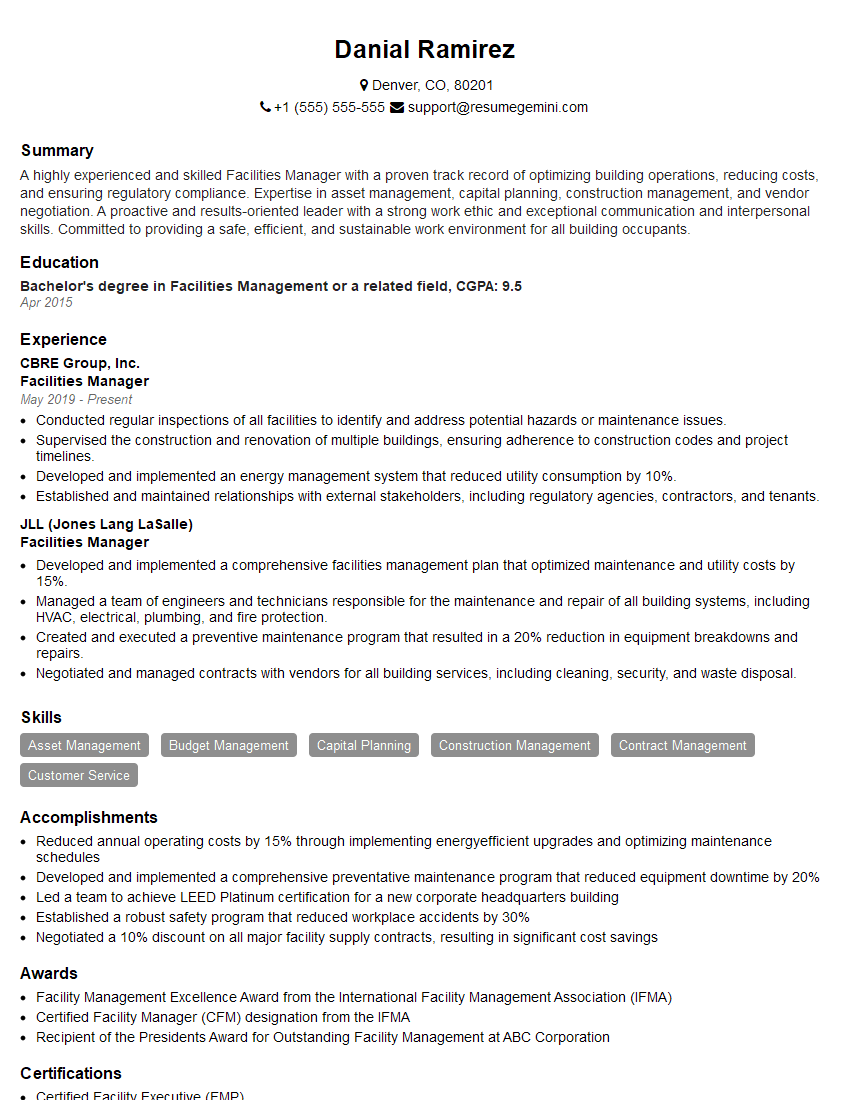
Facilities Manager Resume Sample
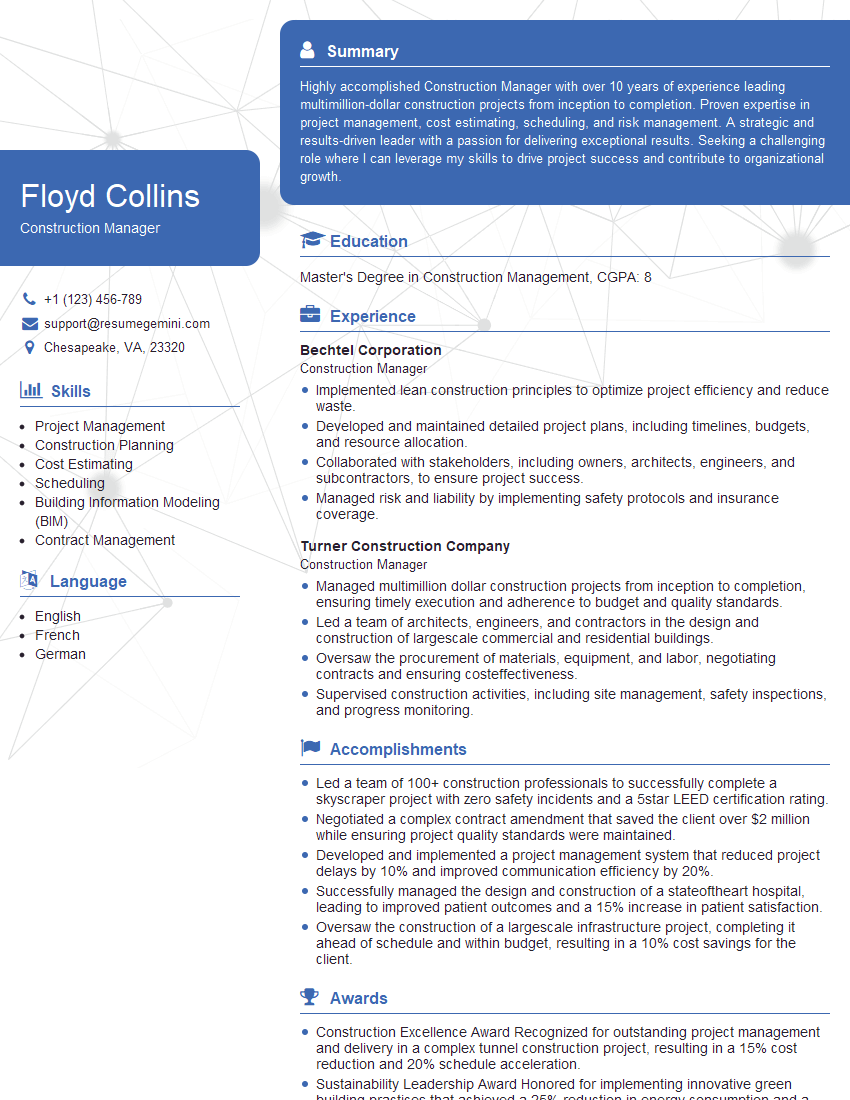
Construction Manager Resume Sample

Project Superintendent Resume Sample

Project Engineer Resume Sample
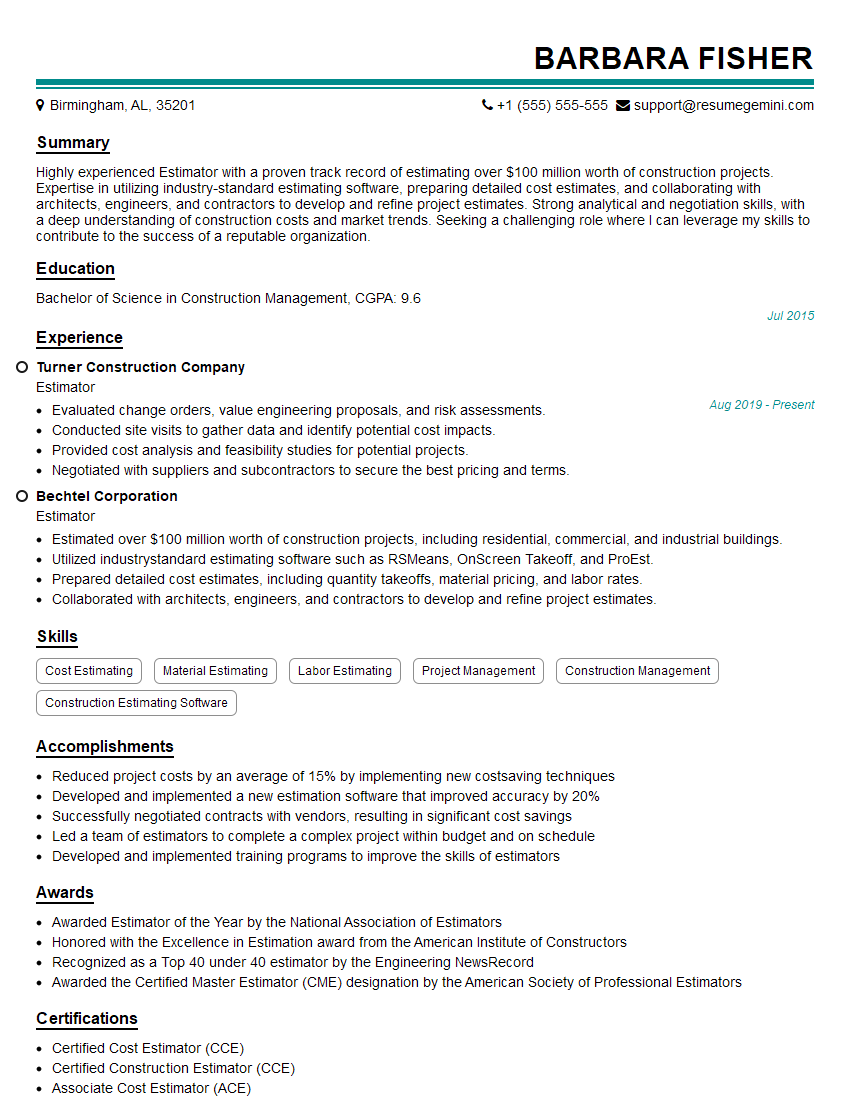
Estimator Resume Sample
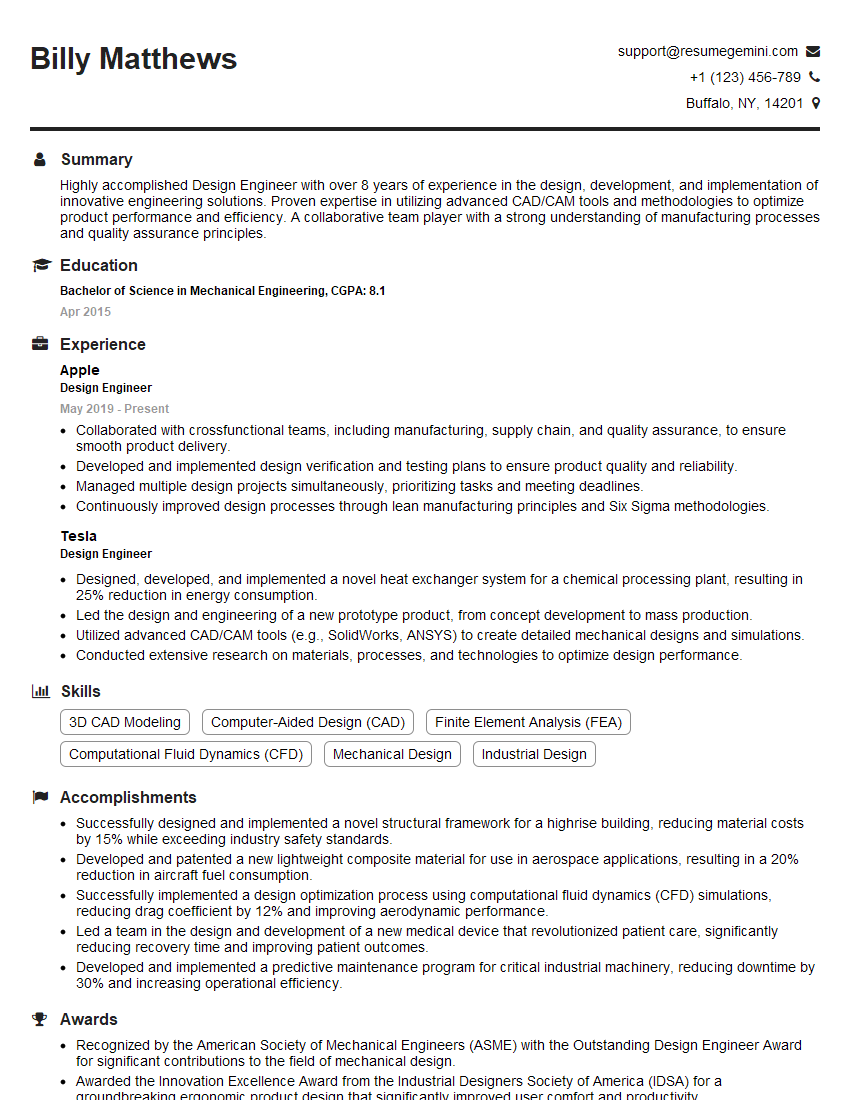
Design Engineer Resume Sample
Plumbing Designer Resume Sample
Landscape Architect Resume Sample
Drafting Technician Resume Sample
Surveyor Resume Sample
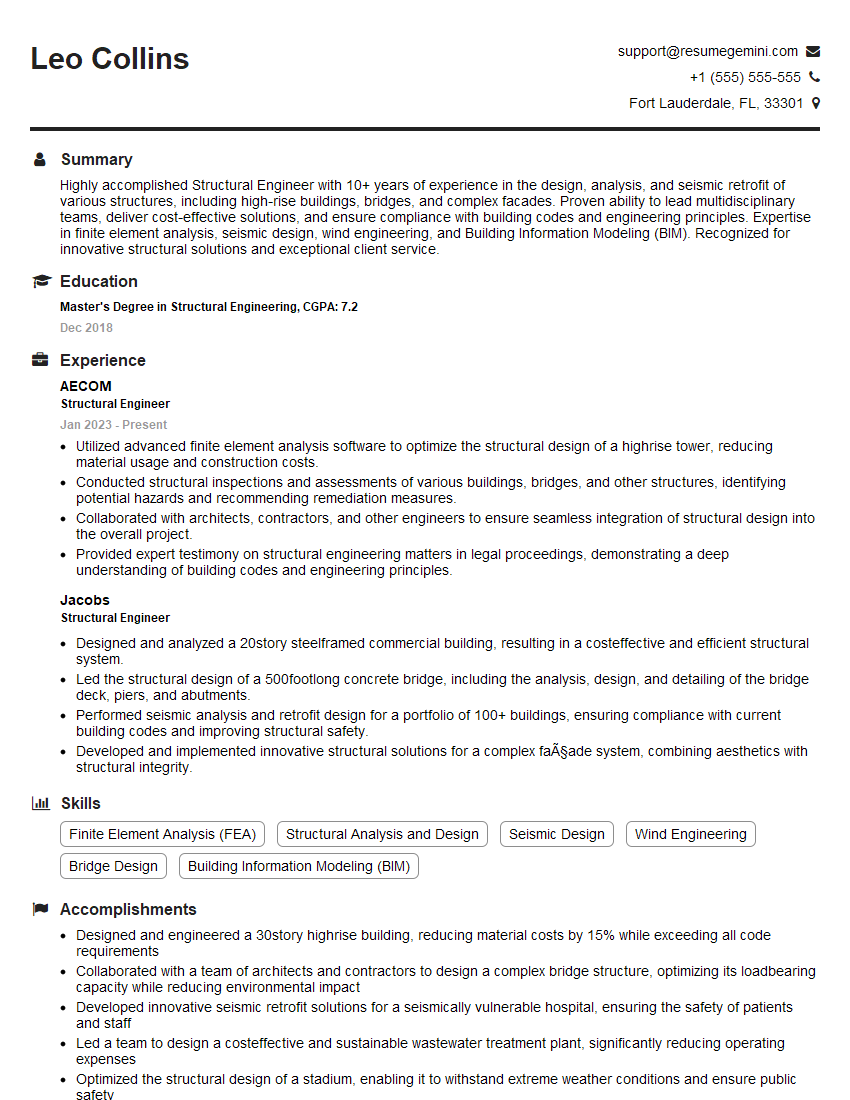
Structural Engineer Resume Sample
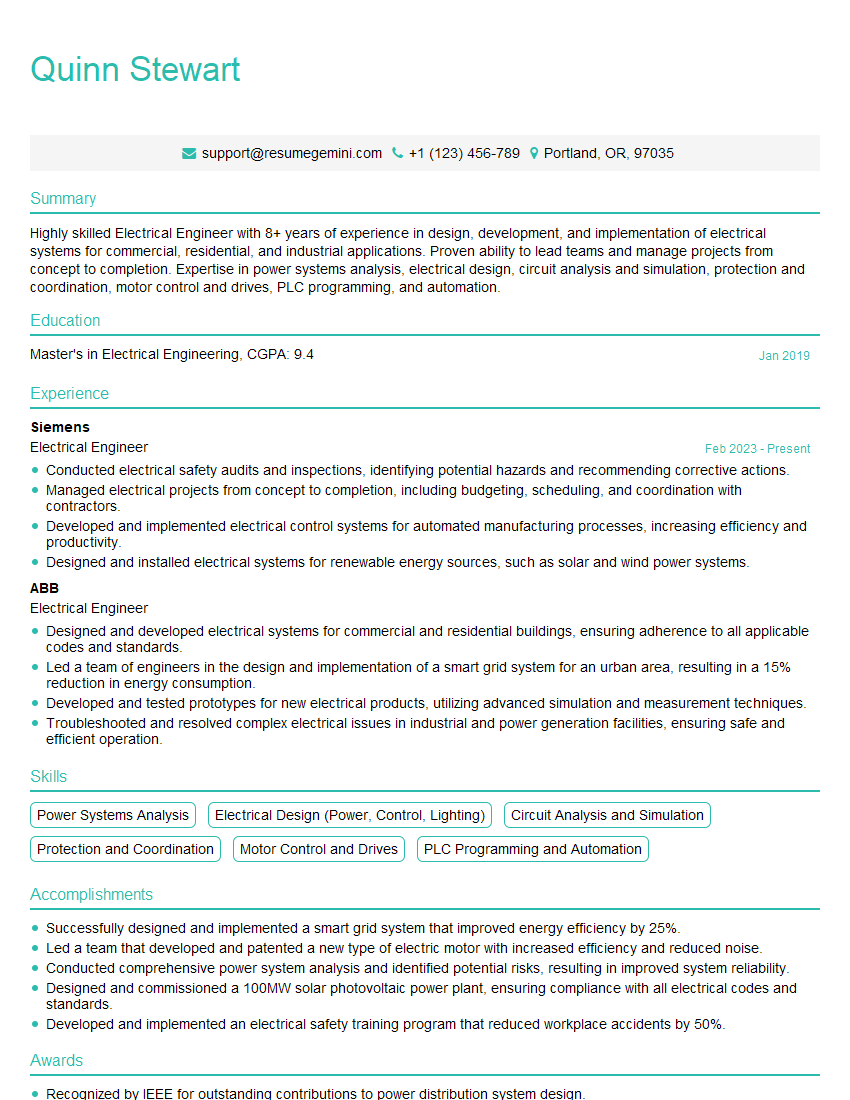
Electrical Engineer Resume Sample
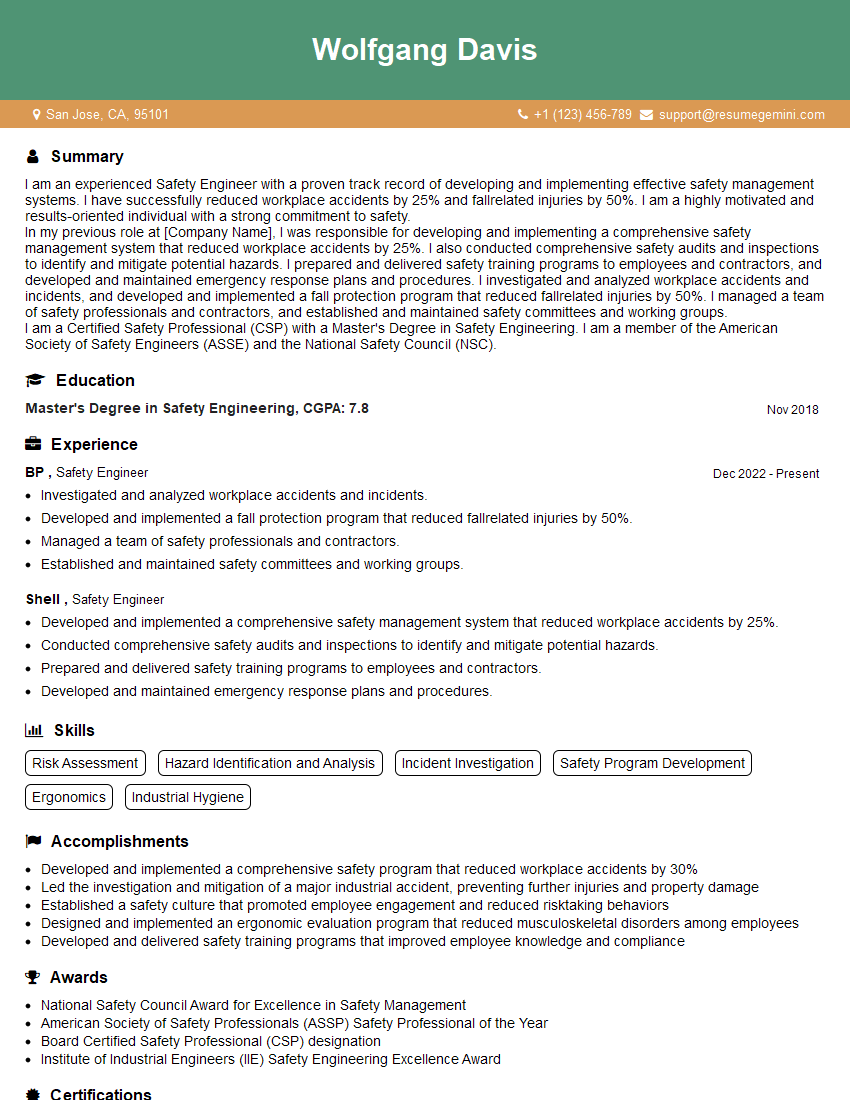
Safety Engineer Resume Sample
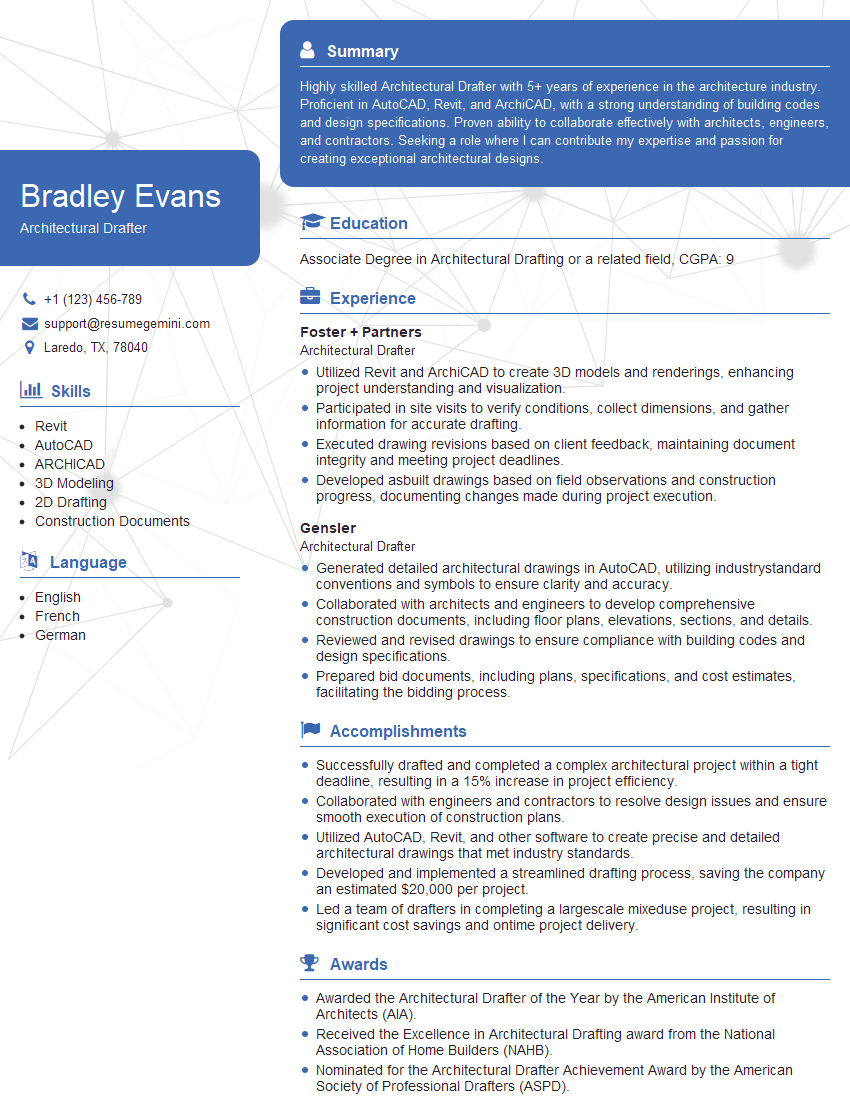
Architectural Drafter Resume Sample
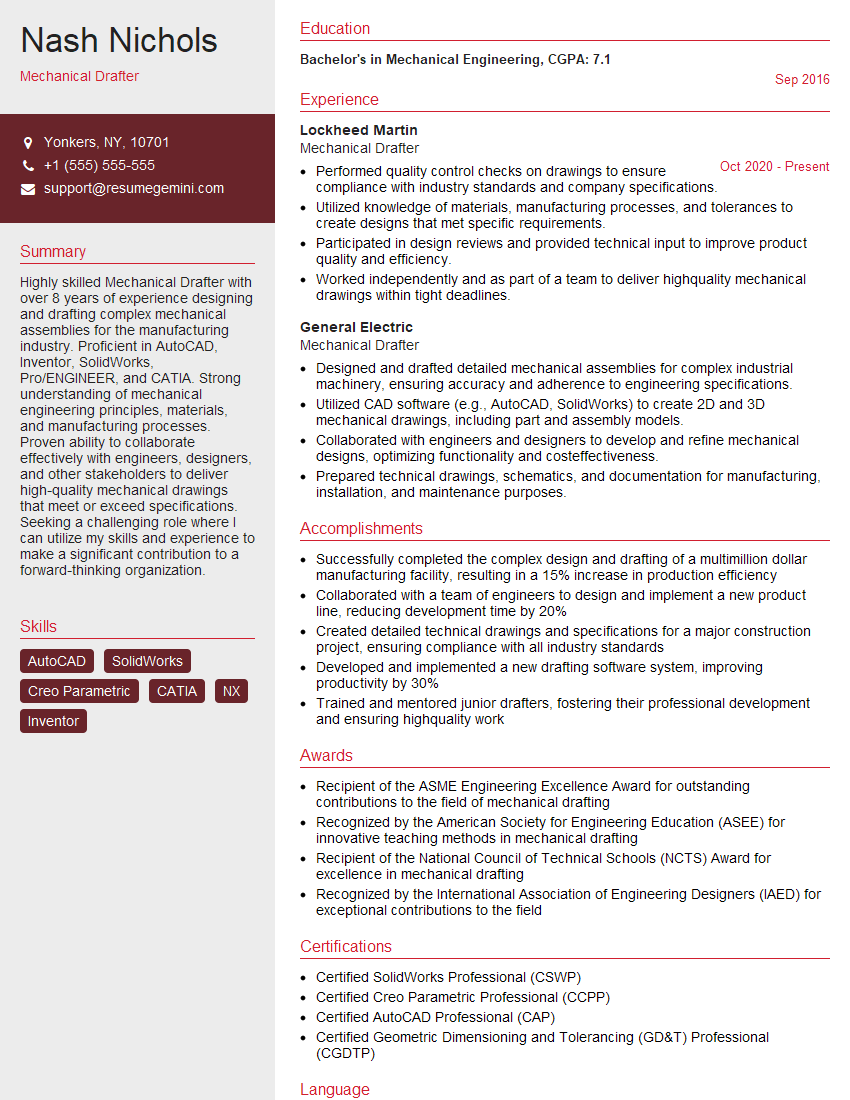
Mechanical Drafter Resume Sample
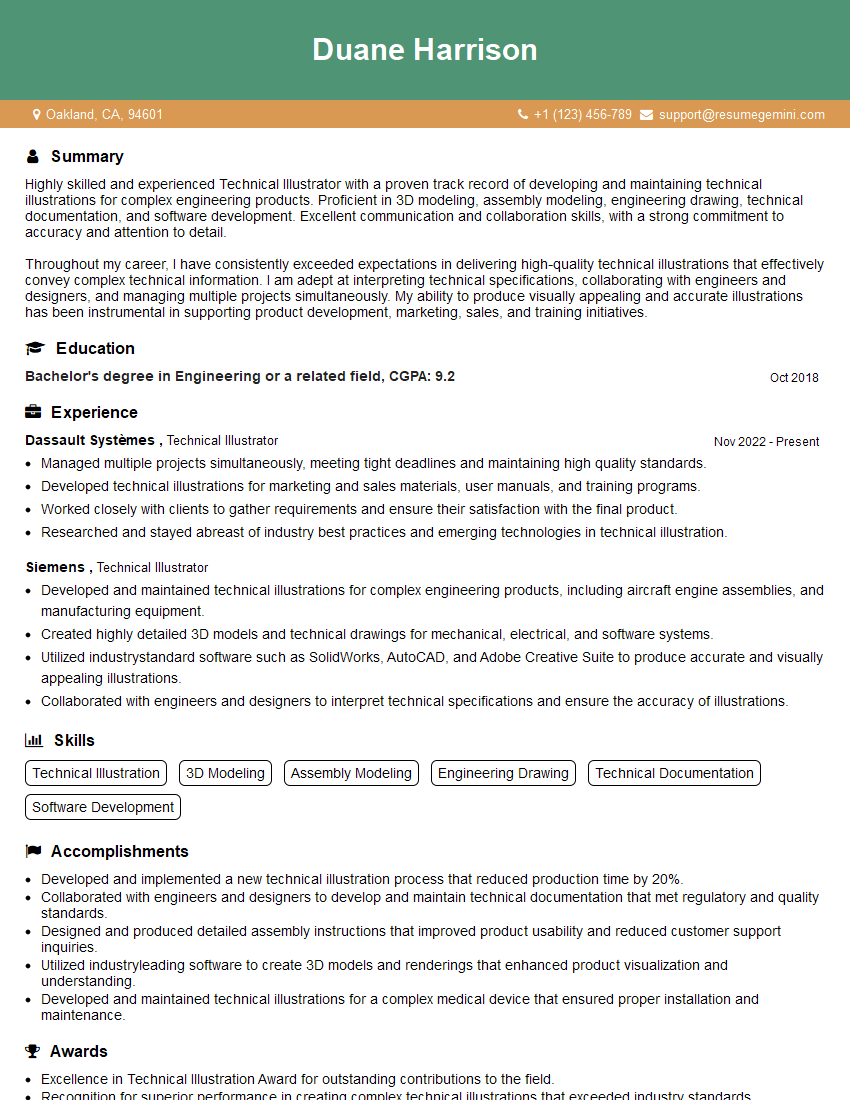
Technical Illustrator Resume Sample
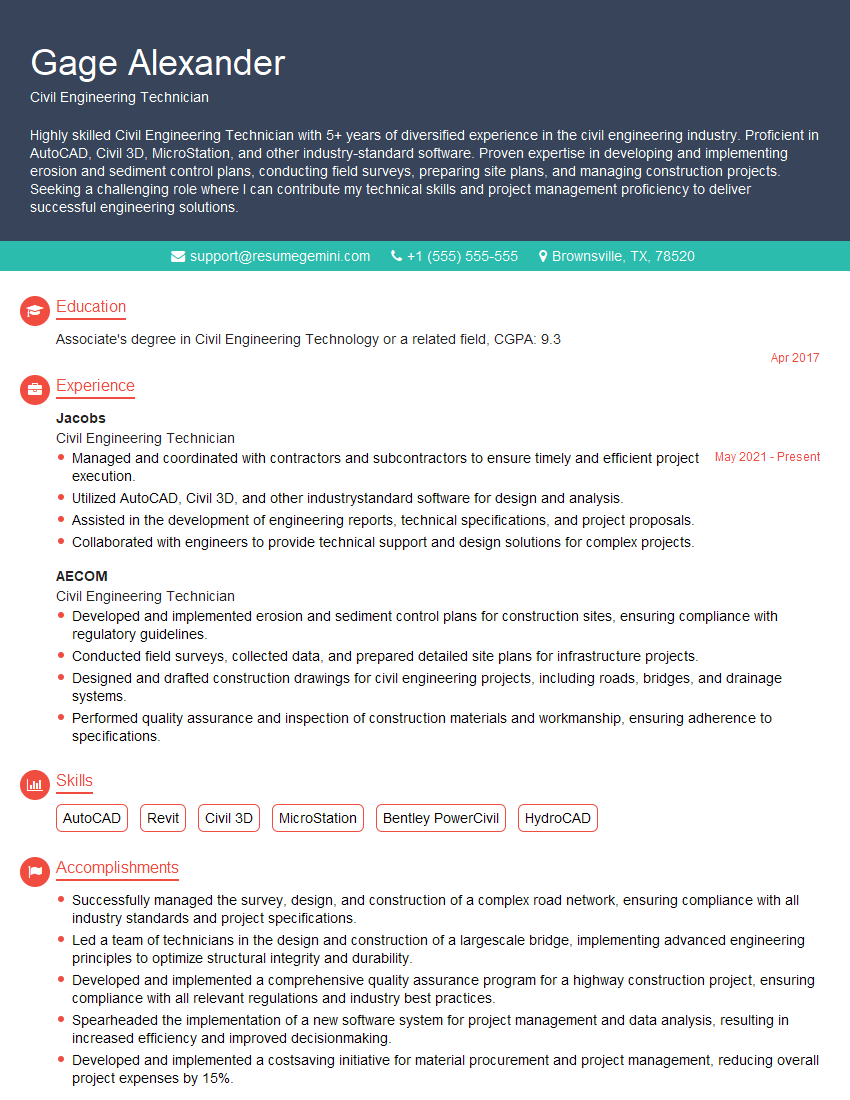
Civil Engineering Technician Resume Sample
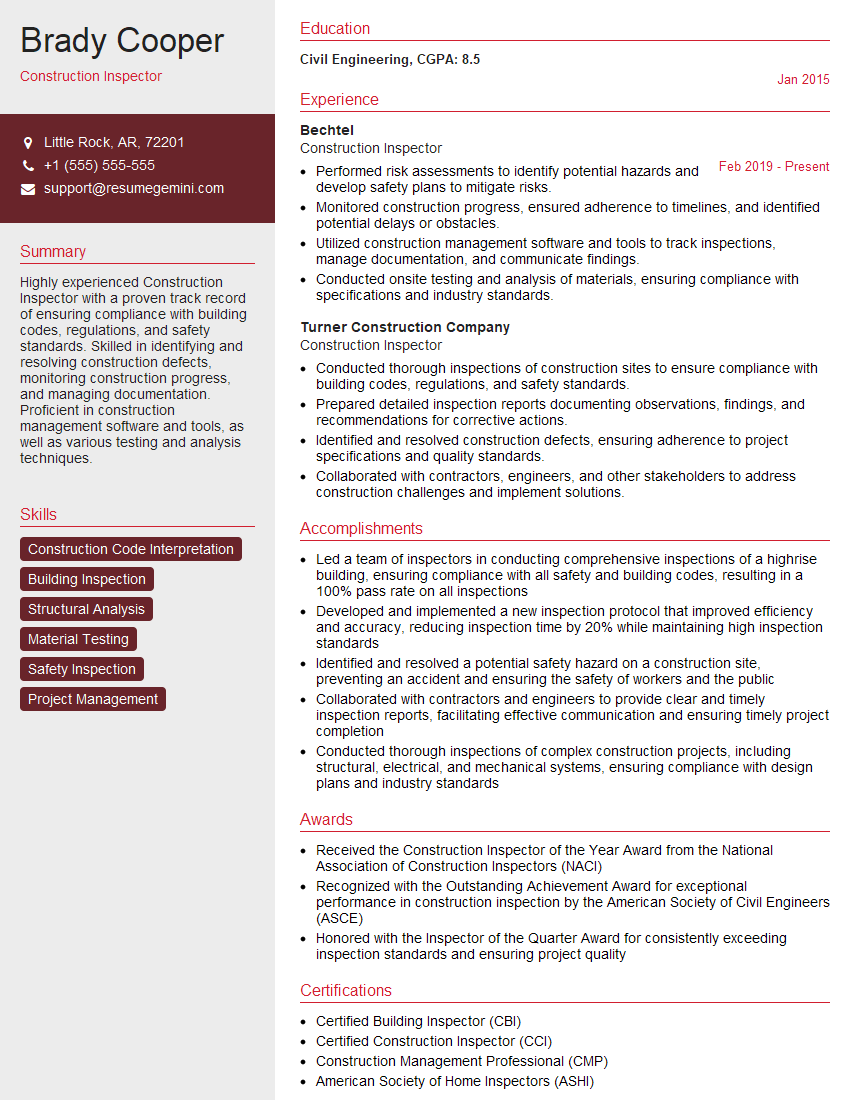
Construction Inspector Resume Sample

Quality Control Inspector Resume Sample
- Facilities Manager
- Construction Manager
- Project Superintendent
- Project Engineer
- Estimator
- Design Engineer
- Plumbing Designer
- Landscape Architect
- Drafting Technician
- Surveyor
- Structural Engineer
- Electrical Engineer
- Safety Engineer
- Architectural Drafter
- Mechanical Drafter
- Technical Illustrator
- Civil Engineering Technician
- Construction Inspector
- Quality Control Inspector
Explore more articles
Users Rating of Our Blogs
Share Your Experience
We value your feedback! Please rate our content and share your thoughts (optional).
What Readers Say About Our Blog
To the interviewgemini.com Webmaster.
Very helpful and content specific questions to help prepare me for my interview!
Thank you
To the interviewgemini.com Webmaster.
This was kind of a unique content I found around the specialized skills. Very helpful questions and good detailed answers.
Very Helpful blog, thank you Interviewgemini team.