Every successful interview starts with knowing what to expect. In this blog, we’ll take you through the top Basic Knife Skills interview questions, breaking them down with expert tips to help you deliver impactful answers. Step into your next interview fully prepared and ready to succeed.
Questions Asked in Basic Knife Skills Interview
Q 1. What are the three basic knife cuts?
The three most basic knife cuts form the foundation of all other cuts: the dicing, mincing, and slicing. Dicing creates uniformly sized cubes, mincing produces very fine pieces, and slicing involves creating thin, even slices. Mastering these allows you to prepare a wide variety of ingredients for cooking.
- Dicing: Imagine chopping an onion into perfectly even cubes – that’s dicing. This is crucial for even cooking and consistent texture in dishes.
- Mincing: Think finely chopped garlic or herbs. Mincing creates the smallest pieces possible, releasing maximum flavor and often used as a seasoning or aromatic ingredient.
- Slicing: This is your go-to cut for items like carrots, potatoes, or meats, producing thin, even slices for faster cooking and even browning. It’s the basis for many other advanced techniques.
Q 2. Explain the proper grip for holding a chef’s knife.
The proper grip for a chef’s knife is crucial for control, safety, and efficiency. Think of it as a handshake: you don’t want a death grip, but you need a firm hold. Pinch the blade near the bolster (the part where the blade meets the handle) with your thumb and index finger. Your remaining fingers should curl around the handle, providing support and stability. Keep your knuckles high and your wrist relaxed, allowing the weight of the knife to do the work. This ‘pinch grip’ provides maximum control and reduces the chance of slipping.
Imagine you are sawing through a piece of wood – that’s how the knife should feel in your hand, controlled and steady.
Q 3. Describe the difference between a julienne and a brunoise cut.
Both julienne and brunoise are fine cuts, used to create small, uniform pieces, ideal for salads, garnishes, or stir-fries. The key difference lies in their shape:
- Julienne: Produces matchstick-shaped pieces, typically about 1/8 inch thick and 2-3 inches long. Think of finely sliced carrots for a salad.
- Brunoise: This is even finer, creating tiny cubes usually about 1/8 inch on each side. This level of precision is needed for very delicate applications or when maximum surface area is desired for faster cooking. It’s a more advanced cut.
Imagine you are preparing a dish where uniform size is vital to ensure consistent cooking times; that’s when you’d reach for julienne or brunoise. The extra precision ensures every piece cooks evenly.
Q 4. How do you safely sharpen a chef’s knife?
Sharpening a chef’s knife is essential for safety and efficiency. A dull knife requires more force, increasing your risk of slipping and injury. I recommend using a honing steel regularly, between sharpenings, to realign the blade’s edge. For actual sharpening, I prefer a combination of sharpening stones, starting with a coarser grit to remove imperfections, then progressing to finer grits to create a razor-sharp edge. It requires practice and patience to achieve a perfect edge. Never try to sharpen while holding the knife with the sharpened edge facing you; this is crucial to prevent injury.
Remember, a sharp knife is a safe knife, as it requires less pressure to cut, reducing the likelihood of slippage and accidents.
Q 5. What are the safety precautions to take when using knives?
Knife safety is paramount. Always use a sharp knife – dull knives are more dangerous. Keep your knives clean and dry; a wet or greasy blade can slip easily. Never leave a knife unattended on a counter; always store knives in a safe, secure place, like a knife block or magnetic strip. Cut away from yourself, using a stable cutting board; avoid using the cutting board as a chopping block, this can damage the knife. Never try to catch a falling knife. And always exercise caution when cleaning knives.
Think of every cut as if your hand is the most valuable and delicate ingredient – you want to protect it!
Q 6. What is the proper way to handle a knife while walking?
The only safe way to transport a knife is with the blade pointing downwards, held close to your body. Never carry a knife in your pocket. Ideally, use a knife sheath for added safety. If no sheath is available, use a stable position, keeping the point down, and notify others in the vicinity to be careful.
Imagine accidentally bumping into someone while carrying a knife. The safest option always prioritizes safety for yourself and others.
Q 7. How do you dice an onion efficiently?
Efficient onion dicing is all about technique. First, trim off the root end, leaving just a small bit to hold the onion together. Then, slice off the top and peel away the outer layers. Cut the onion in half through the root, then lay each half flat side down. Make vertical slices, leaving about ¼ inch between each cut without cutting all the way through to the root end. Next, make horizontal slices at the same distance, creating small squares. Finally, use a rocking motion with your knife, from root to tip, to dice the onion. The root end helps keep the pieces together during slicing making it easy to produce even sized dices.
Practice makes perfect! With enough practice, dicing an onion will become second nature. You’ll save time and produce consistently sized pieces, ensuring even cooking every time.
Q 8. How do you mince garlic?
Mincing garlic involves reducing it to the smallest possible pieces, creating a fine paste. Think of it like transforming a whole clove into a fluffy cloud of garlicky goodness!
Here’s how:
- Peel the garlic cloves. You can easily do this by gently pressing down on a clove with the flat side of your knife, then using the blade to peel the skin away.
- Place the cloves on your cutting board, grouping them together.
- Using a sharp chef’s knife, finely chop the cloves into small pieces.
- Next, using a rocking motion with your knife, keeping the blade tip slightly anchored to the board, finely chop the garlic into even smaller pieces, close to a paste. The rocking motion keeps your fingers safe and ensures even mincing.
- Once minced, you can further emulsify the garlic with a pinch of salt to help release its aromatic oils and create a smoother paste.
Pro Tip: For extremely fine mincing, consider using a garlic press. However, this method can result in a slightly less flavorful result compared to hand mincing.
Q 9. How do you properly chop herbs?
Properly chopping herbs involves creating uniformly sized pieces, preserving their vibrant color and releasing their maximum flavor. Imagine the difference between a beautifully chopped herb garnish and a haphazard pile; it’s all about presentation and taste!
Here’s how:
- Gather your herbs and wash them thoroughly, shaking off excess water.
- Remove any tough stems. For herbs like parsley and cilantro, often only the leaves are used; for others like thyme, you may want to finely chop both leaves and stems.
- Stack the leaves together neatly on your cutting board.
- Holding the knife at a right angle, make thin, even slices across the herbs. This creates a rough chop.
- To create a more finely chopped herb, stack the roughly chopped herb again, and then repeat the process using thinner, more precise cuts.
Pro Tip: Use a sharp knife to avoid bruising the herbs, which can lead to discoloration and a loss of flavor. A rocking motion can also help create a finer chop.
Q 10. Explain the difference between a chiffonade and a mince.
A chiffonade and a mince are both cutting techniques, but they result in drastically different textures. Think of a chiffonade as elegant ribbons, perfect for garnishing, while a mince is tiny bits, almost a paste, ideal for blending into sauces.
Chiffonade: This technique is used primarily for leafy herbs like basil, spinach, or mint. You roll the leaves tightly, then slice across the roll into thin strips, creating delicate ribbons. It’s all about the visual appeal and gentle integration into dishes.
Mince: A mince involves reducing ingredients such as garlic, onions, or herbs into extremely small, almost pulverized pieces. The goal is to create a fine, even texture that blends seamlessly into other ingredients. Think of it as creating a very fine paste, often with the help of a rocking motion with your knife.
Q 11. What is the proper technique for using a paring knife?
A paring knife, with its small blade, is perfect for detailed work like peeling fruits and vegetables, removing eyes from potatoes, or creating decorative cuts. It’s like a tiny, precise sculptor for your ingredients!
Proper Technique:
- Hold the paring knife like you would a pencil, using a pinch grip. This allows for greater control and precision.
- Keep your fingertips tucked in to avoid accidental cuts. The thumb should be curved along the side of the blade.
- Use short, controlled strokes, always keeping the tip of the blade pointed away from your fingers. This is especially important when peeling.
- For peeling, use a gentle scraping motion, following the curve of the fruit or vegetable. Avoid excessive pressure.
Pro Tip: Regularly sharpen your paring knife; this makes it safer and more effective. A dull knife requires more pressure, increasing your risk of injury.
Q 12. How do you safely store knives?
Safe knife storage is paramount to prevent accidents and maintain the integrity of your blades. Think of it as giving your knives the respect and care they deserve.
Safe Storage Methods:
- Magnetic strips: These are easy to install and keep knives readily accessible.
- Knife blocks: These provide secure storage and protect blades from damage. Make sure it fits the size and shape of your knives.
- Knife rolls: These are portable and protect knives during transport.
- Drawer dividers: These can help organize knives in a drawer and prevent them from shifting and bumping against each other.
Important Note: Always store knives separately from other utensils to prevent damage and accidents. Never leave knives loose in a drawer.
Q 13. What types of knives are commonly used in a professional kitchen?
A professional kitchen utilizes a variety of knives, each designed for a specific task. It’s like having a specialized tool for every job!
Common Knives:
- Chef’s knife: The workhorse of the kitchen, used for chopping, slicing, and dicing.
- Paring knife: For delicate work like peeling and trimming.
- Serrated knife: For slicing bread and tomatoes without crushing them.
- Boning knife: For separating meat from bone.
- Butcher knife: Larger and heavier, ideal for breaking down large cuts of meat.
- Bread knife: Long and serrated blade for cleanly slicing bread
The specific knives used will vary depending on the type of cuisine and the chef’s preferences.
Q 14. What is the best way to clean and maintain your knives?
Cleaning and maintaining your knives is crucial for their longevity and your safety. Think of it as showing your appreciation for a precision instrument!
Cleaning:
- Immediately after use, hand-wash your knives in warm, soapy water. Avoid putting them in the dishwasher, as the high heat and harsh detergents can damage the blades and handles.
- Rinse thoroughly and dry completely to prevent rust and spotting.
- Use a soft cloth or towel to dry, ensuring you get into the crevices of the blade and handle.
Maintenance:
- Sharpening: Regularly sharpen your knives to maintain their cutting edge. How often depends on usage, but a honing steel should be used regularly. Professional sharpening should be done as needed.
- Honing: Use a honing steel to realign the blade’s edge between sharpenings. This keeps the knife sharp longer and prevents dulling.
Important Note: Always handle knives carefully during cleaning and maintenance to prevent injury.
Q 15. How do you identify a dull knife?
Identifying a dull knife is crucial for safety and efficiency. A sharp knife requires less pressure, minimizing the risk of slippage and accidents. A dull knife, on the other hand, requires more force, making it more likely to slip and cause injury. You can identify a dull knife through a few simple tests:
The Paper Test: Try to gently slice a piece of paper. A sharp knife will slice cleanly through the paper with minimal effort. A dull knife will struggle, tearing or crumpling the paper instead.
The Onion Test: Attempt to slice an onion. A sharp knife will cleanly slice through the onion layers, leaving a smooth, even cut. A dull knife will crush or tear the onion, resulting in uneven slices.
The Visual Inspection: Examine the blade closely. A dull knife will often show signs of wear, such as a rounded edge or a dull sheen, compared to the sharp, pointed edge of a sharp knife.
If your knife fails any of these tests, it’s time for sharpening!
Career Expert Tips:
- Ace those interviews! Prepare effectively by reviewing the Top 50 Most Common Interview Questions on ResumeGemini.
- Navigate your job search with confidence! Explore a wide range of Career Tips on ResumeGemini. Learn about common challenges and recommendations to overcome them.
- Craft the perfect resume! Master the Art of Resume Writing with ResumeGemini’s guide. Showcase your unique qualifications and achievements effectively.
- Don’t miss out on holiday savings! Build your dream resume with ResumeGemini’s ATS optimized templates.
Q 16. Explain the importance of using a cutting board.
Using a cutting board is paramount for safety and preserving your knives. Think of it as a protective layer for both your countertop and your knives. Here’s why it’s so important:
Knife Protection: Cutting directly on a hard surface like a countertop can severely damage the edge of your knife, dulling it quickly and potentially chipping it. A cutting board provides a softer, more forgiving surface.
Countertop Protection: Knives can easily scratch and mar countertops, especially those made of materials like granite or marble. A cutting board safeguards your valuable surfaces from damage.
Hygiene: A cutting board provides a dedicated surface for food preparation, making it easier to clean and sanitize after use, preventing cross-contamination.
Stability: Cutting boards often provide a more stable and even surface than a countertop, improving control and minimizing the risk of accidental slips.
Choosing a sturdy, well-maintained cutting board—wood or plastic—is an investment in both your kitchen and your safety.
Q 17. What is the best way to avoid cutting yourself while using knives?
Avoiding knife cuts is crucial. It’s about adopting safe practices consistently, not just reacting to immediate situations. Here’s a comprehensive approach:
Use Sharp Knives: A sharp knife is far safer than a dull one because it requires less pressure, minimizing the chance of the knife slipping. Dull knives are more likely to slip and cause injury.
Proper Grip: Hold the knife firmly, but not too tightly. Use a pinch grip, with your index finger and thumb resting gently on the blade near the bolster (the part where the blade meets the handle). This provides maximum control.
Controlled Cuts: Never rush. Focus on your cuts and maintain a steady pace. Take your time and concentrate on the task at hand.
Keep Your Fingers Curled: When using a knife, curl the fingers of your non-dominant hand inward, forming a claw. This keeps your fingertips out of the path of the blade.
Sharp Knife Storage: Store your knives safely, in a knife block, magnetic strip, or sheath, to prevent accidents.
Mindfulness: Always be aware of your surroundings and the position of your knife and hands. Avoid distractions during knife work.
Regular practice and attention to detail are essential to developing safe knife skills.
Q 18. How would you handle a situation where a knife breaks during food preparation?
A broken knife during food preparation is a serious situation that demands immediate attention. Here’s the procedure:
Safety First: Immediately stop what you’re doing. Do not attempt to use the broken knife.
Assess the Damage: Carefully examine the break to assess the extent of the damage. Is it a small chip, or is the blade severely fractured?
Secure the Area: Pick up the broken pieces carefully, using tongs or thick gloves if needed. Ensure all pieces are accounted for, even small fragments.
Dispose Safely: Dispose of the broken knife safely, ideally in a puncture-resistant container, labeled appropriately.
Replace the Knife: Replace the broken knife with a new one. A damaged knife is unsafe and should not be used.
Clean Thoroughly: Once the broken knife is safely disposed of, carefully clean the entire work area to ensure no fragments remain.
Prevention is key, so regularly inspect your knives for damage and replace them as needed. A broken knife can cause severe injury.
Q 19. How do you make a baton cut?
A baton cut is a technique used to roughly chop or crush ingredients, often for a specific texture or to easily break down harder foods. It’s not about precise slicing, but rather forceful impact. You’ll need a sturdy knife and a hard surface (a cutting board is ideal). Here’s how it’s done:
Select Your Ingredient: Choose a firm ingredient like garlic, ginger, or even nuts.
Position the Ingredient: Place the ingredient on the cutting board.
The Strike: Using the side of your blade (not the edge), firmly strike the ingredient repeatedly with downward force, crushing it into smaller pieces.
This technique is helpful for creating a paste-like texture or smaller chunks. Practice will help you develop control and get a good feel for the impact needed.
Q 20. What is a bias cut?
A bias cut, also known as a diagonal cut, is a slicing technique where you cut an ingredient at an angle, rather than straight across. This produces slices that are longer and thinner than a straight cut. It’s commonly used for vegetables like carrots, zucchini, or potatoes.
Here’s how you execute a bias cut:
Angle the Knife: Hold your knife at a 45-degree angle to the ingredient.
Consistent Slices: Make long, smooth slices at the same angle, creating consistent pieces.
Bias cuts are aesthetically pleasing and can enhance the visual appeal of dishes. They are also common in stir-fries where the longer slices cook more evenly and provide a pleasant texture.
Q 21. Explain how to dice a potato.
Dicing a potato involves cutting it into uniform, small cubes. This technique is essential for many recipes where even cooking is important, like soups, stews, and salads.
Preparation: Wash and peel the potato (optional). Cut the ends of the potato off for stability.
Initial Cut: Cut the potato lengthwise into slices of equal thickness (about ¼ inch).
Second Cut: Stack the slices and cut them into equal-sized strips (also about ¼ inch).
Final Cut: Stack the strips and cut them crosswise into small cubes.
Aim for consistency in your cuts to ensure even cooking. Practice makes perfect, and with a little repetition you’ll be dicing potatoes like a pro in no time!
Q 22. How do you make a rock chop?
A rock chop, also known as a rough chop, is a quick and efficient way to coarsely chop vegetables or other ingredients. It doesn’t require precise cuts; the goal is speed and consistency in size, although not uniform precision. Think of it like chopping vegetables for a hearty stew, where perfect cubes aren’t necessary.
Technique:
- Hold the vegetable firmly, using your non-dominant hand to curl your fingers inwards, keeping your fingertips tucked away from the blade.
- Use a firm grip on your knife, holding it close to the blade.
- Make quick, forceful cuts, aiming for roughly the same size pieces. Don’t worry about perfect uniformity; focus on efficiency.
- Continue chopping until you achieve your desired coarseness.
Example: Imagine chopping an onion for a chili. A rock chop is perfect; you don’t need perfectly uniform pieces; just consistently sized chunks that will cook evenly.
Q 23. How would you demonstrate the proper technique for slicing a tomato?
Slicing a tomato properly ensures even cooking and attractive presentation. The key is a sharp knife and a controlled slicing motion.
Technique:
- Start by cutting the tomato in half horizontally. This provides a stable base for slicing.
- Lay the tomato cut-side down on your cutting board.
- Hold the knife at a slight angle (about 15-20 degrees), and use a smooth, even slicing motion. Avoid sawing.
- Guide the knife with your whole arm, not just your wrist, to create consistent slices.
- For thin slices, make your cuts closer together.
Tip: If your knife is sticking, it may be dull or you might be applying too much pressure. Remember to use a sharp knife and a gentle touch to glide through the tomato.
Q 24. How do you handle a slippery food item while cutting?
Handling slippery ingredients safely requires a combination of technique and preparedness.
Strategies:
- Pat Dry: Before cutting, thoroughly pat the ingredient dry with a paper towel. This removes excess moisture, providing better grip.
- Use a Cutting Board with Grip: A damp cutting board can actually improve grip, especially for slippery foods. A damp cutting board helps prevent the food from sliding around.
- Create a Stable Base: If possible, cut the slippery item in halves or quarters to provide a more stable base.
- Use a Non-Slip Mat: Placing a damp rubber mat underneath the cutting board will prevent it from moving.
- Knife Technique: Use a gentle, controlled rocking motion to prevent the knife from slipping.
Example: When slicing peeled cucumbers, pat them dry before starting. If they’re still slippery, try adding a slightly damp cutting board. A damp (not wet) cutting board improves traction in this scenario.
Q 25. What are the signs of a dull knife?
A dull knife is a dangerous knife. It requires more force to cut, increasing the risk of slipping and accidents. Recognizing the signs is crucial for safety and efficient work.
Signs of a Dull Knife:
- Requires Excessive Force: You need to push hard to cut through food.
- Jagged Cuts: The cut edge is uneven or shredded, instead of clean.
- Food Slips and Slides: The knife skids across the food instead of slicing through it.
- Bent or Rounded Edge: The edge of the blade appears rounded or damaged.
A sharp knife is a safer knife. Sharp knives require less pressure, minimizing risk and increasing efficiency.
Q 26. How would you sharpen a knife without a sharpening steel?
While a sharpening steel is ideal, you can sharpen a knife without one using a honing steel, though results may not be as precise. This method, however, primarily realigns the blade edge, not sharpening it to perfection. This works best with knives that are not extremely dull
Using a Honing Steel (Not a Replacement for Sharpening):
- Hold the honing steel at a 20-degree angle to the blade.
- Using smooth, even strokes, draw the knife down and away from you along the length of the steel. Perform this motion on one side of the blade, then repeat on the other.
- Repeat steps 1-2 several times on each side of the blade.
Note: This doesn’t sharpen the knife, it only realigns the blade edge and reduces the microscopic bending. For a truly dull knife, professional sharpening is recommended.
Q 27. What are some common mistakes people make when using a knife?
Many common mistakes can lead to inefficient cutting, injury, and damaged equipment.
Common Mistakes:
- Using a Dull Knife: This is the most common and dangerous mistake. It leads to accidents and sloppy cuts.
- Incorrect Grip: Holding the knife improperly reduces control and increases the chance of slipping.
- Incorrect Cutting Technique: Sawing instead of slicing is inefficient and dangerous.
- Poor Cutting Board Placement: Using a small or unstable cutting board makes the entire process more challenging and hazardous.
- Distractions: Never cut when distracted; focus fully on the task at hand.
Practicing good knife skills, starting with safety basics, reduces these errors significantly.
Q 28. How would you handle a dropped knife in a kitchen environment?
Dropping a knife is a serious situation in a kitchen environment. Quick and appropriate reaction is essential.
Steps to take:
- Announce: Immediately yell “Knife!” to warn others in the vicinity.
- Don’t try to catch it: Let the knife fall. Attempting to catch it increases the risk of injury.
- Clear the area: If possible, move away from the knife’s trajectory to prevent anyone from getting hurt.
- Retrieve Carefully: Once the knife has come to rest, pick it up carefully, using a towel if necessary.
- Inspect the knife: Check the knife for damage. If bent or chipped, discard it.
Preventing dropped knives begins with safe knife handling practices and maintaining a clean, organized work area.
Key Topics to Learn for Basic Knife Skills Interview
- Grip and Posture: Understanding proper knife grip techniques for safety and efficiency. Practical application includes demonstrating a pinch grip, a handle grip, and explaining the importance of a stable posture.
- Basic Cuts: Mastering essential cuts like dicing, mincing, julienning, brunoise, and chopping. Practical application involves explaining the different sizes achieved by each cut and their culinary uses.
- Knife Safety and Maintenance: Understanding safe knife handling practices, including proper storage, cleaning, and sharpening techniques. Practical application includes demonstrating safe knife handling and explaining the importance of a sharp knife for efficiency and safety.
- Common Vegetables and Their Cuts: Demonstrating proficiency in cutting various vegetables using appropriate techniques. Practical application involves showcasing the ability to adapt knife skills to different vegetable types and desired textures.
- Working with Different Knives: Understanding the uses and characteristics of various knives (e.g., chef’s knife, paring knife, serrated knife). Practical application involves explaining the best knife for specific tasks and demonstrating their use.
- Troubleshooting Common Issues: Identifying and addressing common problems encountered while using knives, such as uneven cuts or accidental injuries. Practical application includes demonstrating problem-solving techniques and preventative measures.
Next Steps
Mastering basic knife skills is crucial for advancement in many culinary roles, demonstrating precision, efficiency, and a commitment to safety. A strong resume is your key to unlocking these opportunities. Make sure your resume is ATS-friendly to maximize your chances of getting noticed by potential employers. ResumeGemini can help you build a professional, impactful resume tailored to highlight your knife skills and experience. Examples of resumes specifically tailored to Basic Knife Skills are available to help you get started.
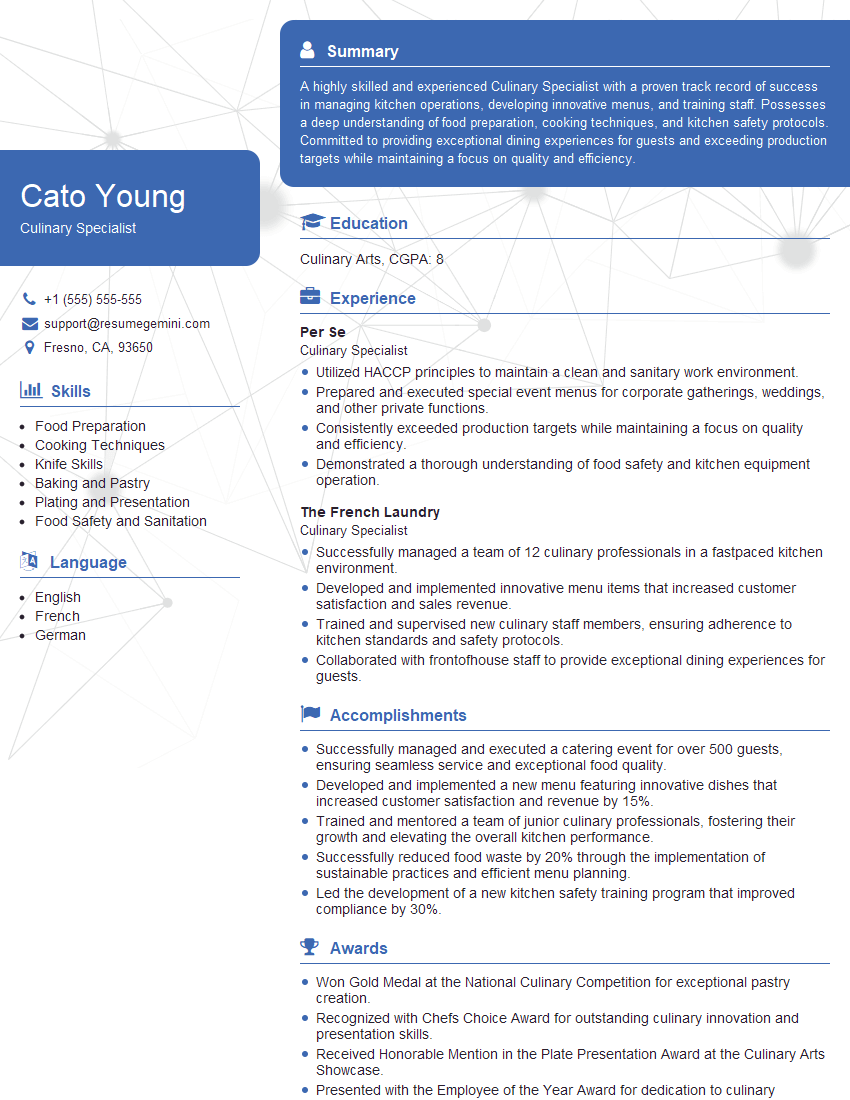
Culinary Specialist Resume Sample
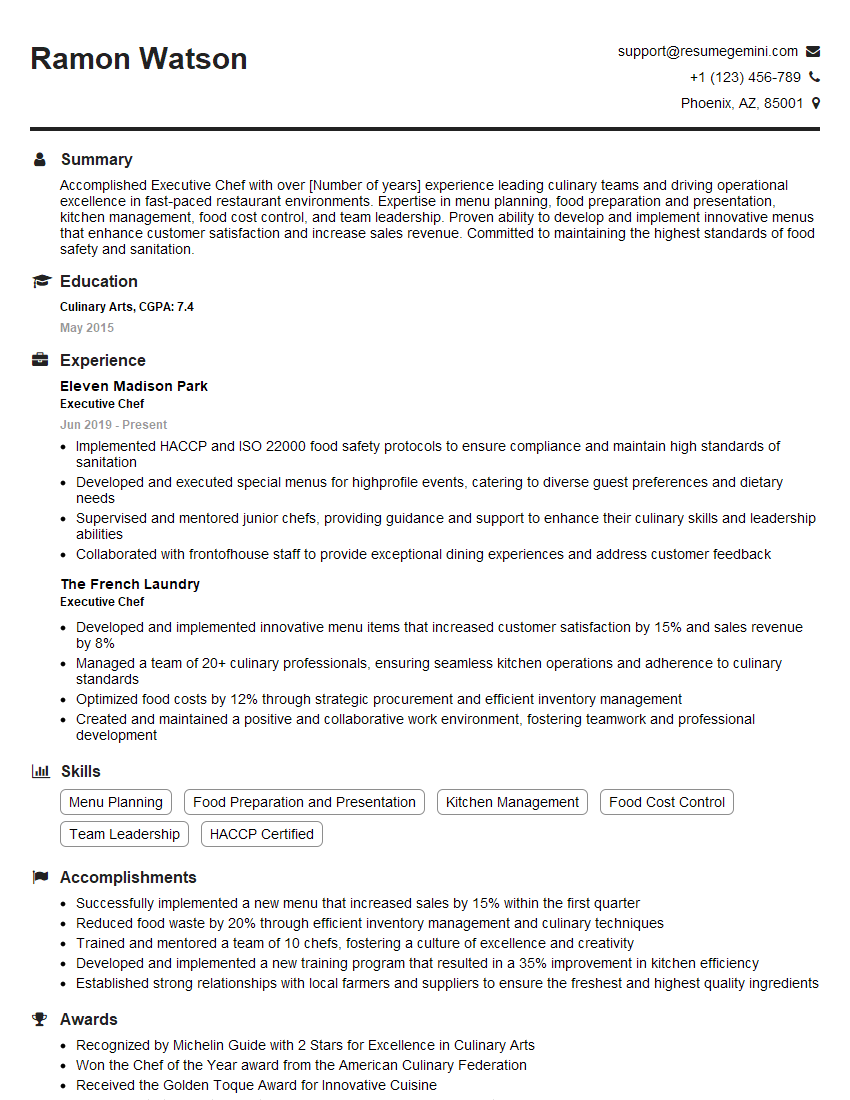
Executive Chef Resume Sample
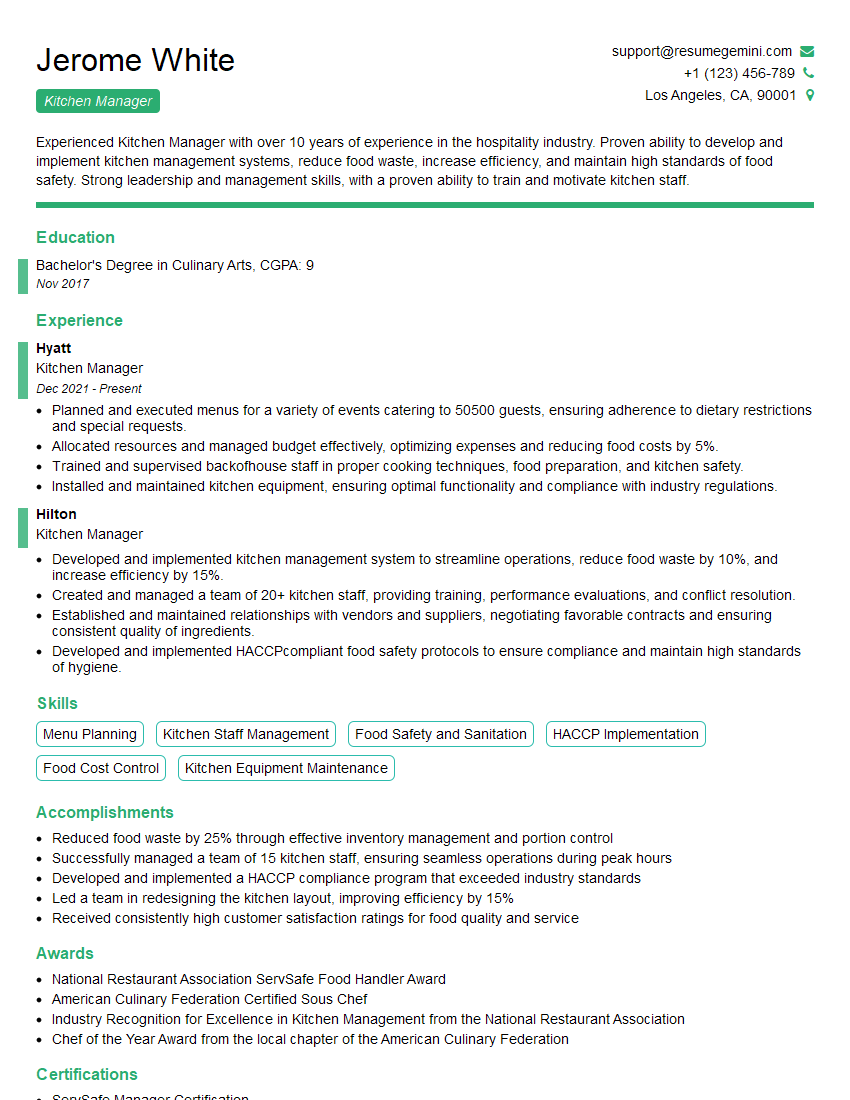
Kitchen Manager Resume Sample
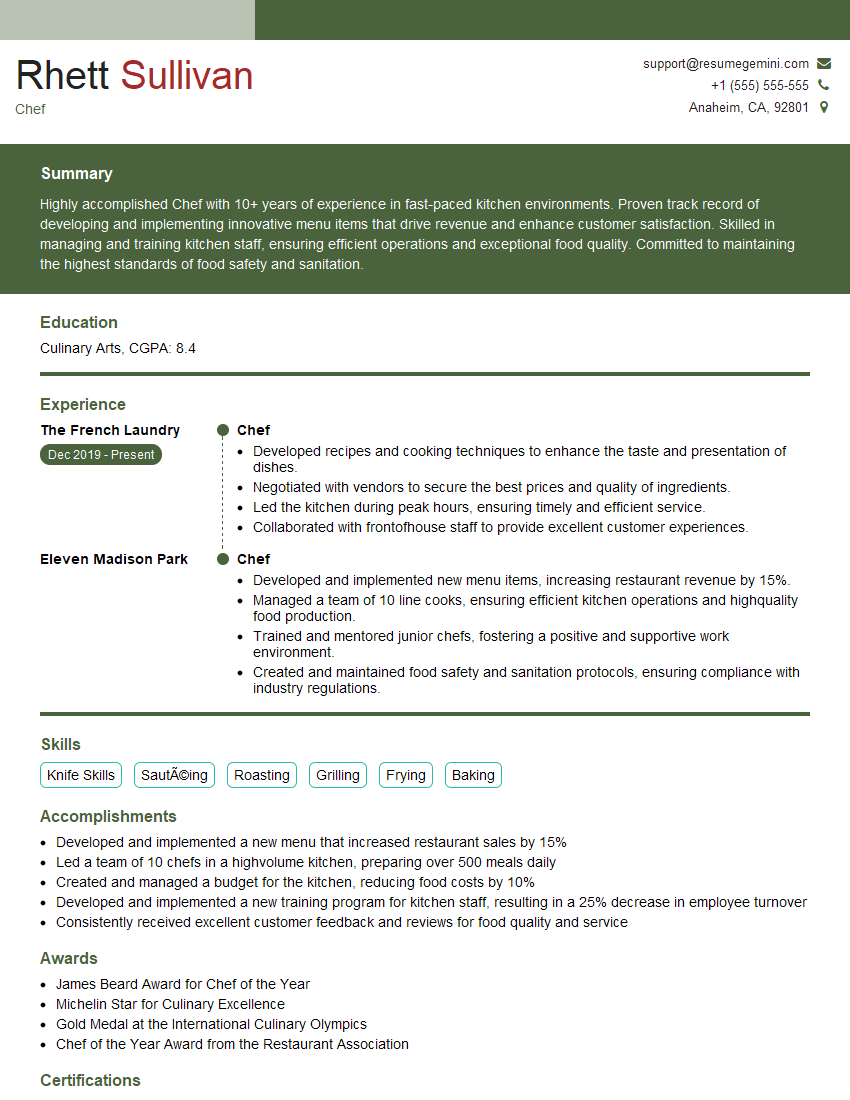
Chef Resume Sample
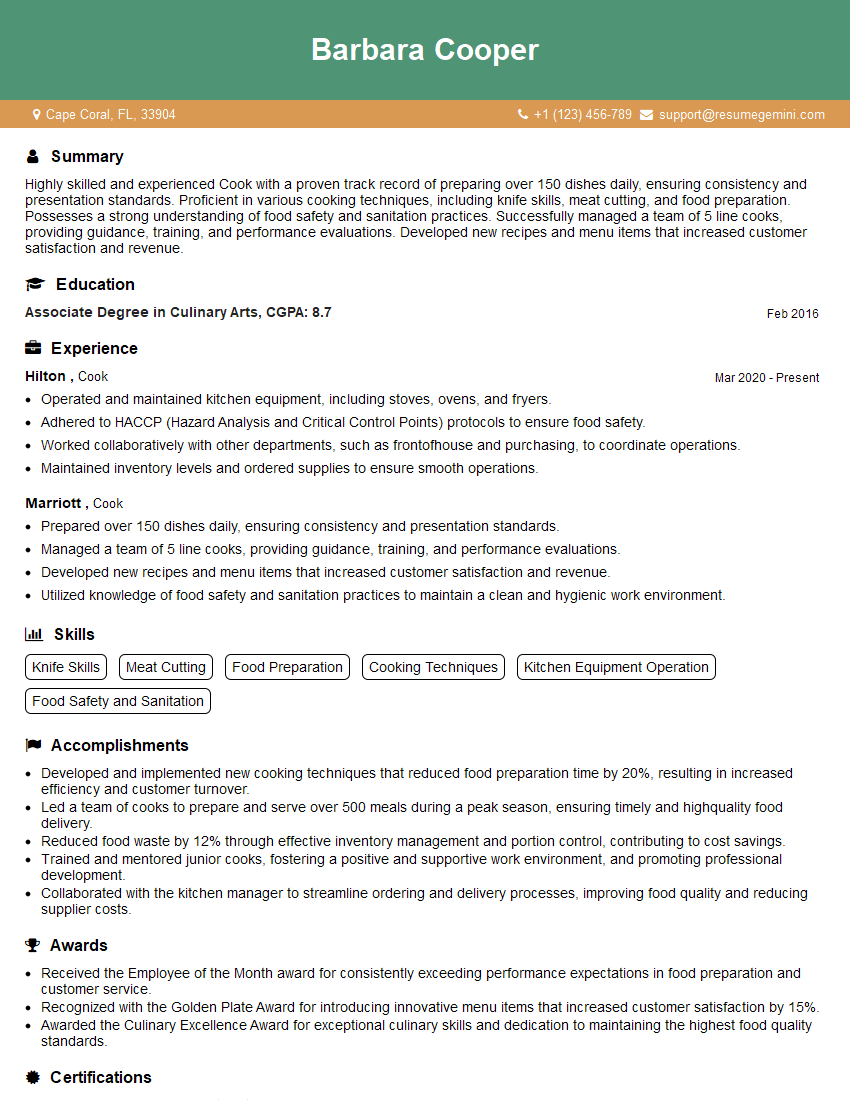
Cook Resume Sample
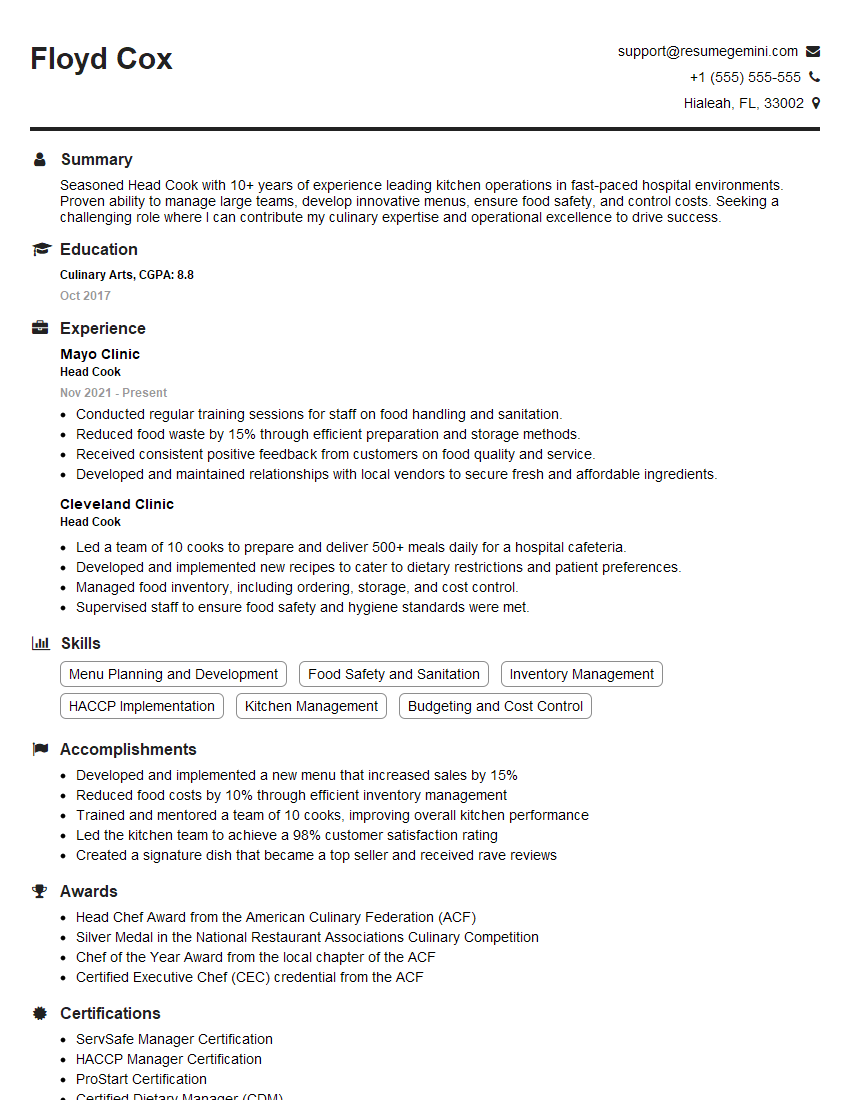
Head Cook Resume Sample
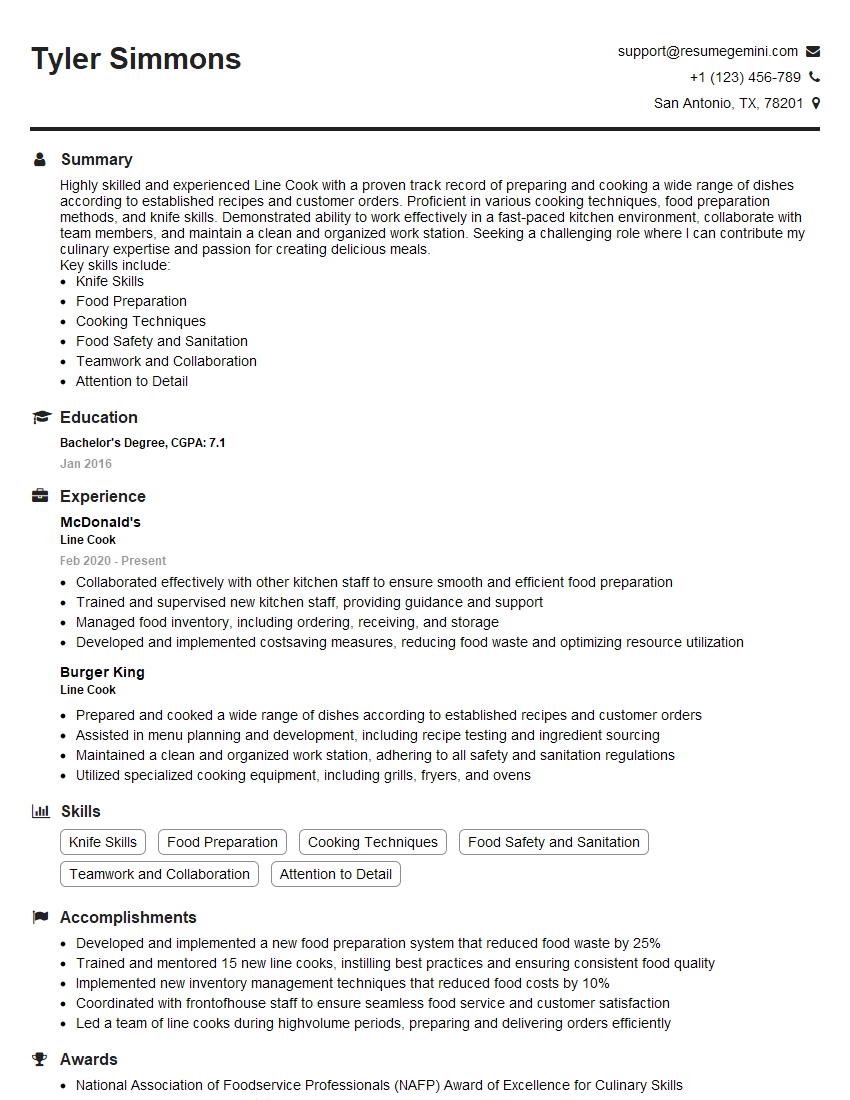
Line Cook Resume Sample
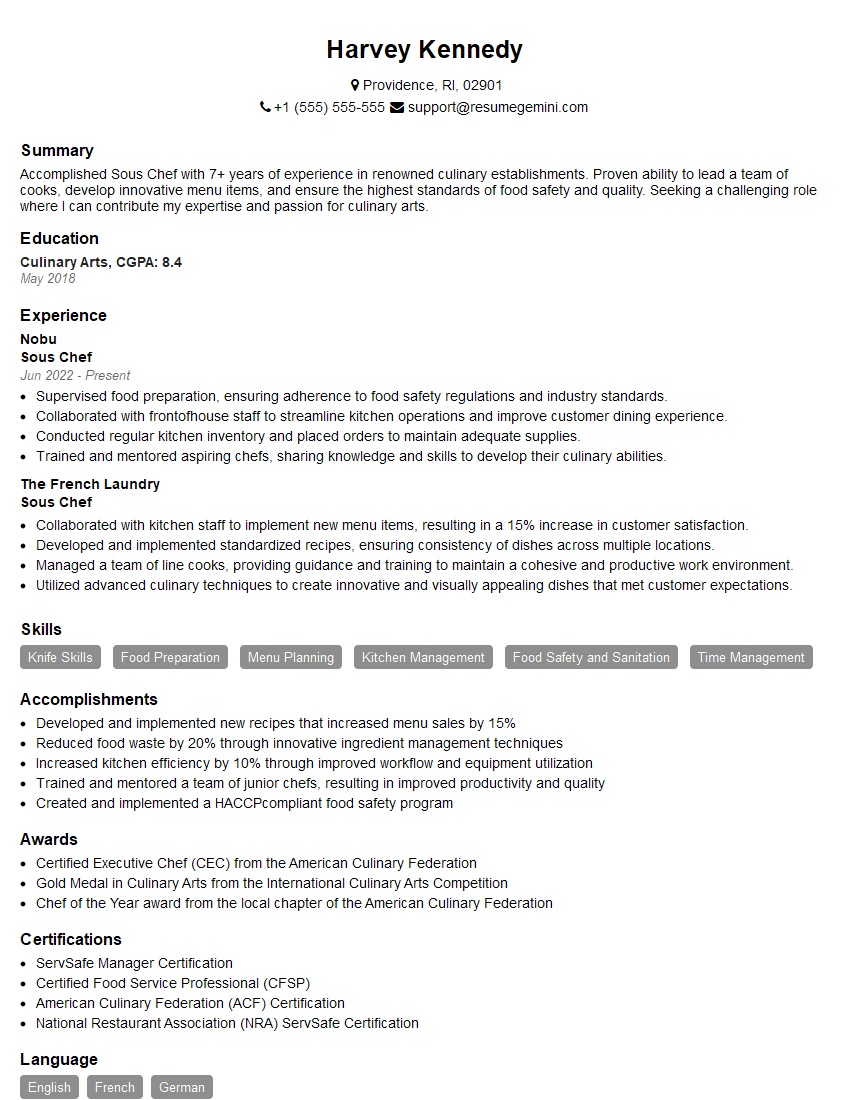
Sous Chef Resume Sample
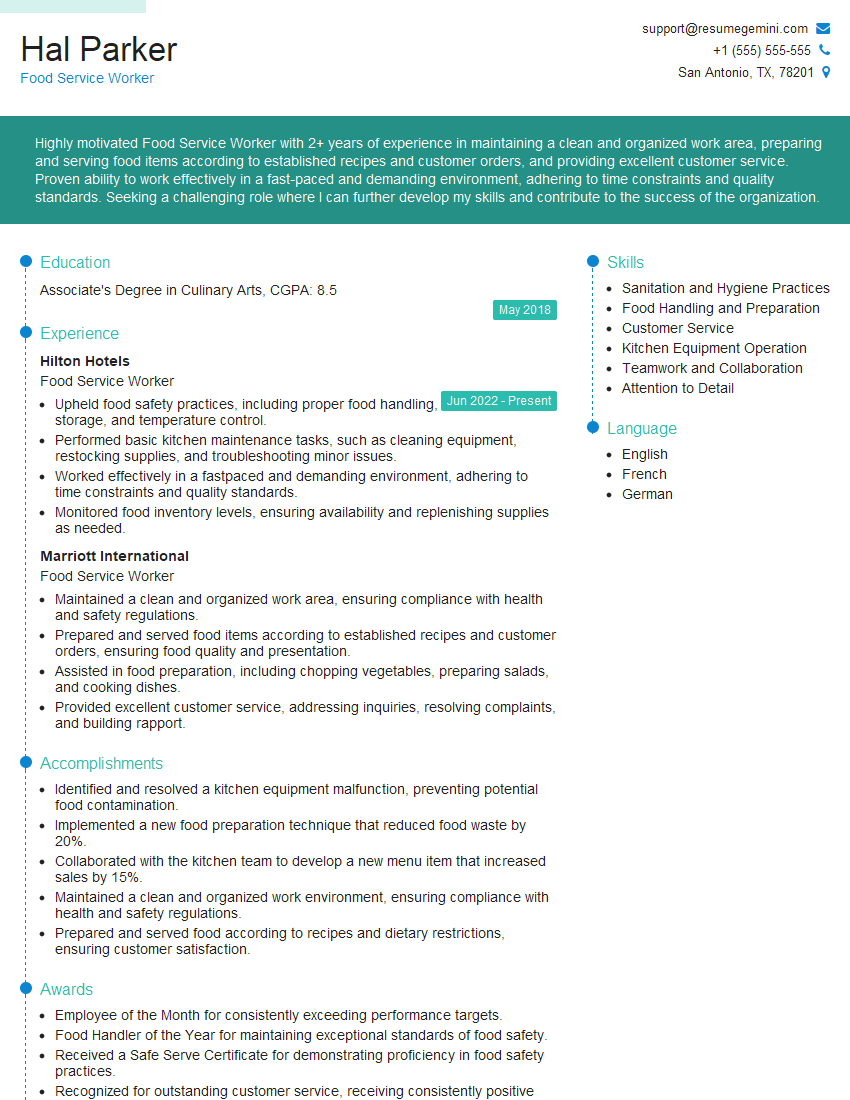
Food Service Worker Resume Sample
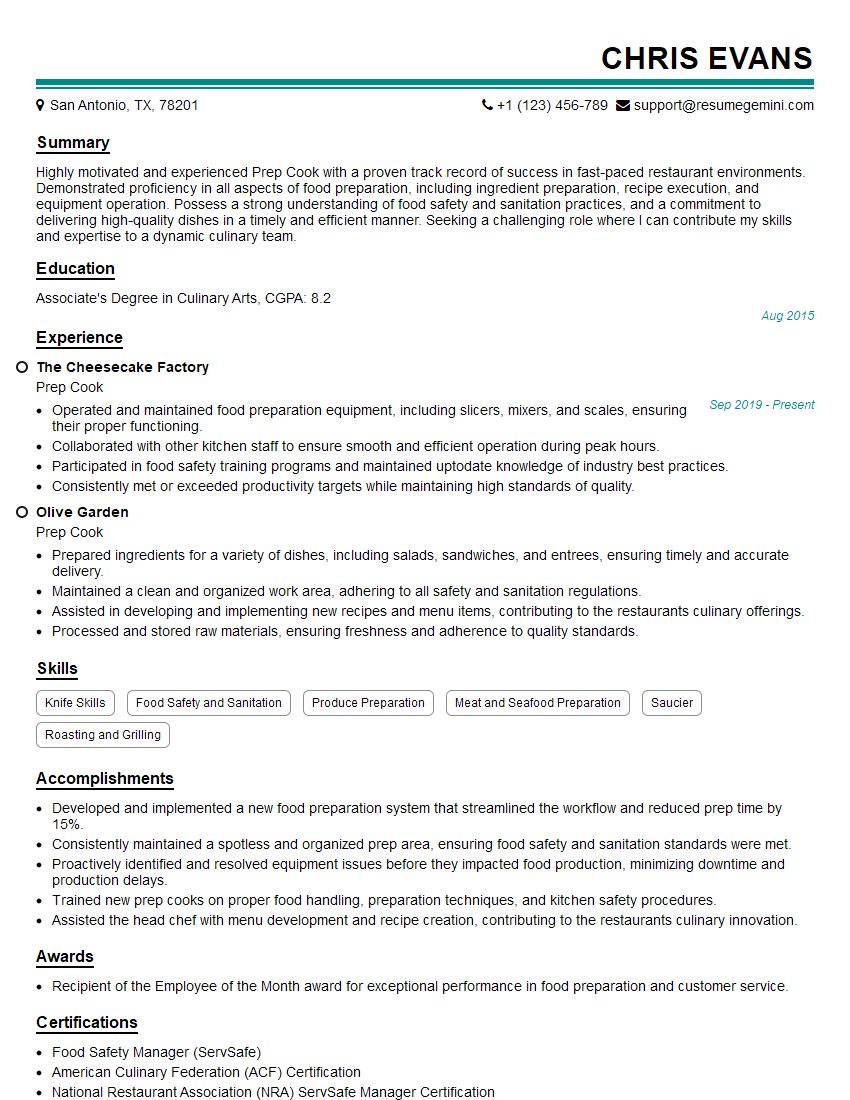
Prep Cook Resume Sample

Chef De Partie Resume Sample
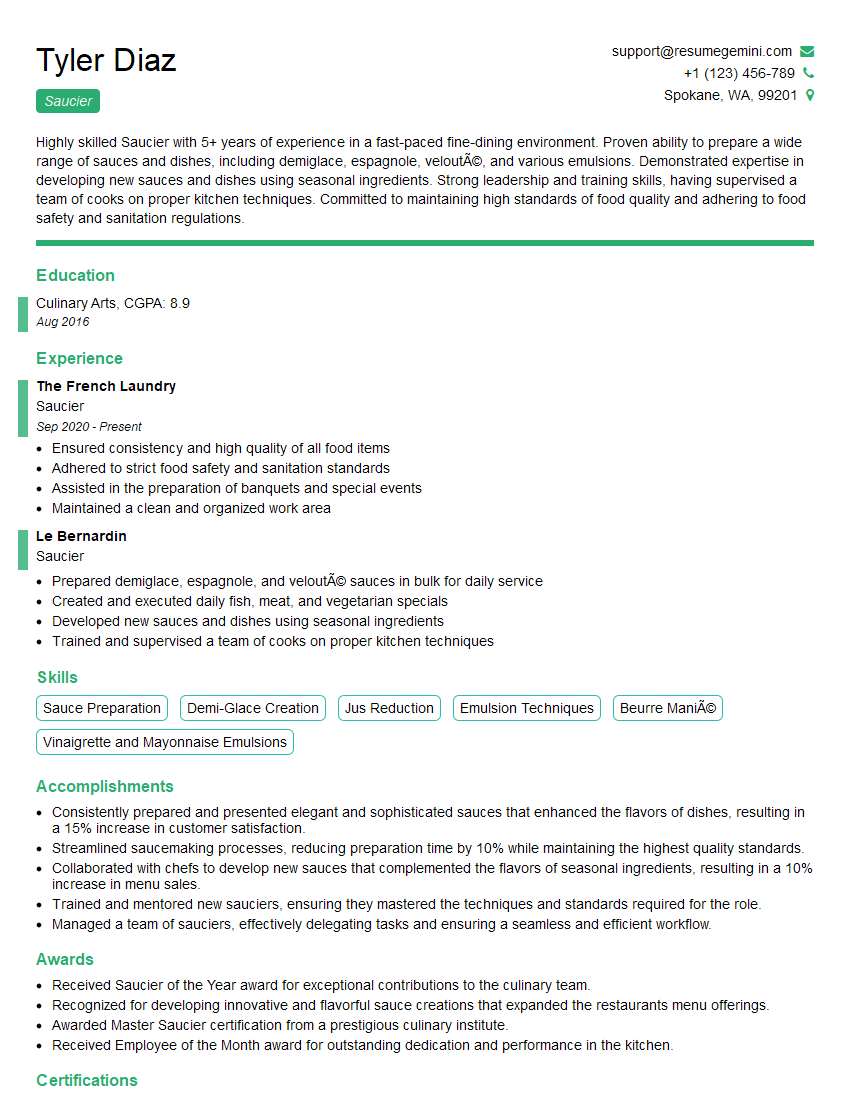
Saucier Resume Sample
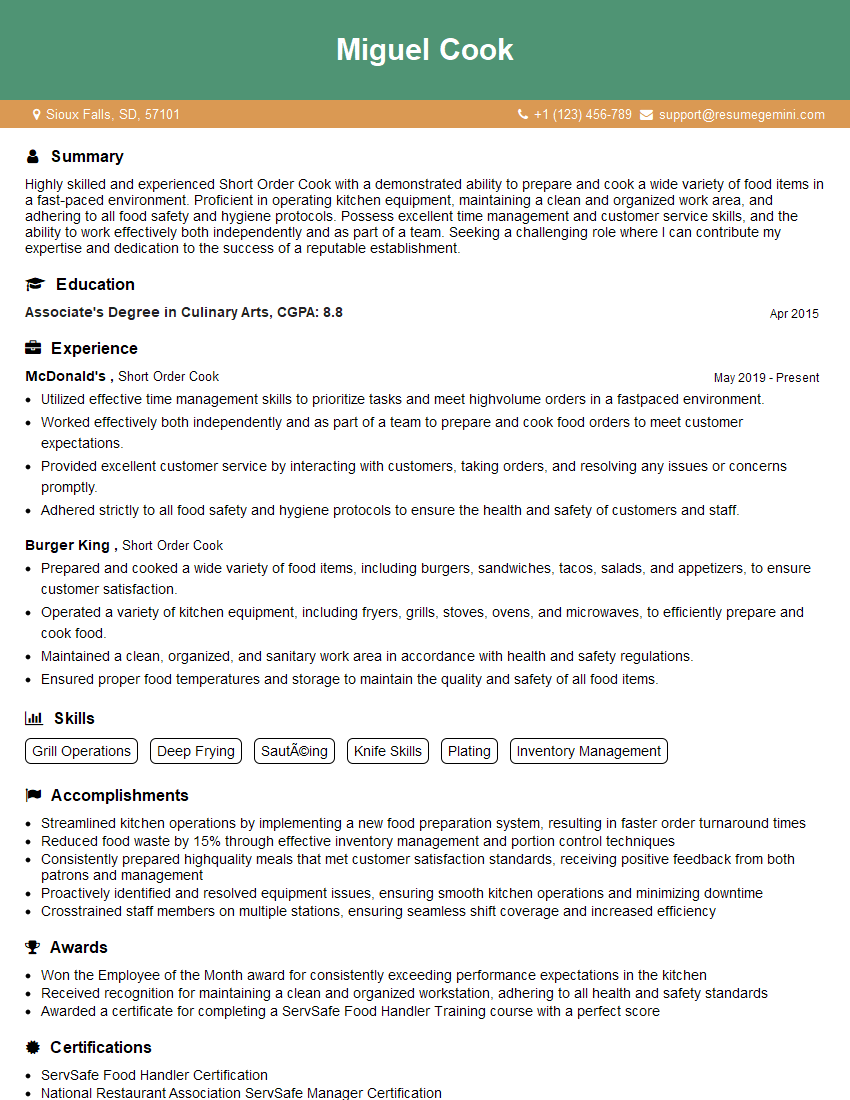
Short Order Cook Resume Sample
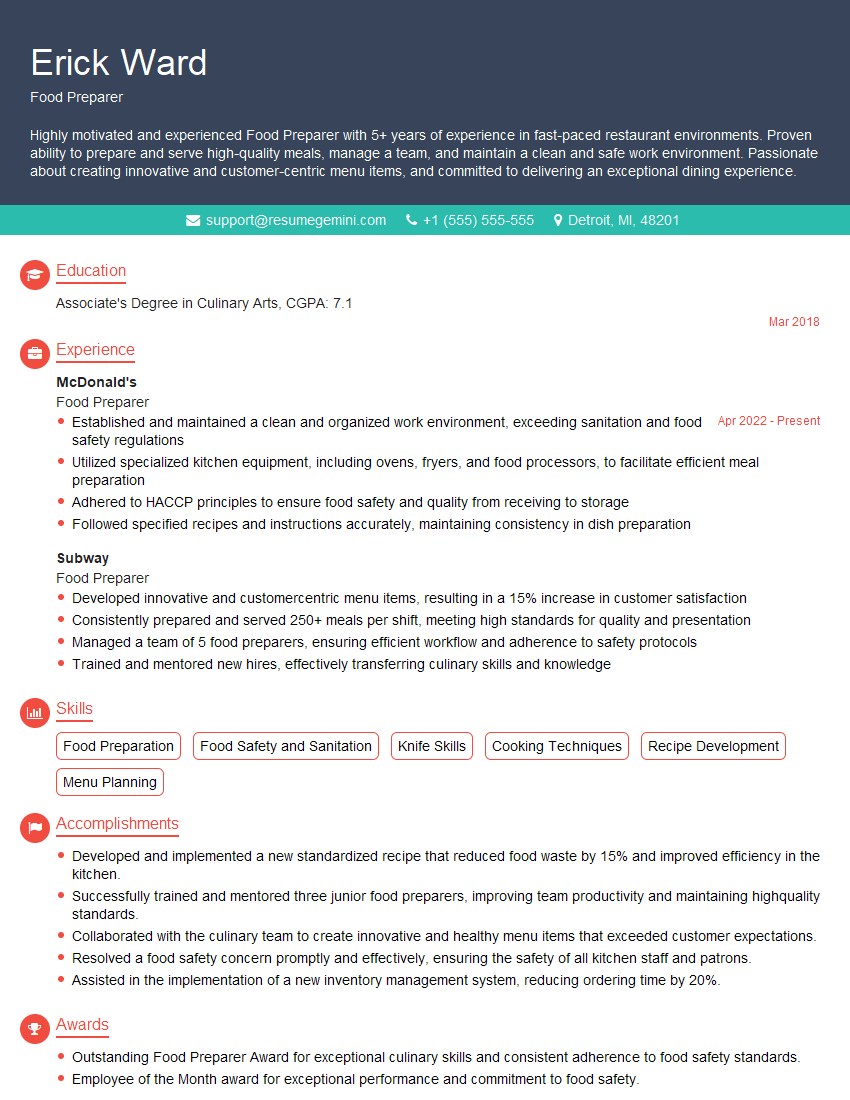
Food Preparer Resume Sample
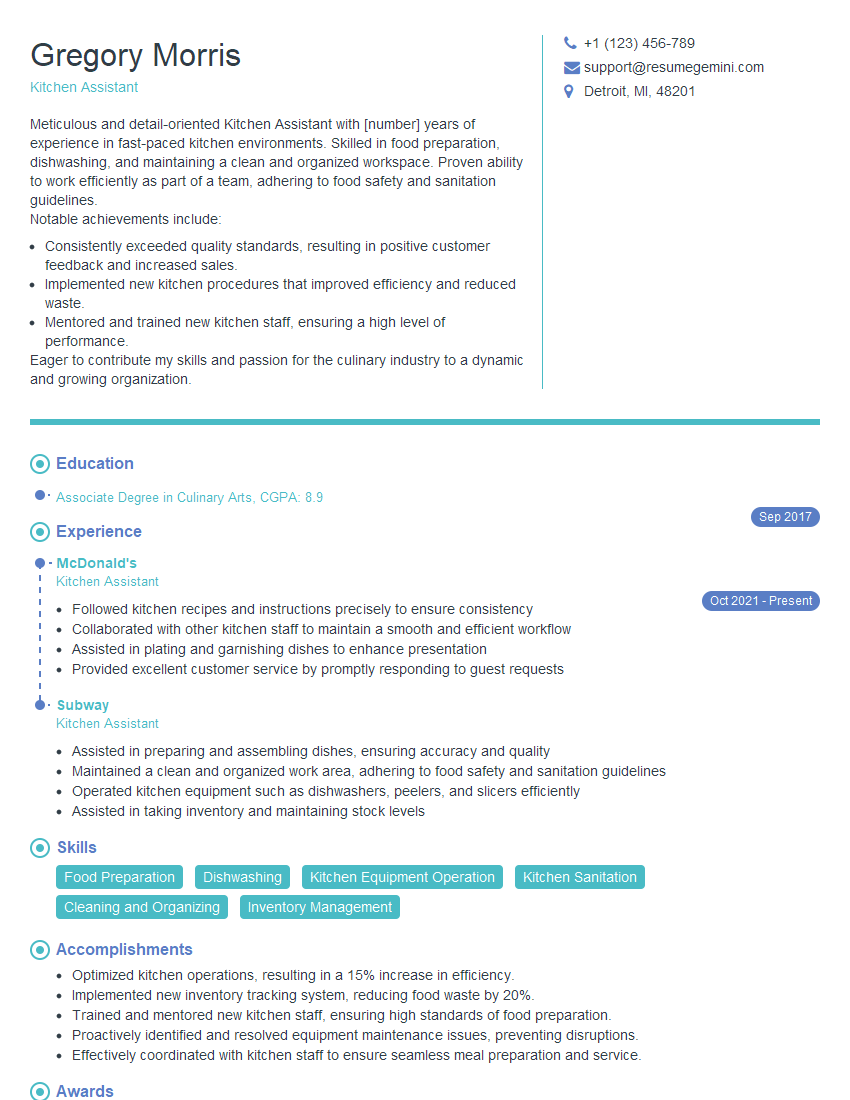
Kitchen Assistant Resume Sample
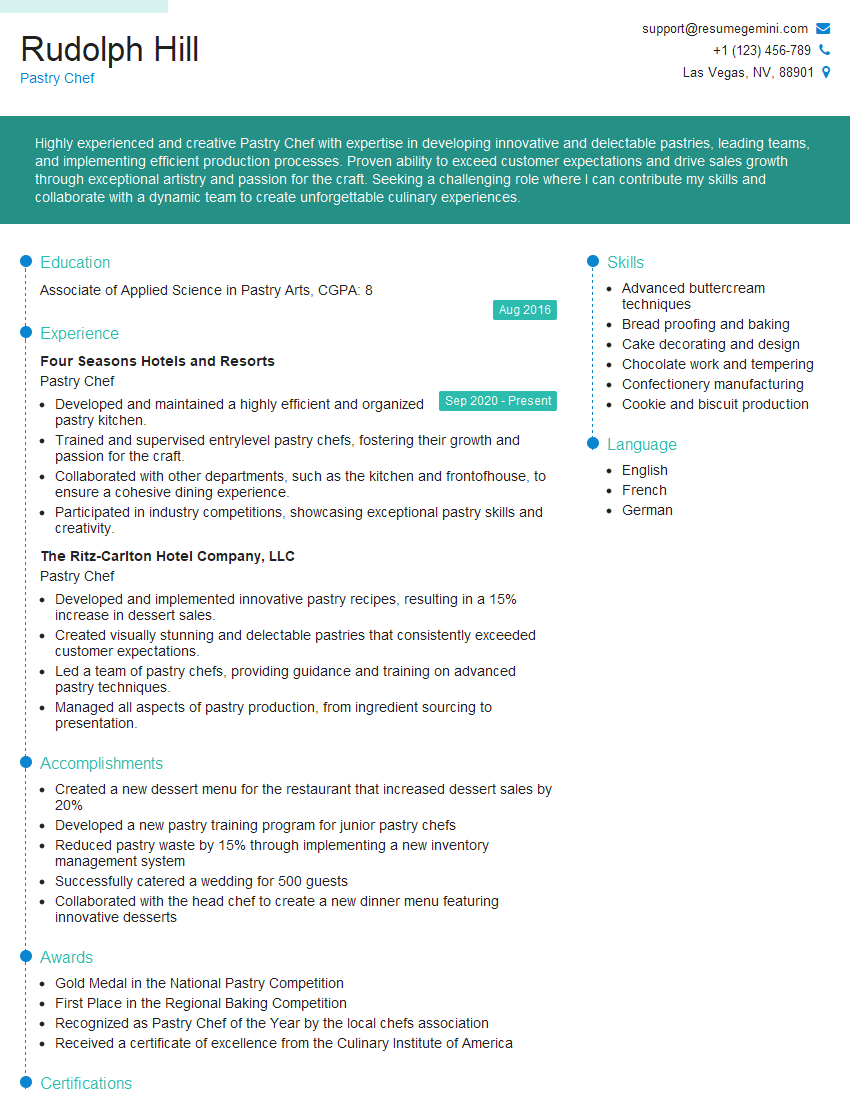
Pastry Chef Resume Sample
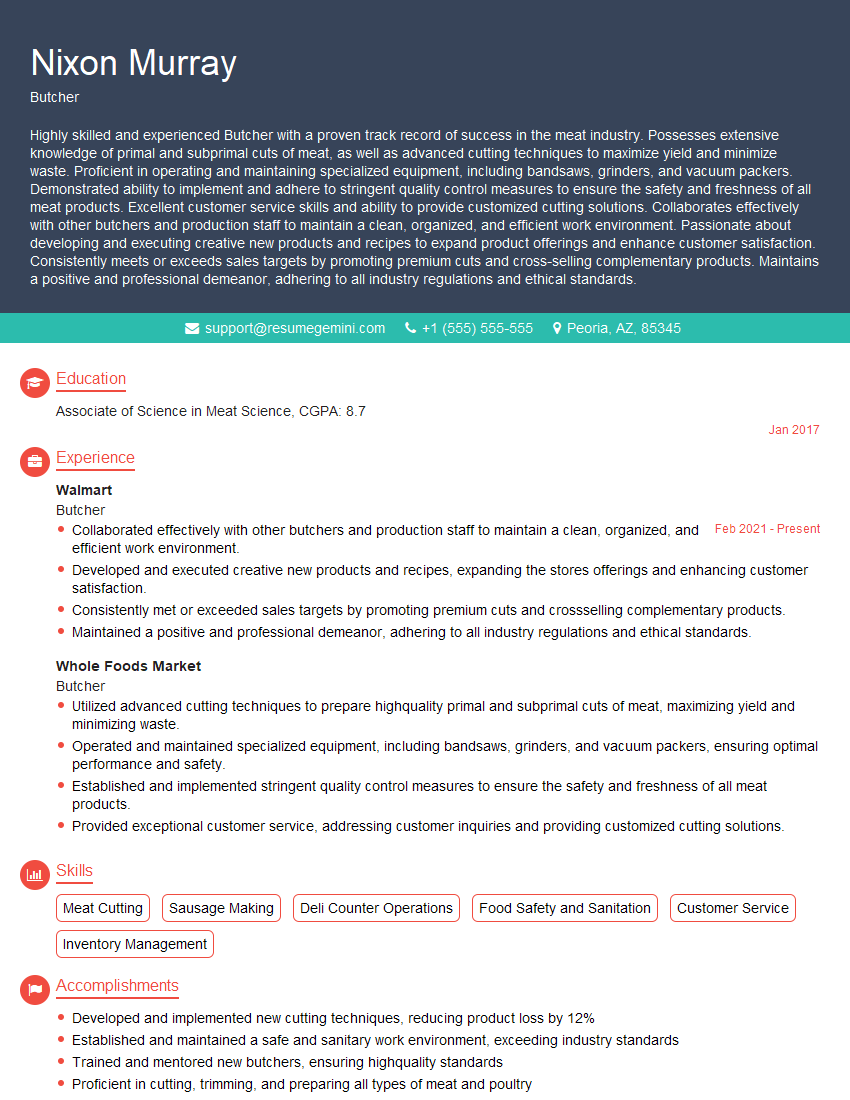
Butcher Resume Sample
Explore more articles
Users Rating of Our Blogs
Share Your Experience
We value your feedback! Please rate our content and share your thoughts (optional).
What Readers Say About Our Blog
To the interviewgemini.com Webmaster.
Very helpful and content specific questions to help prepare me for my interview!
Thank you
To the interviewgemini.com Webmaster.
This was kind of a unique content I found around the specialized skills. Very helpful questions and good detailed answers.
Very Helpful blog, thank you Interviewgemini team.