Unlock your full potential by mastering the most common Experience Working in Industrial Settings interview questions. This blog offers a deep dive into the critical topics, ensuring you’re not only prepared to answer but to excel. With these insights, you’ll approach your interview with clarity and confidence.
Questions Asked in Experience Working in Industrial Settings Interview
Q 1. Describe your experience with Lean Manufacturing principles.
Lean Manufacturing is a systematic approach to optimizing manufacturing processes by eliminating waste and maximizing value for the customer. It focuses on continuous improvement and involves a variety of tools and techniques. My experience with Lean principles includes implementing 5S methodologies (Sort, Set in Order, Shine, Standardize, Sustain) to improve workplace organization and efficiency in a previous role at a food processing plant. We saw a significant reduction in search time for materials and a considerable improvement in overall cleanliness, leading to less downtime and fewer accidents.
Further, I’ve been involved in Value Stream Mapping (VSM), where we visually analyzed the entire flow of materials and information to identify bottlenecks and areas for improvement. This involved working with cross-functional teams to understand the entire process and implement solutions to reduce lead times. For instance, by reorganizing the assembly line and implementing a Kanban system for inventory management, we reduced production lead time by 15%. I’m also proficient in Kaizen events – short, focused improvement projects that aim to solve specific problems rapidly. One example involved redesigning a packaging process, eliminating unnecessary steps and reducing material waste.
Q 2. Explain your understanding of Six Sigma methodologies.
Six Sigma is a data-driven methodology aimed at improving processes by reducing defects and variability. It uses statistical methods to identify and eliminate the root causes of defects. My understanding encompasses the DMAIC cycle (Define, Measure, Analyze, Improve, Control), a structured approach to problem-solving. In a previous project at a pharmaceutical manufacturing facility, we used Six Sigma to reduce the number of rejected batches due to contamination.
The ‘Define’ phase involved clearly identifying the problem and setting measurable goals. In the ‘Measure’ phase, we collected data on the contamination rate and identified key variables. The ‘Analyze’ phase involved using statistical tools like control charts and Pareto diagrams to pinpoint the root causes. The ‘Improve’ phase focused on implementing solutions, such as improving cleaning procedures and enhancing equipment maintenance. Finally, the ‘Control’ phase established new processes and monitoring systems to sustain the improvements. Through this project, we saw a 70% reduction in rejected batches.
Q 3. How have you improved efficiency in a previous industrial role?
In my previous role at an automotive parts supplier, I identified and eliminated a significant bottleneck in the assembly line. Through detailed time and motion studies, I discovered that a specific sub-assembly process was taking far longer than anticipated due to inefficient tooling and operator movements. I collaborated with the engineering team to design and implement a new, ergonomically-designed jig, and retrained operators on optimized assembly techniques. This resulted in a 20% increase in production output and a significant reduction in operator fatigue.
Q 4. Describe a time you resolved a complex equipment malfunction.
During my time at a chemical processing plant, a critical pump malfunctioned, threatening to halt the entire production line. My initial response was to ensure the safety of personnel by shutting down the affected area and alerting the emergency response team. Then, I systematically analyzed the problem, checking pressure gauges, reviewing logs, and conducting visual inspections of the pump and associated piping. After careful investigation, I discovered a blockage in the suction line caused by a build-up of sediment. We quickly cleared the blockage, restarted the pump, and resumed production, minimizing downtime and preventing a major production loss.
Q 5. What safety protocols are you familiar with in industrial settings?
I’m highly familiar with a wide range of safety protocols relevant to industrial settings, including LOTO (Lockout/Tagout) procedures for machine maintenance, proper use of personal protective equipment (PPE) such as safety glasses, hard hats, and steel-toed boots, confined space entry procedures, and hazard communication standards (SDS/MSDS). My experience includes conducting regular safety inspections, participating in safety training programs, and actively reporting any unsafe conditions or near misses. I firmly believe in a proactive approach to safety and always prioritize the well-being of myself and my colleagues.
Q 6. How do you handle workplace conflicts effectively?
I believe in addressing workplace conflicts promptly and professionally. My approach starts with active listening and seeking to understand all perspectives involved. I aim to create a safe space for open communication and focus on identifying the root cause of the conflict rather than assigning blame. I utilize collaborative problem-solving techniques, involving all parties in developing mutually agreeable solutions. If necessary, I utilize the established company grievance procedure, working with HR or management to resolve persistent or more serious disagreements. My goal is always to maintain a respectful and productive work environment.
Q 7. Explain your experience with preventative maintenance programs.
Preventative maintenance (PM) programs are crucial for maximizing equipment lifespan, minimizing downtime, and enhancing overall safety. My experience includes developing and implementing PM schedules based on manufacturer recommendations and historical equipment performance data. This often involves using Computerized Maintenance Management Systems (CMMS) to track maintenance activities, schedule inspections, and manage spare parts inventory. At a previous facility, I was instrumental in implementing a new CMMS, which led to a significant improvement in maintenance efficiency and a reduction in unplanned downtime by 25%. The program also involved training maintenance personnel on proper inspection and maintenance techniques, and establishing clear procedures for documenting all maintenance activities.
Q 8. Describe your experience with troubleshooting industrial control systems.
Troubleshooting industrial control systems requires a systematic approach combining technical knowledge with problem-solving skills. My experience involves identifying the root cause of malfunctions in Programmable Logic Controllers (PLCs), Human-Machine Interfaces (HMIs), and other automation components. This often involves analyzing error codes, reviewing system logs, and using diagnostic tools.
For instance, at my previous role at Acme Manufacturing, we experienced a sudden production halt due to a PLC malfunction. Instead of immediately replacing the PLC (a costly and time-consuming solution), I systematically checked the I/O signals, power supply, and communication network. I discovered a faulty sensor was sending incorrect data, triggering a safety shutdown. Replacing the sensor quickly resolved the issue, preventing significant production losses.
My process typically involves:
- Identifying the problem: Pinpointing the affected system and its symptoms.
- Data collection: Gathering information from error logs, HMIs, and sensor readings.
- Hypothesis generation: Formulating potential causes based on collected data and experience.
- Testing and verification: Systematically testing each hypothesis to identify the root cause.
- Resolution and documentation: Implementing the solution and meticulously documenting the entire troubleshooting process for future reference.
Q 9. What are your strategies for managing production schedules and deadlines?
Managing production schedules and deadlines effectively requires a blend of planning, communication, and adaptability. My strategy centers around clear communication with all stakeholders, proactive risk assessment, and a flexible approach to unforeseen circumstances.
In my experience, I’ve found that utilizing project management tools and techniques (like Gantt charts or Kanban boards) is crucial. This allows for a clear visualization of tasks, deadlines, and dependencies. For example, at Beta Industries, we used a Kanban board to manage our assembly line production. This visual system helped us prioritize tasks, track progress, and identify potential bottlenecks early on, enabling timely adjustments to maintain the production schedule.
My approach includes:
- Detailed planning: Creating a comprehensive schedule, considering all resource requirements and potential delays.
- Regular monitoring: Tracking progress against the schedule, identifying deviations and addressing them promptly.
- Proactive risk management: Identifying potential risks and developing mitigation plans.
- Effective communication: Keeping all stakeholders informed of progress, challenges, and necessary adjustments.
- Adaptability: Being flexible and adjusting the schedule as needed to accommodate unforeseen issues.
Q 10. How familiar are you with different types of industrial machinery?
My familiarity with industrial machinery encompasses a wide range of equipment, including CNC machines, robotic arms, conveyor systems, hydraulic presses, and various types of packaging machinery. My experience isn’t limited to simply operating these machines; I possess a strong understanding of their mechanical and electrical components, safety mechanisms, and maintenance requirements.
During my time at Gamma Corporation, I worked extensively with CNC milling machines. I gained hands-on experience in programming, operating, and troubleshooting these machines, including understanding the various cutting tools, tooling setups, and material handling processes. This involved understanding the nuances of different materials and their machining characteristics.
Beyond specific machine types, I understand the fundamental principles of industrial automation, including pneumatic and hydraulic systems, programmable logic controllers (PLCs), and sensor technologies. This broad understanding allows me to quickly learn and adapt to new machinery and processes.
Q 11. Explain your experience with quality control procedures and documentation.
My experience with quality control procedures and documentation involves a multi-faceted approach that encompasses both proactive measures and reactive responses to identified defects. This includes implementing and adhering to established quality standards, conducting regular inspections, and maintaining detailed records of all quality-related activities.
At Delta Solutions, I was responsible for implementing a new quality management system based on ISO 9001 standards. This involved developing and implementing procedures for inspection, testing, and documentation, as well as training staff on the new system. We utilized a comprehensive database to track non-conformances, corrective actions, and preventative measures. This ensured traceability and allowed us to identify trends and patterns to improve overall quality.
My approach typically follows these steps:
- Defining quality standards: Establishing clear and measurable quality standards based on industry best practices and customer requirements.
- Implementing inspection procedures: Developing and implementing detailed inspection procedures for various stages of the production process.
- Testing and analysis: Conducting regular tests and analyses to assess product quality and identify areas for improvement.
- Documentation: Maintaining comprehensive records of all quality-related activities, including inspection reports, test results, and corrective actions.
- Continuous improvement: Continuously evaluating quality control procedures and making necessary adjustments to improve efficiency and effectiveness.
Q 12. How do you ensure compliance with industry regulations and safety standards?
Ensuring compliance with industry regulations and safety standards is paramount in industrial settings. My approach emphasizes proactive compliance through thorough understanding of relevant regulations, implementing robust safety procedures, and providing comprehensive training to employees.
My experience includes working with OSHA (Occupational Safety and Health Administration) regulations in the US and similar standards internationally. This involves understanding and adhering to guidelines concerning machine guarding, lockout/tagout procedures, personal protective equipment (PPE), and hazard communication. At Epsilon Manufacturing, I led the implementation of a new safety management system, which included regular safety audits and employee training programs. We documented all safety procedures meticulously and ensured that all employees were aware of and followed the established safety protocols.
My strategy includes:
- Staying updated: Keeping abreast of changes and updates in industry regulations and safety standards.
- Risk assessments: Conducting regular risk assessments to identify and mitigate potential hazards.
- Safety training: Providing comprehensive safety training to all employees.
- Enforcement: Ensuring consistent enforcement of safety rules and procedures.
- Documentation: Maintaining detailed records of all safety-related activities.
Q 13. Describe your experience with inventory management in an industrial setting.
Inventory management in an industrial setting requires careful planning, organization, and efficient tracking to ensure the availability of necessary materials while minimizing storage costs and waste. My experience involves using various inventory management systems and techniques to optimize stock levels and minimize storage costs.
At Zeta Industries, I implemented a just-in-time (JIT) inventory system, which significantly reduced our storage costs and minimized waste. This involved close collaboration with suppliers to ensure timely delivery of materials and a precise understanding of production demands. We used software to track inventory levels in real-time, allowing for proactive ordering and preventing stockouts.
My approach incorporates:
- Inventory tracking: Utilizing appropriate software or systems to track inventory levels accurately.
- Demand forecasting: Analyzing historical data and market trends to predict future demand.
- Inventory optimization: Determining optimal stock levels to meet demand while minimizing storage costs.
- Supplier management: Establishing strong relationships with suppliers to ensure timely delivery of materials.
- Waste reduction: Implementing strategies to minimize waste and spoilage.
Q 14. Explain your understanding of supply chain management within an industrial context.
Supply chain management in an industrial context encompasses the entire process of getting raw materials to the end consumer, involving sourcing, procurement, production, logistics, and distribution. My understanding extends beyond individual components to encompass the overall optimization of the entire supply chain for maximum efficiency and cost-effectiveness.
At Eta Corporation, I was involved in streamlining our supply chain by implementing a vendor-managed inventory (VMI) system. This improved communication and collaboration with key suppliers, allowing them to manage our inventory levels directly, which resulted in reduced lead times and inventory costs. We also integrated our inventory management system with our ERP (Enterprise Resource Planning) system, providing a real-time view of the entire supply chain.
Key aspects of my understanding include:
- Sourcing and procurement: Identifying and selecting reliable suppliers, negotiating favorable terms, and managing procurement processes.
- Production planning: Coordinating production schedules with material availability and demand forecasts.
- Logistics and distribution: Managing the transportation and warehousing of materials and finished goods.
- Risk management: Identifying and mitigating potential risks within the supply chain, such as supplier disruptions or transportation delays.
- Performance monitoring: Regularly monitoring and analyzing key performance indicators (KPIs) to identify areas for improvement.
Q 15. How do you prioritize tasks in a fast-paced industrial environment?
Prioritizing tasks in a fast-paced industrial environment requires a structured approach. Think of it like a conductor leading an orchestra – every instrument (task) needs to play its part at the right time to create a harmonious whole (efficient production). I typically use a combination of methods:
- Urgency and Importance Matrix (Eisenhower Matrix): This helps categorize tasks based on urgency and importance. Urgent and important tasks get immediate attention; important but not urgent tasks are scheduled; urgent but not important tasks are delegated if possible; and neither urgent nor important tasks are eliminated or postponed.
- Work Breakdown Structure (WBS): For complex projects, breaking down large tasks into smaller, manageable components allows for better prioritization and tracking of progress. This provides a clear path to achieving the overall objective.
- Production Schedule Alignment: I always align my tasks with the overall production schedule. This ensures that my work directly supports the manufacturing process and helps prevent bottlenecks. For example, if a critical machine is scheduled for maintenance, I prioritize tasks that enable the repair or replacement to proceed swiftly.
- Visual Management Tools: Kanban boards or similar visual aids help visualize the workflow and identify potential delays or roadblocks, allowing for proactive adjustments to the task priority.
In a recent project involving a major equipment failure, using the Eisenhower Matrix allowed me to quickly identify and address the critical repairs (urgent and important), while delegating less critical tasks (urgent but not important) to other team members. This ensured a swift return to full production capacity.
Career Expert Tips:
- Ace those interviews! Prepare effectively by reviewing the Top 50 Most Common Interview Questions on ResumeGemini.
- Navigate your job search with confidence! Explore a wide range of Career Tips on ResumeGemini. Learn about common challenges and recommendations to overcome them.
- Craft the perfect resume! Master the Art of Resume Writing with ResumeGemini’s guide. Showcase your unique qualifications and achievements effectively.
- Don’t miss out on holiday savings! Build your dream resume with ResumeGemini’s ATS optimized templates.
Q 16. Describe your experience with using Computerized Maintenance Management Systems (CMMS).
My experience with Computerized Maintenance Management Systems (CMMS) is extensive. I’ve used several different CMMS platforms, including SAP PM and IBM Maximo, to manage preventive and corrective maintenance within industrial settings. These systems are invaluable for optimizing maintenance processes.
In my previous role, we used a CMMS to:
- Schedule Preventive Maintenance (PM): The system automated the scheduling of routine maintenance tasks, reducing downtime and extending equipment lifespan. For instance, we scheduled lubrication, inspection, and cleaning based on manufacturer’s recommendations and operational data.
- Track Work Orders: We used the CMMS to create, assign, and track work orders, ensuring accountability and timely completion of repairs. This also allowed for efficient reporting of maintenance activities.
- Manage Inventory: The system helped manage spare parts inventory by tracking usage and automatically generating re-ordering requests when stock levels fell below a predetermined threshold. This prevented costly delays due to missing parts.
- Analyze Maintenance Data: We leveraged the CMMS’s reporting capabilities to analyze maintenance data, identifying recurring issues and areas for improvement in preventive maintenance strategies. This data-driven approach significantly reduced our overall maintenance costs.
For example, by analyzing CMMS data, we identified a recurring problem with a specific conveyor belt. By proactively scheduling preventative maintenance based on the data, we significantly reduced downtime and repair costs associated with that specific belt.
Q 17. How do you collaborate with cross-functional teams in an industrial setting?
Collaboration is key in an industrial setting. Think of it like a sports team; each player (team member) has a specific role, but the success of the game (project) depends on effective teamwork. I’ve successfully collaborated with various cross-functional teams, including engineering, maintenance, production, and quality control.
My approach involves:
- Clear Communication: I ensure clear and consistent communication through regular meetings, email updates, and progress reports. This includes actively listening to others’ perspectives and ensuring everyone understands the project goals and their individual roles.
- Shared Goals and Objectives: Aligning everyone on common goals and objectives is crucial for effective collaboration. This helps focus the team’s energy and resources on achieving a shared vision.
- Conflict Resolution: Disagreements are inevitable; my approach involves active listening, finding common ground, and focusing on solutions rather than assigning blame. I facilitate open discussion and encourage the team to find the best path forward.
- Respect for Diverse Expertise: I value and leverage the diverse expertise within the team. I actively seek input from different disciplines, recognizing that everyone brings unique insights and perspectives to the table.
During a recent project involving the implementation of a new production line, I collaborated closely with engineering, procurement, and production teams. By fostering open communication and ensuring clear roles, we successfully launched the new line ahead of schedule and under budget.
Q 18. Explain your experience with root cause analysis and problem-solving techniques.
Root cause analysis (RCA) is crucial for effective problem-solving in industrial settings. It’s like being a detective, carefully investigating a crime scene (equipment failure or process issue) to find the culprit (root cause).
I have extensive experience using various RCA techniques, including:
- 5 Whys: This simple yet effective technique involves repeatedly asking “why” to uncover the underlying cause of a problem. It helps peel back layers of superficial explanations to reach the root cause.
- Fishbone Diagram (Ishikawa Diagram): This visual tool helps organize potential causes categorized by factors like people, methods, machines, materials, environment, and measurement. It facilitates brainstorming and identifying potential root causes.
- Fault Tree Analysis (FTA): This is a more complex technique used for analyzing complex systems. It visually maps out the different ways a system can fail, helping identify the root causes of potential failures.
In one instance, we experienced repeated failures of a specific component on a manufacturing machine. By using the 5 Whys technique, we identified that the root cause was insufficient lubrication, which was caused by a faulty lubrication system. Addressing the lubrication system issue completely solved the recurring component failures.
Q 19. What is your experience with implementing process improvements in an industrial environment?
Implementing process improvements in industrial environments requires a structured and data-driven approach. It’s about continuously optimizing the workflow to improve efficiency, reduce costs, and enhance quality. I’ve implemented numerous process improvements, often using Lean manufacturing principles.
My approach involves:
- Identifying Areas for Improvement: This often involves analyzing production data, identifying bottlenecks, and observing the workflow to pinpoint areas where improvements can be made.
- Developing Solutions: Based on the identified areas for improvement, I develop specific solutions using techniques like Value Stream Mapping, Kaizen events, and Six Sigma methodologies.
- Implementing and Testing: The implementation phase requires careful planning and execution. Testing and monitoring the impact of the implemented changes is critical to assess their effectiveness.
- Continuous Improvement: Process improvement is an ongoing process. Continuous monitoring and analysis of results provide feedback for further improvements and adjustments.
In one project, we implemented a Kanban system to manage work-in-progress on a production line. This led to a significant reduction in lead times and a decrease in inventory. The success of this initiative was due to careful planning, team collaboration, and continuous monitoring of the system’s performance.
Q 20. How familiar are you with different types of industrial automation technologies?
I’m familiar with a wide range of industrial automation technologies. My experience spans various types of automation, from basic programmable logic controllers (PLCs) to advanced robotics and supervisory control and data acquisition (SCADA) systems.
My knowledge includes:
- Programmable Logic Controllers (PLCs): I’m proficient in programming PLCs using various programming languages (e.g., ladder logic) to control automated machinery and processes.
- Robotics: I have experience working with industrial robots, including their programming, integration, and maintenance. I understand different types of robots (e.g., articulated robots, SCARA robots) and their applications in various industrial processes.
- Supervisory Control and Data Acquisition (SCADA): I’m familiar with SCADA systems for monitoring and controlling industrial processes. This includes data acquisition, visualization, and alarm management.
- Human-Machine Interfaces (HMIs): I’m experienced in using and configuring HMIs for operator interaction with automated systems. This includes designing intuitive interfaces for effective and safe operation.
- Industrial Networks: I understand the use of industrial communication protocols such as Ethernet/IP, Profibus, and Profinet in automated systems.
In a recent project, I assisted in the integration of a new robotic system onto a production line. My knowledge of PLC programming and robotic systems enabled me to successfully integrate the robot, improving the line’s efficiency and reducing labor costs.
Q 21. Describe your experience with using data analytics to improve industrial processes.
Data analytics plays a crucial role in improving industrial processes. Think of it as having a powerful magnifying glass that allows you to see patterns and trends in your operations that you might otherwise miss.
My experience with using data analytics includes:
- Data Collection and Processing: I have experience collecting data from various sources, including PLCs, SCADA systems, and manufacturing execution systems (MES). I’m proficient in using data processing techniques to clean, transform, and prepare data for analysis.
- Statistical Analysis: I utilize statistical methods (e.g., regression analysis, ANOVA) to identify correlations and trends in data, gaining insights into process performance and identifying areas for improvement.
- Predictive Maintenance: I’ve used data analytics to predict potential equipment failures, allowing for proactive maintenance scheduling and reducing downtime. This often involves implementing machine learning algorithms.
- Process Optimization: I’ve used data analysis to optimize various industrial processes, including production scheduling, inventory management, and quality control. This often involves identifying and eliminating bottlenecks.
In one project, by analyzing production data, we identified a correlation between ambient temperature and the rate of defects in a particular process. By controlling the ambient temperature, we were able to significantly reduce the defect rate, saving the company considerable money.
Q 22. How do you ensure the accuracy and reliability of industrial data collection?
Ensuring accurate and reliable industrial data collection is paramount for effective decision-making and process optimization. It involves a multi-faceted approach encompassing data acquisition, validation, and analysis.
- Data Acquisition: We need to select appropriate sensors and instrumentation based on the specific data required (temperature, pressure, flow rate, etc.). Calibration and regular maintenance of these instruments are crucial to minimizing errors. For example, a temperature sensor needs regular calibration against a known standard to ensure its readings are accurate. Poorly maintained equipment can lead to significant inaccuracies.
- Data Validation: Raw data is rarely perfect. Validation involves checking for outliers, inconsistencies, and errors. This might involve using statistical process control (SPC) techniques, such as control charts, to identify anomalies. For instance, if a sensor suddenly reports a temperature far outside the expected range, it’s flagged for investigation; it could be a malfunctioning sensor or a genuine process event. Data logging software often includes built-in validation checks.
- Data Analysis: Once validated, data needs analysis to extract meaningful insights. This often involves using data analytics tools and techniques, such as trend analysis, regression analysis, and predictive modeling, to identify patterns and predict future performance. For example, analyzing historical production data can help predict potential equipment failures and schedule preventative maintenance, reducing downtime.
- Redundancy and Cross-Validation: Employing multiple sensors measuring the same parameter provides redundancy and allows for cross-validation of data, improving confidence in the accuracy of measurements. If one sensor fails, the others provide backup data.
Implementing robust data management procedures, including clear data documentation and version control, ensures data integrity and traceability. Data security is another vital consideration; access control and data encryption are essential to protect sensitive industrial data.
Q 23. Explain your understanding of different manufacturing processes (e.g., injection molding, machining).
My experience encompasses a variety of manufacturing processes. I’m familiar with:
- Injection Molding: This process involves injecting molten plastic into a mold cavity to create parts. I understand the importance of controlling parameters like injection pressure, temperature, and cooling time to achieve the desired part quality and dimensional accuracy. I’ve been involved in troubleshooting issues related to short shots, sink marks, and warping in molded parts. Improving cycle times and reducing material waste are also key considerations.
- Machining: This involves removing material from a workpiece to create a desired shape and dimensions. My experience includes working with different machining processes such as milling, turning, drilling, and grinding. I understand the importance of selecting appropriate cutting tools, speeds, and feeds to achieve the required surface finish and tolerances. I’ve worked on projects involving CNC machining, requiring programming and setup skills.
- Other Processes: In addition to injection molding and machining, I’ve also worked with processes such as stamping, welding, and assembly. Each process has its own unique challenges and requires a deep understanding of material properties, tooling, and process parameters.
Understanding these processes involves not only the technical aspects but also the economics. I can analyze process efficiency, identify bottlenecks, and suggest improvements to reduce costs and increase productivity. This includes optimizing material usage and minimizing waste.
Q 24. How do you manage risk and mitigate potential hazards in an industrial setting?
Risk management in an industrial setting is critical for ensuring worker safety, protecting equipment, and preventing costly disruptions. My approach involves a proactive and systematic methodology:
- Hazard Identification: This involves identifying potential hazards through methods like Job Safety Analysis (JSA), HAZOP (Hazard and Operability Study), and regular safety inspections. For example, identifying potential pinch points on machinery or risks associated with handling hazardous materials.
- Risk Assessment: Once hazards are identified, a risk assessment determines the likelihood and severity of each hazard. This often involves a matrix that categorizes risks as high, medium, or low.
- Risk Mitigation: Based on the risk assessment, appropriate control measures are implemented. These can include engineering controls (e.g., guarding machinery, installing safety interlocks), administrative controls (e.g., safety training, work permits), and personal protective equipment (PPE) (e.g., safety glasses, gloves, hearing protection). For instance, implementing lockout/tagout procedures for maintenance to prevent accidental starts of machinery.
- Monitoring and Review: Risk management isn’t a one-time event; it requires ongoing monitoring and review. Regular safety audits and incident investigations are essential to identify areas for improvement and update control measures. Incident reports are crucial for learning from mistakes and preventing recurrences.
Following established safety protocols and regulations, such as OSHA guidelines, is crucial. Regular safety training and communication are also key to building a safety-conscious culture within the team.
Q 25. What is your experience with budgeting and cost control in an industrial environment?
My experience with budgeting and cost control in industrial environments is extensive. I’ve been involved in all stages of the budget cycle, from planning and forecasting to monitoring and reporting. I utilize various techniques:
- Cost Estimation: Developing accurate cost estimates for projects and processes involves meticulous analysis of material costs, labor costs, overhead, and potential contingencies. I leverage historical data and industry benchmarks to improve accuracy. Using software tools for cost estimation provides better accuracy and reporting.
- Budget Tracking and Control: Monitoring actual spending against the budget is crucial for identifying variances and taking corrective actions. This involves regular reviews of financial reports and proactive communication with stakeholders to address potential cost overruns.
- Cost Reduction Strategies: Identifying opportunities for cost reduction is an ongoing process. This might involve negotiating better prices with suppliers, improving process efficiency, reducing material waste, or implementing energy-saving measures.
- Variance Analysis: Regular variance analysis helps to understand the reasons behind cost differences between the budget and actual spending. This data is crucial for improving budgeting accuracy in the future. For example, tracking overtime hours or material yield variations.
My experience includes working with various budgeting software and reporting systems. I am adept at presenting financial information clearly and concisely to management and stakeholders, enabling data-driven decision making.
Q 26. Describe your experience with training and mentoring junior team members.
Training and mentoring junior team members is a significant part of my role. I believe in a hands-on, collaborative approach:
- On-the-Job Training: I guide junior team members through real-world tasks, providing support and feedback. This includes demonstrating proper techniques, explaining safety procedures, and answering questions.
- Formal Training Programs: I participate in designing and delivering formal training programs to provide a structured learning experience. This might include safety training, equipment operation, or software usage.
- Mentorship: I provide ongoing support and guidance to junior team members, helping them develop their skills and confidence. This involves regular check-ins, providing constructive feedback, and offering opportunities for professional development.
- Performance Feedback: I provide regular performance feedback to team members, identifying areas for improvement and celebrating their successes. This feedback is always constructive and focused on growth.
I believe in fostering a supportive learning environment where junior team members feel comfortable asking questions and seeking help. My goal is to help them grow into skilled and confident professionals.
Q 27. Explain your experience with project management methodologies in industrial projects.
My experience encompasses several project management methodologies, primarily Agile and Waterfall, adapted to the specifics of industrial projects.
- Waterfall Methodology: In situations with well-defined requirements and minimal anticipated changes, the Waterfall approach with its sequential phases (initiation, planning, execution, monitoring and controlling, closure) provides a structured framework. For example, a large-scale automation project with detailed specifications might benefit from this approach. Clear documentation and sign-offs are essential.
- Agile Methodology: For projects with evolving requirements and a need for flexibility, Agile, with its iterative development cycles (sprints) and emphasis on collaboration and continuous feedback, is more appropriate. A project involving the integration of new technology into an existing production line would likely benefit from an Agile approach, allowing for adjustments along the way. Daily stand-up meetings and sprint reviews ensure constant monitoring.
- Lean Principles: Regardless of the chosen methodology, incorporating Lean principles—eliminating waste, optimizing processes, and improving efficiency—is always beneficial in industrial projects. This involves identifying and addressing bottlenecks and optimizing workflows to reduce lead times and costs.
My project management skills include planning, scheduling, budgeting, resource allocation, risk management, and communication. I’m proficient in using project management software (e.g., MS Project) and tools to track progress, manage resources, and monitor budgets. Effective communication with all stakeholders is vital, ensuring everyone is informed and aligned.
Q 28. How do you stay up-to-date with the latest advancements in industrial technology?
Staying current with advancements in industrial technology is essential for remaining competitive and improving efficiency. I utilize several methods:
- Industry Publications and Journals: I regularly read industry publications and journals to stay informed about new technologies and trends. This includes publications focused on specific areas like automation, robotics, and process control.
- Conferences and Trade Shows: Attending industry conferences and trade shows provides opportunities to network with peers, learn about new technologies firsthand, and see demonstrations of new equipment.
- Online Resources and Webinars: Numerous online resources, webinars, and online courses offer valuable information on new technologies and best practices. Many vendors also offer training and informational sessions.
- Professional Organizations: Membership in professional organizations provides access to networking events, conferences, and publications. These organizations often host webinars and online forums focused on specific technologies.
- Hands-on Experience: Where possible, I seek hands-on experience with new technologies through pilot projects or training programs. This ensures I gain a practical understanding and can effectively evaluate the applicability to our specific needs.
Continuous learning is a commitment; I believe that staying ahead of the curve requires an ongoing investment of time and effort. This approach ensures that I can contribute effectively and suggest innovative solutions within the industry.
Key Topics to Learn for Experience Working in Industrial Settings Interview
- Safety Procedures and Regulations: Understanding and adhering to OSHA regulations, lockout/tagout procedures, and personal protective equipment (PPE) requirements. This includes practical application of these procedures in various industrial settings.
- Equipment Operation and Maintenance: Demonstrating knowledge of operating and maintaining industrial machinery, including troubleshooting common issues and performing preventative maintenance. This could involve discussing specific equipment you’ve used and the challenges you’ve overcome.
- Quality Control and Assurance: Explaining your experience with quality control measures, identifying defects, and contributing to process improvement. This includes understanding the importance of documentation and adherence to quality standards.
- Teamwork and Collaboration: Highlighting your ability to work effectively in team environments, following instructions, and contributing to overall project success in a fast-paced industrial setting.
- Problem-Solving and Troubleshooting: Describing your approach to identifying and resolving technical issues, demonstrating analytical skills, and quick thinking in high-pressure situations. Consider using the STAR method (Situation, Task, Action, Result) to illustrate your problem-solving abilities.
- Production Processes and Efficiency: Understanding various production processes, identifying bottlenecks, and suggesting improvements for increased efficiency and productivity. This includes understanding Lean Manufacturing principles or similar methodologies.
- Data Collection and Analysis: Demonstrating experience with collecting, analyzing, and interpreting data related to production processes, equipment performance, or safety metrics. This might include using spreadsheets or basic statistical analysis.
Next Steps
Mastering the nuances of experience in industrial settings is crucial for career advancement. It demonstrates your practical skills, safety consciousness, and ability to thrive in demanding environments. To significantly improve your job prospects, create an ATS-friendly resume that highlights these key skills effectively. ResumeGemini is a trusted resource that can help you build a professional and impactful resume, ensuring your qualifications are presented in the best possible light. Examples of resumes tailored to showcasing experience in industrial settings are available to further guide you.
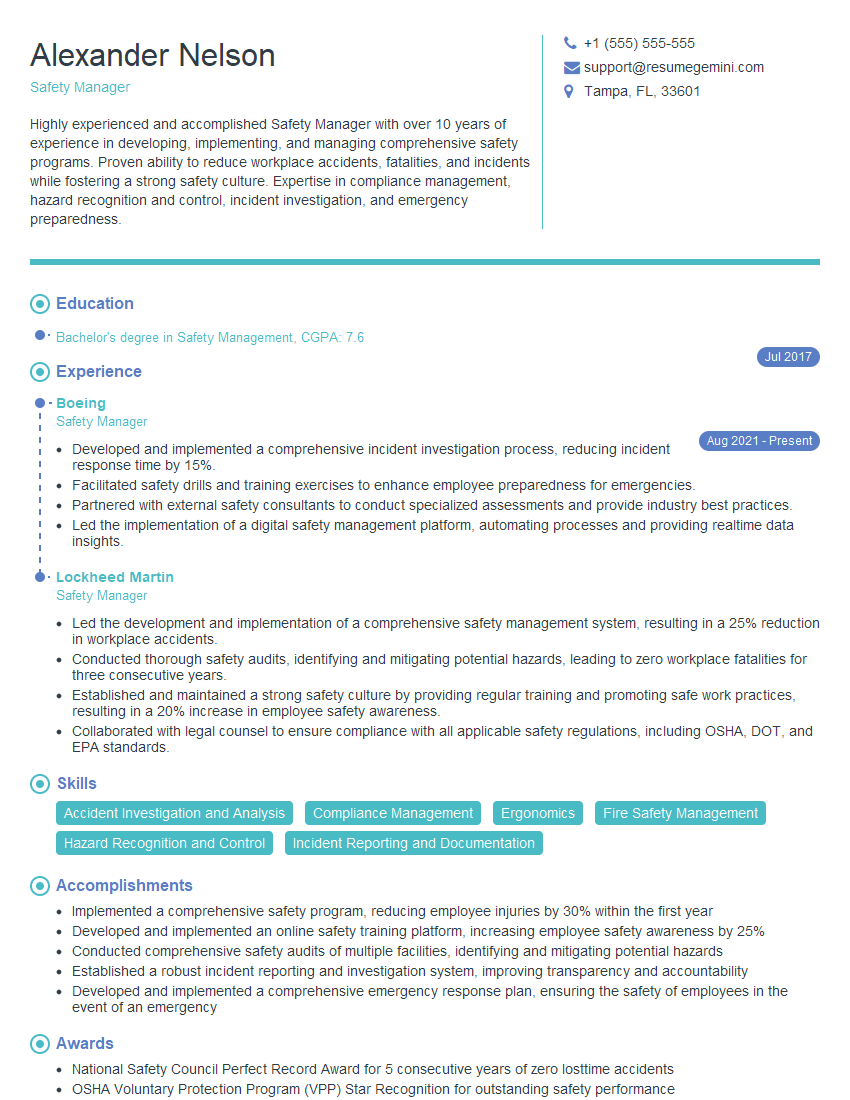
Safety Manager Resume Sample
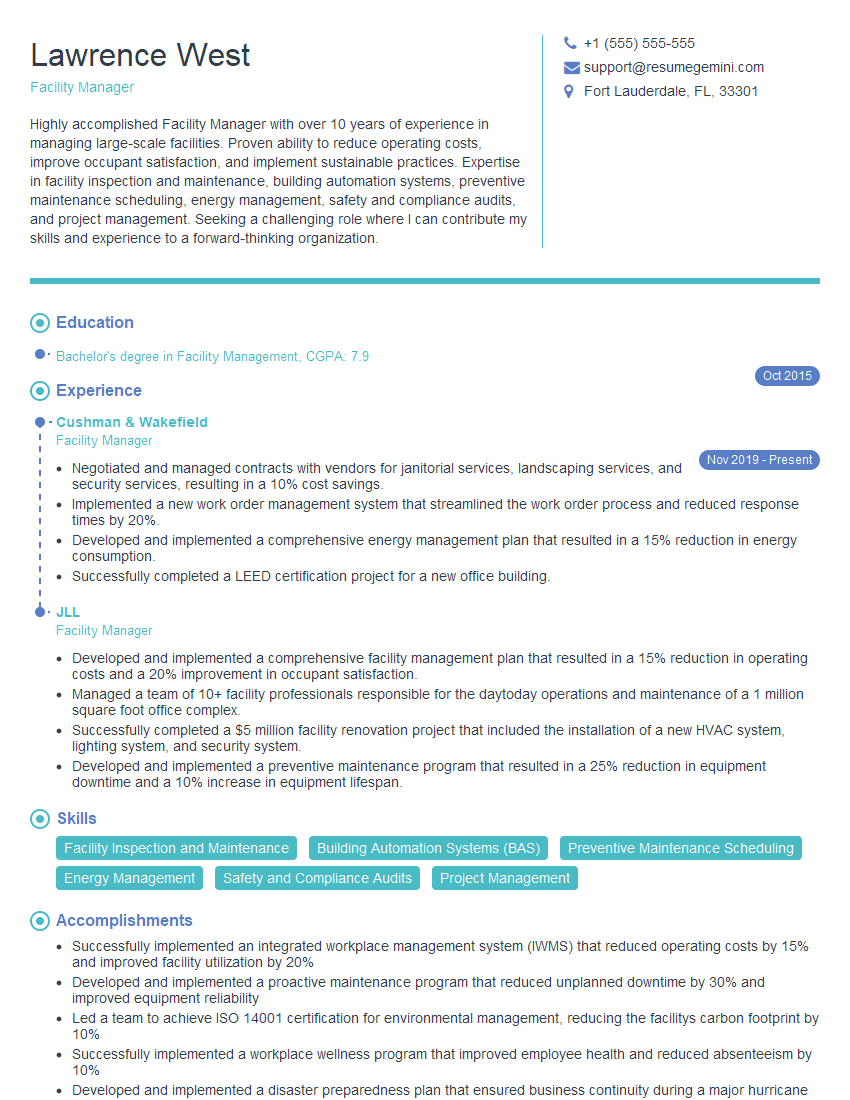
Facility Manager Resume Sample

Operations Manager Resume Sample
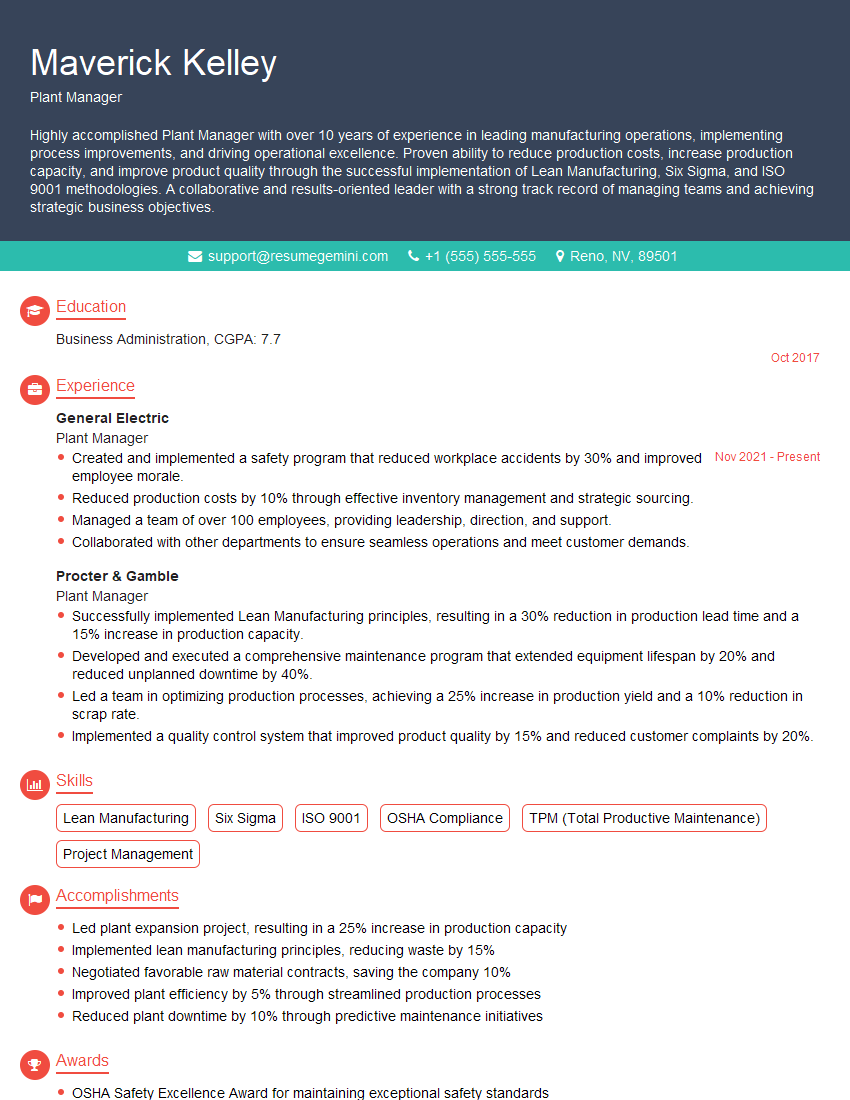
Plant Manager Resume Sample
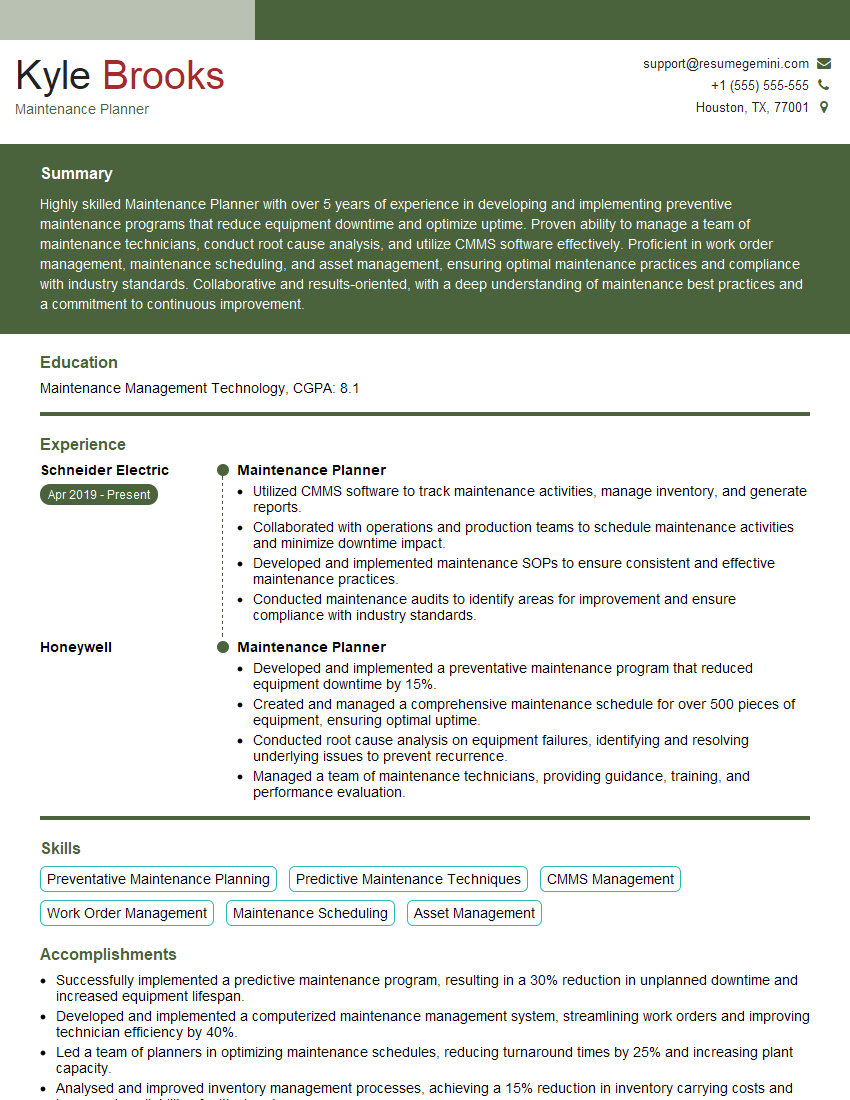
Maintenance Planner Resume Sample
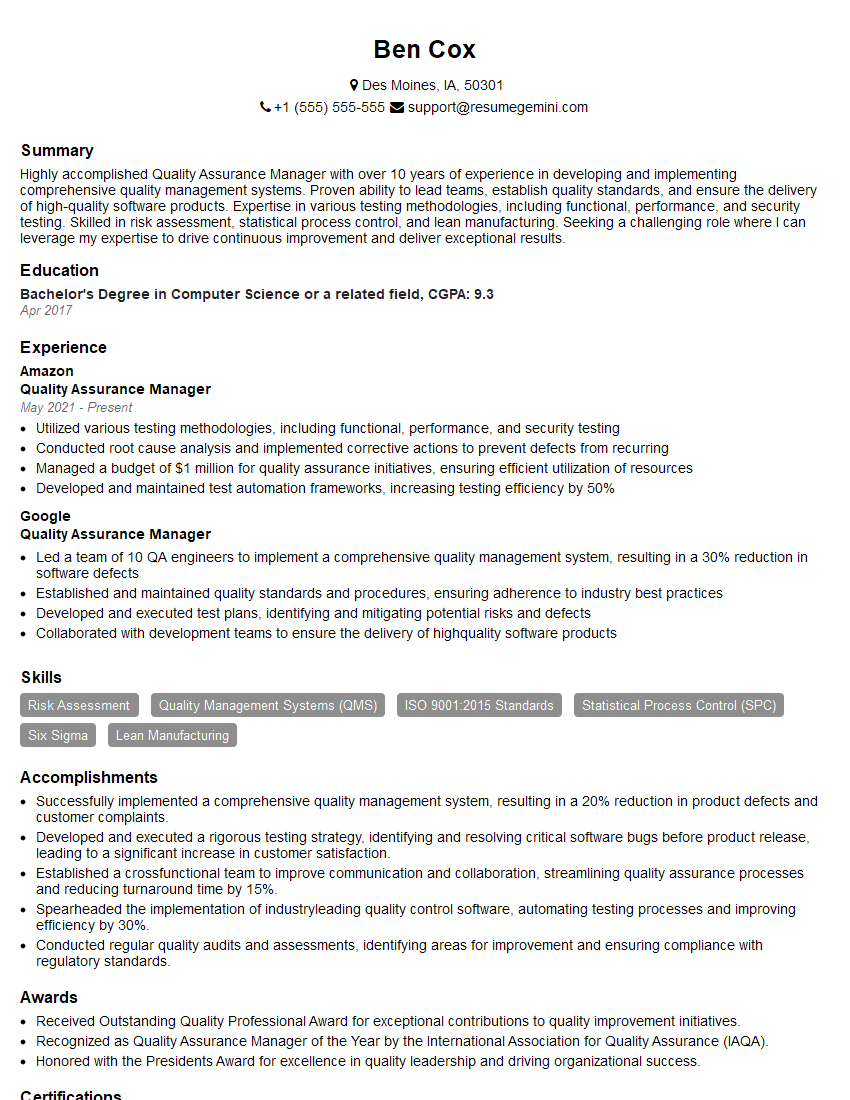
Quality Assurance Manager Resume Sample
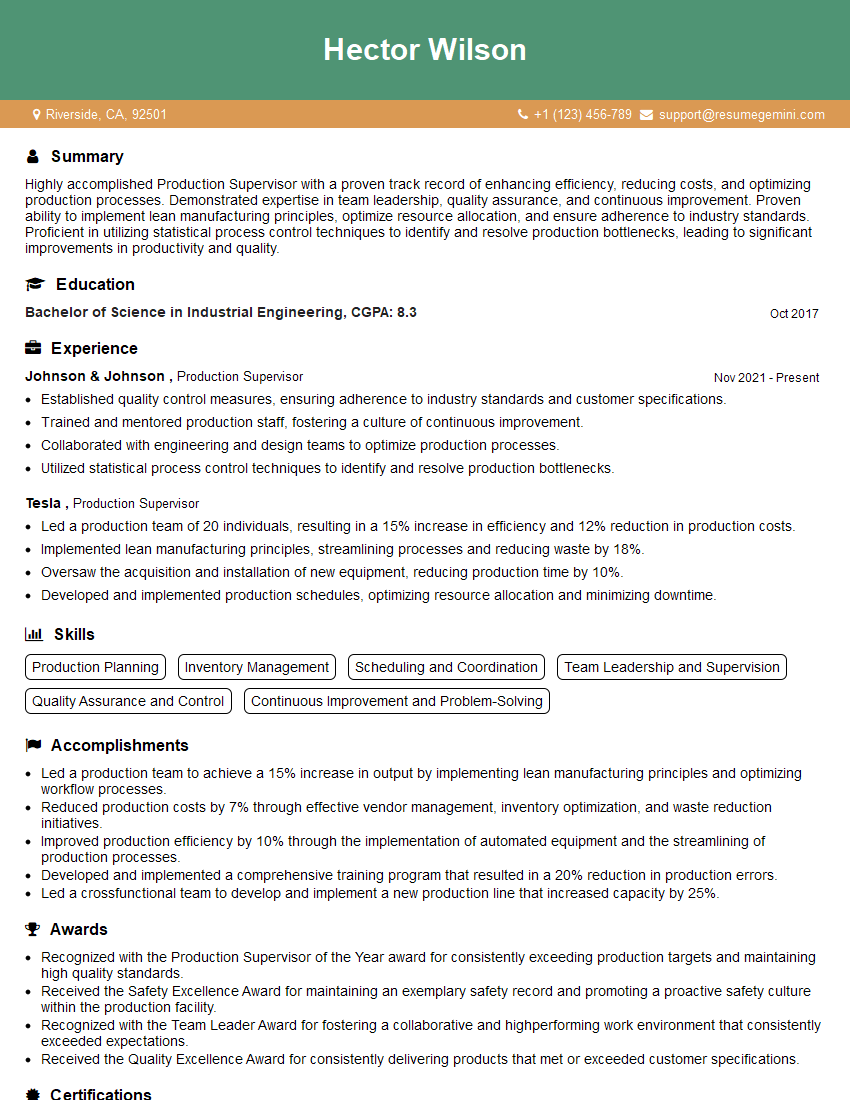
Production Supervisor Resume Sample

Supply Chain Manager Resume Sample
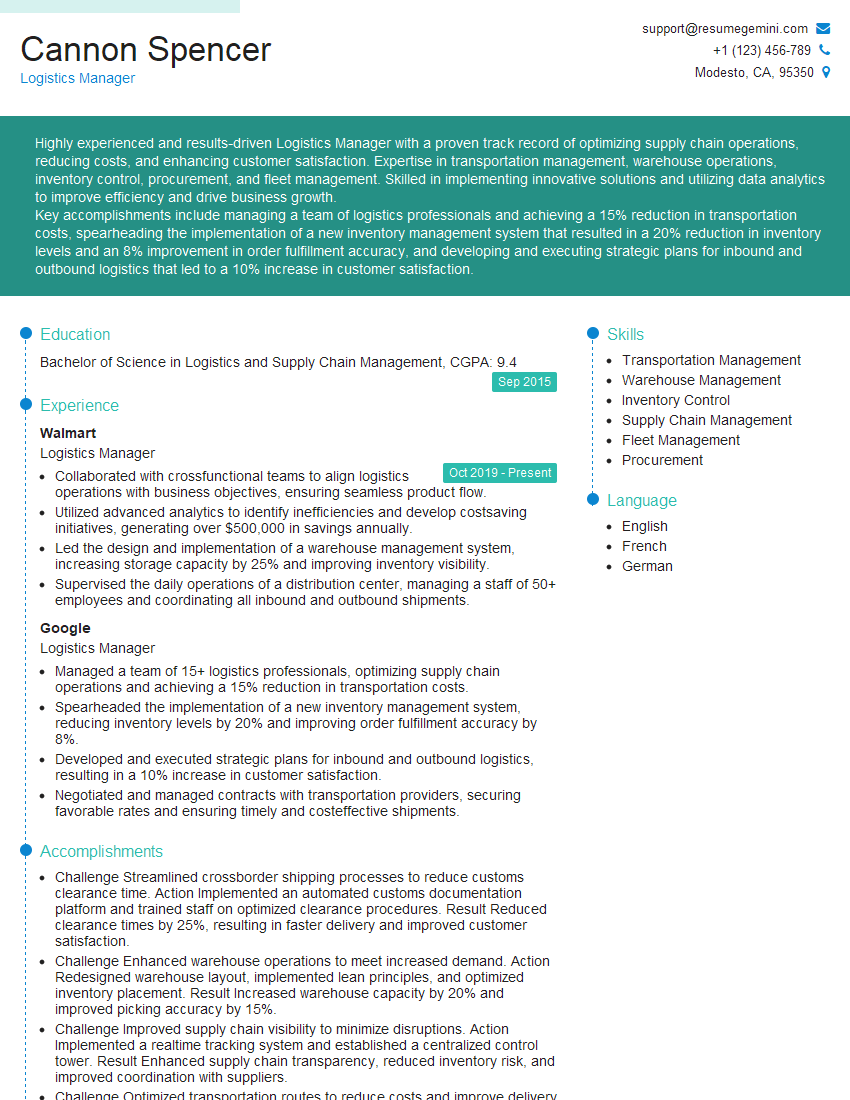
Logistics Manager Resume Sample
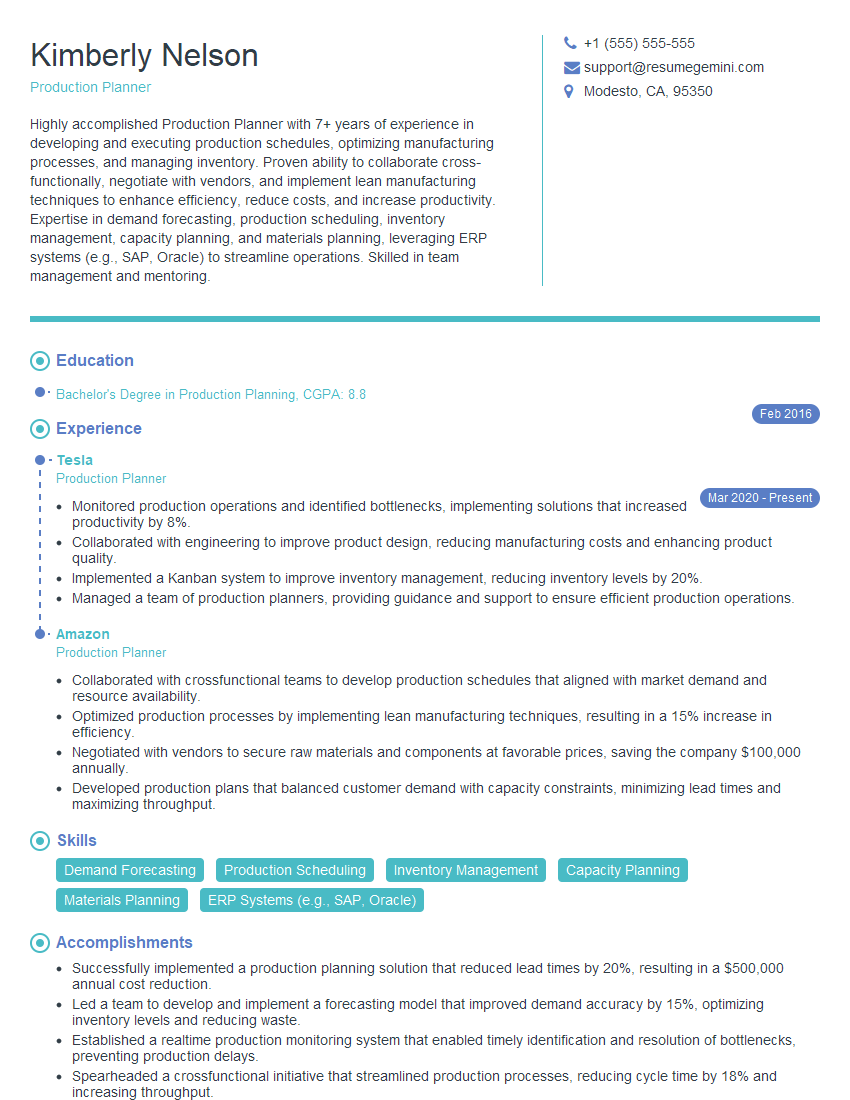
Production Planner Resume Sample
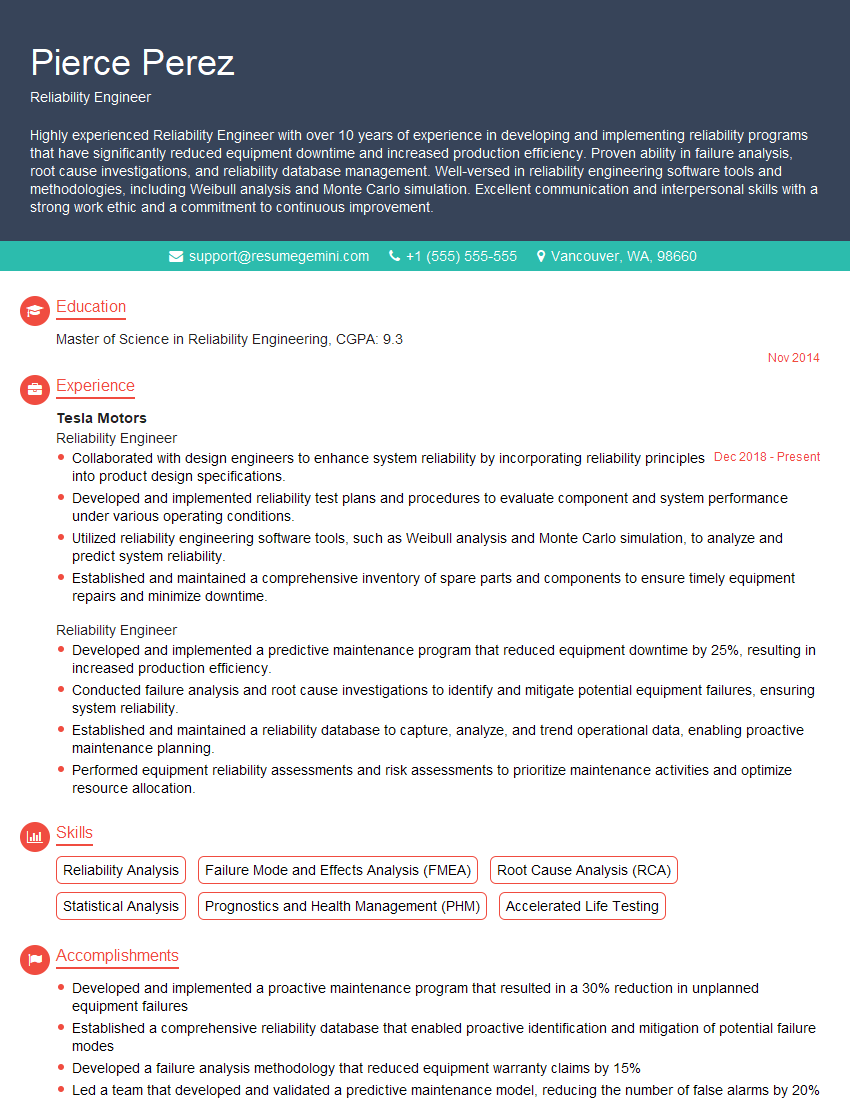
Reliability Engineer Resume Sample
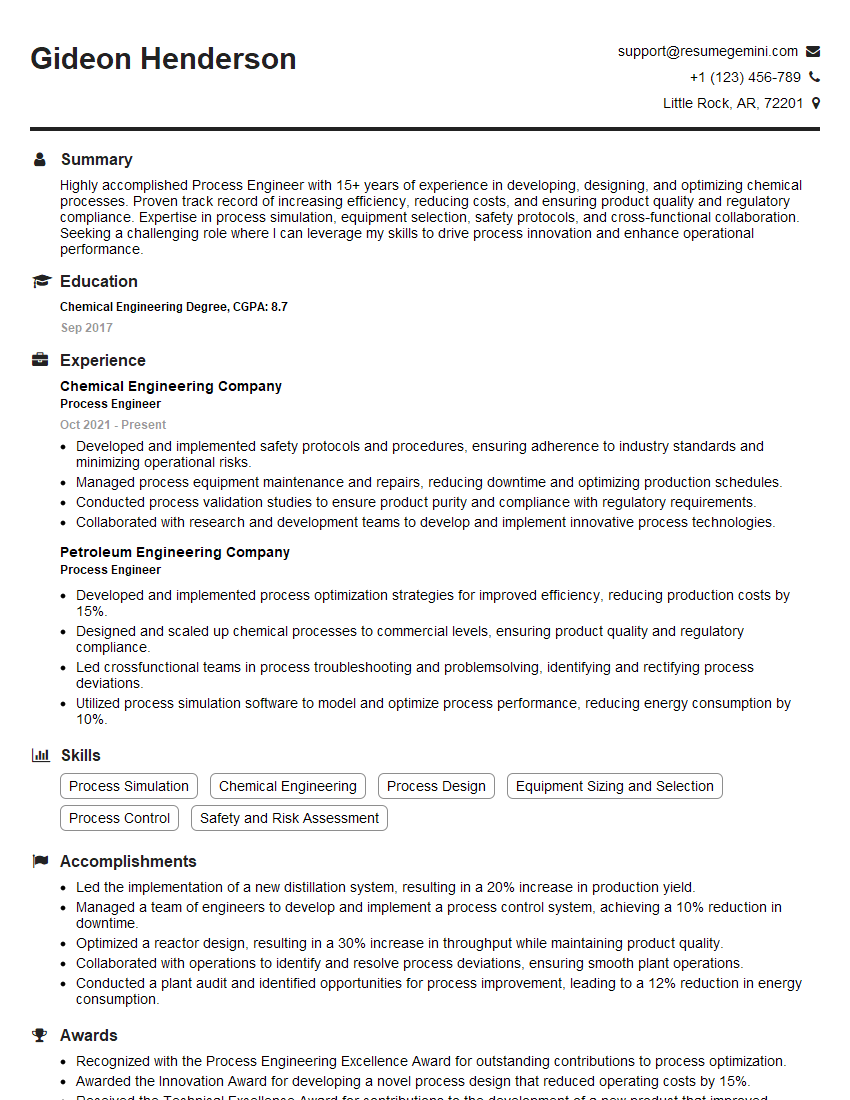
Process Engineer Resume Sample
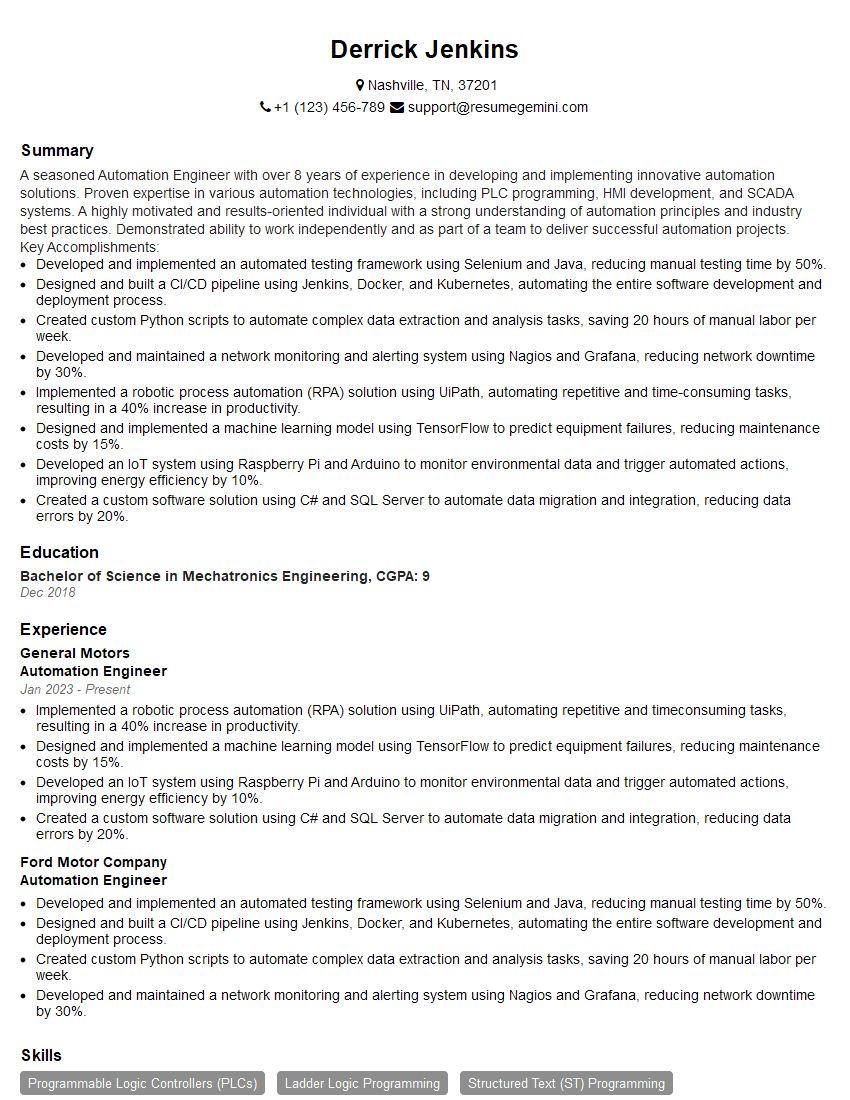
Automation Engineer Resume Sample
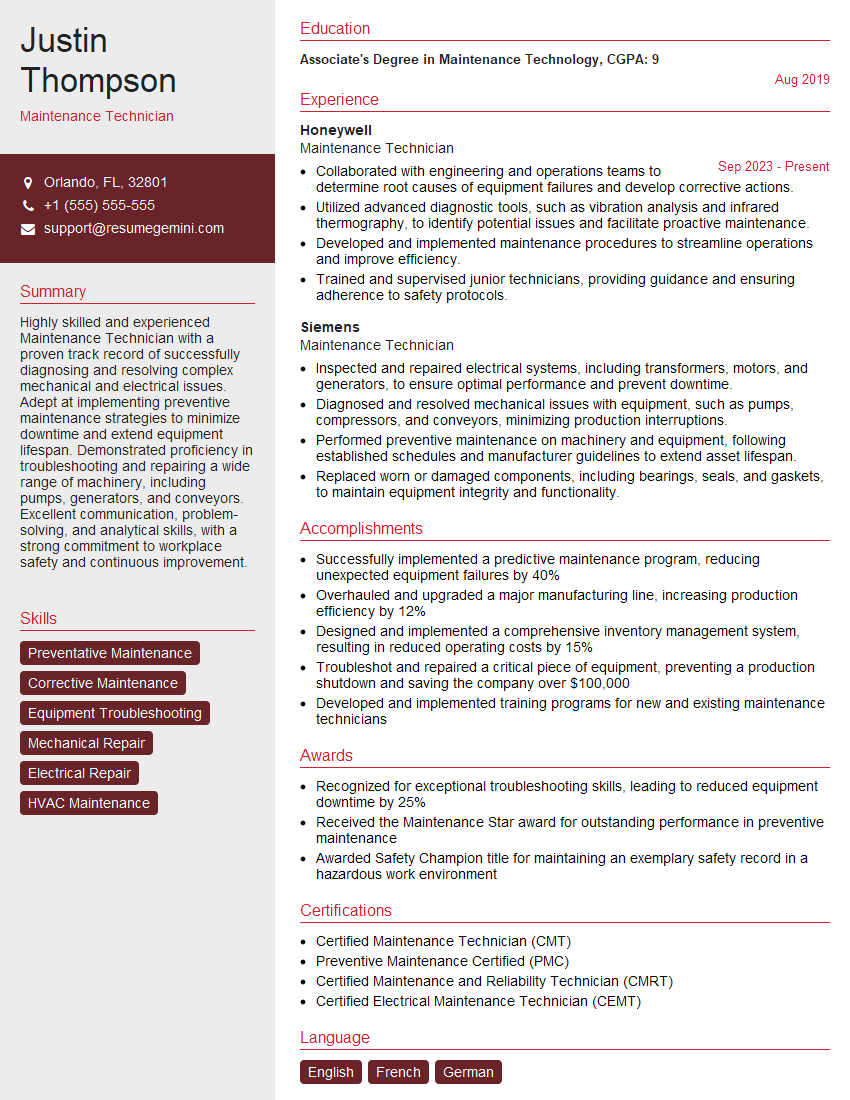
Maintenance Technician Resume Sample
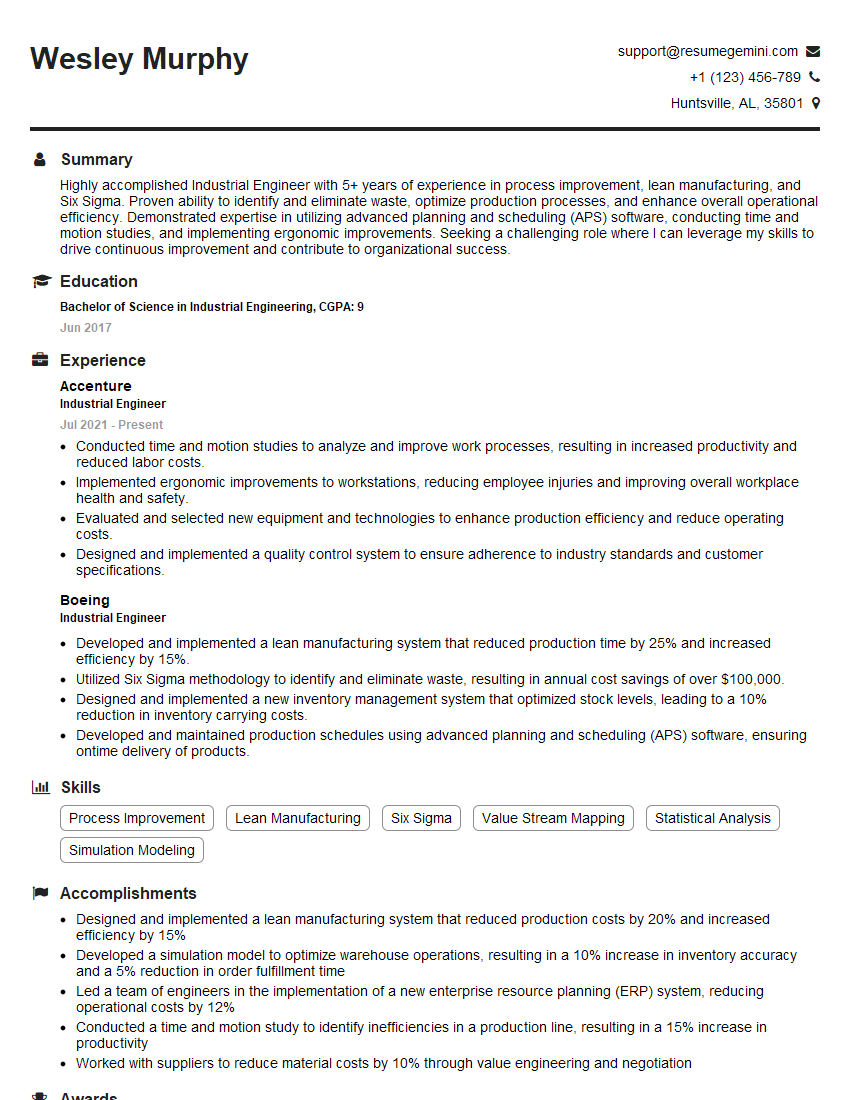
Industrial Engineer Resume Sample
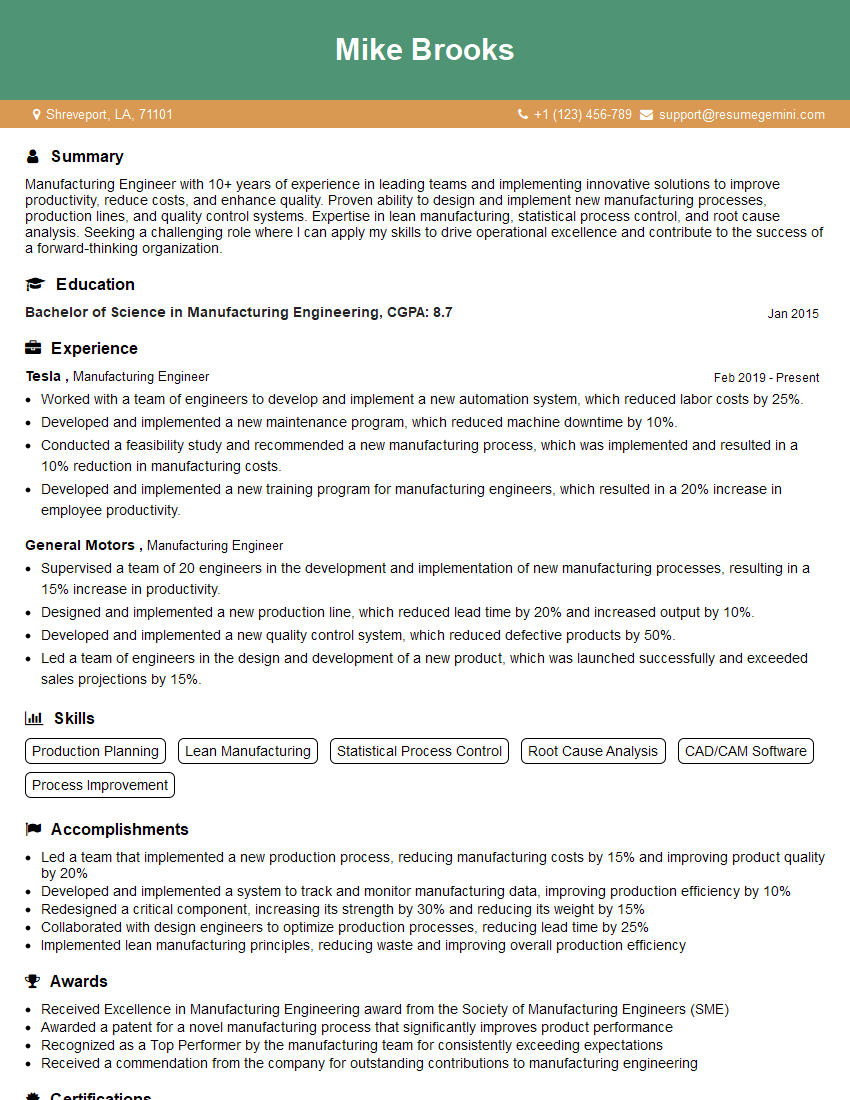
Manufacturing Engineer Resume Sample
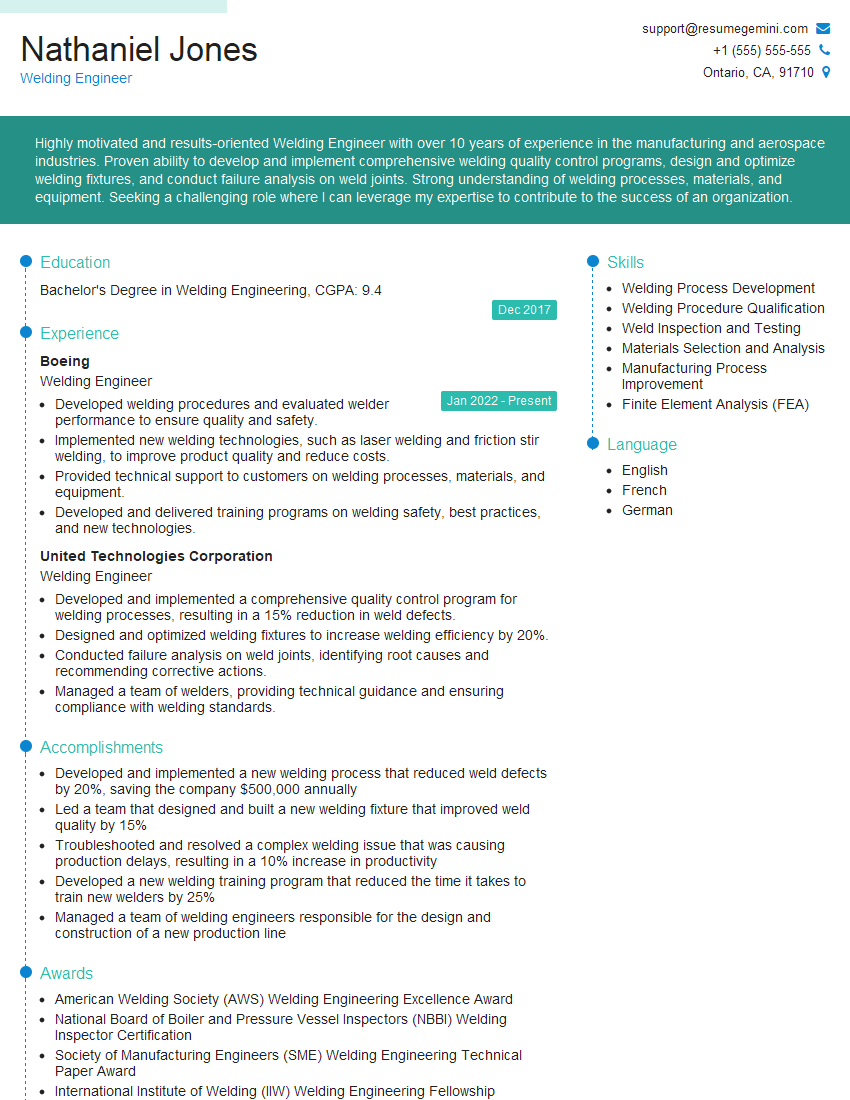
Welding Engineer Resume Sample
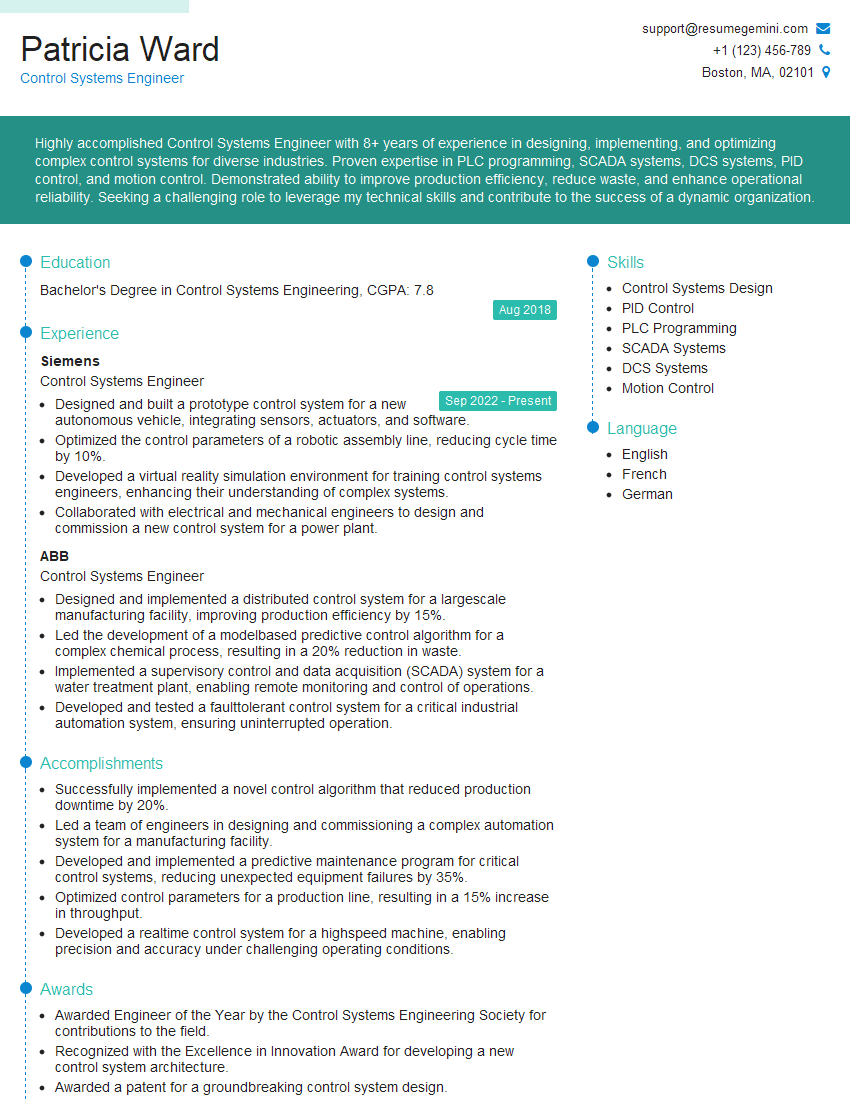
Control Systems Engineer Resume Sample
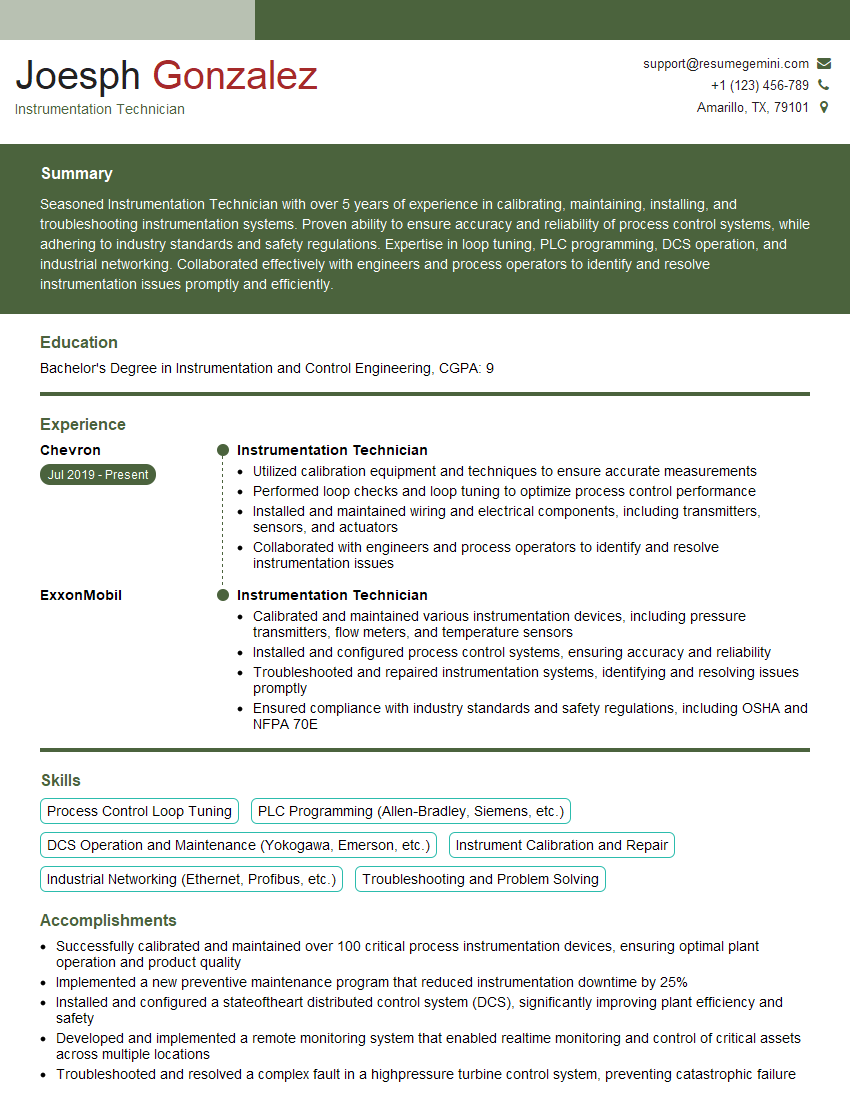
Instrumentation Technician Resume Sample
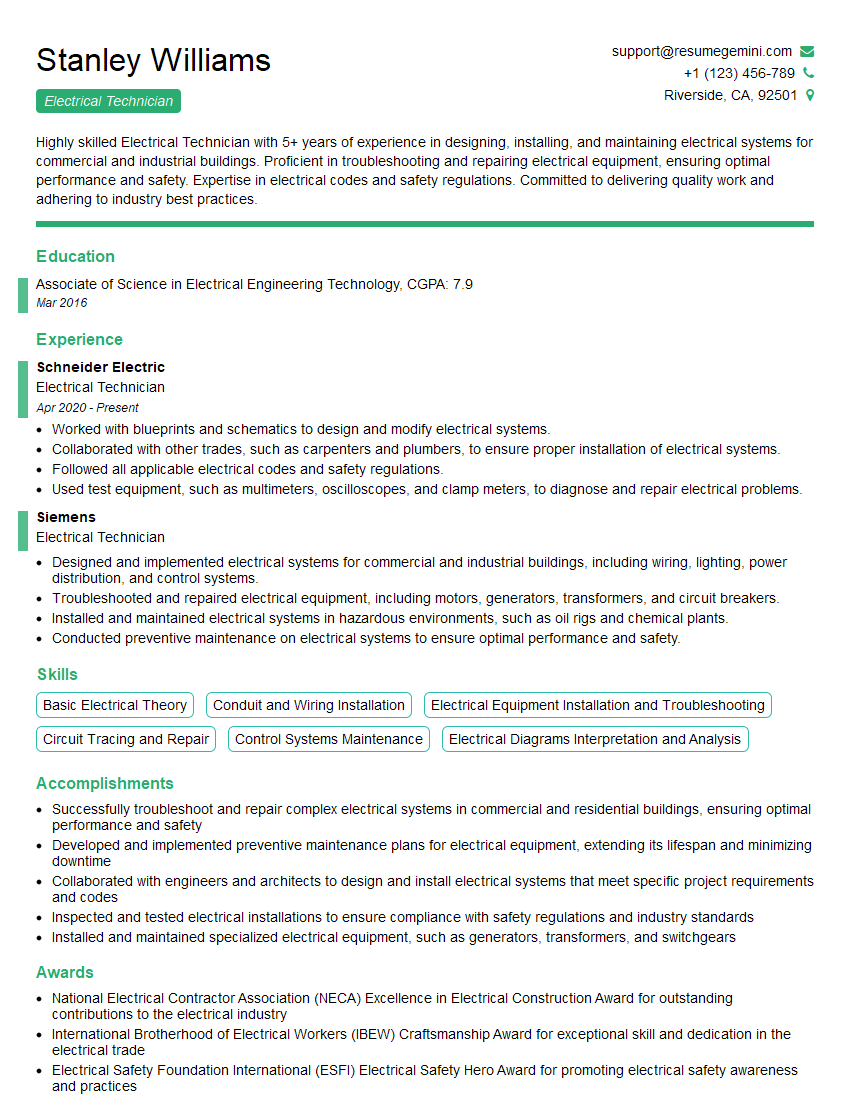
Electrical Technician Resume Sample
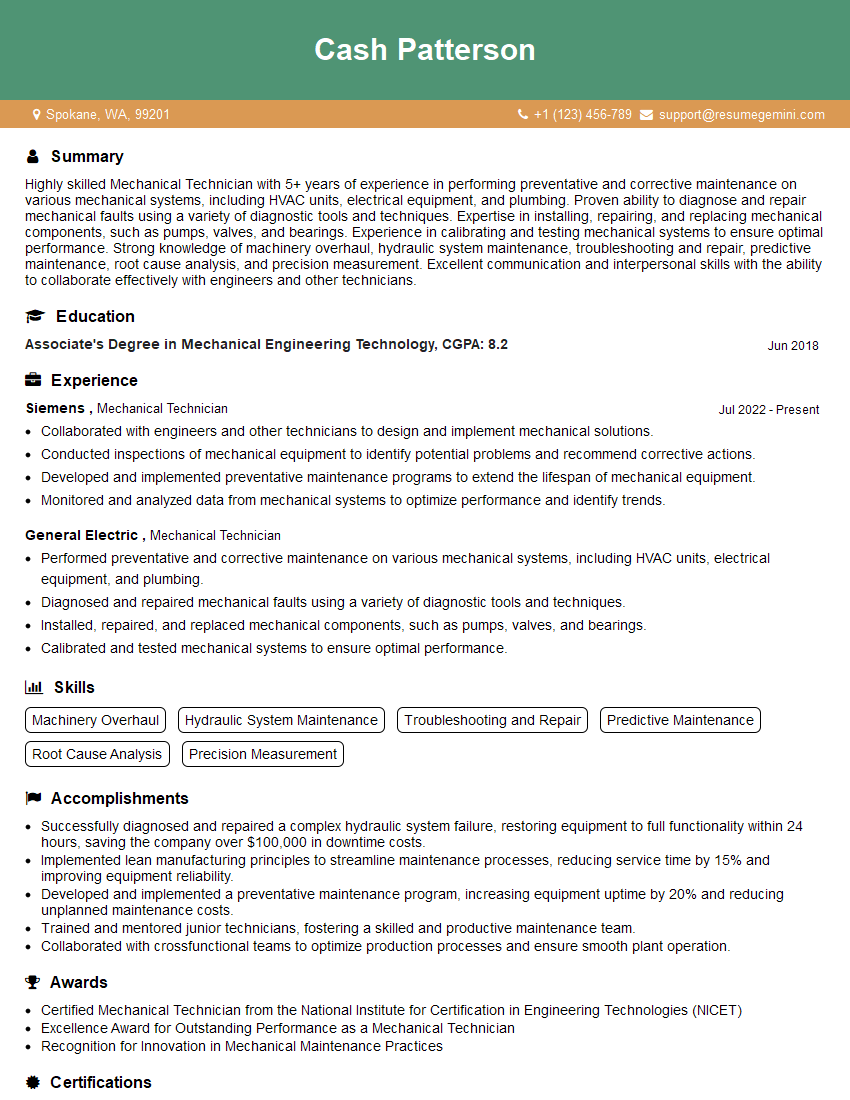
Mechanical Technician Resume Sample
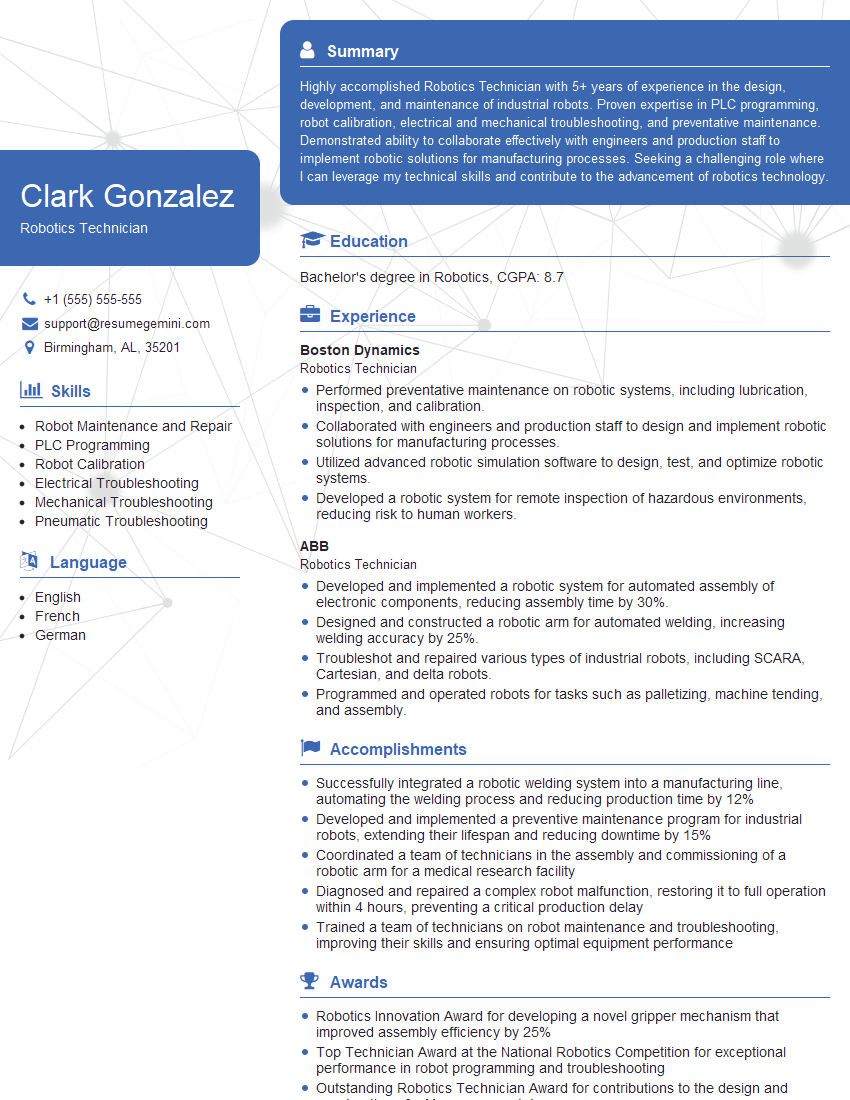
Robotics Technician Resume Sample
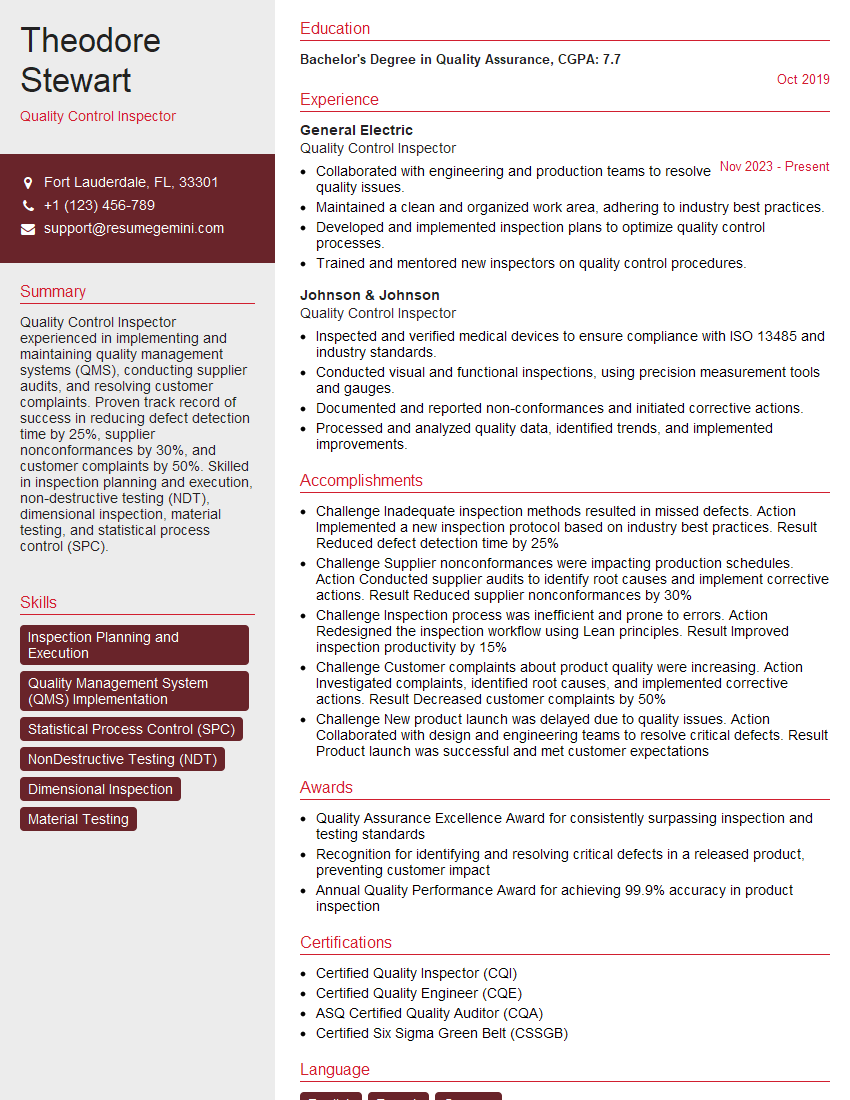
Quality Control Inspector Resume Sample
- Safety Manager
- Facility Manager
- Operations Manager
- Plant Manager
- Maintenance Planner
- Quality Assurance Manager
- Production Supervisor
- Supply Chain Manager
- Logistics Manager
- Production Planner
- Reliability Engineer
- Process Engineer
- Automation Engineer
- Maintenance Technician
- Industrial Engineer
- Manufacturing Engineer
- Welding Engineer
- Control Systems Engineer
- Instrumentation Technician
- Electrical Technician
- Mechanical Technician
- Robotics Technician
- Quality Control Inspector
Explore more articles
Users Rating of Our Blogs
Share Your Experience
We value your feedback! Please rate our content and share your thoughts (optional).
What Readers Say About Our Blog
To the interviewgemini.com Webmaster.
Very helpful and content specific questions to help prepare me for my interview!
Thank you
To the interviewgemini.com Webmaster.
This was kind of a unique content I found around the specialized skills. Very helpful questions and good detailed answers.
Very Helpful blog, thank you Interviewgemini team.