The right preparation can turn an interview into an opportunity to showcase your expertise. This guide to Leading Guided Tours interview questions is your ultimate resource, providing key insights and tips to help you ace your responses and stand out as a top candidate.
Questions Asked in Leading Guided Tours Interview
Q 1. Describe your experience leading guided tours for diverse groups.
Leading diverse groups requires adaptability and sensitivity. My experience spans leading tours for families, school groups, senior citizens, international travelers, and corporate teams. Each group has unique needs and expectations. For instance, a family tour might prioritize interactive activities and kid-friendly explanations, whereas a corporate group might prefer a more concise and business-oriented presentation. I adapt my communication style, pace, and content to resonate with each group’s demographics and interests. I achieve this by pre-tour questionnaires, observing group dynamics, and actively soliciting feedback during the tour.
- Example: When leading a tour for a group of senior citizens, I ensured a slower pace, provided frequent rest stops, and used larger fonts in any provided materials.
- Example: With international groups, I incorporated multilingual assistance (either through pre-prepared materials or with the help of a translator) and adjusted the content to reflect their cultural backgrounds and knowledge levels of the subject.
Q 2. How do you handle unexpected situations or emergencies during a tour?
Unexpected situations are a reality in tour guiding. My approach is proactive and calm. I always have a contingency plan, considering potential weather changes, traffic delays, or unforeseen closures. For emergencies, I have a well-defined protocol. This includes knowing emergency contact numbers, having a first-aid kit, and being familiar with the nearest medical facilities. My primary focus is always on the safety and well-being of the group. I communicate openly and honestly with the group, explaining the situation and what steps I’m taking. Transparency builds trust and reduces anxiety.
- Example: During a walking tour, we unexpectedly encountered a severe thunderstorm. I immediately led the group to a safe location, a nearby museum, and contacted the group’s support personnel to inform them of the change of plans.
- Example: If a participant experiences a medical emergency, I prioritize immediate assistance. This means summoning help (emergency services or designated medical personnel) and providing first aid as appropriate, while keeping the rest of the group calm and informed.
Q 3. What strategies do you employ to maintain group engagement and enthusiasm?
Maintaining group engagement is crucial. I use various techniques to keep the tour lively and interesting. This includes storytelling, interactive games or quizzes (relevant to the tour theme), incorporating humor, asking engaging questions, and encouraging participation. I also adapt my delivery to keep things dynamic—mixing lectures with anecdotes, demonstrations, or hands-on activities. I frequently gauge the group’s energy levels and adjust the pace accordingly.
- Example: When leading a historical tour, I might incorporate a role-playing exercise where participants act out historical scenes.
- Example: On a nature tour, a short quiz about local flora and fauna would make the session more engaging and help in knowledge retention.
Regularly checking in with the group, through informal conversations and targeted questions, helps to gauge the level of interest and address any concerns.
Q 4. Explain your approach to adapting tour content to different audience needs and interests.
Adapting tour content is key to cater to diverse audiences. Before a tour, I gather information about the group’s background, interests, and any specific needs or requests. This may involve questionnaires or discussions with the group organizers. I then tailor the tour narrative, selecting relevant anecdotes and facts, and adjusting the depth and complexity of the information. For example, a tour for children would be different than one for university history students. I also consider the pace and duration of the tour, ensuring that it’s appropriate for the group’s physical abilities and attention spans.
- Example: For a family tour, I might focus on storytelling and interactive elements, simplifying complex historical details.
- Example: For a group of experts, I would incorporate more in-depth analysis and discussions, engaging them with challenging questions and fostering debates.
Q 5. How do you ensure the safety and well-being of your tour group?
Ensuring group safety is paramount. My approach is multifaceted. It begins with thorough planning, including pre-tour risk assessment, identifying potential hazards and creating contingency plans. During the tour, I maintain constant awareness of the group’s location and well-being. I provide clear instructions, emphasizing safety protocols and responsible behavior. I also ensure that everyone is aware of emergency procedures and knows how to contact me or emergency services if needed. I utilize appropriate safety equipment, such as first-aid kits and any necessary personal protective equipment (PPE) based on the environment and the planned activities.
- Example: For a hiking tour, I would brief the group about trail safety, proper footwear, and hydration. I ensure that everyone has sufficient water and snacks. I would also have a backup plan in case of injuries or weather issues.
- Example: For a city tour, I would ensure that everyone is aware of traffic rules, and common safety concerns.
Q 6. What is your experience in using various tour guiding technologies (e.g., GPS, audio guides)?
I’m proficient in using various tour guiding technologies to enhance the tour experience. I regularly use GPS devices for navigation and route planning, ensuring efficient and timely progress. Audio guides are helpful for providing supplementary information and enhancing the immersive quality of the experience. I also utilize smartphone apps for real-time information updates, group communication, and translation support. Furthermore, I am familiar with using digital mapping software for pre-tour planning, and creating visually appealing presentations to showcase the tour information to the group.
- Example: Using a GPS device to ensure the tour stays on schedule and avoids getting lost, especially in unfamiliar territories.
- Example: Utilizing a smartphone app to provide real-time updates on public transport schedules, or any tour related changes.
Q 7. Describe a time you had to resolve a conflict or disagreement within a tour group.
Once, during a historical walking tour, two participants engaged in a heated disagreement about the interpretation of a particular historical event. My approach involved active listening, allowing both individuals to fully express their viewpoints without interruption. I then facilitated a calm and respectful discussion, emphasizing the importance of diverse perspectives and the complexity of historical interpretations. I reframed the disagreement as a constructive opportunity to explore different viewpoints, fostering mutual understanding. By focusing on the shared appreciation for history, I redirected the discussion toward a more positive and inclusive atmosphere.
Ultimately, both participants acknowledged the validity of different viewpoints, and the tour continued without further conflict. This experience reinforced the importance of conflict resolution skills, particularly in fostering a positive and productive group dynamic.
Q 8. How do you manage time effectively during a guided tour?
Effective time management is crucial for a successful guided tour. It’s about balancing the pre-planned itinerary with the spontaneous flow of the experience. My approach involves meticulous pre-planning, incorporating buffer time, and adapting to unforeseen circumstances.
- Pre-tour Planning: I thoroughly research the sites, map out routes, account for travel times between locations, and pre-determine optimal durations for each stop. This creates a realistic schedule. For instance, if visiting a museum, I’ll allocate specific time slots for key exhibits, knowing that some guests might spend longer at certain displays.
- Flexibility: I build in buffer time between scheduled stops to accommodate unexpected delays like traffic or longer-than-anticipated Q&A sessions. This prevents rushing and allows for a more relaxed pace. If we’re behind schedule, I may subtly adjust the itinerary, prioritizing key aspects over less crucial ones.
- Time Awareness During the Tour: I keep a constant eye on the clock, not to rush the tour, but to ensure we stay on track. I use subtle cues to guide the group, e.g., ‘We have approximately 15 minutes left at this location, so let’s focus on the highlights.’ This manages expectations and keeps the tour engaging.
Q 9. What are your methods for providing informative and engaging tour commentary?
Engaging and informative commentary requires a blend of historical accuracy, storytelling, and audience connection. My approach is multifaceted:
- Research & Preparation: Before each tour, I thoroughly research the historical, cultural, and geographical context. I look for anecdotes, personal stories, and lesser-known facts to bring the past to life. For example, when guiding a tour of a historical building, I’d research the lives of people who lived or worked there, weaving their stories into the tour narrative.
- Storytelling Techniques: I use storytelling techniques to make the information memorable. This includes using vivid language, descriptive imagery, and emotional resonance. Instead of just stating facts, I’ll present them within a narrative context, making them more relatable and easier to recall.
- Audience Interaction: I regularly incorporate questions, polls, and opportunities for discussion to keep the participants actively engaged. I encourage questions and tailor my answers to the group’s level of understanding and interests. This fosters a dynamic learning environment.
- Visual Aids: Where appropriate, I use visual aids like maps, photos, or even short video clips to enhance the tour experience and reinforce key points. For example, showing an old photograph of a building while discussing its history will make the information more tangible.
Q 10. How do you handle questions and inquiries from participants?
Handling questions and inquiries effectively is key to a successful tour. My approach is based on creating a welcoming atmosphere for questions and providing thorough, accurate answers.
- Encouraging Questions: I explicitly encourage questions throughout the tour. I emphasize that there are no silly questions and that questions are a vital part of the learning process.
- Addressing Questions Promptly: I strive to answer questions immediately whenever possible. If I don’t know the answer, I’ll admit it honestly and offer to find out the information later. I then follow up with the answer either via email or during the next tour stop, demonstrating professionalism and commitment to accuracy.
- Managing Multiple Questions: If I receive multiple questions, I’ll address them in a way that ensures everyone feels heard and that the flow of the tour isn’t disrupted. I might prioritize questions that build on each other or relate to the immediate surroundings.
- Using Questions to Enhance the Tour: Sometimes, a participant’s question can lead to unexpected tangents that enhance the tour experience. I am prepared to embrace such organic moments and use them to enrich the overall narrative.
Q 11. Describe your knowledge of local history, culture, and geography relevant to your tour.
My knowledge of local history, culture, and geography is extensive and constantly evolving. I consider continuous learning a crucial aspect of my profession. I regularly consult primary and secondary sources, attend historical society meetings, and engage in community events to stay updated.
For example, in my tours of [Specific City/Region], I’m familiar with the city’s founding, its significant historical events (including lesser-known stories), the evolution of its architecture, prominent figures who shaped its identity, and the socio-economic factors that influenced its development. This enables me to deliver insightful and nuanced commentary, enriching the participants’ understanding.
My knowledge extends beyond historical facts; I understand the local culture, including traditions, customs, and contemporary social dynamics. I am aware of local dialects, art forms, and culinary specialties. This allows me to provide a comprehensive and engaging tour experience that goes beyond mere historical facts.
Q 12. What is your experience with ticketing systems and tour booking platforms?
I have extensive experience with various ticketing systems and tour booking platforms, including [List Specific Platforms, e.g., Viator, TripAdvisor, etc.]. I am proficient in managing bookings, handling payments, generating reports, and utilizing data analytics to optimize tour offerings.
I understand the importance of efficient booking processes to enhance customer experience. I am adept at using these platforms to communicate tour details, manage customer inquiries, and process refunds/changes as needed. My familiarity with these systems allows me to focus on delivering exceptional tour experiences rather than struggling with technological hurdles.
Q 13. How do you manage and maintain appropriate professional conduct while on tour?
Maintaining professional conduct is paramount. It involves being punctual, respectful, and maintaining a positive attitude. I always dress appropriately for the tour, maintain a calm and courteous demeanor, even when dealing with challenging situations, and remain mindful of my language and behavior.
Examples include being punctual for tour departures, treating every participant with respect, regardless of their background or personality, handling conflicts constructively, and providing timely and helpful responses to any concerns. I understand that my conduct reflects not only on myself but also on the organization I represent.
I also understand the importance of confidentiality, respecting the privacy of individuals and locations, and adhering to local regulations and guidelines regarding conduct in public spaces.
Q 14. How do you ensure accessibility for participants with disabilities?
Ensuring accessibility is a critical aspect of responsible tour guiding. I’m committed to making my tours inclusive for participants with disabilities. My approach is proactive and involves careful planning and adaptation.
- Pre-tour Assessment: I ask about accessibility needs in advance, either via the booking platform or a pre-tour communication, to understand any specific requirements. This allows me to plan accordingly, ensuring a comfortable and enjoyable experience.
- Route Selection: I choose routes that are accessible for wheelchairs and other mobility devices, considering things like the presence of ramps, elevators, and smooth pathways. I avoid routes with significant inclines or uneven terrain unless necessary and clearly communicate the level of accessibility beforehand.
- Communication Strategies: I adjust my communication style to meet the needs of participants with visual or hearing impairments, providing additional written materials or using clear, concise language.
- Collaboration with Support Services: When necessary, I collaborate with local accessibility support services to ensure seamless assistance for participants with disabilities. This could include coordinating with organizations that provide sign language interpreters or mobility aides.
Q 15. What is your preferred method for gathering pre-tour information from participants?
Gathering pre-tour information is crucial for a successful guided tour experience. My preferred method is a multi-pronged approach combining a detailed online registration form with pre-tour email communication.
The online form collects essential details like participant names, contact information, any accessibility needs, dietary restrictions (for tours including meals), and importantly, their expectations and interests regarding the tour. This allows me to personalize the experience and address specific needs beforehand.
Following registration, I send a series of emails. The first confirms their booking and provides logistical details like meeting point and time. Subsequent emails might include a brief itinerary, a packing list (if relevant), and a short quiz or poll to gauge their prior knowledge and enthusiasm, ensuring I can tailor my presentation to their level of understanding and excitement. This iterative communication helps manage expectations and build excitement.
Career Expert Tips:
- Ace those interviews! Prepare effectively by reviewing the Top 50 Most Common Interview Questions on ResumeGemini.
- Navigate your job search with confidence! Explore a wide range of Career Tips on ResumeGemini. Learn about common challenges and recommendations to overcome them.
- Craft the perfect resume! Master the Art of Resume Writing with ResumeGemini’s guide. Showcase your unique qualifications and achievements effectively.
- Don’t miss out on holiday savings! Build your dream resume with ResumeGemini’s ATS optimized templates.
Q 16. Describe your approach to marketing and promoting a guided tour.
Marketing and promotion involve a strategic blend of online and offline strategies. Online, I leverage social media platforms like Instagram and Facebook, showcasing high-quality photos and videos of past tours, highlighting unique aspects, and running targeted ads to reach potential participants based on their interests and location. I also maintain a professional website with detailed tour descriptions, booking options, and client testimonials.
Offline, I collaborate with local businesses, hotels, and tourism agencies to distribute brochures and flyers. I also participate in travel fairs and community events to network and directly engage with potential customers. Building relationships with local influencers and travel bloggers can also generate significant organic reach and credibility. Crucially, I encourage past participants to leave reviews on platforms like TripAdvisor, which helps build trust and social proof.
Q 17. How would you address a participant who is disruptive or disrespectful during a tour?
Addressing disruptive or disrespectful behavior requires a calm and professional approach. My first step is to politely and privately address the individual, explaining how their actions are impacting the experience of others. I try to understand the root cause of the disruption – perhaps they are unwell, have a misunderstanding, or are simply unaware of appropriate behavior.
If a private conversation doesn’t resolve the issue, I might involve a colleague or security personnel (depending on the severity and location). In extreme cases, I might need to ask the individual to leave the tour, offering a partial refund if appropriate. Prevention is key, so clear guidelines about expected behavior are included in pre-tour communication. A friendly, inclusive atmosphere, where questions are encouraged, helps minimize disruptive behavior.
Q 18. What strategies do you use to manage the physical demands of leading a guided tour?
Managing the physical demands of leading a guided tour requires careful planning and self-care. This includes selecting appropriate footwear, using lightweight equipment, and incorporating regular breaks into the itinerary. I plan walking routes to minimize strenuous inclines and incorporate rest stops with opportunities for hydration and light snacks.
Before the tour, I thoroughly research the terrain and anticipate potential challenges. I also maintain a high level of personal fitness to ensure I can handle the physical demands of the role. If a tour involves significant physical activity, I might consider offering different options or pacing levels to cater to various fitness levels within the group. Listening to my body is paramount – I won’t hesitate to adjust the pace or shorten the route if necessary.
Q 19. How do you assess the effectiveness of your tour presentations and adapt accordingly?
Assessing the effectiveness of my tour presentations relies on a combination of methods. Immediately after each tour, I conduct a brief self-reflection, noting what worked well and areas needing improvement. I also actively solicit feedback from participants through post-tour surveys or informal conversations. This feedback provides valuable insights into areas where the presentation was engaging and areas where it lacked clarity or interest.
Quantitative data, such as participant ratings and attendance figures, are also analyzed. I might adjust the content, pace, or delivery style based on the feedback received. For example, if participants consistently report difficulty understanding certain historical details, I will revise that section to make it more accessible. Continuous improvement is key; adapting based on feedback ensures the tour constantly evolves and meets the needs and expectations of participants.
Q 20. What is your experience with handling transportation logistics for guided tours?
My experience with transportation logistics is extensive. I have managed everything from arranging private coaches for larger groups to coordinating smaller, more intimate tours using public transport or even walking tours. For larger groups, I meticulously plan routes, consider traffic patterns, and ensure timely arrival and departure. I always confirm bookings and communicate clearly with drivers regarding meeting points and any specific route requirements.
For smaller tours, I ensure that public transport schedules align with the itinerary or provide participants with clear directions and alternative transportation options. Safety is a priority – I always check vehicle licenses, insurance, and driver qualifications and provide participants with clear emergency contact information. In all cases, detailed pre-tour communication addresses transportation logistics, minimizing any potential confusion or delays.
Q 21. Describe your understanding of various tour guiding styles and methods.
I am familiar with a range of tour guiding styles and methods. These include the narrative style, which focuses on storytelling and creating a vivid picture for participants; the thematic style, where the tour is structured around a specific theme or topic; and the interactive style, which encourages active participation and questions from the group. My approach often involves a blend of these styles, adapting to the group’s dynamics and the specific tour context.
For example, while leading a historical walking tour, I might begin with a narrative approach, setting the scene and introducing key characters. I then transition to a more interactive style, encouraging questions and discussions, before wrapping up with a thematic summary connecting the individual stories to a broader historical context. Understanding the audience and tailoring the approach is vital for an engaging and memorable experience.
Q 22. How do you create a positive and memorable experience for participants?
Creating a positive and memorable tour experience hinges on a blend of meticulous planning, engaging delivery, and genuine enthusiasm. It’s about crafting an immersive journey, not just a recitation of facts.
- Pre-Tour Engagement: I send out pre-tour information packets that set expectations and build excitement. This might include a welcome message, a brief itinerary, and some fascinating tidbits about the location. For example, for a historical tour, I might include a captivating anecdote about a significant figure associated with the site.
- Interactive Storytelling: I avoid monotone lecturing. Instead, I incorporate interactive elements like quizzes, polls, or storytelling techniques to actively engage participants. For instance, during a food tour, I might involve participants in a blind taste test to enhance their sensory experience and understanding of flavors.
- Personalized Attention: I make a conscious effort to learn participants’ names and interests. Addressing them personally and tailoring the tour to their interests, where possible, fosters a sense of connection and appreciation. If someone shows a particular interest in a certain aspect, I weave in extra details or anecdotes to cater to their curiosity.
- Creating Shared Experiences: I organize group activities or discussions that encourage interaction and bonding among participants. This could be anything from a collaborative photo session to a small group discussion about a particular element of the tour. This helps to create a sense of community and shared memory.
- Post-Tour Follow-Up: I send a thank-you note with links to relevant resources, photos from the tour, or a survey to gather feedback. This shows appreciation for their participation and maintains a connection beyond the tour itself.
Q 23. What are your techniques for dealing with language barriers during a tour?
Language barriers can be a significant challenge, but with the right approach, they can be effectively navigated. My strategy involves a multi-pronged approach:
- Pre-Tour Communication: I use clear and concise language in all pre-tour communications, and offer the option to communicate in different languages where possible. I might provide the itinerary and other materials in multiple languages.
- Visual Aids: I make extensive use of maps, photos, videos, and other visual aids to illustrate key points. A picture can convey information more universally than words alone.
- Translation Apps & Devices: I am proficient in using translation apps and devices, and I always have a backup plan in case of technological failure. This includes having printed translations of key phrases.
- Simple Language & Gestures: I use simple and clear language, avoiding jargon and complex sentence structures. I incorporate gestures and non-verbal cues to enhance understanding.
- Hiring Bilingual Guides: For larger groups or tours involving multiple languages, I would consider hiring additional bilingual guides to ensure everyone feels included and understands the information.
- Group Dynamics: I encourage participants who speak the same language to assist in translation when appropriate, fostering a sense of collaboration within the group.
Q 24. How do you gather feedback from participants and use it to improve your tour?
Feedback is crucial for continuous improvement. I employ a multi-faceted approach to gather and utilize feedback:
- Post-Tour Surveys: I use online survey tools to gather quantitative and qualitative data. These surveys include both rating scales and open-ended questions to allow for detailed feedback.
- Informal Feedback Sessions: At the end of each tour, I allot time for brief, informal feedback sessions. This allows for immediate responses and clarifications.
- Social Media Monitoring: I actively monitor reviews and feedback on relevant social media platforms. This offers a snapshot of public perception and helps identify trends.
- Personal Communication: I encourage participants to reach out with feedback through email or phone calls, creating a direct line of communication.
- Data Analysis & Improvement: I systematically analyze the collected feedback, identifying patterns and areas for improvement. This informs decisions about tour content, pacing, activities, and overall delivery.
For example, if multiple participants mention that a specific section felt rushed, I would re-evaluate that section’s content and pacing to improve the overall flow. Conversely, if a particular anecdote receives high praise, I might incorporate similar stories in future tours.
Q 25. Explain your experience working independently and as part of a larger tour team.
I have extensive experience in both independent and team-based tour guiding. My strengths lie in adaptability and collaboration.
- Independent Guiding: As an independent guide, I am self-sufficient and responsible for all aspects of the tour, from planning and logistics to delivery and client interaction. This has honed my organizational, problem-solving, and customer service skills. For example, I once had to improvise a backup plan when a historical site was unexpectedly closed, seamlessly redirecting the tour to a similarly engaging location.
- Team Guiding: In team settings, I thrive in collaborative environments. I am adept at communicating effectively with other guides, sharing knowledge and resources, and ensuring a seamless experience for participants. My experience on larger tours has taught me the importance of clear communication and coordination within a team to ensure consistent quality and visitor satisfaction.
In essence, whether working independently or as part of a team, my focus remains on providing an exceptional experience for participants.
Q 26. What measures do you take to protect the environment and cultural heritage during your tours?
Protecting the environment and cultural heritage is paramount. My approach incorporates various strategies:
- Sustainable Practices: I encourage the use of public transportation or walking whenever possible, and I avoid single-use plastics. I also actively promote responsible tourism practices to participants.
- Respectful Behavior: I emphasize the importance of respecting local customs and traditions. I educate participants on appropriate behavior within historical sites and natural environments.
- Leave No Trace Principles: I actively promote and model ‘Leave No Trace’ principles, ensuring that participants understand their responsibility to minimize their impact on the environment.
- Supporting Local Communities: I actively support local businesses and communities by recommending locally owned restaurants, shops, and other businesses.
- Educating Participants: A key aspect of my tours is educating participants about the importance of preserving both the natural and cultural heritage of the locations we visit. This includes highlighting conservation efforts and encouraging responsible interactions.
Q 27. How familiar are you with emergency procedures and first aid protocols for guided tours?
Safety is my top priority. I am well-versed in emergency procedures and first aid protocols specific to guided tours. My training includes:
- First Aid & CPR Certification: I hold up-to-date certifications in First Aid and CPR.
- Emergency Response Planning: I have experience developing and implementing emergency response plans for different tour scenarios.
- Risk Assessment: Prior to each tour, I conduct a thorough risk assessment, identifying potential hazards and developing mitigation strategies.
- Communication Protocols: I am familiar with established communication protocols for reporting incidents and coordinating emergency responses.
- Emergency Kits: I always carry comprehensive emergency kits tailored to the specific needs of the tour, including first aid supplies, communication devices, and any necessary specialized equipment.
Q 28. What are your salary expectations for this tour guide position?
My salary expectations for this tour guide position are commensurate with my experience, qualifications, and the responsibilities involved. I am open to discussing a competitive compensation package that reflects the market rate for experienced tour guides with my skill set and qualifications. I would be happy to provide further details during our conversation.
Key Topics to Learn for Leading Guided Tours Interview
- Understanding Tour Operations: Learn the logistical aspects of tour management, including scheduling, transportation, ticketing, and customer service protocols.
- Guest Engagement and Communication: Explore effective communication techniques for engaging diverse audiences, handling questions and concerns, and creating a memorable experience.
- Historical and Cultural Knowledge: Develop a strong understanding of the historical context, cultural significance, and key attractions relevant to the tours you’ll be leading.
- Safety and Risk Management: Familiarize yourself with safety procedures, emergency protocols, and risk mitigation strategies for group tours.
- Adaptability and Problem-Solving: Practice handling unexpected situations, such as itinerary changes, guest needs, or technical difficulties, with grace and efficiency.
- Sales and Customer Service: Understand the sales process, handling bookings, and providing exceptional customer service throughout the tour experience.
- Teamwork and Collaboration: Explore the importance of teamwork, coordination with other tour guides or support staff, and contributing to a positive team environment.
Next Steps
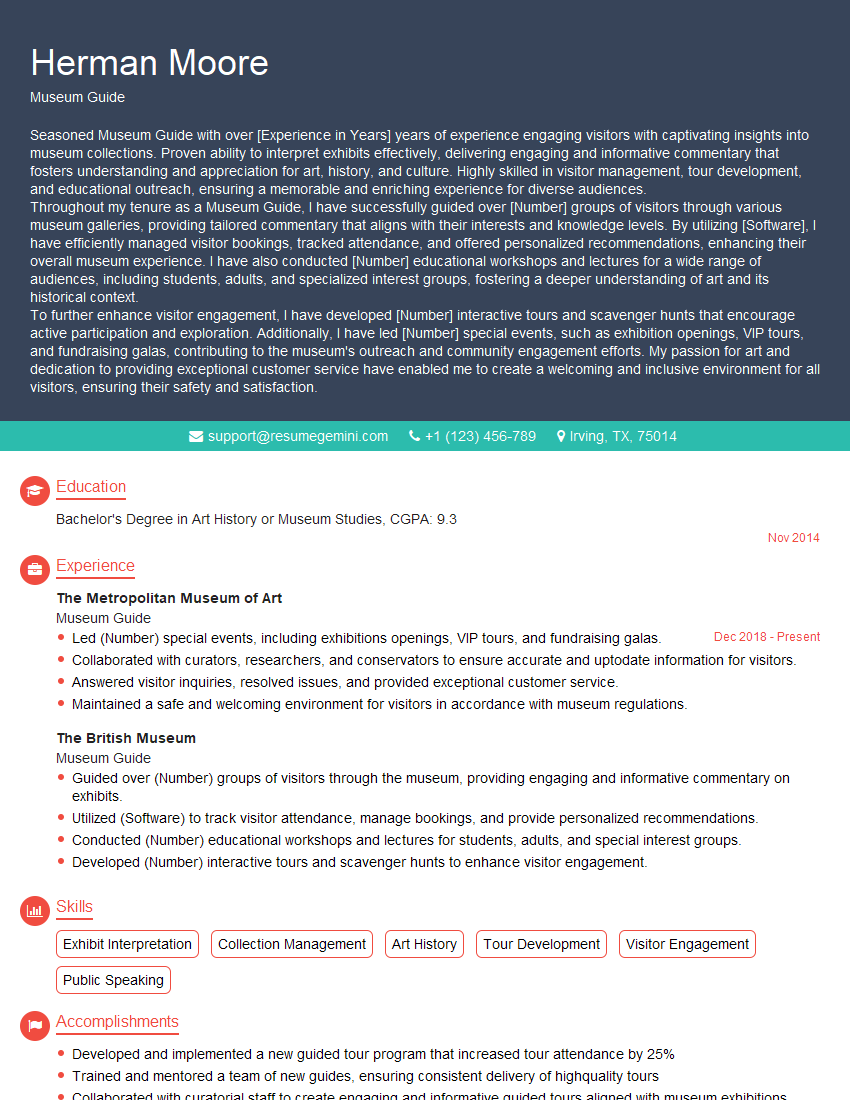
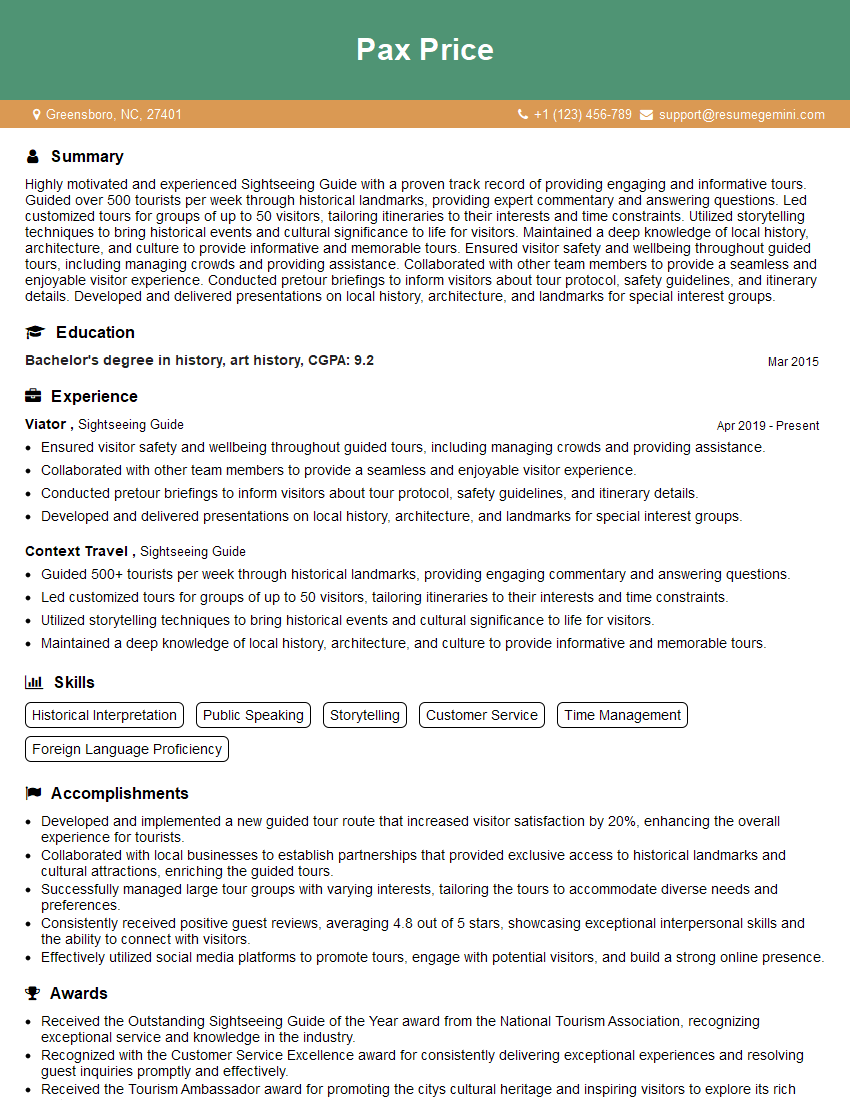
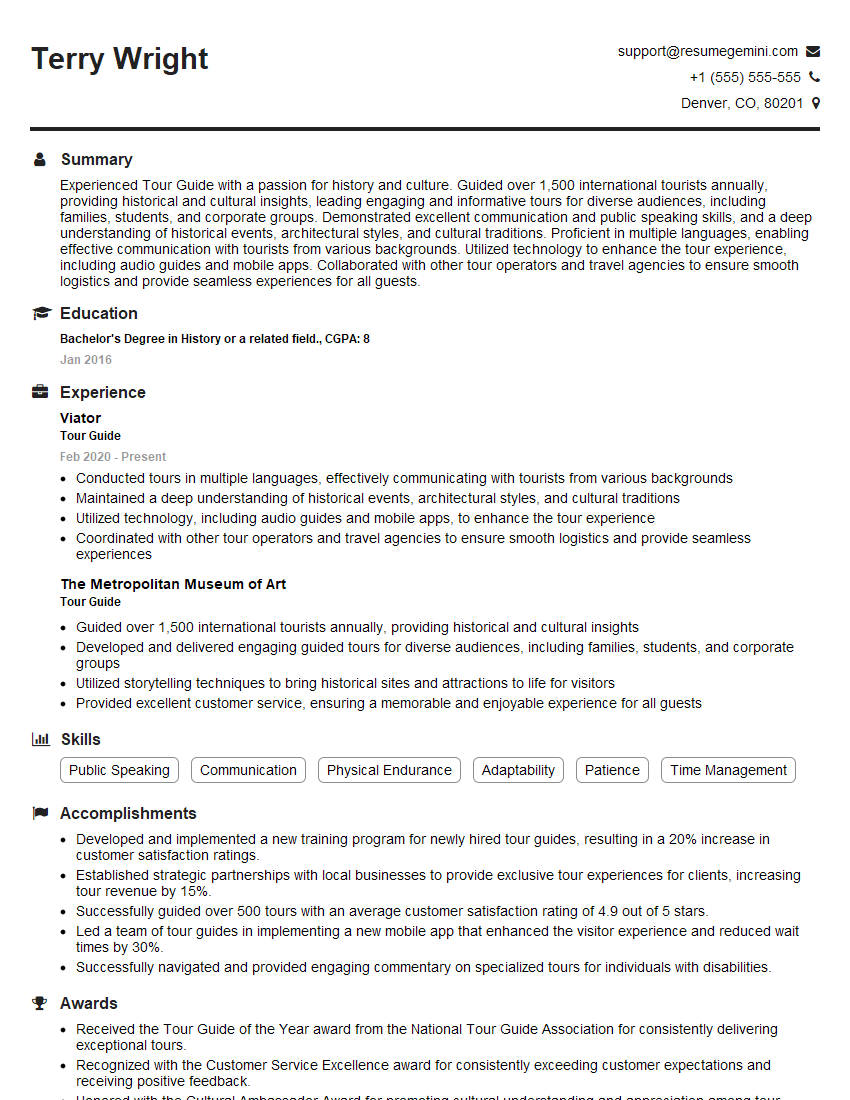
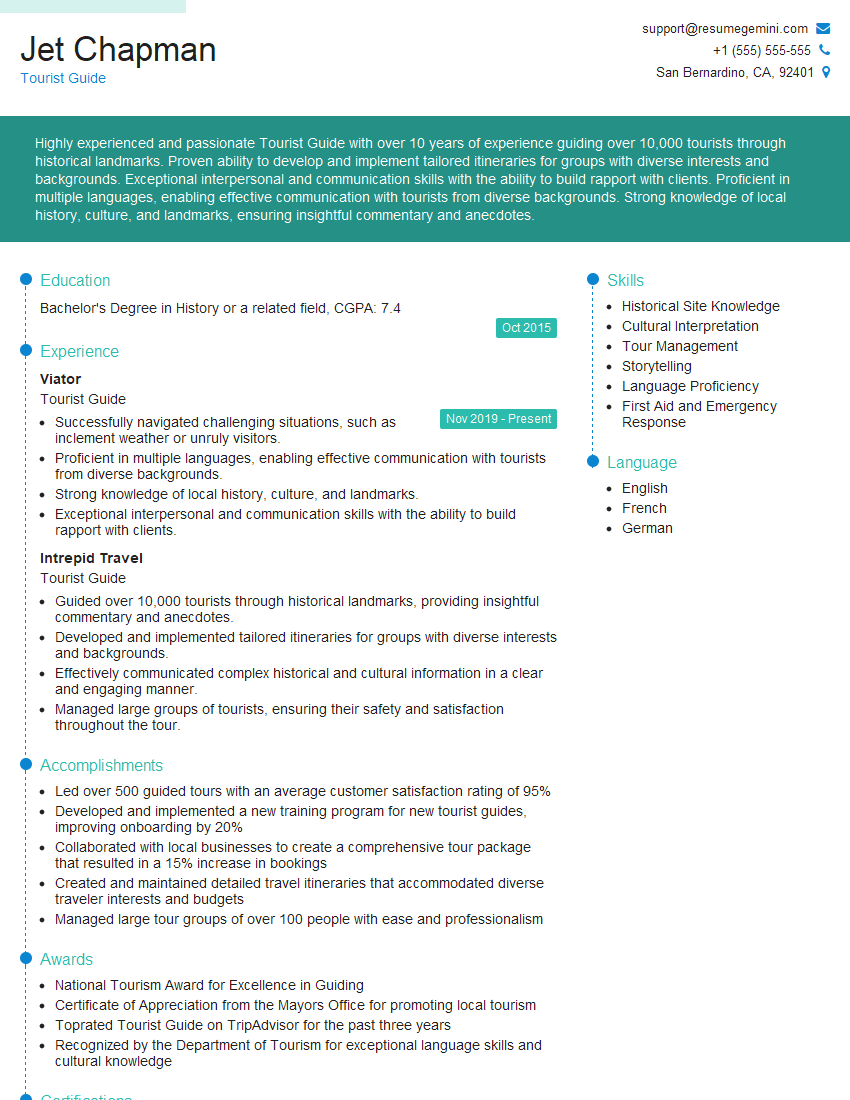
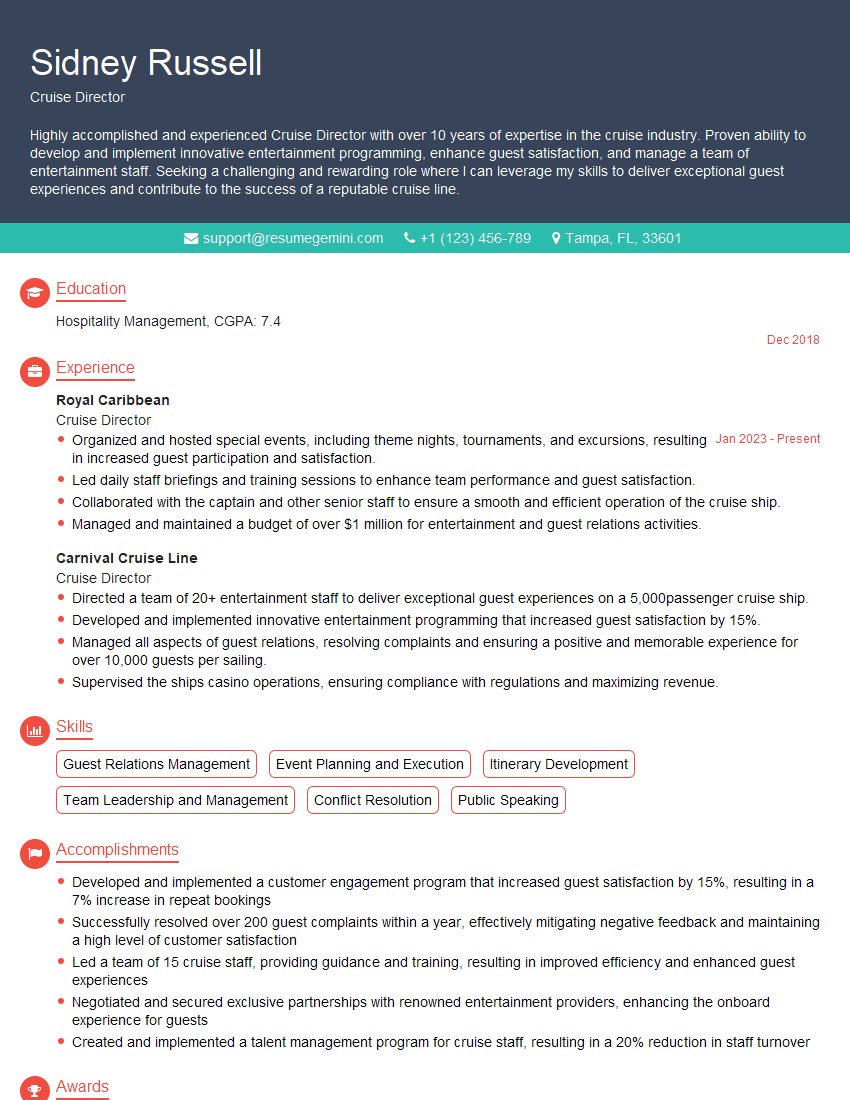
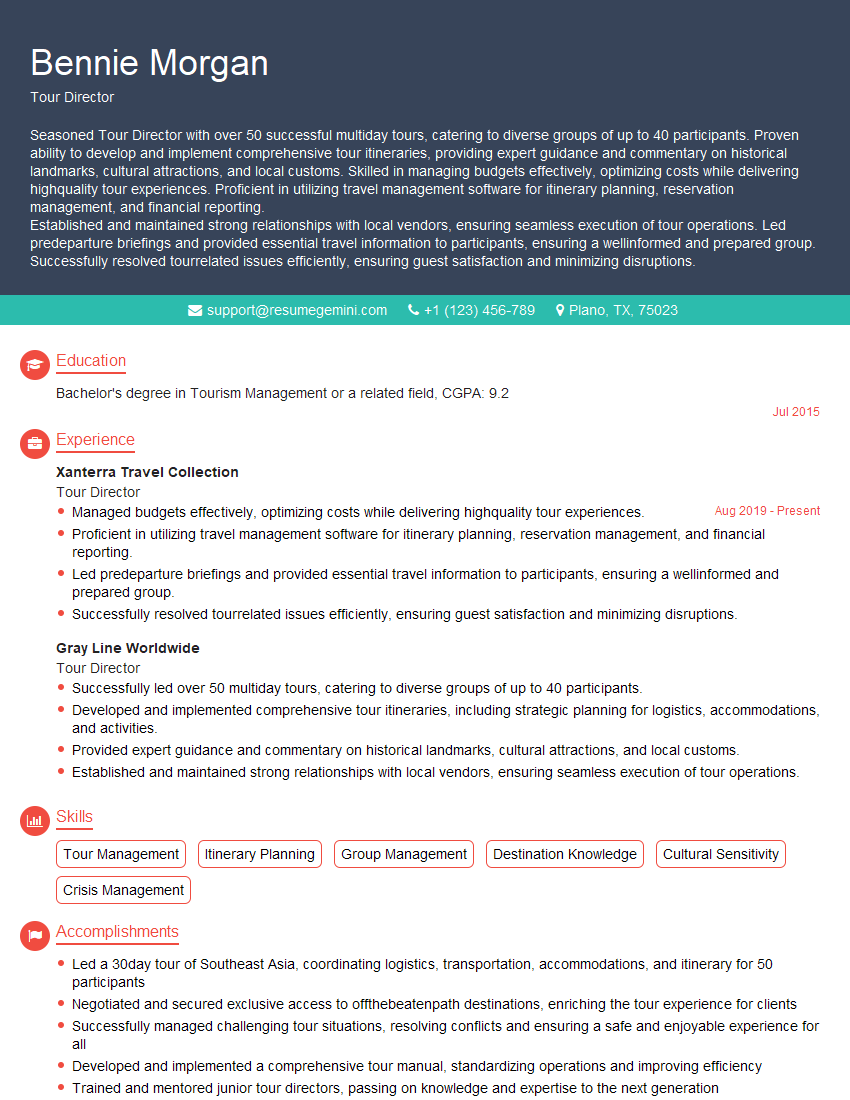
Mastering the art of leading guided tours opens doors to exciting career opportunities in the travel and tourism industry, offering diverse experiences and potential for professional growth. To maximize your job prospects, crafting an ATS-friendly resume is crucial. This ensures your application gets noticed by recruiters and hiring managers. We highly recommend using ResumeGemini to build a professional and impactful resume that highlights your skills and experience. ResumeGemini offers a streamlined process and provides examples of resumes tailored to the Leading Guided Tours industry, helping you present yourself effectively to potential employers.
Explore more articles
Users Rating of Our Blogs
Share Your Experience
We value your feedback! Please rate our content and share your thoughts (optional).
What Readers Say About Our Blog
To the interviewgemini.com Webmaster.
Very helpful and content specific questions to help prepare me for my interview!
Thank you
To the interviewgemini.com Webmaster.
This was kind of a unique content I found around the specialized skills. Very helpful questions and good detailed answers.
Very Helpful blog, thank you Interviewgemini team.