Interviews are opportunities to demonstrate your expertise, and this guide is here to help you shine. Explore the essential Qualitative Data Analysis (NVivo, Atlas.ti) interview questions that employers frequently ask, paired with strategies for crafting responses that set you apart from the competition.
Questions Asked in Qualitative Data Analysis (NVivo, Atlas.ti) Interview
Q 1. Explain the differences between grounded theory and thematic analysis.
Grounded theory and thematic analysis are both qualitative research methods used to identify patterns and themes in data, but they differ significantly in their approach and goals.
Grounded theory is an inductive approach where the theory emerges directly from the data. It’s iterative, meaning you constantly refine your understanding as you collect and analyze more data. The goal is to develop a theory that explains a process, action, or interaction. Think of it as building a house from the ground up, brick by brick, with the final structure being the theory. You might start with broad codes and then, through constant comparison, refine and develop more specific and interconnected categories.
Thematic analysis, on the other hand, is more deductive. While you can allow the data to inform your analysis, you might start with pre-existing ideas or research questions. It focuses on identifying recurring themes or patterns across the dataset. It’s a more straightforward approach; you identify themes and then support those themes with evidence from the data. Imagine thematic analysis as assembling a jigsaw puzzle – you have a picture in mind (your research question), and you use the data pieces to complete the picture.
In short, grounded theory is theory-building, while thematic analysis is theme-identifying. The choice depends on your research question and aims. If you’re exploring a new phenomenon, grounded theory is suitable. If you’re testing an existing theory or exploring specific themes, thematic analysis might be more appropriate.
Q 2. Describe your experience with NVivo’s coding and querying functionalities.
My experience with NVivo’s coding and querying functionalities is extensive. I’ve used it across numerous projects, analyzing everything from interview transcripts to social media data. NVivo’s coding capabilities allow for both inductive and deductive coding strategies. I regularly use in-vivo coding, creating codes directly from the data, and then refine these codes into a more structured codebook. NVivo’s hierarchical coding system allows for complex relationships between codes to be explored. For instance, I might have a main code “Customer Satisfaction” with sub-codes like “Product Quality,” “Customer Service,” and “Pricing.” This structure helps to delve deeper into the data and understand the interconnections between themes.
NVivo’s querying functionalities are crucial for making sense of large coded datasets. I frequently use matrix queries to explore relationships between different codes, identifying patterns and relationships that might be missed through manual analysis. For example, I might create a matrix to see how frequently specific demographics mention certain product issues. The visual representation provided by these queries makes it much easier to identify trends and correlations within the data. Likewise, the text search and retrieval features are invaluable for locating specific mentions of key terms across the entire dataset.
Q 3. How do you manage large datasets in NVivo or Atlas.ti?
Managing large datasets in NVivo or Atlas.ti requires a strategic approach. Simply importing and coding everything at once can be overwhelming. My process typically involves:
- Data reduction strategies: Before importing, I often create subsets of the data, perhaps focusing on a particular theme or demographic subgroup. This allows for a more manageable workflow.
- Incremental coding: I don’t code the entire dataset at once. I work through smaller chunks, iteratively refining my codebook and coding scheme as I go.
- Using NVivo’s or Atlas.ti’s project management tools: I leverage features like importing data in stages, creating separate projects for different aspects of the analysis, and employing advanced search and filtering capabilities. This helps to manage the complexity and ensures organization.
- Regular backups: This is crucial, as any software crash can cause devastating data loss.
- Collaboration tools (where applicable): If working with a team, we make sure to use shared project spaces and version control tools.
The key is breaking down the large dataset into manageable pieces and using the software’s capabilities to streamline the workflow. It’s like eating an elephant – one bite at a time!
Q 4. What are the limitations of using qualitative data analysis software?
While qualitative data analysis software like NVivo and Atlas.ti is incredibly helpful, it’s essential to acknowledge their limitations:
- Software bias: The software can influence the analysis process, potentially highlighting certain aspects and overlooking others. The researcher’s choices in coding and querying shape the results.
- Data dependency: The analysis is fundamentally limited to the data that has been collected and input. Incomplete or biased data will lead to flawed conclusions.
- Cost and learning curve: These software packages can be expensive, and there’s a significant learning curve involved in mastering their functionalities.
It’s important to view these tools as aids to the analysis, not as replacements for sound research design and critical thinking.
Q 5. Compare and contrast NVivo and Atlas.ti. When would you choose one over the other?
NVivo and Atlas.ti are both leading qualitative data analysis software packages, but they have distinct strengths and weaknesses.
NVivo tends to be more user-friendly, particularly for beginners. It offers a more intuitive interface and a stronger emphasis on visualization and data presentation. It excels in managing large datasets and has extensive features for mixed methods research.
Atlas.ti, on the other hand, provides a more flexible and customizable coding system, appealing to researchers who prefer a more hands-on, tailored approach. It’s often favored by researchers who prioritize theory building and complex analysis. It tends to have a steeper learning curve.
When to choose NVivo: If you prioritize ease of use, strong visualization capabilities, or need to manage extremely large datasets, NVivo is a better choice. If you need strong mixed methods capabilities, NVivo is ideal.
When to choose Atlas.ti: If you prefer a highly customizable coding system and a more flexible approach, Atlas.ti is a good option. It might be preferable for researchers with extensive experience in qualitative data analysis.
Ultimately, the best choice depends on your specific research needs, budget, and personal preferences. I often recommend that potential users try out the free trial versions of both before committing to a purchase.
Q 6. How do you ensure the trustworthiness and rigor of your qualitative data analysis?
Ensuring trustworthiness and rigor in qualitative data analysis involves several key strategies:
- Transparency: Documenting the entire research process, including data collection, coding, and analysis decisions, is paramount. This allows for scrutiny and replication of the study.
- Reflexivity: Acknowledging and addressing researcher bias throughout the process is essential. This includes reflecting on how your own perspectives and experiences might influence the interpretation of the data.
- Triangulation: Using multiple data sources (interviews, observations, documents) helps to validate findings and reduce reliance on a single source.
- Audit trail: Maintaining a comprehensive record of decisions made throughout the process. This allows other researchers to follow the steps and understand how the conclusions were reached.
- Thick description: Providing rich contextual detail within the analysis enables readers to understand the meaning and significance of the findings within a specific context.
By employing these strategies, we increase the credibility and reliability of our qualitative findings.
Q 7. Explain the process of developing a codebook for qualitative data.
Developing a codebook is a crucial step in qualitative data analysis. It provides a structured framework for coding and organizing data, ensuring consistency and transparency throughout the process. The process typically involves:
- Initial coding: Begin by reading through a sample of your data (transcripts, documents, etc.) and identifying preliminary codes that capture key concepts, ideas, or themes that emerge from the data. This is often an inductive process.
- Code refinement: Review and refine the initial codes, grouping similar codes together, creating hierarchical relationships, and ensuring that the code categories are mutually exclusive and exhaustive. This involves constant comparison of codes to identify patterns and inconsistencies.
- Codebook development: Once the codes have been refined, create a codebook that clearly defines each code and provides illustrative examples from the data. This codebook should be detailed enough to allow other researchers to use the same coding scheme.
- Pilot testing: Test the codebook on a small sample of the data to identify any ambiguities or inconsistencies. This helps to fine-tune the codebook before applying it to the entire dataset.
- Finalization: After pilot testing and any necessary revisions, finalize the codebook and apply it consistently to the rest of the data. The codebook becomes a key document in demonstrating the rigor and transparency of the study.
A well-developed codebook is essential for ensuring the quality and trustworthiness of the qualitative data analysis.
Q 8. How do you handle inter-rater reliability in qualitative coding?
Inter-rater reliability in qualitative coding refers to the degree of agreement between two or more coders when applying the same coding scheme to the same data. It’s crucial for ensuring the trustworthiness and objectivity of your findings. Think of it like having multiple chefs taste-test a dish – you want consistency in their assessment.
To handle this, I typically employ several strategies:
- Detailed Codebook: I create a meticulously detailed codebook that defines each code with clear examples and boundary conditions. This minimizes ambiguity and ensures consistent interpretation.
- Pilot Testing: Before full-scale coding, I conduct a pilot test with a subset of the data. This allows for identifying areas of disagreement early and refining the codebook.
- Inter-rater Reliability Calculation: We use measures like Cohen’s Kappa or Krippendorff’s alpha to quantify the agreement. A Kappa value above 0.8 typically indicates good reliability. If reliability is low, we revisit the codebook and conduct further training.
- Discussion and Consensus Building: Coders meet regularly to discuss discrepancies, clarifying coding decisions and reaching a consensus. This collaborative approach fosters a shared understanding and improves consistency.
For example, in a study analyzing social media posts about climate change, two coders might disagree on whether a specific post should be coded as ‘denial’ or ‘concern.’ By using a clear codebook and engaging in discussion, we can resolve such discrepancies and improve inter-rater reliability.
Q 9. Describe your experience with qualitative data visualization.
Qualitative data visualization is a powerful tool for presenting complex findings in an accessible and insightful way. My experience encompasses using various software (NVivo, Atlas.ti, and even specialized visualization tools) to create charts, networks, and other visuals to communicate patterns and relationships discovered within the data.
I’ve used:
- Word Clouds: To showcase frequently occurring words or themes in interview transcripts or documents, providing a quick overview of the dominant topics.
- Network Diagrams: To illustrate relationships between concepts, ideas, or participants. For instance, in a study of organizational culture, this would map connections between individuals and the themes associated with their roles and interactions.
- Treemaps: To visually represent hierarchical relationships between codes and categories, allowing for quick identification of dominant patterns and sub-themes.
- Interactive Dashboards: To create dynamic visualizations that enable exploratory analysis, allowing users to interact with the data and delve deeper into specific areas of interest.
For instance, in a project on consumer perceptions of a new product, I used word clouds to display the most frequently used positive and negative adjectives, and network diagrams to show the relationships between features and expressed user sentiments.
Q 10. What techniques do you employ to identify emergent themes in your data?
Identifying emergent themes in qualitative data is an iterative process that involves moving between inductive and deductive reasoning. It’s like piecing together a puzzle – you start with individual pieces (data points) and gradually form a bigger picture (themes).
My approach typically includes:
- Open Coding: Initially, I read through the data extensively, assigning initial codes to segments of text that capture key ideas and concepts. This is an inductive process, meaning themes emerge from the data itself.
- Axial Coding: This stage involves grouping related codes into broader categories or themes. It’s where I begin to look for relationships and patterns between the codes.
- Selective Coding: This involves selecting a central theme (or core category) and organizing all other themes around it. This helps establish a cohesive narrative and enhances the clarity of the findings.
- Constant Comparison: Throughout the coding process, I constantly compare new data segments with existing codes and themes, revising and refining them as needed. This ensures the themes accurately reflect the data.
- Software Support: NVivo or Atlas.ti significantly aid in this process, allowing for efficient management and visualization of codes, allowing for quick identification of potential themes.
For example, in a study of employee satisfaction, initial open coding might identify codes such as ‘workload,’ ‘managerial support,’ and ‘compensation.’ Axial coding could then group these codes into broader themes such as ‘job demands,’ ‘organizational climate,’ and ‘compensation and benefits.’
Q 11. How do you address ethical considerations in qualitative data analysis?
Ethical considerations are paramount in qualitative data analysis. Protecting participants’ rights and maintaining confidentiality are crucial throughout the research process.
My approach focuses on:
- Informed Consent: Participants provide informed consent, understanding the purpose of the research, their rights (including the right to withdraw), and how their data will be used and stored.
- Anonymity and Confidentiality: I use pseudonyms or remove identifying information to ensure participant anonymity. Data is securely stored and accessed only by authorized personnel.
- Data Security: Data is stored securely, adhering to relevant data protection regulations and guidelines. Access is restricted, with passwords and encryption used as needed.
- Transparency: I strive for transparency in my methods and findings. This includes clearly reporting my data analysis techniques and limitations in my research reports.
- Reflexivity: I regularly reflect on my own biases and potential influences on the research process and explicitly address this in my analysis and reporting to mitigate the risk of subjective interpretation.
For example, in a study exploring sensitive topics like domestic violence, obtaining truly informed consent is crucial. Ensuring anonymity and safeguarding data security are of utmost importance to protect participants’ wellbeing and build trust.
Q 12. Explain the concept of saturation in qualitative research.
Saturation in qualitative research refers to the point in data collection where no new themes or insights emerge. It signifies that you have collected sufficient data to thoroughly explore the research topic. Think of it like filling a glass of water – once it’s full, adding more water doesn’t change the overall level.
Reaching saturation doesn’t mean collecting endless amounts of data. Instead, it indicates that the data you have collected is rich enough to support your findings. It’s a judgment call based on the repeated emergence of themes and the lack of new information emerging. It also depends on the complexity of the research questions and data.
I assess saturation by:
- Regularly reviewing emerging themes: I monitor the frequency and consistency of codes and themes as data collection progresses.
- Comparing across data sources: I check for consistency of themes across interviews, documents, or observations.
- Analyzing the redundancy of data: When new data starts providing little or no new insights and only repeats themes already well represented in the data collected, it is considered a good indication that saturation is reached.
- Consulting with other researchers: Seeking feedback from colleagues on whether saturation has been reached.
Reaching saturation is a key indicator that the data is sufficient for drawing robust conclusions and reducing the risk of missed information biasing the results.
Q 13. Describe your experience with memoing and its role in analysis.
Memoing is a crucial part of qualitative data analysis, involving the process of writing notes and reflections throughout the research. These memos document insights, ideas, methodological decisions, and reflections on the data. They are like a researcher’s diary, capturing the evolving understanding of the data and the analysis process.
My experience with memoing includes using it for:
- Recording initial thoughts and interpretations: Memos capture my initial reactions and emerging ideas about the data as I analyze it.
- Documenting coding decisions: I use memos to explain my rationale for specific coding choices and address any ambiguities.
- Developing theoretical insights: Memos help me to connect individual codes and themes to broader theoretical frameworks and interpretations.
- Tracking research progress: Memos are helpful in monitoring the research process and keeping track of my thinking.
- Addressing methodological challenges: I use memos to reflect on methodological decisions and challenges encountered during the research process.
In NVivo and Atlas.ti, memos can be directly linked to codes and data segments, allowing for easy retrieval and cross-referencing. This structured approach allows for keeping track of the analysis in a very efficient manner.
Q 14. How do you manage potential biases in qualitative data analysis?
Addressing potential biases in qualitative data analysis is critical for ensuring the credibility and validity of the research. Biases can arise from various sources, including the researcher’s own perspectives, participant selection, and data collection methods.
My strategies for managing biases include:
- Reflexivity: I engage in continuous self-reflection throughout the research process, acknowledging my own biases and potential influences on my interpretations. I document these reflections in my memos to acknowledge this potential influence and attempt to counteract it.
- Triangulation: I employ multiple data sources (e.g., interviews, observations, documents) to corroborate findings and reduce reliance on a single perspective.
- Peer Debriefing: I discuss my findings and interpretations with colleagues to obtain feedback and identify potential biases I might have overlooked.
- Audit Trail: I maintain a detailed audit trail documenting all stages of the research process, including data collection, coding, and analysis decisions. This transparency allows for scrutiny and enhances the trustworthiness of the findings.
- Member Checking: When feasible, I share my interpretations with participants to confirm their accuracy and identify any misinterpretations. This helps ensure that the findings reflect the participants’ experiences accurately.
For example, in research on gender inequality, a researcher’s own gender might influence their interpretations. By employing reflexivity and triangulation – using data from multiple sources and perspectives – they can minimize the impact of their personal biases on the findings.
Q 15. How do you use NVivo or Atlas.ti to create reports and visualizations?
Both NVivo and Atlas.ti offer robust reporting and visualization capabilities that go beyond simple summaries. They allow you to create compelling narratives from your qualitative data, transforming raw text and coded segments into insightful visuals.
In NVivo, for example, you can generate reports showing the frequency of codes, word clouds illustrating prominent themes, and network diagrams visualizing relationships between concepts. You can customize these reports extensively, selecting specific variables and applying filters to focus on particular aspects of your data. For instance, you might create a report comparing the frequency of a specific code across different demographic groups.
Similarly, Atlas.ti provides tools to generate reports summarizing coded data, including tables, charts, and visualizations. You can create timelines to illustrate the evolution of themes over time or use its visualization features to map relationships between different concepts and codes. These tools help to communicate complex research findings clearly and concisely to a wide audience, beyond just academics.
Think of it like this: Imagine you’re a chef. Your raw ingredients are your interview transcripts and field notes. NVivo and Atlas.ti are your sophisticated kitchen tools that allow you to present those ingredients in a visually appealing and digestible way—a delicious research report!
Career Expert Tips:
- Ace those interviews! Prepare effectively by reviewing the Top 50 Most Common Interview Questions on ResumeGemini.
- Navigate your job search with confidence! Explore a wide range of Career Tips on ResumeGemini. Learn about common challenges and recommendations to overcome them.
- Craft the perfect resume! Master the Art of Resume Writing with ResumeGemini’s guide. Showcase your unique qualifications and achievements effectively.
- Don’t miss out on holiday savings! Build your dream resume with ResumeGemini’s ATS optimized templates.
Q 16. Describe a situation where you had to deal with conflicting data or interpretations.
During a research project investigating employee satisfaction in a tech startup, I encountered conflicting data. Some interviews highlighted a strong sense of camaraderie and company loyalty, while others revealed significant dissatisfaction with management styles and compensation. Initially, I felt the data was contradictory and might invalidate the study.
However, instead of discarding the contradictory viewpoints, I used this as an opportunity for deeper analysis. I explored these conflicting themes within NVivo by creating separate nodes for “positive work environment” and “negative management experience.” I then systematically coded instances supporting each viewpoint, meticulously noting the contextual details surrounding each response.
This allowed me to discover that employee satisfaction wasn’t uniformly distributed. The positive comments primarily came from employees in the research and development team, while negative responses were more prevalent among those in the marketing and sales departments. This nuanced understanding highlighted the need for more targeted interventions addressing department-specific concerns.
The key takeaway was that contradictions aren’t necessarily problematic; instead, they present opportunities for uncovering richer insights. By carefully exploring these discrepancies, I revealed the complex and often multi-layered realities of employee experiences.
Q 17. How do you deal with missing data in qualitative research?
Missing data in qualitative research is a common challenge. Ignoring it risks skewed results. Instead of simply discarding incomplete data, a thoughtful approach is necessary. The best strategy depends on the context and the extent of missing data.
Firstly, it’s crucial to understand *why* the data is missing. Was it due to participant refusal to answer specific questions? Was it a technical issue (e.g., audio recording failure)? Understanding the reason guides your approach.
If the missing data is random and minimal, it might not significantly affect the analysis. However, if there’s a pattern (e.g., all missing responses relate to a sensitive topic), this could indicate a systematic bias. In such cases, reporting this bias transparently is crucial. I might use memos within my software (NVivo or Atlas.ti) to document these biases and discuss their potential impact on the study’s conclusions in the final report.
In cases of systematic missingness, it may be necessary to use data imputation techniques. While not always appropriate in qualitative research, thoughtful imputation could involve inferring missing data based on patterns observed in other completed data points. This should be documented clearly and carefully considered in the interpretation of results.
Q 18. How familiar are you with different sampling techniques for qualitative research?
I’m very familiar with various sampling techniques in qualitative research, understanding their strengths and limitations in different research contexts. The choice of sampling method significantly influences the generalizability of your findings.
Commonly used techniques include:
- Purposive sampling: Selecting participants based on their specific characteristics relevant to the research question. This is often used when you need to interview individuals with deep experience in a certain area.
- Snowball sampling: Identifying initial participants who then refer other suitable participants. This is useful when studying hidden populations.
- Theoretical sampling: A type of purposive sampling used in grounded theory, where data collection is guided by emerging theoretical concepts.
- Convenience sampling: Selecting participants who are readily available. This is the least rigorous but sometimes unavoidable due to practical limitations.
The choice of sampling method depends on the research objectives, the nature of the population, and resource constraints. In my work, I always carefully justify my sampling strategy and acknowledge any potential limitations it may introduce.
Q 19. Explain the role of reflexivity in qualitative research.
Reflexivity is a critical aspect of qualitative research, emphasizing the researcher’s awareness of their own biases, assumptions, and influences on the research process. It’s about acknowledging that the researcher is not a neutral observer but an active participant shaping the research outcomes.
This involves reflecting on how your own background, beliefs, values, and experiences might influence your interpretations of the data. Are your own perspectives influencing your coding scheme? Are you unconsciously selecting data that confirms your preconceived notions? Reflexivity encourages researchers to honestly grapple with these questions.
In practice, I maintain a detailed research journal (often integrated into my NVivo project) to document my own thoughts, feelings, and evolving perspectives throughout the research process. This allows me to track how my interpretations might have been influenced by personal experiences or biases. I also explicitly address these reflexivity considerations in my research reports, making them transparent to readers.
Think of it as a mirror constantly held up to the research process—it allows you to see your own reflection and how your presence shapes the findings. Without reflexivity, the risk of imposing your biases on the data is significantly increased.
Q 20. Describe your experience with qualitative data transcription.
I have extensive experience with qualitative data transcription, recognizing its importance for rigorous analysis. Accurate and detailed transcription is essential for capturing the nuances of spoken language—tone, pauses, and even the subtle cues that convey meaning.
In my work, I often employ professional transcription services for larger projects to ensure accuracy and consistency. However, for smaller projects, I utilize transcription software. Regardless of the method, I always carefully review the transcripts to identify any potential errors or ambiguities before beginning analysis.
I use standardized practices for transcription, including the use of timestamps and clear indications for overlapping speech or inaudible sections. The format is then adapted to the specific requirements of the software (NVivo or Atlas.ti) used for the analysis. In the software, I may utilize features that allow me to create different versions of transcripts or annotate directly onto the text, adding further contextual information.
The quality of transcription is fundamental to the reliability and validity of qualitative findings. An improperly transcribed dataset can compromise the entire research process.
Q 21. What are some common challenges in qualitative data analysis, and how do you address them?
Qualitative data analysis presents several common challenges.
- Managing large datasets: Qualitative projects often generate massive amounts of data. Software like NVivo and Atlas.ti are essential for managing and organizing this information effectively.
- Researcher bias: As mentioned earlier, reflexivity is crucial to mitigating researcher bias. Using transparent coding schemes and seeking feedback from colleagues helps reduce this risk.
- Ensuring rigor and trustworthiness: Employing established qualitative methodologies and clearly documenting all aspects of the analysis (e.g., coding strategies, analytical decisions) is vital for ensuring the trustworthiness of findings.
- Interpreting complex data: Qualitative data is often rich and nuanced. Careful and iterative analysis, including member checking (seeking feedback from participants on interpretations) is vital.
- Time constraints: Qualitative analysis is inherently time-consuming. Effective project management and prioritization are key.
To address these challenges, I employ a systematic and iterative approach, relying on software tools, peer review, and continuous reflection to maintain rigor and validity throughout the research process. The ultimate aim is to produce credible and insightful findings that contribute to knowledge in the field.
Q 22. How do you ensure the confidentiality of participant data?
Ensuring participant confidentiality is paramount in qualitative research. It’s not just an ethical obligation; it’s crucial for building trust and ensuring the validity of the data. My approach is multi-layered and begins even before data collection. I obtain informed consent from all participants, clearly outlining how their data will be used, stored, and protected. This includes anonymizing identifying information wherever possible, replacing names with codes or pseudonyms.
During data analysis, I use software like NVivo or Atlas.ti to manage data securely. These programs allow for the creation of project passwords and controlled access. Data files are stored on encrypted drives and servers, adhering to all relevant data protection regulations (like GDPR or HIPAA, depending on the context). Furthermore, I maintain detailed documentation of all data handling procedures, including any modifications or deletions. Finally, after the research is concluded, data is securely archived according to established protocols, often involving data deletion after a specified retention period.
For instance, in a recent study on workplace stress, I replaced employee names with numerical codes in my NVivo project. All interview transcripts were stored on a password-protected, encrypted server, and access was limited to myself and my supervisor. The data was anonymized to the point where it was impossible to re-identify participants.
Q 23. Explain your understanding of different types of qualitative research designs.
Qualitative research designs vary depending on the research question and the desired depth of understanding. Some common approaches include:
- Ethnography: Immersing oneself in a culture or social group to understand their behaviors, beliefs, and practices. Think of an anthropologist studying a tribal community.
- Grounded Theory: Developing a theory inductively from data, letting the findings emerge from the data itself rather than testing a pre-existing hypothesis. This is often used in exploring emerging social issues.
- Case Study: In-depth investigation of a single case or a small number of cases, providing rich descriptive details. Imagine researching the success factors of a specific company.
- Narrative Inquiry: Focusing on individuals’ stories and experiences to understand their perspectives and meanings. This might involve interviewing survivors of a natural disaster to understand their coping mechanisms.
- Phenomenology: Exploring the lived experiences of individuals related to a particular phenomenon. For example, studying the experiences of patients with chronic illness.
The choice of design impacts the data collection methods (interviews, observations, documents) and the analysis techniques employed. The key is to select a design that best addresses the research question and aligns with the philosophical underpinnings of the study.
Q 24. How would you approach analyzing data from semi-structured interviews using NVivo?
Analyzing semi-structured interview data in NVivo involves a systematic approach. I start by importing the transcripts into NVivo, ensuring proper coding and organization of the data. I usually begin with open coding, reading through the transcripts multiple times to identify recurring themes, concepts, and patterns. These codes are then refined and organized into a hierarchical coding scheme.
Next, I use NVivo’s querying capabilities to explore relationships between codes. For instance, I might create a matrix to visualize the relationship between participants’ demographics and their expressed opinions on a specific issue. The software allows me to run various queries, such as node comparisons and frequency counts, to gain a deeper understanding of the data. Throughout this process, I meticulously document my coding decisions and analytical strategies to ensure transparency and replicability.
For example, in a study on employee satisfaction, I might code interview transcripts for themes like ‘workload,’ ‘compensation,’ ‘management style,’ and ‘work-life balance.’ NVivo then allows me to create queries to see how these themes co-occur and how they vary across different demographic groups. This would help me identify specific aspects of employee satisfaction that are more prevalent in certain groups or departments.
Q 25. How do you use software to facilitate the audit trail in qualitative research?
Maintaining a robust audit trail is crucial for ensuring the trustworthiness and transparency of qualitative research. Software like NVivo and Atlas.ti significantly facilitate this process. The software allows for version control of the data and the coding scheme, meaning you can track changes made over time. Each coding decision, modification, or query can be documented within the software, creating a detailed history of the analysis process.
Specifically, NVivo allows for detailed notes to be attached to nodes (codes), memo writing for documenting analytical reflections, and version control of the project itself. This detailed record allows for the replication and review of the analysis. In addition, the software often provides mechanisms to export project details (including coding decisions and query results) into different formats for review or archival purposes. This comprehensive record allows for other researchers to review the process and assess the validity of the findings, contributing to increased transparency and credibility.
Imagine a situation where a peer reviewer questions a particular finding. Using NVivo’s detailed audit trail, I can easily trace back the steps involved in reaching that conclusion, showing the specific data points and coding decisions that supported my interpretation. This increases the rigor and credibility of my research.
Q 26. What strategies do you use to maintain the analytical rigor of your research?
Maintaining analytical rigor in qualitative research requires a combination of strategies aimed at ensuring the trustworthiness and validity of findings. This involves:
- Reflexivity: Constantly reflecting on my own biases and assumptions and how they might influence the interpretation of data. I maintain a research journal to record my thoughts and reflections.
- Member checking: Returning to participants to validate the interpretations of their data, ensuring that my analysis accurately reflects their experiences. This can involve sharing summaries or interpretations for feedback.
- Triangulation: Using multiple data sources (interviews, observations, documents) and methods (coding, thematic analysis, narrative analysis) to increase the validity of the findings. Different perspectives can reveal a more comprehensive picture.
- Peer debriefing: Discussing the research process and findings with colleagues to gain alternative perspectives and identify potential biases. This process fosters critical evaluation and strengthens the analysis.
- Audit trail: As previously discussed, maintaining a meticulous record of the entire research process. This ensures transparency and enables others to scrutinize the findings.
These practices together ensure that my interpretations are grounded in the data, are well-supported, and are as objective as possible, even within the subjective nature of qualitative research.
Q 27. Describe your experience with using matrices or visual representations in NVivo or Atlas.ti.
Matrices and visual representations are powerful tools in NVivo and Atlas.ti for organizing and interpreting qualitative data. They allow for the identification of patterns and relationships that might be missed through textual analysis alone. I frequently use matrices to visualize the relationships between different codes, themes, or participant characteristics.
For example, I might create a matrix to display how different demographics (age, gender, occupation) correlate with specific opinions on a particular issue. Or I could use a matrix to compare the frequency of certain codes across different interview groups. This visual representation helps to reveal patterns and trends that would be difficult to detect by simply reading through the transcripts. Similarly, the network views in these software packages can be used to visually explore the connections between codes, helping to identify central themes and sub-themes, and understand the overall structure of the data.
In a study on consumer behavior, I used a matrix in NVivo to show how participants’ attitudes towards a particular product varied depending on their age and income level. The visual representation clearly highlighted differences in opinions between the groups, which informed the study’s conclusions.
Q 28. How do you integrate qualitative and quantitative data analysis?
Integrating qualitative and quantitative data analysis offers a powerful approach to research, providing a more comprehensive and nuanced understanding of a phenomenon. This mixed-methods approach allows researchers to complement the rich descriptive insights of qualitative data with the statistical power and generalizability of quantitative data.
There are several strategies for integrating these two types of data. One common approach is to use quantitative data to identify patterns or trends, then use qualitative data to explore the underlying reasons or mechanisms driving those patterns. For example, a quantitative survey might reveal a significant correlation between job satisfaction and employee turnover. Qualitative interviews could then be used to explore the specific experiences and factors that contribute to this correlation.
Another approach involves using quantitative data to measure the prevalence of a phenomenon, and then using qualitative data to understand the meaning and significance of that phenomenon to individuals. For instance, a study exploring the impact of social media use on mental health might use quantitative measures of social media usage and mental health scores, combined with qualitative interviews to understand individual experiences with social media and mental well-being. This combination provides a far richer and more insightful understanding than either method could offer alone.
Key Topics to Learn for Qualitative Data Analysis (NVivo, Atlas.ti) Interview
- Grounded Theory & Theoretical Frameworks: Understanding different theoretical approaches to qualitative research and how they inform data analysis using NVivo or Atlas.ti. Consider how your chosen framework shapes your coding and interpretation strategies.
- Data Import & Management: Mastering the import of various data types (transcripts, images, audio) and effective data organization within NVivo or Atlas.ti. Be prepared to discuss strategies for handling large datasets efficiently.
- Coding & Categorization: Demonstrate a solid understanding of different coding techniques (e.g., open coding, axial coding, selective coding) and how to build robust and meaningful code structures within your chosen software. Practice explaining your coding choices and their rationale.
- Memoing & Theoretical Sampling: Explain the importance of memoing throughout the analysis process and how it supports iterative refinement of your theoretical understanding. Discuss strategies for using theoretical sampling to guide your data collection and analysis.
- Data Visualization & Reporting: Showcase your ability to create compelling visualizations and reports that effectively communicate your findings. Be ready to discuss the strengths and limitations of various visualization techniques.
- Qualitative Software Comparison (NVivo vs. Atlas.ti): Understand the key differences and similarities between NVivo and Atlas.ti, and be able to articulate why one might be better suited for a specific research project.
- Reliability & Validity in Qualitative Research: Discuss approaches to ensuring the trustworthiness and rigor of your qualitative analysis, addressing issues of reliability and validity within the context of your chosen software.
- Problem-Solving & Troubleshooting: Be prepared to discuss common challenges encountered during qualitative data analysis (e.g., managing large datasets, dealing with ambiguous data, resolving coding disagreements) and how you’ve addressed these issues using NVivo or Atlas.ti.
Next Steps
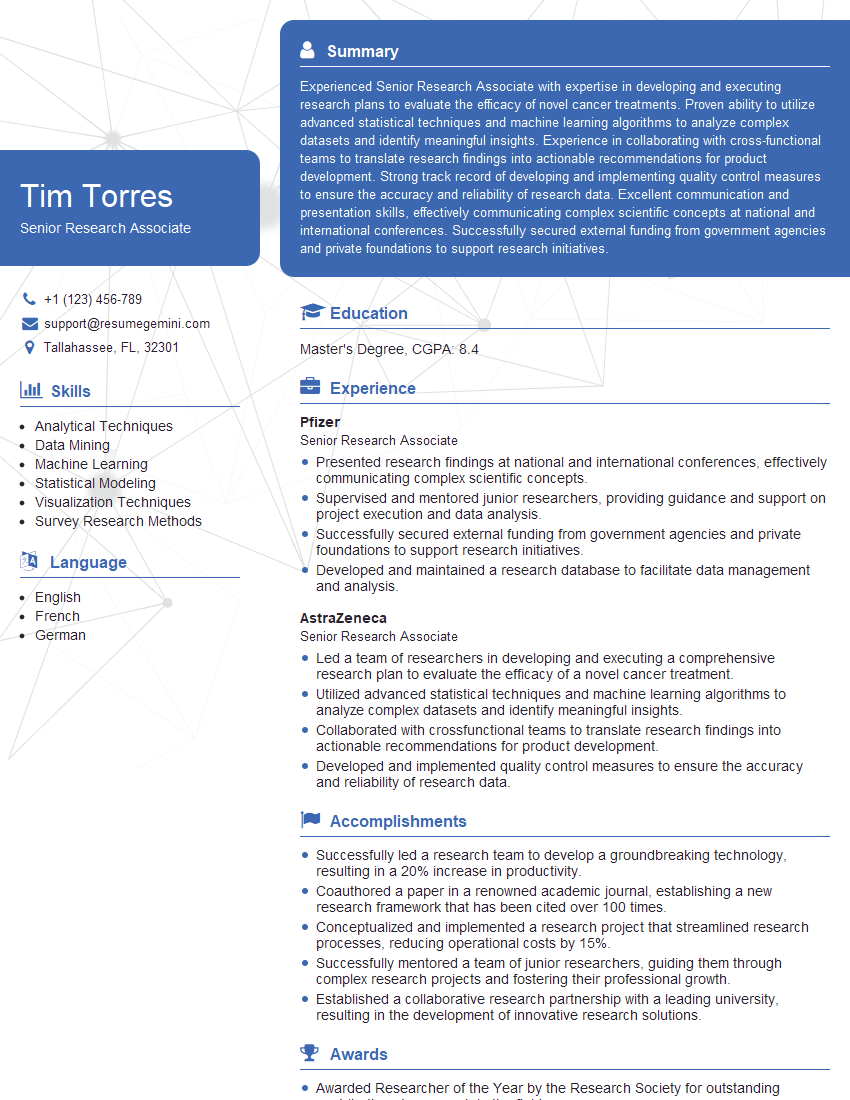
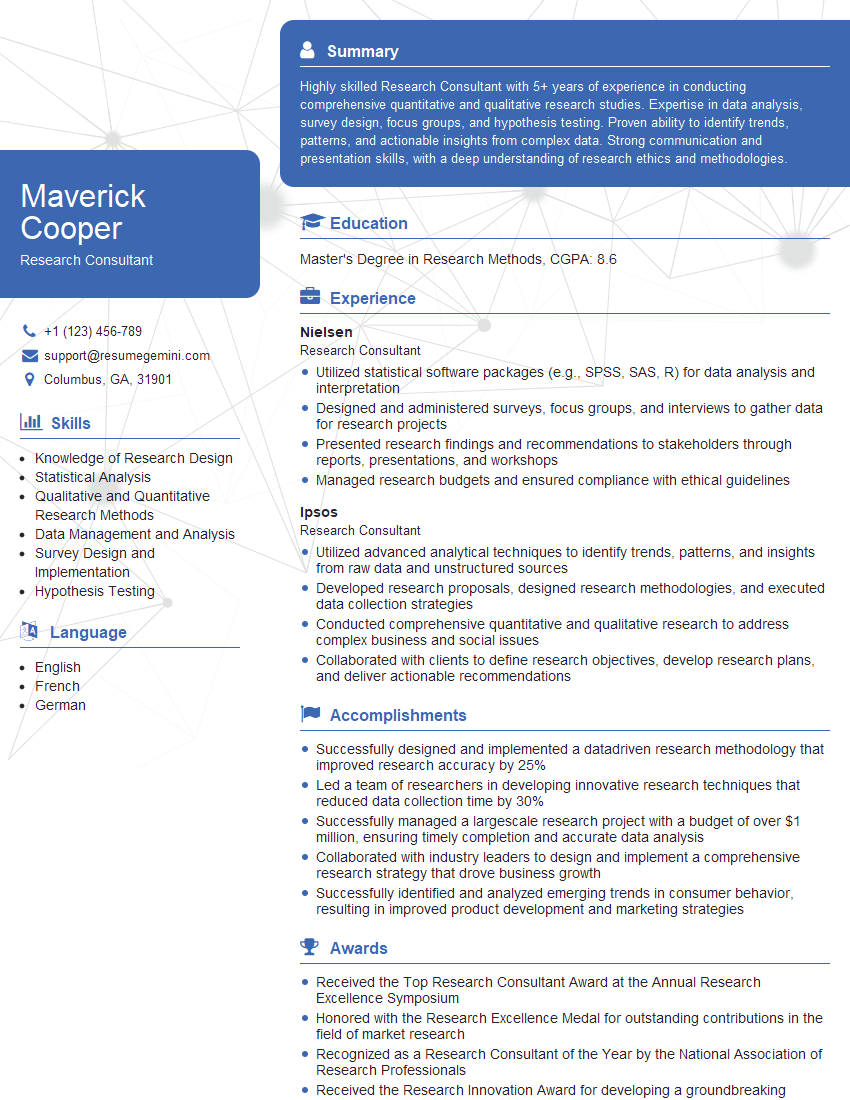
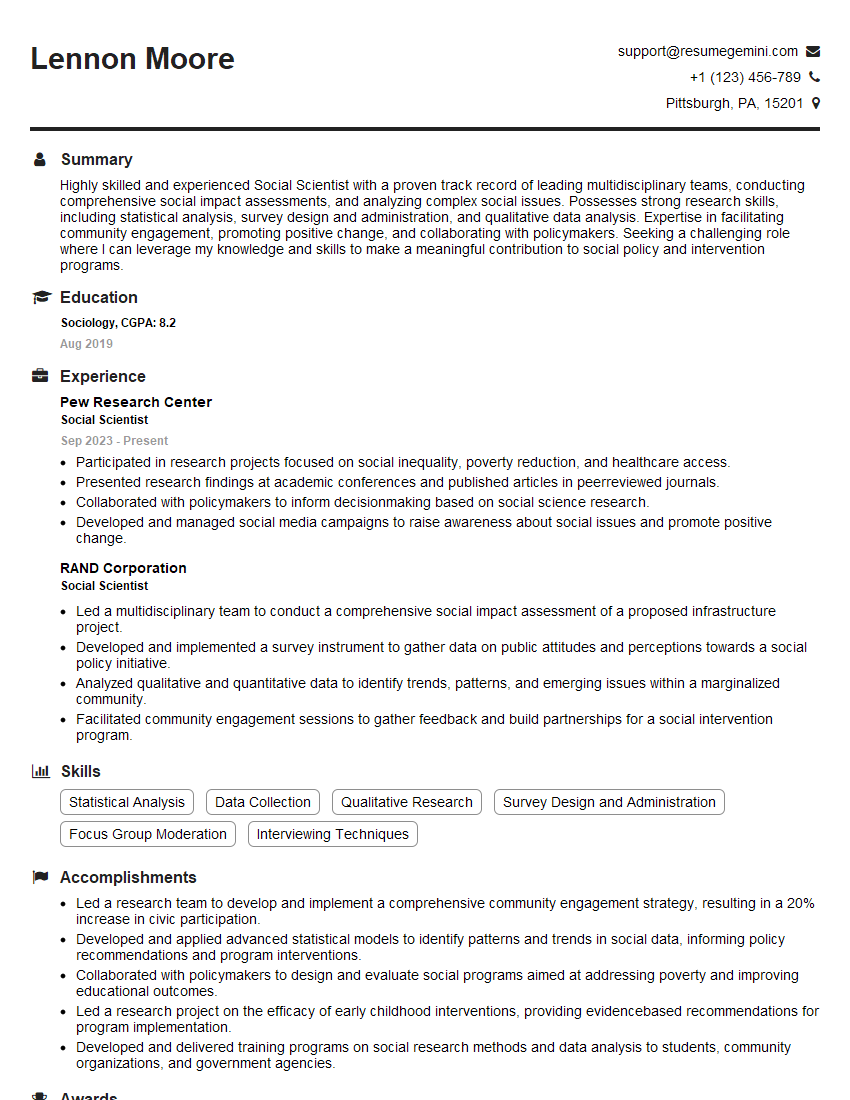
Mastering Qualitative Data Analysis with NVivo or Atlas.ti is crucial for advancing your career in research and related fields. It showcases your ability to handle complex data, draw insightful conclusions, and communicate your findings effectively. To maximize your job prospects, creating a strong, ATS-friendly resume is essential. ResumeGemini is a trusted resource that can help you build a professional and impactful resume tailored to highlight your skills in Qualitative Data Analysis. Examples of resumes specifically crafted for roles utilizing NVivo and Atlas.ti are available to help guide your resume development.
Explore more articles
Users Rating of Our Blogs
Share Your Experience
We value your feedback! Please rate our content and share your thoughts (optional).
What Readers Say About Our Blog
To the interviewgemini.com Webmaster.
Very helpful and content specific questions to help prepare me for my interview!
Thank you
To the interviewgemini.com Webmaster.
This was kind of a unique content I found around the specialized skills. Very helpful questions and good detailed answers.
Very Helpful blog, thank you Interviewgemini team.