Unlock your full potential by mastering the most common Abdominoplasty interview questions. This blog offers a deep dive into the critical topics, ensuring you’re not only prepared to answer but to excel. With these insights, you’ll approach your interview with clarity and confidence.
Questions Asked in Abdominoplasty Interview
Q 1. Describe the different types of abdominoplasty procedures.
Abdominoplasty, or tummy tuck, encompasses several procedures tailored to individual needs. The primary types are:
- Full Abdominoplasty (Complete Tummy Tuck): This involves removing excess skin and fat from the lower abdomen, tightening the abdominal muscles (rectus diastases repair), and repositioning the navel. It’s ideal for patients with significant skin laxity and muscle separation.
- Mini Abdominoplasty: This less extensive procedure focuses on the lower abdomen, addressing excess skin and fat below the navel. Muscle tightening is usually less involved. It’s suitable for individuals with less extensive abdominal laxity.
- Extended Abdominoplasty: This procedure addresses a larger area, often extending to the flanks (sides) and possibly including liposuction to contour the waistline. It’s suitable for significant excess skin and fat extending beyond the lower abdomen.
- Reverse Abdominoplasty: This focuses on the upper abdomen, addressing excess skin and fat above the navel. It’s less common than other types but can be necessary in specific cases.
The choice of procedure depends on the patient’s individual anatomy, the extent of skin laxity, muscle separation, and their aesthetic goals. A thorough consultation is crucial to determine the best approach.
Q 2. Explain the pre-operative assessment for an abdominoplasty patient.
Pre-operative assessment for abdominoplasty is meticulous and critical for ensuring patient safety and optimal outcomes. It involves:
- Detailed Medical History: This includes reviewing any past surgeries, medications, allergies, smoking history (a significant risk factor), and existing medical conditions. We particularly focus on assessing cardiovascular health, clotting disorders, and potential complications.
- Physical Examination: A thorough examination assesses the abdomen’s skin elasticity, amount of excess fat and skin, the degree of muscle separation (diastasis recti), and the overall body composition. Photographs are taken to document the pre-operative condition.
- Laboratory Tests: Blood tests are typically performed to check complete blood count, coagulation profile, and liver and kidney function.
- Imaging Studies (Optional): In some cases, imaging studies like ultrasound may be used to evaluate the abdominal wall musculature and identify potential hernias.
- Patient Counseling: We spend significant time discussing realistic expectations, potential risks and complications, recovery process, and post-operative care instructions.
This comprehensive evaluation ensures we identify potential risks and tailor the surgical plan to each patient’s specific needs and health profile. Open and honest communication is key.
Q 3. Detail the surgical steps involved in a standard abdominoplasty.
A standard abdominoplasty involves these key steps:
- Incision: An incision is made across the lower abdomen, typically hidden within the bikini line. The length varies depending on the extent of the procedure.
- Skin and Fat Separation: The skin and subcutaneous fat are carefully separated from the underlying abdominal muscles. This step requires precise dissection to avoid damaging nerves and blood vessels.
- Muscle Repair (Plication): The separated rectus abdominis muscles (the “six-pack” muscles) are tightened and sutured together to repair diastasis recti. This step significantly improves abdominal contour.
- Excess Skin and Fat Removal: Excess skin and fat are carefully excised, leaving behind the desired abdominal contour. The amount removed depends on the individual patient’s needs.
- Navel Repositioning (if applicable): In a full abdominoplasty, the navel is carefully excised from the surrounding tissues and repositioned to its new location after the skin and muscle are tightened.
- Closure: The skin is then closed using absorbable sutures. Drains are typically placed to remove excess fluid.
- Dressing Application: A compression garment is applied to help reduce swelling and support the healing process.
The specific steps and techniques may vary slightly depending on the individual patient’s anatomy and the surgeon’s preference.
Q 4. What are the common complications associated with abdominoplasty?
While abdominoplasty is generally safe, complications can occur. These include:
- Hematoma/Seroma: Collection of blood or fluid under the skin, which may require drainage.
- Infection: Bacterial infection can occur at the surgical site, requiring antibiotic treatment.
- Wound Dehiscence: Separation of the surgical wound, usually requiring re-suturing.
- Seromas: Fluid collections beneath the skin which may need aspiration.
- Skin Necrosis: Death of skin tissue due to insufficient blood supply, a rare but serious complication.
- Poor Scarring: While the incision is typically hidden, scarring is inevitable and its appearance varies among patients.
- Pain: Postoperative pain is common, but generally manageable with medication.
- Numbness/Tingling: Temporary or permanent changes in sensation are possible near the surgical site.
- Unsatisfactory Cosmetic Outcome: While rare with skilled surgeons, the final result may not always meet the patient’s expectations.
Minimizing risks involves careful patient selection, meticulous surgical technique, and thorough postoperative care. Open communication with the patient regarding potential complications is crucial before and after surgery.
Q 5. How do you manage post-operative pain and swelling in abdominoplasty patients?
Post-operative pain and swelling are common after abdominoplasty. Management strategies include:
- Pain Medication: Prescription pain relievers are typically prescribed to manage pain. We generally start with stronger medication and taper off as pain reduces.
- Compression Garment: Wearing a compression garment consistently helps reduce swelling and supports the abdominal wall.
- Ice Packs: Applying ice packs to the surgical area can reduce pain and swelling.
- Elevation: Elevating the legs can help reduce swelling.
- Activity Restriction: Patients are advised to restrict strenuous activities initially to promote healing and reduce the risk of complications.
- Drain Management: Drains are often used to remove excess fluid, and their management is essential to prevent infection.
- Follow-up Appointments: Regular follow-up appointments are crucial to monitor healing, manage complications, and assess the patient’s progress.
Individual pain tolerance and healing vary greatly. It is important to monitor for excessive pain or swelling as these may indicate complications.
Q 6. Describe your experience with liposuction in conjunction with abdominoplasty.
Liposuction is often combined with abdominoplasty to achieve optimal results, particularly in patients with localized fat deposits in addition to excess skin. Liposuction can refine the abdominal contour and improve overall aesthetic outcome.
In my experience, combining liposuction and abdominoplasty is highly effective in addressing more complex cases. It allows me to target specific areas of fat deposition, refining the abdomen’s contours beyond what a tummy tuck alone can achieve. For instance, we might use liposuction to address stubborn fat pockets on the flanks, improving the overall waistline definition. However, it’s crucial to assess the patient’s candidacy carefully; it’s not appropriate for all patients. The combination procedure increases the overall surgical time and risk profile; therefore careful planning and patient selection are essential.
For example, a patient with significant skin laxity and moderate amounts of excess fat in the flanks and abdomen would be an ideal candidate for a combined procedure. The abdominoplasty addresses the skin laxity and muscle separation, while the liposuction targets the fat deposits for a more refined and sculpted appearance.
Q 7. What are the indications and contraindications for abdominoplasty?
Indications for abdominoplasty include significant excess skin and fat in the abdomen, diastasis recti (separation of abdominal muscles), and poor abdominal wall tone resulting in an unsatisfactory aesthetic appearance. Patients seeking improvement in body image and contour are also candidates.
Contraindications include significant health problems like uncontrolled hypertension, cardiac disease, pulmonary disease, or bleeding disorders, current or past smoking, unrealistic expectations, obesity, and poor wound healing capability. Active infections and pregnancy are also contraindications. A thorough assessment of the patient’s overall health and surgical risk factors is crucial to determine suitability for the procedure.
Furthermore, patients with a Body Mass Index (BMI) significantly above the healthy range may be advised to lose weight before undergoing abdominoplasty, as weight fluctuations can affect the outcome and increase the risk of complications. Open and honest communication about the risks and benefits of the procedure is crucial to ensure informed consent.
Q 8. How do you counsel patients on realistic expectations for abdominoplasty results?
Managing patient expectations is paramount in abdominoplasty. I begin by emphasizing that while abdominoplasty can significantly improve the appearance of the abdomen, it’s not a weight-loss solution. I show patients before-and-after photos of similar body types and discuss realistic outcomes based on their individual anatomy and skin elasticity. We discuss potential limitations, such as remaining stretch marks (which we can often minimize but not eliminate entirely) and the possibility of some residual looseness, particularly with significant weight fluctuation post-surgery. I use a collaborative approach, actively listening to their goals and concerns, to ensure a shared understanding of what’s achievable. For example, I might explain that while we can tighten the abdominal muscles and remove excess skin, achieving a completely flat, taut abdomen might not be realistic for everyone depending on factors like skin quality and the amount of excess fat.
I also explain the potential for scarring, and we discuss scar placement and management strategies. Open communication is key to avoiding disappointment and fostering a positive patient experience. I make sure they understand the recovery process, including potential discomfort, bruising, and swelling, to set realistic expectations from the initial consultation through post-operative care.
Q 9. Explain your approach to patient selection for abdominoplasty.
Patient selection for abdominoplasty is crucial for achieving optimal results and minimizing complications. I carefully evaluate each patient’s medical history, current health status, and realistic expectations. I rule out any contraindications, such as significant smoking, uncontrolled diabetes, or a history of significant wound-healing problems. Candidates should be at or near their ideal weight, as significant weight fluctuations post-surgery can negatively impact the outcome.
Furthermore, I assess the amount of skin redundancy and the degree of diastasis recti (separation of the abdominal muscles). Patients with minimal skin excess and well-toned abdominal muscles may be better suited for a mini-abdominoplasty, while those with significant laxity might require a full abdominoplasty, potentially combined with liposuction. A thorough physical exam, including palpation of the abdominal wall, helps determine the appropriate procedure and provides realistic expectations. For example, if a patient has substantial excess fat, I’ll counsel them on the possibility of combining liposuction with the abdominoplasty for a more comprehensive result. Ultimately, careful patient selection ensures better outcomes and a higher level of patient satisfaction.
Q 10. What are the different types of incisions used in abdominoplasty?
The incision type in abdominoplasty depends on the extent of the procedure and the patient’s anatomy. A full abdominoplasty typically involves a low, transverse incision across the lower abdomen, hidden within the bikini line. This incision allows for extensive skin and fat removal, and also facilitates addressing diastasis recti. A mini-abdominoplasty involves a shorter, lower incision, focusing primarily on the lower abdomen, suitable for patients with less skin excess and laxity. It doesn’t address the upper abdomen.
Sometimes, an extended abdominoplasty may be required, extending the incision further around the flanks for more significant contouring. The choice of incision is individualized, considering the extent of skin and fat excess, the patient’s body habitus, and their aesthetic goals. It is essential to meticulously plan the incision to minimize scarring and optimize cosmetic results. A proper understanding of skin tension lines aids in optimal placement for the best scar outcomes.
Q 11. Describe your technique for closing the abdominal fascia in abdominoplasty.
Closing the abdominal fascia is a critical step in abdominoplasty, as it provides support and improves the abdominal contour. My technique involves carefully approximating (bringing together) the rectus abdominis muscles in the midline, addressing any diastasis recti. I use absorbable sutures (such as polydioxanone or poliglecaprone) to meticulously close the fascia in layers, creating a strong, tension-free closure. I avoid excessive tension to prevent dehiscence (wound separation) and improve the aesthetic outcome.
This process is very important in achieving the desired results; we aim to recreate a firm, well-defined abdominal wall. I carefully assess the tension during closure and adjust the technique as needed. In some cases, a mesh may be used for additional reinforcement, particularly in patients with significant diastasis recti or weakened abdominal walls. The quality of the fascial closure significantly impacts the long-term outcome and patient satisfaction.
Q 12. How do you manage hematoma or seroma formation after abdominoplasty?
Hematoma (blood collection) and seroma (fluid collection) formation are potential complications after abdominoplasty. Early detection and prompt management are crucial. I closely monitor patients in the immediate postoperative period, checking for signs of increasing pain, swelling, or discoloration. Regular assessment involves physical examination and sometimes imaging studies (ultrasound) to confirm the diagnosis.
Conservative management often involves close monitoring, compression dressings, and elevation of the legs to promote fluid resorption. Small hematomas or seromas may resolve spontaneously. However, larger collections usually require intervention. This can involve needle aspiration under ultrasound guidance, removing the collected fluid and minimizing the risk of infection. In rare cases, surgical drainage may be necessary to prevent infection and ensure proper healing.
Q 13. What are the different types of drains used in abdominoplasty and when would you use each type?
Several drain types can be used in abdominoplasty, each with specific advantages and disadvantages. Jackson-Pratt drains are commonly used due to their ease of use and effectiveness in removing fluid. They are low-pressure drains that passively collect fluid and have a collection chamber. These are particularly effective for larger procedures or for individuals with a higher risk of fluid accumulation. Blake drains are another common option, characterized by their flatter profile, potentially leading to greater patient comfort. They function similarly to Jackson-Pratt drains. The choice of drain is often based on surgeon preference and the individual patient’s circumstances.
The decision to use drains is individualized. Patients with a higher risk of significant fluid accumulation (those with significant tissue dissection or a history of fluid collections after previous surgeries) typically benefit from drainage. The drains are generally removed when the output becomes minimal – typically a few days to a week post-surgery, depending on the clinical situation. It is crucial to monitor patients after drain removal for any signs of excessive swelling or fluid accumulation. The goal is to ensure that the surgical site heals without complications.
Q 14. How do you address skin redundancy in abdominoplasty?
Addressing skin redundancy is a fundamental aspect of abdominoplasty. Excess skin is removed by carefully planning the incision and excising the appropriate amount of tissue. The amount of skin to be removed is carefully assessed pre-operatively, taking into account the patient’s desired outcome and the need to maintain sufficient skin for closure without creating excessive tension. This requires careful planning and execution to avoid creating tension on the closure, which can compromise blood supply and lead to wound healing issues.
During the procedure, the skin is carefully undermined (separated from the underlying tissue) to allow for the removal of excess fat and to achieve the desired contour. The remaining skin is then carefully stretched and sutured into a natural-looking position. The precision and artistry with which this is accomplished contributes significantly to the final aesthetic result. In some cases, liposuction might be performed prior to skin removal to refine the abdominal contour and reduce the amount of skin that needs to be excised, improving the cosmetic outcome.
Q 15. What is your experience with revision abdominoplasty?
Revision abdominoplasty addresses unsatisfactory results from a previous abdominoplasty. These revisions can range from minor touch-ups to complex procedures addressing complications like skin necrosis, seroma formation, or unsatisfactory contouring. My experience encompasses a wide spectrum of revision cases, including those requiring significant skin and tissue excision, muscle repair, and fat grafting. I carefully assess each patient’s individual needs, thoroughly reviewing previous surgical notes and imaging, to develop a personalized surgical plan. For example, I recently revised a case where a previous surgeon had insufficiently addressed diastasis recti (separation of abdominal muscles), leading to a persistent bulge. The revision involved a complete muscle repair along with additional skin resection to achieve the desired aesthetic outcome. Careful planning and meticulous technique are crucial to minimize the risks associated with these often challenging procedures.
Career Expert Tips:
- Ace those interviews! Prepare effectively by reviewing the Top 50 Most Common Interview Questions on ResumeGemini.
- Navigate your job search with confidence! Explore a wide range of Career Tips on ResumeGemini. Learn about common challenges and recommendations to overcome them.
- Craft the perfect resume! Master the Art of Resume Writing with ResumeGemini’s guide. Showcase your unique qualifications and achievements effectively.
- Don’t miss out on holiday savings! Build your dream resume with ResumeGemini’s ATS optimized templates.
Q 16. Describe your approach to managing wound complications in abdominoplasty.
Wound complications in abdominoplasty, such as infection, seroma (fluid collection), hematoma (blood collection), and skin necrosis, are treated promptly and aggressively. My approach begins with meticulous surgical technique, ensuring proper hemostasis (stopping bleeding) and meticulous tissue handling. Post-operatively, diligent monitoring for signs of infection (redness, swelling, pain, fever) is paramount. For seromas, we might employ aspiration with ultrasound guidance to remove excess fluid. Antibiotic prophylaxis is routinely used, and we actively manage any infection with appropriate intravenous antibiotics and surgical debridement if necessary. In cases of skin necrosis, the extent of damage dictates treatment; it may involve surgical excision of the necrotic tissue, followed by wound care and potentially skin grafting. I always emphasize preventative measures with patients, such as adherence to prescribed medications and post-operative instructions, minimizing the chance of complications in the first place. For example, a patient recently presented with a small seroma; we aspirated the fluid, and after close monitoring, she made a full recovery without further complications.
Q 17. Explain your understanding of the anatomy relevant to abdominoplasty.
A thorough understanding of abdominal wall anatomy is crucial for safe and effective abdominoplasty. This includes knowledge of the skin, subcutaneous tissue, muscles (rectus abdominis, external oblique, internal oblique, transversus abdominis), fascia, and peritoneum. The location and course of nerves and blood vessels must also be meticulously considered to avoid injury. For example, the location of the superficial inferior epigastric vessels is critical during flap elevation to prevent vascular compromise. Understanding the relationship between the rectus abdominis muscles and their fascia, along with any diastasis recti, is essential for appropriate muscle repair. Furthermore, awareness of the anatomy of the umbilicus is essential for its proper relocation and preservation during the procedure. A deep understanding of these structures allows for precise dissection, minimizing complications and maximizing aesthetic results.
Q 18. How do you minimize scarring in abdominoplasty?
Minimizing scarring is a key goal in abdominoplasty. This starts with precise surgical technique, using minimally invasive approaches whenever feasible and creating small, strategically placed incisions. Careful tissue handling, including gentle dissection and precise suturing, reduces trauma and promotes optimal wound healing. The type of suture material used also impacts scarring; absorbable sutures are preferred to minimize the need for suture removal. Post-operative care plays a vital role, including the use of appropriate dressings and taping techniques to minimize tension on the wound. Furthermore, I advise patients on the use of silicone gel sheeting or pressure garments to further reduce scar prominence and improve cosmetic outcome. The use of meticulous surgical technique, careful post-op care, and patient adherence to instructions are crucial in the pursuit of minimal scarring, ultimately improving the long-term aesthetic result.
Q 19. What are the key elements of post-operative care following abdominoplasty?
Post-operative care after abdominoplasty is critical for optimal healing and minimizing complications. This includes strict adherence to pain medication protocols, regular wound dressing changes, and monitoring for signs of infection. Patients are instructed on proper hygiene and wound care, and advised against strenuous activity for several weeks post-surgery. The use of compression garments is essential to reduce swelling and support the healing tissues. Regular follow-up appointments are scheduled to monitor healing, address any concerns, and assess the cosmetic outcome. For example, I encourage my patients to walk regularly, beginning with short walks soon after surgery, to promote blood flow and prevent complications like deep vein thrombosis (DVT). Detailed instructions and a clear communication strategy between the patient and surgical team are integral to successful post-operative care.
Q 20. How do you counsel patients about the potential risks and benefits of abdominoplasty?
Counseling patients about the risks and benefits of abdominoplasty is a crucial aspect of my practice. I explain the procedure’s benefits, which include improved body contour and self-confidence, while thoroughly discussing potential risks such as infection, seroma formation, hematoma, skin necrosis, and changes in sensation. I provide realistic expectations and show before-and-after photos to illustrate possible outcomes. We discuss lifestyle factors such as smoking, which can negatively affect healing, and the need for a healthy diet and exercise post-surgery. I emphasize that abdominoplasty is not a weight-loss procedure; rather, it’s designed to improve the contour of the abdomen in patients who have achieved a stable weight. Informed consent is obtained only after patients have a thorough understanding of the procedure’s potential benefits and risks, ensuring they make an informed decision aligned with their personal goals and expectations.
Q 21. Describe your experience with different types of anesthesia used in abdominoplasty.
The choice of anesthesia for abdominoplasty depends on several factors, including the patient’s medical history, the extent of the procedure, and the surgeon’s preference. I have extensive experience with both general anesthesia and monitored anesthesia care (MAC), also known as twilight sedation. General anesthesia provides complete unconsciousness and muscle relaxation, allowing for a more controlled surgical environment, particularly for extensive procedures. MAC offers a lighter level of sedation, allowing the patient to remain more awake and responsive during the surgery, often preferred for less extensive procedures. The decision is made in collaboration with the anesthesiologist and the patient, taking into account individual factors and preferences. Safety is always the paramount concern, and careful monitoring is essential regardless of the chosen anesthesia technique. Post-operative pain management strategies are tailored to the individual patient and the type of anesthesia used.
Q 22. What imaging techniques are useful in pre-operative planning for abdominoplasty?
Pre-operative imaging in abdominoplasty is crucial for accurate surgical planning and helps avoid surprises during the procedure. We primarily utilize high-resolution photography, which allows for detailed assessment of skin laxity, fat distribution, and muscle separation. This is complemented by a thorough physical examination, of course. In cases where there’s suspicion of a hernia, or significant abdominal wall pathology, we often employ ultrasound, which provides a real-time, non-invasive image of the underlying structures. This is especially helpful in identifying the extent of diastasis recti (separation of the rectus abdominis muscles) and the presence of any hernias. In select cases, CT scans may provide more comprehensive information about the abdominal wall anatomy but are generally reserved for complex cases where the ultrasound findings are inconclusive.
Q 23. How do you manage patients with significant diastasis recti?
Managing significant diastasis recti requires a tailored approach depending on the severity and the patient’s goals. For mild to moderate diastasis, a simple plication (suturing the separated muscles together) during the abdominoplasty is often sufficient. This procedure involves closing the gap between the rectus muscles, restoring abdominal wall integrity, and providing improved abdominal contour. However, for severe diastasis, a more extensive approach might be necessary. This could involve a combination of plication and the use of mesh reinforcement, especially in cases where the abdominal wall is significantly weakened. The mesh provides additional support to the reconstructed abdominal wall. In such circumstances, I always explain the pros and cons of mesh augmentation to the patient, including the possibility of complications such as mesh infection or erosion. Careful patient selection is vital. Post-operative management always includes a structured rehabilitation program, focusing on core muscle strengthening to prevent recurrence.
Q 24. What are your experience with umbilical transposition in abdominoplasty?
Umbilical transposition is a routine aspect of abdominoplasty and is crucial for achieving a natural-looking result. The umbilical transposition involves carefully dissecting the umbilical stalk, including its vascular supply, to reposition the umbilicus in its new location after the abdominal wall has been redraped. The key is to ensure adequate blood supply to prevent necrosis (tissue death) of the umbilicus. My approach emphasizes meticulous dissection and precise placement. There is always some degree of tension on the umbilical site, but the quality of the tissue and sufficient blood flow to the umbilicus are the critical factors which I monitor closely. Post-operatively, we carefully assess the umbilical site for any signs of compromise. We also ensure that the umbilicus is aesthetically pleasing and well-integrated into the overall abdominal contour.
Q 25. How do you approach patients with significant abdominal wall laxity?
Patients with significant abdominal wall laxity pose unique challenges. The degree of laxity often dictates the type of procedure. For moderate laxity, a standard abdominoplasty is often sufficient to address the excess skin and fat. However, for severe laxity, a more extensive procedure, such as a fleur-de-lis (extended abdominoplasty) or even a combination with other body contouring procedures like liposuction, may be necessary. The fleur-de-lis technique extends the incision further around the flanks, allowing for more extensive removal of excess skin and fat. We carefully assess the patient’s body habitus, elasticity of the skin and the extent of abdominal wall laxity to individualize each surgical plan. Realistic expectations are crucial in these cases; even with extensive surgery, some laxity might remain. Postoperative expectations are thoroughly discussed.
Q 26. What is your experience with minimally invasive abdominoplasty techniques?
Minimally invasive abdominoplasty techniques are constantly evolving. While traditional open abdominoplasty remains the gold standard for many cases, minimally invasive approaches, such as liposuction-assisted abdominoplasty or mini-abdominoplasties, are valuable for patients with less severe abdominal wall laxity. These techniques often involve smaller incisions, resulting in less scarring and quicker recovery times. However, these minimally invasive techniques may not be suitable for patients with significant skin laxity or diastasis recti, where a more extensive approach is required. I have seen an increase in the utilization of these techniques in my practice, however, I always assess patient candidacy rigorously to ensure the best outcomes.
Q 27. How do you handle unexpected intraoperative findings during abdominoplasty?
Unexpected intraoperative findings are not uncommon in abdominoplasty. This could range from unnoticed hernias to excessive bleeding or adhesions. My approach involves a methodical assessment of the situation, which often begins with careful inspection and palpation. In case of a previously undiagnosed hernia, we may need to incorporate hernia repair into the procedure, which might require a modified surgical approach. If there is excessive bleeding, appropriate measures such as controlled pressure or electrocautery are utilized. If there are significant adhesions, which might be related to previous surgeries, careful dissection and mobilization of the abdominal wall are necessary. The key is to remain calm, adapt the surgical plan as needed, and prioritize patient safety. The patient’s family is always kept informed of any developments during the procedure.
Q 28. Describe your approach to managing patient expectations after abdominoplasty.
Managing patient expectations is paramount for a successful abdominoplasty outcome. This begins with a thorough consultation, where realistic goals are established. I explain the procedure, potential benefits, limitations, and potential risks in detail. I emphasize that abdominoplasty is not a weight-loss solution and show before-and-after photos to illustrate potential results. Furthermore, I discuss the recovery process, including potential complications like seromas (fluid collections) or hematomas (blood collections) and how these are managed. Open and honest communication throughout the process is crucial. Follow-up appointments are scheduled to monitor progress and address any concerns. The patient and I work together to achieve the best possible outcomes, keeping in mind that individual results may vary.
Key Topics to Learn for Abdominoplasty Interview
- Anatomy and Physiology: Thorough understanding of abdominal wall anatomy, including muscles, fascia, nerves, and blood supply. Consider the implications of anatomical variations.
- Surgical Techniques: Mastery of different abdominoplasty techniques (e.g., mini-abdominoplasty, extended abdominoplasty, liposuction integration). Practice explaining the advantages and disadvantages of each.
- Pre-operative Assessment and Planning: Discuss patient selection criteria, risk assessment, and the importance of realistic patient expectations. How do you address contraindications?
- Surgical Complications and Management: Be prepared to discuss common complications (e.g., seroma, hematoma, infection, skin necrosis) and your approach to prevention and management.
- Post-operative Care and Patient Education: Detail the importance of post-operative instructions, pain management strategies, and monitoring for complications. How do you build a strong doctor-patient relationship?
- Aesthetic Considerations: Understanding the principles of aesthetic surgery and how to achieve natural-looking results. How do you tailor the procedure to individual patient needs and body types?
- Advanced Techniques and Innovations: Research and familiarize yourself with recent advancements in abdominoplasty, including minimally invasive techniques and new technologies.
- Ethical Considerations and Informed Consent: Understand the importance of obtaining informed consent, addressing patient concerns, and maintaining ethical standards in practice.
Next Steps
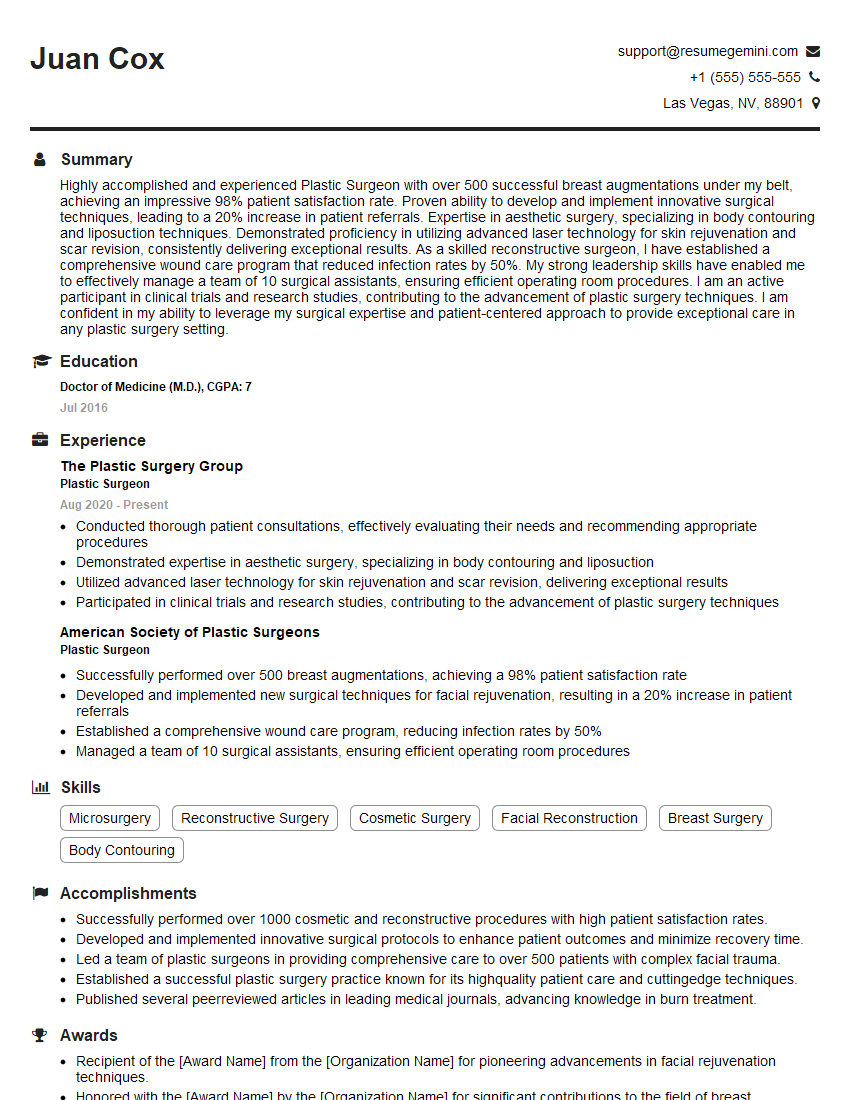
Mastering abdominoplasty opens doors to exciting career opportunities and allows you to make a significant difference in patients’ lives. A strong resume is crucial to showcasing your skills and experience effectively to potential employers. To significantly increase your chances of landing your dream job, consider crafting an ATS-friendly resume that highlights your key qualifications and achievements. ResumeGemini is a trusted resource to help you build a professional and impactful resume. Examples of resumes tailored to abdominoplasty specialists are available for your reference, guiding you through the process of creating a winning application.

Explore more articles
Users Rating of Our Blogs
Share Your Experience
We value your feedback! Please rate our content and share your thoughts (optional).
What Readers Say About Our Blog
To the interviewgemini.com Webmaster.
Very helpful and content specific questions to help prepare me for my interview!
Thank you
To the interviewgemini.com Webmaster.
This was kind of a unique content I found around the specialized skills. Very helpful questions and good detailed answers.
Very Helpful blog, thank you Interviewgemini team.