Preparation is the key to success in any interview. In this post, we’ll explore crucial AC Circuit Analysis interview questions and equip you with strategies to craft impactful answers. Whether you’re a beginner or a pro, these tips will elevate your preparation.
Questions Asked in AC Circuit Analysis Interview
Q 1. Explain the difference between RMS and average values of an AC waveform.
Both RMS (Root Mean Square) and average values describe the magnitude of an AC waveform, but they do so in different ways. The average value simply represents the mean of the waveform over one cycle. For a symmetrical waveform like a pure sine wave, the average value is zero because the positive and negative halves cancel each other out. However, the RMS value represents the equivalent DC voltage that would produce the same average power dissipation in a resistive load. It’s a more practical measure for AC power calculations because it accounts for the effect of the waveform’s shape.
Consider a sinusoidal voltage waveform: V(t) = Vm*sin(ωt), where Vm is the peak voltage. Its average value over one cycle is 0. However, its RMS value is Vm/√2. This means a 120V RMS household outlet actually has a peak voltage of approximately 170V.
In essence, the RMS value gives you a better sense of the ‘effective’ voltage or current of an AC signal, especially when considering power calculations in circuits.
Q 2. Define impedance and admittance in an AC circuit.
In AC circuit analysis, impedance (Z) is the total opposition to the flow of current, encompassing resistance, inductive reactance, and capacitive reactance. It’s a complex quantity represented as Z = R + jX, where R is resistance, X is reactance (XL - XC), and j is the imaginary unit. Impedance is measured in ohms (Ω).
Admittance (Y) is the reciprocal of impedance, representing the ease with which current flows. It’s also a complex quantity: Y = 1/Z = G + jB, where G is conductance and B is susceptance. Admittance is measured in siemens (S).
Think of it like this: resistance is like friction in a pipe, impeding water flow. Impedance adds to this friction the effects of inertia (inductance) and compliance (capacitance) in the pipe itself.
Q 3. How do you calculate the total impedance of a series RLC circuit?
The total impedance of a series RLC circuit is the phasor sum of the individual impedances of the resistor (R), inductor (L), and capacitor (C). The impedance of the resistor is simply R. The impedance of the inductor is jωL (where ω is the angular frequency), and the impedance of the capacitor is -j/(ωC).
Therefore, the total impedance Z is given by:
Z = R + jωL - j/(ωC) = R + j(ωL - 1/(ωC))
This can also be expressed in polar form as Z = |Z|∠θ, where |Z| = √(R² + (ωL - 1/(ωC))²) and θ = arctan((ωL - 1/(ωC))/R). The magnitude |Z| represents the total impedance and θ is the phase angle between the voltage and current.
Q 4. How do you calculate the total impedance of a parallel RLC circuit?
For a parallel RLC circuit, calculating the total impedance is easier using admittance. The admittance of each component is calculated individually and then added to find the total admittance. The total impedance is then the reciprocal of the total admittance.
The admittance of the resistor is G = 1/R, the admittance of the inductor is BL = -j/(ωL), and the admittance of the capacitor is BC = jωC.
The total admittance Y is:
Y = G + j(ωC - 1/(ωL))
The total impedance Z is:
Z = 1/Y = 1/(G + j(ωC - 1/(ωL)))
This can also be expressed in polar form. Note that working with admittances simplifies parallel circuit analysis.
Q 5. Explain resonance in an RLC circuit. What are its characteristics?
Resonance in an RLC circuit occurs when the inductive reactance (ωL) and capacitive reactance (1/(ωC)) are equal in magnitude, but opposite in sign. This results in a purely resistive impedance, meaning the imaginary part of the impedance is zero. At resonance, the circuit’s impedance is at a minimum (for a series RLC) or maximum (for a parallel RLC).
Characteristics of Resonance:
- Minimum Impedance (Series): In a series RLC circuit, the impedance at resonance is just the resistance R, allowing maximum current flow for a given voltage.
- Maximum Impedance (Parallel): In a parallel RLC circuit, the impedance is maximum at resonance, minimizing current flow.
- Resonant Frequency (f0): The frequency at which resonance occurs is called the resonant frequency and is given by
f0 = 1/(2π√(LC)). - Sharpness of Resonance (Q-factor): The sharpness of resonance is quantified by the Q-factor, which is a measure of the circuit’s selectivity. A higher Q-factor indicates a sharper resonance.
Resonance is crucial in many applications, including radio tuning, filters, and oscillators.
Q 6. Describe the concept of phasors and their use in AC circuit analysis.
Phasors are complex numbers that represent sinusoidal quantities (voltage and current) in AC circuits. They provide a convenient way to handle the phase relationships between different sinusoidal signals. A phasor is represented by a vector in the complex plane, where the magnitude represents the amplitude of the sinusoidal quantity and the angle represents its phase shift.
Using phasors simplifies AC circuit analysis because we can treat sinusoidal quantities as vectors, allowing us to use vector algebra instead of trigonometry to solve circuit problems. Instead of dealing with cumbersome trigonometric equations, we can add and subtract phasors using complex number arithmetic.
For example, consider a voltage phasor V = Vm∠θ, where Vm is the peak voltage and θ is the phase angle. We can easily add this to another voltage phasor using complex number addition to get the resultant voltage.
Q 7. Explain the use of Laplace transforms in AC circuit analysis.
Laplace transforms provide a powerful mathematical tool for analyzing transient and steady-state behavior in AC circuits. They transform differential equations, which often describe circuit behavior, into algebraic equations that are easier to solve. After solving the algebraic equations in the s-domain (Laplace domain), the inverse Laplace transform is applied to obtain the solution in the time domain.
Laplace transforms are particularly useful for analyzing circuits with complex waveforms, non-sinusoidal sources, and systems with initial conditions. They handle transient responses (how a circuit behaves when initially energized or subjected to a sudden change) more effectively than phasor analysis, which primarily focuses on steady-state sinusoidal responses.
The use of Laplace transforms allows engineers to analyze complex circuits with multiple elements and sources in a systematic and efficient manner, especially when dealing with situations involving switching operations or sudden changes in circuit parameters.
Q 8. How do you analyze circuits with multiple AC sources?
Analyzing circuits with multiple AC sources requires applying the principle of superposition. This powerful technique allows us to treat each source independently and then sum the individual effects. Imagine it like this: each AC source is a musician playing their instrument. Superposition lets us listen to each musician solo before hearing the full orchestra.
Steps:
- Deactivate all but one source: For voltage sources, replace them with short circuits (wires). For current sources, replace them with open circuits (breaks in the wire).
- Analyze the simplified circuit: Use techniques like Ohm’s Law, nodal analysis, or mesh analysis to determine the voltage and current at each point due to the single active source.
- Repeat for each source: Repeat step 1 and 2 for each of the remaining sources.
- Sum the results: Algebraically add the voltages and currents obtained in each step. Remember that phasors (complex numbers representing AC quantities) must be added vectorially, considering both magnitude and phase.
Example: Consider a circuit with two voltage sources. We would first analyze the circuit with only source 1 active, then with only source 2 active. Finally, we’d add the resulting voltages and currents (as phasors) to obtain the total response due to both sources.
Q 9. What are the different methods for solving AC circuits (e.g., nodal analysis, mesh analysis)?
Several methods exist for solving AC circuits, each with its strengths and weaknesses. The choice often depends on the circuit’s complexity and the information sought.
- Nodal Analysis: This method focuses on the node voltages. It’s particularly efficient for circuits with many nodes and relatively few meshes. We write KCL (Kirchhoff’s Current Law) equations at each node, expressing the currents in terms of node voltages and impedances. Solving these equations simultaneously yields the node voltages.
- Mesh Analysis: This technique utilizes mesh currents. It’s advantageous for circuits with many meshes and relatively few nodes. KVL (Kirchhoff’s Voltage Law) is applied to each mesh, yielding equations involving mesh currents and impedances. Solving these equations gives the mesh currents.
- Superposition: As explained in the previous answer, this method handles circuits with multiple sources by analyzing the effect of each source individually and summing the results.
- Thevenin and Norton Equivalents: These techniques simplify complex circuits by replacing a portion of the circuit with an equivalent voltage source (Thevenin) or current source (Norton) in series/parallel with an impedance. This makes analysis of the remaining circuit much simpler.
Q 10. Explain the concept of power factor and its significance.
The power factor represents the ratio of real power (measured in watts) to apparent power (measured in volt-amperes) in an AC circuit. It indicates how efficiently the circuit uses the supplied power. A power factor of 1 (or 100%) means the circuit is perfectly efficient, while a lower power factor indicates that a significant portion of the apparent power is reactive power, not doing useful work.
Significance: A low power factor increases the current required to deliver the same real power. This leads to higher energy costs, increased heating in wires, and potentially requires larger and more expensive equipment (transformers, generators, cabling).
Calculation: Power factor (PF) = cos(θ), where θ is the phase angle between voltage and current. A purely resistive circuit has PF = 1, while inductive (lagging) and capacitive (leading) circuits have PF < 1.
Q 11. How do you improve the power factor in an AC circuit?
Improving the power factor involves reducing the phase difference between voltage and current. This is typically achieved by adding power factor correction (PFC) capacitors in parallel with inductive loads (motors, transformers).
Methods:
- Capacitor banks: These are the most common method, carefully sized capacitors are added to counteract the inductive reactance, bringing the PF closer to unity.
- Synchronous motors: These motors can operate at a leading power factor and can be used to compensate for lagging loads.
- Active power factor correction (APFC): More advanced systems use electronic circuits to actively adjust the power factor, often providing more precise and dynamic control.
Example: A factory with many induction motors may have a low power factor. Installing a bank of capacitors can reduce the reactive power, improving the power factor and lowering the overall current draw, leading to cost savings.
Q 12. What are the different types of filters used in AC circuits (e.g., low-pass, high-pass, band-pass)?
Filters are circuits designed to selectively pass or block AC signals of specific frequencies. They are vital components in many electronic systems, from audio equipment to power supplies.
- Low-pass filters: These allow low-frequency signals to pass through while attenuating high-frequency signals. Think of it as a sieve letting small particles pass but blocking larger ones.
- High-pass filters: These do the opposite, allowing high-frequency signals to pass while attenuating low-frequency signals.
- Band-pass filters: These pass signals within a specific frequency range while attenuating signals outside that range. Think of a radio tuner selecting a specific station.
- Band-stop filters (notch filters): These attenuate signals within a specific frequency range while passing signals outside that range. This is useful to remove unwanted noise or interference at a particular frequency.
Implementation: Filters are commonly built using combinations of resistors, capacitors, and inductors, forming RC, RL, or RLC circuits. The component values determine the filter’s cutoff frequency (the frequency at which the signal is attenuated by 3dB).
Q 13. Explain the operation of a transformer and its applications.
A transformer is a passive device that transfers electrical energy from one circuit to another through electromagnetic induction without a direct electrical connection. It’s based on Faraday’s law of induction: a changing magnetic field induces a voltage in a nearby conductor.
Operation: A transformer consists of two coils (primary and secondary) wound around a common magnetic core. AC current in the primary coil creates a changing magnetic field, which induces a voltage in the secondary coil. The voltage ratio between the primary and secondary coils is determined by the turns ratio (Np/Ns).
Applications: Transformers are ubiquitous in electrical power systems. They are used to:
- Step-up voltage: Increase voltage for long-distance power transmission.
- Step-down voltage: Reduce voltage for residential and industrial use.
- Isolation: Electrically isolate circuits for safety.
- Impedance matching: Optimize power transfer between circuits with different impedances.
Q 14. Describe the concept of three-phase power systems.
Three-phase power systems are the most common method for generating, transmitting, and distributing electrical power. Instead of a single sinusoidal waveform (like in single-phase systems), they use three sinusoidal waveforms with equal amplitude but 120° phase shifts.
Advantages:
- Higher power capacity: For the same amount of wire, a three-phase system can deliver more power.
- Constant power delivery: The power delivered is relatively constant, unlike single-phase systems which have pulsating power.
- Efficient motor operation: Three-phase motors are simpler, more robust, and more efficient than single-phase motors.
Configuration: Three-phase systems can be configured in either a wye (Y) or delta (Δ) connection. The choice depends on the application and the desired voltage levels.
Example: Most power grids worldwide are three-phase systems. They provide the power needed to run large industrial equipment, homes, and everything in between.
Q 15. How do you analyze unbalanced three-phase systems?
Analyzing unbalanced three-phase systems requires a departure from the simplified symmetrical approach. In a balanced system, the three phases have equal magnitudes and 120-degree phase shifts. However, imbalances arise due to unequal loads, faulty components, or unequal phase impedances. We use several techniques to analyze this:
- Method of Symmetrical Components: This powerful technique decomposes the unbalanced system into three balanced sets of components: positive, negative, and zero sequence. Analyzing each sequence separately simplifies calculations, as each behaves like a balanced three-phase system. We then superimpose the results to find the actual unbalanced currents and voltages.
- Mesh or Nodal Analysis: These fundamental circuit analysis techniques can be directly applied to unbalanced three-phase systems. You treat each phase as a separate branch with its respective impedance and voltage source. This can be solved using matrix methods, particularly for complex systems.
- Phasor Diagrams: While less rigorous for complex scenarios, phasor diagrams provide a visual representation of the voltage and current phasors in each phase. This allows for a quick, qualitative assessment of the imbalances present.
Example: Imagine a three-phase motor with an unequal load on each phase. Applying the symmetrical components method will allow us to determine the individual phase currents and identify which phase is experiencing the highest stress, which aids in predictive maintenance.
Career Expert Tips:
- Ace those interviews! Prepare effectively by reviewing the Top 50 Most Common Interview Questions on ResumeGemini.
- Navigate your job search with confidence! Explore a wide range of Career Tips on ResumeGemini. Learn about common challenges and recommendations to overcome them.
- Craft the perfect resume! Master the Art of Resume Writing with ResumeGemini’s guide. Showcase your unique qualifications and achievements effectively.
- Don’t miss out on holiday savings! Build your dream resume with ResumeGemini’s ATS optimized templates.
Q 16. Explain the concept of symmetrical components in three-phase systems.
Symmetrical components are a mathematical transformation used to simplify the analysis of unbalanced three-phase systems. It decomposes an unbalanced set of three-phase quantities (voltages or currents) into three sets of balanced quantities: positive, negative, and zero sequence components.
- Positive Sequence: Represents a balanced three-phase system with the standard 120-degree phase shift (ABC sequence). This is akin to the ideal, balanced operation of the system.
- Negative Sequence: Represents a balanced three-phase system with the reverse 120-degree phase shift (ACB sequence). This component is often indicative of faults or imbalances and causes additional motor heating.
- Zero Sequence: Represents a balanced three-phase system where all three phases are in-phase. This component indicates ground faults or unbalanced loads connected to the neutral point.
By analyzing these components individually, we can diagnose faults, assess motor performance under unbalanced conditions, and design protection schemes. The transformation matrices (a and a2, where a = ej(2π/3)) are used to convert between the original unbalanced quantities and their symmetrical components.
Q 17. What are the different types of AC motors (e.g., induction motor, synchronous motor)?
AC motors are broadly classified into two main categories: synchronous and asynchronous (induction) motors. Within these, there are numerous variations based on design, application, and power rating.
- Induction Motors: These are the most common type, characterized by their simple, robust construction and low maintenance requirements. They are further classified into Squirrel-Cage and Wound-Rotor types based on the rotor construction. These are used extensively in industrial applications, household appliances (fans, pumps etc), and many more.
- Synchronous Motors: These motors require DC excitation to their rotor field windings, and run at a speed directly proportional to the frequency of the AC supply. Synchronous motors are often preferred for applications that demand precise speed control and high efficiency at heavy loads. Examples include large industrial applications and power factor correction.
- Other types: Reluctance motors, stepper motors, and universal motors are other types of AC motors that cater to various specific applications. They have specialized characteristics and operation principles.
Q 18. Explain the working principle of an induction motor.
An induction motor operates on the principle of electromagnetic induction. The stator (stationary part) carries a three-phase winding, creating a rotating magnetic field when energized. This rotating field induces a current in the rotor (rotating part) via electromagnetic induction. The rotor current, in turn, generates its own magnetic field that interacts with the stator’s rotating field, producing torque and causing the rotor to rotate.
The key is the slip – the difference between the synchronous speed (speed of the rotating magnetic field) and the actual rotor speed. This slip is necessary to induce the current in the rotor. Without slip, there would be no relative motion between the rotor and the stator’s magnetic field, and thus no induced current or torque.
Different types of induction motors (squirrel-cage and wound-rotor) differ in their rotor construction and consequently, their starting torque characteristics, speed control capabilities, and efficiency.
Q 19. How do you calculate the efficiency of an AC motor?
The efficiency of an AC motor is the ratio of the mechanical output power to the electrical input power. It’s expressed as a percentage:
Efficiency (%) = (Output Power / Input Power) x 100
Output Power: This is the mechanical power delivered by the motor shaft and can be measured using a dynamometer or calculated from the motor’s torque and speed.
Input Power: This is the electrical power drawn by the motor from the AC supply. It can be measured using a wattmeter.
Losses within the motor (copper losses, iron losses, friction and windage losses) reduce its efficiency. The exact calculation may involve measuring or estimating various losses individually. Manufacturers typically provide efficiency curves for their motors under different load conditions. For large motors in industrial settings, efficiency testing is a crucial aspect to minimize energy consumption.
Q 20. What are the different types of AC generators?
AC generators, also known as alternators, primarily fall into two categories based on their construction and excitation method:
- Rotating Field Alternators: In this type, the field winding is mounted on the rotor, and the armature windings are stationary on the stator. This is the most common type found in large power generating plants due to the ease of handling large currents in stationary windings.
- Rotating Armature Alternators: Here, the armature windings are on the rotor and the field winding is on the stator. Smaller capacity alternators often use this design. However, this arrangement is less common for large generators due to the complexities of transferring the higher currents from the rotating armature.
- Other types: Specialised generators exist, such as brushless alternators which use a rotating rectifier to supply DC excitation to the rotor field eliminating the need for slip rings and brushes.
The choice between these types depends on factors like power rating, voltage level, and specific application requirements.
Q 21. Explain the working principle of a synchronous generator.
A synchronous generator operates based on the principle of electromagnetic induction, similar to a synchronous motor but in the generation mode. The rotor, carrying the DC excited field winding, is rotated mechanically (usually by a prime mover like a steam turbine or hydro turbine). This rotating magnetic field cuts the stationary armature windings (stator), inducing an AC voltage in them. The frequency of the generated AC voltage is directly proportional to the rotational speed of the rotor and the number of poles.
The key characteristic of a synchronous generator is that it maintains a constant synchronous speed regardless of the load. This precise speed control is essential for generating a stable AC power supply. The generated voltage is controlled by adjusting the DC excitation current supplied to the rotor field windings.
Large synchronous generators in power plants are critical components of the electricity grid, providing the bulk of our power supply. The efficient and reliable operation of these generators is paramount for maintaining a stable and reliable power system.
Q 22. Describe the use of transient analysis in AC circuits.
Transient analysis in AC circuits focuses on the circuit’s behavior during the period immediately following a sudden change, such as switching on a power source or a change in voltage or current. Unlike steady-state analysis which considers the circuit’s behavior after all transients have died out, transient analysis captures the dynamic response. This is crucial because many real-world scenarios involve such sudden changes.
Imagine turning on a light switch. The initial surge of current is significantly higher than the steady-state current once the light bulb reaches its operating temperature. Transient analysis helps us understand and predict this behavior. It’s often performed using Laplace transforms or numerical methods like time-domain simulations.
The analysis involves solving differential equations that describe the circuit’s behavior over time. We might look at the voltage or current waveforms to observe how they evolve from their initial state to a steady-state condition (or to a new steady state if the circuit parameters have changed). Key aspects include rise time, settling time, and overshoot.
Q 23. How do you analyze circuits with non-linear elements?
Analyzing circuits with nonlinear elements, like diodes or transistors, is more challenging than linear circuit analysis because the relationship between voltage and current isn’t directly proportional. Linear circuits obey Ohm’s law (V=IR), while nonlinear components don’t. We can’t use simple superposition or other linear circuit analysis techniques directly.
Common methods include:
- Piecewise Linearization: Approximating the nonlinear characteristic with a series of linear segments. This simplifies the analysis but introduces some error.
- Iterative Techniques (e.g., Newton-Raphson): These methods involve making an initial guess and iteratively refining the solution until it converges to a desired accuracy. This is computationally intensive but provides a more accurate solution.
- Numerical Simulation (e.g., using SPICE): This is the most common approach for complex nonlinear circuits. SPICE software uses numerical methods to solve the circuit equations, handling the nonlinear components directly.
For instance, analyzing a circuit with a diode requires considering its exponential I-V characteristic. Linearization might approximate it with a simple resistor and voltage source for a given operating point, while an iterative solver would directly incorporate the exponential equation.
Q 24. What are the different types of circuit simulation software?
Several circuit simulation software packages are available, each with its strengths and weaknesses. The choice depends on the complexity of the circuit, the desired level of accuracy, and the user’s experience. Popular options include:
- SPICE (Simulation Program with Integrated Circuit Emphasis): The foundation for many simulators, offering robust capabilities for both linear and nonlinear circuits. LTspice (free) and PSpice (commercial) are widely used variants.
- Multisim: A user-friendly interface with built-in components libraries and schematic capture tools. It’s suitable for educational purposes and basic circuit analysis.
- MATLAB with Simulink: A powerful platform for advanced simulations, including system-level modeling and control system design. It allows for complex algorithmic control integration.
- PSPICE: Orcad’s PSPICE is a industry-standard, powerful commercial simulator with extensive capabilities.
Each software has its own nuances, but all aim to solve the circuit equations numerically, providing voltage, current, and other waveforms as outputs.
Q 25. Explain the concept of skin effect in AC circuits.
The skin effect describes the tendency of alternating current (AC) to concentrate near the surface of a conductor. This phenomenon is more pronounced at higher frequencies. Imagine the electrons in the conductor as being affected by the changing magnetic field of the AC current. The magnetic field induces eddy currents that oppose the main current flow, effectively pushing the current towards the outer surface.
The depth of penetration, or skin depth, is the distance from the surface where the current density drops to 1/e (approximately 37%) of its surface value. It’s inversely proportional to the square root of frequency and conductivity. This means at high frequencies, the skin depth is very small, and the effective cross-sectional area for current flow is reduced. This increases resistance and causes losses.
For example, high-frequency transmission lines are often made from conductors with a large surface area to mitigate the skin effect. Also, litz wire—composed of many insulated strands— is used to reduce the skin effect in high-frequency applications, effectively reducing the AC resistance.
Q 26. Describe the concept of proximity effect in AC circuits.
The proximity effect is a related phenomenon where the current distribution in a conductor is further affected by the presence of nearby conductors carrying AC current. The changing magnetic fields produced by neighboring conductors induce eddy currents that further alter the current distribution in the original conductor.
Unlike the skin effect, which is primarily due to self-inductance, the proximity effect is caused by mutual inductance between adjacent conductors. It results in an even more non-uniform current distribution and increased AC resistance compared to a single isolated conductor. The effect is most noticeable when conductors are closely spaced and carrying high-frequency currents.
In power transformers, for example, the proximity effect contributes to increased losses in the windings, especially at higher frequencies. Careful design and winding arrangements are crucial to minimize these effects.
Q 27. How do you analyze AC circuits using SPICE simulation?
Analyzing AC circuits using SPICE involves several steps:
- Schematic Capture: Create a schematic diagram of the circuit using the SPICE software’s graphical interface. Define all components (resistors, capacitors, inductors, sources, etc.) with their respective values.
- Netlist Generation: The software automatically generates a netlist, a text file that describes the circuit’s topology and component values. This netlist serves as the input for the SPICE simulator.
- Simulation Setup: Specify the type of analysis (AC analysis, transient analysis, etc.) and the simulation parameters (frequency range, time step, etc.).
- Simulation Run: The SPICE simulator solves the circuit equations numerically, considering the component values and the chosen analysis type.
- Results Visualization: The results are typically displayed as plots of voltage or current waveforms, frequency responses (Bode plots), or other relevant parameters.
For example, to perform an AC analysis, you would specify the frequency range of interest, and the output would be a plot showing the magnitude and phase of the voltage or current at each frequency. For transient analysis, you’d set a time range, and the output would be time-domain waveforms. .ac dec 10 1k 100Meg is a simple example of an AC analysis command, sweeping from 1kHz to 100MHz with 10 points per decade.
Q 28. Explain the concept of fault analysis in power systems.
Fault analysis in power systems is the process of identifying, analyzing, and mitigating potential faults that can disrupt the power supply. These faults can range from short circuits (e.g., a tree branch falling on a power line) to insulation failures in transformers. The goal is to understand the consequences of a fault and design protection systems to minimize damage and quickly restore power.
Methods for fault analysis include:
- Symmetrical Components: This method simplifies the analysis of unbalanced faults (faults that don’t involve all three phases equally) by transforming the unbalanced fault into a set of symmetrical components (positive, negative, and zero sequence).
- Z-bus matrix method: A powerful technique used for large-scale power system networks. It provides a comprehensive understanding of how different parts of the system behave during various fault conditions.
- Fault location algorithms: Sophisticated algorithms used by utility companies to detect and locate faults on transmission and distribution lines, speeding up the restoration process.
Fault analysis plays a critical role in power system design, ensuring that the system is robust enough to handle potential disruptions, protecting equipment, and maintaining reliable power supply to consumers. Protective relays are an example of practical application, sensing faults and triggering circuit breakers to isolate the affected section.
Key Topics to Learn for AC Circuit Analysis Interview
- Phasors and Complex Numbers: Understanding phasor representation of sinusoidal waveforms and applying complex number arithmetic for circuit calculations is fundamental.
- Impedance and Admittance: Mastering the concept of impedance (resistance to AC current) and admittance (reciprocal of impedance) in resistive, inductive, and capacitive circuits is crucial for analyzing circuit behavior.
- AC Circuit Theorems: Familiarize yourself with theorems like superposition, Thevenin’s, and Norton’s theorems as applied to AC circuits. These simplify complex circuit analysis.
- Resonance in RLC Circuits: Understand resonant frequency, bandwidth, and quality factor (Q) in series and parallel RLC circuits. This is vital for filter design and other applications.
- Power in AC Circuits: Grasp the concepts of apparent power, real power, reactive power, and power factor. This is critical for efficient power system design.
- Frequency Response and Bode Plots: Learn to analyze the frequency response of AC circuits using Bode plots to understand circuit behavior across a range of frequencies. This is essential for filter design and system stability analysis.
- Three-Phase AC Systems: For more advanced roles, understanding balanced and unbalanced three-phase systems, including power calculations and fault analysis, is highly beneficial.
- Practical Applications: Be prepared to discuss real-world applications of AC circuit analysis, such as filter design, power system analysis, and control systems. Examples include designing audio filters, analyzing power grids, or working with motor control systems.
- Problem-Solving Approach: Practice solving various AC circuit problems using different techniques. Focus on clearly outlining your approach and explaining your reasoning.
Next Steps
Mastering AC circuit analysis opens doors to exciting career opportunities in diverse fields like power systems, electronics, and control engineering. A strong foundation in this area significantly enhances your job prospects. To maximize your chances, create a resume that effectively highlights your skills and experience. An ATS-friendly resume is crucial for getting your application noticed by recruiters. ResumeGemini is a trusted resource to help you build a professional and impactful resume. We provide examples of resumes tailored to AC Circuit Analysis to guide you in creating yours. Let ResumeGemini help you present yourself as the ideal candidate.

Engineering Manager Resume Sample

Project Engineer Resume Sample

Technical Consultant Resume Sample

Research Scientist Resume Sample

Systems Architect Resume Sample

Test Engineer Resume Sample
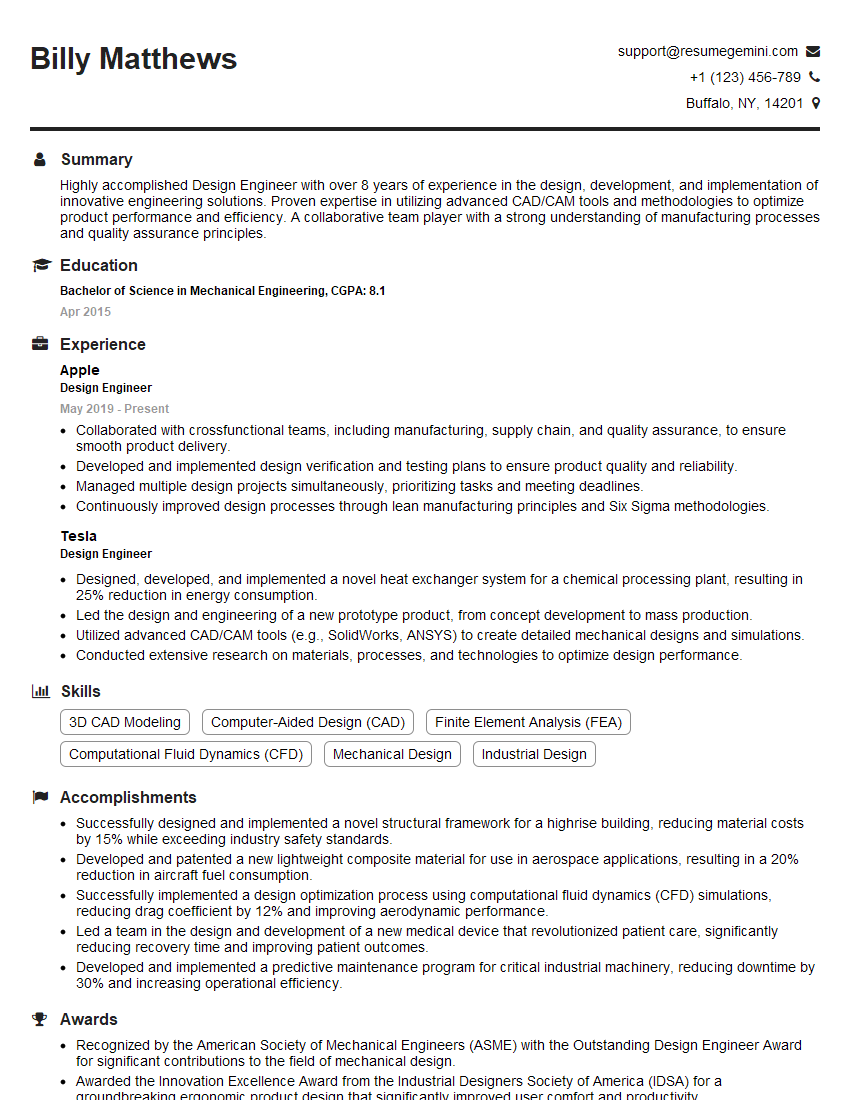
Design Engineer Resume Sample

Telecommunications Engineer Resume Sample

Electronics Engineer Resume Sample

Hardware Engineer Resume Sample
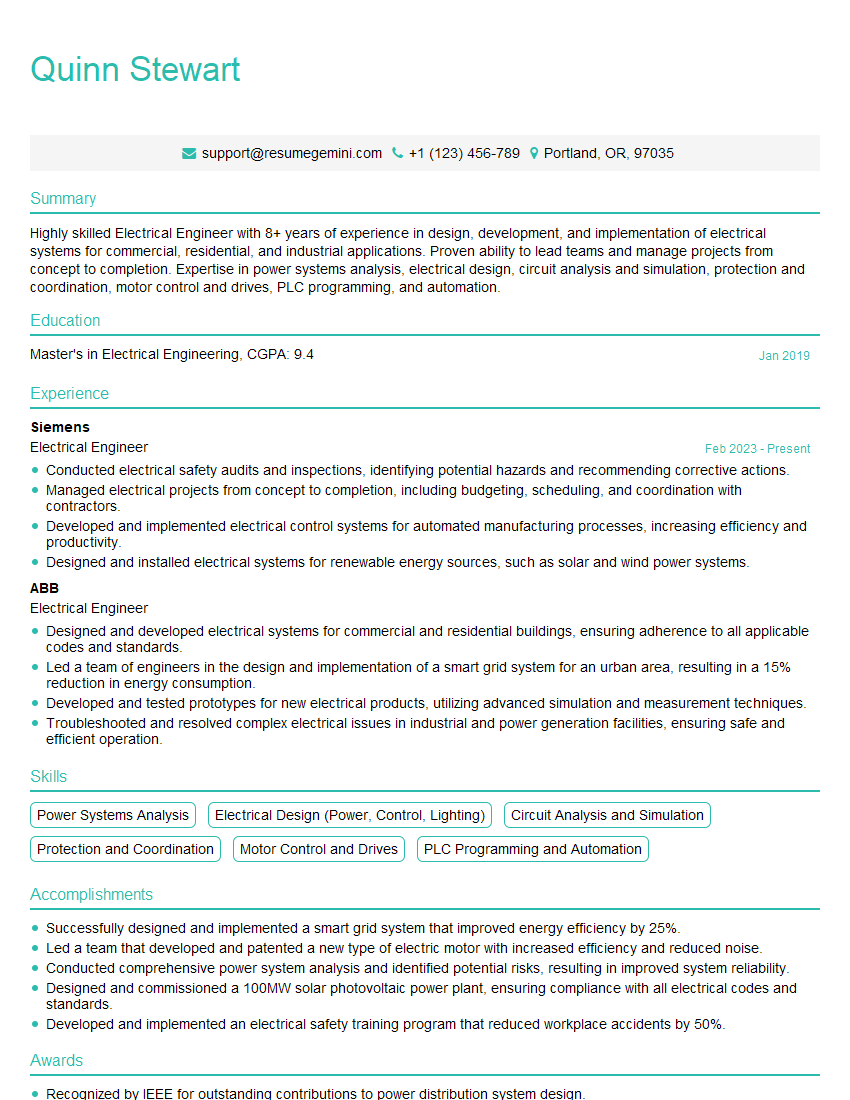
Electrical Engineer Resume Sample
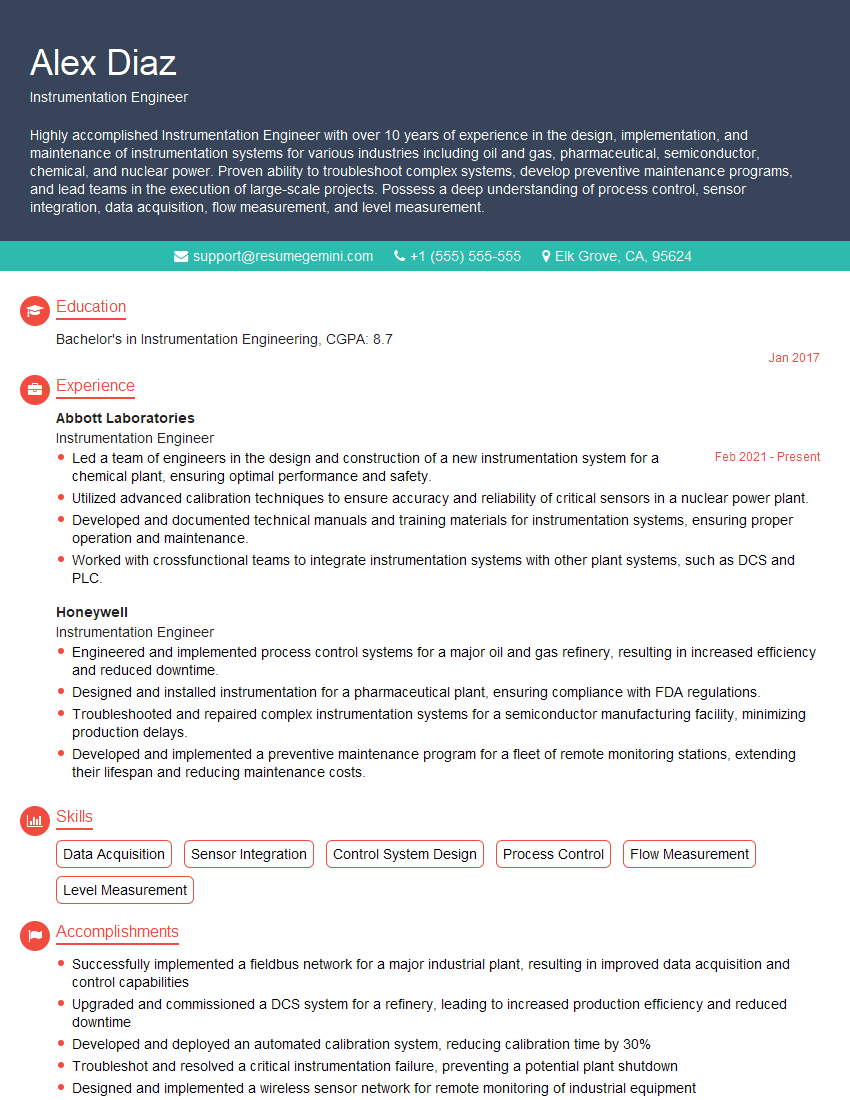
Instrumentation Engineer Resume Sample
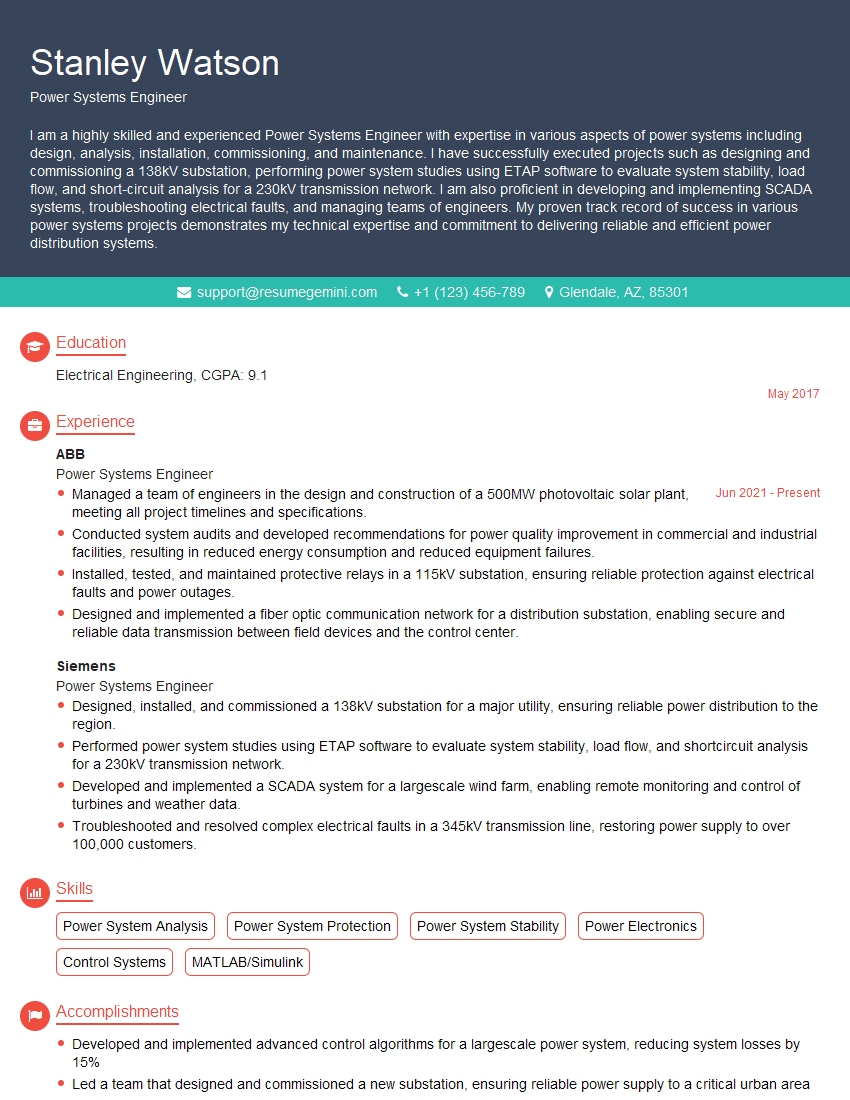
Power Systems Engineer Resume Sample

Circuit Design Engineer Resume Sample
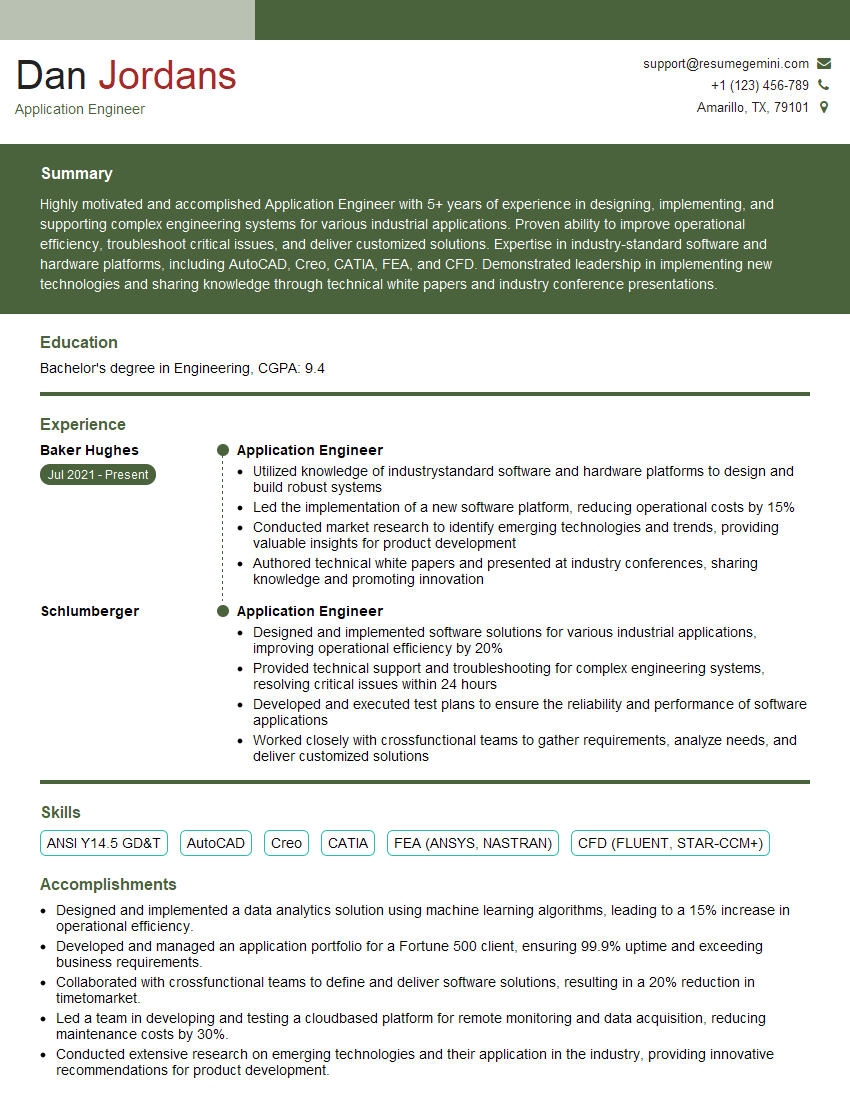
Application Engineer Resume Sample
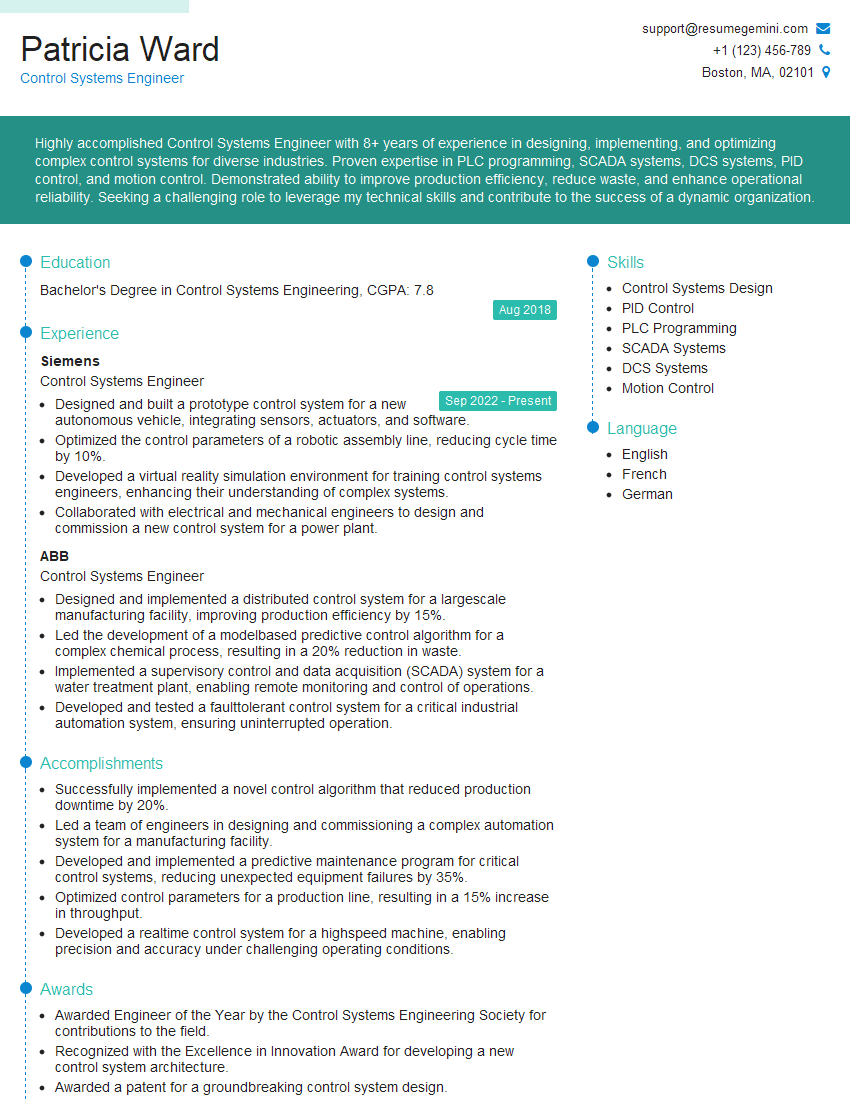
Control Systems Engineer Resume Sample

Staff Engineer Resume Sample
- Engineering Manager
- Project Engineer
- Technical Consultant
- Research Scientist
- Systems Architect
- Test Engineer
- Design Engineer
- Telecommunications Engineer
- Electronics Engineer
- Hardware Engineer
- Electrical Engineer
- Instrumentation Engineer
- Power Systems Engineer
- Circuit Design Engineer
- Application Engineer
- Control Systems Engineer
- Staff Engineer
Explore more articles
Users Rating of Our Blogs
Share Your Experience
We value your feedback! Please rate our content and share your thoughts (optional).
What Readers Say About Our Blog
To the interviewgemini.com Webmaster.
Very helpful and content specific questions to help prepare me for my interview!
Thank you
To the interviewgemini.com Webmaster.
This was kind of a unique content I found around the specialized skills. Very helpful questions and good detailed answers.
Very Helpful blog, thank you Interviewgemini team.