Unlock your full potential by mastering the most common Accuracy Assessment and Validation interview questions. This blog offers a deep dive into the critical topics, ensuring you’re not only prepared to answer but to excel. With these insights, you’ll approach your interview with clarity and confidence.
Questions Asked in Accuracy Assessment and Validation Interview
Q 1. Explain the difference between accuracy and precision in the context of measurement.
Accuracy and precision are crucial in measurement, but they represent different aspects of how close a measurement is to the true value. Think of it like archery: Accuracy refers to how close your arrows are to the bullseye (the true value). Precision, on the other hand, refers to how close your arrows are to each other, regardless of whether they hit the bullseye. You can be precise but not accurate (all arrows clustered together, but far from the center), accurate but not precise (arrows scattered around the bullseye), both accurate and precise (arrows clustered tightly around the bullseye), or neither.
For example, if you’re measuring the length of a table, high accuracy means your measurements are very close to the table’s actual length. High precision means that repeated measurements yield very similar results. A consistently inaccurate but precise measuring tape might always read 1cm short, leading to precise but wrong measurements.
Q 2. Describe various methods for accuracy assessment in remote sensing.
Accuracy assessment in remote sensing involves comparing the information extracted from remotely sensed data (like satellite imagery) with reference data collected on the ground. Several methods exist:
- Visual Interpretation: A simple method involving experienced analysts visually comparing the imagery with maps or ground observations. It’s subjective but useful for quick assessments.
- Ground Truthing: This involves collecting reference data directly in the field. This might involve GPS measurements, field surveys, or in-situ sampling, providing a highly reliable ground truth for comparison.
- Statistical Analysis: This forms the core of most accuracy assessments. Techniques like error matrices (confusion matrices), Kappa statistics, and other statistical measures are used to quantify the agreement between the remotely sensed data and the reference data. This requires a statistically significant sample size.
- GPS-based accuracy assessment: GPS data collected in the field can act as ground truth to validate the location accuracy of map features extracted from remotely sensed data.
- Object-based image analysis (OBIA): This method considers the image in the form of objects rather than individual pixels and uses object properties for assessing accuracy, often leading to improved accuracy assessment compared to traditional pixel-based methods.
The choice of method depends on factors such as the type of remote sensing data, the resources available, and the required level of accuracy.
Q 3. What are the key metrics used to assess the accuracy of a classification map?
Several key metrics assess the accuracy of a classification map. These metrics are derived from the confusion matrix (explained in more detail later). The most important are:
- Overall Accuracy: The percentage of correctly classified pixels out of the total number of pixels.
- Producer’s Accuracy: For each class, it represents the probability that a pixel correctly identified as belonging to that class actually belongs to that class. It reflects the accuracy of the classification from the point of view of the map maker.
- User’s Accuracy: For each class, it represents the probability that a pixel classified as belonging to that class actually belongs to that class. It reflects the accuracy of the classification from the point of view of the map user.
- Kappa Coefficient (κ): A statistical measure that accounts for the possibility of agreement occurring by chance. It’s generally preferred over overall accuracy because it provides a more robust measure of agreement.
- F1-score: The harmonic mean of precision and recall, offering a balance between the two which is crucial in imbalanced datasets (where one class has significantly more samples than others).
These metrics, used together, paint a comprehensive picture of the classification map’s accuracy, considering both individual classes and the overall performance.
Q 4. How do you handle outliers during accuracy assessment?
Outliers in accuracy assessment can significantly skew results and lead to misleading conclusions. Handling them requires careful consideration. First, it’s important to identify these outliers. This often involves visual inspection of the data, alongside statistical analysis using box plots or similar techniques. Once identified, there are several approaches:
- Visual Inspection and Removal: If a small number of clear outliers are detected and their presence can be justified (e.g., due to data errors), they can be removed from the dataset.
- Robust Statistical Methods: Employing robust statistical measures less sensitive to outliers, like the median instead of the mean, helps mitigate their influence.
- Data Transformation: Transforming the data (e.g., using logarithmic transformations) can sometimes reduce the impact of outliers.
- Investigation: Consider why the outlier exists. Is it a genuine anomaly or a data error? Investigate the source and correct the error if possible. If it’s a true anomaly, it might be valuable to leave it in the dataset and analyze it separately, understanding its contribution to the overall accuracy.
Careful documentation of how outliers are handled is crucial for the transparency and reproducibility of the accuracy assessment.
Q 5. Explain the concept of a confusion matrix and its use in accuracy assessment.
The confusion matrix is a square table that summarizes the performance of a classification model by showing the counts of true positive, true negative, false positive, and false negative predictions for each class. It’s fundamental to accuracy assessment.
For instance, imagine classifying land cover into ‘Forest’, ‘Water’, and ‘Urban’. The rows represent the reference data (ground truth), and the columns represent the classified data from the remote sensing method. Each cell (i,j) indicates how many pixels classified as class j were actually class i according to the ground truth.
Example Confusion Matrix:
| Forest | Water | Urban | ---|--------|-------|-------| Forest| 90 | 5 | 5 | Water | 2 | 85 | 3 | Urban | 8 | 6 | 86 |
Using this matrix, we can calculate various accuracy metrics (overall accuracy, producer’s accuracy, user’s accuracy, etc.) which are crucial in evaluating the classification’s performance and identifying areas of strength and weakness for each land cover class.
Q 6. What are the different types of errors encountered in accuracy assessment?
In accuracy assessment, errors can be broadly categorized into:
- Commission Errors (Type I Errors): These occur when a pixel is incorrectly assigned to a class that it doesn’t belong to. For example, classifying a grassland pixel as forest.
- Omission Errors (Type II Errors): These occur when a pixel belonging to a particular class is incorrectly assigned to a different class. For example, classifying a forest pixel as grassland.
Understanding the types of errors is important because they can have different implications. For example, a high commission error rate for a ‘floodplain’ class in a flood risk map could lead to unnecessary evacuations. Conversely, high omission errors in that same class could lead to people being caught unaware of actual flood risk.
Q 7. How do you calculate producer’s and user’s accuracy?
Producer’s and user’s accuracy are calculated from the confusion matrix. Let’s use the example from question 5.
Producer’s Accuracy: This represents the probability that a pixel of a given class is correctly classified. For example, the producer’s accuracy for ‘Forest’ is calculated as:
Producer's Accuracy (Forest) = (Number of correctly classified Forest pixels) / (Total number of Forest pixels in the reference data) = 90 / (90 + 2 + 8) = 90/100 = 0.9 or 90%
Similarly, we can calculate the producer’s accuracy for ‘Water’ and ‘Urban’ using their respective row totals.
User’s Accuracy: This represents the probability that a pixel classified as belonging to a particular class actually belongs to that class. For example, the user’s accuracy for ‘Forest’ is calculated as:
User's Accuracy (Forest) = (Number of correctly classified Forest pixels) / (Total number of pixels classified as Forest) = 90 / (90 + 2 + 8) = 90/100 = 0.9 or 90%
Similarly, we can calculate the user’s accuracy for ‘Water’ and ‘Urban’ using their respective column totals. Note that for this specific example, Producer and User Accuracy values are equal, but they can be different in other cases. These metrics help understand where the classification model is doing well or badly in terms of identification or labeling accuracy.
Q 8. What is the Kappa coefficient and how is it interpreted?
The Kappa coefficient (κ) is a statistical measure that quantifies the agreement between two raters or data sources, correcting for agreement that might occur by chance. It’s a crucial metric in accuracy assessment, particularly when comparing classified maps or images to reference data. A Kappa value ranges from -1 to +1.
- κ = 1: Perfect agreement.
- κ = 0: Agreement equivalent to random chance.
- κ < 0: Agreement is worse than random chance (indicating a potential problem with the classification or data).
- 0 < κ < 1: Represents levels of agreement, with higher values signifying better accuracy. Common interpretations are:
- 0.00-0.20: Slight agreement
- 0.21-0.40: Fair agreement
- 0.41-0.60: Moderate agreement
- 0.61-0.80: Substantial agreement
- 0.81-1.00: Almost perfect agreement
Example: Imagine comparing a land cover map created using satellite imagery to a ground-truth map created through field surveys. A Kappa coefficient of 0.75 would suggest substantial agreement between the two, indicating relatively high accuracy of the satellite-derived map. Conversely, a Kappa of 0.30 would suggest only fair agreement, highlighting areas needing improvement in the classification process.
Q 9. Explain the importance of sample size in accuracy assessment.
Sample size plays a critical role in accuracy assessment because it directly impacts the reliability and precision of the accuracy estimates. A larger sample size generally leads to more robust and reliable results. Insufficient samples can lead to inaccurate estimations of accuracy, potentially misleading conclusions and inappropriate actions based on flawed data.
Think of it like polling: If you only survey 10 people about their voting preferences, the results are likely to be far less reliable than if you survey 1000 people. Similarly, in accuracy assessment, a small sample size may not adequately represent the spatial variability within the dataset, leading to biased results.
Determining an appropriate sample size often involves considering factors like the desired level of precision, the spatial heterogeneity of the area, and the acceptable margin of error. Statistical power analysis can help to calculate a sufficient sample size to detect differences at a given confidence level.
Q 10. How do you choose an appropriate sampling strategy for accuracy assessment?
Selecting an appropriate sampling strategy for accuracy assessment depends on several factors including the characteristics of the study area, the data’s spatial distribution, and the resources available. There’s no one-size-fits-all solution; rather, it’s an iterative process of evaluating different options against project needs.
- Stratified Random Sampling: This is often the most effective method. The area is divided into strata (homogeneous units) based on relevant characteristics (e.g., land cover types), and random samples are taken from each stratum proportional to its area. This ensures representation of all classes and reduces sampling bias compared to simple random sampling.
- Systematic Sampling: Points are selected at regular intervals across the study area. While simpler than stratified random sampling, it can introduce bias if the phenomenon under study exhibits spatial autocorrelation (i.e., values close to each other are more similar).
- Simple Random Sampling: Points are selected randomly across the entire study area. This method is straightforward but may not be as effective if the data exhibit high spatial heterogeneity.
- Cluster Sampling: Groups of points are selected, which can be cost-effective but may not be representative if clusters are not representative of the entire population.
The best approach involves carefully considering the trade-offs between cost, efficiency, and the level of accuracy required.
Q 11. Discuss the limitations of visual interpretation in accuracy assessment.
Visual interpretation, while offering a quick overview, has significant limitations in accuracy assessment. It’s subjective, prone to human error, and difficult to replicate consistently. Different interpreters may draw varying conclusions from the same data, leading to inconsistencies in accuracy estimations.
- Subjectivity: Visual interpretation relies on human judgment, making it susceptible to bias and inconsistencies. What one person considers ‘forest’ another might interpret as ‘woodland’.
- Limited Scale and Resolution: Visual interpretation might miss subtle features or variations not easily visible at a particular scale or resolution.
- Lack of Reproducibility: It’s difficult to ensure consistent interpretations across different analysts and over time, hindering the objectivity and reliability of the assessment.
- Difficulties with Large Datasets: Visual interpretation becomes impractical and time-consuming for large datasets that cover extensive areas.
Therefore, while visual interpretation can be a valuable initial screening tool, it should be supplemented with quantitative methods like error matrices and Kappa coefficient calculations for a more robust and reliable accuracy assessment.
Q 12. How can you improve the accuracy of a geospatial dataset?
Improving the accuracy of a geospatial dataset requires a multifaceted approach that addresses potential errors at every stage of data acquisition, processing, and analysis. Strategies include:
- Employing High-Quality Data Sources: Start with the best possible data sources—high-resolution imagery, accurate GPS measurements, and well-maintained base maps.
- Applying Rigorous Data Processing Techniques: Use appropriate methods for preprocessing, such as atmospheric correction for remotely sensed data, geometric correction, and data cleaning.
- Implementing Robust Classification/Analysis Methods: Choose classification algorithms and analytical techniques that suit the data and research question. Consider using object-based image analysis for increased accuracy.
- Performing Thorough Accuracy Assessment: Regularly assess the accuracy of the data throughout the process, not just at the end, using stratified random sampling and appropriate statistical measures.
- Iterative Refinement: Accuracy assessment should lead to iterative refinement of the data processing and analysis procedures to improve the quality of the results. This may involve adjusting parameters in the classification process or incorporating additional data sources.
- Metadata Management: Maintain detailed metadata throughout the process, documenting all steps taken, tools used, and potential sources of error. This enhances transparency and reproducibility.
For example, if a land cover map shows low accuracy for certain classes, you might revisit the classification parameters, retrain the classification model, or even acquire additional data (e.g., LiDAR data) to better differentiate those classes.
Q 13. What are some common sources of error in GIS data?
Errors in GIS data can arise from various sources throughout the data lifecycle. These can be broadly classified into:
- Data Acquisition Errors: Inaccurate measurements from GPS devices, errors in digitizing maps, atmospheric effects in remote sensing imagery, and sensor limitations.
- Data Processing Errors: Incorrect geometric correction, inappropriate image classification parameters, errors in data transformation and projection, and mistakes during data editing and cleaning.
- Data Representation Errors: Simplifications and generalizations inherent in representing real-world features in a digital format (e.g., representing a curving river as a series of straight lines).
- Data Interpretation Errors: Misinterpretations of spatial relationships, incorrect feature identification during visual interpretation, and limitations of the chosen analytical methods.
- Data Management Errors: Problems with data storage, inconsistencies in data formats, incorrect attribute values, and inadequate metadata documentation.
Understanding these error sources is crucial for implementing appropriate quality control measures and improving the accuracy of GIS data. For instance, using multiple data sources and validating results can help reduce errors related to data acquisition and interpretation.
Q 14. Explain the role of ground truthing in accuracy assessment.
Ground truthing is the process of collecting reference data in the field to verify the accuracy of geospatial data. It involves physically visiting locations and collecting data on the ground, often using GPS devices, field surveys, and direct observations to confirm the presence or absence of features recorded in the digital data.
Ground truthing plays a vital role in accuracy assessment because it provides a benchmark against which the accuracy of remotely sensed data or GIS data can be measured. Without ground truth data, there is no objective way to assess the accuracy of the maps or models generated from the data.
Example: If you’re developing a land cover map using satellite imagery, ground truthing would involve physically visiting sample locations to verify the land cover type observed on the ground—confirming whether a pixel classified as ‘forest’ actually represents a forested area. The comparison between ground truth observations and the map’s classification is used to calculate accuracy metrics like overall accuracy and the Kappa coefficient.
The extent and strategy of ground truthing depend on several factors, including budget, accessibility of the area, and the required level of accuracy.
Q 15. Describe different validation techniques for machine learning models.
Validating machine learning models is crucial for ensuring their reliability and performance in real-world applications. We employ various techniques, broadly categorized into holdout methods, cross-validation, and resampling methods.
Holdout methods: This is the simplest approach. We split our dataset into training and testing sets. The model is trained on the training set and evaluated on the unseen testing set. A common split is 80% training, 20% testing, but the optimal ratio depends on the dataset size and complexity. The drawback is that the performance estimate can vary significantly depending on the random split.
Cross-validation: To mitigate the randomness of holdout methods, we use cross-validation. k-fold cross-validation is a popular technique where the data is partitioned into k equal-sized folds. The model is trained on k-1 folds and tested on the remaining fold. This process is repeated k times, with each fold serving as the test set once. The average performance across all folds gives a more robust estimate. Leave-one-out cross-validation (LOOCV) is a special case where k equals the number of data points.
Resampling methods: These methods, such as bootstrapping, involve repeatedly sampling from the original dataset to create multiple training and testing sets. Bootstrapping involves randomly sampling with replacement. This helps assess the model’s variability and stability.
Choosing the right technique depends on factors like dataset size, computational resources, and the desired level of accuracy in performance estimation. For example, in a medical diagnosis application, where data might be scarce, LOOCV might be preferred despite its higher computational cost, to obtain the most accurate performance estimate possible.
Career Expert Tips:
- Ace those interviews! Prepare effectively by reviewing the Top 50 Most Common Interview Questions on ResumeGemini.
- Navigate your job search with confidence! Explore a wide range of Career Tips on ResumeGemini. Learn about common challenges and recommendations to overcome them.
- Craft the perfect resume! Master the Art of Resume Writing with ResumeGemini’s guide. Showcase your unique qualifications and achievements effectively.
- Don’t miss out on holiday savings! Build your dream resume with ResumeGemini’s ATS optimized templates.
Q 16. How do you evaluate the performance of a classification algorithm?
Evaluating a classification algorithm involves assessing its ability to correctly classify instances into predefined categories. We utilize several metrics, often presented in a confusion matrix:
Accuracy: The overall correctness of the model (correctly classified instances / total instances). While simple, it can be misleading with imbalanced datasets.
Precision: Out of all instances predicted as a particular class, what proportion was actually that class? Useful when the cost of false positives is high (e.g., diagnosing a disease).
Recall (Sensitivity): Out of all instances that actually belong to a particular class, what proportion did the model correctly identify? Important when the cost of false negatives is high (e.g., fraud detection).
F1-score: The harmonic mean of precision and recall, providing a balanced measure considering both false positives and false negatives.
AUC (Area Under the ROC Curve): Measures the model’s ability to distinguish between classes across different thresholds. A higher AUC indicates better discriminative power.
The choice of metrics depends on the specific application and the relative importance of different types of errors. For instance, in spam detection, we might prioritize recall (minimizing missed spam emails) over precision (minimizing false positives – flagging legitimate emails as spam).
Q 17. What are the key considerations for validating a software application?
Validating a software application ensures it meets specified requirements and performs as expected in its intended environment. Key considerations include:
Functionality: Does the software perform all its intended functions correctly? This involves testing various scenarios and edge cases.
Usability: Is the software easy to use and understand for the target audience? Usability testing with real users is crucial.
Reliability: How consistent and dependable is the software’s performance over time and under different conditions? Load testing and stress testing are used to evaluate this.
Performance: How efficiently does the software use resources (CPU, memory, network)? Performance testing measures response times, throughput, and resource utilization.
Security: Is the software protected against vulnerabilities and unauthorized access? Security testing involves penetration testing and vulnerability scanning.
Compliance: Does the software adhere to relevant regulations and standards? This is particularly important in regulated industries like healthcare and finance.
A well-defined validation plan, with clear test cases and acceptance criteria, is crucial for a systematic and efficient validation process. For example, a banking application would require rigorous security validation to ensure the protection of sensitive financial data, while a social media platform might prioritize usability validation to maintain user engagement.
Q 18. What is the difference between verification and validation?
While often used interchangeably, verification and validation are distinct concepts in software development (and wider engineering):
Verification: Focuses on ensuring that the software is built correctly. It checks whether the software conforms to its design specifications. Think of it as checking if you’re building the right thing correctly. This involves techniques like code reviews, static analysis, and unit testing.
Validation: Focuses on ensuring that the software is built correctly. It checks whether the software meets the user needs and requirements. Think of it as checking if you’re building the right thing. This involves techniques like integration testing, system testing, user acceptance testing (UAT), and field testing.
Imagine building a house. Verification would be checking if the walls are straight, the roof is properly installed, etc., according to the blueprints. Validation would be checking if the house meets the homeowner’s needs – enough rooms, suitable location, etc. Both are essential for delivering a high-quality product.
Q 19. How do you handle discrepancies between expected and actual results during validation?
Discrepancies between expected and actual results during validation require a systematic investigation. The process typically involves:
Reproduce the Discrepancy: First, we need to consistently reproduce the discrepancy. This often involves documenting the exact steps to recreate the issue.
Analyze the Root Cause: Once reproduced, we investigate the underlying cause. This may involve examining code, reviewing documentation, or testing different components of the system.
Identify the Source of Error: Is it a bug in the code, a misinterpretation of requirements, an issue with data, or a problem with the testing environment?
Implement a Solution: Based on the root cause analysis, we implement a fix or workaround. This could involve code changes, updated documentation, improved data handling, or adjustments to the testing procedure.
Retest and Verify: After implementing the solution, we rigorously retest the affected areas to verify that the discrepancy has been resolved.
Document the Resolution: The entire process, from the discovery of the discrepancy to its resolution, should be thoroughly documented.
A well-defined bug tracking system is crucial for managing and tracking discrepancies. For example, if a discrepancy arises due to a faulty algorithm, we would need to review the algorithm’s logic, potentially incorporate error-handling mechanisms, and then systematically retest.
Q 20. Explain the process of developing a validation plan.
Developing a validation plan is a crucial step in ensuring the thorough assessment of a system or model’s performance. A comprehensive validation plan typically includes:
Objectives: Clearly define the goals of the validation process. What specific aspects of the system need to be validated, and what level of accuracy or performance is expected?
Scope: Define the specific components or functionalities to be included in the validation process. What aspects of the system are in scope, and what are excluded?
Methodology: Detail the validation methods to be used, including data collection techniques, statistical analyses, and performance metrics. This might involve specifying which validation techniques (holdout, cross-validation, etc.) will be used for machine learning models or specifying test scenarios for software applications.
Data Requirements: Specify the type, amount, and source of the data required for validation. For machine learning, this includes defining training, validation, and test sets. For software, this might involve defining different test cases.
Acceptance Criteria: Define the criteria that must be met for the system or model to be considered validated. This might include thresholds for accuracy, precision, recall, or other relevant metrics.
Roles and Responsibilities: Clearly outline the roles and responsibilities of the individuals involved in the validation process.
Timeline and Resources: Establish a realistic timeline for completing the validation process, along with the required resources (personnel, software, hardware, etc.).
A well-structured validation plan, tailored to the specific needs of the project, is essential for ensuring a thorough and efficient validation process. For example, the validation plan for a self-driving car system would require significantly more rigorous testing and safety considerations compared to a simple mobile application.
Q 21. Describe your experience with different statistical software packages for accuracy assessment.
Throughout my career, I’ve extensively used several statistical software packages for accuracy assessment. My experience includes:
R: R is an open-source environment offering a wide range of packages specifically designed for spatial analysis and accuracy assessment. Packages like
raster,rgdal, andspare indispensable for handling geospatial data, while packages likecaretandmlrprovide tools for model evaluation and performance assessment. I frequently use R to perform calculations for Kappa coefficients, error matrices, and ROC curves. For example, using thecaretpackage, I can easily perform k-fold cross-validation and evaluate model performance using a range of metrics.Python with libraries like scikit-learn, pandas, and geopandas: Python provides a flexible and powerful environment for data analysis and machine learning. Scikit-learn offers comprehensive tools for model evaluation, including classification reports and confusion matrices. Pandas facilitates efficient data manipulation and analysis, while geopandas enables handling of geospatial data.
scikit-learn‘sclassification_reportfunction is frequently employed to quickly generate a summary of classification performance metrics.ArcGIS: ArcGIS offers integrated tools for geospatial data analysis and accuracy assessment. Its functionality extends to calculating area-based error matrices and related statistics, such as the Kappa coefficient. Its user-friendly interface makes it suitable for a wider range of users.
The choice of software depends on project requirements, data types, and the expertise of the team. Often, a combination of tools is used to leverage their respective strengths. For instance, I might use R for advanced statistical analysis and visualization, while employing ArcGIS for map-based presentations of accuracy assessment results.
Q 22. How do you document your accuracy assessment findings?
Documenting accuracy assessment findings requires a meticulous and transparent approach. My documentation starts with a detailed methodology section outlining the specific accuracy assessment technique used (e.g., error matrix for classification, root mean square error for regression), the sample size and sampling strategy, and the software or tools employed. This is crucial for reproducibility.
Next, I present the results clearly. This includes all relevant statistics – producer’s and user’s accuracy, overall accuracy, kappa coefficient, and any other relevant metrics depending on the application. I always include confidence intervals around these statistics, acknowledging the inherent uncertainty in the assessment. Tables and figures, such as error matrices and confusion matrices, visually represent the results, making them easily digestible. Finally, I provide a discussion section interpreting the findings within the context of the project, acknowledging limitations and uncertainties. This section also explores potential sources of error and suggests areas for improvement in future assessments.
For example, when assessing the accuracy of a land cover classification map, my report would include a table showing the error matrix, calculated accuracy metrics (overall accuracy, kappa), and the associated confidence intervals. It would also contain a map visually depicting the areas of misclassification. The discussion would analyze these results, identifying the dominant types of errors and speculating about their causes, potentially linking them to the image resolution or the classification algorithm.
Q 23. How do you communicate complex accuracy assessment results to non-technical audiences?
Communicating complex accuracy assessment results to non-technical audiences requires translating technical jargon into plain language and focusing on the practical implications of the findings. Instead of using terms like ‘kappa coefficient’ or ‘root mean square error’, I would describe the accuracy in terms of percentage of correct classifications or the average error magnitude.
I rely heavily on visualizations. For instance, instead of presenting a confusion matrix, I might use a simple bar chart showing the percentage of correctly and incorrectly classified areas. I would also use maps highlighting areas of high and low accuracy, clearly illustrating the spatial distribution of errors. Analogies can be extremely helpful. For example, I might compare the accuracy of a map to the accuracy of a weather forecast, making it relatable and understandable.
Finally, I always focus on the consequences of the accuracy levels. For example, if a land cover map is being used for planning infrastructure projects, I’d explain how inaccuracies in the map could lead to costly mistakes or inefficient planning. This emphasizes the importance and relevance of the accuracy assessment. A simple summary paragraph at the beginning, followed by the key findings presented visually, is often the most effective approach.
Q 24. Describe a situation where you had to troubleshoot an accuracy assessment problem.
In one project involving the accuracy assessment of a soil moisture map generated from satellite data, we initially observed unexpectedly low accuracy. After careful investigation, we discovered a systematic bias in our reference data. We had used soil moisture measurements collected from a limited number of in-situ sensors, which weren’t adequately representative of the entire study area. The sensors were mostly clustered in one area, missing significant variations in soil moisture across the landscape.
To troubleshoot this, we implemented a multi-pronged approach. First, we analyzed the spatial distribution of the reference data to identify potential biases. Then, we supplemented our limited ground measurements with data from a more extensive network of sensors. This increased the representativeness of our reference data. We also carefully re-evaluated our sampling strategy to ensure proper spatial coverage. After re-assessing the accuracy with the improved reference data and sampling strategy, we obtained significantly more realistic and reliable accuracy estimates.
This experience highlighted the importance of robust reference data collection and representative sampling in accuracy assessment. It underscored that inaccurate reference data can lead to misleading conclusions regarding the overall accuracy of the product being assessed, even if the product itself is accurate.
Q 25. What are the ethical considerations related to data validation and accuracy assessment?
Ethical considerations in data validation and accuracy assessment are paramount. Transparency is crucial. We must clearly document the methodology, limitations, and uncertainties associated with the assessment. Any potential biases in the data or the assessment process must be explicitly stated. Objectivity is also key. The assessment must be conducted in a fair and unbiased manner, avoiding any manipulation or selective reporting of results.
Furthermore, we have a responsibility to ensure the confidentiality of data, especially when dealing with sensitive information. This includes protecting the privacy of individuals and respecting intellectual property rights. Finally, we need to consider the potential impacts of the assessment results. Inaccurate or misleading assessments could have significant consequences, leading to incorrect decisions that could have environmental, economic, or social impacts. It’s crucial to be aware of the potential repercussions of our work.
Q 26. How do you ensure the reproducibility of your accuracy assessment results?
Ensuring the reproducibility of accuracy assessment results is critical for establishing the reliability and credibility of the findings. This begins with detailed documentation of every step of the process, from data acquisition and pre-processing to the selection of accuracy assessment methods and the execution of the analysis. This should include all software versions, parameters used, and any customized scripts or functions.
Using version control systems for code and data, like Git, facilitates reproducibility. These systems track changes and allow for revisiting specific versions of the code and data. Additionally, openly sharing the data and code used in the accuracy assessment encourages independent verification and replication by others. Standardized methods should be employed where possible. Using established and widely accepted procedures makes the analysis easier to replicate by other researchers.
Furthermore, clear and detailed descriptions of the methods and parameters used during the analysis are essential to ensure that others can reproduce the same results. This includes providing information on the data used, the software used for the analysis, and the specific steps followed. For example, in the context of a remote sensing project, this would involve specifying the satellite sensor, the acquisition date, the pre-processing steps, and the algorithms used for the classification.
Q 27. What are your strategies for staying up-to-date with the latest advancements in accuracy assessment and validation?
Staying current in the rapidly evolving field of accuracy assessment and validation requires a multi-faceted approach. I regularly read peer-reviewed journals and attend conferences specializing in remote sensing, GIS, and related fields. These conferences provide opportunities to network with other experts and learn about cutting-edge research and techniques.
I actively participate in online communities and forums, engaging in discussions with other professionals. This exposure to diverse perspectives and challenges expands my knowledge base and allows me to learn from the experiences of others. Finally, I regularly explore and test new software packages and tools relevant to accuracy assessment and validation, adapting my techniques accordingly.
Specifically, I focus on advancements in statistical methods for assessing accuracy, new approaches to handling uncertainty, and innovative strategies for evaluating the accuracy of increasingly complex geospatial data, such as big data from sensors in IoT or point clouds from LiDAR. Keeping abreast of these advancements ensures that my methodologies remain state-of-the-art and produce high-quality, robust results.
Key Topics to Learn for Accuracy Assessment and Validation Interview
- Error Matrix and its Components: Understand the concepts of producers’ and consumers’ accuracy, omission error, commission error, and overall accuracy. Be prepared to discuss their calculation and interpretation.
- Different Accuracy Assessment Metrics: Familiarize yourself with various metrics like Kappa coefficient, RMSE, and their application in different contexts. Consider the strengths and weaknesses of each metric.
- Sampling Strategies for Accuracy Assessment: Explore different sampling techniques like stratified random sampling, systematic sampling, and their impact on the reliability of accuracy assessment results.
- Validation Techniques: Discuss methods for validating models and datasets, including cross-validation, bootstrapping, and independent testing datasets. Be ready to compare and contrast their effectiveness.
- Uncertainty Analysis: Understand how to quantify and communicate uncertainty in accuracy assessment results. This includes discussing error propagation and confidence intervals.
- Practical Application: Case Studies: Prepare examples from your experience (or research relevant case studies) demonstrating your understanding of applying accuracy assessment methods to real-world problems, such as land cover classification or remote sensing data analysis.
- Software and Tools: Be prepared to discuss your familiarity with relevant software packages (e.g., ArcGIS, QGIS, R) used for accuracy assessment and validation.
Next Steps
Mastering Accuracy Assessment and Validation is crucial for career advancement in fields like GIS, remote sensing, and data science. It demonstrates a rigorous approach to data analysis and a commitment to producing reliable and trustworthy results. To maximize your job prospects, crafting an ATS-friendly resume is vital. This ensures your application gets noticed by recruiters and hiring managers. ResumeGemini is a trusted resource that can help you build a professional and effective resume tailored to highlight your skills in Accuracy Assessment and Validation. Examples of resumes tailored to this specific area are available through ResumeGemini to guide your resume creation process. Invest the time to build a strong resume – it’s your first impression!

Data Scientist Resume Sample
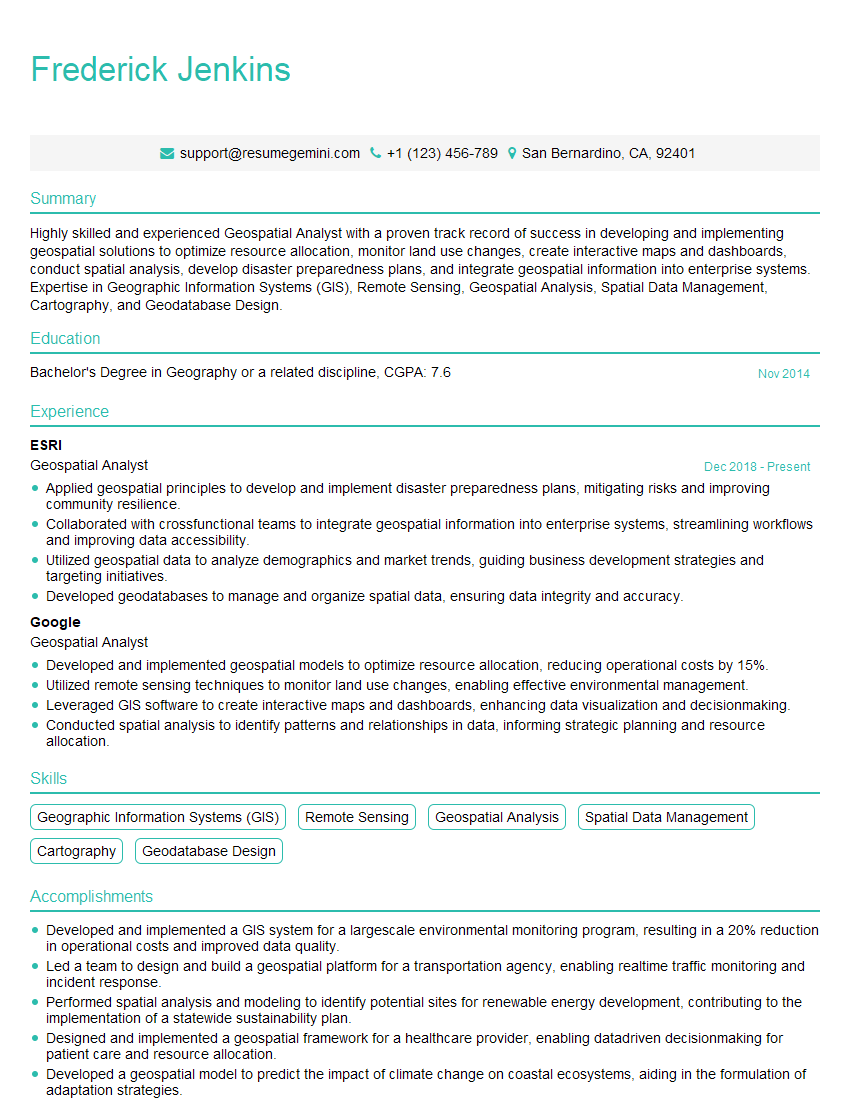
Geospatial Analyst Resume Sample
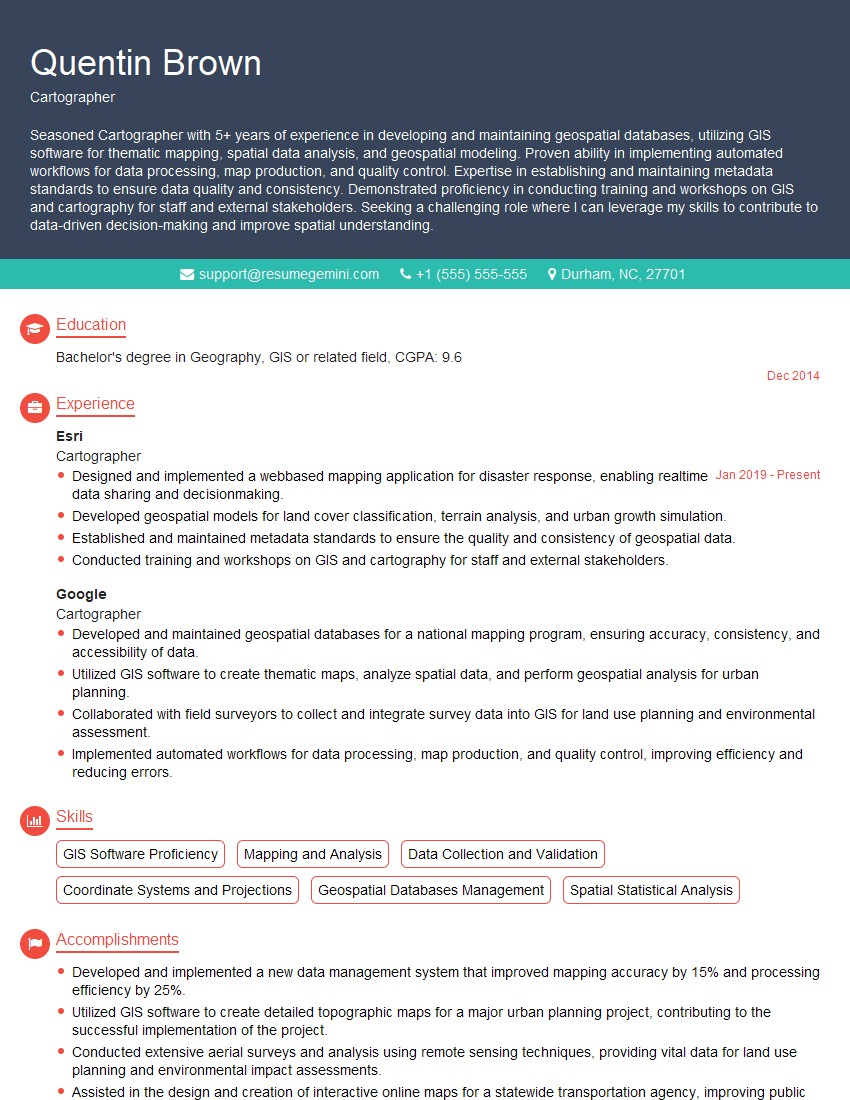
Cartographer Resume Sample

Statistical Analyst Resume Sample
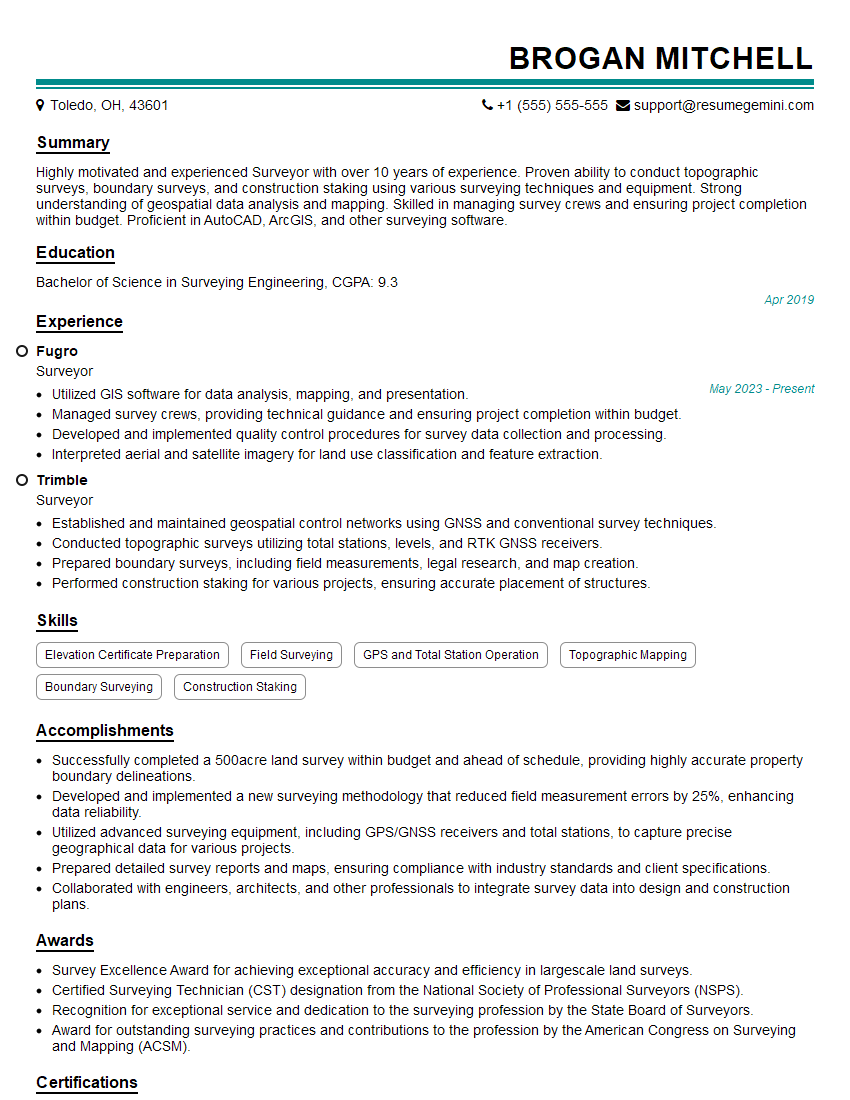
Surveyor Resume Sample

Quality Control Specialist Resume Sample

Quality Assurance Engineer Resume Sample
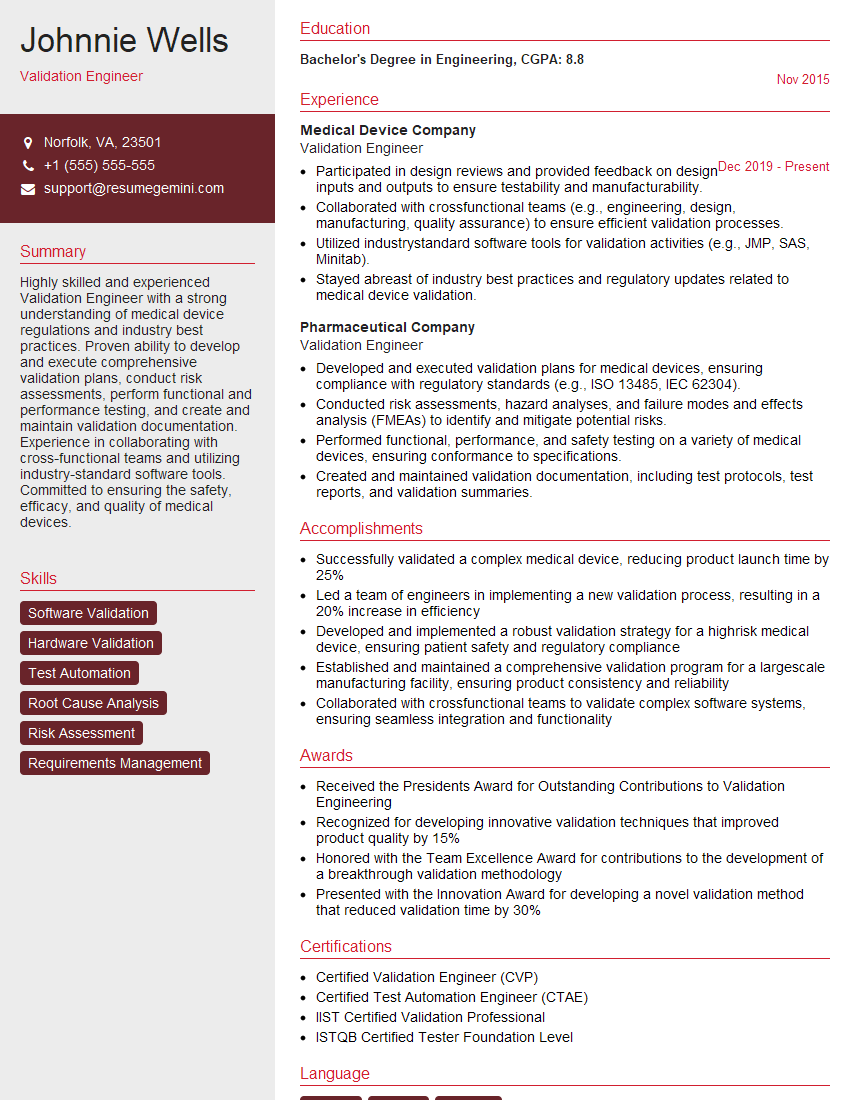
Validation Engineer Resume Sample
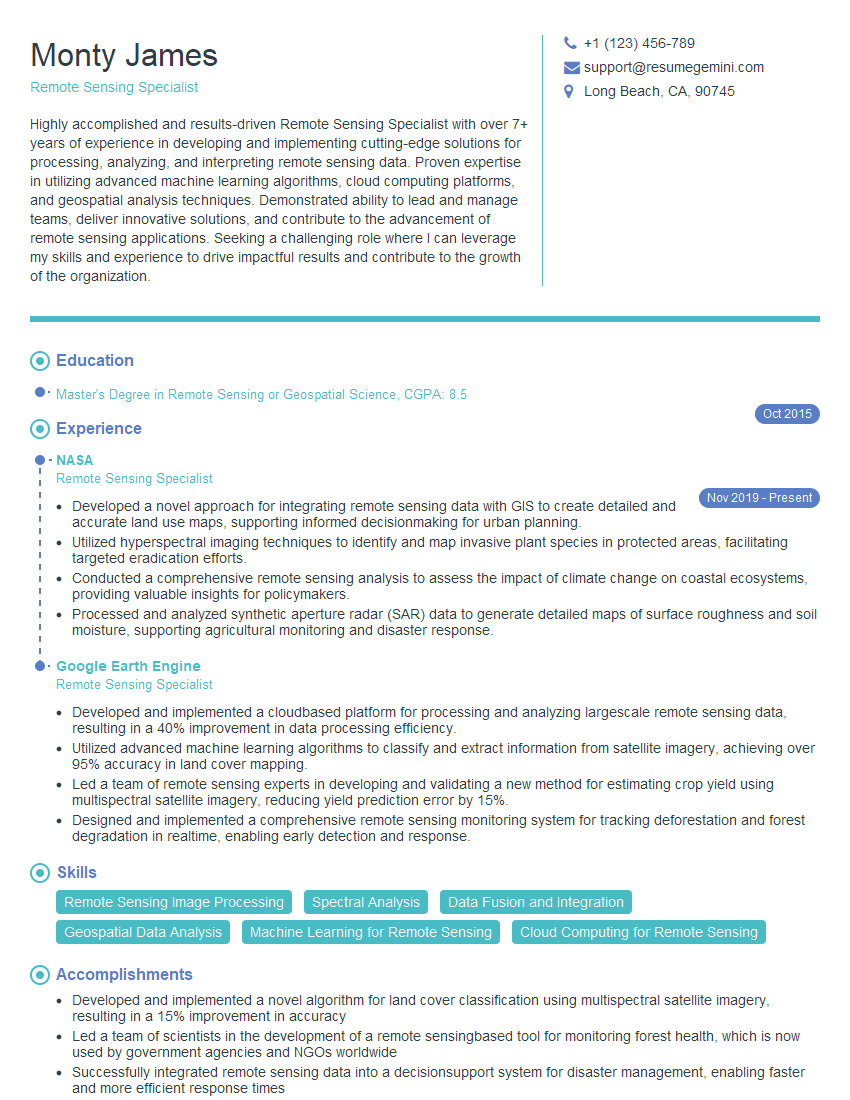
Remote Sensing Specialist Resume Sample

Precision Agriculture Specialist Resume Sample
Explore more articles
Users Rating of Our Blogs
Share Your Experience
We value your feedback! Please rate our content and share your thoughts (optional).
What Readers Say About Our Blog
To the interviewgemini.com Webmaster.
Very helpful and content specific questions to help prepare me for my interview!
Thank you
To the interviewgemini.com Webmaster.
This was kind of a unique content I found around the specialized skills. Very helpful questions and good detailed answers.
Very Helpful blog, thank you Interviewgemini team.