Are you ready to stand out in your next interview? Understanding and preparing for Relay Testing and Troubleshooting interview questions is a game-changer. In this blog, we’ve compiled key questions and expert advice to help you showcase your skills with confidence and precision. Let’s get started on your journey to acing the interview.
Questions Asked in Relay Testing and Troubleshooting Interview
Q 1. Explain the different types of protective relays.
Protective relays are the unsung heroes of the power system, acting as the first line of defense against faults and abnormalities. They constantly monitor the electrical network, and when a problem is detected, they quickly isolate the faulty section, preventing widespread damage and ensuring the continued supply of power to the rest of the system. There are many types, categorized based on the fault they detect. Here are some key examples:
- Overcurrent Relays: These are the workhorses of protection. They detect excessive current flow, indicating a short circuit or overload. They can be further classified into various types like instantaneous, time-delayed, and directional overcurrent relays.
- Distance Relays: These relays measure the impedance between the relay location and the fault. They are particularly effective in protecting long transmission lines. Different types like impedance, reactance, and mho relays exist, each using a different measurement technique.
- Differential Relays: These compare the currents entering and leaving a protected zone (like a transformer or generator). Any significant difference indicates an internal fault.
- Underfrequency Relays: These protect the system from widespread blackouts by detecting a drop in system frequency, a common symptom of cascading outages.
- Under/Overvoltage Relays: These protect equipment from damage caused by abnormally high or low voltages.
- Busbar Protection Relays: These are specifically designed to protect the vital busbars, which are the connecting points of various circuits. They often use a combination of differential and overcurrent protection.
The choice of relay depends heavily on the specific application and the characteristics of the protected equipment and the power system network.
Q 2. Describe the process of testing a distance relay.
Testing a distance relay involves verifying its ability to accurately measure impedance and operate correctly under various fault conditions. This process typically involves using a relay test set, which simulates different fault impedances and locations along the protected line. Here’s a step-by-step process:
- Prepare the Test Set: Connect the test set to the distance relay terminals and configure it to simulate the desired fault conditions, such as different fault impedances, fault types (phase-to-ground, phase-to-phase, three-phase), and fault locations along the transmission line.
- Set up the Relay: Configure the distance relay with its operational settings, including the reach, zones of protection, and time settings.
- Apply Test Signals: Using the test set, inject simulated fault currents and voltages into the relay. These signals should represent various fault conditions at different distances along the protected line.
- Observe Relay Operation: Monitor the relay’s response to each test signal. Observe the time of operation, the zone that operates, and verify that it operates within the expected settings.
- Document Results: Meticulously record the relay’s responses to each test condition. This documentation is crucial for analysis and future troubleshooting.
- Analyze Results: Carefully review the test results to ensure the relay operates correctly and within its specified parameters. Adjust relay settings as necessary to optimize protection performance.
Think of it like testing a car’s brakes—you wouldn’t just drive and assume they work; you’d test them under various conditions to ensure they are reliable.
Q 3. How do you troubleshoot a malfunctioning differential relay?
Troubleshooting a malfunctioning differential relay requires a systematic approach. The key is to isolate the source of the discrepancy between the input and output currents. Here’s a breakdown:
- Verify Current Transformer (CT) Ratios and Polarity: Incorrect CT ratios or reversed polarity are common culprits. Double-check the CT connections and ratios to ensure they match the relay’s settings.
- Check CT Saturation: Overcurrents can saturate the CTs, causing inaccurate current measurements. Inspect the CTs for signs of saturation, and consider replacing them if necessary.
- Inspect Wiring and Connections: Loose or faulty wiring can introduce errors. Carefully examine all connections between the CTs, the relay, and the protection scheme. Look for loose connections, breaks, or short circuits.
- Test Relay Operation: Use a relay test set to simulate various fault conditions. This will help you isolate whether the problem lies in the relay itself or elsewhere in the circuit.
- Check for CT Burden: Excessive burden on CTs can impact their accuracy. Ensure the impedance of the relay and connecting wiring doesn’t exceed the CT’s capabilities.
- Examine Relay Settings: Review the relay settings to verify they are appropriate for the protected equipment. Any mismatch can lead to misoperation.
- Analyze Relay Logs and Alarms: Check relay logs for any fault records that provide clues to the malfunction. Many relays have built-in fault indicators that assist in the troubleshooting.
Remember, safety is paramount. Always follow proper lockout/tagout procedures before working on any electrical equipment.
Q 4. What are the common causes of relay misoperation?
Relay misoperation can stem from several sources, often a combination of factors. Here are some common culprits:
- Incorrect Relay Settings: Improperly set time delays, operating characteristics, or zones of protection can lead to unintended operation or failure to operate when required.
- Faulty Current Transformers (CTs) or Potential Transformers (PTs): Damaged or incorrectly installed CTs or PTs will provide erroneous input signals, potentially causing the relay to operate incorrectly.
- Wiring Errors: Incorrect wiring connections, loose connections, and short circuits can lead to false signals and misoperation.
- Relay Malfunction: Internal relay problems such as faulty components can also cause misoperation. This requires more detailed testing and potentially replacement of the relay.
- System Disturbances: Transient phenomena such as lightning strikes or switching surges can momentarily overload relays, possibly causing them to trip incorrectly.
- External Influences: Electromagnetic interference or incorrect grounding can inject spurious signals, leading to unintended operation.
Proper testing, maintenance, and thorough understanding of the power system are crucial to minimize these occurrences.
Q 5. Explain the importance of relay coordination.
Relay coordination is the meticulous process of ensuring that protective relays operate in a predetermined sequence and selectively isolate faulty sections of the power system without unnecessarily tripping healthy parts. It’s like a well-orchestrated symphony, where each instrument (relay) plays its part at the right time to achieve the overall goal (system stability). Proper coordination prevents cascading outages and minimizes disruption to power supply.
Without coordination, multiple relays might trip simultaneously during a fault, leading to an extensive power outage affecting more customers than necessary. Effective coordination ensures that the closest relay to the fault operates first, isolating the problem quickly and efficiently while leaving the rest of the system intact. It’s crucial to maintaining system reliability and safety.
Q 6. How do you perform a relay setting calculation?
Relay setting calculations involve determining the optimal settings for protective relays to ensure selective and reliable operation. This is a complex process that requires a deep understanding of power system characteristics and relay operation. The calculations depend heavily on the type of relay (overcurrent, distance, differential etc) and the specific application.
The process typically involves:
- System Studies: Detailed analysis of the power system, including fault current calculations, impedance measurements, and system impedances.
- Relay Characteristics: Understanding the operating characteristics of the specific relay type, including its time-current curves, reach settings, and operational principles.
- Coordination Criteria: Defining the required coordination times between relays to ensure selectivity. This often involves ensuring sufficient time margin between the operation of adjacent relays.
- Setting Calculations: Using specialized software or manual calculations to determine the optimal time dial settings and current settings for the relays.
- Verification and Simulation: Simulating fault conditions to verify that the relay settings achieve the desired level of coordination and protection.
Specialized software packages are commonly used to simplify and automate these calculations, considering various scenarios and system configurations. The accuracy of these calculations significantly influences the safety and reliability of the power system.
Q 7. Describe the different types of communication protocols used in relay systems.
Modern relay systems utilize various communication protocols to exchange information and facilitate remote monitoring and control. This allows for efficient operation, centralized monitoring, and faster response to faults.
- IEC 61850: This is the dominant communication standard for substation automation. It uses Ethernet networks and object-oriented models to exchange data between relays and other intelligent electronic devices (IEDs).
- Modbus: A widely used serial communication protocol known for its simplicity and reliability. While older, it’s still prevalent in some systems.
- DNP3: Distributed Network Protocol 3 is another popular protocol used in power systems for data acquisition and control.
- Serial Protocols (e.g., RS-232, RS-485): Older serial protocols are still found in legacy systems, although they are being gradually replaced by more modern protocols like Ethernet.
The choice of communication protocol depends on factors like the existing infrastructure, the level of integration required, and the specific needs of the power system.
Q 8. Explain the concept of a protective relay’s operating time.
A protective relay’s operating time is the time elapsed between the occurrence of a fault and the relay initiating a trip signal to the circuit breaker. This time is crucial for system stability and equipment protection. A shorter operating time is generally preferred to minimize damage, but excessively fast operation can lead to nuisance tripping. The operating time is influenced by various factors, including the relay’s settings (such as the time delay and the pickup current), the characteristics of the fault, and the impedance of the protected circuit.
For example, a distance relay might have a very short operating time (milliseconds) for a close-in fault to quickly isolate the fault, while an overcurrent relay protecting a long feeder might have a longer time delay (several cycles) to avoid nuisance tripping due to temporary overloads.
Understanding the operating time is vital during relay setting calculations and post-fault analysis to determine whether the relay performed as expected and to optimize its settings for improved protection.
Q 9. How do you test the communication functionality of a relay?
Testing the communication functionality of a relay typically involves verifying the integrity of the communication links and the accurate exchange of data between the relay and other devices, such as IEDs (Intelligent Electronic Devices), RTUs (Remote Terminal Units), or a substation automation system. This can be accomplished through several methods:
- Self-Testing: Many modern relays have built-in self-testing capabilities that verify communication interfaces and report any faults.
- Communication Protocol Testing: Using specialized tools and software, you can simulate communication messages (e.g., using IEC 61850 MMS or DNP3 protocols) and check if the relay responds correctly. This ensures that data is being transmitted and received properly.
- Loopback Tests: Simple loopback tests can verify basic communication connectivity by sending signals from the relay to a specific port and checking for a response back through the same port.
- Data Logging and Analysis: Examining the relay’s event logs and communication records helps identify any inconsistencies or communication errors that might have occurred during normal operation.
During the testing, you should check for factors like correct communication link activation, successful message transfers, and timely responses. Failures can indicate faulty cables, incorrect network settings, or problems within the relay itself. Failure to identify problems early can lead to protection system inefficiencies or even total system failure.
Q 10. What are the safety precautions to be taken during relay testing?
Relay testing involves working with high-voltage equipment and can be extremely dangerous. Safety is paramount, requiring rigorous adherence to established safety procedures:
- Lockout/Tagout (LOTO): Always follow the LOTO procedures to isolate the power supply to the relay and the associated circuit breaker before commencing any tests. Ensure that nobody can inadvertently energize the system.
- Personal Protective Equipment (PPE): Wear appropriate PPE, including safety glasses, insulating gloves, and arc flash protective clothing, as necessary.
- Grounding: Properly ground all equipment and conductors to prevent the risk of electrical shock.
- Work Permits: Obtain all necessary work permits and clearances before starting any work.
- Trained Personnel: Relay testing should only be carried out by trained and authorized personnel with extensive experience in high-voltage systems and relay protection.
- Emergency Procedures: Be prepared for emergencies by knowing the location and operation of emergency equipment, such as first-aid kits and emergency shutoff switches.
Ignoring these safety precautions can lead to serious injury or even death. A thorough risk assessment and detailed safety plan are essential for every relay testing project.
Q 11. Describe the process of commissioning a new relay.
Commissioning a new relay involves a systematic process of verifying its correct installation, configuration, and functionality within the power system protection scheme. The steps generally include:
- Installation Verification: Check the physical installation of the relay, ensuring it is securely mounted, wired correctly, and the connections are tight and secure.
- Configuration Settings: Configure the relay’s protection settings according to the system requirements, considering factors like operating voltage, fault current levels, and system impedance.
- Testing and Calibration: Perform comprehensive tests using both simulation and real-world scenarios to verify that the relay operates as intended under various fault conditions. This frequently involves using a relay test set.
- Integration with the System: Integrate the relay into the overall protection scheme, ensuring that it communicates properly with other devices such as circuit breakers and SCADA systems.
- Verification of Protection Settings: Verify that the relay’s protection settings provide adequate protection and prevent cascading failures during fault events.
- Documentation: Meticulous documentation is vital. Document all testing results, configurations, and calibration data to ensure transparency and facilitate future maintenance or troubleshooting.
Thorough commissioning is critical to guarantee the reliability and effectiveness of the power system protection.
Q 12. How do you interpret relay fault records?
Relay fault records, often stored in the relay’s internal memory or accessible through a communication interface, provide valuable insights into past fault events. Interpreting these records involves understanding the various parameters and codes documented, such as:
- Timestamp: The precise time and date of the fault.
- Fault Type: The type of fault detected (e.g., phase-to-phase, phase-to-ground).
- Fault Location: The approximate location of the fault within the protected zone.
- Relay Operating Time: The time elapsed between the fault detection and the relay’s trip command.
- Fault Currents: The magnitudes of the fault currents measured by the relay.
- Trip Signals: Indication of which outputs (e.g., trip coils of circuit breakers) were activated.
By analyzing these parameters, you can reconstruct the fault event, determine the performance of the relay, identify any potential problems in the system design or operation, and make necessary adjustments or improvements to enhance the protection scheme. For instance, consistently high operating times might necessitate a review of the relay’s settings or the condition of the protected circuit.
Q 13. Explain the role of a relay in a power system protection scheme.
A relay acts as the brain of the power system protection scheme, constantly monitoring various parameters of the electrical system, such as voltage, current, and frequency. Its primary function is to detect faults (short circuits, ground faults, etc.) and initiate protective actions to isolate the faulted section of the system. This prevents damage to equipment, ensures system stability, and minimizes disruption to power supply.
Think of it as a highly sophisticated alarm system. When a fault occurs, the relay analyzes the fault characteristics and, if the fault exceeds the pre-defined settings, it sends a trip signal to the circuit breaker. The circuit breaker then opens, isolating the faulted section from the rest of the system, preventing cascading failures and system-wide blackouts.
Relays are crucial for maintaining the integrity and safety of power systems, ranging from small industrial installations to large-scale national grids.
Q 14. What are the different types of fault current protection?
Different types of fault current protection are employed depending on the characteristics of the system and the type of fault expected. Common types include:
- Overcurrent Protection: This is the most fundamental form of protection, detecting faults by measuring the current flowing in the protected circuit. If the current exceeds a predefined threshold (pickup current), the relay operates. This can include various types like instantaneous overcurrent, time-overcurrent, and directional overcurrent relays.
- Distance Protection: These relays measure the impedance to the fault location. They are particularly effective in protecting long transmission lines as they can detect faults irrespective of the fault current magnitude.
- Differential Protection: These relays compare the currents entering and leaving a protected zone (e.g., a transformer or generator). Any significant difference indicates an internal fault within the protected zone.
- Ground Fault Protection: These relays are specifically designed to detect faults to ground. They are essential for safety and equipment protection.
- Busbar Protection: This protects the main busbars in a substation from faults, employing a variety of techniques such as differential protection, or distance protection schemes.
The selection of appropriate fault current protection depends on several factors, such as system topology, equipment characteristics, and fault current levels. Often, multiple types of protection are used in conjunction to ensure comprehensive protection of the system.
Q 15. How do you verify the correct operation of a current transformer (CT) and potential transformer (PT)?
Verifying the correct operation of Current Transformers (CTs) and Potential Transformers (PTs) is crucial for accurate relay operation. We need to ensure they’re accurately transforming the primary current and voltage to the secondary levels the relays need. This verification involves both in-situ testing and sometimes laboratory testing.
For CTs, we typically perform a ratio test to check the accuracy of the turns ratio. This involves applying a known current to the primary and measuring the resulting secondary current. A deviation beyond the acceptable tolerance indicates a problem. We also check for accuracy across the operating range, including burdens (load on the secondary). A secondary winding resistance test ensures the internal integrity of the winding.
For PTs, we perform similar ratio tests, applying a known voltage to the primary and measuring the secondary voltage. Polarity checks are also essential; they ensure the secondary voltage is in phase with the primary voltage. A dielectric withstand test assesses the insulation strength, vital to preventing breakdown. Both CTs and PTs often undergo insulation resistance measurements to check for degradation of the insulation.
Imagine a CT providing a significantly lower secondary current than expected. The relay would receive a smaller signal, leading to delayed or failed operation during a fault. Similarly, a faulty PT might provide inaccurate voltage readings to the relays, causing them to misinterpret the system’s state and trip inappropriately or not at all. Regular testing prevents such scenarios.
Career Expert Tips:
- Ace those interviews! Prepare effectively by reviewing the Top 50 Most Common Interview Questions on ResumeGemini.
- Navigate your job search with confidence! Explore a wide range of Career Tips on ResumeGemini. Learn about common challenges and recommendations to overcome them.
- Craft the perfect resume! Master the Art of Resume Writing with ResumeGemini’s guide. Showcase your unique qualifications and achievements effectively.
- Don’t miss out on holiday savings! Build your dream resume with ResumeGemini’s ATS optimized templates.
Q 16. What is the significance of impedance measurements in relay testing?
Impedance measurements are fundamental in relay testing because they determine the characteristics of the protected equipment and the circuit itself. Relays operate based on detecting changes in impedance, often triggered by faults. Accurate impedance measurements allow for correct relay settings, ensuring reliable protection and coordination.
For instance, distance protection relays use impedance measurements to locate faults along a transmission line. By accurately measuring the impedance to the fault, the relay can determine the fault’s location and trip only the necessary breakers to isolate the fault. Incorrect impedance measurements might cause the relay to misinterpret the fault location, leading to unnecessary tripping or, worse, failure to isolate a fault.
Impedance measurements also help verify the integrity of the CTs and PTs. High impedance in the CT secondary can indicate internal faults, while high impedance in the PT secondary might indicate a problem with the winding insulation. These measurements are usually done using impedance test sets, specialized equipment designed to accurately measure impedance at various frequencies.
Q 17. Explain the difference between primary and backup protection.
Primary and backup protection work in tandem to provide multiple layers of defense for electrical equipment. Primary protection is the first line of defense; it’s designed to detect and clear faults within its zone of protection as quickly as possible. This ensures the fault doesn’t spread further down the system. It’s typically faster-acting and more sensitive.
Backup protection acts as a secondary layer of protection, should the primary protection fail to operate correctly. It’s slower-acting but has broader coverage, providing protection in case the primary protection fails or is inadequate. Think of it as a safety net. The backup protection might be slower but will still isolate the faulty section of the system, preventing cascading failures.
For example, a differential relay might be the primary protection for a transformer, while an overcurrent relay would serve as backup protection. If the differential relay fails, the backup overcurrent relay would still operate to clear the fault, albeit potentially with a longer delay.
Q 18. How do you troubleshoot a relay that is continuously tripping?
A continuously tripping relay indicates a problem within the protection scheme or the system itself. Troubleshooting this requires a systematic approach. First, carefully check the relay’s settings. Incorrect settings, such as overly sensitive thresholds, can lead to nuisance tripping. Review the relay’s operating logs to determine the conditions leading to the trips; these logs often contain valuable diagnostic information.
Next, inspect the CTs and PTs. As mentioned, faulty CTs or PTs can provide incorrect signals, triggering unnecessary trips. Verify the integrity of the wiring, connections, and any signal conditioning equipment, looking for loose connections, shorts, or broken wires. Analyze the system’s fault history. Repeated trips under specific conditions can pinpoint the underlying problem. If the trips happen only at peak load, it may point towards an overload issue.
If the problem isn’t obvious, further testing is needed, using relay test sets to verify the relay’s logic and operation. This involves injecting test signals and observing the relay’s response. Systematic investigation allows us to isolate the root cause of continuous tripping and implement the appropriate corrective action.
Q 19. What is the purpose of a recloser relay?
A recloser relay is a type of protective relay designed to automatically restore power after a fault. Unlike a circuit breaker which simply trips, a recloser will attempt to re-energize the circuit after a short time delay. If the fault persists, it will try again, often with increasing time delays between reclosing attempts. If the fault remains after multiple attempts, it will eventually lock out, preventing further attempts to reclose and protecting the equipment.
Reclosers are particularly useful for clearing temporary faults, like those caused by lightning strikes or trees falling onto lines. These faults often clear themselves naturally, and a recloser avoids unnecessary interruptions to service. It improves system reliability and reduces the number of service outages caused by transient faults. Reclosers are common on distribution feeders where transient faults are prevalent.
Q 20. Explain the importance of regular relay maintenance.
Regular relay maintenance is paramount for ensuring the safety and reliability of electrical power systems. It prevents costly outages, avoids safety hazards, and guarantees that the protection system is functioning as designed. Neglecting maintenance can lead to equipment failure during a fault, resulting in prolonged outages, damage to equipment, and even potential safety risks.
Maintenance includes regular inspection, cleaning, and testing of the relays. This includes checking connections, examining the relay’s internal components for wear and tear, and performing functional tests to verify correct operation. Calibration of the relays should also be done periodically, to ensure settings remain accurate over time. Scheduled maintenance also allows for early detection of potential problems, preventing costly repairs.
Imagine a relay failing to operate due to corrosion or a loose connection. The consequences could be severe. Regular maintenance acts as preventative medicine, extending the lifespan of the relays and ensuring their continued reliability.
Q 21. Describe the process of replacing a faulty relay.
Replacing a faulty relay is a critical procedure that requires careful attention to detail to avoid safety hazards and system disruption. It involves several steps.
First, completely de-energize the circuit to be worked on, ensuring the relay and its associated circuitry are fully isolated from any voltage. This is the most crucial safety step and must be verified using appropriate lockout/tagout procedures. Next, remove the faulty relay, carefully noting the wiring connections and settings. These should be documented thoroughly, using diagrams or photographs, if necessary. Install the new relay, ensuring that all wiring connections are made accurately according to the previous documentation. The relay’s settings should be precisely replicated using the documented values.
Following installation, rigorously test the new relay, verifying proper operation and coordination with other protection devices. This often includes injecting test signals and reviewing the relay’s response. Once testing is complete and the system is verified to be functioning correctly, the circuit can be re-energized.
Thorough documentation throughout the entire process, including the reason for replacement, the date, and the technician performing the work, is critical for maintaining records and ensuring future maintenance activities can be performed efficiently and safely.
Q 22. How do you use a relay test set?
A relay test set is a crucial tool for verifying the proper operation of protective relays. Think of it like a sophisticated multimeter, but specifically designed for testing the intricate circuitry of these safety devices. It allows you to simulate various fault conditions – like short circuits or ground faults – and observe how the relay responds. This helps ensure the relay will trip at the correct settings to protect the power system.
Using a test set typically involves connecting it to the relay terminals, selecting the desired test parameters (like current, voltage, and impedance), and initiating the test sequence. The test set will then generate the simulated fault and monitor the relay’s response, recording things like the trip time and the operation of various internal elements. The results are displayed on the test set’s screen and often saved for documentation. For instance, we might use it to verify that an overcurrent relay trips within the acceptable time frame for a specific fault current.
- Connection: Carefully connect the test set to the relay terminals according to the manufacturer’s instructions. Incorrect connections can lead to inaccurate results or damage to the equipment.
- Parameter Selection: Set the test parameters, such as the magnitude and type of fault current, to mimic real-world scenarios. This requires understanding the relay’s settings and the system protection scheme.
- Test Execution: Initiate the test and observe the relay’s response, paying close attention to the trip time, the operating elements of the relay, and any error messages.
- Data Logging: Record the test results for future reference and compliance with industry standards.
Q 23. What are the limitations of using digital fault recorders?
Digital fault recorders (DFRs) are invaluable for post-fault analysis, providing detailed data on events leading to a fault. However, they do have limitations. One key limitation is their finite memory. While they record a lot of data, they can’t store an infinite amount. A significant fault could overwhelm the DFR’s capacity before it records all relevant information. Think of it like a camera with a limited memory card; it can miss crucial moments if the event is too long or complex.
Another limitation is the potential for misinterpretation of data. DFRs capture raw data, which requires skilled analysis to interpret accurately. An inexperienced analyst might misinterpret the data, leading to incorrect conclusions about the root cause of a fault. Finally, DFRs are only as good as their initial settings and installation; an improperly configured or poorly located DFR may miss critical data, rendering its recorded information of limited value.
Q 24. How do you perform a ground fault protection test?
Ground fault protection tests are vital for ensuring the safety and reliability of electrical systems. The goal is to verify that ground fault relays operate as intended, tripping the circuit quickly in case of a ground fault to prevent damage and injury. These tests typically involve injecting a known ground fault current into the system using a test set and observing the relay’s response.
The process generally involves:
- Isolating the circuit: Safely de-energize the circuit before commencing any testing.
- Connecting the test equipment: Connect the test set according to the manufacturer’s instructions to inject the ground fault current at the desired location.
- Injecting the fault current: Gradually increase the ground fault current until the relay trips. Note the trip time.
- Verifying settings: Confirm that the relay trips within its specified operating time.
- Documenting the results: Meticulously record the results, including the injected current, trip time, and any observations.
This ensures that the protection system is functioning correctly, preventing potential damage from ground faults. For example, a ground fault on a high-voltage transmission line could result in significant damage to equipment and potential injuries without proper relay protection.
Q 25. Explain the concept of protective relaying zones.
Protective relaying zones define the areas of a power system that a particular relay is responsible for protecting. Imagine zones as concentric circles around a substation; each relay protects a specific area within those circles. This is crucial for coordinating protection schemes and preventing cascading outages. The relay closest to the fault is designed to clear the fault first, minimizing the impact on the wider system. Overlapping zones provide redundancy, ensuring that if one relay fails, another will operate to clear the fault.
Different types of relays protect different zones. For example, a line relay might protect a transmission line, while a transformer relay protects a transformer. The extent of the protection zones is determined by the relay settings, such as the reach of the distance relay or the settings of an overcurrent relay. Proper zone coordination is essential to prevent unwanted relay operation, ensuring efficient and reliable protection of the entire power system. This ensures that a fault in one section doesn’t trigger unwanted trips in other, unaffected parts of the system.
Q 26. Describe the types of protection schemes used for transformers.
Transformers are protected by a variety of schemes, each designed to address specific fault types. Common protection schemes include:
- Differential Protection: This is the primary protection scheme for transformers. It compares the currents entering and leaving the transformer. Any significant difference indicates an internal fault, triggering the relay to trip. It’s highly sensitive to internal faults but can be susceptible to external faults.
- Overcurrent Protection: This provides backup protection and is used to protect against faults outside the transformer’s winding, such as faults on the connected lines.
- Buchholz Relay: This gas-operated relay detects the presence of gases produced by internal faults within the transformer’s oil tank. It provides alarm and trip signals to indicate problems like overheating or arcing.
- Temperature Protection: This monitors the winding and oil temperature. It provides an alarm and trips the transformer if the temperature exceeds safe limits.
The specific protection schemes used for a transformer depend on its size, voltage rating, and location within the power system. Larger and more critical transformers often have more comprehensive protection schemes in place.
Q 27. How do you handle a situation where multiple relays trip simultaneously?
Simultaneous tripping of multiple relays is a serious event that needs immediate attention. This often indicates a major fault, potentially impacting a large portion of the power system. The first step is to identify the root cause of the fault using data from digital fault recorders (DFRs) and relay event logs. Analyzing these logs can pinpoint the exact location and nature of the fault.
Once the fault is identified, isolating the affected area is crucial to prevent further damage and maintain system stability. Then, we need to investigate why multiple relays tripped. This may indicate a miscoordination issue in the protection scheme, requiring adjustments to relay settings to prevent similar occurrences. A thorough post-fault analysis will highlight the root cause of the simultaneous tripping, enabling a comprehensive solution to prevent recurrence. This often includes system upgrades and improved coordination between protection relays to ensure that the power system responds correctly and efficiently in the event of a future fault.
Q 28. How do you ensure the accuracy of relay settings?
Ensuring accurate relay settings is paramount for reliable and safe operation of the power system. Inaccurate settings can lead to unnecessary tripping, compromising service, or failure to operate when needed, leading to potentially catastrophic equipment damage. Regular testing and verification using relay test sets and sophisticated software are vital.
Accuracy verification involves:
- Comparing settings to design specifications: Cross-check the relay settings with original design calculations and engineering specifications to ensure they align with the expected operational parameters.
- Regular testing: Conduct routine testing using relay test sets to validate the actual performance against expected behavior. Any discrepancies should be investigated and corrected.
- Simulation and modeling: Utilize power system simulation software to model various fault scenarios and assess the relay’s response under diverse conditions.
- Calibration: Periodically calibrate the test equipment itself to ensure its accuracy.
- Documentation: Maintain thorough records of all testing and calibration activities, including dates, settings, and results. This allows for tracking and trend analysis.
By following these steps, we ensure the relays perform as intended, protecting the power system reliably and efficiently. A well-documented and verified setting process minimizes the risk of misoperation and ensures the integrity of the power system’s protection scheme.
Key Topics to Learn for Relay Testing and Troubleshooting Interview
- Relay Types and Functionality: Understanding various relay types (e.g., electromechanical, solid-state), their operating principles, and applications in different systems.
- Relay Testing Methods: Mastering practical testing techniques including continuity checks, resistance measurements, coil voltage testing, and contact operation verification.
- Troubleshooting Relay Circuits: Developing systematic approaches to diagnose faulty relays within complex circuits, using multimeters, oscilloscopes, and other diagnostic tools.
- Relay Protection Schemes: Familiarizing yourself with how relays are used in protection schemes for power systems, motors, and other critical equipment.
- Safety Precautions: Understanding and adhering to safety protocols when working with high-voltage circuits and relays.
- Relay Logic and Control Systems: Grasping the logic behind relay operation and their integration within Programmable Logic Controllers (PLCs) and other automation systems.
- Common Relay Failures and Their Causes: Identifying common points of failure in relays (e.g., worn contacts, coil failures) and understanding the underlying causes.
- Documentation and Reporting: Effectively documenting testing procedures, results, and troubleshooting steps.
- Preventive Maintenance: Understanding the importance of preventive maintenance for relays to ensure system reliability.
Next Steps
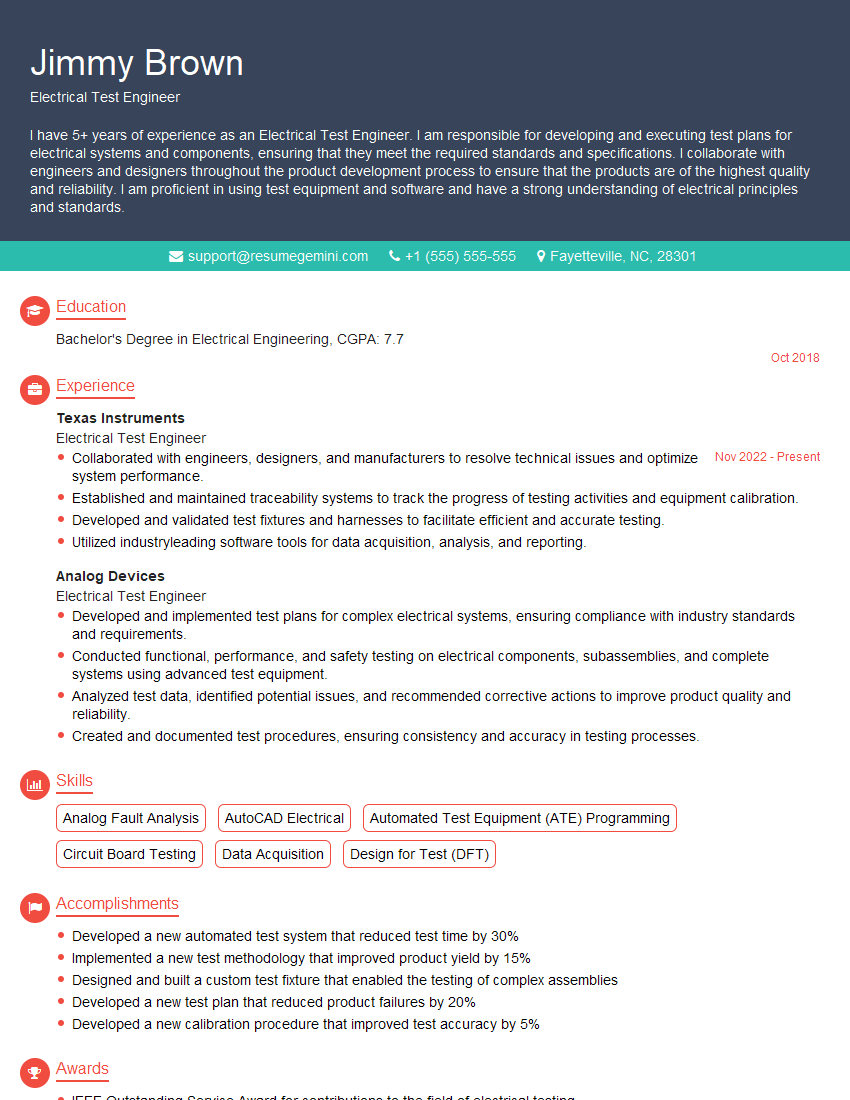
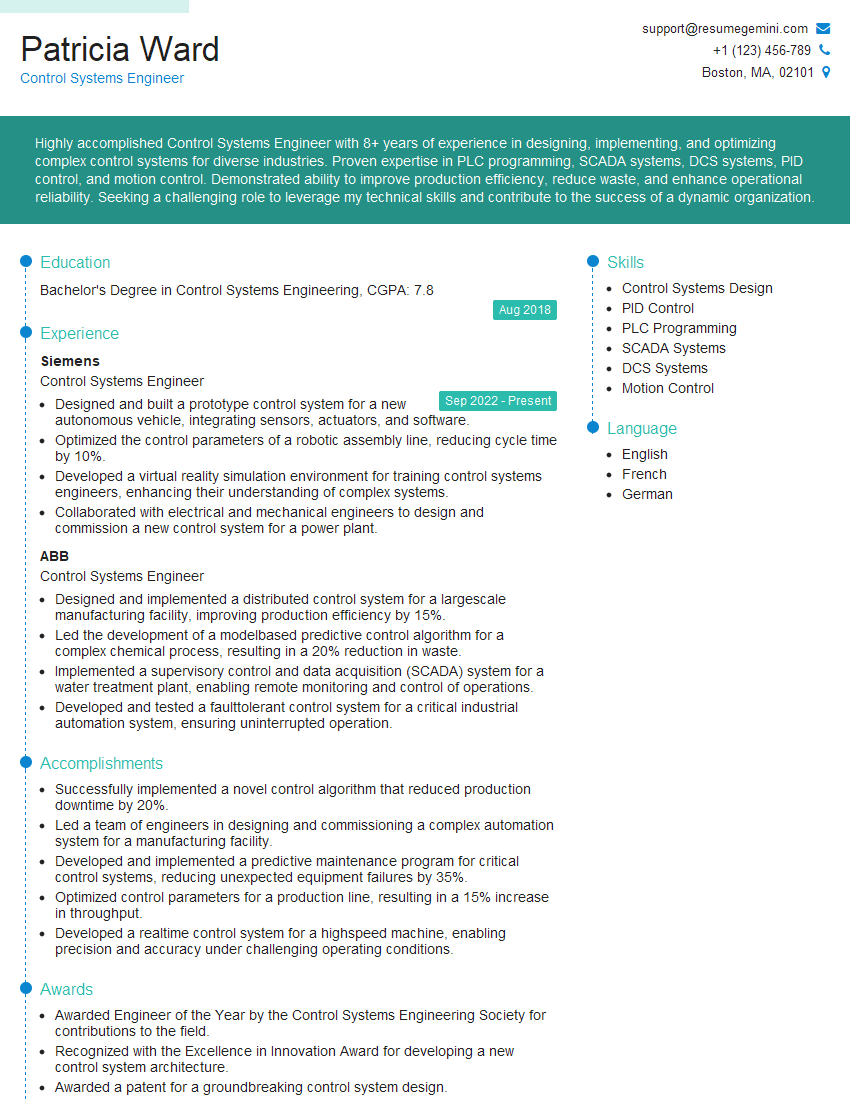
Mastering Relay Testing and Troubleshooting is crucial for advancing your career in electrical engineering, automation, and industrial maintenance. A strong understanding of these skills significantly enhances your problem-solving abilities and makes you a valuable asset to any team. To maximize your job prospects, it’s vital to create an ATS-friendly resume that highlights your expertise. We highly recommend using ResumeGemini to build a professional and impactful resume. ResumeGemini offers a user-friendly platform and provides examples of resumes tailored to Relay Testing and Troubleshooting to help guide you. Invest time in crafting a compelling resume – it’s your first impression on potential employers.
Explore more articles
Users Rating of Our Blogs
Share Your Experience
We value your feedback! Please rate our content and share your thoughts (optional).
What Readers Say About Our Blog
To the interviewgemini.com Webmaster.
Very helpful and content specific questions to help prepare me for my interview!
Thank you
To the interviewgemini.com Webmaster.
This was kind of a unique content I found around the specialized skills. Very helpful questions and good detailed answers.
Very Helpful blog, thank you Interviewgemini team.