Every successful interview starts with knowing what to expect. In this blog, we’ll take you through the top Adjustable-Speed Drive Operation interview questions, breaking them down with expert tips to help you deliver impactful answers. Step into your next interview fully prepared and ready to succeed.
Questions Asked in Adjustable-Speed Drive Operation Interview
Q 1. Explain the operating principle of a Variable Frequency Drive (VFD).
A Variable Frequency Drive (VFD), also known as an adjustable-speed drive, controls the speed of an AC motor by varying the frequency of the power supplied to it. Think of it like controlling the speed of a record player – a higher frequency means a faster rotation, and a lower frequency means a slower rotation. However, instead of grooves on a record, a VFD manipulates the electrical signals to control the motor’s magnetic fields, thus affecting its speed.
The basic principle is that the synchronous speed of an AC induction motor is directly proportional to the frequency of the power supply. By changing the frequency, the VFD effectively changes the speed of the motor. It achieves this through a series of stages: rectification, DC bus formation, and inversion.
Q 2. Describe different types of VFDs (e.g., voltage source, current source).
VFDs are primarily categorized into two main types: Voltage Source Inverters (VSIs) and Current Source Inverters (CSIs). The difference lies in how they control the output voltage and current.
- Voltage Source Inverter (VSI): A VSI controls the voltage waveform, resulting in a relatively constant voltage applied to the motor. Think of it like a water pump with a consistent water pressure; the flow (current) adjusts according to the motor’s load. VSIs are more commonly used due to their simpler design and cost-effectiveness.
- Current Source Inverter (CSI): A CSI controls the current waveform, offering better control over motor torque, especially at low speeds. Imagine it as a water pump with a precisely controlled water flow; the pressure (voltage) adapts to maintain this flow. CSIs are typically used in high-torque applications, such as those found in heavy industries.
Both types use Pulse Width Modulation (PWM) techniques to control the output waveform, but their control strategies differ, leading to different characteristics in terms of efficiency, control precision, and cost.
Q 3. What are the advantages and disadvantages of using VFDs?
VFDs offer numerous advantages, but also come with some drawbacks.
- Advantages:
- Energy Savings: Precise speed control allows for optimized energy consumption, significantly reducing operational costs, especially in applications with fluctuating loads.
- Improved Process Control: Enables fine-tuning of motor speed for better accuracy and control in various industrial processes.
- Reduced Mechanical Wear: Smooth acceleration and deceleration minimize mechanical stress on equipment, extending its lifespan.
- Increased Motor Life: By reducing inrush currents and harsh starting conditions, VFDs protect motors from damage.
- Disadvantages:
- Higher Initial Cost: VFDs are more expensive than traditional motor starters.
- Complex Installation and Maintenance: They require specialized knowledge for proper setup, troubleshooting, and maintenance.
- Electromagnetic Interference (EMI): They can generate EMI, potentially affecting nearby equipment. Proper shielding and filtering are necessary.
- Harmonic Distortion: The non-sinusoidal output waveform can introduce harmonic currents into the power system.
Q 4. How does a VFD control motor speed?
A VFD controls motor speed by adjusting the frequency of the AC voltage supplied to the motor. As mentioned earlier, the synchronous speed of an induction motor is directly proportional to the frequency. However, it’s not just the frequency that matters. To maintain consistent torque, the VFD also adjusts the voltage to maintain the appropriate voltage-to-frequency (V/f) ratio. At lower frequencies, the voltage is reduced proportionally to avoid excessive current and magnetization.
Imagine a car: the frequency is like the gas pedal, controlling speed; the voltage is like adjusting the engine’s power to maintain smooth acceleration even at lower speeds. Without proper V/f control, the motor might stall or overheat at low speeds.
Q 5. Explain the role of a rectifier in a VFD.
The rectifier in a VFD converts the incoming AC power from the utility grid into Direct Current (DC). This is a crucial step because the subsequent inverter stage requires DC power to generate the variable-frequency AC output. The rectifier typically uses diodes or Insulated Gate Bipolar Transistors (IGBTs) to achieve this conversion. Think of it as a water pump converting alternating surges of water into a steady stream.
Different types of rectifiers exist, such as three-phase diode bridge rectifiers, which are common and relatively inexpensive, or controlled rectifiers which offer better power factor correction and harmonic mitigation.
Q 6. What is the purpose of an inverter in a VFD?
The inverter is the heart of a VFD. It takes the DC power from the rectifier and converts it back into AC power with a variable frequency and voltage. This is accomplished using switching devices, such as IGBTs or MOSFETs, which rapidly switch on and off, creating a pulsed waveform. The frequency and amplitude of these pulses determine the output frequency and voltage of the AC waveform supplied to the motor.
The inverter is responsible for the precise control of the motor’s speed and torque by manipulating the pulse width and frequency of the output waveform. This switching action is controlled by sophisticated algorithms that ensure stable and efficient motor operation.
Q 7. Describe the different PWM techniques used in VFDs.
Pulse Width Modulation (PWM) is the technique used by the inverter to generate the variable-frequency AC waveform. Various PWM techniques exist, each with its own advantages and disadvantages:
- Sine PWM (SPWM): This technique generates a PWM waveform that closely approximates a sine wave, resulting in reduced harmonic distortion and smoother motor operation. It’s often preferred for high-performance applications.
- Square Wave PWM: This simpler technique produces a square wave output, which is less efficient and produces more harmonic distortion. It’s generally used in lower-cost VFDs or applications where high precision isn’t crucial.
- Space Vector PWM (SVPWM): SVPWM is a more sophisticated technique that optimizes the switching pattern to minimize harmonic distortion and improve efficiency. It’s often used in high-end VFDs requiring optimal performance.
- Third Harmonic Injection PWM: This method introduces a third harmonic component into the fundamental PWM waveform to reduce the harmonic distortion and improve the output voltage waveform.
The choice of PWM technique depends on factors such as cost, required performance, and harmonic limitations of the power system.
Q 8. How do you select the appropriate VFD for a specific application?
Selecting the right VFD (Variable Frequency Drive) involves considering several crucial factors. It’s like choosing the right engine for a car – you wouldn’t use a Formula 1 engine for a family sedan. First, you need to determine the motor’s horsepower (HP) and voltage requirements. The VFD must be rated for at least the motor’s HP and voltage. Next, consider the load characteristics. Is it a constant torque load (like a conveyor belt) or a variable torque load (like a fan)? Constant torque loads require a VFD with higher torque capabilities at lower speeds. The type of motor also matters – induction motors are the most common, but synchronous motors or DC motors might be used in specialized applications, requiring a VFD designed for that specific motor type. Environmental factors such as ambient temperature and humidity should also be considered. Finally, think about features like communication protocols (for integration with a PLC or SCADA system), braking capabilities (essential for applications requiring quick stops), and built-in safety features. A thorough assessment of these parameters ensures optimal performance, reliability, and safety.
For example, a pump application might need a VFD with soft-start capabilities to prevent water hammer, while a fan application might only need basic speed control. Selecting a VFD with unnecessary features would be wasteful, while selecting one without essential features could lead to malfunctions or damage.
Q 9. Explain the concept of motor slip and its relevance to VFD operation.
Motor slip is the difference between the synchronous speed of the motor (the speed it would run at if there were no losses) and the actual speed of the motor. It’s directly related to the magnetic field’s interaction with the rotor. In an induction motor, slip is necessary to produce torque – no slip, no torque. A VFD controls motor speed by varying the frequency of the power supplied to the motor. Since the synchronous speed is directly proportional to the frequency, changing the frequency indirectly changes the motor speed. However, the actual speed will always be slightly lower due to slip. Understanding slip is critical when precisely controlling motor speed. Too much slip could indicate a problem, like a heavy load or a motor fault. Monitoring slip, often indirectly via motor current, is a valuable diagnostic tool. A VFD can compensate for some of the slip by adjusting the output frequency, but the relationship between slip and torque remains fundamental to VFD operation.
Q 10. What are the common causes of VFD failures?
VFD failures can stem from various sources. Overheating is a common culprit, often caused by overloading the drive, poor ventilation, or a malfunctioning cooling system. Think of it like an overworked engine; it needs proper cooling to prevent overheating. Similarly, input voltage surges or power fluctuations can damage internal components. This is like a car engine suffering damage due to a poor fuel supply. Excessive inrush current during startup (without proper soft-start) can stress the components and cause failure. Environmental factors such as high temperatures or humidity can degrade insulation and compromise performance. Contamination from dust or debris can lead to short circuits. Finally, wear and tear on the internal components, capacitors, and semiconductors, ultimately leads to failure. Regular maintenance, including cleaning, and preventive measures against environmental stresses can significantly extend a VFD’s lifespan.
Q 11. How do you troubleshoot a VFD?
Troubleshooting a VFD involves a systematic approach. Start with the obvious – check for power to the VFD and the motor. Examine the input and output connections for any loose wires or damage. Then, check the VFD’s display for any error codes and refer to the manufacturer’s manual to determine the cause of the error. Verify that the motor is not overloaded or mechanically seized. Using multimeters, you can measure input and output voltages, currents, and check for continuity in various circuits. Inspect cooling fans to confirm proper operation. If the VFD has communication capabilities, check communication links to confirm proper data exchange. If the issue persists, more advanced diagnostic tools, like oscilloscope measurements, might be necessary. Remember, safety should always be a priority when troubleshooting high voltage equipment.
A simple example is if the motor isn’t running but the VFD is powered. Check the output voltage – if it’s zero, the problem could be a faulty output stage or a tripped protection circuit within the VFD.
Q 12. What are the safety precautions when working with VFDs?
Safety is paramount when working with VFDs, as they handle high voltages. Always disconnect power before working on a VFD, using a lock-out/tag-out procedure to prevent accidental energization. Never touch any internal components while the VFD is energized; high voltages can be lethal. Wear appropriate personal protective equipment (PPE), including safety glasses and insulated gloves. Be aware of the potential for high-voltage arcs and keep a safe distance. Grounding the VFD properly is crucial for preventing electric shocks and ensuring proper operation. Consult the manufacturer’s safety manual before working with any VFD. Proper training on high-voltage equipment is indispensable for safe operation.
Consider a scenario where you need to replace a VFD component. Always follow the lock-out/tag-out procedure. Never assume power is off; always double-check with a voltage tester.
Q 13. Explain the importance of motor protection within a VFD system.
Motor protection within a VFD system is critical to prevent damage to the motor and ensure the overall system’s safety and longevity. VFDs typically incorporate multiple protection features, including overload protection (to prevent excessive current draw), short-circuit protection (to protect against short circuits in the motor windings), and ground fault protection (to detect and respond to earth faults). They often monitor motor current, voltage, and temperature to detect potential problems. Some advanced VFDs also include features such as stall detection (to prevent damage caused by a locked rotor) and undervoltage protection (to prevent damage caused by low voltage conditions). These protection features are crucial in extending motor life and preventing costly repairs or replacements. They act as safeguards against unforeseen events that can damage the expensive motor components.
Q 14. How do you calculate the required horsepower for a motor?
Calculating the required horsepower for a motor depends on the application’s specific needs. First, determine the mechanical power required by the load. This often involves calculations based on torque, speed, and efficiency. For example, a pump’s power requirement can be calculated using its flow rate, head pressure, and efficiency. Fans and blowers use similar methods. Once the mechanical power is determined, a safety factor (typically 1.15 to 1.5) should be added to account for variations in load and to ensure the motor doesn’t operate at its maximum capacity. Finally, the result is converted to horsepower. Note that the power calculation might include estimations, especially for highly variable loads. However, the estimations need to be well founded to avoid an under-sized or overpowered motor. An oversized motor leads to unnecessary costs while an undersized motor might burn out.
For example, if a calculation shows a mechanical power requirement of 10 kW, and you use a safety factor of 1.2, the required motor power would be 12 kW. Converting this to horsepower (1 hp ≈ 0.746 kW), we get approximately 16 hp.
Q 15. Describe different methods for braking a motor controlled by a VFD.
Stopping a motor controlled by a Variable Frequency Drive (VFD) requires a braking mechanism to dissipate the motor’s kinetic energy. This is crucial to prevent uncontrolled coasting, which can damage machinery or pose safety risks. There are several methods for achieving this:
Dynamic Braking: This method uses a resistor connected across the DC bus of the VFD. When braking is initiated, the VFD converts the motor’s kinetic energy into DC current, which then dissipates as heat in the braking resistor. Think of it like using friction to slow a moving car – the resistor is the friction, converting the energy into heat. This is a cost-effective solution for many applications.
Regenerative Braking: The energy generated during braking is fed back into the power supply. This is more efficient than dynamic braking as it recovers energy instead of wasting it as heat. We will discuss this further in the next question.
Plugging: This involves reversing the motor’s phase sequence, creating a braking torque. Imagine suddenly reversing the engine of a car to stop it; this is similar. Plugging generates significant heat within the motor, so it should be used carefully and only for short durations. It’s generally not as controlled as other braking methods.
Mechanical Braking: A separate mechanical brake, such as a disc brake or a friction brake, is directly connected to the motor shaft. This offers a very fast and effective braking response, often used in conjunction with other braking methods to provide additional stopping power. It’s frequently used for safety reasons, particularly where immediate stopping is critical.
Career Expert Tips:
- Ace those interviews! Prepare effectively by reviewing the Top 50 Most Common Interview Questions on ResumeGemini.
- Navigate your job search with confidence! Explore a wide range of Career Tips on ResumeGemini. Learn about common challenges and recommendations to overcome them.
- Craft the perfect resume! Master the Art of Resume Writing with ResumeGemini’s guide. Showcase your unique qualifications and achievements effectively.
- Don’t miss out on holiday savings! Build your dream resume with ResumeGemini’s ATS optimized templates.
Q 16. Explain the concept of regenerative braking.
Regenerative braking is a highly efficient braking technique where the kinetic energy of a decelerating motor is converted into electrical energy and returned to the power supply. Instead of wasting energy as heat (as in dynamic braking), this method recovers and reuses it. Imagine it like charging a battery while braking; you’re storing energy instead of dissipating it.
Here’s how it works: When the VFD commands the motor to slow down, the motor acts as a generator, producing electrical energy. This energy is then fed back into the DC bus of the VFD, and depending on the setup, it can be returned to the power grid or used to power other loads in the system. This significantly reduces energy consumption and operating costs, making it an environmentally friendly and economically attractive option, especially for applications with frequent braking cycles or high inertia loads such as elevators or cranes.
A key requirement for regenerative braking is a suitable power supply that can accept the regenerated energy; otherwise, specialized regenerative braking units are required. The effectiveness of regenerative braking depends on factors like the motor’s inertia and the speed at which it is being decelerated.
Q 17. What are the different types of motor encoders used with VFDs?
Motor encoders provide feedback to the VFD about the motor’s position and speed, allowing for precise speed and position control. Several types are commonly used:
Incremental Encoders: These provide pulses indicating only the change in position (incremental) – they don’t provide an absolute position. They consist of a rotating disc with alternating light/dark segments, or magnetic segments; a sensor detects the changes, producing A and B phase signals to indicate direction. They are cost-effective but require a reference point to determine absolute position.
Absolute Encoders: These directly report the absolute position of the motor shaft. They typically use a coded disc or a magnetic system to provide a unique digital code for each position. They don’t need homing or referencing. Although more expensive than incremental encoders, they provide more reliable position information, especially important in applications where maintaining exact position after a power interruption is vital.
Resolver: A resolver is a rotary electrical transducer that provides an analog signal proportional to the motor’s angle. It’s a robust encoder suitable for harsh environments. While less common now than encoder types, resolvers remain suitable for some high precision applications requiring analog feedback.
Q 18. How do you configure a VFD for different motor types?
Configuring a VFD for different motor types involves properly setting parameters that match the motor’s characteristics. The key parameters to adjust include:
Motor Type: Select the appropriate motor type (e.g., induction motor, synchronous motor, permanent magnet motor) from the VFD’s parameter list. This will significantly influence many other settings.
Motor Power Rating (kW or HP): This should match the motor’s nameplate rating.
Motor Voltage and Current Ratings: These values must also be correctly entered to match the motor’s specifications.
Motor Poles: The number of poles determines the motor’s synchronous speed, a critical factor for accurate speed control. This number is found on the motor’s nameplate.
Motor Inertia: For applications that involve frequent starts and stops, the motor’s inertia affects the acceleration/deceleration characteristics, requiring tuning of acceleration/deceleration ramps.
Incorrectly configuring these parameters can lead to poor motor performance, overheating, or even damage. Always refer to the motor’s nameplate and the VFD’s manual for precise settings.
Q 19. Explain the significance of parameter settings in a VFD.
Parameter settings in a VFD are crucial for optimal motor performance, safety, and efficiency. They determine everything from the motor’s speed and torque control to its protective functions. Think of it as a car’s control panel – each setting affects how the ‘engine’ (motor) operates.
These parameters, which can be accessed and modified through the VFD’s keypad or programming software, include:
Speed Control Settings: These control how the motor’s speed is regulated, including setting speed references, acceleration/deceleration ramps, and speed limits.
Torque Control Settings: These parameters define the motor’s torque output at various speeds, contributing to smooth operation under varying loads.
Protection Settings: These are vital for the safety of the drive and connected equipment, such as overcurrent protection, overvoltage protection, and under-voltage protection. Overheating protection settings and motor overload protection are also important.
Communication Settings: These allow communication with other devices in the control system using protocols like Modbus or Profibus (discussed later).
Improper parameter settings can result in malfunction, reduced efficiency, or even damage to the motor and VFD. It’s essential to understand each parameter’s function and configure them appropriately for the specific application.
Q 20. Describe the role of communication protocols (e.g., Modbus, Profibus) in VFD integration.
Communication protocols are essential for integrating VFDs into larger automation systems. They allow the VFD to communicate with Programmable Logic Controllers (PLCs), Human-Machine Interfaces (HMIs), and other devices, enabling remote monitoring, control, and data acquisition. Consider it like a network for your industrial machinery.
Common protocols include:
Modbus: A widely used industrial communication protocol, offering both RTU (RS-485) and TCP/IP communication methods. It allows for simple and efficient data exchange between VFDs and other devices, enabling functions such as remote speed adjustment and monitoring of various parameters like current, voltage, and temperature.
Profibus: A fieldbus protocol that provides high-speed, reliable communication within a control system. It’s often used in complex industrial automation systems where real-time data exchange and synchronization are critical. A benefit is high data transfer speeds.
Ethernet/IP: Uses standard Ethernet networks for communication, allowing for high bandwidth and flexible networking within industrial environments.
Profinet: Another Ethernet based protocol commonly used in industrial automation for real-time and high-performance needs.
The choice of protocol depends on factors such as the complexity of the system, the required communication speed, and the compatibility of the connected devices. Proper configuration of these protocols is vital for the smooth operation of the entire automation system.
Q 21. How do you perform routine maintenance on a VFD?
Routine maintenance is crucial for ensuring the reliability and longevity of a VFD. Neglecting maintenance can lead to premature failure and costly downtime.
Regular maintenance procedures include:
Visual Inspection: Regularly inspect the VFD for signs of damage, loose connections, or overheating. Look for any unusual noises or smells.
Cleaning: Keep the VFD clean and free of dust and debris. Dust accumulation can hinder heat dissipation and lead to component failure.
Tightening Connections: Periodically check and tighten all terminal connections, particularly those carrying high currents.
Checking Cooling System: If the VFD has a cooling fan, ensure it is functioning correctly and is free from obstructions.
Parameter Check: Periodically verify the VFD’s parameter settings to ensure they are still appropriate for the application. Parameter drift can cause performance issues.
Firmware Updates: Check for and install any firmware updates that may improve performance, add features, or address known issues.
The frequency of maintenance depends on the operating environment and the VFD’s usage. A well-maintained VFD will operate reliably for many years, minimizing downtime and ensuring efficient motor control.
Q 22. Explain the concept of harmonic distortion and its impact on VFD systems.
Harmonic distortion in Variable Frequency Drives (VFDs) refers to the creation of non-sinusoidal voltage and current waveforms. Instead of the ideal smooth sine wave, VFDs produce a ‘choppy’ waveform containing multiple frequency components – multiples of the fundamental frequency (the desired operating frequency). These additional frequencies are called harmonics.
Think of it like this: a pure musical note is a sine wave. A VFD, however, introduces other unwanted notes (harmonics) that distort the ‘pure’ sound. These harmonics can cause significant problems. They increase the heating effect in motors and power system components, leading to premature equipment failure. They also increase the stress on the power system’s neutral conductor, leading to potential overloading and voltage imbalances.
For instance, a VFD operating at 50Hz might produce significant amounts of 150Hz, 250Hz, and higher-order harmonics. The severity of harmonic distortion is often quantified using the Total Harmonic Distortion (THD) which represents the percentage of harmonic content in the waveform.
Q 23. How do you mitigate harmonic distortion in VFD applications?
Mitigation of harmonic distortion in VFD applications is crucial for reliable and efficient operation. Several strategies can be employed:
- Input and Output Filters: These are the most common method, using passive (LC) or active filters to attenuate harmonic currents generated by the VFD. Passive filters are simpler and cheaper, but less effective at higher frequencies. Active filters are more expensive but more efficient at mitigating a wider range of harmonics.
- VFD Selection: Choosing a VFD with built-in harmonic mitigation features, such as PWM (Pulse Width Modulation) techniques designed to minimize harmonic generation.
- Load Characteristics: The nature of the connected load can influence harmonic distortion. Matching the VFD to the load characteristics can minimize harmonics.
- Power Factor Correction (PFC): Implementing PFC capacitors to improve the power factor and reduce the overall harmonic current drawn from the supply.
- Distributed Harmonic Mitigation: Using multiple smaller VFDs instead of one large one can distribute the harmonic load more evenly across the power system.
The best approach usually involves a combination of these methods, tailored to the specific application and its harmonic sensitivity.
Q 24. What are the different types of filters used to reduce harmonics?
Several types of filters are used to reduce harmonics:
- Passive Filters (LC filters): These use inductors (L) and capacitors (C) to create resonant circuits that absorb specific harmonic frequencies. They are relatively simple and inexpensive but can be bulky and less effective against a wide range of harmonics. A common type is a ‘tuned’ filter, designed to resonate at a particular harmonic frequency.
- Active Filters: These use power electronics to actively generate harmonic currents that cancel out the unwanted harmonics. They offer better performance and adaptability compared to passive filters. They can handle a broader spectrum of harmonics, and their response can be dynamically adjusted.
- Hybrid Filters: A combination of active and passive filters, which aims to take advantage of the strengths of both. They typically combine a passive filter for the most dominant harmonics with an active filter to tackle the remaining components.
The choice of filter depends on factors such as the severity of harmonic distortion, the cost constraints, the available space, and the required level of harmonic attenuation.
Q 25. Describe the use of soft starters in relation to VFDs.
Soft starters are used to control the starting current of large motors. Unlike VFDs, which offer precise speed control throughout the motor’s operating range, soft starters primarily focus on reducing the inrush current during startup. This is achieved by gradually increasing the voltage supplied to the motor, thus reducing the initial current surge.
In many applications, a soft starter might be used in conjunction with a VFD. The soft starter handles the high-current starting phase, smoothly accelerating the motor to a lower speed. Then, the VFD takes over for precise speed regulation and control. This combination is particularly effective for large motors where the starting current is a major concern.
For example, in a large industrial pump application, a soft starter might be used to initially bring the pump up to speed, minimizing the impact on the power system. Once running, the VFD could be used to adjust the pump speed according to demand, resulting in optimized energy efficiency.
Q 26. Explain how VFDs contribute to energy efficiency.
VFDs contribute significantly to energy efficiency in several ways:
- Speed Control: By precisely controlling the motor speed, VFDs allow motors to operate only at the speed required for the application. This eliminates the energy waste associated with running motors at full speed when less power is needed. Imagine a pump that needs less flow at certain times—a VFD would automatically adjust the motor’s speed accordingly, reducing energy consumption.
- Reduced Energy Loss due to Variable Loads: Many applications don’t require constant motor speed. VFDs adapt to these variable demands, avoiding the losses inherent in using constant-speed motors.
- Optimized Torque Control: VFDs can provide optimal torque at different speeds, enhancing efficiency by minimizing unnecessary energy expenditure in situations requiring high torque at lower speeds.
The cumulative effect of these factors can lead to substantial energy savings, often exceeding 20% in many industrial settings.
Q 27. How do you determine the appropriate size of a VFD for a given load?
Determining the appropriate VFD size for a given load requires careful consideration of several factors:
- Motor Power Rating: The most critical factor is the horsepower (hp) or kilowatt (kW) rating of the motor. The VFD must be rated to handle this power level, with a safety margin for overload conditions.
- Motor Full Load Current (FLC): The VFD should have a current rating that matches or exceeds the FLC of the motor to handle steady-state operation.
- Motor Starting Torque Requirements: The VFD’s torque capability needs to meet the motor’s starting torque demand. Some applications require significant starting torque, which affects the VFD’s sizing requirements.
- Duty Cycle: The VFD should be selected to handle the motor’s operating duty cycle. Continuous operation requires a higher-rated VFD compared to intermittent use.
- Ambient Temperature: Higher ambient temperatures can reduce the effective capacity of the VFD. This should be considered when selecting the appropriate size.
It’s essential to consult motor data sheets and VFD manufacturer specifications to ensure compatibility and proper sizing. Oversizing a VFD is usually less of a problem than undersizing, although it introduces unnecessary cost.
Q 28. Describe the role of thermal overload protection in a VFD system.
Thermal overload protection is a critical safety feature in VFD systems. It safeguards both the VFD itself and the connected motor from damage due to overheating. Overheating can occur due to various factors, such as excessive current, prolonged overload, inadequate ventilation, or internal faults.
A thermal overload protection system typically monitors the temperature of the VFD’s internal components and the motor’s winding temperature (often through sensors embedded in the motor or using current measurements). If the temperature exceeds a preset threshold, the system will trigger a protective action. This could involve reducing the VFD’s output, shutting down the drive, or activating cooling systems.
The consequences of neglecting thermal overload protection are severe: overheated components can degrade rapidly, leading to equipment failure, costly repairs, and even potential safety hazards. Therefore, proper thermal overload protection is essential for ensuring the reliable and safe operation of a VFD system.
Key Topics to Learn for Adjustable-Speed Drive Operation Interview
- Motor Control Fundamentals: Understanding various motor types (AC induction, DC, servo) and their control principles is crucial. Consider the differences in their speed-torque characteristics and how VFDs adapt to each.
- VFD Operation and Components: Familiarize yourself with the internal workings of a Variable Frequency Drive (VFD), including rectifier, inverter, and control circuitry. Understand the roles of different components and their potential failure points.
- Power Electronics: Grasp the underlying power electronics principles that enable VFD operation, including PWM (Pulse Width Modulation) techniques and harmonic filtering. Be prepared to discuss the importance of these elements in efficiency and system stability.
- Programming and Configuration: Learn about different VFD programming methods (keypad, software) and common parameters like speed setpoints, acceleration/deceleration ramps, and fault detection/handling. Be ready to discuss practical experience with specific VFD brands or models.
- Safety and Troubleshooting: Understand the safety precautions associated with high-voltage equipment and common troubleshooting techniques for diagnosing and resolving VFD malfunctions. Practical experience here is highly valued.
- Applications and Case Studies: Be prepared to discuss real-world applications of adjustable-speed drives in various industries (e.g., HVAC, process control, robotics). Highlight your understanding of specific applications and the challenges involved.
- Energy Efficiency and Optimization: Understand how VFDs contribute to energy savings and the methods for optimizing their performance for maximum efficiency. This demonstrates awareness of current industry trends.
Next Steps
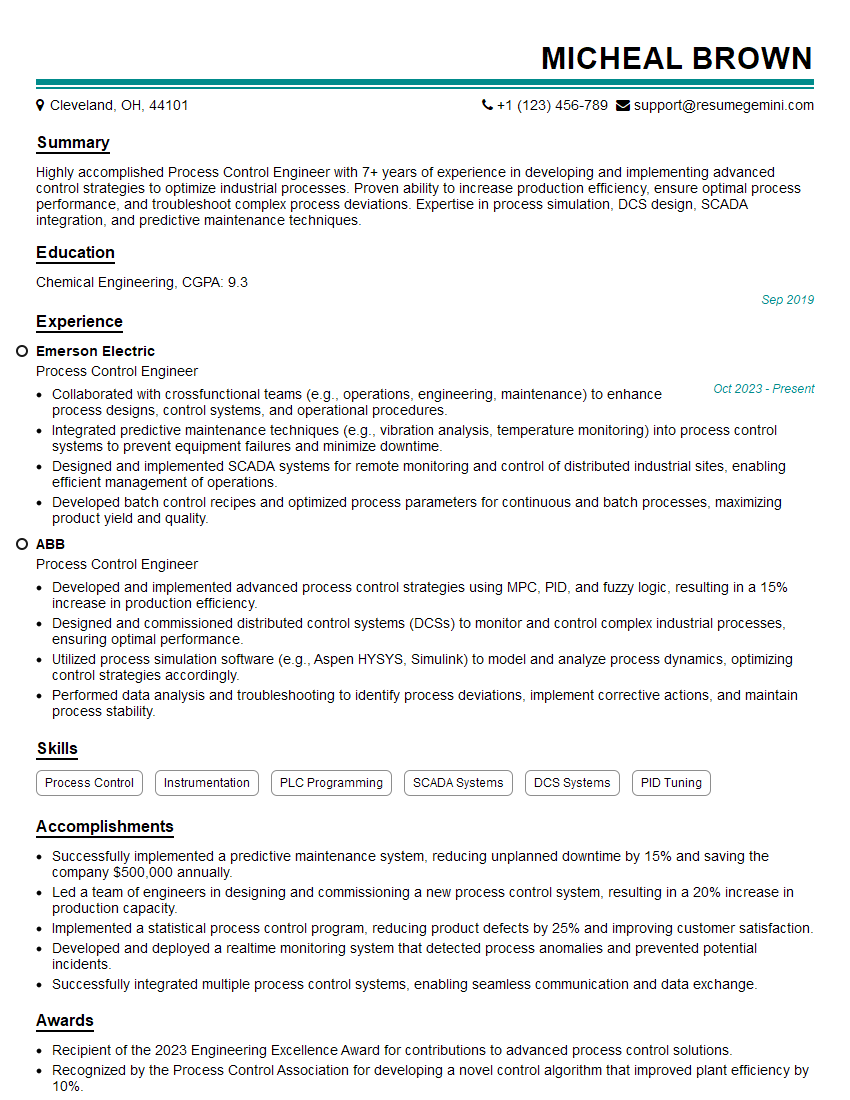
Mastering Adjustable-Speed Drive Operation significantly enhances your career prospects in industrial automation, manufacturing, and related fields. It demonstrates a valuable skillset highly sought after by employers. To increase your chances of landing your dream role, it’s essential to present yourself effectively. Creating an ATS-friendly resume is crucial for getting your application noticed. ResumeGemini can be a valuable asset in this process, helping you craft a professional and compelling resume that highlights your skills and experience. Examples of resumes tailored to Adjustable-Speed Drive Operation are available to help guide you.


Explore more articles
Users Rating of Our Blogs
Share Your Experience
We value your feedback! Please rate our content and share your thoughts (optional).
What Readers Say About Our Blog
To the interviewgemini.com Webmaster.
Very helpful and content specific questions to help prepare me for my interview!
Thank you
To the interviewgemini.com Webmaster.
This was kind of a unique content I found around the specialized skills. Very helpful questions and good detailed answers.
Very Helpful blog, thank you Interviewgemini team.