Every successful interview starts with knowing what to expect. In this blog, we’ll take you through the top Air Monitoring Protocols interview questions, breaking them down with expert tips to help you deliver impactful answers. Step into your next interview fully prepared and ready to succeed.
Questions Asked in Air Monitoring Protocols Interview
Q 1. Describe the different types of air monitoring instruments and their applications.
Air monitoring instruments are diverse, each designed for specific pollutants and applications. Think of them as specialized tools in a detective’s kit, each revealing different aspects of air quality.
- Gas Sensors: These are electrochemical or optical sensors that detect specific gases like carbon monoxide (CO), ozone (O3), nitrogen dioxide (NO2), and sulfur dioxide (SO2). They are often used in continuous monitoring systems for real-time data, for example, in industrial settings to ensure worker safety or in ambient air quality monitoring networks. Electrochemical sensors typically use a chemical reaction to generate a measurable electrical signal, while optical sensors utilize light absorption or fluorescence to detect the target gas.
- Particulate Matter (PM) Samplers: These collect airborne particles of various sizes (e.g., PM2.5, PM10). They range from simple filter-based samplers to sophisticated instruments that measure particle size distribution. These are critical for assessing respiratory health impacts and understanding the sources of pollution. For example, a high-volume sampler can be used for long-term monitoring of PM mass concentration.
- Meteorological Sensors: These measure wind speed, direction, temperature, humidity, and atmospheric pressure. This data is crucial for understanding pollutant dispersion and modeling air quality. For instance, knowing wind direction is essential to identify the potential source of a pollution plume.
- Photoacoustic Spectrometers: These use sound waves generated by the absorption of light to detect and measure trace gases with high sensitivity and specificity. They are widely used in research settings and for monitoring specific pollutants in controlled environments, such as greenhouse gas monitoring.
- Chromatographic Techniques (GC-MS, HPLC): These advanced techniques are used for identifying and quantifying a wide range of volatile and semi-volatile organic compounds (VOCs) and other pollutants in air samples collected in canisters or on sorbent tubes. These are often deployed for specific pollution investigations.
The choice of instrument depends heavily on the target pollutant(s), the required sensitivity, the monitoring frequency, and the budget. A comprehensive air monitoring program often uses a combination of these instruments.
Q 2. Explain the principles of gas chromatography-mass spectrometry (GC-MS) in air analysis.
Gas chromatography-mass spectrometry (GC-MS) is a powerful analytical technique used to identify and quantify volatile and semi-volatile organic compounds (VOCs) in air samples. It’s like a sophisticated fingerprint analysis for air pollutants.
The process involves two steps:
- Gas Chromatography (GC): The air sample is injected into a gas chromatograph, which separates the different compounds based on their boiling points and interactions with a stationary phase within a column. Imagine it as a race track where different compounds run at different speeds.
- Mass Spectrometry (MS): The separated compounds then enter the mass spectrometer, which ionizes them and separates them based on their mass-to-charge ratio. This provides a unique ‘fingerprint’ for each compound, allowing for its identification. It’s like comparing the fingerprints to a database of known compounds.
The combination of GC and MS provides highly specific and sensitive detection of a wide range of VOCs, enabling the identification of individual pollutants even in complex mixtures. This is crucial for identifying sources of pollution, assessing health risks, and monitoring compliance with environmental regulations. For example, GC-MS can be used to analyze air samples from industrial sites to identify VOC emissions, allowing for source apportionment and targeted emission control strategies.
Q 3. What are the key parameters measured in ambient air monitoring?
Ambient air monitoring typically focuses on a suite of key parameters to give a holistic picture of air quality. These parameters provide insights into both the severity of pollution and its potential health effects.
- Particulate Matter (PM2.5 and PM10): These are tiny particles that can penetrate deep into the lungs, causing respiratory problems. The subscripts (2.5 and 10) refer to the diameter of the particles in micrometers.
- Ozone (O3): A powerful oxidant that can damage lung tissue and vegetation. Ground-level ozone is a secondary pollutant, formed through reactions involving sunlight, nitrogen oxides, and volatile organic compounds.
- Nitrogen Dioxide (NO2): A reddish-brown gas associated with vehicle emissions and industrial processes. It can irritate the respiratory system.
- Sulfur Dioxide (SO2): A colorless gas linked to combustion of fossil fuels. It can cause respiratory problems and contributes to acid rain.
- Carbon Monoxide (CO): A colorless, odorless gas produced by incomplete combustion. It can interfere with the blood’s ability to carry oxygen.
- Volatile Organic Compounds (VOCs): A diverse group of organic compounds that can contribute to ozone formation and have various health impacts. Benzene, toluene, and xylene are examples.
- Meteorological parameters (temperature, humidity, wind speed, direction, pressure): These factors significantly influence pollutant dispersion and concentrations.
The specific parameters measured often depend on the location and the regulatory requirements. Urban areas may focus on parameters associated with traffic emissions, while industrial areas may concentrate on emissions from specific industries.
Q 4. How do you calibrate and maintain air monitoring equipment?
Calibration and maintenance are critical for ensuring the accuracy and reliability of air monitoring data. It’s like regularly tuning a musical instrument to ensure it produces accurate notes.
Calibration: This involves comparing the instrument’s readings to a known standard. For example:
- Gas Sensors: These are typically calibrated using calibrated gas cylinders of known concentrations. The instrument is exposed to these known concentrations, and its response is compared to the expected values. Calibration is usually performed at regular intervals, like monthly or quarterly depending on the sensor type.
- PM Samplers: These may be calibrated using certified reference materials or by comparison with a reference instrument.
Maintenance: This involves regular cleaning, filter replacements, and other procedures to ensure optimal performance. For example:
- Gas Sensors: Cleaning the sensor, ensuring proper gas flow, checking for leaks in the sampling system.
- PM Samplers: Regularly changing filter cassettes, cleaning the inlets and pumps.
Detailed calibration and maintenance procedures are usually provided by the manufacturer of the equipment. Maintaining accurate records of these procedures is crucial to ensure data quality and traceability. Failure to perform proper calibration and maintenance can lead to inaccurate data and potentially compromised conclusions.
Q 5. What are the common methods for sampling particulate matter (PM2.5 and PM10)?
Sampling PM2.5 and PM10 requires specialized methods because of the small size of these particles.
- Filter-based methods: This is the most common approach. Air is drawn through a filter, and the PM particles are collected on the filter’s surface. The filter is then weighed to determine the mass concentration of PM. High-volume samplers are commonly used for long-term monitoring while smaller samplers are used for shorter-term measurements.
- Impactor samplers: These use aerodynamic principles to separate particles of different sizes. Air is forced through a series of jets and impaction stages, which separate particles based on their inertia. The particles are collected on separate collection surfaces, allowing for size-resolved measurements of PM.
- Optical particle counters: These instruments measure the number and size distribution of particles using light scattering techniques. They can provide real-time measurements of PM concentrations and size distributions.
The choice of method depends on several factors including the desired information (mass concentration, size distribution), the sampling duration, and the cost. For instance, filter methods are preferred for long-term, low-cost monitoring, while optical particle counters provide real-time data essential for immediate air quality assessment.
Q 6. Explain the difference between continuous and intermittent air monitoring.
The key difference lies in the frequency of data collection.
- Continuous monitoring: Data is collected continuously over time, typically at a high frequency (e.g., every minute or second). This provides a real-time picture of air quality variations, useful for identifying short-term events and assessing immediate health risks. Imagine a continuously recording electrocardiogram.
- Intermittent monitoring: Data is collected at specific intervals (e.g., daily, weekly, or monthly). This is more cost-effective than continuous monitoring but provides less detailed information about short-term fluctuations. This is like taking your blood pressure only once a year rather than continuously monitoring it.
The choice between continuous and intermittent monitoring depends on factors like the objectives of the monitoring program, the resources available, and the desired level of detail. Continuous monitoring is often used for regulatory compliance, while intermittent monitoring may suffice for less time-sensitive applications.
Q 7. Describe your experience with data logging and analysis in air monitoring.
My experience with data logging and analysis in air monitoring encompasses all stages from data acquisition to interpretation and reporting. I’m proficient with various data acquisition systems and software packages.
I’ve worked with various data loggers and automated systems that interface with different air monitoring instruments. These systems typically collect data at predetermined intervals and store it in various formats (e.g., CSV, SQL databases). I’ve used Python extensively for data analysis, employing libraries like Pandas and NumPy for data manipulation and visualization with Matplotlib and Seaborn. Statistical analysis using SciPy and Statsmodels has been crucial for identifying trends, assessing compliance with standards and statistical significance of results.
I’m experienced in quality control procedures, addressing issues like missing data, outliers, and instrument drift. I utilize techniques like linear interpolation for missing data and robust statistical methods to identify and handle outliers. I also create comprehensive reports that include data visualization, statistical summaries, and conclusions drawn from the analysis. My experience includes working with both continuous and discrete data sets from various instrument types and locations, generating reports for regulatory agencies and internal stakeholders. This involves translating complex datasets into meaningful insights that inform decision-making.
Q 8. How do you ensure the quality assurance and quality control (QA/QC) of air monitoring data?
Ensuring the quality of air monitoring data is paramount for accurate assessments and effective decision-making. QA/QC involves a multi-step process starting even before data collection. We employ rigorous procedures at every stage, from instrument calibration and blank sample analysis to data validation and reporting.
- Calibration and Instrument Checks: Before deployment, all instruments – analysers, samplers, flow meters – undergo meticulous calibration against traceable standards. Regular checks during the monitoring period further ensure accuracy. For example, a PM2.5 sampler needs calibration against a known weight of standard PM2.5 material.
- Blank and Field Blanks: We run blank samples alongside actual samples to account for potential contamination from the equipment or handling. Field blanks, exposed to the ambient environment but not sampled, help distinguish between true pollutants and background contamination.
- Data Validation and Quality Control Checks: Raw data undergoes thorough scrutiny. This includes flagging outliers, checking for data gaps, and applying appropriate statistical methods to identify anomalies. For example, we’d flag data points that are significantly different from neighboring data points or those collected during periods of known equipment malfunction.
- Chain of Custody: Maintaining a detailed chain of custody for all samples and equipment is crucial. This document tracks sample handling, transportation, analysis, and storage to ensure sample integrity and prevent tampering or misidentification.
- Audits and Proficiency Testing: Regular internal and external audits, along with participation in proficiency testing programs, independently verify the quality and accuracy of our data and processes.
A robust QA/QC program doesn’t just ensure data quality but also builds confidence in the results, making them credible for regulatory reporting and scientific research.
Q 9. What are the regulatory requirements for air monitoring in your region?
Regulatory requirements for air monitoring vary significantly depending on location. However, common themes exist across jurisdictions. In many regions, regulations dictate minimum monitoring frequencies, required pollutants, permitted methods, and data reporting formats. For instance, the US EPA sets standards for National Ambient Air Quality Standards (NAAQS) pollutants like ozone and particulate matter, outlining required monitoring methodologies and data reporting procedures to the relevant authorities. Similarly, the EU has its own set of Directives and Regulations that guide air monitoring, particularly focused on pollutants listed under the Ambient Air Quality Directives.
Specific regulations cover:
- List of Pollutants: Regulations specify the pollutants that must be monitored, often prioritizing those with significant public health or environmental impacts.
- Monitoring Methods: Approved methods and equipment are usually stipulated to ensure data consistency and comparability across locations.
- Monitoring Frequency and Location: Regulations dictate how often data should be collected (e.g., hourly, daily, or annually) and where monitoring stations should be placed to accurately reflect air quality in the region. Factors such as population density, industrial areas, and proximity to natural sources influence the placement of monitoring sites.
- Data Reporting: Strict procedures govern how data is handled, reported, and archived. This ensures transparency and data accessibility.
- Permitting and Compliance: Operators often need permits to operate air monitoring equipment, and strict compliance with all regulations is crucial to avoid penalties.
Staying updated on relevant legislation and regulatory changes is crucial for ensuring compliance and generating reliable data. This usually involves collaborating with environmental agencies and consulting relevant documentation regularly.
Q 10. Explain the process of developing an air monitoring plan.
Developing a comprehensive air monitoring plan is a systematic process involving careful planning and consideration of many factors. It’s akin to designing a detailed scientific experiment to answer specific air quality questions.
- Define Objectives and Scope: Clearly define the goals of the monitoring program. What specific pollutants are of interest? What is the geographic area to be covered? What is the timeframe for the study? Examples include assessing compliance with air quality standards, evaluating the impact of a new industrial facility, or studying the spatial and temporal variability of pollutants.
- Identify Pollutants of Concern: Based on the objectives, identify the key pollutants that need to be monitored. This may involve considering known emission sources, health concerns, and regulatory requirements.
- Select Monitoring Methods and Equipment: Choose appropriate sampling methods and instruments based on the target pollutants and the desired data quality. This step requires consideration of detection limits, accuracy, precision, and cost-effectiveness of various methods.
- Site Selection and Network Design: Strategically locate monitoring sites to represent the area’s air quality effectively. Factors to consider include proximity to emission sources, population density, meteorological factors, and terrain features.
- Develop a Data Management and Quality Assurance Plan: Establish a robust system for data collection, storage, analysis, and reporting. This includes detailing QA/QC procedures to ensure data integrity. This will include procedures to check for instrument drift, equipment malfunction, and data outliers.
- Obtain Necessary Permits and Approvals: Secure any necessary environmental permits and obtain approvals from relevant authorities before deploying monitoring equipment.
- Implement and Monitor the Plan: Deploy the monitoring equipment, collect data, and regularly check equipment performance and data quality. Make adjustments as needed based on operational challenges and data quality assessment.
- Data Analysis and Reporting: Analyze the collected data, interpret results in the context of the objectives, and prepare comprehensive reports summarizing findings and recommendations.
The monitoring plan should be a dynamic document, reviewed and updated as necessary based on new information, technological advances, or regulatory changes.
Q 11. How do meteorological conditions influence air quality monitoring results?
Meteorological conditions exert a significant influence on air quality and the interpretation of monitoring results. Think of the atmosphere as a large, constantly mixing system. Wind speed, direction, temperature, atmospheric stability, and precipitation patterns all affect pollutant dispersion, transport, and chemical reactions.
- Wind Speed and Direction: Higher wind speeds generally lead to better dispersion of pollutants, resulting in lower concentrations downwind. Wind direction determines the transport pathway of pollutants, influencing concentrations at specific monitoring locations.
- Atmospheric Stability: Stable atmospheric conditions (temperature inversion) can trap pollutants close to the ground, leading to higher concentrations. Unstable conditions promote vertical mixing, diluting pollutants and reducing concentrations near the surface.
- Temperature: Temperature influences both pollutant formation and dispersion. Higher temperatures can accelerate chemical reactions that lead to ozone formation (photochemical smog). Temperature gradients affect atmospheric stability.
- Precipitation: Precipitation can remove pollutants from the atmosphere through wet deposition (rainout and washout), leading to reduced concentrations. However, some pollutants may form in aqueous phases during precipitation or react with precipitation to form secondary pollutants.
- Solar Radiation: Solar radiation drives photochemical reactions, primarily affecting ozone formation. Higher solar radiation levels generally lead to higher ozone concentrations.
To account for these influences, meteorological data (wind speed, direction, temperature, humidity, precipitation, solar radiation) are usually collected alongside air quality data. This allows for better interpretation of the air quality results and for the development of air quality models that account for meteorological effects.
Q 12. Describe different types of air samplers and their suitability for different pollutants.
Air samplers come in various types, each suited for specific pollutants and measurement objectives. The choice depends on factors like the pollutant’s physical and chemical properties, the desired accuracy and detection limits, and the monitoring strategy.
- High-Volume Samplers: These are used for collecting large volumes of air for particulate matter (PM10, PM2.5) analysis. They employ a high-flow pump to draw air through a filter, where particulate matter is trapped and subsequently weighed to determine the mass concentration.
- Impingers: These are used to collect gaseous pollutants by drawing air through a liquid-filled impinger. The pollutant dissolves in the liquid, which is then analysed in a laboratory. Suitable for many gases like SO2, NOx.
- Passive Samplers: These samplers rely on diffusion to collect pollutants. They’re simpler to deploy and maintain but generally have lower sampling rates and may be sensitive to environmental conditions. Commonly used for longer-term monitoring of certain gases.
- Real-time Analyzers: These instruments provide continuous measurements of pollutants in the ambient air. Examples include chemiluminescence detectors for NOx, UV-Vis spectrometers for ozone, and electrochemical sensors for various gases. Real-time analyzers offer immediate feedback but can be more expensive than other methods.
- Specialized Samplers: For specific pollutants, specialized samplers may be needed. For example, specialized techniques may be employed to collect and analyze heavy metals, persistent organic pollutants (POPs), or bioaerosols.
The selection of the appropriate sampler requires careful consideration of the target pollutant’s physical and chemical characteristics, regulatory requirements, desired time resolution, cost, and maintenance needs. It’s often an iterative process involving consultation with regulatory bodies and experienced air monitoring professionals.
Q 13. What are the limitations and uncertainties associated with air monitoring data?
Air monitoring data, while valuable, comes with inherent limitations and uncertainties that need careful consideration. These are not flaws in the measurement process but rather limitations based on the complexities of atmospheric processes and the nature of the measurements themselves.
- Spatial and Temporal Variability: Air pollutants are not uniformly distributed in space and time. A single monitoring site cannot fully represent the air quality of an entire area. Measurements taken at different times or locations may vary significantly even over short distances.
- Detection Limits: Instruments have detection limits below which pollutants may not be detected. This can be a problem, especially when measuring low concentrations of pollutants.
- Measurement Errors: Various sources of error can affect the accuracy and precision of measurements, including instrument calibration errors, sampling artifacts, and analytical errors.
- Data Gaps: Equipment malfunction or unexpected events can cause data gaps, making it difficult to obtain a continuous and complete record of air quality.
- Interferences: Other substances in the air can interfere with the measurement of target pollutants, leading to inaccurate readings.
- Representativeness: A limited number of monitoring sites might not capture local hotspots or highly localized pollution events accurately.
Understanding these limitations is essential for proper interpretation and use of air monitoring data. This involves careful assessment of data quality, appropriate statistical analysis techniques, and recognition of the uncertainties inherent in the measurements. For example, presenting data with associated uncertainty ranges helps convey the reliability and confidence of the results. Statistical modeling can aid in filling data gaps, and data fusion techniques can combine data from multiple sources to produce more comprehensive representations.
Q 14. How do you interpret air quality index (AQI) data?
The Air Quality Index (AQI) provides a single number summarizing the overall air quality at a given location and time. It’s a valuable tool for communicating air quality information to the public in a readily understandable format. The AQI is not a direct measurement but rather a calculation based on the concentrations of various pollutants like ozone, particulate matter, carbon monoxide, sulfur dioxide, and nitrogen dioxide.
Interpretation typically involves:
- Understanding the Scale: The AQI is typically presented on a scale from 0 to 500, with higher values indicating poorer air quality. The scale is often categorized into different color-coded ranges (e.g., green for good, yellow for moderate, orange for unhealthy for sensitive groups, red for unhealthy, purple for very unhealthy, and maroon for hazardous).
- Identifying the Primary Pollutant: The AQI usually highlights the primary pollutant contributing most significantly to the overall index value. This provides context and allows for targeted actions.
- Health Implications: Each AQI category is associated with specific health advisories. For example, individuals with respiratory conditions might be advised to limit outdoor activity on days with high AQI values.
- Time Context: The AQI is usually reported for a specific time period (e.g., hourly or daily average). Understanding the time context is important for interpreting the significance of the index value.
- Local Context: The AQI should be interpreted within its local context. An AQI of 100 might be considered acceptable in one region but unhealthy in another with different background pollution levels.
Using the AQI effectively requires understanding its limitations. It is a simplified representation of complex air quality conditions and does not account for all pollutants or their synergistic effects. However, it’s an essential tool for informing public health advisories, guiding air quality management strategies, and promoting public awareness.
Q 15. Explain your experience with air dispersion modeling.
Air dispersion modeling is a crucial tool in environmental science, used to predict the transport and fate of pollutants released into the atmosphere. It involves using sophisticated computer models, often based on fundamental fluid dynamics and atmospheric chemistry principles, to simulate how pollutants disperse from a source, considering factors like wind speed and direction, atmospheric stability, and terrain.
My experience encompasses using various models, including AERMOD, CALPUFF, and SCICHEM. I’ve applied these models in diverse scenarios, from assessing the impact of industrial emissions on surrounding communities to evaluating the effectiveness of pollution control strategies. For instance, in one project, I used AERMOD to model the dispersion of sulfur dioxide from a power plant, helping to identify areas at risk of exceeding air quality standards and inform mitigation measures.
My expertise extends beyond simply running the models. I understand the underlying assumptions and limitations of each model, and I’m proficient in interpreting the results and communicating findings to both technical and non-technical audiences. This includes identifying areas where further investigation might be needed due to model limitations or uncertainties in input data.
Career Expert Tips:
- Ace those interviews! Prepare effectively by reviewing the Top 50 Most Common Interview Questions on ResumeGemini.
- Navigate your job search with confidence! Explore a wide range of Career Tips on ResumeGemini. Learn about common challenges and recommendations to overcome them.
- Craft the perfect resume! Master the Art of Resume Writing with ResumeGemini’s guide. Showcase your unique qualifications and achievements effectively.
- Don’t miss out on holiday savings! Build your dream resume with ResumeGemini’s ATS optimized templates.
Q 16. How do you handle missing or incomplete air monitoring data?
Missing or incomplete air monitoring data is a common challenge in air quality assessments. Simply discarding incomplete datasets can lead to biased results. My approach involves a multi-pronged strategy.
- Data Validation and Quality Control: First, I rigorously check for errors or anomalies in the existing data. This may involve comparing data from different monitoring stations or checking for sensor malfunctions.
- Data Imputation Techniques: If data gaps are relatively small and randomly distributed, statistical imputation methods like linear interpolation or more sophisticated techniques like kriging can be employed. These methods estimate missing values based on the surrounding data patterns. The choice of method depends on the characteristics of the data and the size of the gap.
- Gap Filling with Modeling: For larger data gaps or when the data patterns are complex, I incorporate air dispersion modeling. By using the available data to calibrate the model and estimate emissions, it’s often possible to predict pollutant concentrations in areas with incomplete monitoring data. This approach requires careful consideration of the model’s limitations and uncertainties.
- Sensitivity Analysis: Finally, I always conduct sensitivity analysis to understand how the imputed data affects the overall conclusions. This helps in assessing the uncertainty associated with the data imputation and strengthens the robustness of the results.
Q 17. Describe your proficiency in using air monitoring software or databases.
I’m highly proficient in using a range of air monitoring software and databases. This includes experience with specialized software packages like EPA’s Air Quality System (AQS), which stores and manages extensive air quality data from across the United States. I am also skilled in using data management tools like ArcGIS, which allows for spatial analysis and visualization of air quality data. My experience also extends to working with various air monitoring databases including those utilized by state and local regulatory agencies.
Beyond these established systems, I’m comfortable working with various data formats and can adapt to new software and databases as needed. A key part of my expertise is in using these tools not only to manage and analyze data but also to integrate data from multiple sources—monitoring networks, model outputs, and emissions inventories—for a comprehensive analysis.
Q 18. What are the common sources of error in air monitoring?
Air monitoring is prone to several sources of error, broadly categorized as:
- Instrumental Errors: These include calibration errors, sensor drift, and limitations in the detection limits of the instruments. Regular calibration and maintenance are critical to minimize these errors. For example, a poorly calibrated ozone monitor might consistently underestimate or overestimate actual concentrations.
- Sampling Errors: These errors arise from how samples are collected, such as improper handling, inadequate sampling volume or frequency, and contamination. Strategic site selection and adherence to standardized sampling protocols are crucial.
- Spatial and Temporal Variability: Air pollution concentrations fluctuate greatly depending on location and time. A single monitoring station might not accurately represent the entire area. A comprehensive monitoring network with multiple strategically placed sensors and sufficient sampling frequency is needed.
- Data Processing Errors: Errors in data processing, such as incorrect calculations or data entry mistakes, can also lead to significant inaccuracies. Rigorous quality control procedures and automated data validation techniques are necessary to ensure data integrity.
- Meteorological Effects: Wind speed, direction, temperature, and atmospheric stability all significantly influence pollutant dispersion and concentration levels, affecting the accuracy of monitoring results unless properly accounted for in the analysis.
Q 19. How do you address non-compliance issues related to air quality standards?
Addressing non-compliance with air quality standards requires a systematic approach. It involves understanding the cause of the non-compliance, developing mitigation strategies, and ensuring compliance is achieved and maintained.
- Investigation: A thorough investigation needs to determine the sources and extent of the non-compliance. This typically involves reviewing monitoring data, assessing emission sources, and conducting site visits.
- Communication and Collaboration: Open communication with the responsible party is crucial. This collaboration should focus on identifying solutions, outlining timelines for corrective actions, and establishing a monitoring plan to ensure future compliance.
- Enforcement: Depending on the severity and nature of the non-compliance, enforcement action might be necessary. This could involve issuing warnings, fines, or requiring the installation of pollution control equipment.
- Reporting: The regulatory agency must be informed of the non-compliance, the actions taken to address it, and the results of those actions. Detailed reports should be compiled and submitted as per the regulatory requirements.
- Continuous Monitoring and Improvement: After the corrective actions have been implemented, continuous monitoring is essential to verify that compliance is maintained and identify potential issues early on.
Q 20. Describe your experience with air toxics monitoring.
My experience with air toxics monitoring focuses on identifying and quantifying hazardous air pollutants (HAPs) that pose significant health risks, even at low concentrations. This involves specialized sampling and analytical techniques, often requiring more sensitive instrumentation than that used for monitoring criteria pollutants.
I’ve worked on projects involving the monitoring of HAPs from industrial sources, such as refineries and chemical plants, as well as evaluating the impact of wildfires or other accidental releases. This work often involves the use of techniques like high-volume air sampling, followed by sophisticated laboratory analysis using methods such as gas chromatography-mass spectrometry (GC-MS). Data analysis involves interpreting the results in the context of relevant health-based standards and risk assessment frameworks. A key element is understanding the chemical properties of the HAPs and how they behave in the atmosphere.
Q 21. What are the health effects of exposure to common air pollutants?
Exposure to common air pollutants has significant adverse effects on human health. The severity of these effects depends on factors like the concentration of the pollutant, duration of exposure, and individual susceptibility.
- Particulate Matter (PM): PM can penetrate deep into the lungs, causing respiratory and cardiovascular problems, including asthma, bronchitis, heart attacks, and even premature death. Fine particulate matter (PM2.5) is particularly harmful due to its smaller size.
- Ozone (O3): Ground-level ozone, a major component of smog, irritates the respiratory system, reduces lung function, and worsens respiratory illnesses like asthma.
- Sulfur Dioxide (SO2): SO2 contributes to acid rain and respiratory problems, including shortness of breath and wheezing. Individuals with pre-existing respiratory conditions are particularly vulnerable.
- Nitrogen Dioxide (NO2): NO2 can trigger respiratory infections, reduce lung function, and increase susceptibility to respiratory illnesses. Long-term exposure is associated with increased risk of respiratory diseases and cardiovascular problems.
- Carbon Monoxide (CO): CO reduces the blood’s ability to carry oxygen, leading to headaches, dizziness, and in severe cases, death.
It’s important to note that these are just some of the common air pollutants and their health effects. Many other pollutants, including air toxics, pose additional health risks depending on their specific properties and exposure levels.
Q 22. Explain the concept of air quality modeling and its applications.
Air quality modeling is the process of using mathematical equations and computer simulations to predict the concentration of pollutants in the atmosphere. It’s like creating a weather forecast, but instead of predicting rain, we predict pollution levels. These models take into account various factors such as emission sources, meteorological conditions (wind speed, direction, temperature, precipitation), and the chemical reactions pollutants undergo in the air.
Applications are vast: They are crucial for assessing the impact of new industrial facilities, evaluating the effectiveness of pollution control measures, predicting future air quality under different scenarios (like increased vehicle traffic or stricter emission standards), and identifying areas with high pollution risks. For example, a model might simulate the dispersion of pollutants from a power plant to determine the impact on surrounding communities and inform the design of emission control systems. Another application could be in urban planning, where models help city officials make informed decisions about transportation infrastructure to reduce traffic congestion and improve air quality.
Q 23. How do you communicate complex air quality data to non-technical audiences?
Communicating complex air quality data to non-technical audiences requires simplifying complex concepts and using visuals. Instead of using technical jargon like “PM2.5 concentration,” I’d say something like “tiny particles in the air that can harm your lungs.” I rely heavily on visual aids such as maps showing pollution levels using a color scale (e.g., green for good, red for bad), graphs illustrating trends over time, and infographics presenting key findings in a clear and concise manner. I also use analogies; for example, I might compare the impact of pollution on the lungs to the effect of smoking on them. Storytelling is powerful; sharing real-world examples of how improved air quality has benefitted a community can greatly enhance understanding and engagement.
Q 24. Describe your experience with different air quality standards (e.g., NAAQS, EU standards).
My experience encompasses a wide range of air quality standards, including the National Ambient Air Quality Standards (NAAQS) in the United States and the EU Ambient Air Quality Directives. I’m familiar with the specific pollutants covered by each standard (like ozone, particulate matter, nitrogen dioxide, sulfur dioxide, carbon monoxide, and lead), their respective limits, and the methodologies used for monitoring and enforcement. I understand the nuances in the standards’ implementation across different jurisdictions and how these can influence monitoring strategies and regulatory compliance. For instance, the NAAQS uses different averaging times (e.g., 8-hour average for ozone, 24-hour average for PM2.5) to reflect the varying health impacts of pollutants, which requires different approaches to data collection and analysis. Working with EU standards requires familiarity with the various Directives and their interpretations within member states.
Q 25. What is your experience with different types of air pollution sources (e.g., stationary, mobile)?
I have extensive experience with diverse air pollution sources. Stationary sources include power plants, industrial facilities, and waste treatment plants—these typically require on-site monitoring and specialized emission inventories. Mobile sources encompass vehicles (cars, trucks, buses, ships, airplanes), which contribute significantly to urban air pollution. I have worked with emission factors for various vehicle types and fuels to estimate their contribution to ambient air quality. I’m also familiar with other mobile sources, like construction equipment. In addition, I have experience with area sources (like residential heating and cooking) which are dispersed and more challenging to quantify. Each source type requires specific monitoring techniques and data analysis strategies. For example, monitoring stationary sources might involve continuous emission monitoring systems, while mobile source emissions are often estimated through mobile emission inventories and on-road measurements. Understanding these differences is crucial for effective air quality management.
Q 26. How do you assess the effectiveness of air pollution control measures?
Assessing the effectiveness of air pollution control measures involves a multi-faceted approach. Firstly, I would analyze air quality data before and after the implementation of the measure to identify changes in pollutant concentrations. Statistical methods are crucial here to account for natural variability. Secondly, I’d examine emission inventories to see if the control measure has reduced emissions from the targeted source. Thirdly, I’d consider modeling results to simulate the impact of the measure and compare them with observed changes. For instance, if a new emission control system is installed at a power plant, we would compare the air quality measurements in the surrounding area before and after installation, analyze the plant’s emission data, and compare both with a model simulating the effect of the control system. This integrated approach helps determine if the measure is achieving its intended outcome and allows for adjustments if needed. We also need to consider factors like economic efficiency and community impact to ensure a holistic evaluation.
Q 27. Describe your experience working with regulatory agencies on air quality issues.
I’ve worked extensively with regulatory agencies like the EPA (in the US) and similar bodies in other regions. This includes preparing reports and presentations on air quality monitoring data, conducting compliance assessments, and participating in regulatory discussions. I’ve assisted in developing and implementing air quality management plans, working closely with agencies to ensure that the plans are technically sound, cost-effective, and meet regulatory requirements. A specific example is helping a municipality develop a plan to reduce particulate matter pollution, which involved working with the local air quality agency to gather data, model the impact of different strategies, and present findings to policymakers. My expertise lies in bridging the gap between technical analysis and policy implementation.
Q 28. What are the ethical considerations in air quality monitoring and reporting?
Ethical considerations in air quality monitoring and reporting are paramount. Data integrity is crucial; any manipulation or misrepresentation of data is unethical and can have severe consequences for public health and environmental protection. Transparency is essential, ensuring that data and methodologies are publicly accessible and readily understood. Conflicts of interest must be carefully managed to avoid bias in data analysis and reporting. For example, if I’m consulting for an industry, I need to ensure my analysis is objective and transparent, and clearly disclose any potential conflicts. It’s vital to communicate findings clearly and accurately, regardless of the implications, and to prioritize public health and environmental protection over other considerations. Finally, data security and the responsible handling of sensitive information are also key ethical concerns.
Key Topics to Learn for Air Monitoring Protocols Interview
- Regulatory Compliance: Understanding EPA regulations, ISO standards, and other relevant guidelines for air monitoring data collection and reporting.
- Sampling Techniques: Mastering various sampling methods (e.g., passive, active, integrated) and their applications in different environmental settings. Consider the advantages and limitations of each.
- Data Analysis and Interpretation: Proficiency in analyzing air quality data, identifying trends, and interpreting results using statistical methods. Practice presenting data clearly and concisely.
- Instrumentation and Calibration: Familiarize yourself with common air monitoring instruments (e.g., gas chromatographs, particulate monitors) and their calibration procedures. Be prepared to discuss troubleshooting techniques.
- Quality Assurance/Quality Control (QA/QC): Understanding the importance of QA/QC procedures to ensure data accuracy and reliability, including chain of custody documentation.
- Health and Safety: Demonstrate knowledge of safety protocols and personal protective equipment (PPE) required for air monitoring activities in various environments.
- Data Reporting and Presentation: Practice effectively communicating technical information to both technical and non-technical audiences through clear reports and presentations.
- Emerging Technologies: Explore advancements in air monitoring technologies and their potential impact on the field.
- Problem-solving scenarios: Be prepared to discuss how you would approach and solve common challenges related to data accuracy, instrument malfunction, and regulatory compliance.
Next Steps
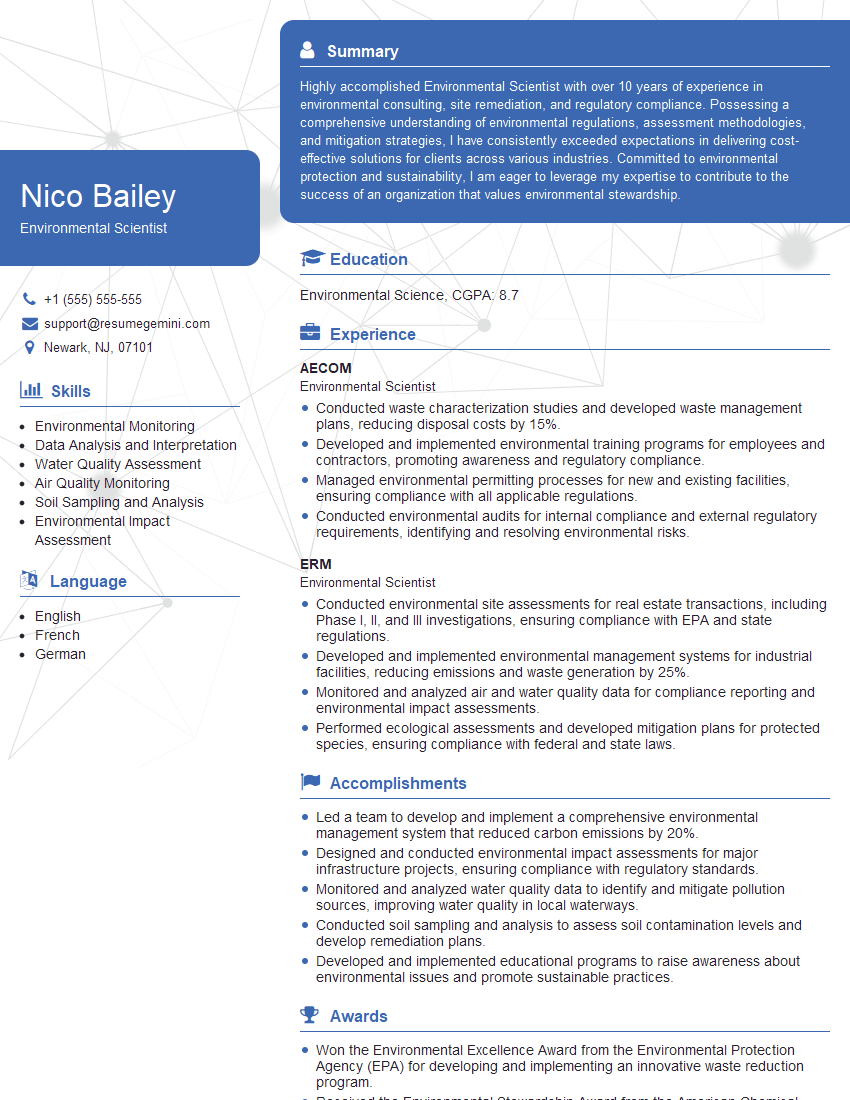
Mastering Air Monitoring Protocols is crucial for career advancement in environmental science and related fields. A strong understanding of these protocols demonstrates your competence and professionalism, opening doors to exciting opportunities. To maximize your job prospects, create an ATS-friendly resume that effectively showcases your skills and experience. ResumeGemini is a trusted resource to help you build a professional resume that stands out. We provide examples of resumes tailored to Air Monitoring Protocols to help you get started. Invest the time to craft a compelling resume – it’s your first impression to potential employers.



Explore more articles
Users Rating of Our Blogs
Share Your Experience
We value your feedback! Please rate our content and share your thoughts (optional).
What Readers Say About Our Blog
To the interviewgemini.com Webmaster.
Very helpful and content specific questions to help prepare me for my interview!
Thank you
To the interviewgemini.com Webmaster.
This was kind of a unique content I found around the specialized skills. Very helpful questions and good detailed answers.
Very Helpful blog, thank you Interviewgemini team.