Are you ready to stand out in your next interview? Understanding and preparing for Architectural Glass Fabrication interview questions is a game-changer. In this blog, we’ve compiled key questions and expert advice to help you showcase your skills with confidence and precision. Let’s get started on your journey to acing the interview.
Questions Asked in Architectural Glass Fabrication Interview
Q 1. Explain the different types of architectural glass and their applications.
Architectural glass comes in many varieties, each suited for different applications. The choice depends on factors like aesthetics, performance requirements (insulation, strength, light transmission), and budget.
- Annealed Glass (Float Glass): This is the most basic type, produced by floating molten glass on a bed of tin. It’s inexpensive and used for standard windows, but it shatters into sharp shards when broken. Think of the standard windows in many older homes.
- Tempered Glass (Heat-Strengthened Glass): This glass undergoes a heat treatment process, making it four to five times stronger than annealed glass. When it breaks, it crumbles into small, relatively harmless pieces. Common in car windshields, shower doors, and storefront windows where safety is paramount.
- Laminated Glass: Two or more layers of glass bonded together with a polyvinyl butyral (PVB) interlayer. This interlayer holds the glass together even when broken, preventing shattering and offering excellent sound insulation and security. Used in skylights, high-rise buildings, and security applications.
- Insulated Glass Units (IGUs): Two or more panes of glass separated by a hermetically sealed air or gas-filled space. This design significantly improves energy efficiency by reducing heat transfer. Very common in modern residential and commercial buildings.
- Low-E Glass: Coated with microscopic metallic or metallic oxide layers to reflect infrared radiation, reducing heat transfer. This improves energy efficiency in both heating and cooling seasons. Often used in IGUs for optimal performance.
- Colored Glass: Glass that has been tinted or coated to achieve a specific color. Provides aesthetic appeal and can be used to control light transmission and heat gain. Used extensively in architectural design for both functional and stylistic reasons.
- Patterned Glass: Features textures or patterns pressed into the glass surface, offering privacy and decorative elements. Think of frosted glass used in bathrooms or shower enclosures.
The selection of glass type is a crucial design decision, impacting the building’s energy performance, safety, and overall aesthetic.
Q 2. Describe the process of creating laminated glass.
Laminated glass manufacturing involves bonding multiple layers of glass together using a PVB interlayer. The process is relatively straightforward but requires precision and cleanroom conditions to avoid imperfections.
- Cleaning: The glass sheets are thoroughly cleaned to remove any dust or debris that could compromise the bond.
- Layering: The PVB interlayer is placed between the glass sheets in a controlled environment. Multiple interlayers can be added for increased strength and security.
- Lamination: The assembled glass and interlayer stack is then fed into an autoclave, a pressurized oven. The high heat and pressure cause the PVB to melt and fuse with the glass, creating a strong, permanent bond.
- Cooling: The laminated glass is slowly cooled to room temperature to ensure uniform stress distribution and prevent cracking or warping.
- Quality Control: The finished product is inspected for any defects, ensuring it meets the required quality standards. This includes checking for delamination (separation of the layers) or other imperfections.
The result is a remarkably strong and safe product capable of withstanding significant impacts. A common example is the windshield of a car—designed to hold together even during an accident to protect the occupants.
Q 3. What are the safety precautions when working with tempered glass?
Tempered glass is incredibly strong but also presents unique safety challenges during fabrication and handling. Its inherent strength means that breaking it can be dangerous.
- Protective Gear: Always wear safety glasses, gloves, and long sleeves when handling tempered glass. Even small fragments can cause serious eye injuries.
- Proper Handling: Use suction cups or other specialized lifting equipment designed for glass handling. Avoid dropping or sharp impacts.
- Edge Protection: The edges of tempered glass are particularly vulnerable to chipping and should be handled with care. Use edge protection during transportation and installation.
- Work Area: Maintain a clean and organized work area to prevent accidental breakage. Remove any obstacles that could cause the glass to fall or break.
- Cutting and Drilling: Use specialized tools and techniques designed for tempered glass. Improper cutting or drilling can cause spontaneous breakage.
- Pre-planning: Before commencing any work, ensure accurate measurements and calculations to avoid mistakes that could necessitate re-cutting or alterations, potentially causing damage.
Remember, tempered glass is stronger than annealed glass, but not indestructible. Proper safety measures are crucial to preventing accidents and injuries.
Q 4. How do you calculate the required quantity of glass for a project?
Calculating the required glass quantity necessitates careful consideration of several factors. The process involves detailed architectural drawings and precise measurements.
- Obtain Drawings: Begin with detailed architectural drawings indicating the dimensions and specifications of each glass element.
- Measure and Account for Waste: Accurate measurements of each glass pane are crucial. Account for cutting losses (e.g., kerfs) and potential errors during fabrication and installation. Add a safety margin (5-10%) to the total area to compensate for unforeseen issues.
- Consider Overlaps and Joints: For projects with multiple glass panels, determine the necessary overlaps or joint allowances for secure installation.
- Specify Glass Type: Specify the type of glass required for each application (e.g., tempered, laminated, IGUs) as this affects both material requirements and pricing.
- Check for Special Shapes: Special shapes (curves, angles) will require more meticulous calculations and potentially higher material usage. Allow for additional waste for these applications.
- Software Assistance: Use dedicated software for glass estimation and cutting optimization; this minimizes material waste and optimizes the cutting plan.
Accurate calculation prevents costly material waste and delays. Underestimating needs can cause project delays, while overestimating can unnecessarily inflate the budget.
Q 5. Explain the process of installing insulated glass units (IGUs).
Installing Insulated Glass Units (IGUs) requires precision and attention to detail to ensure a proper seal and prevent leaks.
- Preparation: Ensure the frame is clean, properly sized, and prepared for the IGUs. Any existing glazing should be removed.
- Installation: Carefully place the IGUs into the prepared frame. The IGUs are usually set in place with the help of glazing clips or other suitable fixings.
- Sealing: Apply a suitable sealant around the perimeter of the IGUs to create an airtight and watertight seal. This prevents air leaks and moisture ingress.
- Inspection: Thoroughly inspect the installed IGUs for any gaps, leaks, or damage. Ensure the seal is complete and uniform.
- Finishing: Complete any finishing touches, such as applying exterior trim or capping, to conceal the installation details and maintain aesthetics.
Remember that proper installation is critical for the long-term performance of the IGUs. Poor installation can lead to condensation, energy loss, and structural issues. Therefore, following manufacturer’s instructions is crucial.
Q 6. What are the common issues encountered during glass fabrication and installation?
Glass fabrication and installation can encounter several challenges, some predictable and others unexpected.
- Breakage: Accidental breakage during handling, transportation, or installation is a common issue. Careful handling, adequate protection, and proper equipment are essential for prevention.
- Measurement Errors: Inaccurate measurements leading to incorrect cutting or sizing can cause delays and rework.
- Seal Failures in IGUs: Poor sealing of IGUs can result in condensation, air leaks, and loss of energy efficiency.
- Delamination in Laminated Glass: Separation of the glass layers in laminated glass can occur due to improper manufacturing or environmental factors.
- Installation Difficulties: Improper installation can lead to leaks, drafts, and aesthetic issues.
- Quality Control Issues: Defects in the glass itself, such as bubbles or impurities, can affect its performance and appearance.
Effective project management, meticulous planning, and adherence to quality standards are paramount in minimizing these issues. Proper training and experience are vital for all staff involved in fabrication and installation.
Q 7. How do you ensure the quality and safety of fabricated glass?
Ensuring the quality and safety of fabricated glass requires a comprehensive approach encompassing all stages of the process.
- Material Selection: Sourcing high-quality glass from reputable suppliers is the foundation of good quality.
- Fabrication Process Control: Careful adherence to the fabrication process, including precise cutting, heat treatment (for tempered glass), and lamination techniques, is essential.
- Quality Control Checks: Regular quality control checks throughout the fabrication process identify and correct potential defects early on.
- Testing and Certification: Employing independent testing and certification to verify the glass meets the relevant safety and performance standards.
- Proper Handling and Storage: Appropriate handling and storage procedures prevent damage during transportation and before installation.
- Installation Quality Control: Rigorous inspection of the installed glass for proper sealing, alignment, and structural integrity.
- Documentation: Maintaining detailed records of the entire process, from material sourcing to installation, provides traceability and accountability.
A robust quality assurance program is vital not only for meeting client expectations but also for ensuring the safety and longevity of the glass installation. A proactive approach significantly minimizes risks and ensures a high-quality end product.
Q 8. What are the different types of glass sealants and their applications?
Glass sealants are crucial for ensuring the longevity and performance of architectural glass installations. They prevent water ingress, air leakage, and maintain the structural integrity of the system. The choice of sealant depends heavily on the application and the type of glass used.
- Silicone Sealants: These are very common, offering excellent adhesion to various substrates like glass, metal, and stone. They’re flexible, accommodating movement in the structure due to temperature changes. We often use them in curtain wall systems and window installations. For example, a high-quality neutral cure silicone is ideal for exterior applications to prevent staining.
- Polyurethane Sealants: These sealants offer high strength and durability, often chosen for structural glazing applications where significant load-bearing is required. They are less flexible than silicone but provide a robust seal. I’ve used these extensively in projects involving large-scale glass panels.
- Polysulfide Sealants: These are known for their excellent UV resistance and durability, making them suitable for harsh weather conditions. They’re commonly used in areas with prolonged sun exposure, but they can have a longer curing time.
- Butyl Sealants: Butyl sealants are primarily used as a primary sealant in insulated glass units (IGUs). Their flexibility and airtight properties are essential for creating a hermetically sealed unit that prevents condensation and maintains energy efficiency.
Selecting the right sealant involves considering factors like the environmental conditions, the type of glass, the structural requirements, and the aesthetic considerations of the project. A poorly chosen sealant can lead to leaks, failure of the glass system, and costly repairs.
Q 9. Explain the process of cutting and polishing glass.
Cutting and polishing glass is a precision process requiring specialized tools and expertise. The method depends on the type and thickness of the glass, as well as the desired finish.
Cutting: For most architectural glass, we use diamond-tipped glass cutting wheels on automated cutting machines. These machines ensure precise cuts with minimal chipping. The process typically involves scoring the glass with the wheel, followed by controlled snapping or breaking along the score line. For more intricate shapes, waterjet cutting provides great flexibility.
Polishing: Once cut, the edges of the glass need to be polished for safety and aesthetics. This is done using a series of progressively finer grinding and polishing wheels. The process involves carefully removing small amounts of glass to achieve a smooth, even edge that is free of imperfections. For high-end applications, we might use automated polishing machines to ensure consistency across large quantities of glass.
The entire process requires strict quality control measures to ensure that the cut and polished glass meets the project specifications. Improper cutting can lead to stress fractures, while poor polishing can result in sharp edges and an unacceptable aesthetic finish. I’ve seen projects delayed because of flaws introduced during this critical stage.
Q 10. Describe your experience with different glass processing equipment.
Throughout my career, I’ve worked extensively with various glass processing equipment. My experience includes operating and maintaining:
- Automated Glass Cutting Machines: These machines utilize diamond-tipped wheels for precise cuts in various glass types and thicknesses, optimizing production speed and accuracy.
- CNC (Computer Numerical Control) Machines: These highly advanced machines can create complex shapes and designs with exceptional precision, ideal for bespoke glass projects.
- Edge Polishing Machines: These machines refine the edges of cut glass panels, ensuring smooth, safe, and aesthetically pleasing finishes. Different machines accommodate various levels of polish and edge designs.
- Insulated Glass Unit (IGU) Assembly Lines: I’m experienced in assembling IGUs, involving the precise placement and sealing of glass panes within an airtight framework. This is critical for energy efficiency and condensation prevention.
- Glass Tempering Furnaces: These furnaces are crucial for strengthening glass through a heat-treating process, dramatically increasing its strength and resistance to impact.
I’m also familiar with the safety protocols and maintenance procedures for all this equipment, emphasizing a proactive approach to avoid downtime and accidents.
Q 11. How do you handle glass breakage and waste management?
Glass breakage is an inherent risk in this industry, requiring a robust approach to safety and waste management. Our protocol involves:
- Safe Handling Practices: Strict adherence to safe handling procedures, including appropriate personal protective equipment (PPE), is paramount. We always use suction cups and proper lifting techniques to minimize the risk of breakage.
- Immediate Cleanup: Any broken glass is immediately removed and disposed of safely to prevent injuries. We sweep up all fragments and use specialized vacuums for smaller pieces.
- Waste Management: We partner with certified waste management companies that specialize in handling hazardous materials like broken glass. Proper segregation and disposal prevent environmental contamination. We track and document all waste disposal to comply with regulations.
- Preventive Measures: Investing in high-quality materials and using appropriate handling techniques are crucial in minimizing breakage. Regular equipment maintenance is key to preventing unexpected failures.
Beyond the immediate response, we analyze incidents to identify and address underlying causes, improving our safety protocols and minimizing future occurrences.
Q 12. What are the building codes and regulations related to glass installation?
Building codes and regulations related to glass installation are crucial for ensuring structural safety, energy efficiency, and occupant well-being. These regulations vary by location but typically address aspects like:
- Glass Type and Strength: Specific requirements dictate the type and thickness of glass appropriate for different applications and building heights, considering factors like wind load and impact resistance.
- Safety Glazing: Regulations mandate the use of safety glazing in areas where breakage could pose a risk, like entrances, stairwells, and low-level windows. This might involve laminated or tempered glass.
- Installation Methods: Codes outline acceptable methods for installing glass, including the use of appropriate sealants, fasteners, and supporting structures. This ensures proper load transfer and weather resistance.
- Energy Performance: Regulations often specify minimum energy performance standards for glazing, promoting the use of low-emissivity (low-E) coatings or other technologies to reduce energy consumption.
- Accessibility: Requirements for accessibility must also be considered, such as the need for clear vision panels at certain heights.
Staying updated on local building codes is vital for compliance and project success. Non-compliance can lead to project delays, costly modifications, and even legal issues.
Q 13. Describe your experience with curtain wall installation.
Curtain wall installation is a complex process requiring meticulous planning and execution. My experience includes all aspects, from shop drawings and fabrication to on-site installation and commissioning.
I’ve managed projects involving various curtain wall systems, including stick-built systems, unitized systems, and structural silicone glazing. My responsibilities have encompassed:
- Shop Drawing Review: Thorough review of shop drawings to ensure compliance with design specifications and building codes.
- Fabrication Oversight: Supervising the fabrication of curtain wall components, ensuring adherence to quality standards and tolerances.
- On-Site Installation: Leading and coordinating the installation crew, ensuring safe and efficient installation procedures.
- Quality Control: Implementing rigorous quality control measures throughout the process, including regular inspections and testing.
- Commissioning: Ensuring the final curtain wall system meets all performance requirements and is functioning correctly.
One particularly challenging project involved a high-rise building with a complex geometric design. Effective communication and collaboration with the design team, fabricators, and installation crew were key to successfully completing this project on time and within budget.
Q 14. How do you ensure the proper installation of glass in various weather conditions?
Ensuring proper glass installation in various weather conditions is critical for preventing damage and ensuring the longevity of the system. Our approach focuses on:
- Material Selection: Choosing appropriate sealants and fasteners designed to withstand the specific climatic conditions of the region. For example, sealants with high UV resistance are essential in sunny climates.
- Installation Techniques: Adapting installation methods to account for temperature fluctuations, wind loads, and potential precipitation. This might include using specialized anchors or applying additional layers of sealant in exposed areas.
- Timing and Scheduling: Scheduling installation during optimal weather conditions whenever possible, minimizing exposure to extreme temperatures or precipitation.
- Protective Measures: Employing protective measures during installation and immediately following, such as temporary coverings to shield the glass from rain or extreme temperatures.
- Expansion and Contraction: Proper allowance for thermal expansion and contraction of both glass and the supporting structure is crucial to avoid stress cracks. This is particularly important in climates with wide temperature variations.
A project in a coastal region required us to use specialized corrosion-resistant fasteners and sealants to withstand the salty air and potential impacts from harsh storms. Careful planning and execution were key to preventing damage and ensuring long-term performance.
Q 15. Explain your experience with different types of glass hardware and fittings.
My experience encompasses a wide range of glass hardware and fittings, crucial for both the aesthetic and structural integrity of any glass installation. This includes everything from simple spigots and standoffs to complex systems like spider fittings and point-fixed systems.
- Spigots and standoffs: These are fundamental for creating a clean, minimalist look, often used in balustrades or shelving. I’ve worked with various materials like stainless steel, brass, and powder-coated finishes to match diverse design schemes.
- Spider fittings: These are more intricate and used for supporting larger glass panels, providing a visually striking, yet robust solution. My expertise extends to selecting the appropriate spider type based on panel size, weight, and load distribution, ensuring structural stability and safety.
- Point-fixed systems: These require precision and expertise. I’m proficient in calculating load bearing capacity, selecting appropriate anchors, and ensuring proper sealant application for water tightness and longevity. I have extensive experience with various brands and their unique installation requirements.
- Channel systems: These are versatile and frequently used for frameless shower enclosures and partition walls. Choosing the right channel system depends on the type of glass and the desired aesthetic. I’ve worked extensively with various profiles and materials, understanding the importance of proper alignment and drainage.
Understanding the strengths and limitations of each fitting is paramount. I always prioritize safety and compliance with building codes and regulations.
Career Expert Tips:
- Ace those interviews! Prepare effectively by reviewing the Top 50 Most Common Interview Questions on ResumeGemini.
- Navigate your job search with confidence! Explore a wide range of Career Tips on ResumeGemini. Learn about common challenges and recommendations to overcome them.
- Craft the perfect resume! Master the Art of Resume Writing with ResumeGemini’s guide. Showcase your unique qualifications and achievements effectively.
- Don’t miss out on holiday savings! Build your dream resume with ResumeGemini’s ATS optimized templates.
Q 16. What software do you use for glass design and fabrication?
For glass design and fabrication, I’m proficient in several software packages. My primary tools are:
- AutoCAD: For precise 2D drafting of glass details, integrating them seamlessly with overall architectural drawings. This allows for accurate measurements, detailing of hardware, and ensuring compatibility with the building structure.
- Revit: For 3D modeling and BIM (Building Information Modeling) integration. Revit enables detailed visualization of glass installations within the broader building context, catching potential clashes or interferences early in the design process. It significantly improves communication and collaboration with architects and other contractors.
- Glass specific software (e.g., specific vendor software): Many glass manufacturers offer specialized software for optimizing cutting patterns, minimizing waste, and creating fabrication drawings. My experience with these programs ensures efficient and cost-effective fabrication processes.
Proficiency in these programs allows me to create detailed shop drawings, fabrication plans, and installation instructions, essential for accurate and efficient execution of the project.
Q 17. How do you read and interpret architectural drawings related to glass?
Reading architectural drawings related to glass requires a keen eye for detail and a thorough understanding of architectural conventions. I start by identifying the type of glass specified (laminated, tempered, insulated, etc.), its dimensions, and its position within the overall design.
I carefully examine details such as:
- Glass type and thickness: This determines the structural requirements and the appropriate hardware.
- Sealant specifications: The type of sealant used is critical for water tightness and durability. Drawings will often specify the required sealant type and application method.
- Hardware details: Drawings should indicate the type and location of all hardware components. I verify these details against manufacturer specifications to ensure compatibility.
- Tolerances: Understanding construction tolerances is crucial to prevent clashes and installation issues. I check for allowable deviations in dimensions and alignment.
- Sections and elevations: These provide crucial information about the glass’s position relative to other building elements. Analyzing these views helps to ensure a proper fit and integration into the overall design.
Thorough review of all relevant sections of the drawings ensures that the fabrication and installation meet the architect’s design intent and code compliance.
Q 18. Describe your experience with troubleshooting glass installation problems.
Troubleshooting glass installation problems requires a systematic approach. I start by carefully assessing the situation, gathering all relevant information, and identifying the root cause of the problem.
Examples of issues I’ve encountered and resolved:
- Incorrect measurements: Double-checking measurements and adjusting accordingly to ensure a proper fit. This often involves coordinating with the design team to confirm the correct measurements.
- Improper hardware installation: Correcting the installation of fittings or replacing faulty components. This requires an understanding of the various hardware types and their proper installation procedures.
- Sealant failure: Identifying and addressing any issues with the sealant, such as improper application, use of incompatible materials, or damage during installation. This could necessitate removal and reapplication of sealant.
- Structural issues: Working with structural engineers to resolve issues related to load bearing capacity or stability. This may require redesigning support systems to ensure the safety of the glass installation.
Effective communication with all stakeholders—architects, contractors, and clients—is vital throughout the troubleshooting process. Documenting the problem, proposed solution, and final resolution ensures accountability and prevents future issues.
Q 19. How do you ensure the proper sealing and water tightness of glass installations?
Ensuring proper sealing and water tightness is paramount for the longevity and performance of a glass installation. This involves a multi-faceted approach:
- Proper substrate preparation: The surface to which the glass is attached must be clean, dry, and free from any debris or contaminants. This ensures a strong bond between the sealant and the substrate.
- Appropriate sealant selection: Choosing the right sealant based on the specific application, environmental conditions, and building codes is vital. Considerations include UV resistance, flexibility, and adhesion properties. I often use high-performance silicone sealants or polyurethane sealants depending on the application.
- Precise sealant application: Using proper techniques to ensure complete coverage and prevent gaps or voids in the sealant. This often involves using specialized tools and following manufacturer’s instructions carefully.
- Quality control checks: Regular inspections throughout the installation process to identify any potential issues early on. This includes checking for sealant gaps, cracks, or other defects.
- Back-up systems: Implementing secondary water barriers, such as drainage channels or weep holes, to provide an additional layer of protection against water intrusion.
Addressing sealing issues proactively minimizes the risk of costly repairs down the line and ensures a durable, long-lasting installation.
Q 20. What is your experience with different types of glass coatings and their benefits?
My experience includes working with various glass coatings, each offering unique benefits. These coatings significantly enhance the performance and aesthetics of glass:
- Low-E coatings: These reduce heat transfer, improving energy efficiency and reducing solar heat gain. This translates to lower energy bills and a more comfortable interior environment. Different low-e coatings are available for varied performance requirements.
- Self-cleaning coatings: These coatings make glass easier to maintain by reducing dirt and water adhesion. This is particularly useful in high-traffic areas or difficult-to-reach locations.
- Anti-reflective coatings: These reduce glare and improve visibility, making them ideal for applications such as museum display cases or high-end residential windows. This leads to improved clarity and visual aesthetics.
- Decorative coatings: These offer a wide range of aesthetic options, including colors, patterns, and textures, enabling creative design solutions. I’ve worked with many options ranging from simple tints to more complex frit patterns.
- Safety and security coatings: These coatings increase the strength and security of the glass, enhancing its resistance to impact and penetration. These are important features in high-security applications.
Selecting the appropriate coating depends on the specific needs of the project. I always carefully consider the desired aesthetic outcome and the performance requirements of the glass installation.
Q 21. How do you handle customer complaints and address issues related to glass installations?
Handling customer complaints effectively requires a professional and empathetic approach. I begin by actively listening to the customer’s concerns, ensuring they feel heard and understood.
My approach involves:
- Thorough investigation: I conduct a detailed assessment of the situation, reviewing installation documentation, and inspecting the site to determine the root cause of the problem.
- Clear communication: I explain the findings to the customer in a clear, concise, and non-technical manner, ensuring they understand the situation and the steps being taken to address it.
- Prompt resolution: I work swiftly to implement a solution, prioritizing the customer’s satisfaction. This may involve repairs, replacements, or other necessary corrective actions.
- Follow-up: I follow up with the customer after the issue is resolved to ensure their satisfaction and address any remaining concerns.
Building strong relationships with clients is essential. My goal is always to exceed customer expectations and provide a positive experience, even when resolving complex or challenging issues. A well-documented process, coupled with proactive communication, makes the complaint resolution process far smoother and more efficient.
Q 22. Describe your experience with project management in glass fabrication.
My experience in project management within glass fabrication spans over 15 years, encompassing all phases from initial client consultation and design review to final installation and project closeout. I’ve managed projects ranging from small-scale residential installations to large-scale commercial high-rise developments. My approach is highly collaborative, focusing on clear communication, proactive risk management, and meticulous scheduling. I leverage project management software to track progress, manage resources, and ensure deadlines are met. For example, on a recent high-rise project, I successfully implemented a just-in-time delivery system for glass panels, minimizing storage costs and preventing potential damage. This required close coordination with the fabrication team, the construction management team, and the glass suppliers.
I’m proficient in using various project management methodologies, including Agile and Waterfall, adapting my approach based on the project’s specific needs and complexities. I am also adept at managing budgets and resources, ensuring projects are completed within the allocated budget and timeframe. This includes regularly reviewing progress against the project plan and proactively identifying and addressing potential delays or cost overruns.
Q 23. How do you maintain accurate records and documentation for glass projects?
Maintaining accurate records and documentation is paramount in glass fabrication, ensuring quality control, traceability, and compliance. We utilize a comprehensive digital system for all project documentation, including:
- Detailed drawings and specifications: These are stored securely and accessed via a centralized system, ensuring everyone is working from the most up-to-date information.
- Material tracking: We meticulously document the origin, type, and quality of every glass panel and component, including batch numbers and testing results. This is vital for warranty claims and quality assurance.
- Fabrication records: We maintain a detailed log of every step in the fabrication process, including cutting, tempering, and any specialized treatments. This ensures traceability and helps in identifying potential issues.
- Inspection reports: Thorough inspections are conducted at each stage, and the findings are documented with photos and notes.
- Installation records: This includes details on the installation team, the date, and any unforeseen circumstances encountered.
This comprehensive documentation provides a complete audit trail for the entire project lifecycle, facilitating efficient problem-solving and adherence to industry standards.
Q 24. Explain your understanding of Health and Safety regulations within glass fabrication.
Health and safety are paramount in glass fabrication. Our operations strictly adhere to OSHA regulations and other relevant industry safety standards. We emphasize a proactive safety culture, incorporating regular safety training for all personnel.
- Personal Protective Equipment (PPE): All employees are provided with and required to wear appropriate PPE, including safety glasses, gloves, and steel-toed boots.
- Machine guarding: Our CNC machinery and other equipment are fitted with appropriate safety guards and interlocks, minimizing the risk of accidents.
- Lifting and handling procedures: We utilize proper lifting techniques and equipment to prevent musculoskeletal injuries.
- Emergency procedures: We have well-defined emergency procedures in place, including evacuation plans and first-aid protocols.
- Regular safety inspections: Our workplace is regularly inspected to identify and rectify potential hazards.
We also conduct regular safety audits and training sessions, incorporating new techniques and updates to safety regulations. This commitment to safety fosters a productive and injury-free work environment.
Q 25. What experience do you have with the use of CNC machinery in glass fabrication?
I possess extensive experience operating and programming CNC machinery for glass fabrication. My expertise includes using CNC routers, CNC waterjet cutters, and CNC edge polishers. I’m proficient in programming these machines using CAM software, creating efficient cutting paths and minimizing waste.
For example, on a recent project involving intricate curved glass panels, I utilized a CNC waterjet cutter to precisely cut the panels to the required shape. The programming involved creating a 3D model of the panel and generating toolpaths that accounted for material thickness and kerf (the width of the cut). Precise programming is crucial to avoid errors and material waste. My experience extends beyond operation; I understand machine maintenance and troubleshooting, ensuring optimal performance and minimizing downtime.
Q 26. What types of glass are best suited for high-rise buildings, and why?
Several types of glass are well-suited for high-rise buildings, each offering specific advantages:
- Laminated glass: This consists of two or more layers of glass bonded together with an interlayer (typically PVB or SentryGlas). It offers superior strength, impact resistance, and security, mitigating the risk of shattering and preventing potential falls of glass fragments.
- Insulated glass units (IGUs): IGUs consist of two or more glass panes separated by a hermetically sealed air or gas-filled spacer. They provide excellent thermal insulation, reducing energy consumption and improving occupant comfort.
- Tempered glass (heat-strengthened glass): This type of glass undergoes a heat treatment, increasing its strength significantly compared to annealed glass. It’s highly resistant to impact and thermal stress, essential for high-rise facades exposed to extreme weather conditions.
- Low-Emissivity (Low-E) glass: This type of glass has a special coating that reflects infrared radiation, reducing heat transfer. It is crucial for energy efficiency and reducing cooling loads in buildings.
The selection of the best type of glass depends on the specific requirements of the building, including its location, design, and intended use. Often, a combination of these glass types is used to achieve optimal performance. For example, a common configuration is a laminated IGU with Low-E coating for superior safety, insulation, and energy efficiency.
Q 27. Describe your knowledge of different glass edgework and finishing techniques.
My knowledge of glass edgework and finishing techniques encompasses a wide range of processes, each designed to enhance aesthetics, functionality, and safety.
- Polished edges: These provide a smooth, refined finish, ideal for high-end applications.
- Beveled edges: These create a decorative angled edge, adding a touch of elegance.
- Seamed edges: These edges are joined together, creating a seamless look for larger glass installations.
- Arched edges: These curved edges offer unique design possibilities.
- Safety edges: These are specifically designed to reduce the risk of chipping or breaking during handling and installation.
- Sandblasted edges: This creates a frosted or textured effect, providing both aesthetics and potentially diffusing light.
The choice of edgework depends on the design intent, intended functionality of the glass, and the type of glass being used. For instance, polished edges are commonly used for high-end architectural projects, whereas safety edges are crucial for applications where impact resistance is a concern.
Q 28. How would you approach a project with a tight deadline and complex glass specifications?
Approaching a project with a tight deadline and complex glass specifications requires a strategic and organized approach. My methodology involves:
- Thorough review of specifications: A complete understanding of the project requirements and potential challenges is paramount. This includes meticulous review of drawings, specifications, and any special requirements.
- Detailed planning and scheduling: A realistic project schedule needs to be created, factoring in all aspects of the fabrication process, including potential delays. Utilizing project management software, including critical path method (CPM) analysis, is crucial.
- Resource allocation: Appropriate resources, including skilled personnel, machinery, and materials, must be allocated efficiently to meet the deadlines.
- Close collaboration and communication: Maintaining open lines of communication with the client, architects, designers, and the fabrication team ensures everyone is on the same page.
- Proactive risk management: Identifying potential issues early and creating contingency plans is essential for successfully navigating challenges and adhering to the schedule.
- Quality control throughout: Stringent quality control measures need to be implemented at each stage of fabrication and installation to ensure the final product meets the stringent specifications.
In essence, this involves a proactive, detail-oriented approach with a strong emphasis on teamwork and communication. I would leverage my experience and expertise in prioritizing tasks, managing resources, and adapting to unexpected challenges, thereby ensuring timely completion of the project to the highest quality standards.
Key Topics to Learn for Architectural Glass Fabrication Interview
- Glass Types & Properties: Understanding the characteristics of various glass types (annealed, tempered, laminated, insulated, etc.) and their suitability for different architectural applications. This includes knowledge of their thermal, acoustic, and structural properties.
- Fabrication Processes: Familiarity with cutting, grinding, polishing, drilling, and edgework techniques. Understanding the practical applications of these processes in creating specific glass components.
- Hardware & Systems: Knowledge of different types of glass hardware (hinges, handles, locks) and framing systems (spandrel, curtain wall, storefront) used in architectural glass installations. This includes understanding compatibility and installation procedures.
- Safety & Regulations: Understanding relevant safety regulations and best practices related to glass fabrication, handling, and installation. This includes knowledge of relevant building codes and standards.
- Design & Engineering Considerations: Appreciation for the interplay between architectural design, structural engineering, and glass fabrication. Understanding load calculations, stress analysis, and thermal performance considerations.
- Quality Control & Inspection: Understanding the importance of quality control throughout the fabrication process, including inspection techniques and procedures to ensure compliance with specifications and standards.
- Problem-Solving & Troubleshooting: Ability to identify and resolve common issues encountered during fabrication, installation, and maintenance of architectural glass systems. This includes effective communication and collaboration skills.
Next Steps
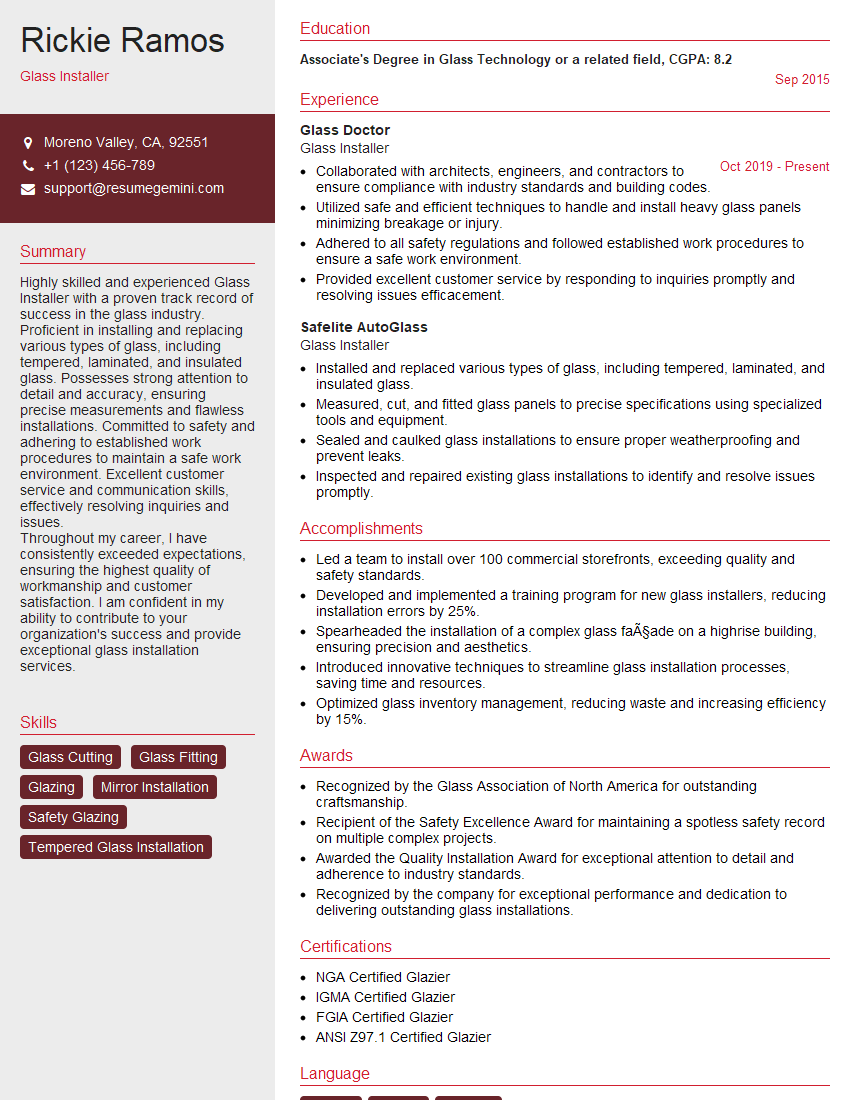
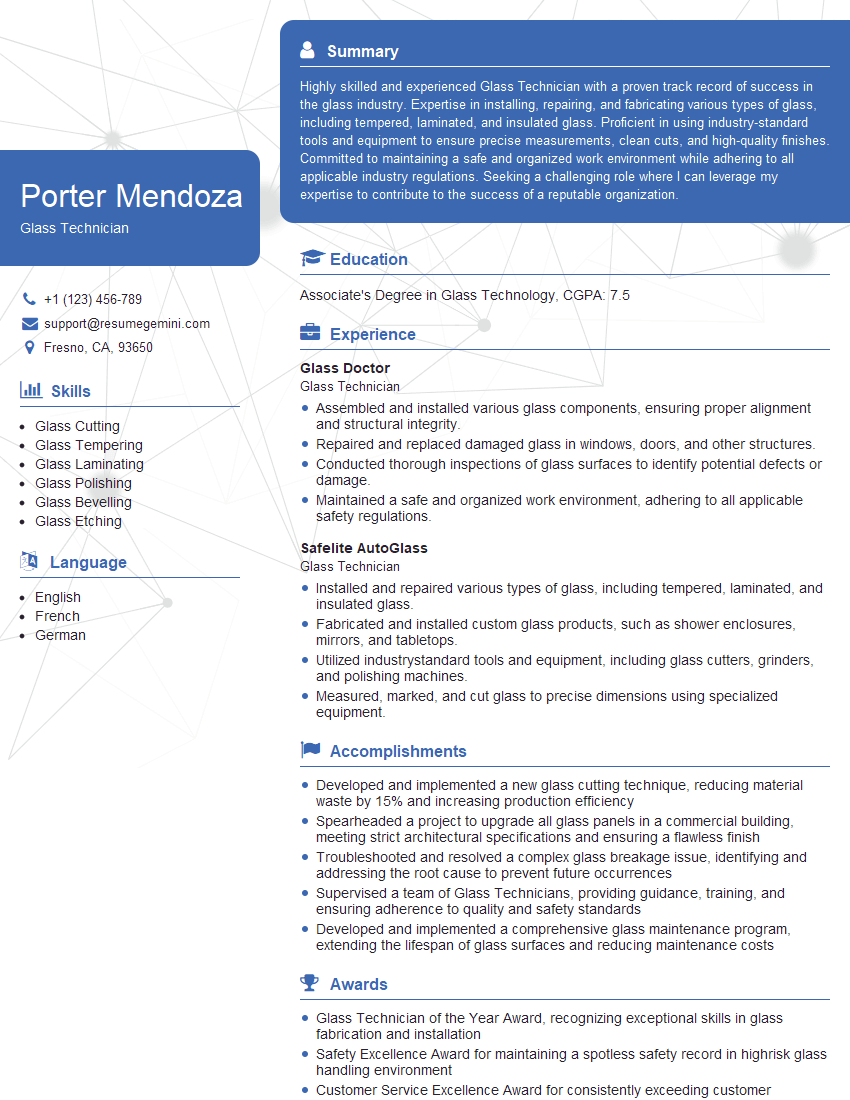
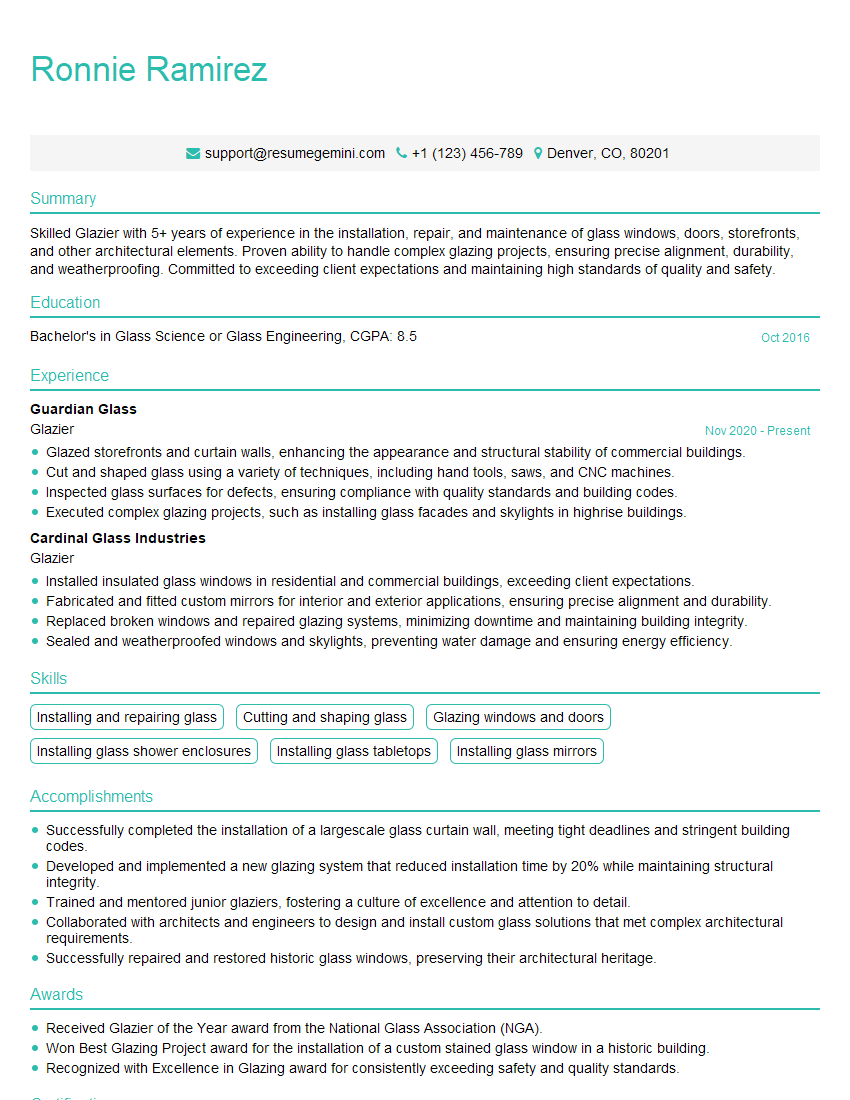
Mastering Architectural Glass Fabrication opens doors to exciting career opportunities within a growing industry, offering diverse roles and competitive salaries. To maximize your job prospects, invest in crafting a compelling and ATS-friendly resume that showcases your skills and experience effectively. ResumeGemini is a trusted resource to help you build a professional resume that stands out. We provide examples of resumes tailored to Architectural Glass Fabrication to help guide you in creating your best possible application. Take the next step in your career journey – build a resume that reflects your expertise and secures your dream job.
Explore more articles
Users Rating of Our Blogs
Share Your Experience
We value your feedback! Please rate our content and share your thoughts (optional).
What Readers Say About Our Blog
To the interviewgemini.com Webmaster.
Very helpful and content specific questions to help prepare me for my interview!
Thank you
To the interviewgemini.com Webmaster.
This was kind of a unique content I found around the specialized skills. Very helpful questions and good detailed answers.
Very Helpful blog, thank you Interviewgemini team.