Are you ready to stand out in your next interview? Understanding and preparing for Art Therapy for People with Mental Health Issues interview questions is a game-changer. In this blog, we’ve compiled key questions and expert advice to help you showcase your skills with confidence and precision. Let’s get started on your journey to acing the interview.
Questions Asked in Art Therapy for People with Mental Health Issues Interview
Q 1. Describe your experience using art therapy techniques with individuals experiencing anxiety.
Anxiety often manifests physically and emotionally, making it challenging for clients to articulate their experiences. Art therapy provides a powerful non-verbal outlet. I utilize various techniques, including mandalas for focusing attention and reducing overwhelming feelings, guided imagery exercises combined with drawing or painting to explore anxious thoughts and their origins, and expressive art such as collage to externalize and process anxieties. For instance, a client struggling with social anxiety might create a self-portrait representing their feelings of isolation, then through subsequent sessions, we’d explore ways to visually depict strategies for overcoming these anxieties. The process allows for gradual desensitization and the development of coping mechanisms.
Another example: I’ve successfully used ‘worry dolls’ with younger clients, encouraging them to create small figures and whisper their worries to them before sleep. This simple technique beautifully combines art making with relaxation and symbolic release.
Q 2. Explain your understanding of transference and countertransference in the context of art therapy.
Transference and countertransference are crucial concepts in any therapeutic relationship, and art therapy is no exception. Transference refers to the client unconsciously projecting feelings, beliefs, and behaviors from past relationships onto the therapist. In art therapy, this might manifest as the client creating artwork that symbolically represents their relationship with a parent, sibling, or other significant figure. Countertransference is the therapist’s unconscious emotional reaction to the client’s transference. It’s vital for therapists to recognize and manage their countertransference to ensure objectivity and ethical practice. For instance, a client’s intensely negative artwork might trigger past personal experiences in the therapist, requiring self-reflection and possibly consultation with a supervisor.
Regular supervision and self-reflection are essential to navigate these dynamics. Maintaining professional boundaries is also paramount. We aim to understand the client’s projections without becoming entangled in them. The artwork becomes a lens through which these complex dynamics can be observed and processed.
Q 3. How do you adapt art therapy techniques for clients with different cognitive abilities?
Adapting art therapy techniques requires sensitivity and creativity. For clients with cognitive impairments, I adjust the complexity of the task and the materials used. Instead of intricate painting, we might focus on simple finger painting, or using pre-cut shapes for collage. The focus shifts from technical skill to expressive potential. I carefully choose materials that are safe and easy to handle. Simple, repetitive activities, like creating textured patterns or working with clay, can be especially beneficial for those needing structured sensory input. Verbal instructions are kept brief and clear, often complemented by visual demonstrations. The therapeutic goal remains the same – emotional expression and self-discovery – but the approach is tailored to the individual’s capabilities. Success is measured not by technical skill but by the client’s engagement and emotional response to the activity.
For example, a client with dementia might find more comfort in the sensory experience of molding clay than painting a picture, even if the resultant artwork might seem less conventional.
Q 4. What are the ethical considerations when working with art created by clients during therapy?
Ethical considerations regarding client artwork are paramount. Confidentiality is key; the artwork is considered private and confidential unless the client explicitly gives permission for its sharing. This includes storage, display, and disposal. Discussions surrounding the use of artwork in publications or presentations must be conducted with the client’s informed consent, with appropriate anonymization measures in place. Therapists have a responsibility to protect clients from potential harm, including the misuse or misinterpretation of their artwork. The artwork is a tool for healing, and its use must always align with the client’s best interests and autonomy. It’s crucial to be transparent with clients about how their artwork will be handled, providing them with control over its usage.
For example, I might ask a client, “Would you be comfortable with me using an image from your art in a presentation to illustrate a particular technique, but naturally without revealing your identity?” This demonstrates ethical practice and respects client autonomy.
Q 5. Discuss your experience using art therapy to address trauma in clients.
Trauma can be deeply ingrained, and art therapy offers a gentle pathway to processing it. I often use trauma-informed approaches, emphasizing safety, collaboration, and client empowerment. Methods include using sand trays to represent traumatic events in a safe and controlled environment, or drawing or painting to express difficult emotions without the pressure of verbal articulation. Body-based approaches like expressive movement might also be incorporated. The focus is always on the client’s pace and comfort level; there’s no pressure to confront traumatic memories directly unless the client is ready. Creating a sense of safety and trust is critical. Progress is gradual, and celebrating small successes is vital to build resilience.
I remember one client who used collage to externalize her feelings about a past car accident. Gradually, she moved from depicting chaos and fear to creating images of healing and self-discovery. This process allowed her to symbolically reclaim control and find a sense of narrative around her trauma.
Q 6. How would you handle a client who is reluctant to participate in art-making activities?
Reluctance to participate in art-making is common. Instead of forcing participation, I explore the reasons behind the resistance. It’s a collaborative process. We might begin with conversation, focusing on their experiences and what they hope to achieve in therapy. Then, I introduce alternative forms of engagement. This could involve looking at art together, discussing their favorite artists, or engaging in simpler activities like using clay or working with natural materials. The aim is to gradually build trust and comfort. I might introduce art indirectly – drawing mandalas, which can be calming and focus-enhancing, or using simple journaling prompts with a visual component. The art-making process is secondary to the therapeutic relationship and should enhance that, not create further barriers. The focus remains on establishing rapport and building a safe space for expression.
I’ve found that sometimes simply starting with a conversation about favorite colors or textures can be a gentle introduction to the artistic process.
Q 7. Explain your familiarity with different art mediums and their therapeutic applications.
My familiarity with various art mediums is extensive, and I tailor the medium to the client’s needs and the therapeutic goals. Painting (watercolor, acrylics, oils) allows for a wide range of expressive techniques, from subtle washes to bold strokes. Drawing (pencil, charcoal, pastels) offers precision and control, valuable for clients wanting more detailed self-expression. Sculpting (clay, wire, found objects) provides a tactile experience, beneficial for those needing sensory input. Collage offers a powerful way to externalize thoughts and feelings using diverse materials. Sand trays provide a metaphoric space for exploring personal narratives and complex issues. Each medium offers unique opportunities for symbolic expression and processing emotions. I believe that the choice of medium is part of the therapeutic process itself and I help clients make informed decisions about which medium will best suit their needs and preferences.
For instance, clay sculpting might be ideal for a client needing to release pent-up anger or frustration, while watercolor painting might be more suitable for someone expressing delicate emotions.
Q 8. Describe your approach to assessing a client’s progress in art therapy.
Assessing a client’s progress in art therapy is a multifaceted process that goes beyond simply observing the aesthetic quality of their artwork. It involves a holistic approach, considering both the artistic process and the client’s emotional and psychological state.
I utilize a combination of methods. Firstly, process-oriented observation focuses on how the client approaches the art-making process: their choice of materials, colors, imagery, and the overall energy they bring to the session. For example, a client who initially uses muted colors and small, hesitant strokes might later exhibit bolder brushstrokes and brighter colors, suggesting increased self-expression and confidence.
Secondly, content analysis examines the symbolic meaning within the artwork itself. We discuss the artwork together, exploring what it represents to the client. The client’s interpretation, not my own, is paramount. For instance, a recurring image of a caged bird might symbolize feelings of confinement or restriction, providing valuable insights into their inner world.
Thirdly, verbal and nonverbal communication during sessions is crucial. Changes in the client’s demeanor, their verbalizations about their feelings and experiences related to the artwork, and their overall engagement during therapy sessions provide important indicators of progress. I meticulously document these observations in session notes.
Finally, standardized assessment tools, such as the Draw-A-Person Test or the Kinetic Family Drawing, can complement qualitative data, providing objective measures of change over time. These tools, however, are used judiciously and always interpreted within the broader context of the therapeutic relationship and the client’s unique narrative.
Q 9. How do you integrate art therapy with other mental health interventions?
Art therapy rarely exists in isolation; it’s most effective when integrated with other mental health interventions. I frequently collaborate with psychiatrists, psychologists, and social workers to create a comprehensive treatment plan.
For example, a client struggling with anxiety might participate in art therapy to explore and express their anxieties through creative means, while simultaneously undergoing cognitive behavioral therapy (CBT) to learn coping mechanisms. The art therapy provides a non-verbal outlet for processing emotions, enhancing the effectiveness of the CBT techniques.
Integration also involves aligning treatment goals. If a client is working on improving self-esteem with their psychologist, the art therapy sessions can focus on projects designed to build self-confidence and explore positive self-perception. Regular communication and case conferences with other professionals ensure consistent and coordinated care, maximizing the client’s therapeutic gains.
Q 10. What are the limitations of art therapy and when would you refer a client to another professional?
While art therapy is a powerful tool, it’s not a panacea. Its limitations stem from its reliance on the client’s ability to express themselves through art, and not all clients find this method equally accessible. Some clients might lack the fine motor skills or the artistic inclination necessary to fully benefit from the modality.
Furthermore, art therapy is not suitable for all mental health conditions. For example, clients experiencing acute psychosis or severe suicidal ideation might require more immediate and intensive interventions than art therapy can provide.
I would refer a client to another professional if:
- Their condition requires immediate medical or psychiatric attention.
- They are unable or unwilling to engage in the art-making process.
- Art therapy proves insufficient in addressing their specific needs.
- Their needs extend beyond the scope of my expertise.
Referrals might be to psychiatrists for medication management, psychologists for cognitive therapy, or social workers for practical support. The goal is always to provide the client with the most appropriate and comprehensive care possible.
Q 11. Explain your understanding of the therapeutic relationship in art therapy.
The therapeutic relationship in art therapy is the cornerstone of the process. It’s built on trust, empathy, and unconditional positive regard, similar to other therapeutic approaches, but with a unique creative dimension. The art-making process itself becomes a vehicle for communication and self-discovery, fostering a deeper connection between the therapist and client.
I strive to create a safe and non-judgmental space where clients feel comfortable expressing themselves, even when their creations are imperfect or unconventional. My role goes beyond simply interpreting artwork; it’s about facilitating self-reflection and providing support as the client navigates their emotions and experiences through art. Active listening, empathy, and reflective statements are vital in building rapport and fostering a genuine connection. I actively engage with the client’s process and collaborate with them, emphasizing their ownership of their creative work and its interpretation.
For example, a client might create an abstract painting filled with dark colors. Instead of immediately offering an interpretation, I might ask them to describe their feelings while creating the painting, fostering a deeper understanding of their emotional state and empowering them to connect with their artwork on a personal level. This collaborative and non-interpretive approach emphasizes the therapeutic process over specific diagnostic labels.
Q 12. How do you maintain client confidentiality in the context of art therapy?
Maintaining client confidentiality is paramount in art therapy. I adhere to strict ethical guidelines and legal requirements regarding the protection of client information. This begins with obtaining informed consent, outlining the limits of confidentiality and what circumstances might necessitate disclosure (e.g., mandated reporting of child abuse or imminent harm to self or others).
Client artwork is stored securely, either in locked cabinets or digital storage with password protection. I only share artwork or information with other professionals involved in the client’s care with their explicit written consent. Discussion of client cases or artwork with anyone other than involved professionals is strictly forbidden, even amongst colleagues. The principle of confidentiality extends to both the content of the sessions and the artistic products generated during therapy.
Furthermore, I adhere to HIPAA regulations regarding the storage and transmission of electronic health information (if applicable), and maintain a secure physical space that ensures client privacy during sessions. This commitment to confidentiality reinforces trust and allows for a safe space of self-expression and exploration.
Q 13. Describe your experience with documenting client progress and treatment plans.
Documenting client progress and treatment plans is a crucial aspect of responsible art therapy practice. My documentation includes a comprehensive initial assessment, detailing the client’s presenting issues, relevant history, and goals for therapy. This assessment informs the development of a tailored treatment plan outlining the approach, specific art-making activities, and expected outcomes.
Progress notes are meticulously maintained for each session, documenting the client’s engagement in the art-making process, the themes emerging from their work and discussions, and observations of their emotional and psychological state. I also include specific examples of artwork, or descriptions of artwork where photography is not possible or appropriate, noting relevant symbolic elements and the client’s own interpretations. These notes are crucial for tracking progress towards established goals and informing adjustments to the treatment plan as needed.
Progress reports are shared with other healthcare providers and the client (if they desire) periodically to provide a summary of progress, challenges, and plans for future sessions. All documentation is securely stored and adheres to all relevant privacy regulations and guidelines. The overall documentation serves not only for clinical record-keeping but also for continuity of care and enhancing the therapeutic process.
Q 14. What are some common challenges you have faced in art therapy practice, and how did you overcome them?
One common challenge is managing clients experiencing intense emotional distress during sessions. Sometimes, the creative process can trigger powerful emotions that are difficult for clients to manage. For example, a client working through trauma might experience intense emotional flashbacks during a session.
My approach in such situations involves providing a supportive and validating environment, ensuring the client feels safe and understood. We may adjust the activity to something less emotionally triggering or take a break. I utilize grounding techniques to help the client regain a sense of control, and I ensure that they have access to appropriate resources should they need further support outside of the session.
Another challenge is working with clients who struggle to engage in the art-making process, either due to perceived lack of artistic ability or other emotional barriers. In these instances, I adapt my approach, incorporating less structured activities or focusing on sensory experiences that may be less intimidating. For example, using various textures, experimenting with collage, or focusing on process over product can help alleviate pressure and foster engagement. Building a strong therapeutic relationship is key to overcoming these challenges, creating a space where the client feels safe to explore their feelings and creativity without judgment.
Q 15. How do you ensure a safe and supportive therapeutic environment for your clients?
Creating a safe and supportive therapeutic environment is paramount in art therapy. It’s about fostering a space where clients feel comfortable expressing themselves, even when dealing with difficult emotions or experiences. This involves several key elements:
- Confidentiality: I clearly explain the limits of confidentiality from the outset, building trust by being transparent about what information might need to be shared (e.g., mandated reporting of child abuse).
- Physical Space: The room should be clean, organized, and aesthetically pleasing, providing a sense of calm. I ensure it’s adequately equipped with art supplies and a comfortable space for self-expression. For example, I might offer a variety of seating options to accommodate individual preferences.
- Therapeutic Relationship: This is built on empathy, respect, and unconditional positive regard. I actively listen, validate clients’ feelings, and avoid judgment. I strive to create a collaborative relationship where clients feel empowered in the therapeutic process. For example, I might ask, ‘What feels most comfortable for you today?’ to involve them in session planning.
- Setting Boundaries: While creating a safe space, clear boundaries are crucial. This includes establishing expectations for behavior, session length, and the use of art materials. I make sure these boundaries are discussed openly and collaboratively.
- Trauma-Informed Approach: I’m mindful that clients might have experienced trauma. I avoid triggering language or activities, and I prioritize safety and client control throughout the therapeutic process. For example, I offer choices in art supplies and activities to maintain a sense of agency.
In essence, creating a safe environment is an ongoing process, requiring constant attention to the client’s needs and comfort level.
Career Expert Tips:
- Ace those interviews! Prepare effectively by reviewing the Top 50 Most Common Interview Questions on ResumeGemini.
- Navigate your job search with confidence! Explore a wide range of Career Tips on ResumeGemini. Learn about common challenges and recommendations to overcome them.
- Craft the perfect resume! Master the Art of Resume Writing with ResumeGemini’s guide. Showcase your unique qualifications and achievements effectively.
- Don’t miss out on holiday savings! Build your dream resume with ResumeGemini’s ATS optimized templates.
Q 16. Explain your knowledge of relevant professional organizations and ethical guidelines for art therapists.
I’m familiar with the ethical guidelines and standards of practice established by the American Art Therapy Association (AATA) and other relevant professional organizations. These guidelines cover crucial areas such as:
- Confidentiality and Informed Consent: Clients must be fully informed about the therapeutic process, including its limitations and potential risks, before agreeing to participate. This includes obtaining informed consent for any recordings or sharing of their artwork.
- Professional Boundaries: Maintaining professional boundaries is essential to prevent exploitation and ensure the well-being of clients. This involves avoiding dual relationships (e.g., becoming friends with a client outside of therapy) and addressing any potential conflicts of interest.
- Cultural Competence: I’m committed to providing culturally sensitive and appropriate care. This includes understanding the diverse backgrounds and experiences of my clients and adapting my therapeutic approach accordingly. This may involve seeking consultation or supervision from colleagues with relevant expertise.
- Supervision and Continuing Education: Ongoing supervision is critical for professional development and ethical practice. I also participate in continuing education to stay abreast of current research and best practices in art therapy.
- Scope of Practice: I’m aware of the limitations of my professional training and refer clients to other professionals when necessary, such as when a client presents with a medical condition requiring specialized attention.
Adhering to these ethical guidelines is not just a matter of following rules; it’s about upholding the integrity of the profession and protecting the well-being of my clients.
Q 17. Describe your experience working with diverse populations in art therapy.
My experience working with diverse populations has been incredibly enriching. I’ve had the privilege of working with individuals from various cultural backgrounds, socioeconomic statuses, and age groups. This experience has highlighted the universality of art as a form of self-expression, while also underscoring the importance of cultural sensitivity and adaptation in my approach.
- Example: I worked with a young refugee who struggled to process her trauma. While traditional talk therapy proved challenging, art provided a safe outlet for her emotions. Her paintings, initially filled with dark colors and disturbing imagery, gradually evolved into more vibrant and hopeful creations as she processed her experience.
- Another Example: I worked with a group of elderly individuals living with dementia. Art therapy sessions involved sensory exploration through textures and colors, promoting relaxation and stimulating cognitive function. Simple activities like finger painting and collage became powerful tools for engagement and self-expression.
Working with diverse populations has taught me the crucial role of empathy, cultural humility, and a willingness to adapt my techniques to meet the unique needs of each individual.
Q 18. How do you manage your own emotional well-being when working with challenging clients?
Working with challenging clients can be emotionally demanding. It’s crucial for me to prioritize my own well-being to avoid burnout and maintain effectiveness. I employ several strategies:
- Supervision: Regular supervision provides a safe space to process challenging cases and receive guidance from experienced colleagues. This allows for reflection on my own emotional responses and ensures that I’m practicing ethically and effectively.
- Self-Care: This is non-negotiable. I maintain a healthy lifestyle through regular exercise, sufficient sleep, and mindful practices like meditation or yoga. These activities help me manage stress and maintain emotional balance.
- Boundaries: Setting clear boundaries between my professional and personal life is critical. I avoid taking work home with me, and I make sure to disconnect after work hours.
- Peer Support: Connecting with colleagues and sharing experiences provides a sense of community and support. It helps to know that I’m not alone in facing these challenges.
- Professional Development: Continuing education and training help me refine my skills and build confidence in handling difficult situations.
By prioritizing self-care and seeking support, I can maintain a healthy emotional equilibrium and continue providing effective and compassionate care to my clients.
Q 19. What are your personal strengths and weaknesses as an art therapist?
As an art therapist, I consider my strengths to be my empathy, creativity, and ability to build rapport with clients. I’m able to adapt my therapeutic approach based on individual needs and preferences, and I find great satisfaction in witnessing clients’ growth and healing through art.
A potential weakness I’m actively working on is managing my time effectively, particularly when juggling multiple clients and administrative tasks. I’m implementing time management techniques and utilizing scheduling tools to improve my efficiency.
Q 20. What are your career goals in art therapy?
My career goals involve expanding my expertise in trauma-informed art therapy and working with underserved populations. I aspire to develop specialized programs for children and adolescents experiencing trauma and to advocate for increased access to art therapy services within community settings. Ultimately, I aim to contribute to a more equitable and accessible mental health system.
Q 21. Describe your understanding of the theoretical foundations of art therapy.
My understanding of the theoretical foundations of art therapy is grounded in a variety of approaches, integrating aspects of psychodynamic, humanistic, and cognitive-behavioral therapies. I draw on various theoretical frameworks to inform my practice.
- Psychodynamic: This approach emphasizes exploring unconscious processes and resolving inner conflicts through art-making. For example, analyzing symbolic representations in artwork can offer valuable insights into the client’s inner world.
- Humanistic: This focuses on self-actualization and personal growth. Art therapy provides a means for clients to express their authentic selves and foster self-acceptance. Techniques like focusing on the process of art-making rather than the product are common here.
- Cognitive-Behavioral: This approach focuses on identifying and modifying maladaptive thoughts and behaviors. Art therapy can help clients visualize their thoughts and emotions, leading to greater self-awareness and behavioral change. For instance, using art to explore coping mechanisms for anxiety.
I integrate these approaches flexibly, tailoring my interventions to meet the unique needs and preferences of each client. It’s not about rigidly adhering to a single theoretical model but rather utilizing a combination of frameworks to achieve optimal therapeutic outcomes.
Q 22. How do you utilize art therapy to promote self-awareness and self-esteem in clients?
Art therapy offers a powerful avenue for fostering self-awareness and self-esteem. It achieves this by providing a non-judgmental space where clients can explore their inner world through creative expression. The process itself, not necessarily the final product, is key to this therapeutic growth.
Non-verbal expression: Art allows clients to express emotions and experiences that may be difficult to articulate verbally. For instance, a client struggling with anxiety might create a chaotic piece of art, reflecting their inner turmoil. Analyzing the artwork with the client allows them to connect their feelings to concrete visual representation.
Metaphor and symbolism: We often work with the symbolic meaning behind the client’s artwork. The colors, shapes, and imagery they choose reveal subconscious thoughts and feelings. For example, recurring use of dark colors might signify depression, while vibrant colors might represent hope. We discuss these symbols together, promoting self-understanding.
Process over product: The emphasis is on the creative process rather than the finished product’s aesthetic value. The act of creating itself can be therapeutic. A client might find a sense of accomplishment and self-efficacy even if they don’t consider the artwork ‘good’. We celebrate the effort and the journey of self-discovery.
Positive feedback and affirmation: Providing positive reinforcement and celebrating client’s efforts builds self-esteem. Focusing on their strengths and resilience through their artistic process is crucial. For example, praising their perseverance in completing a challenging project, regardless of its final appearance, instills confidence.
Q 23. Explain your experience with crisis intervention in an art therapy setting.
Crisis intervention in art therapy involves using creative methods to help clients navigate immediate emotional distress. It requires a rapid assessment of the situation, a calm and supportive approach, and the use of art-based techniques to manage overwhelming emotions.
Safe and contained environment: Creating a secure, non-threatening space is paramount. This might involve offering a comfortable chair, soft lighting, and calming music.
Emotional regulation techniques: We might use guided imagery, simple drawing exercises (like mandalas), or clay sculpting to help clients regulate their emotions and ground themselves. For example, encouraging a client to express their anger through aggressive mark-making on paper can be a safer outlet than acting out physically.
Collaboration and co-creation: Sometimes, creating art together – collaboratively – helps establish rapport and reduce feelings of isolation. A simple collaborative drawing exercise can promote connection and shared experience.
Crisis de-escalation: The goal is to de-escalate the situation and help the client find a sense of calm. This might involve simply listening empathetically while the client engages in art-making, without any pressure to discuss the crisis directly.
Referral and support: If the crisis is severe or beyond the scope of art therapy, immediate referral to appropriate services (psychiatric care, emergency services) is vital. We collaborate with other healthcare professionals to ensure client safety and well-being.
Q 24. How do you incorporate creativity and innovation into your art therapy practice?
Creativity and innovation are central to my practice. I continually explore new materials, techniques, and approaches to tailor the therapy to the individual needs of each client.
Experimentation with materials: I introduce diverse art materials beyond traditional ones, such as clay, sand, natural materials, digital art programs, or found objects. This allows clients to explore various tactile and sensory experiences and discover unique ways to express themselves.
Adapting techniques: I might adjust traditional art therapy techniques to better suit a client’s specific needs and preferences. For example, adapting a painting technique for someone with limited motor skills or using digital art for a client more comfortable with technology.
Multi-sensory approaches: Integrating other modalities, such as music or movement, can enrich the experience and allow for a wider range of expression. This could involve combining painting with listening to music or incorporating movement and dance into a session.
Narrative and storytelling: Integrating storytelling and narrative into art-making can help clients make sense of their experiences and create personal narratives through their artwork. This can include creating storyboards, comics, or visual journals.
Q 25. What is your approach to dealing with difficult or challenging artwork created by clients?
Difficult or challenging artwork can be incredibly revealing and offer valuable insights into the client’s inner world. My approach is guided by empathy, careful observation, and a non-judgmental stance.
Respectful inquiry: I start by creating a safe space for discussion and gently invite the client to share their thoughts and feelings about the artwork. I approach it as a collaboration – a joint exploration of the piece.
Focus on process and intention: We focus on the process of creating the art, exploring the client’s intentions and the emotions that were involved in the creation. The artwork becomes a tool for understanding their internal experience.
Identifying patterns and themes: We identify recurring themes or patterns in the artwork, which can point to underlying issues or concerns. This could involve exploring recurring symbols, colors, or imagery.
Linking to therapeutic goals: I connect the artwork to the client’s overall therapeutic goals. How does this artwork reflect their current challenges, and how can it be used to facilitate growth and healing?
Collaboration with other professionals: If the artwork suggests severe distress or danger to self or others, I collaborate with other members of the treatment team, such as psychiatrists or social workers.
Q 26. Describe your experience with supervision and professional development in art therapy.
Supervision and professional development are crucial for maintaining ethical practice and enhancing my skills as an art therapist. I actively participate in ongoing supervision, attend workshops, and engage in continuing education opportunities.
Regular supervision: I have regular supervision sessions with a qualified art therapist supervisor, which provides opportunities for case discussion, ethical reflection, and professional growth. This allows for a safe space to process complex cases and receive guidance on challenging situations.
Continuing education: I participate in workshops and conferences focusing on specific areas of art therapy, such as trauma-informed care, working with specific populations, or advanced art techniques. This ensures my skills remain current and relevant.
Professional organizations: Membership in professional organizations, such as the American Art Therapy Association, allows access to resources, networking opportunities, and ethical guidelines.
Self-reflection and journaling: I maintain a reflective practice through journaling, reflecting on my sessions, and analyzing my effectiveness. This ongoing self-assessment is essential for professional development.
Q 27. How do you maintain boundaries with your clients in art therapy?
Maintaining appropriate boundaries is essential in art therapy to ensure a safe and effective therapeutic relationship. This involves establishing clear guidelines from the beginning and consistently adhering to professional ethical standards.
Professional roles: Maintaining a clear professional role and avoiding dual relationships (e.g., becoming friends with clients outside of therapy) is paramount. The relationship remains strictly therapeutic.
Confidentiality: Client confidentiality is strictly upheld, unless mandated reporting requirements apply (e.g., concerns about child abuse or self-harm).
Physical boundaries: Appropriate physical distance is maintained. Physical touch is generally avoided unless clinically indicated and with client consent, in accordance with ethical guidelines.
Time boundaries: Session time is strictly adhered to, ensuring the client receives the agreed-upon length of therapy.
Emotional boundaries: While empathy is vital, I maintain my own emotional well-being and avoid becoming overly involved in the client’s personal life. I regularly practice self-care and use supervision to manage potential emotional overload.
Written agreements: A clear written agreement outlining fees, session length, cancellation policies, and confidentiality helps establish clear expectations from the outset.
Key Topics to Learn for Art Therapy for People with Mental Health Issues Interview
- Theoretical Foundations: Understanding key art therapy theories (e.g., Jungian, Gestalt, psychodynamic) and their application to mental health conditions.
- Assessment and Treatment Planning: Developing appropriate art therapy interventions based on client needs, diagnoses, and goals. This includes understanding diagnostic criteria for various mental health disorders.
- Specific Modalities: Familiarity with various art media and their therapeutic uses (e.g., painting, sculpting, collage) and adapting techniques for different populations (e.g., children, adults, elderly).
- Ethical and Legal Considerations: Understanding professional boundaries, confidentiality, mandated reporting, and ethical dilemmas specific to art therapy practice.
- Group and Individual Therapy: Differentiating approaches and techniques used in individual and group art therapy sessions for mental health clients.
- Crisis Intervention and Safety Planning: Recognizing and responding to clients experiencing acute distress and developing safety plans in collaboration with the treatment team.
- Collaboration and Case Management: Understanding the role of art therapy within a multidisciplinary team and effectively communicating with other professionals (e.g., psychiatrists, psychologists, social workers).
- Documentation and Record Keeping: Maintaining accurate and thorough clinical records, including session notes, progress reports, and treatment plans.
- Self-Care and Professional Development: Understanding the importance of self-care for art therapists and strategies for maintaining professional competence through continuing education.
- Cultural Competence and Sensitivity: Adapting art therapy approaches to be culturally appropriate and sensitive to diverse populations and their unique needs.
Next Steps
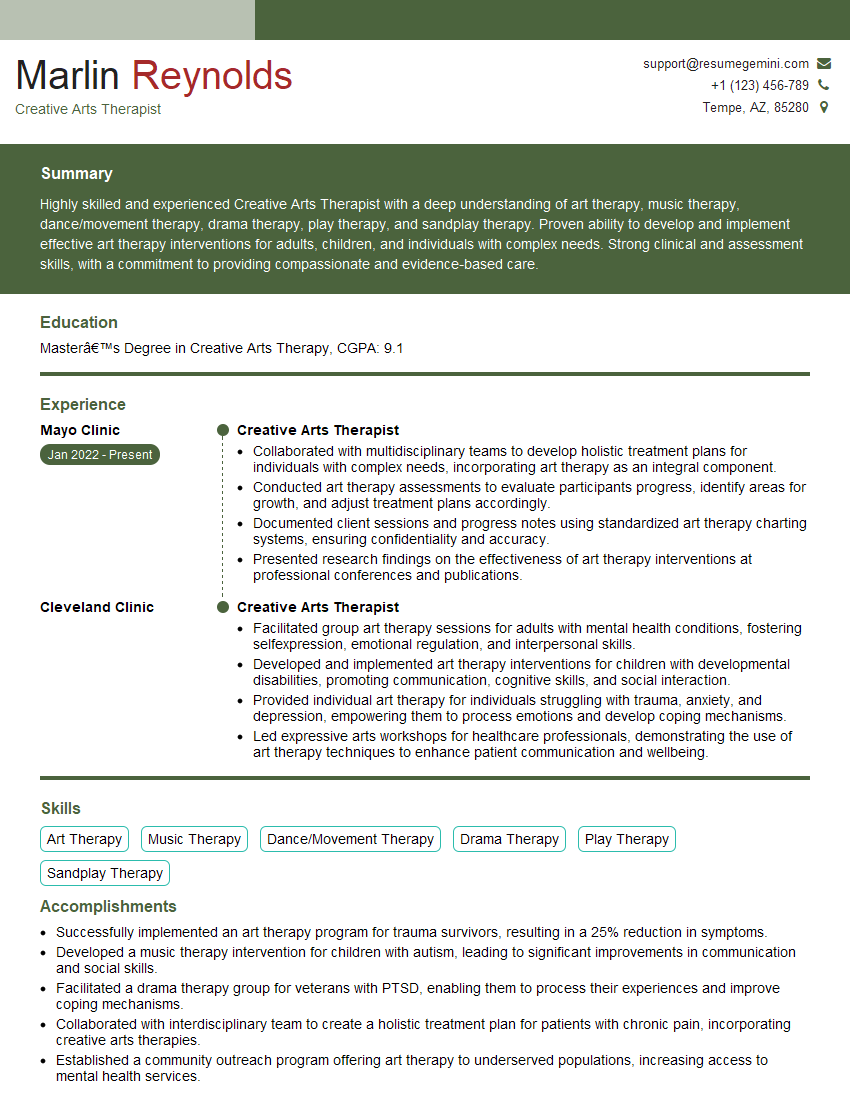
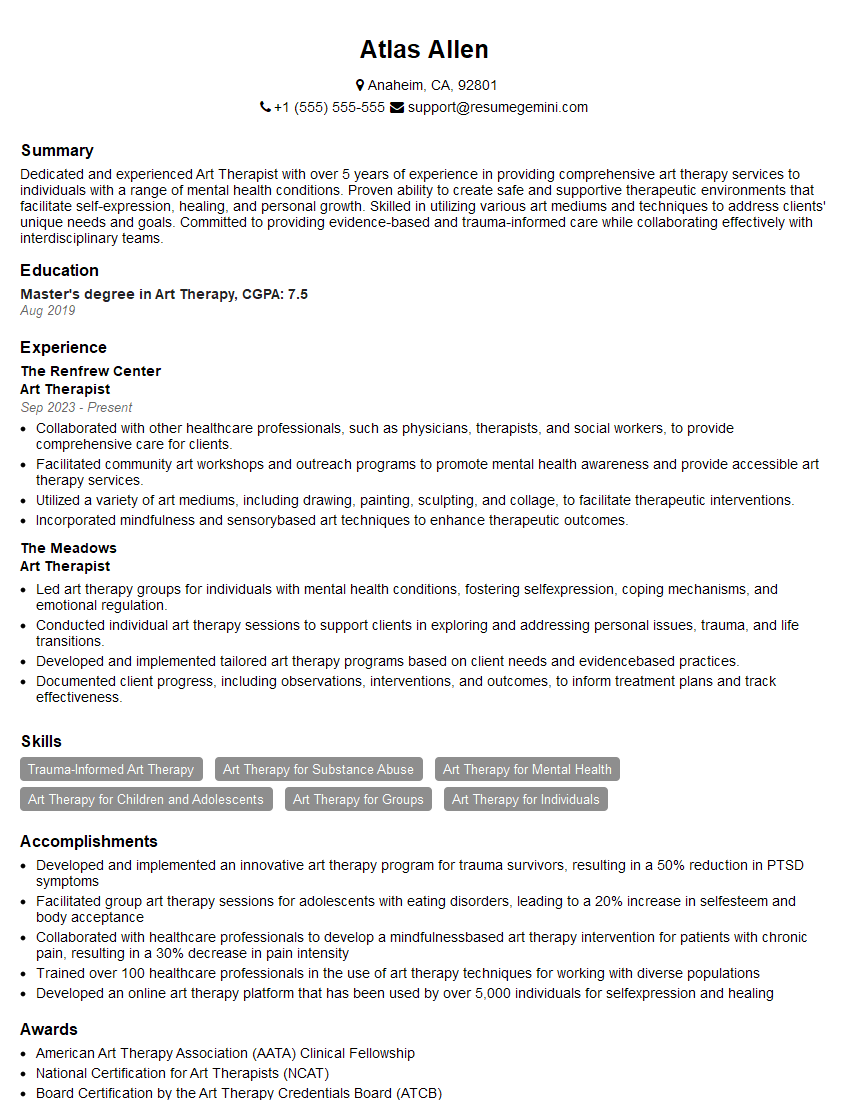
Mastering Art Therapy for People with Mental Health Issues is crucial for a successful and fulfilling career. Demonstrating a deep understanding of these therapeutic approaches will significantly enhance your job prospects. Creating an ATS-friendly resume is essential for getting your application noticed. ResumeGemini is a trusted resource that can help you build a professional and effective resume, optimizing your chances of landing your dream job. Examples of resumes tailored to Art Therapy for People with Mental Health Issues are provided to guide you. Take the next step in your career journey – invest time in creating a powerful resume that showcases your skills and experience.
Explore more articles
Users Rating of Our Blogs
Share Your Experience
We value your feedback! Please rate our content and share your thoughts (optional).
What Readers Say About Our Blog
To the interviewgemini.com Webmaster.
Very helpful and content specific questions to help prepare me for my interview!
Thank you
To the interviewgemini.com Webmaster.
This was kind of a unique content I found around the specialized skills. Very helpful questions and good detailed answers.
Very Helpful blog, thank you Interviewgemini team.