Unlock your full potential by mastering the most common Art Therapy in Anxiety and Depression Treatment interview questions. This blog offers a deep dive into the critical topics, ensuring you’re not only prepared to answer but to excel. With these insights, you’ll approach your interview with clarity and confidence.
Questions Asked in Art Therapy in Anxiety and Depression Treatment Interview
Q 1. Describe your experience using art therapy modalities to treat anxiety disorders.
In treating anxiety disorders, I utilize a range of art therapy modalities tailored to the individual’s needs and preferences. For example, mandalas can help clients focus and center themselves, promoting a sense of calm and control. The repetitive nature of creating a mandala can be particularly soothing for individuals experiencing racing thoughts or panic attacks. Collage allows clients to visually represent their anxieties, externalizing and processing overwhelming emotions. They might select images symbolizing their fears, then rearrange and reinterpret them, gaining a sense of agency over their anxiety. I also employ drawing and painting, encouraging clients to explore their emotional states through color, texture, and form. The act of creating itself can be therapeutic, offering a non-verbal outlet for expression. For clients struggling with social anxiety, role-playing through art can be incredibly beneficial, allowing them to practice social situations in a safe and controlled environment.
For instance, a client might create a drawing depicting a social situation that triggers their anxiety, and then collaboratively we develop alternate scenarios and visual solutions depicted through art.
Q 2. Explain your approach to working with clients experiencing depression using art therapy.
My approach to working with clients experiencing depression through art therapy centers on fostering self-expression and promoting self-discovery. I often start by creating a safe and supportive environment where clients feel comfortable exploring their feelings without judgment. Journaling alongside artwork can be a powerful tool, encouraging reflection and deeper understanding of their emotional landscape. Clients might create self-portraits reflecting their current mood, or use symbolic imagery to represent their feelings of sadness, hopelessness, or isolation. Clay work can be particularly helpful, allowing clients to physically manipulate and transform their feelings. The process of shaping and molding clay can mirror the process of working through and reshaping their experiences. Furthermore, I introduce techniques like guided imagery and visual metaphors to help clients access and process difficult emotions in a less verbally demanding way. The focus is always on building resilience and fostering hope, gradually helping clients reconnect with their inner resources and find pathways towards healing.
For example, a client might create a sculpture representing their feelings of ‘being trapped’ which we discuss in a collaborative process, gradually leading them towards visualizing and creating images of ‘escape’ or ‘freedom’.
Q 3. How do you adapt art therapy techniques to suit diverse client needs and cultural backgrounds?
Adapting art therapy to diverse client needs and cultural backgrounds is crucial for ethical and effective practice. I begin by actively listening and building rapport, demonstrating cultural sensitivity and respect. This involves being mindful of language barriers, cultural values, and beliefs surrounding mental health and art making. I avoid imposing my own cultural framework and instead strive to understand the client’s unique perspective. This might involve incorporating elements of their culture into the therapeutic process, for example, using materials or imagery relevant to their background. I also adapt the art-making process to accommodate different levels of artistic skill and experience. The focus is not on creating a masterpiece, but on the process of self-expression and emotional exploration. Flexibility and collaboration are key: I ensure clients have agency and choice throughout the therapy. We co-create the therapeutic process. If a client doesn’t feel comfortable with a specific medium, we explore alternatives together.
For example, a client from a culture where expressing emotions openly might be considered inappropriate could find more comfort in using symbolic representation or abstract imagery to explore their inner world.
Q 4. What are the ethical considerations in using art therapy with vulnerable populations?
Ethical considerations are paramount when working with vulnerable populations in art therapy. Confidentiality is crucial, and I ensure clients understand the limits of confidentiality, especially in cases of self-harm or harm to others. I obtain informed consent before beginning therapy, ensuring that clients understand the process and their rights. It’s essential to be mindful of power dynamics and avoid any exploitation or coercion. I always maintain professional boundaries and avoid dual relationships. With children and adolescents, I work closely with parents or guardians, balancing their rights with the child’s needs for autonomy and confidentiality. If dealing with trauma, I ensure the client’s pace is respected, proceeding with sensitivity and utilizing trauma-informed techniques. Moreover, I’m acutely aware of potential cultural biases and ensure cultural competence. Finally, I always prioritize client safety and well-being. If a situation arises where I feel I cannot provide adequate care, I’ll refer the client to a more appropriate professional.
Q 5. Describe a successful case study where you utilized art therapy for anxiety or depression.
I worked with a young woman, Sarah, struggling with severe social anxiety. She found it incredibly difficult to interact with others, experiencing intense physical symptoms like palpitations and trembling. We started with drawing exercises, where she gradually began depicting her anxiety in abstract forms, using dark, swirling colors. As sessions progressed, we introduced collage, allowing her to visually represent her fear of social situations. We discussed these images, gaining insights into the root of her anxiety. We then started role-playing scenarios through drawings and miniature clay figures, practicing social interactions in a safe space. Gradually, Sarah’s art became lighter and brighter. She started using more positive colors, and her depictions of social situations shifted from fear to hopefulness. The visual representation of her progress was immensely powerful, building her confidence and allowing her to slowly begin engaging in real-life social situations. Within six months, Sarah reported a significant reduction in her social anxiety, demonstrating the effectiveness of integrating art therapy with cognitive behavioral techniques.
Q 6. How do you assess the effectiveness of art therapy interventions in your practice?
Assessing the effectiveness of art therapy interventions involves a multifaceted approach. I utilize both qualitative and quantitative methods. Qualitative data includes client self-reports, observations of their art-making process, and reflections on their emotional and behavioral changes. These insights provide a rich understanding of the client’s subjective experience. Quantitative data might involve standardized measures of anxiety and depression, such as the Beck Anxiety Inventory or the Beck Depression Inventory, administered at various points during therapy. Regular progress notes documenting changes in symptoms and client’s self-reported well-being also contributes to a comprehensive evaluation. The key is to integrate the client’s own experience with objective measures to paint a holistic picture of treatment progress. Flexibility is key here; the assessment approach is tailored to the client’s specific needs and preferences.
Q 7. What are some common challenges you encounter when using art therapy and how do you overcome them?
One common challenge is addressing clients’ initial reluctance to engage in art-making, particularly if they believe they lack artistic ability. I emphasize that art therapy isn’t about producing masterpieces, but about using art as a means of self-expression and exploration. I create a safe and non-judgmental environment where clients feel comfortable experimenting without pressure to create ‘perfect’ work. Another challenge is managing transference and countertransference. Being aware of these dynamics and maintaining professional boundaries is crucial. Finally, integrating art therapy with other treatment modalities (e.g., medication, psychotherapy) can sometimes require careful coordination and communication. I address these challenges by providing clear explanations, focusing on process over product, and maintaining open communication with clients and other healthcare providers to ensure a holistic and effective treatment approach.
Q 8. Explain the difference between expressive arts therapy and art therapy.
While the terms are often used interchangeably, there’s a subtle but important distinction between expressive arts therapy and art therapy. Art therapy is a specific type of expressive arts therapy that focuses exclusively on the use of visual arts – painting, drawing, sculpting, collage – as a primary modality for therapeutic intervention. Expressive arts therapy, on the other hand, is a broader umbrella term encompassing various art forms, including music, dance/movement, drama, and creative writing, alongside visual arts. Think of it this way: art therapy is a subset of expressive arts therapy.
In practice, an art therapist will primarily utilize visual art mediums to help clients explore emotions, resolve conflicts, and enhance self-awareness. An expressive arts therapist might incorporate a wider range of creative modalities depending on the client’s needs and preferences, creating a more multifaceted therapeutic experience. For example, a client struggling with grief might benefit from painting, but also expressing themselves through poetry (expressive arts therapy). Whereas, a client dealing with anger might specifically benefit from the process of sculpting and creating form to release pent-up feelings (art therapy).
Q 9. How do you integrate art therapy with other therapeutic approaches?
Integrating art therapy with other therapeutic approaches is a common and highly effective practice. I often combine art therapy with cognitive behavioral therapy (CBT), dialectical behavior therapy (DBT), and psychodynamic approaches. The integration is not about simply adding art activities to an existing treatment plan; rather, it’s about using art as a powerful tool to enhance the core principles of other therapies.
For instance, in CBT, art can be used to help clients identify and challenge negative thought patterns. Clients might create a visual representation of their negative thoughts and then, through a collaborative process, modify their artwork and reinterpret those thoughts. With DBT, art provides a non-verbal avenue for emotional regulation, helping clients express intense emotions safely and constructively. In psychodynamic therapy, art can unlock unconscious material and provide insights into deeper psychological processes that might not be easily accessible through verbal methods alone. The key is creating a synergistic approach where art reinforces and complements the other therapeutic techniques.
Q 10. Describe your understanding of trauma-informed art therapy.
Trauma-informed art therapy recognizes the profound impact of trauma on an individual’s emotional, psychological, and physical well-being. It’s an approach that prioritizes safety, trust, collaboration, and empowerment. This means I create a therapeutic environment that avoids re-traumatization. It places great emphasis on client-led exploration. I use techniques that empower the client to feel a sense of control and agency in the therapeutic process, especially critical for individuals who may have experienced a significant loss of control.
For example, I might start with simple, sensory-based art activities that help clients regulate their emotions before moving on to more complex explorations of their trauma. This could involve activities like using clay to work out feelings of tension or drawing with textured materials to explore emotional states. Furthermore, I will work at the client’s pace, respecting boundaries and offering choices throughout each session. I might use metaphors, storytelling, or symbolic imagery to navigate painful memories in a gentler manner, facilitating self-expression without pushing the client beyond their comfort zone. The focus is always on building resilience and fostering hope.
Q 11. How do you maintain client confidentiality and ethical boundaries in art therapy sessions?
Maintaining client confidentiality and ethical boundaries is paramount in art therapy. I adhere strictly to professional codes of ethics, like those set by the American Art Therapy Association. This includes obtaining informed consent before beginning treatment, explaining the limits of confidentiality (e.g., mandated reporting of abuse), and ensuring the client’s safety and well-being are prioritized above all else.
Physically, I keep all client artwork in a locked, secure location, accessible only to me and the client (if they wish to see their work again). I explain the process of storing art and offer choices regarding its disposition, whether to keep it for future sessions, donate it, or destroy it. I follow appropriate record-keeping practices, storing electronic and paper files securely according to privacy regulations (HIPAA). My practice environment is intentionally created to promote trust, but it maintains professional boundaries through clear and open communication with clients.
Q 12. How do you handle resistance from a client during an art therapy session?
Resistance is a normal part of the therapeutic process, and it’s rarely something to be immediately overcome. Instead of pushing a client to participate, I use resistance as an opportunity to understand their underlying concerns or anxieties. I might ask open-ended questions like, “I notice you haven’t touched the paints yet. Is there something you’re hesitant about?” or “What is stopping you from participating right now?”
My approach is to collaboratively explore the source of the resistance. Perhaps the client feels overwhelmed by the creative process, is worried about self-expression, or isn’t comfortable sharing certain emotions. Sometimes, a simple shift in the activity, such as moving to a different medium or engaging in a less pressure-filled activity, can help ease resistance. Other times, it might mean focusing on building trust and rapport before delving into more intense creative work. The goal is to foster a therapeutic relationship based on mutual respect and understanding, where the client feels empowered to participate at their own pace.
Q 13. What are some contraindications for using art therapy?
While art therapy is generally safe and effective, there are certain situations where it might not be appropriate or advisable. For example, clients experiencing acute psychosis or severe suicidal ideation might require immediate medical intervention, making art therapy unsuitable as the primary treatment. Similarly, individuals with severe physical limitations preventing them from engaging in art-making activities may need alternative therapies.
Additionally, if the client’s psychological state is highly unstable and they have a history of harming themselves or others, art therapy might require a highly trained therapist and collaborative care. Careful consideration needs to be made. The presence of any severe psychological disorders should also involve consultation with psychiatrists and psychologists to ensure safety and appropriateness of the modality. In such cases, a collaborative multidisciplinary approach might be more suitable, integrating art therapy with medication management and other interventions.
Q 14. Explain your familiarity with different art materials and their therapeutic applications.
My familiarity with art materials is extensive, and I recognize their therapeutic value. Different materials offer various sensory experiences and opportunities for self-expression. For example, the smooth texture of clay can be soothing for clients experiencing anxiety, allowing them to work out tension and frustration through shaping and molding. The vibrant colors of paint can facilitate emotional expression, enabling clients to explore complex emotions non-verbally. The controlled precision of pen and ink might be useful for clients preferring structure and order.
I also use collage, which allows for integrating diverse materials and symbolisms to achieve metaphoric representation of the inner world. Sandplay can be deeply evocative, especially with clients who have experienced trauma and benefit from working with tactile, natural elements. I select materials carefully, considering the client’s personality, needs, and therapeutic goals. The choice of materials becomes part of the therapeutic process, allowing for a deeper exploration of the client’s preferences, choices, and ways of relating to the world.
Q 15. How do you address potential emotional distress during art therapy sessions?
Addressing emotional distress in art therapy is paramount. It’s crucial to remember that art making itself can be emotionally triggering. My approach involves creating a safe space where clients feel empowered to express themselves without judgment. I use a combination of strategies. First, I carefully observe nonverbal cues like body language and changes in breathing. This helps me identify potential distress before it escalates. Second, I utilize active listening, reflecting back client’s feelings to validate their experience and demonstrate empathy. For example, if a client becomes visibly upset while working on a piece, I might say, “I notice your hands are trembling, and you seem quite agitated. Can you tell me more about what’s happening for you right now?” Third, I offer pacing and breathing techniques to help regulate emotions if needed. Finally, if the distress becomes overwhelming, we might take a break, adjust the activity, or utilize grounding techniques to bring the client back into the present moment. The goal is always to help the client regain a sense of control and composure.
Career Expert Tips:
- Ace those interviews! Prepare effectively by reviewing the Top 50 Most Common Interview Questions on ResumeGemini.
- Navigate your job search with confidence! Explore a wide range of Career Tips on ResumeGemini. Learn about common challenges and recommendations to overcome them.
- Craft the perfect resume! Master the Art of Resume Writing with ResumeGemini’s guide. Showcase your unique qualifications and achievements effectively.
- Don’t miss out on holiday savings! Build your dream resume with ResumeGemini’s ATS optimized templates.
Q 16. How do you create a safe and supportive therapeutic environment for art therapy?
Creating a safe and supportive environment is foundational to successful art therapy. This involves several key components. First, the physical space must be comfortable, private, and free from distractions. Think soft lighting, comfortable seating, and access to art supplies without feeling overwhelmed by the sheer amount. Second, establishing a strong therapeutic alliance built on trust and respect is critical. This involves clearly defining boundaries, confidentiality (with appropriate exceptions), and co-creating the therapeutic process. Clients need to understand they have agency in what they create and discuss. Third, I explicitly communicate my role as a facilitator, emphasizing that there are no right or wrong answers in art therapy. The focus is on self-expression and exploration, not artistic skill. Finally, and critically, I actively cultivate a non-judgmental atmosphere. I strive to maintain a neutral and accepting stance, regardless of the content or style of the client’s artwork. One client might create chaotic abstract pieces reflecting their internal turmoil, while another might meticulously paint tranquil landscapes. Both are valid and offer valuable insights into their inner world.
Q 17. What is your understanding of the role of transference and countertransference in art therapy?
Transference and countertransference are essential concepts in art therapy, as in any therapeutic relationship. Transference refers to the client unconsciously projecting feelings, behaviors, and expectations from past relationships onto the therapist. This might manifest in the client’s artwork, their interactions, or their verbalizations. For example, a client who had a controlling parent might unconsciously resist my suggestions or feel overly dependent on my approval. Countertransference, on the other hand, refers to the therapist’s unconscious emotional reactions to the client. This could involve feeling triggered by the client’s artwork, feeling overly protective or irritated, or having personal unresolved issues stirred up by the therapeutic process. Recognizing and managing these dynamics is critical. I use supervision and self-reflection to monitor my own countertransference and to ensure my reactions don’t hinder the therapeutic process. Open communication with the client about transference is also important when appropriate, helping the client understand their patterns and gain insight into their relationships.
Q 18. Describe your experience working with clients with specific anxiety disorders (e.g., GAD, social anxiety).
I’ve worked extensively with clients experiencing various anxiety disorders, including Generalized Anxiety Disorder (GAD) and social anxiety. Art therapy offers unique tools to address anxiety. For GAD, where clients experience persistent worry, we might use expressive techniques like collage or painting to externalize and manage overwhelming thoughts. Clients might create a visual representation of their anxieties, then physically deconstruct or transform it symbolically. With social anxiety, we might focus on collaborative art projects to gradually build confidence in social interaction and self-expression. Role-playing scenarios through art-making can also be effective, allowing clients to safely practice social skills and explore their anxieties in a controlled environment. For instance, a client with social anxiety might create a series of self-portraits depicting different social situations, progressively working toward more challenging scenarios. Throughout the process, mindfulness and relaxation techniques are integrated, encouraging clients to connect with their physical sensations and cultivate a sense of self-awareness.
Q 19. How do you differentiate between different types of depression and how does this influence your art therapy approach?
Differentiating between depression types is crucial for tailoring art therapy interventions. Major Depressive Disorder (MDD) is characterized by persistent sadness, loss of interest, and other symptoms, while other depressive disorders like Persistent Depressive Disorder (Dysthymia) involve a longer-lasting, less intense pattern. The type of depression informs my approach. In MDD, where clients often experience feelings of numbness or hopelessness, I might utilize vibrant colors or textures to encourage sensory engagement and emotional expression. We might explore symbolic representations of their feelings through clay sculpting or drawing. With Dysthymia, where the depression is more chronic, the focus might be on building self-esteem and identifying coping mechanisms. This could involve creating a “self-portrait” series showcasing personal strengths and accomplishments, promoting a sense of agency and self-acceptance. Understanding the client’s individual history, their current symptoms, and their personal preferences greatly influences the choice of art media and therapeutic strategies. The goal is always to empower the client to find meaning and resilience within themselves.
Q 20. Explain your knowledge of evidence-based art therapy interventions for anxiety and depression.
Evidence-based interventions in art therapy for anxiety and depression draw on various approaches. For anxiety, mindfulness-based art therapies have shown effectiveness. These techniques integrate art-making with mindfulness practices to enhance self-awareness and emotional regulation. For example, guided imagery combined with drawing can help clients access and process anxious thoughts and feelings. For depression, expressive art therapies, where clients freely express themselves through their art, are often utilized. The process of creating art itself can be therapeutic, providing a non-verbal outlet for emotions. Narrative art therapy, which focuses on storytelling and symbolism within the artwork, can be particularly beneficial in helping clients understand and process their experiences. Trauma-informed art therapies are also valuable, especially when considering the impact of past experiences on current mental health. Research consistently highlights the importance of a strong therapeutic relationship and collaborative treatment planning in improving outcomes.
Q 21. Describe your experience with crisis intervention within an art therapy context.
Crisis intervention in art therapy requires a nuanced approach. My primary focus is on ensuring the client’s safety and stability. This might involve immediate grounding techniques, such as focusing on the present moment through sensory exploration or simple drawing exercises. Open-ended prompts, like “What do you need right now?” or “What image comes to mind when you think about feeling safe?” allow clients to express their distress in a non-threatening manner. Collaborative art-making, like creating a collaborative mandala, can foster a sense of connection and shared experience. If the situation requires further intervention, I would immediately assess the need for outside support, connecting the client with appropriate emergency services or their support system. Documentation of the crisis and subsequent actions is crucial, ensuring thorough record-keeping and continuity of care. Following a crisis, processing the experience through art-making can be extremely valuable in promoting healing and recovery. It’s essential to proceed with sensitivity and respect, always prioritizing the client’s well-being and safety.
Q 22. How do you use art therapy to promote self-esteem and self-efficacy in clients?
Art therapy offers a powerful avenue for boosting self-esteem and self-efficacy in clients struggling with anxiety and depression. It achieves this by providing a non-judgmental space for self-expression and exploration. We tap into the client’s inner resources and strengths through the creative process, fostering a sense of accomplishment and self-discovery.
Skill-building Activities: For example, a client might start with simple collages, gradually progressing to more complex mixed-media pieces. This demonstrates tangible progress, fostering a sense of mastery and competence. The act of creating something beautiful or meaningful, regardless of skill level, is inherently empowering.
Affirmation through Art: We might encourage clients to create self-portraits that reflect their ideal selves, or to paint positive affirmations directly onto their artwork. This helps bridge the gap between their current self-perception and their aspirations. Seeing their growth visually reflected in their art strengthens self-belief.
Metaphorical Expression: Clients often unconsciously reveal their inner struggles and strengths through their art. By gently guiding them to interpret their artwork, we help them recognize their resilience and inherent capabilities. For instance, a client might depict a small plant struggling to grow in a dark environment, representing their anxiety, but also showing the tenacious will to survive. We use this as a springboard for discussion and positive self-talk.
Q 23. How do you incorporate mindfulness techniques into your art therapy practice?
Mindfulness is seamlessly integrated into my art therapy practice, helping clients connect with the present moment and reduce anxiety. It’s not about achieving a perfect artwork, but about the process itself – the sensation of the brush on canvas, the texture of clay, the flow of color.
Body Awareness Exercises: Before beginning an art activity, we might engage in simple body scans or mindful breathing exercises to ground clients in the present. This reduces racing thoughts and promotes relaxation.
Focused Attention on the Sensory Experience: I encourage clients to pay close attention to their senses while creating art. This might involve noticing the temperature of the paint, the smell of the clay, or the sounds they make during the creative process. This promotes a mindful awareness of their surroundings and emotions.
Non-Judgmental Observation: Throughout the session, we focus on the process rather than the outcome. We acknowledge any feelings of frustration or self-criticism without judgment, using them as opportunities for mindful self-compassion.
Mindful Art Creation: Some clients find practices like slow drawing or Zentangle particularly helpful for cultivating mindfulness. These techniques encourage focused attention and a sense of calm.
Q 24. How do you document and record client progress in art therapy?
Accurate and thorough documentation is crucial in art therapy. I maintain detailed session notes, including a description of the client’s artwork, their emotional state during the session, and our therapeutic discussion. I also photograph or scan the artwork to document progress. This documentation is essential for tracking client progress, informing treatment plans, and ensuring ethical and professional standards are met.
Session Notes: These are written immediately after each session and include a description of the art created (materials used, style, symbolism), client verbalizations, emotional expressions, themes identified, goals discussed, and the overall therapeutic atmosphere.
Artwork Documentation: Photographs and scans of the artwork provide visual evidence of the client’s creative journey. They also act as prompts for future sessions, allowing for a review of past expressions and insights.
Progress Reports: Periodic summary reports compile the information gathered during sessions, highlighting significant changes in the client’s emotional state and artistic expression. They are shared with relevant stakeholders, such as therapists or other members of the treatment team, to ensure the most effective care plan.
I always prioritize client confidentiality, adhering to relevant ethical guidelines and regulations regarding the storage and handling of this sensitive information.
Q 25. What is your understanding of the role of supervision in art therapy practice?
Supervision is paramount in art therapy. It’s a vital component of professional development, ethical practice, and client safety. My supervisor provides a safe and supportive space for me to discuss complex cases, process my countertransference (my own emotional responses to clients), and refine my therapeutic techniques. Regular supervision ensures that I’m providing high-quality care and maintaining professional boundaries.
Case Consultation: I regularly discuss challenging cases with my supervisor, exploring different therapeutic approaches and ensuring I’m using evidence-based practices.
Ethical Considerations: Supervision helps me navigate ethical dilemmas that may arise in practice, ensuring I always prioritize client well-being and adhere to professional standards.
Self-Reflection and Growth: My supervisor encourages self-reflection, helping me identify areas for improvement and develop my therapeutic skills. This ensures that I am continuously developing my professional competence.
Q 26. How do you maintain your own professional development in the field of art therapy?
Maintaining professional development is a continuous process. I actively participate in continuing education opportunities, attending workshops, conferences, and online courses to stay abreast of the latest research and best practices in art therapy. I also engage in peer supervision and regularly review relevant literature.
Conferences and Workshops: Attending professional conferences and workshops allows me to network with colleagues and learn about new techniques and approaches.
Professional Journals and Publications: I regularly read peer-reviewed journals and professional publications to stay updated on the latest research findings.
Peer Supervision and Networking: Discussing cases and therapeutic approaches with colleagues provides valuable insight and fosters professional growth.
Online Courses and Webinars: These offer flexible and convenient ways to stay up-to-date with new developments in the field.
Q 27. Describe your experience working within a multidisciplinary team.
I have extensive experience collaborating within multidisciplinary teams, including psychiatrists, psychologists, social workers, and occupational therapists. This collaborative approach enhances client care by bringing together diverse perspectives and expertise. For example, in a case involving a client with depression and co-occurring physical health issues, I collaborate closely with the client’s physician and occupational therapist to design a comprehensive treatment plan.
Shared Case Conceptualization: We share information about the client’s progress and challenges, ensuring a holistic understanding of their needs.
Coordination of Treatment: We work together to coordinate the various aspects of the client’s treatment, avoiding overlap and ensuring the interventions complement each other.
Integrated Treatment Plan: A collaborative approach allows us to create a more effective and comprehensive treatment plan, which improves client outcomes.
Effective communication and mutual respect are crucial for successful multidisciplinary teamwork. Regular team meetings and clear communication channels ensure that everyone is informed and working towards common goals.
Key Topics to Learn for Art Therapy in Anxiety and Depression Treatment Interview
- Theoretical Foundations: Understanding the theoretical underpinnings of art therapy, including relevant psychodynamic, humanistic, and cognitive-behavioral approaches to anxiety and depression.
- Assessment & Diagnosis: Familiarize yourself with methods for assessing client needs and formulating treatment plans within the context of anxiety and depression. This includes understanding diagnostic criteria (DSM-5) and ethical considerations.
- Therapeutic Techniques: Master a range of art therapy techniques effective in addressing anxiety and depression symptoms. This includes understanding the application of different art media and their therapeutic properties.
- Process & Interpretation: Develop your skills in observing, interpreting, and responding to clients’ artwork and verbalizations within the therapeutic process. Understand the nuances of nonverbal communication in art therapy.
- Case Conceptualization: Practice formulating comprehensive case conceptualizations that integrate the client’s art making, verbalizations, and presenting issues related to anxiety and depression.
- Treatment Planning & Goal Setting: Gain proficiency in developing collaborative treatment plans with clear, measurable, achievable, relevant, and time-bound (SMART) goals for clients experiencing anxiety and depression.
- Ethical Considerations: Thoroughly understand the ethical standards and best practices within art therapy, particularly concerning issues of confidentiality, dual relationships, and appropriate boundaries.
- Crisis Intervention & Safety Planning: Prepare to discuss strategies for managing crises and creating safety plans for clients struggling with severe anxiety or depression.
- Collaboration & Consultation: Understand the importance of collaboration with other healthcare professionals, such as psychiatrists, psychologists, and social workers, in the integrated care of clients with anxiety and depression.
- Documentation & Record Keeping: Familiarize yourself with best practices for maintaining accurate and comprehensive clinical records compliant with relevant regulations.
Next Steps
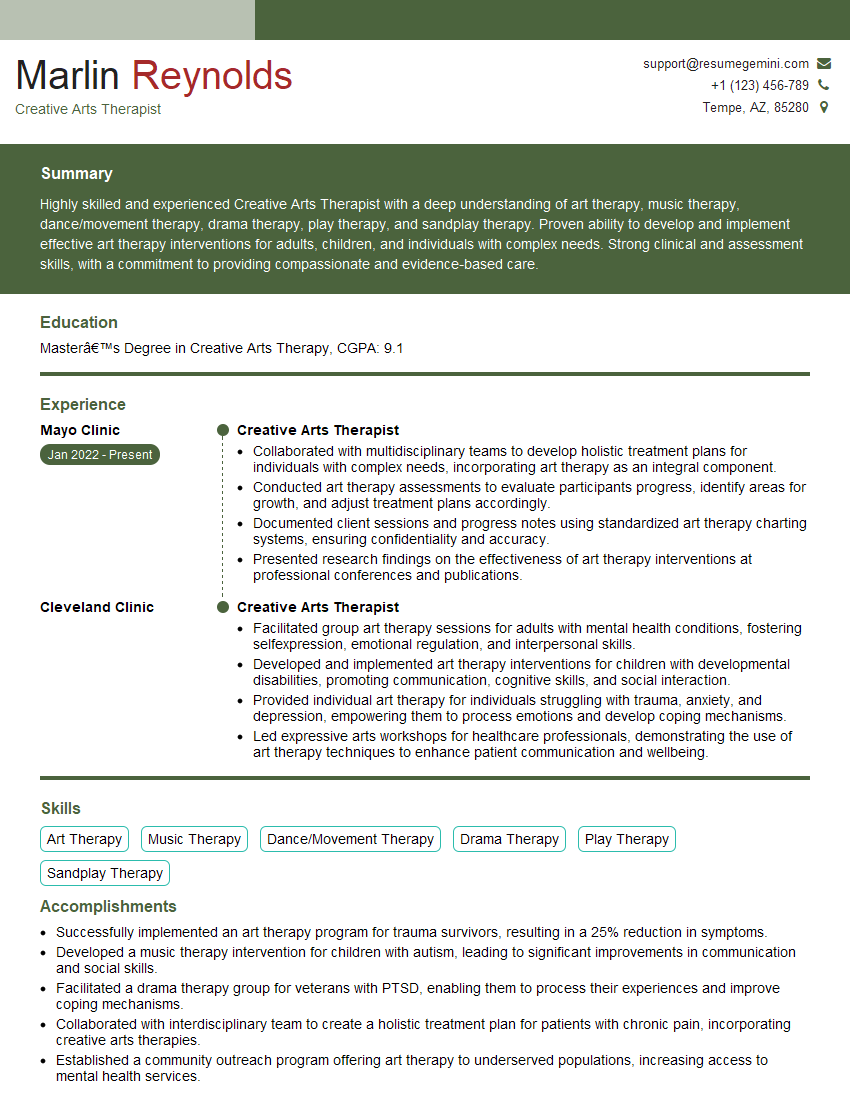
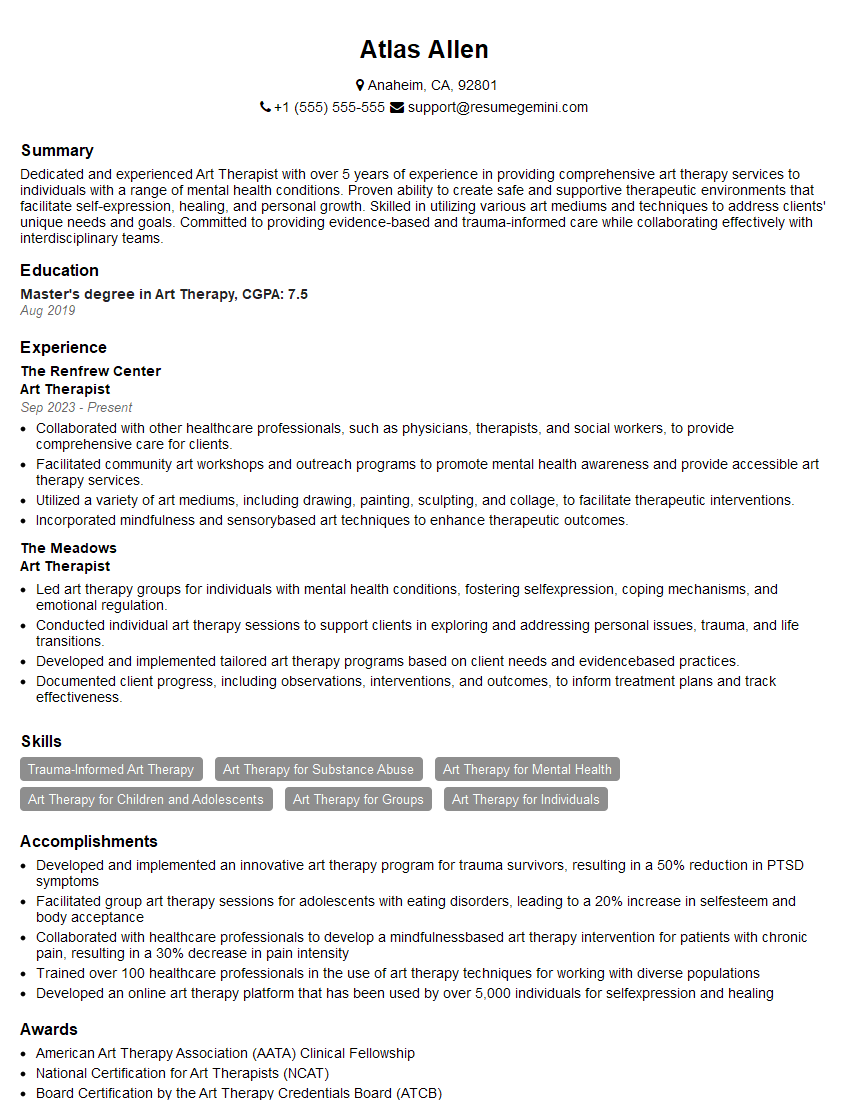
Mastering Art Therapy in Anxiety and Depression Treatment opens doors to fulfilling and impactful careers. To maximize your job prospects, crafting a strong, ATS-friendly resume is crucial. ResumeGemini is a trusted resource that can help you build a professional and effective resume, highlighting your skills and experience in this specialized field. Examples of resumes tailored to Art Therapy in Anxiety and Depression Treatment are available to guide you. Invest time in building a compelling resume – it’s your first impression on potential employers.
Explore more articles
Users Rating of Our Blogs
Share Your Experience
We value your feedback! Please rate our content and share your thoughts (optional).
What Readers Say About Our Blog
To the interviewgemini.com Webmaster.
Very helpful and content specific questions to help prepare me for my interview!
Thank you
To the interviewgemini.com Webmaster.
This was kind of a unique content I found around the specialized skills. Very helpful questions and good detailed answers.
Very Helpful blog, thank you Interviewgemini team.