Every successful interview starts with knowing what to expect. In this blog, we’ll take you through the top Art Therapy in Eating Disorder Recovery interview questions, breaking them down with expert tips to help you deliver impactful answers. Step into your next interview fully prepared and ready to succeed.
Questions Asked in Art Therapy in Eating Disorder Recovery Interview
Q 1. Describe your experience utilizing art therapy modalities with clients struggling with eating disorders.
My experience with art therapy in eating disorder recovery spans over fifteen years. I’ve worked with a diverse range of clients, from adolescents grappling with anorexia nervosa to adults managing bulimia nervosa and binge eating disorder. I utilize a variety of modalities, adapting my approach to each individual’s needs and preferences. This includes methods such as drawing, painting, sculpting, collage, and expressive writing, often incorporating elements of sand tray therapy. I find that art provides a non-threatening avenue for clients to express emotions and experiences that may be difficult to articulate verbally, particularly the complex feelings surrounding body image, self-esteem, and control issues central to eating disorders.
For example, I’ve had clients who initially struggled to discuss their restrictive eating habits but were able to depict their feelings of emptiness and control through abstract paintings characterized by stark lines and muted colours. Similarly, others have expressed their feelings of shame and self-loathing through self-portraits that depicted distorted body images. These visual representations provide invaluable insight into the client’s internal world, paving the way for deeper therapeutic exploration.
Q 2. How would you assess the art created by a client to gain insight into their eating disorder?
Assessing a client’s artwork requires a holistic and sensitive approach, going beyond simply interpreting the image. I consider the entire process, from the client’s choice of medium and colors to their body language while creating the art. For instance, a client meticulously creating a tiny, detailed drawing might indicate a preoccupation with control and perfectionism. Conversely, a chaotic, explosive painting could signal feelings of overwhelm and loss of control.
I also analyze the subject matter: Is it a self-portrait reflecting a distorted body image? Are there recurring symbols or themes indicative of specific struggles? The colour palette is equally important. Muted or dark colours might suggest depression or feelings of emptiness, while vibrant colours could indicate bursts of energy or a struggle to contain overwhelming emotions. This multi-faceted assessment enables me to understand the client’s underlying feelings and experiences related to their eating disorder, facilitating a more effective therapeutic intervention.
Q 3. Explain your understanding of the different types of eating disorders and how art therapy can address each.
Eating disorders are complex and multifaceted conditions with varied presentations. Anorexia nervosa, characterized by extreme weight loss and fear of gaining weight, often manifests in art through self-portraits depicting emaciation or a focus on details, showing a preoccupation with control. Bulimia nervosa, involving cycles of binge eating followed by compensatory behaviors like purging, might be reflected in artwork that is chaotic, self-destructive, or features recurring themes of hidden or secret behaviours. Binge eating disorder, characterized by recurrent episodes of consuming large quantities of food without compensatory behaviors, may be expressed through art that depicts overwhelming emotions, feelings of lack of control, or images related to food.
Art therapy can effectively address each type of eating disorder by providing a safe space for emotional expression. For anorexia, it can help clients explore their body image issues and anxieties. In bulimia, art can help clients process feelings of shame and guilt related to their secretive behaviours. With binge eating disorder, art therapy can facilitate exploration of underlying emotional triggers and development of coping mechanisms. The non-judgmental nature of art therapy allows clients to express their inner turmoil, fostering self-awareness and facilitating emotional regulation.
Q 4. What are some common therapeutic goals you set for clients using art therapy in eating disorder recovery?
Therapeutic goals in art therapy for eating disorders are tailored to the individual client but commonly include enhancing self-esteem, improving body image, developing healthier coping mechanisms, fostering emotional regulation, and promoting self-acceptance. Specific goals might involve increasing awareness of emotions, identifying triggers related to eating disorder behaviours, and developing alternative strategies for managing distress.
For example, a goal might be to increase the client’s ability to express their needs and boundaries effectively. Another might focus on improving their self-compassion and reducing self-criticism. Progress towards these goals is tracked through regular sessions, reviewing created artwork, and observing changes in the client’s self-perception and behaviour outside of therapy. These goals are collaboratively set, ensuring the client feels heard and empowered throughout the therapeutic process.
Q 5. How do you integrate art therapy with other treatment modalities, such as nutritional counseling or psychotherapy?
Integrating art therapy with other treatment modalities like nutritional counseling and psychotherapy is crucial for holistic recovery. I collaborate closely with the client’s dietitian and therapist, sharing insights gained from the art-making process. For example, a client’s artwork might reveal a fear of food associated with a specific traumatic memory; this information can then be incorporated into both psychotherapy and nutritional counseling. Conversely, progress in nutritional counseling, such as successfully navigating a meal, can be celebrated and visually represented in art therapy, reinforcing positive steps and building self-efficacy.
This interdisciplinary approach allows for a more comprehensive and effective intervention, addressing both the emotional and physical aspects of the eating disorder. Regular communication and shared case discussions ensure consistency and avoid conflicting therapeutic messages, creating a supportive and coherent healing environment for the client.
Q 6. Describe a successful case study where art therapy helped a client overcome challenges related to an eating disorder.
One of my clients, Sarah (a pseudonym), struggled with bulimia nervosa for several years. Initially, she was reluctant to engage verbally, but through collage work, she began expressing her feelings of shame and self-loathing. She used fragmented images of food, bodies, and faces, reflecting her fractured sense of self. As therapy progressed, her collages became less chaotic, the images becoming more integrated, and she started incorporating brighter colors. This visual shift correlated with her progress in therapy; she began to acknowledge her feelings, develop healthier coping mechanisms, and reduce her purging episodes. Sarah’s journey demonstrates how art therapy can facilitate emotional processing and self-discovery in a non-threatening way, aiding in a significant and sustainable recovery.
Q 7. How do you handle ethical considerations and boundaries within the context of art therapy for eating disorders?
Ethical considerations and boundaries are paramount in art therapy, particularly when dealing with vulnerable clients struggling with eating disorders. Maintaining client confidentiality, informed consent, and professional boundaries is crucial. This includes adhering to strict ethical guidelines regarding the handling and storage of client artwork and ensuring clear communication about the therapeutic process and its limitations.
Additionally, recognizing and addressing potential power imbalances, managing transference and countertransference, and referring clients to other specialists as needed are crucial aspects of ethical practice. Prioritizing the client’s safety and well-being, promoting self-determination, and respecting their autonomy are central principles that guide my practice.
Q 8. How do you address resistance or reluctance from a client to participate in art therapy sessions?
Resistance in art therapy is common, especially with eating disorder clients who may feel vulnerable or distrustful. Addressing this requires a therapeutic relationship built on empathy, trust, and collaboration. I begin by validating their feelings and acknowledging that art-making might feel daunting or irrelevant. Instead of pushing them, I offer choices. For instance, I might present various art materials and invite them to simply explore textures or colors without any pressure to create a specific piece. If they still express resistance, we may engage in a collaborative dialogue, exploring their concerns about art therapy and how we can tailor the process to feel safe and manageable. Sometimes, starting with a less direct approach – like discussing their experience through guided imagery or writing prompts – can be a bridge towards using art materials. For example, a client might be hesitant to draw their body, but might be comfortable using collage materials to represent their feelings about their body image instead. The key is to meet the client where they are and respect their pace and preferences.
Q 9. What are some specific art techniques you utilize to explore body image issues with clients?
Several art techniques effectively explore body image issues. One is body mapping, where clients create a visual representation of their body on a large sheet of paper, then use various art materials to express their feelings about different body parts. This can be extremely powerful in allowing clients to externalize their internal experiences and connect with their bodies in a more compassionate way. Another is sculpting, using clay or other malleable materials to create a three-dimensional representation of their body or body parts. This allows for a different kind of tactile exploration of the body and its perceived flaws or strengths. Collage is also very versatile; clients can utilize magazines, photographs, and other materials to construct a visual narrative surrounding their body image, allowing for a playful and less confrontational approach to a sensitive topic. Finally, self-portraits, executed in various styles and media, can help clients explore different facets of their self-perception and emotional states in relation to their bodies. The process, rather than the final product, is often the most therapeutic aspect of these exercises.
Q 10. How do you incorporate trauma-informed principles into your art therapy practice with eating disorder clients?
Trauma-informed care is paramount when working with eating disorder clients, as many have experienced trauma that contributes to their condition. My approach centers on safety, trust, and collaboration. I avoid pressure or pushing clients to confront their trauma before they are ready. The art-making process itself can be a safe space for emotional regulation and expression. For example, I might incorporate mindfulness techniques during sessions, such as focusing on the sensory experience of creating art (the texture of clay, the scent of paint), to help clients ground themselves in the present moment. I carefully observe for signs of distress and adjust the therapeutic approach accordingly. Empowerment is a key component; I strive to collaborate with the client to establish their goals and pace, respecting their agency and autonomy throughout the process. If trauma-related material does emerge, I work collaboratively with the client to process it at their own pace and within their comfort zone, always ensuring they have access to additional support if needed.
Q 11. Describe your approach to working with clients of diverse cultural backgrounds and experiences.
Working with diverse clients requires cultural humility and sensitivity. I begin by acknowledging that my understanding of their experiences is limited and that their cultural background shapes their perceptions and expression. I actively seek to learn about their cultural beliefs, practices, and values that may influence their art-making and self-perception. I adapt my therapeutic techniques to be culturally relevant and avoid imposing my own cultural biases. For example, I might adjust art materials or activities to align with cultural preferences or traditions. I also strive to create a safe space for clients to express their unique experiences without judgment or misinterpretation. It’s vital to consult with and utilize culturally relevant resources and collaborate with other professionals when necessary to ensure culturally competent care. Collaboration also involves understanding any communication barriers and making appropriate accommodations.
Q 12. How do you maintain client confidentiality within the art therapy process?
Maintaining client confidentiality is crucial in art therapy. Before commencing therapy, I thoroughly discuss confidentiality policies with clients, explaining the limits of confidentiality (e.g., reporting of child abuse or harm to self or others). I store client artwork securely and dispose of it according to ethical guidelines. If artwork is to be used for supervision or research purposes, I ensure that all identifying information is removed or anonymized. Discussions about client experiences remain strictly confidential, unless mandated by law. I clearly outline how this policy is applied to digital media, electronic records and any online interactions. Transparency and open communication with clients are key to building trust and ensuring ethical practice.
Q 13. How do you support clients in developing healthy coping mechanisms through art therapy?
Art therapy provides a unique avenue for developing healthy coping mechanisms. We might explore techniques like mindful art-making, focusing on the present moment’s sensory experience, which helps manage anxiety and promote self-regulation. Journaling alongside art creation can allow clients to process their emotions and experiences, leading to increased self-awareness. Clients can create visual metaphors for challenging emotions or situations, allowing them to externalize and manage difficult feelings. Creating positive affirmations or self-compassionate statements within artwork can strengthen self-esteem and challenge negative self-talk. We collaboratively develop coping strategies that integrate their art-making experience and generalize to real-world settings. The goal is to empower clients to use art as a tool for self-soothing, stress management, and improved emotional resilience.
Q 14. How do you adapt art therapy techniques to accommodate clients with varying levels of artistic skill?
Artistic skill level is irrelevant in art therapy. The process is more important than the product. I emphasize that there is no right or wrong way to create art. For clients who feel intimidated by traditional art forms, I offer alternative options such as collage, found object art, or digital art techniques. I might introduce simple drawing or painting exercises, focusing on sensory exploration and self-expression rather than technical proficiency. The focus remains on using art as a means of self-discovery and emotional expression. For clients with more advanced skills, I can tailor exercises to utilize those skills, offering opportunities for creative exploration and deeper self-expression. The key is to adapt the techniques to meet the individual needs and preferences of each client, focusing on creating a safe and supportive environment for self-expression.
Q 15. Explain your understanding of the role of family therapy in supporting eating disorder recovery and how art therapy might be integrated.
Family therapy plays a crucial role in eating disorder recovery because eating disorders often impact the entire family system. Dysfunctional family dynamics, such as enmeshment or conflict, can contribute to the development and maintenance of the disorder. The goal of family-based therapy is to improve communication, establish healthier boundaries, and support the individual’s recovery. Art therapy can be seamlessly integrated by providing a non-threatening medium for family members to express their emotions, understand each other’s perspectives, and collaboratively create solutions.
For example, I might have a family create a collaborative art piece representing their family system. Each member could contribute individual elements, reflecting their feelings and roles. This allows for a visual representation of family dynamics and offers a starting point for dialogue and change. Alternatively, I might have individual family members create self-portraits representing how they feel about the eating disorder or how they see themselves, followed by a discussion about these creations.
In another instance, a family struggling with an adolescent’s anorexia might create a metaphorical sand tray scene depicting their feelings, using miniatures to represent family members, the eating disorder, and their hopes for recovery. The resulting dialogue facilitates deeper understanding and opens pathways to healthier family interactions.
Career Expert Tips:
- Ace those interviews! Prepare effectively by reviewing the Top 50 Most Common Interview Questions on ResumeGemini.
- Navigate your job search with confidence! Explore a wide range of Career Tips on ResumeGemini. Learn about common challenges and recommendations to overcome them.
- Craft the perfect resume! Master the Art of Resume Writing with ResumeGemini’s guide. Showcase your unique qualifications and achievements effectively.
- Don’t miss out on holiday savings! Build your dream resume with ResumeGemini’s ATS optimized templates.
Q 16. How do you measure the effectiveness of your art therapy interventions with eating disorder clients?
Measuring the effectiveness of art therapy interventions in eating disorder treatment is multifaceted and requires a combination of quantitative and qualitative methods. We don’t solely rely on one measure.
- Quantitative Measures: These involve using standardized questionnaires and scales to assess changes in eating disorder symptoms (e.g., the Eating Disorder Examination, the SCOFF questionnaire), body image concerns, self-esteem, and overall psychological well-being. Pre- and post-intervention scores can track progress.
- Qualitative Measures: These encompass analyzing the client’s artwork, observing changes in their behavior and emotional expression during sessions, and conducting regular clinical interviews. Analyzing the symbolism, color palette, and composition in their art provides valuable insights into their inner world and the progress of their healing journey.
- Process Measures: These involve tracking attendance, engagement in the therapeutic process, and client feedback on the usefulness of the intervention. This gives us valuable insights into the effectiveness of the approach and if adjustments need to be made.
By integrating these methods, we gain a comprehensive understanding of the therapeutic impact and can tailor interventions to best meet the client’s individual needs. For instance, a client’s art might initially depict a sense of isolation and control, but over time, shift to portray more vibrant colors and a sense of connection, even if quantitative measures show only modest changes in eating behaviours. This signals significant therapeutic progress.
Q 17. Discuss the importance of self-care for art therapists working with individuals struggling with eating disorders.
Self-care is paramount for art therapists working with clients struggling with eating disorders. The nature of this work can be emotionally demanding, as we’re often exposed to intense emotional experiences, stories of trauma, and the complexities of a potentially life-threatening condition. Neglecting self-care can lead to burnout, compassion fatigue, and ultimately, a diminished capacity to provide effective support.
My self-care practices include:
- Maintaining healthy boundaries: This involves setting clear limits on my availability and workload to prevent emotional exhaustion.
- Regular supervision: Engaging in regular supervision with a seasoned colleague provides a space to process my experiences, manage countertransference, and gain professional support.
- Personal therapy: It is essential to have my own therapist to maintain my own mental health. This helps keep me grounded and emotionally healthy.
- Engaging in mindfulness practices: Techniques like meditation, yoga, or spending time in nature help me to manage stress and maintain emotional regulation.
- Building a supportive professional network: Connecting with other art therapists allows for peer support and shared learning opportunities.
Essentially, prioritizing my well-being ensures that I can continue to provide the highest quality of care to my clients without compromising my own mental health. It’s not a luxury, but a necessity.
Q 18. How would you address a situation where a client exhibits self-harm behaviors during an art therapy session?
If a client exhibits self-harm behaviors during a session, my immediate priority is ensuring their safety. This involves remaining calm, validating their distress, and taking concrete steps to help.
- Safety First: I would first assess the severity of the self-harm and determine if immediate medical attention is needed. If the self-harm is severe or life-threatening, I would immediately call emergency services.
- Validation and Support: I would validate the client’s feelings and emphasize that they’re not alone in their struggle. I’d let them know that I’m there to support them through this difficult experience.
- Collaboration and Safety Planning: Once the immediate crisis is addressed, I would work collaboratively with the client to develop a safety plan for future self-harm urges. This plan would involve identifying triggers, coping strategies, and emergency contacts.
- Communication with the Treatment Team: I would communicate with the client’s psychiatrist, therapist, and other members of their treatment team to ensure comprehensive support and coordinated care.
The art therapy session would be paused to address the immediate crisis. Once the client is feeling calmer and safer, we might use the experience as an opportunity to express their feelings through art, using the experience as a resource for understanding the root causes of their self-harm.
Q 19. What are your strategies for managing countertransference when working with clients struggling with eating disorders?
Countertransference, the therapist’s emotional reaction to the client, is a common occurrence when working with individuals with eating disorders. These clients often trigger strong emotions in therapists due to their vulnerability, resilience, and the intensity of their struggles. Managing countertransference is essential to maintaining objectivity and providing effective therapy.
My strategies include:
- Self-Awareness: Regular self-reflection is vital to identify my own emotional responses and understand what aspects of the client’s experience trigger them.
- Supervision: Discussing cases with a supervisor provides an external perspective and helps to manage countertransference by providing a safe space to process emotions and explore potential biases.
- Maintaining Professional Boundaries: Establishing and maintaining clear professional boundaries is crucial to avoid emotional entanglement with the client. This includes not engaging in informal social interactions outside the therapeutic setting.
- Self-Care: Prioritizing self-care helps ensure that I have the emotional resources to handle intense client experiences without being overwhelmed.
For example, if a client’s restrictive eating habits trigger my own anxieties about food or body image, I address these personal responses in my personal therapy and supervision to ensure that they don’t interfere with my ability to provide objective and supportive care.
Q 20. How would you collaborate effectively with a multidisciplinary treatment team?
Collaboration within a multidisciplinary team is essential for effective eating disorder treatment. I see myself as an integral part of the team, contributing my unique expertise in harnessing the power of art to facilitate emotional expression, self-discovery, and behaviour change.
Effective collaboration involves:
- Regular Team Meetings: Participating in regular meetings to discuss client progress, share observations, coordinate interventions, and ensure consistency in the approach.
- Clear Communication: Maintaining open and consistent communication with other professionals (psychiatrists, dieticians, therapists) through regular updates and shared documentation.
- Shared Goals and Treatment Plans: Working collaboratively to develop and implement a holistic treatment plan that integrates the contributions of all team members.
- Respectful and Collaborative Approach: Valuing the expertise of each team member and respecting their contributions, fostering a collaborative spirit.
For instance, I might share observations from art therapy sessions that reveal underlying trauma or emotional issues that influence the client’s eating disorder, informing the direction of psychotherapy or medication management. Conversely, understanding the client’s nutritional needs and medical status from the dietitian and physician helps to tailor my art therapy interventions appropriately.
Q 21. Describe your understanding of the recovery model in eating disorder treatment.
The recovery model in eating disorder treatment emphasizes the individual’s strengths, resilience, and capacity for self-determination. It moves away from solely focusing on symptom reduction and instead prioritizes empowerment, self-acceptance, and building a fulfilling life beyond the constraints of the disorder. It recognizes that recovery is a journey, not a destination, and is unique to each individual.
Key aspects of the recovery model include:
- Person-Centered Approach: The treatment focuses on the individual’s unique needs, goals, and values. There is no ‘one size fits all’ approach.
- Empowerment and Self-Determination: The client is actively involved in setting their own recovery goals and making choices about their treatment.
- Focus on Strengths and Resilience: The treatment emphasizes the individual’s strengths, skills, and resources to support their recovery journey.
- Relapse Prevention: The treatment includes strategies to help prevent relapse and manage potential setbacks. Relapse is viewed as a learning opportunity.
- Holistic Approach: Recovery involves attention to all aspects of a person’s life – physical, emotional, social, and spiritual.
In art therapy, this translates to creating a safe space for self-expression, exploring personal values and goals, and developing coping mechanisms through creative means. The client actively participates in choosing the artistic mediums and themes, fostering autonomy and ownership of the therapeutic process.
Q 22. What are the limitations of art therapy in treating eating disorders, and how do you address them?
Art therapy, while incredibly valuable in eating disorder recovery, isn’t a standalone cure. Its limitations stem from several factors. First, it’s not always effective for individuals who lack the self-awareness or willingness to engage with the creative process, which is crucial for uncovering underlying emotional issues. Second, severe medical instability, like electrolyte imbalances or cardiac complications, can preclude art therapy until the client is medically stabilized. Third, art therapy alone may not address all aspects of an eating disorder, such as nutritional deficiencies or distorted body image; it ideally works in conjunction with a multidisciplinary team. Finally, individual client responses vary greatly, and some might not find art therapy as effective as other therapeutic modalities.
To address these limitations, I employ a collaborative approach. I carefully assess the client’s readiness and medical status before starting therapy. I collaborate closely with the client’s psychiatrist, dietitian, and other therapists to ensure a holistic treatment plan. I also regularly evaluate the effectiveness of the art therapy interventions, adapting my approach as needed, perhaps incorporating elements of other therapeutic techniques like cognitive behavioral therapy (CBT) or dialectical behavior therapy (DBT) where appropriate. For instance, if a client struggles with self-expression, I might begin with less structured activities like sensory exploration before moving to more representational artwork. If progress plateaus, we may discuss integrating other methods for deeper emotional work.
Q 23. How do you promote a safe and supportive therapeutic environment for clients?
Creating a safe and supportive environment is paramount in art therapy for eating disorders. This involves several key strategies. Firstly, I establish a strong therapeutic alliance built on trust and empathy. I actively listen to my clients, validating their feelings and experiences without judgment. The studio itself should be a comfortable and calming space, free from distractions. I ensure materials are readily available and accessible, encouraging experimentation without pressure to produce “perfect” artwork. Confidentiality is paramount, discussed openly and explicitly at the outset of therapy.
Secondly, I promote self-compassion and self-acceptance by actively challenging negative self-talk and body shaming. This might involve creating art pieces that focus on self-love and body positivity. For example, clients might be encouraged to paint or sculpt a self-portrait that embraces their unique qualities. We might also use metaphors, such as creating a collage representing their inner strength, to foster self-esteem and resilience. Finally, I always check in with my clients to gauge their comfort level and adjust the session accordingly. If a client is feeling overwhelmed, we might take a break or focus on a less intense activity. Regular check-ins maintain open communication, fostering a space free from pressure and fear.
Q 24. Explain your experience with different assessment tools used in art therapy for eating disorders.
Assessment in art therapy for eating disorders is multifaceted. While there isn’t one standardized test, I utilize a combination of methods. Observational assessments are crucial – noticing the client’s choice of materials, colors, imagery, and the process of creation itself offer valuable insights into their emotional state. For example, a client consistently using sharp, dark colors might indicate feelings of anger or anxiety, while muted colors could reflect depression.
I also use projective techniques, such as asking clients to create a piece representing their relationship with food or their body image. The resulting artwork is then analyzed, focusing on symbolism, metaphors, and emotional expression. Furthermore, I use standardized questionnaires and rating scales, like the Eating Disorder Examination (EDE) or the Body Shape Questionnaire (BSQ), to gather quantitative data which I then integrate with the qualitative data from the art therapy sessions. This combined approach offers a comprehensive understanding of the client’s experience. For instance, while a client’s self-report might minimize their eating disorder behaviors, their artwork could reveal underlying anxieties or body image struggles.
Q 25. How do you maintain professional boundaries while fostering a therapeutic relationship with clients?
Maintaining professional boundaries while fostering a therapeutic relationship is a delicate balance. Clear boundaries are established from the first session, including outlining session times, fees, communication protocols, and the limits of the therapeutic relationship. I strive for a warm and empathetic relationship, but always maintain a professional distance to avoid blurring boundaries. This means refraining from social interactions outside of therapy, avoiding dual relationships (e.g., becoming friends or engaging in business dealings), and managing self-disclosure appropriately. Only relevant personal information that could aid the therapeutic process is shared sparingly, always prioritizing the client’s needs.
Regular supervision and consultation with colleagues are essential to ensure I maintain ethical standards and reflect on my own countertransference – my emotional reactions to the client’s experiences. For example, if I feel overly emotionally invested in a client’s recovery, supervision can help me identify and manage this, ensuring I don’t cross professional boundaries in an effort to help. This ongoing self-reflection is crucial for maintaining both professional objectivity and a supportive therapeutic alliance.
Q 26. What are your strategies for providing ongoing support and relapse prevention to clients after completing art therapy?
Relapse prevention is a critical component of eating disorder recovery, and art therapy can play a vital role in ongoing support. Before therapy concludes, we collaboratively develop a personalized relapse prevention plan. This might involve identifying triggers, developing coping mechanisms, and creating art pieces that symbolize resilience and self-care. For example, a client might create a ‘toolkit’ collage featuring images and objects that represent their coping strategies.
I also encourage clients to maintain creative practices independently, suggesting journals, art classes, or other creative pursuits. I provide them with resources and support networks, such as referrals to support groups or online communities. Regular check-in sessions, even if less frequent, are scheduled to monitor progress, address any emerging challenges, and reinforce the skills learned during therapy. The goal is to empower the client to navigate future challenges and maintain long-term recovery, building a sense of agency and self-efficacy that extends beyond the therapeutic setting.
Q 27. How would you adapt your therapeutic approach to work effectively with different age groups of clients with eating disorders?
Adapting my approach to different age groups requires sensitivity and understanding of developmental stages. With children, I utilize play therapy techniques alongside art therapy, using simpler materials and focusing on process over product. The sessions are shorter and less structured, incorporating games and storytelling to foster a trusting relationship. For adolescents, I incorporate elements of peer support, addressing issues of identity and body image through creative expression. They often respond well to collaborative projects and exploring different art forms.
Adults generally require more in-depth exploration of their emotional experiences. The therapeutic process is often more verbally-driven, integrating art therapy with talk therapy techniques. Older adults might benefit from reminiscence-based art projects, reflecting on past experiences and life transitions. In all age groups, I maintain an age-appropriate communication style, adapting my language and explanation to ensure the client fully understands the therapeutic process and feels comfortable participating. The overall goal remains consistent: fostering self-expression, self-acceptance, and developing healthy coping mechanisms through the creative process.
Key Topics to Learn for Art Therapy in Eating Disorder Recovery Interview
- Theoretical Foundations: Understanding the interplay between art therapy principles and eating disorder treatment models (e.g., CBT, DBT, Family-Based Therapy). Explore the role of trauma-informed care and body image in this context.
- Assessment & Treatment Planning: Developing comprehensive assessment strategies utilizing art-based methods. Learn to formulate individualized treatment plans that integrate art therapy goals with overall recovery objectives. This includes understanding ethical considerations and maintaining client confidentiality.
- Specific Art Modalities: Mastering techniques relevant to eating disorder recovery, such as expressive drawing, painting, collage, sculpting, and their application in processing emotions, body image, and self-esteem.
- Group Art Therapy in Eating Disorder Contexts: Understanding the dynamics of group therapy and its unique benefits for individuals struggling with eating disorders. Learn strategies for managing group interactions and supporting collaborative creative processes.
- Working with Co-occurring Disorders: Gaining proficiency in addressing the complexities of co-occurring mental health conditions (anxiety, depression, PTSD) frequently associated with eating disorders and how to adapt art therapy techniques accordingly.
- Practical Application & Case Studies: Reviewing successful case studies and learning to analyze treatment progress, challenges, and adaptations within the context of art therapy for eating disorder recovery. Consider specific examples of how you’d handle setbacks or resistance to treatment.
- Ethical Considerations and Boundaries: Deep understanding of professional ethics, including informed consent, client confidentiality, and appropriate professional boundaries within the sensitive context of eating disorder treatment.
- Collaboration and Communication: Understanding the importance of interdisciplinary collaboration with medical professionals, dieticians, and other therapists involved in the patient’s care. Practice clear and effective communication strategies for conveying treatment progress and addressing concerns.
Next Steps
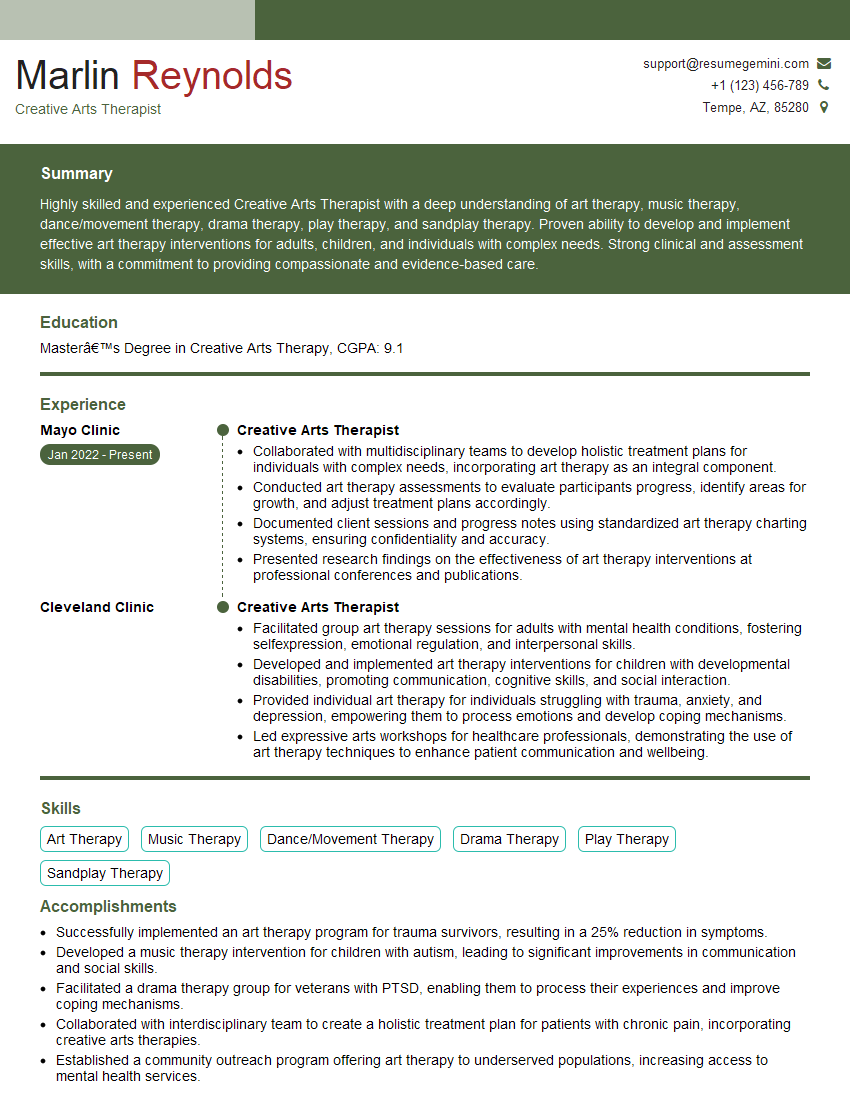
Mastering Art Therapy in Eating Disorder Recovery opens doors to a rewarding career with significant impact. Demonstrating expertise in this specialized area is crucial for career advancement and securing top positions. To maximize your job prospects, invest time in crafting a compelling, ATS-friendly resume that highlights your unique skills and experience. ResumeGemini is a trusted resource for building professional resumes, and we provide examples specifically tailored to Art Therapy in Eating Disorder Recovery to help you showcase your qualifications effectively.
Explore more articles
Users Rating of Our Blogs
Share Your Experience
We value your feedback! Please rate our content and share your thoughts (optional).
What Readers Say About Our Blog
To the interviewgemini.com Webmaster.
Very helpful and content specific questions to help prepare me for my interview!
Thank you
To the interviewgemini.com Webmaster.
This was kind of a unique content I found around the specialized skills. Very helpful questions and good detailed answers.
Very Helpful blog, thank you Interviewgemini team.