Preparation is the key to success in any interview. In this post, we’ll explore crucial Art Therapy in Grief and Loss interview questions and equip you with strategies to craft impactful answers. Whether you’re a beginner or a pro, these tips will elevate your preparation.
Questions Asked in Art Therapy in Grief and Loss Interview
Q 1. Explain the theoretical underpinnings of art therapy in grief and loss.
Art therapy for grief and loss draws upon several theoretical frameworks. A primary foundation is psychodynamic theory, which emphasizes the unconscious processing of emotions and experiences. Grief is viewed as a complex process involving the acceptance of loss and the re-organization of one’s self-concept. Art making provides a non-verbal avenue to access and express these often overwhelming emotions. Attachment theory also plays a significant role, highlighting the impact of relational loss on our sense of security and well-being. Art therapy allows clients to explore their attachment styles and the lingering emotional impacts of loss on their relationships. Furthermore, existential therapy informs the approach by acknowledging the inherent meaning-making involved in grieving. Art making becomes a tool for clients to find meaning in their loss, confront existential anxieties related to mortality, and discover new purpose. Finally, trauma-informed approaches are increasingly incorporated, recognizing that loss can be deeply traumatic and understanding how past experiences affect the present grief response.
For example, a client may use dark, aggressive colors to express anger and rage at their loss, which can be understood through the lens of psychodynamic theory as an unconscious expression of suppressed emotions. Alternatively, the creation of a series of self-portraits representing their shifting sense of self following the loss highlights the impact of grief on one’s identity, fitting within an attachment theory perspective.
Q 2. Describe your experience working with individuals experiencing different types of grief.
My experience encompasses working with individuals experiencing diverse forms of grief, including bereavement following the death of a loved one (sudden, anticipated, or prolonged illness), loss of relationships (divorce, estrangement), loss of health, loss of a job, and loss of a pet. Each type of loss presents unique challenges. For instance, sudden death often evokes shock and disbelief, while anticipated loss allows for some preparation, yet potentially prolongs the grieving process. Loss of a pet can be profoundly difficult, often underestimated in our society, which demonstrates the power and universality of attachment. In my work, I adapt my approach to the specific nature of the loss, focusing on validating the client’s experience and providing a safe space for exploration.
One client, grieving the loss of her mother after a long illness, used clay to sculpt a representation of her mother, then gradually chipped away at the figure, symbolic of her acceptance of the reality of her mother’s death and the resulting change in their relationship. Another client, facing job loss, used collage to visualize their skills and abilities, rebuilding their sense of self-worth and self-efficacy through the process.
Q 3. How do you assess a client’s readiness for art therapy in grief?
Assessing readiness involves a careful evaluation of the client’s emotional and psychological state. It’s crucial to determine if they possess the mental capacity to engage in self-reflection and emotionally charged creative processes. This assessment is often conducted through initial interviews, where we explore their current coping mechanisms, their willingness to engage with their emotions, and their understanding of the therapeutic process. It is important to rule out acute suicidal ideation or psychosis as these would require a different therapeutic approach. If a client presents with overwhelming emotional instability, we may start with grounding techniques and relaxation exercises before introducing art-making.
For instance, a client expressing extreme anxiety and a strong resistance to revisiting their trauma may not be ready for immediate expressive art making. Instead, we could begin with more structured exercises, like meditative drawing or mandalas, which create a safe space to ease into the process.
Q 4. What art materials do you typically use in sessions focused on grief and loss?
The choice of art materials is tailored to the individual client’s needs and preferences, but often includes a range of media to facilitate various expressive needs. Common materials include:
- Drawing materials: Pencils, charcoal, crayons, pastels, markers
- Painting materials: Watercolors, acrylics, tempera paints
- Clay: For sculpting and three-dimensional work
- Collage materials: Magazines, fabric scraps, paper, natural objects
- Mixed media: Combining various materials to create unique textures and forms
The flexibility of these materials allows clients to express themselves in a manner that feels comfortable and aligned with their emotional state. Sometimes, simply the act of selecting materials can be therapeutic, reflecting the client’s current mood and inner world.
Q 5. How do you address resistance or emotional avoidance during art therapy sessions for grief?
Resistance and emotional avoidance are common in grief therapy. Addressing these involves building a strong therapeutic alliance characterized by empathy, patience, and respect for the client’s pace. I avoid direct pressure; instead, I use gentle encouragement and create a non-judgmental space. We might start with less emotionally intense art-making activities before gradually exploring deeper emotional themes. Metaphors and symbolic representation often provide a safe way to address emotionally charged memories or feelings. Sometimes, using sand trays or guided imagery can help clients access their emotions indirectly.
For example, if a client is repeatedly avoiding drawing the face of their deceased loved one, we may start with drawing the surrounding environment, gradually working towards representing the emotional significance of this omission. It’s a collaboration, working with the client to find their comfort zone and create a path forward.
Q 6. Describe your approach to working with children who have experienced the loss of a loved one.
Working with grieving children requires a playful and developmentally appropriate approach. I often use play therapy techniques in conjunction with art therapy. This might include using puppets, storytelling, or drawing games to help children express their feelings in a way that feels safe and comfortable. The focus is on providing a space for emotional expression rather than forcing verbal articulation of complex emotions. Parents or caregivers are usually involved in the process, to ensure a consistent support system.
For example, a child grieving the loss of a pet might create a drawing of their pet, adding positive details or memories to their artwork. This helps normalize the grief and promotes healthy coping mechanisms. Simple activities, such as painting with their hands or making collages with safe materials, can help them explore emotions nonverbally. It’s crucial to create a playful yet emotionally supportive environment.
Q 7. How do you adapt art therapy techniques for clients with different cultural backgrounds experiencing grief?
Cultural sensitivity is paramount in art therapy. I ensure that my approach respects and incorporates the client’s cultural beliefs and traditions surrounding grief and death. This includes understanding rituals, customs, and symbolic meanings associated with loss within their culture. I make a conscious effort to understand how grief might manifest differently across cultures and avoid imposing Western-centric views. If appropriate, we might incorporate culturally relevant materials or symbols into the art-making process.
For example, a client from a culture that emphasizes communal mourning might benefit from collaborative art projects. Understanding the client’s cultural context influences my interpretation of their art and informs the therapeutic dialogue.
Q 8. Explain your understanding of the Kubler-Ross model and its application in art therapy for grief.
The Kübler-Ross model, while not without its critics, provides a framework for understanding the emotional stages individuals may experience after a significant loss. These stages – denial, anger, bargaining, depression, and acceptance – are not necessarily linear or experienced by everyone. In art therapy, we don’t rigidly adhere to this model as a diagnostic tool, but rather use it as a lens to understand the client’s emotional landscape. For example, a client in the denial stage might create abstract, emotionally distant artwork. As they progress through the stages, their artwork may become more expressive, reflecting anger through vibrant, chaotic colors, or depression through muted tones and solitary imagery. The art-making process itself allows for exploration and processing of these emotions without the pressure of verbal articulation.
Q 9. How do you facilitate the expression of complex emotions related to loss through art-making?
Facilitating the expression of complex emotions through art is a nuanced process. It begins with creating a safe and non-judgmental space. I start by offering a wide range of art materials – clay, paint, collage elements, etc. – encouraging exploration and experimentation. Open-ended prompts, such as “What does your grief look like?” or “How does this loss feel in your body?” can be effective starting points. Sometimes, clients find it easier to express themselves indirectly, through symbolic imagery or metaphors. For instance, a client grieving the loss of a pet might create a piece depicting a wilting flower, symbolizing their own fading spirit. We then engage in a guided dialogue around the artwork, interpreting the symbolism and validating their feelings. The art itself acts as a bridge, allowing access to emotions that might be otherwise inaccessible through verbal communication alone. The focus remains on the process, not on the creation of a ‘masterpiece’.
Q 10. Describe a successful case study where art therapy helped a client cope with grief.
I worked with a client, Sarah, who had lost her mother unexpectedly. Initially, Sarah was withdrawn and expressed little emotion verbally. In our sessions, she chose to work primarily with clay. Her early sculptures were small, fragmented, and lacked definition, reflecting her feeling of being broken and lost. As our sessions progressed, her sculptures grew larger and more defined. She began incorporating vibrant colors, though often juxtaposed with darker shades. One sculpture depicted a bird taking flight, surrounded by both sunny and stormy skies. Through our discussions about her artwork, Sarah revealed that the bird represented her mother’s spirit finding freedom, while the contrasting weather reflected her own internal conflict between grief and hope. This process allowed her to gradually confront her loss, acknowledge her mixed emotions, and eventually move toward acceptance.
Q 11. How do you handle ethical dilemmas related to confidentiality and client disclosure in art therapy for grief?
Ethical considerations are paramount in art therapy. Confidentiality is crucial. I explicitly discuss the limits of confidentiality at the outset, explaining situations where I am legally obligated to report certain information (e.g., threats of self-harm). Client disclosure is handled with sensitivity and respect. If a client reveals something deeply disturbing or potentially harmful, I guide them towards appropriate resources and support while upholding their privacy as much as legally possible. Documenting sessions thoroughly is vital, not only to track progress but also to ensure ethical compliance. Supervised practice and continuing education help me navigate complex ethical dilemmas effectively. Open communication with supervisors and colleagues is essential for maintaining high ethical standards.
Q 12. What are the potential limitations of art therapy in addressing severe grief reactions?
Art therapy, while a powerful tool, has limitations. It’s not a cure-all for severe grief reactions. For individuals experiencing significant trauma, complex PTSD, or severe depression, art therapy might be a valuable adjunct but shouldn’t replace evidence-based treatments such as medication or psychotherapy. Art therapy can also be challenging for clients with severe cognitive impairments or limited fine motor skills. In these cases, adaptive art materials and techniques may be necessary, but the client’s capacity to engage meaningfully might be limited. Recognizing these limitations and referring clients to other appropriate professionals when necessary is a crucial aspect of responsible practice.
Q 13. How do you integrate art therapy with other therapeutic modalities for grief support?
Integrating art therapy with other modalities can greatly enhance the effectiveness of grief support. For example, combining art therapy with cognitive behavioral therapy (CBT) can help clients identify and challenge unhelpful thought patterns related to their loss. Art therapy can also complement grief support groups, providing a visual outlet for processing shared experiences. Working collaboratively with other therapists, such as psychiatrists or social workers, ensures comprehensive care. A collaborative approach allows us to leverage the strengths of each modality, creating a holistic and tailored intervention plan for the client. Regular communication and case conferences ensure that the client receives the most effective support.
Q 14. Discuss the role of symbolism and metaphor in art therapy interventions for grief.
Symbolism and metaphor are central to art therapy interventions for grief. Art provides a non-verbal language to express complex emotions that may be difficult to articulate verbally. A dark, swirling painting might represent feelings of overwhelm and despair, while a bright, sunlit landscape could symbolize hope and healing. The therapist and client collaboratively explore the meanings embedded in the artwork, allowing for deeper emotional processing and insight. For example, a client who lost their spouse might depict their partner as a falling star, representing loss but also acknowledging the lasting impact and beauty of their relationship. This indirect expression can be far less threatening and more empowering than directly confronting the pain verbally.
Q 15. How do you assess the effectiveness of art therapy interventions in grief and loss?
Assessing the effectiveness of art therapy interventions in grief and loss requires a multifaceted approach. We don’t rely solely on subjective measures. Instead, we utilize a combination of quantitative and qualitative data. Quantitative methods might include pre- and post-intervention assessments using standardized scales measuring symptoms of grief, depression, anxiety, and PTSD. For example, we might use the Beck Depression Inventory (BDI) or the Impact of Event Scale (IES). These tools provide numerical data to track changes in clients’ emotional states over time.
However, numbers alone don’t tell the whole story. Qualitative data, such as observations of client behavior during sessions, analysis of their artwork, and the content of our therapeutic dialogues, are crucial. Changes in artwork, such as a shift from dark, chaotic imagery to brighter, more hopeful representations, can signal positive progress. Similarly, shifts in verbal expression, from avoidance of grief topics to open discussion and processing, indicate therapeutic gains. Client feedback through journaling or informal conversations further informs our assessment.
Ultimately, effectiveness is determined by the client’s subjective experience of improved well-being and functional capacity. Are they better equipped to navigate daily life, manage their grief, and engage in meaningful activities? This holistic approach, integrating quantitative and qualitative measures alongside the client’s lived experience, allows for a comprehensive and nuanced understanding of the intervention’s effectiveness.
Career Expert Tips:
- Ace those interviews! Prepare effectively by reviewing the Top 50 Most Common Interview Questions on ResumeGemini.
- Navigate your job search with confidence! Explore a wide range of Career Tips on ResumeGemini. Learn about common challenges and recommendations to overcome them.
- Craft the perfect resume! Master the Art of Resume Writing with ResumeGemini’s guide. Showcase your unique qualifications and achievements effectively.
- Don’t miss out on holiday savings! Build your dream resume with ResumeGemini’s ATS optimized templates.
Q 16. Explain your understanding of the role of the therapeutic relationship in art therapy for grief.
The therapeutic relationship in art therapy for grief is paramount. It’s the bedrock upon which all therapeutic work is built. It’s not just about the techniques employed but the quality of the connection and the trust established between the therapist and the client. In grief, this relationship provides a safe, non-judgmental space where clients can explore their emotions without fear of criticism or dismissal. This is particularly important because grief is often accompanied by intense and sometimes overwhelming feelings that clients may find difficult to articulate verbally.
I strive to create an empathetic, accepting environment where clients feel understood and validated. This involves active listening, reflective responses, and genuine curiosity about their experience. The art-making process itself can facilitate this connection. As clients create art, they often reveal aspects of their inner world that may not readily emerge through verbal communication. My role is to facilitate this self-discovery process, providing gentle guidance and support while respecting the client’s autonomy and pace.
Building rapport requires time and sensitivity. It involves recognizing the unique dynamics of each client’s grieving process and adapting my therapeutic approach accordingly. Some clients need more directive guidance, while others benefit from a more exploratory, unstructured approach. The essential element is a consistent commitment to empathy, respect, and genuine care.
Q 17. How do you support clients in developing healthy coping mechanisms for grief using art therapy?
Art therapy offers diverse avenues for developing healthy coping mechanisms for grief. One key approach involves helping clients identify and express their emotions through art. For example, clients might use collage to represent their feelings, utilizing images and textures that reflect their emotional state. The act of creating the artwork can be cathartic in itself, providing an outlet for bottled-up emotions.
Another technique involves exploring narrative through art. Clients might create a series of drawings or paintings that tell the story of their loss, allowing them to process the events and their emotional impact in a safe and manageable way. This can help them make sense of their experiences and integrate them into their life narrative.
Furthermore, art therapy can promote self-soothing techniques. Clients might create calming mandalas or engage in mindful art practices like calligraphy or nature-inspired drawing. These activities help to regulate their nervous system and cultivate a sense of inner peace. We also explore the use of symbolic imagery within their art to understand how they are representing their grief and developing adaptive strategies for managing those symbols.
Importantly, it’s about translating these creative expressions into real-world coping mechanisms. We collaboratively discuss the meaning behind their artwork and explore how the strategies demonstrated in their art translate into practical everyday life skills. For instance, a client who utilizes calming colors in their artwork can be encouraged to incorporate these colors into their home environment or clothing choices to promote relaxation.
Q 18. Describe your experience working with clients who have experienced sudden or unexpected loss.
Working with clients experiencing sudden or unexpected loss presents unique challenges. The shock, disbelief, and trauma associated with such losses can be profoundly disruptive. These clients often struggle with feelings of intense anger, guilt, and confusion, lacking the anticipatory grieving process that occurs with expected losses. The intensity of these emotions can make it difficult for clients to process their grief constructively.
My approach emphasizes providing a safe and validating space for clients to express their raw emotions without judgment. I often utilize grounding techniques and trauma-informed practices to help regulate their nervous system and promote emotional stability. Art becomes a means of expressing those overwhelming feelings that words can’t fully capture – the shock, the numbness, the disorientation.
I’ve seen clients utilize expressive techniques like action painting, allowing them to physically release pent-up energy and emotion. Others have found solace in creating memorial pieces, a way of honoring the lost loved one and creating a tangible representation of their memory. The focus is on supporting them through the initial stages of trauma processing and gradually assisting them in exploring their grief in a more manageable way, fostering resilience and a sense of agency.
Q 19. How do you help clients to integrate their grief experience and move forward with their lives?
Helping clients integrate their grief experience and move forward involves a gradual process of healing and acceptance. It’s not about ‘getting over’ grief, but learning to live with it in a way that doesn’t consume their lives. Art therapy plays a vital role in this journey by providing tools for self-discovery, emotional regulation, and meaning-making.
We explore how the client’s identity has been affected by the loss, and how they are redefining themselves in this new context. Art can be used to create symbolic representations of this new identity, fostering a sense of continuity and hope. We might work with metaphors and symbolic imagery to help them understand their grief journey and its impact on their sense of self.
Moreover, we focus on fostering resilience and a sense of agency. Clients are encouraged to set goals, however small, and celebrate their achievements along the way. This gradual process of rebuilding their lives, one step at a time, empowers them to move forward while acknowledging and honoring their grief. Art becomes a powerful tool to track this progress and celebrate milestones, no matter how small. It’s about fostering a new narrative that incorporates their loss but also embraces the future.
Q 20. What is your approach to working with families who have experienced a loss?
Working with families who have experienced a loss requires a sensitive and nuanced approach. Family dynamics are often significantly impacted by grief, leading to conflict, strained relationships, and differing coping styles. My approach involves creating a safe space for open communication and emotional expression within the family unit.
I utilize family art therapy techniques, such as collaborative art projects, where family members work together on a single artwork. This can promote bonding and facilitate shared emotional processing. Individual art sessions may also be employed to address the specific needs of each family member. Observing family dynamics through artmaking can reveal underlying tensions and patterns of interaction that require intervention.
The goal is to support healthy family communication and facilitate the development of adaptive coping strategies for each family member and the family as a whole. The focus is not only on individual grief processing but also on rebuilding family connections and establishing new patterns of relating to each other in the face of loss. This often involves teaching communication and conflict resolution skills, helping family members understand each other’s grieving styles, and developing shared rituals for remembrance and support.
Q 21. Describe your knowledge of different art therapy techniques suitable for grief processing.
Numerous art therapy techniques are suitable for grief processing. These techniques are tailored to the individual client’s needs and preferences, as well as the stage of their grief journey.
- Expressive Arts Techniques: These include painting, drawing, sculpting, collage, and movement. These methods allow for a non-verbal expression of emotions that can be especially helpful when verbalization is difficult.
- Sandtray Therapy: This uses miniature objects in a sand tray to create symbolic representations of the client’s inner world and emotional state. It’s particularly effective for visualizing complex emotions and relationships.
- Journaling and Art Journaling: Combining visual and written forms of expression can allow for a deeper exploration of emotions, memories, and experiences associated with grief.
- Guided Imagery and Visualization: Clients may create art inspired by guided meditations or visualizations, promoting relaxation and emotional processing.
- Memory Boxes and Memorial Art: Creating physical representations of cherished memories can help clients honor their loved ones and celebrate their lives.
The choice of technique is not arbitrary; it’s guided by my assessment of the client’s needs and informed by our ongoing therapeutic dialogue. The effectiveness of any given technique depends on the therapeutic alliance and the client’s ability to engage meaningfully with the creative process.
Q 22. How do you maintain your own professional well-being when working with clients experiencing grief?
Maintaining my own well-being is paramount when working with grieving clients. The emotional intensity of their experiences can be profoundly impactful, leading to potential burnout or compassion fatigue. My approach involves a multi-pronged strategy. Firstly, I prioritize self-care, which includes regular exercise, mindfulness practices like meditation, and ensuring sufficient sleep. Secondly, I engage in supervision, regularly meeting with a senior art therapist or mentor to process my experiences and gain valuable insights. This provides a safe space to discuss challenging cases and explore my emotional responses. Thirdly, I utilize healthy boundaries in my professional practice. This means setting clear session times, not taking work home with me, and scheduling adequate breaks between clients to avoid emotional saturation. Finally, I engage in personal creative activities outside of work—a form of self-care that allows me to re-energize and reconnect with my own creativity. This could involve painting, writing, or any other art form that brings me joy and relaxation.
Q 23. Explain your understanding of trauma-informed care in the context of art therapy for grief.
Trauma-informed care in art therapy for grief recognizes that many losses are intertwined with past trauma, either directly causing the grief or exacerbating its impact. It’s crucial to approach each client with sensitivity and an understanding that their past experiences shape their responses to loss. A trauma-informed approach prioritizes safety and trust, creating a therapeutic environment where clients feel empowered to share their experiences without judgment or pressure. This involves validating their feelings, respecting their pace, and avoiding any triggers that might re-traumatize them. For example, I might modify techniques or introduce art materials that feel safer and more accessible to a client who has a history of trauma. This could involve starting with simple drawing exercises rather than more complex sculpting or painting, focusing on non-threatening materials like pastels or colored pencils.
An essential component is empowerment. By giving the client control over the art-making process, we help them reclaim agency and voice which can be significantly diminished by trauma and grief. It’s about collaboration rather than direction. A trauma-informed approach in art therapy for grief recognizes that healing is a journey, not a destination, and requires patience, flexibility, and a deep understanding of the impact of trauma on the grieving process.
Q 24. How do you address secondary traumatic stress in your work with bereaved clients?
Secondary traumatic stress (STS) is the emotional burden experienced by therapists who work with traumatized individuals. In my practice with bereaved clients, it’s crucial to mitigate this risk. I actively engage in the self-care strategies mentioned previously: supervision, mindfulness, healthy boundaries, and personal creative pursuits. Additionally, I maintain a strong sense of professional self-awareness, paying attention to my emotional responses during sessions. If I notice signs of STS – such as emotional exhaustion, irritability, or difficulty separating work from personal life – I actively seek support from colleagues or supervisors. I also consciously utilize techniques such as mindful reflection following sessions to process my emotional responses without internalizing the client’s pain. This involves carefully reflecting on the session’s content without letting the client’s emotional intensity overwhelm me, allowing me to keep a professional distance whilst retaining empathy.
Q 25. Describe your experience using art therapy to address complicated grief.
Complicated grief is characterized by prolonged and intense emotional distress that significantly impairs daily functioning. Art therapy provides a powerful avenue to address this. I’ve found that using art as a non-verbal communication tool allows clients to express emotions they may struggle to articulate verbally. For instance, one client struggling with the prolonged grief after the loss of a child created a series of intensely colored abstract paintings that conveyed the raw intensity of her emotional turmoil. Through discussing the colors, textures, and shapes, we could slowly unpack the emotions and underlying thoughts that couldn’t be easily verbalized. I also use art to explore memories and relationships. Creating collages or memory boxes can be effective in assisting clients process memories without overwhelming them. Ultimately, art therapy helps translate abstract experiences of grief into tangible representations, allowing for a gentler approach to processing emotions and memories. Gradually, over time, we work towards integration and acceptance.
Q 26. How do you incorporate spirituality or religious beliefs into art therapy sessions (when appropriate)?
When appropriate and ethically sound, spirituality and religious beliefs can be valuable resources in the grieving process. I approach this with sensitivity and respect, always ensuring the client leads the direction. If a client expresses faith-based coping mechanisms, I might incorporate these into the art-making process. This could involve creating mandalas inspired by their religious traditions, painting symbolic representations of their faith, or utilizing guided imagery rooted in their spiritual beliefs. The key is to remain a respectful observer rather than imposing any personal beliefs. For example, a client might wish to create a visual representation of their prayer or an artwork symbolizing their hope and faith in the afterlife. My role is to provide a safe and supportive space for their self-expression, not to guide or influence their interpretations.
Q 27. How do you know when to refer a client to another professional for grief support?
Referral to another professional is necessary when the client’s needs exceed the scope of art therapy. This might include situations involving severe depression, suicidal ideation, psychosis, or substance abuse. I also refer clients if I recognize signs of unresolved trauma that are significantly interfering with their grief processing and require specialized trauma treatment. Furthermore, if a client’s grief is accompanied by significant relational difficulties, or complex family dynamics that are beyond my expertise, I might recommend family therapy or couples counseling. The decision to refer is always made in collaboration with the client, ensuring they are comfortable with the process and feel empowered in seeking further support. Open communication and a clear understanding of my own limitations are crucial in making such decisions.
Q 28. Describe your experience with group art therapy for grief and loss.
Group art therapy for grief and loss offers a unique opportunity for shared healing and mutual support. Clients often find comfort in knowing they are not alone in their experience. I’ve facilitated groups where participants engaged in various art-making activities, such as collaborative murals representing their shared journey of grief, or individual pieces symbolizing personal losses which are later discussed within the group. The group dynamic itself becomes a therapeutic tool, providing a sense of community and validation. In the group setting, I act as a facilitator, guiding the process and ensuring a safe and respectful environment for sharing experiences. Group members often find comfort and strength in the shared experience, learning from each other’s coping mechanisms and finding encouragement in the progress of others. Careful screening and group composition are crucial for the success of group therapy in grief and loss to ensure the creation of a supportive and beneficial environment for everyone involved.
Key Topics to Learn for Your Art Therapy in Grief and Loss Interview
Preparing for your interview requires a comprehensive understanding of the field. Focus on demonstrating your knowledge and practical application of these key areas:
- Theoretical Frameworks: Explore prominent theories of grief and loss (e.g., Kubler-Ross, Worden, Bowlby) and how they inform your art therapy practice. Consider how different theoretical lenses shape your approach to client work.
- Art Modalities & Their Application: Be prepared to discuss various art mediums (painting, sculpting, collage, etc.) and their unique therapeutic applications in addressing grief and loss. Highlight your understanding of how specific materials can facilitate emotional expression and processing.
- Ethical Considerations: Discuss the ethical complexities involved in working with grieving individuals, including issues of confidentiality, boundaries, and appropriate interventions. Demonstrate your awareness of professional codes of conduct.
- Trauma-Informed Approaches: Showcase your understanding of trauma’s impact on grief and loss and how to incorporate trauma-informed principles into your therapeutic approach. This includes creating a safe and supportive environment and respecting client autonomy.
- Assessment & Treatment Planning: Demonstrate your ability to assess clients’ needs, develop individualized treatment plans, and track progress. Be ready to discuss specific examples of your assessment and intervention strategies.
- Working with Diverse Populations: Highlight your understanding of how grief and loss manifest differently across diverse populations (e.g., cultural, age, socioeconomic factors) and your ability to tailor your approach accordingly.
- Group Art Therapy in Grief and Loss: If relevant to your experience, discuss the unique challenges and opportunities presented by facilitating group art therapy sessions for individuals experiencing grief and loss.
- Case Conceptualization: Prepare to discuss how you approach case conceptualization within the context of grief and loss, including identifying client strengths, formulating goals, and evaluating treatment efficacy.
Next Steps: Maximize Your Job Prospects
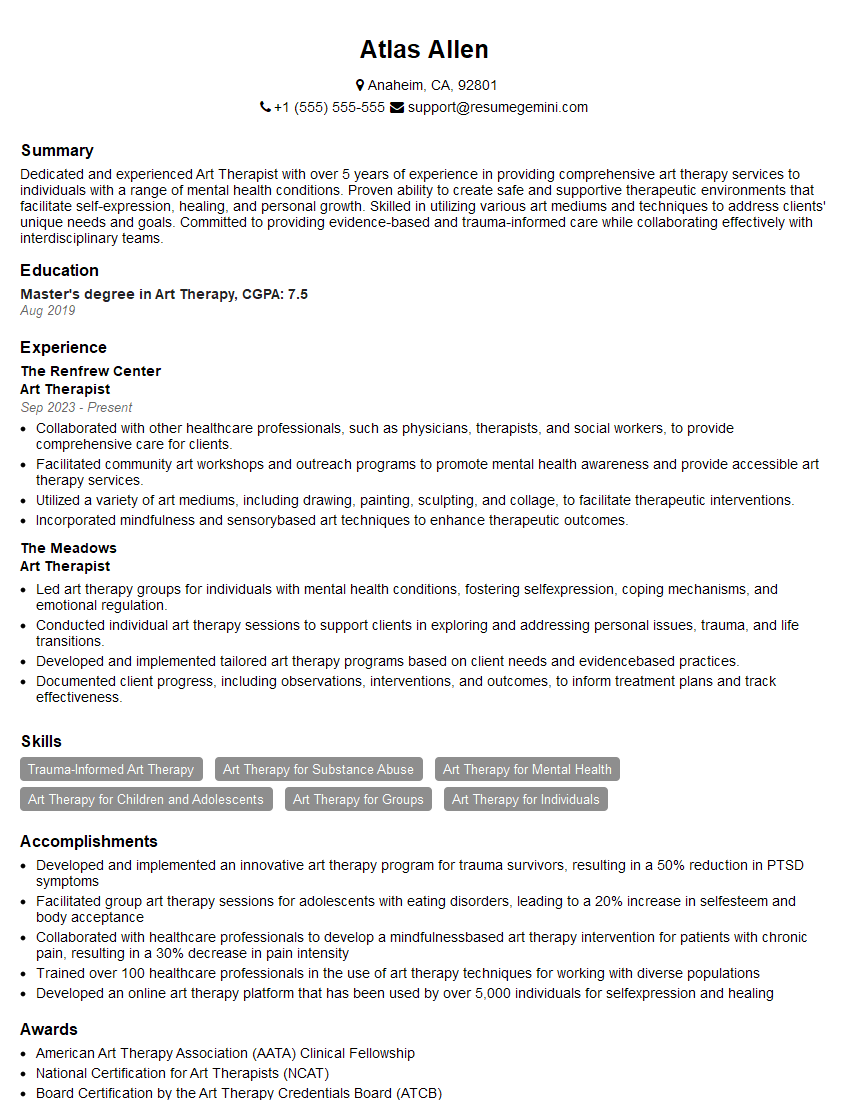
Mastering Art Therapy in Grief and Loss is crucial for career advancement and opens doors to fulfilling and impactful work. To stand out, create a compelling and ATS-friendly resume that showcases your skills and experience effectively. ResumeGemini is a trusted resource that can help you build a professional resume that highlights your unique qualifications. They provide examples of resumes tailored to Art Therapy in Grief and Loss, ensuring your application makes a strong impression. Invest in crafting a resume that accurately reflects your capabilities and helps secure your dream position.
Explore more articles
Users Rating of Our Blogs
Share Your Experience
We value your feedback! Please rate our content and share your thoughts (optional).
What Readers Say About Our Blog
To the interviewgemini.com Webmaster.
Very helpful and content specific questions to help prepare me for my interview!
Thank you
To the interviewgemini.com Webmaster.
This was kind of a unique content I found around the specialized skills. Very helpful questions and good detailed answers.
Very Helpful blog, thank you Interviewgemini team.