Unlock your full potential by mastering the most common Art Therapy in Trauma Recovery interview questions. This blog offers a deep dive into the critical topics, ensuring you’re not only prepared to answer but to excel. With these insights, you’ll approach your interview with clarity and confidence.
Questions Asked in Art Therapy in Trauma Recovery Interview
Q 1. Describe your experience utilizing art therapy modalities to address trauma-related symptoms in adults.
My experience utilizing art therapy modalities with adult trauma survivors centers on creating a safe and validating space for emotional expression. We often begin with less directive approaches like expressive art, where clients freely explore their feelings through various mediums like painting, sculpting, or collage without pressure to explain their work. This allows for nonverbal processing of traumatic experiences which can be particularly helpful when verbalizing is difficult or retraumatizing. As trust develops, I might incorporate more structured techniques such as trauma-informed sandtray therapy, which allows for a symbolic representation of internal landscapes and relational dynamics. For example, a client struggling with feelings of isolation might use the sandtray to create a scene depicting themselves surrounded by dark, empty space. Through discussion of the scene, we could collaboratively explore these feelings of isolation and begin to introduce symbols of connection and support.
Other techniques I employ include guided imagery and art journaling, which can help clients access and process memories in a less overwhelming way. The visual representation offers a tangible externalization of internal experience, making the emotional content more manageable. I tailor my approach to each individual’s needs and preferences, recognizing the diversity of trauma responses and artistic expression.
Q 2. Explain the theoretical frameworks you utilize in your work with trauma survivors.
My work is grounded in several theoretical frameworks, including attachment theory, which helps me understand how early relational experiences impact trauma responses and the therapeutic relationship. I also draw upon trauma-informed principles, emphasizing safety, trustworthiness, choice, collaboration, and empowerment. These principles guide the therapeutic environment and the choice of art modalities. Furthermore, I integrate elements of psychodynamic theory to explore unconscious processes and relational patterns that contribute to trauma symptoms. For instance, repeated themes in a client’s artwork might suggest underlying unresolved conflicts or beliefs. Finally, I utilize narrative therapy to help clients reframe their traumatic experiences and construct more empowering narratives about their lives. By integrating these frameworks, I strive to create a holistic and individualized approach tailored to each survivor’s unique needs.
Q 3. How do you assess the suitability of art therapy for clients with specific trauma histories?
Assessing the suitability of art therapy involves a careful consideration of the client’s specific trauma history, current emotional state, and cognitive abilities. I begin with a thorough clinical interview, assessing the client’s comfort level with self-expression, their preferred communication styles, and any potential sensory sensitivities that might influence their engagement with art materials. For example, clients with PTSD might find certain textures or colors triggering. This information informs my choice of media and therapeutic approach. I also consider the nature of the trauma, including its severity, chronicity, and the client’s coping mechanisms. Clients who have experienced complex trauma may benefit from a gradual introduction to art therapy, beginning with non-threatening activities.
Collaboration is key. I would discuss with the client their experiences with art, identify potential barriers or concerns, and ensure they feel comfortable and in control throughout the process. If a client expresses reluctance or discomfort with certain techniques, I respect their boundaries and explore alternative methods.
Q 4. What are the ethical considerations when using art therapy with traumatized individuals?
Ethical considerations in trauma-informed art therapy are paramount. Maintaining client confidentiality is crucial, especially when artwork depicts sensitive or potentially incriminating content. I emphasize informed consent, ensuring clients understand the therapeutic process, limitations of confidentiality, and potential risks and benefits. I am mindful of power dynamics and strive to create a truly collaborative relationship built on respect and trust. Avoiding retraumatization is essential. I carefully consider the client’s readiness for confronting traumatic memories through art and pace the process accordingly, providing support and coping strategies throughout. It’s equally important to recognize my own limitations. If a client’s needs extend beyond my expertise, I facilitate appropriate referrals to other mental health professionals.
Q 5. Discuss your experience integrating art therapy with other therapeutic modalities.
I frequently integrate art therapy with other modalities, depending on the client’s needs. For instance, I often combine it with Cognitive Behavioral Therapy (CBT) to help clients identify and challenge negative thought patterns related to their trauma. Art can be used to visually represent these patterns and track progress in challenging them. Similarly, I integrate mindfulness techniques into art therapy sessions, encouraging clients to focus on the present moment while engaging with the art-making process. This helps manage anxiety and dissociation, commonly experienced by trauma survivors. In some cases, I collaborate with other therapists, such as psychiatrists or social workers, to provide a comprehensive and integrated treatment plan. This collaborative approach ensures that the client receives the most effective care possible.
Q 6. How do you manage countertransference in the context of trauma-informed art therapy?
Managing countertransference in trauma-informed art therapy is crucial because the intense emotions expressed by clients can evoke strong reactions in therapists. Self-reflection and supervision are key tools. I regularly engage in personal therapy and supervision to process my own emotional responses and ensure I maintain professional boundaries. Paying close attention to my own emotional reactions during sessions allows me to identify patterns and potential sources of countertransference. For example, if I find myself becoming overly protective or emotionally invested in a client’s story, it might signal a need to examine my own emotional responses. This self-awareness allows me to manage my reactions and ensure that the therapeutic focus remains on the client’s needs.
Q 7. Describe your approach to building rapport and trust with trauma survivors.
Building rapport and trust with trauma survivors requires a patient and empathetic approach. I prioritize creating a safe and non-judgmental therapeutic environment. This begins with actively listening, validating the client’s experiences, and avoiding any language that minimizes or dismisses their trauma. I ensure that clients feel in control of the therapeutic process by offering choices regarding the art materials, pace of the session, and topics of discussion. I might start with simple, grounding activities, such as coloring or drawing simple shapes, to foster a sense of calm and control before exploring more emotionally charged topics. I emphasize collaboration rather than direction, viewing the client as a partner in their healing journey. The focus is always on empowering the client to regain a sense of agency and self-efficacy.
Q 8. How do you address safety concerns and potential triggers within art therapy sessions?
Safety is paramount in art therapy for trauma recovery. Before any creative work begins, we establish a collaborative therapeutic relationship built on trust and mutual respect. This involves a thorough intake process to understand the client’s history, triggers, and current coping mechanisms. We co-create a personalized safety plan, which might include identifying potential triggers and developing coping strategies like deep breathing exercises or grounding techniques to use during sessions if needed. The session itself is structured to allow for breaks or changes in activity as needed. For example, if a client starts feeling overwhelmed by a particular image or memory while working on a piece, we’ll pause the art-making process and engage in grounding techniques or a different, less emotionally charged activity. The client is always in control and has the autonomy to stop the session at any point if they feel unsafe.
Example: A client with a history of childhood abuse might find images of hands triggering. We would discuss this beforehand, and if hands appear in their artwork, we’d explore the feelings associated with it at their pace, utilizing coping mechanisms as needed. We might choose different materials, like clay instead of paint, for that specific session to reduce the potential for triggering imagery.
Q 9. What specific art materials or techniques do you find most effective for trauma recovery?
The choice of art materials and techniques is deeply individualized and depends on the client’s needs and preferences. However, certain materials lend themselves particularly well to trauma work. For instance, clay is excellent for sculpting emotions and embodying experiences, allowing for a physical release of tension. Collage can help clients externalize fragmented memories and integrate disparate pieces of their experience into a coherent whole. Sand trays offer a symbolic space for clients to recreate their internal world and explore challenging dynamics in a contained and controlled environment. Expressive writing integrated with art, like using words within a painting or alongside a sculpture, can facilitate deeper emotional processing and narrative integration. These techniques help clients translate their trauma into tangible form, offering a sense of control and mastery over their experiences.
Example: A client struggling with PTSD might find relief through repetitive actions like drawing mandalas or creating intricate patterns. The process of repetition itself can be a grounding experience, calming the nervous system and fostering a sense of stability.
Q 10. How do you help clients process difficult emotions through art-making?
Art-making provides a non-verbal avenue for expressing emotions that might be difficult to articulate verbally. The process itself is therapeutic; the focus on the creative act can be a powerful distraction from overwhelming emotions. Through creating art, clients can externalize internal states, transforming abstract feelings into concrete forms that can be explored and understood. We might use metaphors, symbols, and colors as a starting point for conversation about the client’s experience. The artwork becomes a springboard for discussing difficult feelings in a less direct, less threatening manner.
Example: A client experiencing intense anxiety might create a chaotic, intensely colored abstract painting. Through discussing the color choices, texture, and composition of this artwork, we can explore the nature of their anxiety, gradually identifying patterns and triggers. This allows for a gentler exploration of painful emotions.
Q 11. How do you facilitate the integration of trauma narratives into clients’ artistic expressions?
Integrating trauma narratives into artistic expressions is a gradual process that unfolds with trust and collaboration. I often employ narrative techniques, inviting clients to tell stories alongside their artwork. This might involve labeling parts of their artwork, assigning meanings to colors or symbols, or creating a written narrative accompanying their piece. This approach gives voice to the unspoken and makes the abstract more concrete, fostering a sense of narrative coherence and a more profound understanding of the past’s impact on their present. Metaphorical and symbolic imagery is frequently used to represent complex or overwhelming aspects of the trauma. We would work together to understand those symbols and how they connect to the client’s experience.
Example: A client who experienced childhood neglect might create a landscape painting with barren trees and a dark sky. By naming and discussing those elements within the artwork, we can explore the feeling of loneliness and emotional deprivation they experienced as a child.
Q 12. Explain your understanding of somatic experiencing and its application in art therapy.
Somatic experiencing (SE) is a body-oriented approach to trauma therapy that emphasizes the importance of addressing the physical sensations and memories associated with trauma. In art therapy, we integrate SE by paying close attention to the client’s bodily sensations as they engage in the creative process. We might notice shifts in their breathing, posture, muscle tension, or facial expressions during art-making. These bodily cues provide valuable insights into the client’s emotional state and help us understand how their body is responding to the creative process and the memories it evokes. We then use gentle techniques, like mindful breathing or movement, to help the client regulate their nervous system and process their bodily sensations. Art can serve as a powerful tool for safely expressing these difficult bodily experiences.
Example: A client experiencing anxiety might tense up while working with clay. By noticing this tension, we can guide them to focus on their physical sensations and use mindful breathing to release the tension as they continue to sculpt. The sculpted form itself might reflect this process of releasing and integrating bodily experiences.
Q 13. How do you address dissociation and other trauma-related defenses within your art therapy practice?
Dissociation and other trauma-related defenses are often present in clients who have experienced trauma. In art therapy, we work to gently help clients reconnect with their bodies and their emotions. The creative process can be a bridge to access these dissociated experiences in a safe and controlled environment. For example, starting with simple sensory exercises or focusing on the tactile qualities of the art materials can help re-establish a connection to the present moment. We might use metaphors and imagery to represent fragmented experiences and help the client gradually integrate these disparate pieces into a more cohesive sense of self. We work at the client’s pace, understanding that reconnection requires a foundation of safety and trust.
Example: A client who frequently dissociates might initially find simple activities, such as coloring or drawing simple shapes, more accessible. As they feel safer, we can gradually introduce more complex creative tasks, allowing them to explore their emotions and experiences at a pace that feels manageable.
Q 14. Describe your experience working with clients who have experienced specific trauma types (e.g., PTSD, childhood abuse, neglect).
My experience working with clients who have experienced various trauma types, including PTSD, childhood abuse, and neglect, has shown me the profound impact art therapy can have on their healing journeys. Each trauma type presents unique challenges, and the art therapy approach needs to be adapted to suit the individual’s needs and experiences. For example, clients with PTSD might benefit from techniques that foster a sense of grounding and stability, such as repetitive art activities or working with natural materials. Those who have experienced childhood abuse often need a safe and nurturing therapeutic space to explore their feelings of anger, sadness, and betrayal. In cases of neglect, the focus might be on fostering a sense of self-worth and building a stronger sense of self. The key is to create a collaborative therapeutic relationship that emphasizes trust, safety, and empowerment.
Example: A client with PTSD might find it helpful to create a series of self-portraits reflecting their journey through trauma and recovery. This ongoing project allows for the gradual unfolding of their story and allows for processing and integration.
Q 15. How do you adapt your art therapy approaches to meet the diverse needs of clients with varying cultural backgrounds?
Adapting art therapy to diverse cultural backgrounds is paramount. It’s not simply about offering the same techniques to everyone; it requires deep cultural sensitivity and a genuine understanding of how trauma manifests and is expressed within different cultural contexts. I begin by building a strong therapeutic relationship based on trust and mutual respect, acknowledging the client’s unique experiences and worldview. This includes actively listening to their stories and understanding their perspectives on mental health and healing.
For example, in working with a client from a collectivist culture, I might focus on collaborative art-making activities, emphasizing the shared experience and community aspects of the healing process, rather than solely focusing on individual expression. Conversely, with a client from an individualistic culture, I might utilize techniques that promote self-discovery and personal expression through individual art projects. I also ensure that the materials and imagery I utilize are culturally appropriate and avoid anything that could be unintentionally offensive or triggering.
Moreover, I regularly engage in continuing education to deepen my understanding of diverse cultural practices and trauma responses. This ongoing learning allows me to adapt my approach effectively and ethically, ensuring that the art therapy process is culturally sensitive and respects the client’s values and beliefs.
Career Expert Tips:
- Ace those interviews! Prepare effectively by reviewing the Top 50 Most Common Interview Questions on ResumeGemini.
- Navigate your job search with confidence! Explore a wide range of Career Tips on ResumeGemini. Learn about common challenges and recommendations to overcome them.
- Craft the perfect resume! Master the Art of Resume Writing with ResumeGemini’s guide. Showcase your unique qualifications and achievements effectively.
- Don’t miss out on holiday savings! Build your dream resume with ResumeGemini’s ATS optimized templates.
Q 16. How do you measure the progress and effectiveness of your art therapy interventions?
Measuring progress in art therapy isn’t solely about quantifiable data; it’s about observing nuanced changes in the client’s emotional, behavioral, and creative expression. I employ a multi-faceted approach, combining qualitative and quantitative methods.
- Qualitative Measures: These include observing changes in the client’s artwork (e.g., shifts in color palette, subject matter, and composition), their verbal descriptions of their art, and their overall demeanor during sessions. For instance, a client who initially used dark and muted colors might start incorporating brighter hues, signifying a potential shift towards a more hopeful outlook. Their verbal reflections on their art also provide valuable insights into their emotional processing.
- Quantitative Measures: While less central, standardized scales or questionnaires (like anxiety or depression inventories) can provide a baseline and track changes over time. However, these should be used cautiously, understanding their limitations and cultural context.
- Client Feedback: Regular check-ins with the client are crucial to assess their subjective experience of the therapeutic process and gauge their perceived progress. This collaborative approach empowers the client and ensures the therapy aligns with their goals.
Ultimately, progress is determined through a holistic assessment, integrating these different measures within the context of the client’s unique journey and goals.
Q 17. How do you document your clinical work and maintain client confidentiality?
Maintaining client confidentiality and ethical documentation are cornerstones of my practice. I meticulously document each session, following HIPAA guidelines and relevant state regulations. My documentation includes a concise summary of the session, including the client’s verbal and non-verbal communication, the art-making process, and significant emotional shifts or insights observed. I carefully store all client files in a secure, password-protected electronic system, and physical files are kept in a locked cabinet.
Client artwork is handled with the utmost respect and care. If clients want to keep their artwork, that is their right. If they wish to dispose of it, I will respect their decision. If storage or handling of artwork becomes an issue, we will address the matter collaboratively. Importantly, I always obtain informed consent from my clients regarding the use of their artwork and/or session notes for any purpose, including for supervision, training, or research (always anonymized).
I also engage in regular supervision to ensure I maintain ethical standards and best practices in my documentation and client care.
Q 18. Describe your experience with crisis intervention and its integration into art therapy sessions.
Crisis intervention in art therapy requires immediate responsiveness and a focus on stabilizing the client’s emotional state. My approach integrates art-making techniques to help the client express and process overwhelming emotions. This may involve offering simple, structured art-making activities like freehand drawing or collage to facilitate emotional release and grounding. For instance, if a client is experiencing intense anxiety, I might guide them in a simple breathing exercise combined with creating a calming mandala. The repetitive nature of the mandala can promote a sense of focus and calm.
Safety is paramount during a crisis. If the client presents with an immediate risk of harm to themselves or others, I will immediately initiate appropriate safety procedures, which may involve contacting emergency services or working collaboratively with other mental health professionals. Post-crisis, I work with the client to process the experience and develop coping mechanisms, often utilizing art-based strategies that help them regain a sense of control and stability.
Q 19. What is your approach to working with families and support systems of trauma survivors?
Working with families and support systems is essential in trauma recovery. My approach involves a trauma-informed perspective, recognizing the impact of trauma on the entire family system. I facilitate family sessions, either conjointly or individually, to foster communication, understanding, and support. Art can be a powerful tool for family members to express their feelings and experiences without the pressure of direct verbal confrontation.
For example, I might use family sculpting where family members physically position themselves to represent their relationships and emotional dynamics. This non-verbal approach can reveal underlying tensions and facilitate constructive dialogue. I also teach families basic coping mechanisms and stress-reduction techniques they can use at home to support the trauma survivor. This collaboration aims to create a supportive and healing environment for the entire family system.
Q 20. How do you collaborate with other professionals (e.g., psychiatrists, social workers) in a trauma-informed care setting?
Collaboration is critical in trauma-informed care. I regularly liaise with psychiatrists, social workers, and other professionals involved in the client’s care to ensure a comprehensive and coordinated treatment plan. This involves regular communication, sharing relevant information (with client consent), and participating in case conferences to discuss the client’s progress and adapt the treatment plan as needed.
For example, I might collaborate with a psychiatrist to manage medication, while working with a social worker to address practical challenges the client may face. My role is to provide a unique perspective that leverages the creative process to promote healing and personal growth. By sharing observations from art therapy sessions, I contribute to a more holistic understanding of the client’s journey.
This collaborative approach ensures that the client receives the most appropriate and effective care, benefiting from the expertise of a multidisciplinary team.
Q 21. Describe your experience with art therapy in group settings.
Art therapy in group settings offers a unique opportunity for shared experience and mutual support. I facilitate groups focused on specific trauma-related themes, creating a safe and contained environment where participants can explore their experiences in a non-threatening manner. The group dynamic itself can be a powerful tool for healing, offering a sense of community and validation.
Structure is key in group art therapy. I establish clear ground rules and guidelines to ensure a safe and respectful environment. I carefully consider group composition, ensuring a balance of individual needs and group dynamics. Activities are designed to encourage both individual expression and group interaction. For example, I might start with individual art-making, followed by a sharing circle where participants can reflect on their work and connect with others’ experiences. This gradual progression creates a sense of trust and allows for a safe exploration of shared vulnerabilities. Throughout, I monitor group dynamics, ensuring that all participants feel heard, respected, and supported.
Q 22. How do you create a safe and supportive therapeutic environment for trauma survivors?
Creating a safe and supportive therapeutic environment for trauma survivors is paramount. It’s about building a foundation of trust and empowerment where they feel seen, heard, and validated. This involves several key elements:
- Establishing Boundaries and Confidentiality: Clearly outlining the therapeutic relationship, including confidentiality limits and session structure, provides a sense of predictability and control. This is crucial for those who may have experienced violations of boundaries in the past.
- Empowering the Client: I prioritize collaborative decision-making. The client’s preferences and comfort level guide the pace and direction of therapy. For example, if a client is uncomfortable with a particular medium, we explore alternatives together.
- Trauma-Informed Approach: Recognizing that trauma can affect every aspect of a person’s life, I avoid triggering activities or topics. Sessions are paced gently, focusing on what the client is ready to explore. Triggers are acknowledged and addressed with care.
- Creating a Physically Safe Space: The art therapy room is designed to be calming and comfortable – soft lighting, comfortable seating, and access to calming resources such as aromatherapy or calming music. A sense of privacy and control over the environment is important.
- Building Rapport and Trust: This is an ongoing process built through active listening, empathy, and genuine respect. I create space for the client to share their experiences at their own pace and without judgment.
For instance, I recently worked with a client who experienced domestic violence. We started with simple expressive exercises, focusing on color and texture before moving on to more complex themes related to her trauma. The slow, gradual approach helped build trust and created a foundation of safety.
Q 23. What resources and support systems do you recommend for your clients following art therapy sessions?
Following art therapy sessions, continued support is essential for consolidating progress and preventing relapse. I often recommend a multi-pronged approach:
- Support Groups: Connecting with others who understand their experiences can provide validation and a sense of community. I might suggest specialized groups for trauma survivors or groups focused on specific issues related to their trauma.
- Referral to Other Professionals: Depending on the client’s needs, I may refer them to other mental health professionals, such as psychiatrists for medication management or social workers for practical support.
- Self-Care Strategies: I provide guidance on self-care techniques like mindfulness, meditation, yoga, or journaling, tailored to the individual’s needs and preferences. The art therapy process itself often teaches clients valuable self-soothing skills.
- Educational Resources: Providing clients with information on trauma, coping mechanisms, and available resources helps them feel empowered to take control of their healing journey. This might involve handouts, websites, or books that I specifically select based on their situation.
- Ongoing Check-ins: Regular phone calls or brief check-in sessions after the formal termination of therapy can ensure continued support and address any emerging challenges.
For example, I recently referred a client to a local support group for survivors of childhood sexual abuse after completing individual art therapy sessions. The group offered a safe space for her to connect with others and share her experiences.
Q 24. Explain your understanding of the impact of trauma on brain development and functioning.
Trauma significantly impacts brain development and functioning, particularly in the areas responsible for emotional regulation, memory, and attachment. The experience can lead to alterations in the brain’s stress response system, resulting in heightened anxiety, hypervigilance, and emotional dysregulation. The hippocampus, crucial for memory consolidation, can be negatively affected, leading to fragmented or distorted memories. The amygdala, responsible for processing fear and emotions, becomes hyper-reactive, increasing the likelihood of heightened emotional responses to perceived threats.
For children, exposure to trauma can disrupt the development of crucial neural pathways associated with healthy attachment and emotional regulation. This can lead to difficulties forming secure relationships, experiencing emotional instability, and increased vulnerability to future trauma. Neuroimaging studies show clear evidence of structural and functional changes in the brain due to trauma. In adults, these effects can manifest in various ways, such as PTSD, depression, anxiety disorders, or difficulties in interpersonal relationships.
Understanding this neurobiological impact informs my therapeutic approach. I utilize techniques that gently stimulate neural pathways associated with safety and emotional regulation, such as creating art that embodies positive emotions or memories of safety and connection. The process of creating art itself can be a regulating experience, creating opportunities for healing and self-discovery.
Q 25. How do you approach the termination phase of art therapy with trauma survivors?
The termination phase of art therapy with trauma survivors requires careful planning and sensitivity. It’s not simply about ending sessions, but about supporting clients in consolidating their gains and preparing for life after therapy. This process often involves:
- Gradual Reduction of Sessions: We collaboratively create a phased approach to reduce the frequency of sessions over time. This allows the client to adjust gradually and avoid feeling abandoned.
- Reviewing Progress and Accomplishments: We revisit the client’s initial goals and review the progress they’ve made, highlighting their strengths and resilience. This fosters a sense of accomplishment and self-efficacy.
- Developing Coping Strategies for Relapse Prevention: We collaboratively develop concrete strategies the client can use to manage future challenges. Art-based coping mechanisms, like creating a ‘safe space’ drawing or a series of calming images, can be particularly effective.
- Addressing Anticipatory Grief: The ending of therapy can evoke sadness or anxiety. Creating space to explore these feelings through art-making is vital for successful transition.
- Referral and Ongoing Support: If needed, I help the client find appropriate ongoing support such as support groups or other mental health professionals.
For example, with one client, we created a collaborative art piece symbolizing her journey, which she could keep as a reminder of her strength and progress. This transition provided a sense of closure and helped her feel empowered to navigate her future.
Q 26. Describe your experience in supervising art therapy students or interns.
Supervising art therapy students or interns is a rewarding and crucial aspect of my professional practice. My approach is centered on providing a supportive yet challenging environment focused on ethical practice, clinical skill development, and self-care. Supervision sessions include:
- Case Conceptualization and Treatment Planning: I guide students in developing comprehensive case conceptualizations, incorporating trauma-informed perspectives and tailoring treatment plans to individual needs.
- Process Recording and Reflection: I encourage students to document their sessions thoroughly and engage in reflective practice, analyzing their own interventions and their impact on clients.
- Ethical Considerations and Boundaries: I emphasize maintaining ethical boundaries and adhering to professional standards, providing guidance on navigating complex ethical dilemmas.
- Self-Care and Countertransference: We discuss the emotional demands of working with trauma survivors and develop strategies for maintaining well-being and addressing countertransference issues.
- Observation and Feedback: I provide regular feedback based on observations of their sessions, both positive and constructive, ensuring their continuous professional development.
I find that regular supervision, structured around a blend of case discussion, theoretical exploration, and experiential exercises, significantly enhances the skills and confidence of the students. The focus remains on fostering ethical, competent and compassionate art therapists.
Q 27. How do you maintain your own well-being while working with clients who have experienced trauma?
Maintaining my own well-being is crucial when working with trauma survivors. Compassion fatigue and vicarious traumatization are very real risks. I prioritize several self-care strategies:
- Regular Supervision: I engage in regular supervision with a seasoned professional to process my experiences, discuss challenges, and develop effective coping strategies. This is a vital space to discuss countertransference and other professional challenges.
- Mindfulness and Self-Reflection: Practicing mindfulness techniques, journaling, or engaging in other self-reflective practices helps me process emotions and maintain emotional balance.
- Setting Boundaries: I set clear boundaries between my personal and professional life, protecting my time and energy. This includes limiting the amount of emotionally intense work I undertake in a given period.
- Engaging in Activities That Restore Me: Spending time in nature, pursuing hobbies, and nurturing my relationships are essential components of my self-care routine. These activities provide replenishment and prevent burnout.
- Seeking Support: I actively cultivate a strong support system of colleagues, friends, and family who understand the demands of my work and offer understanding and encouragement.
It’s not a matter of ignoring the intense emotions involved in this work, but rather of developing healthy ways to process them and ensure that my emotional reserves remain sufficient to continue supporting my clients effectively.
Key Topics to Learn for Art Therapy in Trauma Recovery Interview
- Trauma-Informed Care Principles: Understanding the impact of trauma on the brain and nervous system, and how to adapt therapeutic approaches accordingly.
- Therapeutic Modalities in Art Therapy: Proficiency in various art mediums and their application in processing trauma, including expressive art techniques, sand tray therapy, and narrative art therapy.
- Assessment and Diagnosis: Knowledge of relevant diagnostic criteria (e.g., PTSD, complex trauma) and utilizing art-based assessments to understand client needs and progress.
- Ethical Considerations: Addressing confidentiality, boundaries, and potential vicarious traumatization in the therapeutic relationship.
- Case Conceptualization and Treatment Planning: Developing individualized treatment plans based on client’s specific trauma history and therapeutic goals.
- Practical Application: Demonstrating experience with working with diverse trauma populations (e.g., children, adults, specific trauma types) and ability to adapt techniques to individual needs.
- Group Art Therapy in Trauma Recovery: Understanding the dynamics and benefits of group art therapy for trauma survivors, and managing group processes effectively.
- Collaboration and Referral Networks: Knowledge of when to refer clients to other professionals (psychiatrists, social workers, etc.) and building effective collaborative relationships.
- Self-Care and Professional Development: Strategies for managing vicarious trauma and maintaining professional well-being; commitment to ongoing professional development in the field.
Next Steps
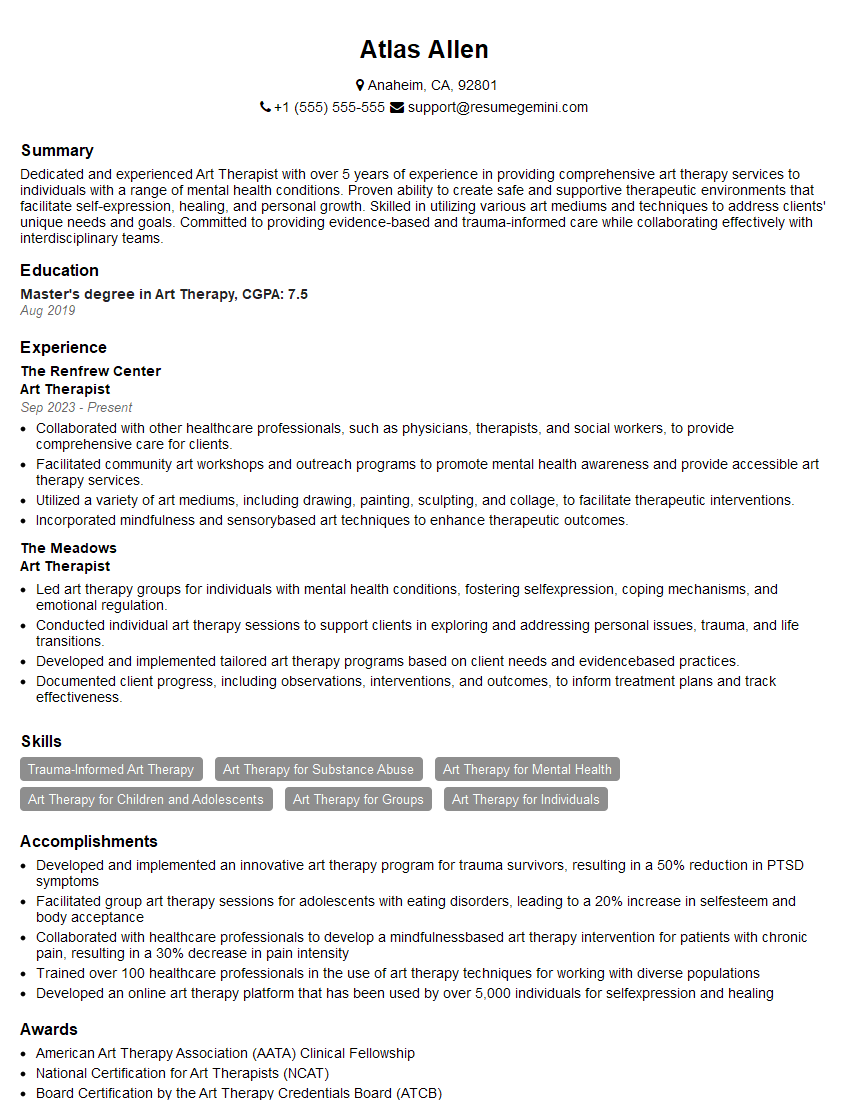
Mastering Art Therapy in Trauma Recovery opens doors to fulfilling and impactful careers, allowing you to make a significant difference in the lives of trauma survivors. A strong resume is crucial for showcasing your skills and experience to potential employers. Creating an ATS-friendly resume is key to maximizing your job prospects. We highly recommend using ResumeGemini, a trusted resource, to build a professional and impactful resume that highlights your unique qualifications. ResumeGemini provides examples of resumes tailored to Art Therapy in Trauma Recovery to help you get started.
Explore more articles
Users Rating of Our Blogs
Share Your Experience
We value your feedback! Please rate our content and share your thoughts (optional).
What Readers Say About Our Blog
To the interviewgemini.com Webmaster.
Very helpful and content specific questions to help prepare me for my interview!
Thank you
To the interviewgemini.com Webmaster.
This was kind of a unique content I found around the specialized skills. Very helpful questions and good detailed answers.
Very Helpful blog, thank you Interviewgemini team.