Are you ready to stand out in your next interview? Understanding and preparing for Asphalt Paving and Compaction interview questions is a game-changer. In this blog, we’ve compiled key questions and expert advice to help you showcase your skills with confidence and precision. Let’s get started on your journey to acing the interview.
Questions Asked in Asphalt Paving and Compaction Interview
Q 1. Describe the different types of asphalt binders and their applications.
Asphalt binders are the glue that holds asphalt pavement together. They’re crucial for the mixture’s performance and longevity. Different binders offer varying properties, leading to specialized applications.
- PG (Performance Graded) Binders: These are the most common type, categorized by their high and low temperature performance grades (e.g., PG 64-22). The numbers represent the minimum temperature at which the binder remains sufficiently stiff (high temp) and the maximum temperature at which it remains sufficiently viscous (low temp). A PG 64-22 binder is suitable for areas with hot summers and cold winters. Selecting the right PG grade is vital; using an inappropriate grade can lead to cracking in cold weather or rutting in hot weather.
- SBS (Styrene-Butadiene-Styrene) Modified Binders: These binders are modified with polymers to enhance their performance, particularly their flexibility and resistance to cracking at low temperatures. They’re ideal for areas with severe cold climates or where high-flexibility pavements are needed, such as around bridges.
- Polymer-Modified Binders: This is a broader category encompassing various polymer types like SBS, SBR (Styrene-Butadiene Rubber), and others. Each polymer provides unique properties, enhancing aspects like durability, fatigue resistance, and rutting resistance. The choice depends on specific project requirements and environmental conditions.
- RAP (Reclaimed Asphalt Pavement) Binders: These binders are recovered from existing asphalt pavements during recycling projects. Using RAP reduces the need for virgin asphalt, contributing to sustainability. However, careful quality control is crucial as the properties of RAP binders can vary.
For example, a highway in a northern climate might utilize an SBS-modified binder to withstand freeze-thaw cycles, while a parking lot in a hot, arid climate might use a standard PG binder with a higher high-temperature grade.
Q 2. Explain the importance of proper compaction in asphalt paving.
Proper compaction is absolutely vital in asphalt paving. It’s the key to achieving a dense, strong, and durable pavement structure. Insufficient compaction leads to a weak pavement prone to early failure, while over-compaction can damage the pavement’s structural integrity. Think of it like making a sandcastle; you need to pack the sand firmly to make it stable and prevent it from collapsing.
Proper compaction ensures:
- Increased Density: A denser pavement is less susceptible to water infiltration, which prevents damage from freeze-thaw cycles and reduces the risk of potholes.
- Improved Stability: A well-compacted pavement resists deformation under traffic loads, preventing rutting and ensuring a smooth driving surface.
- Enhanced Strength and Durability: Greater density translates to a stronger pavement that can withstand heavier loads and longer service life.
- Better Resistance to Rutting and Cracking: Proper compaction minimizes the risk of these common pavement distresses.
Q 3. What are the common methods used for asphalt compaction?
Several methods are used for asphalt compaction, each with its strengths and applications.
- Static Rollers: These are heavy rollers that apply static pressure to compact the asphalt. They’re excellent for achieving high density but may cause some surface irregularities if not operated correctly.
- Vibratory Rollers: These rollers use vibrations in addition to static weight to compact the asphalt. The vibrations help to break down air voids and improve density, especially in thicker lifts. They are highly efficient but might need careful control to avoid over-compaction.
- Pneumatic Rollers: These rollers use inflated tires to compact the asphalt. The pressure distribution is more even compared to steel-wheeled rollers, making them suitable for thin lifts and ensuring a smoother surface finish. They are particularly beneficial for initial breakdown compaction of the asphalt layer.
- Combination Rollers: These combine static and vibratory compaction capabilities in a single machine, offering versatility and efficiency.
The choice of method depends on factors like lift thickness, asphalt mix properties, temperature, and project requirements. Often, a combination of methods is used for optimal results. For example, a pneumatic roller might be used for initial breakdown, followed by a vibratory roller for intermediate compaction, and finally, a static roller for finishing.
Q 4. How do you determine the optimal compaction level for a given asphalt mix?
Determining the optimal compaction level involves a combination of field testing and laboratory analysis. The goal is to achieve the specified density without causing damage to the pavement structure.
Key methods include:
- Nuclear Density Gauge (NDG): This device uses radiation to measure the density of the compacted asphalt in the field. It’s a rapid and non-destructive method, providing real-time feedback during compaction.
- Core Samples: Cores are extracted from the compacted pavement and their density is measured in a laboratory. This provides a more accurate assessment but is a destructive method.
- Air Voids Measurement: This measures the percentage of air voids remaining in the compacted asphalt. Specifications typically define an acceptable range for air voids.
- Marshall Stability Test: This laboratory test helps determine the optimum asphalt content for a given mix, influencing compaction requirements.
The project specifications will usually specify the target density or air void content. The contractor monitors compaction levels using the NDG and adjusts the compaction effort as necessary to meet the specifications. If the density is too low, more passes are needed. If it’s too high, it indicates potential over-compaction, requiring changes to the compaction equipment or process.
Q 5. What are the effects of improper compaction on asphalt pavement performance?
Improper compaction has significant negative impacts on pavement performance, leading to premature failure and increased maintenance costs.
- Increased Rutting: Insufficient compaction leads to a weak pavement structure that deforms under traffic loads, resulting in rutting (formation of depressions in the wheel paths).
- Increased Cracking: Poor compaction increases the susceptibility to cracking, especially thermal cracking due to temperature variations and fatigue cracking due to repeated traffic loading.
- Reduced Durability: A less dense pavement is more vulnerable to water infiltration, leading to damage from freeze-thaw cycles and accelerated deterioration.
- Shortened Service Life: The combination of rutting, cracking, and water damage significantly shortens the pavement’s lifespan, requiring costly and disruptive rehabilitation work sooner than anticipated.
- Potholes: Water infiltration through insufficiently compacted asphalt leads to weakening and eventual pothole formation.
Consider a poorly compacted road: it’ll quickly show signs of wear and tear, with ruts appearing in high-traffic areas and cracks developing in various sections. This would lead to discomfort for drivers and potentially dangerous conditions, needing frequent patching and eventually a full reconstruction, costing significantly more than initially properly compacting the asphalt.
Q 6. Describe the different types of asphalt paving equipment and their functions.
A variety of equipment is involved in asphalt paving, each performing a specific function in the process.
- Asphalt Pavers: These machines receive hot asphalt mix from trucks and spread it evenly onto the prepared base. They also compact the mix to a certain degree.
- Static Rollers: These heavy rollers apply static pressure to compact the asphalt, achieving high density, particularly for final compaction.
- Vibratory Rollers: These use vibrations in addition to weight to achieve high density in a relatively short time. They are often used for intermediate compaction.
- Pneumatic Rollers: These rollers use inflated tires to provide even pressure distribution, ideal for thin lifts and achieving smooth surface finish, especially in initial breakdown compaction.
- Tandem Rollers: These rollers have two smooth steel rollers and are particularly effective for achieving a very smooth surface finish.
- Finishing Machines: These are used to create the final surface texture and smoothness of the asphalt.
- Support Equipment: This includes asphalt trucks, graders for preparing the base, and sweepers to clean up excess material.
Q 7. Explain the importance of maintaining asphalt paving equipment.
Maintaining asphalt paving equipment is critical for ensuring efficient operation, maximizing pavement quality, and minimizing downtime. Regular maintenance reduces repair costs, extends equipment life, and promotes safety. Think of it like regular car maintenance – preventative measures are far less costly than dealing with major breakdowns.
Key aspects of maintenance include:
- Regular Inspections: Daily pre-operational checks for fluid levels, tire pressure, and general wear are essential. Regular more in-depth inspections reveal problems early on.
- Preventative Maintenance: Following the manufacturer’s recommended maintenance schedule is crucial. This includes oil changes, filter replacements, and other routine tasks.
- Lubrication: Proper lubrication of moving parts prevents excessive wear and tear.
- Repair and Replacement: Addressing any wear or damage promptly prevents minor issues from becoming major problems.
- Operator Training: Proper operator training ensures that the equipment is used correctly and efficiently, minimizing wear and tear.
Neglecting maintenance can lead to costly repairs, equipment breakdowns during crucial project phases, and potentially compromised pavement quality. The investment in maintenance is a small price to pay compared to the consequences of inadequate upkeep.
Q 8. How do you troubleshoot common problems with asphalt paving equipment?
Troubleshooting asphalt paving equipment involves a systematic approach. It starts with identifying the specific problem – is it a mechanical issue, a problem with the material flow, or a performance issue? Let’s say your paver isn’t laying down asphalt smoothly. You’d first check the obvious: is there enough asphalt in the hopper? Are the augers functioning correctly? Are the screed adjustments appropriate for the desired thickness?
If the problem persists, you’d move to more in-depth diagnostics. This could involve checking hydraulic fluid levels and pressures, inspecting belts and chains for wear, and testing electrical components. A malfunctioning sensor could be throwing off the entire system. For example, a faulty temperature sensor might lead to inconsistent asphalt flow and mat quality. Always consult the equipment’s manual and consider contacting the manufacturer for specific troubleshooting guides or parts. Documentation is critical – keeping records of maintenance, repairs, and any problems encountered helps you identify patterns and potential future issues.
- Step 1: Identify the problem.
- Step 2: Check the obvious (material levels, basic functionality).
- Step 3: Perform in-depth checks (hydraulic system, electrical components, sensors).
- Step 4: Consult manuals and manufacturers.
- Step 5: Keep detailed records.
Q 9. What are the different types of asphalt mixes and their properties?
Asphalt mixes are broadly classified based on their aggregate type, binder content, and desired properties. Common types include:
- Hot Mix Asphalt (HMA): This is the most common type, requiring heating before placement. Different HMA types exist, varying in aggregate gradation (the distribution of particle sizes) and binder content. For example, a dense-graded mix is suitable for high-volume roads due to its strength and durability, while an open-graded mix is used for drainage purposes, with larger gaps between aggregates.
- Stone Matrix Asphalt (SMA): This mix uses a high percentage of larger-sized aggregates and a specific type of asphalt binder to create a highly stable, durable pavement suitable for high-stress applications.
- Porous Asphalt (PA): Designed for noise reduction and improved drainage, this mix has a higher void content than dense-graded mixes. This requires carefully selecting aggregates and binder.
- Cold Mix Asphalt: Unlike HMA, this requires no heating during placement. Used for temporary repairs or less demanding applications.
Each mix exhibits different properties, including strength, stiffness, durability, water resistance, and workability. The selection depends greatly on the project requirements.
Q 10. Explain the process of selecting the appropriate asphalt mix for a given project.
Selecting the right asphalt mix involves considering several factors: traffic volume and type (heavy trucks necessitate stronger mixes), environmental conditions (freeze-thaw cycles require mixes with superior resistance), and project budget. The process usually involves:
- Traffic Analysis: Determine the expected daily traffic volume, axle loads, and traffic mix (cars, trucks, buses). This dictates the strength requirements of the pavement.
- Climate Assessment: Evaluate local weather conditions, including temperature fluctuations, rainfall, and freeze-thaw cycles. This impacts mix design for durability and longevity.
- Material Availability: Consider the local availability of aggregates and asphalt binder, as this influences both cost and logistical feasibility.
- Laboratory Testing: Samples of potential mixes are created and tested to evaluate their strength, stability, and other properties under simulated real-world conditions. This may include Marshall Stability tests or other methods depending on local standards.
- Cost-Benefit Analysis: The different mix designs and their predicted lifespan are compared, balancing initial cost with long-term maintenance savings.
For example, a high-traffic highway would require a dense-graded HMA with high stability, whereas a low-traffic residential street might use a less expensive and less durable mix.
Q 11. How do you ensure the quality of asphalt materials used in a project?
Ensuring asphalt material quality relies on strict quality control at every stage, from material sourcing to placement. This involves:
- Source Qualification: Suppliers must meet stringent standards, providing certified test results demonstrating aggregate gradation, binder properties, and other crucial parameters. Regular auditing of suppliers is essential.
- In-Plant Quality Control: At the asphalt plant, regular testing of the mix is performed to maintain consistent properties according to the design specifications. This includes checks on temperature, mix proportions, and aggregate content.
- On-Site Testing: Samples of the placed asphalt are tested during construction to verify density and other properties. Nuclear density gauges are commonly used to measure the in-place density. Visual inspection also plays a vital role in detecting defects like segregation or voids.
- Regular Maintenance and Calibration of Equipment: The asphalt plant equipment and testing apparatus must be regularly maintained and calibrated to ensure accuracy and reliability of the testing results.
Using proper Quality Assurance/Quality Control (QA/QC) procedures and detailed documentation is crucial for demonstrating compliance and maintaining project quality.
Q 12. Describe the different types of pavement structures and their design considerations.
Pavement structures vary based on the traffic load and subgrade conditions. Common types include:
- Flexible Pavements: These use asphalt concrete as the primary structural layer. They are designed to distribute loads through their layers, making them more adaptable to subgrade settlement. Layers may include a base course, subbase course, and sometimes a subgrade stabilization layer, along with surface course(s).
- Rigid Pavements: These employ Portland cement concrete as the main structural component. They are extremely strong but less tolerant of subgrade movement. A base course may still be used beneath the concrete slab.
- Composite Pavements: These incorporate both asphalt and concrete layers to combine the advantages of both materials, utilizing the flexibility of asphalt and strength of concrete for load support.
Design considerations include the thickness of each layer, the material properties of each layer, the subgrade strength, and the expected traffic load. Design methods, such as the AASHTO (American Association of State Highway and Transportation Officials) design method, are used to determine the appropriate layer thicknesses based on these factors. Proper drainage is critical in all pavement structures to prevent water damage.
Q 13. Explain the importance of proper mix design in asphalt paving.
Proper mix design is paramount for asphalt paving because it directly impacts the pavement’s performance, durability, and cost-effectiveness. A poorly designed mix may lead to early cracking, rutting, potholes, and premature failure, necessitating costly repairs and maintenance. A well-designed mix will have the optimal balance of strength, stability, durability, and workability.
A good mix design ensures the right proportion of aggregates (varying sizes for strength and void filling) and binder (asphalt cement) to achieve the desired properties. The laboratory testing, discussed earlier, determines the optimal mix to meet the project specifications. Careful selection of aggregates, considering their source and properties, is also critical. The wrong aggregates could lead to issues such as segregation, stripping (loss of bond between aggregate and binder), or premature aging of the mix.
Q 14. What are the key factors to consider when designing an asphalt pavement?
Designing an asphalt pavement requires careful consideration of various interconnected factors:
- Traffic Loading: The volume, type, and weight of expected traffic directly influence the pavement thickness and material selection. Heavier loads demand thicker, stronger pavements.
- Environmental Conditions: Climate factors such as temperature extremes, rainfall, and freeze-thaw cycles impact the mix design and pavement structure. Mixes must resist cracking and weathering.
- Subgrade Conditions: The strength and stability of the underlying soil affect the pavement’s performance and structural design. Weak subgrades necessitate additional layers for support.
- Drainage: Efficient drainage is vital to prevent water damage. This involves considering the pavement cross-slope, the use of drainage layers, and the surrounding topography.
- Construction Considerations: The chosen materials and design must be compatible with available construction equipment and techniques. Mix design also needs to consider workability for ease of placement and compaction.
- Budget and Lifecycle Costs: The design must balance initial construction costs with long-term maintenance and repair expenses. A more durable pavement initially might reduce long-term costs.
A comprehensive design process uses engineering principles and industry best practices to develop a cost-effective and durable pavement structure that meets the specific project needs.
Q 15. How do you control the temperature of asphalt during paving operations?
Controlling asphalt temperature during paving is crucial for achieving optimal compaction and long-term pavement performance. Asphalt’s viscosity is highly temperature-dependent; it needs to be hot enough to flow and compact properly but not so hot that it prematurely hardens or damages the surrounding area. We use a combination of methods to manage this:
Accurate Plant Production Temperature: The asphalt mixing plant meticulously controls the temperature of the mix before it’s transported to the paving site. Sophisticated sensors and controls ensure the mix is at the specified temperature range, typically between 250°F and 350°F (121°C and 177°C), depending on the type of asphalt and aggregate used.
Efficient Transportation: We use insulated trucks to minimize heat loss during transport. The shorter the haul distance, the better the temperature control. Tracking the truck’s arrival time is also important to ensure timely paving.
Real-time Monitoring at the Paving Site: Infrared thermometers are used continuously to measure the temperature of the asphalt as it’s laid. This allows for immediate adjustments in the paving process if temperatures stray outside the target range. For instance, if the asphalt cools too quickly, the paver speed might be adjusted to maintain a consistent work rate.
Adjusting Paving Rate and Density: The speed of the paver can affect the temperature of the laid asphalt. A slower paving rate allows more time for the asphalt to cool, potentially requiring adjustments to the initial mixing temperature. Similarly, achieving optimum compaction plays a crucial role in keeping the temperature stable and ensuring its performance.
Imagine baking a cake: if the oven temperature is too low, the cake won’t cook properly; if it’s too high, it’ll burn. Asphalt paving is similar – precise temperature control is key to achieving a quality product.
Career Expert Tips:
- Ace those interviews! Prepare effectively by reviewing the Top 50 Most Common Interview Questions on ResumeGemini.
- Navigate your job search with confidence! Explore a wide range of Career Tips on ResumeGemini. Learn about common challenges and recommendations to overcome them.
- Craft the perfect resume! Master the Art of Resume Writing with ResumeGemini’s guide. Showcase your unique qualifications and achievements effectively.
- Don’t miss out on holiday savings! Build your dream resume with ResumeGemini’s ATS optimized templates.
Q 16. What are the common quality control tests performed on asphalt pavements?
Quality control for asphalt pavements involves a rigorous testing program at various stages – from the initial materials to the finished pavement. Key tests include:
Asphalt Mixture Design Tests: These determine the optimal mix proportions of aggregates, asphalt binder, and additives to achieve desired properties. Tests like the Marshall Mix Design, Superpave Gyratory Compactor (SGC) and Hamburg Wheel Tracking test are used. These help determine the appropriate mix for the project.
In-place Density Testing: Nuclear density gauges are employed to measure the density of the compacted asphalt layer. This ensures the specified density is achieved, which is vital for strength and durability. Low density indicates inadequate compaction, reducing performance.
Air Voids Test: This test measures the percentage of air voids in the compacted asphalt. Air voids affect the pavement’s permeability to water, strength, and resistance to cracking. High air voids indicate poor compaction.
Thickness Measurements: Measuring the thickness of each asphalt layer verifies that the design specifications are met. Inconsistent thicknesses can weaken the pavement structure.
Rutting and Cracking Assessments: Post-construction, regular inspections are carried out to assess the pavement’s resistance to rutting (permanent deformation under load) and cracking. This helps in identifying potential maintenance needs.
These tests provide a holistic view of pavement quality, helping to ensure the longevity and performance of the asphalt surface.
Q 17. How do you interpret the results of asphalt quality control tests?
Interpreting asphalt quality control test results requires an understanding of the acceptable limits defined in the project specifications. We typically compare the test results to these established limits and investigate any deviations. For example:
Low density: Indicates poor compaction and may require additional rolling or investigation into the causes. We would then adjust the compaction process, and may re-compact portions of the pavement if necessary.
High air voids: Suggests inadequate compaction or an improperly designed mix. This might necessitate adjustments to the mix design or compaction techniques to reduce the air voids.
Excessively high rut depth: Signals a weakness in the asphalt’s resistance to deformation. This could be due to a poor mix design, inadequate compaction, or heavy traffic loads, requiring remedial action.
Presence of cracks: Indicates structural issues or possible material defects, which would necessitate repair or further investigation into the cause of cracking. This might include evaluating the subgrade, base course, and binder quality.
These interpretations guide corrective actions to bring the asphalt to specification. Detailed records of the tests and any remedial actions are meticulously maintained for future reference and analysis.
Q 18. Describe your experience with different types of asphalt paving projects.
My experience encompasses a wide range of asphalt paving projects, including:
Highway Construction: I’ve worked on numerous state and interstate highway projects, involving large-scale paving operations with stringent quality control measures. This involved complex logistics and coordination with multiple contractors.
Airport Runways: These projects demand the highest levels of precision and quality due to the safety-critical nature of the application. I was involved in ensuring the highest standards of smoothness and durability were met.
Parking Lots and Driveways: These projects often involve smaller-scale paving but with equally important attention to detail and efficient completion. Understanding client needs is paramount in these projects.
Residential Streets: This requires managing the unique challenges of working in densely populated areas while adhering to noise and traffic control regulations. Community engagement and timely completion are crucial aspects.
Each project presents unique challenges regarding material selection, site conditions, and environmental factors. My experience has provided me with diverse problem-solving skills to address them efficiently and effectively.
Q 19. How do you manage the risks associated with asphalt paving projects?
Managing risks in asphalt paving projects requires proactive planning and mitigation strategies. Key risks and their management include:
Weather Delays: Rainfall can significantly impact paving operations. We mitigate this by utilizing weather forecasts, having contingency plans, and choosing optimal working windows. This often includes adjusting the project schedule based on weather predictions.
Material Shortages: We work closely with suppliers to secure material deliveries in advance, mitigating the risk of delays caused by supply chain disruptions. We also have backup supplier arrangements to avoid project standstills.
Equipment Malfunctions: Regular equipment maintenance and scheduled inspections minimize the chances of breakdowns. We also have backup equipment available to address unforeseen failures. Ensuring proper training and certified operators are available helps as well.
Safety Hazards: Implementing strict safety protocols, providing comprehensive training to all personnel, and using appropriate personal protective equipment (PPE) significantly reduce workplace accidents.
Cost Overruns: Detailed budgeting, regular cost tracking, and efficient project management help prevent significant cost overruns. We implement change management procedures to track and approve modifications to the project.
By identifying potential risks early and implementing effective mitigation plans, we can minimize disruptions and ensure project success.
Q 20. Explain your experience with safety procedures in asphalt paving operations.
Safety is paramount in asphalt paving operations. Our safety procedures encompass:
Pre-Job Safety Meetings: These meetings cover site-specific hazards, emergency procedures, and the use of PPE. This ensures everyone is aware of potential risks before work commences.
Personal Protective Equipment (PPE): All personnel are required to wear appropriate PPE, including hard hats, safety glasses, high-visibility clothing, and safety boots. The proper use of safety harness equipment is also important.
Traffic Control: Safe traffic management is implemented to protect both workers and the public. This includes flaggers, signage, and appropriate lane closures. We always obtain the necessary permits for road closures.
Emergency Response Plan: A detailed emergency response plan outlines procedures for dealing with accidents, injuries, or equipment malfunctions. First aid training and emergency contact information are readily available.
Regular Safety Inspections: We regularly inspect the worksite for potential hazards, and address any safety concerns immediately. This proactive approach maintains the workplace’s safe environment.
Our commitment to safety isn’t just a policy; it’s a cultural value that permeates all aspects of our operations. We maintain detailed records of safety training and incidents.
Q 21. How do you ensure the timely completion of asphalt paving projects?
Ensuring timely project completion requires a multi-faceted approach:
Detailed Project Planning: We start with thorough planning, including realistic scheduling, resource allocation, and clear task assignments. This ensures we have a roadmap to follow.
Effective Communication: Maintaining open communication amongst team members, subcontractors, and clients is crucial. Regular progress meetings ensure everyone is on the same page and problems are addressed promptly.
Efficient Resource Management: Optimizing the use of equipment, materials, and labor is critical. We prioritize tasks and ensure the right resources are available at the right time.
Monitoring Progress: Regular monitoring of progress against the schedule allows for timely identification and resolution of any potential delays. We use project management software to track our performance and alert us to any issues.
Risk Management: As discussed earlier, proactively addressing potential risks like weather delays and material shortages is crucial for timely completion. Having contingency plans allows us to minimize the impact of unforeseen problems.
Timely completion isn’t just about meeting deadlines; it’s about minimizing disruption, maximizing efficiency, and ensuring the client’s satisfaction. We utilize critical path method and other project scheduling techniques to ensure timely project completion.
Q 22. How do you manage conflicts with stakeholders in asphalt paving projects?
Managing stakeholder conflicts in asphalt paving projects requires proactive communication and a collaborative approach. It’s all about understanding everyone’s needs and finding solutions that satisfy, or at least mitigate, conflicting priorities. I begin by establishing clear communication channels from the project outset – regular meetings, email updates, and a dedicated point of contact for each stakeholder group. This transparency is key.
For example, if a homeowner is concerned about noise levels during night work, I wouldn’t simply dismiss their concerns. Instead, I’d explore options like adjusting the work schedule, implementing noise reduction techniques, or offering compensation for any inconvenience. Similarly, if there’s a disagreement between the client and the subcontractor regarding payment terms, I would mediate, emphasizing mutual respect and the importance of a completed project. I always prioritize finding a mutually agreeable solution through negotiation and compromise, and if necessary, I escalate the issue to higher management for further resolution only after exhausting all other options.
Ultimately, strong communication and a willingness to find common ground are critical in resolving conflicts and fostering positive relationships with all project stakeholders. Building trust early on is an investment that pays dividends throughout the project lifecycle.
Q 23. What is your experience with different types of compaction equipment?
My experience encompasses a wide range of compaction equipment, from the smaller, more maneuverable rollers ideal for smaller projects and confined spaces to the heavy-duty models necessary for large-scale highway construction. I’m proficient in operating and maintaining various types, including:
- Vibratory rollers: These are particularly effective at compacting granular base materials and asphalt pavements. Their high frequency vibrations ensure excellent density. I’ve extensively used both tandem and single-drum vibratory rollers on diverse projects.
- Static rollers: These are used for initial compaction and are often employed in tandem with vibratory rollers. They’re excellent for smoother surfaces and avoiding over-compaction.
- Pneumatic rollers: These utilize air-filled tires to compact the asphalt, ideal for achieving a uniform surface texture. Their effectiveness depends heavily on tire pressure adjustments, which I have mastered through years of experience.
- Combination rollers: These combine vibratory and static drums, offering versatility across different stages of compaction. This provides considerable efficiency and cost savings by streamlining the process.
My experience extends to understanding the specific applications of each type of equipment and the factors that influence selection, such as soil type, layer thickness, and project specifications. I always ensure that the chosen equipment matches the project’s demands.
Q 24. Describe the proper techniques for operating compaction equipment.
Proper compaction equipment operation is crucial for creating a durable and long-lasting asphalt pavement. It’s not simply about running the machine; it’s about understanding the material’s properties and achieving optimal density without damaging the pavement. My approach follows a structured process:
- Pre-operation checks: This includes inspecting the machine for any mechanical faults, ensuring sufficient fuel and fluids, and checking tire pressures (for pneumatic rollers). Safety is paramount, and I always prioritize this step.
- Compaction passes: Overlapping passes are crucial for uniform density. I adjust the overlap based on the roller’s width and the material’s characteristics. The number of passes depends on the required density, which is usually specified in the project plans.
- Speed control: Maintaining a consistent speed is essential to avoid uneven compaction. Speed is adjusted based on material type, layer thickness, and roller type. Too fast and you won’t achieve proper density; too slow and you risk damaging the surface.
- Temperature considerations: Asphalt’s temperature significantly affects its compactability. Hotter asphalt requires faster rolling speeds and fewer passes, while cooler asphalt requires slower speeds and more passes. I’m experienced in adjusting my technique based on real-time temperature monitoring.
- Material observation: Throughout the process, I meticulously observe the material’s behavior, looking for any signs of segregation, rutting, or other imperfections that may indicate improper compaction. Corrective measures are implemented promptly.
Proper techniques are not just about following procedures; they’re about anticipating and reacting to real-time conditions. Experience allows for making informed decisions that ensure optimal density and a high-quality finish.
Q 25. How do you ensure the safety of personnel during asphalt paving operations?
Ensuring personnel safety during asphalt paving is my top priority. It’s not simply a matter of compliance; it’s about fostering a culture of safety on every project. My safety measures start before the project begins, with thorough risk assessments that identify potential hazards and establish mitigation strategies.
On the jobsite, we enforce strict safety protocols, including:
- Mandatory PPE: All personnel are required to wear appropriate personal protective equipment (PPE), including safety vests, hard hats, safety glasses, and steel-toe boots.
- Traffic control: We utilize flaggers and appropriate signage to manage traffic safely around the work zone. This is especially critical for road paving projects.
- Machine safety: Regular maintenance of all equipment is essential, and we conduct pre-operation checks to identify potential mechanical issues that could cause accidents. We also have clear procedures for safe equipment operation.
- Communication protocols: Clear communication channels are maintained to ensure that everyone is aware of potential hazards and work procedures. This minimizes the risk of accidents through coordination and understanding.
- Emergency response plan: A well-defined emergency response plan is in place, including contact information for emergency services and clear procedures for handling various scenarios, such as equipment malfunctions or injuries.
Regular safety meetings and training sessions reinforce these protocols and ensure everyone is aware of their responsibilities. A safe work environment isn’t just about avoiding accidents; it’s about building a team that values safety and takes responsibility for it.
Q 26. Explain your experience with environmental regulations related to asphalt paving.
My experience with environmental regulations related to asphalt paving is extensive. I’m familiar with the complex web of local, state, and federal regulations that govern emissions, waste disposal, and stormwater management. I understand the importance of minimizing the environmental impact of asphalt paving projects and have implemented numerous measures to ensure compliance.
For example, I’m well-versed in:
- Air quality management: We utilize equipment designed to minimize emissions, and I’m familiar with the permits and reporting requirements related to air quality.
- Waste management: We implement robust waste management plans, including the proper handling and disposal of asphalt millings and other construction debris in compliance with local regulations.
- Stormwater management: I’m experienced in implementing best management practices (BMPs) to minimize the impact of stormwater runoff on local water bodies. This includes erosion and sediment control measures.
- Material selection: We consider the environmental impact of materials, seeking out sustainable options wherever possible, such as using recycled materials in the asphalt mix.
Compliance is not simply a matter of ticking boxes; it’s about proactively minimizing environmental impact while meeting project deadlines and budget constraints. I always stay up-to-date on the latest regulations and best practices in environmental sustainability.
Q 27. How do you handle unexpected issues during asphalt paving operations?
Unexpected issues are inevitable in asphalt paving. My experience has taught me the importance of adaptability and problem-solving skills. My approach involves a structured process to manage these unexpected events:
- Assess the situation: The first step is to thoroughly assess the nature and extent of the problem. This may involve using specialized equipment to pinpoint the cause or consulting with experts if necessary.
- Develop solutions: Based on the assessment, I develop a range of potential solutions, considering their feasibility, cost, and impact on project timelines.
- Implement the best solution: I choose the most appropriate solution based on my assessment and get approval from relevant stakeholders. This might involve adjusting the work plan, using alternative materials, or bringing in additional resources.
- Document the process: Comprehensive documentation of the issue, the solution chosen, and its effectiveness is essential for future reference and continuous improvement.
- Communicate clearly: Keeping all stakeholders informed about the unexpected issue and the measures taken to resolve it is crucial to maintain trust and minimize disruption.
For example, if we encounter unexpected underground utilities during excavation, we’ll immediately halt work, contact the utility company, and implement revised plans to avoid damage. Experience allows for quick, effective decision-making even under pressure.
Q 28. Describe your experience with asphalt pavement maintenance and repair.
Asphalt pavement maintenance and repair are crucial for extending the lifespan of roadways and other paved surfaces. My experience spans various maintenance and repair techniques, depending on the type and extent of the damage.
This includes:
- Crack sealing: Addressing small cracks to prevent water infiltration and further damage. This is a cost-effective preventative measure.
- Patching: Repairing potholes and larger areas of damage. This involves removing the damaged asphalt and replacing it with new material, ensuring proper compaction.
- Overlaying: Applying a new layer of asphalt over existing pavement to improve its surface and extend its life. This is a more extensive procedure but can significantly extend pavement life.
- Reconstructing: In cases of severe damage, complete reconstruction may be necessary. This involves removing the existing pavement and building a new one, often incorporating improved base materials and design.
- Preventive Maintenance: Regular inspections and proactive repairs can significantly reduce the cost and frequency of more extensive repairs.
My experience involves selecting the appropriate technique based on a thorough assessment of the pavement’s condition, the extent of the damage, and the available budget. I prioritize cost-effective solutions while maintaining the highest standards of quality and durability.
Key Topics to Learn for Asphalt Paving and Compaction Interview
- Asphalt Mix Design and Selection: Understanding the properties of different asphalt binders and aggregates, and how to select the optimal mix design for specific project requirements and climate conditions. Consider the impact of varying aggregate gradation on mix performance.
- Paving Equipment and Operations: Familiarity with various paving machines (pavers, rollers, etc.), their operation, maintenance, and troubleshooting. Be prepared to discuss efficient paving techniques and strategies for minimizing material waste.
- Compaction Techniques and Quality Control: Mastering different compaction methods (static, vibratory, pneumatic), understanding the importance of achieving optimal density, and knowing how to use testing equipment to ensure quality control throughout the paving process. Discuss the implications of inadequate compaction.
- Health and Safety Regulations: Demonstrate knowledge of relevant safety regulations and best practices related to asphalt paving and compaction, including personal protective equipment (PPE) and hazard identification/mitigation.
- Project Management and Scheduling: Understanding project timelines, resource allocation, and effective communication within a paving crew. Be able to discuss strategies for staying on schedule and within budget.
- Troubleshooting and Problem Solving: Be ready to discuss common problems encountered in asphalt paving and compaction, and your approach to resolving them effectively. This could include dealing with variations in material properties, equipment malfunctions, or unexpected weather conditions.
- Sustainability and Environmental Considerations: Demonstrate awareness of environmentally friendly paving practices, such as using recycled materials or minimizing emissions.
Next Steps
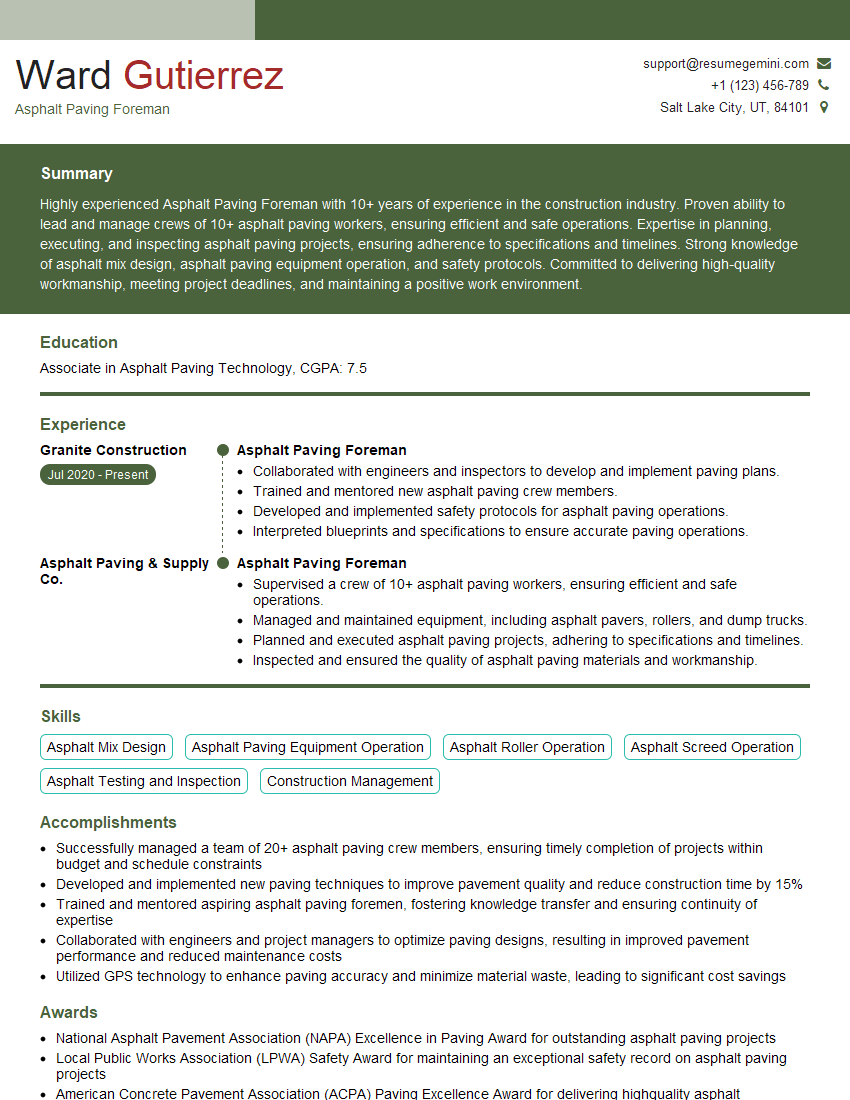
Mastering asphalt paving and compaction opens doors to rewarding careers with excellent growth potential. Demand for skilled professionals in this field is consistently high, offering opportunities for advancement and specialization. To maximize your job prospects, creating a strong, ATS-friendly resume is crucial. ResumeGemini is a trusted resource that can help you build a professional and impactful resume tailored to the asphalt paving and compaction industry. Examples of resumes specifically designed for this field are available to guide you. Invest the time to craft a compelling resume – it’s your first impression with potential employers.




Explore more articles
Users Rating of Our Blogs
Share Your Experience
We value your feedback! Please rate our content and share your thoughts (optional).
What Readers Say About Our Blog
To the interviewgemini.com Webmaster.
Very helpful and content specific questions to help prepare me for my interview!
Thank you
To the interviewgemini.com Webmaster.
This was kind of a unique content I found around the specialized skills. Very helpful questions and good detailed answers.
Very Helpful blog, thank you Interviewgemini team.