Feeling uncertain about what to expect in your upcoming interview? We’ve got you covered! This blog highlights the most important Assembling structural steel components interview questions and provides actionable advice to help you stand out as the ideal candidate. Let’s pave the way for your success.
Questions Asked in Assembling structural steel components Interview
Q 1. Describe your experience with different types of steel connections.
My experience encompasses a wide range of steel connections, from simple bolted connections to complex welded joints. I’m proficient in various connection types, each chosen based on the specific structural requirements and design specifications.
- Bolted Connections: These are prevalent for their ease of assembly and disassembly. I’ve worked extensively with high-strength bolts, understanding the importance of proper torqueing to ensure sufficient clamping force and prevent loosening. For example, I’ve used different bolt grades (like A325 or A490) depending on the load requirements of the project. We often use washers to distribute the load and prevent damage to the steel.
- Welded Connections: Welding offers superior strength and rigidity, particularly in high-stress areas. My experience includes various welding processes, such as SMAW (Shielded Metal Arc Welding), GMAW (Gas Metal Arc Welding), and FCAW (Flux-Cored Arc Welding). I’m skilled at selecting the appropriate welding technique for a given application, considering factors like joint type, steel thickness, and accessibility. For instance, SMAW is suitable for field welding in less-than-ideal conditions, while GMAW offers higher deposition rates in shop settings.
- Riveted Connections: Although less common now, I have experience with riveted connections, particularly in older structures. I understand the importance of proper rivet spacing and head formation to ensure adequate structural integrity.
Selecting the right connection type is crucial; it’s a balancing act between cost, strength, ease of assembly, and the specific demands of the project.
Q 2. Explain the process of reading and interpreting structural steel drawings.
Reading structural steel drawings is like deciphering a blueprint for a steel building. It requires a thorough understanding of symbols, dimensions, and specifications.
- Understanding the Drawing Sheet: The first step is identifying the drawing sheet number, revision number, and the project’s overall details.
- Identifying Members: Each member (beam, column, brace) is identified with a unique mark, and its dimensions, material grade, and connection details are specified in the drawing. For instance, a drawing might specify a W12x26 beam which is a wide-flange beam 12 inches deep and weighing 26 pounds per foot.
- Interpreting Connection Details: Detailed views illustrate the connections between members, specifying the bolt pattern, weld sizes, and types of fasteners. These details show the exact dimensions required for proper connection, preventing costly mistakes.
- Using Dimensioning and Tolerances: Precise dimensions are crucial. I pay close attention to tolerances, which define allowable variations in measurements to ensure the structure will fit as intended.
- Material Specifications: The drawings specify the steel grade (e.g., A992) indicating its strength and other properties. This ensures the correct material is used for the designed load.
Experience is key to accurately interpreting these drawings; I can visualize the assembled structure from the 2D plans.
Q 3. What safety procedures do you follow when assembling structural steel components?
Safety is paramount. My approach is based on a thorough understanding and strict adherence to OSHA regulations and company safety procedures.
- Personal Protective Equipment (PPE): This includes hard hats, safety glasses, steel-toe boots, and hearing protection, depending on the task. We also use fall protection harnesses and lifelines where necessary, especially when working at heights.
- Hazard Communication: I ensure all team members are aware of potential hazards, including working at heights, heavy machinery, hot metal from welding, and handling sharp objects.
- Proper Lifting Techniques: Using appropriate lifting equipment, such as cranes and rigging, is crucial and is always done according to the manufacturer’s instructions and safety protocols. Every lift plan is carefully reviewed.
- Fire Prevention: Strict procedures are followed for welding and cutting, including using fire extinguishers and fire watch. This includes identifying the type of fire extinguisher needed (e.g., Class A for wood or paper, Class B for flammable liquids).
- Pre-job Safety Meetings: We always conduct toolbox talks to review the day’s tasks, risks involved, and preventive measures before commencing work.
Safety isn’t just a procedure; it’s a mindset.
Q 4. How do you ensure the accuracy of measurements and alignments during assembly?
Accuracy is critical in structural steel assembly. We employ several methods to ensure precise measurements and alignments:
- Laser Levels and Total Stations: These instruments provide precise vertical and horizontal references for aligning columns, beams, and other components. They allow for accurate positioning, even over long distances.
- Plumb Bobs and Levels: These traditional tools are still used for verifying verticality and horizontality of individual members.
- Measuring Tapes and Steel Squares: These are used for checking dimensions and ensuring proper squareness of connections.
- Templates and Jigs: For repetitive connections, we create templates or jigs to ensure consistent accuracy and speed up the assembly process.
- Regular Checks and Adjustments: Throughout the assembly process, measurements and alignments are constantly checked and adjusted as needed. This prevents the accumulation of small errors that can lead to significant issues.
By meticulously checking everything and not rushing the process, we guarantee an accurate final assembly.
Q 5. What are the common challenges faced during steel erection, and how do you overcome them?
Steel erection often presents challenges:
- Weather Conditions: Wind, rain, and extreme temperatures can significantly impact progress and safety. We use weather forecasts and adapt our plans to mitigate risks.
- Site Accessibility: Limited space or difficult terrain can hinder the movement of equipment and materials. Careful planning and coordination with other trades are essential. For instance, we may need to adjust the lifting plan based on available space.
- Interference and Coordination: Working with other trades (electricians, plumbers, etc.) requires close coordination to avoid conflicts and delays. Scheduling is crucial to avoid interfering with other site activities.
- Component Misalignment: If components arrive misaligned or with fabrication errors, this causes delays. Careful inspection upon delivery is critical.
Overcoming these challenges requires experience, good communication, and a proactive approach to problem-solving. Careful planning, detailed scheduling and effective communication with the entire team are key to successful steel erection.
Q 6. Describe your experience with different welding techniques used in structural steel fabrication.
My experience includes several welding techniques:
- Shielded Metal Arc Welding (SMAW): This is a versatile process suitable for various applications, particularly in field welding. It’s relatively easy to learn, but requires skill to achieve high-quality welds. It is commonly used for structural steel due to its versatility and ability to weld in all positions.
- Gas Metal Arc Welding (GMAW): Also known as MIG welding, this process offers high deposition rates and is well-suited for shop fabrication. It’s great for faster, cleaner welds, particularly on thinner steel.
- Flux-Cored Arc Welding (FCAW): Similar to GMAW, but uses a flux-cored wire that contains its own shielding gas. It’s often used for outdoor applications where shielding gas might be affected by wind.
Selecting the right technique depends on factors like joint design, material thickness, access to power and shielding gas, and environmental conditions.
Q 7. How do you identify and address potential welding defects?
Identifying welding defects is a crucial part of quality control. We use visual inspection, and sometimes more advanced techniques to detect flaws:
- Visual Inspection: This involves carefully examining the welds for imperfections such as cracks, porosity, undercuts, and incomplete penetration. We look for deviations from the specified weld profile and dimensions, comparing against standards and blueprints.
- Non-Destructive Testing (NDT): For critical welds, we use NDT methods like magnetic particle inspection (MPI) or ultrasonic testing (UT) to detect internal flaws. These methods allow us to assess weld quality without damaging the structure. For instance, MPI is excellent for detecting surface cracks in ferromagnetic materials.
- Addressing Defects: Depending on the severity and type of defect, we may grind out the flawed area and re-weld it. In more serious situations, the entire connection may need to be replaced.
Addressing these flaws promptly prevents compromise on the overall structural integrity and safety of the finished project.
Q 8. Explain your understanding of different types of bolts and their applications in structural steel.
Understanding the different types of bolts used in structural steel is crucial for ensuring the integrity and safety of the structure. The choice of bolt depends heavily on the application, load requirements, and the type of connection. Here are some common types:
- High-Strength Bolts (HSB): These are the workhorses of structural steel connections. They are tightened to a specific tension, creating a friction connection that resists shear and tension. We use them extensively in most connections because of their high strength and ease of installation. For example, A325 bolts are common in many applications, while A490 bolts are used for heavier loads.
- Ordinary Bolts: These are generally lower-strength bolts used in less critical applications, often for temporary bracing or where the load isn’t significant. Their primary use is for assembling the structure, rather than bearing heavy loads in the final product.
- Anchor Bolts: These specialized bolts are used to secure steel members to concrete foundations or other substrates. They need to be carefully selected based on the concrete strength, embedding depth and the load they’ll bear. Incorrect installation can lead to major structural issues.
Choosing the wrong bolt can lead to premature failure, so a thorough understanding of each type and its application is essential. It’s always a good practice to check and double-check the specifications and design drawings before starting any assembly.
Q 9. What are the common causes of structural steel failures, and how can they be prevented?
Structural steel failures are a serious concern and can have devastating consequences. Common causes include:
- Improper design: Overlooked stress points or incorrect calculations can lead to catastrophic failure. This is why it’s vital to adhere strictly to engineering plans and specifications.
- Faulty fabrication: Incorrect welding, cutting, or drilling can weaken members, compromising the structural integrity. Regular quality checks during fabrication are essential.
- Corrosion: Rust and oxidation weaken steel over time. Applying proper coatings and using corrosion-resistant materials is crucial, especially in harsh environments. I’ve seen several projects where the lack of proper corrosion protection led to early failure.
- Overloading: Exceeding the design load capacity is a significant risk. We have to be vigilant in monitoring the loads on the structure during assembly and after completion.
- Improper installation: Incorrect bolt tightening, improper welding techniques, and neglecting proper sequence of assembly can all contribute to failure. This underlines the importance of proper training and skilled workmanship.
Prevention involves meticulous planning, quality control at every stage of the project, regular inspections, and adhering strictly to safety regulations and codes. Regular maintenance and inspection are also paramount.
Q 10. How do you ensure compliance with relevant safety regulations and codes during assembly?
Compliance with safety regulations and codes is paramount. We achieve this through several key measures:
- Following relevant codes: We meticulously adhere to codes like OSHA (in the US) or equivalent standards in other countries. This involves understanding the specific requirements for different aspects of the project, from the design and materials used to the assembly and inspection processes.
- Regular safety meetings: We hold regular safety meetings to discuss potential hazards, review safety procedures, and address any concerns raised by the team. Safety is not just a procedure, it’s a mindset.
- Detailed documentation: All aspects of the assembly process, including inspections, are documented thoroughly. This includes recording the types of bolts, welding procedures, and any potential issues encountered.
- Using certified equipment and materials: We only use certified and inspected equipment and materials that meet the required standards. This ensures that the components are reliable and won’t compromise the safety of the project.
- Implementing risk assessments: Before starting any task, we assess the potential hazards and implement control measures to mitigate those risks. A simple example is identifying a fall hazard before starting high-level work and planning the use of scaffolding and fall protection.
Compliance is not simply a matter of following rules; it’s about ensuring the safety and well-being of everyone involved in the project.
Q 11. Describe your experience with using different types of lifting equipment.
Throughout my career, I’ve worked extensively with various lifting equipment, always prioritizing safety and efficiency. My experience includes:
- Overhead cranes: These are vital for lifting and positioning heavy steel components. I’m proficient in operating and inspecting these cranes, ensuring their proper maintenance and safe operation. Safety checks, load capacity calculations, and proper signaling are paramount.
- Forklifts: Used for transporting materials and smaller components within the construction site. I’m certified in forklift operation and maintain a strict adherence to safe operating procedures.
- Mobile cranes: These are useful for lifting heavy materials in areas where overhead cranes may not be accessible. Rigging and lifting procedures are critical and require rigorous training and expertise.
- Chain hoists and come-alongs: These are used for precise lifting and positioning of smaller components. Their maintenance and use must strictly follow manufacturer’s guidelines.
Proper training and certification are essential for safely operating all lifting equipment. I’ve always emphasized safety procedures and regular inspections of equipment to minimize the risk of accidents.
Q 12. What is your experience with working at heights and using fall protection equipment?
Working at heights is a regular part of my job, and I’ve always placed a high priority on safety. I’m experienced in using various fall protection equipment, including:
- Full body harnesses: These are essential for securing workers and preventing falls. Proper fitting and regular inspection are crucial.
- Safety lanyards and lifelines: These are used to connect the harness to anchor points, ensuring that a worker is secured even if they fall.
- Scaffolding: We use scaffolding extensively for high-level work, ensuring its proper setup and inspection before use.
- Fall arrest systems: These systems are designed to stop a fall before it reaches a dangerous point. Regular inspection and maintenance are essential.
Before any work at heights begins, a thorough risk assessment is always conducted, and appropriate fall protection measures are implemented. I believe that safety awareness and proactive measures are the best ways to prevent falls and injuries.
Q 13. Explain your understanding of different types of steel beams and their applications.
Understanding steel beams is fundamental to structural steel assembly. Different beam types are selected based on load requirements, span, and other design considerations. Some common types include:
- I-beams (Wide-flange beams): These are the most common type, featuring a wide flange shape for maximum strength and efficiency. They are incredibly versatile and used in a wide range of applications, from building frames to bridges.
- H-beams: Similar to I-beams, but with parallel flanges. They offer similar strength and efficiency.
- C-channels: These beams have a C-shape, providing good strength in one direction and are often used for supporting secondary members or as purlins in roofing systems.
- Angles: These are L-shaped beams used in bracing, connecting members, or as supports. They excel in resisting both bending and shear stresses.
- T-beams: These beams have a T-shape, often used as supporting members or where the bending moment is predominantly in one direction.
Selecting the right beam type is crucial for ensuring the structural integrity of the project, and this choice relies heavily on the engineering design and calculations.
Q 14. How do you ensure the proper sequence of assembly steps to maintain stability and safety?
Maintaining stability and safety during assembly requires careful planning and execution of the assembly sequence. This involves:
- Following the structural drawings: The drawings clearly outline the correct sequence of assembly, ensuring that members are installed in the right order and that the structure remains stable as it’s erected. We always adhere to the sequence illustrated in the structural drawings.
- Temporary bracing: As we assemble the structure, we use temporary bracing to maintain stability and prevent misalignment. This is critical, especially with larger and more complex structures.
- Checking alignment and plumbness: Throughout the assembly process, we regularly check alignment and plumbness using levels and other instruments to ensure the structure is erected according to plan and remains stable. Early detection of any misalignment can prevent major issues later on.
- Working from bottom to top: This is a common approach for many structural steel projects, as it provides a stable foundation for subsequent assemblies and reduces the risk of instability during erection.
- Progressive bolting: In many instances, we employ progressive bolting techniques to ensure that the structure remains stable and that bolt tensions are evenly distributed.
A well-planned assembly sequence, combined with diligent quality control, is essential for ensuring a safe and efficient erection process.
Q 15. Describe your experience working with prefabricated steel components.
My experience with prefabricated steel components is extensive, spanning over 10 years. I’ve worked on numerous projects involving everything from simple, pre-engineered building components to intricate, large-scale structures like bridges and industrial facilities. Prefabrication significantly streamlines the assembly process on-site. Instead of individual pieces requiring extensive on-site fabrication, we receive pre-cut, drilled, and sometimes even pre-assembled sections. This reduces fabrication time, labor costs, and the potential for on-site errors. For example, on a recent high-rise project, we utilized prefabricated columns and beams, significantly accelerating the vertical construction. This not only saved time but also improved the accuracy and consistency of the final structure. I’m proficient in interpreting fabrication drawings and ensuring that the prefabricated components arrive correctly and are seamlessly integrated into the overall design.
Furthermore, I’m familiar with different prefabrication methods, including those involving bolted connections, welded connections, and a combination of both. I understand the importance of inspecting each component for any damage or discrepancies before assembly to ensure a safe and structurally sound finished product.
Career Expert Tips:
- Ace those interviews! Prepare effectively by reviewing the Top 50 Most Common Interview Questions on ResumeGemini.
- Navigate your job search with confidence! Explore a wide range of Career Tips on ResumeGemini. Learn about common challenges and recommendations to overcome them.
- Craft the perfect resume! Master the Art of Resume Writing with ResumeGemini’s guide. Showcase your unique qualifications and achievements effectively.
- Don’t miss out on holiday savings! Build your dream resume with ResumeGemini’s ATS optimized templates.
Q 16. How do you handle unexpected problems or challenges during the assembly process?
Unexpected problems are inevitable in construction. My approach is methodical and focuses on safety first. When encountering a challenge, I follow these steps:
- Assessment: Carefully evaluate the problem, identifying its scope and potential impact on the project timeline and structural integrity. This often involves conferring with the project engineer and other team members.
- Documentation: Thoroughly document the problem, including photos and detailed notes. This aids in future problem-solving and helps prevent recurrence.
- Problem Solving: I brainstorm solutions, considering various approaches while adhering to safety regulations and building codes. This often involves consulting relevant technical manuals and industry best practices.
- Implementation & Monitoring: Once a solution is chosen, I implement it carefully, monitoring its effectiveness and making adjustments as needed. I always prioritize safety during this step, ensuring proper personal protective equipment (PPE) is used.
- Reporting: I report the issue and its resolution to the relevant project manager, keeping them informed throughout the entire process.
For instance, on one project, a critical beam was slightly misaligned during delivery. Instead of forcing it into place (a risky approach), we carefully documented the issue, consulted the engineer, and devised a solution involving minor adjustments to adjacent components. Open communication and meticulous planning were crucial in overcoming this challenge without compromising safety or quality.
Q 17. What are your skills in using hand and power tools commonly used in structural steel assembly?
My skillset with hand and power tools is extensive and honed through years of experience. I am proficient in using:
- Hand Tools: Measuring tapes, levels, plumb bobs, hammers, chisels, wrenches (various sizes), socket sets, punches, and various types of pliers.
- Power Tools: Impact wrenches, drills (including various drill bits), grinders (with various cutting and grinding wheels), cutting torches (oxy-fuel), and various types of saws (circular saws, reciprocating saws).
I understand the safety protocols associated with each tool and prioritize safe operation at all times. Regular maintenance and inspection of tools are also a significant part of my workflow to prevent accidents and ensure accurate work. For example, I regularly check the calibration of my measuring tools to ensure precise measurements, which are critical for accurate steel assembly.
Q 18. Describe your experience with working in a team environment on large-scale projects.
I’ve consistently worked in collaborative team settings on large-scale projects, often involving multiple subcontractors and specialists. I believe effective teamwork is crucial for successful project completion. My experience includes:
- Clear Communication: I’m adept at communicating effectively with team members at all levels, from fellow assemblers to engineers and project managers. This includes active listening, providing clear updates, and constructively addressing concerns.
- Coordination & Collaboration: I effectively coordinate tasks with other teams, ensuring a smooth workflow and avoiding delays. This involves understanding individual roles and responsibilities within the overall project.
- Problem-Solving as a Team: I participate actively in collaborative problem-solving sessions, sharing my expertise and contributing constructively to finding the best solutions.
On a recent bridge construction project, our team consisted of welders, riggers, and inspectors. Effective communication and coordination were paramount in ensuring safe and efficient lifting and assembly of the massive bridge components. Our collaborative efforts led to the project’s successful and timely completion.
Q 19. How do you maintain a clean and organized worksite?
Maintaining a clean and organized worksite is paramount for safety and efficiency. My approach involves:
- Daily Cleanup: At the end of each day, I ensure that all tools and materials are properly stored, and the work area is free of debris and hazards.
- Waste Management: I follow strict waste disposal procedures, segregating materials appropriately for recycling or disposal.
- Organization: I organize materials and tools in a logical manner, ensuring easy access and minimizing the risk of accidents.
- Safety First: A clean and organized site minimizes tripping hazards and reduces the risk of injuries.
A clean and organized site is not just about aesthetics; it’s crucial for preventing accidents and improving overall efficiency. A cluttered worksite can easily lead to injuries, tool misplacement, and delays.
Q 20. Explain your understanding of tolerance levels in structural steel assembly.
Tolerance levels in structural steel assembly refer to the allowable variations in dimensions and alignment from the specified design. These tolerances are crucial for ensuring the structural integrity and stability of the finished structure. Excessively large tolerances can compromise the structural integrity of the building or any structure. Strict adherence to these tolerances is essential.
Understanding and adhering to tolerance levels is a critical part of my work. These tolerances are usually specified in the fabrication drawings and must be checked at various stages of the assembly process. I regularly use precision measuring instruments to ensure that all components are within the specified tolerances. For example, a small misalignment in a beam connection can lead to significant stress concentrations, potentially causing failure. Hence, strict adherence to tolerances is paramount.
Q 21. What is your experience with quality control procedures in structural steel fabrication?
My experience with quality control procedures in structural steel fabrication includes a thorough understanding of both the fabrication process and the inspection procedures. I’m familiar with various quality control techniques, including:
- Visual Inspection: Checking for any visible defects or imperfections in the steel components before and after welding.
- Dimensional Verification: Ensuring all components are within the specified tolerances.
- Welding Inspection: Verifying the quality of welds using various methods, including visual inspection and non-destructive testing (NDT) techniques like magnetic particle testing (MT) and ultrasonic testing (UT).
- Documentation: Maintaining detailed records of all inspections and quality control checks.
On previous projects, my role often involved overseeing the quality control process, ensuring that all components met the specified standards. Proper documentation ensures traceability and allows for identification of any potential issues, contributing to the overall success and safety of the project.
Q 22. How do you ensure the proper alignment and fit of structural steel members?
Ensuring proper alignment and fit of structural steel members is paramount for the structural integrity and longevity of any steel structure. It involves a multi-step process, beginning even before the steel arrives on-site.
- Pre-Fabrication Planning: Detailed shop drawings are crucial. These drawings provide precise dimensions and tolerances for each member, ensuring that everything fits together like a perfectly assembled jigsaw puzzle. Any discrepancies are identified and corrected before fabrication.
- Accurate Cutting and Drilling: Precise cutting and drilling of holes are critical. Using CNC (Computer Numerical Control) machines in the fabrication shop ensures accuracy, minimizing the need for on-site adjustments and maximizing fit. I always verify measurements before and after this stage.
- On-site Alignment: Once on-site, laser alignment tools are invaluable for ensuring that columns are perfectly plumb and beams are level. We use these tools to verify that members are aligned according to the shop drawings before welding or bolting.
- Temporary Supports: During assembly, temporary supports are crucial to maintain alignment until permanent connections are made. Think of it like building a house of cards – you need supports before you can connect the final pieces.
- Shimming and Adjustment: Minor adjustments are sometimes necessary. Shims (thin metal plates) are used to correct minor misalignments before final connections are made. This ensures a tight and secure fit.
For instance, on a recent high-rise project, we used laser alignment to ensure the perfect verticality of columns, minimizing potential stress concentrations which could have led to structural failure.
Q 23. Describe your experience with troubleshooting problems in structural steel assemblies.
Troubleshooting is a significant part of this work. I’ve encountered various challenges, requiring creative problem-solving and a deep understanding of structural mechanics.
- Dimensional Discrepancies: Sometimes, minor discrepancies in dimensions occur. Identifying the source (fabrication error, design error, or on-site misalignment) is key. Solutions include shimming, minor adjustments, or, in extreme cases, re-fabrication of affected members.
- Welding Defects: Poor welds can compromise structural integrity. I’m adept at identifying different types of welding defects (e.g., porosity, cracks, lack of fusion). These are typically addressed by grinding out the defective weld and re-welding, ensuring adherence to relevant codes and standards.
- Bolt-up Issues: Difficulties fitting bolts often stem from misalignment. This can be resolved using shims or by adjusting the connected members to facilitate bolt-up. Sometimes, reaming or slightly enlarging the bolt holes might be necessary. I always ensure that all bolts are properly tightened to the specified torque, preventing loosening and potential failure.
- Corrosion: Dealing with unexpected corrosion often requires careful evaluation of the affected area. This might involve surface cleaning, applying corrosion inhibitors, or, in severe cases, replacing the affected component.
For example, during assembly of a large steel bridge, we encountered a dimensional discrepancy in one of the support beams. By carefully analyzing the situation and using shims, we were able to correct the misalignment and complete the assembly successfully, preventing potential delays and cost overruns.
Q 24. How familiar are you with different types of steel coatings and their applications?
Familiarity with steel coatings is essential for protecting structures from corrosion, increasing their lifespan, and maintaining their aesthetic appeal. The choice of coating depends on the environment and the intended lifespan of the structure.
- Galvanization: This is a common method involving dipping steel into molten zinc to create a protective zinc layer. It’s highly effective and durable, especially in harsh environments.
- Painting: Different types of paint offer various levels of protection and aesthetics. Epoxy coatings, for example, provide excellent corrosion resistance. The selection depends on environmental exposure (e.g., marine, industrial, rural).
- Powder Coating: This involves applying a dry powder coating that is then cured with heat. It provides excellent durability, colour variety, and is environmentally friendly.
I have practical experience in specifying and overseeing the application of different coatings to ensure they meet project requirements. For example, on a coastal project, we used a specialized high-performance marine paint to protect steel components from salt spray and ensure long-term corrosion protection.
Q 25. What are your skills in interpreting and following detailed assembly instructions?
Interpreting and following detailed assembly instructions is fundamental to my work. I’m proficient in reading and understanding engineering drawings, specifications, and fabrication shop drawings.
- Blueprint Reading: I can readily interpret different types of engineering drawings (e.g., isometric drawings, orthographic projections) to understand the spatial relationships between components.
- Bill of Materials (BOM): I’m skilled in using BOMs to ensure all the necessary materials are available on-site before starting assembly.
- Welding Symbols: I understand weld symbols, indicating the type of weld, dimensions, and other specifics, ensuring correct weld preparation and execution.
- Tolerances: I understand the importance of tolerances and how they affect assembly. I’m able to identify when tolerances are exceeded and address the issues accordingly.
My ability to understand these instructions accurately reduces errors, avoids rework, and ultimately ensures timely project completion. For instance, on a recent project involving intricate steel lattice structures, my thorough understanding of the assembly drawings allowed us to construct the elements efficiently and accurately.
Q 26. Explain your understanding of the importance of proper grounding and bonding in steel structures.
Proper grounding and bonding in steel structures are crucial for safety and preventing electrical hazards. Steel structures are excellent conductors of electricity. Without proper grounding, stray electrical currents can cause severe shock hazards, damage electronic equipment, and even start fires.
- Grounding: This involves connecting the steel structure to the earth, providing a low-resistance path for electrical current to safely dissipate in case of a fault.
- Bonding: Bonding connects different parts of the steel structure, ensuring a continuous path for electrical current to flow. This prevents voltage differences between parts of the structure, minimizing the risk of electrical shock.
I ensure all grounding and bonding requirements are strictly followed. We typically use grounding rods driven deep into the earth, and we use specialized bonding wires or conductors to connect various parts of the steel structure. Failing to do so can have serious legal and safety implications.
Q 27. How do you ensure the structural integrity of assembled components before handover?
Ensuring structural integrity before handover is critical. It’s a multi-faceted process involving several checks and verifications.
- Visual Inspection: A thorough visual inspection is done to check for any obvious defects, such as misalignments, damaged components, or poor welds.
- Dimensional Verification: Final measurements are taken to ensure compliance with the design specifications. This is usually done using laser measuring tools for accuracy.
- Weld Inspection: Depending on the project’s complexity, non-destructive testing (NDT) methods like ultrasonic or radiographic testing may be used to check weld quality and integrity.
- Bolt Torque Verification: All bolted connections are checked to ensure the bolts are tightened to the specified torque, preventing loosening and ensuring a strong connection.
- Documentation: Detailed inspection reports and photographs are documented as evidence of the completed checks. These reports are essential for project records and demonstrate compliance with safety and quality standards.
This meticulous approach is not just about fulfilling requirements, it’s about building trust and confidence in the structural soundness of the work. A structure’s longevity and the safety of the people using it depend on this final step.
Q 28. Describe your experience with working on projects with tight deadlines and budgets.
Working under tight deadlines and budget constraints is a common reality in the construction industry. Effective planning, resource management, and team collaboration are crucial for success.
- Detailed Planning: Before commencing work, I meticulously plan each step of the assembly process, considering potential challenges and developing contingency plans.
- Efficient Resource Allocation: This includes managing the personnel, materials, and equipment effectively to maximize productivity and minimize downtime.
- Teamwork and Communication: Open communication is vital within the team and with other stakeholders. Clear communication helps identify potential issues early, preventing delays and cost overruns.
- Prioritization: When faced with competing tasks and time constraints, effective prioritization ensures critical activities are completed on time.
For example, on a recent fast-track project, our team implemented a lean construction approach, streamlining the assembly process and significantly reducing waste and delays. Clear communication and a highly motivated team allowed us to successfully complete the project on time and within budget.
Key Topics to Learn for Assembling Structural Steel Components Interview
- Blueprint Reading and Interpretation: Understanding structural drawings, including dimensions, tolerances, and specifications. Practical application: Accurately identifying component placement and assembly sequences from provided blueprints.
- Safe Handling and Lifting Techniques: Proper use of rigging equipment, slings, and cranes. Practical application: Minimizing risk of injury and damage to materials during lifting and placement operations.
- Bolting and Fastening Procedures: Understanding different types of bolts, washers, and nuts; proper torque specifications; and bolt tensioning methods. Practical application: Ensuring structural integrity and preventing future failures.
- Welding Techniques (if applicable): Familiarity with various welding processes used in structural steel fabrication. Practical application: Knowing when and how to apply different welding methods depending on the project requirements.
- Quality Control and Inspection: Understanding industry standards and performing quality checks throughout the assembly process. Practical application: Identifying and correcting errors before they become major issues.
- OSHA Regulations and Safety Procedures: Adhering to safety protocols and regulations within the construction industry. Practical application: Maintaining a safe work environment and preventing accidents.
- Troubleshooting and Problem-Solving: Identifying and resolving issues that may arise during assembly, such as misaligned components or incorrect measurements. Practical application: Demonstrating resourcefulness and problem-solving skills in a real-world setting.
- Teamwork and Communication: Effective collaboration with other workers on the construction site. Practical application: Demonstrating the ability to work effectively in a team and communicate clearly to ensure efficient workflow.
Next Steps
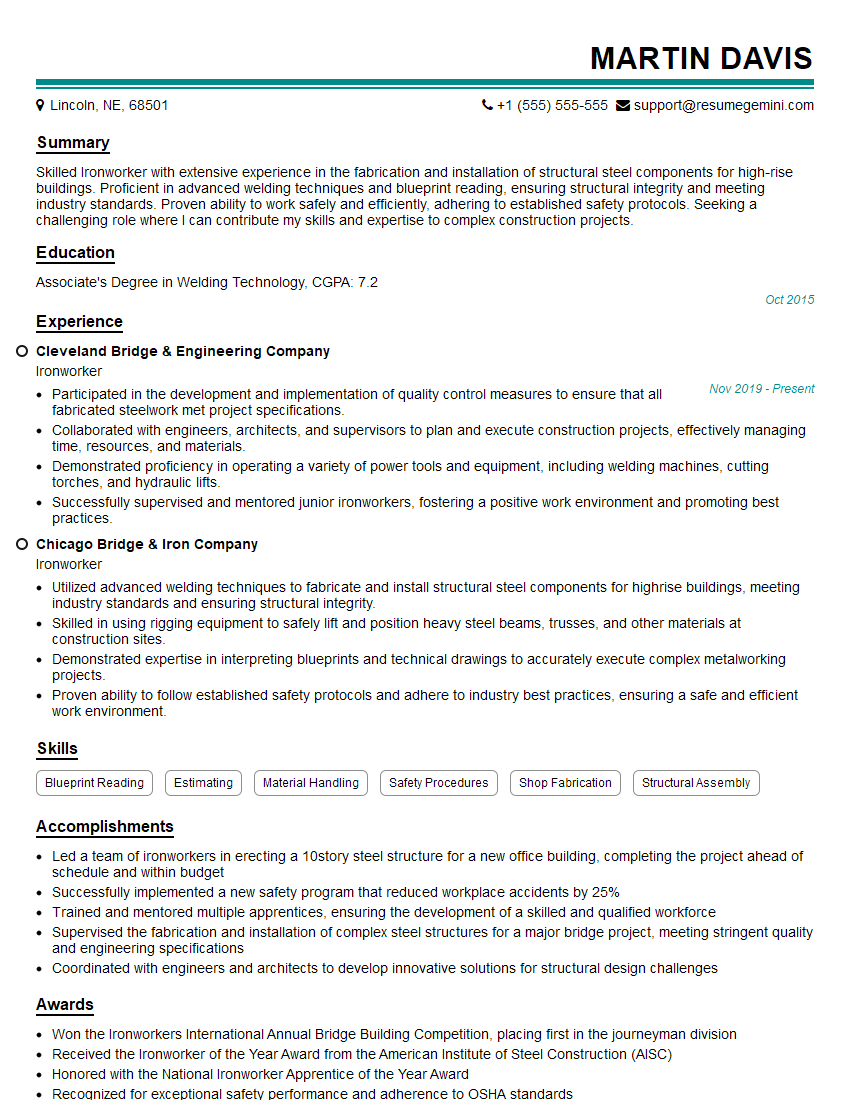
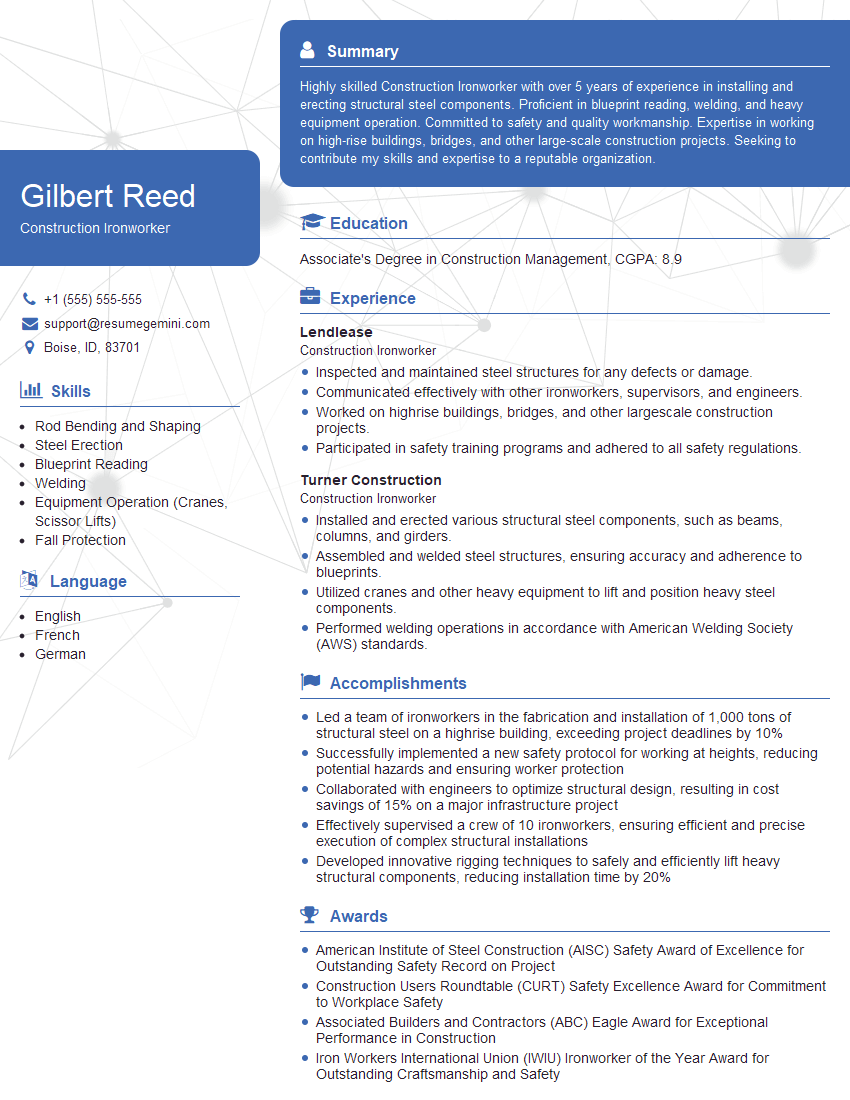
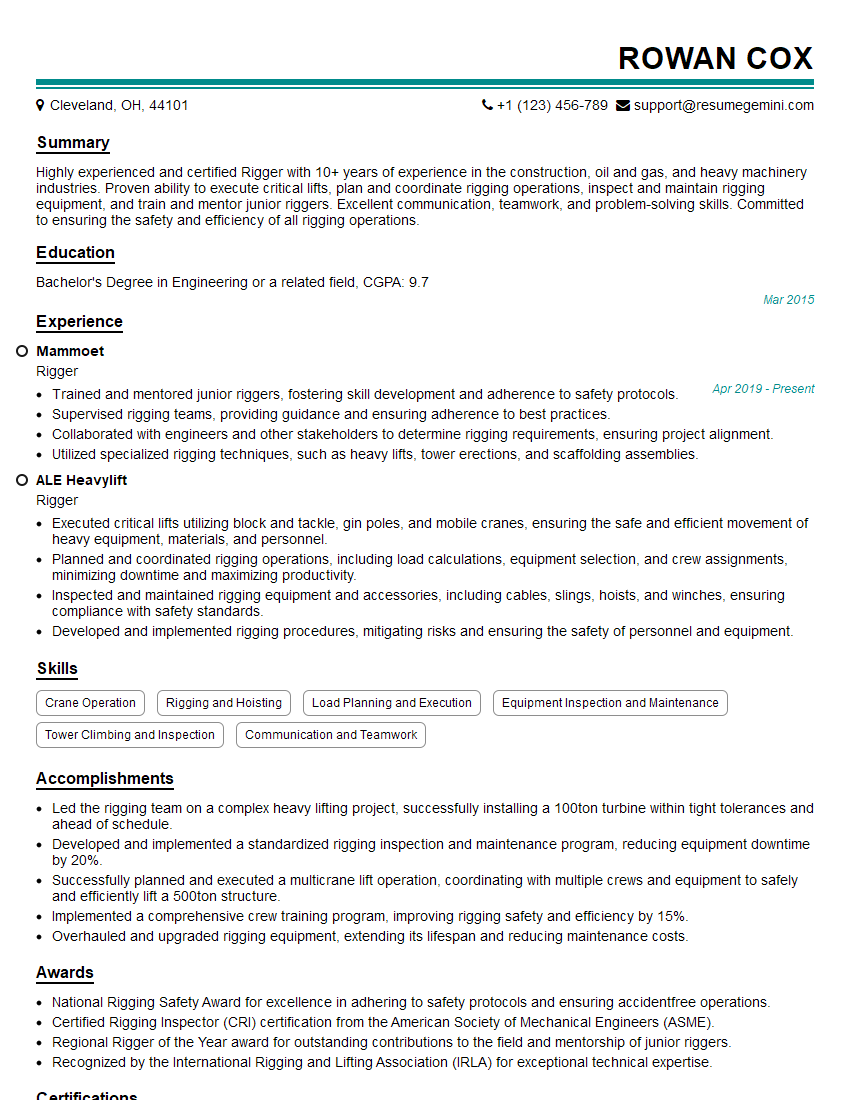
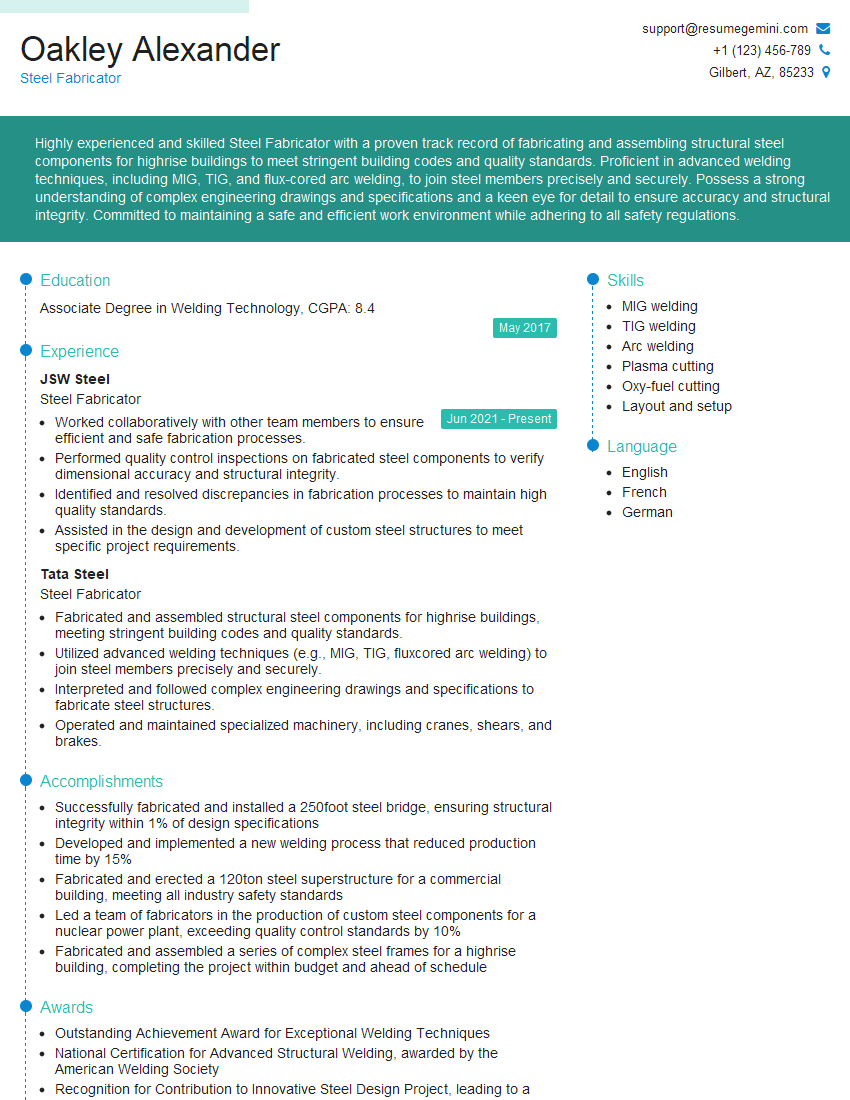
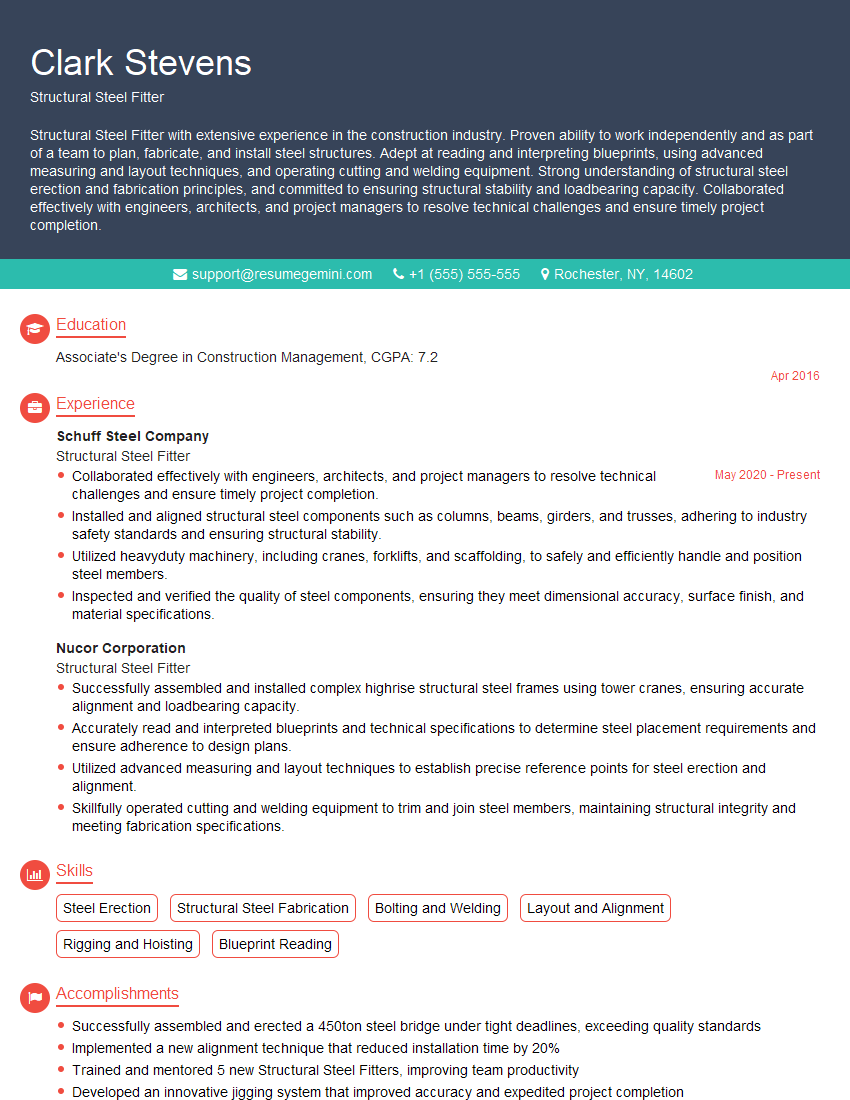
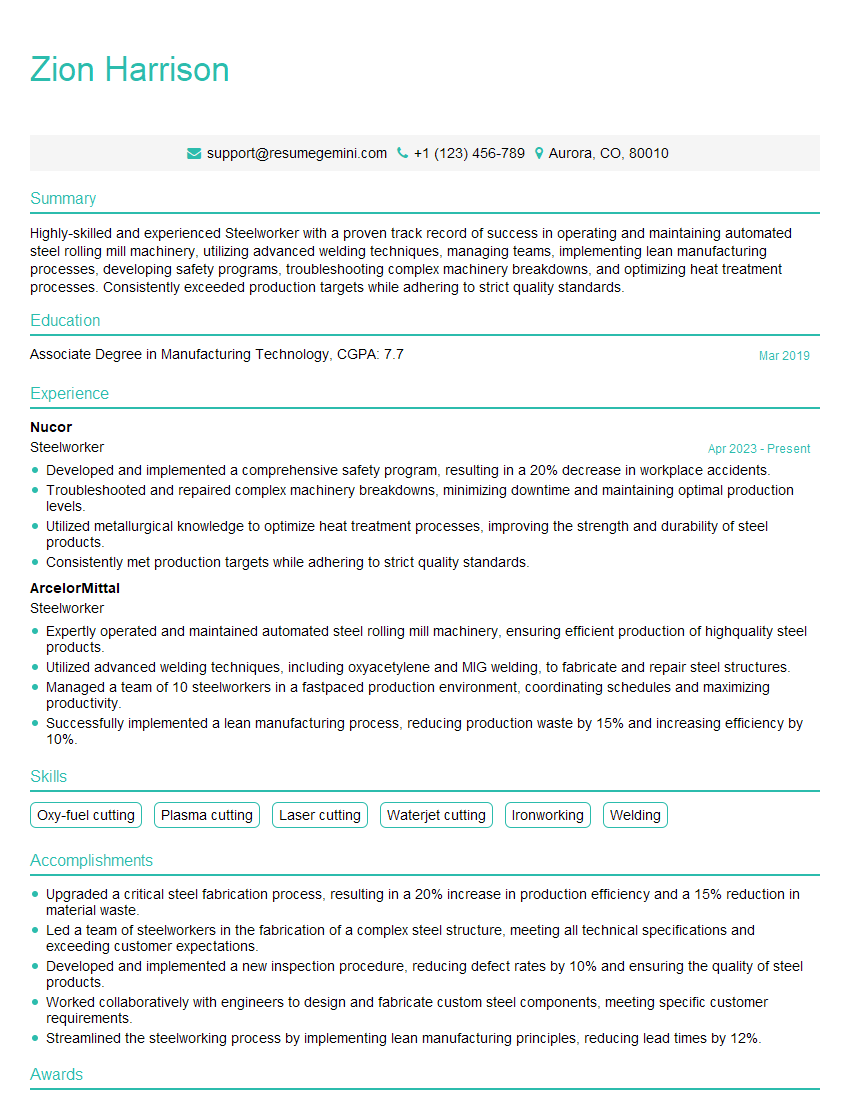
Mastering the assembly of structural steel components is crucial for career advancement in the construction and engineering industries, opening doors to higher-paying roles and increased responsibility. To maximize your job prospects, create a compelling and ATS-friendly resume that showcases your skills and experience effectively. ResumeGemini is a trusted resource that can help you build a professional resume that highlights your qualifications for Assembling structural steel components jobs. Examples of resumes tailored to this field are available to guide you.


Explore more articles
Users Rating of Our Blogs
Share Your Experience
We value your feedback! Please rate our content and share your thoughts (optional).
What Readers Say About Our Blog
To the interviewgemini.com Webmaster.
Very helpful and content specific questions to help prepare me for my interview!
Thank you
To the interviewgemini.com Webmaster.
This was kind of a unique content I found around the specialized skills. Very helpful questions and good detailed answers.
Very Helpful blog, thank you Interviewgemini team.