Feeling uncertain about what to expect in your upcoming interview? We’ve got you covered! This blog highlights the most important Assessment and Diagnosis Using Art Therapy interview questions and provides actionable advice to help you stand out as the ideal candidate. Let’s pave the way for your success.
Questions Asked in Assessment and Diagnosis Using Art Therapy Interview
Q 1. Explain the differences between projective and expressive art techniques used in assessment.
The distinction between projective and expressive art techniques in assessment hinges on the underlying theoretical framework. Projective techniques assume the artwork reveals unconscious processes and underlying conflicts. The client’s conscious control is minimized, encouraging spontaneous expression interpreted as symbolic of internal states. Examples include the Rorschach inkblot test (though not strictly art therapy), where ambiguous stimuli prompt responses revealing personality characteristics, or asking a client to draw a family portrait to uncover family dynamics. In contrast, expressive art techniques focus on the process of art-making as therapeutic in itself. The emphasis is on the client’s self-expression and emotional release through the creative process. Interpretation is less focused on symbolic meaning and more on the client’s experience of creating the artwork and their verbalizations during the process. For instance, a client might engage in freeform painting to process grief, and the interpretation centers on their verbal descriptions of their feelings during the painting, color choices, and the overall emotional impact of the activity.
Think of it like this: projective techniques are like interpreting a dream—searching for hidden meanings. Expressive techniques are more like journaling through art—valuing the emotional process of creation.
Q 2. Describe your approach to interpreting art created during a diagnostic session.
My approach to interpreting art created during a diagnostic session is multifaceted and grounded in a holistic understanding of the client. I avoid imposing pre-conceived interpretations. Instead, I begin with a detailed description of the artwork, noting the use of color, line, form, composition, and the chosen medium. I then consider the client’s verbalizations and non-verbal cues during the creative process. This includes observing their body language, emotional responses, and the stories they tell about their artwork. Finally, I integrate this information with relevant biographical data and other diagnostic information to form a comprehensive understanding. It’s crucial to maintain a collaborative dialogue throughout; I regularly check in with the client to ensure my interpretations resonate with their lived experience.
For example, a client might create a dark and chaotic painting, using harsh lines and aggressive brushstrokes. While a solely projective interpretation might focus on aggressive impulses, a holistic approach involves exploring the client’s verbalizations. Perhaps they describe it as representing overwhelming feelings of anxiety and stress, offering a different narrative. This collaborative approach ensures that the interpretation remains grounded in the client’s subjective reality.
Q 3. How do you integrate art therapy assessment findings with other diagnostic information (e.g., clinical interviews, psychological tests)?
Integrating art therapy assessment findings with other diagnostic information is crucial for a comprehensive and accurate diagnosis. I view art therapy as providing a unique lens into the client’s emotional and psychological world, complementing information gathered through clinical interviews and psychological tests. Art therapy can illuminate aspects of the client’s experience that may be difficult to articulate verbally. For example, a client might score highly on a depression scale, but their artwork could reveal specific themes of isolation and loss, enriching our understanding of their depressive experience. The integration is not about replacing other methods, but rather enriching and deepening our understanding of the client’s overall presentation.
In practice, I often present the art therapy findings alongside other diagnostic information during case conferences, highlighting the congruencies and discrepancies. This collaborative approach leads to a more nuanced and thorough understanding, contributing to a more effective treatment plan tailored to the client’s specific needs.
Q 4. What ethical considerations guide your use of art therapy in assessment and diagnosis?
Ethical considerations are paramount in art therapy assessment and diagnosis. Central to my practice are principles of confidentiality, informed consent, and cultural sensitivity. Before commencing any assessment, I obtain informed consent, ensuring the client understands the purpose, methods, and limitations of the assessment, including how the information will be used and shared. Maintaining client confidentiality is essential, adhering to all relevant regulations and legal requirements. I also strive to maintain clear boundaries within the therapeutic relationship, recognizing the potential power imbalance inherent in the client-therapist dynamic.
Furthermore, ethical practice requires recognizing the subjective nature of art interpretation, avoiding hasty or premature judgments. I actively seek client feedback on interpretations to ensure accuracy and reduce the risk of misinterpretation.
Q 5. How do you ensure cultural sensitivity in your interpretation of client artwork?
Cultural sensitivity is vital in interpreting client artwork. I recognize that symbols and artistic expressions hold different meanings across cultures. For instance, certain colors or imagery may represent completely different concepts in different cultural contexts. To ensure cultural sensitivity, I prioritize building a strong therapeutic relationship based on trust and mutual understanding. This involves actively inquiring about the client’s cultural background, beliefs, and values. I also engage in ongoing professional development to broaden my knowledge and understanding of diverse cultural perspectives on art and symbolism.
If I am unsure about the meaning of a specific symbol or image, I engage in a collaborative discussion with the client, clarifying its significance within their cultural context. Consultation with colleagues specializing in multicultural counseling can also be valuable in complex cases.
Q 6. Describe your process for documenting art therapy assessments and diagnostic findings.
My process for documenting art therapy assessments and diagnostic findings involves creating a comprehensive record that includes detailed descriptions of the client’s artwork, including materials used, colors, composition, and style. I document the client’s verbalizations and non-verbal behaviors during the art-making process, alongside my observations and interpretations. This documentation follows a clear and consistent format, including the date, time, and duration of each session. All client information is stored securely, complying with relevant confidentiality guidelines.
The documentation is written in a clear, concise, and objective manner, avoiding subjective interpretations unless clearly identified as such. It is structured to allow for easy retrieval and review of information, aiding in the ongoing assessment and treatment planning process.
Q 7. How would you address resistance from a client during an art therapy assessment?
Resistance during an art therapy assessment is common and should be viewed as an opportunity for exploration. Rather than confronting resistance directly, I begin by acknowledging and validating the client’s feelings. I might say something like, “I understand that you’re feeling hesitant about this activity; it’s okay to feel this way.” I then offer alternative options, such as exploring different art materials or engaging in a different artistic activity. If the resistance persists, I might explore the reasons behind the resistance in a non-judgmental manner through verbal conversation.
The goal is to create a safe and comfortable space for the client to explore their feelings and concerns at their own pace. It’s important to remember that the therapeutic relationship is built on trust and collaboration; forcing participation can be counterproductive. Flexibility and empathy are crucial in navigating resistance.
Q 8. What specific art media are most effective for assessing different client populations (e.g., children, adults with trauma)?
The choice of art media significantly impacts the effectiveness of assessment, varying based on the client’s age, developmental stage, and presenting issues. For children, readily accessible and less intimidating materials like crayons, play-doh, or finger paints often work best, allowing for spontaneous expression. Their simple nature minimizes pressure and encourages free exploration of feelings. With older children and adolescents, expanding to markers, colored pencils, or collage can provide more nuanced expression and allow for symbolic representation. For adults, particularly those with trauma, the choice becomes even more crucial. While some might benefit from the fluidity of watercolors or the tactile experience of clay, others may prefer the control and precision offered by drawing or painting with finer mediums. The key is to offer a selection and observe which medium the client gravitates towards, as this choice itself can be revealing.
For example, a child who only uses one color might be expressing limited emotional range, while an adult who meticulously creates highly detailed work could reflect a need for control and possibly a history of trauma.
- Children: Crayons, finger paints, play-doh, collage with simple materials.
- Adolescents: Markers, colored pencils, paint, mixed media.
- Trauma survivors: Watercolors, clay, drawing (depending on comfort level). Offering a variety is crucial.
Q 9. Explain how you would adapt your assessment techniques for clients with different cognitive abilities or physical limitations.
Adapting assessment techniques for clients with diverse cognitive abilities or physical limitations requires a flexible and empathetic approach. For clients with cognitive impairments, I would simplify the instructions, focusing on basic sensory experiences and self-expression rather than complex symbolic interpretation. This might involve using tactile materials like clay or sand, or focusing on simple drawing exercises. I’d adjust the complexity of the task based on their individual abilities, ensuring they feel comfortable and successful. For clients with physical limitations, assistive devices might be needed, such as adapted paintbrushes or easels. Alternative art forms like digital art or voice-to-text for journaling could also be incorporated, providing opportunities for expression without physical constraints. The core principle remains to create an accessible and empowering experience that supports self-expression regardless of their limitations.
For instance, a client with limited fine motor skills might be offered larger brushes, or we could explore collage or printmaking techniques. A client with visual impairments might benefit from tactile art materials and verbal descriptions of their work.
Q 10. What are the limitations of using art therapy as a primary diagnostic tool?
While art therapy can provide rich qualitative data, it’s crucial to acknowledge its limitations as a primary diagnostic tool. Art therapy assessments should never stand alone; they are most effective when integrated with other assessment methods, such as clinical interviews, psychological testing, and behavioral observations. Interpretations of artwork are inherently subjective and prone to bias; relying solely on art to diagnose could lead to misinterpretations and inaccurate diagnoses. Furthermore, the client’s willingness to engage and their level of artistic skill can influence the results. A client who is reluctant to participate might not fully express their inner world. A highly skilled artist might mask their struggles behind technical prowess, making the interpretation more challenging. Therefore, a holistic approach, combining art therapy with other objective assessments, ensures a more comprehensive and reliable diagnosis.
Q 11. How do you determine the appropriate length and frequency of art therapy sessions for assessment?
The length and frequency of art therapy sessions for assessment vary significantly based on the client’s needs, the nature of the presenting issue, and the therapist’s clinical judgment. A brief assessment might involve just one or two sessions focusing on specific projective techniques, while a more extensive assessment might span several sessions. The frequency also depends on the client’s comfort level and progress. Generally, I prefer to start with shorter, more frequent sessions (e.g., 30-45 minutes, twice a week) for initial assessment, allowing for a gradual increase in duration or frequency as the therapeutic relationship develops and the client’s comfort level grows. This builds rapport and helps manage any potential anxiety or resistance, increasing the validity of the assessment.
For example, in the case of a child exhibiting behavioral issues, a series of shorter sessions using play-based art activities might be more effective than a single long session. For an adult undergoing trauma therapy, a more gradual approach with longer sessions may be preferred.
Q 12. Describe your understanding of projective art techniques, such as the Draw-a-Person test.
Projective art techniques, such as the Draw-a-Person test, are based on the premise that clients will unconsciously project their inner thoughts, feelings, and experiences onto their artwork. These techniques are not diagnostic tools in themselves, but rather valuable supplementary methods offering insights into personality, emotional states, and potential underlying psychological issues. The Draw-a-Person test, for example, involves asking the client to draw a person, and then potentially asking them to draw another person of the opposite sex. The details of the drawing—the size, placement, features, and overall style—are then analyzed for potential indicators of psychological issues, keeping in mind that there is no rigid or absolute interpretation. The analysis considers factors like the size and placement of the figure (which could indicate self-esteem), detail and proportion (possibly reflecting attention to detail or self-perception), and the presence of specific symbols (which may relate to fears or anxieties). These observations are interpreted in conjunction with clinical data from other sources. The aim is not to diagnose based solely on the drawing, but rather to gain a nuanced understanding of the client’s internal world.
Q 13. How do you maintain client confidentiality during the assessment process?
Maintaining client confidentiality during the assessment process is paramount and adheres to strict ethical guidelines. This involves obtaining informed consent before commencing any art therapy work, clearly outlining the purpose of the assessment and how the data will be used. All artwork and assessment records are stored securely, either in locked cabinets or utilizing encrypted electronic storage. Client identities are protected through de-identification techniques when presenting case studies or sharing information with colleagues. I never share client information without explicit consent, except in mandated reporting situations, such as suspected child abuse or harm to self or others. Adherence to HIPAA regulations (or equivalent in other jurisdictions) is strictly followed to guarantee client confidentiality and trust.
Q 14. What are the key indicators you look for in artwork to suggest underlying psychological issues?
Identifying key indicators in artwork suggesting underlying psychological issues requires careful and nuanced observation, always interpreted within the broader context of the client’s history, behavior, and other assessment data. There’s no single indicator, rather a constellation of signs that need to be examined holistically. For example, repetitive use of dark, muted colors might suggest feelings of depression or hopelessness. A depiction of oneself as small or insignificant could indicate low self-esteem. Aggression or violence in the artwork might point to anger or unresolved trauma. The presence of recurring symbols or themes—such as recurring images of confinement or isolation—can be significant. It’s crucial to remember that these are indicators, not diagnoses. My interpretation relies on understanding the symbolic language the client employs within their art and relating it to their verbal communication and overall clinical presentation. Every piece of artwork is a unique story, requiring a sensitive and attentive approach to unravel its complexities.
Q 15. How would you use art therapy to assess trauma in a child?
Assessing trauma in children using art therapy involves creating a safe and non-threatening environment where the child feels comfortable expressing themselves. We avoid direct questioning about traumatic events initially, instead focusing on building rapport and trust. The assessment uses a variety of art media – drawing, painting, sculpting, collage – to allow the child to express their experiences symbolically. We look for recurring themes, imagery, and use of color and form that might reflect traumatic experiences. For example, repeated depictions of violence, dark colors dominating artwork, or figures isolated or fragmented could indicate trauma. The child’s process – how they approach the activity, their emotional responses during creation, and their narrative around the artwork – is as crucial as the final product. We also observe non-verbal cues like body language and emotional regulation during the sessions. The overall aim is to gather qualitative data that informs a deeper understanding of the child’s internal experience.
Example: A child repeatedly draws scenes of fires or destruction, using dark, angry colors. While they may not explicitly talk about a specific event, the artwork could suggest a traumatic experience related to fire, loss, or destruction.
Career Expert Tips:
- Ace those interviews! Prepare effectively by reviewing the Top 50 Most Common Interview Questions on ResumeGemini.
- Navigate your job search with confidence! Explore a wide range of Career Tips on ResumeGemini. Learn about common challenges and recommendations to overcome them.
- Craft the perfect resume! Master the Art of Resume Writing with ResumeGemini’s guide. Showcase your unique qualifications and achievements effectively.
- Don’t miss out on holiday savings! Build your dream resume with ResumeGemini’s ATS optimized templates.
Q 16. What are some common diagnostic challenges in art therapy?
Common diagnostic challenges in art therapy include the subjective nature of interpreting art, the potential for bias on the part of the therapist, and the difficulty in differentiating between symbolic expression and literal representation. Children might use symbols that are personal and not easily understood without further exploration. Cultural differences also need to be considered. What might represent trauma in one culture could be a normal part of storytelling in another. Additionally, comorbid conditions can complicate the diagnosis, making it difficult to isolate the impact of a specific trauma or issue. Finally, the child’s developmental stage influences how they express themselves artistically, which requires a therapist to be well-versed in developmental milestones.
Example: A child’s drawing of a monster might represent a fear, a sibling, or a fantastical creature. Understanding the child’s narrative surrounding the monster is crucial for accurate interpretation.
Q 17. How do you differentiate between normal developmental variations and clinically significant issues in children’s artwork?
Differentiating between normal developmental variations and clinically significant issues in children’s artwork requires careful consideration of the child’s developmental stage and the context of the artwork. Normal developmental variations often show a progression of skills and creativity over time. For example, a young child’s drawings might be simple and basic, while an older child’s might be more complex and detailed. Clinically significant issues often involve recurring themes of distress, violence, or self-harm, that are inconsistent with the child’s developmental stage or disproportionate to their experience. We also assess the child’s overall emotional well-being and functioning in other areas of life. Changes in behavior, sleep, or appetite may also be considered.
Example: A child consistently drawing self-harm imagery despite displaying no other behavioral problems may indicate a deeper underlying issue, whereas a child drawing a scary monster as part of a larger imaginative play narrative, is likely a normal developmental phase.
Q 18. Describe a situation where you had to modify your assessment approach to better meet a client’s needs.
I once worked with a nonverbal autistic child who struggled with communication and expressing emotions. Initially, I used traditional art media like crayons and paints, but he showed little interest. I recognized the need to adapt my approach. I introduced sensory materials like playdough and clay, allowing him to express himself through tactile exploration and three-dimensional creation. This modification significantly impacted his engagement and allowed for a more successful assessment process. He began to express emotions through the textures and forms he created, providing valuable insights into his internal world that were previously inaccessible.
Q 19. Explain the role of the therapeutic relationship in the art therapy assessment process.
The therapeutic relationship is foundational to the art therapy assessment process. A strong, trusting bond allows the child to feel safe enough to express their thoughts and feelings through their art. This relationship fosters a sense of empathy and understanding, enhancing the accuracy and depth of the assessment. It’s a collaborative process where the child is an active participant, and their input and preferences are valued. The therapist acts as a facilitator, creating a supportive environment where the child feels empowered to explore their experiences artistically.
Q 20. How do you handle situations where a client’s artwork depicts potentially harmful or self-destructive behaviors?
When a client’s artwork depicts potentially harmful or self-destructive behaviors, my primary concern is the client’s safety. I would carefully and sensitively address these depictions, prioritizing open communication and a non-judgmental approach. I would start by validating the client’s feelings and experiences, ensuring them that it is safe to share such difficult emotions. We’d explore the artwork collaboratively, allowing them to interpret their own work. This process may involve asking gentle, open-ended questions to gain further insight into what the images represent. If there’s an immediate safety concern, I have ethical obligations to inform appropriate authorities and create a safety plan with the client and their family. Documentation is crucial in these situations to safeguard the client and inform appropriate interventions.
Q 21. What are your strategies for collaborating with other healthcare professionals to develop a comprehensive treatment plan based on art therapy assessments?
Collaborating with other healthcare professionals is essential for developing a comprehensive treatment plan. I would share my art therapy assessment findings – including the child’s art, my observations, and my interpretations – with the team. This might involve written reports, visual presentations of the artwork, or direct participation in team meetings. Clear and concise communication is key. I would emphasize the qualitative insights gleaned from the art-making process, explaining how these observations contribute to a holistic understanding of the child’s emotional, cognitive, and social functioning. This collaborative approach ensures a coordinated and integrated treatment plan that leverages the strengths of different disciplines to maximize the effectiveness of the child’s overall care.
Q 22. Describe your understanding of the different theoretical frameworks that inform art therapy assessment (e.g., psychodynamic, humanistic).
Several theoretical frameworks underpin art therapy assessment, each offering a unique lens through which to interpret the client’s artwork. Understanding these frameworks is crucial for a comprehensive and nuanced assessment.
- Psychodynamic: This approach views art as a projection of the unconscious mind. The therapist analyzes symbolism, recurring themes, and emotional expression within the artwork to understand underlying conflicts, defenses, and relational patterns. For example, repeated depictions of sharp objects might suggest aggression or self-harm tendencies.
- Humanistic: Focusing on the client’s self-actualization and inherent potential, this framework emphasizes the creative process itself. The assessment observes the client’s choices of materials, colors, and the overall process to understand their self-perception, self-esteem, and capacity for growth. A client who consistently chooses bright, vibrant colors might indicate a positive self-image and optimism.
- Cognitive-Behavioral: This approach analyzes the artwork to identify specific thoughts, feelings, and behaviors. The focus is on observable patterns and connections between the client’s artwork and their verbal responses, aiming to identify cognitive distortions or maladaptive coping mechanisms. For example, repetitive patterns or limited color palettes might suggest rigid thinking or emotional restriction.
- Jungian: This framework explores archetypes, symbols, and the collective unconscious as reflected in the artwork. The interpretation dives into the universal symbolic meaning of images and their significance in the client’s personal narrative. A recurring image of a shadow figure, for example, might represent repressed aspects of the self.
Integrating these frameworks allows for a holistic understanding of the client’s experience, avoiding a reductive interpretation based on a single theoretical perspective.
Q 23. What are the legal and ethical implications of using art therapy assessments in forensic settings?
Using art therapy assessments in forensic settings presents unique legal and ethical challenges. Confidentiality, informed consent, and the potential for misinterpretation of artwork are paramount concerns.
- Confidentiality: Maintaining client confidentiality is crucial, especially when dealing with sensitive information revealed through art. Strict adherence to privacy regulations (e.g., HIPAA in the US) is essential. This includes secure storage of artwork and documentation, and careful consideration of who has access to the assessment materials.
- Informed Consent: Clients must be fully informed about the purpose of the assessment, how their artwork will be used, and who will have access to it. This is particularly crucial in forensic settings, where the results might have legal ramifications. Obtaining informed consent requires clear, concise language that is easily understood by the client, regardless of their cognitive abilities.
- Competency and Objectivity: Forensic art therapy assessments require a high level of competence and objectivity. The therapist must avoid making subjective judgments and must ensure that their interpretations are supported by evidence. The use of standardized tools and clear documentation is crucial in this regard.
- Potential for Misinterpretation: Art is inherently subjective, and interpretations can be easily influenced by bias. Therapists must be aware of their own biases and actively work to mitigate them. They should also be cautious about drawing definitive conclusions based solely on artwork and always consider the client’s verbal statements and other relevant information.
Careful documentation, a clear understanding of legal requirements, and rigorous adherence to ethical guidelines are crucial for responsible and effective art therapy assessments in forensic settings.
Q 24. How do you ensure the validity and reliability of your art therapy assessments?
Ensuring the validity and reliability of art therapy assessments is essential for providing accurate and meaningful interpretations. This involves a multi-faceted approach.
- Standardized Procedures: Using structured assessment protocols, clear guidelines for interpretation, and standardized scoring systems contributes significantly to reliability and validity. This allows for consistency across different assessments and therapists.
- Inter-rater Reliability: To check for consistency in interpretation, multiple therapists can independently assess the same artwork and compare their findings. The degree of agreement indicates inter-rater reliability. Disagreements can highlight areas requiring clearer guidelines or further training.
- Triangulation: Integrating art therapy assessments with other assessment methods (e.g., interviews, psychological tests) increases the overall validity of the assessment. This allows for a more comprehensive and nuanced understanding of the client’s situation. For example, correlating themes in the artwork with self-reported experiences strengthens the interpretation.
- Qualitative Data Analysis: Rigorous qualitative data analysis methods ensure that interpretations are supported by evidence from the artwork and client’s statements. Detailed descriptions of the artwork, noting colors, shapes, lines, and compositions, and linking these to client’s verbal expressions contribute to a thorough analysis.
- Ongoing Evaluation and Refinement: Regularly reviewing assessment methods and procedures and updating them based on research findings ensures continued validity and reliability.
By employing these strategies, art therapists can improve the accuracy and clinical usefulness of their assessments.
Q 25. Describe your experience using standardized art therapy assessment tools.
My experience with standardized art therapy assessment tools has been varied and insightful. I’ve utilized tools like the Draw-A-Person test (DAP), the Kinetic Family Drawing (KFD), and the House-Tree-Person (HTP) test. These tools offer structured approaches to gather specific information, providing a baseline for comparison and analysis.
The DAP, for instance, can reveal aspects of self-perception and body image. A disproportionately large head might suggest intellectual concerns, while a small figure could indicate feelings of low self-worth. The KFD provides valuable insight into family dynamics, reflecting perceived power structures and relational conflicts. The HTP can uncover aspects related to self-image, family relationships, and environmental perceptions.
However, it’s critical to remember that standardized tests are just one piece of the puzzle. They are best utilized in conjunction with qualitative data gathered through open-ended art making and therapeutic dialogue. Over-reliance on standardized tools without considering the client’s unique context and narrative can lead to misinterpretations.
Q 26. How do you manage countertransference during the assessment process?
Countertransference—the therapist’s emotional reactions to the client—is an inevitable aspect of the therapeutic relationship, and it’s crucial to manage it during assessment. Ignoring it can lead to biased interpretations and compromised objectivity.
My approach involves several strategies:
- Self-Awareness: Regular self-reflection and supervision are vital. By examining my own emotional responses to the client’s artwork and behavior, I can identify potential countertransference issues. This might involve journaling, consulting with colleagues, or seeking supervision from a seasoned art therapist.
- Process Recordings: Keeping detailed process recordings of sessions aids in identifying recurring patterns in my emotional reactions and helps me examine their potential influence on my interpretations.
- Maintaining Professional Boundaries: Clearly defined professional boundaries ensure that the therapeutic relationship remains focused on the client’s needs. This prevents blurring lines that could lead to countertransference reactions.
- Consultation: Discussing challenging cases with colleagues or supervisors can provide external perspectives and help identify potential biases in my interpretations.
By proactively addressing countertransference, I strive to ensure that my assessments are objective and grounded in the client’s experiences rather than my own emotional responses.
Q 27. How do you explain the purpose and process of art therapy assessment to clients?
Explaining the purpose and process of art therapy assessment to clients requires clear, empathetic communication tailored to their individual understanding.
I begin by emphasizing that art therapy is not about judging artistic skill; it’s about using creative expression to explore their thoughts and feelings. I describe art as a non-verbal language that can reveal aspects of themselves they might not be able to articulate through words.
I outline the process, explaining what will be involved in the assessment sessions, emphasizing that their participation is voluntary and they can choose to stop at any time. I ensure they understand the confidentiality of the process, but also clarify any limitations regarding confidentiality if legally required to share information. I also explain that the assessment is a tool to understand their experience better and may inform future treatment approaches. I encourage them to ask questions and address any concerns they might have, fostering a safe and trusting environment for the assessment process. I use simple language, avoiding jargon, and adjust my explanations to meet their individual needs and cognitive abilities.
Key Topics to Learn for Assessment and Diagnosis Using Art Therapy Interview
- Theoretical Frameworks: Understanding key art therapy theories (e.g., Jungian, Gestalt, psychodynamic) and their application in assessment and diagnosis.
- Assessment Methods: Proficiency in various art therapy assessment techniques, including projective methods (e.g., drawing, painting, collage), expressive therapies, and observational skills.
- Diagnostic Criteria: Familiarity with DSM-5 or ICD-11 criteria and their relevance to art-based assessments. Understanding how to integrate artistic expression with clinical diagnoses.
- Ethical Considerations: Knowledge of ethical guidelines and best practices in art therapy assessment, including confidentiality, informed consent, and cultural sensitivity.
- Case Conceptualization: Ability to integrate art-based data with other clinical information to develop comprehensive case conceptualizations and treatment plans.
- Practical Application: Demonstrating experience in analyzing art created during therapy sessions, identifying patterns, and using this information to inform treatment strategies.
- Interpretative Skills: Developing strong skills in interpreting symbolic meaning within artwork, understanding the client’s perspective, and communicating findings clearly and effectively.
- Documentation and Reporting: Understanding the importance of accurate and thorough documentation of assessment findings, including the use of appropriate terminology and formatting in clinical reports.
- Cultural Competence: Recognizing the impact of cultural background and individual differences on artistic expression and interpretation.
- Crisis Intervention: Understanding how to utilize art therapy assessment techniques in crisis situations and make appropriate referrals when necessary.
Next Steps
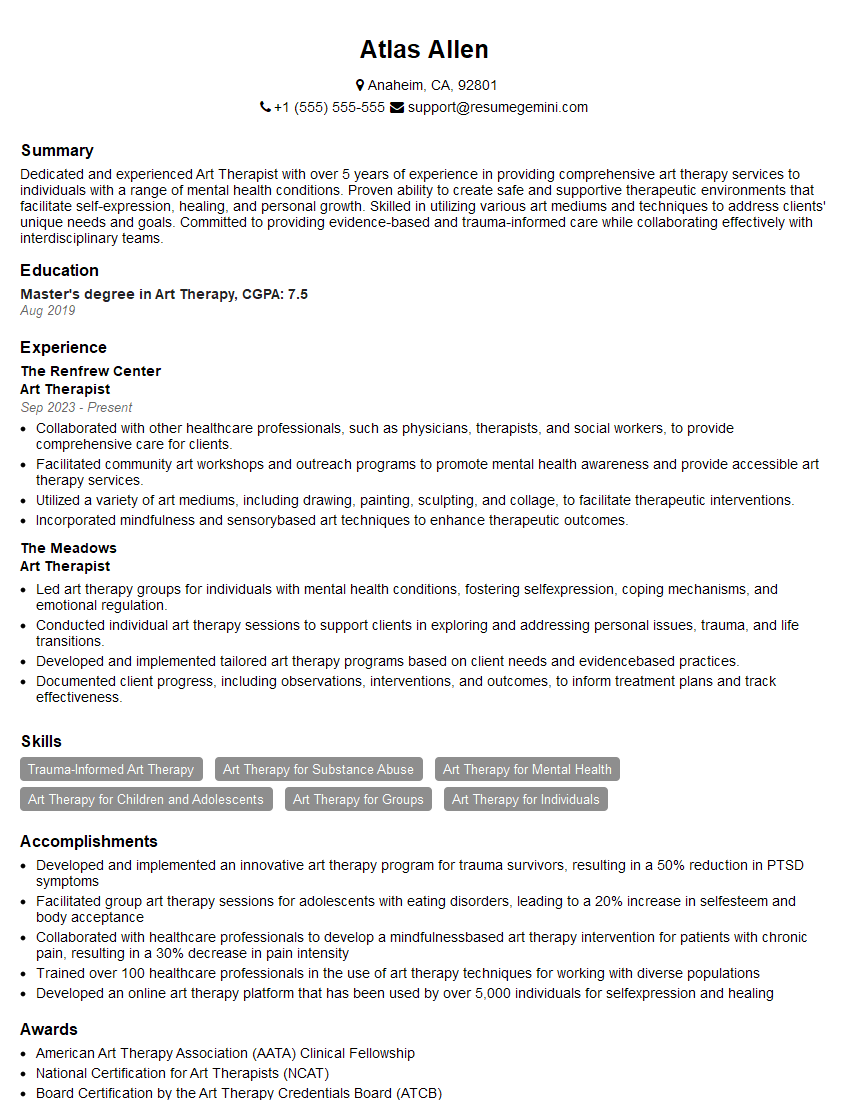
Mastering Assessment and Diagnosis Using Art Therapy is crucial for advancing your career in mental health and securing rewarding positions. A strong understanding of these concepts will significantly enhance your interview performance and showcase your expertise to potential employers. To increase your job prospects, creating a professional and ATS-friendly resume is essential. We highly recommend using ResumeGemini, a trusted resource for building impactful resumes. ResumeGemini offers examples of resumes specifically tailored to Assessment and Diagnosis Using Art Therapy to help you present your skills and experience effectively.
Explore more articles
Users Rating of Our Blogs
Share Your Experience
We value your feedback! Please rate our content and share your thoughts (optional).
What Readers Say About Our Blog
To the interviewgemini.com Webmaster.
Very helpful and content specific questions to help prepare me for my interview!
Thank you
To the interviewgemini.com Webmaster.
This was kind of a unique content I found around the specialized skills. Very helpful questions and good detailed answers.
Very Helpful blog, thank you Interviewgemini team.