The right preparation can turn an interview into an opportunity to showcase your expertise. This guide to ASTM D1160 interview questions is your ultimate resource, providing key insights and tips to help you ace your responses and stand out as a top candidate.
Questions Asked in ASTM D1160 Interview
Q 1. Describe the purpose and scope of ASTM D1160.
ASTM D1160, titled “Standard Test Method for Viscosity of Road and Paving Materials,” is a crucial standard in the pavement engineering field. Its purpose is to determine the viscosity of asphalt binders and other paving materials, a key property influencing their workability, performance, and durability. The scope encompasses various viscosity measurement techniques applicable to different temperature ranges and material consistencies, ensuring that appropriate methods are selected depending on the specific material being tested. This allows for accurate evaluation and comparison of the viscous behavior of different asphalt binders and their suitability for various paving applications. Imagine trying to build a road without knowing how easily the asphalt flows – ASTM D1160 provides this critical information.
Q 2. Explain the different types of viscosity measurements used in ASTM D1160.
ASTM D1160 outlines several viscosity measurement methods, broadly categorized as:
- Kinematic Viscosity: This method measures the resistance of a fluid to flow under gravity. It’s typically determined using a capillary viscometer, where the time taken for a fluid to flow through a calibrated tube is measured. The result is expressed in centistokes (cSt).
- Dynamic Viscosity: This method, also known as absolute viscosity, directly measures the internal resistance of a fluid to flow when an external force is applied. It’s often determined using rotational viscometers, which measure the torque required to rotate a spindle immersed in the fluid. The result is expressed in Pascal-seconds (Pa·s) or poise (P).
- Saybolt Viscosity: This is an older, empirical method that measures the time in seconds required for a specific volume of fluid to flow through a calibrated orifice at a given temperature. Results are expressed in Saybolt Universal Seconds (SUS) or Saybolt Furol Seconds (SFS). This method is less precise than kinematic and dynamic methods and is becoming less commonly used.
The choice of method depends on the viscosity range of the asphalt binder and the desired level of precision.
Q 3. What are the key differences between the different methods in ASTM D1160 (e.g., dynamic viscosity, kinematic viscosity)?
The key difference lies in how they measure viscosity:
- Kinematic viscosity considers only the fluid’s inherent resistance to flow and its density. The effect of gravity is factored in. Think of a molasses flowing down a hill – its speed is affected by gravity and the molasses’s own internal resistance.
- Dynamic viscosity, however, directly measures the resistance to flow regardless of external forces like gravity. It’s the inherent resistance independent of any external influence. Imagine stirring molasses with a spoon – you’re applying a force, and the resistance you feel is the dynamic viscosity.
Saybolt viscosity, as mentioned, is an older, less precise empirical method, relying on a specific apparatus and time measurement without direct consideration of forces or density. Therefore, kinematic and dynamic methods offer more precise and readily comparable results, especially across different labs and testing conditions.
Q 4. How does temperature affect viscosity measurements according to ASTM D1160?
Temperature significantly impacts viscosity. As temperature increases, the viscosity of asphalt binders generally decreases. This is because higher temperatures provide more kinetic energy to the asphalt molecules, making them more mobile and less resistant to flow. Conversely, lower temperatures lead to increased viscosity, resulting in a more viscous, less flowable material. ASTM D1160 accounts for this by specifying precise temperature control during testing, typically using temperature-controlled baths or ovens. The temperature is a critical factor as it impacts the validity of the testing, and deviations can lead to inaccurate results. Accurate temperature control is vital for accurate and comparable measurements.
Q 5. What are the critical factors affecting the accuracy of viscosity measurements in ASTM D1160?
Several factors influence the accuracy of viscosity measurements in ASTM D1160. These include:
- Temperature control: Inconsistent or inaccurate temperature control during the test will lead to inaccurate viscosity readings.
- Sample preparation: Improperly prepared samples (e.g., presence of air bubbles, incomplete mixing) will affect the flow behavior and yield erroneous results.
- Calibration of equipment: Regularly calibrated viscometers and associated equipment are crucial. A poorly calibrated viscometer can introduce significant errors.
- Operator technique: Skilled and experienced operators are needed to ensure consistent and accurate measurements.
- Sample homogeneity: The asphalt binder sample must be thoroughly mixed before testing to avoid variations in composition that can affect the viscosity measurement.
A meticulous approach to each step is required to minimize these sources of error. Regularly checking and calibrating equipment, following the standard procedures carefully, and having well-trained personnel are key to achieving reliable results.
Q 6. Explain the procedure for preparing the asphalt binder sample for testing according to ASTM D1160.
Sample preparation is crucial. ASTM D1160 typically calls for the asphalt binder to be heated to a temperature that renders it fluid enough for testing, but not so hot as to cause degradation. The exact temperature depends on the type of asphalt and the anticipated viscosity. The sample should then be thoroughly stirred to ensure homogeneity, removing any air bubbles trapped within the material. If air bubbles are present they can significantly affect flow and ultimately the measured viscosity. After mixing, the sample is allowed to stabilize at the testing temperature before measurement. This meticulous process minimizes potential errors and ensures consistent and representative measurements.
Q 7. What are the common sources of error in performing ASTM D1160 tests, and how can they be minimized?
Common sources of error and their minimization strategies include:
- Air bubbles in the sample: Thorough mixing and degassing techniques are needed to eliminate bubbles that can impede flow and create inaccurate readings.
- Improper temperature control: High-quality temperature control equipment with regular calibration should be used, and temperature monitoring during the test is important.
- Calibration errors: Viscometers should be calibrated regularly using certified reference materials.
- Operator error: Careful attention to procedure, precise timing, and consistent technique will minimize this type of error. Training and proficiency are vital.
- Sample degradation: Prolonged heating can alter the sample’s properties. Heating should be minimized and strictly controlled as per ASTM D1160 guidelines.
By addressing these potential error sources proactively, laboratories can ensure the reliability and accuracy of their viscosity measurements, enabling confident decision-making in pavement design and construction.
Q 8. Describe the calibration procedures for the equipment used in ASTM D1160 tests.
Calibration in ASTM D1160, the standard test method for determining the viscosity of asphalt binder using a rotational viscometer, is crucial for accurate and reliable results. It involves verifying the instrument’s performance against known standards. This typically includes calibrating the viscometer’s rotational speed, torque measurement, and temperature control systems.
Rotational Speed Calibration: This usually involves using a calibrated strobe light or a highly accurate tachometer to verify the rotational speed of the viscometer spindle at different settings. Any deviations must be adjusted according to the manufacturer’s instructions. Imagine a perfectly timed metronome – the viscometer’s speed needs to be equally precise.
Torque Calibration: The viscometer’s torque sensor needs calibration using calibrated weights or a known torque standard. This ensures that the measured torque accurately reflects the viscosity of the sample. Think of it as calibrating a kitchen scale to ensure accurate measurements of ingredients.
Temperature Calibration: The temperature of the sample significantly impacts its viscosity. The viscometer’s temperature control system (often a circulating bath) needs calibration using a calibrated thermometer or thermocouple. Ensuring the temperature is accurate is crucial; even a small deviation can lead to a significant error in viscosity measurement.
Calibration procedures should be documented meticulously, including dates, results, and any corrective actions taken. Regular calibration, ideally as per the manufacturer’s recommendations or a company’s internal quality control plan, is essential to maintain the accuracy and reliability of the test results.
Q 9. How do you interpret the results obtained from an ASTM D1160 test?
Interpreting ASTM D1160 results involves understanding that the test provides the dynamic viscosity (η*) of the asphalt binder at specific temperatures. The result, typically reported in Pa·s (Pascal-seconds) or poise, directly indicates the material’s resistance to flow. A higher viscosity means higher resistance to flow – think of honey versus water at room temperature.
The results are usually presented in a table or a graph, showing viscosity values at several different temperatures. This allows for the assessment of the asphalt binder’s temperature susceptibility (how much its viscosity changes with temperature).
For example, a low viscosity at high temperatures indicates good workability during paving, while a high viscosity at low temperatures ensures sufficient stiffness for pavement stability. The interpretation is relative to the specific application requirements. For instance, a high-viscosity binder might be suitable for heavy-duty applications but might be too stiff for low-temperature areas.
Comparing results across different asphalt binders, or for the same binder over time, allows for material evaluation and quality control. Any significant deviation from expected values might indicate a change in the binder’s properties requiring further investigation.
Q 10. What are the limitations of ASTM D1160?
ASTM D1160, while a widely used and valuable standard, does have limitations. The primary limitation is that it measures viscosity under controlled shear rate and temperature conditions. Real-world conditions, however, involve a much wider range of shear rates and temperatures.
Shear Rate Dependency: The viscosity measured using ASTM D1160 is not necessarily representative of the asphalt’s behavior under the different shear rates encountered during pavement construction and service life. The asphalt’s rheological properties can change significantly with shear rate.
Temperature Extrapolation: Extrapolating the viscosity to temperatures outside the tested range can be unreliable. The measured data is only valid for the tested temperatures.
Sample Preparation: The method relies on the proper preparation and handling of the asphalt sample to avoid biases in the result. Inconsistent sample preparation can lead to errors.
Equipment limitations: Certain types of rotational viscometers might have specific limitations in the range of viscosity they can accurately measure. Always consult the equipment’s specifications.
It’s important to remember that ASTM D1160 is a valuable tool for assessing asphalt binder viscosity, but its results should be considered within the context of these limitations and interpreted alongside other relevant test results.
Q 11. How does ASTM D1160 relate to other relevant ASTM standards for asphalt testing?
ASTM D1160 is closely related to several other ASTM standards for asphalt testing, forming a comprehensive suite for characterising asphalt binder properties. It complements tests that provide additional insights into the binder’s behavior.
ASTM D2170 (Superpave): This performance-graded asphalt binder specification uses D1160 data as one of the critical inputs to determine the binder’s performance grade. The viscosity data helps determine its temperature susceptibility and its suitability for various climatic conditions.
ASTM D5402 (Dynamic Shear Rheometer): While D1160 measures viscosity at relatively low shear rates, D5402 uses a dynamic shear rheometer to characterize the binder’s viscoelastic properties at higher shear rates, providing a more comprehensive understanding of its behavior under loading.
ASTM D70 (Penetration Test): This test measures the hardness of the binder. While not directly measuring viscosity, it provides another indicator of the binder’s stiffness, which is related to viscosity at lower temperatures.
These tests, used together, provide a detailed picture of the asphalt binder’s properties, enabling engineers to select the optimal binder for a specific application and predict its long-term performance.
Q 12. What is the significance of viscosity in determining the properties of asphalt binders?
Viscosity is paramount in determining the properties of asphalt binders because it directly governs their flow behavior. It’s a measure of the material’s resistance to flow under applied stress. Understanding viscosity is essential for predicting the binder’s performance in pavement applications.
Workability: Lower viscosity at higher temperatures (e.g., during paving) ensures proper workability and ease of compaction. A binder that’s too viscous will be difficult to spread and compact.
Pavement Stability: Higher viscosity at lower temperatures (e.g., during winter) enhances pavement stability and prevents rutting. A binder that’s too low in viscosity at low temperatures can lead to excessive deformation of the pavement.
Durability: The relationship between viscosity and temperature influences the binder’s long-term performance and durability. A binder with poor temperature susceptibility (significant viscosity change with temperature) may lead to premature pavement failure.
Therefore, viscosity is not just a single number but a critical parameter that dictates the binder’s ability to perform its intended function effectively throughout its service life.
Q 13. Explain the concept of viscosity-temperature susceptibility.
Viscosity-temperature susceptibility describes how much the viscosity of an asphalt binder changes with temperature. It’s a critical property because asphalt binders are used over a wide range of temperatures. A binder with high viscosity-temperature susceptibility will exhibit a large change in viscosity between hot and cold temperatures, while a binder with low susceptibility will exhibit a smaller change.
Imagine two different liquids: honey and water. Honey’s viscosity changes drastically with temperature – it’s extremely viscous at room temperature and much less so when heated. Water, on the other hand, shows less dramatic changes in viscosity. The honey would be an example of a high viscosity-temperature susceptibility material.
In pavement applications, high viscosity-temperature susceptibility can lead to problems. For example, a binder with high susceptibility might be too stiff at low temperatures, leading to cracking, and yet too fluid at high temperatures causing rutting. Low viscosity-temperature susceptibility, on the other hand, is generally desirable for more consistent performance across a range of temperatures.
Various empirical parameters like the Viscosity-Temperature Coefficient, or the use of Arrhenius models, are employed to quantitatively express this relationship.
Q 14. How would you troubleshoot common issues encountered during ASTM D1160 testing?
Troubleshooting ASTM D1160 testing involves systematic investigation to identify and correct the root cause of any issues. Common problems often stem from equipment malfunction, sample preparation, or procedural errors.
Inconsistent Results: Repeat the test with a fresh sample, checking for proper instrument calibration. Make sure the sample is thoroughly mixed and homogeneous. Verify correct procedure adherence to the standard.
Erroneous Readings: Check the viscometer’s calibration. Inspect the spindle for any damage. Ensure the temperature control system is functioning correctly and properly calibrated.
Air Bubbles in the Sample: Thoroughly degas the asphalt sample prior to testing to avoid air bubbles that could affect viscosity measurements.
Spindle Selection: Select the appropriate spindle for the expected viscosity range. Using an inappropriate spindle can lead to inaccurate results. Refer to the viscometer’s instruction manual for guidance.
Temperature Control Issues: Verify the temperature bath’s calibration and fluid level. Ensure adequate thermal contact between the sample and the temperature bath.
A systematic approach involving careful examination of each step, from sample preparation to data recording, is key to effective troubleshooting. Maintaining detailed records of the test procedure and results is crucial for identifying trends and potential sources of error.
Q 15. Describe the safety precautions necessary while performing ASTM D1160 tests.
Safety is paramount when performing ASTM D1160 viscosity tests, which involve handling potentially hazardous materials and operating specialized equipment. The specific precautions depend on the fluid being tested, but general safety measures include:
- Personal Protective Equipment (PPE): Always wear appropriate PPE, including safety glasses, lab coats, and gloves. For some materials, respirators might be necessary. The type of glove depends entirely on the fluid being tested; some fluids require specialized chemically resistant gloves.
- Proper Ventilation: Ensure adequate ventilation in the testing area to minimize exposure to any volatile or harmful vapors from the test fluid. A fume hood may be required.
- Safe Handling of Materials: Follow the Material Safety Data Sheet (MSDS) for the test fluid and handle it according to the recommendations. This includes appropriate precautions for spills and disposal.
- Equipment Operation: Become thoroughly familiar with the operation and safety features of the viscometer being used. Before using it, check its calibration and overall functionality.
- Emergency Procedures: Know the location of safety showers, eyewash stations, and fire extinguishers, and be prepared to use them if necessary. A clear plan for handling spills should also be in place.
For example, when testing a highly volatile solvent, using a fume hood and specialized gloves would be crucial. Ignoring these precautions could lead to serious injury or accidents.
Career Expert Tips:
- Ace those interviews! Prepare effectively by reviewing the Top 50 Most Common Interview Questions on ResumeGemini.
- Navigate your job search with confidence! Explore a wide range of Career Tips on ResumeGemini. Learn about common challenges and recommendations to overcome them.
- Craft the perfect resume! Master the Art of Resume Writing with ResumeGemini’s guide. Showcase your unique qualifications and achievements effectively.
- Don’t miss out on holiday savings! Build your dream resume with ResumeGemini’s ATS optimized templates.
Q 16. What are the reporting requirements for ASTM D1160 test results?
ASTM D1160 test reports should include all relevant information to ensure reproducibility and transparency. Key reporting requirements include:
- Sample Identification: Clear and unambiguous identification of the sample being tested, including lot number, date of sampling, and any relevant descriptive information.
- Test Method: Precise statement that ASTM D1160 was used, including any modifications or deviations from the standard procedure.
- Test Conditions: Detailed description of all test conditions, such as temperature, shear rate (if applicable), and equipment used. Specifics like the viscometer model and its calibration date are essential.
- Results: Clear presentation of the measured kinematic viscosity, usually reported in centistokes (cSt) or square millimeters per second (mm²/s), along with the corresponding temperature. If multiple measurements were taken, provide all data points and any calculated averages with standard deviation.
- Date and Time: Date and time of testing to aid in traceability.
- Tester’s Name/Signature: Identification of the individual who performed the test.
- Laboratory Information: Identification of the laboratory that conducted the test, including any relevant accreditation information.
Imagine a scenario where a manufacturer needs to verify the viscosity of a lubricant. A properly completed ASTM D1160 report, with all the details mentioned, will ensure that another lab could replicate the results and confirm the lubricant’s specifications. A poorly documented report might lead to disputes and inconsistencies.
Q 17. How do you ensure the quality and traceability of the results from ASTM D1160 tests?
Quality and traceability are vital for reliable ASTM D1160 results. This involves meticulous attention to several aspects throughout the process:
- Calibration and Verification: Regular calibration of the viscometer using traceable standards is crucial. This ensures the accuracy of the measurements. Calibration certificates and records should be maintained.
- Proper Sample Handling: Avoid contamination or changes to the sample’s properties during storage and handling. Proper labeling and chain of custody documentation contribute to traceability.
- Standard Operating Procedures (SOPs): Adhering to established SOPs for all aspects of the testing process (from sample preparation to data recording) ensures consistency and minimizes errors. These procedures should be reviewed regularly and updated as needed.
- Quality Control Samples: Regular testing of quality control samples (with known viscosity) ensures the consistency and accuracy of the testing process. Any significant deviation from expected values indicates a potential problem with the equipment or procedure.
- Data Management: A robust data management system helps maintain traceability, preventing loss or misinterpretation of results. A well-organized digital or physical system should be employed.
- Accreditation: ISO/IEC 17025 accreditation for the laboratory demonstrates compliance with internationally recognized standards and enhances the credibility of results.
Consider the potential consequences of inaccurate results in a critical application like aviation fuel – it highlights the absolute importance of quality control and rigorous traceability practices.
Q 18. Compare and contrast ASTM D1160 with other viscosity measurement methods.
ASTM D1160, focusing on kinematic viscosity, is just one method among several for measuring viscosity. It differs from others in significant ways:
- ASTM D445 (Kinematic Viscosity): While both ASTM D1160 and ASTM D445 measure kinematic viscosity, D445 uses a capillary viscometer and is more widely applicable, including transparent and opaque Newtonian liquids. D1160 is more specific and often involves higher viscosities.
- ASTM D2196 (Rotational Viscometry): This method utilizes rotational viscometers, measuring dynamic viscosity at controlled shear rates. It’s ideal for non-Newtonian fluids (whose viscosity changes with shear rate), unlike ASTM D1160 which is primarily for Newtonian fluids.
- Falling Ball Viscometer: This method determines viscosity by measuring the time it takes for a ball to fall through a fluid. It’s simpler than D1160 but may be less precise for specific viscosity ranges.
- Saybolt Viscometer: An older method measuring the time for a fixed volume of fluid to flow through a capillary tube. Less precise and less commonly used than modern methods like ASTM D445.
The choice of method depends on the fluid properties, desired accuracy, and available equipment. For example, a non-Newtonian polymer solution would necessitate ASTM D2196 or a similar rotational method, while a transparent Newtonian oil might be tested using either ASTM D1160 or ASTM D445.
Q 19. What are the specific requirements for sample size and preparation in ASTM D1160?
ASTM D1160 specifies sample requirements to ensure the test’s reliability and reproducibility. These requirements include:
- Sample Size: The required sample size varies based on the viscosity of the fluid and the viscometer used. Sufficient sample must be available to properly fill the viscometer without introducing air bubbles or other contaminants. The standard provides guidance on appropriate sample volumes.
- Sample Preparation: Samples should be free of air bubbles and particulate matter which can affect the measurement. Degassing may be necessary for some fluids. The sample should be thoroughly mixed before testing to ensure homogeneity. Pre-heating or cooling might also be required to bring the sample to the desired test temperature.
- Sample Homogeneity: The sample should be representative of the entire batch or lot being tested. Multiple samples may be needed to account for variations within a batch.
- Sample Condition: The sample’s condition (e.g., temperature) should be closely monitored and recorded to maintain test accuracy. Any changes in sample condition should be noted.
For instance, a highly viscous fluid would demand a larger sample volume than a low-viscosity fluid to adequately fill the viscometer. Failure to properly prepare the sample, like neglecting to degas, could cause inaccurate measurements and unreliable results.
Q 20. How do you manage data generated during ASTM D1160 testing?
Effective data management is essential for the integrity of ASTM D1160 testing. This involves:
- Data Logging: All raw data, including measurements, temperatures, and relevant observations, should be meticulously recorded in a laboratory notebook or an electronic data management system. Using a LIMS (Laboratory Information Management System) is ideal in most cases.
- Data Analysis: Data should be analyzed according to the standard’s guidelines. This includes calculating the average kinematic viscosity, standard deviation, and reporting the results with appropriate units.
- Data Storage: Data should be securely stored in a manner that protects its integrity and ensures long-term accessibility. This could involve electronic archiving or maintaining physical records. Appropriate data retention policies must be adhered to.
- Data Backup: Regular data backups are crucial to mitigate data loss due to unforeseen circumstances (hardware failures, natural disasters).
- Data Security: Secure data access policies are needed, limiting data access to authorized personnel only.
Implementing a robust data management system helps to ensure data integrity and facilitates traceability, significantly contributing to the overall quality of the testing process. A good system facilitates efficient data retrieval when required for audits or future analysis.
Q 21. Explain the role of quality control in ASTM D1160 testing.
Quality control (QC) is integral to ensuring the accuracy and reliability of ASTM D1160 testing. This involves:
- Calibration Checks: Regular calibration of the viscometer is a cornerstone of QC. This involves using certified reference materials to verify the accuracy of the equipment.
- Blank Tests: Performing blank tests (with the viscometer filled with the solvent only) helps detect any systematic errors associated with the equipment or procedures.
- Control Charts: Maintaining control charts helps track the consistency of the testing process over time. This facilitates early detection of any trends indicating potential problems.
- Duplicate Testing: Performing duplicate tests (or replicates) on the same sample improves accuracy and helps assess the precision of the measurement process.
- Proficiency Testing: Participating in proficiency testing programs organized by external bodies helps demonstrate the laboratory’s competency and adherence to good laboratory practices.
- Internal Audits: Regular internal audits of the testing process are important to review protocols and ensure compliance with ASTM D1160 standards and any relevant internal policies.
Imagine a scenario where the viscosity of a critical component in a manufacturing process is consistently outside the acceptable range. A robust QC program would alert the team to the deviation and help to pinpoint the reason before the problem impacts production. Without this program, the problem may remain undetected, leading to serious quality and financial consequences.
Q 22. What are the potential implications of inaccurate ASTM D1160 test results?
Inaccurate ASTM D1160 test results, which determine the kinematic viscosity of a liquid, can have significant implications across various industries. Imagine a lubricant manufacturer relying on these results to guarantee the performance of their product. Inaccurate viscosity data could lead to incorrect formulations, potentially resulting in premature equipment failure due to insufficient lubrication or increased friction leading to energy losses. For example, an underestimation of viscosity in a motor oil could cause engine damage, while an overestimation might lead to reduced fuel efficiency. In the pipeline industry, inaccurate viscosity data can lead to incorrect flow rate calculations and potentially pipeline blockages. The financial consequences of these errors can range from costly repairs and product recalls to legal liabilities and reputational damage.
Q 23. How does the choice of viscometer affect the results of ASTM D1160 testing?
The choice of viscometer significantly impacts ASTM D1160 test results. ASTM D1160 allows for different types of viscometers, each with its own strengths and weaknesses. Capillary viscometers, for instance, are widely used and relatively inexpensive, but they have limitations in measuring highly viscous fluids. Rotating viscometers offer greater versatility, capable of handling a wider range of viscosities, but they are typically more complex and expensive. The precision of the viscometer, its calibration accuracy, and the adherence to the standardized procedures outlined in ASTM D1160 directly influence the accuracy of the viscosity measurement. A poorly calibrated or inappropriate viscometer will lead to inaccurate results, thereby compromising the reliability of the test and any decisions based on it. Consider the case of a low-shear viscometer used for a fluid that exhibits shear-thinning behaviour— the results would be inaccurate and not representative of the fluid’s behavior under real-world conditions.
Q 24. Describe your experience with different types of viscometers used in ASTM D1160.
My experience encompasses a wide range of viscometers used in ASTM D1160 testing, including capillary viscometers (like Ubbelohde and Cannon-Fenske types), rotational viscometers (both cone-plate and coaxial cylinder geometries), and falling-ball viscometers. Capillary viscometers are my go-to for routine testing of Newtonian fluids with moderate viscosities because of their simplicity and accuracy. However, I recognize that for non-Newtonian fluids or those with very high or very low viscosities, rotational viscometers are necessary. For example, testing highly viscous polymer solutions requires a rotational viscometer with sufficient torque capability. Falling-ball viscometers are useful for quick, on-site measurements, though they may lack the precision of capillary or rotational viscometers. The choice of viscometer always depends on the specific fluid properties and the required accuracy level.
Q 25. How would you interpret a viscosity curve generated from ASTM D1160 data?
A viscosity curve generated from ASTM D1160 data typically plots viscosity (in centistokes or mm²/s) against temperature. This curve demonstrates the fluid’s viscosity behavior over a temperature range. For Newtonian fluids, a smooth, monotonically decreasing curve is expected, indicating a decrease in viscosity with increasing temperature. Non-Newtonian fluids might display more complex curves, potentially exhibiting shear-thinning or shear-thickening behavior. Analyzing the curve helps determine the fluid’s viscosity at specific temperatures, predict its behavior at various operating conditions, and assess its suitability for intended applications. For example, a steep decline in viscosity with temperature suggests a fluid with high sensitivity to temperature changes. Deviations from the expected curve can indicate issues with the sample, the test procedure, or the viscometer itself, prompting further investigation.
Q 26. What is the significance of the viscosity index in the context of ASTM D1160?
The viscosity index (VI) is a crucial parameter derived from ASTM D2270, often used in conjunction with ASTM D1160 data. While not directly part of D1160, it’s essential for characterizing the change in viscosity of an oil with temperature. A high VI indicates that the oil’s viscosity is less affected by temperature changes—meaning it remains relatively constant over a broader temperature range. A low VI signifies greater viscosity variation with temperature. This is especially important in lubricating applications where the oil must maintain its lubricating properties under varying operating temperatures. An oil with a high VI is generally preferred for engines or equipment operating over a wide temperature range, ensuring consistent lubrication across diverse conditions.
Q 27. How do you ensure compliance with ASTM D1160 in a laboratory setting?
Ensuring compliance with ASTM D1160 in a laboratory setting requires meticulous attention to detail. This starts with using properly calibrated and maintained viscometers that are traceable to national or international standards. Adherence to the prescribed test procedures, including sample preparation, temperature control, and measurement techniques, is paramount. Regular quality control checks, including testing certified reference materials, are crucial for ensuring accuracy and precision. Maintaining detailed records of all measurements, calibrations, and any deviations from the standard operating procedures is also essential. Following these steps ensures that test results are reliable, accurate and traceable back to the standardized method, and therefore are compliant with ASTM D1160. Furthermore, regular internal audits, and participation in proficiency testing programs help to validate the laboratory’s competence and continuous compliance.
Q 28. Explain the importance of proper documentation in ASTM D1160 testing.
Proper documentation in ASTM D1160 testing is absolutely crucial for ensuring the validity and traceability of the results. Comprehensive records should include details of the sample, including its identification, source, and date of receipt. The type of viscometer used, its calibration data, and any relevant instrument settings must be documented. Detailed procedural steps, including measurement temperatures, the number of replicate measurements, and any observed anomalies during the testing process, should be meticulously recorded. Finally, the calculated viscosity values, along with any derived parameters like viscosity index, should be clearly reported. Thorough documentation allows for easy review of the testing process, facilitating audits and supporting the validity of the results. It also allows for tracking potential sources of error, assisting in the improvement of future test runs and assuring the reproducibility of the test results by other qualified laboratories.
Key Topics to Learn for ASTM D1160 Interview
- Standard Test Method Overview: Understand the purpose and scope of ASTM D1160, including its applications in various industries.
- Sample Preparation and Handling: Master the techniques for proper sample selection, preparation, and handling to ensure accurate and reliable results. This includes understanding potential sources of error and how to mitigate them.
- Apparatus and Equipment: Familiarize yourself with the necessary equipment and instrumentation used in the test, understanding their functions and limitations. Be prepared to discuss calibration procedures and maintenance.
- Procedure and Methodology: Thoroughly understand the step-by-step procedures outlined in ASTM D1160. Be able to explain the rationale behind each step and its impact on the final results.
- Data Analysis and Interpretation: Learn how to properly analyze and interpret the collected data, including calculations and reporting. Understand the significance of the results and their implications.
- Quality Control and Assurance: Discuss quality control measures implemented during the testing process to ensure the accuracy and reliability of the results. Understand the importance of maintaining accurate records and documentation.
- Troubleshooting Common Issues: Be prepared to discuss potential problems that may arise during testing and how to troubleshoot and resolve them effectively.
- Understanding the Significance of Results: Be able to explain how the results of an ASTM D1160 test are used in practical applications and decision-making processes.
- Comparison with other relevant standards: Demonstrate your understanding of how ASTM D1160 relates to other relevant standards and testing methods.
Next Steps
Mastering ASTM D1160 significantly enhances your value to employers in various sectors relying on materials testing and quality control. Demonstrating this expertise is crucial for career advancement. To maximize your job prospects, it’s essential to create a resume that effectively highlights your skills and experience using Applicant Tracking System (ATS)-friendly keywords and formatting. ResumeGemini is a trusted resource to help you build a professional and impactful resume that gets noticed. We offer examples of resumes tailored to ASTM D1160 to give you a head start. Take the next step towards your dream career today!
Laboratory Manager Resume Sample

Quality Assurance Manager Resume Sample

Quality Control Supervisor Resume Sample

Project Engineer Resume Sample

Compliance Officer Resume Sample

Regulatory Affairs Specialist Resume Sample
Process Engineer Resume Sample

Civil Engineer Resume Sample
Geotechnical Engineer Resume Sample
Field Engineer Resume Sample

Environmental Engineer Resume Sample
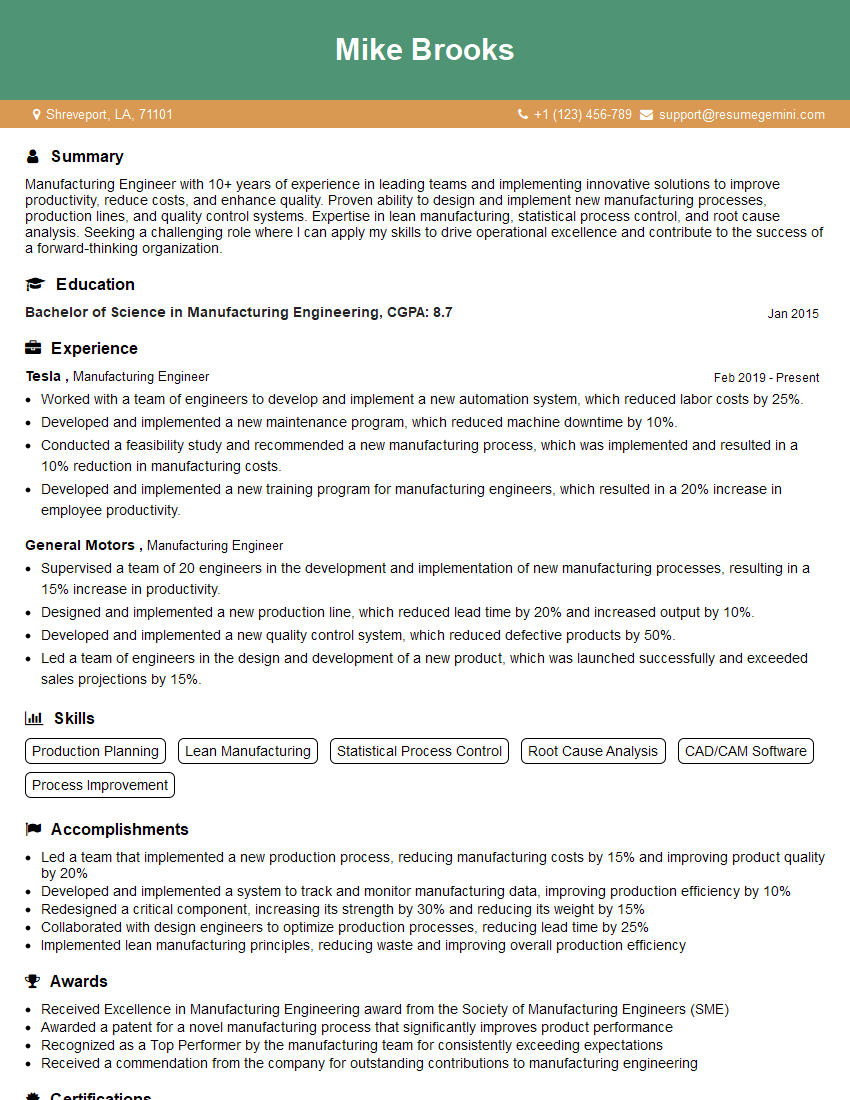
Manufacturing Engineer Resume Sample

Petroleum Engineer Resume Sample

Laboratory Technician Resume Sample

Analytical Chemist Resume Sample
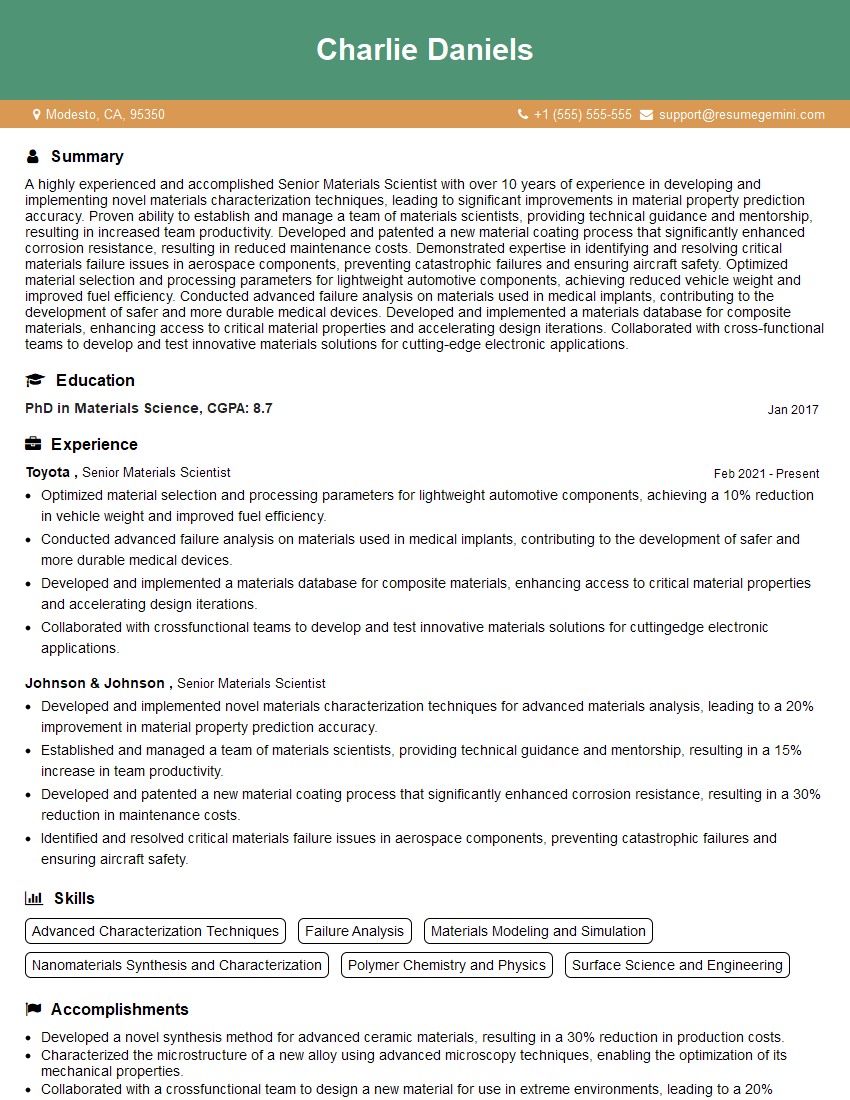
Senior Materials Scientist Resume Sample
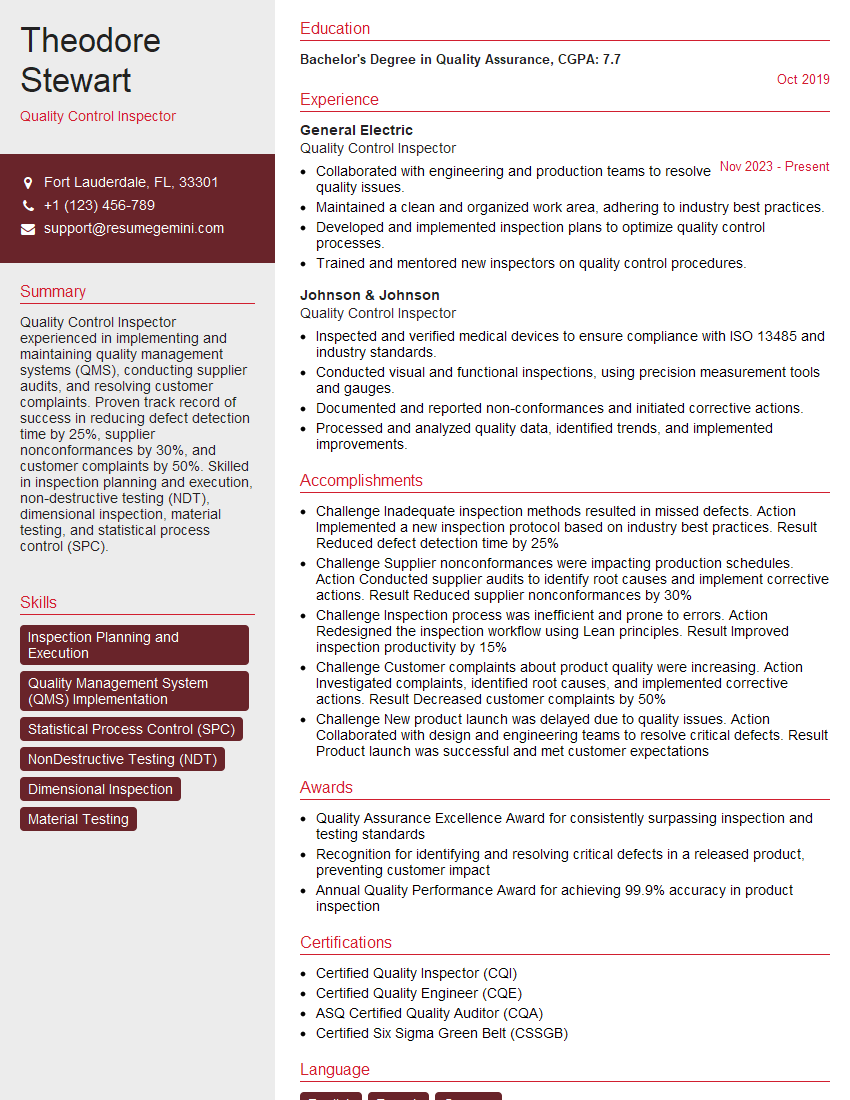
Quality Control Inspector Resume Sample
- Laboratory Manager
- Quality Assurance Manager
- Quality Control Supervisor
- Project Engineer
- Compliance Officer
- Regulatory Affairs Specialist
- Process Engineer
- Civil Engineer
- Geotechnical Engineer
- Field Engineer
- Environmental Engineer
- Manufacturing Engineer
- Petroleum Engineer
- Laboratory Technician
- Analytical Chemist
- Senior Materials Scientist
- Quality Control Inspector
Explore more articles
Users Rating of Our Blogs
Share Your Experience
We value your feedback! Please rate our content and share your thoughts (optional).
What Readers Say About Our Blog
To the interviewgemini.com Webmaster.
Very helpful and content specific questions to help prepare me for my interview!
Thank you
To the interviewgemini.com Webmaster.
This was kind of a unique content I found around the specialized skills. Very helpful questions and good detailed answers.
Very Helpful blog, thank you Interviewgemini team.