Interviews are opportunities to demonstrate your expertise, and this guide is here to help you shine. Explore the essential Atmospheric Correction interview questions that employers frequently ask, paired with strategies for crafting responses that set you apart from the competition.
Questions Asked in Atmospheric Correction Interview
Q 1. Explain the difference between atmospheric scattering and absorption.
Atmospheric scattering and absorption are two distinct processes that affect the propagation of electromagnetic radiation through the atmosphere. Think of it like shining a flashlight through a foggy room.
Scattering is the redirection of light in various directions by particles in the atmosphere (like dust, water droplets, and air molecules). Imagine the fog scattering your light beam, making it less intense and harder to pinpoint its source. The amount of scattering depends on the wavelength of light (shorter wavelengths like blue are scattered more) and the size and density of the particles. This is why the sky appears blue – blue light is scattered more efficiently than other colors.
Absorption, on the other hand, is the process where atmospheric gases (like ozone, carbon dioxide, and water vapor) absorb certain wavelengths of light. It’s like some parts of your light beam being completely soaked up by the fog, reducing its overall intensity. Different gases absorb different wavelengths, creating characteristic absorption bands in the spectrum. This is crucial to consider when analyzing remotely sensed data, as certain wavelengths may be severely attenuated.
Q 2. Describe the different types of atmospheric correction methods (e.g., dark object subtraction, empirical line method, radiative transfer models).
Several atmospheric correction methods exist, each with its own strengths and weaknesses:
- Dark Object Subtraction (DOS): This simple method assumes the darkest pixel in an image represents the atmospheric path radiance. It’s computationally inexpensive but relies on assumptions that may not always be valid (like the presence of a truly dark object). It is most useful for initial estimates or when computational resources are limited.
- Empirical Line Method (ELM): This method uses the relationship between the reflectance of vegetation and water pixels to estimate atmospheric parameters. It’s relatively simple to implement and requires minimal input data, but accuracy depends on the availability of appropriate reference pixels and the stability of atmospheric conditions.
- Radiative Transfer Models (RTMs): These sophisticated models (like MODTRAN, 6S, etc.) simulate the interaction of light with the atmosphere, accounting for scattering and absorption. They require detailed atmospheric profiles (temperature, pressure, humidity, aerosol concentration) as input and can be computationally intensive, yet they provide the most accurate atmospheric correction when the atmospheric profiles are known with good accuracy.
Q 3. What are the limitations of each atmospheric correction method?
Limitations of each method:
- DOS: Sensitive to sensor noise and the assumption of a truly dark object; inaccurate in heterogeneous landscapes.
- ELM: Requires distinct and reliable reference pixels; accuracy is affected by atmospheric variability and scene complexity.
- RTMs: Computationally expensive; accuracy relies heavily on the accuracy and availability of atmospheric profiles; complex to set up and use.
The choice of method depends on the desired accuracy, available data, and computational resources.
Q 4. How do you handle cloud contamination in satellite imagery?
Cloud contamination is a major challenge in remote sensing. Clouds obscure the ground, causing significant errors in atmospheric correction and surface reflectance estimation. Handling cloud contamination involves several strategies:
- Cloud Masking: Identifying and removing cloud-covered pixels using algorithms that analyze spectral signatures and image texture. Many algorithms exist which utilize thresholds on specific bands or indices to identify clouds.
- Cloud Filling: Estimating the reflectance of cloud-covered areas using interpolation techniques or by using data from neighboring cloud-free pixels. Advanced approaches use machine learning techniques to predict surface reflectance under cloud cover.
- Data Selection: Choosing imagery with minimal cloud cover. This might involve revisiting the area and acquiring new data when cloud cover is less extensive.
The effectiveness of each strategy depends on the density and type of cloud cover and the quality of the available data.
Q 5. Explain the role of atmospheric profiles in atmospheric correction.
Atmospheric profiles are crucial for accurate atmospheric correction, especially when using radiative transfer models. These profiles provide vertical profiles of atmospheric parameters (e.g., temperature, pressure, water vapor concentration, aerosol distribution) at the time the satellite image was acquired. Think of it like providing the RTM with a blueprint of the atmosphere’s condition during image capture.
Without accurate profiles, the model cannot accurately simulate the interaction of light with the atmosphere, leading to significant errors in the estimated surface reflectance. Profiles can be obtained from weather stations, radiosondes, or atmospheric models (like reanalysis data).
Q 6. What are the key parameters used in atmospheric correction models?
Key parameters in atmospheric correction models include:
- Aerosol Optical Depth (AOD): Represents the extinction of light by aerosols. Higher AOD means more scattering and absorption.
- Aerosol Type and Size Distribution: Different aerosol types (e.g., dust, sulfate, sea salt) scatter and absorb light differently, influencing the spectral characteristics of the atmospheric effect.
- Water Vapor Content: Affects absorption, particularly in near-infrared wavelengths.
- Ozone Concentration: Absorbs strongly in the ultraviolet and near-infrared regions.
- Surface Albedo: The reflectivity of the surface, which influences the amount of light reflected back into the atmosphere and is often an iterative process in atmospheric correction.
- Solar Zenith Angle: The angle of the sun relative to the surface, impacting the path length of sunlight through the atmosphere.
- Viewing Zenith Angle: The angle between the sensor and the surface, affecting the path length of the reflected light.
Q 7. Discuss the impact of aerosols on remote sensing data.
Aerosols significantly impact remote sensing data by scattering and absorbing solar radiation. This impacts the accuracy of estimations of land surface properties like vegetation cover, water quality, etc. This effect is particularly pronounced in shorter wavelengths.
Aerosols can cause:
- Increased atmospheric path radiance: leading to overestimation of surface reflectance.
- Reduced surface reflectance: due to absorption of light by aerosols.
- Spectral distortions: Altering the spectral signature of the surface features, potentially leading to misclassification.
Accurate estimation and accounting for aerosol effects are crucial for obtaining reliable information from remotely sensed data. This often involves using aerosol retrieval techniques to estimate aerosol properties from satellite data itself.
Q 8. How do you validate the accuracy of your atmospheric correction results?
Validating atmospheric correction accuracy is crucial for reliable remote sensing data analysis. We employ a multi-pronged approach, combining in-situ measurements with established validation techniques.
- In-situ measurements: Ground-based measurements of reflectance using spectroradiometers at the same time as satellite overpasses provide a direct comparison to our corrected data. Differences reveal the accuracy of our correction. For example, if we’re studying vegetation, we’d measure reflectance from a known area of homogenous vegetation using a field spectroradiometer. This ground truth data forms the benchmark against which our corrected satellite data is evaluated.
- Cross-validation with other datasets: We can compare our atmospherically corrected data against other remotely sensed data with known high accuracy, such as high-resolution aerial imagery or LiDAR data, looking for consistency in features and land cover classification.
- Statistical analysis: Metrics like Root Mean Square Error (RMSE) and R-squared values quantify the agreement between our corrected data and the reference data. Low RMSE and high R-squared values indicate high accuracy.
- Visual inspection: A visual comparison of images before and after atmospheric correction often reveals significant improvements. For instance, removal of atmospheric scattering should result in a more uniform and natural-looking image, where the haze is removed.
A comprehensive validation strategy includes all these steps. Remember, no single method provides perfect validation; a combined approach is vital for robust results.
Q 9. What are the common atmospheric correction software packages you are familiar with (e.g., ENVI, ERDAS, ArcGIS)?
I’m proficient in several atmospheric correction software packages, each with its strengths and weaknesses. My experience includes:
- ENVI: ENVI offers a comprehensive suite of tools, including FLAASH (Fast Line-of-sight Atmospheric Analysis of Spectral Hypercubes), a widely used atmospheric correction algorithm, that excels in processing hyperspectral imagery. I’ve extensively used it for both image correction and analysis.
- ERDAS IMAGINE: ERDAS provides a similar range of atmospheric correction options. I’ve utilized it particularly for its ease of integration with other geospatial data processing workflows. Its atmospheric correction modules offer a balance between speed and accuracy.
- ArcGIS: While not as specialized in atmospheric correction as ENVI or ERDAS, ArcGIS integrates well with other geoprocessing tasks. I often use it for visualization and analysis after performing atmospheric correction in another dedicated software.
My choice of software depends on the specific project requirements, data characteristics (e.g., sensor type, spatial resolution), and available computing resources. For instance, processing large hyperspectral datasets often necessitates a high-performance computing environment with specialized software.
Q 10. Describe your experience with radiative transfer modeling.
Radiative transfer modeling is fundamental to atmospheric correction. It’s essentially a mathematical simulation of how electromagnetic radiation interacts with the atmosphere. This includes absorption, scattering, and emission by atmospheric constituents like water vapor, aerosols, and gases.
My experience involves applying radiative transfer codes like MODTRAN (Moderate Resolution Atmospheric Transmission) and 6S (Second Simulation of the Satellite Signal in the Solar Spectrum). I’ve used these models to:
- Simulate atmospheric effects: I’ve employed these models to understand how atmospheric conditions affect the spectral signature of the surface, providing insights into the magnitude of atmospheric correction needed.
- Parameterize atmospheric correction algorithms: The output of these models helps in determining the parameters required by algorithms like FLAASH or QUAC (Quantitative Atmospheric Correction). For example, these models can estimate aerosol optical depth and water vapor content, which are critical inputs for atmospheric correction.
- Assess uncertainty: By incorporating varying atmospheric conditions and uncertainties in input parameters, I can evaluate the potential errors in the atmospheric correction.
Understanding the underlying physics through radiative transfer modeling allows for more informed decision-making in selecting and applying atmospheric correction techniques and interpreting results.
Q 11. How do you handle atmospheric effects in hyperspectral imagery?
Hyperspectral imagery, with its many narrow spectral bands, presents unique challenges and opportunities for atmospheric correction. The high spectral resolution reveals subtle atmospheric effects that might be missed in broader-band imagery.
My approach typically involves:
- Spectral unmixing: separating the mixed signals from different atmospheric constituents and the target material.
- Using specialized algorithms: FLAASH, designed for hyperspectral data, is often the preferred choice. Its ability to handle the numerous bands efficiently and accurately is crucial.
- Careful consideration of atmospheric parameters: Accurate estimation of parameters like aerosol type and concentration is vital due to the sensitivity of hyperspectral data to atmospheric variations.
- Validation with ground truth data: Validation is even more critical with hyperspectral data because of the increased complexity and sensitivity to errors.
I often employ iterative approaches, refining the atmospheric correction parameters until I obtain consistent and physically plausible results. For example, I might compare corrected spectra with spectral libraries of known materials to assess the accuracy.
Q 12. Explain the concept of atmospheric path radiance.
Atmospheric path radiance refers to the radiance that is added to the signal measured by a sensor due to scattering and emission by atmospheric constituents. Imagine looking at a distant mountain through a hazy atmosphere; the haze adds a veil of brightness to what you see. This veil of brightness is analogous to path radiance.
Path radiance is a significant source of error in remote sensing because it adds unwanted signal to the reflected light from the Earth’s surface. It’s dependent on several factors:
- Atmospheric conditions: The amount of aerosols, water vapor, and gases in the atmosphere.
- Viewing geometry: The angle of the sensor relative to the sun and the surface.
- Wavelength: Path radiance varies across the electromagnetic spectrum.
Atmospheric correction methods aim to remove this path radiance to retrieve the true surface reflectance.
Q 13. What are the differences between top-of-atmosphere (TOA) and surface reflectance?
Top-of-atmosphere (TOA) reflectance and surface reflectance represent different stages in the path of electromagnetic radiation. TOA reflectance is the radiation measured by a satellite sensor at the top of the atmosphere. It includes the effects of atmospheric scattering and absorption. Think of it as the ‘raw’ data.
Surface reflectance, on the other hand, represents the radiation reflected from the Earth’s surface *after* atmospheric effects have been removed. This is the value we’re generally interested in for most applications – it represents the true reflectance properties of the Earth’s surface. For example, if we are interested in the actual reflectance of a forest canopy, we need the surface reflectance, not the TOA value, which is influenced by atmospheric scattering.
Atmospheric correction transforms TOA reflectance into surface reflectance by removing the atmospheric contributions. This is essential for accurate analysis and comparison of remotely sensed data.
Q 14. How does atmospheric correction affect vegetation indices?
Atmospheric correction significantly affects vegetation indices (VIs), which are calculated from satellite imagery to assess vegetation health and properties. VIs are sensitive to atmospheric effects because they use specific wavelengths of light that are strongly influenced by scattering and absorption.
Without atmospheric correction, VIs will be artificially low, obscuring the true vegetation characteristics. The atmospheric path radiance adds noise to the signal, while atmospheric absorption removes energy at certain wavelengths crucial to VIs. For example, the Normalized Difference Vegetation Index (NDVI), calculated using red and near-infrared bands, is highly susceptible to atmospheric scattering which tends to raise the red reflectance more than the near-infrared, leading to an underestimation of NDVI.
Correcting for atmospheric effects ensures that VIs accurately reflect the biophysical properties of vegetation. This allows for reliable monitoring of vegetation growth, health, and stress, crucial for agriculture, forestry, and environmental management.
Q 15. Explain the concept of atmospheric transmittance.
Atmospheric transmittance represents the fraction of light that makes it through the atmosphere from the sun to the Earth’s surface, or vice-versa from the surface to the sensor. Imagine shining a flashlight through a foggy window – some light gets through, but some is scattered or absorbed by the fog. The transmittance is that proportion of light that successfully passes through. In remote sensing, it’s crucial because it tells us how much the atmosphere attenuates the signal from the Earth’s surface, affecting the spectral signature captured by satellites or airborne sensors. We need to account for this attenuation to accurately determine the surface reflectance.
For example, a transmittance of 0.8 means 80% of the light reaches the surface. The remaining 20% is lost due to scattering and absorption by atmospheric gases (like water vapor, oxygen, and carbon dioxide), aerosols (like dust and pollutants), and clouds. Different wavelengths of light are affected differently; water vapor strongly absorbs infrared light, for instance. Precise calculation of transmittance is fundamental to accurate atmospheric correction.
Career Expert Tips:
- Ace those interviews! Prepare effectively by reviewing the Top 50 Most Common Interview Questions on ResumeGemini.
- Navigate your job search with confidence! Explore a wide range of Career Tips on ResumeGemini. Learn about common challenges and recommendations to overcome them.
- Craft the perfect resume! Master the Art of Resume Writing with ResumeGemini’s guide. Showcase your unique qualifications and achievements effectively.
- Don’t miss out on holiday savings! Build your dream resume with ResumeGemini’s ATS optimized templates.
Q 16. What is the role of atmospheric correction in precision agriculture?
Atmospheric correction is absolutely vital in precision agriculture because it removes the atmospheric distortions from satellite or aerial imagery, allowing us to obtain true reflectance values from the crops. Without correction, we’d be analyzing data that’s muddied by atmospheric effects, leading to inaccurate assessments of crop health, vigor, and yield. Consider the difference between seeing a field clearly on a sunny day versus trying to observe it through a thick haze: the haze obscures the details.
For instance, we might be using multispectral imagery to monitor nitrogen levels in a corn field. If the atmospheric correction isn’t properly applied, variations in atmospheric conditions (e.g., haze levels) across the field could lead us to wrongly diagnose nitrogen deficiency in one area and abundance in another. Precise, atmospheric-corrected data allows for accurate prescription of fertilizer, irrigation, and other inputs for optimized yields and resource management, thereby improving the overall efficiency and sustainability of farming practices.
Q 17. Describe your experience with different atmospheric correction algorithms (e.g., FLAASH, ATCOR).
I have extensive experience with a range of atmospheric correction algorithms, including FLAASH (Fast Line-of-sight Atmospheric Analysis of Spectral Hypercubes) and ATCOR (Atmospheric Correction for High Resolution Imagery). FLAASH is a robust, physically-based model well-suited for hyperspectral and multispectral imagery. I’ve used it extensively to correct data from Landsat, ASTER, and airborne sensors. Its strength lies in its detailed modeling of atmospheric scattering and absorption, yielding accurate results across a wide range of atmospheric conditions. However, it requires accurate ancillary data, such as atmospheric profiles and water vapor content.
ATCOR, on the other hand, is a more empirical approach, often favored for high-resolution imagery. I’ve found it particularly useful when working with very high spatial resolution data where the FLAASH’s computational demands might be excessive. ATCOR relies on less ancillary data and uses lookup tables which makes it computationally efficient but perhaps less accurate under extreme atmospheric conditions. The choice between FLAASH and ATCOR often depends on the available data, the sensor characteristics, and the desired level of accuracy.
In my experience, successful application of these algorithms often involves iterative refinement and validation. I frequently compare corrected data with ground measurements to assess the accuracy and fine-tune the algorithms’ parameters, ensuring the best possible results for the project.
Q 18. How do you select the appropriate atmospheric correction method for a specific application?
Selecting the appropriate atmospheric correction method is a critical step and depends on several factors. It’s not a one-size-fits-all situation. Here’s a step-by-step approach I usually follow:
- Image characteristics: Spatial resolution, spectral range, sensor type (e.g., Landsat, Sentinel, WorldView). High-resolution data often benefits from empirical methods like ATCOR, while hyperspectral data often requires a physically based model like FLAASH.
- Application requirements: What’s the intended use of the data? High accuracy is needed for precision agriculture applications, while less accuracy might be acceptable for other uses.
- Available ancillary data: Do we have meteorological data (temperature, pressure, humidity, aerosol optical depth)? Physically based models require more ancillary data than empirical methods.
- Computational resources: Physically based methods are more computationally intensive than empirical ones.
- Validation data: Will ground truth data be available to validate the corrected results? This helps in selecting and optimizing the most appropriate method.
By carefully considering these aspects, I can choose the atmospheric correction method that strikes the best balance between accuracy, efficiency, and the available resources. This often involves a trial-and-error process involving various algorithms before choosing the optimal method.
Q 19. What are the challenges in atmospheric correction for high-resolution imagery?
Atmospheric correction of high-resolution imagery presents unique challenges. The high spatial resolution reveals subtle variations in atmospheric conditions across the scene, making it difficult to obtain a uniform correction. For example, shadows cast by buildings or trees create variations in the illumination conditions, and these affect the apparent reflectance values, making corrections more complex than using low-resolution images where these effects are averaged out.
Another challenge is the increased computational demands associated with processing large volumes of high-resolution data. Furthermore, the higher resolution reveals finer details, highlighting the limitations of current atmospheric models which often struggle to account for local atmospheric variations accurately. Subtle variations in atmospheric constituents at such fine scales can lead to significant errors in the correction process. The accurate estimation of aerosol optical properties which is essential for the correction is particularly problematic at high resolution. Lastly, mixed pixel effects can become more complex in high-resolution imagery, requiring more sophisticated correction approaches.
Q 20. Explain the concept of adjacency effects and how they are addressed in atmospheric correction.
Adjacency effects occur when the radiation reflected from one area influences the signal measured from an adjacent area. Imagine a dark forest next to a bright field: the shade from the forest can reduce the measured reflectance of the field. These effects are particularly noticeable in high-resolution imagery. They violate the assumption of atmospheric models that each pixel is independently illuminated and contribute to errors in atmospheric correction, causing an underestimation of reflectance values in darker areas and overestimation in brighter areas.
Addressing adjacency effects in atmospheric correction usually involves specialized techniques like using bidirectional reflectance distribution function (BRDF) models or employing advanced atmospheric correction algorithms that explicitly consider the influence of surrounding pixels. This often requires higher computation and can utilize techniques like spatial filtering to smooth reflectance values while still preserving spatial details. In some cases, it may necessitate acquiring ancillary data providing information on the surrounding areas, so that these effects can be modeled more accurately.
Q 21. How do you account for the effect of terrain on atmospheric correction?
Terrain significantly influences atmospheric correction because it alters the path length of light through the atmosphere. Light traveling through a valley has a longer path length through the atmosphere compared to light traveling over a mountaintop, leading to different levels of atmospheric scattering and absorption. This results in varying atmospheric effects depending on elevation.
Accounting for terrain effects typically involves incorporating digital elevation models (DEMs) into the atmospheric correction process. This allows the algorithm to calculate the actual path length of radiation for each pixel based on its elevation and surrounding topography. Sophisticated atmospheric correction models then adjust their calculations accordingly, ensuring a more accurate correction of the reflectance values based on the varying atmospheric conditions along the light path.
Ignoring terrain effects can lead to significant errors, especially in mountainous areas, leading to inaccurate estimations of surface reflectance. Incorporating DEMs into the atmospheric correction workflow is therefore crucial for obtaining reliable results, particularly in regions with significant topographic relief.
Q 22. Describe your experience with quality control procedures for atmospheric correction.
Quality control in atmospheric correction is crucial for ensuring the accuracy and reliability of derived surface reflectance. It’s a multi-step process involving both pre- and post-correction checks.
Pre-correction checks focus on the input data. This includes verifying the quality of the satellite imagery itself, looking for cloud contamination, striping, or other artifacts. We also assess the accuracy and appropriateness of the ancillary data used in the correction, such as atmospheric profiles from weather stations or reanalysis models. Inconsistent or poor quality data will propagate errors throughout the process.
Post-correction checks examine the output. We visually inspect the corrected imagery for residual atmospheric effects, and compare the results to ground measurements (if available) to assess accuracy. Statistical analyses, such as examining histograms and calculating summary statistics of the reflectance values, can help identify outliers or anomalies. A crucial aspect is to understand the uncertainty associated with the atmospheric correction – which brings us to the importance of error propagation.
For example, in a recent project involving Landsat 8 data, I identified a striping artifact in the raw imagery before correction. This was addressed by applying a destriping algorithm before proceeding with the atmospheric correction, significantly improving the quality of the final product. Another instance involved careful comparison of corrected imagery with field spectrometer measurements to verify the accuracy of the atmospheric correction parameters.
Q 23. How do you handle uncertainty and error propagation in atmospheric correction?
Uncertainty is inherent in atmospheric correction due to variations in atmospheric conditions, limitations of atmospheric models, and sensor noise. Effective error propagation is essential to quantify this uncertainty and interpret the results meaningfully.
We handle uncertainty using a combination of methods:
Sensitivity Analysis: We systematically vary input parameters (e.g., aerosol optical depth, water vapor content) within their estimated uncertainties to observe their effect on the corrected reflectance. This helps identify the most influential parameters and provides estimates of the uncertainty in the final results.
Monte Carlo simulations: These simulations involve repeatedly running the atmospheric correction algorithm with randomly sampled input parameters drawn from their probability distributions. The resulting distribution of corrected reflectance values provides a statistical measure of uncertainty.
Error propagation formulas: For simpler correction methods, we may employ analytical error propagation formulas to estimate the uncertainty in the final output based on the uncertainties in the input variables.
Consider a situation where we are estimating surface reflectance using a radiative transfer model. Uncertainty in aerosol optical depth, for example, directly impacts the amount of atmospheric scattering being corrected for. By performing a sensitivity analysis or Monte Carlo simulation, we can quantify how this uncertainty in aerosol optical depth translates to uncertainty in the final surface reflectance estimate.
Q 24. What are the future trends and challenges in atmospheric correction?
The future of atmospheric correction is shaped by several trends and challenges:
Improved atmospheric models: More sophisticated models incorporating advanced physics and incorporating finer-scale variations in atmospheric parameters will improve accuracy, particularly in complex environments.
Integration of multi-sensor data: Combining data from multiple sensors (e.g., Landsat, Sentinel, hyperspectral sensors) to constrain atmospheric parameters and improve the overall accuracy of correction is becoming increasingly important.
Artificial intelligence (AI) and machine learning (ML): AI and ML techniques are being explored to automate atmospheric correction, potentially improving efficiency and reducing human error. For example, neural networks could be trained to predict atmospheric parameters from readily available data, like weather forecasts or satellite imagery.
Dealing with complex atmospheres: Correctly accounting for highly variable atmospheric conditions (e.g., over urban areas, coastal regions) remains a challenge and requires more advanced modelling techniques.
Cloud and shadow detection and correction: Developing more robust methods to detect and mitigate the effects of clouds and shadows is a persistent challenge and area of active research.
These advancements will lead to higher accuracy and more efficient atmospheric correction, paving the way for more reliable use of satellite data in various applications.
Q 25. Discuss your experience with using atmospheric correction in a specific research project or application.
In a recent project focused on monitoring vegetation health in a semi-arid region, we used atmospheric correction to process Sentinel-2 data. Our goal was to map vegetation indices like NDVI (Normalized Difference Vegetation Index) and EVI (Enhanced Vegetation Index) accurately. We utilized the Sen2Cor atmospheric correction software, which is specifically designed for Sentinel-2 data.
A key challenge was dealing with the high aerosol loading common in arid and semi-arid environments. The standard atmospheric correction methods struggled to adequately correct for this. We addressed this by using an aerosol retrieval algorithm and incorporating those results into the correction process, yielding more accurate surface reflectance and subsequently vegetation indices. The resulting maps proved crucial for assessing vegetation stress and informing water management strategies in the region.
Q 26. How do you interpret the results of an atmospheric correction process?
Interpreting atmospheric correction results involves several steps:
Visual Inspection: Examining the corrected imagery for any remaining artifacts or inconsistencies is the first step. Look for any unnatural patterns, striping, or areas with unusual reflectance values.
Statistical Analysis: Calculate summary statistics (mean, standard deviation, histograms) of the corrected reflectance values to assess the overall distribution and identify outliers or unexpected patterns.
Comparison with Ground Measurements: If available, compare corrected reflectance values with ground-based measurements (e.g., from field spectrometers) to validate the accuracy of the atmospheric correction.
Uncertainty Analysis: Consider the uncertainty associated with the corrected reflectance values, as previously discussed. Are the uncertainties acceptable for the intended application?
Contextual Understanding: Interpretation should always be placed within the context of the study area and the specific application. The corrected data are then used to analyze surface features and processes, informed by knowledge of the landscape and the limitations of the atmospheric correction process itself.
For instance, unusually high reflectance values in a corrected image might indicate bare soil, while low values could suggest dense vegetation. However, it’s vital to consider the uncertainty associated with these values before drawing conclusions.
Q 27. Explain the differences between different atmospheric models and when you would choose one over another.
Several atmospheric correction models exist, each with its strengths and weaknesses. The choice depends on factors like data characteristics, atmospheric conditions, and computational resources.
Dark Object Subtraction (DOS): A simple and computationally efficient method, DOS assumes the presence of a dark object (e.g., deep shadow) with near-zero reflectance. While simple, it is susceptible to errors if a true dark object is not present and is less accurate in complex atmospheric conditions.
Empirical Line Methods: These methods rely on establishing a relationship between the top-of-atmosphere (TOA) reflectance and the surface reflectance using regression techniques. They’re relatively simple but can be limited by their reliance on empirical relationships that may not always hold true across different sites or atmospheric conditions.
Radiative Transfer Models (RTMs): RTMs are physically based models that simulate the interaction of electromagnetic radiation with the atmosphere. They are more complex and computationally intensive but offer greater accuracy in various atmospheric conditions, particularly for complex atmospheres or when high precision is needed. Examples include MODTRAN and 6S.
I would choose DOS for a quick assessment or when computational resources are extremely limited and accuracy requirements are not high. Empirical line methods might be suitable for large-scale mapping when a simpler, faster method is needed. For research requiring high accuracy, or when dealing with complex atmospheric situations, an RTM like 6S or MODTRAN would be my preferred choice, despite the higher computational costs.
Key Topics to Learn for Atmospheric Correction Interview
- Radiative Transfer Models: Understanding the physics behind how light interacts with the atmosphere (scattering, absorption). Consider different model types and their limitations.
- Atmospheric Correction Algorithms: Familiarize yourself with various techniques like dark object subtraction, empirical line methods, and radiative transfer-based methods. Understand their strengths and weaknesses in different scenarios.
- Sensor Characteristics: Knowing how the spectral response of different sensors (e.g., Landsat, Sentinel, MODIS) influences atmospheric correction is crucial. Be prepared to discuss the impact of sensor noise and calibration.
- Aerosol Modeling: This is a key component. Understand different aerosol models and how they affect atmospheric correction accuracy. Consider the impact of various aerosol types and their optical properties.
- Water Vapor Correction: Learn about the significant influence of water vapor on remote sensing data and different methods for its correction.
- Error Analysis and Uncertainty Quantification: Demonstrate your understanding of error sources in atmospheric correction and methods to quantify and minimize uncertainties in the final results. This showcases your problem-solving skills.
- Practical Applications: Be prepared to discuss how atmospheric correction is applied in various fields, such as precision agriculture, environmental monitoring, and climate change research. Specific examples will strengthen your answers.
- Software and Tools: Familiarity with commonly used software packages for atmospheric correction (mentioning specific tools without linking is acceptable) will demonstrate practical experience.
Next Steps
Mastering atmospheric correction opens doors to exciting career opportunities in remote sensing, environmental science, and geospatial analysis. A strong understanding of these concepts is highly sought after by employers. To maximize your chances of securing your dream role, creating a compelling and ATS-friendly resume is paramount. ResumeGemini is a trusted resource that can significantly enhance your resume-building experience, helping you present your skills and experience effectively to potential employers. We provide examples of resumes tailored to Atmospheric Correction to help you get started.
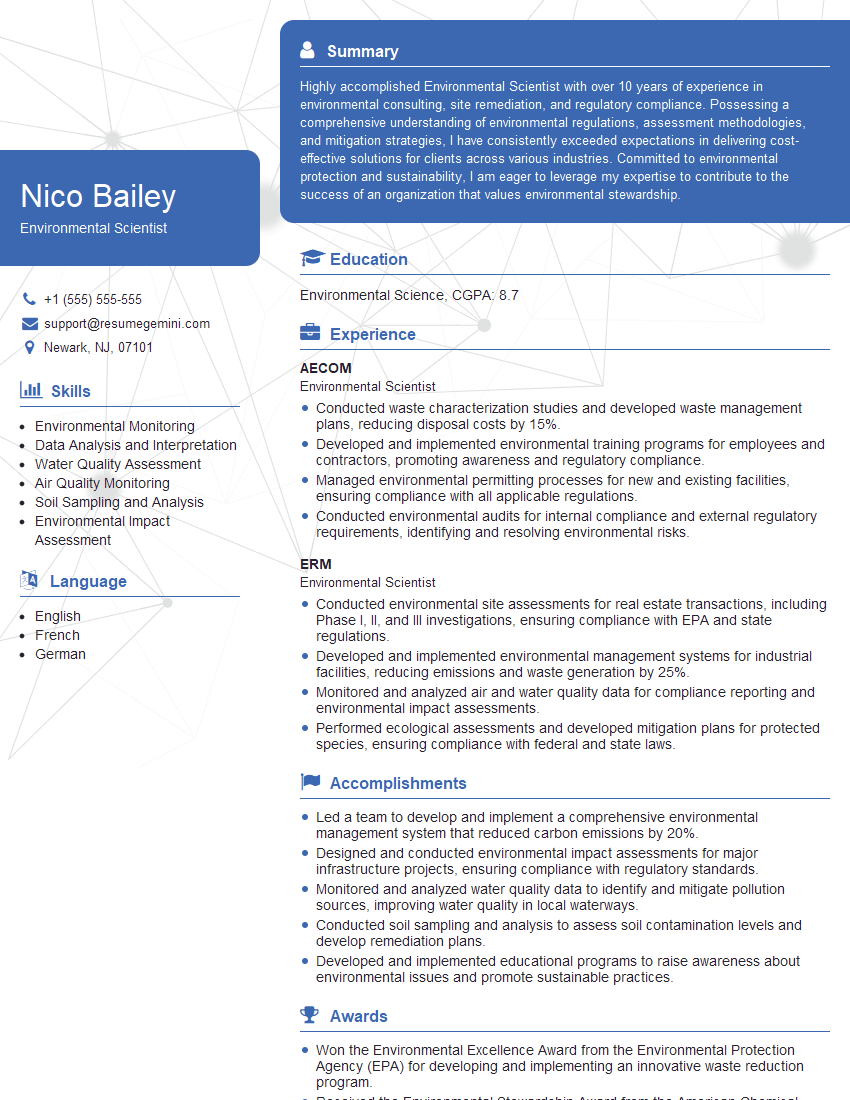
Environmental Scientist Resume Sample

Geospatial Analyst Resume Sample

Cartographer Resume Sample

Photogrammetrist Resume Sample

Climatologist Resume Sample
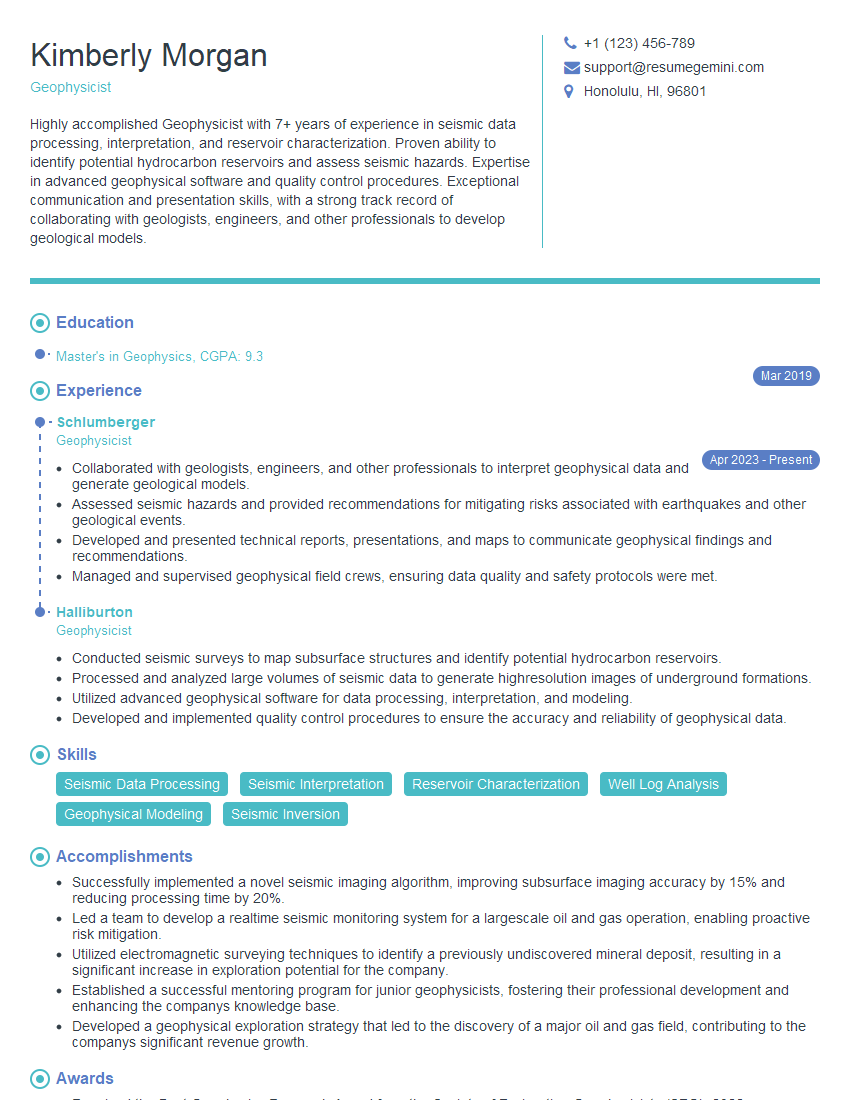
Geophysicist Resume Sample
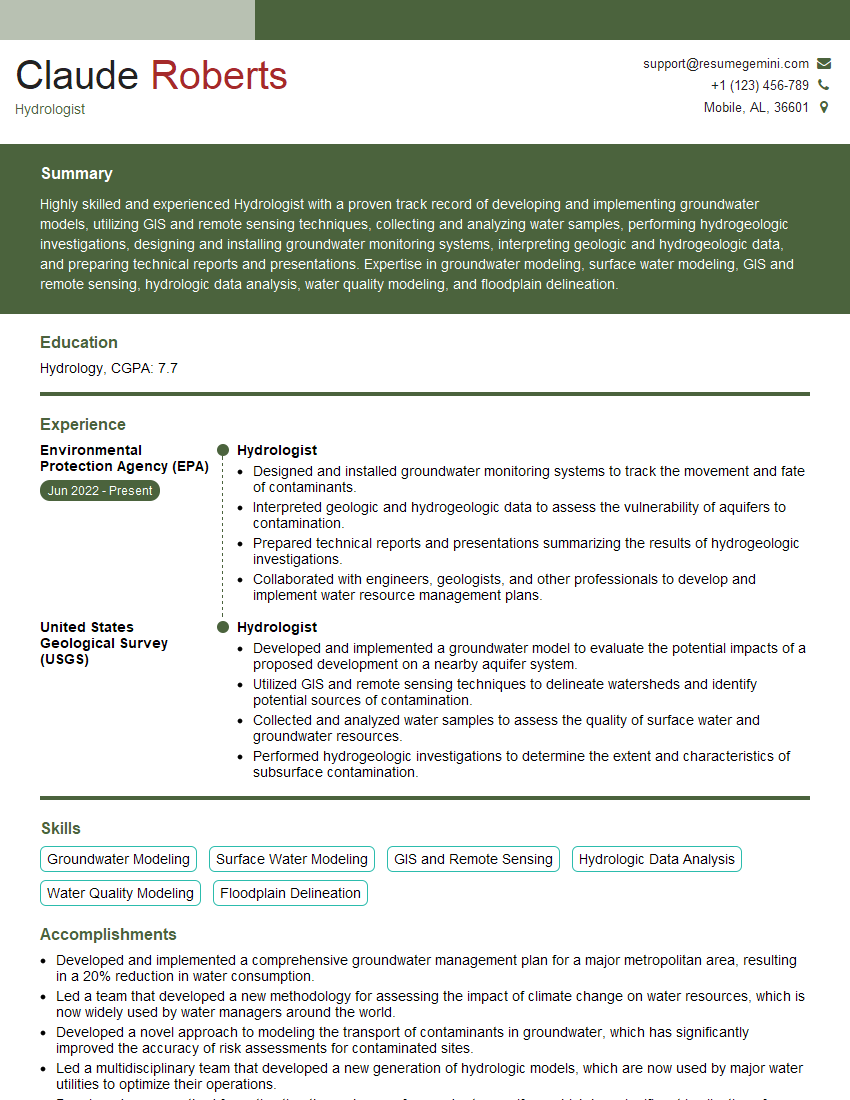
Hydrologist Resume Sample
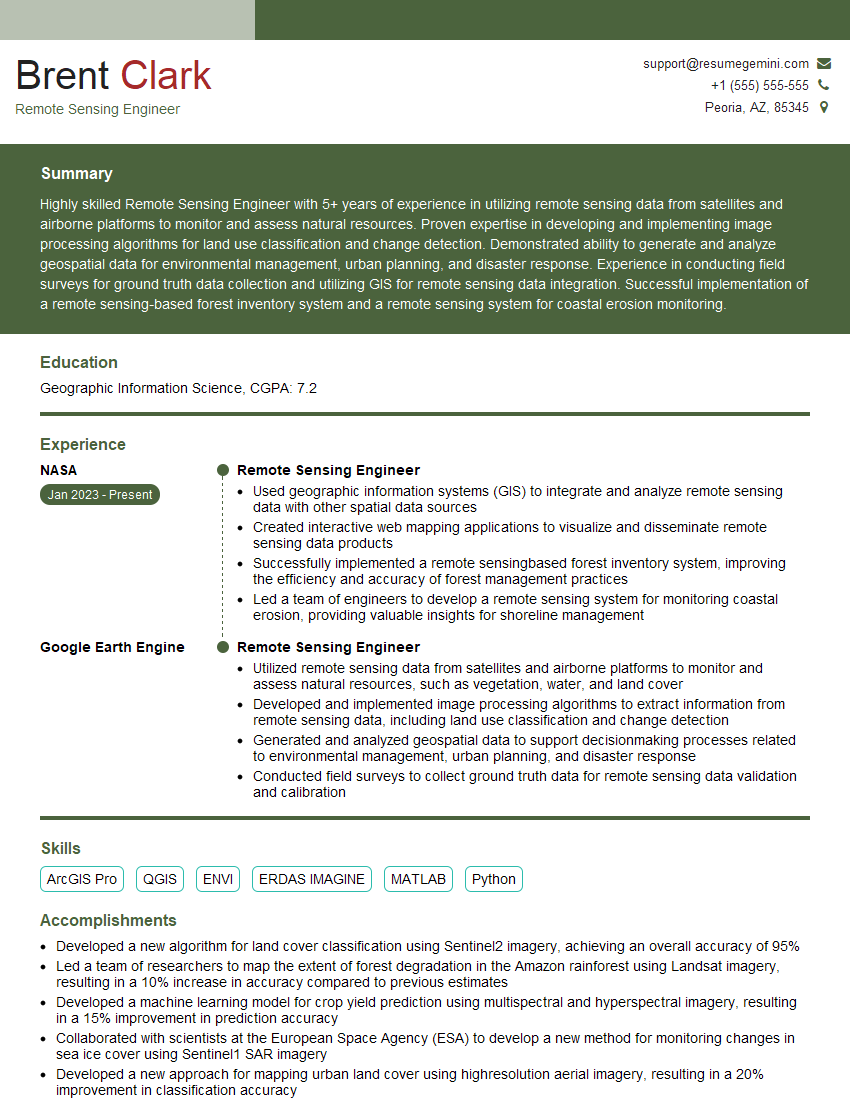
Remote Sensing Engineer Resume Sample

Remote Sensing Scientist Resume Sample
Explore more articles
Users Rating of Our Blogs
Share Your Experience
We value your feedback! Please rate our content and share your thoughts (optional).
What Readers Say About Our Blog
To the interviewgemini.com Webmaster.
Very helpful and content specific questions to help prepare me for my interview!
Thank you
To the interviewgemini.com Webmaster.
This was kind of a unique content I found around the specialized skills. Very helpful questions and good detailed answers.
Very Helpful blog, thank you Interviewgemini team.