Interviews are more than just a Q&A session—they’re a chance to prove your worth. This blog dives into essential Attorney-Client Communication interview questions and expert tips to help you align your answers with what hiring managers are looking for. Start preparing to shine!
Questions Asked in Attorney-Client Communication Interview
Q 1. Describe your experience managing client expectations.
Managing client expectations is paramount in ensuring a smooth and productive attorney-client relationship. It involves clearly outlining the scope of work, potential timelines, likely costs, and possible outcomes, while setting realistic expectations from the outset. This is achieved through proactive communication, thorough initial consultations, and the creation of a detailed engagement agreement that spells out everything in plain language.
For example, if a client is seeking a divorce, I would explain the process step-by-step, outlining potential timelines for each stage, such as discovery, negotiations, and possible trial. I’d also explain the various costs associated with each stage, including legal fees, expert witness fees, and court costs. I wouldn’t promise a specific outcome, as the legal process is inherently unpredictable, but I would provide a realistic assessment of the possibilities based on my experience and the specific facts of the case. Regular updates throughout the process, even if just short email check-ins, keep clients informed and their anxieties to a manageable level.
Q 2. How do you handle difficult or emotional client conversations?
Handling difficult or emotional client conversations requires empathy, active listening, and a calm, professional demeanor. It’s crucial to validate the client’s feelings, creating a safe space for them to express their concerns without interruption. I use techniques like reflective listening, where I paraphrase their statements to ensure understanding and show I’m paying attention. I also avoid interrupting or offering solutions too quickly, instead allowing them to fully express themselves.
For instance, if a client is upset about a delay in their case, I would first acknowledge their frustration and validate their feelings by saying something like, “I understand this is frustrating, and I apologize for the delay.” Then, I would explain the reasons for the delay in a clear and concise manner, outlining the steps being taken to expedite the process. Sometimes, simply listening and acknowledging their emotions can be enough to de-escalate the situation. I always remember to maintain a professional, calm demeanor, which is calming in itself. If the situation is particularly intense, I may recommend a brief pause to allow everyone to calm down before continuing the conversation.
Q 3. Explain your process for ensuring clear and concise communication with clients.
Ensuring clear and concise communication involves several key steps. First, I use plain language, avoiding legal jargon as much as possible. If jargon is unavoidable, I explain it clearly and simply. Second, I provide regular updates on the progress of the case, either through email, phone calls, or in-person meetings depending on client preference and the nature of the update. Third, I maintain detailed records of all communication, including emails, phone calls, and meeting notes, ensuring nothing is missed.
I structure my communications logically, starting with a summary of the key points, then providing detailed information, and concluding with a clear call to action if necessary. For instance, I would never send a lengthy email without a clear subject line and a brief summary at the beginning. I also actively seek feedback from clients to ensure they understand everything communicated. Regular check-ins, both scheduled and unscheduled when necessary, ensure that I can respond quickly to any queries or concerns. Technology also plays a vital role; utilizing secure client portals for document sharing and scheduling ensures efficient and organized communication.
Q 4. How do you adapt your communication style to different client personalities?
Adapting communication style is essential for effective client interaction. I tailor my approach based on the client’s personality and communication preferences. Some clients prefer formal, detailed communications, while others prefer a more informal, concise approach. I gauge each client’s communication style early on in our relationship, paying attention to their communication choices (email, phone, text) and their preferred level of detail. I then adjust my communication style accordingly.
For example, with a client who is detail-oriented and prefers formal communication, I would provide thorough written updates with all supporting documentation. However, with a client who prefers concise communication and quick updates, I may use shorter emails, phone calls, or text messages to convey key updates. Active listening is key here; observing their reactions and adjusting my tone and approach as needed is crucial for a positive relationship.
Q 5. How do you maintain confidentiality in all attorney-client communications?
Maintaining confidentiality in all attorney-client communications is paramount and governed by attorney ethics rules and in some cases statutory obligations. I adhere strictly to these rules. This involves using secure communication channels, such as encrypted email and secure client portals, never discussing client matters in public places, and limiting access to client files to authorized personnel.
All client information, whether electronic or paper-based, is stored securely, adhering to strict data protection protocols. I have a detailed data security policy in place, and all staff undergo regular training on confidentiality procedures. I always obtain informed consent from clients before sharing their information with third parties, and I carefully manage client information to ensure compliance with privacy laws like GDPR and HIPAA (if relevant). Transparency is vital. I clearly communicate my confidentiality protocols to all clients upfront.
Q 6. Describe a time you had to deliver bad news to a client. How did you approach it?
Delivering bad news is never easy, but it’s a critical aspect of legal practice. A recent example involved informing a client that their personal injury claim was not likely to succeed due to insufficient evidence. I scheduled a private meeting to deliver the news in person, ensuring a calm and respectful environment. I started by acknowledging their feelings, expressing my empathy for their situation.
I then clearly explained the legal reasoning behind the unfavorable outcome, using plain language and avoiding technical jargon. I presented the information factually and avoided making promises I couldn’t keep. I discussed alternative options and strategies, exploring avenues for appeal if they existed or exploring other viable legal routes. I ended the meeting by reiterating my commitment to supporting them and answering any questions. Even though the news was disappointing, I ensured the client understood that I remained committed to their well-being and advocated for them through this process, highlighting that even unfavorable outcomes can have alternative solutions.
Q 7. What strategies do you use to build rapport with clients?
Building rapport with clients is crucial for a successful attorney-client relationship. I start by actively listening to their concerns and validating their feelings. I make an effort to understand their situation from their perspective, asking clarifying questions and showing genuine interest in their well-being. I communicate clearly and honestly, setting realistic expectations and keeping them informed throughout the process.
I also demonstrate my competence and professionalism by being prepared, organized, and responsive to their queries. Building trust requires empathy. I aim to create a collaborative relationship, treating the client as a partner in the process. Small gestures such as sending a timely acknowledgment email or making a follow-up phone call can significantly impact client perception and build a sense of trust and mutual respect. Personalization plays a role; remembering details about their lives and showing genuine interest beyond their case builds rapport more effectively.
Q 8. How do you handle client inquiries that fall outside your area of expertise?
When a client inquiry falls outside my area of expertise, my priority is to ensure they receive accurate and timely assistance. I wouldn’t pretend to know something I don’t. Instead, I follow a clear process. First, I acknowledge receipt of their question and let them know I’m reviewing it. Then, I carefully analyze the inquiry to determine the relevant area of law. Once identified, I research potential referrals, considering factors such as the lawyer’s experience, reputation, and compatibility with the client’s needs. I then contact the specialist to discuss the client’s case and obtain their agreement to take on the matter. Before recommending them, I’ll make sure they’re a good fit for the client. Finally, I formally introduce the client to the specialist, providing all relevant documentation to ensure a smooth transition. Transparency is key throughout this process. I always keep the client informed every step of the way.
For example, if a client asks about international tax law, and my focus is primarily on family law, I will explain my limitations and actively seek a referral to a qualified international tax attorney. I would then coordinate the transfer of the client’s information, ensuring all confidentiality protocols are followed.
Q 9. How familiar are you with different communication mediums (email, phone, video conferencing)?
I’m proficient in various communication mediums and tailor my approach to the client’s preference and the specific situation. Email is ideal for transmitting documents and formal communications, maintaining a record for reference. Phone calls are excellent for quick updates, clarifying information, and building rapport through verbal cues. Video conferencing offers a more personal interaction, useful for complex discussions, initial consultations, or when visual aids are needed. My experience includes using video conferencing platforms such as Zoom and Microsoft Teams for client meetings, and secure email platforms for confidential communication. I can adapt my communication style to the client’s preferred method and ensure that the mode chosen best serves the needs of both the client and the legal process. I am always mindful of security implications when choosing a communication medium.
Q 10. Explain your understanding of attorney-client privilege.
Attorney-client privilege is a fundamental principle of law that protects confidential communications between an attorney and their client. This privilege ensures that clients can openly and honestly discuss their legal matters with their lawyers without fear of that information being disclosed to third parties without their consent. This fosters trust and encourages full disclosure, which is vital for effective legal representation. The privilege applies to all confidential communications related to the client’s legal representation, including but not limited to conversations, emails, letters, and documents. There are exceptions to the privilege, such as when the client seeks the attorney’s advice to commit a crime or when the attorney must disclose information to prevent imminent harm.
Imagine you’re sharing a deeply personal and sensitive matter with your doctor. You expect that information to remain private. Attorney-client privilege is similar – it protects the confidentiality of your legal discussions to facilitate open and honest communication essential for strong legal representation.
Q 11. How do you ensure timely and accurate communication with clients?
Timely and accurate communication is paramount in building trust and providing effective legal counsel. My strategy involves several key components. First, I establish clear communication expectations upfront, explaining my typical response times and outlining how clients can best reach me. I use a comprehensive case management system to track deadlines, tasks, and communication logs for each client. This allows me to prioritize tasks effectively and maintain accurate records. I utilize email and phone confirmations for important updates, and send regular progress reports to clients. I also proactively communicate potential delays and explain the reasoning behind them. My goal is to keep my clients informed and engaged every step of the way.
For instance, if a significant development occurs in a client’s case, I would promptly inform them via phone call, followed by a detailed email confirming the update and outlining the next steps. This ensures the client receives the information quickly and accurately.
Q 12. How do you prioritize communication tasks effectively?
Effective prioritization of communication tasks relies on a blend of planning and adaptability. I use a combination of methods, including prioritizing tasks based on urgency and importance. Urgent matters, such as court deadlines or critical client requests, take precedence. I categorize tasks using a system like Eisenhower Matrix (Urgent/Important), which helps to differentiate between things needing immediate attention and those that can be scheduled. I also allocate specific time blocks in my day for responding to client inquiries, ensuring I give each client the dedicated attention they deserve. I use a combination of digital and paper-based tools to manage tasks efficiently, which may include a calendar, to-do lists, and client-specific folders for communication records.
Q 13. How do you manage client communication during a crisis or urgent situation?
During a crisis or urgent situation, my focus shifts to immediate action and clear communication. I establish a primary point of contact for the client and ensure constant communication via phone, email, or video call, whichever is most appropriate and accessible. I provide regular updates, even if there isn’t substantial new information, to assure the client that I’m actively working on their case. Transparency and honesty are paramount, even if the news is difficult. I proactively anticipate potential client anxieties and address them preemptively, offering reassurance and explaining my strategy for managing the crisis. I document every interaction and decision meticulously, ensuring a complete record for the case. If the situation involves multiple parties, I make sure I coordinate communication strategies to avoid conflicts and ensure everyone is appropriately informed.
Q 14. Describe your experience using legal communication software or tools.
I have extensive experience using various legal communication software and tools, enhancing efficiency and security in client interactions. I regularly use case management systems for tracking files, deadlines, and communications. These platforms help maintain organized client records and ensure no detail is overlooked. I utilize secure email and messaging platforms to ensure confidentiality of client information. I am also proficient in using client portals, which provide clients with secure access to their case files, allowing them to check updates and communicate securely with the legal team. The use of these tools is essential for maintaining the highest standards of ethical and responsible client communication.
For example, I use a secure client portal that allows clients to access documents, track case progress, and securely send and receive messages, providing enhanced transparency and control over the process.
Q 15. How do you handle client complaints or dissatisfaction?
Handling client complaints is crucial for maintaining trust and a positive attorney-client relationship. My approach is proactive and focuses on understanding the root cause of dissatisfaction. I begin by actively listening to the client’s concerns without interruption, ensuring they feel heard and valued. I then clarify any misunderstandings and address their specific issues. This might involve reviewing the case details, explaining legal processes in simpler terms, or discussing potential alternative solutions. If the complaint involves a perceived lapse in service, I sincerely apologize and take ownership, outlining steps to prevent similar occurrences in the future. Finally, I follow up with the client to ensure their concerns are fully resolved and that they are satisfied with the outcome. For example, if a client feels neglected due to infrequent updates, I would explain the complexities of the legal process impacting communication timelines and commit to more regular, concise updates moving forward.
In cases where the complaint is more serious or involves a potential ethical breach, I adhere strictly to professional conduct rules and may involve supervisors or other relevant authorities as necessary.
Career Expert Tips:
- Ace those interviews! Prepare effectively by reviewing the Top 50 Most Common Interview Questions on ResumeGemini.
- Navigate your job search with confidence! Explore a wide range of Career Tips on ResumeGemini. Learn about common challenges and recommendations to overcome them.
- Craft the perfect resume! Master the Art of Resume Writing with ResumeGemini’s guide. Showcase your unique qualifications and achievements effectively.
- Don’t miss out on holiday savings! Build your dream resume with ResumeGemini’s ATS optimized templates.
Q 16. How do you track and document all client communications?
Meticulous record-keeping of all client communications is paramount for ethical practice and successful case management. I utilize a secure, cloud-based case management system that allows for centralized tracking of all interactions. This includes emails, phone calls, in-person meetings, and any other form of communication. Each communication is documented with a detailed timestamp, a summary of the conversation, any decisions made, and any action items assigned. For sensitive information, I maintain strict confidentiality and adherence to relevant data protection laws.
For example, after a phone call with a client, I immediately create a detailed entry in the case management system, noting the date, time, key discussion points, and any agreed-upon next steps. This ensures a consistent and reliable record of all communications throughout the case lifecycle. Additionally, all emails are saved to the client’s case file.
Q 17. Describe your experience working with diverse client populations.
Throughout my career, I’ve had the privilege of working with a diverse range of clients from various cultural, socioeconomic, and linguistic backgrounds. This experience has taught me the importance of adaptability and sensitivity in communication. I’ve represented clients who have limited English proficiency, individuals from diverse cultural backgrounds with varying communication styles, and clients from different age groups with varying technological literacy. I’ve found that being patient, respectful, and tailoring my communication approach based on individual client needs is essential.
For instance, when working with a client with limited English proficiency, I utilize translation services or adapt my language to be more easily understood. I am careful to ensure that all communications are clear, concise, and easy to grasp. With clients who are unfamiliar with legal terminology, I take the time to explain technical terms in a non-technical way, using analogies and relatable examples.
Q 18. How do you ensure your communication is culturally sensitive and appropriate?
Cultural sensitivity is an integral part of my communication strategy. I recognize that different cultures have different communication styles, levels of formality, and preferred methods of interaction. Before engaging with a client, I try to understand their cultural background and preferences as much as possible. This could involve researching their culture, if it’s unfamiliar to me, or simply engaging in a preliminary conversation to understand their comfort level and preferred communication methods.
For example, I might adjust my communication style to be more formal with clients from cultures that value formality, or more informal with clients who prefer a more casual approach. I also take care to avoid using idioms or slang that might not be easily understood, and I always ensure that my body language is respectful and non-offensive. If necessary, I might utilize interpreters or translators to bridge any communication gaps, ensuring that all interactions are conducted with the utmost respect and understanding.
Q 19. How do you deal with a client who is constantly demanding updates?
Managing clients who constantly demand updates requires a delicate balance of empathy and setting clear expectations. I understand that clients are often anxious and want to be kept informed, but excessive requests can hinder productivity and impact the overall case management. My approach involves establishing clear communication protocols from the outset. I explain the timeline of the legal process, provide realistic expectations on update frequency, and suggest specific communication channels (e.g., weekly email updates, bi-weekly calls) to avoid overwhelming the client or myself.
For example, I may schedule regular check-in calls instead of answering ad-hoc requests. If a client persistently requests updates outside of the agreed-upon schedule, I address the concern directly and calmly explain why frequent updates are not always feasible due to workflow demands and the need to avoid providing premature or inaccurate information. I reassure the client that I am working diligently on their case and provide them with the most pertinent information in a timely fashion within the agreed-upon schedule.
Q 20. How do you use active listening techniques to improve client communication?
Active listening is fundamental to effective attorney-client communication. It involves fully concentrating on what the client is saying, both verbally and nonverbally, understanding their perspective, and responding thoughtfully. I utilize several techniques to enhance active listening, including maintaining eye contact, nodding to show understanding, summarizing the client’s points to confirm comprehension, and asking clarifying questions. This demonstrates that I value their input and am genuinely engaged in their concerns.
For example, I might say, “So, if I understand correctly, your primary concern is the timeline for the settlement,” to confirm my understanding of the client’s statement. This practice ensures that misunderstandings are minimized, trust is built, and a collaborative relationship is fostered.
Q 21. What techniques do you use to ensure clear understanding and avoid miscommunication?
Ensuring clear understanding and preventing miscommunication requires a multi-faceted approach. Firstly, I use plain language, avoiding legal jargon unless absolutely necessary. When I must use technical terms, I take the time to clearly define them. Secondly, I confirm understanding by summarizing key points and seeking clarification on any ambiguous statements. I also use multiple communication channels (email for written records, phone for immediate discussions) to cater to individual client preferences and ensure message clarity.
Furthermore, I prioritize clear and concise written communication, using bullet points and numbered lists where appropriate to improve readability. Visual aids and diagrams can also be helpful to illustrate complex concepts. Finally, I encourage clients to ask questions and seek clarification at any point during our interactions. The aim is to create a transparent and collaborative communication environment that reduces the risk of misunderstandings and disputes.
Q 22. Explain your experience summarizing complex legal information for clients.
Summarizing complex legal information for clients requires a delicate balance of accuracy and accessibility. My approach involves breaking down intricate legal concepts into digestible chunks, using plain language and avoiding jargon. I start by understanding the client’s level of legal knowledge and tailoring my communication accordingly. I use analogies and real-world examples to illustrate complex points, making them relatable and easier to grasp. For instance, explaining the concept of ‘burden of proof’ in a criminal case might involve comparing it to a scale needing sufficient evidence to tip it in one direction. I also prioritize visual aids like charts and flowcharts to supplement written summaries, enhancing comprehension and retention.
I always ensure the summary is accurate and reflects the full legal picture, avoiding any oversimplification that could mislead the client. After providing the summary, I encourage questions and offer clarification until the client feels fully informed. This iterative process guarantees clarity and mutual understanding.
Q 23. How do you balance the need for clear communication with the need for concise communication?
The balance between clear and concise communication is crucial in attorney-client interactions. Conciseness saves time and prevents information overload, but clarity ensures the client understands the information accurately. My strategy is to prioritize clarity first, then strive for conciseness without sacrificing understanding. I achieve this by using short sentences, avoiding legal jargon, and organizing information logically (e.g., using bullet points or numbered lists). I use strong verbs and avoid passive voice to make my writing more active and engaging. If a complex issue requires more detail, I break it into smaller, easily digestible sections, each with a concise summary at the end.
For example, instead of writing a long, convoluted paragraph about a contract clause, I might use bullet points to highlight the key terms, conditions, and potential implications. This approach ensures both clarity and conciseness, maximizing the client’s comprehension and retention of information.
Q 24. How do you use technology to enhance attorney-client communication?
Technology plays a vital role in modern attorney-client communication. I utilize various tools to enhance communication, improve efficiency, and ensure security. Secure client portals allow for the safe exchange of documents, ensuring confidentiality. Video conferencing platforms facilitate convenient and face-to-face communication, even across geographical distances. Project management software helps track deadlines and tasks, keeping both me and the client informed about the progress of their case. Email remains a valuable tool for quick updates and confirmations, though I always emphasize the limitations of email for sensitive information.
Furthermore, I employ document automation software to create standardized documents efficiently and accurately, reducing errors and speeding up communication. Using these technologies allows me to offer exceptional client service while maintaining the highest level of professionalism and security.
Q 25. How do you maintain professional boundaries while building rapport with clients?
Maintaining professional boundaries while building rapport is crucial for effective attorney-client communication. While establishing a friendly and approachable demeanor fosters trust, it’s vital to remain professional. I achieve this by maintaining appropriate formality in communication, avoiding overly casual language or personal disclosures. I clearly define roles and responsibilities, setting realistic expectations for the attorney-client relationship. While empathy and understanding are important, I avoid crossing professional boundaries by maintaining clear communication channels and adhering to strict confidentiality guidelines.
For instance, I might use a client’s name respectfully during conversations but avoid informal greetings or shared personal anecdotes unrelated to the legal matter. This balance of professionalism and rapport ensures effective communication and a positive client experience.
Q 26. How do you identify and address potential communication barriers with clients?
Identifying and addressing communication barriers requires active listening and observation. Language differences, cultural nuances, and varying levels of legal literacy can all pose challenges. I actively listen for cues of misunderstanding, such as hesitant responses or confused facial expressions. I ask clarifying questions and use simple language, avoiding jargon. I also utilize visual aids and real-world examples to illustrate complex concepts. If language is a barrier, I explore the option of using a qualified interpreter.
Understanding a client’s preferred communication style—whether they prefer email, phone calls, or in-person meetings—is key. I adapt my communication strategy to align with their preferences. If a client exhibits anxiety or reluctance, I create a safe and supportive environment, ensuring their questions are addressed thoroughly.
Q 27. Describe a time you had to communicate complex legal concepts in simple terms.
I once had to explain the intricacies of a complex trust agreement to a client with limited financial expertise. Instead of using technical terms like ‘testamentary trust’ or ‘beneficiary,’ I used analogies to explain the purpose and function of the trust. I compared the trust to a container holding assets for the benefit of designated individuals, illustrating how it would protect their inheritance and distribute it according to their wishes. I used simple charts to show how the assets would be managed and distributed over time. This approach ensured the client understood the key provisions of the trust without getting bogged down in technical jargon.
By employing analogies and visual aids, I successfully translated complex legal language into an accessible format, allowing the client to make informed decisions about their estate planning.
Q 28. What are some common challenges in attorney-client communication, and how would you address them?
Common challenges in attorney-client communication include language barriers, differing levels of legal literacy, emotional distress of the client, and information overload. To address language barriers, I might use interpreters or translators. I mitigate differences in legal literacy by using plain language and analogies, avoiding jargon. I address emotional distress by creating a safe and empathetic environment, validating client concerns, and offering emotional support while maintaining professional boundaries.
To avoid information overload, I provide information in manageable chunks, summarizing key points and offering supplemental materials as needed. I always encourage clients to ask questions and provide feedback, ensuring they feel heard and understood. By addressing these challenges proactively, I foster a strong attorney-client relationship and ensure the client’s understanding and participation in their legal matter.
Key Topics to Learn for Attorney-Client Communication Interview
- Confidentiality and Privilege: Understanding the attorney-client privilege, its limitations, and ethical implications in various contexts (e.g., corporate representation, criminal defense).
- Effective Listening and Questioning Techniques: Mastering active listening skills to accurately understand client needs and employing strategic questioning to elicit crucial information.
- Clear and Concise Communication: Developing the ability to explain complex legal concepts in a clear, understandable manner to clients with diverse backgrounds and levels of legal knowledge. This includes adapting communication styles for different clients.
- Nonverbal Communication: Recognizing and interpreting nonverbal cues to gauge client understanding, emotional state, and potential concerns. Understanding how your own nonverbal communication impacts the client relationship.
- Managing Client Expectations: Setting realistic expectations regarding timelines, costs, and potential outcomes. Proactively addressing client anxieties and concerns.
- Documenting Communications: Understanding the importance of maintaining accurate and comprehensive records of all attorney-client interactions, both written and verbal, and adhering to relevant ethical guidelines.
- Cross-Cultural Communication: Recognizing and addressing potential challenges in communication arising from cultural differences and adapting strategies to ensure effective interaction with clients from diverse backgrounds.
- Difficult Conversations: Developing strategies for handling challenging conversations, such as delivering unfavorable news or addressing client dissatisfaction, while maintaining a professional and empathetic approach.
- Technology and Communication: Understanding the ethical and practical implications of using technology for attorney-client communication, including email, video conferencing, and secure messaging platforms.
- Professionalism and Ethics: Maintaining the highest standards of professional conduct and ethical behavior in all attorney-client interactions.
Next Steps
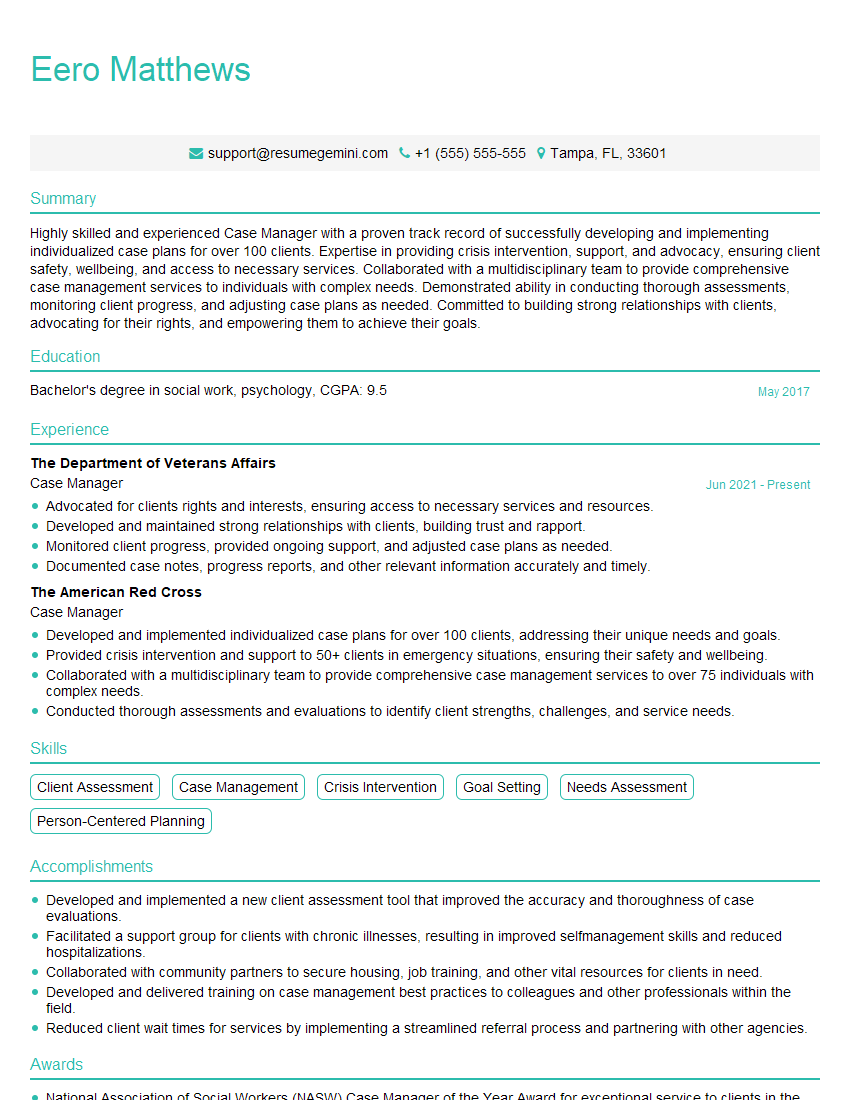
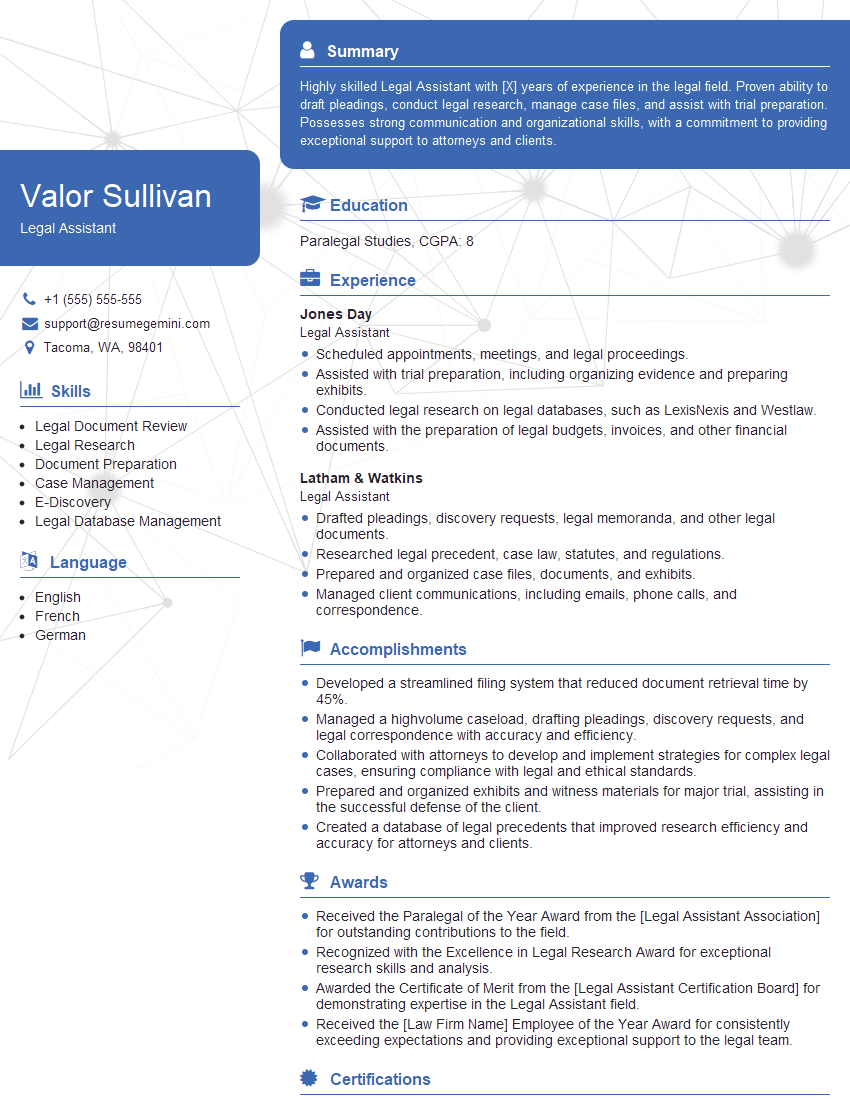
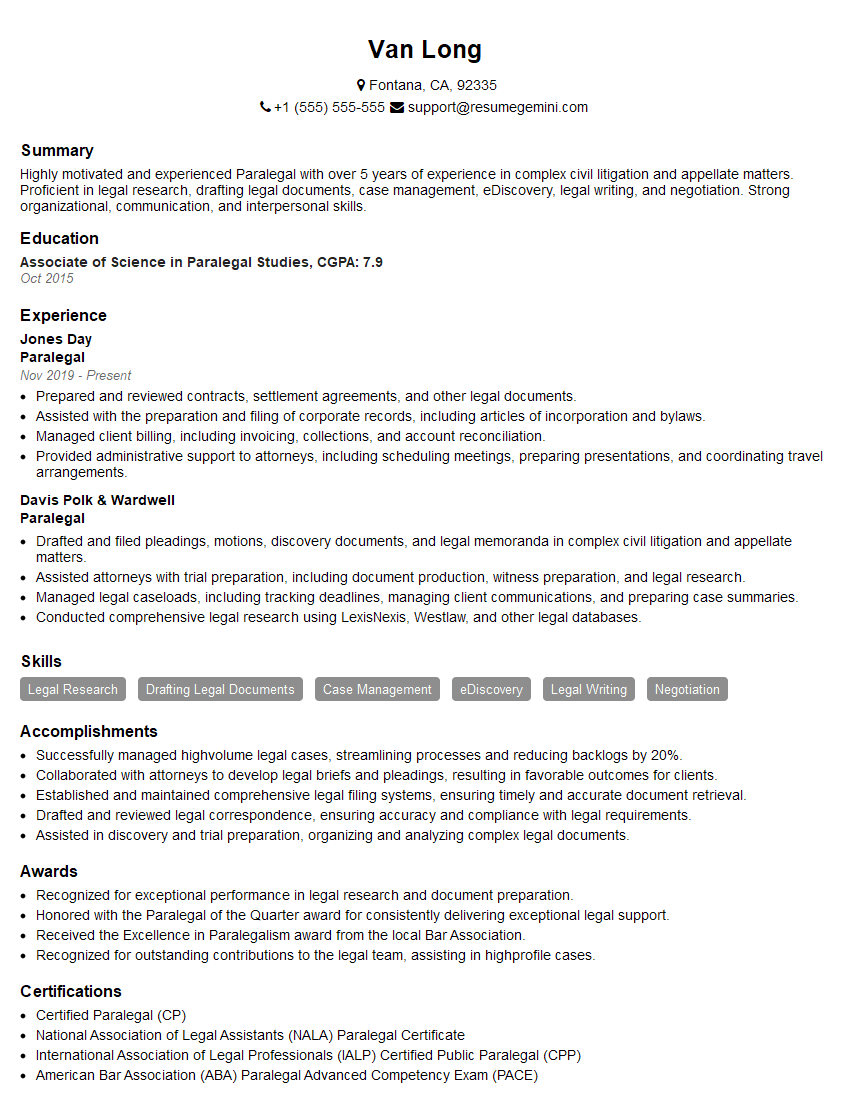
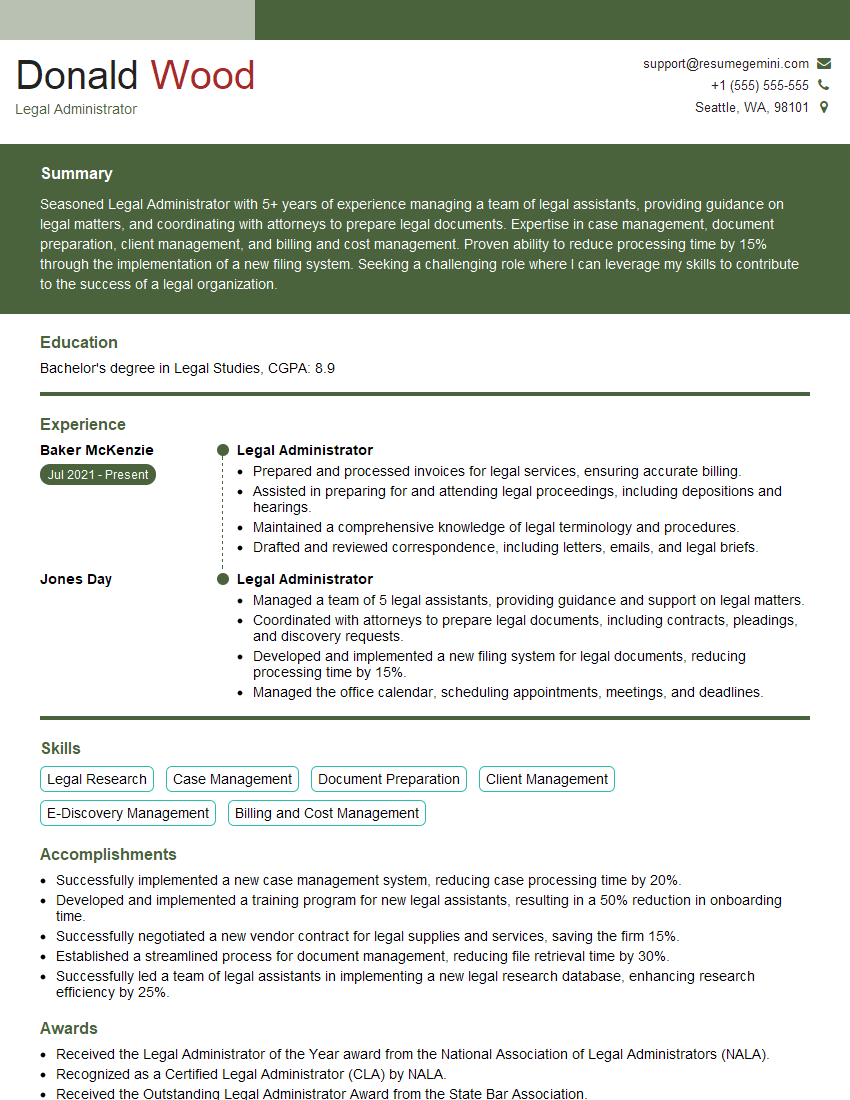
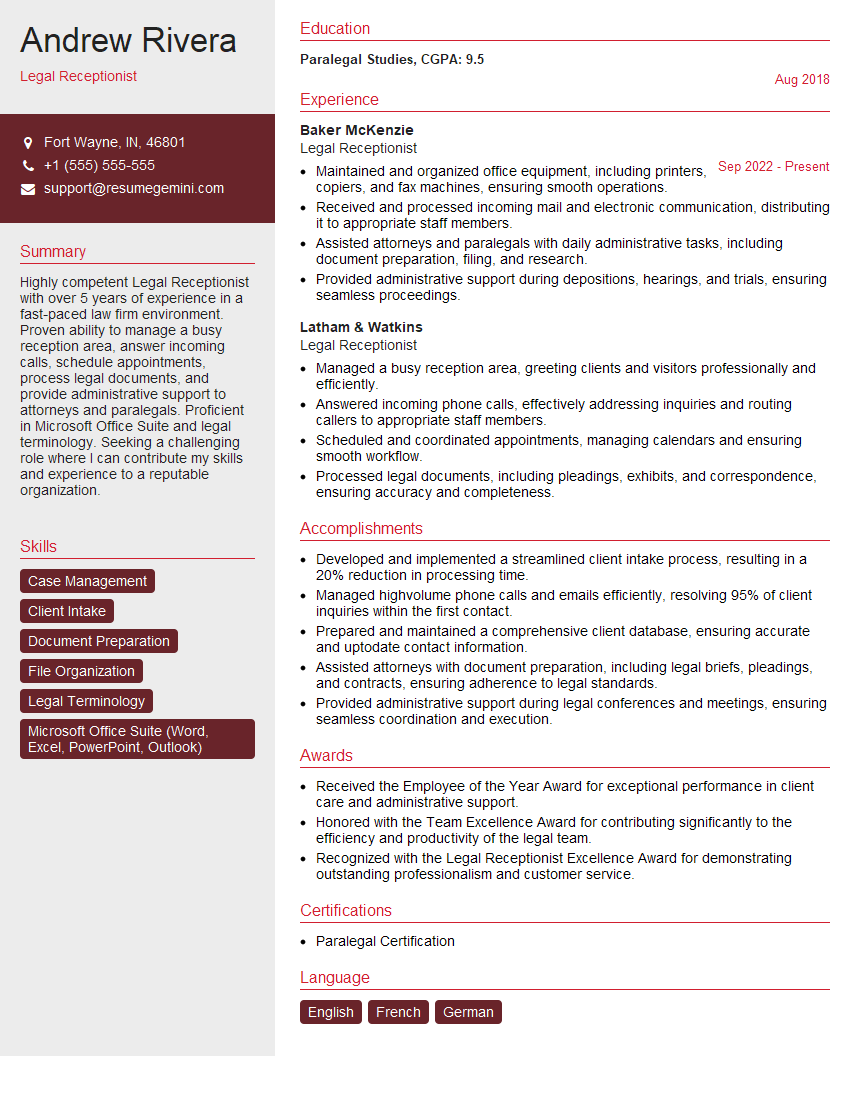
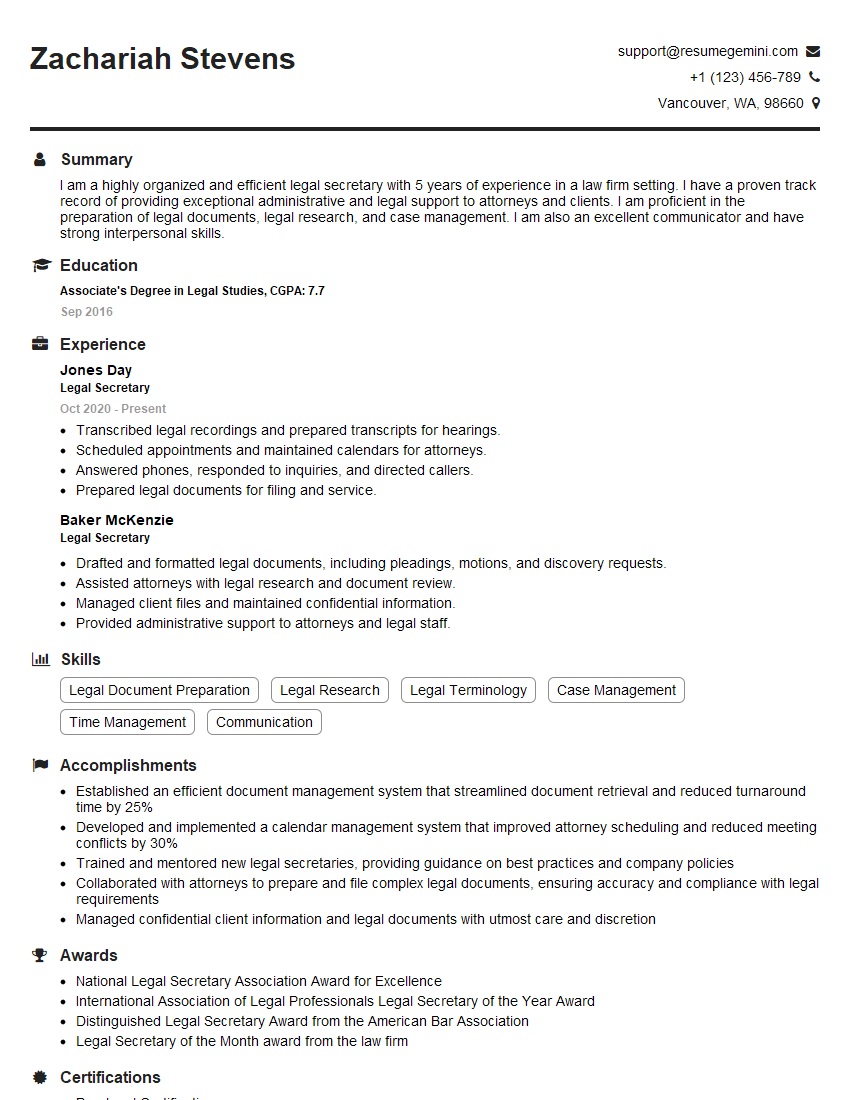
Mastering attorney-client communication is paramount for building strong client relationships, fostering trust, and ultimately achieving positive outcomes. This skill is highly valued by employers and significantly contributes to career advancement. To maximize your job prospects, create an ATS-friendly resume that showcases your abilities. ResumeGemini is a trusted resource that can help you build a professional and impactful resume. We provide examples of resumes tailored to Attorney-Client Communication to guide you through the process.
Explore more articles
Users Rating of Our Blogs
Share Your Experience
We value your feedback! Please rate our content and share your thoughts (optional).
What Readers Say About Our Blog
To the interviewgemini.com Webmaster.
Very helpful and content specific questions to help prepare me for my interview!
Thank you
To the interviewgemini.com Webmaster.
This was kind of a unique content I found around the specialized skills. Very helpful questions and good detailed answers.
Very Helpful blog, thank you Interviewgemini team.