The thought of an interview can be nerve-wracking, but the right preparation can make all the difference. Explore this comprehensive guide to Auditory Processing Therapy interview questions and gain the confidence you need to showcase your abilities and secure the role.
Questions Asked in Auditory Processing Therapy Interview
Q 1. Describe the process of diagnosing Auditory Processing Disorder (APD).
Diagnosing Auditory Processing Disorder (APD) is a multi-step process requiring a comprehensive evaluation. It’s crucial to rule out other hearing problems first. The process typically begins with a thorough case history, including details about the individual’s developmental milestones, academic performance, and social interactions. This is followed by a standard hearing test (audiometry) to assess the sensitivity of the ears. Even with normal hearing, APD can exist.
Next, a series of auditory processing tests are administered. These tests assess different aspects of auditory processing, such as sound localization, auditory discrimination (distinguishing between similar sounds), temporal processing (processing the timing of sounds), and auditory closure (filling in gaps in incomplete sounds). Examples include the SCAN-C, the dichotic digits test, and the filtered speech test. Results are compared to age-matched norms to identify any significant weaknesses. The diagnosis isn’t solely based on test results; a clinician integrates these findings with the case history and observations of the individual’s behavior in various listening contexts. A team approach, often involving an audiologist, psychologist, and educational professional, is often beneficial to ensure a holistic and accurate diagnosis.
Q 2. What are the key differences between APD and other hearing impairments?
The key difference between APD and other hearing impairments lies in the location of the problem. In conductive or sensorineural hearing loss, the problem lies in the outer, middle, or inner ear, affecting the transmission or reception of sound itself. Think of it like a faulty microphone or speaker. APD, on the other hand, involves the central auditory nervous system – the brain’s ability to process the auditory information it receives. The ears might receive the sound perfectly, but the brain struggles to interpret and organize it. It’s like having a perfectly functioning microphone and speaker but a malfunctioning receiver or processor.
For example, someone with sensorineural hearing loss might have difficulty hearing soft sounds. Someone with APD might hear the sound clearly but struggle to understand speech in noisy environments or follow a complex spoken instruction. Both conditions can affect speech and language development, but they stem from fundamentally different underlying mechanisms.
Q 3. Explain various assessment tools used in evaluating auditory processing skills.
Numerous assessment tools are used to evaluate auditory processing skills, catering to different age groups and specific aspects of auditory function. These tests are usually administered by trained audiologists. Some common examples include:
- Dichotic Listening Tests: These tests present different auditory stimuli (e.g., words or digits) to each ear simultaneously, evaluating the brain’s ability to separate and process information from both ears. A classic example is the Dichotic Digits Test.
- Temporal Processing Tests: These assess the ability to process the timing of sounds, such as identifying gaps between sounds or the order of sounds presented rapidly. Examples include the Gaps-in-Noise test and the Random Gap Detection test.
- Speech-in-Noise Tests: These tests evaluate the ability to understand speech in the presence of background noise. The Speech Perception in Noise (SPIN) test is a widely used example.
- Auditory Figure-Ground Tests: These assess the ability to focus on a specific sound while ignoring background noise, simulating real-world listening situations such as following a conversation in a busy restaurant.
The choice of tests depends on the individual’s age, suspected areas of weakness, and the clinician’s assessment goals. It’s crucial to remember that these are just tools. Clinical judgment, combined with behavioral observations, plays a significant role in interpreting the results and formulating a comprehensive diagnosis.
Q 4. How do you differentiate between APD and other learning disabilities?
Differentiating APD from other learning disabilities can be challenging as they often co-occur and share overlapping symptoms. APD primarily affects the auditory processing system, while other learning disabilities impact different cognitive areas. For example, dyslexia primarily affects reading, while ADHD primarily affects attention and impulsivity. However, difficulties with auditory processing can significantly impact academic performance in individuals with these other learning disabilities.
The key to differentiation lies in comprehensive assessment. A thorough evaluation should assess various cognitive skills, including auditory processing, language comprehension, reading skills, attention, and memory. By comparing an individual’s performance across different cognitive domains, clinicians can pinpoint the specific area(s) of weakness and determine the primary learning disability. For instance, a child with APD might struggle to understand instructions in the classroom (auditory processing issue) but have normal reading and writing skills. In contrast, a child with dyslexia might struggle with reading despite normal auditory processing skills.
Q 5. What are the common behavioral indicators of APD in children and adults?
Behavioral indicators of APD vary across age groups, but some common signs include:
Children:
- Difficulty following multi-step directions
- Problems understanding speech in noisy environments
- Frequent requests for repetition
- Difficulty with reading comprehension
- Poor spelling and phonological awareness
- Challenges with music appreciation or rhythm
- Social difficulties due to misinterpreting verbal cues
Adults:
- Difficulty following conversations in noisy environments
- Problems with telephone conversations
- Fatigue from listening
- Difficulty understanding rapid speech
- Challenges with processing complex information presented auditorily
- Difficulties with multitasking involving auditory information
It’s important to note that these are not definitive signs, and the presence of several of these behaviors does not necessarily indicate APD. A thorough professional assessment is crucial for accurate diagnosis.
Q 6. Discuss different treatment approaches for Auditory Processing Disorder.
Treatment for APD is individualized and aims to improve the brain’s ability to process auditory information more efficiently. There is no single cure, but a combination of therapeutic approaches is often used. These approaches include:
- Auditory Training: This involves structured exercises designed to improve specific auditory skills such as discrimination, temporal processing, and auditory figure-ground. These exercises often utilize computer-based programs or specialized listening activities.
- Environmental Modifications: Strategies to reduce background noise in the listening environment, such as preferential seating in the classroom or use of assistive listening devices, can significantly improve the individual’s ability to understand speech.
- Compensatory Strategies: These strategies teach individuals techniques to cope with their auditory processing challenges. These may include asking for clarification, using visual aids, or organizing information in a more structured manner.
- Cognitive Rehabilitation: This approach targets higher-level cognitive processes that are affected by APD, such as memory and attention, using techniques that enhance processing efficiency.
- Pharmacological Interventions: While not directly treating APD, medications for attention deficit or anxiety may indirectly improve auditory processing performance in individuals with co-occurring conditions.
The effectiveness of treatment varies, and ongoing monitoring and adjustments are essential. Regular progress assessments are crucial to evaluate treatment efficacy and make necessary modifications to the therapy program.
Q 7. Describe your experience with specific auditory processing therapy programs.
Over the years, I’ve had extensive experience with several auditory processing therapy programs. I’ve used computer-based programs like the Earobics program, which focuses on improving auditory discrimination and temporal resolution. The program uses a gamified approach making the exercises engaging for the clients. I’ve also incorporated the Fast ForWord language processing program, focusing on improving the speed of auditory processing. This program has a structured curriculum, but it requires regular monitoring for progress and needs adaptation based on the individual’s responses.
Furthermore, I’ve developed customized auditory training programs tailored to the specific needs of my clients. These individualized programs are based on a thorough assessment that reveals the areas of strength and weakness in auditory processing. For instance, a client struggling with speech-in-noise tasks will get more intensive training in that particular area. I monitor progress through both formal testing and informal observations in different listening contexts. The key to successful therapy is the collaborative approach between the clinician and client, adapting the program as needed to optimize the client’s progress and ensure engagement throughout the process.
Q 8. How do you tailor therapy to individual needs and learning styles?
Tailoring Auditory Processing Therapy (APT) to individual needs is paramount. It’s not a one-size-fits-all approach. We begin with a comprehensive assessment, going beyond standardized tests to understand the client’s specific strengths and weaknesses, learning style preferences (visual, auditory, kinesthetic), and cognitive abilities. For example, a child who struggles with auditory discrimination might benefit from visual aids like colored blocks representing different sounds, while another might respond better to rhythmic activities incorporating movement. We then design a personalized program that targets their specific deficits while leveraging their strengths. This involves adjusting the difficulty level of tasks, the pace of instruction, and the types of activities used. Some clients might thrive with highly structured, repetitive exercises, while others need more flexibility and creativity. We regularly monitor progress and adapt the therapy plan as needed, ensuring it remains engaging and effective.
Consider a client with difficulty processing rapid speech. We wouldn’t simply bombard them with fast-paced drills. Instead, we might start with slow, clear speech, gradually increasing the speed only when they demonstrate mastery. We might also incorporate visual cues, such as highlighting keywords or using visual representations of the spoken words. For a client who is a visual learner, we might incorporate diagrams or visual organizers to illustrate auditory concepts.
Q 9. Explain the role of technology in Auditory Processing Therapy.
Technology plays a significant role in modern APT. It offers powerful tools for assessment and intervention. Software programs provide precise control over auditory stimuli, allowing us to manipulate factors like intensity, frequency, and timing to target specific deficits. For example, we use computer-based programs that present speech in noise, helping clients learn to filter out background sounds and focus on the target speaker. These programs often offer adaptive testing features, adjusting the difficulty level based on the client’s performance. Other technologies, such as hearing assistive technology, can improve auditory input and make therapy more effective. Additionally, apps and online games can be incorporated to make therapy more engaging and accessible, particularly for younger clients.
For instance, I use software that generates speech sounds with varying levels of background noise. This allows me to systematically desensitize a client to noisy environments, a crucial skill for many with auditory processing difficulties. Another example is using apps that provide auditory training exercises in a gamified format, increasing client motivation and engagement.
Q 10. What are the common challenges faced in auditory processing therapy?
Common challenges in APT include client motivation, particularly with adolescents and adults who may not fully understand the benefits of therapy or find the exercises tedious. Another challenge is the lack of awareness about auditory processing disorders (APD) among parents and educators, which can lead to delayed diagnosis and intervention. Furthermore, accurately identifying and targeting specific auditory processing deficits can be complex, requiring careful assessment and interpretation. Some clients may also exhibit co-occurring conditions, such as ADHD or language disorders, which can complicate therapy. Finally, the length and intensity of therapy required for significant improvement can be a barrier, necessitating flexible and engaging approaches to maintain client participation and adherence.
For example, a teenager might be reluctant to participate in repetitive auditory training exercises. We address this by incorporating interactive games and activities, and involving them in the goal-setting process to enhance their ownership and motivation.
Q 11. How do you measure the effectiveness of your treatment?
Measuring the effectiveness of APT involves a multi-faceted approach. We utilize both standardized tests and informal measures. Pre- and post-therapy assessments using standardized tests like the SCAN-C or the dichotic listening test provide quantitative data on improvements in auditory processing skills. However, standardized tests only provide a partial picture. We also track improvements in daily life through observations, questionnaires, and reports from parents, teachers, and the client themselves. This qualitative data gives us a richer understanding of how the therapy is impacting the client’s overall functioning. For example, we might document improvements in classroom performance, social interactions, and reading comprehension. We continuously monitor progress and adjust the treatment plan as needed to ensure optimal outcomes.
A successful outcome might be reflected in a significant improvement on standardized tests alongside anecdotal evidence from the client’s teacher indicating improved listening comprehension and classroom participation.
Q 12. How do you collaborate with other professionals (e.g., teachers, parents)?
Collaboration is crucial in APT. Regular communication with teachers, parents, and other relevant professionals is essential for holistic support. We share assessment results, treatment plans, and progress updates with parents to ensure consistent strategies at home. With teachers, we discuss strategies for adapting classroom environments and instructional methods to support the client’s auditory processing needs. This might include providing preferential seating, using visual aids, or breaking down instructions into smaller, more manageable chunks. We also educate them about APD to increase their understanding and support. Working collaboratively ensures a consistent and supportive environment for the client, maximizing their chances of success.
For example, I would collaborate with a teacher to implement strategies like providing written instructions alongside verbal ones, reducing background noise in the classroom, or allowing extra time for processing auditory information during tests.
Q 13. What are your strategies for engaging unmotivated clients?
Engaging unmotivated clients requires understanding the root of their disengagement. This could stem from frustration, lack of perceived progress, or simply a lack of interest in the activities. We address this by actively involving them in the therapeutic process. This includes collaboratively setting realistic goals, choosing activities that align with their interests, and celebrating even small successes. We also provide frequent positive feedback and encouragement. Gamification of therapy exercises, using rewards, and incorporating technology can significantly improve motivation. We adapt the therapeutic approach regularly, remaining flexible to ensure it remains relevant and engaging. We also foster a supportive and empowering therapeutic relationship, creating a safe space for the client to express concerns and participate actively.
For example, if a client expresses boredom with traditional auditory training exercises, we might incorporate video games or music-based activities that require auditory processing skills.
Q 14. Describe your experience working with diverse populations.
My experience encompasses working with a diverse range of individuals, including children, adolescents, and adults from various cultural and socioeconomic backgrounds. I am sensitive to the unique challenges each population faces. For example, cultural differences can affect communication styles and expectations regarding therapy. I adapt my approach to be culturally sensitive, ensuring that all clients feel understood and respected. Socioeconomic factors can impact access to resources and support systems. I work closely with families to identify and address these barriers, ensuring that all clients have equal access to quality care. I also account for differences in language proficiency, cognitive abilities, and pre-existing conditions when tailoring therapy. This inclusive approach ensures effective and equitable outcomes for all.
I’ve worked with clients who are bilingual, requiring adaptation of assessment and intervention to address the specific challenges of processing information in multiple languages. I also adapt my approach for clients with various developmental delays or disabilities, integrating APT with other therapies as needed.
Q 15. What are the ethical considerations in providing auditory processing therapy?
Ethical considerations in Auditory Processing Therapy (APT) are paramount. We must prioritize client autonomy and informed consent. This means ensuring clients, or their guardians, fully understand the nature of APT, its potential benefits and limitations, and alternative treatment options. Transparency about the process, including assessment methods, treatment goals, and the therapist’s qualifications, is crucial.
Confidentiality is another key ethical principle. All information shared during therapy must be kept private, except in cases where mandated reporting is required (e.g., suspected child abuse). Maintaining accurate records and adhering to professional guidelines set by relevant organizations (e.g., ASHA) is also essential. Finally, avoiding conflicts of interest, maintaining professional boundaries, and continually updating our knowledge and skills are vital for ethical practice. For example, I would never recommend a specific hearing aid brand unless it truly served the client’s needs and I was not receiving any financial incentive.
Career Expert Tips:
- Ace those interviews! Prepare effectively by reviewing the Top 50 Most Common Interview Questions on ResumeGemini.
- Navigate your job search with confidence! Explore a wide range of Career Tips on ResumeGemini. Learn about common challenges and recommendations to overcome them.
- Craft the perfect resume! Master the Art of Resume Writing with ResumeGemini’s guide. Showcase your unique qualifications and achievements effectively.
- Don’t miss out on holiday savings! Build your dream resume with ResumeGemini’s ATS optimized templates.
Q 16. Explain your knowledge of current research in auditory processing.
Current research in auditory processing is vibrant and focuses on several key areas. Neuroimaging techniques, like fMRI and EEG, are being used to better understand the neural pathways involved in auditory processing and how they are affected in individuals with Auditory Processing Disorder (APD). This helps us understand the ‘why’ behind the challenges experienced. There’s also significant research on the effectiveness of various APT interventions, focusing on evidence-based approaches. Studies explore the impact of different types of training programs, like those focusing on temporal processing or binaural integration, and aim to identify which methods yield the best outcomes for specific APD profiles. Furthermore, research is investigating the relationship between APD and other related conditions, such as ADHD and language learning difficulties, to better understand the complex interplay of these factors.
For example, a recent study explored the effectiveness of computerized auditory training programs, showing positive results in improving specific auditory skills in children with APD. This advances our understanding of how technology can be leveraged in treatment.
Q 17. Describe a case where you had to adapt your treatment plan.
I had a client, a 10-year-old boy, diagnosed with APD, who struggled significantly with following multi-step instructions in the classroom. My initial treatment plan focused on temporal processing exercises using computer-based programs. However, after several sessions, we weren’t seeing the desired progress. He was becoming frustrated, and his engagement was waning. I realized that his difficulty wasn’t solely about temporal processing, but also included significant attentional challenges. I adapted the treatment plan by incorporating strategies to improve his attention and focus, including short, frequent breaks and incorporating activities that required sustained attention but were highly engaging, such as interactive games that incorporated auditory processing skills. This adapted plan resulted in significant improvement in his ability to follow instructions and overall academic performance.
Q 18. How do you handle setbacks or plateaus in client progress?
Setbacks and plateaus are a normal part of the therapeutic process, especially with conditions like APD. When I encounter a plateau, my first step is a thorough reassessment. I review the client’s progress data, considering both subjective reports and objective measures. This helps identify any potential barriers to progress. Are there environmental factors affecting their performance? Is the client experiencing any additional stressors outside of therapy? Has the client’s motivation shifted? Is the intervention appropriate for their current abilities? Based on the reassessment, I might modify the treatment plan. This could involve adjusting the difficulty level of exercises, changing the types of activities used, or incorporating new strategies. I also involve the client and their family in this process to ensure everyone understands the adjustments and remains engaged.
Open communication is key. I reassure clients and their families that plateaus are not unusual and that we can work together to overcome them. Celebrating even small successes along the way helps maintain motivation and reinforces progress.
Q 19. Discuss your understanding of the impact of APD on academic performance.
APD significantly impacts academic performance. Difficulties with auditory processing can affect a student’s ability to understand spoken instructions, follow classroom discussions, distinguish sounds in a noisy environment, and process rapidly presented information. This can lead to problems with reading comprehension, spelling, writing, and overall academic achievement. Students with APD may struggle to take notes effectively, participate actively in class, and complete assignments accurately. They might also experience difficulties with memorization and following directions. For example, a child with APD might struggle to understand a teacher’s instructions involving multiple steps, leading to incomplete or incorrect assignments.
Q 20. Explain your understanding of the impact of APD on social communication.
APD’s impact on social communication is substantial. Difficulties processing speech in noisy environments can make it challenging to follow conversations, especially in group settings. This can lead to social isolation and difficulties building and maintaining friendships. Misinterpreting verbal cues and nonverbal communication can affect social interactions, causing misunderstandings and frustration. For instance, a child might struggle to understand the nuances of tone of voice, leading to inappropriate responses in social situations. These communication challenges can significantly impact a person’s ability to build and maintain relationships, leading to feelings of loneliness and social anxiety.
Q 21. What are some common parental concerns regarding APD, and how do you address them?
Common parental concerns regarding APD often revolve around the child’s academic struggles, social difficulties, and the perceived label of ‘disorder’. Parents may worry about their child’s self-esteem, future prospects, and the potential for bullying. They often question the effectiveness of interventions and feel overwhelmed by the diagnosis and treatment process. I address these concerns by providing a thorough explanation of APD, emphasizing that it’s a treatable condition and not a reflection of their child’s intelligence or abilities. I share success stories and offer strategies to help parents support their child’s learning and social-emotional development at home and school. I also encourage collaboration with teachers and other professionals to create a supportive and understanding learning environment. Open communication, empathy, and providing practical tools and strategies are essential in alleviating parental anxiety and promoting a positive therapeutic journey for both the child and family.
Q 22. How do you explain complex concepts about APD to parents and clients?
Explaining Auditory Processing Disorder (APD) can be challenging because it’s an invisible disability. I begin by using analogies to make it relatable. For instance, I might compare the auditory system to a computer: If the hardware (ears) is fine, but the software (brain’s processing of sound) is malfunctioning, that’s APD. I then explain that APD affects how the brain processes sounds, impacting sound localization, discrimination between similar sounds (like ‘b’ and ‘p’), understanding speech in noisy environments, and following auditory instructions. I tailor my explanation to the age and understanding of the parent or client, using simple language and avoiding overwhelming technical terms. For younger children, I might use visual aids or games. For adults, I emphasize the impact APD can have on daily life, such as difficulty in classrooms, workplaces, or social situations. Throughout, I focus on building trust and making them feel understood.
Q 23. Describe your experience using specific assistive listening devices.
My experience with assistive listening devices (ALDs) is extensive. I’ve worked with various ALDs, including FM systems, personal amplification devices, and noise-canceling headphones. FM systems are particularly effective in classrooms, transmitting the teacher’s voice directly to the student’s receiver, reducing background noise interference. I’ve found that carefully selecting the appropriate ALD based on the individual’s specific needs and the listening environment is crucial. For example, a student with mild APD in a relatively quiet classroom might benefit from simple personal amplification, while a student with severe APD in a bustling school environment would need a more robust FM system. I always collaborate with the client and their family to ensure the ALD is comfortable, effective, and seamlessly integrated into their daily routine. Successful implementation often involves troubleshooting, adjusting settings, and providing ongoing support and training.
Q 24. How do you advocate for clients to access appropriate resources and support?
Advocating for clients with APD requires a multi-pronged approach. I start by providing comprehensive documentation of their auditory processing challenges, including test results and observations from therapy sessions. This evidence is crucial when requesting accommodations in educational settings (like preferential seating or extended time on tests) or workplace adjustments (like using captioning software or noise-reducing headsets). I collaborate with educators, employers, and other professionals to help them understand APD and its impact. I also connect clients with relevant support groups and organizations that offer resources, information, and peer support. Sometimes, advocating involves navigating bureaucratic processes, appealing decisions, or directly communicating with school administrators or employers. I empower clients to become self-advocates by teaching them about their condition and equipping them with the skills to communicate their needs effectively.
Q 25. What are your professional development goals related to auditory processing?
My professional development goals revolve around staying at the forefront of APD assessment and intervention. I aim to deepen my understanding of the latest research on the neurological underpinnings of APD and its relationship to other learning and cognitive difficulties. I plan to expand my expertise in using technology-assisted interventions, including apps and software designed to improve auditory processing skills. I’m also interested in exploring the effectiveness of different therapeutic approaches for specific subtypes of APD, like those affecting temporal processing or binaural integration. Continuing education courses, attending conferences, and engaging with professional organizations are vital steps in achieving these goals. Ultimately, I strive to refine my ability to provide individualized, evidence-based treatment that optimizes the outcomes for my clients.
Q 26. Describe your experience with different types of auditory processing tests.
My experience encompasses a range of auditory processing tests, including dichotic listening tasks (like the dichotic digits test), temporal processing measures (like gap detection and temporal ordering), and tests assessing binaural interaction (like the binaural fusion test). I’ve also used more comprehensive batteries, such as the SCAN-3C or the CAP. Each test assesses different aspects of auditory processing, and I select the appropriate tests based on the client’s age, suspected difficulties, and referral questions. For example, a child struggling with classroom listening might undergo tests focusing on temporal processing and binaural integration. In contrast, an adult experiencing difficulty understanding speech in noise might receive tests emphasizing dichotic listening and speech-in-noise perception. It’s crucial to interpret test results cautiously, considering the client’s overall profile, medical history, and performance in other cognitive domains. Test results are not the sole determinant of treatment; they inform the development of a comprehensive intervention plan.
Q 27. What are the limitations of current APD assessment methods?
Current APD assessment methods have limitations. One major limitation is the lack of a universally accepted definition and diagnostic criteria for APD. This variability across tests and professionals can lead to inconsistencies in diagnosis. Another limitation lies in the challenges in differentiating APD from other conditions, such as ADHD or language learning disorders, which often co-occur with APD. Furthermore, current tests may not fully capture the complexity of auditory processing in real-world listening situations. Many tests are conducted in artificial settings, which might not accurately reflect the challenges individuals face in noisy or reverberant environments. Finally, the interpretation of test results can be subjective and influenced by factors like the examiner’s experience and the client’s motivation and effort. Research is ongoing to develop more robust, standardized, and ecologically valid assessment methods that address these limitations.
Q 28. How do you stay updated with the latest advancements in the field?
Staying updated in this rapidly evolving field is paramount. I actively participate in professional organizations like the American Speech-Language-Hearing Association (ASHA), attending their conferences and workshops. I subscribe to relevant journals, such as the *Journal of Speech, Language, and Hearing Research*, to access the latest research findings. I also engage in continuing education courses focused on APD assessment and treatment. Networking with other professionals in the field, through online forums and local chapters of professional organizations, allows for the exchange of best practices and the discussion of challenging cases. Regularly reviewing and updating my clinical protocols based on new evidence ensures that I’m delivering the most effective and current interventions.
Key Topics to Learn for Auditory Processing Therapy Interview
- Auditory Processing Disorder (APD) Assessment: Understand the various assessment methods used to diagnose APD, including behavioral tests, physiological measures, and case history review. Be prepared to discuss the strengths and limitations of different approaches.
- Intervention Strategies: Familiarize yourself with a range of therapeutic techniques employed in APD treatment, such as auditory training exercises, environmental modifications, and compensatory strategies. Be ready to explain how these techniques address specific auditory processing difficulties.
- Theoretical Frameworks: Demonstrate understanding of the underlying theoretical models explaining APD, including those focusing on neurological processing, cognitive deficits, and environmental influences. Be able to discuss how these models inform treatment decisions.
- Case Management and Collaboration: Discuss your experience (or theoretical understanding) of working collaboratively with other professionals, such as educators, parents, and other therapists, to develop and implement comprehensive intervention plans for clients with APD.
- Technology in Auditory Processing Therapy: Showcase your knowledge of technological advancements used in APD assessment and treatment, including software programs, hearing assistive technology, and digital tools for auditory training.
- Evidence-Based Practice: Be prepared to discuss the importance of using evidence-based practices in Auditory Processing Therapy and demonstrate familiarity with relevant research and clinical guidelines.
- Ethical Considerations: Understand and articulate the ethical considerations involved in the assessment and treatment of individuals with APD, including informed consent, confidentiality, and cultural sensitivity.
Next Steps
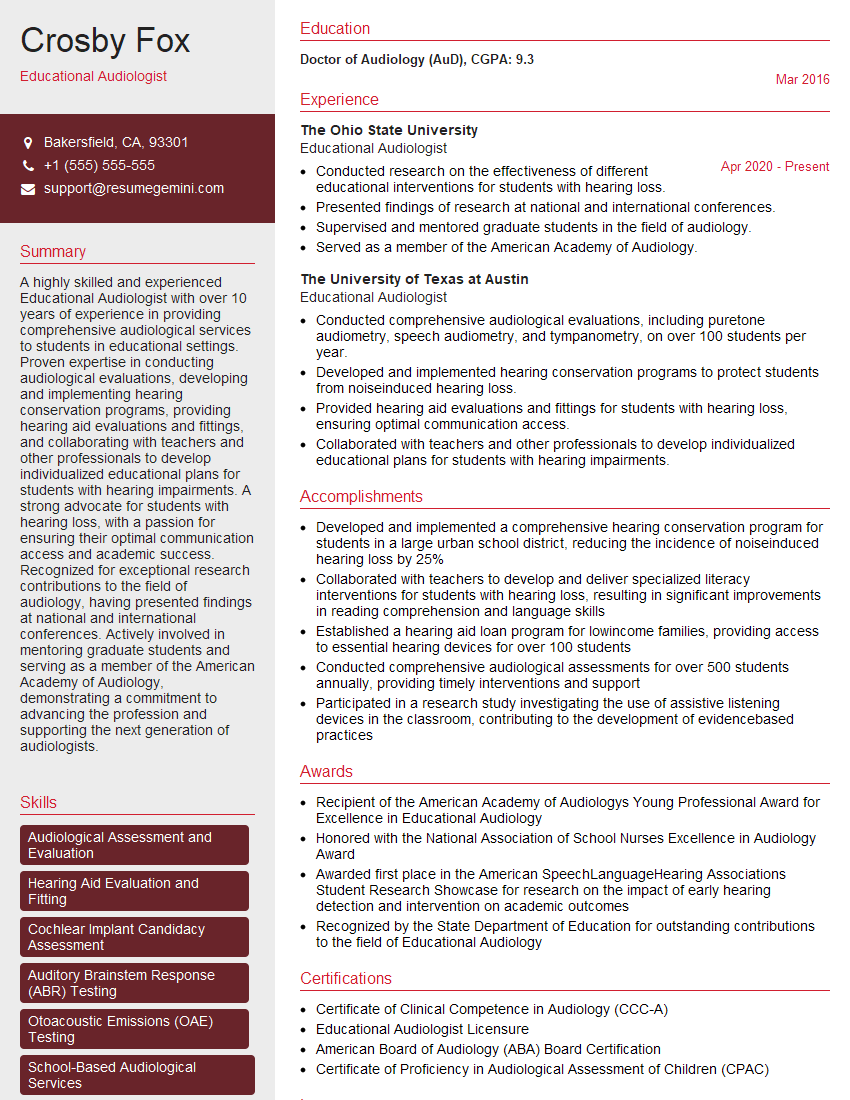
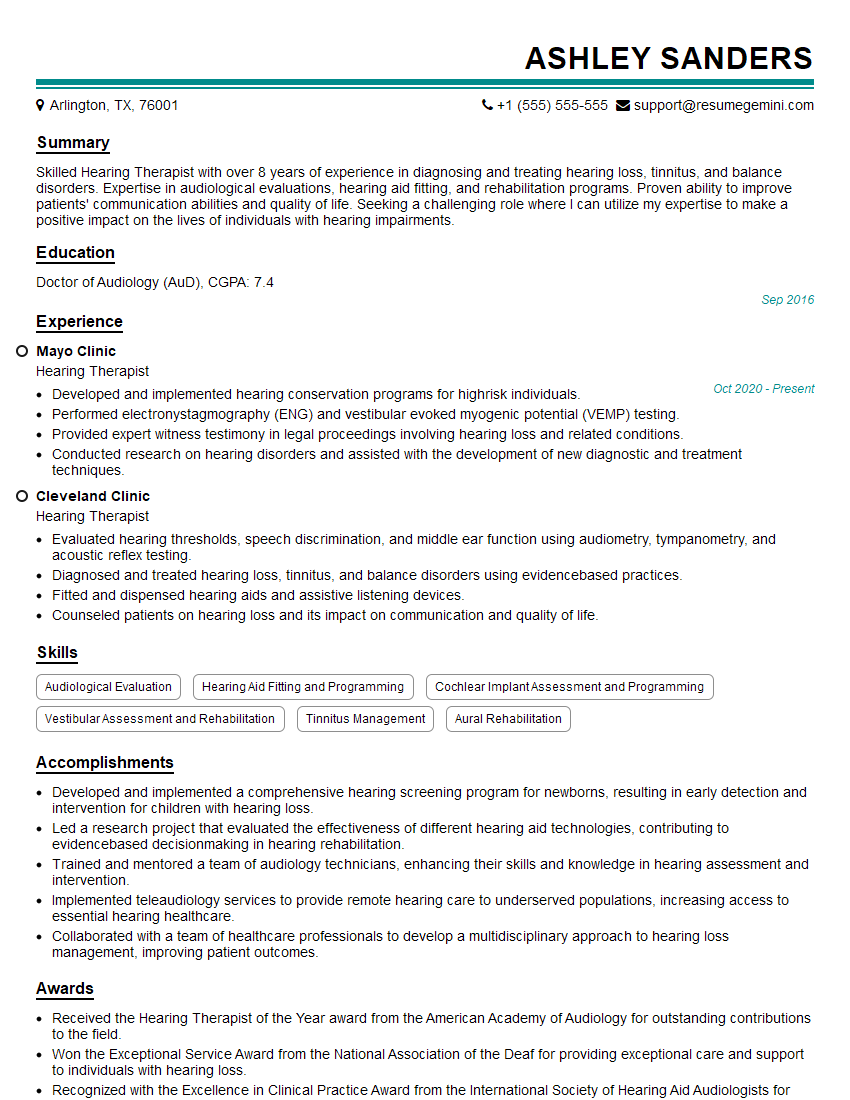
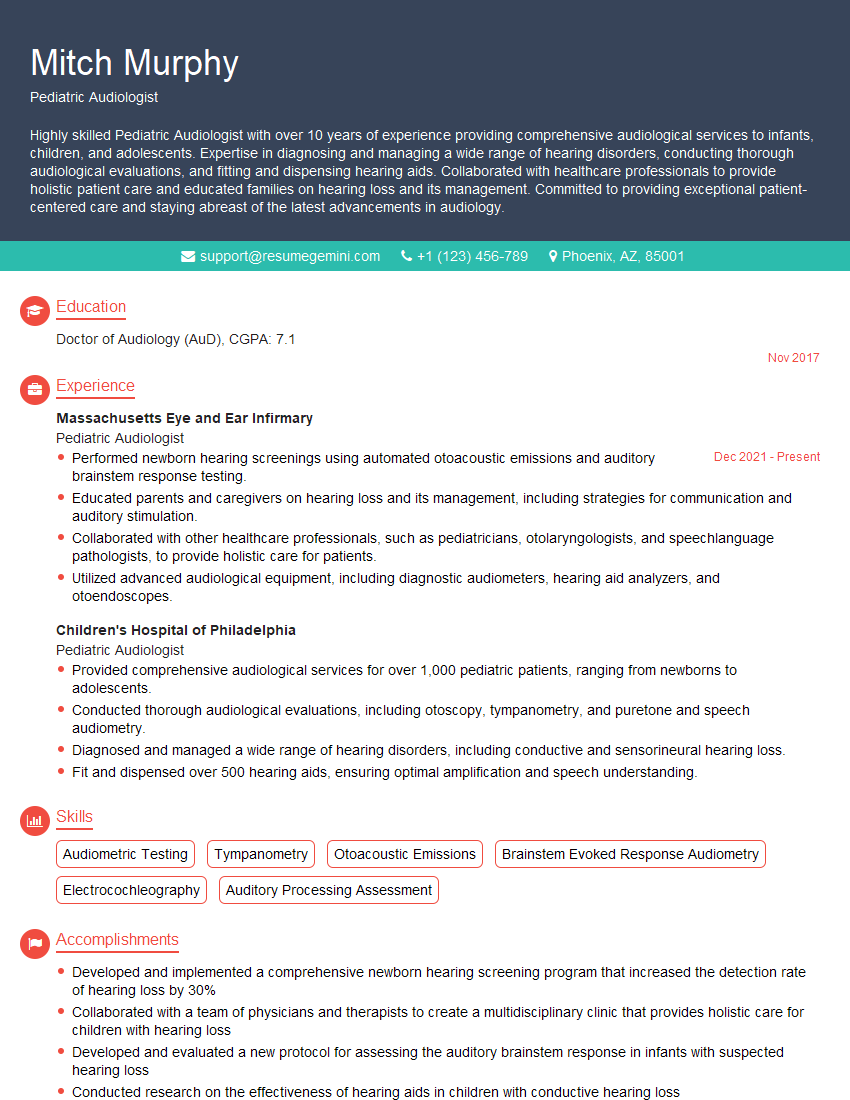
Mastering Auditory Processing Therapy opens doors to a rewarding career impacting the lives of individuals facing communication challenges. A strong resume is crucial for showcasing your skills and experience to potential employers. Creating an ATS-friendly resume, optimized for applicant tracking systems, significantly increases your chances of getting noticed. ResumeGemini is a trusted resource to help you build a professional and effective resume that highlights your unique qualifications. We provide examples of resumes tailored specifically to Auditory Processing Therapy to help guide you. Take the next step in your career journey and craft a resume that truly reflects your expertise.

Explore more articles
Users Rating of Our Blogs
Share Your Experience
We value your feedback! Please rate our content and share your thoughts (optional).
What Readers Say About Our Blog
To the interviewgemini.com Webmaster.
Very helpful and content specific questions to help prepare me for my interview!
Thank you
To the interviewgemini.com Webmaster.
This was kind of a unique content I found around the specialized skills. Very helpful questions and good detailed answers.
Very Helpful blog, thank you Interviewgemini team.