The right preparation can turn an interview into an opportunity to showcase your expertise. This guide to Basic Hand and Power Tool Proficiency interview questions is your ultimate resource, providing key insights and tips to help you ace your responses and stand out as a top candidate.
Questions Asked in Basic Hand and Power Tool Proficiency Interview
Q 1. What safety precautions are essential when using a circular saw?
Safety is paramount when using a circular saw. Think of it like driving a car – you wouldn’t drive without a seatbelt, and you shouldn’t use a circular saw without proper precautions. These include:
- Eye Protection: Always wear safety glasses or a face shield to protect against flying debris. Imagine a tiny sliver of wood getting in your eye – it’s not a pleasant thought!
- Hearing Protection: Circular saws are loud. Ear muffs or plugs are crucial to prevent hearing damage over time. Think of it as protecting your hearing as you would your vision.
- Proper Blade Selection: Choose the correct blade for the material you’re cutting. Using the wrong blade can lead to kickback or breakage. It’s like using the wrong tool for a job – you wouldn’t try to hammer in a screw.
- Secure Workpiece: Make sure the material you’re cutting is firmly clamped down. A moving workpiece can cause the saw to bind and kick back. Think of it as securing your footing before you start any task.
- Balanced Stance: Maintain a firm and balanced stance. Never reach or overextend yourself. Think of it as keeping your center of gravity stable.
- Proper Technique: Always start the saw before making contact with the material and turn it off before raising it from the cut. Gradually lower the blade into the material and maintain a consistent speed. This prevents binding and kickback and ensures a clean cut.
- Clear Area: Ensure the area around you is clear of obstructions and bystanders. A clear workspace prevents accidents.
Following these precautions will significantly reduce the risk of injury. Remember, safety isn’t optional; it’s essential.
Q 2. Explain the proper technique for using a level.
Using a level accurately is fundamental for any construction or DIY project. It ensures surfaces are perfectly horizontal or vertical. The technique is simple but requires attention to detail:
- Clean the Surface: Ensure the surface you are measuring is clean and free of debris. This prevents inaccurate readings.
- Place the Level: Place the level on the surface you’re checking, making sure it’s resting flat and stable. Think of it like setting the foundation for a building – it needs to be stable.
- Check the Bubble: Observe the bubble in the level. The bubble should be centered between the two lines to indicate that the surface is perfectly level. If the bubble is off-center, the surface is not level.
- Adjust as Needed: If the surface isn’t level, make adjustments until the bubble is centered. You might need shims or other adjustments depending on the project.
- Multiple Checks: For larger surfaces, check multiple points along the length to ensure consistent leveling.
With practice, using a level becomes second nature, ensuring straight walls, level shelves, and perfectly aligned structures. Accuracy is key – a slightly unlevel surface might seem minor initially but can lead to larger issues down the line.
Q 3. How do you select the appropriate drill bit for a specific material?
Selecting the right drill bit is critical for clean holes and preventing damage to both the bit and the material. The choice depends entirely on the material’s hardness and thickness.
- Wood: For wood, use a twist drill bit. The size of the bit should be slightly smaller than the desired hole size to prevent splitting. For example, if you need a 1-inch hole, a 7/8-inch bit might be suitable.
- Metal: Metal requires high-speed steel (HSS) bits, which are designed for harder materials. These bits typically have a more pointed tip for easier starting.
- Masonry: For brick, concrete, or tile, use masonry bits. These have a carbide tip to withstand the hardness of the material.
- Plastic: Plastic can be drilled using standard twist bits, but a lower speed and lighter pressure are usually needed to prevent melting or cracking.
When in doubt, always err on the side of caution and choose a slightly smaller bit. Starting with a pilot hole can be beneficial for larger holes in hard materials. Remember to always check the material’s properties before selection.
Q 4. Describe the difference between a Phillips and a flathead screwdriver.
Phillips and flathead screwdrivers are the workhorses of any toolbox, but their differences are crucial for proper use.
- Flathead Screwdriver: Has a flat, blade-like tip that fits into a straight slot in the screw head. It’s simple, reliable, and great for basic applications.
- Phillips Screwdriver: Has a cross-shaped tip that fits into a cross-shaped recess in the screw head. This design provides more torque (twisting power) and reduces the chance of the screwdriver slipping out, making it ideal for working on tougher materials or tighter spaces.
Using the wrong screwdriver can damage the screw head, rendering it unusable. For example, forcing a flathead screwdriver into a Phillips head can strip the screw, requiring its removal with more advanced techniques.
Q 5. What are the safety measures to take when operating a power drill?
Power drills offer incredible versatility, but safety must always be the top priority. Just like operating any power tool, proper technique and preparation are crucial for avoiding accidents.
- Eye Protection: Always wear safety glasses to protect against flying debris.
- Secure Grip: Maintain a firm grip on the drill, using both hands when necessary. Avoid using excessive force.
- Proper Bit Selection: Select the appropriate bit for the material you are drilling, as discussed earlier.
- Clamp Workpiece: Secure the workpiece to prevent it from moving during drilling.
- Start Slowly: Begin drilling at a low speed to prevent the bit from slipping or walking.
- Avoid Overheating: Take breaks to let the drill cool down to prevent damage to the motor and avoid burning the material.
- Use a Drill Press (when appropriate): For precise and repetitive drilling tasks, use a drill press, which provides greater stability and accuracy.
- Keep Hair and Clothing Away: Long hair and loose clothing should be secured to prevent entanglement in moving parts.
Remember, a power drill is a powerful tool, and respecting its capabilities is essential for safety.
Q 6. How do you measure and cut lumber accurately?
Accurate measurement and cutting are crucial for any woodworking project. Inaccuracy can lead to wasted material and compromised structural integrity. Here’s the process:
- Measure Twice, Cut Once: This is a classic woodworking adage, but it’s true. Double-check your measurements before making any cuts.
- Use a Measuring Tape: Use a reliable measuring tape, ensuring it’s in good condition and properly zeroed.
- Mark Accurately: Make clear and precise marks on the lumber using a pencil or marking knife.
- Choose the Right Saw: Select the appropriate saw for the type of cut. A hand saw is suitable for straight cuts, while a miter saw is used for angled cuts. Circular saws are also excellent options for various cuts, but extra caution is needed.
- Secure Workpiece: If using power tools, secure the workpiece firmly to a workbench or sawhorses.
- Maintain Control: Maintain control of the saw throughout the cutting process, ensuring a smooth and straight cut. Avoid rushing or applying excessive pressure.
- Double-Check the Cut: After cutting, double-check the dimensions to ensure accuracy.
Proper technique, good tools, and careful planning are key elements in achieving accurate lumber cutting.
Q 7. What are the different types of hammers and their uses?
Hammers are versatile tools used for various tasks, and different types are suited for specific applications.
- Claw Hammer: The most common type, featuring a head with a striking face and a claw for removing nails. It’s ideal for general carpentry and demolition work.
- Ball-Peen Hammer: Has a rounded striking face, often used for shaping metal or riveting. The rounded shape helps prevent marring the surface of the work piece.
- Sledgehammer: A large, heavy hammer used for demolition or driving stakes into the ground. It’s not for delicate work!
- Rubber Mallet: Used to avoid marring surfaces, especially when assembling furniture or working with delicate materials. The soft face prevents damage.
- Dead Blow Hammer: Filled with a granular material to reduce rebound, which is beneficial for precise work or shaping softer materials. The reduced bounce keeps the work steadier.
Choosing the right hammer depends entirely on the task at hand. Using an inappropriate hammer can lead to damage or injury. For example, trying to use a claw hammer to drive a chisel would be unsafe and less effective.
Q 8. Explain the importance of using appropriate personal protective equipment (PPE).
Appropriate Personal Protective Equipment (PPE) is crucial for preventing injuries when working with hand and power tools. Think of PPE as your safety armor. It protects your body’s most vulnerable parts from potential hazards.
- Eye Protection: Safety glasses or goggles are essential to protect your eyes from flying debris, dust, and chemical splashes. Imagine a tiny piece of wood flying into your eye – it could cause serious damage. Always wear eye protection, even for seemingly simple tasks.
- Hearing Protection: Earplugs or earmuffs are necessary when using loud power tools like circular saws or jackhammers. Prolonged exposure to loud noises can lead to hearing loss, a condition that’s irreversible.
- Respiratory Protection: A dust mask is vital when working with materials that produce dust, such as sanding wood or cutting drywall. Inhaling fine particles can cause respiratory problems.
- Hand Protection: Work gloves provide protection against cuts, abrasions, and blisters. The right gloves will depend on the task; leather gloves for rough work, nitrile for chemical resistance.
- Foot Protection: Safety shoes or boots with steel toes protect your feet from dropped objects or accidental impacts. A heavy object falling on your foot can cause serious injury, even fractures.
Using the correct PPE isn’t just a rule; it’s a commitment to your well-being and safety on the job.
Q 9. How do you maintain and care for hand tools?
Maintaining hand tools is key to their longevity and your safety. A well-maintained tool is a safer tool. Think of it like caring for a valuable possession.
- Cleaning: After each use, clean your tools thoroughly. Remove any dirt, debris, or residue. Use a wire brush for stubborn dirt on metal tools.
- Sharpening: Keep blades sharp. A dull blade requires more force to use, increasing the risk of slippage and injury. Learn how to sharpen your specific tools or take them to a professional sharpener.
- Lubrication: Lubricate moving parts with appropriate lubricants to reduce friction and wear. This extends the life of your tools and makes them easier to use.
- Storage: Store tools in a dry, organized location to prevent rust and damage. Consider using a tool chest or wall-mounted organizers.
- Inspection: Regularly inspect tools for damage such as cracks, bends, or loose parts. Damaged tools should be repaired or replaced immediately.
Regular maintenance not only ensures the tools function correctly but also prevents accidents caused by faulty equipment.
Q 10. What are the signs of a malfunctioning power tool?
Recognizing the signs of a malfunctioning power tool is crucial for preventing accidents. A seemingly minor issue can quickly escalate into a dangerous situation.
- Unusual Noises: Grinding, squealing, or excessive vibration can indicate worn-out bearings, loose parts, or other internal problems.
- Overheating: If a tool gets excessively hot during normal use, it could indicate a problem with the motor or internal components.
- Loss of Power: If the tool loses power or struggles to perform its intended function, there may be a problem with the motor or power supply.
- Erratic Operation: If the tool operates erratically, such as starting and stopping unexpectedly, this is a serious safety concern and needs immediate attention.
- Damaged Cord or Plug: Frayed cords or damaged plugs are fire hazards and should never be used.
Never use a power tool that exhibits any of these signs. Have it inspected and repaired by a qualified professional before using it again.
Q 11. Describe the proper procedure for using a jigsaw.
Using a jigsaw safely and effectively requires following a clear procedure. Always prioritize safety.
- Inspect the Jigsaw: Ensure the blade is correctly installed and securely tightened. Check the power cord for any damage.
- Prepare the Workpiece: Securely clamp the workpiece to a stable work surface. Use appropriate clamps to prevent movement during cutting.
- Adjust the Blade: Select the appropriate blade for the material you are cutting. Adjust the blade angle if needed for bevel cuts.
- Start the Cut: Start the jigsaw and allow it to reach full speed before engaging the blade with the material. Begin the cut slowly and steadily.
- Guide the Jigsaw: Maintain a firm grip on the jigsaw and guide it along the cutting line. Avoid applying excessive pressure, let the blade do the work.
- Complete the Cut: Complete the cut smoothly and avoid sudden movements. Turn off the jigsaw before removing the blade.
- Post-Cut Procedures: Turn off the jigsaw and unplug it from the power source. Allow the jigsaw to cool down before storing it.
Practice makes perfect. Start with scrap material before working on your final project. Mastering jigsaw operation enhances both efficiency and safety.
Q 12. How would you handle a jammed drill bit?
A jammed drill bit is a common problem but can be handled safely. The key is to avoid forcing the situation.
- Turn off the drill: Always unplug the drill or turn it off and ensure it’s completely stopped before attempting to remove the jammed bit.
- Assess the situation: Carefully examine the situation to understand why the bit is jammed. Is it caught in the material or is there another obstruction?
- Reverse the drill: Carefully attempt to reverse the drill to free the bit. Apply gentle pressure. Avoid applying excessive force, which could damage the drill or workpiece.
- Use penetrating oil: If reversing doesn’t work, apply penetrating oil to the area and let it sit for a few minutes. This can help loosen the bit.
- Use pliers or vise grips: If the bit is still stuck, carefully use pliers or vise grips to gently grip and remove the bit. Use caution to avoid damaging the chuck or your hands.
- Consider extraction tools: For stubborn cases, specialized drill bit extraction tools can be helpful.
Remember, patience is crucial. Avoid forceful removal which could lead to damage or injury.
Q 13. How do you prevent injuries while using power tools?
Preventing injuries while using power tools is paramount. It’s a combination of safe practices and awareness.
- Proper Training: Always receive proper training before using any power tool. Understand its functions, safety features, and limitations.
- Use the Right Tool for the Job: Avoid using a tool for a task it’s not designed for. For example, don’t use a drill to hammer nails.
- Secure Workpiece: Secure the workpiece firmly to a stable work surface to prevent it from moving during operation.
- Maintain a Firm Grip: Maintain a firm grip on the tool at all times and use both hands when appropriate.
- Wear PPE: Always wear appropriate personal protective equipment, including eye protection, hearing protection, and work gloves.
- Inspect Tools Before Use: Check the tool for any damage or defects before using it. Replace damaged cords or parts immediately.
- Keep a Clean Workspace: Keep your workspace clean and organized to prevent accidents caused by clutter or tripping hazards.
- Avoid Distractions: Concentrate fully on the task at hand and avoid distractions.
- Regular Maintenance: Regularly maintain your power tools to ensure they are in good working condition.
Safety is not just about avoiding accidents; it’s about establishing a safety-first mindset.
Q 14. Explain the difference between different types of sandpaper.
Sandpaper is classified by its grit, which refers to the size and number of abrasive particles per square inch. A lower grit number means coarser sandpaper with larger particles, while a higher grit number indicates finer sandpaper with smaller particles.
- Coarse Grit (e.g., 24-60 grit): Used for initial shaping and removing significant amounts of material. Think of removing rough edges or shaping wood.
- Medium Grit (e.g., 80-150 grit): Used for smoothing surfaces after coarse sanding and removing scratches left by coarser grits. This would be used after the initial shaping to refine the surface.
- Fine Grit (e.g., 180-320 grit): Used for achieving a very smooth surface before finishing. This produces a smooth finish ready for paint or varnish.
- Extra-Fine Grit (e.g., 400 grit and above): Used for polishing and achieving an ultra-smooth finish. This is often used for final polishing before applying a sealant.
Different materials require different grits of sandpaper, and it’s often necessary to progress through various grits for optimal results. For example, you would start with coarse grit to remove the bulk of the material and then progress to finer and finer grits to achieve a smooth finish.
Q 15. What are the safety considerations for working at heights?
Working at heights presents significant risks, so safety is paramount. It’s not just about preventing falls; it’s about mitigating the consequences should a fall occur.
- Fall Protection: This is the cornerstone of height safety. Harness systems, safety lines, and guardrails are essential. The type of protection depends on the height and the work being done. For instance, a simple guardrail might suffice for a low roof, while a full-body harness and anchor points are necessary for high-rise construction.
- Proper Training: Before working at heights, comprehensive training is mandatory. This includes understanding equipment usage, emergency procedures, and recognizing potential hazards.
- Equipment Inspection: Before each use, all equipment, including harnesses, ropes, and anchors, must be meticulously inspected for wear and tear. Damaged equipment should be immediately removed from service.
- Safe Access and Egress: Proper access and exit points are critical. This might involve using ladders, scaffolding, or other specialized access equipment, each requiring its own specific safety protocols.
- Environmental Factors: Weather conditions, such as wind and rain, can significantly increase the risk of falls. Work should be halted when conditions are unsafe.
- Communication: Clear communication among workers is essential. Having a designated spotter or using a communication system can greatly improve safety.
Imagine painting a second-story exterior wall. You wouldn’t simply climb a ladder without a harness and proper fall protection. A fall from that height could be catastrophic. The proper procedure would involve securing a fall arrest system to a sturdy anchor point before commencing work.
Career Expert Tips:
- Ace those interviews! Prepare effectively by reviewing the Top 50 Most Common Interview Questions on ResumeGemini.
- Navigate your job search with confidence! Explore a wide range of Career Tips on ResumeGemini. Learn about common challenges and recommendations to overcome them.
- Craft the perfect resume! Master the Art of Resume Writing with ResumeGemini’s guide. Showcase your unique qualifications and achievements effectively.
- Don’t miss out on holiday savings! Build your dream resume with ResumeGemini’s ATS optimized templates.
Q 16. How do you identify different types of wood?
Identifying different types of wood involves a combination of visual inspection, touch, and sometimes smell. There are many species, but several key characteristics help distinguish them:
- Color and Grain: Oak often has a distinct grain pattern and warm tones ranging from light to dark brown. Pine is usually lighter in color with a more pronounced grain. Maple can be pale and creamy or darker, depending on the species. Mahogany is known for its reddish-brown hue.
- Texture and Hardness: Hardwoods like oak and maple are dense and resist scratching, while softwoods like pine and fir are softer and more easily dented. You can feel this difference with your fingers.
- Smell: Some woods have distinctive aromas, particularly cedar, which possesses a strong, pleasant scent.
- End Grain: Examining the end grain (the cross-section of the wood) can reveal the pore structure, which varies considerably between species. This is particularly useful for identifying hardwoods.
For example, distinguishing between oak and pine is relatively straightforward: oak’s hardness and intricate grain pattern contrasts sharply with the softer texture and simpler grain of pine. A seasoned carpenter will often instantly recognize the most common types based on these characteristics.
Q 17. Explain the use of different types of pliers.
Pliers are versatile hand tools used for gripping, bending, and cutting. Several types exist, each suited for specific tasks:
- Slip-Joint Pliers: These adjustable pliers offer a wide gripping range, making them suitable for various sizes of nuts, bolts, and other components. They’re a staple in any toolbox.
- Needle-Nose Pliers: Their long, slender jaws are excellent for reaching tight spaces and manipulating small parts. Electronics work and jewelry making often employ these pliers.
- Lineman’s Pliers: With their cutting edge, these are exceptionally strong and ideal for heavy-duty tasks, like cutting wire or gripping large objects.
- Locking Pliers (e.g., Vise-Grips): These pliers lock into place, providing a secure grip that frees up both hands for other tasks. They’re indispensable for tasks needing a firm, unwavering hold.
- Diagonal Cutting Pliers (Dikes): These pliers are specifically designed for cleanly cutting wire and other small components.
Imagine working on a delicate circuit board. Slip-joint pliers would be too bulky, while needle-nose pliers provide the precision needed to manipulate small components without causing damage.
Q 18. What is the proper way to sharpen a chisel?
Sharpening a chisel is crucial for clean, precise cuts. The process involves using a sharpening stone, usually oil- or water-stones, and maintaining the correct bevel angle.
- Choose Your Stone: A medium-grit stone followed by a fine-grit stone is recommended for optimal results. Oilstones require lubrication with oil, while waterstones use water.
- Maintain the Bevel: The bevel angle (typically 25-30 degrees) should be maintained throughout the sharpening process. Use a sharpening guide or maintain a consistent angle by eye.
- Sharpening Technique: Lay the chisel flat on the stone, ensuring the bevel is in contact. Using a smooth, controlled motion, draw the chisel across the stone, maintaining the angle. Repeat this process until the edge is sharp.
- Honing: After sharpening with the coarser stone, use the fine-grit stone to hone the edge, refining it for an exceptionally sharp finish.
- Check Sharpness: Test sharpness by carefully trying to shave a thin piece of wood. If the chisel cleanly shaves the wood, the sharpening is successful.
Incorrect sharpening can lead to a dull chisel which produces ragged cuts and can be dangerous. Consistent sharpening is key to efficient and safe woodworking.
Q 19. What are the different types of fasteners and when to use each?
Fasteners secure materials together. Various types exist for different applications:
- Nails: For quick joining of wood, particularly in less critical applications. Different types exist, like finish nails (for inconspicuous joins), common nails (general-purpose), and brads (small nails for fine work).
- Screws: Offer greater holding power than nails and allow for easier disassembly. Various types include wood screws (for wood), machine screws (for metal), and sheet metal screws (for thinner metal).
- Bolts: Provide exceptionally strong fastening for heavy-duty applications. They typically require a nut and often a washer.
- Rivets: Permanent fasteners often used in metalwork. A rivet is deformed to create a secure joint.
- Staples: Used with a staple gun for fast, temporary fastening, often in upholstery or light construction.
For example, when building a sturdy wooden frame, bolts would be preferred for their strength and reliability over nails. For hanging a picture on the wall, a screw would be the ideal choice, offering sufficient holding power while allowing easy removal.
Q 20. How would you use a tape measure to accurately measure a room?
Accurately measuring a room involves more than just extending the tape measure. Precision and consistency are essential:
- Start at a Corner: Begin measuring from one corner of the room, ensuring the tape measure is aligned with the wall.
- Extend the Tape: Extend the tape measure along the wall, paying attention to any obstacles or irregularities.
- Note Measurements: Carefully note the measurements, marking them on a diagram or notepad, and specifying which wall is being measured.
- Measure Multiple Sides: Measure the length and width of each wall, checking for discrepancies. In some rooms, slight variations may exist; it’s wise to measure multiple times to account for this.
- Account for Obstructions: If there are built-in features like fireplaces or cupboards, measure around them or take note of their dimensions separately.
- Use a Level: For greater accuracy, particularly in rooms with uneven floors or walls, consider using a level to ensure the tape measure remains perfectly horizontal.
Think of measuring a rectangular room. You wouldn’t just measure one wall and assume all others are the same. Measuring multiple sides and taking careful note of any irregularities is vital for accurate results.
Q 21. What are the different types of saws and their uses?
Saws are used for cutting various materials. Different types exist for different materials and cuts:
- Hand Saws: These include rip saws (for cutting wood along the grain) and crosscut saws (for cutting across the grain). They are manually operated and require more effort.
- Circular Saws: Powered saws with a rotating circular blade, ideal for fast cutting in wood and some other materials. They are suitable for both straight and curved cuts.
- Jigsaw: Used for intricate cuts in wood, plastic, and metal. Their blade is thin and versatile, allowing for curved and detailed cuts.
- Reciprocating Saws (Sawzall): Uses a reciprocating blade, best for demolition or rough cutting of various materials.
- Miter Saw: Makes accurate angle cuts, often used in framing and woodworking for precise joints.
- Table Saw: A stationary saw with a large, horizontal blade, used for accurate ripping and crosscutting in woodworking.
For example, building a birdhouse requires fine, precise cuts, which are best accomplished with a jigsaw. Constructing a wooden fence would benefit from the speed and efficiency of a circular saw.
Q 22. How do you correctly use a wrench?
Using a wrench correctly involves selecting the right size for the nut or bolt and applying the appropriate force. Think of it like finding the perfect-fitting key for a lock – too small, and it won’t turn; too big, and it might slip.
- Choosing the Right Wrench: Always select a wrench that precisely fits the fastener. An ill-fitting wrench can round off the corners of the nut or bolt, making it impossible to remove.
- Applying Force: Push or pull on the wrench handle, applying even pressure. Avoid jerky movements. For stubborn fasteners, you might need a cheater bar (an extension to increase leverage), but always ensure a secure grip to prevent injuries.
- Types of Wrenches: There are many types, each suited for different applications, including open-end wrenches, box-end wrenches, combination wrenches, adjustable wrenches (crescent wrenches), and socket wrenches. Knowing when to use each type is critical.
Example: When tightening a wheel nut on a car, you’d want to use a socket wrench that fits snugly, applied with steady pressure in a rotational manner to achieve even tightening. Using an improperly sized or damaged wrench could damage the nut or cause the wheel to loosen, posing a significant safety risk.
Q 23. How do you interpret construction plans/drawings?
Interpreting construction plans requires understanding architectural and engineering drawings. These aren’t just pictures; they’re precise instructions. Think of them as a detailed recipe for building something.
- Scales and Dimensions: Pay close attention to the scale indicated on the drawing (e.g., 1:100). This allows you to translate the drawing dimensions into real-world measurements.
- Views and Sections: Understand the different views (plan, elevation, section) presented. The plan shows the layout from above, elevations show the side views, and sections show internal structures.
- Symbols and Legends: Construction drawings use many symbols. A legend (or key) explains the meaning of each symbol. Learning this ‘visual language’ is essential.
- Details and Specifications: Detail drawings provide close-up views of specific components or assemblies. Specifications provide information on materials, sizes, and tolerances.
Example: A detail might show the exact method of attaching a particular beam to a column, specifying the type of fastener and the required spacing, ensuring structural integrity.
Q 24. What safety procedures are necessary before operating any power tool?
Safety is paramount when operating power tools. Before even turning one on, several procedures must be followed. This isn’t just about avoiding injury; it’s about working efficiently and safely.
- Inspect the Tool: Check for any damage or loose parts. Ensure all guards and safety features are in place and functioning correctly.
- Use the Right Tool: Select the appropriate tool for the job. Using a power tool for a task it’s not designed for is dangerous.
- Appropriate PPE (Personal Protective Equipment): Always wear safety glasses, hearing protection, and appropriate work gloves. Dust masks or respirators might also be needed depending on the task.
- Secure Work Area: Make sure the work area is well-lit, clean, and free of obstructions.
- Know How to Use the Tool: Carefully read the manufacturer’s instructions before operation. Practice with the tool in a safe environment before undertaking a complex task.
- Unplug the tool when not in use: This is crucial to preventing accidental activation and injury.
Example: Before using a circular saw, you must check the blade is securely mounted, the guard is functional, your safety glasses are on, and the work area is clear of distractions.
Q 25. What is the proper way to dispose of sharp objects?
Sharp objects, such as broken glass, razor blades, and needles, require careful disposal to prevent injuries. Never throw them in the regular trash.
- Puncture-Resistant Containers: Use sturdy, puncture-resistant containers with tight-fitting lids. Many pharmacies and hospitals offer these containers.
- Labeling: Clearly label the container with warnings such as ‘Sharp Objects’.
- Proper Disposal: Dispose of the container according to your local regulations. Some areas have designated drop-off points for sharps.
Example: Used hypodermic needles should always be disposed of in a designated sharps container, never in the general waste.
Q 26. Explain the difference between different types of screws.
Screws come in various types, each designed for specific applications. The choice depends on factors such as the materials being joined, the load they will bear, and the desired appearance.
- Wood Screws: These have sharp points and threads designed to grip wood. They are commonly used for joining wooden components.
- Drywall Screws: These have a coarse thread and a self-tapping point, ideal for fastening drywall to studs.
- Sheet Metal Screws: These have a sharp point and fine threads, suitable for joining sheet metal.
- Machine Screws: These are generally used with nuts and washers for joining metal components. They offer great strength and precision.
- Self-Tapping Screws: These cut their own threads as they are driven in, eliminating the need for pre-drilling in some materials.
Example: You wouldn’t use a drywall screw to join two pieces of hardwood – a wood screw would be more appropriate for strength and longevity.
Q 27. What is the proper technique for using a claw hammer?
Using a claw hammer correctly involves balance, proper grip, and controlled swings. It’s about precision and avoiding injury. Think of it like a controlled dance between your hand and the hammer.
- Grip: Hold the hammer firmly but not too tightly. Grip the handle near the end for more leverage, but not so far out that you lose control. Never use a hammer with a cracked handle.
- Stance: Position your body so that your weight is balanced. Your stance should be aligned with your target.
- Swing: Lift the hammer in a smooth arc, and let the weight of the hammer do most of the work. Avoid forceful swings that can miss the target or damage the material.
- Impact: Strike the nail head squarely with the hammer’s face. Avoid glancing blows that can bend the nail.
- Claw: Use the claw to remove nails by placing the claws under the nail head and gently rocking and pulling up. Do not place your hand directly on the claw while using it.
Example: When hammering a nail into hardwood, a gentler, more controlled swing is needed compared to hammering into softwood to prevent splitting the wood.
Q 28. How would you troubleshoot a problem with a nail gun?
Troubleshooting a nail gun involves systematically checking different components to identify the source of the problem. Remember, always unplug the nail gun before attempting any repairs or troubleshooting.
- Check the Air Supply (for pneumatic nail guns): Ensure the air compressor is functioning correctly and provides adequate pressure. A pressure gauge can help in diagnosing this.
- Check the Nail Cartridge: Make sure the nail cartridge is properly seated and contains nails. Empty or jammed cartridges are a common cause of malfunctions.
- Inspect the Safety Mechanism: Check if the safety is engaged or if there is a malfunction with the safety switch.
- Examine the Firing Mechanism: If the nail gun isn’t firing, there might be an obstruction in the firing mechanism. Refer to the manual for appropriate cleaning and maintenance instructions.
- Check for Leaks (for pneumatic nail guns): Leaks in the air hoses or connections can significantly reduce power. Inspect hoses and connectors for signs of damage or wear.
Example: If a pneumatic nail gun isn’t firing, the first step is to check the air compressor’s pressure. Low pressure will significantly reduce the power and likely result in misfires or no firing.
Key Topics to Learn for Basic Hand and Power Tool Proficiency Interview
- Safety Procedures: Understanding and applying safety regulations for both hand and power tools, including proper PPE (Personal Protective Equipment) usage and emergency procedures. Practical application: Describe your experience with specific safety protocols in various work environments.
- Hand Tool Operation and Maintenance: Proficiency in using common hand tools like hammers, screwdrivers, wrenches, saws, levels, and measuring tapes. Practical application: Explain how you would troubleshoot a malfunctioning hand tool or describe a project where precision hand tool use was critical.
- Power Tool Operation and Maintenance: Safe and efficient operation of common power tools such as drills, saws (circular, reciprocating, jigsaw), sanders, and impact drivers. Practical application: Detail your experience with different power tool types, including their appropriate uses and limitations. Explain preventative maintenance procedures.
- Material Selection and Application: Knowledge of different materials (wood, metal, plastic) and their properties, and how tool selection impacts the project outcome. Practical application: Describe a project where you had to choose the right tools and materials for a specific task, considering factors like material hardness and desired finish.
- Project Planning and Execution: Ability to read blueprints or schematics, plan projects effectively, and execute them safely and efficiently. Practical application: Describe your process for approaching a new project, from initial planning to completion. Highlight problem-solving skills.
- Troubleshooting and Repair: Identifying and resolving common issues encountered during tool use or project execution. Practical application: Provide examples of how you have diagnosed and fixed problems related to tools or projects.
Next Steps
Mastering Basic Hand and Power Tool Proficiency is crucial for career advancement in many trades and industries. It demonstrates practical skills and a commitment to safety, essential qualities employers highly value. To maximize your job prospects, create an ATS-friendly resume that showcases your abilities effectively. ResumeGemini is a trusted resource to help you build a professional and impactful resume. Examples of resumes tailored to Basic Hand and Power Tool Proficiency are available, providing you with templates and guidance to highlight your skills and experience. This will significantly improve your chances of landing your dream job.

General Contractor Resume Sample
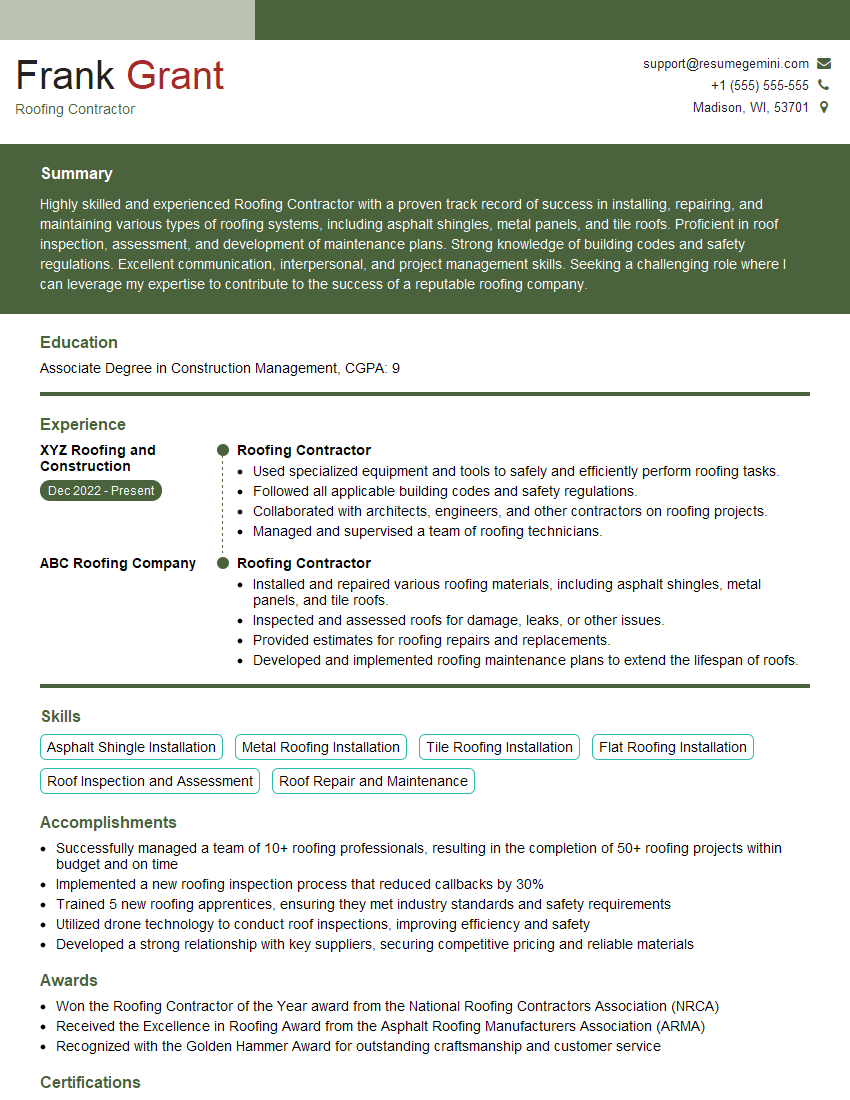
Roofing Contractor Resume Sample

Maintenance Technician Resume Sample

Furniture Maker Resume Sample
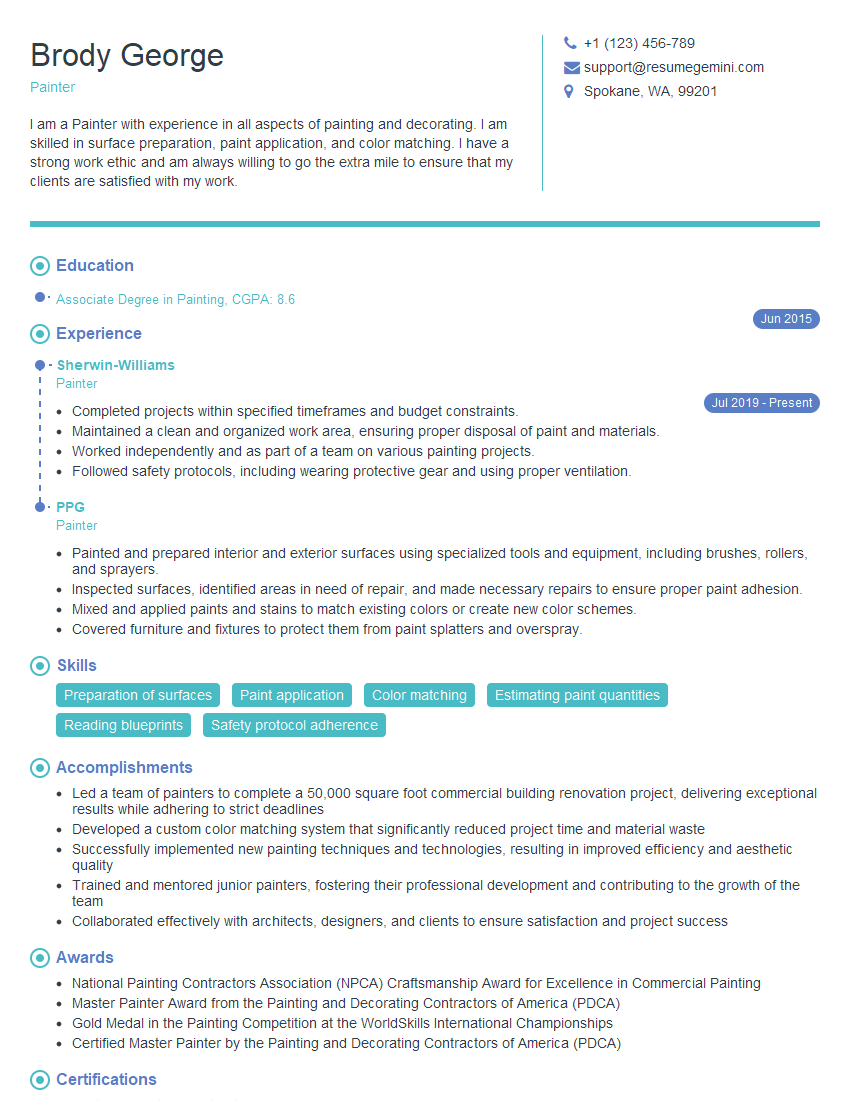
Painter Resume Sample
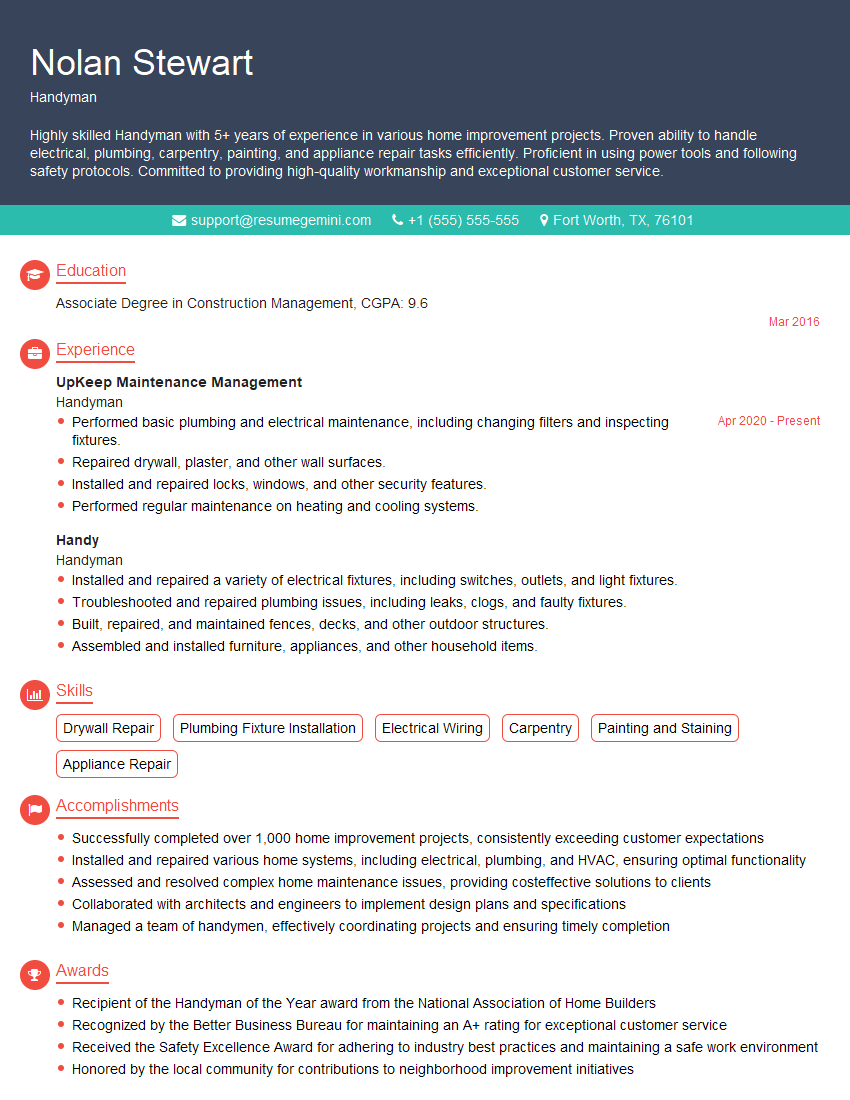
Handyman Resume Sample
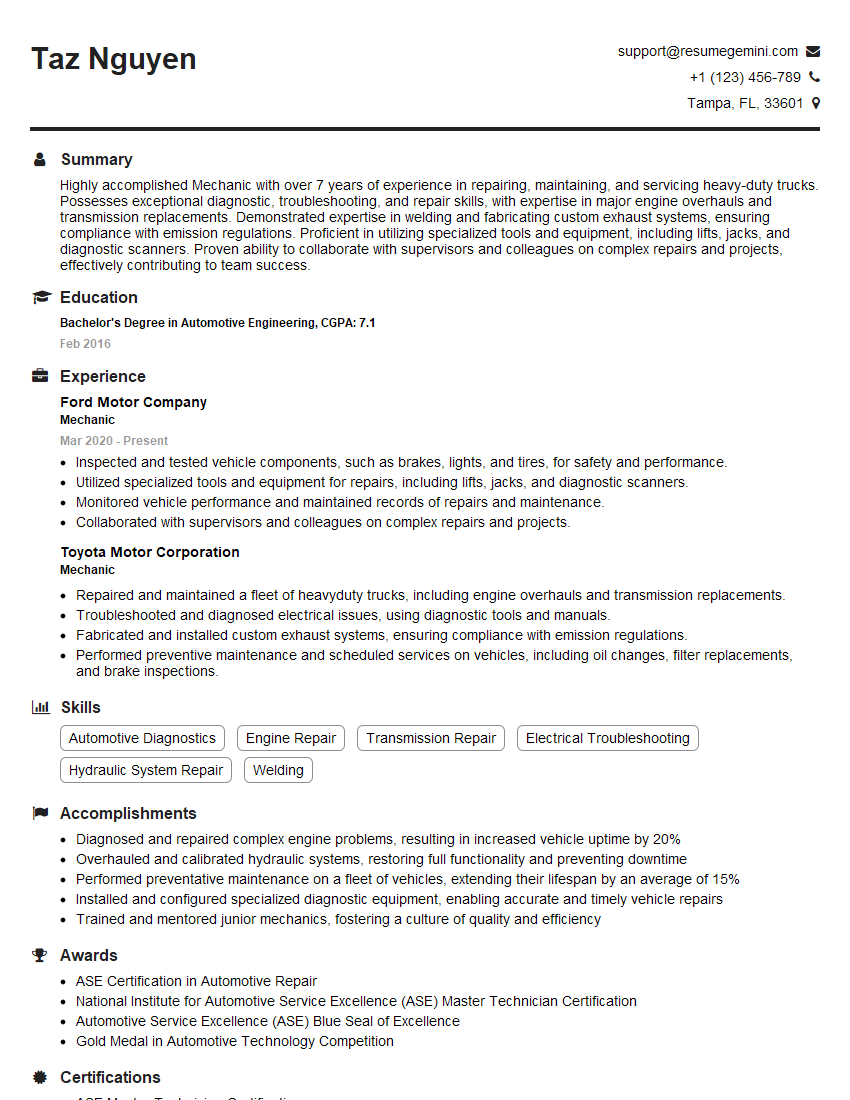
Mechanic Resume Sample

Finish Carpenter Resume Sample
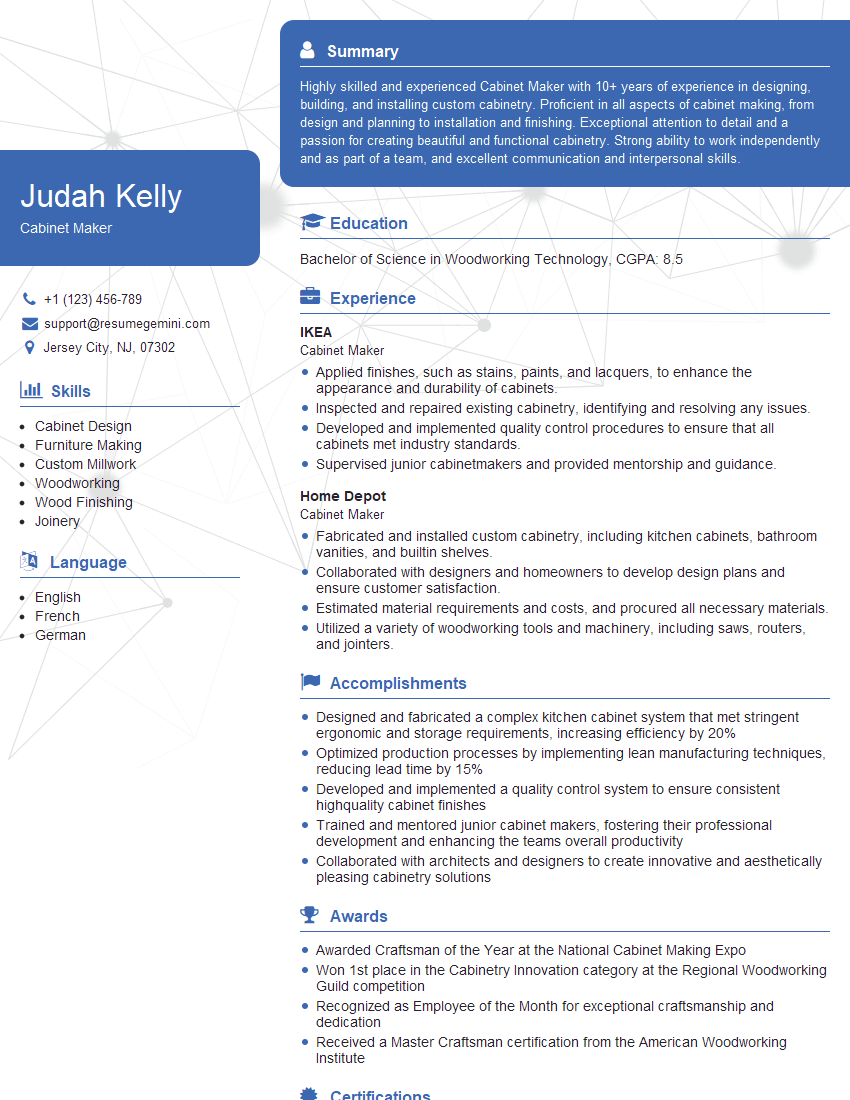
Cabinet Maker Resume Sample

Construction Worker Resume Sample
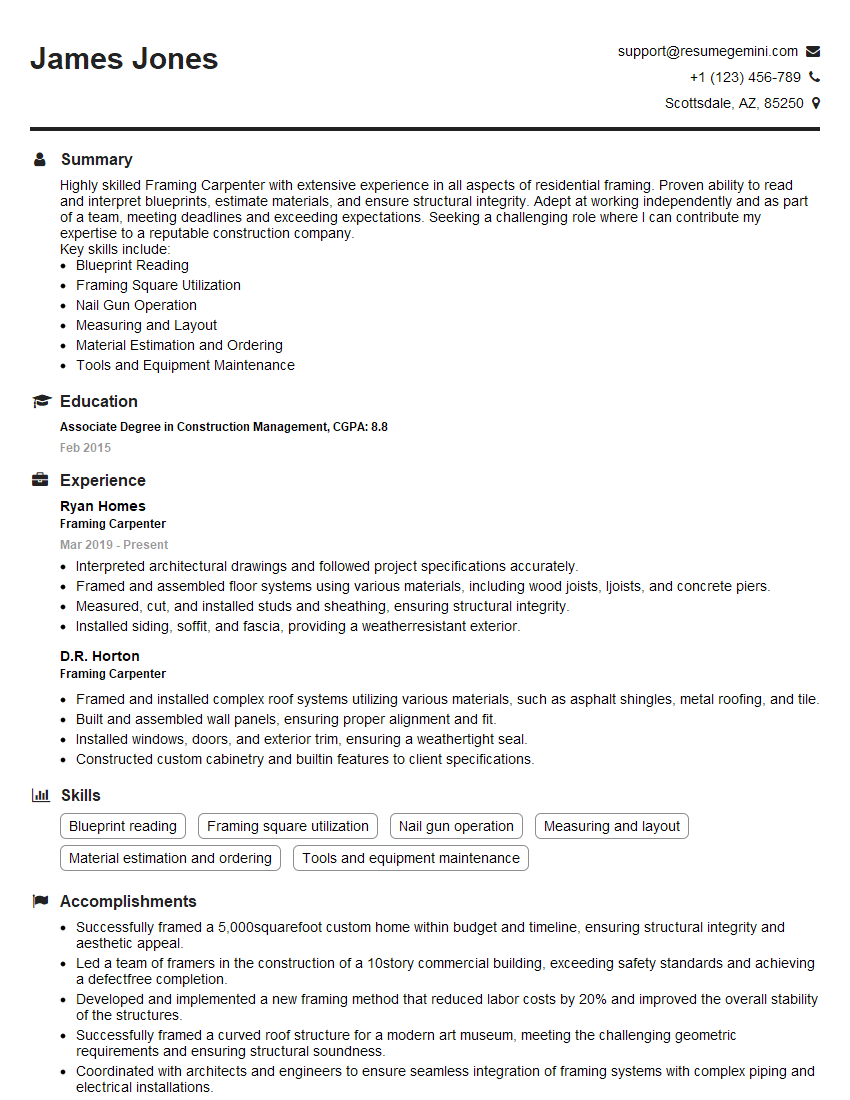
Framing Carpenter Resume Sample
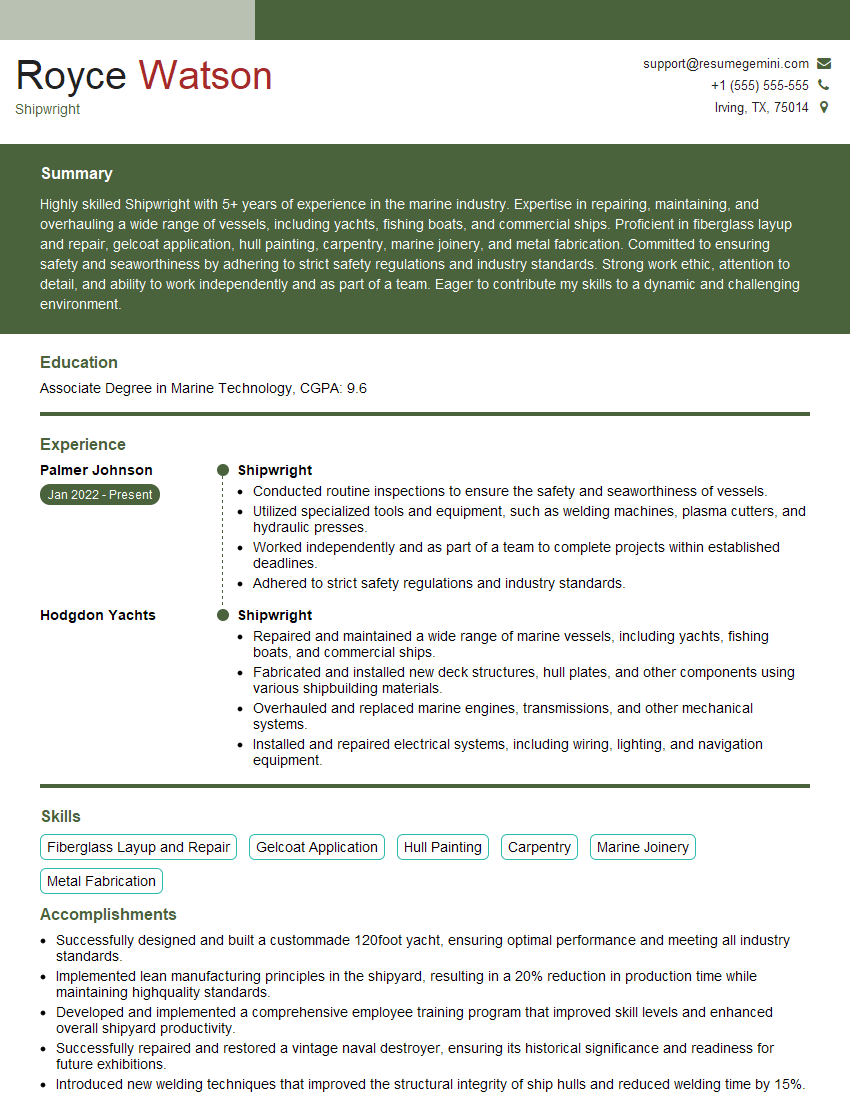
Shipwright Resume Sample

Carpenter Resume Sample

Floor Installer Resume Sample

Installer Resume Sample

Construction Laborer Resume Sample
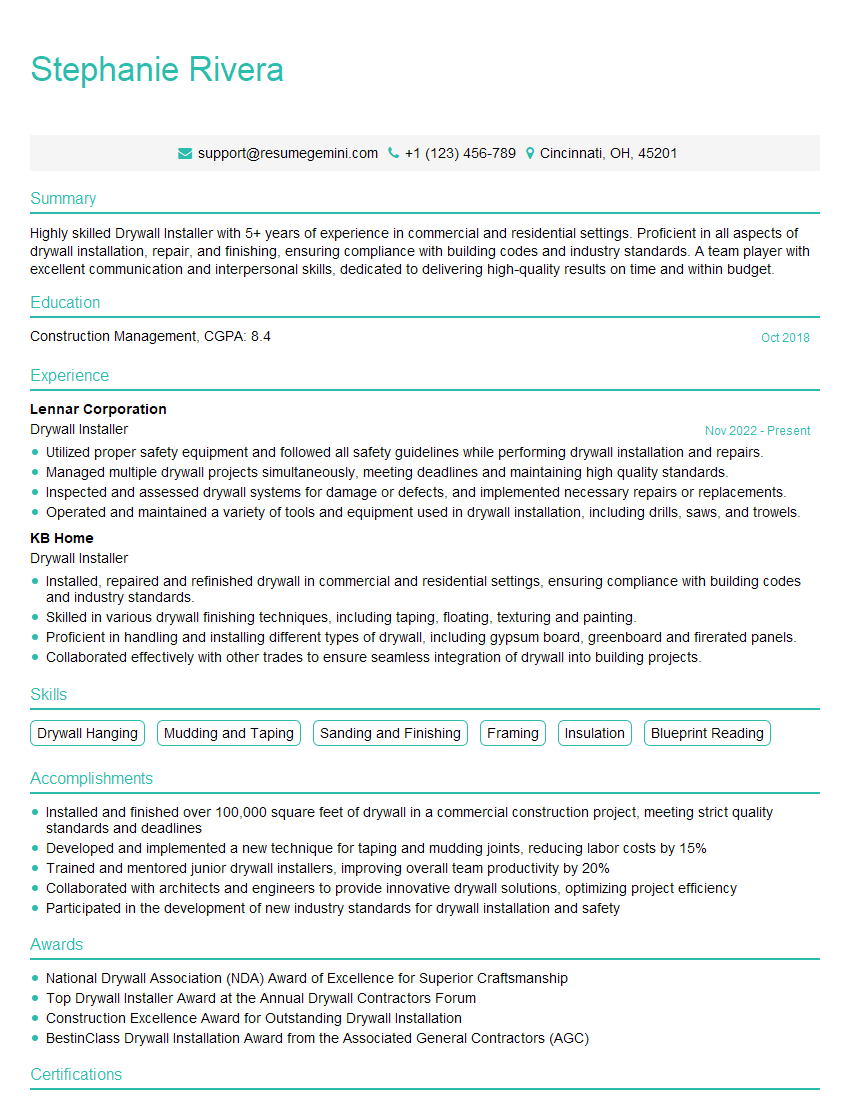
Drywall Installer Resume Sample

Electrician Resume Sample

Plumber Resume Sample

Repair Technician Resume Sample

Millwright Resume Sample

HVAC Technician Resume Sample
- General Contractor
- Roofing Contractor
- Maintenance Technician
- Furniture Maker
- Painter
- Handyman
- Mechanic
- Finish Carpenter
- Cabinet Maker
- Construction Worker
- Framing Carpenter
- Shipwright
- Carpenter
- Floor Installer
- Installer
- Construction Laborer
- Drywall Installer
- Electrician
- Plumber
- Repair Technician
- Millwright
- HVAC Technician
Explore more articles
Users Rating of Our Blogs
Share Your Experience
We value your feedback! Please rate our content and share your thoughts (optional).
What Readers Say About Our Blog
To the interviewgemini.com Webmaster.
Very helpful and content specific questions to help prepare me for my interview!
Thank you
To the interviewgemini.com Webmaster.
This was kind of a unique content I found around the specialized skills. Very helpful questions and good detailed answers.
Very Helpful blog, thank you Interviewgemini team.