Every successful interview starts with knowing what to expect. In this blog, we’ll take you through the top Bending Machine Operation interview questions, breaking them down with expert tips to help you deliver impactful answers. Step into your next interview fully prepared and ready to succeed.
Questions Asked in Bending Machine Operation Interview
Q 1. Explain the different types of bending machines you are familiar with.
Bending machines come in various types, each suited for different applications and material thicknesses. The most common are press brakes, turret punches, and rotary bending machines.
Press Brakes: These are the workhorses of sheet metal bending, using a ram to force the material between a punch and die. They’re highly versatile, capable of bending a wide range of materials and thicknesses. Think of them as giant, precisely controlled clamps that create bends.
Turret Punches: These combine punching and bending capabilities in a single machine. They’re ideal for high-volume production of parts with multiple features, including bends and holes. Imagine a multi-tool Swiss Army knife for metal sheets.
Rotary Bending Machines: These use rollers to bend the material, often used for bending tubes or profiles into circular or other curved shapes. They’re particularly useful for creating consistent, smooth curves in larger diameter materials.
My experience encompasses all three, allowing me to select the appropriate machine based on the project requirements and material properties. For instance, a press brake is best for a one-off custom bracket, while a turret punch is more efficient for mass-producing small, intricate parts.
Q 2. Describe your experience with press brake tooling and setup.
Press brake tooling is the heart of the operation. It comprises punches and dies, specifically designed to create bends in various shapes and angles. Selecting the right tooling is critical for achieving precise bends and preventing damage to the material.
My experience includes setup and maintenance of a wide range of tooling, from standard V-dies to specialized tooling like air bending dies, and radius bending dies. Setting up involves carefully aligning the punch and die, adjusting the backgauge (which positions the material for consistent bends), and setting the appropriate bending pressure. This process requires precision, as even a slight misalignment can result in inconsistent bends or damaged parts. I’m proficient in using both manual and CNC press brakes, and understand the importance of regular tooling inspection and maintenance to ensure safe and accurate operation.
For example, during a recent project involving stainless steel, I meticulously checked the die for wear and tear before setting up the machine. This prevented defects in the final product and ensured the overall efficiency of the process.
Q 3. How do you calculate bend allowances?
Bend allowance calculation is crucial for accurate bending. It compensates for the elongation of the material that occurs during bending. The calculation depends on several factors: material thickness, bend radius, and bend angle. There are different formulas used depending on the bending process (air bending, bottom bending). A simplified formula often used for air bending is:
Bend Allowance = (B.R. + T/2) * (Angle * π/180)Where:
B.R.is the Bend RadiusTis the material ThicknessAngleis the bend Angle in degrees
However, many modern press brakes and bending software have integrated calculators that account for material properties and process variables to provide more precise calculations. I routinely use these tools to minimize error. Accurate bend allowance calculations prevent errors and ensure the part fits the specifications. Incorrect calculations can lead to parts being too long or too short.
Q 4. What safety procedures do you follow when operating a bending machine?
Safety is paramount in bending machine operation. My procedures always start with a thorough machine inspection before operation, checking for any damage or loose parts. I ensure all guards are in place and functioning correctly. The use of appropriate personal protective equipment (PPE) such as safety glasses, hearing protection, and gloves is mandatory.
I always ensure the work area is free of obstructions and that proper lockout/tagout procedures are followed during maintenance or repairs. Never operating the machine when fatigued or under the influence of drugs or alcohol is fundamental to my approach. Understanding and respecting the machine’s limitations and stopping work when concerns arise are crucial parts of maintaining a safe work environment.
Q 5. Explain the process of setting up a bending machine for a specific job.
Setting up a bending machine for a specific job involves several steps. First, I review the blueprints or specifications to understand the required bend angles, dimensions, and material. The next step involves selecting the appropriate tooling (punches and dies) to achieve the desired bends. Then comes precise alignment of the tooling, ensuring it’s properly seated and adjusted. The backgauge is then set to position the material accurately for each bend. If the machine is CNC controlled, programming is required, incorporating all dimensions, bend angles, and material properties. A test bend is always performed before proceeding to full production, allowing for adjustments to ensure the part meets specifications. This iterative approach guarantees precision and minimizes waste.
For instance, on a recent project involving a complex part with multiple bends, I had to coordinate tool changes and backgauge settings precisely to achieve the required tolerances and avoid any misalignment. The test bend allowed me to make minor adjustments before starting mass production, saving time and materials.
Q 6. How do you measure bend angles accurately?
Accurate angle measurement is critical. I use a combination of methods, including digital angle finders and protractors, to verify the bend angles after each bend is completed. Digital angle finders provide highly precise readings. For manual measurements, I ensure the protractor is correctly placed against the bend to get the most accurate reading. The accuracy of measurement depends on the method and the precision of the tools used. Comparing the measurement with the blueprint and adjusting accordingly is part of my standard practice. Using a digital angle finder is essential for tight tolerances, while a protractor might suffice for less demanding applications. Consistency is key—I follow the same method for each part to ensure uniformity.
Q 7. Describe your experience with different bending materials (e.g., steel, aluminum).
My experience includes working with various materials, including mild steel, stainless steel, aluminum, and brass. Each material has unique properties affecting the bending process. Steel, for example, is stronger and requires more force to bend, while aluminum is more malleable and susceptible to scratching. Stainless steel demands careful handling to prevent surface damage. The bending process needs to be adjusted accordingly. I understand how different material thicknesses and strengths affect bend allowance calculations and machine settings. For example, working with thinner aluminum, I’ve learned to adjust the bending pressure to avoid cracking the material. Conversely, thicker steel requires a significantly higher bending force and may require multiple bends to achieve the desired angle to avoid springback effects.
Q 8. What are the common causes of bending machine malfunctions?
Bending machine malfunctions stem from a variety of sources, broadly categorized into mechanical, electrical, and hydraulic issues. Mechanical problems often involve wear and tear on components like the ram, die, or tooling. This can lead to inaccurate bends, broken parts, or even machine failure. Electrical malfunctions might be caused by faulty wiring, control system errors, or problems with the motor. Hydraulic system failures, common in press brakes, can arise from leaks, pump issues, or contaminated hydraulic fluid. Think of it like a car – if one part malfunctions, the whole system can be affected.
- Wear and tear on tooling: Dies and punches become worn over time, leading to inconsistent bends and potential damage to the material.
- Hydraulic leaks: Leaks in the hydraulic system reduce pressure, impacting bending force and accuracy.
- Electrical faults: Short circuits, blown fuses, or faulty sensors can prevent the machine from operating correctly or cause safety hazards.
- Mechanical misalignment: Misalignment of the ram, dies, or backgauge can result in skewed bends.
Q 9. How do you troubleshoot bending machine issues?
Troubleshooting bending machine issues requires a systematic approach. Safety is paramount; always ensure the machine is powered off and locked out before attempting any repairs or inspections. My approach involves a combination of visual inspection, testing with appropriate tools, and checking operational logs. For example, if the machine isn’t bending accurately, I start by visually examining the tooling for wear, then check the backgauge settings and alignment. I use gauges to measure the dimensions of the bent piece to find the root cause of the discrepancy. If it’s a hydraulic issue, I’d check fluid levels, pressure, and look for leaks. Electrical problems might require multimeter checks, tracing circuits, and consulting wiring diagrams. Maintaining detailed logs of maintenance and repairs helps to prevent future issues and allows for easier troubleshooting.
A methodical approach using a checklist is crucial. If I suspect a component failure, I’ll replace or repair the affected part, followed by thorough testing to verify functionality.
Q 10. Describe your experience with CNC press brakes.
I have extensive experience operating and programming various CNC press brakes. I’ve worked with machines from leading manufacturers, including [mention specific brands if comfortable], handling a wide range of materials and part complexities. My experience encompasses setting up tooling, programming bending sequences, adjusting parameters for different materials, and troubleshooting CNC-related issues. One project involved the production of a highly intricate part requiring precise bends and multiple tooling setups. We used advanced programming features to ensure repeatability and optimize cycle times. My proficiency with CNC press brakes significantly improves efficiency and precision compared to manual operation.
Q 11. How do you program a CNC press brake?
Programming a CNC press brake involves using specialized software, typically provided by the machine manufacturer. The process generally begins with importing the part design (often a DXF or similar file). The software then allows the operator to define the bending sequence, specifying bend angles, lengths, and positions. This includes selecting appropriate tooling, setting the backgauge position, and defining the bending sequence. More advanced programming involves optimizing the bending sequence to minimize material handling and improve cycle times. Some systems allow for offline programming, enabling the creation of programs outside of the machine’s active operation time. Programming is done by using the software’s intuitive interface, where you input parameters and verify the bending sequence on a simulation. It’s vital to account for material properties and springback (the tendency of the material to return to its original shape after bending) during programming to ensure accuracy.
Example: A simple bend program might include commands like: X-axis position: 100mm, Y-axis position: 50mm, Bend angle: 90 degrees, Down speed: 10 mm/s, Up speed: 15 mm/s.Q 12. Explain your experience with different bending techniques (e.g., air bending, bottom bending).
My experience spans various bending techniques, including air bending and bottom bending, each with its own advantages and applications. Air bending is a common method where the punch presses the material against a die, forming the bend using the air gap between the punch and the die. It’s versatile, producing relatively consistent bends, but can be more sensitive to material thickness variations. Bottom bending, on the other hand, uses a full-depth punch to force the material into the die, achieving sharp bends. It’s suitable for thicker materials but requires more precise tooling and setup. The choice of technique depends heavily on the material, part geometry, and desired bend quality. I’ve worked extensively on projects requiring both techniques, adapting my approach based on the specific requirements.
Q 13. How do you ensure the quality of bent parts?
Ensuring the quality of bent parts involves multiple steps. It begins with accurate programming of the bending machine, carefully considering material properties and anticipated springback. Regular maintenance of the machine, including tooling inspection and calibration, is essential. Using appropriate tooling for the specific material and part design is crucial. Before production, I always perform test bends to verify accuracy and make adjustments as needed. In-process inspection and quality control procedures, involving measurement with precision tools, are vital throughout the manufacturing process. Finally, documentation is key: recording the settings used for each part and maintaining detailed records of the bending operations helps ensure consistent quality and simplifies troubleshooting.
Q 14. What are the common quality defects in bending operations?
Common quality defects in bending operations include inaccurate bend angles, inconsistent bend radii, cracks or tears in the material, surface scratches or marring, and dimensional inaccuracies. Inaccurate bend angles often result from incorrect programming, worn tooling, or improper machine setup. Inconsistent bend radii can be caused by variations in material thickness or inconsistent pressure application. Cracks or tears usually indicate that the material is being subjected to excessive stress or that the material is of poor quality. Surface damage might be due to poor tooling condition or excessive pressure. Careful attention to detail in all stages of the bending process, from programming to inspection, minimizes these defects.
Q 15. How do you measure and correct bending errors?
Measuring and correcting bending errors involves a multi-step process that begins with careful pre-bending planning and continues through meticulous post-bend inspection. Accurate measurements are critical for ensuring the final product meets specifications.
Measurement Techniques: We use a variety of tools depending on the precision required. For simple bends, a standard ruler or caliper might suffice. For more complex shapes or tighter tolerances, digital calipers, dial indicators, or even coordinate measuring machines (CMMs) are employed. Angle measurement is usually done with a protractor or digital angle gauge placed against the bend.
Error Correction Strategies: Errors can stem from several sources, including incorrect die selection, faulty machine setup, or material inconsistencies. The correction strategy depends on the type and magnitude of the error.
- Minor Angle Errors: Small angular deviations can sometimes be corrected with a secondary bend using a smaller radius die or a slight adjustment of the machine’s back gauge.
- Material Defects: If the material itself is causing inconsistencies (e.g., uneven thickness), careful material selection and pre-bending preparation are essential. Sometimes, the affected parts have to be scrapped.
- Die Issues: Worn or improperly aligned dies lead to inaccurate bends. Replacing or repairing the die is crucial. Regular die maintenance prevents this.
- Machine Calibration: Periodic calibration of the bending machine’s hydraulics and measuring systems is necessary to maintain accuracy. Any inconsistencies found during calibration should be addressed immediately.
Example: I once encountered a situation where consistently under-bent parts were produced. After checking the dies, material, and machine calibration, we discovered a slight misalignment in the backgauge. A simple adjustment completely resolved the issue, highlighting the importance of meticulous attention to detail.
Career Expert Tips:
- Ace those interviews! Prepare effectively by reviewing the Top 50 Most Common Interview Questions on ResumeGemini.
- Navigate your job search with confidence! Explore a wide range of Career Tips on ResumeGemini. Learn about common challenges and recommendations to overcome them.
- Craft the perfect resume! Master the Art of Resume Writing with ResumeGemini’s guide. Showcase your unique qualifications and achievements effectively.
- Don’t miss out on holiday savings! Build your dream resume with ResumeGemini’s ATS optimized templates.
Q 16. Describe your experience with bending machine maintenance.
My experience encompasses both preventative and corrective maintenance on a variety of bending machines, including press brakes and tube benders. This involves a range of tasks from routine lubrication to complex hydraulic system repairs. I am proficient in troubleshooting mechanical, hydraulic, and electrical issues.
Practical Experience: I’ve worked on machines from different manufacturers, requiring me to learn various maintenance procedures and safety protocols. I am comfortable reading and interpreting machine schematics and manuals, allowing me to perform diagnostics and repairs effectively.
Troubleshooting Example: During one project, a press brake experienced a sudden loss of hydraulic pressure. By systematically checking the hydraulic lines, pump, and valve system, I identified a leaking seal in the hydraulic pump. Replacing the seal resolved the problem and prevented more significant damage.
Q 17. How do you perform preventative maintenance on a bending machine?
Preventative maintenance is crucial to extending the life of bending machines and ensuring consistent, accurate operation. My preventative maintenance routine follows a structured approach, encompassing:
- Regular Lubrication: All moving parts, including bearings, slides, and hydraulic cylinders, are lubricated according to the manufacturer’s recommendations. This reduces friction and wear.
- Visual Inspection: A thorough visual inspection is carried out to check for any signs of damage, wear, or leaks in hydraulic lines, electrical connections, or mechanical components.
- Die Maintenance: Dies are regularly inspected for wear and tear, cleaned, and sharpened as needed. Proper storage is critical to prevent damage.
- Hydraulic System Checks: Regular checks of hydraulic fluid levels, cleanliness, and pressure are vital. This includes filter replacements according to schedule.
- Electrical System Checks: Inspection of electrical wiring, connections, and safety devices ensures reliable operation and safety. Loose connections can lead to malfunctions or safety hazards.
- Calibration: Periodic calibration of the machine’s measuring systems (backgauge, angle gauge) guarantees accuracy in bending operations.
Maintaining a detailed logbook is vital for tracking maintenance activities. This allows us to easily identify potential issues and schedule necessary repairs before they lead to downtime or failures.
Q 18. What is your experience with bending machine safety regulations and procedures?
Safety is paramount in bending machine operation. My experience includes a thorough understanding and strict adherence to all relevant safety regulations and procedures, including:
- Lockout/Tagout Procedures: Before any maintenance or repair, I always follow strict lockout/tagout procedures to prevent accidental machine activation.
- Personal Protective Equipment (PPE): Consistent use of appropriate PPE, such as safety glasses, gloves, and hearing protection, is mandatory.
- Machine Guards: Ensuring all machine guards are in place and functioning correctly prevents injuries from moving parts.
- Emergency Stop Procedures: I am thoroughly familiar with the location and operation of all emergency stop buttons and procedures.
- Material Handling Safety: Safe handling procedures are followed to avoid injuries during the loading and unloading of materials.
- Training and Certifications: I hold all necessary safety certifications and have undergone regular training updates on safe operating procedures.
A proactive approach to safety minimizes risks and fosters a safe working environment. Safety is not a checklist but a continuous commitment.
Q 19. How do you handle material waste during bending operations?
Minimizing material waste during bending operations requires careful planning and execution. My approach focuses on several key areas:
- Accurate Material Cutting: Using precise measurements and appropriate cutting tools minimizes material waste during the initial cutting phase. This also includes optimizing nesting to minimize scrap.
- Efficient Programming: Optimized bending programs help minimize material waste by strategically positioning the parts on the sheet metal. Software simulation can help optimize nesting.
- Scrap Recycling: Properly sorting and recycling scrap metal reduces environmental impact and can generate revenue from recovered materials.
- Material Selection: Choosing the correct material and thickness is crucial. Overestimating material thickness increases costs and waste.
- Regular Machine Maintenance: Well-maintained machines operate more accurately, reducing the likelihood of wasted parts due to machine errors.
Example: By implementing a new nesting strategy and optimizing our bending programs, we achieved a 15% reduction in material waste on a recent project, illustrating the tangible benefits of a well-planned approach.
Q 20. Explain your understanding of die selection for different bending applications.
Die selection is critical for achieving the desired bend and preventing damage to the material or the machine. The choice depends on factors such as material thickness, bend radius, and the desired bend angle.
Factors to consider:
- Material Type: Different materials require different die designs to prevent cracking or deformation. Harder materials might require wider dies to reduce stress concentration.
- Material Thickness: The die’s width and radius must be appropriate for the material thickness to avoid wrinkling or stretching.
- Bend Radius: The die’s radius determines the bend radius of the part. A smaller radius requires a smaller radius die.
- Bend Angle: The die’s design may vary slightly depending on the desired bend angle. Some dies are better suited for sharp bends, while others are better for broader angles.
- Die Material: Die materials are usually hardened tool steel to withstand wear and tear. The specific material will depend on the application and the material being bent.
Example: When bending thick stainless steel, I’d choose a wider, robust die with a larger radius to avoid cracking. For thinner aluminum, a narrower die with a smaller radius would be suitable.
Q 21. How do you interpret technical drawings and specifications for bending?
Interpreting technical drawings and specifications is fundamental to successful bending. I am proficient in reading various types of drawings, including 2D orthographic projections and 3D models. My interpretation process involves:
- Identifying Key Dimensions: This includes identifying the overall dimensions of the part, bend radii, bend angles, and material thickness.
- Understanding Tolerances: Understanding the specified tolerances is crucial for ensuring the part meets quality standards.
- Material Specifications: The material type and thickness dictate the die selection and bending parameters.
- Bend Sequence: The order of bends is often specified to minimize distortion and ensure accuracy. This is especially important for complex parts.
- Reference Points and Datums: Accurate reference points and datums are essential for consistent part production. These points should be carefully marked and measured.
Example: A technical drawing may specify a bend radius of 5mm with a tolerance of ±0.2mm. I would ensure that the final product falls within the specified range (4.8mm to 5.2mm) using appropriate dies and machine settings.
Using CAD software helps visualize and plan bending sequence for complex parts. This also allows me to identify potential issues before bending begins.
Q 22. What is your experience with different types of bending machine controls?
My experience encompasses a wide range of bending machine controls, from simple manual controls to sophisticated CNC (Computer Numerical Control) systems. I’m proficient with both analog and digital readouts, understanding the nuances of each. With manual machines, I’m adept at precise adjustments using handwheels and levers, ensuring accurate bends. My CNC experience includes programming and operating machines using various software packages, including common platforms like Fanuc and Siemens. This includes setting up tooling, creating bending programs, and monitoring the process for optimal results. For example, I’ve successfully programmed complex parts with multiple bends and radii using nested routines on a CNC press brake, significantly improving production efficiency.
- Manual Controls: Precise control through handwheels and levers, requiring a strong understanding of bending mechanics.
- CNC Controls: Programming and operating machines using CAD/CAM software, ensuring consistent and accurate part production.
- PLC (Programmable Logic Controller) based systems: Experience in troubleshooting and understanding the logic behind automated bending processes.
Q 23. How do you work effectively within a team environment in a bending operation?
Effective teamwork in a bending operation is crucial for efficiency and safety. I actively participate in pre-job briefings, contributing my expertise on material selection, tooling requirements, and potential challenges. I communicate clearly with colleagues regarding machine setups, tooling changes, and potential issues. I readily assist others, sharing my knowledge and troubleshooting skills. For example, during a recent project with tight deadlines, I collaborated with the setter to optimize the bending sequence, reducing cycle times and improving overall production. This involved identifying potential bottlenecks in the process and collaboratively finding solutions, making sure everyone felt involved and heard.
I also actively listen to my colleagues and value their insights, fostering a collaborative environment. Maintaining a clean and safe workspace is also an important part of my teamwork approach. This ensures everyone can work safely and efficiently.
Q 24. Describe a time you had to solve a complex bending problem. What was your approach?
I once faced a challenge bending a complex, thin-walled aluminum component that was prone to cracking. The initial setup resulted in several cracked parts. My approach involved a systematic problem-solving process:
- Analyze the Problem: I carefully examined the cracked parts to identify the stress points and the likely cause of failure.
- Gather Information: I reviewed the material specifications, the bending sequence, and the machine settings. I consulted relevant material data sheets and bending handbooks.
- Develop Solutions: I considered different solutions, including adjusting the bending angle, using different tooling (e.g., softer tooling), reducing bending speed, employing lubrication, and using a different bending technique (e.g., air bending vs. bottom bending).
- Implement & Test: I started with the least invasive solutions, like adjusting the bending speed and applying lubrication, then gradually experimented with other techniques.
- Evaluate & Refine: I monitored the results of each adjustment, making further refinements until I achieved a consistent production rate with zero cracked parts.
Ultimately, a combination of slower bending speeds, specialized tooling with a larger radius, and applying appropriate lubrication solved the issue. This experience highlighted the importance of meticulous planning, understanding material properties, and systematic troubleshooting.
Q 25. What are your strengths and weaknesses as a bending machine operator?
My strengths as a bending machine operator include my strong problem-solving skills, attention to detail, and ability to work independently and as part of a team. I am highly proficient in operating various bending machines, possess a strong understanding of material properties, and am adept at programming CNC machines. I’m also a quick learner and easily adapt to new technologies and techniques.
A weakness I’m continually working on is delegating tasks. I sometimes tend to take on too much responsibility, but I’m actively working on improving this by better prioritizing my tasks and trusting my team’s abilities. I’m currently implementing time management techniques and actively seeking feedback to improve this aspect of my work.
Q 26. How do you stay updated with the latest technologies and best practices in bending operations?
Staying updated in this field requires continuous learning. I subscribe to industry magazines, attend workshops and conferences (both in-person and online), and actively participate in online forums and communities dedicated to bending operations. I regularly review technical documentation from machine manufacturers, focusing on software updates and best practices. I also seek out training opportunities offered by my employer and professional organizations to learn about new materials and advanced techniques. For example, recently I completed a training course on advanced CNC programming techniques for press brakes, expanding my skill set.
Q 27. Describe your experience with different bending machine brands and models.
My experience encompasses a variety of bending machine brands and models, including press brakes from Amada, Trumpf, and Cincinnati. I’m familiar with both hydraulic and electric press brakes, understanding the strengths and limitations of each type. I’ve also worked with various types of bending tooling, including V-dies, Gooseneck dies, and specialized tooling for complex bends. My experience extends to different machine sizes, allowing me to adapt my approach depending on the job requirements. For example, I’ve effectively utilized the unique features of Amada’s automatic tooling systems to streamline the production process.
Q 28. How do you ensure the consistent quality of bent parts throughout a production run?
Consistent quality relies on a multi-faceted approach. It starts with meticulously setting up the machine, ensuring the tooling is correctly aligned and the bending parameters are accurately defined. Regular calibration and maintenance of the machine are vital for accuracy. Throughout the production run, I monitor the bending process closely, checking for any deviations from the specifications. This includes verifying the dimensions of the bent parts using measuring tools, ensuring they meet the tolerances. I also regularly inspect the tooling for wear and tear, replacing it as needed to maintain accuracy. Additionally, consistent material handling and storage practices are essential to prevent material deformation and ensure consistency.
Implementing a robust quality control system, including regular part inspections and documentation, is crucial for maintaining consistent quality. If any inconsistencies are detected, I immediately investigate the root cause and implement corrective actions, often involving adjustments to the machine settings or tooling.
Key Topics to Learn for Bending Machine Operation Interview
- Machine Setup and Calibration: Understanding the process of setting up the bending machine according to specifications, including die selection, material thickness adjustments, and back gauge settings. Practical application: Explain how you would calibrate a machine for a specific bend angle and material.
- Material Properties and Selection: Knowledge of different metal types, their properties (tensile strength, yield strength, ductility), and how these properties affect the bending process. Practical application: Describe how you would choose the appropriate bending machine and settings for a given material and desired bend.
- Bending Techniques and Processes: Familiarity with various bending techniques (air bending, bottom bending, coining) and understanding their applications and limitations. Practical application: Explain the advantages and disadvantages of different bending methods for specific parts.
- Safety Procedures and Regulations: Thorough knowledge of safety protocols related to operating bending machines, including lockout/tagout procedures, personal protective equipment (PPE) usage, and hazard identification. Practical application: Describe your approach to ensuring a safe working environment while operating a bending machine.
- Troubleshooting and Maintenance: Ability to identify and resolve common bending machine issues, perform basic maintenance tasks, and understand preventative maintenance schedules. Practical application: Explain how you would troubleshoot a machine that is producing inconsistent bends.
- Quality Control and Inspection: Understanding quality control measures to ensure the accuracy and consistency of bent parts, including dimensional checks and visual inspections. Practical application: Describe your quality control process to minimize errors and ensure part conformity.
- Blueprint Reading and Interpretation: Ability to interpret engineering drawings and specifications to understand the required bends and tolerances for a given part. Practical application: Explain how you would use a blueprint to set up a bending machine for a specific part.
Next Steps
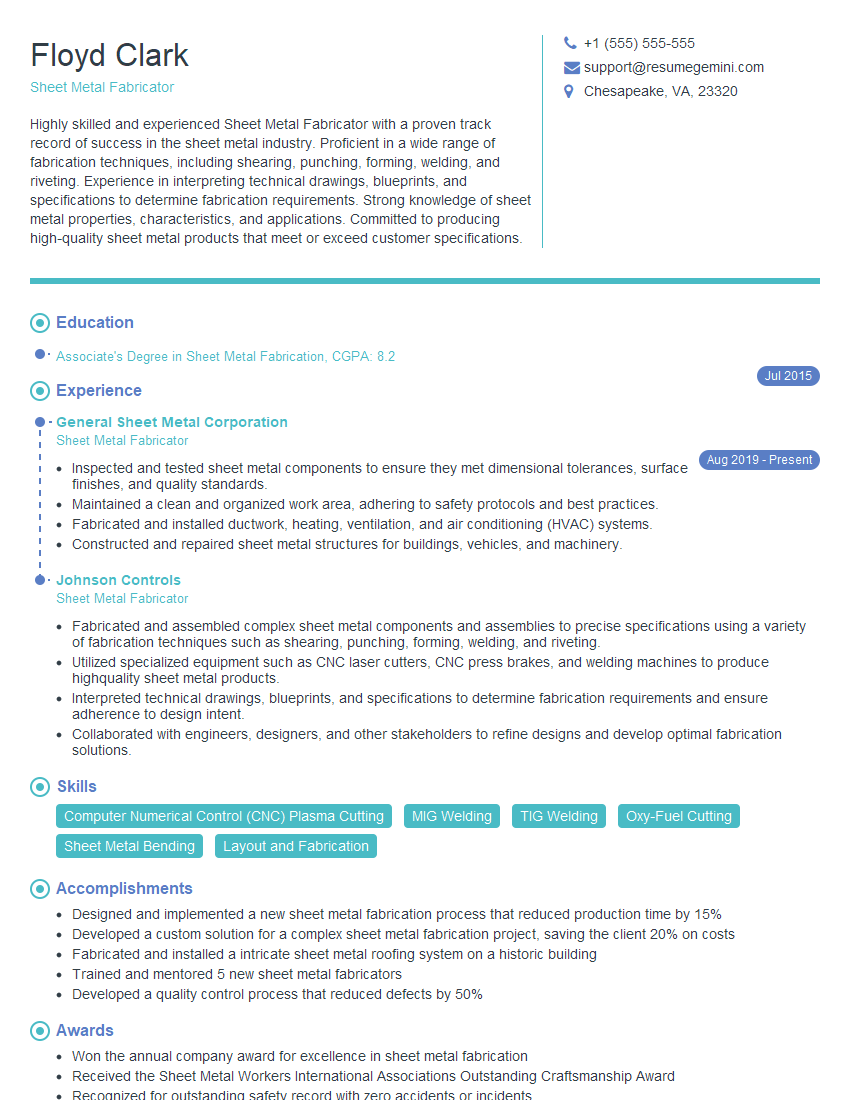
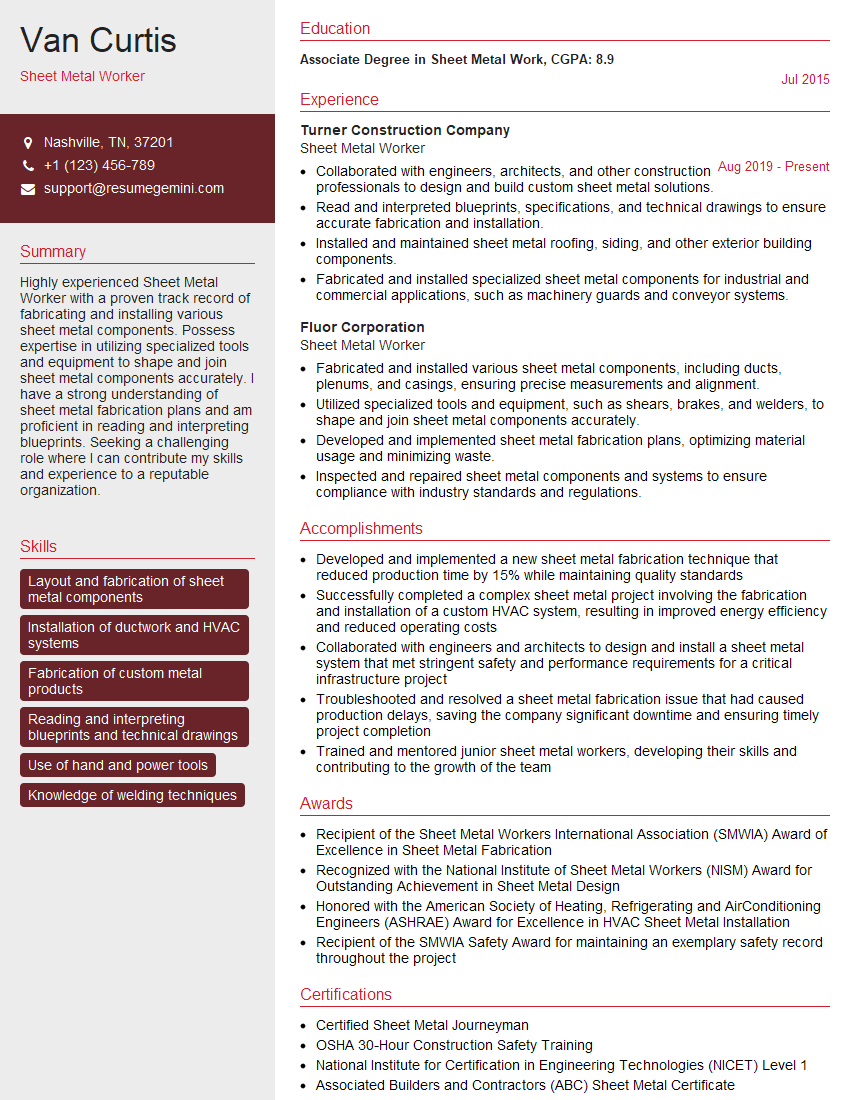
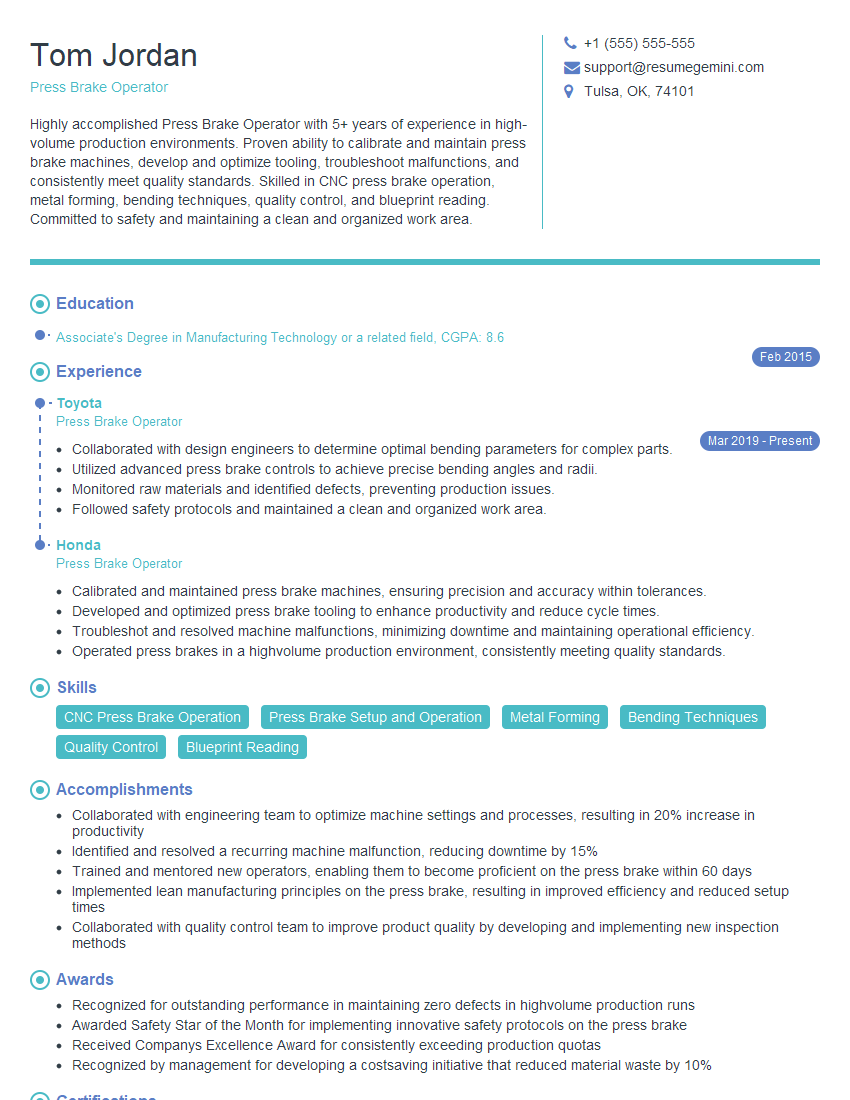
Mastering Bending Machine Operation opens doors to rewarding careers in manufacturing and fabrication, offering opportunities for advancement and specialization. To maximize your job prospects, creating an ATS-friendly resume is crucial. ResumeGemini is a trusted resource to help you build a professional resume that highlights your skills and experience effectively. Examples of resumes tailored to Bending Machine Operation are available to guide you. Take the next step towards your successful career today!
Explore more articles
Users Rating of Our Blogs
Share Your Experience
We value your feedback! Please rate our content and share your thoughts (optional).
What Readers Say About Our Blog
To the interviewgemini.com Webmaster.
Very helpful and content specific questions to help prepare me for my interview!
Thank you
To the interviewgemini.com Webmaster.
This was kind of a unique content I found around the specialized skills. Very helpful questions and good detailed answers.
Very Helpful blog, thank you Interviewgemini team.