Unlock your full potential by mastering the most common Bioaerosol Sampling and Analysis interview questions. This blog offers a deep dive into the critical topics, ensuring you’re not only prepared to answer but to excel. With these insights, you’ll approach your interview with clarity and confidence.
Questions Asked in Bioaerosol Sampling and Analysis Interview
Q 1. Explain the difference between active and passive bioaerosol sampling.
Active and passive bioaerosol sampling differ fundamentally in how they collect airborne microorganisms. Active sampling uses a pump or other mechanism to draw a known volume of air through a collection device at a defined flow rate. Think of it like a vacuum cleaner for microbes – it actively pulls them in. Passive sampling, on the other hand, relies on the natural settling or impaction of particles onto a collection surface. This is more like leaving a petri dish open to the air; the microbes settle onto it naturally. Active methods provide quantitative data (the number of microbes per cubic meter of air), while passive methods generally provide only qualitative data (presence or absence, but not the exact concentration).
Q 2. Describe various bioaerosol sampling methods (e.g., impaction, filtration, sedimentation).
Several methods exist for bioaerosol sampling, each with its own strengths and weaknesses. These include:
- Impaction: This technique uses a high-velocity airstream to forcefully impact airborne particles onto a collection surface, often an agar plate or a filter. Examples include Andersen samplers and slit samplers.
- Filtration: Air is drawn through a filter with small pores, trapping the bioaerosols. This is a widely used method due to its efficiency and ability to collect a large volume of air. Membrane filters and Nuclepore filters are common examples.
- Sedimentation: This passive method relies on gravity to settle bioaerosols onto a collection surface, typically a petri dish or a glass slide. It’s simple but less efficient and prone to biases from air currents.
- Liquid impingement: This method involves drawing air through a liquid, which traps the bioaerosols. It’s particularly suitable for fragile organisms as it minimizes physical damage.
- Bioaerosol collectors using centrifugal force: These devices use centrifugal force to separate the bioaerosols from the air. They can collect larger volumes of air compared to impaction samplers.
Q 3. What are the advantages and disadvantages of each sampling method?
The choice of sampling method depends heavily on the specific application. Here’s a comparison:
- Impaction:
- Advantages: High collection efficiency, good for large particles, relatively easy to use.
- Disadvantages: Can damage fragile organisms due to high impact forces, limited sample volume.
- Filtration:
- Advantages: High collection efficiency, can collect large sample volumes, suitable for a wide range of particle sizes.
- Disadvantages: Can clog with high particle concentrations, potential for filter damage during handling.
- Sedimentation:
- Advantages: Simple, inexpensive, minimal disruption to organisms.
- Disadvantages: Low collection efficiency, highly influenced by environmental factors, time-consuming.
- Liquid impingement:
- Advantages: Preserves viability of delicate organisms.
- Disadvantages: Lower collection efficiency than impaction or filtration.
- Centrifugal force collectors:
- Advantages: High collection efficiency, suitability for large air volumes.
- Disadvantages: Can be more complex and expensive than other methods.
Q 4. How do you select the appropriate sampling method for a specific application?
Selecting the appropriate sampling method requires careful consideration of several factors. First, identify the target organism: are you sampling for bacteria, fungi, viruses, or pollen? Different organisms have different sizes and sensitivities, influencing the appropriate method. For example, viruses require high-efficiency filters, while larger fungal spores might be better collected via impaction. Second, consider the expected concentration: for high concentrations, filtration might be preferred to avoid clogging, whereas low concentrations may necessitate high-volume active sampling. Third, the research question: is quantification crucial, or is qualitative detection sufficient? This dictates whether active or passive sampling is appropriate. Finally, environmental factors like airflow and temperature influence sampling efficiency and must be accounted for. For example, in a windy environment, sedimentation would be unreliable.
Q 5. What factors influence the choice of sampling media?
The choice of sampling media is critical and depends on the subsequent analytical method. For microbiological culture, agar plates are commonly used, allowing for the isolation and identification of viable organisms. For microscopic analysis, glass slides or membrane filters are preferable. If molecular techniques such as PCR are planned, filters compatible with DNA/RNA extraction are necessary. Factors to consider include the material’s compatibility with the chosen analytical method, its ability to preserve the integrity of the collected bioaerosols (e.g., preventing DNA degradation), and the potential for background contamination. The pore size of the filter needs to be considered; a filter with too large a pore size will allow organisms to pass through, leading to underestimation.
Q 6. Explain the process of bioaerosol sample preparation for analysis.
Bioaerosol sample preparation is crucial for accurate analysis. It varies depending on the chosen analytical technique. For culture-based methods, the collected sample (e.g., from an agar plate or filter) is often resuspended in a suitable liquid medium to facilitate the growth of microorganisms. This often involves sonication or other methods to dislodge organisms from the collection media. For microscopy, samples may require staining to enhance visualization. For molecular techniques, the sample needs to be processed for DNA or RNA extraction using commercial kits, ensuring the removal of inhibitors that may interfere with PCR amplification. Careful aseptic techniques are crucial throughout this process to prevent contamination.
Q 7. Describe different analytical techniques used for bioaerosol identification and quantification (e.g., microscopy, culture, PCR).
Several analytical techniques are employed for bioaerosol identification and quantification:
- Microscopy: Light microscopy, fluorescence microscopy, and electron microscopy allow for the visualization and identification of microorganisms based on their morphology. This is a quick method but requires expertise in identifying various species.
- Culture: Growing the collected microorganisms on different culture media allows for their identification based on colony morphology and other characteristics. This method is invaluable for determining viability but can be slow and may not be suitable for all organisms.
- PCR: Polymerase chain reaction is a powerful molecular technique for detecting and quantifying specific microorganisms based on their DNA or RNA sequences. It’s highly sensitive and specific but requires specialized equipment and expertise.
- Flow cytometry: This technique can rapidly analyze large numbers of individual cells, allowing for the identification and quantification of specific microorganisms based on their fluorescent labeling.
- Next-Generation Sequencing (NGS): Allows for high-throughput identification of microbial communities without the need for culturing. It provides much more comprehensive information compared to traditional methods.
The choice of technique depends on the research question, the types of organisms being studied, the required sensitivity and specificity, and the available resources.
Q 8. What are the limitations of each analytical technique?
Different analytical techniques for bioaerosol analysis each have their own strengths and weaknesses. Choosing the right technique depends on the specific bioaerosol of interest and the goals of the study. Let’s consider a few common methods:
- Microscopy: While relatively simple and inexpensive, microscopy (light, fluorescence, electron) is limited by its reliance on visual identification. It can be time-consuming, especially for complex samples, and may not be able to differentiate between viable and non-viable organisms. It’s also less sensitive than other methods for low-concentration samples.
- Culture-based methods: These methods are gold standard for determining viable counts, but they are inherently slow, often taking several days or weeks to yield results. They’re also biased towards culturable organisms, missing a significant portion of the total bioaerosol population. For example, some species of bacteria might not grow readily on standard agar plates.
- Molecular methods (PCR, qPCR): These techniques are extremely sensitive and can detect even low levels of specific bioaerosols (e.g., identifying specific fungal species or viruses). However, they’re expensive, require specialized equipment, and can generate false positives or negatives if not properly validated. Also, they often don’t differentiate between live and dead organisms.
- Immunological methods (ELISA): These methods offer high specificity and sensitivity for detecting particular antigens or antibodies related to bioaerosols. However, they require prior knowledge of the target bioaerosol and can be costly and time-consuming.
In summary, no single technique is perfect. A comprehensive bioaerosol analysis often requires a combination of techniques to obtain a complete picture of the bioaerosol composition and viability.
Q 9. How do you ensure the accuracy and precision of bioaerosol measurements?
Ensuring accuracy and precision in bioaerosol measurements is critical. This requires meticulous attention to detail at every stage, from sampling to analysis. Key strategies include:
- Proper sampling techniques: Using validated samplers calibrated regularly and following standardized operating procedures. This includes selecting appropriate samplers based on the target bioaerosol size range and concentration.
- Appropriate controls: Including field blanks (to assess contamination during sampling), media blanks (to check for contamination of the growth media), and positive controls (to verify the functionality of the analytical methods).
- Replicate sampling: Taking multiple samples at different times and locations to account for spatial and temporal variability in bioaerosol concentrations. This improves the statistical power of the analysis.
- Calibration and maintenance of equipment: Ensuring that all equipment used for sampling and analysis is properly calibrated and maintained according to manufacturer’s instructions. For example, air flow rate of an impaction sampler is crucial for accurate size-selective sampling.
- Use of certified reference materials: Using certified reference materials for method validation and quality assurance of analytical results.
- Quality control throughout the analytical process: Implementing stringent quality control measures throughout the analytical process, such as using appropriate positive and negative controls in molecular or immunological assays.
- Data analysis and validation: Using appropriate statistical methods for data analysis and ensuring the results are interpretable and reproducible.
For instance, in a study of fungal spores in a composting facility, we might use both an Andersen impactor for size-selective sampling and a Burkard spore trap for total spore concentration, then culture the collected samples to determine viability and perform PCR for species identification.
Q 10. What are the quality control measures implemented during bioaerosol sampling and analysis?
Quality control (QC) is paramount in bioaerosol sampling and analysis. QC measures are implemented at each step to ensure the reliability and accuracy of the results. This includes:
- Pre-sampling QC: Checking sampler calibration, functionality and preparing clean sampling materials (e.g., sterile collection media).
- During sampling QC: Monitoring sampling flow rate, ensuring proper sample collection, and using appropriate field blanks.
- Post-sampling QC: Correctly storing and transporting samples, maintaining a chain of custody for samples, and analyzing positive and negative controls alongside test samples in every batch. For example, including a known concentration of a specific fungal spore in every batch of samples.
- Analytical QC: Implementing appropriate QC checks for each analytical technique (e.g., checking the amplification efficiency of PCR reactions, validating ELISA assays with known standards). Including replicates and appropriate statistical analyses of results.
- Data validation QC: Reviewing and verifying data for errors, outliers, and inconsistencies. Assessing the suitability of chosen statistical methods and interpretations.
A comprehensive QC program ensures that potential errors are identified and addressed early in the process, improving the reliability of the final results and their interpretation.
Q 11. Explain the concept of bioaerosol concentration and its units.
Bioaerosol concentration refers to the number of biological particles (bacteria, fungi, viruses, pollen, etc.) present in a given volume of air. The units used to express bioaerosol concentration vary depending on the method of measurement and the type of bioaerosol.
- Number of colony-forming units (CFU) per cubic meter (m³): This unit is commonly used for culturable microorganisms (bacteria, fungi) and reflects the number of viable organisms that can form colonies on a culture medium.
- Number of particles per cubic meter (m³): This unit is used for total particle counts, which include both viable and non-viable organisms. This is commonly determined using optical particle counters.
- Number of particles per liter (L): Similar to the above but expressing concentration per liter, which can be more convenient for smaller sample volumes.
- Concentration of specific bioaerosols (e.g., pg/m³): This approach is useful when dealing with specific biomolecules, like toxins or allergens, from bioaerosols, where concentration is measured in mass or weight units per unit volume of air.
For instance, a concentration of 100 CFU/m³ of Aspergillus fumigatus indicates the presence of 100 viable fungal spores capable of growing into colonies within one cubic meter of air.
Q 12. How do you interpret bioaerosol data and report findings?
Interpreting bioaerosol data requires careful consideration of several factors. A simple count isn’t sufficient; we need contextual information to make informed conclusions.
- Statistical analysis: Applying appropriate statistical tests to determine if differences in concentrations between samples are significant (e.g., t-tests, ANOVA).
- Comparison to reference values: Comparing the measured concentrations to relevant guidelines, standards, or background levels. For example, comparing fungal spore concentrations in an office building to established occupational exposure limits.
- Correlation with other data: Exploring relationships between bioaerosol concentrations and other environmental parameters (e.g., temperature, humidity, air flow), occupational activities, or health outcomes.
- Considering the limitations of methods: Recognizing the biases and limitations of the sampling and analytical methods used (e.g., culturability bias in culture-based methods).
Reporting findings involves a clear and concise presentation of the methods, results, and their interpretations, ideally including tables, graphs, and statistical analyses. Discussions of limitations of the study are crucial for maintaining transparency and providing context. The findings should answer the specific objectives of the bioaerosol assessment.
Q 13. What are the health risks associated with exposure to different types of bioaerosols?
Exposure to different types of bioaerosols poses various health risks depending on the specific organism, concentration, and exposure duration. These can range from mild allergic reactions to severe respiratory illnesses and even death.
- Bacteria: Exposure to airborne bacteria can cause a range of illnesses, from mild infections (e.g., sore throat, skin infections) to severe pneumonia, Legionnaires’ disease (Legionella pneumophila), and tuberculosis (Mycobacterium tuberculosis).
- Fungi: Fungal spores can trigger allergic reactions (e.g., asthma, allergic rhinitis), hypersensitivity pneumonitis (e.g., farmer’s lung), or invasive fungal infections (e.g., aspergillosis, histoplasmosis) particularly in immunocompromised individuals.
- Viruses: Airborne viruses are the cause of many respiratory illnesses including influenza, measles, and COVID-19. These can cause mild symptoms to severe disease requiring hospitalization.
- Endotoxins: These are components of the cell walls of Gram-negative bacteria and are potent immunostimulants. Inhalation can trigger inflammatory responses, leading to respiratory problems.
- Pollen and other allergens: Airborne pollen and other allergens can cause allergic rhinitis (hay fever), asthma, and other allergic reactions.
The severity of the health risks is often related to factors such as the concentration and duration of exposure, the individual’s immune status, and the virulence of the bioaerosol.
Q 14. Describe the regulatory guidelines and standards relevant to bioaerosol monitoring.
Several regulatory guidelines and standards relate to bioaerosol monitoring, depending on the specific application (occupational, environmental, or public health). These guidelines provide recommendations for sampling methods, analytical techniques, exposure limits, and reporting requirements.
- Occupational Safety and Health Administration (OSHA): OSHA sets exposure limits for various airborne biological agents in the workplace (e.g., Aspergillus fumigatus, Penicillium species). These are typically expressed as recommended exposure limits (RELs).
- American Conference of Governmental Industrial Hygienists (ACGIH): ACGIH provides threshold limit values (TLVs) for various airborne substances, including some bioaerosols, representing concentrations that most workers can be exposed to daily without experiencing adverse effects.
- National Institute for Occupational Safety and Health (NIOSH): NIOSH conducts research and provides guidance on occupational safety and health, including recommendations for bioaerosol monitoring and control.
- Environmental Protection Agency (EPA): The EPA is involved in regulating bioaerosols in relation to environmental quality and public health. The specific regulations depend on the environmental setting (e.g., water treatment facilities, composting facilities).
- World Health Organization (WHO): WHO provides international guidelines and recommendations on indoor air quality and bioaerosol management.
These guidelines and standards are constantly evolving as our understanding of bioaerosols and their health effects improves. It’s essential to consult the most current versions of these documents to ensure compliance and best practices.
Q 15. How do you ensure the safety of personnel involved in bioaerosol sampling?
Ensuring personnel safety during bioaerosol sampling is paramount. It’s a multi-faceted approach combining engineering controls, administrative controls, and personal protective equipment (PPE).
- Engineering Controls: These minimize exposure at the source. This includes using appropriate bio-safety cabinets (class II BSCs are ideal for many tasks), well-ventilated sampling areas, and proper containment procedures for collected samples. Think of it like having a well-designed kitchen—reducing the potential for spills and contamination.
- Administrative Controls: This layer focuses on procedures and training. Strict protocols must be established for sample collection, transport, and processing. Comprehensive training on safe handling practices, including proper decontamination techniques, is crucial. This is like having a detailed recipe to follow—ensuring everyone uses the right method.
- Personal Protective Equipment (PPE): This is the last line of defense. Depending on the suspected bioaerosol and the sampling location, PPE may include N95 respirators, gloves, lab coats, eye protection, and even full-body protective suits. It’s like wearing a full set of armor—providing protection from potential harm.
Regular safety audits and refresher training are essential to maintain a safe working environment.
Career Expert Tips:
- Ace those interviews! Prepare effectively by reviewing the Top 50 Most Common Interview Questions on ResumeGemini.
- Navigate your job search with confidence! Explore a wide range of Career Tips on ResumeGemini. Learn about common challenges and recommendations to overcome them.
- Craft the perfect resume! Master the Art of Resume Writing with ResumeGemini’s guide. Showcase your unique qualifications and achievements effectively.
- Don’t miss out on holiday savings! Build your dream resume with ResumeGemini’s ATS optimized templates.
Q 16. What are the potential sources of error during bioaerosol sampling and analysis?
Several sources of error can impact the accuracy and reliability of bioaerosol sampling and analysis. These can be broadly categorized into sampling errors and analytical errors.
- Sampling Errors:
- Inefficient collection: Improper sampler operation, inadequate sampling time, or unsuitable samplers for the target bioaerosol can lead to underestimation.
- Sampling bias: Selecting non-representative sampling locations or times can skew results.
- Loss of sample: Improper handling, transport, or storage can lead to significant losses of viable microorganisms.
- Contamination: Introducing extraneous bioaerosols during sample collection or processing.
- Analytical Errors:
- Inaccurate identification: Misidentification of microorganisms due to limitations of identification methods.
- Quantitation errors: Errors in counting or measuring the concentration of bioaerosols.
- False positives/negatives: These can arise from contamination or the limitations of the analytical techniques used.
Identifying and quantifying these errors is critical for producing credible results.
Q 17. How do you mitigate these errors?
Mitigating errors requires a multi-pronged approach focusing on rigorous quality control at every stage of the process.
- Method Validation: Employing validated sampling and analytical methods ensures accuracy and reproducibility. This means thoroughly testing the entire process to ensure reliable results.
- Calibration and Maintenance: Regular calibration of instruments and routine maintenance are essential. Think of it like regularly servicing your car—preventing small problems from becoming major issues.
- Blank Controls: Including blank samples (control samples without the bioaerosol of interest) helps assess contamination and background levels.
- Quality Assurance/Quality Control (QA/QC): This includes duplicate samples, split samples, and proficiency testing to assess the overall reliability of the data.
- Standard Operating Procedures (SOPs): Implementing well-defined SOPs for all steps of the process ensures consistency and minimizes human error.
- Data Analysis: Using statistical methods to assess data quality, identify outliers, and determine the significance of findings.
A well-designed and executed QA/QC program is the cornerstone of minimizing errors.
Q 18. How do you manage and interpret data from multiple sampling locations?
Managing and interpreting data from multiple sampling locations requires a systematic approach. This involves data organization, statistical analysis, and spatial visualization.
- Data Organization: Create a well-structured database that includes all relevant metadata (e.g., date, time, location, sampling method, environmental conditions). This helps to keep everything organized and easily accessible.
- Statistical Analysis: Employ descriptive statistics (means, standard deviations) to summarize data. Inferential statistics (e.g., ANOVA, t-tests) are essential to compare data between locations and identify significant differences. Visualizations such as box plots, scatter plots and histograms are crucial tools for pattern identification.
- Spatial Visualization: Use geographic information systems (GIS) to map the sampling locations and visualize the spatial distribution of bioaerosols. This can reveal important patterns, such as hotspots or gradients, that might otherwise be missed.
By combining data organization, statistical analysis, and spatial visualization, researchers gain a comprehensive understanding of bioaerosol distribution and variation across multiple sampling locations.
Q 19. Explain your understanding of the different types of bioaerosols (bacteria, fungi, viruses).
Bioaerosols encompass a diverse range of biological particles suspended in the air. Each type presents unique challenges for sampling and analysis.
- Bacteria: These are single-celled prokaryotic organisms. Sampling focuses on obtaining viable bacteria to perform cultural analysis for identification and quantification. Different bacteria have different sensitivities to environmental conditions. For example, Pseudomonas aeruginosa is highly resilient, while others are more fragile.
- Fungi: These are eukaryotic organisms, including yeasts and molds. Sampling methods need to account for the often larger size of fungal spores and their diverse morphology. They’re also more tolerant of desiccation than some bacteria.
- Viruses: These are sub-microscopic infectious agents requiring more specialized sampling and analysis techniques, often using molecular methods such as PCR. Viruses are highly sensitive and require careful handling to prevent degradation.
The diversity within each type requires careful consideration when selecting sampling and analytical strategies.
Q 20. How do environmental factors (temperature, humidity, etc.) affect bioaerosol sampling?
Environmental factors significantly influence bioaerosol sampling and the survival of microorganisms in the air.
- Temperature: High temperatures can reduce viability of certain bioaerosols, while low temperatures can slow down their growth and metabolism, impacting recovery rates. Think about how perishable goods stored in a refrigerator last longer.
- Humidity: Relative humidity is crucial. High humidity can increase the survival rate of some bioaerosols, whereas low humidity can lead to desiccation and reduced viability. Think about how dry air can dehydrate your skin.
- UV Radiation: Sunlight can inactivate many microorganisms, so sampling locations and time of day must be considered.
- Wind Speed and Direction: These affect the dispersion and deposition of bioaerosols. Wind can both dilute and concentrate bioaerosols, impacting measurements.
- Precipitation: Rain or snow can wash away airborne particles, affecting sampling results.
Careful consideration and compensation for these factors are necessary to ensure accurate and reliable results. For example, sampling during high wind conditions might require adjustments to sampling time or the use of different instruments.
Q 21. Describe your experience with specific bioaerosol instrumentation (e.g., air samplers, particle counters).
My experience encompasses a broad range of bioaerosol instrumentation.
- Air Samplers: I have extensive experience with various types of air samplers, including impactors (e.g., Andersen samplers), cyclones, and filtration-based samplers (e.g., SKC BioSamplers). Each type has specific advantages and disadvantages depending on the target bioaerosol and the specific sampling needs.
- Particle Counters: I’m proficient in using optical particle counters to determine the size and concentration of airborne particles, providing context for bioaerosol data. This helps determine the size range of potentially infectious particles.
- Other Instruments: My expertise also extends to using instruments for environmental monitoring, such as anemometers and hygrometers, to assess meteorological conditions during sampling, enhancing data interpretation.
I’m adept at selecting the most appropriate instrumentation based on the specific application, including considering factors like sampling flow rate, particle size range, and the type of microorganisms being investigated. For example, Andersen samplers provide excellent size-fractionated samples, essential for understanding the respirability of bioaerosols, while filtration-based samplers are often preferred for collecting larger volumes of air for low-concentration samples.
Q 22. What is the significance of viable vs. non-viable bioaerosol analysis?
The distinction between viable and non-viable bioaerosol analysis is crucial for understanding the potential health risks associated with airborne biological particles. Viable bioaerosol analysis focuses on identifying and quantifying microorganisms that are capable of growth and reproduction, such as bacteria, fungi, and viruses. This is essential for assessing the potential for infection or allergic reactions. Think of it like testing for the presence of living, active pathogens. Non-viable bioaerosol analysis, on the other hand, detects the presence of all biological particles, including both living and dead organisms, as well as fragments of biological material. This approach provides a broader picture of the overall bioaerosol load, including particles that might not be directly infectious but could still contribute to respiratory issues or other health effects. For example, detecting dead fungal spores, while not directly causing infection, can still contribute to allergic reactions. Choosing between these approaches depends on the specific research question or risk assessment being conducted.
Imagine a hospital: viable analysis would be essential to track infections, while non-viable analysis would be important to monitor the overall cleanliness and potential for allergic reactions due to dust and debris. The two types of analysis often complement each other.
Q 23. How do you handle and dispose of bioaerosol samples safely?
Safe handling and disposal of bioaerosol samples are paramount to protect personnel and the environment. My protocols always adhere to stringent biosafety guidelines, which include working in a designated biosafety cabinet (BSC) – a class II BSC is generally preferred for bioaerosol work. All samples are treated as potentially hazardous. This means using appropriate personal protective equipment (PPE) such as gloves, lab coats, eye protection and respirators (depending on the suspected bioaerosols). Samples are carefully sealed and labeled, indicating the potential hazards. After analysis, all materials including glassware, filters, and culture media are autoclaved at 121°C for at least 20 minutes to ensure complete sterilization before disposal according to the local regulations and waste management guidelines for biological hazardous materials. Proper documentation is crucial for traceability and compliance.
For example, if handling samples suspected to contain Mycobacterium tuberculosis, we would utilize a BSL-3 laboratory with appropriate safety precautions, including negative air pressure and specialized respirators.
Q 24. Describe your experience with data analysis software relevant to bioaerosol analysis.
My experience encompasses a wide range of data analysis software used in bioaerosol analysis. I’m proficient in using statistical software packages such as R and SPSS for data manipulation, statistical testing, and visualization. R, in particular, offers extensive libraries, such as ggplot2 for creating high-quality graphics, and specialized packages for microbiome analysis that are invaluable for processing data from culture-based and molecular techniques, such as 16S rRNA gene sequencing. I also have experience with specialized software for image analysis, crucial for analyzing microscopy images of collected bioaerosol samples. This often involves particle counting, size distribution measurement and automated colony counting. Furthermore, I’m familiar with database management systems (DBMS) like MySQL for managing large datasets generated from several sampling campaigns. We use these tools to track data, perform complex statistical analyses, and generate comprehensive reports.
Q 25. Explain your understanding of statistical methods used in bioaerosol data analysis.
Statistical methods are fundamental to interpreting bioaerosol data meaningfully. We frequently use descriptive statistics (mean, median, standard deviation) to summarize the data and identify trends. Inferential statistics are used to draw conclusions about the population based on sample data. This includes t-tests (for comparing the means of two groups), ANOVA (for comparing means of more than two groups), and non-parametric tests (like Mann-Whitney U or Kruskal-Wallis tests) when data doesn’t meet the assumptions of parametric tests. Regression analysis helps in establishing relationships between variables. For example, we might investigate the relationship between bioaerosol concentrations and environmental factors like temperature and humidity. Furthermore, time series analysis is important for understanding temporal patterns in bioaerosol data. Finally, multivariate statistical techniques like Principal Component Analysis (PCA) and clustering analysis can be used to reduce the dimensionality of complex datasets and identify patterns in multi-parameter data.
Q 26. How do you validate the results of bioaerosol analysis?
Validating bioaerosol analysis results is crucial to ensure accuracy and reliability. This involves a multi-step process. First, we verify the calibration and performance of the sampling equipment prior to each sampling campaign using certified standards. Then, we use quality control (QC) samples, which include blanks (to detect contamination), replicates (to assess variability), and spiked samples (to evaluate recovery efficiency) alongside the actual field samples. We also utilize proficiency testing programs where we send samples to external labs for independent analysis, to ensure our results are comparable and reliable. Finally, a thorough review of all procedures, data, and interpretations by independent experts provides a final check. Discrepancies are investigated carefully and sources of error are corrected to ensure the validity of the final findings.
Q 27. Describe a challenging bioaerosol sampling project and how you overcame the challenges.
One challenging project involved assessing bioaerosol exposure in a large-scale composting facility. The high variability in environmental conditions – temperature, humidity, wind speed – and the heterogeneous nature of the compost material made it difficult to obtain representative samples. We overcame this by implementing a stratified sampling strategy, collecting samples from different areas and depths within the composting piles at various time points across multiple days. We utilized a combination of active and passive sampling methods to capture different particle sizes and concentrations. We also used sophisticated statistical modeling that accounted for the observed spatiotemporal variability, allowing us to generate reliable estimates of exposure. Data cleaning was crucial, as was accounting for potential confounding factors, such as rain events. By rigorously considering potential sources of error and implementing meticulous data analysis procedures, we generated robust results that helped the facility implement better bioaerosol control measures.
Key Topics to Learn for Bioaerosol Sampling and Analysis Interview
- Sampling Techniques: Understand various methods like impaction, filtration, and liquid impingement. Consider the advantages and limitations of each technique in different environmental contexts (e.g., indoor air quality vs. outdoor atmospheric studies).
- Instrumentation: Familiarize yourself with common bioaerosol samplers (e.g., Andersen samplers, Burkard samplers) and their operational principles. Be prepared to discuss calibration, maintenance, and troubleshooting.
- Microbial Identification and Quantification: Master techniques for identifying and quantifying microorganisms collected in bioaerosol samples, including microscopy, culturing, and molecular methods (e.g., PCR). Understand the implications of different detection limits.
- Data Analysis and Interpretation: Develop strong skills in analyzing bioaerosol data, including statistical analysis and interpretation of concentration data. Be prepared to discuss sources of error and uncertainty in measurements.
- Health and Safety: Demonstrate a thorough understanding of safety protocols and regulations related to handling bioaerosols, including appropriate personal protective equipment (PPE) and laboratory safety practices.
- Regulatory Compliance: Familiarize yourself with relevant regulations and guidelines for bioaerosol sampling and analysis, ensuring compliance with environmental and occupational health standards.
- Practical Applications: Be ready to discuss real-world applications of bioaerosol analysis in various fields, such as environmental monitoring, occupational hygiene, public health, and agricultural settings. Consider examples of specific case studies.
- Problem-Solving: Practice troubleshooting common issues encountered during bioaerosol sampling and analysis. Be able to articulate your approach to problem-solving and demonstrate critical thinking skills.
Next Steps
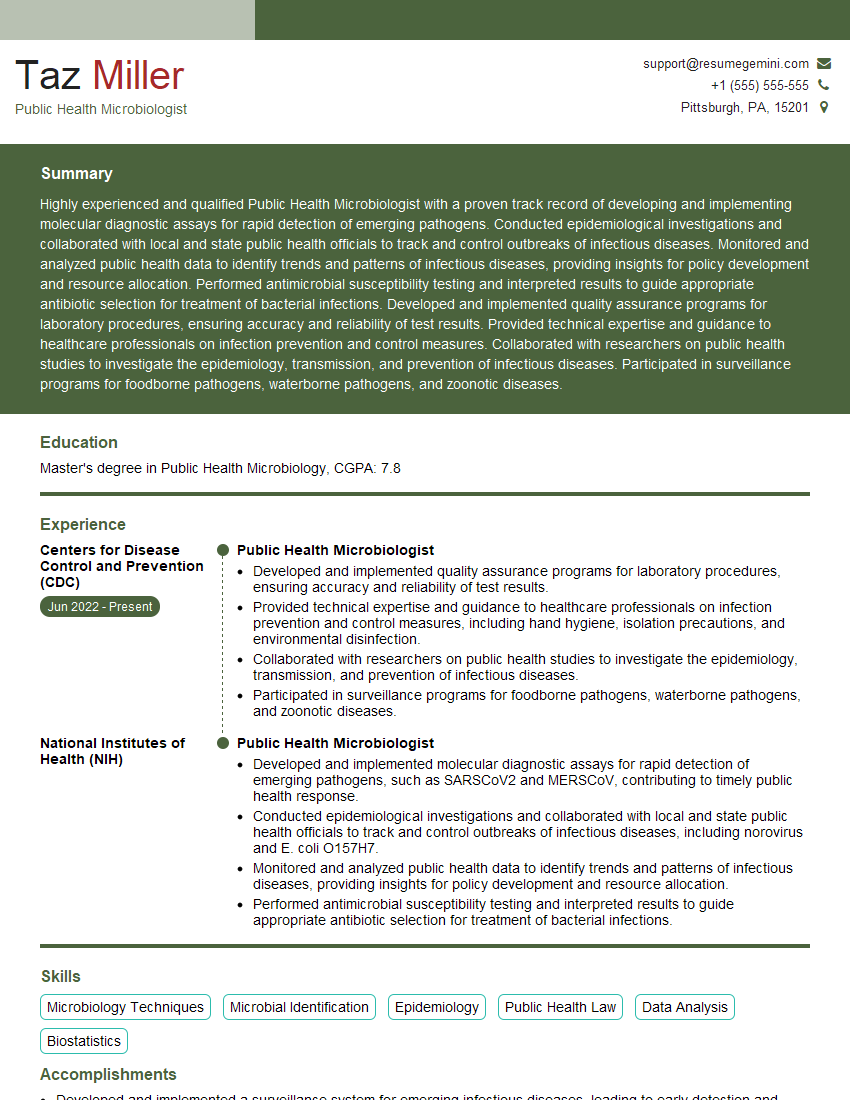
Mastering Bioaerosol Sampling and Analysis opens doors to exciting career opportunities in diverse fields, offering a chance to contribute significantly to environmental protection and public health. To maximize your job prospects, crafting an ATS-friendly resume is crucial. ResumeGemini can significantly enhance your resume-building experience, helping you present your skills and experience effectively. Use ResumeGemini to create a compelling resume that highlights your expertise in Bioaerosol Sampling and Analysis. Examples of resumes tailored to this field are available to guide you.
Explore more articles
Users Rating of Our Blogs
Share Your Experience
We value your feedback! Please rate our content and share your thoughts (optional).
What Readers Say About Our Blog
To the interviewgemini.com Webmaster.
Very helpful and content specific questions to help prepare me for my interview!
Thank you
To the interviewgemini.com Webmaster.
This was kind of a unique content I found around the specialized skills. Very helpful questions and good detailed answers.
Very Helpful blog, thank you Interviewgemini team.