Interviews are more than just a Q&A session—they’re a chance to prove your worth. This blog dives into essential Biodiesel Process Maintenance interview questions and expert tips to help you align your answers with what hiring managers are looking for. Start preparing to shine!
Questions Asked in Biodiesel Process Maintenance Interview
Q 1. Describe the process of biodiesel production from feedstock to finished product.
Biodiesel production begins with the selection of a suitable feedstock, typically vegetable oils or animal fats. The process then involves several key steps:
- Pre-treatment: This stage involves cleaning and filtering the feedstock to remove impurities that could hinder the reaction or contaminate the final product. This might include removing water or free fatty acids.
- Transesterification: This is the core of biodiesel production. The feedstock (triglycerides) reacts with an alcohol (typically methanol) in the presence of a catalyst (usually sodium or potassium hydroxide) to produce biodiesel (methyl esters) and glycerol (a byproduct). Think of it like swapping the ‘fatty acid’ chains on the triglyceride molecule with methanol.
- Separation: After the reaction, the biodiesel and glycerol layers are separated. This often involves gravity settling, and sometimes specialized centrifuges for better efficiency.
- Washing: The biodiesel layer is washed to remove residual glycerol, soap, catalyst, and other impurities. This is crucial for achieving the required quality standards.
- Drying: The biodiesel is then dried to remove any remaining water. Water contamination can lead to issues like microbial growth and degradation of the fuel.
- Quality Control: The finished biodiesel undergoes rigorous quality checks to ensure it meets specifications, including testing for things like viscosity, acidity, and water content.
The entire process is carefully controlled to optimize yield and product quality. Variations exist depending on the feedstock and desired biodiesel properties.
Q 2. Explain the role of catalysts in the transesterification process.
Catalysts are essential for the transesterification reaction, significantly accelerating the conversion of triglycerides into biodiesel. They facilitate the reaction without being consumed themselves. Common catalysts include:
- Homogenous catalysts: These are soluble in the reaction mixture (e.g., sodium hydroxide, potassium hydroxide). They offer high reaction rates but require careful neutralization and washing steps to remove them from the final product.
- Heterogeneous catalysts: These are insoluble in the reaction mixture (e.g., certain metal oxides, zeolites). They offer easier separation from the product but might exhibit lower reaction rates.
The choice of catalyst depends on factors like reaction efficiency, cost, environmental impact, and ease of separation. For example, while alkali catalysts are widely used due to their high efficiency, they can cause soap formation if free fatty acids are present in the feedstock, complicating the separation process.
Q 3. What are the common maintenance issues associated with biodiesel reactors?
Biodiesel reactors, often large vessels under pressure, are subject to several maintenance challenges:
- Corrosion: The reaction mixture can be corrosive, especially if moisture or impurities are present. Regular inspections for rust or pitting are crucial.
- Reactor Fouling: Build-up of glycerol, soap, or other residues can reduce efficiency and reactor capacity. Regular cleaning and flushing are necessary.
- Pump and Valve Failure: These components are under high stress, so preventative maintenance, including regular lubrication and inspection, is essential.
- Sensor Malfunction: Accurate monitoring of temperature, pressure, and flow rate is vital. Faulty sensors can lead to process instability or poor product quality. Calibration and regular checks are needed.
- Leaks: Leaks in the reactor or associated piping can pose safety and environmental risks. Regular inspections and pressure testing are essential.
Preventative maintenance schedules are critical for minimizing downtime and extending the lifespan of these essential components.
Q 4. How do you troubleshoot a decrease in biodiesel yield?
A decrease in biodiesel yield could stem from several sources. Troubleshooting involves a systematic approach:
- Check the Feedstock: Analyze the quality of the feedstock – its free fatty acid content, water content, and overall purity. High free fatty acid content, for example, can lead to soap formation and reduced yield.
- Catalyst Concentration and Activity: Verify the catalyst concentration is correct and that the catalyst is still active. Degraded or insufficient catalyst will result in incomplete conversion.
- Reaction Time and Temperature: Ensure the reaction time and temperature are optimal. Insufficient reaction time or temperature will result in incomplete conversion.
- Mixing Efficiency: Poor mixing can hinder the reaction. Inspect the reactor’s agitator and ensure proper mixing.
- Separation Efficiency: Problems in the separation of biodiesel and glycerol can lead to losses. Verify the efficiency of the separation system.
- Equipment Malfunction: Check for leaks, sensor malfunctions, or pump failures.
A combination of these factors can also contribute to yield reduction. Data logging and process monitoring are vital for identifying trends and pinpointing the root cause.
Q 5. What safety precautions are crucial during biodiesel process maintenance?
Biodiesel production involves handling hazardous materials, so safety is paramount:
- Personal Protective Equipment (PPE): Always wear appropriate PPE, including gloves, safety glasses, and protective clothing.
- Ventilation: Adequate ventilation is crucial to prevent exposure to toxic fumes and vapors.
- Emergency Shut-off Systems: Know the location and operation of emergency shut-off valves and procedures.
- Material Handling: Use proper techniques for handling chemicals and materials to avoid spills and accidents.
- Fire Prevention: Biodiesel and methanol are flammable. Follow strict fire safety protocols and maintain fire extinguishers.
- Waste Disposal: Proper disposal of waste products like glycerol and spent catalyst is essential to comply with environmental regulations.
Regular safety training and adherence to safety protocols are indispensable for a safe working environment.
Q 6. Describe your experience with preventative maintenance in a biodiesel plant.
In my previous role at [Plant Name], I was instrumental in implementing and managing a comprehensive preventative maintenance program for a 500,000-liter-per-year biodiesel plant. This involved:
- Developing a detailed maintenance schedule: This included regular inspections, lubrication, cleaning, and component replacement based on manufacturer recommendations and operational history.
- Implementing a computerized maintenance management system (CMMS): This allowed for tracking maintenance tasks, generating work orders, and managing spare parts inventory.
- Training plant personnel: I provided hands-on training to plant personnel on preventive maintenance procedures and troubleshooting techniques.
- Monitoring equipment performance: I monitored key equipment parameters, such as reactor pressure, temperature, and flow rates, to identify potential issues early on.
- Regular review and optimization of the maintenance program: I reviewed the maintenance plan and adjusted it based on the observed performance and identified areas for improvement.
This proactive approach significantly reduced unplanned downtime and improved the overall efficiency and reliability of the plant.
Q 7. How do you monitor and control the quality of biodiesel during production?
Quality control is crucial throughout the biodiesel production process. We use a multi-faceted approach:
- In-process monitoring: Regularly monitor key process parameters like temperature, pressure, and reaction time. Automated systems and sensors provide real-time data.
- Sampling and analysis: Take samples at various stages of the process (feedstock, intermediate product, and final product) and analyze them for key parameters, such as free and total glycerin, methanol, moisture, acidity, and viscosity. This allows for early detection of any quality deviations.
- Spectroscopic techniques: Techniques like Near-Infrared (NIR) spectroscopy can provide rapid analysis of key quality parameters, facilitating quicker decision-making.
- ASTM standards: Adherence to ASTM standards (e.g., ASTM D6751) for biodiesel quality ensures the product meets regulatory requirements and customer specifications.
- Regular calibration of instruments: Regular calibration ensures that analytical instruments provide accurate and reliable results.
By combining in-process monitoring, regular testing, and adherence to industry standards, we ensure consistent, high-quality biodiesel production.
Q 8. Explain the importance of regular cleaning and maintenance of filtration systems.
Regular cleaning and maintenance of filtration systems in a biodiesel plant are paramount to ensuring product quality and preventing costly downtime. Think of your filtration system as the kidneys of your biodiesel process – if they’re clogged, the whole system suffers.
- Preventing Clogging: Efficient filtration prevents the accumulation of impurities like soapstock, glycerin, and other undesirable byproducts that can reduce biodiesel yield and quality. These contaminants can clog filters, leading to increased pressure drops across the system and ultimately, filter failure. Regular cleaning, using appropriate solvents and procedures, removes these blockages, maintaining optimal flow rates.
- Maintaining Product Purity: Clean filters ensure the final biodiesel product meets quality specifications. Contaminants can negatively impact the fuel’s properties, such as cetane number (a measure of ignition quality) and stability, rendering it unusable or less efficient.
- Extending Filter Lifespan: Regular cleaning extends the lifespan of filter elements, reducing replacement costs and minimizing process interruptions. A simple cleaning schedule, combined with visual inspections, can significantly improve the return on investment.
- Preventing Equipment Damage: Clogged filters can cause excessive pressure buildup, potentially damaging upstream pumps, heat exchangers, and other sensitive equipment. Regular maintenance prevents this cascade of failures.
Example: In a previous role, I implemented a preventative maintenance schedule that included weekly backflushing of the pre-filters and monthly replacement of the final polishing filters. This resulted in a 20% reduction in filter replacement costs and a significant decrease in unplanned downtime.
Q 9. What are the common causes of pump failures in a biodiesel processing plant?
Pump failures in biodiesel processing are a significant concern, often stemming from a combination of factors. It’s like a car engine – if one part fails, the whole system can be affected.
- Cavitation: This occurs when the pump is not adequately primed or when there’s a suction-side restriction, leading to vapor bubbles forming and collapsing within the pump, causing erosion and damage to internal components. This is a very common issue.
- Seal Failure: Mechanical seals are crucial for preventing leaks. Wear and tear, improper lubrication, or misalignment can cause seal failure, leading to leaks and ultimately pump failure.
- Bearing Failure: Bearings are subject to wear and tear from continuous operation. Lack of lubrication, excessive vibration, or improper alignment can shorten bearing life and cause pump failure.
- Corrosion: Exposure to biodiesel and its byproducts can cause corrosion in pumps, particularly those made from less resistant materials. Regular inspection and the use of corrosion-resistant materials are vital.
- Fluid Viscosity: Changes in the viscosity of the biodiesel feedstock, especially in cold weather, can affect pump performance and lead to increased wear on components.
Troubleshooting: I typically start with a visual inspection, checking for leaks, vibration, and unusual noises. I then consult pressure gauges and flow meters to assess pump performance. Based on the findings, I can pinpoint the cause of the failure (e.g., worn seals, corroded impeller) and recommend appropriate repairs or replacements.
Q 10. How do you identify and address problems with heat exchangers in the process?
Heat exchangers are critical in biodiesel processing, facilitating the heating and cooling of various streams. Problems here can disrupt the entire process. Imagine them as the radiators in your car’s cooling system – if they fail, your engine overheats.
- Fouling: The accumulation of deposits (e.g., soapstock, waxes) on heat exchanger surfaces reduces heat transfer efficiency. Regular cleaning, potentially employing chemical cleaning agents, is essential.
- Leakage: Leaks can result from corrosion, erosion, or mechanical damage, leading to fluid mixing and process inefficiencies. Leak detection is often performed with pressure testing.
- Scaling: Mineral deposits from hard water can cause scaling on heat exchanger surfaces, reducing heat transfer efficiency. This is often addressed with water treatment.
- Tube Damage: Physical damage to tubes can result from vibration, corrosion, or thermal stress, leading to leaks and reduced efficiency. Visual inspections and pressure tests are useful to identify tube damage.
Addressing problems: My approach involves first identifying the type of problem (e.g., fouling, leakage). Then, I determine the best course of action, ranging from simple cleaning procedures to tube replacement or even complete heat exchanger refurbishment. Preventive maintenance, including regular inspections and cleaning, is crucial in minimizing these issues.
Q 11. Describe your experience with troubleshooting issues related to process control systems.
My experience with troubleshooting process control systems in biodiesel plants involves a systematic approach, combining theoretical understanding with practical problem-solving skills. Think of these systems as the central nervous system of the plant.
- Understanding the System: I begin by thoroughly understanding the process control architecture, including the instrumentation (sensors, actuators, controllers), the control algorithms, and the overall system configuration. This involves careful review of P&IDs (Piping and Instrumentation Diagrams) and process flowcharts.
- Data Analysis: I use data from SCADA (Supervisory Control and Data Acquisition) systems and other monitoring tools to analyze process parameters, identify deviations from setpoints, and pinpoint potential problems. Trends in data often reveal the root cause of issues.
- Systematic Troubleshooting: I follow a structured approach, starting with the simplest checks (e.g., verifying sensor calibrations, checking for loose connections) before moving to more complex diagnostics (e.g., reviewing control logic, testing actuators).
- PLC Programming (if applicable): For plants using Programmable Logic Controllers (PLCs), I possess experience in diagnosing and resolving issues within the PLC code itself. I’m comfortable reviewing ladder logic and making necessary modifications.
Example: In one instance, I resolved a recurring issue of temperature instability in a reactor by identifying a faulty temperature sensor via data analysis and replacing it, thereby preventing further production delays.
Q 12. How do you handle spills or leaks of biodiesel or other chemicals?
Handling spills or leaks of biodiesel or other chemicals in a biodiesel plant requires a swift, safe, and environmentally responsible response. Safety is paramount – it’s always the first priority.
- Immediate Action: The first step involves containing the spill to prevent further spread. This might include using absorbent materials (e.g., spill pads, booms) to soak up the liquid. Emergency shut-off valves should be activated to prevent further leaks.
- Personnel Safety: Ensure personnel are equipped with appropriate personal protective equipment (PPE), including gloves, respirators, and safety glasses, before approaching the spill area. Evacuation of the affected area might be necessary.
- Environmental Protection: Prevent the spill from entering waterways or the ground. If necessary, construct temporary barriers to contain the spill. Notify relevant environmental authorities as required by local regulations.
- Cleanup and Disposal: Use appropriate methods to clean up the spill, following safety data sheets (SDS) for the specific chemicals involved. Proper disposal of contaminated materials is crucial to comply with environmental regulations.
Example: In a past incident, a minor leak from a storage tank was quickly contained using spill pallets and absorbent material. The affected area was cleaned, and the leak was repaired. All actions were documented, and the local environmental agency was notified as a precautionary measure.
Q 13. What are the different types of biodiesel feedstocks and their impact on the process?
Biodiesel feedstocks vary significantly, each impacting the biodiesel production process in different ways. Choosing the right feedstock influences efficiency and product quality.
- Vegetable Oils: Soybean oil, canola oil, sunflower oil are common choices. They generally yield high biodiesel content but have varying levels of free fatty acids (FFAs) that affect the transesterification reaction. Higher FFAs require pre-treatment steps.
- Animal Fats: Tallow and grease from animal sources are potential feedstocks. They often contain higher levels of FFAs and impurities, requiring more rigorous pretreatment. The quality can also be variable.
- Waste Vegetable Oils (WVO): These oils are recycled from restaurants and other sources. They contain significant amounts of impurities and require extensive pretreatment (filtration, degumming, etc.) to make them suitable for biodiesel production. The composition of WVO is highly variable, depending on its source.
- Algae: Algae are a promising feedstock due to their high lipid content and sustainability potential. However, algae cultivation and lipid extraction are complex and still under development.
Impact on the Process: The presence of free fatty acids, water, and other impurities in the feedstock directly affects the reaction efficiency, catalyst consumption, and the quality of the final biodiesel. High FFA levels often necessitate a pre-esterification step to improve conversion rates. This influences the cost and complexity of the entire biodiesel production process.
Q 14. Explain your experience with maintaining and repairing biodiesel storage tanks.
Maintaining and repairing biodiesel storage tanks requires a proactive approach, combining regular inspections with prompt repairs to prevent leaks, corrosion, and potential environmental damage. Think of these tanks as the reservoirs of your biodiesel process.
- Regular Inspections: I conduct visual inspections, looking for signs of corrosion, leaks, or damage. This includes checking tank foundations, welds, and connections. Pressure testing is periodically done to detect leaks.
- Corrosion Prevention: Depending on the material, corrosion protection measures might be necessary, including coatings or cathodic protection systems. This reduces the risk of tank failure.
- Leak Detection and Repair: Promptly addressing leaks is vital. Leak detection might involve pressure tests or leak detection agents. Repairs involve welding, patching, or replacing damaged sections, using appropriate safety procedures.
- Cleaning and Maintenance: Regular cleaning is crucial to prevent sediment buildup and ensure the quality of stored biodiesel. This can involve draining, washing, and inspection of the tank’s interior.
- Safety Compliance: All maintenance and repair work must adhere to strict safety regulations, particularly concerning hazardous materials and confined space entry.
Example: I was involved in a project that involved the refurbishment of several aging biodiesel storage tanks. This included implementing a comprehensive inspection and maintenance plan, coupled with applying a specialized corrosion-resistant coating to extend the lifespan of the tanks.
Q 15. How do you ensure compliance with environmental regulations during biodiesel production?
Ensuring environmental compliance in biodiesel production is paramount. It involves meticulous adherence to regulations governing wastewater discharge, air emissions, and waste management. This starts with a thorough understanding of local, regional, and national environmental protection laws. For example, limits on the concentration of glycerol in wastewater, a byproduct of biodiesel production, vary by location and require robust treatment processes such as anaerobic digestion or membrane filtration. Air emissions, primarily volatile organic compounds (VOCs), need to be controlled using technologies like scrubbers or biofilters. We also need to manage solid waste, such as spent catalyst and filter media, adhering to hazardous waste disposal regulations. Regular monitoring and reporting of emissions and waste streams, along with comprehensive environmental impact assessments, are critical. A robust environmental management system (EMS) is integral, often implemented according to ISO 14001 guidelines, ensuring continuous improvement and compliance.
In my previous role, we implemented a closed-loop system for water recycling, significantly reducing wastewater discharge and associated treatment costs. This involved meticulous tracking of water usage at each stage of the process and implementing rigorous leak detection procedures. We also installed advanced VOC emission monitoring equipment to ensure we stayed well below regulatory limits. Regular audits by environmental agencies confirmed our compliance and highlighted areas for further optimization.
Career Expert Tips:
- Ace those interviews! Prepare effectively by reviewing the Top 50 Most Common Interview Questions on ResumeGemini.
- Navigate your job search with confidence! Explore a wide range of Career Tips on ResumeGemini. Learn about common challenges and recommendations to overcome them.
- Craft the perfect resume! Master the Art of Resume Writing with ResumeGemini’s guide. Showcase your unique qualifications and achievements effectively.
- Don’t miss out on holiday savings! Build your dream resume with ResumeGemini’s ATS optimized templates.
Q 16. Describe your experience with the use of process analytical technology (PAT) in biodiesel production.
Process Analytical Technology (PAT) is crucial for optimizing biodiesel production and maintaining consistent product quality. PAT allows for real-time monitoring and control of critical process parameters, improving efficiency and reducing waste. My experience includes using in-line sensors for measuring parameters like temperature, pressure, flow rate, and most importantly, the methanol-oil ratio (crucial for optimal transesterification). This real-time data enables immediate adjustments to maintain optimal reaction conditions. Furthermore, I’ve utilized near-infrared (NIR) spectroscopy for rapid analysis of biodiesel composition, ensuring the final product meets quality specifications such as fatty acid methyl ester (FAME) content and free glycerol levels. This eliminates the need for lengthy laboratory analysis, allowing for quicker decision-making and improved productivity.
For instance, during one project, we implemented a PAT system that significantly reduced off-spec product due to variations in feedstock quality. By continuously monitoring the reaction conditions and automatically adjusting them based on the NIR spectroscopic data, we improved yield by 5% and reduced waste generation by 10%.
Q 17. What are your experiences with different types of biodiesel reaction vessels?
Biodiesel reaction vessels vary significantly in design and size, each with its own advantages and disadvantages. I have experience with batch reactors, continuous stirred tank reactors (CSTRs), and plug flow reactors (PFRs). Batch reactors are simple to operate and suitable for small-scale production or when processing diverse feedstocks. However, they are less efficient for large-scale production. CSTRs offer better control and consistency for large-scale operations, but their mixing efficiency needs to be carefully managed. PFRs provide high throughput and are ideal for processing large volumes of consistent feedstock. However, they are more complex to design and control. The choice depends on factors such as production capacity, feedstock variability, and capital investment.
In a previous role, we transitioned from batch reactors to a CSTR configuration to increase production while maintaining quality. This required careful consideration of aspects like impeller design and mixing efficiency to ensure homogenous reaction conditions across the vessel. Detailed process simulations and pilot-plant trials were crucial to optimize the process parameters for the new reactor configuration.
Q 18. Explain your approach to diagnosing and resolving process upsets.
Diagnosing and resolving process upsets requires a systematic approach. My process begins with carefully analyzing the available data, including process parameters like temperature, pressure, flow rates, and product quality. Identifying unusual trends or deviations from set points is critical. For example, a sudden drop in temperature could indicate a problem with the heating system, while a rise in pressure may suggest a blockage in a downstream component. I often employ fault-tree analysis to determine the potential root causes of the upset and develop a prioritized list of corrective actions. This analytical approach, combined with hands-on experience, enables me to quickly identify the source of the problem.
Once a potential root cause is identified, troubleshooting involves checking equipment, sensors, and control systems to verify the diagnosis. Corrective actions may include repairing or replacing faulty equipment, recalibrating sensors, or adjusting process parameters. Documentation is vital at each step, ensuring that lessons are learned and future upsets can be prevented or mitigated more effectively. In one instance, a sudden decrease in biodiesel yield was tracked down to a malfunctioning catalyst feed system. Implementing preventative maintenance routines for this system eliminated recurring problems.
Q 19. How do you ensure the accurate calibration of instruments used in biodiesel production?
Accurate calibration of instruments is essential to ensure the reliability and consistency of the biodiesel production process. We use a multi-step approach: First, a detailed calibration schedule is established for all critical instruments, specifying calibration frequencies based on their usage and criticality. Next, traceable standards and calibrated equipment are used for the calibration process. This ensures that the measurements are accurate and consistent. The calibration process itself is meticulously documented, including the date, time, results, and any adjustments made. Finally, we use statistical process control (SPC) charts to monitor the performance of the instruments over time, identifying potential drift or inaccuracies that might require recalibration.
For example, we regularly calibrate flow meters using calibrated volumetric tanks and verify the accuracy of temperature sensors using calibrated thermometers. Maintaining detailed records ensures that any deviation can be easily traced back to its source, and allows for quick and efficient troubleshooting.
Q 20. What are the common causes of corrosion in biodiesel processing equipment?
Corrosion in biodiesel processing equipment is a significant concern, primarily due to the presence of water, free fatty acids, and certain contaminants in the feedstock. Water promotes corrosion, especially in the presence of dissolved oxygen. Free fatty acids can contribute to acid corrosion, particularly in steel components. The presence of contaminants such as salts and chlorides can accelerate corrosion processes. Different materials exhibit varying degrees of susceptibility to these corrosive agents. For instance, mild steel is more susceptible than stainless steel. The type of corrosion can vary: uniform corrosion affects the entire surface, whereas pitting corrosion leads to localized damage. Crevice corrosion can occur in tight spaces where stagnant water accumulates.
Preventive measures include selecting corrosion-resistant materials for equipment, employing proper cleaning and drying procedures, and minimizing the presence of water and free fatty acids in the feedstock. Regular inspection and maintenance of equipment are also vital. In our plant, we use stainless steel components in areas prone to corrosion and routinely analyze the feedstock quality to manage corrosive elements.
Q 21. Describe your familiarity with different types of pumps used in biodiesel plants.
Biodiesel plants utilize various pumps depending on the fluid being handled and the process requirements. Centrifugal pumps are commonly used for transferring larger volumes of low-viscosity fluids like biodiesel. Positive displacement pumps, such as gear pumps or piston pumps, are preferred for handling high-viscosity fluids, slurries, or metering smaller flows of chemicals. Diaphragm pumps are often used for handling corrosive or abrasive materials. The selection criteria include flow rate, pressure requirements, viscosity of the fluid, and potential for chemical compatibility.
For example, we use centrifugal pumps for transferring the final biodiesel product to storage tanks and positive displacement pumps for precisely metering the methanol used in the transesterification reaction. Regular maintenance, including lubrication and seal replacement, is crucial to ensure their longevity and prevent failures.
Q 22. Explain your understanding of biodiesel quality standards (e.g., ASTM D6751).
Biodiesel quality standards, such as ASTM D6751, are crucial for ensuring the fuel meets specific performance and safety requirements. These standards define acceptable ranges for various properties of biodiesel, preventing issues like engine damage or poor fuel efficiency. ASTM D6751, for instance, specifies limits for parameters like viscosity, cetane number (a measure of ignition quality), water content, and free glycerol.
Understanding these standards is vital for maintaining consistent product quality. For example, high free glycerol content can lead to gum formation in fuel lines, necessitating rigorous quality control throughout the production process. We routinely perform tests – using methods detailed in the ASTM standard – to monitor parameters like viscosity and cloud point to ensure the biodiesel we produce consistently meets and often exceeds the required specifications. Deviation triggers an investigation into the root cause, from raw material quality to process parameter adjustments.
Q 23. How do you handle and dispose of waste products generated during biodiesel production?
Waste management in biodiesel production is critical for environmental compliance and responsible operation. The primary waste streams include glycerol (a byproduct of the transesterification reaction), spent catalyst (if a heterogeneous catalyst is used), and wastewater from cleaning processes. We handle these carefully. Glycerol, a valuable byproduct, is either purified for sale or processed further into value-added products like cosmetics or animal feed. Spent catalyst is handled according to local regulations, often involving specialized hazardous waste disposal companies. Wastewater is pretreated on-site to remove oils and solids, before being discharged or sent for further treatment, always adhering to the strictest environmental permits and regulations.
A crucial aspect of our waste management involves meticulous record-keeping. We maintain detailed logs of waste generation, treatment, and disposal, ensuring complete traceability. This transparency not only facilitates compliance audits but also enables continuous improvement in our waste management practices.
Q 24. What are your experiences with different types of filtration media used in biodiesel refining?
Filtration is critical in biodiesel refining to remove impurities like soaps, glycerol, and catalyst residues, which can negatively impact fuel quality and engine performance. Over the years, I’ve worked with various filtration media, including cellulose filters, diatomaceous earth filters, and membrane filters.
Cellulose filters are cost-effective for removing larger particles, but their efficiency can be limited for finer particles. Diatomaceous earth offers better performance, effectively removing smaller impurities. However, disposal can pose environmental challenges. Membrane filtration, particularly microfiltration and ultrafiltration, offer high efficiency and can remove a wide range of particle sizes. This is often the preferred method for producing high-quality biodiesel, despite the higher initial cost.
The choice of filtration media depends on the desired product quality, the characteristics of the raw materials, and the overall budget constraints. We usually opt for a combination of filtration methods; for instance, we often use a pre-filtration stage with cellulose followed by a final polishing stage with membrane filters to ensure optimal product purity.
Q 25. Describe your approach to developing and implementing a preventive maintenance plan.
Developing a preventive maintenance plan is crucial for maximizing uptime, minimizing downtime costs, and ensuring consistent product quality. My approach is based on a systematic process involving:
- Equipment Assessment: Thoroughly assessing all equipment – pumps, reactors, heat exchangers – identifying potential failure points and critical components.
- Frequency Determination: Establishing appropriate maintenance frequencies based on manufacturer recommendations, operational history, and industry best practices. For example, a critical component like a reactor might require weekly checks while a pump might only need monthly inspections.
- Task Scheduling: Creating a detailed schedule for routine tasks, such as lubrication, cleaning, and inspections. This usually includes a combination of planned and predictive maintenance routines.
- Documentation: Maintaining comprehensive records of all maintenance activities, including checklists, repair logs, and spare parts inventories. This provides a historical account of the equipment’s performance and assists in future maintenance planning.
- Continuous Improvement: Regular review and update of the maintenance plan based on equipment performance, process improvements and lessons learnt from previous maintenance activities.
This proactive approach helps predict and prevent potential problems, drastically reducing unexpected breakdowns and optimizing production efficiency.
Q 26. Explain the role of process automation in optimizing biodiesel production.
Process automation plays a vital role in optimizing biodiesel production, enhancing efficiency, and improving product quality. Automated systems can precisely control parameters such as temperature, pressure, flow rates, and reaction times. This precision leads to consistent biodiesel yield and quality, reducing waste and improving overall productivity.
For example, implementing automated process control systems for reaction temperature and methanol flow rate ensures optimal transesterification conditions. Furthermore, automated data logging helps in tracking and analyzing process parameters, facilitating real-time adjustments and proactive identification of potential deviations. This results in reduced variability in the final product, minimizing the need for extensive post-processing and improving the overall efficiency of the operation.
Q 27. How familiar are you with different types of biodiesel analyzers and their applications?
I have extensive experience with several types of biodiesel analyzers. These instruments are crucial for quality control and ensuring the final product meets specifications. Common analyzers include:
- Gas Chromatography (GC): Used for determining the fatty acid methyl ester (FAME) profile, free and total glycerol content, and other impurities.
- Titrators: Measure the acid number, providing insight into the acidity of the biodiesel.
- Viscometers: Determine the viscosity of the biodiesel, a key performance parameter.
- Water content meters: Essential for measuring water content to avoid problems like corrosion and microbial growth.
The choice of analyzer depends on the specific parameter needing measurement. For routine quality checks, we utilize rapid testing methods like water content meters and viscometers. More in-depth analysis, such as determining the complete FAME profile, requires more sophisticated instruments like GC.
Q 28. Describe your experience with root cause analysis in a biodiesel plant setting.
Root cause analysis (RCA) is essential for addressing process issues and preventing recurrence. In a biodiesel plant setting, we employ various RCA techniques, such as the ‘5 Whys’ method and Fishbone diagrams. For example, if we experience a significant drop in biodiesel yield, we systematically investigate the potential causes.
The ‘5 Whys’ involves repeatedly asking ‘why’ until the root cause is identified. For example: ‘Why is the yield low?’ – ‘Because the reaction didn’t reach completion.’ – ‘Why not?’ – ‘Because the temperature wasn’t maintained properly.’ – ‘Why not?’ – ‘Because the heating system malfunctioned.’ – ‘Why?’ – ‘Because the thermostat was faulty.’ This reveals the faulty thermostat as the root cause. The Fishbone diagram (Ishikawa diagram) helps to visually organize potential contributing factors (e.g., equipment, raw materials, process parameters) to identify the most likely root cause.
Implementing corrective actions after RCA is crucial to prevent recurrence. This might involve replacing faulty equipment, adjusting process parameters, or improving operator training. Detailed documentation of the RCA process and its outcome ensures continuous improvement and knowledge sharing within the team.
Key Topics to Learn for Biodiesel Process Maintenance Interview
- Raw Material Handling and Pre-treatment: Understanding the importance of quality control in feedstock selection, storage, and pre-processing (e.g., filtration, degumming) for optimal biodiesel yield and process efficiency. Practical application: Troubleshooting issues related to clogged filters or inconsistent feedstock quality.
- Transesterification Process: A thorough grasp of the chemical reactions involved, including the roles of catalysts, methanol, and glycerin separation. Practical application: Analyzing process parameters (temperature, pressure, reaction time) to optimize conversion rates and minimize byproduct formation. Troubleshooting issues with incomplete reactions or catalyst deactivation.
- Product Purification and Quality Control: Knowledge of washing, drying, and other purification methods to meet biodiesel quality standards (ASTM, EN). Practical application: Utilizing lab testing techniques to verify biodiesel properties (e.g., viscosity, acidity, water content) and ensuring compliance with regulations.
- Process Equipment and Instrumentation: Familiarity with reactors, pumps, heat exchangers, and control systems used in biodiesel production. Practical application: Performing routine maintenance, troubleshooting equipment malfunctions, and understanding the role of process automation in optimizing efficiency and safety.
- Safety Procedures and Environmental Regulations: Understanding and adhering to safety protocols related to handling hazardous materials (e.g., methanol, lye) and environmental regulations concerning waste disposal and emissions. Practical application: Implementing safe work practices, managing hazardous waste, and ensuring environmental compliance.
- Troubleshooting and Predictive Maintenance: Proactive identification and resolution of potential problems to minimize downtime and prevent major failures. Practical application: Implementing predictive maintenance strategies (e.g., vibration analysis, oil analysis) and utilizing root cause analysis techniques to improve equipment reliability.
- Process Optimization and Improvement: Identifying opportunities to enhance efficiency, reduce costs, and improve product quality through process optimization techniques. Practical application: Analyzing process data to identify bottlenecks, suggesting improvements to process parameters, and implementing lean manufacturing principles.
Next Steps
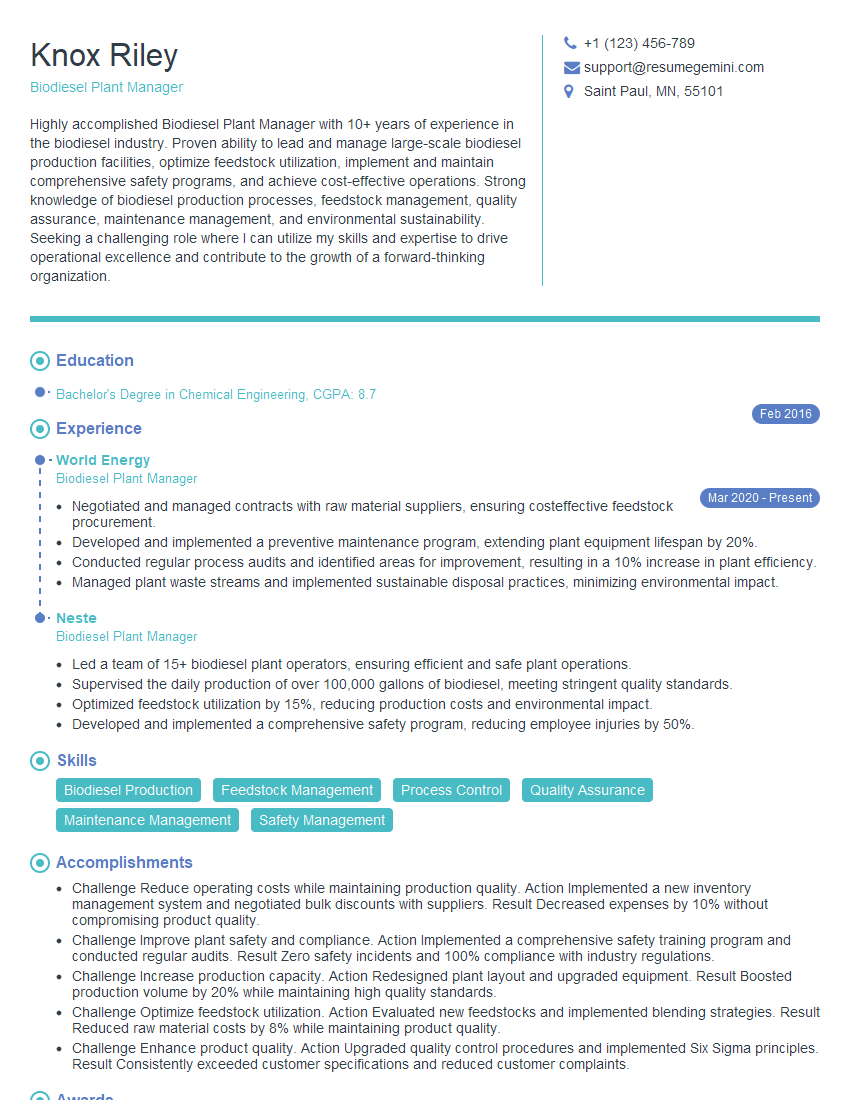
Mastering Biodiesel Process Maintenance is crucial for a rewarding and progressive career in the renewable energy sector. It opens doors to specialized roles with increasing responsibility and earning potential. To maximize your job prospects, create an ATS-friendly resume that highlights your skills and experience effectively. ResumeGemini is a trusted resource to help you build a professional and impactful resume. We provide examples of resumes tailored to Biodiesel Process Maintenance to guide you in creating your own compelling application.
Explore more articles
Users Rating of Our Blogs
Share Your Experience
We value your feedback! Please rate our content and share your thoughts (optional).
What Readers Say About Our Blog
To the interviewgemini.com Webmaster.
Very helpful and content specific questions to help prepare me for my interview!
Thank you
To the interviewgemini.com Webmaster.
This was kind of a unique content I found around the specialized skills. Very helpful questions and good detailed answers.
Very Helpful blog, thank you Interviewgemini team.